

Audioguida di Cambridge: Un'Odissea Accademica nel Cuore Storico di Cambridge
Immagina di trovarti dove studiosi medievali rischiarono tutto durante le ribellioni, drammaturghi segreti complottarono tra antichi cortili e folle furiose assaltarono la città per una singola nota stonata. Sotto lo skyline storico di Cambridge, ogni pietra racchiude uno scandalo o un trionfo nascosto. Questo tour audio autoguidato e immersivo rivela i segreti drammatici e le eccentricità di Cambridge che non troverai su una cartolina — passeggia al tuo ritmo attraverso college storici, vicoli misteriosi e luoghi leggendari. Quale atto disperato quasi costò a Corpus Christi i suoi tesori più preziosi? Perché il voto subdolo di un Rettore di college lasciò un'ombra su Catz per generazioni? E quanto può diventare selvaggia la serata di apertura di un mercato del grano quando gli animi — e la musica — vanno spettacolarmente storti? Passa da cortili illuminati dal sole a strade animate mentre i secoli si svelano davanti ai tuoi occhi. Rintraccia echi di protesta, invenzione, intrigo e reinvenzione mentre il vero carattere di Cambridge emerge ad ogni passo. La tua avventura inizia ora. Scopri i segreti che echeggiano sotto i mattoni senza tempo di Cambridge.
Anteprima del tour
Informazioni su questo tour
- scheduleDurata 40–60 minsVai al tuo ritmo
- straighten3.7 km di percorso a piediSegui il percorso guidato
- location_onPosizioneCambridge, Regno Unito
- wifi_offFunziona offlineScarica una volta, usa ovunque
- all_inclusiveAccesso a vitaRiascolta quando vuoi, per sempre
- location_onParte da St Catharine's College, Cambridge
Tappe di questo tour
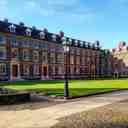
To spot St Catharine’s College, look for a striking open courtyard framed by stately brick buildings with tall windows and rows of chimneys, facing directly onto Trumpington…Leggi di piùMostra meno
To spot St Catharine’s College, look for a striking open courtyard framed by stately brick buildings with tall windows and rows of chimneys, facing directly onto Trumpington Street-just across from Corpus Christi College and near King’s College. Alright, take a breath and look around-imagine the gentle breeze coming across this open courtyard, sunlight bouncing off those classic Cambridge bricks, and the distant sound of bicycle bells. Welcome to St Catharine’s College-or “Catz” if you want to sound like a local. Funny story: the college actually adopted its current name only in 1860, even though it’s been here since way back in 1473, when it started off as “Katharine Hall.” Not bad for a place that began as a humble dream-brought to life by Robert Woodlark, who, let’s just say, probably wouldn’t win any awards for financial planning. Woodlark poured most of his own fortune into these tenements right beneath your feet, and rumor has it he was even suspected of skimming a little from King’s College next door. Imagine the tension-founding a new college, running out of money, and your neighbors eyeing you suspiciously! In the early days, Catz was a tiny, exclusive club-a handful of fellows who could only study theology and philosophy, and for years, no undergrads were allowed. The place was so empty you probably would have heard your own footsteps echoing across the stone slabs. But everything changed by the 1500s. Suddenly, ambitious young minds began flooding in, and the focus of the college turned to teaching undergraduates. It was like Catz had been playing hide-and-seek with students and finally decided to stop hiding. Now, you might wonder about that open courtyard you’re standing in. Unlike most Cambridge colleges, which love their closed quadrangles, Catz keeps its court open to Trumpington Street, as if it’s waving at everyone passing by-“Hello, look at me!”-and don’t you just love that touch of confidence? This wasn’t always the plan. Throughout the centuries, the college has toyed with the idea of completing a fourth side, but somehow, three sides and this open embrace just stuck. In the 1600s, the college started to expand thanks to canny leadership and generous benefactors. New buildings popped up, some of which wore out and were torn down again. By 1637, Catz owned the George Inn on Trumpington Street-behind it, a legendary stable managed by Thomas Hobson. Now, if you’ve ever faced a “take it or leave it” situation, thank Mr. Hobson-his practice of only allowing a customer to hire the horse that had been in the stable longest gave rise to the phrase “Hobson’s choice.” That’s proper Cambridge for you; even the clichés have academic roots! The 19th and 20th centuries saw drama, too. In 1861, when the Master stepped down, there was an election-just two fellows stood, but one voted for himself and the other voted for his rival, making the whole thing so awkward that people still talk about the “Robinson vote.” Politics, Cambridge-style! The college grew richer, bigger, and more diverse through the modern era. In the 1970s, it expanded so much that it ended up in a kind of friendly rivalry with Robinson College-Catz liked to build octagonal rooms to match its crest; now that’s commitment to branding! By 1979, the gates finally opened to women students, and in 2006, Dame Jean Thomas became the first woman Master here. Talk about breaking the mold. Catz prides itself on innovation-not just in academics, where it’s landed as high as top place in the Tompkins Table, but even in small things like adopting a gender-neutral dress code for formal dinners (the first college in Cambridge to do so). When the world was locking down in 2020, Catz opened its doors to women and children escaping domestic violence, turning college rooms into safe havens for those in danger. And it hasn’t lost its sense of fun-recently, it raised a temporary building and called it the “Catzebo,” combining “Catz” and “gazebo”-proof that even after centuries of serious scholarship, Cambridge can still have a good laugh. So as you stand here, listen to the echoes of history and the hum of student life. Perhaps one day, your own story will join the tapestry of legends here at “Catz”-where tradition never stands still! Ready for the next stop on our adventure? Yearning to grasp further insights on the academics, student life or the notable alumni? Dive into the chat section below and ask away.
Apri pagina dedicata →Now, Corpus isn’t just “Corpus” for fun. Through the centuries, it’s also gone by St Benet’s College, borrowing the name from St Bene’t's Church next door-and for a long while,…Leggi di piùMostra meno
Now, Corpus isn’t just “Corpus” for fun. Through the centuries, it’s also gone by St Benet’s College, borrowing the name from St Bene’t's Church next door-and for a long while, the church even doubled as Corpus’s own chapel. The college’s oldest buildings, in Old Court just beyond the gates, have been home to scholars non-stop since the 1350s. That’s over 670 years of squeaky floorboards and chilly draughts. The old sills and thick stone jambs used to hold lanterns back before panes of glass were common, and if these walls could talk…well, they’d probably ask you to please not spill your coffee. But Corpus hasn’t always been quite so wealthy or elegant. Early on, it was a bit threadbare-almost as if it ran on ambition and borrowed candles. In 1381, it found itself in the crosshairs of the Peasants’ Revolt. Locals, and apparently a few students eager for excitement, stormed the college, made off with valuables, and burned the charter in the street! And if that wasn’t dramatic enough, in 1460, Corpus bought itself a small arsenal-arrows, artillery, even protective clothing-to fend off the occasional “tempestuous riot.” I guess back then, college life was a full-contact sport. Take a breath for the silver! Corpus is now famous for being truly, fabulously rich in old silverware. Thanks mainly to their favorite master, Matthew Parker, who left so much silver and so many rare books that he made the rules quite clear: lose too many, and the whole stash would go to other colleges. You can imagine every librarian and butler counting spoons and dusting books as if their jobs depended on it… because they did. Some say Matthew Parker was so nosey about his books he started the phrase “Nosey Parker.” Not bad for a college rumor, eh? Speaking of drama, meet Christopher Marlowe, perhaps Corpus’s most infamous student. He came in as a young playwright but left behind a few more mysteries than plays: was he a spy? Maybe. Was he a genius? Most certainly. Was he a typical college student who forgot his keys? History is silent on this (though I like to imagine so). Corpus always marched to its own drum. During the English Civil War, it kept its silver safe by giving it to the fellows for hiding. When the coast was clear, the treasures were returned-mostly unmelted! Miraculously, Corpus stayed neutral while the country was at war with itself; it’s good to be Switzerland when swords are out, I suppose. Let’s not forget the curious bits you can see and hear if you look around. Old Court claims to be the oldest continually inhabited courtyard in England, and right next door the church tower of St Bene’t’s is the oldest building in Cambridge, dating before the Norman Conquest. And just think, scientists once solved the mysteries of DNA in laboratories that you can spot from here-though they opted to celebrate their eureka moment at The Eagle Pub, which is still run by Corpus and famous for RAF graffiti on its walls. Even in modern times, Corpus keeps changing. Women finally joined the ranks in 1983, central heating arrived in the ‘60s, and a breathtaking new clock-the Chronophage, or “Time Eater”-was added to the college’s facade in 2008. It only tells the accurate time once every five minutes. I guess even at Cambridge, time likes to keep you guessing. So whether you’re peering at ancient silver, tracking literary spies, or pondering clocks that don’t care for accuracy, Corpus Christi is truly a living patchwork of stories. And now that you’re standing here, you’re a part of its centuries-long tale-just don’t let the Time Eater nibble away the hours before your next stop! Interested in knowing more about the buildings, student life or the traditions and anecdotes
Apri pagina dedicata →

Mostra altre 12 tappeMostra meno tappeexpand_moreexpand_less
To spot the heart of Cambridge ahead, look for the grand, towering stone chapel with ornate spires and huge stained glass windows, flanked by elegant college buildings and…Leggi di piùMostra meno
To spot the heart of Cambridge ahead, look for the grand, towering stone chapel with ornate spires and huge stained glass windows, flanked by elegant college buildings and stretching out from an open green lawn-this is a view that belongs on a postcard! Welcome to Cambridge, where the river winds through quiet meadows and history seems to hum all around you. Take a deep breath-can you smell the fresh grass? Now imagine the scene thousands of years ago: the ground beneath your feet held a Bronze Age farmstead, its ancient tools buried just below the surface. If you stand quietly, you might just hear the whisper of Roman soldiers’ footsteps from the old fort once standing on Castle Hill. Cambridge loves a good dramatic entrance, and in the 9th century, Vikings made quite the splash-sailing up the river, muddy boots and all, to turn this sleepy trading post into the bustling medieval market town you see today. The Vikings didn’t stay forever, but their knack for trading left Cambridge brimming with activity. After the Vikings came the Normans with their stone castles, and you might just catch a whiff of medieval bread baking or even the clink of coins from the town’s old mint if you let your imagination run wild! Now look up-the skyline is sprinkled with spires and chimneys, a reminder of the centuries Cambridge has been at the center of learning, faith, and innovation. The university was born in 1209, the result of a disagreement at Oxford so fierce that scholars simply packed up their scrolls and set out for a fresh start here! The oldest college, Peterhouse, dates back to 1284, and King’s College Chapel just ahead began in 1446, taking decades and a royal game of musical chairs to finish. Henry VI started it, later kings added to it, and it finally emerged a stone masterpiece, its lofty vaults echoing with choral music every Christmas Eve. But Cambridge isn’t just a museum of the past. It’s also at the center of “Silicon Fen”-a high-tech paradise where the creative minds of the university have given the world everything from new medicines to software, and, if you can believe it, video games! In fact, some of the world’s most brilliant ideas started with students scribbling on napkins in a nearby pub. Today, Cambridge hosts not one but two universities, a powerhouse biomedical campus, and a population where over 40% hold a degree-leave your trivia hats on, you’ll need them! Yet even with its high-tech glamour, Cambridge keeps her green spaces close. In spring, daffodils scatter across Jesus Green and Midsummer Common. Every summer brings the rush of Strawberry Fair, music floating across the air, and the heady scent of hops during the Cambridge Beer Festival, where the only scientific experiment is figuring out which ale tastes the best. But hold onto your hat-behind the beauty, Cambridge hides stories of hardship. When the Black Death swept through in the 1300s, whole parishes vanished; but this tough city fought back, building new colleges to train the priests England needed. During World War II, Cambridge dodged most bomb raids, but the night would sometimes be pierced by the rumble of an air raid siren, while evacuees from London made the city come alive with new faces. These days, Cambridge is all about the future-expanding housing for a thriving city, fighting air pollution, and experimenting with solutions like cycle paths and the possibility of a futuristic light rail system. In fact, more people cycle to work here than anywhere else in the UK. Forget Olympic athletes, Cambridge cyclists would give them a run for their money! So as you stand here, surrounded by centuries-old stone and curious students zipping by on their bikes, take a moment. You aren’t just in a university town; you’re walking in a living, breathing story that began long before parliament was even a twinkle in a king’s eye, and yet somehow, it always feels new. Interested in knowing more about the governance, geography and environment or the demography
Apri pagina dedicata →To spot the Senate House, look straight ahead for a striking, long white stone building with tall columns and grand steps at the front-it almost looks like a Roman temple suddenly…Leggi di piùMostra meno
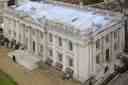
To spot the Senate House, look straight ahead for a striking, long white stone building with tall columns and grand steps at the front-it almost looks like a Roman temple suddenly appeared in the middle of Cambridge! Now, take a moment to imagine yourself in the 1720s, because that’s where the story of the Senate House begins. Here you are, right in the heart of Cambridge, squeezed between the famous King’s College and Gonville and Caius. This magnificent neo-classical building, with its elegant Portland stone walls and stately columns, was designed by James Gibbs-well, technically, Sir James Burrough had a good go first, but as with many things in Cambridge, it took a committee and a few years to agree on the final look! Just picture the city buzzing with excitement as Thomas Crosse, the vice-chancellor back then, carefully lays the first stone on a June morning in 1722. The air is thick with anticipation, and a few construction mishaps-after all, the western end wasn’t even finished until 1768! The Senate House was meant to be just one side of a grand quadrangle, but, well, the dreams of Cambridge planners are nearly as long as their university traditions-meaning the rest was never built. Still, this building is so important it’s protected as Grade I listed, part of what’s called the “Old Schools Site.” Come graduation season, excitement fills the air and nervous students with fluttering black gowns gather on those wide stone steps. Graduation here is an old ritual, full of tradition and a sprinkle of Latin. Can you picture the scene? The colleges process to the Senate House, one after another, in strict order-except if you’re a royal college, then you get to jump the queue! As the students line up inside, the Praelector-imagine him like a medieval master of ceremonies-grasps each graduand’s hand and proudly pronounces a string of Latin: “Dignissima domina, Domina Procancellaria et tota Academia praesento vobis hunc virum…” (And yes, I’d practice my Latin just for this moment!) Then, each new graduate kneels before the vice-chancellor, who clasps their hands and utters, with all due seriousness, “Auctoritate mihi commissa admitto te ad gradum…” I must admit, the whole thing is a bit like Hogwarts with more tradition and less wand-waving. When it’s done, they spring up, bow, and hurry out through the Doctor’s Door-degree certificate between their fingers, and a world of possibility ahead. But wait-there’s more! Each formal graduation, known as a Congregation, is an act of the university’s real governing body, the Regent House. Yes, each and every student’s degree is voted on, a bit like Parliament but with less shouting and, hopefully, no one falling asleep. And here’s where the fun kicks in: if you want to feel the tension of exam season, visit in late spring. The outer walls get plastered with class-lists. But if you want a real spectacle, come for the reading of the Mathematical Tripos results. Imagine the balcony above your head, voices echoing as names are read out-then, suddenly, huge piles of paper results rain down in a blizzard, fluttering like confetti onto the waiting students below. It’s joy, sorrow, and hope all mixed together in one grand academic tornado. But the Senate House has also been the target of student mischief! Back in 1958, awestruck townsfolk woke up to find an old Austin Seven van-yes, a literal car-perched on the roof. Engineering students from Caius had hauled it up during the night, using scaffolding “borrowed” from King’s College. No one heard a thing, but you can bet the university made plenty of grumpy noises when it took them a week to get the van down! In 2022, a bold team somehow managed to put a fully-decorated Christmas tree up there. What’s next-reindeer? Watch this space. Not just for tradition and pranks, the Senate House even hosted the BBC’s major Election Debate in 2017. Imagine the famous voices echoing beneath these high ceilings, the tension of politics mixing with thousands of stories that have unfolded here through centuries. So as you stand here, take a deep breath and imagine the echoes-the pride of new graduates, the laughter of students plotting their next rooftop adventure, and the busy whispers of nearly 300 years of history surrounding this temple to knowledge. If these old stones could speak, they’d tell you they’ve seen it all-ceremony, mischief, debate, and all the best secrets of Cambridge life.
Apri pagina dedicata →Look for the tall stone tower ahead of you, topped with little turrets and big arched windows, rising grandly above the street on your right - with golden stonework that stands…Leggi di piùMostra meno
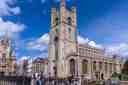
Look for the tall stone tower ahead of you, topped with little turrets and big arched windows, rising grandly above the street on your right - with golden stonework that stands out beautifully against the sky. Alright, step a little closer and take in the sight! This grand church before you is St Mary the Great-though locals in a hurry call it just “GSM.” Now, imagine yourself in medieval Cambridge, the kind of place where students would grumble about having to walk no farther than three miles from this exact church. That rule still applies today, so if any students look nervous, maybe they're measuring the distance with every step! This church has been the beating heart of Cambridge for centuries. Its story goes all the way back to at least 1205, when records show King John appointed a chaplain named Thomas de Chimeleye here. Some say the stones beneath your feet might even date back to 1010! But the original church was caught up in the chaos of 1290, when a fire swept through the building and left only ashes and sorrow behind. The fire unleashed a storm of rumors and injustice, leading to a turbulent chapter in Cambridge’s history, before the church was finally rebuilt and renamed St Mary the Great. Through the Middle Ages, GSM was so much more than a place for Sunday sermons. University charters, royal proclamations, and dueling debates echoed between these stone walls, with crowds that likely spilled out onto the street. If you close your eyes and listen, you might almost hear the rustle of parchment and the clatter of boots as townsfolk burst in during the Peasants’ Revolt in 1381, grabbing and burning the university’s precious documents. Imagine the tension in the air that day! But GSM had a special place at the heart of Cambridge University. University officers, by ancient rule, must live within a 20-mile radius, while undergrads get just three. (No pressure, students!) For centuries, this church hosted compulsory “University Sermons,” where sleepy scholars tried their best not to nod off. But with the grand new Senate House opening just across the street in 1730, the rowdiest debates moved out, and the church got a bit quieter… at least for a while. As you look up at the church’s soaring tower, built finally in 1608, try to imagine builders painstakingly arranging each stone-financed by not one, but two English kings: Richard III and Henry VII. Their investment certainly paid off; the church now holds the title of Grade I listed building, making it one of the crown jewels of Cambridge architecture. The design is called Late Perpendicular, and you’ll notice all those elegant, tall windows and crisp stonework, practically asking for a choral anthem to ring out through the arches. Speaking of ringing out, GSM has some of the oldest continuous bell-ringing traditions in the world! Step closer and you might hear the bells clanging in the tower. The special “Cambridge Quarters” chimes you hear echoing through the city even inspired those of Big Ben in London-so if the sound feels familiar, you’re not imagining it! Now, venture inside (use your imagination-we’re on the street, after all), and you’d spot not one, but two mighty organs. The University Organ, up in the west gallery, has pipes with a history longer than some countries-first built in 1698 and lovingly restored over centuries. The sound it makes? Let’s just say, if ghosts ever haunt Cambridge, you’d find them swaying to those powerful organ notes. Speaking of drama, this church has seen its share of intense moments-ever heard of Erasmus? He preached here! And Martin Bucer, a reformer whose remains were burned outside by order of Queen Mary I, but later brought back into the church by Elizabeth I and honored with a special memorial. Today, GSM is a hub for all kinds of folk and continues its rich traditions with a warm, inclusive spirit-singing, celebrating, and marking the greatest moments in Cambridge life, from the funeral of physicist Stephen Hawking to the noisy bell ringers every Sunday. So as you stand beneath the watchful tower of Great St Mary’s, remember you’re at the crossroads of kings and scholars, revolutions and hymns, ancient bells and modern minds-a place where Cambridge’s story has been written in stone, sound, and some very determined footsteps. Ready for the next chapter of our tour? Curious about the architecture and features, list of vicars or the burials and funerals? Don't hesitate to reach out in the chat section for additional details.
Apri pagina dedicata →Look ahead for a sweep of golden stone buildings wrapped around a perfectly round lawn, framed by an impressive clock tower and a mass of leafy wisteria climbing the central…Leggi di piùMostra meno
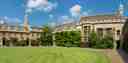
Look ahead for a sweep of golden stone buildings wrapped around a perfectly round lawn, framed by an impressive clock tower and a mass of leafy wisteria climbing the central section-this is Christ’s College. Welcome to Christ’s College! Now, take a moment and soak it all in-imagine the generations of scholars, poets, and pranksters who’ve wandered across this exact patch of grass, probably thinking much the same as you: “Wow, that’s a lot of wisteria.” Christ’s College feels like a portal into the past, and it’s packed with stories, both grand and quirky. Let’s wind the clock all the way back to the year 1437. The college didn’t start life as Christ’s-it was “God’s House,” founded by William Byngham because England desperately needed more grammar-school teachers. It began just around the corner but was quickly uprooted to make space for the mighty King’s College. Picture monks and students shuffling books and desks across Cambridge, grumbling about having to move before they even had a proper coffee shop nearby. Byngham’s little college eventually landed right here, and after a string of royal permissions and a generous endowment by Lady Margaret Beaufort-Henry VII’s mum and a big fan of names with divine gravitas-God’s House transformed into Christ’s College in 1505. So, while God’s House lost its original land, you could say it traded up; after all, you don’t get Lady Margaret’s approval every day. Christ’s looks serene now, with its sun-drenched lawns and peaceful stone courts, but beneath the surface there’s a bubbling history of eccentricity and talent. Can you imagine John Milton, the poet of “Paradise Lost,” pacing these walkways, deep in thought and probably muttering about tricky Latin verbs? Or young Charles Darwin dashing across the lawn, maybe wishing for a few more irises in the garden to collect for his next science experiment? In fact, that garden-through the arch of the Fellows’ Building-houses two mulberry trees, the more senior of which was planted the year Milton was born. Both trees have collapsed over the years, yet they keep sprouting fruit, a bit like some of the students here after a late night out. You’ll notice the original buildings wrap around the First Court: the ancient chapel, the stately Master’s Lodge, and the Great Gate tower. If you look carefully at the gate, you’ll spot that the bottom’s been chopped off. That's not a magic trick-just the result of the street level rising, forcing Christ’s to literally step down to stay grounded. Makes you wonder what other surprises are hiding behind these old walls. Let’s sneak further in time to the 17th century-population was booming and Christ’s built the striking Fellows’ Building in Second Court. More buildings sprang up in the centuries that followed, including the modernist, concrete New Court of the 1960s, which locals lovingly call “the Typewriter”-honestly, if the Addams Family ever needed a Cambridge headquarters, that’s where they’d move. Now, for a particularly refreshing fact: Christ’s is one of only five Cambridge or Oxford colleges with its own swimming pool. And not just any pool-the Malcolm Bowie Bathing Pool is Britain’s oldest outdoor pool, fed by a centuries-old water system called Hobson’s Conduit. Imagine leisurely summer afternoons here, splashing about just as scholars did over 350 years ago, possibly escaping the odd exam stress or ducking out of Latin homework. And in case you’re picturing everyone here as endlessly serious, let’s talk about college life. Student societies range from the historic Marguerites Club (started by sports captains who adored embroidery badges) to the drama society, rowing club, and the college choir. Christ’s has hosted raucous May Balls-one year in a 1920s Parisian spirit, another year as a Rio carnival, and the latest, Shakespeare’s enchanted “A Midsummer Night’s Dream.” When Cambridge needs a good party, Christ’s students are never afraid to call on a magician, an orchestra, or several trays of mysterious glowing punch. Finally, Christ’s is famous for academic excellence-punctuated by 91% of students scoring top marks in recent years-but with so many Nobel winners, comedians, poets, and explorers among its alumni, it’s fair to say that the true Christ’s spirit is wonderfully unpredictable. So, next time you spot a mulberry tree, a wonky college gate, or hear a burst of student laughter echoing off sun-warmed stone, just remember-you’re standing in the footsteps of centuries of clever chaos, all under the watchful gaze of Lady Margaret’s wisteria. Now, shall we go see what’s waiting at the next stop? Eager to learn more about the buildings, academic profile or the student life? Simply drop your inquiries in the chat section and I'll provide the details you need.
Apri pagina dedicata →To spot Sidney Sussex College, just glance ahead at the elegant red-brick building framed by lush green lawns, with arched walkways and tall chimneys rising above, and look for…Leggi di piùMostra meno
To spot Sidney Sussex College, just glance ahead at the elegant red-brick building framed by lush green lawns, with arched walkways and tall chimneys rising above, and look for students sitting under big umbrellas in the garden. Welcome to Sidney Sussex College! Let your imagination wander for a moment-do you feel the gentle crunch of gravel beneath your feet and the distant hum of student chatter in the air? This is one of the coziest colleges in Cambridge, tucked away like a hidden treasure box, and bursting with stories from centuries past. Founded in 1596, Sidney Sussex owes its existence to an ambitious and generous lady, Frances Sidney, Countess of Sussex. Picture her: a determined woman in a ruffled collar, whose dream was to create a new home for bright scholars, leaving behind a hefty sum of £5,000-a fortune at the time-plus some rather shiny silver plate. She wanted a college dedicated to “good learninge” for future generations, and her trustees-perhaps with slightly sweaty brows-made sure that dream came true, with a dash of supervision from the very busy Archbishop Whitgift. But before Lady Sidney’s college, this spot was home to the Grey Friars for almost three centuries. Imagine monks shuffling in sandals, laboring over ancient scrolls, and the subtle scent of incense drifting through the cloisters. Centuries later, the 1950s would reveal buried secrets: shattered stained glass, sunken Saxon jars, and a mysterious graveyard underfoot. Even today, wine bottles rest in medieval cellars that once echoed with prayer and whispers. Sidney Sussex started small, like the quiet first notes of a choir warming up; its first years saw only a few students, huddled together in cramped rooms, many sharing beds with “chamber-fellows.” Here’s a fun detail-one of the college’s earliest residents was the infamous Oliver Cromwell. Yes, Cromwell himself, the future Lord Protector, spent his youth right here, possibly lying in bed at night, plotting how to rearrange the whole of England-or simply hoping his one chamber-fellow didn’t snore. Rumor has it, Cromwell’s head is now secretly buried somewhere near the chapel; a bit of a spooky twist if you ever get the shivers walking past the antechapel! Time marched on, and Sidney grew in fits and starts. The 18th-century discovery of coal on land left to the college meant a fortune and some intriguing renovations: out went crumbling brick, and in swept fashionable new Gothic exteriors, thanks to funds from coal and even a thriving seaside resort in Cleethorpes. By the 19th century, the college looked as grand and solid as you see it today, with extra height and a little more architectural flair to impress both students and visitors-including you! Sidney Sussex’s courtyards hold stories in every corner. Chapel Court glows with sunlight, wood-panelled walls, and the echo of organ music drifting from the chapel, which itself has shifted styles with changing tastes, from cozy Puritan to ornate High Church. Over in Hall Court, picture shimmering candlelight on rococo plasterwork as students dine, with Lady Sidney herself gazing serenely down from her portrait above the high table. The college might be small, but its spirit is mighty-its boat club has made splashes in Cambridge’s famous Bumps races (sometimes literally crashing and sometimes, gloriously, winning), and the choir even got a nod from the Gramophone Awards. The student-run bar bubbles with laughter, especially during term-time, while historic societies-one with outrageously fancy Latin rituals-keep quirky traditions alive. Sidney Sussex has sent all sorts of remarkable people into the world: from scientists cracking secrets at Bletchley Park, to a president of CERN, comedy stars, a TV mathematician, and a football club chairman. And did you know the college is a two-time champion of the televised quiz, University Challenge? It’s probably the only place where you could meet someone who both rows in the Bumps and can name every king of England in under thirty seconds. So as you stand here, feel the past and present dancing together-ancient stones beneath your feet, sunlight glinting off windows, stories of scholars, rebels, and maybe even the odd ghost swirling in the breeze. Welcome to Sidney Sussex, where every day is a little bit legendary! Curious about the buildings and grounds, choir or the student life? Don't hesitate to reach out in the chat section for additional details.
Apri pagina dedicata →In front of you is a striking white building with tall, grand pillars and a triangular pediment above, featuring a round plaque-just look for the bold, classical shape and the…Leggi di piùMostra meno
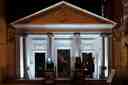
In front of you is a striking white building with tall, grand pillars and a triangular pediment above, featuring a round plaque-just look for the bold, classical shape and the address “7A Jesus Lane” to spot the University Pitt Club. Welcome to the mysterious and storied University Pitt Club, where the echoes of history are almost as thick as the walls! Imagine yourself here in the early 1800s, as a group of ambitious young men gathered by candlelight, not just to socialise, but to toast to the great William Pitt the Younger-a local Pembroke graduate who happened to become Prime Minister. At its birth in 1835, this club’s mission was anything but a secret: its founders set out to uphold Pitt’s political ideas and make sure the “right sort” got elected in Cambridge. You could almost hear the clinking of glasses, and rousing toasts erupting into thunderous applause. Now, not all students were here solely for politics. Even back then, club members combined their fiery debates with equally spirited dinners-sometimes dining in flashy party uniforms. In those early decades, the wild energy of political passion soon gave way to socialising for socialising’s sake. By the time 1868 rolled around, they’d dropped the politics altogether; now, it was all about enjoying the club’s exclusive atmosphere and traditions. Rumor has it, some members may have been more skilled at lifting forks than passing political motions! But let’s talk about the home of the Pitt Club. This neo-classical building you see wasn’t originally meant for secret meetings or grand dinners. It opened in 1863 as, wait for it, “Roman (improved Turkish) Baths”-a short-lived, steamy venture that closed in less than a year. After auctions and drama, the club moved in, sharing half the building with a billiards room, as if the spirits of billiards and bathrobes lingered in the air. A fire in 1907-don’t worry, it’s been fully renovated since-gave way to yet another transformation. Walk through those doors today, and you’d stand on polished floors that have seen renovations, whispers of secret conversations, and perhaps a dramatic exit or two. Of course, the Pitt Club’s story is full of unexpected twists. During World War I the club nearly vanished-members rushed off to war, leaving whisky in shorter supply than good company. By World War II, the club was forced to hand over its rooms to the local “British Restaurant.” Can you imagine the ghostly echo of a clubman’s complaint as the grand Pitt Club was replaced by the sizzle and clatter of public diners? After the wars, the club bobbed back to life, regaining its spot as an undergraduate haven. Its rank of former members includes a who’s who of royalty (from Edward VII to Charles III), legendary comedians (yes, John Cleese once crossed this threshold), Olympic champions, authors, politicians, and even one “real” James Bond (the ornithologist, not the super-spy-though you might imagine both sipping a cocktail behind these columns). But it wasn’t always open to all; for almost two centuries, women were forbidden from joining. Only in 2017 did the clublings vote-amid much grumbling and controversy-to finally admit women as full members. Day and night restrictions vanished, and the club’s sense of tradition found itself facing the fresh winds of change. Oh, and see that plaque of Pitt gazing sternly down from above? That was a special gift in the 1930s, brought from Pitt’s last home-and possibly keeping an eye out for any pizza sneaking past the door, since the ground floor was leased to a restaurant for years, and now plays host to Japanese cuisine. So don’t be surprised if you smell soy sauce drifting through the pillars-this club has survived fires, wars, and even new culinary neighbours. It’s a building, a legend, and a living story in stone and laughter. As you stand here, picture not only the famous debates and secret meetings, but the echoes of every clinking glass, every cheer, and every cautious step into bold new traditions.
Apri pagina dedicata →Look ahead for soaring golden stone buildings with tall towers and an ornate gateway-if you spot a statue above the main entrance and a grand courtyard, you’ve found Trinity…Leggi di piùMostra meno
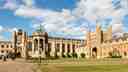
Look ahead for soaring golden stone buildings with tall towers and an ornate gateway-if you spot a statue above the main entrance and a grand courtyard, you’ve found Trinity College. Welcome to Trinity College! Imagine yourself standing outside these colossal gates, feeling a gentle breeze across the cobblestones as sunlight glints off the proud old stone walls. Trinity isn’t just big by Cambridge standards-it’s enormous, packed with secrets, and celebrated for more than just its size. Founded back in 1546 by King Henry VIII, this place has seen so much history, you half expect to see a grand procession of Tudor royals stride past. Some say Henry loved college mergers so much, he combined two entire colleges, Michaelhouse and King’s Hall, rather than splash out his own cash. In fact, he was planning to seize all the college lands for himself until his wife Catherine Parr whispered in his ear: “Why not create something grand instead?” I suppose even kings can be swayed by a wise word at the dinner table. Now, cast your eyes up to the Great Gate with its huge clock and the fierce-looking statue of Henry holding-wait for it-a chair leg in his hand. Or is it a sceptre? Well, sometimes it’s been both! Many years ago, cheeky students replaced the chair leg with a bicycle pump as a prank, only for it to be switched back later. For a while, the original chair leg even went up for auction. Step through the gate in your mind’s eye and imagine standing in Great Court, the biggest enclosed courtyard in Europe. Every year, students race around the entire perimeter in the exact 43 seconds it takes the clock to strike twelve-a tradition made famous by the film Chariots of Fire. If you’re clumsy or have slippery shoes, you’d better watch out-more than one undergrad has taken a tumble trying to dash it. And if you ever hear the clock chime twice, don’t worry, it’s not a time loop; legend has it the double chime was meant to annoy Trinity’s main rivals over at St John’s College. Now, Trinity is more than quirky traditions-it’s a powerhouse of brains and talent. In fact, it has boasted more Nobel Prize winners than any other Oxbridge college, not to mention six British prime ministers, Isaac Newton himself (who, shocking as it may be, did NOT discover gravity under that tree in the courtyard), poets like Byron and Tennyson, famous philosophers, and even modern-day monarchs like King Charles III as alumni. Ever fancy a ghost sighting? Some say Lord Byron’s pet bear still haunts these walkways-yes, Byron kept a real bear, just to cause mischief because the college banned dogs. Take a deep breath and imagine life inside those ancient windows. There’s the Wren Library at the far end, famously designed by Sir Christopher Wren-he built it to house treasures like Newton’s own letters and a Shakespeare First Folio. Scholars here have a few perks: walk on the grass (no one else is allowed!), wear dark blue gowns, and join quirky societies like the Trinity Mathematical Society, the oldest of its kind in the UK. Don’t forget the famous “Trinity burnt cream”-their crème brûlée with a Cambridge twist, best savored after a formal dinner serenaded by the College Choir. Now, if you were here on just the right June Sunday, you might hear the choir singing from the rooftops, their voices echoing across the courtyard, with half the choir on the Great Gate and half on the Clock Tower, the sound as grand as a royal fanfare. Trinity College is rich-so rich it even owns the O2 Arena in London and thousands of acres of land. Sometimes that wealth brings controversy, as when protestors once dug up the college lawn in a very earthy protest against fossil fuel investments. So as you stand here, take a moment to let your imagination wander. Think of secret societies plotting in candlelit rooms, eccentric students balancing bikes in trees, and the clatter of heels as scholars run the Great Court. Trinity is a place where history, tradition, and cheeky fun all mix together, right in the heart of Cambridge. Now, who’s up for a race around the court? Don’t worry, I won’t tell the porter if you don’t! Seeking more information about the buildings and grounds, academic profile or the traditions? Ask away in the chat section and I'll fill you in.
Apri pagina dedicata →To spot St John’s College, look ahead for a long, grand stretch of pale stone gothic buildings with arched windows and spiky towers rising above wide green lawns-a bit like a…Leggi di piùMostra meno
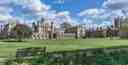
To spot St John’s College, look ahead for a long, grand stretch of pale stone gothic buildings with arched windows and spiky towers rising above wide green lawns-a bit like a castle from your favorite storybook. Welcome to St John’s College, a place where legends and brains have been stirring the pot for over 500 years. Can you feel the weight of history buzzing in the air? That’s because these walls have seen a little bit of everything-ambition, rivalry, laughter, ghosts, and maybe, just maybe, even royal behinds on saddle! St John’s sprang from the imagination of Lady Margaret Beaufort, an unstoppable Tudor lady who looked at a crumbling medieval hospital on this spot and thought, “You know what this needs? A college!” Of course, her plans ran into a tangle of dramas: there were arguments with kings, popes, and lawyers, and a dash of mystery as she forgot to technically mention the college in her will. Luckily, her loyal chaplain, John Fisher, was determined-he wrangled permission from Henry VIII himself and kept the dying dreams of Lady Margaret alive. When St John’s finally opened in 1511, it was part rescue mission and part act of faith. Even the chapel was rescued from the old hospital, patched up, and put back to work. As the years rolled by, things got bigger, grander, and a little weirder. Check out that massive gate-the “Great Gate”-which is watched over by Lady Margaret’s own coat of arms and some of the oddest creatures in Cambridge: the yales. No, not the university in America! Here yales are mythical beasts with elephants’ tails, goats’ heads with wild, swiveling horns, and a bad sense of fashion. Peer up: you might just spot Saint John himself, eagle at his feet, cup in hand, carved into the stone as if keeping an eye on everyone who enters. Inside the courts, the echo of history is more than just imagination. Picture Queen Elizabeth I herself rolling through the dining hall on horseback, no less, probably looking for the best seat at dinner. The college’s Hall is famous for its black-and-gold hammerbeam roof, still lined with woodwork that has survived since 1528. If only those walls could whisper-or shout, during boisterous student feasts. Through the centuries, St John’s tried to keep up with the times. Some wanted all the old buildings reshaped in fashionable Georgian style, but the college ended up with a bit of Tudor, a slice of Victorian, and even some 20th-century chic. There are secret passages, a “window-with-nothing-behind-it,” and a bridge built not by Sir Christopher Wren (who designed St Paul’s Cathedral), but by someone inspired by him. That kitchen bridge may not make tourists swoon, but walk a little farther, and you’ll find the beloved “Bridge of Sighs”-so pretty, Queen Victoria wanted to take it home. Now, if you’re hearing a bit of singing, don’t worry-you haven’t wandered into a musical! St John’s is famous for its choir, which has sung every day here since the 1670s. It’s such a big deal, their records fill shelves, and recently, the choir became the first in Oxbridge to welcome both girls and boys. Maybe that’s what keeps the ghosts humming, too: the college has stories about haunted stairways and a poor scholar named Wood who used to work by the glow of a stairwell at night rather than pay for a candle. St John’s also loves a bit of drama with the neighbors. Across the border is Trinity College-sworn rivals in sports and pranks. Rumor has it, Trinity purposely left out the letter "J" in their staircases as a cheeky nod. And if you look close, New Court’s clock tower here is missing its clock faces, perhaps due to a long-forgotten race to beat Trinity (or maybe they just ran out of cash-legends can be a bit fuzzy). And let’s not forget swans! There’s a tale that only Fellows of St John’s are allowed to eat the royal swans-a privilege so rare, even the birds seem nervous when they drift near. The rivalry, the feasts, the ghostly goings-on: this college is more than bricks and mortar-it’s a bubbling stew of stories. So soak it up, listen for the echoes, and as you wander through, see if you can spot a yale, a poet’s ghost, or maybe even the sound of a royal horse clopping down the hallway. Curious about the buildings and grounds, college choirs or the traditions and legends? Don't hesitate to reach out in the chat section for additional details.
Apri pagina dedicata →To spot King’s College Chapel, look ahead for a breathtaking stone building with towering vertical windows and ornate spires stretching upward above the grassy courtyard. Now,…Leggi di piùMostra meno
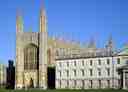
To spot King’s College Chapel, look ahead for a breathtaking stone building with towering vertical windows and ornate spires stretching upward above the grassy courtyard. Now, take a moment and let your eyes drink it in! King’s College Chapel isn’t just the star of Cambridge postcards-it’s a giant storybook of adventure, rivalry, and even a bit of royal stubbornness carved straight into honey-colored stone. Imagine you’re back in 1446. The air is buzzing with commotion, and in swoops King Henry VI, determined to outdo every other monarch by building a chapel that could put all others to shame. He even rolled up his sleeves-well, as much as a king can-and laid the very first stone himself. But things didn’t go as smoothly as planned. The Wars of the Roses burst into chaos, tearing the country apart. Construction kept grinding to a halt, like someone repeatedly unplugging the world’s fanciest PlayStation. While kings came and went, the skeleton of the chapel loomed on this spot, five bare bays with nothing but a hopeful timber roof-like a grand theater waiting for its play to begin. Around 1506, in rides Henry VII, visiting the site and-bless his royal purse-shoveling out cash so the builders could keep going even after he was gone. Then, as the years tick by, the brilliant master mason John Wastell steps up and dreams even bigger. Forget plain old lierne vaults-let’s make the world’s grandest fan vault! Step inside-and if your imagination is good, maybe you see the stone roof above, fanning outward like lace woven from the clouds. Every inch was a leap in engineering, and an act of faith. Light explodes into the chapel through windows that are masterpieces themselves-12 on each side and huge ones at either end. Skilled Flemish craftsmen, Englishmen, even a man named Barnard Flower (I promise he was probably tougher than his name sounds), all had hands in them. One window, the west one, is a bit of the new world: donated by a college alumnus in 1879. And see up ahead, the screen stretching across the chapel-dark, gleaming wood, almost sculpted by moonlight? That beauty was put in by Henry VIII to celebrate his marriage to Anne Boleyn. It’s a little slice of the Italian Renaissance tucked into English gothic grandeur. Even architectural experts have called it “the most exquisite piece of Italian decoration surviving in England.” You could practically get splinters by just staring at it. Art fans might spot the vibrant Adoration of the Magi painting above the altar. That’s a Rubens, quietly stirring up its own drama in 1968 when they had to lower the entire floor just to fit it there! Workers stumbled across 15th-18th-century coffins hidden under Tudor brick arches while making way. A little spooky? Maybe, but absolutely true-chapels always have a few secrets tucked away. Now, picture a much darker day. The English Civil War rages, and many grand cathedrals are left in ruins by Puritan soldiers. But here, stories whisper that Oliver Cromwell-once a Cambridge student himself-ordered protection for King’s College Chapel. Soldiers even scrawled graffiti inside. Sometimes history leaves chalk marks for us to follow. When World War II darkened the skies, the world-famous stained glass was carefully taken down and safely stored. Outside, bombs fell. Inside, the silence must have been deafening. Yet, again, the chapel stood unharmed, a survivor twice over. Today, you might hear the echo of the King’s College Choir. Their voices fill up the chapel with song almost every day during term time. If you’re lucky enough to be here on Christmas Eve, you’re one of millions tuning in on the BBC to hear the first verse of Once in Royal David’s City soar from a single child’s voice, high up beneath those glowing painted windows. People have argued, painted, prayed, sung, and even ducked for cover through centuries here. As you stand before it, in the heart of Cambridge, you’re looking at the city’s stone crown-a place that’s weathered kings and wars, controversy and celebration, still bursting with stories and music. Now, take one last look up-the real magic is seeing it with your own eyes. To delve deeper into the construction, great windows or the rood screen, simply drop your query in the chat section and I'll provide more information.
Apri pagina dedicata →To spot King's College, just look for the enormous, intricate Gothic chapel with tall spires and massive stained-glass windows, towering to your left as you come along King's…Leggi di piùMostra meno
To spot King's College, just look for the enormous, intricate Gothic chapel with tall spires and massive stained-glass windows, towering to your left as you come along King's Parade-it's impossible to miss those dramatic stone pinnacles rising above the green lawns. Imagine, if you will, the year is 1441. The air is thick with the suspense of royal ambitions and medieval dreams. King Henry VI, a young king with more enthusiasm than experience, decides to found a college so grand it would outshine all others-a real “crowning” achievement, you might say. He named it after Our Lady and Saint Nicholas, and even laid the first stone himself, right on land that once belonged to Trinity Hall. The plan? A community of seventy scholars, lorded over by a provost, who would all receive their education, shelter, and maybe the occasional roast dinner-if the budget allowed. But history loves a good plot twist. Just when Henry started building, the Wars of the Roses erupted, emptying not only the royal treasury but also the college’s construction fund. For a while, the only thing rising here was everyone’s anxiety, not the college walls! Imagine stonemasons pacing about, shaking their heads, and muttering about unfinished business-at least they had good company, since the only building that truly took off was the glorious chapel before you. Now, take a deep breath-because if you’re close enough, you might almost smell old stone and feel a hint of incense drifting out from under the wooden doors. This is no ordinary chapel. Over nearly a century, three different Henrys-VI, VII, and VIII-left their mark upon it. By the time the shell was finished in 1508, any notion of a “quick project” was out the stained-glass window! The outside is a textbook lesson in late English Gothic: soaring spires, lacework stone, and the world’s largest fan-vaulted ceiling, which, if you step inside on a quiet day, makes even your own footsteps sound like whispers. When the sun catches those stained-glass windows-oh, it’s like the walls are draped in rainbows. Listen closely during December, and you might just hear the ethereal voices of the world-famous choir rehearsing for the Festival of Nine Lessons and Carols-a tradition broadcast every Christmas Eve for millions to enjoy. Yes, you’re standing at ground zero for the magic of a British Christmas soundtrack. For centuries, students here were admitted almost exclusively from Eton College, chosen one by one by a tiny army of provosts and fellows, who probably liked having the power-to say nothing of the perks of Founder's Feast, where each year a grand dinner is held in memory of Henry VI, complete with ale and joy. There’s even a secret bit of oxidation on the chapel walls, marking how high they’d managed to build before politics interrupted work-like a geological timeline for architects. But not everything here is high drama and royal squabbles. Over the years, King’s became a home for all sorts, welcoming scholars from beyond Eton and opening its doors to women in the 1970s. It has produced everything from Nobel laureates to poets, from economic wizards like John Maynard Keynes to creative giants like Alan Turing-folks who probably once paced this very lawn, solving puzzles in their heads or, perhaps, wondering how best to survive another Cambridge winter. Walk around Front Court and you’ll see the blend of Gothic and Neoclassical designs-a result of centuries of growth, some plans abandoned, some completed, like the beautiful Gibbs’ Building on your right. Peek up at the turrets and try to imagine the day in 1941 when volunteers quietly removed those priceless windows to protect them from the bombs of World War II, a clatter of crates filling the cloisters. And, oh-should you hear music tonight, it’s likely drifting from the famous choir, their harmonies swirling through fan vaults and centuries. King’s isn’t just a place; it’s a living symphony of history, ambition, and the warmth of countless scholars. Isn’t it funny to think some of the most extraordinary stories began with a stone, a song, and a king’s stubborn dream? To expand your understanding of the buildings and grounds, academic profile or the intake and access profile, feel free to engage with me in the chat section below.
Apri pagina dedicata →


Domande frequenti
Come inizio il tour?
Dopo l'acquisto, scarica l'app AudaTours e inserisci il tuo codice di riscatto. Il tour sarà pronto per partire immediatamente – tocca play e segui il percorso guidato dal GPS.
Ho bisogno di internet durante il tour?
No! Scarica il tour prima di iniziare e goditelo completamente offline. Solo la funzione chat richiede internet. Ti consigliamo di scaricare tramite WiFi per risparmiare dati mobili.
È un tour guidato di gruppo?
No – è un tour audio autoguidato. Esplori in autonomia al tuo ritmo, con la narrazione audio riprodotta dal tuo telefono. Nessuna guida, nessun gruppo, nessun orario.
Quanto dura il tour?
La maggior parte dei tour richiede 60–90 minuti, ma sei tu a controllare il ritmo. Metti in pausa, salta le tappe o fai pause quando vuoi.
E se non riesco a finire il tour oggi?
Nessun problema! I tour hanno accesso a vita. Metti in pausa e riprendi quando vuoi – domani, la prossima settimana o il prossimo anno. I tuoi progressi vengono salvati.
Quali lingue sono disponibili?
Tutti i tour sono disponibili in oltre 50 lingue. Seleziona la lingua preferita quando riscatti il codice. Nota: la lingua non può essere cambiata dopo la generazione del tour.
Dove accedo al tour dopo l'acquisto?
Scarica l'app gratuita AudaTours dall'App Store o Google Play. Inserisci il codice di riscatto (inviato via email) e il tour apparirà nella tua libreria, pronto per essere scaricato e avviato.
Se il tour non ti piace, ti rimborseremo l'acquisto. Contattaci a [email protected]
Pagamento sicuro con 


