
Tour Audio di Colombo: Echi di Storia e Patrimonio Tour
Lo skyline di Colombo luccica di segreti dietro ogni lastra di vetro e pietra consumata. Qui, giganti futuristici incombono su reliquie coloniali mentre mercati, scandali e complotti politici ribollono appena sotto il trambusto. Questo tour audio autoguidato ti invita a scivolare tra gli strati di Colombo, scoprendo drammi leggendari e storie nascoste che la maggior parte dei visitatori trascura. Quale imponente struttura ha quasi battuto i record della città con la sua ambizione sfrenata—e ne è valsa la pena? Chi si è scontrato per fortune e famiglia nelle sale echeggianti del Gaffoor Building? Perché un ufficio postale di granito una volta scatenò proteste che bloccarono metà della città? Percorri viali dove architetti britannici hanno giocato la loro reputazione e baroni di gioielli si sono scontrati con la regalità. Senti il polso della ribellione accanto a icone che si ergono verso il domani. Alla fine del viaggio, ogni angolo di strada pulserà di nuova energia e antichi intrighi. La città è pronta a rivelarsi. Inizia ad ascoltare—e lascia che Colombo ti sorprenda.
Anteprima del tour
Informazioni su questo tour
- scheduleDurata 30–50 minsVai al tuo ritmo
- straighten3.1 km di percorso a piediSegui il percorso guidato
- location_on
- wifi_offFunziona offlineScarica una volta, usa ovunque
- all_inclusiveAccesso a vitaRiascolta quando vuoi, per sempre
- location_onParte da The One
Tappe di questo tour
To spot the Gaffoor Building, look ahead for a huge, wedge-shaped corner structure with arched ground floors, pale stone walls darkened by time, and a rounded turret at the end-a…Leggi di piùMostra meno
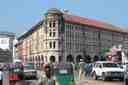
To spot the Gaffoor Building, look ahead for a huge, wedge-shaped corner structure with arched ground floors, pale stone walls darkened by time, and a rounded turret at the end-a landmark that seems to stretch out and hug the junction. Now, as you stand in front of this magnificent slice of Colombo’s past, let’s imagine the street as it was in 1915. Picture the clip-clop of carriages and the buzz of traders beneath the arches. The air smells faintly of spice and the sea, while the Gaffoor Building itself towers above like a proud ship’s prow, built by a man who certainly knew the value of a good gem. This was home to Noordeen Hajiar Abdul Gaffoor, one of Sri Lanka’s legendary jewel and gemstone traders. Years before, he founded N. D. H. Abdul Gaffoor & Sons at the Bristol Hotel in 1894. Gaffoor was no ordinary merchant-he was one of the rare few allowed to step aboard ships docked in Colombo’s harbor, dazzling travelers and sailors with sparkling sapphires and lustrous pearls. Imagine the gentle clink of gemstones being poured from velvet bags. Gaffoor’s fame grew so much that in 1901, he got to show his treasure trove to the visiting Prince and Princess of Wales. They no doubt admired his glowing pearls, glittering diamonds, rubies, and exotic artworks. And Gaffoor wasn’t content with just local fame; he took Sri Lanka’s gem story to the world, setting up displays at international expos from St. Louis to Philadelphia and London, each exhibition casting his legend a bit further. But the Gaffoor Building wasn’t all about jewelry. It quickly became one of Colombo’s most bustling commercial spaces. Inside, wooden floors echoed with footsteps of businessmen, the aroma of freshly printed books wafted from H. W. Cave & Co. upstairs, and rubber traders tapped out deals that would keep the colony running. Even the Australian High Commissioner called it home-at least from 1947 until his fancy for seafront views moved him elsewhere. Through the decades, the Gaffoor Building wore its history like a crown-and, let’s be honest, a few cobwebs too. In 2000, it was declared a ‘Protected Monument’, so even as the walls crumbled and water seeped under its foundations, the stories held strong. At one point, part of the building was even turned into a car park-imagine Lord Gaffoor himself parking a fancy horse-drawn carriage beside a tuk-tuk! As the years rolled on, saving the building became an adventure worthy of its own drama. Foreign buyers dreamed of transforming it into a glamorous hotel, but the ownership was muddier than monsoon puddles-claims from business empires, distant descendants, and a few determined squatters slowed everything to a crawl. Finally, the Sri Lankan Ports Authority and the Urban Development Authority swept in, promising dreams of a boutique hotel and bustling supermarkets, with the Sri Lanka Navy handy to help the renovation. Now, as the building stands-scuffed, elegant, and full of secrets-it waits patiently for its next chapter. If these walls could talk, they’d have plenty of clever tales and maybe a sparkling joke or two about diamonds and politicians!
Apri pagina dedicata →Look to your left for a grand, two-storey stone building with thick columns and tall windows-the massive structure with elegant details and a boxy shape standing out proudly from…Leggi di piùMostra meno
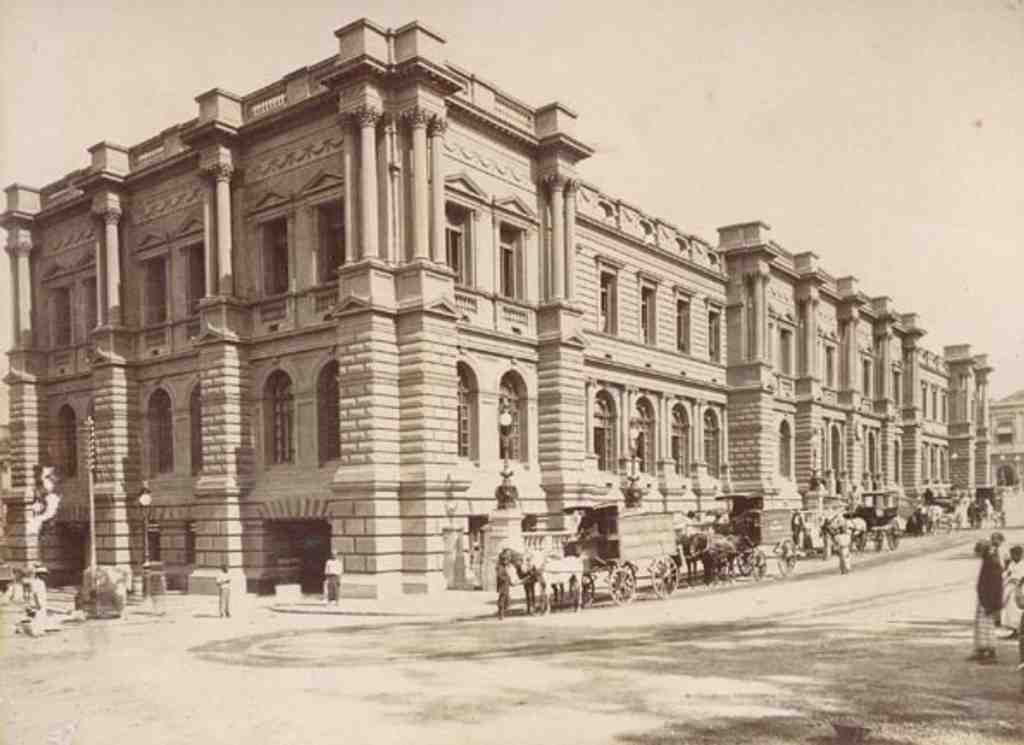
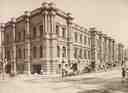
Look to your left for a grand, two-storey stone building with thick columns and tall windows-the massive structure with elegant details and a boxy shape standing out proudly from the corner is the Former General Post Office. Alright, stand right there and let your imagination travel back in time! Picture the year 1895, as the hot sun glints off sturdy grey granite quarried from Ruwanwella and Ratnapura. The ground beneath your feet was once a rough rock quarry-nothing like the bustling crossroads you see now. Suddenly, a grand project takes shape: a magnificent Edwardian building designed by Herbert Frederick Tomalin, an English architect whose mustache might have had as much personality as his drawings. He sketched out a true palace for mail, and with a trusty team of 375 workers-including 180 expert craftsmen-it took nearly five years to build. Just imagine the sound-the clang of steel beams, the echo of hammers on stone, and the endless chatter of workers setting this dream in solid rock. The building opened its doors in 1895, costing a whopping Rs. 372,961.65-Rs. 160,000 over budget, which I suppose proves that even in colonial Ceylon, builders were never good at sticking to an estimate! Walk up the grand stone staircase and you’d enter a spacious public hall, your footsteps clicking on brightly colored, intricate tiles. Look around-the walls mix Colonial Renaissance styles, with stout Doric columns underground and elegant Ionic and Corinthian influences above. The ceiling overhead gleams with polished papier-maché embellishments, like frosted cake on top of a mighty stone sandwich. At first, the General Post Office was more than just a place to send your aunt a postcard. On the ground floor, busy clerks worked at the parcel counters, sold postage stamps, handled savings, and managed the all-important registration desk, while upstairs, the Postmaster-General and the Superintendent of Telegraphs plotted the communication of a whole colony. It wasn’t just about letters-this building was Ceylon’s first major telegraph and telephone hub. After buying out the Oriental Telephone Company in 1896, they installed the country's first public telephone booth right here, on a sweaty August day in 1909. You can almost hear the excited chatter of Colombo’s first phone call-“Hello! Can you hear me now?” As bicycles rattled by and carriages rolled up to the curb, the post office was a swirling hive of activity, running smoothly (most days) for over a century. But history kept moving. In 2000, as the Civil War brought new dangers, Sri Lanka Post was ordered to move out; they barely had time to pack up the stamps! The Presidential Security Division took over, and suddenly the old GPO was quiet, its walls echoing old secrets and laughter from decades past. Time marched on, but the building refused to fade into the shadows-local artists revived its echoing halls during the Colomboscope arts festival in 2016. Even after all those decades, the old granite embraced new voices and ideas, proving that good architecture can handle just about anything. Locals weren’t ready to give up their beloved GPO. In 2017, postal workers went on strike, demanding that this beautiful building, and its brothers in Nuwara Eliya, Kandy, and Galle, be protected. Their noisy protest echoed off these proud walls until the government promised to take care of them. I guess you could say the post office always delivers-even if sometimes it takes a strike and a few decades! So there you have it: over a century of history, built from dust and granite, echoing with stories both whispered and shouted
Apri pagina dedicata →
Mostra altre 4 tappeMostra meno tappeexpand_moreexpand_less
Straight ahead, you’ll spot the Old Colombo Dutch Hospital by its low, red-tiled roofs and sandy-yellow walls, all wrapped around a broad, stone courtyard lined with sturdy…Leggi di piùMostra meno
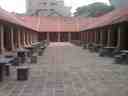
Straight ahead, you’ll spot the Old Colombo Dutch Hospital by its low, red-tiled roofs and sandy-yellow walls, all wrapped around a broad, stone courtyard lined with sturdy columns and rows of simple stone benches. Alright, take a deep breath and look around-you’re standing in front of what’s believed to be the oldest building in the entire Colombo Fort area! If Colombo were hosting a game of hide and seek for old buildings, this one would probably win by just sitting here, looking relaxed and ancient. Now, imagine the year is 1681-pirates might have been roaming the seas, ships sailing in with exotic goods, and here, Dutch officers and seafarers would stumble in from the harbor just nearby, weary from their long journeys. This place wasn’t built for shopping sprees or to host trendy cafes-it was once a hospital, one of the first of its kind, caring for those who fell ill while working for the Dutch East India Company. Picture sailors with sunburnt faces lying on simple mats, the sickest awarded a mattress-consider that real hospital luxury for the time! Their clothes? Shipped all the way from Java. Maybe you would have met the hospital’s resident doctor, Paul Hermann. Imagine him with a satchel of strange herbs, wandering about the courtyard, gathering local plants for his patients. He’s famous as the father of botany in Sri Lanka-so next time you forget to water your houseplant, just think, he’d be mildly disappointed! The old hospital was thoughtfully built with thick, cool walls and massive teak beams-designed to be strong enough to defy the tropical heat, hurricanes, and maybe even the odd stubborn patient. The long verandas running the lengths of the wings are perfect for catching sea breezes, and in the old days there was even a canal flowing right beside here-until the British, never ones for a romantic waterway, filled it in after they took over. Skip ahead through time-this place became a police station, then took a heavy blow in 1996 during a violent attack. But Colombo’s Dutch Hospital is nothing if not resilient. In 2011, it was reborn as the bustling shopping and dining precinct you see today, its old courtyards now echoing with laughter, clinking teacups, and maybe the occasional shopper arguing over a bill. So as you stroll under these old beams and soak in the atmosphere, remember-hidden behind these sturdy walls are barely-whispered stories of sailors, doctors, mystery canals, explosions, and centuries of Colombo’s changing heartbeat. Not bad for a “hospital,” right?
Apri pagina dedicata →To spot the Old Colombo Lighthouse, just look ahead for a tall, cream-colored tower with brown brick accents, arched windows, and a shiny gold dome perched right above a clock…Leggi di piùMostra meno
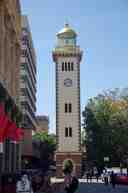
To spot the Old Colombo Lighthouse, just look ahead for a tall, cream-colored tower with brown brick accents, arched windows, and a shiny gold dome perched right above a clock face-it stands proudly at the street junction and is hard to miss! Now, let’s step closer-imagine yourself in the mid-1800s, right here at the busy heart of Colombo Fort. Picture the thunder of horse carriages, the scent of salty sea air drifting in, and everyone squinting up in awe at this brand-new marvel-the tallest thing in the whole city! This isn’t just any ordinary tower; this is Colombo’s grand Old Lighthouse and Clock Tower, finished way back in February 1857. But guess what? The design was dreamed up by none other than Emily Elizabeth Ward, the wife of the Governor himself. Talk about a power couple-she sketched the plans, and the finest engineers around got to work under her watchful eye! Now, get this-the clock you see ticking away up there arrived in Colombo from London in 1814. But, as with many great projects, the money ran out, and the clock had to nap in a warehouse for four decades. It wasn’t until this tower finally rose up that the city dusted off its old timekeeper and let it shine for everyone to see and hear. And oh, the sound! The main bell alone weighs as much as three grown lions, and the two extra bells ring out like backup singers. The clockwork inside was built by Dent-the same folks who made the famous ‘Big Ben’! So, when you hear it chime, you’re actually hearing a cousin of London’s famous bell. Here’s a twist-this tower didn’t start off as a lighthouse. Only in 1867 did it get its guiding light, installed right up there under the gold dome. Imagine sailors out at sea, spotting that triple flash every half-minute, each burst of light banishing the dark with kerosene flames, then gas, and finally electric bulbs. But the story gets funnier; as the city grew and skyscrapers started popping up, the light became pointless-nobody could see it past the towering new neighbors! By 1952, the lighthouse was officially turned off, its beacon outshone by progress itself. So yes, the Old Lighthouse can no longer save sailors, but it still keeps Colombo on time and reminds us all that here, a woman’s clever design turned a simple tower into a symbol of the city-shining bright, even after its lighthouse days are long gone. Don’t forget to look up for that golden dome-Colombo’s own dazzling crown!
Apri pagina dedicata →
Domande frequenti
Come inizio il tour?
Dopo l'acquisto, scarica l'app AudaTours e inserisci il tuo codice di riscatto. Il tour sarà pronto per partire immediatamente – tocca play e segui il percorso guidato dal GPS.
Ho bisogno di internet durante il tour?
No! Scarica il tour prima di iniziare e goditelo completamente offline. Solo la funzione chat richiede internet. Ti consigliamo di scaricare tramite WiFi per risparmiare dati mobili.
È un tour guidato di gruppo?
No – è un tour audio autoguidato. Esplori in autonomia al tuo ritmo, con la narrazione audio riprodotta dal tuo telefono. Nessuna guida, nessun gruppo, nessun orario.
Quanto dura il tour?
La maggior parte dei tour richiede 60–90 minuti, ma sei tu a controllare il ritmo. Metti in pausa, salta le tappe o fai pause quando vuoi.
E se non riesco a finire il tour oggi?
Nessun problema! I tour hanno accesso a vita. Metti in pausa e riprendi quando vuoi – domani, la prossima settimana o il prossimo anno. I tuoi progressi vengono salvati.
Quali lingue sono disponibili?
Tutti i tour sono disponibili in oltre 50 lingue. Seleziona la lingua preferita quando riscatti il codice. Nota: la lingua non può essere cambiata dopo la generazione del tour.
Dove accedo al tour dopo l'acquisto?
Scarica l'app gratuita AudaTours dall'App Store o Google Play. Inserisci il codice di riscatto (inviato via email) e il tour apparirà nella tua libreria, pronto per essere scaricato e avviato.
Se il tour non ti piace, ti rimborseremo l'acquisto. Contattaci a [email protected]
Pagamento sicuro con 


