Tour Audio di Siviglia: Echi tra Pietra, Spezie e Leggenda
Da qualche parte, sotto le strade assolate e le grandi facciate di Siviglia, secoli di intrighi ribollono appena fuori dalla vista. Questo tour audio autoguidato svela strati che la maggior parte dei visitatori non sa nemmeno che esistano, guidandoti dagli angoli nascosti del Palazzo di Altamira alle pietre custodi di segreti di Santa María la Blanca, attraverso i lussureggianti e storici sentieri dei Giardini dell'Alcázar e oltre. Quali tradimenti sussurrati echeggiarono dietro quelle eleganti porte del palazzo durante una rivolta a lungo dimenticata? Quali rituali scomparvero all'interno di una chiesa che un tempo era una moschea e poi una sinagoga? E perché la Regina Elisabetta II mangia marmellata nata dagli stessi alberi d'arancio sotto cui passeggerai oggi? Attraversa cortili ombreggiati, mercati persi nel tempo, lungo sentieri di giardini dove la regalità tramava e i ribelli sognavano. Il vero dramma di Siviglia è più vicino di quanto pensi. Sei pronto a vedere i suoi segreti svelarsi davanti ai tuoi occhi?
Anteprima del tour
Informazioni su questo tour
- scheduleDurata 60–80 minsVai al tuo ritmo
- straighten5.5 km di percorso a piediSegui il percorso guidato
- location_on
- wifi_offFunziona offlineScarica una volta, usa ovunque
- all_inclusiveAccesso a vitaRiascolta quando vuoi, per sempre
- location_onParte da Palazzo di Altamira
Tappe di questo tour
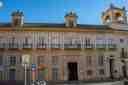
Take a look ahead-you’ll spot a grand, almost stately facade stretching across the street, gentle beige walls with salmon pink lines framing each window and corner, like an…Leggi di piùMostra meno
Take a look ahead-you’ll spot a grand, almost stately facade stretching across the street, gentle beige walls with salmon pink lines framing each window and corner, like an enormous delicious layer-cake. Look for the shutters and slim balconies lined up over the ground-floor windows, and those two curious little towers sticking up from the sloping tiled roof. Right in the center, a big, square entrance swallows the sunlight-a doorway that’s welcomed noblemen, secretive neighbors, and who knows… maybe even the odd ghost. Welcome to the Palace of Altamira. Now, if you’re trying to imagine what this street looked like centuries ago, swap the cars and signs for horse carts, swirling market smells, and lots of noisy chatter. This neighborhood, San Bartolomé, once belonged to the heart of Seville’s old Jewish quarter-a lively maze of baths, markets, and of course, houses full of stories. Archaeologists discovered that before this palace even existed, there was an Almohad-era house right beneath your feet. Imagine the busy life all around: prayers from a nearby mosque, minty steam from public baths, barter and banter in a tiny market. Fast forward to after the Christian conquest, and suddenly, this was a thriving Jewish community, with grand houses and wealthy residents (some even ended up working for the kings!). A little secret: a few of them were so well connected, the kings trusted them with all the counting and accounting-makes you wonder what was hidden in their ledgers, right? But Seville wasn’t always kind to its people. In 1391, after a brutal attack on the Jewish quarter, the land changed hands. Diego López de Zúñiga, a royal official, swooped in and built what eventually became this palace. For centuries, noble families-count this: Zúñigas, Dukes of Plasencia and Béjar, and at last, the Counts of Altamira-called this place home. As time passed, each added their own favorite touches (nothing says ‘family tradition’ like redecorating on a grand scale). By the 1800s, the palace had one more twist: it turned into a big rental house, stuffed with locals rather than nobles. Old decorations got hidden away, leaving future explorers with the fun job of uncovering its real roots. You’re standing in front of one of Seville’s largest palaces, built around sunny courtyards with arched columns, colorful family crests, and finely carved wood ceilings. If you listen closely, maybe you’ll hear the echoes-nobles in silks, neighbors arguing over the rent, or secret deals whispered in the moonlit corridors. So, keep your eyes open for clues to the old palace hiding behind its ‘modern’ face. Palace of Altamira has endless stories-and we’ve only just started! Ready to explore more royal secrets? Let’s go to our next stop! Curious about the building, rehabilitation or the cataloguing? Don't hesitate to reach out in the chat section for additional details.
Apri pagina dedicata →If you’re wondering what to look for, just lift your gaze a little above the bustling street-you'll spot a sandy-colored façade, with a tall, narrow front shaped like a tower.…Leggi di piùMostra meno
If you’re wondering what to look for, just lift your gaze a little above the bustling street-you'll spot a sandy-colored façade, with a tall, narrow front shaped like a tower. Look out for the pointed archway at the base, studded all along its rim, and rising above it, you’ll see two rows of tall, rounded windows, with a little bell tower perched on top and a cross catching the sunlight. The walls are decorated with a patchwork of small pink diamonds around the windows-impossible to miss! Now, imagine the echoes of footsteps that have passed here-centuries’ worth! Right here in San Bartolomé, you’re standing where one of Seville’s biggest mysteries is hidden in plain sight. This church-Santa María la Blanca-may seem like just another pretty face in the city, but its story is a wild ride through time. Beneath your feet used to be a mosque. Picture it: centuries ago, people knelt, facing south, right around where the chapel stands today. Then, after a mighty earthquake in 1356, the city gave this place a new life as a synagogue for Seville’s Jewish community. Oh, and just so you know-some of those ancient synagogue walls are still there, secretly hiding behind the glitter of the Baroque church! It’s like the ultimate game of historical hide-and-seek. When you look at the church now, you see its 17th-century style, with smooth columns that actually came from a quarry in Antequera, all thanks to a local guy named Justino de Neve. He hustled up the money from the community to makeover the church, even adding snazzy ceilings and a dome that seem to float in the sunlight. But don’t be fooled! The past lives on here-Muslims, Jews, and Christians have all called this spot their sacred home. After the Christians took Seville in 1248, King Ferdinand handed most of the city’s mosques over to the church, except for three-right here in the Jewish Quarter, kept as synagogues. In 1391 though, everything changed after a terrible riot, and this peaceful synagogue became a church. Through all that, you can still feel the old stories in the stone around you-just imagine all those secrets tucked behind the pink-and-white walls! So, take a close look at the entrance-the arch above you, the worn stones. You never know, maybe if you squint just right, you’ll see a ghost from centuries ago waving at you-or maybe it’s just the shadow of a pigeon! Either way, Santa María la Blanca is living proof that the best stories are stacked up, layer after layer, right under our noses.
Apri pagina dedicata →Take a look to your right-see those perfectly trimmed hedges forming neat squares and circles, like a green puzzle waiting for you to solve it? That’s the entrance to the magical…Leggi di piùMostra meno
Take a look to your right-see those perfectly trimmed hedges forming neat squares and circles, like a green puzzle waiting for you to solve it? That’s the entrance to the magical Seville Alcázar Gardens. The hedges are arranged so precisely, they almost look like someone spent ages with a giant ruler and a lot of patience. If you spot rows of lush bushes, colorful flowers peeking through, and the sun playing little light tricks on the leaves-that’s your sign you’ve arrived. Now, as you stand here, breathe in-can you smell the mix of orange blossoms and fresh greenery? Imagine yourself, centuries ago, as a royal walking in these very paths. These gardens have seen secrets whispered behind hedges since the Middle Ages. Over 170 plant species from all over the world live here now. In the 10th century, this was all a Muslim fortress. A bit later, in the 13th century, it became a patchwork of little gardens and big orchards. Fast forward to the Renaissance in the 16th century and-ta-da!-the gardens became full of exotic wonders. Try to find the Mercury Pond, the Dance Garden, and the Ladies Garden-they’re all hidden gems in this green maze. Here’s a royal fun fact: the oranges from these very trees are made into marmalade for none other than Queen Elizabeth II of England. So go on, strike a royal pose and maybe, just maybe, listen closely for the secrets the breeze still carries from centuries of history. And don’t get lost in the hedges-unless you’re looking for an adventure!
Apri pagina dedicata →
Mostra altre 17 tappeMostra meno tappeexpand_moreexpand_less
Look right in front of you and you’ll see a peaceful, rectangular plaza surrounded by leafy orange trees and blooming white flowers. In the center is an intricate, black…Leggi di piùMostra meno
Look right in front of you and you’ll see a peaceful, rectangular plaza surrounded by leafy orange trees and blooming white flowers. In the center is an intricate, black wrought-iron cross-proudly rising from a small, raised garden and framed by old white buildings. If the sweet scent of orange blossoms hasn’t grabbed your attention yet, those ornate iron lamps should do the trick! Welcome to the Square of Santa Cruz! Picture it: you’re standing where the heart of Seville has been beating for centuries. Long before this was a tranquil plaza, there stood a mosque, then a synagogue, and later a bustling church. These streets around you-Nicolás Antonio, Mezquita, Santa Teresa, and the Plaza de Alfaro-once echoed with the footsteps of all kinds of people. If you listen closely, maybe you’ll hear the faint echo of bells that once tolled over the old church here-where, believe it or not, the painter Murillo is buried. Now take a look at that wild cross in the middle, surrounded by a neat maze of hedges. That’s the Cruz de la Sierpes-crafted by Sebastián Conde back in 1692. Fun fact: this cross has gotten around more than most tourists! It originally stood elsewhere, and after some drama about it blocking traffic, got packed up, carted off, and was almost forgotten in a museum. But here it is, shining in the sun-and probably wondering if it’ll be moved again! Imagine the scent of sweet citrus, the dappled sunlight, and maybe-if you squint-the ghost of an old bishop mumbling about renovation costs. It’s amazing to think that this calm little garden was almost never built. If not for a lack of money and a bit of historical chaos, who knows? You might be standing inside a very crowded, very crumbling old church right now! So, take a deep breath, feel the gentle shade, and enjoy one of Seville’s most soothing little plazas. Be careful not to get lost in the hedges-unless you want to start a new tradition: the “Santa Cruz Hide and Go Seek Championship”!
Apri pagina dedicata →You’re right in front of Calle Mateos Gago-look ahead and you’ll spot this lively street by its classic cobblestones, lines of leafy orange trees, and rows of colorful buildings…Leggi di piùMostra meno
You’re right in front of Calle Mateos Gago-look ahead and you’ll spot this lively street by its classic cobblestones, lines of leafy orange trees, and rows of colorful buildings rising closely on both sides. The air here is thick with the scent of oranges and sun-warm stone, and if your nose is sharp, maybe a hint of frying tapas and strong Spanish coffee from all the outdoor cafés. On your left, check for the red awnings of the Giralda Bar-a perfect local landmark-and tiny balconies bursting with flowers. Now, let’s step back in time. Imagine the bustle of shoemakers hammering away along what used to be called Borceguinería Street-yes, this was footwear HQ for centuries! If you feel a rumble under your feet, don’t panic-it’s just the ghost of a Roman marketplace beneath you, because this spot is actually the highest point in Seville’s old city. Here, Romans settled, then the Moors moved in, and during the Almohad period, there was an explosion of baths and houses, fueled by the nearby mosque, now the cathedral, and a water depot. This street is like a living timeline. In the 1800s, it got its name after Francisco Mateos Gago, a clergyman and scholar who lived just around the corner. But of course, before it became the broad(ish) avenue you see now, it was the twistiest, narrowest street in town-so slim you’d probably have to walk sideways while dodging processions at Easter! Look up and you’ll see architecture by famous Aníbal González at number 24 and 26, one with a shell-covered façade-it’s not just the restaurants that are full of surprises around here! And if you spot a sign at number 21, that’s where the historian Santiago Montoto was born-his dad was a local poet, so you know there’s a bit of a creative streak in this street’s history. So take a breath, listen for the echo of ancient footsteps, and let your imagination wander. Just be careful-one more expansion project and Seville’s processions might end up needing sports cars instead of floats!
Apri pagina dedicata →To spot the Arzobispal Palace, look for a strikingly broad, pinkish-red building with cream-colored frames around its tall windows. The roof is covered in traditional tiles, and…Leggi di piùMostra meno
To spot the Arzobispal Palace, look for a strikingly broad, pinkish-red building with cream-colored frames around its tall windows. The roof is covered in traditional tiles, and if you glance up, you’ll notice two little rooftop lookout windows popping out like curious eyebrows. The grand entrance in the center is decorated with plenty of carved stone-imagine an ornate sandwich, with statues and twisting designs holding up a small balcony. You can't miss it; it takes up almost the entire side of this square, and it feels like royalty might walk out at any second. Right here in front of you is the Arzobispal Palace of Seville, the grand residence of the Archbishop, standing proud in the lovely Plaza Virgen de los Reyes. If these walls could talk, they’d whisper secrets of power, peace, and maybe a little bit of palace drama. Picture it: the year is 1251, and the king himself is handing over houses to the bishop so he can build this impressive home. It wasn’t always so unified-it started as a patchwork of houses with stables, vegetable gardens, even old wine cellars. Over centuries, archbishops kept adding more bits and pieces, like a never-ending game of palace Tetris. As you stand here, imagine the clatter of horse hooves echoing through the courtyard, messengers delivering royal letters and the smell of fresh bread from the palace kitchen. Now, this place is massive, covering nearly a whole city block! Inside, there are beautiful patios, old Roman pipes (yes, those Romans left their plumbing everywhere), and even ancient arches from the Muslim era. The palace has seen peace treaties-nobles settling arguments here-and survived wild renovations as every new archbishop tried to leave his mark. Some even added their own shields on the walls, like giant “I was here” stickers. In the 1500s, they even brought water directly from the Alcázar, so you know nobody here was ever thirsty! Walk around, and you can almost hear the shouts of builders, the clinking of armor, and the excited gossip of visiting nobles. Nowadays, the Archbishop still lives here, and you can visit-if you come with a group, and only on special Saturdays. Maybe someday you’ll get a peek inside. For now, just enjoy the grand view and wonder at all the stories these windows have seen-just don’t knock on the door, unless you have royal business!
Apri pagina dedicata →Alright, here we are! If you look just ahead, you’ll spot one of Seville Cathedral’s most dramatic sights: a truly royal spectacle! Standing tall and serious, four bronze kings in…Leggi di piùMostra meno
Alright, here we are! If you look just ahead, you’ll spot one of Seville Cathedral’s most dramatic sights: a truly royal spectacle! Standing tall and serious, four bronze kings in rich robes hold up a large, heavy stone coffin on their shoulders. Don’t worry, they won’t drop it-these guys have been at it for over a hundred years. The detailed crowns, capes, and shields glint under the cathedral’s light, and behind them, you can see the grand, lace-like walls and giant paintings that only add to the drama. It’s like a medieval superhero team, on a really slow-moving mission. You’re looking at the Tomb of Christopher Columbus-the final stop for the man who wouldn’t stop traveling, even after he died! Here in 1899, Columbus found his “final” rest (and I say “final” because his remains moved around more than your lost luggage after a connecting flight). Just imagine: Columbus dies in Valladolid in 1506, but that was just the beginning of his posthumous road trip. First, he was laid to rest in Valladolid, then his son Diego, missing his dad, ordered the bones brought to Seville’s Cartuja Monastery. The monks there took him in, but not for long! Over the centuries, the story of these bones picks up tension, intrigue, and family drama. Historians puzzled over manuscripts that-oops-no longer exist. Was he really sent to Santo Domingo in 1536? Or did he hitch a ride on a grand ship leaving with royalty a few years later? Royals, vicereines, even a famous priest named Bartolomé de Las Casas, get involved in the great Columbus shuffle. Then, in 1795, after a long Caribbean vacation, he makes his way to Havana. Think of this tomb not just as a memorial, but a giant, stately “lost and found.” And there’s still a bit of a mystery-are all his bones really here? Some say a few pieces might have missed the boat. But right here, under those silent, heavy-lifting kings, you’ll find the world’s most famous explorer-finally standing still, at least for now. So, take a moment. Soak in the echo of history, the cool cathedral air, maybe imagine the footsteps of monks, kings, and even explorers. Columbus’ journeys may have changed the world, but this was one trip he couldn’t plan with a map!
Apri pagina dedicata →If you look straight ahead, you’ll spot a gigantic stone building with soaring walls, delicate carvings, and a tower rising like a lighthouse above the Seville skyline. That’s the…Leggi di piùMostra meno
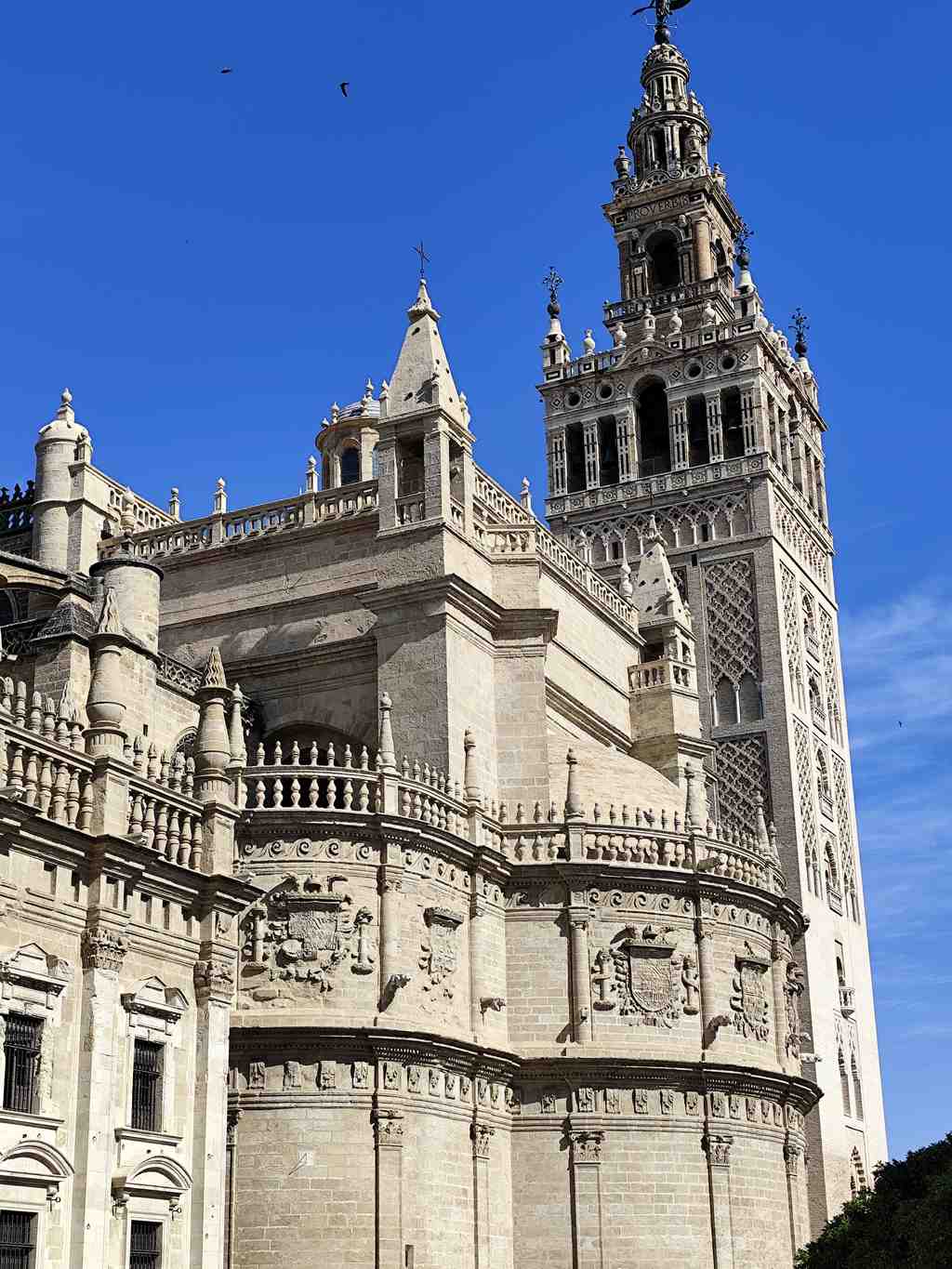
If you look straight ahead, you’ll spot a gigantic stone building with soaring walls, delicate carvings, and a tower rising like a lighthouse above the Seville skyline. That’s the mighty Seville Cathedral, with the famous Giralda tower right next to it. Notice its creamy, sun-baked stone and the rows of little balustrades like a crown around the top-look up, way up, and you’ll see the bells just waiting to ring out. Alright, picture this: You’re standing before the Santa, Metropolitana y Patriarcal Iglesia Catedral de Santa María de la Sede y de la Asunción de Sevilla. Phew, that’s a name with a royal ring, isn’t it? But let’s just call her the Seville Cathedral-she prefers it, trust me. This isn’t just any church; this is the largest Gothic cathedral on earth! In fact, the Guinness Book of Records certified it in 1988. When you stare at these walls, you’re looking at centuries of stories, mysteries, and the occasional ghostly rumor. Here's a little secret: the ground you’re standing on was once the site of an enormous mosque, built during the days of the caliphs, before Seville became a Christian city. Imagine the swish of silk robes and the whispers of traders as they crossed the giant courtyard lined with orange trees-some of those oranges are still growing just around the corner! The Christians moved in after conquering the city in 1248 and thought, “Let’s build a church so big, people will think we’re crazy!” Well, they did it. The current cathedral was begun in 1401 but wasn’t finished for almost 200 years-talk about taking your time on a home renovation. Through wars, earthquakes, and a parade of kings and queens, countless workers, and even a few runaway architects shaped what you see today. The Giralda, that spectacular bell tower looming over your head, was once the mosque’s minaret, and now it guards the city as one of Seville’s most beloved icons. Today, bells ring out, carrying voices over the roofs and plazas. Inside, the cathedral is a little like a treasure chest-home to the tomb of Christopher Columbus and the resting place of kings like Ferdinand III and Alfonso X. So if you suddenly feel a chill on your neck, don’t worry, it’s probably just a draft… or Christopher Columbus rolling over because someone said he discovered America by accident. Every year, over two million people pour through these doors, their footsteps blending with centuries of prayers, celebrations, and secrets. On special feast days, the whole street erupts-you might just catch the distant scent of incense if you imagine hard enough. So, take a moment in front of these incredible stones and imagine the roar of a medieval marketplace, the shouts of stonemasons, and the quiet echo of history. This cathedral is more than a building-it’s the beating heart of Seville, standing proud as ever, and maybe, just maybe, laughing quietly at every tourist who tries to pronounce its full name. Yearning to grasp further insights on the materials used, giralda or the patio de los naranjos? Dive into the chat section below and ask away.
Apri pagina dedicata →Take a look up-way up!-and you’ll see the Giralda rising into the sky, its warm stone catching the sun. You’re standing before Seville’s most iconic tower, where history stacks…Leggi di piùMostra meno
Take a look up-way up!-and you’ll see the Giralda rising into the sky, its warm stone catching the sun. You’re standing before Seville’s most iconic tower, where history stacks itself up like a layer cake from two very different worlds. Imagine it’s the 12th century. Instead of bells, the air is singing with the call to prayer: the bottom of the tower was originally a minaret for Seville’s old mosque, built by the Almohads, a powerful Muslim dynasty from North Africa. If you listen closely, you might just hear the ancient whispers of architects shouting instructions and masons chipping away. Jump forward to the 16th century-BAM! Seville is now a bustling Christian city, and a new top is added to the Giralda, crowned with a bell chamber and a bronze statue called El Giraldillo. This statue isn’t just any decoration-it acts as a weathervane, spinning with the winds and keeping an eye on Seville below. They say on nights when the wind howls, you can almost hear her creak as she turns. The Giralda stands nearly 95 meters tall. That’s taller than some of the greatest heroes in history stacked on each other’s shoulders-why, it might even fit ten of them and a donkey! It’s so impressive that architects around the world tried to copy its magic, but the original charm of Seville’s Giralda is something you have to see (and maybe even touch) for yourself. So as you gaze up, just remember-you’re standing at the crossroads of civilizations, where every stone has a story, and the top always reaches for the sky. Don’t forget to wave at El Giraldillo! She might be facing your direction. Interested in knowing more about the stylistic precedents, tower description or the dimensions
Apri pagina dedicata →You’re standing right at the edge of Avenida de la Constitución, one of Seville’s most grand and bustling avenues. To spot it, just look ahead-you’ll see elegant, cream-colored…Leggi di piùMostra meno
You’re standing right at the edge of Avenida de la Constitución, one of Seville’s most grand and bustling avenues. To spot it, just look ahead-you’ll see elegant, cream-colored buildings lining both sides of a wide, curving boulevard. Notice those sleek tram tracks weaving down the center and, on your right, the fabulous round-domed, striped building? That’s the iconic Adriática building, keeping watch since the early 20th century. The elegant facades here mix neomudéjar arches with regal balconies, like something straight out of a Spanish adventure movie-minus the sword fights, unless someone argues over churros. Now, let’s rewind your mind to centuries ago. Imagine you’re standing by a lost arm of the Guadalquivir River, water lapping where the trams now glide. Back then, this wasn’t a smooth avenue-it was bustling with sailors hauling barrels, merchants shouting out deals, and perhaps the odd runaway chicken making its escape from a Genoese trader. As Seville boomed with the riches of the Americas, this street filled with book printers in the 1400s, silversmiths in the 1500s, and tailors with scissors sharper than any conquistador’s sword. The noise was legendary. When business got out of hand, the Cathedral’s canons chained up the square, literally! They put up actual chains to keep things under control. Imagine the confusion-are we shopping, or staging a medieval obstacle course? Even the king jumped in, ordering the great Archive of the Indies to be built right here so all those merchant deals had an official place. But don’t worry, you won’t have to dodge horses today-the avenue turned pedestrian in 2006, so now it’s just footsteps, laughter, and the swish of the Metrocentro tram. So, whether you’re heading for a pastry or just soaking up the history, remember: every cobblestone has a funny, dramatic, or mysterious tale, and you’re walking across them right now. Careful, though! If you hear clinking chains… it might just be the memory of some very cranky canons!
Apri pagina dedicata →You’re right in front of Plaza Nueva! Take a look ahead-you’ll know you’ve found it when you spot a wide open space paved with pale stones and framed by leafy green trees. Right…Leggi di piùMostra meno
You’re right in front of Plaza Nueva! Take a look ahead-you’ll know you’ve found it when you spot a wide open space paved with pale stones and framed by leafy green trees. Right in the middle stands a tall statue of a man on horseback, up on a chunky marble pedestal. Grand old-fashioned street lamps stand guard like sentinels along the edges, and just behind, you’ll see the elegant symmetrical building front, hinting at Seville’s official power. It’s a plaza that feels both busy and peaceful at the same time-perfect for people watching, or just taking in the history. Now, imagine this: centuries ago, you’d be standing in the water here, not on stone. That’s right, this very plaza was once under a branch of the Guadalquivir River! It wasn’t until the Visigoth era that it was finally dried out. A thousand years back, merchants, monks, and even Roman sailors would have passed through, and sometimes they left behind anchors or wooden planks from ancient ships, discovered much later during construction. Fast forward to the 1800s, and this space went through an identity crisis bigger than any soap opera star! It started as Plaza de la Princesa María Isabel-named in honor of a royal born in the Alcázar. Then, thanks to revolutions, republics, and royal comebacks, the square’s name changed more often than the weather. Freedom? Republic? San Fernando? No one could keep up! But the locals stubbornly called it Plaza Nueva, or “New Square”-maybe just to keep things simple. In the 13th century, King Fernando III handed the land over to Franciscan monks, who built a huge convent. At one point, there were 300 monks here-maybe that’s why things were always so quiet! But then, after wars and revolutions, the convent was torn down, leaving behind only a little chapel and a rennaissance-style arch that you can still find. Finally, city leaders decided this would be Sevilla’s “main square”-a symbol of civic life. Imagine the hustle and bustle when the town hall’s façade was built in 1852, and architect Balbino Marrón designed the benches and leafy trees you see today. The plaza became the place to meet, stroll, and gossip-because let’s be honest, everyone needs a good plaza to catch up on news. So, whether you’re here to admire the old stones, picture Seville’s watery past, or just count how many people are feeding pigeons, Plaza Nueva is the spot where history mixes with daily life-one name, many stories, and always something happening. Interested in knowing more about the toponymy, creation of the square or the the square
Apri pagina dedicata →If you look straight ahead, you’ll spot a shiny, modern tram gliding along low tracks-sleek and silver with red stripes, almost like a futuristic snake weaving through Seville’s…Leggi di piùMostra meno
If you look straight ahead, you’ll spot a shiny, modern tram gliding along low tracks-sleek and silver with red stripes, almost like a futuristic snake weaving through Seville’s beautiful old buildings. The tram is smoothly tucked between café terraces on your left, shaded by red umbrellas, and a line of colorful townhouses with elegant balconies on your right. If you're looking for the Metrocentro, just follow the rails with your eyes-you can’t miss it when the tram rolls up with a soft electric hum! Alright, picture this: you’re standing in the heart of Seville, and right in front of you is the Metrocentro, also called the Tranvía de Sevilla. This tram is the city’s very own time machine-except, instead of flux capacitors, it runs on electricity and carries more than 3.5 million passengers each year. Let’s rewind a little bit. Imagine the year is 1887. Instead of the slick tram you see now, horses clip-clop down these very streets, pulling old wooden streetcars packed with locals on their way to markets and fiestas. By 1897, horses got to put their hooves up because electricity took over. Seville was buzzing with trams! But, as the city grew busier (and maybe a little too wild), these trams kept running into... well, anything that crossed their path. By the 1960s, the trams retired, and buses and cars took over, making the city noisier and cloudier. Now, fast forward to the early 2000s. The city was determined to bring back the old tram spirit, but with a modern twist-no more dodging runaway horses! The goal? Clean up the air, make more room for strolling, and link the historic center with the city’s main transport hubs. This single line, called T1, stretches from Pedro de San Sebastián to Plaza Nueva. At first, there was drama-a few grumpy drivers and shopkeepers worried about missed deliveries. But when the Metrocentro finally opened in 2007, people gathered to cheer as the first tram arrived. It cost over sixty million euros, but it was worth it. Now, you can catch this tram right here and glide silently past the Cathedral, through pebbled plazas, and into the history of Seville in just a couple of stops. So if your feet are aching-or if you just want to travel like a modern Sevillian-hop on! At least now, the biggest hazard is getting caught daydreaming out the window. Wondering about the route, infrastructure or the number of passengers? Feel free to discuss it further in the chat section below.
Apri pagina dedicata →To spot Seville’s Consistory House, just look for an impressive light stone building with beautiful carvings and lots of decorative details on its walls. Notice the arches and…Leggi di piùMostra meno
To spot Seville’s Consistory House, just look for an impressive light stone building with beautiful carvings and lots of decorative details on its walls. Notice the arches and columns around the doors and windows, the ironwork on the windows, and the rectangular shapes all along the structure. It stretches out proudly on the corner of the Plaza Nueva, facing the open square. If you're standing in the middle of the plaza, you can't really miss it-it’s the one that looks like it was built to impress kings (and perhaps a few nosy tour guides, too). Here we are in front of Seville’s Consistory House, which is just a fancy way of saying “the city hall”-but wow, what a city hall! Can you imagine living in a city where this was your office? In the 1500s, Seville was bursting with excitement, money, and a few daring architects. They wanted a town hall that would make everyone passing by say, “Oof, I wish my city had one of those!” This building is special because it’s the very first example of what’s called the Plateresque style in all of Spain. Plateresque means “like a silversmith’s work,” and if you look closely, you’ll see it-tiny details, swirling leaves, stone lace, and faces peeking out from the walls. Imagine stonemasons from all over Spain and even France, chipping away day and night to get every curve and twist just perfect. But believe it or not, it wasn’t easy getting this place built. There were stones shipped in from Utrera and El Puerto de Santa Maria, tools flying in, and even a few heated arguments when the money ran out (because who hasn’t had a renovation go over budget?). Sometimes work stopped for years! You can almost hear the city council shouting, “We need more stone, and hey, has anyone paid the builder?” People from the dusty old days walked right where you’re standing-ministers with fancy hats, bustling merchants, and maybe a few sneaky cats hunting pigeons. Even the Emperor Charles V was here for his famous wedding. Look up, and try to count all those different faces and shields in the stone. It’s like a centuries-old game of “Where’s Waldo.” And if you listen closely, you might imagine the clang of tools and the murmur of voices echoing off these ancient walls. So next time you’re annoyed about city paperwork, remember: at least you don’t have to chisel your requests into the side of a palace!
Apri pagina dedicata →You’re almost at Calle Sierpes! To spot it, just look ahead for a narrow, lively street lined with colorful buildings-yellow, white, and red facades-with classic iron balconies.…Leggi di piùMostra meno
You’re almost at Calle Sierpes! To spot it, just look ahead for a narrow, lively street lined with colorful buildings-yellow, white, and red facades-with classic iron balconies. Right above you, you can’t miss those broad, white cloth canopies stretching from building to building-they flutter gently in the breeze to shade everyone from the Andalusian sun. On either side, you’ll see the glow of jewelry shop windows, shoe stores, and a quirky old clock outside Casa Calvillo. When you walk down Sierpes, you step right into the heart of Seville’s hustle and bustle. Alright, let’s step back in time and add a sprinkle of legend to your stroll. Imagine this: the air is thick with the smell of fresh bread and the excited chatter of shoppers. The street is so lively you’d think it never sleeps! Back in the day, Calle Sierpes was no ordinary street. Merchants would shout out their best deals, hoping to lure you inside for silk scarves or a shiny pair of Sevillian shoes. In spring and summer, clever locals hoisted these sun-blocking canopies, turning Sierpes into a cool, shaded tunnel-a welcome break from the sun that could toast bread on the pavement. But let’s talk about the name, “Sierpes.” You’d think it means the road slithers like a snake, but nope, not even close! Believe it or not, the street once had a much darker reputation. Legend says that in the 15th century, children were mysteriously disappearing all over Seville. People spread rumors, each blaming a different villain-some pointed fingers at foreigners, some said it was old family feuds, others even blamed monstrous creatures. Then, out of nowhere, a clever prisoner named Melchor pops up. He’s tunneling his way out from jail, desperate for freedom, when suddenly he stumbles upon something huge in the shadows of the Roman sewers: a monstrous, six-meter-long snake with a dagger stuck in its back and… well, let’s just say some very grisly remains nearby. He manages to kill the beast, and his reward? Not gold or glory, but a ticket to freedom and even a wedding with the warden’s daughter! Now that’s what I call happily ever after-with a twist. And the name? Well, ever since, folks called it “the street of the snake,” or Sierpes. If you listen closely on a quiet night, maybe you’ll hear the soft rattle of scales from below… or maybe it’s just someone dragging their shopping! So as you wander along Sierpes, feel the layers of legend and laughter under your feet. Oh, and don’t forget to keep an eye out-these shops have a way of tempting visitors until their wallets disappear, too! To delve deeper into the denomination, twinning or the traditional shops, simply drop your query in the chat section and I'll provide more information.
Apri pagina dedicata →Look up ahead! You can’t miss the Walls of Seville-they’re right in front of you, rising tall and strong. You’ll see blocks of ancient stone topped with rows of square little…Leggi di piùMostra meno
Look up ahead! You can’t miss the Walls of Seville-they’re right in front of you, rising tall and strong. You’ll see blocks of ancient stone topped with rows of square little hats-okay, they’re really battlements, but they do look like the wall’s wearing a crown, don’t they? If you look closely, you’ll spot a square-shaped tower and an archway, all set against the bright blue sky. The walls stretch along the road, rough and sturdy, dotted with tufts of grass and little nooks that could easily hide a medieval secret or two. Imagine it’s over a thousand years ago. Instead of the sound of cars, you’d hear the clatter of hooves and the chatter of people heading to the noisy city inside. These are the mighty Walls of Seville, once wrapping the entire old city in a stony hug. Romans, Visigoths, Muslims, Christians-they’ve all shaped these defenses. The oldest bits are hidden deep underground, but what you see now mostly comes from the 12th century, built by the Almohads-you know, people who believed in strong walls and even stronger doors! Seville’s walls have seen wild days-Vikings once came charging in! After that, they had to patch things up, fast. Over the centuries, the size of Seville grew, and with it, the city’s walls got stretched, rebuilt, and renovated like a medieval extreme home makeover. There were 18 giant gates once, now just a brave four remain: Macarena, Córdoba, Aceite, and Alcázar. Some say there were twelve gates, others swear it was thirteen-I like to think the walls themselves remember, but they’re keeping it a secret. Most of what you see is packed earth and stone, almost two meters thick, and every forty or fifty meters-bam!-another tower, ready for a guard with sharp eyes and maybe a sharper sense of gossip. All this weight and history just to keep out invaders… or maybe just nosy neighbors. So when you’re standing here, picture yourself a medieval citizen ducking through the old city gates, or maybe a brave defender leaning over the wall with a boiling pot of… soup? Actually, probably oil. Either way, these stones have seen more drama than a telenovela and are still standing strong. For a more comprehensive understanding of the gates and shutters to access the city, preserved sections of the wall or the photo gallery, engage with me in the chat section below.
Apri pagina dedicata →To spot the House of Pilate, just look for a grand building with a pale stone façade and gorgeous columns. As you approach, you’ll notice a decorative entrance and a hint of a…Leggi di piùMostra meno
To spot the House of Pilate, just look for a grand building with a pale stone façade and gorgeous columns. As you approach, you’ll notice a decorative entrance and a hint of a peaceful courtyard with arches. If you catch a glimpse through one of the doors or gates, you might see a stunning fountain sitting right in the middle, surrounded by tiles and two levels of archways. The building almost looks like it’s showing off a blend of different architectural styles, with some parts looking Italian, others with that classic Spanish twist. Alright, you’re standing in front of the House of Pilate - don’t worry, there are no Roman governors here! Take a deep breath. Can you imagine the echo of footsteps on these old stones? This palace is a patchwork of grand ambitions-built in the late 1400s and expanded over the centuries. It was home to some of Seville’s most powerful folks, changing names almost as often as your favorite series changes plot twists! One decade it’s the Palace of the Major Governor, then suddenly, it’s the Palace of the Marquis, later, the Duke’s main house… and, for a while, it was even called “The Palace of the Donkeys.” I know, quite a comedown for such a fancy spot! Shall we step further in? Look at those arches above you; they’re a marriage of Italian style and Mudejar art-a real design mashup. The tiles hug every wall with wild patterns. Imagine the whiff of orange blossom mixing with the cool water of the fountain in the hot Sevillian sun. Legend says the first Marquis to live here returned from Jerusalem and realized the distance from this palace to the Cross of the Field in Seville was exactly the same as the distance from Pilate’s palace to Calvary in Jerusalem. Spooky coincidence or divine math? That’s why this was called the House of Pilate! You’re standing where lords and ladies walked, where donkeys may have clopped through, and where a glow of history still lingers. If these walls could talk, they’d probably ask for new names every century! Ready to wander on, or shall we hunt for some original family crests etched on these stones? Exploring the realm of the name, description or the film and television set? Feel free to consult the chat section for additional information.
Apri pagina dedicata →You’re coming up on Pilate’s House! To spot it, look for a grand marble entrance and a courtyard straight out of a movie set-literally. The palace features elegant stone arches,…Leggi di piùMostra meno
You’re coming up on Pilate’s House! To spot it, look for a grand marble entrance and a courtyard straight out of a movie set-literally. The palace features elegant stone arches, marble columns, and a stunning central fountain with statues that seem to watch your every move. Surrounded by tiled walls and perfectly shaped gardens, it’s impossible to miss once you’re close. The sense of luxury and calm draws you in, and you might even feel like royalty just walking up. Now, picture yourself standing in front of this magnificent palace-the Casa de Pilatos. Take in the sounds of gently trickling water from the fountain, the bright sun reflecting off colorful tiles, and statues of Roman emperors gazing down at you, as if sizing up today’s visitors. Built way back in the late 1400s, this palace is basically the original “mashup.” It mixes the grand, straight lines of Italian Renaissance style with the mysterious beauty of Mudéjar design-think intricate carvings, cool blue tiles, and those dramatic archways. Here’s where it gets even more interesting: the whole palace is named after Pontius Pilate, thanks to its very first owner, Fadrique Enríquez de Rivera. He journeyed all the way to Jerusalem and, inspired by the Holy Land, began a tradition of a Via Crucis right from the palace. The route stretched the same distance as Pilate’s praetorium to Calvary-talk about commitment to a theme! Inside, you’ll find rooms with names like the Hall of the Praetorian and Chapel of the Flagellations-not so much for light bedtime reading, but definitely great conversation starters. And those decorations? Over 150 different azulejos, handmade in the 1530s, cover the walls. Each one is a splash of color and history. Take a deep breath-can you smell the orange blossoms in the garden? Maybe you’ll bump into a movie star, too, because scenes from “Lawrence of Arabia,” “1492,” and even Tom Cruise’s “Knight and Day” were filmed right where you’re standing. Imagine them dashing through these hallways or plotting world-changing adventures in the sun-drenched courtyard. If those statues could talk, do you think they’d give out movie spoilers? So, take your time here-peek through the arches, let your fingers brush over the ancient tiles, and listen for echoes of dukes, pilgrims, and maybe even a director yelling, “Action!” This is Seville at its grandest-and quirkiest.
Apri pagina dedicata →Take a look out in front of you, towards the water! You’ll notice a view just like in this old painting-a long, low bridge, almost floating over the river, stretching across the…Leggi di piùMostra meno
Take a look out in front of you, towards the water! You’ll notice a view just like in this old painting-a long, low bridge, almost floating over the river, stretching across the Guadalquivir, held up not by stone or steel, but by boats! The bridge almost looks like a row of large wooden boats tied together side by side, making a sort of snaking path just wide enough for people and carts. It’s low to the water, swarming with travelers, merchants, horses, and even a few adventurers who may or may not be lost. On both riverbanks, imagine the hustle and bustle-vendors calling out, nobles in carriages, sailors readying their ships, and kids hoping someone drops a tasty snack. Now, here you are at the place of the legendary Boat Bridge of Seville! Believe it or not, this was the city’s very first bridge over the river, and it stood alone for nearly seven centuries. No pressure, right? Before this clever creation, Seville’s two sides were only joined by ferries, floating when the current allowed and leaving hopeful travelers waving their arms at the shore when it didn’t. The bridge was ordered up in 1171 by Abu Yaqub Yusuf, a caliph who seemed to think, “Why can’t we cross the river in style-and maybe avoid getting our socks wet for once?” Since they couldn’t build a stone bridge-rivers and strong foundations do have a complicated relationship-the solution was pure genius: build a bridge out of boats! Iron chains held chunky boats in a line, and strong men laid wooden planks on top. Walking across in those days meant you could feel the bridge gently bobbing and creaking underfoot, especially if the river decided to throw a tantrum that day. It became the lifeline connecting Seville to the bustling Triana district, the farmlands of Aljarafe, and beyond. But, oh, this bridge had drama! Floods, raiders, and storms put it to the test. Sometimes the river would rise in fury, unhooking the bridge, leaving everyone on one side debating if they really needed to get across after all. Picture sailors and townsfolk scrambling, covered in mud and calling for anchors, barrels, or maybe just a bit of luck. The Bridge of Boats lived through battles and sieges, too. In fact, when Fernando III came to take the city in the 1200s, his admiral crashed two big ships right into the bridge to break it loose. Take that, traffic jam! Whether folks were running to market with fresh bread, or armies were marching in armor, this floating marvel was the stage for generations of Seville’s wildest stories. So next time you overhear someone complaining about waiting for a modern bridge to open, just smile and remember: at least it isn’t made out of boats!
Apri pagina dedicata →All right, you’re almost at the Provincial Historical Archive of Seville, standing right in front of a grand building that doesn’t try to hide its importance! To spot it, look for…Leggi di piùMostra meno
All right, you’re almost at the Provincial Historical Archive of Seville, standing right in front of a grand building that doesn’t try to hide its importance! To spot it, look for a big neoclassical facade, with four tall, fluted columns supporting a triangular pediment-think ancient Athens goes on a Spanish holiday. The main entrance is right beneath those columns, behind a wrought-iron gate. You’ll also see two waving flags above-one of Spain and one of Andalusia, letting you know this place means official business! But don’t let that serious look fool you; this building has its own dramatic story! Imagine the year is 1895. Workmen march back and forth under the scorching Seville sun, constructing what was first meant to be the Palace of Justice. The noise of chisels and hammers fills the air. Years go by, courtrooms are filled with murmurs about justice and secrets... but by the 1970s, the judges pack up, the gavel goes quiet, and the old palace gets abandoned. The place falls silent and a little ghostly, gathering dust until the city decides to resurrect it for a new purpose. In 1981, the buzz of construction returns-this time to make a home for Seville’s memories. By 1987, it’s ready! Inside, imagine marble staircases twisting up under your feet and quiet patios where whispers of the past bounce around. Standing here today, you’re at the entrance to a treasure trove of stories and history. Every document inside is like a piece of a giant puzzle, keeping the memory of Seville alive. All sorts of fascinating records are stored here-pages that witnessed the making of laws, collections from the old courts, even dusty, secret notary records from centuries ago! Nowadays, the Archive plays three heroic roles: it manages documents for the government, it protects your rights by holding records for anyone who needs proof, and it safeguards the cultural memory of Seville-like a giant, official brain. If these walls could talk, I bet they’d have some juicy stories to tell! So, next time you pass by this spot, give a little wave to the silent keepers of Seville’s secrets. Who knows? Maybe your own story is filed away in there too-hopefully somewhere under “Legendary Visitors.” Interested in a deeper dive into the building, creation and purpose or the ownership and management? Join me in the chat section for an insightful conversation.
Apri pagina dedicata →Keep your eyes peeled for a courtyard-style entrance with deep red borders, topped by a quirky little balcony. Look up-yes, way up there! You’ll spot two colorful figures: one, a…Leggi di piùMostra meno
Keep your eyes peeled for a courtyard-style entrance with deep red borders, topped by a quirky little balcony. Look up-yes, way up there! You’ll spot two colorful figures: one, a flamenco guitarist with a confident strum, and the other, a woman in full flamenco dress, hands on the iron railing, maybe scanning the crowd for the next big star-or perhaps just for good tapas. Trust me, when you see this duo perched above the bold red sign reading “Casa de la Memoria,” you’ll know you’ve arrived! Now, welcome, traveler, to the Memory House of al-Ándalus! This isn’t just any old museum; it’s where the spirit of old Seville still jingles in the air. Imagine centuries ago, horses clopping over these same stones-because guess what? You’re standing in what used to be the stables of the grand Lebrija Palace. The thick walls, the old courtyard, even the giant painted bowls tucked away in corners-they all have stories to tell, from the 1700s and 1800s, handcrafted over the river in the famous potteries of Triana. Step just a toe inside, and you’ll sense a different electricity. Maybe you’ll hear a distant clap. That’s not your imagination-it might be the echo of a flamenco show warming up! Here, every night feels like a festival. You could stumble into a soulful guitar performance, feel the heartbeat of a dancer stomping across the patio, or catch an exhibition that whispers secrets of Andalusian history. Even the lantern above you seems to glow a bit brighter, like it knows something magical is about to happen. It’s easy to forget you’re in the city center here. The only time you’ll remember is when someone snaps out of a trance-enchanted by a swirl of a red skirt or the sharp snap of castanets-and asks, “Was that real, or am I dreaming with my eyes open?” So take a deep breath, listen for that first strum of a guitar, and let Seville’s fiery heart wrap you up. Honestly, if these balcony statues ever wink at you, don’t worry-it’s just the flamenco fever. Welcome to the Memory House, where the past isn’t just remembered, it’s lived-every single night!
Apri pagina dedicata →
Domande frequenti
Come inizio il tour?
Dopo l'acquisto, scarica l'app AudaTours e inserisci il tuo codice di riscatto. Il tour sarà pronto per partire immediatamente – tocca play e segui il percorso guidato dal GPS.
Ho bisogno di internet durante il tour?
No! Scarica il tour prima di iniziare e goditelo completamente offline. Solo la funzione chat richiede internet. Ti consigliamo di scaricare tramite WiFi per risparmiare dati mobili.
È un tour guidato di gruppo?
No – è un tour audio autoguidato. Esplori in autonomia al tuo ritmo, con la narrazione audio riprodotta dal tuo telefono. Nessuna guida, nessun gruppo, nessun orario.
Quanto dura il tour?
La maggior parte dei tour richiede 60–90 minuti, ma sei tu a controllare il ritmo. Metti in pausa, salta le tappe o fai pause quando vuoi.
E se non riesco a finire il tour oggi?
Nessun problema! I tour hanno accesso a vita. Metti in pausa e riprendi quando vuoi – domani, la prossima settimana o il prossimo anno. I tuoi progressi vengono salvati.
Quali lingue sono disponibili?
Tutti i tour sono disponibili in oltre 50 lingue. Seleziona la lingua preferita quando riscatti il codice. Nota: la lingua non può essere cambiata dopo la generazione del tour.
Dove accedo al tour dopo l'acquisto?
Scarica l'app gratuita AudaTours dall'App Store o Google Play. Inserisci il codice di riscatto (inviato via email) e il tour apparirà nella tua libreria, pronto per essere scaricato e avviato.
Se il tour non ti piace, ti rimborseremo l'acquisto. Contattaci a [email protected]
Pagamento sicuro con