
Ceuta Audio Tour: Incrocio di Culture e Tesori Senza Tempo
Incastonata all'incrocio dei continenti, Ceuta luccica di segreti nascosti in piena vista—dagli antichi bagni illuminati dalle stelle ai vivaci templi annidati tra le animate strade spagnole. Questo tour audio autoguidato ti invita a esplorare il cuore stratificato di Ceuta, scoprendo storie e luoghi che sfuggono al viaggiatore frettoloso. Vaga da bagni medievali a ornati santuari indù ed enigmatiche sinagoghe mentre storie di esilio, resilienza e celebrazione si svelano tutt'intorno a te. Quale avvertimento sussurrato portò all'improvviso abbandono dei bagni arabi secoli fa? Perché così tante monete di pellegrinaggio rotolano giù per i gradini del Tempio Indù con una tempistica inquietante? Quale messaggio criptico è codificato nell'audace facciata geometrica della Sinagoga Beth-El? Traccia il tuo percorso lungo piazze illuminate dal sole e vicoli in ombra. Ogni passo rivela nuove voci, ribellioni perdute, alleanze segrete e vivaci tradizioni intrecciate in un'unica città compatta. Inizia il tuo viaggio—e lascia che Ceuta ti sorprenda ad ogni svolta.
Anteprima del tour
Informazioni su questo tour
- scheduleDurata 40–60 minsVai al tuo ritmo
- straighten2.0 km di percorso a piediSegui il percorso guidato
- location_onPosizioneCiudad de Ceuta, Spagna
- wifi_offFunziona offlineScarica una volta, usa ovunque
- all_inclusiveAccesso a vitaRiascolta quando vuoi, per sempre
- location_onParte da Bagno arabo in Plaza de la Paz
Tappe di questo tour
To spot the Arab bath in the Plaza de la Paz, look for a structure tucked partially below street level, made of thick, reddish-brown stone walls, with small star-shaped openings…Leggi di piùMostra meno
To spot the Arab bath in the Plaza de la Paz, look for a structure tucked partially below street level, made of thick, reddish-brown stone walls, with small star-shaped openings in its arched ceiling. If you peek inside, you’ll notice ancient brickwork, marble columns, and soft, filtered light shining through those star-shaped skylights-almost like little beams of history poking through the past. Now, as you stand here, try closing your eyes for just a second and imagine stepping into the 12th century. Smell the earthy coolness of stone, feel the echo of footsteps where people once rushed in and out, carrying towels, water buckets, and stories. This Arab bath was the medieval equivalent of a spa-though, unfortunately, no fluffy robes in sight! It’s in La Almina, built right on the edge of the old Islamic city. These walls? They’ve seen it all, from whispers among friends to the clinking of pots and the gentle steam that once filled these rooms. It started as part of a lively street in the 11th century, then, between the 12th and 13th centuries, transformed into the bustling bathhouse you see before you. The clever builders dug partway into the hillside, so the baths were snug against the earth, keeping the heat in-and maybe making it a little easier to sneak in during those cold winter mornings. The vaults above, with their star-shaped holes, let in just enough light for a dreamy atmosphere. In the 14th century, the baths got an update-more rooms, different routes to wander through. Imagine a steamy cold room and people bravely dashing between hot and cold water. Think of the hustle and bustle, conversations echoing off the walls, the sense of community-until the 15th century, when everything changed. These once-grand baths were abandoned. Over time, they became stables, warehouses, and eventually, just ruins half-buried under new homes. It wasn’t until the 1960s, when some curious demolition uncovered all this, that someone said, “Hey, wait! There’s history under here!” Ever since, archaeologists have been working to reveal its secrets, bit by bit. So take another look at these ancient stones-nearly a thousand years old, and still here. Who knew a simple bath could soak up so many stories? Ready to follow the steam trail to our next stop?
Apri pagina dedicata →As you approach the Hindu Temple of Ceuta, look over to your left-you can’t miss it! The temple's front is a warm, earthy orange color, and it’s decorated with carved pillars and…Leggi di piùMostra meno
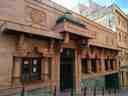
As you approach the Hindu Temple of Ceuta, look over to your left-you can’t miss it! The temple's front is a warm, earthy orange color, and it’s decorated with carved pillars and bold patterns that instantly stand out among the more traditional Spanish buildings nearby. Notice the ornate, rectangular frames along the upper wall-it’s almost like the temple is wearing a row of ancient shields. And right above the entrance, the golden Om symbol gleams atop a dark green awning. Now, imagine you’re stepping onto the streets of Ceuta in the late 1800s, when the first Hindu families made their way here, bringing with them spices, fabrics, and a whole new world of stories. Fast forward to 1948, and the air is buzzing with plans-the city’s Hindu merchants decide to form Spain’s very first Hindu association. That’s got to be worth a celebratory dance, right? But wait, the real magic happens decades later. In 2007, after years of dreaming and planning, this neo-Vedic style temple finally rises from the ground-thanks to the ideas of architects Andrés Ruíz Manrique, Hicham Abselam, and Nordin Abselam, as well as some very determined community members. Let’s just say, there were probably more sighs of relief than at a yoga retreat! The temple, also known as a “mandir,” feels like a portal. Step inside, and the world outside melts away. You’re surrounded by quiet reverence and the subtle hint of incense-perhaps with the faint echo of a mantra, if you’re lucky. On the outside, every angle, every column, tells the story of a community that has thrived here for over a century. So as you stand here on Calle Echegaray, take a moment. You’re not just at any building-you’re at a cultural monument, a reminder that even in a tiny corner of Spain, far from India, devotion and celebration know no borders. By the way, if you drop a coin and hear it roll down the temple steps, don’t worry-it might be the universe granting you good luck! When you’re ready, let’s step forward to your next destination-something entirely different awaits.
Apri pagina dedicata →To spot the Beth-El Synagogue, look ahead for a modern, sandy-colored building with a striking, simple design. The lower part is wrapped in stone bricks, while the upper floors…Leggi di piùMostra meno
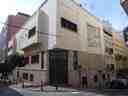
To spot the Beth-El Synagogue, look ahead for a modern, sandy-colored building with a striking, simple design. The lower part is wrapped in stone bricks, while the upper floors are smooth and white, making it stand out from the older, yellow and beige buildings next door. Watch for the large, mysterious geometric pattern on the upper wall-that’s your clue you’ve made it. Here you are, right in front of the Beth-El Synagogue, nestled in the heart of Beatriz de Silva Street. Imagine you’re standing in front of this building back in 1971, on a day filled with excitement and maybe nervous anticipation. People are hurrying up the steep streets, some craning their necks, staring at the fresh, clean lines of the brand-new synagogue. It’s not an ancient stone temple-it’s something different: modern, calm, and inviting. Take a look around. Feel the quiet strength of those patterned windows and the solid stone façade. This place isn’t just about prayer-there’s laughter and conversation echoing from the community center inside, stories passed down through generations. The synagogue came to life when three smaller ones joined forces, and you can almost sense all those memories coming together here, thick like the smell of fresh bread on a Friday evening. If you peer through those bold black doors and imagine stepping inside, you’d see sunlight slicing through colorful stained glass windows. The patterns dance across the synagogue floor, painting the room with wonder. I hope you’re not afraid of a little mystery-nobody quite agrees what all the patterns on the walls mean, but that’s half the fun! Maybe you’ll invent your own story for them as you continue your walk. So take a moment and feel the blend of old tradition and modern hope. And if you listen closely… no, not to me-listen to the echoes of a community that’s found a way to stick together, right here at the meeting point of cultures.
Apri pagina dedicata →

Mostra altre 11 tappeMostra meno tappeexpand_moreexpand_less
To spot the Military Pavilion of the Revellín Barracks, just look for a solid, stately building standing out right at the corner-cream-colored stone with big arched windows on…Leggi di piùMostra meno
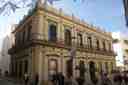
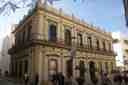
To spot the Military Pavilion of the Revellín Barracks, just look for a solid, stately building standing out right at the corner-cream-colored stone with big arched windows on both the ground and first floors. There’s a beautiful iron balcony running all along the upper edge, and chunky columns marking the corners. You can’t miss the feeling that this place means business-like it’s guarding a secret from over a hundred years ago. Alright, take a breath and imagine it’s 1900. The street is bustling with soldiers in crisp uniforms, boots clacking against the pavement. Standing here, you’re outside what the locals nicknamed Casa número 30. Back in the day, this wasn’t just another address, oh no! This was the military nerve-center, built by the city’s engineers-thick brick walls, solid and sturdy, filled with the hustle and bustle of military routines. Now, picture the clink of keys and the echo of commanding voices in the tall corridors, while two underground cisterns below your feet hold precious water-no modern plumbing here, just stone, sweat, and clever design. Don’t be fooled by how pretty those arched windows look; if you lived here as a soldier, you had to climb a rather “pretentious” staircase every day-a staircase so grand it practically begs you to trip if you aren't paying attention. Years later, with the soldiers gone, the city snapped this beauty up and gave it a brand-new mission: becoming a museum and a hub for Ceuta’s brightest minds. And in 1994, it was officially crowned as a protected cultural treasure. You can still see details on the windows: those stone frames and the long balcony of black wrought iron-with a story in every swirl. So, let your imagination wander. Maybe if you listen closely, you’ll hear the whispers of old engineers, soldiers, and the echoing footsteps of history blending with the laughter and chatter of today’s visitors. Welcome to a building that’s seen it all-and is more than happy to show off its secrets to curious explorers like you!
Apri pagina dedicata →You’re coming up to the Museum of Ceuta-keep your eyes peeled for a sturdy, light-colored building on the corner, just ahead on your left. The Museum stands out with its elegant…Leggi di piùMostra meno
You’re coming up to the Museum of Ceuta-keep your eyes peeled for a sturdy, light-colored building on the corner, just ahead on your left. The Museum stands out with its elegant neoclassical style: tall windows trimmed with stone, a balcony wrapping around the upper floor, and those chunky columns at the corners, almost like the shoulders of a proud old soldier. If you spot a line of palm plants and inviting arched windows on the ground floor, you’re in the right place. Alright, take a deep breath and step back through time with me. Picture yourself in the old days, when this very spot was part of the city’s military barracks-imagine boots echoing on the stone floor and a stern officer shouting orders! But now, inside this former military building, you won’t find any soldiers. Instead, Ceuta’s most precious archaeological secrets rest here, collected from around the Strait of Gibraltar. From prehistoric stone tools to Roman anchors and mysterious ceramics, it’s like walking through a treasure chest that’s been opened for the curious. There’s even a section dedicated to beautiful art, in another part of the museum nearby. The museum itself has had a bit of a dramatic journey-it almost didn’t exist! For a long time, precious artifacts from Ceuta were sent away to other cities. Local treasures nearly vanished into dust or distant warehouses. But then, thanks to determined folks like Carlos Posac (let’s call him Ceuta’s Indiana Jones), the dream of a museum was finally realized in the 1970s. Today, you’re standing right where history survived against the odds. Behind those grand doors, every display tells a story of adventure, survival, and discovery. Who knows-maybe you’ll spot something that even the experts haven’t figured out yet! Ready to continue our quest for stories and secrets? Let’s move on when you’re ready!
Apri pagina dedicata →Take a look ahead and slightly to your left-you’ll see a rough, impressive stretch of ancient stone rising above the bright red and sandy walkway. The walls are old and rugged,…Leggi di piùMostra meno
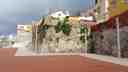
Take a look ahead and slightly to your left-you’ll see a rough, impressive stretch of ancient stone rising above the bright red and sandy walkway. The walls are old and rugged, dotted with green vines that seem determined to join the centuries-old masonry. Some parts still have bricks and original stones, while above you, colorful houses perch right at the edge, as if they’re keeping watch over the sea just like the guards once did. This, my friend, is the Defenses of La Almina. Imagine yourself here about 250 years ago. The salty wind whips past, cannonballs are lined up and ready, and somewhere, a soldier is probably complaining about guard duty. These defenses were built in the 1700s to keep Ceuta safe from enemies sailing in from the sea-think pirates, rival empires, and anyone who fancied a sneak attack. The peninsula of La Almina is like a finger poking bravely into the blue, so protecting it was serious business. Look out nearby and you might spot traces of old bastions and batteries, with names as dramatic as their purpose-San Sebastián, San Pedro, and the Batería de Abastos. Some are built low to the sea, ready to catch unwelcome visitors by surprise, while others like the Batería Nueva and Torreón de San Jerónimo stand on high cliffs, keeping a stern eye on the horizon. You can almost hear the distant clatter of muskets, the shouts of watchmen on those chilly nights, and the uneasy jokes that probably circled around the garrison. I like to think those guards could see the future-a time when people would stroll peacefully down here with no worries except maybe a bit of wind in their hair. So, take in this view, run your hand along the stones if you like, and let yourself drift back for a moment to when Ceuta was a fortress watching the waves, always ready-but hopefully always hoping-for a quiet night.
Apri pagina dedicata →Look straight ahead for a tall, elegant cream-colored building with a rounded corner and a shiny dome on top. There’s a big clock below the dome, balconies lined with stone…Leggi di piùMostra meno
Look straight ahead for a tall, elegant cream-colored building with a rounded corner and a shiny dome on top. There’s a big clock below the dome, balconies lined with stone railings, and two flags waving above the entrance. If you spot all that, congratulations-you’re staring at the Palace of the Assembly! The Palace of the Assembly of Ceuta is like something out of a very fancy board game. It stands proudly on Africa Square, showing off its classic style-think lots of arches on the ground floor, and a curved entrance wrapped in white stone. Back in 1914, someone thought, “Let’s make a building everyone will notice!” So, workers set the very first stone, and, after years of hammers, sweat, and probably a few snacks, it finally opened in 1927. King Alfonso XIII himself came to cut the ribbon, making this place absolutely royal. Step closer and peek at the ground floor, where you’d find the old mayor’s office and an entrance that once saw mayors and local bigwigs coming and going. Upstairs, behind that grand balcony, is the Throne Room-with colorful frescoes and shiny decorations made by Mariano Bertuchi and Cándido Mata. Fun fact: Inside, they keep the Royal Banner-a red and purple damask silk flag that shows off Ceuta’s historic Portuguese roots. Once a year, it marches out for the festival of Corpus Christi, carried like a secret treasure. Not enough drama? The grandest room is the Assembly Hall, where important decisions for Ceuta are made under intricate wooden ceilings and beautiful sculptures. And above it all, the dome with the big blue clock, keeping everyone on schedule-well, most of the time! So take a moment, look up at that dome, and imagine the voices, celebrations, and political debates that have echoed through these walls for almost a century. If only walls could talk, right? Or maybe argue a little, just like politicians!
Apri pagina dedicata →Look just ahead-you’ll spot a sturdy stone arch set within a rough old wall. There’s a square frame built around the main archway, with two chunky, simple pillars flanking either…Leggi di piùMostra meno
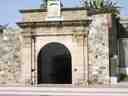
Look just ahead-you’ll spot a sturdy stone arch set within a rough old wall. There’s a square frame built around the main archway, with two chunky, simple pillars flanking either side. At the very top sits a little wall, actually called a parapet, and right in the center is a handsome, white stone shield. This shield actually belonged to the old Puerta de San Luis and got a new home right here. If you see that, congratulations! You’ve found the Puerta de la Ribera. Now, take a moment. It’s not just any old doorway-it’s a real slice of 16th-century history. Imagine dusty boots and echoing footsteps as travelers, soldiers, and merchants once passed through this exact spot, heading from the city out toward the sparkling sea. If you look carefully, you’ll see the arch is pretty sturdy-like it’s saying, “I’ve seen some things!” The pillars are Tuscan, which means tough but without too much fuss-a bit like the bouncers of Ceuta’s Renaissance era. Here’s the fun part: squeeze through this doorway, and you’re actually walking on a path that slips beneath the busy Avenida Martínez Catena, almost like a secret tunnel. It leads you out to the beach, Playa de la Ribera-perfect for anyone who needs to escape the city and dip their toes in the Mediterranean. And think about that coat of arms above you, from the old Portuguese days, quietly watching over everyone who passes through. Back in the day, so many different people used this gate-maybe a nervous messenger delivering news, or kids sneaking out for a swim, hoping not to get caught. So, go ahead, walk under and listen. If the stones could talk, they’d probably have a few dramatic stories… or maybe just complain about all the sand people bring back from the beach!
Apri pagina dedicata →Look just ahead! The Ceuta Cathedral stands right in front of you, impossible to miss with its twin bell towers stretching up to the sky-like two watchful sentinels guarding the…Leggi di piùMostra meno
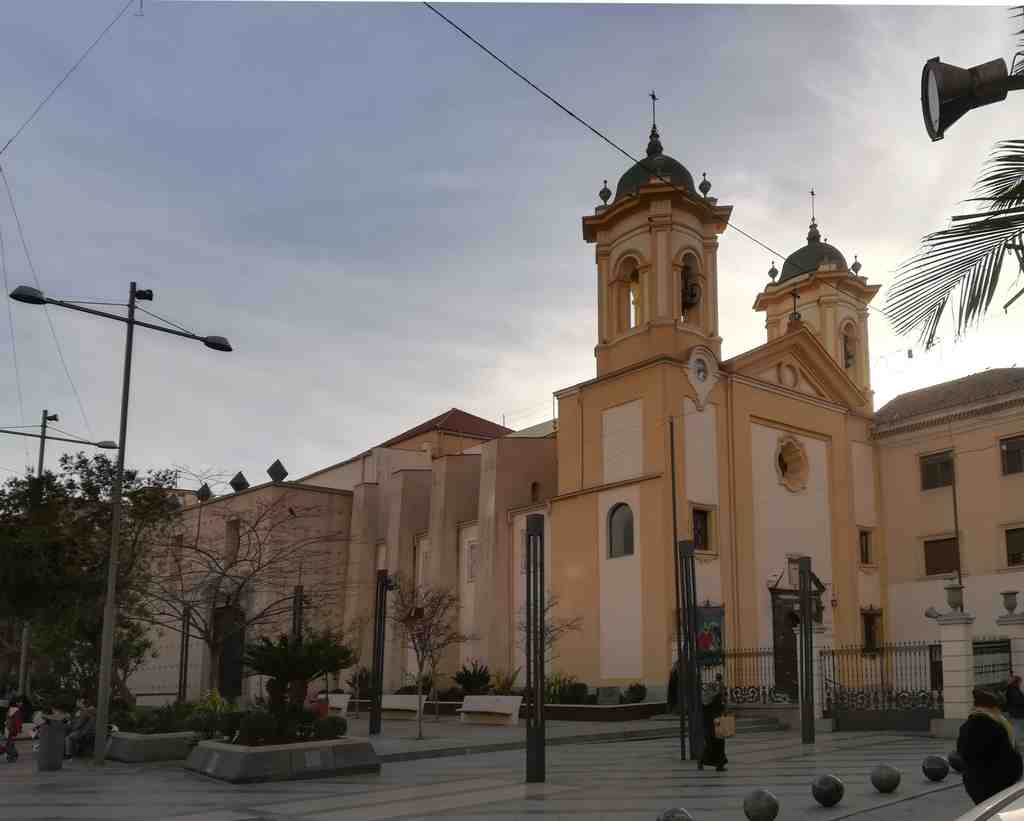
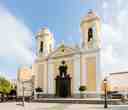
Look just ahead! The Ceuta Cathedral stands right in front of you, impossible to miss with its twin bell towers stretching up to the sky-like two watchful sentinels guarding the entrance. Its soft yellow walls catch the sun, while the heavy dark wooden door sits framed by stonework, inviting you in. The building has a triangular top and crisp white trim, flanked by neat lampposts and two little trees, looking as if they’re trying to reach up and touch those bell towers. You’ll want to look for the two bells at the top corners-the perfect spot to spot this landmark. Now, imagine the ground beneath your feet has witnessed over a thousand years of stories-whispers from Roman emperors, the calls to prayer of sultans, and the hymns of devout Christians. The Ceuta Cathedral is known as the Cathedral of St Mary of the Assumption, and if these old walls could talk, they’d probably need a few cups of tea to get through the full tale. Once upon a time, back in the 6th century, Emperor Justinian I had a church built here. Later, that very spot became the splendid Great Mosque of Ceuta, glittering with treasure and history. But when the Portuguese showed up in 1415, things took a dramatic turn-out went the mosque, and in came a Christian church. If you think home renovations take forever now, just wait! It wasn’t until after endless wars, sieges, and a fair share of drama that a totally new cathedral took shape in the late 1600s, thanks to architect Juan de Ochoa. Building went slowly… think molasses in winter! It wasn’t until 1726 that the reinvention was complete, and the doors finally swung open. Today, standing here, you’ll find not only a church, but also the bishop's palace, a museum, a secretive little archive (who doesn’t love a mystery?), and even a cozy triangular courtyard tucked away. Step inside and you could spot the dazzling Baroque altarpiece, some truly impressive frescoes by Miguel Bernardini, and three giant old paintings practically bursting with stories. And don’t miss the 15th-century figure of the Great Virgin-a bit of Portuguese history still hidden inside these Spanish walls. Every stone you see is soaked in drama, devotion, and determination. Who knows? If you linger, you might even hear the echo of that old bell high above. Now, how’s that for an entrance?
Apri pagina dedicata →

Domande frequenti
Come inizio il tour?
Dopo l'acquisto, scarica l'app AudaTours e inserisci il tuo codice di riscatto. Il tour sarà pronto per partire immediatamente – tocca play e segui il percorso guidato dal GPS.
Ho bisogno di internet durante il tour?
No! Scarica il tour prima di iniziare e goditelo completamente offline. Solo la funzione chat richiede internet. Ti consigliamo di scaricare tramite WiFi per risparmiare dati mobili.
È un tour guidato di gruppo?
No – è un tour audio autoguidato. Esplori in autonomia al tuo ritmo, con la narrazione audio riprodotta dal tuo telefono. Nessuna guida, nessun gruppo, nessun orario.
Quanto dura il tour?
La maggior parte dei tour richiede 60–90 minuti, ma sei tu a controllare il ritmo. Metti in pausa, salta le tappe o fai pause quando vuoi.
E se non riesco a finire il tour oggi?
Nessun problema! I tour hanno accesso a vita. Metti in pausa e riprendi quando vuoi – domani, la prossima settimana o il prossimo anno. I tuoi progressi vengono salvati.
Quali lingue sono disponibili?
Tutti i tour sono disponibili in oltre 50 lingue. Seleziona la lingua preferita quando riscatti il codice. Nota: la lingua non può essere cambiata dopo la generazione del tour.
Dove accedo al tour dopo l'acquisto?
Scarica l'app gratuita AudaTours dall'App Store o Google Play. Inserisci il codice di riscatto (inviato via email) e il tour apparirà nella tua libreria, pronto per essere scaricato e avviato.
Se il tour non ti piace, ti rimborseremo l'acquisto. Contattaci a [email protected]
Pagamento sicuro con 


