Audioguida di Alcalá de Henares: Arte, Leggende ed Eredità del Distretto I
Pini imponenti sussurrano sopra i sentieri secolari di Alcalá de Henares, ma guarda più da vicino—sotto queste ombre tranquille, risuonano storie mai raccontate. Questa audioguida autoguidata svela strati di intrighi, permettendoti di esplorare parchi cittadini, viali adorni di sculture e le imponenti mura di conventi al tuo ritmo. Chi fu l'audace cavaliere la cui carica dal Parco O'Donnell scatenò una rivoluzione? Perché le sculture silenziose lungo l'antica cinta muraria sembrano muoversi con la coda dell'occhio al crepuscolo? Quale misterioso destino colpì il leggendario stagno delle anatre amato da generazioni? Vaga tra roseti, ammira facciate barocche che si ergono su strade medievali e segui le tracce nascoste di ribellione e resilienza. Ogni passo rivela un lato inaspettato di Alcalá—una città per sempre trasformata da dramma, arte e glorie dimenticate. Pronto per i segreti che frusciano tra questi rami? Lascia che Alcalá ti sorprenda. La tua avventura inizia ora.
Anteprima del tour
Informazioni su questo tour
- scheduleDurata 40–60 minsVai al tuo ritmo
- straighten2.8 km di percorso a piediSegui il percorso guidato
- location_onPosizioneAlcalá de Henares, Spagna
- wifi_offFunziona offlineScarica una volta, usa ovunque
- all_inclusiveAccesso a vitaRiascolta quando vuoi, per sempre
- location_onParte da Parco O'Donnell
Tappe di questo tour
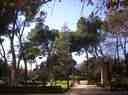
To spot O'Donnell Park, just look for a wide, tree-filled green space where sunlight sifts down through towering pines and there are inviting pathways and hedges leading you…Leggi di piùMostra meno
To spot O'Donnell Park, just look for a wide, tree-filled green space where sunlight sifts down through towering pines and there are inviting pathways and hedges leading you deeper into its leafy heart. Alright, take a deep breath-the fresh scent you’re enjoying comes from trees that have been guarding this spot for centuries! You’re now standing at the entrance of O’Donnell Park, one of Alcalá de Henares’ proudest green lungs. Believe it or not, this peaceful haven started off way back in 1788 as a grand walkway called the Paseo del Chorrillo, an idea dreamed up by Archbishop Francisco de Lorenzana. Picture double lines of majestic black poplars, maybe giving off a slight whisper when the wind ran through; back then, it was the ultimate place to see and be seen (and judging by all the dogs these days, still is, only with more barking). But along came the trains! In 1859, the newly built Madrid-Zaragoza railway sliced the original promenade in half. Talk about putting a damper on your peaceful stroll-not quite what the archbishop envisioned! Fast forward to 1898, the city acquired new land right next to this promenade. Enter Martín Pastells, the imaginative city architect who designed the park we now know, and by 1899, Mayor Félix Huerta and Huerta swung the gates wide open. The park got its name to honor General Leopoldo O’Donnell, a dashing figure who, along with General Dulce, set off from Alcalá with their cavalry-sparking Spain’s Revolution of 1854. Let’s just say, if you ever see any ghosts galloping about on invisible horses, they’re probably late for a revolution. The trees here have their own soap opera too. What started as poplars was gradually overtaken by hardy pines, especially after 1902, with more planted every decade. The old walkway earned a new nickname: Paseo de los Pinos. Pines, oaks, firs, and even a few palms now tower overhead, giving the park its jungle-like, evergreen charm. But the story doesn’t end there! From 1965 until 1980, this was Alcalá’s center stage for summer fairs and festivals-imagine the laughter, the blaring music, kids running in a sugar rush, and the whole place sprouting with stalls and games. When the city outgrew it, the party moved, but echoes of all those celebrations still seem to linger, especially around the old fair ground. And let’s not forget the legendary children’s duck pond! For years, families flocked to the “Parque de los Patos,” where ducklings, pigeons, and birds held feathery congress, much to children’s delight. Though the pond was renovated recently, the kid inside every Alcalá local still calls this place the Park of Ducks. Just in case your nose starts twitching-yes, that is the scent of over 2,600 rose bushes you’re catching, thanks to a stunning rose garden added in 2012. Some roses even have pedigrees longer than royal families! Today, the park also boasts a municipal pool, playgrounds, football fields, a large nursery where Alcalá’s streetside plants begin their lives, and of course, the ever-watchful trees. While the park has battled its share of trouble from litter and late-night mischief, it remains a beloved patch of green-always ready with a shady bench, a patch of sunlight, and maybe-just maybe-a tiny whisper from its revolutionary past. Ready to wander deeper? Let’s see what Alcalá holds next!
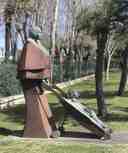
Apri pagina dedicata →Look for a rusty-colored sculpture of a woman pushing a child in a stroller, standing between the line of trees and the fence-it's hard to miss if you peek to your right as you…Leggi di piùMostra meno
Look for a rusty-colored sculpture of a woman pushing a child in a stroller, standing between the line of trees and the fence-it's hard to miss if you peek to your right as you walk by. Ah, you’ve arrived at the Open Air Sculpture Museum of Alcalá de Henares! Picture this: you’re walking alongside the ancient city walls, the air buzzing with the mix of past and present. Suddenly, you stumble upon more than fifty sculptures scattered across more than two kilometers-enough artwork to make even the most serious jogger stop and gawk. This museum isn’t trapped behind velvet ropes; it’s right out here in the open, where everyone from strollers to stray cats can wander amid contemporary masterpieces. The museum began as a bold idea by sculptor José Noja in 1991. By 1993, it opened its ‘not-so-literal’ doors, inviting anyone to walk alongside works by some of Spain’s, and even Europe’s and America’s, leading sculptors. Imagine artists like Amadeo Gabino or Pablo Serrano sneaking around at night, making sure their quirky creations found just the right spot along the Vía Complutense or beside these walls. Some sculptures are abstract, others are figurative-you might spot a playful piece that makes you wonder if you accidentally walked into a surreal dream! And just think, you’re exploring the longest museum of its kind in Europe. So take a good look-maybe even strike a pose next to your favorite. The art here is always watching, just waiting for someone to see it in a new way.
Apri pagina dedicata →Look just ahead for a striking red-brick building with a grand stone entrance and decorative carvings above the doorway, topped by a statue gazing out from a high central…Leggi di piùMostra meno
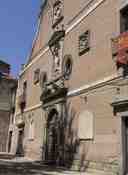
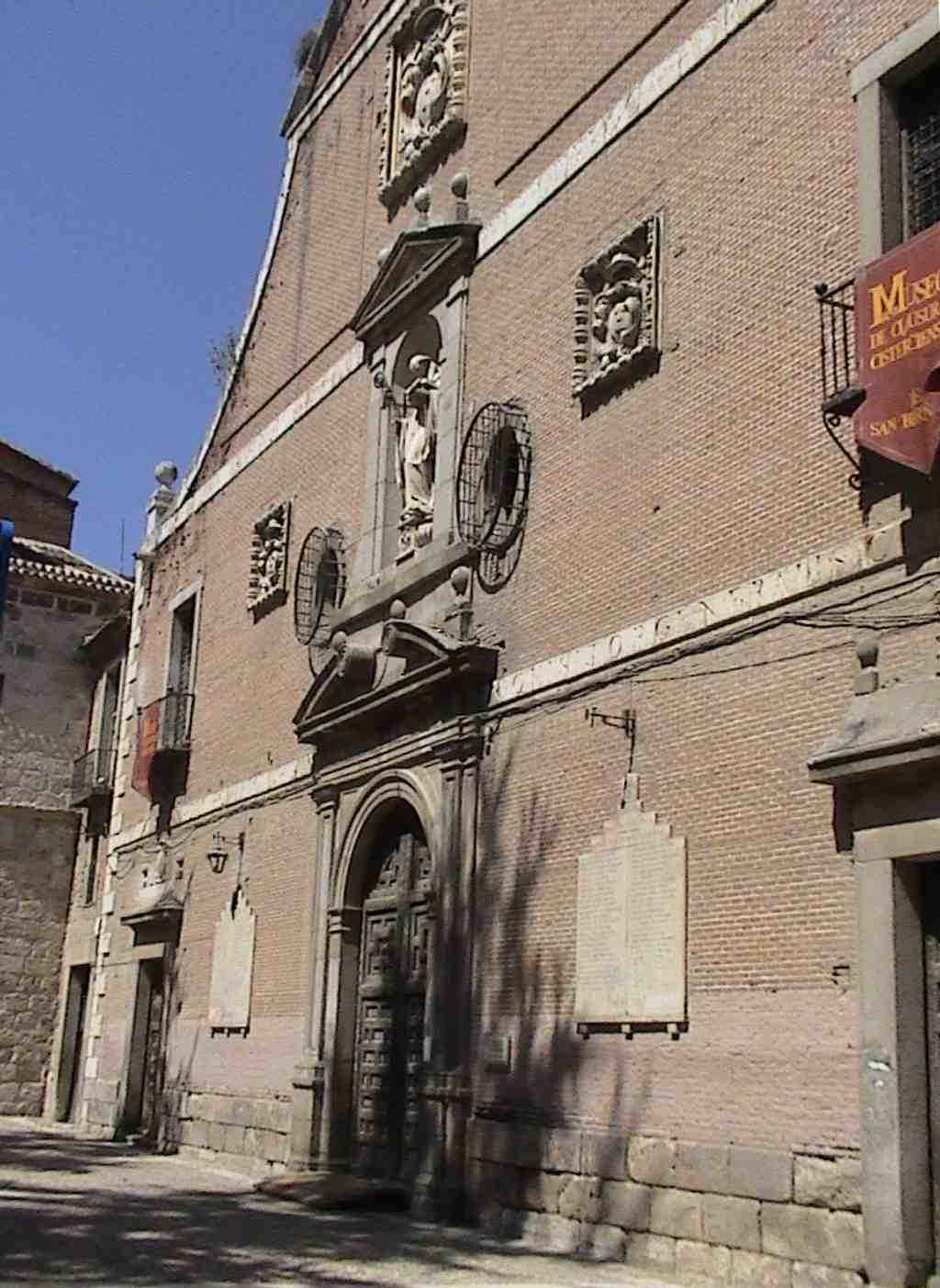
Look just ahead for a striking red-brick building with a grand stone entrance and decorative carvings above the doorway, topped by a statue gazing out from a high central niche-this is the Convent of the Bernardines. Now, as you stand in the dappled sunlight with this beautiful Baroque façade before you, let me take you back through the centuries, where nuns, cardinals, and the echoes of ancient rituals once filled this very spot. Imagine the year is 1613, and Alcalá de Henares is buzzing-not with the sound of cars or modern life, but with the quiet shuffle of robes and the distant toll of church bells. At that time, Cardinal Bernardo de Sandoval y Rojas, a man with a taste for art, literature, and a rather grand vision, decided that what this city needed was a new home for the Cistercian nuns, fondly called “the Bernardas.” It sounds almost like the set-up to a historical sitcom-one cardinal, one group of nuns, a heap of bricks, and a dream! Construction started in 1617, right here in the old square of Verdura, which centuries earlier had been the heart of the medieval Muslim neighborhood. Where you are standing, you’d once be weaving through the narrow streets of medieval Alcalá, maybe catching the scent of spices and the chatter of merchants. By 1626, the convent was finished and it wasn’t just another building: it was a showpiece. It even swallowed up elements of the old city, like the ancient Burgos gate, which ended up inside the convent orchard-a little touch of city planning by accidental munching! Now, I know what you’re thinking-what’s so special about this place, besides its ancient bricks? Well, first, take a closer look at the façade. Designed in gorgeous Complutense Baroque style, it combines red brick with elegant stone doorways. On the top, you’ll see a statue of Saint Bernard himself, looking like he’s ready to give you a stern lecture or maybe the world’s holiest hug. The shields nearby? Those are the family crests of Cardinal Sandoval, a reminder that sometimes even saints and nuns need a good sponsor! The convent’s architectural story is also a bit of a whodunit-at first, everyone thought Sebastián de la Plaza, a local, had designed it. But the credit now goes to Juan Gómez de Mora, the same architect who worked on Madrid’s Plaza Mayor, making him the Michelangelo of Spanish urban cool. Stepping inside (if you ever get the chance), it’s full of surprises. The church inside is ellipsoid-imagine a giant egg with a dome, the largest of its kind in Spain, where six side chapels whisper secrets from ages past. Beneath the grand dome, there’s a baldachin-basically a posh canopy-crafted by Francisco Bautista, who later worked on the collegiate church of San Isidro in Madrid. There are treasures galore: the Silver and Ebony Ark, ordered by Charles V’s son Philip II, with embossed scenes of imperial victories, and the Cardinal’s own chair-part throne, part jewelry box, all intrigue. The convent’s walls have weathered more than silence and prayers. In 1939, a fire ripped through, leaving scars that would take decades to heal. Restoration after restoration brought it back to glory-an ongoing tale of resilience. The Bernardine nuns stayed here until 2000, when their cloister closed, transforming the convent into a Museum of Religious Art, filled with 17th-century Italian paintings and stunning local works. Don’t miss Angelo Nardi’s masterpieces, or the beautiful Immaculate Conception carved by Antonio de Herrera Barnuevo. Even the nearby streets carry echoes of history. The convent, alongside Mother of God Convent and the Archbishop’s Palace, turned what was once medieval Alcalá’s vibrant Muslim quarter into the true stage for Renaissance transformation. Today, a new order lives here, the Servants of the Home of the Mother, keeping the convent’s heartbeat alive. So, as you stand before these brick walls, remember: you’re witnessing the layered story of Alcalá itself-full of spirit, reinvention, and just a dash of Baroque drama! Yearning to grasp further insights on the architecture, museum of religious art or the plaza de las bernardas? Dive into the chat section below and ask away.
Apri pagina dedicata →
Mostra altre 11 tappeMostra meno tappeexpand_moreexpand_less
To spot the Regional Archaeological Museum, look for the grand, reddish-brick building with tall black-barred windows, a stone-framed arched entry, and two big magenta banners…Leggi di piùMostra meno
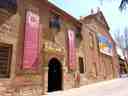
To spot the Regional Archaeological Museum, look for the grand, reddish-brick building with tall black-barred windows, a stone-framed arched entry, and two big magenta banners hanging beside the door that say “Museo Arqueológico Regional.” Alright, time to step back in time-welcome to the Regional Archaeological Museum, but you can call it MARPA if you’re in a hurry! Imagine this spot centuries ago-once a quiet convent called La Madre de Dios, where monks wandered these very bricks in silence. Fast forward to the 1980s: Madrid had a national museum but nothing special for its own rich history. The solution? Why not turn this old convent into a museum bursting with mysteries from Spain’s past! After a bit of hammering and dusting-okay, more like 12 years of work-it finally opened in 1999. Now, as you stand here, picture ancient bears stomping around the countryside. Inside, they have the biggest cave bear skull ever found on the entire Iberian Peninsula! I hope it’s not hungry… And if you love a good old Roman mystery, step in and see mosaics and inscriptions from Complutum, the Roman city that used to thrive right here. Each stone whispers secrets-of emperors, gladiators, and ordinary people. If only these walls could talk, right? But until they do, the museum does it for them. Ready to uncover some ancient stories inside? Just be careful-the bears bite! Only kidding. Or am I?
Apri pagina dedicata →To spot the Palacio arzobispal de Alcalá de Henares, look for its grand Renaissance façade with rows of elegant arching windows and, right above you, an elaborate stone crest…Leggi di piùMostra meno
To spot the Palacio arzobispal de Alcalá de Henares, look for its grand Renaissance façade with rows of elegant arching windows and, right above you, an elaborate stone crest bursting with ornate details and symbolism. Welcome to the Palacio arzobispal, a place that’s seen more drama than a telenovela marathon! Just take in the size of these ancient walls-centuries ago, this wasn’t just a palace, but a mighty fortress, built back in 1209 by a no-nonsense archbishop named Rodrigo Jiménez de Rada. Picture armored guards pacing the stone courtyards, and high towers watching over the city. At first, this was the retreat of the powerful archbishops of Toledo, who ruled over Alcalá like medieval VIPs, only with fancier hats. Now, imagine the year is 1308. The streets outside are buzzing, and in the palace’s stronghold, two kings-Fernando IV of Castile and Jaime II of Aragon-are deep in negotiation. They're dividing up territory won from the Andalusian taifas. You can almost sense the tension, quills scratching on ancient parchment as the “Treaty of Alcalá de Henares” is signed, changing the fate of the land forever. Not to be outdone, Archbishop Pedro Tenorio came by in the 14th century and thought, “What this place needs is more towers.” He gave it a serious facelift, building a patio for knights and surrounding it with so many rectangular towers, you’d need both hands (and a friend’s toes) to count them. Sixteen towers survive, the most famous carrying Tenorio’s own name. By the 1400s, the palace was growing in grandness. Arched Gothic windows, a massive council hall, and wooden ceilings so grand they’d make any Game of Thrones fan swoon. Legend says kings, queens, and bishops gathered here to plot, pray, and-occasionally-hold loud banquets. But the most thrilling day was in 1486. Imagine the sound as Queen Isabella of Castile’s horses clatter into the courtyard. She’s here, not to sightsee, but to meet an ambitious Italian named Christopher Columbus. She listened to him spin wild tales about sailing west to reach India. Would she give him ships and gold? The rest, as you know, is world history. The palace didn’t just collect history. Over time, it became a safe house for church documents, and even the "central archive" for official paperwork from all over Spain-think of it as the Google Drive of the 1800s, but much dustier and requiring way more shelving. If you’d visited back then, you might have seen an endless parade of carts loaded with yellowed paper, under the watchful eye of archivists in long, flowing robes. But fate wasn’t always kind. After serving as a barracks during the Civil War, a fire broke out on an August day in 1939, devastating two-thirds of this magnificent palace. In moments, the golden “Staircase of Honor,” elegant courtyards, and the storied “Fachada del Ave María” were lost to the flames. The fire’s cause remains a mystery-some blame bad luck, others whisper sabotage. Whatever the reason, it changed the palace forever. That “burnt” feeling? Think of it as the architectural equivalent of a bad haircut you never quite recover from. Don’t fret! The 20th century brought rescue and rebirth. Restoration work was completed in 1996, giving the palace new life as the residence of the local bishop. Today, the place is a patchwork of styles: original stone alongside elegant Renaissance lines, soaring Gothic windows, and a neogothic chapel-imagine old Spain with a tasteful modern twist. Over its long life, this palace has also played Hollywood star! Films from famous Spanish directors, period documentaries, and even comedies used these dramatic settings-so don’t be surprised if the walls feel a little theatrical. Out back, the “Huerta del Obispo”-the Bishop’s Garden-is a stage for outdoor festivals, giant markets, concerts, and plays. Just imagine actors belting out Shakespeare or Cervantes where knights once sharpened their swords. So whether you fancy yourself a bishop, a diplomat, or an accidental movie star, you’re standing where centuries of secrets, treaties, celebrations, and fiery drama have shaped the story of Alcalá de Henares. The next time someone asks you where world-changing choices were made, you can say, “Right here, beneath this grand stone crest-and I’ve got the sound effects to prove it!” Interested in knowing more about the the building, historical figures or the archbishop's palace of alcalá in the movies
Apri pagina dedicata →Look straight ahead in the Plaza de los Santos Niños for a tall, sturdy stone church with a very simple, almost fortress-like exterior, and a soaring square tower topped by a…Leggi di piùMostra meno
Look straight ahead in the Plaza de los Santos Niños for a tall, sturdy stone church with a very simple, almost fortress-like exterior, and a soaring square tower topped by a spire and cross - if you see those esgrafiados (scratched wall designs) and the Gothic-style entrance, you’re at the Catedral de los Santos Justo y Pastor. Now, let me take you on a walk through time… Imagine you’re standing here in the heart of Alcalá de Henares, feeling the breeze swirl gently around your feet. Close your eyes for a moment and picture this same spot over 1700 years ago, back in the last days of the Roman Empire, when the air was tense and the streets echoed with the footsteps of Roman soldiers. It was a dangerous time for Christians, and in the chaos of persecution, two very brave young boys-Justo and Pastor, only seven and nine years old-stood up for what they believed, right on the outskirts of ancient Complutum. Of course, standing up for your beliefs when you're that young? Now that’s being grounded! Well, according to legend, they became martyrs in 304 AD, paying the ultimate price for their faith. Years passed, Christianity spread, and people returned to this spot to build a humble chapel over their remains. Over time, that tiny chapel grew into a grand cathedral, and those two young boys became the heroes of Alcalá-forever remembered as the “Santos Niños.” Fast forward to the 6th century, and you’d find busy bishops here, scribbling away and attending councils in Toledo. By the 12th century, the city had seen plenty: Christian kings, Muslim conquerors, and the kind of building-and-destroying that would leave most modern developers dizzy. When the town was conquered, lost and conquered again by everyone from Ferdinand I of León to the Moors, the cathedral itself was destroyed, rebuilt, and-just to keep things interesting-served as the star pawn in an ecclesiastical tug-of-war. Imagine losing all your treasures in a fire, only for a few iron railings and choir stalls to survive-like your cat coming home with only one sock. Yet, here we are, centuries later, with a cathedral that’s seen it all: destruction, rebirth, rival bishops, and more than a few architectural makeovers. The building you see now dates mostly to the early 1500s, made possible by the ambitious Cardinal Cisneros. He didn’t just want any church-he wanted a "Magistral," the only kind in Spain (and one of just two worldwide!) where every priest had to be a doctor in theology. Talk about a tough job interview! Take a look at the entrance-notice how it throws in some dramatic Flamboyant Gothic curves and a striking medallion in the center, where good old San Ildefonso keeps an eye on the door. And if you can crane your neck without getting dizzy, check out the 62-meter-tall tower, finished in 1618, with its classic Madrid-style spire. Honestly, it’s almost as high as the hopes of the students from the nearby university before exam season. Step inside in your mind’s eye and imagine cool, echoing darkness. There are three vast naves topped by delicate ribbed vaults, rows of stone pillars reaching to the ceiling like giant tree trunks, and the faint, spicy scent of old incense clinging to the air. The ground is covered with rich Renaissance carpets from local convents, each one muffling the footsteps of countless worshippers over the centuries. The building is shaped like a traditional Latin cross, and in the apse-the rounded end-you might spot remnants of the old Gothic retablo, or high altar, sadly lost when fire swept through during the Spanish Civil War. At the heart of it all is the crypt, a mysterious and sacred space holding a golden and silver urn made by the Zureno brothers in 1702. Here you’ll find the saints’ relics and, believe it or not, the stone where Justo and Pastor were martyred. Their remains wandered as much as these streets-sent to Huesca and even France to keep them safe during times of chaos. The cathedral isn’t just for worship-it’s a museum too! The Diocesan Museum is packed with glittering treasures, rich vestments, and even a special tribute to the "Santos Niños" themselves. And buried here you’ll find some illustrious personalities: archbishops, cardinals, and even San Diego de Alcalá, whose incorrupt body is on display every November 13, drawing throngs of curious and reverent visitors alike. It’s hard to believe that just a few generations ago, after suffering fires and countless wars, this building was nearly lost. Yet, like the city around it, the cathedral rose again-enduring, unbreakable, and filled with stories. So next time you pass through, take a moment to listen for the faint echo of chanting, the ring of ancient bells, and remember: the real treasure is not just what survived, but the spirit that refused to quit. Fascinated by the outside, interior or the diocesan museum? Let's chat about it
Apri pagina dedicata →To spot the House of Cervantes, just look for a two-story building with red brick, light stone corners, wooden windows, and a small garden behind a black iron fence-it’s right on…Leggi di piùMostra meno
To spot the House of Cervantes, just look for a two-story building with red brick, light stone corners, wooden windows, and a small garden behind a black iron fence-it’s right on the corner, with a sign that says “Museo Casa Natal de Cervantes” near the front door. Welcome, traveler! Take a deep breath and imagine: you’re standing in front of the very place where the man who brought Don Quixote and Sancho Panza to life first entered the world. The House of Cervantes, looking just as warm and sturdy as it did in the days of old, may not be exactly the same walls that baby Miguel de Cervantes heard his first lullaby, but it stands on the spot where historians-thanks to a determined fellow named Luis Astrana Marín-believe Cervantes was born way back in 1547. Picture a busy street filled with chatter, horses’ hooves, and the distant ringing of a bell for San Miguel’s feast, the day young Miguel is said to have arrived. This house stands along Calle Mayor, just next to the old Hospital de Antezana, and facing a city that buzzed with daily life during Spain’s Golden Age. Here, Cervantes spent his early years-though, to be fair, even his official birth date is shrouded in a bit of mystery (documentation was not exactly their strong suit back then). What we do know is this: he was certainly baptized nearby on October 9th, 1547, and these streets carried the echoes of his first stories, maybe inspired by overhearing the grownups hawking their wares or gossiping under these very balconies. Now, if we peep inside through time, back in the 16th century, this would have been quite a cozy but lively home, filled with the rattle of cooking pots, laughter, and probably a scolding or two-a true portrait of comfortable family living in the heart of Castilla. The Cervantes family owned the house until 1551, when they packed up for new adventures in Valladolid, probably forgetting at least one shoe in the process. But here’s where the fun really begins: the house you see was totally rebuilt in 1956. They used all their imagination (and some blueprints, I hope) to make it look just the way a proper old Castilian home should, with a garden out front to greet visitors like yourself, and sturdy wooden beams peeking out over the roof. Inside, the museum recreates room after room: picture a cheerful kitchen with the smells of simmering stew, a dining room echoing with merry voices, a lady’s chamber where secrets might have been whispered, and a study stuffed with quills and inkpots-essential equipment for any aspiring writer, of course. Don’t miss the collection of books! This place is packed with editions of Cervantes’s works from the 17th all the way through the 21st century-a true timeline of one man’s genius inked out over hundreds of years. And if medical gadgets catch your fancy, you’ll find plenty of those too, since Cervantes’s father, Rodrigo, was a surgeon, which meant the family probably had more bandages than the average neighbor. When you wander through the rooms, you can almost hear the clatter of little feet on those old tiles and the chuckle of someone starting yet another impossible story. From 1997 to 2003, they added a whole new section to the museum, restored some beautiful frescoes, and even made sure the place is nice and cool-because let’s face it, nobody wants overheated guests fainting on the priceless artifacts. Today, the house isn’t just a monument to one genius. It’s also alive with workshops, dramatic readings (sometimes with characters from Cervantes’ books popping up unexpectedly), and all sorts of special exhibitions from his time-like food, fashion, and wild Golden Age traditions. So, as you stand here, try to imagine: maybe once upon a time, a small boy dreaming under the same sky, looking past these windows, wondered if knights really did fight windmills, and if ordinary life could ever be extraordinary. Step in, explore, and keep your eyes open-there’s magic in every corner. And who knows, maybe you’ll leave with a story of your own! For a more comprehensive understanding of the building, collections or the exhibitions, engage with me in the chat section below.
Apri pagina dedicata →To spot the Alcalá Comedy Theatre, just look for the rosy-pink building with long vertical red banners that boldly spell out “CORRAL DE COMEDIAS” over tall balconies, standing…Leggi di piùMostra meno
To spot the Alcalá Comedy Theatre, just look for the rosy-pink building with long vertical red banners that boldly spell out “CORRAL DE COMEDIAS” over tall balconies, standing right at the lively edge of Plaza de Cervantes. Welcome to one of the oldest preserved playhouses in all of Europe! If these walls could laugh, they'd start right here in front of you. Imagine-back in 1601, when Alcalá decided that every town square could use a bit more drama (of the fun kind), a local carpenter named Francisco Sánchez was given the job of building this very corral right where the market once bustled with the cries of vendors. Now, take a deep breath-can you smell that faint whiff of history and old wood lingering in the air? Or maybe it’s the echoes of laughter and argumentative poets from long ago, drifting out from the stage doors. The doors first opened in 1602, unveiling an open-air theatre with a stony floor, a central well, and an attic for the stage crew-classic Spanish “corral de comedias” style, where all kinds of comedies (and a bit of mischief) were ready to unfold. Just think: on warm evenings in the 17th century, the plaza would fill with curious townsfolk, students of the nearby university, and the echoes of great literary minds like Lope de Vega or Quevedo, who may have once squeezed in here as wide-eyed scholars before they became legends. Every era brought its own makeover-and not just a touch of stage makeup. In 1670, records show they put on 15 comedies in a single year, keeping the mood lively. But things didn’t always go according to script! In 1704, some soldiers were lodged here (I wonder if they preferred sword fights onstage or off…). The place was frequently tweaked and patched, each change layering fresh secrets into the old stones. Now, flash forward to a new act-the year 1769. Someone finally decided, “Let’s get a roof and some decent acoustics!” So up went wooden beams, transforming it into a neoclassical “coliseo,” perfect for musical spectacles that would ring off the new ceiling. During Spain’s Golden Age, perhaps tinged with the suspense of a stormy night, audiences shivered as a play’s villain crept across the boards or maybe filled the gallery. Through the 19th century, the theatre swapped its stony ground for rows of seats; the horseshoe-shaped section called the “platea” was covered in elegant painted plaster and crowned by a faux ceiling rich with old frescos. Fashions changed-it was briefly the grand “Teatro Cervantes”-but the building kept its soul. By 1927, spotlights gave way to film reels as the Corral became a movie theater, the “Cine Cervantes,” and folks lined up to see silent films where applause once echoed for live actors. Maybe, as films flickered across the screen, a mischievous breeze rattled through the old rafters, reminding movie-goers that drama never truly leaves its favorite haunts. Sadly, success gave way to silence; in the 1970s, the place sat abandoned, filled only with dust and the faded posters of its former glory. Just when its final curtain seemed imminent, a trio of passionate locals-Miguel Ángel, Mercedes, and Juan-pulled off the ultimate comeback story. Their quest to revive the place led to a 20-year restoration adventure, complete with contests, blueprints, and an architect named Peridis whose vision helped peel back the layers of the centuries. Now, thanks to their efforts, when you peek inside you might hear, or even the mysterious creak of ancient machines used for thunder and wind, still hidden below the boards-they even offer tours to uncover those backstage tricks! Restored and reopened in 2003, the Corral swings open its doors for classic dramas, fresh comedies, and music that bounces off walls rich with memory. Today, this theatre balances past and present with a mix of tradition and innovation. Its programming-since 2005 managed in partnership with Teatro de La Abadía-is as alive and playful as the comedies staged centuries ago. Theatre lovers, history buffs, and the merely curious flock here, all drawn by the living heart of Spanish dramatic history. So as you stand here, imagine the applause, the gasps, the raucous laughter, and the endless creativity that fills the air-a place where, for over four centuries, the real show has always been the magic of storytelling.
Apri pagina dedicata →Now, let’s set our time machine back almost a thousand years, all the way to 1129. Just imagine, instead of politicians in business suits, there were townspeople in wool tunics…Leggi di piùMostra meno
Now, let’s set our time machine back almost a thousand years, all the way to 1129. Just imagine, instead of politicians in business suits, there were townspeople in wool tunics gathering in the humble Hermitage of Santa Lucía, probably shivering as they debated town matters by flickering torchlight. The territory had only recently been reclaimed from Muslim rule, and Alcalá was handed by King Alfonso VII to the powerful archbishops of Toledo. Forget mayors and city councils-this place was organized as a “comunidad de villa y tierra,” its villagers meeting in the humble hermitage to decide their fate. Bet the council meetings back then were a bit chillier and didn’t end with coffee! As the centuries rolled on, Alcalá’s council got a bit restless-changing headquarters as often as some residents change phone cases. Thanks to Cardinal Cisneros, the Council got its own “Fuero Nuevo” in 1509, a bill of rights and rules so progressive it stayed on the books until the 1800s. They then moved into the Plaza de Abajo in 1515, after an epic showdown between nobles and commoners. The nobles got governance-and probably the better snacks at meetings-while tax exemption was the villagers’ reward. Who knew town politics could be so dramatic? Fast forward to 1609: the City Council packed up and moved again, this time to the Plaza del Mercado-today Plaza de Cervantes. There, architect Sebastián de la Plaza designed an elegant building, complete with a column crowning Alcalá’s sculpted coat of arms. The place became emblematic enough that, in 1687, King Charles II himself declared Alcalá a city. Imagine the bells ringing and the excitement in the air! But bricks and mortar age, and by the 19th century, their beautiful council house was falling to bits-a little like an old carriage with a squeaky wheel. After a failed 1858 architectural proposal, salvation arrived in the form of a nearly empty convent: the College of the Ministers to the Sick, a Baroque gem built between 1652 and 1675. Seizing the chance after Spain’s infamous 1855 Madoz confiscation, the city took over this convent, finally moving in 1870. And so, the council found its forever home, with the building soon transformed by architect Cirilo Vara y Soria, and later José de Azpíroz, who gave it a stately, neoclassical facelift in 1924-balconies, columns, an ornate shield, and of course, that all-important clock. Local legend-or maybe just people with an eye for a bargain-says the old council clock was sold to the nearby town of Meco, while a new one, with not one, not two, but three faces over a meter and half wide, began ticking here in 1946. Step inside (at least, in your imagination!) and the treasures continue. There’s a 16th-century strongbox, ceremonial silver maces, and a gallery of historic paintings-where Cardinal Cisneros, Miguel de Cervantes, and legendary rebels like El Empecinado gaze down from medallions, looking as if they’re just waiting to be asked for advice. The Salón de Plenos is so resplendent it would make even the most sleep-deprived politician sit up straight. There’s also, tucked in a carefully wrought iron alcove, the treasured Complutense Polyglot Bible-proof that Alcalá’s council always kept one eye on wisdom...and maybe the other on the budget. Of course, Alcalá’s council has had its fair share of political plot twists-from almost perpetual socialist rule after 1979, to the inauguration of the city’s first female mayor in 2023, Judith Piquet Flores of the Popular Party, who, as legend has it, promised to never move the headquarters again...maybe. Who knows, at the next council meeting, maybe they’ll vote for a treehouse! So, as you stand in front of this grand facade, remember: it’s not just the city’s nerve center or a pretty building on the plaza. It’s a palace of power, ambition, and town pride; a place where Alcalá has shaped its destiny for nearly a thousand years-often with a side of drama and a surprising knack for finding creative new venues! Intrigued by the mayors, municipal district boards or the historic election results? Explore further by joining me in the chat section below.
Apri pagina dedicata →To spot the College of Malaga, look for a grand two-story brick building crowned with two elegant towers capped by pointy slate spires-these tower roofs reach up like wizard hats,…Leggi di piùMostra meno
To spot the College of Malaga, look for a grand two-story brick building crowned with two elegant towers capped by pointy slate spires-these tower roofs reach up like wizard hats, each adorned with a decorative cross and weather vane. Now, step into my time machine-don’t worry, you won’t need a seatbelt!-and imagine the street before you, alive with echoes of the 17th century. You’re standing at the gates of the College of Malaga, or as the locals of old would have called it, San Ciriaco and Santa Paula. Picture the scene: crisp morning air, bricks still slightly damp from the night, and a bustling crowd of young scholars, the first of whom arrived all the way from Malaga itself, eager and maybe a little nervous. The story begins in 1611 with Juan Alonso de Moscoso, a bishop with a résumé longer than the main hallway inside. As a student, he once walked these streets too-though perhaps with fancier robes-and decided to create a college honoring his favorite saints and the city he served. They say he chose “San Ciriaco and Santa Paula” not just for their divine connections, but for their ties to Malaga, ensuring every homesick Malagueño would feel a bit closer to home while huddled in the chilly Castilian winters. As construction began in 1623-imagine the clatter of tools, the laughter of laborers, and yes, plenty of arguments about budgets and blueprints. Plans might have started under the famed architect Juan Gómez de Mora, but it was Sebastián de la Plaza who hammered out most of the details. The brick walls rose slowly, interrupted often by money problems and legal spats with neighbors. (Apparently, property disputes were the true university tradition.) The building was finished nearly at the century’s end, polished off by two more architects-almost a relay race of ambition and exhaustion. Step closer and you’ll see why it’s considered the grandest secular college in Alcalá. The façade greets you with two imposing arched entrances and those unmistakable towers topped by slate spires-like a pair of scholarly sentinels keeping watch over all who approach. Peer up, and you might spot the Latin inscription honoring Bishop Moscoso, and his coat of arms gleaming on almost every stone: proof that, even centuries ago, founders liked to leave their signatures everywhere. Walk through these halls and you’d have seen students wrapped in deep red or maroon cloaks, sporting black caps and purple sashes-less Hogwarts, more 17th-century Spanish chic. This was a world of crowded lectures and whispered gossip, with a stunning staircase under an oval dome that made even the dreariest winter days feel dramatic. Don’t go wandering into the wrong room-over the years, these towers have seen it all. During Napoleon’s invasion in 1809, the college almost went up in smoke. Books vanished, cloaks were traded for bandages, and the smell of fire swept through the old brick. By 1820, secret meetings of a Masonic lodge were held behind these very walls-now that’s a plot twist! Things kept changing. After the university closed in 1836, the building morphed: artillery school, farriers for the army, an archive, even a home for orphaned girls and elderly women. Fast forward to 1949, and it transformed once more-a boarding school for adolescent boys, known as “Nuestra Señora de la Paloma,” echoing with teenage shenanigans. Finally, in 1983, learning returned as the Faculty of Philosophy and Letters of the University of Alcalá. And in 1998, the college’s richly worn stones became part of a UNESCO World Heritage Site-a world away from its humble beginnings with twelve theology and four cannon law students from Malaga. So as you stand here, close your eyes, listen to the echoes-bickering architects, giggling students, the proud bishop, smoky chaos, and secret societies-all woven into every inch of brick and stone. Who needs a crystal ball when you’ve got the College of Malaga?
Apri pagina dedicata →Right in front of you, you’ll spot a long, stately building made of yellowish brick, with rows of tall arched windows peering out above a tidy parade of leafy trees-this is the…Leggi di piùMostra meno
Right in front of you, you’ll spot a long, stately building made of yellowish brick, with rows of tall arched windows peering out above a tidy parade of leafy trees-this is the Library of the University of Alcalá, so just look for the impressive facade stretching along the plaza, as if it’s quietly guarding centuries of secrets. Picture yourself here not just in 2024, but in every era since the whispers of learning first echoed through Alcalá. Now, the library before you is no ordinary building-it’s the beating heart of academic life in Alcalá, humming with the energy of discovery, research, and the quiet determination of students hoping their coffee holds out a little longer than their exam. The funny thing is, this vast knowledge center wasn’t always gathered under one beautiful roof. Until just a decade ago, the university’s books, documents, and scholarly treasures were scattered across not fewer than fifteen little libraries, each jealously guarding its books like a dragon hoarding gold. These were dotted across three different campuses in Alcalá de Henares and even across to Guadalajara, with nearly 3,000 reading spots and twenty-two kilometers of shelving-enough to host a marathon for energetic librarians. Then came the great transformation! In 2014, after careful renovation, the old “Cuartel del Príncipe”-an army barracks with creaking wood and thick walls-was reborn as the new Center for Learning and Research, or CRAI. Stepping inside, you’re greeted by five floors filled with sunlight and book dust, 1,200 seats for readers, and a fortress of nearly 200,000 volumes from architecture to humanities. The CRAI became a haven not only for books and electronic resources, but for the dreams of students hunched over their notes, desperate for inspiration-or maybe just Wi-Fi and a working printer. But that’s not all. The grand collection now holds over half a million volumes, from clicky 21st-century e-books and periodicals to dog-eared, fragile works from centuries past. With 79 staff-imagine a quirky squad with everything from strict head librarians to cheerful helpers-every user finds their guide through this sea of words. The library is connected to mighty networks: the Madroño Consortium makes it a powerhouse in Madrid; the REBIUN links it to the smartest stacks across Spain. And here’s a twist! In 2021, the library became home to the treasured historic collection of the Instituto Cervantes. So if you feel a mysterious breeze blowing past, it could be the mischievous spirit of Cervantes himself, browsing the shelves. Walk in and you’ll spot lively reading rooms, whirring computers, group study nests, Wi-Fi twinkling in the air, and even self-checkout machines humming quietly, almost inviting you to grab “just one more book.” These spaces are open every day of the year, all night long-so if inspiration (or panic) strikes at 3 a.m., you’re covered. The library even earned a top European award in 2017 for how well it’s run, so you know you’re standing at the doorway to excellence. So, as you gaze up at this remarkable building, imagine voices from generations of students, their minds alive with questions and hopes, all echoing through these timeless halls. Just don’t worry if you hear the sound of someone frantically searching for a lost library card-it’s probably just another late-night drama unfolding in the world of academic adventure. Interested in knowing more about the structure, facilities or the services
Apri pagina dedicata →Directly ahead, you’ll spot a grand, three-story stone building with a richly decorated façade covered in sculpted medallions, columns, and a giant coat of arms perched at the…Leggi di piùMostra meno
Directly ahead, you’ll spot a grand, three-story stone building with a richly decorated façade covered in sculpted medallions, columns, and a giant coat of arms perched at the top-look for the tallest set of windows and the impressive classical style to know you’ve found the Colegio Mayor de San Ildefonso. Alright, ready for a journey back through the ages? Picture yourself standing in front of this magnificent building in 1499, when it first emerged as the shining brainchild of Cardinal Cisneros. Imagine the clang of chisels and the echo of hammers against limestone as workers hurried to lay the very first stone - just as students still rush to class today, but maybe with fewer coffee cups. This was where it all began for the University of Alcalá-a place meant to shake up the education of clergy and the mighty men of the church. But Cisneros, ever the reformer, wasn’t content with just any college. He wanted a masterpiece! So, what you’re now looking at is not just any old building, but the jewel of Spanish Renaissance, a UNESCO World Heritage Site, and the beating heart of knowledge for five whole centuries. The story of this colegio unfolds like an architectural adventure. Step closer-the façade you see was started in 1537 by Rodrigo Gil de Hontañón. Carved from dazzling Tamajón limestone, art historians have called it “one of the most harmonious creations of Spanish architecture.” It almost looks like a giant stone altarpiece, with three layers covered in statues, medallions, and classical details. If you glance up, you’ll see a row of grand arches and, smack in the center, the huge imperial shield of Charles V, flanked by equally impressive figures. Now, don’t worry: the statues of the church fathers up there can’t grade your Latin, even though they look rather wise! The building was more than a college-it was a living, breathing hive of activity. There were “poor scholars” who got scholarships, wealthy “porcionistas” who paid their way, squabbling kitchen boys called “famulos,” and even a troop of chaplains. Medieval school wasn’t all lectures either: the courtyard would echo with Latin debates, the clatter of wooden shoes, and the occasional argument over exam results. They even had an official uniform-a black cap, chestnut cloak, and band, which sounds pretty stylish unless you had to wear it in the summer. Inside, remarkable treasures awaited-like the Chapel of San Ildefonso, where great figures like Nebrija are buried, and the fabled Paraninfo hall. Every year, this hall transforms into the spotlight for the famous Cervantes Prize, drawing the world’s top Spanish writers. If you listen closely, you might imagine the applause and nervous foot-tapping before the award is handed out. But this beautiful place saw rough times too. After its closure as a college in 1798 and a turbulent period in the 1800s, the building faced neglect, auctions, silk farming (yes, really), and even looting. It was only saved by a passionate group called the “Sociedad de Condueños,” who fought to protect its crumbling stones for future explorers like you. Fast-forward to today, and the Colegio Mayor de San Ildefonso stands proud as the main building for the University of Alcalá-a place where new generations begin their stories. It was even recognized as a National Monument in 1914 and named a World Heritage Site in 1998-a pretty impressive resume, don’t you think? If you look for excitement, mystery, or just a chance to feel history buzzing under your shoes, this place has it all. From towering Renaissance columns to echoes of Latin prayers and the whispers of Nobel winners, it’s a testament to the power of learning, ambition, and resilience through the ages. So take a moment, gaze up at those patient stone faces and grand windows, and imagine all the dreams and debates that have passed right where you’re standing. Not bad for a place that started with a single stone and a bold idea! For further insights on the building, college or the activities, feel free to navigate to the chat section below and inquire.
Apri pagina dedicata →To spot the iconic Alcala de Henares Parador, look just ahead for a modern metal sculpture sign set among slender cypress trees in front of a mix of warm brick walls and…Leggi di piùMostra meno
To spot the iconic Alcala de Henares Parador, look just ahead for a modern metal sculpture sign set among slender cypress trees in front of a mix of warm brick walls and contemporary architectural lines. Now, let’s travel through time together-because this Parador isn’t just a hotel, it’s a living time capsule with over four centuries of stories stitched into its walls! Imagine yourself standing where once monks, soldiers, and even prisoners paced. It all began with the old Colegio de Santo Tomás in the late 1500s-a grand monastic building of red brick and sturdy stone, buzzing with the chants of Dominican friars and the shuffle of scholarly feet. Eventually, this spot grew to include the Colegio Menor de San Jerónimo, which later became a famous slice of local hospitality-a true “Student’s Inn” where tables groaned beneath the weight of hearty Castilian fare. You might even catch the faint echo of students’ laughter or heated debates swirling on a breeze, if you listen closely enough. But the drama didn’t stop with roast lamb and university exams! Around 1802, the city was rumbling with military plans. Picture soldiers marching down the cobbled lanes, the government trying to squeeze regiments and sappers into every available college building. They even considered the Colegio de San Basilio-if only it had been a tad bigger! Eventually, they crammed soldiers into old convents and shuffled the monks and students off somewhere new. It’s enough to make you imagine an 1800s moving day: “No, no, your new room is over in Aragón! And you, my dear Manrique, are off to the Manchego’s!” Of course, Alcalá saw its share of invasions too. During the War of Independence, French troops hunkered down in the nearby archbishop’s palace, while the abandoned colleges were left to be looted by desperate townsfolk. The Colegio de Mercedarios Calzados? So badly damaged that it had to be razed after the soldiers finally left! Still, the buildings soldiered on-quite literally-housing cavalrymen, artillery students, and reorganizing armies well into the turbulent 1800s. And did I mention a spell as a jail? At one point, this complex held hundreds of prisoners, with loud voices and nervous footsteps echoing through its corridors. Don’t worry, though-the only thing you’ll be locked up for today is a good night’s sleep! As the decades passed, the war drums faded, and Alcalá’s dusty old colleges sat empty and forlorn… until the early 20th century, when the “Hostería del Estudiante” opened-becoming the second official Parador in Spain. Suddenly, tradition mixed with a dash of modern flavor. Travelers dined beneath ancient beams, surrounded by sturdy Castilian décor, sampling regional delicacies and perhaps raising a glass to the long parade of history that had come before them. Since then, this spot has become a kind of architectural playground, constantly balancing old and new. Fast forward to 2009, and a bold vision arose: turn this patchwork of history into one spectacular Parador, where time periods could mingle and mingle until nobody knew old from new. The architects faced no small challenge-how do you sneak a 21st-century luxury hotel beneath a 16th-century garden without turning the whole thing into a historical omelet? Their answer was positively magical. They built “below the garden,” letting sunlight dapple through perforated green courtyards while shelters, salons, and 128 guest rooms lay cleverly hidden beneath-almost like a reverse treasure hunt. The result? Guests today sleep beneath lush lawns, beside shimmering patios, immersed in a gentle mix of ruins, metal, wood, and glass. A contrast, yes-but one that feels like an architectural wink, blending old secrets with new comforts. Look closely and you’ll see clues everywhere: old arches frame modern lobbies, ancient brick gives way to sleek glass, and sunlight slips through steel lattices, painting dappled shadows that dance on centuries-old stone. If the Parador feels both peaceful and daring, that’s not an accident. Each restored wall and carefully designed space was meant to be a blend-a respectful, yet playful, conversation across eras. In fact, the Parador’s transformation won awards and even earned a spot in a New York museum exhibition for stunning modern architecture! So the next time someone says, “Where can I find a true taste of Alcalá’s history, with a side of clever design and just a pinch of mystery?”-tell them to follow the sound of laughter and clinking glasses, through these cypress trees, and step into the living, breathing story of the Alcala de Henares Parador. Not even Don Quixote himself would resist spending the night here! To expand your understanding of the student inn, recovery project or the architectural project, feel free to engage with me in the chat section below.
Apri pagina dedicata →Look ahead for a large, modern building with orange-brick stripes, lots of windows, a distinctive triangular shape, and three flagpoles right at the front-if you see that, you’ve…Leggi di piùMostra meno
Look ahead for a large, modern building with orange-brick stripes, lots of windows, a distinctive triangular shape, and three flagpoles right at the front-if you see that, you’ve found the General Archive of the Administration! You’ve made it to your final stop, and what a place to finish! Imagine you’re standing at the gates of a true paper fortress: the General Archive of the Administration, or AGA if you want to sound like an insider. This massive, sharp-edged building stretches up across nine floors, taking up an area the size of a sleepy palace. You might think, “It looks rather serious, almost like it’s guarding something secret.” Well, in a way, you’re right! The AGA is one of Spain’s six national archives, and this place is the proud guardian of over 200 kilometers of documents. That’s enough paper to cover a marathon-if you were crazy enough to unroll it! Let’s step into the story. The idea for this archive was born in 1969, with the first bricks laid down just as the decade was saying goodbye to the Beatles. Its predecessor lived in the town’s Archbishop’s Palace, but disaster struck in 1939-a fiery blaze swept through and left only ashes and heartbreak. From those ruins rose the need for a safer home for Spain’s paperwork, one that wouldn’t go up in smoke. So, architect Juan Segura de Lago came up with this futuristic design, and by 1973 the final touches were made. Still, political tension delayed the grand opening until 1976, so for three extra years, the secrets behind these walls had to wait! Come closer, and you might imagine the hum of countless stories hidden behind the glass and brick-tales of two centuries, wars, wonders, wild bureaucratic adventures, and the occasional lost memo. This archive isn’t just a storehouse: it’s the keeper of Spain’s recent memory, sifting out what gets sent on to the national archives, and what gets shredded into oblivion. So take a deep breath, feel the weight of history all around you, and remember: sometimes the most exciting tales are waiting right next to a filing cabinet!
Apri pagina dedicata →
Domande frequenti
Come inizio il tour?
Dopo l'acquisto, scarica l'app AudaTours e inserisci il tuo codice di riscatto. Il tour sarà pronto per partire immediatamente – tocca play e segui il percorso guidato dal GPS.
Ho bisogno di internet durante il tour?
No! Scarica il tour prima di iniziare e goditelo completamente offline. Solo la funzione chat richiede internet. Ti consigliamo di scaricare tramite WiFi per risparmiare dati mobili.
È un tour guidato di gruppo?
No – è un tour audio autoguidato. Esplori in autonomia al tuo ritmo, con la narrazione audio riprodotta dal tuo telefono. Nessuna guida, nessun gruppo, nessun orario.
Quanto dura il tour?
La maggior parte dei tour richiede 60–90 minuti, ma sei tu a controllare il ritmo. Metti in pausa, salta le tappe o fai pause quando vuoi.
E se non riesco a finire il tour oggi?
Nessun problema! I tour hanno accesso a vita. Metti in pausa e riprendi quando vuoi – domani, la prossima settimana o il prossimo anno. I tuoi progressi vengono salvati.
Quali lingue sono disponibili?
Tutti i tour sono disponibili in oltre 50 lingue. Seleziona la lingua preferita quando riscatti il codice. Nota: la lingua non può essere cambiata dopo la generazione del tour.
Dove accedo al tour dopo l'acquisto?
Scarica l'app gratuita AudaTours dall'App Store o Google Play. Inserisci il codice di riscatto (inviato via email) e il tour apparirà nella tua libreria, pronto per essere scaricato e avviato.
Se il tour non ti piace, ti rimborseremo l'acquisto. Contattaci a [email protected]
Pagamento sicuro con