
Tour Audio di Stettino: Castelli, Cattedrali e Leggende Svelate
Un leone un tempo ruggiva dai bastioni di Stettino mentre segreti covavano sotto i ciottoli della città. Ogni angolo qui nasconde più di quanto sembri. Questo tour audio autoguidato ti invita a svelare le storie nascoste di Stettino al tuo ritmo. Scopri leggende, scandali, fughe drammatiche e alleanze sussurrate trascurate dalla maggior parte dei visitatori. Cosa scatenò la rivolta che scosse Piazza dell'Aquila Bianca fin nelle fondamenta? Quale romance proibito si svolse dietro le mura del castello sotto un cielo senza luna? Perché le campane della cattedrale suonarono tutta la notte per un solitario sconosciuto il cui nome nessun registro rivendica? Attraversa i secoli mentre le ombre si allungano su cortili e vetrate. Senti il brivido della scoperta mentre voci a lungo silenziose echeggiano attraverso passaggi di pietra. Vedi Stettino trasformata—stratificata, viva e in attesa di essere esplorata di nuovo. Lascia che il battito segreto della città guidi i tuoi passi. Inizia ad ascoltare e viaggia dove un tempo ruggiva il leone.
Anteprima del tour
Informazioni su questo tour
- scheduleDurata 40–60 minsVai al tuo ritmo
- straighten2.7 km di percorso a piediSegui il percorso guidato
- location_on
- wifi_offFunziona offlineScarica una volta, usa ovunque
- all_inclusiveAccesso a vitaRiascolta quando vuoi, per sempre
- location_onParte da Cattedrale di Stettino
Tappe di questo tour
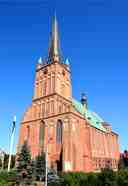
To spot the Szczecin Cathedral, just look for the massive brick building with a sharply pointed black spire towering above everything else in the area-it rises like a Gothic…Leggi di piùMostra meno
To spot the Szczecin Cathedral, just look for the massive brick building with a sharply pointed black spire towering above everything else in the area-it rises like a Gothic ship’s mast, lighting up the evening sky. Now, take a moment here and picture the scene nearly a thousand years ago-right where you’re standing, the foundations of this magnificent cathedral began to rise in 1187. Imagine the city’s medieval townsfolk bustling about, carrying stones, while echoes of hammers and hopeful shouts ring out on the wind. The cathedral’s original design was inspired by the Church of St. Mary in Lübeck, and you can almost feel the pride everyone must have felt as their hometown creation started to look grander day by day. But this wasn’t always a peaceful place. The church faced some dramatic episodes. In 1456, a wild storm blew in, and-crash!-one of its mighty towers came tumbling down, smashing part of the church. It took nearly 50 years to clean up and try again. The rebuilding left the building with just a single, mighty tower. Over the centuries, it wore fresh faces-Romanesque, then Baroque, then Gothic again-like a cathedral with a closet full of fancy hats. Wait, it gets even more dramatic. In 1944, during the Second World War, bombs fell and the imposing spire was lost in flames. The north wall collapsed, and centuries of art vanished in a single night. After the war, it seemed the cathedral’s story might end, but a clever official pointed out it’d actually be pricier to knock it down than to rebuild it-a real win for history lovers and thrifty city planners everywhere! The cathedral you see now is the result of enormous resilience-a mixture of old and new. The north wall is modern, the spire got its dazzling new cap in 2010, and the famous organs sing proudly once again inside. As you stand here, you’re in the heart of a survivor-a spiritual skyscraper that’s watched over Szczecin for more than 800 years. If walls could talk, this cathedral would keep you awake for months with its stories!
Apri pagina dedicata →
Mostra altre 12 tappeMostra meno tappeexpand_moreexpand_less
In front of you is Staromłyńska Street-a charming cobbled lane lined with grand townhouses on both sides, stretching straight ahead with parked cars and elegant facades that make…Leggi di piùMostra meno
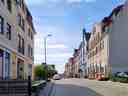
In front of you is Staromłyńska Street-a charming cobbled lane lined with grand townhouses on both sides, stretching straight ahead with parked cars and elegant facades that make it easy to spot amidst the trees and open sky. Okay, let’s give your shoes something to gossip about: welcome to Staromłyńska Street! If you listen carefully, you might almost hear the echo of countless stories bouncing off these beautiful townhouses. The air here is thick with history-so thick, if it got any denser, you’d need a history passport to walk through! Imagine it’s the year 1305. This exact path, then known as Mühlentraße, where you now tread on modern cobbles, was named for the watermills by the Osówka stream. But don’t worry, you won’t turn into flour while walking here-unless you get caught up in all the wheely good stories. Look to your left and right: these facades have survived centuries of name changes, wars, and dramas. For a long spell in the 19th century, this street saluted Prussian royalty, bearing the name Luisenstraße, in honor of Queen Louise. But its royal legacy didn’t stop with the name. In the 1700s, the Palatial Parliament of the Pomeranian Estates popped up on this corner, a brainchild of Gerhard Cornelius van Wallrawe-it is said he wanted to impress passersby so much they might walk into lampposts from gawking too hard! The 18th century also brought the merchant Georg Velthusen, who built himself a swanky palace, and close by, the famous Preußenhof hotel opened its doors. Now picture yourself gliding through 1879, when excitement buzzed through the air. The mayor, police president, and engineer Johannes Büsing stood right in front of the Ionic Palace, ready to kickstart Szczecin’s first-ever horse-drawn tramway. There’s a cheer from the crowd--as Haken strikes the rail with a hammer, dropping the inaugural line in style. Sadly, no horses or top hats were harmed in the making of this transportation milestone! But things got dramatic during WWII. Allied bombings tore through these walls, shattering shops, palaces, and dreams. On a cold January night in 1944, and again in April, fire swept through the street--with buildings like the Preußenhof hotel and Velthusen Palace engulfed. Only the western line of older buildings soldiered on, feeling a bit like survivors from a movie who didn’t get the memo that filming had ended. Rebuilding began from the ashes: the hotel was remade in simple style and became the home of a bustling architectural office. Next door, the Velthusen Palace was patched up and filled with kids learning music-the school that still brings the sound of piano keys and young voices today. In the Soviet era, a plain clinic sprouted, and even in the 21st century, the street keeps changing, with new townhouses rising where old ones once stood. So, next time you see a tram, remember Staromłyńska was where it all started in Szczecin-just watch out, because there’s not a single horse-drawn tram left! With every step, you’re walking through centuries of transformation-a mosaic of cobblestones, memories, palaces, and playful ghosts of millers and musicians who once called this storied street home. Yearning to grasp further insights on the name, buildings and development or the protection and monuments? Dive into the chat section below and ask away.
Apri pagina dedicata →In front of you is Tkacka Street, a long stretch of colorful and historic townhouses on your left, with their pastel facades and ornate windows, while a modern glass building…Leggi di piùMostra meno
In front of you is Tkacka Street, a long stretch of colorful and historic townhouses on your left, with their pastel facades and ornate windows, while a modern glass building gleams to your right-just follow the cobbled road ahead to stay on course. Welcome to Tkacka Street-414 meters of pure Szczecin charm, woven straight through the heart of the Old Town. As you stand here, close your eyes for just a second and imagine horses’ hooves echoing off these cobblestones. This street has watched history march back and forth for more than 700 years! Back in 1306, it was called platea colonorum. That’s a fancy way of saying “farmers’ street,” because it was lined with hardworking folk and their little farms. As you walk, try to picture medieval cottages, with chickens darting between boots and market stalls. The southern end was once called “buwstrate” in the Middle Ages-no, not “boot street,” although I’m sure there were plenty of muddy boots here! Fast-forward to the 16th century, and a stretch near the Passau Gate became known as "armen buden"-the street of poor shacks, home to Szczecin’s less fortunate. Life here wasn’t always rosy, but it was always lively! Soon enough, the street got a new name: Wullweberstraß-Wool Weavers’ Street-paying tribute to the bustling textile trade that hummed from house to house. You can almost hear the click-clack of looms from the upper windows. In Prussian times, bits of Tkacka were named Kuhstraße (Cow Street) and Baustraße (Building Street), and finally, the whole thing was merged into one big tongue-twister: Große Wollweberstraße. Wartime devastation took its toll-especially during the dark night of January 1944. Some buildings survived, like stubborn old residents, while others were lost and later rebuilt with careful, loving hands. Today, specific addresses like numbers 7, 8, and 9 have had their facades restored, and the modern Black Pearl apartment rises where a humble bar once stood. Modern glass and historic stone now stand side by side, telling tales of rebirth and resilience. So as you walk down Tkacka Street, know that every step carries you over centuries-filled with weavers, warriors, merchants, and townsfolk. And don’t be surprised if the wind whispers an old secret or two as you go!
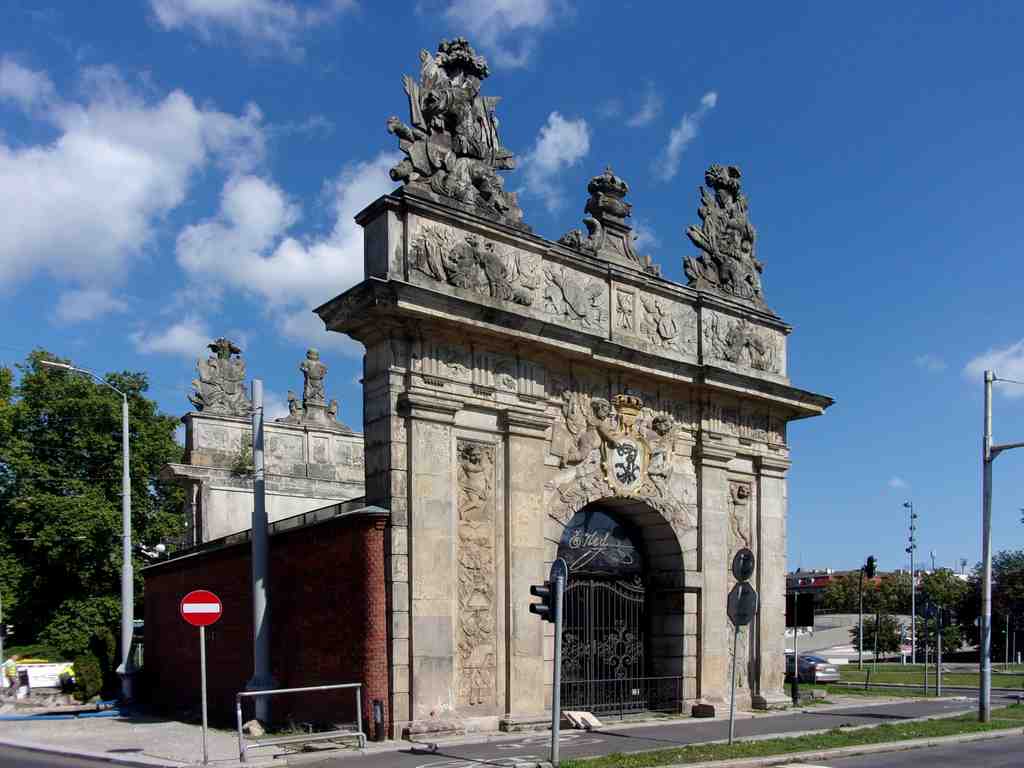
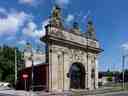
Apri pagina dedicata →To spot the King’s Gate, look ahead for a grand stone gateway covered in intricate reliefs and crowned by dramatic Baroque sculptures-including powerful warriors, swirling armor,…Leggi di piùMostra meno
To spot the King’s Gate, look ahead for a grand stone gateway covered in intricate reliefs and crowned by dramatic Baroque sculptures-including powerful warriors, swirling armor, and a royal coat of arms right above the arched passage. Now, as you’re standing before this majestic triumph of stonework and history, close your eyes for just a moment and imagine the sound of wagon wheels rumbling over cobblestones, the smell of wood smoke wafting through the chilly morning air, and the distant march of soldiers in formation. Welcome to the King’s Gate, once the proud northern entrance to the city-a portal that has seen centuries of drama, splendor, and even a bit of royal fanfare. This mighty gate was first built between 1725 and 1728, when Szczecin needed to guard its heart against the unpredictable world beyond. Picture stonemason Hans Jürgen Reinecke sweating over the massive blocks, while master sculptor Bartholomé Damart carved Mars with his fearsome sword, Hercules with his lion pelt, and putti-yes, those chubby baby angels with tiny wings-lining up above you. Rumor has it even the putti got tired of holding up coats of arms, but hey, you can’t argue with Baroque style! Originally known as the Anklam Gate, after the town to the west, this was more than just a checkpoint. It was the city’s grand handshake to the world, guarded by two bastions-Mill and Kagen-that stood ready to defend Szczecin at a moment’s notice. Step closer and you’ll see the striking cartouche above the gate, emblazoned with the Prussian Black Eagle and royal crown, displaying all the pomp and circumstance worthy of a fairy tale. The gate’s name changed with history’s winds, becoming the King’s Gate to commemorate none other than King Frederick William IV of Prussia, who dropped by in 1841-probably to admire the view and see if he got a discount at the gift shop. Sadly, by 1873, the great city walls were taken down, but this magnificent gateway held its ground, gifted to the city like a medal for courage. Wartime was no joke for the King’s Gate. During World War II, when Allied bombs threatened to erase these delicate sculptures, they were whisked away and hidden in the deep, mysterious Arkonian Woods. Imagine the city’s relief when they finally returned, reinstalled in 1957-heroes in their own right! To keep the building extra safe, it was even draped in cloaks of ivy, a disguise worthy of an epic tale. Stand quietly and you might hear whispers of old soldiers who once passed through, especially the spirit of Dezydery Chłapowski, a daring general honored on the west wall who fought in uprisings and Napoleonic campaigns before being locked up in nearby Fort Prussia. Talk about having the “guts” for history! And now? This grand old gate has a sweet side-literally-it hosts a confectionery store! From royal arms to cakes and pastries, the King’s Gate proves style can be timeless, and the best stories often end with dessert. So take it all in, snap a picture if you like, and just imagine what adventures these old stones have seen, waiting for you to walk through next.
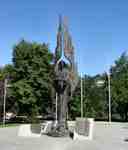
Apri pagina dedicata →To spot the Memorial to the Victims of December 1970, look ahead for a tall, striking bronze statue shaped like an angel with wings reaching toward the sky, standing on a boat,…Leggi di piùMostra meno
To spot the Memorial to the Victims of December 1970, look ahead for a tall, striking bronze statue shaped like an angel with wings reaching toward the sky, standing on a boat, surrounded by four stone plaques set into the pavement. Now, take a deep breath and imagine for a moment you’re standing in Solidarity Square, right where history cracked open. Before you rises the “Angel of Freedom” - but this is no ordinary angel! This towering figure, almost 11 meters high, hovers above the square holding a crown of thorns that spells out “Grudzień 1970,” or December 1970, as if history itself wanted to make sure we’d never forget those cold, tense days. The angel’s wings stretch horizontally like a protective shield, and below it, a boat seems to burst from the paving stones - as if it’s carrying memories up from the earth itself. Flash back to December 1970. Imagine the crunch of boots on frosty pavements, crowds gathering with hope and fear, standing up for change. In Szczecin and other Polish cities, workers took to the streets, demanding not gold or glory, just basic fairness. The government’s answer? Tanks, bullets, and tragedy. The square where you stand became a crossroads of defiance and sorrow, the air vibrating with tension and, at times, terrible silence. Years later, Szczecin’s people and friends from far away - even from across the ocean in the United States - raised their voices, wallets, and hearts to build this monument. The cornerstone was laid with dignity in 2003, and the angel finally took flight in bronze in 2005, marking the anniversary of the powerful August Agreements. Look around at the plaques: on each, you’ll find names, tributes, and the proud coat of arms of Szczecin. Each line tells a fragment of a story - someone lost, someone remembered, and a city that refused to forget. So stand tall, just like the angel, and know that in Szczecin, freedom has wings, and history whispers on the wind, especially here. Oh, and don’t worry, this angel won’t ask you to confess your secrets - it’s far too busy guarding the hopes of a whole city!
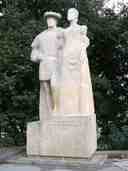
Apri pagina dedicata →To spot the Monument to Duke Bogusław X and Princess Anna Jagiellon, look for two grand, pale yellow stone figures standing side by side near the northwest corner of the…Leggi di piùMostra meno
To spot the Monument to Duke Bogusław X and Princess Anna Jagiellon, look for two grand, pale yellow stone figures standing side by side near the northwest corner of the Pomeranian Dukes’ Castle, with Duke Bogusław on the left and Anna Jagiellon on the right, just in front of the Bell Tower. Alright, standing here, take a good look-nope, they aren’t on their way to a Renaissance costume party! These stone figures are Duke Bogusław X and his royal wife, Princess Anna Jagiellon, frozen in time to remind us of a marriage that once united powerful families and, for a moment, kingdoms. This monument didn’t just spring up overnight, though. Back in 1969, there was quite a fuss: a competition was announced to create a statue that would celebrate the links between Pomerania and Poland. Clever move, right? They picked Bogusław X, the “Great” Duke of Pomerania, and his wife Anna, daughter of a Polish king, to really drive home the historic connections. But here’s where things get dramatic-two young, up-and-coming Szczecin sculptors, Leonia Chmielnik and Anna Paszkiewicz, both won first prize with entirely different ideas! So, what did the judges do? They asked them to work together, like two chefs tossing ingredients into the same pot. That teamwork turned into a long friendship. The ladies even went to the Bolesławiec quarry themselves to pick out the perfect blocks of yellow sandstone-imagine them, dust on their shoes, examining massive stones, arguing about which one looked the most “ducal.” This statue wasn’t easygoing, either. The competition judges kept demanding new models-imagine sculpting these two again and again, first in clay, then in plaster, never quite sure if the monument would even be built! Eventually, the design was set: Bogusław in royal garb with a flat cap, his princely chain on his chest; Anna, elegant, tall, in a long gown, raised up just a little to be level with her (historically taller!) husband. On the 30th anniversary of Poland’s postwar independence, July 22, 1974, they were finally unveiled, facing the city, like a royal couple ready to greet their people. And if you look closely at the texture-yes, it’s a bit rough. In 2000, someone tried to clean it up and, well, let’s just say they weren’t exactly Michelangelo. Oh, and in 2024, this great story inspired a documentary, shining a spotlight on the talented women who brought royalty back to Szczecin-and maybe, just maybe, reminding us that legends and monuments are built not just on history, but on sheer determination and a dash of artistic stubbornness.
Apri pagina dedicata →To spot the Pomeranian Dukes' Castle, just look for the massive cream-colored Renaissance building with striking green domes and a clock tower standing proudly atop Castle Hill,…Leggi di piùMostra meno
To spot the Pomeranian Dukes' Castle, just look for the massive cream-colored Renaissance building with striking green domes and a clock tower standing proudly atop Castle Hill, right near the river. Ah, welcome to the legendary Pomeranian Dukes' Castle! Imagine, you’re standing where once thick forests and wooden fortresses echoed with the footsteps of dukes and whispers of Slavic legends. Over 900 years ago, a wooden manor stood here for Prince Wartislaw I, the air thick with smoke and the clopping of horses. As cities grew and the winds of power shifted, Duke Barnim I made Szczecin the capital in 1235, transforming that rustic wooden manor into something far grander. Flash forward to 1346: Barnim III started building a true castle - no more humble timbers, but mighty stone walls, a chapel, and a tall prison tower. This place became a fortress, fit for the powerful Griffins, the ruling dynasty. One day in 1428, the city exploded with a rebellion, craftspeople and townsfolk banging at the gates. When Duke Casimir V managed to squash the unrest, he spared no expense to fortify the castle with a mighty new south wing - late Gothic style, all drama and shadows. Then disaster struck. In 1530, flames leapt high, turning the castle to cinders. But like a phoenix-OK, more like a very determined architect-the castle rose again! For seven years, masons and artists worked day and night, giving the castle its Renaissance charm: two glorious stories, a soaring clock tower, and a grand new east wing. Imagine the clanging of hammers and the shouts of builders, echoing off stone. The story only gets stranger! In the late 1500s, Duke John Frederick went full medieval architect, got rid of parts of the old castle and even the church next door, and wrapped the new wings around a sunny courtyard - now with running water, which was practically wizardry back then. By the early 1600s, they even added a fifth wing, specially built to show off their treasures - the region’s first museum. But the last Griffin duke passed away, and suddenly the castle had new bosses: Swedish governors, then Prussian soldiers, all leaving their mark. The soldiers didn’t care much for finery - balconies vanished, halls were gutted, corridors appeared where grand rooms used to be. By the 1900s, the castle looked more like a haunted maze! By WWII, bombing raids left it a ruined skeleton. But - plot twist! After the war, local heroes and planners swooped in to stabilize the old walls. In 1948, archaeologists started digging - and what secrets they found! Crypts full of ducal coffins, centuries-old church remnants, and relics of beautiful stonework hidden for ages. Major restorations in the late 20th century gave the castle its Renaissance glory back. And today, you’re standing at the heart of Szczecin’s history. These walls hold a dazzling concert hall, quirky theaters, artistic exhibitions, and a famous opera house. The crypt is once again a resting place for the Griffins, but upstairs it’s all music, laughter, and maybe the occasional restless duke peeking in, just to see if the acoustics have improved. So take a breath-imagine those old dukes striding through the halls, musicians tuning up in the evening sun, and know you’re standing in the very place where centuries of drama, disaster, and triumph played out. Not a bad spot for a selfie!
Apri pagina dedicata →To spot the Cathedral Basilica of St. James in Szczecin, just look for the towering red-brick church with dramatic vertical lines and a tall, pointed spire stretching far above…Leggi di piùMostra meno
To spot the Cathedral Basilica of St. James in Szczecin, just look for the towering red-brick church with dramatic vertical lines and a tall, pointed spire stretching far above the rooftops-it stands proudly at the crest of the Old Town, impossible to miss against the sky. Ah, welcome to the mighty Cathedral Basilica of St. James! Now, if you think this place looks impressive from the outside, wait until you hear its story-it's practically the blockbuster film of Szczecin’s Old Town. Stand here for a moment and imagine stepping back to the year 1187. There’s a buzz in the air, merchants and townsfolk gather, and on a tiny hill just outside the city walls, a devout man named Bering from Bamberg vows to build a church fit for both heavenly miracles and earthly ambition. As you stand here, imagine a crowd gathered around, the bishop of Kamień performing the consecration, and a proud duchess looking on. At first, this was a simple Christian outpost, built to bring faith (and maybe a bit of good luck) to the booming port city. But Szczecin doesn’t do simple for long-the church was rebuilt and expanded into a mighty Gothic basilica from the 14th to 15th century, all in the signature style of Baltic brick. It was so massive that, today, it’s still the second tallest church in Poland-so if you ever get lost in Szczecin, just look for the spire! Of course, this cathedral was never just brick and mortar-it was the heart of the city’s spiritual life. For centuries, its halls rang out with sermons, its altars shone with gold, and, at one point, it even switched teams! After 1534, when the city embraced Lutheranism, St. James became a Protestant church-let’s just say the holy water might have gotten a little more… reformative. But drama loves a cathedral. In 1456, the southern tower collapsed for mysterious reasons-talk about a holy mess-and then, in 1677, cannonballs from enemy armies crashed through the skyline, lighting up fire and sending the grand organ, gothic altars, and even the library up in smoke. They rebuilt, went baroque, added new sculptures and stained glass, and even installed electric lights before the 20th century-way ahead of the local competition, you might say. Fast forward to World War II, and disaster struck again. Bombs rained down and fire swept through, leaving nearly three-fourths of the basilica gutted. For years, the ruins stood as a somber reminder, before a massive restoration began in the 1970s. The goal? Rebuild with utter respect for the past-except, for one northern wall, which now wears a modern face like a stylish hat for a very old head. In 2008, after decades as a bare-topped tower, a brand-new spire soared skyward again, giving you that signature silhouette you see today. Inside, the cathedral has its own secret universe-gothic altarpieces hauled here from across Europe, priceless retables, and modern tributes to saints, fallen soldiers, and the sailors who braved the Baltic. Some chapels hold tragic secrets-like remains unearthed during the restoration-while others glitter with new stained glass, honoring maritime legends and local trades. From the Chapel of Shoemakers (where everyone’s dying to get in-literally) to the glimmer of the Ciećmierz triptych in the Chapel of the Blessed Sacrament, it’s like a time machine of faith and artistry. And let’s not forget the organ-66 voices, 4,743 pipes, and enough sound to shake the cobwebs from any medieval ghost. There’s even an echo of musical giants: Carl Loewe, the 19th-century organist, was basically Szczecin’s answer to Freddie Mercury! If these walls could sing, you’d probably have to buy tickets. So, gaze up at those brick buttresses, trace the delicate lines of the spire, and feel the thousand stories echo around you. Whether you’re spiritual or just spellbound by architecture, the Cathedral Basilica of St. James has survived war, fire, faith, and time itself-and still stands, bold as ever, watching over the city. How’s that for a plot twist? Interested in a deeper dive into the meaning, equipment or the other? Join me in the chat section for an insightful conversation.
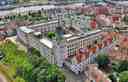
Apri pagina dedicata →Look for a lively riverside avenue lined with boats, bright tents, and a panoramic view of historic buildings just above the embankment-if you see crowds along the Odra River and…Leggi di piùMostra meno
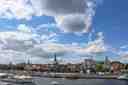
Look for a lively riverside avenue lined with boats, bright tents, and a panoramic view of historic buildings just above the embankment-if you see crowds along the Odra River and a grand castle above, you’ve found the Wieleckie Quay. Take a moment to breathe in that riverside breeze-just behind you is one of Szczecin’s most debated and dramatic arteries, the Wieleckie Quay! Imagine yourself in the chaos after World War II: nearly 80 percent of the Old Town is rubble, the air is thick with dust, and the whole city feels like one giant jigsaw puzzle with half the pieces missing. Now, if those crumbling stones could talk, they’d have a lot to say-but let me fill you in instead! Back in the late 1940s, city planners, led by visionaries like Ernst Lehnemann and Hans Bernhard Reichow, dreamed of remaking Szczecin into a modern marvel. Picture hammers pounding, cranes grinding, rubble crunching underfoot, as the city debated how to build a bold new road by following the ghostly traces of old streets-and maybe revealing a few hidden treasures. The plan was to carve a wide, tree-lined road, with space for trams zipping by and green stretches that would roll all the way to the ancient castle and city hall. But to make space, whole rows of old tenements had to give way, their memories swept away in a cascade of bricks and dust. If you’re wondering just how much building material they had, the answer is: a heap! So much rubble remained from bombed-out buildings that the ground here was literally raised by two meters-no wonder this spot feels like it’s on a different level. Beneath your feet is layer upon layer of history, hidden by what used to be an old riverside boulevard. This upper road became the communication lifeline of the reborn city, and yes, a lot of those old bricks found new homes far, far away-sold off to finance the rebuilding effort. Who knew a chunk of Szczecin might have ended up somewhere else in Poland? This place became so central that clever engineers even sculpted a special loop in the road, an odd little “ear” on the map, to help cars get from Długi Bridge onto the quay. Picture it: Szczecin’s own “Sternicki’s Ear,” named after the traffic mastermind himself. It’s not every avenue that listens to its drivers, is it? But the story doesn’t stop there! In recent years, there’s been the buzz of jackhammers and clatter of construction as the tram tracks and pedestrian crossings were rebuilt, making it easier to stroll down to Piastowski Boulevard and enjoy that river view. Many locals debate whether this mighty road should still separate the city from its beloved Odra-some see it as a vital artery, others as a scar that blocks the heart from its river. Imagine on market days, the aroma of street food mixing with the scent of river air, crowds surging along the quay, while high above, the white walls of the Dukes’ Castle keep an eye on everyone and everything. And who knows-maybe in the future you’ll return to find this busy road turned into a peaceful pedestrian paradise, just like in the dreams of modern urban planners. Until then, listen for the city’s heartbeat along the river-you might just hear the echoes of all those years of rebuilding and debate.
Apri pagina dedicata →Ahead of you is Księcia Mściwoja II Street-just look for the stretch of pastel-hued, sloped-roof apartment buildings running alongside the Old Town Square, with a restaurant…Leggi di piùMostra meno
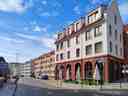
Ahead of you is Księcia Mściwoja II Street-just look for the stretch of pastel-hued, sloped-roof apartment buildings running alongside the Old Town Square, with a restaurant perched on the corner inviting you to step back in time. Welcome! Now, imagine standing right here centuries ago, when the air was thick with the clang of metal and the scent of fresh rope-not your typical perfume, but the signature smell of Szczecin in the 15th century. Back then, this very street was known far and wide as kannengeterstrate, or “Tinsmiths’ Street,” a place bustling with busy craftsmen. If you could peek into the little workshops lining the lane, you’d see tinsmiths hammering away, crafting all sorts of shiny wares, while children darted between market stalls dreaming of sneaking scraps of delicious rye bread. But time, like a wagon rolling down a cobblestone street, brings big changes. Sometime after 1534, the clang of tin began swapping places with the hum of rope-makers, who soon gave the street a new name-reepslegerstrate. Rope-makers, or “repar,” twisted great lengths of rope for ships and markets. If knots make you nervous, be glad you didn’t have their job! There’s even a tale of the local mayor, Arnt Ramyn, living right here where rope was king, likely catching whiffs of hemp with his morning coffee. Fast forward to the 1800s and the street transforms again-a grand classical exchange building rises, only to be lost to the ravages of war. After World War II, the street’s old character is swept away with the rubble, replaced by the modern pastel apartment blocks you see today, each crowned with sloping roofs, like nods to the city’s history. The street, once called Reifschlägerstraße, takes on the proud name Księcia Mściwoja II, and by the 1950s and 60s, life returns-new families, new stories, and even a new tenement in 2016, right at the corner with Kurkowa Street. So, as you walk this lively, unassuming street, let your imagination wander through layers of tinsmiths and rope-makers, merchants and mayors-a little slice of Szczecin’s past woven right into its present. And if you pass the restaurant, well, why not toast to Mściwój II? He throws the best street parties in the Old Town-across the centuries!
Apri pagina dedicata →To spot the Old Town Hall, just look for a grand building made of red and green glazed bricks, with tall, pointy pinnacles and rows of arched windows-it’s standing proudly at the…Leggi di piùMostra meno
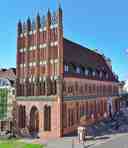
To spot the Old Town Hall, just look for a grand building made of red and green glazed bricks, with tall, pointy pinnacles and rows of arched windows-it’s standing proudly at the corner, right next to the cobbled square. Step right up-if you could listen closely enough, you might just hear whispers from six centuries ago echoing off these bricks! The Old Town Hall before you isn’t just any building: it’s a time traveler in disguise. Back in the 15th century, masons laid these bricks where a wooden city council once stood-imagine the clatter of their tools and the creak of carts unloading stone onto the Hay Market Square. The Town Hall became the beating heart of medieval Szczecin, holding not only the city council, but the courtroom, trade hall, and even the local jail-so if you feel a chill, don’t worry, it’s just the ghosts of ancient prisoners complaining about the food! Fast forward to December 1570, and this building was buzzing with tension as Swedish and Danish diplomats argued late into the night, hoping to end the Northern Seven Years’ War. Picture the candle-lit chambers, the air thick with ink and not a little suspicion-who would blink first and sign the peace? Sieges rocked it in the 1600s, booms and shouts resounding as walls crumbled, only to rise again, this time dressed in fancy Baroque clothes-like a Gothic knight who decided to wear a ruffled shirt! The city’s leaders called it home till 1879, and then the Second World War struck, leaving it shattered in 1944. But Szczecin doesn’t let a good legend die, so in the 1970s, bricks were stacked, arches restored, and the Old Town Hall was reborn-now mostly Gothic again, with one Baroque face still playfully peeking out. Today, within these ancient walls, you’ll find the Szczecin History Museum, where the echoes of old markets, fierce debates, and rebuilding hope all live on-oh, and the basement restaurant makes a mean dish, though probably better than the city jail’s old menu!
Apri pagina dedicata →Right in front of you is Panieńska Street-just look for a long stretch of cobblestone road lined with colorful, gabled buildings on both sides, and you’ll know you’re in the right…Leggi di piùMostra meno
Right in front of you is Panieńska Street-just look for a long stretch of cobblestone road lined with colorful, gabled buildings on both sides, and you’ll know you’re in the right place! Imagine yourself on this bustling street in medieval times, the air full of the sounds of hooves on cobblestones and the chatter of merchants selling their goods. If you listen closely, you can almost hear the echo of centuries-after all, this street is as old as Szczecin itself! Panieńska Street runs from northeast to southwest, snaking its way through the heart of the Old Town and crossing important crossroads like Kłodna, Środowa, and Kuśnierska. The pavement beneath your feet is still mostly cobblestone, so take a step and let your imagination slip back in time. This street got its name from the Panieńska Gate, once guarding the entrance to the city near today’s Castle Route viaducts. That gate was named because of a Cistercian nunnery, established by Duchess Mariana, the wife of Duke Barnim I-not because only unmarried ladies lived here, though that would certainly make for a different type of fairy tale! As you walk, picture the grand town hall that stood at the corner with Rynek Nowy after 1245, and the city scale next door, a hive of activity until 1697. Life here was never dull. In the 18th century, as the city walls came down, the street extended from the monastery all the way to the city ramparts. Bricks and dreams were laid side by side-there was even a stock exchange built in the 1830s! Sadly, the gates, known as the New Panieńska Gates, were demolished in 1880, yet the road pressed onward, growing with every age. There were plans in the 1930s to bulldoze parts of the street to make way for more cars-imagine urban planners frowning at the old houses and waving their blueprints menacingly-but don’t worry, they were never carried out. Then came World War II, shattering many of the street’s beautiful buildings. Only the sturdy old town hall and the stock exchange survived the bombing raids. In the aftermath, this area was a patchwork-empty plots, lawns growing where homes once stood, street alignments shuffled like a game of urban cards. The 1950s brought a new wave of construction: blocks with pitched roofs popped up between Kuśnierska and Kurkowa, and the famous Hotel Arkona was built beside Rynek Nowy. You might be standing where that hotel once tried to take over from the medieval Kurza Stopka street! Jump to the 80s and 90s and the story of Panieńska becomes a soap opera, full of ambitious plans, rival building companies, and unexpected cliffhangers. Architectural contests promised new life for the lower Old Town, but delays stretched on forever. Finally, in the late 1990s, the street began to rise from its foundations again. Buildings returned along the eastern row, right at the foot of the castle. Some of those houses you see now are the result of dreams finally realized. As the city entered the 21st century, archaeologists digging beneath your feet found old cellars and the cobblestones of the vanished Kurza Stopka-imagine all the stories whispered in those stones! In 2019, construction for a new hotel began where Arkona once stood, making Panieńska a place where the old and new always meet. So as you gaze down this lively street-listen, look, and stroll. Every step here is a step through centuries of change, mystery, and rebirth. And if you feel the urge to tiptoe, don’t worry, it’s just the ghosts of city planners past, making sure you don’t scuff the cobblestones too much!
Apri pagina dedicata →To spot the Maiden Tower, look for a round brick tower with a cone-shaped roof and crenellations, perched right near the busy road and the river, close to the foot of the…Leggi di piùMostra meno
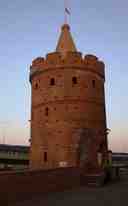
To spot the Maiden Tower, look for a round brick tower with a cone-shaped roof and crenellations, perched right near the busy road and the river, close to the foot of the Pomeranian Dukes’ Castle. Welcome to the legendary Maiden Tower, one of Szczecin’s most beloved symbols and, let’s be honest, a round brick celebrity in its own right! Feel the centuries crackling in the cool air as you stand before this mighty fortress-built in the 14th century as part of Szczecin’s defensive walls. Back then, the city was encircled by over two and a half kilometers of thick walls, bristling with four grand gates and dozens of towers just like this one. Picture the clang of armor and the echoing footsteps as guards patrolled these very battlements. The tower took its name from the nearby Maiden Gate, which once led devout nuns from their 13th-century Cistercian monastery straight into the heart of the medieval city. But, as legends love a good costume change, this landmark is also called the Tower of Seven Cloaks-and here’s where history puts on its best cloak-and-dagger act. Some say the name comes from a guild of tailors who paid to maintain the tower, but there’s also a tale that for Duke Bogusław X, seven magical cloaks were sewn within these walls-one for each day of the week, perhaps, or just to keep medieval fashionistas guessing! The Maiden Tower has seen everything. Imagine, for a moment, in the dark ages, it doubled as a jail-for nearly five hundred years, the unlucky and unruly found themselves behind these thick walls. During the rule of Prussia, the old defensive system was torn down and the tower was all but buried behind city houses and nearly forgotten, like a fairy-tale relic lost among the laundry lines. But then, disaster struck in WWII. Bombs destroyed the neighborhood and, for a moment in 1948, the Maiden Tower stood alone among piles of rubble-Szczecin’s past poking through the ruins. In the 1960s, the tower was lovingly rebuilt, repaired back to its former glory in bright red brick, topped with a conical hat that any good fairy-tale tower would envy. At one point, it housed a knightly order-because who wouldn’t want to be lord of their own medieval tower? So, as Szczecin bustles by-with cars hurrying along the riverside roads and the castle looming above-this tower stands as a proud reminder of the city’s dramatic, sometimes mysterious, but always stylish story. And remember: you’re standing face-to-tower with a local legend that’s survived centuries, a few misadventures with tailors, and even a sneak attack from modern life. Now that’s what I call “towering” above the rest!
Apri pagina dedicata →
Domande frequenti
Come inizio il tour?
Dopo l'acquisto, scarica l'app AudaTours e inserisci il tuo codice di riscatto. Il tour sarà pronto per partire immediatamente – tocca play e segui il percorso guidato dal GPS.
Ho bisogno di internet durante il tour?
No! Scarica il tour prima di iniziare e goditelo completamente offline. Solo la funzione chat richiede internet. Ti consigliamo di scaricare tramite WiFi per risparmiare dati mobili.
È un tour guidato di gruppo?
No – è un tour audio autoguidato. Esplori in autonomia al tuo ritmo, con la narrazione audio riprodotta dal tuo telefono. Nessuna guida, nessun gruppo, nessun orario.
Quanto dura il tour?
La maggior parte dei tour richiede 60–90 minuti, ma sei tu a controllare il ritmo. Metti in pausa, salta le tappe o fai pause quando vuoi.
E se non riesco a finire il tour oggi?
Nessun problema! I tour hanno accesso a vita. Metti in pausa e riprendi quando vuoi – domani, la prossima settimana o il prossimo anno. I tuoi progressi vengono salvati.
Quali lingue sono disponibili?
Tutti i tour sono disponibili in oltre 50 lingue. Seleziona la lingua preferita quando riscatti il codice. Nota: la lingua non può essere cambiata dopo la generazione del tour.
Dove accedo al tour dopo l'acquisto?
Scarica l'app gratuita AudaTours dall'App Store o Google Play. Inserisci il codice di riscatto (inviato via email) e il tour apparirà nella tua libreria, pronto per essere scaricato e avviato.
Se il tour non ti piace, ti rimborseremo l'acquisto. Contattaci a [email protected]
Pagamento sicuro con 


