Audioguida di Eindhoven: Un Viaggio tra Arte, Innovazione e Patrimonio
Sotto il bagliore moderno di Eindhoven, segreti medievali persistono tra pietra e ombra. Antichi campanili raccontano storie di tradimento e rivolta. Cortili silenziosi nascondono scandali sussurrati e santi dimenticati. Questo tour audio autoguidato ti conduce oltre le solite attrazioni, intrecciando storie nascoste attraverso chiostri silenziosi, vicoli acciottolati e mura di castelli che pochi visitatori notano. Chi scatenò una rivolta di mezzanotte al Castello di Eindhoven che scosse il destino della città? Quali incontri proibiti risuonarono attraverso l'Augustijnenkerk durante le guerre di religione? E perché i locali discutono ancora del manufatto scomparso del Monastero di Mariënhage? Segui i passi dove i monaci sfidarono i governanti e l'intrigo covava dietro le vetrate. Muoviti attraverso secoli di ambizione e fede mentre verità, leggenda e diceria si intrecciano ad ogni svolta. Gli strati di Eindhoven ti aspettano. Premi play e scopri il cuore più segreto della città dove il passato esige di essere ascoltato.
Anteprima del tour
Informazioni su questo tour
- scheduleDurata 40–60 minsVai al tuo ritmo
- straighten4.6 km di percorso a piediSegui il percorso guidato
- location_onPosizioneEindhoven, Paesi Bassi
- wifi_offFunziona offlineScarica una volta, usa ovunque
- all_inclusiveAccesso a vitaRiascolta quando vuoi, per sempre
- location_onParte da Markt
Tappe di questo tour
To spot the Markt, just look for the wide, lively square filled with outdoor terraces, colorful market stalls, and a backdrop of charming old buildings and modern shops. Welcome…Leggi di piùMostra meno
To spot the Markt, just look for the wide, lively square filled with outdoor terraces, colorful market stalls, and a backdrop of charming old buildings and modern shops. Welcome to the heart of Eindhoven-Markt! If you listen closely, you can almost hear the clatter of centuries-old carts and the lively chatter of traders from way back in 1232, when this square became the city’s beating heart as Eindhoven earned its city and market rights. Back then, this wasn’t just a pretty plaza; it was the lifeline of the town, bustling with merchants selling everything from turnips to trinkets. Don't be fooled by the modern cafés and glam terraces that surround you now-this place still keeps a little corner of its old soul alive every Saturday, with a quirky little antiques market. You might even catch the mesmerizing music from the Vermolen carousel, which has made a permanent home here-perfect for adding a bit of magic to your stroll! If you have a keen eye, look for the regal house at Markt 23a, a rare gem in Amsterdam School style from 1925. Or grab a bite where people once counted coins-at Marktstraat 1, now serving fast food but once the strongest bank in town. Even the walls of Heuvel Galerie hide stories, with historic façades at Markt 9, 10, and 11 built into the shopping center. Soak up the sights, smells of Dutch treats, and maybe find a new favorite café-and remember, here, you’re standing where history is always just a step away from the next round of drinks!
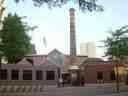
Apri pagina dedicata →To spot the Philips Museum right now, just look for the low, reddish-brick building with a tall, round chimney stack reaching above the roof, standing out between the trees and…Leggi di piùMostra meno
To spot the Philips Museum right now, just look for the low, reddish-brick building with a tall, round chimney stack reaching above the roof, standing out between the trees and modern city buildings in front of you. Now, get ready to travel back in time-no need for a time machine, just a good imagination and maybe a flashlight! Picture yourself at the end of the 19th century right here in Eindhoven. The streets are dim, flickering with yellow candlelight-real “gloomy days,” you might say. Imagine the small, factory building before you buzzing with excitement as Gerard Philips, an ambitious engineer, and his brother Anton, the smooth-talking salesman, roll up their sleeves to launch their brand new business. Their dad, Frederik, gave them the start-up money-who says good ideas and a bit of family help don’t go hand in hand? Inside these walls, workers used purified cotton, glass, and a steady hand to craft the first carbon-filament bulbs. There’s something magical about it: a whiff of burning metal, the tick-tick of early machines, and the hope that their lights would soon replace flickering candles across the city. The company’s experiments with electricity must have been absolutely shocking-literally! Decades passed, and as light bulbs brightened up the world, this little factory saw transformations of its own. It became a showcase for Philips’s breakthroughs-a light demonstration center in the 1950s, even a place where visitors could see how the first bulbs were made step by step, right down to the glow. By the 1990s, this building was on Eindhoven’s monument list, preserved not just for engineers and history buffs, but for everyone. Fast forward to 2013, and with a royal twist-Queen Beatrix herself opened the modern Philips Museum here. Now you can wander through recreated workshops, marvel at inventions from X-ray machines to radios, televisions, and even kitchen gadgets. Don’t miss the displays of designs by Louis Kalff, who gave Philips its signature look. The museum also shines a spotlight on heroic stories, like Jan Zwartendijk, the Philips manager who helped thousands of Jews escape during WWII. Today, as you stand under the tall chimney, you might even imagine the soft hum of invention brewing inside. It’s a place where darkness met invention, and together they sparked a brighter world. And that’s what I call a lightbulb moment!
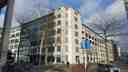
Apri pagina dedicata →To spot the Witte Dame, look for a long, bright white building with many large windows right on the corner of Emmasingel; its clean lines and impressive size make it hard to…Leggi di piùMostra meno
To spot the Witte Dame, look for a long, bright white building with many large windows right on the corner of Emmasingel; its clean lines and impressive size make it hard to miss. Alright, take a good look at that sleek, glowing building in front of you-it’s the Witte Dame, but don’t worry, you’re not about to be haunted! Back in the late 1920s and early 1930s, this place was alive with the buzz and whirr of Philips engineers making radio tubes. Workers bustled between buildings known mysteriously as EE, EF, and EH, all part of a giant Philips complex you might say was the heartbeat of Eindhoven’s tech world. Yet, here’s a fun secret: its stunning white coat only appeared in 1953-before that, it wasn’t even the “White Lady” at all! In the 1980s, after Philips packed up and left, the building stood empty and faced demolition. But a plucky artist, Bert Hermens, and a local foundation said “not today!” They saved it, named her the Witte Dame, and now she hosts the Design Academy, a library, cafés, and more. So, whether you’re after stories, a good book, or just a coffee, this luminous lady has plenty to offer-thanks to a twist of Eindhoven creativity and a dash of courage!
Apri pagina dedicata →
Mostra altre 12 tappeMostra meno tappeexpand_moreexpand_less
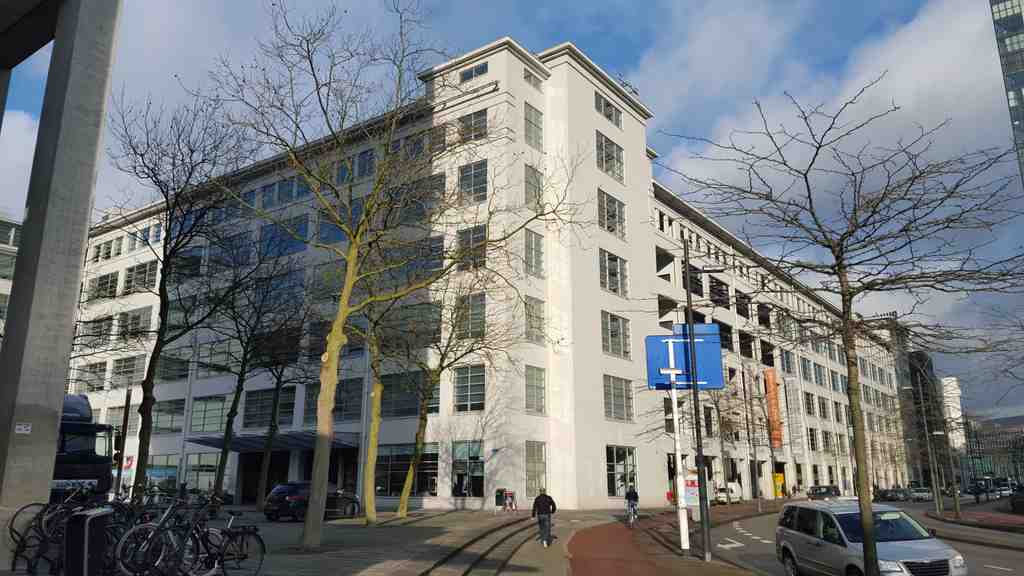
To spot the Lichttoren, look for a tall, white, seven-sided tower with the big blue "PHILIPS" sign on top, standing right at the bustling intersection and next to the glassy Blob…Leggi di piùMostra meno
To spot the Lichttoren, look for a tall, white, seven-sided tower with the big blue "PHILIPS" sign on top, standing right at the bustling intersection and next to the glassy Blob building. Here you are, standing outside the famous Lichttoren-the real beacon of Eindhoven! Picture yourself here in the early 1900s: this area was buzzing with the clatter of industry, and workers hurried into the brand-new L-shaped factory buildings while the architects from TABROS probably debated if seven sides would be lucky. Between 1909 and 1921, these walls became the headquarters for Philips Lighting, but the real magic happened at the very top floor. Every night, engineers performed lifelong tests on lightbulbs, illuminating the tower so brightly that people from miles away must’ve thought aliens had landed. That’s actually how the “Lichttoren”-meaning “Light Tower”-got its nickname. By day, it was a place of invention; by night, a glowing lighthouse that no one in Eindhoven could miss. Over the decades, this building morphed into Philips’ international headquarters and eventually transformed into today’s lively complex, filled with apartments, offices, and cozy restaurants. Since 2009, LED lights have brought a modern glow to this iconic tower. So, while you’re here, just imagine the evenings when the whole city turned its eyes toward this shining monument-proof that sometimes, you really can trust a lightbulb to outshine the stars.
Apri pagina dedicata →Look around and you’ll spot The Regent, one of those proud, sleek apartment towers, and the flats running along the Lichtstraat. These aren’t just apartments; decades ago, this…Leggi di piùMostra meno
Look around and you’ll spot The Regent, one of those proud, sleek apartment towers, and the flats running along the Lichtstraat. These aren’t just apartments; decades ago, this area buzzed with the energy of workers moving in and out, shaping Eindhoven’s future. The Witte Dame wasn’t always a hotspot for creative minds and cool businesses- once, it was all about making light bulbs and radios. Imagine the scene: the scent of solder and fresh paint, the hum of machines, and now? Laptops, lattes, and laughter. Every corner here has that little spark of Eindhoven’s inventive spirit. So, as you wander through, just remember: you’re in the middle of a bright idea that’s been shining for generations. Now, on to the next stop!
Apri pagina dedicata →Look straight ahead for a church of pale, rough stone with an eye-catching, tall square bell tower, arched windows, and red roof tiles-the Steentjeskerk stands out thanks to the…Leggi di piùMostra meno
Look straight ahead for a church of pale, rough stone with an eye-catching, tall square bell tower, arched windows, and red roof tiles-the Steentjeskerk stands out thanks to the unique pattern in its stone façade. Alright, you’ve found the famous Steentjeskerk-congratulations! Now, while its official name is quite a mouthful-The Church of Saint Anthony of Padua and Our Lady Immaculate Conception-everyone in Eindhoven just calls it the Steentjeskerk, or “Little Stones Church.” Why? Well, take a good look at those walls. They’re built from Kunradersteen, a kind of limestone from the southern province of Limburg. When construction began all the way back in 1917, regular bricks were far too expensive, thanks to the chaos of World War I. So the builders went for this quirky, money-saving alternative. I suppose you could say this church was built on a rock-solid budget! The story starts just over 100 years ago, when Strijp was overflowing with new families, especially with the rise of Philipsdorp. The huge growth in Eindhoven’s Catholic community led the bishop to search for a “building priest”-and in walked Pastor Pulskens, a determined man with grand ideas. He didn’t want another Gothic church, oh no. He wanted something more Roman, inspired by majestic basilicas in Italy. So, architect Hubert van Groenendael came up with this brilliant design, taking cues from Rome’s own St. Laurentius Basilica. The main altar faces east, stretching 50 meters long, with space for around 800 churchgoers-maybe not quite Vatican-sized, but pretty impressive for Strijp. Imagine the flurry, the muddy boots, and grumbling builders in 1917, as progress stalled again and again-heavy rains, soaring wartime costs… By the time the first stone was laid, everyone must’ve sighed with relief! Yet they kept costs down; local sculptor Jan Custers made the carvings, stained glass windows were made by Joep Nicolas, and, for better or worse, some decorative plans stayed on the drawing board because money was tight. The church finally opened in 1919, though the tower and gallery were still works-in-progress. There was no heating, so you can bet the first congregation shivered through those early services. Pulskens was installed as pastor, babies were baptized, couples were married, and in a touching gesture, the Strijp council donated a centuries-old bell-so, for a while, every wedding and service was marked by the ringing of the Mariaklok, which dates all the way back to 1462. As years rolled by, the church grew busier-seats expanded to nearly 1,000. Special anniversaries brought gifts of marble and copper, and at one point they imported an antique organ from a neighboring church. Yet, as time passed, challenges kept cropping up: wood-boring beetles gnawed the roof, the floor had to be replaced, and the war years brought loss-one of the church bells was confiscated for the German war effort, and several stained glass windows were smashed by bombs. After World War II, repairs trickled in. Parishioners raised money for new stained glass, and by the 1960s, the church was still evolving-glass was installed on the gallery to trap warmth, a new floor was laid, the altar updated, and eventually, even the heating system was replaced. But as the 1970s crept in, the parish shrank and money ran out. The last wedding in 1971 was a bittersweet farewell. What happened next? The Steentjeskerk nearly fell to the wrecking ball, but locals rallied and saved it, landing it on the monument list in 1977. By the 1980s, it had a second life as Museum Kempenland-if only those limestone walls could list the oddities and laughter they saw! When the museum closed in 2012, the building slipped into limbo. But after an extensive renovation, a new chapter began. And as of March 2024, an imaginative entrepreneur turned the old church into a café-restaurant. As you stand here, imagine the echoes of sermons, wedding bells, bustling museum-goers, and now the cheerful clink of coffee cups-proof that Steentjeskerk is a survivor, ready for whatever the city dreams up next.
Apri pagina dedicata →Look ahead for a lively square bordered by old brick buildings with cheerful red-and-white awnings, bustling outdoor cafés, and the Dutch flag waving above cozy…Leggi di piùMostra meno
Look ahead for a lively square bordered by old brick buildings with cheerful red-and-white awnings, bustling outdoor cafés, and the Dutch flag waving above cozy terraces-Wilhelminaplein is right in front of you. Welcome to Wilhelminaplein, the beating heart of Eindhoven’s local nightlife! Imagine it’s August 20th, 1904-the air is buzzing, townsfolk have dressed to impress, and Queen Wilhelmina herself, along with Prince Hendrik, is rolling into town, inspiring the creation of this very square. Even now, Wilhelminaplein keeps its royal roots alive, not just with its name, but with its countless cafés and restaurants named after the Dutch monarchy-from "Wilhelmina," the famous jazz and blues café, connected straight to "Prins Hendrik," all the way up to the restaurant "Oranje Boven" upstairs. Step back from the café chatter and you’ll spot those classic two and three-story buildings, most from the early 1900s, whose windows have witnessed decades of live music, terrace laughter, and the occasional wild jazz solo. Some of these houses are historic monuments too! And if your eyes catch a glint of bronze, that's "Gekooide vrijheid," a statue symbolizing freedom, installed for Amnesty International’s 25th anniversary. On sunny days, music spills from the terraces, and on summer nights, the square hosts open-air performances that might just make you dance your way to the next stop!
Apri pagina dedicata →Standing in front of you, you’ll spot two dramatic and towering spires jutting high into the blue sky, covered in detailed stonework and gothic windows-just look up and you'll see…Leggi di piùMostra meno
Standing in front of you, you’ll spot two dramatic and towering spires jutting high into the blue sky, covered in detailed stonework and gothic windows-just look up and you'll see one of Eindhoven’s most eye-catching landmarks, the St. Catherine’s Church. Now, imagine yourself stepping back through time as we stand before these soaring towers. Listen--that’s the heart of Eindhoven calling out through history! This spot has held a church for centuries, though what you see now is the grand 19th-century version, built to replace an old medieval church that had seen better (and far, far worse) days. Back in the 1200s, Eindhoven was just a baby town, and its first church was a simple structure, known as ‘sancta Katarina’ by the 1340s. This new church, however, was born out of necessity-after all that old stone had suffered wars, fires, and a few tower-toppling storms. The medieval cathedral was literally battered, burnt, and blown over! If walls could talk, these would probably stutter from the trauma. Designed by Pierre Cuypers-think of him as the rockstar architect of his day-this church was finished in 1867 and is a showpiece of neo-Gothic drama. But here’s the twist: look closely at those towers. They aren’t twins! One is called the David Tower and the other the Maria Tower, each a different shape, inspired by the legendary Chartres Cathedral in France. Feel free to debate which one is more fashionable, masculine or feminine, when you catch your breath. Now, throughout the centuries, St. Catherine’s was more than just a place to pray. It was a target! The poor building endured fires, sieges, lootings, and even a brief stint as a horse stable and a bakery when the French rolled through. Imagine the smell of fresh bread mixing with the faint incense from the altar, and the clatter of hooves on the stone floor-this church must have been the most conflicted building in town! In 1798, after all those shenanigans, it returned to Catholic hands, and a few decades later, Cuypers' masterpiece rose on these medieval foundations. Peek inside today and you’ll find a giant organ with an incredible 5,723 pipes, rebuilt after bombings in the 1940s. Restoration was a major affair here-imagine scaffolds, broken glass, and the steady voices of workers echoing under these arches. And speaking of glass, much of it was created by celebrated artists after the war, lighting up the interior with color when the sun shines through. But history doesn’t sleep! In 2003, archaeologists found hundreds of skeletons beneath your feet-one even dubbed Marcus of Eindhoven and reconstructed for the curious. Oh, and the carillon? That bell music above was a gift from the Philips company’s staff, chiming out tunes over Eindhoven’s rooftops since 1966. So as you stare up at these two proud spires, let your imagination wander through centuries of drama, survival, music, and a few stubbornly persistent parishioners. St. Catherine’s Church: where no one-living or otherwise-can say life is ever boring! Interested in knowing more about the design, restoration or the carillon
Apri pagina dedicata →Here you stand, right where Eindhoven’s mightiest fortress once rose from the earth-a place where warriors, nobles, and, let’s be honest, probably a few chickens all had their…Leggi di piùMostra meno
Here you stand, right where Eindhoven’s mightiest fortress once rose from the earth-a place where warriors, nobles, and, let’s be honest, probably a few chickens all had their part to play. Imagine the year is 1420: instead of modern city life, you’d find thick castle walls towering above and a bustling moat circling the grounds, perhaps giving off a faint, muddy odor mixed with horse and woodsmoke. This wasn’t actually Eindhoven’s first castle, but its second, designed as part of the city’s defenses and built to impress. It’s safe to say the local squirrels have fewer places to hide now. This so-called “City Castle” was the result of Eindhoven being granted the permission to build walls in 1389. Although nobody left behind an Instagram post on construction day, we think the new castle was already in use by 1420. It wasn’t exactly a cozy family home-it belonged mostly to the lord of Cranendonck, who probably only dropped by when his other castles were getting cleaned. I guess even back then, some people needed a holiday home or two! The castle was home to heroic guests and nervous prisoners. Floris van Egmont, who played host to important visitors in the 1500s, might have liked to throw a banquet or two in the stone halls-but I bet he still complained about the draft. And would you believe that Anna van Egmont, lady of the castle, married Willem van Oranje (yes, that Willem, as in the hero of Dutch independence)? They rarely stayed here, probably because their castle vacation schedule was jam-packed. If the castle walls could hold a grudge, it would be for all the drama during the Eighty Years’ War. Spanish riders thundered through the gates in 1573, and just when they unpacked, Dutch rebels would show up. In fact, for a while, the castle swapped owners more often than a bicycle in Eindhoven. At one notorious moment, up to 600 people lost their lives here as the castle was plundered. It was so chaotic that even the castle furniture ran out of luck-soldiers smashed anything they couldn’t carry. As the castle withstood battle after battle, it slowly crumbled. By the seventeenth century, after so much violence and some creative theft (let’s call it “historic recycling”), only a dilapidated shell remained. One by one, towers and gates began to vanish, finally toppled in the 1600s and 1700s. By 1717, the grand fortress had all but disappeared, living on mostly in people’s memories-and maybe in the nightmares of ambitious builders. But every good story needs a plot twist… or two. In the nineteenth century, where you’re now standing, stood a noble house called Villa Ravensdonck. Before that, a tobacco factory kept the workers busy-imagine the sweet, smoky aroma drifting over from the warehouses. The villa survived wild city planning ideas, protests, and even the threat of demolition, transforming eventually into a restaurant where old flavors meet history. After all those centuries, what could possibly be left underfoot? Archaeologists, always after a good dirt nap, started digging here in the 20th century. They uncovered foundation stones from the 1400s, the dark curves of old cellars, forgotten coins, shards of pottery, and even ancient food remains-proof that medieval dinners weren’t all roasted boar and feasts. They also found a surprising number of weapons; clearly, some arguments in the castle kitchen escalated quickly! To make sure no one forgets this chapter in Eindhoven’s saga, in 2019 a small corner of the castle wall was reconstructed nearby at Vestdijk and Ten Hagestraat. It’s a humble reminder of a fortress that guarded the city through centuries of strife, became a legend, and now lends its magic to every passerby-especially those who like a touch of drama in their stroll. And don’t worry, the only battles here nowadays are for a sunny spot on a park bench.
Apri pagina dedicata →To spot Heuvel, just look ahead for a modern light-brick building with a big glass dome right in the middle, rising above everything around it. Now, let’s step into the fantastic…Leggi di piùMostra meno
To spot Heuvel, just look ahead for a modern light-brick building with a big glass dome right in the middle, rising above everything around it. Now, let’s step into the fantastic world of Heuvel! Today, you see a bustling shopping center, but if you could peel back layers of time, you’d stumble upon the site of the old Binnengasthuis hospital, and if you go even deeper, you might hear echoes from a medieval castle built before 1420 for the mighty Lord Jan van Schoonvorst-who would surely be confused by escalators and electric lights. Fast forward to 1992, when architect Walter Brune unveiled this grand three-story shopping palace, inviting people in from four sides with the promise of over 80 shops, cafes, and even a casino and music hall. But Heuvel wasn’t content living in the past-by 2015, it got a stylish makeover, swapped “Heuvel Galerie” for just “Heuvel,” and added a legendary light object in the forum: 121 glowing tubes dancing with color, designed by Har Holland. Not only is Heuvel stylish-it’s a winner, too, snatching the prize for the most sustainable shopping center in the Netherlands. So, whether you’re here for food, fashion, or just fun, remember, every footstep echoes centuries of Eindhoven excitement-and maybe a medieval ghost still haunting the shoe shops!
Apri pagina dedicata →To spot the Augustijnenkerk, just look for a grand neo-Gothic church built from brown-red brick with striking yellow stone bands, towering ahead with a tall, six-sided spire-you…Leggi di piùMostra meno
To spot the Augustijnenkerk, just look for a grand neo-Gothic church built from brown-red brick with striking yellow stone bands, towering ahead with a tall, six-sided spire-you can’t miss the large statue of Jesus with open arms perched right at the very top. Now, let’s travel back to the late 1800s. Imagine it’s a brisk spring morning in Eindhoven. The air is filled with the sound of hammers striking stone and the murmur of townsfolk gathering around the site on Tramstraat. Right here, the Augustinian fathers had a problem-their temporary church simply wasn’t grand enough, so they decided to build this magnificent marvel. It wasn’t easy, let me tell you! The original plans were too expensive, sparking a rivalry between architects over just how high to raise that spectacular left-hand tower. In the end, they opted for the version with not one but two towers, though only one truly dominates. As you stand here and take it all in, picture the builders sweating away, working on top of 1,400 wooden piles, because, believe it or not, the ground was so swampy it was practically floating. Yes, it turns out, the Augustijnenkerk is built on what may have been Eindhoven’s least stable piece of real estate! And as for money? Most of it was donated, but a hefty sum was borrowed from local farmers-who, as you might guess, came knocking for their money back when times got tough. The six-sided spire you see shooting up 66 meters is crowned by a truly heroic sight-a four-meter-tall Holy Heart statue by Jean Geelen, arms flung wide, as if to shout, “Welcome, Eindhoven!” Back when it was new and shimmering gold, folks called it “Jezus Waaghals”-that’s “Daredevil Jesus”-because, with the swirling winds up there, you’d have to be brave (or blessed) not to get dizzy. Above the entrance, look at the stone figures: there’s Saint Augustine in the middle, his mother Monica to your left, and Nicholas of Tolentino to the right. Walk inside, and the rich red brickwork continues, with stained glass windows by Daan Wildschut and Charles Eyck sending colored light all around. The décor is neo-Gothic, with confessionals and chapels tucked into every nook. And don’t forget the organ, which saw such vibrant musical life that for 40 years, Dorthy de Rooij played here, filling the space with music, often accompanied by a chorus conducted by Mathieu Dijker. This place has seen its share of troubles. During World War II, the bells were taken by the occupying forces, and when the grand statue on top became a landmark for Allied pilots, soldiers covered it up, turning Daredevil Jesus into Incognito Jesus. The church took a few hits in the liberation of Eindhoven in 1944, shattering windows and spirits, but rising all the stronger. For decades, the church pulsed with community life. There were christenings, weddings, crowded Sunday masses-and even the famous “Fisherman’s Mass” at four in the morning, drawing both early risers and late-night partygoers. There were television broadcasts, and more than one fire, including a dramatic blaze in 1959-fortunately never enough to snuff out the church’s spirit. But as visitors dwindled in the late 20th century, the church’s fate looked uncertain. In 2017, it finally changed ownership. Now, thanks to DELA, the site forms part of DOMUSDELA, a vibrant community complex for ceremonies and events, once again echoing with life. So, as you stand here, imagine all those generations-the hopeful builders, the thundering organ, the golden Daredevil Jesus braving every storm. Just maybe, if the wind picks up, you’ll hear the old church whispering its stories to you.
Apri pagina dedicata →As you stand in front of the Monastery Mariënhage, let’s take a deep breath and let your imagination drift back through the centuries. You’re looking at a building with more…Leggi di piùMostra meno
As you stand in front of the Monastery Mariënhage, let’s take a deep breath and let your imagination drift back through the centuries. You’re looking at a building with more stories than a gossip magazine, built on ground where knights once stomped and monks once meditated. And if you listen carefully-no, not to me, but to the whispers of history-you can almost hear the medieval footsteps echoing in the corridors. Long ago, in the mists of the 12th or 13th century, a mighty motte castle called Ten Hage stood here. Picture a square stone tower, perched atop a man-made hill surrounded by a moat-prime medieval real estate! It was owned by the Lords of Cranendonck and Eindhoven. One such lord, Jan van Schoonvorst, decided that living in luxury wasn’t enough; he wanted a little more soul in his home. Around 1419, he and his wife Johanna van Rochefort donated the castle and land to some pious Augustinian canons. I suppose he thought, "Let the monks handle the drafty halls. I’ll build my new castle somewhere cozier." The canons wasted no time. On April 2, 1420, the Monastery Mariënhage was born. They named it “Ons Lieven Vrouwe op die Haghe,” which, for the Latin lovers out there, became “Dumum Beatae Mariae” or simply Mariënhage. Its reputation for wisdom and devotion soon attracted spiritual heavyweights from all over-though I hear the monks never mastered Wi-Fi. Life wasn’t always peaceful. Through the centuries, this place experienced sieges, fires, and plundering. In 1486, the great Palm Sunday fire swept through Eindhoven, leaving smoldering ruins where city and monastery once thrived. The monks survived, and by the next year, they boasted the richest library of any Dutch monastery-proof that sometimes, knowledge really is power! But what good is a wealth of books if your neighbors keep burning down the neighborhood? The 16th century brought new trial by fire. During the grim years of the Reformation and Eighty Years' War, the monastery suffered: four monks were accused of heresy (now that’s not your average workplace drama), and in 1566, religious riots led to plundering and heavy damage. By 1581, soldiers set the monastery ablaze, imprisoned its monks, and left the church a ruin. The monks paid ransom with their rescued treasures and fled to ’s-Hertogenbosch. Later, as the centuries rolled by, the monastery was used for everything from troop housing to a grain store-there’s always a plot twist here. Despite all the turmoil, the monastery was resilient. By the 19th century, it even housed a textile factory and several local families-imagine children chasing each other where solemn monks once walked in silence. Later, in 1891, the Augustinian friars returned, converted the old yarn warehouse into a temporary church, and built the stately Paterskerk. This was a place of learning, too: Gymnasium Augustinianum, a prestigious school, started here, with a chapel designed in an artistic brick expressionist style that may have made even the most somber monk smile. Fast forward to the modern day, and Monastery Mariënhage-now called DOMUSDELA-has transformed yet again. After 2017, it passed into the hands of DELA, a funeral company. The complex is now a beautifully restored venue for ceremonies and events. Yes, you can check in for a celebration-or even a quiet night in their hotel. It’s still got a bit of holy hush, but with less chanting and more free Wi-Fi. Among the walls, you’ll also find the imprints of legends like Johanna van Rochefort, Aert Roelofs, and historic chroniclers like Nicolaas Clopper jr. The streets nearby carry their names as reminders. And, if you dig deep enough-both in the archives and literally-you might find 13th-century castle foundations beneath your feet, and maybe, just maybe, hear the echoes of a thousand years of hopes, prayers, and the occasional monkish giggle. Welcome to Mariënhage, where history is never quite done telling its tale!
Apri pagina dedicata →Now, things didn’t stay medieval forever. In 1812, the mill got a not-so-royal makeover when it was sold to the textile kingpin Smits, who transformed it into the power source for…Leggi di piùMostra meno
Now, things didn’t stay medieval forever. In 1812, the mill got a not-so-royal makeover when it was sold to the textile kingpin Smits, who transformed it into the power source for his spinning machines. The industrial age came roaring in, but fate had its own spin-Den Bouw, the attached factory, caught fire in 1896. The burnt remains, and the mill itself, were cleared away by 1928 along with the millpond. But the Stratumse Watermolen wasn’t done making an appearance! In 2002, archaeologists dug up its foundations, which now rest in the garden of the Van Abbemuseum. So, as you stand here, think of all those centuries-lords, workers, crackling flames, and finally, curious archaeologists uncovering the old secrets of Eindhoven’s water-powered heart. And if you were looking to grind some flour today, well, you’re about 700 years too late!
Apri pagina dedicata →Right in front of you stands the Van Abbemuseum: look for a striking red-brick building topped with a square clock tower and surrounded by statues of horses, just beside the…Leggi di piùMostra meno
Right in front of you stands the Van Abbemuseum: look for a striking red-brick building topped with a square clock tower and surrounded by statues of horses, just beside the water’s edge-once you spot those horses on either side of the steps, you’ll know you’re in the right place! Now, let’s dive into this museum’s story together. Imagine Eindhoven in the 1930s-tobacco factories puffing away, streets lined with workers, and at the heart of it all was Henri van Abbe, the cigar king with a passion for modern art. Henri wasn’t just interested in rolling cigars; he was hooked on collecting bold new paintings and sculptures. One day, he decided that his treasures needed a home-a place where people, curious or clueless, could enjoy these masterpieces. So, with a hefty donation, he brought this very museum to life in 1936. If you listen carefully, maybe you’ll hear the distant chime from that tower’s original bell, marking the start of a new era for art-lovers in Eindhoven. At first glance, the museum building seems reserved, almost like it’s keeping a secret. Its designer, A.J. Kropholler, believed people should enjoy art in peace and quiet, away from the noisy city-a bit like escaping to a secret lounge where everyone whispers and only the art shouts. The entrance, guarded by two proud horses sculpted by John Rädecker, offers a noble welcome. But for Henri van Abbe, this wasn’t just about bricks and art-it was a gift to the city, making him the fairy godfather of Eindhoven’s cultural scene. Picture the first doorman nervously removing a “lying nude” painting whenever children appeared. Not exactly your average day at work! Over the years, though, Eindhoven’s thirst for art outgrew the museum’s original walls. By the late 20th century, the collection had exploded-what started with one man’s passion now included thousands of works, from paintings to wild video installations, even secret archives. The museum needed room to breathe. And here comes drama! Plans for a modern extension sparked heated debates-some feared the old museum would vanish. But the people of Eindhoven rallied to protect the classic features: the red-brick facade, the solemn symmetry, the quirky tower. After plenty of meetings (and probably a few heated arguments over coffee), architect Abel Cahen designed the expansion you see today, blending old-school charm with modern style. The new wing, opened by Queen Beatrix in 2003, stretches along the Dommel, clad in grey slate like a stone puzzle piece. So, what will you find inside? With over 2,700 masterpieces, there are treasures by Picasso, Kandinsky, Mondriaan-and the biggest stash of Russian avant-garde pieces by El Lissitzky outside Russia! The art here isn’t just for your eyes: exhibitions have involved sound, touch, and surprising stories. There’s an auditorium for films and talks, a cozy café overlooking the water, and a library crammed with over 120,000 books. At night, when the lights glow, the whole building becomes a beacon, reaching out to creative minds wandering Eindhoven. Famous philosophers, wild installations, and even a bright pink entrance at the back-there’s always a surprise. Think of all the ideas floating in here: stories of Dutch identity and international connections, glimpses into a world shaped by curiosity, and debates over what art truly means. Henri van Abbe might never have imagined that his collection-started for his own living room-would spark conversations about who we are, where we come from, and where we’re heading next. Welcome to the Van Abbemuseum. Now, will you spot a hidden masterpiece or just enjoy the horses? Either way, I promise, you’ll leave with your imagination running wild! For a more comprehensive understanding of the arise, collection or the the building, engage with me in the chat section below.
Apri pagina dedicata →Ahead of you, you’ll see a lush green park with a pathway curving through blooming bushes, and if you look across the grass under the big trees, there’s a striking white geometric…Leggi di piùMostra meno
Ahead of you, you’ll see a lush green park with a pathway curving through blooming bushes, and if you look across the grass under the big trees, there’s a striking white geometric sculpture that really stands out against all the nature. Welcome to Anne Frankplantsoen, a special place in the heart of Eindhoven. Right now, you're surrounded by exotic trees lining the calm waters of the Dommel, but this is more than just a beautiful park-it's a living memory. Named after Anne Frank, the famous young diarist, this park is dedicated to reminding us of the 304 Jewish men, women, and children from Eindhoven who were persecuted and killed during World War II. At the heart of the park stands the Anne Frank Monument, created by Theo van Brunschot in 1990 from Vanga granite and bronze. If you spot a small bowl on a pillar, it's a Jewish tradition to place a stone there-a quiet way to say, “I remember you.” Next door is the Lex and Edo Hornemannplantsoen, home to a monument for the Hornemann brothers, also Jewish victims of the war. And here’s a twist-this peaceful spot made headlines in 2003, but not for its tranquility; it came to national attention after a rather infamous scandal involving the PSV football club’s director! Still, the park’s lasting story is one of remembrance, reflection, and the power of history living on in the shade of these grand trees.
Apri pagina dedicata →
Domande frequenti
Come inizio il tour?
Dopo l'acquisto, scarica l'app AudaTours e inserisci il tuo codice di riscatto. Il tour sarà pronto per partire immediatamente – tocca play e segui il percorso guidato dal GPS.
Ho bisogno di internet durante il tour?
No! Scarica il tour prima di iniziare e goditelo completamente offline. Solo la funzione chat richiede internet. Ti consigliamo di scaricare tramite WiFi per risparmiare dati mobili.
È un tour guidato di gruppo?
No – è un tour audio autoguidato. Esplori in autonomia al tuo ritmo, con la narrazione audio riprodotta dal tuo telefono. Nessuna guida, nessun gruppo, nessun orario.
Quanto dura il tour?
La maggior parte dei tour richiede 60–90 minuti, ma sei tu a controllare il ritmo. Metti in pausa, salta le tappe o fai pause quando vuoi.
E se non riesco a finire il tour oggi?
Nessun problema! I tour hanno accesso a vita. Metti in pausa e riprendi quando vuoi – domani, la prossima settimana o il prossimo anno. I tuoi progressi vengono salvati.
Quali lingue sono disponibili?
Tutti i tour sono disponibili in oltre 50 lingue. Seleziona la lingua preferita quando riscatti il codice. Nota: la lingua non può essere cambiata dopo la generazione del tour.
Dove accedo al tour dopo l'acquisto?
Scarica l'app gratuita AudaTours dall'App Store o Google Play. Inserisci il codice di riscatto (inviato via email) e il tour apparirà nella tua libreria, pronto per essere scaricato e avviato.
Se il tour non ti piace, ti rimborseremo l'acquisto. Contattaci a [email protected]
Pagamento sicuro con