AudaTours logoAudaTours

Tour Audio di Fez: Palazzi, Preghiere e Portali di Mechouar Fes Jdid

Audioguida10 tappe

Leoni di pietra un tempo ruggivano alle porte di Fes Jdid, dove sultani e soldati plasmarono il destino di imperi dietro scintillanti mura verdi. Svela segreti in questo tour audio autoguidato attraverso il cuore politico di Fez, vagando per vicoli e grandi cortili per scoprire storie nascoste che la maggior parte dei visitatori non sente mai. Perché una ribellione scosse il palazzo in una notte senza luna, cambiando una dinastia per sempre? Quale oscuro patto si nascondeva sotto le antiche travi della Sinagoga Ibn Danan? Come un imam dimenticato trasformò il silenzio della Grande Moschea in una fragorosa controversia per una singola preghiera? Muoviti attraverso vicoli tortuosi, oltre i sussurri di spie e sovrani scomparsi. Ogni punto di riferimento è un portale verso passione, rivalità e resilienza. Guarda Fez sotto una nuova luce mentre l'intrigo si aggrappa a ogni pietra ed echeggia in ogni chiamata alla preghiera. Il tuo viaggio nel cuore custodito della città inizia qui. Solleva il velo ed entra nei suoi segreti.

Anteprima del tour

map

Informazioni su questo tour

  • schedule
    Durata 30–50 minsVai al tuo ritmo
  • straighten
    2.6 km di percorso a piediSegui il percorso guidato
  • location_on
    PosizioneFes, Marocco
  • wifi_off
    Funziona offlineScarica una volta, usa ovunque
  • all_inclusive
    Accesso a vitaRiascolta quando vuoi, per sempre
  • location_on
    Parte da Grande Moschea di Fes el-Jdid

Tappe di questo tour
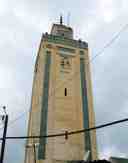
  1. You’ll spot the Great Mosque of Fes el-Jdid by looking up for its striking, square minaret rising right above you, decorated with beautiful lattice patterns and topped with a…Leggi di piùMostra meno

    You’ll spot the Great Mosque of Fes el-Jdid by looking up for its striking, square minaret rising right above you, decorated with beautiful lattice patterns and topped with a dazzling band of blue-green mosaic tiles, standing tall at the end of this narrow lane. Welcome to the Great Mosque of Fes el-Jdid, where the story of an entire royal city begins! Just imagine: it’s the year 1276. The powerful Marinid sultan Abu Yusuf is starting something bold-a brand-new district to rule Morocco. He chooses this very spot for his grand mosque, a sacred heart for the new city of Fes el-Jdid, while Fes el-Bali (that’s “old Fes” for the locals) stays bustling just next door. In those days, the clang of chisels and the grunts of hard-working hands-some say captured Christian prisoners from Spain-filled the air. And wouldn’t you know it, the olives pressed in Meknes helped fund this whole enterprise. Can you smell the scent of rich olive oil in the air? Probably not anymore. Unless someone’s making lunch nearby. This mosque was no quick project, either. It took a couple of years to finish, and a local legend claims the first Friday sermon echoed through its halls in 1278. The sultan made sure construction was top-notch, even entrusting a craftsman called “Algharnati” to carve the intricate wooden minbar-the preacher’s pulpit-by 1279. By 1280, a grand chandelier hung from the ceiling, so big and heavy you'd need a champion weightlifter just to move it! As the mosque bustled with scholars and sultans, history rumbled on. In the early 1300s, a new curiosity sprouted up next door-a madrasa, or school, built by Sultan Abu Sa’id, determined to start a learning revolution here. Unfortunately, the most famous teachers and students seemed to have gotten lost and ended up back in Fes el-Bali, leaving Fes el-Jdid's madrasa a bit jealous and later snuggled into the ever-expanding Royal Palace. But wait-there’s more intrigue nearby! Sultan Abu Inan, a king whose life ended with betrayal and a hasty burial, is said to have been laid to rest right next to the mosque. Well, that was the rumor, anyway. Tombstones here are mysterious, marked with just Qur’anic verses and little else. Maybe the sultans wanted some peace and quiet after those dramatic palace coups. Though centuries passed and Morocco’s rulers came and went, the mosque got plenty of royal care. Around 1395, another sultan, Abu Faris Abd al-Aziz II, decided to “bling it up”-at least according to the stone inscription out front. Historians still squabble over whether this meant he just redecorated or basically rebuilt the place, but everyone agrees he had good taste in tiles. Bring your gaze to that superb minaret-22.8 meters tall, with dazzling geometric motifs in every direction. The top is crowned with bronze spheres, shining up in the sun, while the call to prayer used to soar from the summit. The stairs winding inside are for the brave and fit only-imagine winding your way up there five times a day. Inside, this mosque is even more fascinating. The courtyard sparkles with mosaic floors and water basins, bringing a little oasis to every footstep. Arches frame the prayer hall, and the mihrab glows with carved stucco and stained light, much of it added by new dynasties in the centuries that followed. Even the wooden ceiling and cupola above the prayer hall hide layers of history, with each new ruler leaving their mark. Don’t rush off just yet-there’s a secret library tucked into the mosque’s western side, once used by spiritual seekers for quiet retreat before scholars swapped solitude for stacks of books. Somewhere below, sultans and princesses lie in hushed tombs, their stories half-vanished into time and whitewash. So as you stand here in the bright morning, surrounded by everyday chatter and footsteps, picture all those centuries of prayers and palace intrigue swirling in the air. And if you ever need to find your way again-just look for that grand old minaret reaching up toward the sky.

    Apri pagina dedicata →
  2. To spot the Moulay Abdallah Mosque, look for a tall, sandy-beige minaret with striking green tile accents and classic Moroccan arches near the top, rising just ahead of you…Leggi di piùMostra meno

    To spot the Moulay Abdallah Mosque, look for a tall, sandy-beige minaret with striking green tile accents and classic Moroccan arches near the top, rising just ahead of you against the sky. Here you are, standing at the foot of the Moulay Abdallah Mosque-an impressive giant that seems to whisper royal secrets in every gust of wind. Imagine the year is 1729, and the city of Fes el-Jdid is abuzz with the steps of royal guards, traders, and curious townsfolk. Sultan Moulay Abdallah wants to make his mark, so he chooses this very spot, a freed-up stretch of land in the city’s northwestern corner, to build a grand mosque that would also be his eternal home. This mosque soon became more than just a place of worship. It was where hopeful young minds prepared for life at the famous al-Qarawiyyin University, thanks to a madrasa nearby-sort of like the boot camp for bright scholars. If you take a deep whiff, maybe, just maybe, you’ll get a hint of the old hammam once hidden nearby, the kind of place where stories were swapped and worries washed away. But here’s the plot twist-after Moulay Abdallah’s time, sultans started getting buried all over Morocco: some in Rabat, others in Marrakesh or Meknes. Yet, the tradition circled back in a surprising turn, when Sultan Youssef, and a handful of other royals-some deposed, some celebrated-returned here for their final rest. Within these walls, two courtyards, a prayer room, and the solemn burial chamber create a peaceful sanctuary. The Moulay Abdallah Mosque stands as both a royal resting ground and a witness to centuries of shifting power and heartfelt prayers, a stage where history’s drama plays out with every era’s arrival and departure. So, as you gaze up at the minaret, you’re looking at a living storybook-tall, proud, and full of unexpected chapters.

    Apri pagina dedicata →
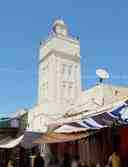
  3. To spot the Al-Beida Mosque, look ahead for a tall, whitewashed minaret with geometric patterns and a cupola rising above a cluster of shops, its simple elegance distinctly…Leggi di piùMostra meno

    To spot the Al-Beida Mosque, look ahead for a tall, whitewashed minaret with geometric patterns and a cupola rising above a cluster of shops, its simple elegance distinctly standing out against the vivid colors of the market street. Welcome to the Al-Beida Mosque, which-by the way-translates to “The White Mosque,” though if you think it’s named after a ghost in a sheet, that’s only half the mystery! Imagine you’re here centuries ago, when this street was already buzzing with merchants and storytellers, and the mosque was just a small, humble space tucked near the main road. The original heart of the building sits close to today’s mihrab, where prayers were first whispered by a handful of neighbors. As Fes el-Jdid grew, the little mosque must have felt like a favorite pair of shoes squeezed by growing feet. So, they expanded: a courtyard, wide and bright, wrapped in an arched gallery, with a marble fountain burbling at the center-a cool place for both quiet reflection and juicy neighborhood gossip. Now, people walking in could rest at the entrance, shaded by a wooden canopy topped with classic green tiles, before sipping from the beautifully mosaiced fountain just outside-truly a spot designed for both peace and a quick water break. Today, you can almost sense the daily rhythm as locals pause here, some drawn by the delicate horseshoe archway dressed in carved stucco, others by the sound of water or the flutter of market stalls nearby. The mosque wasn’t always as you see it now-its minaret, bold and square, stands behind and just off to the right of the entrance, as if supervising the street’s lively chatter. This minaret, coated in whitewash with simple geometric carvings and just a hint of ornate detail, was added later when more space was desperately needed. Why “White”? Maybe it’s the color of the pristine minaret, or perhaps it once honored a mysterious "white lady," as suggested by clever historians-no one can say for certain, and I wouldn’t advise asking the minaret itself unless you want a very silent reply. Inside, the courtyard’s zellij tiles and marble sparkle in the Moroccan sun, guiding visitors through the arched gallery to the main prayer hall-less grand only because it’s the oldest bit. Even the ablutions room is full of surprises, with a rectangular basin and seven tiny side rooms, once a vital stop for worshippers fresh from the street. Every piece of this mosque, from the smallest carved arch to the minaret’s gentle watch, connects lively present-day Fes with centuries of expansion, whispers of history, and a fair bit of whitewashing-both literal and maybe, just maybe, a little mysterious.

    Apri pagina dedicata →
Mostra altre 7 tappeMostra meno tappeexpand_moreexpand_less
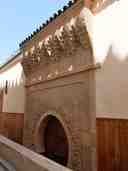
  1. Directly in front of you, notice the stunning stone doorway with its intricate carvings and muqarnas above the arch-it’s easy to spot by its unique, ornate stonework standing out…Leggi di piùMostra meno

    Directly in front of you, notice the stunning stone doorway with its intricate carvings and muqarnas above the arch-it’s easy to spot by its unique, ornate stonework standing out along the wall. Welcome to the Lalla ez-Zhar Mosque, whose name means “Mosque of the Lady of the Flower”-but don’t go looking for orange blossoms, the real treasure here is this marvelous stone portal! Picture yourself in 1357, while the Marinid sultan Abu Inan rules the city and decides to leave his mark by building something unforgettable. He orders a stone entrance so elaborate and beautiful, locals whisper that the stone was carved not in Fez but far away in al-Andalus, present-day Spain, and then hauled here piece by piece. Now that’s dedication, or maybe he just really wanted the best front door in town. Step a little closer and notice how the portal bursts with geometric patterns and muqarnas, like stone honeycombs frozen in motion. Over the door, Arabic script praises Sultan Abu Inan, bragging a little about the year this mosque was born. Behind these walls, the mosque is built on a tidy square plan, with horseshoe arches dividing three aisles, and a tiny sunlit courtyard nestled right in the north-a peaceful spot, perfect for the gentle splash of the central fountain. There’s even a deep well to the east, once supplying refreshment to the faithful and, who knows, maybe an occasional cup for a thirsty cat. If you could peek inside, you’d see the mihrab, where intricate stucco dances across the walls in creamy waves, and a minaret decorated with brilliant mosaic tilework, standing tall and proud with a patchwork of motifs that play with sunlight all day. Small in size, maybe, but bursting with stories and style, Lalla ez-Zhar packs a lot of history into every inch of stone.

    Apri pagina dedicata →
  2. Look for a tall, sand-colored gate with handsome geometric patterns, a grand scalloped archway, and castle-like crenellations along the top-right ahead of you! Now, get ready to…Leggi di piùMostra meno

    Look for a tall, sand-colored gate with handsome geometric patterns, a grand scalloped archway, and castle-like crenellations along the top-right ahead of you! Now, get ready to step into centuries of stories! You’re standing in front of Bab Semmarine, which means “Gate of the Farriers”-and if you can imagine the clanging of iron and the smell of horses, well, you're halfway back to when blacksmiths had their shops right beside this spot. Originally though, this gate had a different name-Bab ‘Oyun Sanhaja, the “Gate of the Water Sources”-but I guess someone thought horseshoes were a bit more fashionable than waterworks! Bab Semmarine came into being back in 1276, under the ambitious Marinid sultan Abu Yusuf Ya’qub, who built Fes el-Jdid as his new royal city, a place fit for kings and grand plans. Picture royal guards at their posts and, just beyond the walls, the everyday hustle of a marketplace. They fortified this city like their lives depended on it, with giant double walls-after all, you can never be too careful with your new neighbors in Fes el-Bali! Originally, this gate was the southern door to the city, but new neighborhoods and, eventually, the Jewish Mellah district joined the party on the outside, swallowing it within the city’s ever-growing embrace. Pass through Bab Semmarine, and you’d find yourself at the start of the city’s main souq street, which still pulses with life and leads all the way north to the gates of the Royal Palace. To your left used to be another world-grain silos, warehouses, all slowly replaced by homes as the city changed shape through the years. In 1924, the gate got a major makeover, losing its maze-like medieval entrance and gaining these wide arches to let cars zoom through-though, to be honest, donkeys probably still have the right of way! So as you stand here, imagine all the footsteps, hooves, and wheels that have passed under these arches, each one with their own story to tell.

    Apri pagina dedicata →
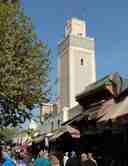
  3. Right in front of you, you’ll spot Fes Jdid by its proud minaret rising above the busy street, covered in pale tiles with geometric patterns, capped by green mosaic trim,…Leggi di piùMostra meno

    Right in front of you, you’ll spot Fes Jdid by its proud minaret rising above the busy street, covered in pale tiles with geometric patterns, capped by green mosaic trim, signaling you’re at the heart of the old “New Fez”-just look above the market stalls and crowds, right where the tower seems to brush the blue sky. Imagine nearly 750 years ago, when this lively street was nothing but dust, soldiers in armor, and the sound of bricks stacking, as the mighty Marinid sultan Abu Yusuf Ya’qub decided, “Let’s build a whole new city!” And so, in 1276, Fes Jdid-literally “New Fez”-burst into life, a city within a city, designed to keep the sultan safe from his unpredictable neighbors in the old medina. The old Kasbah Bou Jeloud was frankly out of fashion and far too cramped for all the royal swagger the Marinids had in mind. What do you do when you need more room for your palace, troops, and-let’s be honest-your horses? Build a city fit for a king, of course. Envision thick double walls, so strong they made the city harder to break into than your grandma’s cookie jar, and military barracks brimming with soldiers and archers from as far away as Syria. The palace, Dar al-Makhzen, rose quickly, and before anyone could finish their mint tea, the royal family was moving in. Back then, the Oued Fes-or the River of Pearls-flowed along the edge of these city walls, its sparkling water echoing with laughter and gossip. But Fes Jdid wasn’t just about mosques and muscle. The sultans dreamed of paradise beyond their palace. Abu Yusuf Ya’qub’s son, undeterred by his father’s early death (talk about family pressure), brought in an engineer from Seville, Spain, to build the Mosara Gardens, so vast they stretched as far as you can see today. A mighty waterwheel, taller than most houses, creaked day and night, carrying water to fountains and basins where the sultan’s guests probably splashed each other when nobody was looking. Today, only hints of these gardens remain, tucked away in the nearby Bab Segma Cemetery. Now, here’s a twist worth a drumroll: Fes el-Jdid also became home to Morocco’s very first mellah, or Jewish quarter. For centuries, the city’s Jewish community lived side by side with Muslims in the old town. But the Marinids had a new idea and moved everyone south, perhaps to watch over them-or maybe just to appreciate their skills as artisans and merchants. The new neighborhood quickly developed its own spirit, soundtracked by street vendors, prayers, and the clang of craftsmen at work. Over the centuries, Fes Jdid saw new dynasties, wild expansions, and more walls than a medieval architect could ever hope for. Sometimes things got rocky, like when Sultan Moulay Yazid kicked the entire Jewish community out for a few years, giving their homes to his favorite tribes and even turning synagogues into mosques. Don’t worry-the mellah was eventually restored, with the help of a brave qadi, and people moved back in, bringing plenty of stories with them. With the French Protectorate in the 20th century came broad streets, gardens, and new city squares. The Royal Palace saw its gates rebuilt in the 1970s-so dazzling they practically sing golden songs in the sun-and though Morocco’s capital moved to Rabat, kings still come here to relax and remember their roots. Look around. Some things change: the street names, the faces, the languages woven through the air. But others, like the buzz of the crowd and that minaret watching over you, hold the secrets of empires past. Welcome-truly!-to Fes Jdid, where every stone, shout, and shadow is a story waiting to be found.

    Apri pagina dedicata →
  4. To spot the Al Fassiyine Synagogue, look for its elegant pale-yellow stone walls, tall arched columns, colorful blue windows, and a large chandelier hanging from the ceiling, just…Leggi di piùMostra meno

    To spot the Al Fassiyine Synagogue, look for its elegant pale-yellow stone walls, tall arched columns, colorful blue windows, and a large chandelier hanging from the ceiling, just past the wooden benches. Welcome to the Al Fassiyine Synagogue, where the echoes of ancient prayers almost bounce off the stone columns and the chandelier whispers secrets from centuries ago. Imagine, right here, since the days of the Marinid sultans in the 13th century, local Jews gathered, their voices mingling with the clink of lantern chains. This was no ordinary synagogue! The community inside was famous for keeping the “toshavim” traditions - indigenous Moroccan Jewish rituals long before the Sephardic customs came swirling in. But drama struck in the late 18th century when Sultan Moulay Yazid, let’s say not the local “Good Neighbor Award” winner, turned it briefly into a prison. Still, the synagogue stood strong; when the winds changed, the Jewish families returned, laughter and song filling the halls once more. Down the years, you might have smelt carpets and heard the thuds of punches - yes, the place became a carpet workshop and even a boxing gym. Then suddenly in 2013, after a grand rescue starring the Moroccan and German governments, the banners of faith flew again as the synagogue reopened, its walls shining, its history alive. If you listen closely, you might just hear distant shofars and a hint of a boxing bell - talk about a building with stories to tell!

    Apri pagina dedicata →
  5. To find the Ibn Danan Synagogue, look for a simple, almost unmarked doorway nestled between houses in the Mellah district - it blends right in, so you’ll want to spot the subtle…Leggi di piùMostra meno

    To find the Ibn Danan Synagogue, look for a simple, almost unmarked doorway nestled between houses in the Mellah district - it blends right in, so you’ll want to spot the subtle entry before the bright turquoise pillars inside give it away. Now that you’re standing outside, let’s take a walk through history-no passport required, just a bit of imagination! Picture the narrow lanes of the Mellah in Fes el-Jdid centuries ago, where merchants shout prices and children weave between stalls. It’s the early 1600s, and a wealthy merchant named Mimon Boussidan decides this community needs a sanctuary-a place to bring people together in prayer and hope. He pours his heart (and a fair bit of his purse) into building this synagogue right here, supported by strong brick walls and lime mortar. But oh, this place would need more than bricks to survive what comes next! Just decades after opening, the Saadi sultan Muhammad al-Shaykh al-Saghir comes storming through in 1646, bringing destruction in his wake. For a moment, only the memory of prayers echoes through the ruins. Yet, the spirit of the community refuses to fade. By 1701, the doors swing open once more, and the synagogue stands tall again-fresh plaster, new tiles, and a crowd ready to sing and celebrate. Through the 18th and 19th centuries, life isn’t always peaceful. Turbulence strikes the Jewish community again during persecutions in 1790, damaging this beloved house of worship. But once more, repair and resilience flip the script-nothing keeps this place closed for long, not even time itself. The 1800s see another makeover, while a dynasty of rabbis, all from the Danan family, shape the synagogue’s story for over a hundred and fifty years. That’s dedication! The Danans trace their roots all the way to Granada, Spain, and after wandering, they return here, bringing wisdom from far-off lands. By the late 20th century, the synagogue’s brushed frescoes and vivid blue tiles have faded, its wooden beams groan under water damage, and plaster peels from the walls. Yet, like a prankster who just won’t quit, the Ibn Danan refuses to be forgotten. In 1996, the World Monuments Fund and allies rally to its rescue. Thanks to crack teams (and a little help from American Express-yes, you heard that right!), the synagogue gets a true facelift, reopening with a flourish in 1999. And what a place it is! Through that nondescript door, you find yourself in a high, rectangular prayer hall crowned by wooden beams and delicate lamps. Three pillars split the main room as clusters of memorial lamps used to hang from the ceiling, filling the space with a warm, restless glow. The Torah ark-imagine a dramatic, carved wardrobe for scrolls-spans an entire wall, its wooden artistry rivaled only by the blue Moroccan tiles beneath your feet. Opposite, you see an elevated alcove with an ornately carved screen; this was once reserved for the community’s VIPs. The bimah rises from here, a wooden platform topped with an iron canopy that looks almost too regal for its humble origins. And here’s a twist-during restoration, workers rediscovered a hidden chamber below the main hall. A narrow stair leads down to a secretive cellar and a ritual bath, still clinging to faint memories of busy, everyday life in the old Mellah. So, as you take in the story of the Ibn Danan Synagogue, remember: it’s a survivor, a storyteller, and a little bit of a magician, always finding a way to reappear-restored, renewed, and waiting for its next chapter.

    Apri pagina dedicata →
  6. Standing in front of you, the Royal Palace of Fez is impossible to miss, with its towering, cream-colored walls, green-tiled rooflines, and a dazzling row of seven golden doors…Leggi di piùMostra meno

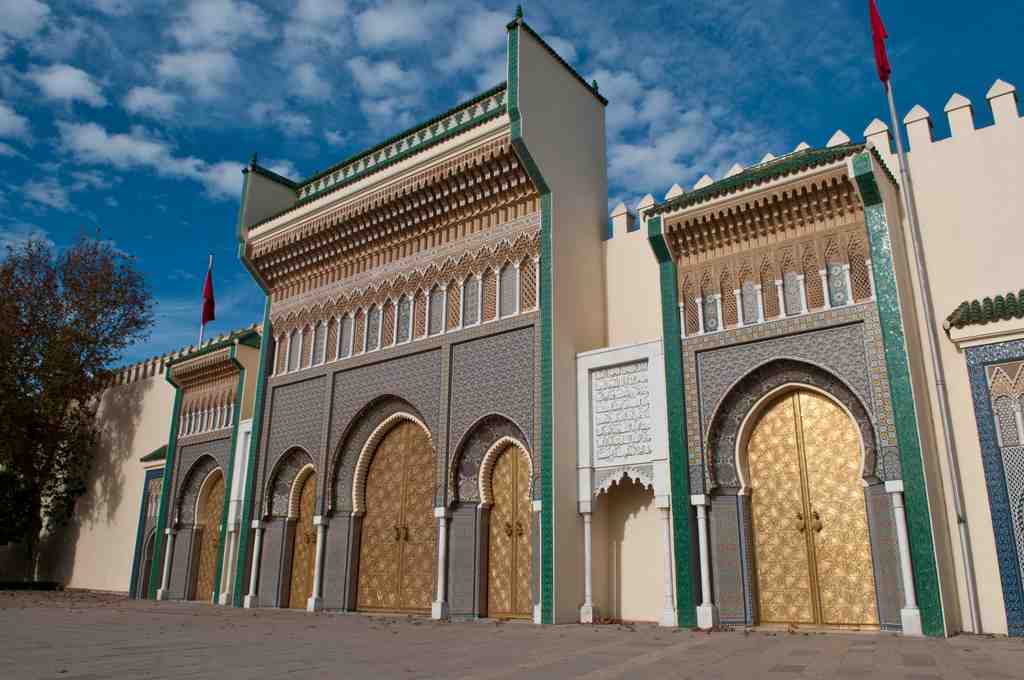
    Standing in front of you, the Royal Palace of Fez is impossible to miss, with its towering, cream-colored walls, green-tiled rooflines, and a dazzling row of seven golden doors set in an elaborate mosaic of blue and green tiles; just look for the magnificent gates along the wide, open square. Imagine you’re in the heart of royal Morocco-right behind those golden doors lies the palace of the King himself. Now, if you’re hoping to pop in for tea, I’ll have to disappoint you-the palace isn’t open to the public, but its stunning gates sure give us a taste of the grandeur within. These gates, built in the late 20th century, are marvels of Moroccan craftsmanship, sparkling with painstakingly carved cedar wood, intricate geometric patterns, and bronze so shiny, I nearly mistook my reflection for a celebrity. But let’s rewind for a moment, all the way to 1276. Picture the city’s rulers-back then, the mighty Marinid sultan Abu Yusuf Ya’qub-deciding that Fez needs a brand-new royal citadel, and not just anywhere, but in a fresh “New City” they called Fes el-Jdid. The Royal Palace was no ordinary residence; it was the ultimate power move, complete with secret passages connecting straight to the mosque for the sultan’s prayers-talk about VIP access! The palace grounds started small but kept swelling over the centuries, swallowing up gardens, neighborhoods, even rivers and bridges. Imagine vast green spaces, fountains, lions in menageries, and courtyards where ambassadors once lined up with gifts (probably nervous, hoping the royal lions weren’t feeling snacky). Tension simmered around these walls, not just from the sultans’ need for security but also from the city itself-Fez’s people had a reputation for being, let’s say, “spirited.” That’s why the palace was protected by walls and mechouars-giant courtyards like the ones you stand near now-where armies gathered, justice was dispensed, and the sultan addressed the crowd. There’s even a bridge under the Old Mechouar where the Fez River still flows-some say, if you listen hard, you might hear the ghostly chatter of past courtiers, or maybe just the grumbling tummy of a waiting ambassador. As the centuries rolled on, dynasties came and went. The ‘Alawi sultans in the 17th century renovated and expanded the palace so much, it started needing its own postal code. Sultan Moulay Rashid created a gigantic marble courtyard, perfectly lined with zellij tiles and centered around a sparkling pool-where, legend has it, a later sultan even floated a little boat just for fun. Through wars, invasions, and family squabbles (your typical royal soap opera), the palace grew more splendid and labyrinthine, swallowing mosques, madrasas, new neighborhoods, and even an arms factory thanks to Moulay Hassan in the 1880s. By the 20th century, Morocco’s capital moved to Rabat, but the Royal Palace of Fez wasn’t done showing off yet. King Hassan II ordered the construction of these modern gates and the vast Place des Alaouites out front, shifting the entrance to face the modern city-and dazzling everyone with those golden doors that look like they could withstand a battering ram… or at least a determined tourist with a selfie stick. Just think: on the other side of these massive walls, royal families roamed lush gardens, lions once prowled their royal menagerie, and monumental ceremonies took place in the very mechouars you’re standing by now. Only the king, his family, and his closest circle have ever strolled those inner courtyards, but from right here, you get a glimpse of centuries of power and a dash of royal mystery-topped off with a sparkle of sunlight on gold. Now, if only those golden doors could open for snack time, right? Don’t worry, our next stop has a story just as grand!

    Apri pagina dedicata →
  7. To spot Bab al-Amer, look for a large sandy-yellow city wall with pointed merlons and a grand, arched gate adorned with intricate tilework and patterns, framed by palms and…Leggi di piùMostra meno

    To spot Bab al-Amer, look for a large sandy-yellow city wall with pointed merlons and a grand, arched gate adorned with intricate tilework and patterns, framed by palms and towering straight ahead. Now, let’s unravel the secrets of Bab al-Amer while you stand before its ancient arch. Imagine the year is 1276: the Marinid sultan Abu Yusuf Ya'qub is busy building his royal city, Fes el-Jdid, surrounded by double walls-just to make sure no one accidentally invades twice. Right where you’re standing was once the southwestern doorway for those craving a peek at royal business, or perhaps just searching for the exit. The district beyond these walls, back then, hummed with the footsteps of Syrian archers, regiments stationed at the ready. In fact, the gate’s name-Bab al-Amer, or ‘Gate of Order’-gives a nod to their disciplined presence. Just imagine rows of tents, clanging armor, and a strict captain yelling, “Clean those arrows!” Around this gate, an aqueduct once delivered fresh water into the city, meaning this place was probably as busy as a modern-day roundabout. Fast-forward a couple of centuries, and this military district gets a surprising upgrade: it becomes the Jewish quarter, or Mellah. Suddenly, the streets fill with new voices, traditions, and markets. Cemeteries took root on both sides of the gate; people came and went, just as stories do. Things got rockier with the construction of Borj al-Mahres, a bastion built to toughen up defenses. But nothing lasts forever: in a turbulent chapter under Sultan Moulay Abdallah, ramparts and parts of the bastion were torn down as order struggled against chaos. When the French arrived in 1912, the narrow gate just wasn’t cutting it for cars and carts, so the aqueduct was demolished, and a wide, open square was created, clearing the way for the traffic jams of tomorrow. Decades later, it witnessed the rise of dazzling palace gates as King Hassan II jazzed up the Royal Palace entrance in the swinging ‘70s. From sultans and soldiers to neighbors and travelers like you, Bab al-Amer has truly seen it all!

    Apri pagina dedicata →

Domande frequenti

Come inizio il tour?

Dopo l'acquisto, scarica l'app AudaTours e inserisci il tuo codice di riscatto. Il tour sarà pronto per partire immediatamente – tocca play e segui il percorso guidato dal GPS.

Ho bisogno di internet durante il tour?

No! Scarica il tour prima di iniziare e goditelo completamente offline. Solo la funzione chat richiede internet. Ti consigliamo di scaricare tramite WiFi per risparmiare dati mobili.

È un tour guidato di gruppo?

No – è un tour audio autoguidato. Esplori in autonomia al tuo ritmo, con la narrazione audio riprodotta dal tuo telefono. Nessuna guida, nessun gruppo, nessun orario.

Quanto dura il tour?

La maggior parte dei tour richiede 60–90 minuti, ma sei tu a controllare il ritmo. Metti in pausa, salta le tappe o fai pause quando vuoi.

E se non riesco a finire il tour oggi?

Nessun problema! I tour hanno accesso a vita. Metti in pausa e riprendi quando vuoi – domani, la prossima settimana o il prossimo anno. I tuoi progressi vengono salvati.

Quali lingue sono disponibili?

Tutti i tour sono disponibili in oltre 50 lingue. Seleziona la lingua preferita quando riscatti il codice. Nota: la lingua non può essere cambiata dopo la generazione del tour.

Dove accedo al tour dopo l'acquisto?

Scarica l'app gratuita AudaTours dall'App Store o Google Play. Inserisci il codice di riscatto (inviato via email) e il tour apparirà nella tua libreria, pronto per essere scaricato e avviato.

verified_user
Soddisfazione garantita

Se il tour non ti piace, ti rimborseremo l'acquisto. Contattaci a [email protected]

Pagamento sicuro con

Apple PayGoogle PayVisaMastercardPayPal

AudaTours: Tour Audio

Tour a piedi autoguidati, coinvolgenti e convenienti

Prova l'app arrow_forward

Amato dai viaggiatori di tutto il mondo

format_quote Questo tour è stato un ottimo modo per vedere la città. Le storie erano interessanti senza sembrare troppo scriptate, e mi è piaciuto poter esplorare al mio ritmo.
Jess
Jess
starstarstarstarstar
Tour Tbilisi arrow_forward
format_quote Un ottimo modo per conoscere Brighton senza sentirsi un turista. La narrazione aveva profondità e contesto, senza esagerare.
Christoph
Christoph
starstarstarstarstar
Tour Brighton arrow_forward
format_quote Ho iniziato questo tour con un cornetto in mano e zero aspettative. L'app ti accompagna tranquillamente, niente pressione, solo tu, le tue cuffie e delle storie interessanti.
John
John
starstarstarstarstar
Tour Marseille arrow_forward

Tour Audio Illimitati

Sblocca l'accesso a OGNI tour nel mondo

0 tour·0 città·0 paesi
all_inclusive Esplora Illimitato