AudaTours logoAudaTours

Audioguida di Bologna: Un Viaggio attraverso Storia e Armonia

Audioguida15 tappe

Torri di mattoni rosso sangue perforano lo skyline di Bologna mentre i segreti della città sussurrano attraverso archi e palazzi in ombra. Dietro ogni balcone ornato o scudo di marmo, strati di rivalità, ribellione e scandalo attendono appena fuori vista. Questo tour audio autoguidato trasforma il familiare nello sorprendente, mentre leggende nascoste echeggiano dal Palazzo della Mercanzia alle vertiginose altezze della Torre degli Asinelli e agli abbaglianti affreschi mitici all'interno di Palazzo Sampieri. Scopri cosa si cela oltre i sentieri turistici ordinari—storie e intrighi che anche i locali potrebbero perdere. Chi ha rischiato la vita in una folla fragorosa mentre la Campana Lucardina suonava un verdetto sopra la piazza? Cosa ha davvero scagliato palle di cannone contro le antiche mura delle torri? E perché i nobili bolognesi si sarebbero spinti a dipingere dei muscolosi su soffitti bassi? Muoviti attraverso archi imponenti, piazze animate e saloni illuminati a lume di candela. Deliziati con ricette perdute, umiliazioni pubbliche, tradimenti drammatici e un'arte così audace da sembrare liberarsi dalla propria tela. Svela i misteri più affascinanti di Bologna—avvicinati e premi play.

Anteprima del tour

map

Informazioni su questo tour

  • schedule
    Durata 40–60 minsVai al tuo ritmo
  • straighten
    2.3 km di percorso a piediSegui il percorso guidato
  • location_on
    PosizioneBologna, Italia
  • wifi_off
    Funziona offlineScarica una volta, usa ovunque
  • all_inclusive
    Accesso a vitaRiascolta quando vuoi, per sempre
  • location_on
    Parte da Palazzo della Mercanzia

Tappe di questo tour
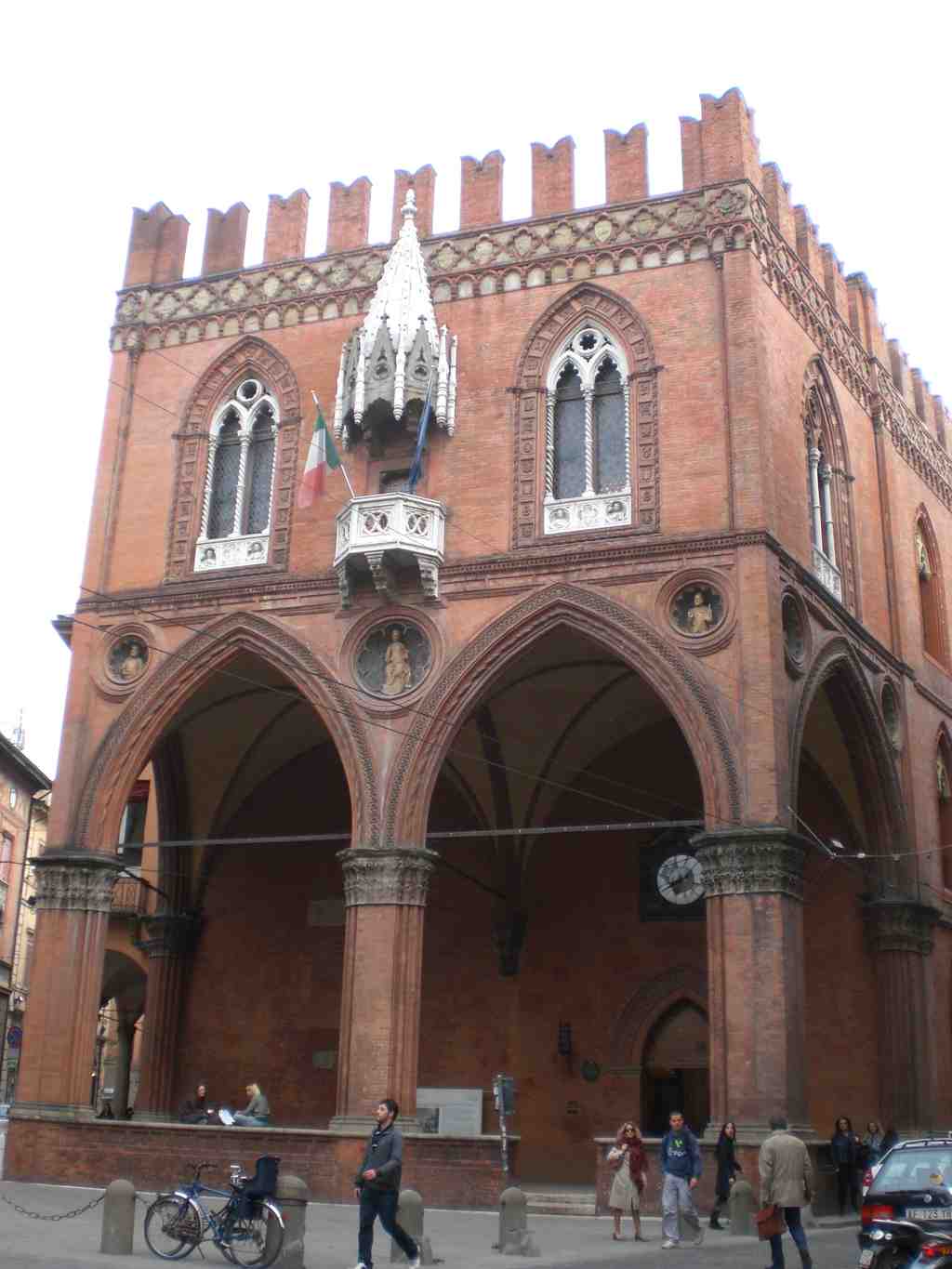
  1. To spot the Palazzo della Mercanzia, look for a striking red-brick building rising above the square, with ornate pointed arches on the ground floor, tall gothic windows, and a…Leggi di piùMostra meno

    To spot the Palazzo della Mercanzia, look for a striking red-brick building rising above the square, with ornate pointed arches on the ground floor, tall gothic windows, and a grand white marble balcony right in the center of its facade. Welcome to the Palazzo della Mercanzia, one of Bologna’s most storied and stylistically flamboyant landmarks! Imagine yourself here back in the 14th century-the bustling heart of commercial life, right where the ancient Roman Via Emilia and Via Salaria once crossed, drawing people, goods, and tales from every direction. Standing under these tall arches, you might feel the echoes of long-ago voices and the distant trot of horses bringing traders from far-off lands. This palace wasn’t always the orderly stone beauty you see now. Even well before it rose in 1382, the area was alive-a jumble of little streets, home to a community of Lombards whose houses clustered in a wedge, all funneling into the old square of Porta Ravegnana. When local leaders finally decided to give the powerful Merchant Guilds a proper home, they turned to two of the city’s top architects. If Lorenzo da Bagnomarino and Antonio di Vincenzo sound familiar, that’s because Vincenzo went on to design the incredible Basilica di San Petronio! By 1391, the palace was ready. Picture the scene: twelve stern consuls representing the guilds, a traveling judge, and hopeful traders all coming together under this roof. But justice here wasn’t exactly peaceful! When someone was found guilty of fraud, they’d be tied in front of the columns for all to see-imagine the crowd jeering and laughing, the clanging of the Lucardina Bell announcing another verdict from the snowy marble balcony above. Talk about public accountability! The architecture around you is a feast for the eyes-there’s a wild and wonderful mix of styles thanks to the diverse artists who left their mark. Look for romanesque arches just under the shields of the merchant guilds, gothic windows, and even lively fanciful capitals with twirling flowers and classic motifs. And perched up high, you’ll see statues of Bologna’s patron saints: San Domenico, San Zama, San Floriano, San Petronio, along with San Pietro and Sant’Antonio da Padova-all keeping a watchful eye on the business of the city. But that’s just the outside! Inside, history gets even richer: imagine green-walled rooms, silk-hung chambers with sparkling Murano chandeliers, and a long, elegant corridor festooned with coats of arms and frescos depicting the hustle of local crafts, trades, and agriculture. The grand staircase, added in the 1800s, is a real showpiece-seventy-five steps, all decorated with colorful shields and the names of judges, so no one in Bologna ever forgot who was in charge! At the top of the stairs, there’s a stone plaque with a proud inscription, and a near-endless gallery of painted shields-each representing another chapter in the city’s commercial history. Of course, history is messy, and the palace was no stranger to disasters-once, the neighboring Tower of the Bianchi collapsed onto it, taking with it houses, fishmongers, and a deliveryman who, pulled from the rubble, confessed he thought the Judgment Day trumpets had blown just for him! And just like a sturdy Bolognese meal, the palace has been rebuilt many times. Its 19th-century facelift brought elegant portals and a classic clock high above the arches, ticking faithfully ever since-except, of course, when a stray bomb in World War II took out a corner (don’t worry, it bounced back thanks to dedicated locals). But here’s a delicious slice of modern history for you: the Palazzo della Mercanzia is where Bologna’s most precious secrets are kept. No, not treasures or ancient artifacts, but the official recipes for tagliatelle, tortellini, ragù, and lasagne! Inside, each recipe is protected like a priceless jewel, locked away in the city’s Chamber of Commerce archives. Only in Bologna would the formula for pasta warrant the same honor as the city’s laws! So, as you stand by these old stones, listen to the mix of stories-merchants and judges, noble failures, secret recipes, and the constant tick of Bologna embracing both the old and the new. And remember, in Bologna, even public embarrassment could be a recipe for success (and maybe for dinner later on)!

    Apri pagina dedicata →
  2. Look straight ahead for a tall, narrow brick tower that makes everything nearby look tiny; you really can’t miss it, as it rises high above the rooftops and even leans slightly to…Leggi di piùMostra meno

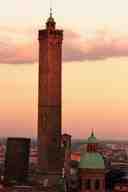
    Look straight ahead for a tall, narrow brick tower that makes everything nearby look tiny; you really can’t miss it, as it rises high above the rooftops and even leans slightly to one side-keep your eyes skyward! Welcome to the mighty Asinelli Tower! Pause here for a second and take in its sheer height-at almost 100 meters tall, standing at its base can make you feel a bit like an ant beneath a broomstick. Now, close your eyes for a moment and imagine it’s the year 1119. The lively city of Bologna is buzzing, the smell of wood smoke drifts through the air, and the sound of carts rattling over cobblestones fills the square. Legend says the name “Asinelli” comes from a lucky pair of donkeys. Here’s how the story goes: a humble farmer’s donkeys, plodding along the fields, stumbled across a buried chest bursting with gold. Suddenly wealthy, the farmer’s son proposed to the daughter of a nobleman-yes, a real middle-ages fairy tale! The proud father agreed to the marriage but only if the young man could build Bologna’s tallest tower. Thanks to those clever donkeys and their golden find, he pulled it off, stone by stone. If you’re ever feeling unlucky, just remember-sometimes all you need is a good donkey and a sharp eye! Of course, history is a bit trickier than fairy tales. The Asinelli family, who gave the tower its name, were actually more famous for hauling gravel from the Reno River with little donkey carts-so maybe they were just really good at carrying heavy loads. Construction began around 1109 and lasted a full decade, back when Italy was bursting with rival nobles, feuds, and a contest between the Pope and the Holy Roman Emperor. Towers like this one shot up as both status symbols and serious fortresses, and families-even the not-so-rich ones-loved to show off their brick-and-mortar muscles. The Asinelli Tower quickly became a giant among giants. Today, it’s the tallest leaning tower in Italy-yes, even higher than Pisa’s! It’s so proud of its slouch it leans westward by just over two meters. And if you’re wondering if you should dare the inside, brace yourself: 498 wooden steps spiral upwards. Climb them, and you’ll find jaw-dropping 360-degree views at the top; Goethe himself stood there and marvelled at the sights. But history hasn’t always gone easy on our towering celebrity. It’s been battered by cannonballs-one came whistling in from Porta Maggiore in 1513 during city celebrations, but the tower stood its ground. Fires swept through, destroying wooden stairs, but the walls held firm, the bricks as stubborn as Bologna itself. The real enemy? Lightning. Until a lightning rod was added in 1824, thunderbolts made a sport of zapping the tower year after year. Earlier on, people tried protecting it with a “wooden cage”-not so effective, as you can imagine. They even put up a relief of Saint Michael in hope of summoning some divine help. The tower wasn’t just for showing off or hiding from enemies, either. Through the years it became a prison and a watchtower, with guards peering out over the city’s patchwork of red roofs and winding lanes. For a while, a wooden castle was even built around its waist, and a sky-bridge led across to its shorter, leaning sister-the Garisenda-until a fire sent that idea up in smoke. In 1790, the Asinelli got small-time fame in the scientific world: Professor Giovanni Battista Guglielmini dropped lead balls from the top, trying to prove how the Earth spins. Strong winds kept blowing his experiments off course-science, it turns out, is hard when you’re dangling over Bologna! And in case you’re wondering why there isn’t a handy lift, you’re not alone: plans for an elevator have been rejected again and again, always out of fear of damaging this ancient stack of bricks. At street level, life has carried on through centuries of change: merchants once set up shops beneath its arches, keeping the market’s hum alive. Even today, as the sun sets and the Asinelli lights up-along with Garisenda next door-it keeps watch over the city like a brick lighthouse. So, whether you believe in lucky donkeys or stubborn engineers, I hope you’ll look up and give a respectful nod to Bologna’s proudest (and most stubbornly leaning) resident. If you’re feeling brave, make sure to count every one of those 498 steps on your way up-just don’t look down until you reach the top!

    Apri pagina dedicata →
  3. To spot Palazzo Sampieri and its famous frescoes, look for a stately residence along Strada Maggiore with elegant, reserved windows-your clue is its slightly imposing façade,…Leggi di piùMostra meno

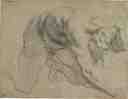
    To spot Palazzo Sampieri and its famous frescoes, look for a stately residence along Strada Maggiore with elegant, reserved windows-your clue is its slightly imposing façade, which seems to guard centuries of secrets between its walls. Now, get ready for a true slice of Bologna’s creative magic-this palace is more than just bricks and mortar, it’s home to the last big family art adventure by the Carracci cousins: Annibale, Agostino, and Ludovico. Imagine the year is somewhere around 1593-no smartphones, but plenty of drama! Young Astorre Sampieri, fresh from his abbot duties and eager to impress, wants his house in Strada Maggiore to be the fanciest on the block. And what better way than to invite the Carracci, the rockstars of the art world at the time? These cousins had already done wonders at Palazzo Fava and Palazzo Magnani, sprinkling myth and color around Bologna. But here, they wanted something different-no endless friezes circling under the ceiling this time, nope! Instead, each of three rooms in Palazzo Sampieri would get its own masterpiece painted onto its ceiling, each one a thrilling vision, painted as if looking up into a sky of gods and heroes. Why stray from tradition? Maybe the rooms were too low for those classic long bands of painting. Maybe Astorre liked to do things his own way. Either way, the cousins took a risk-none of them had really tried this super-dramatic technique before, where the scene on the ceiling would leap out at you as if the world above was alive. But boy, they were ready to give it a go. Their biggest inspiration: Pellegrino Tibaldi’s daring, illusionistic ceilings at nearby Palazzo Poggi. Imagine the Carracci cousins sneaking over to study how Tibaldi’s gods tumbled across ceilings like acrobats. They borrowed from grand Venetian masters like Veronese and Tintoretto too-Bologna had never seen anything quite so bold! Step inside with your mind’s eye: the rooms are glowing with the brilliant colors and swirling, muscled heroes beloved in Renaissance art. You’ll see mighty Hercules-muscles for days, of course-claiming the sky with the gods, battling monsters, and defeating cunning foes. Hercules, back then, wasn’t just a big guy with a club; he stood for virtue beating out vice-exactly the message every self-respecting nobleman wanted on his ceiling, reminding guests to mind their manners...or at least not steal any celestial cattle. Look up: Ludovico’s "Apotheosis of Hercules" glows within a golden, octagonal frame, Hercules muscling his way up toward Jupiter on his eagle, greeted by a celestial light. If you look closely, you’d see the lion skin, trophies, and sprinkles of glowing constellations-Leo! Lyra! Hercules wasn’t just getting muscles, he was getting immortality. And right below, maybe you’d spot the much more earthly Cerere, torches ablaze, searching for her lost daughter Proserpina. The whole room seems to flicker as if you can feel the heat from those painted flames. Next room: Annibale’s Hercules, at the edge of a stone, stretches out to follow a flying lady Virtue, who sweeps away clouds-she’s like history’s ultimate motivational coach, carving a skyward path just for him. If you could read Latin, you’d see a line from Horace, hinting only the virtuous get a shortcut to glory. On the fireplace: Enceladus, the giant, is flung down and trapped under a mountain-a warning to anyone thinking of giving the gods a hard time! This big, brooding figure, all muscle and fury, inspired centuries of artists. You can almost hear the mountain rumbling as he’s punished for his rebellion. Agostino’s room is next, where Hercules teams up (sort of) with Atlas to hold the sky. It’s a dramatic scene, drawn from legends and ancient poetry, a symbol of working hard and seeking knowledge-think of it as a Renaissance version of group work! The fun didn’t stop with the Carracci-decades later, Guercino, another local superstar, was called in to add even more Herculean feats to two more rooms. The palace became a gallery of muscle, myth, and Latin wisdom. Now, here’s a quirky twist-unlike most mythological cycles, the stories don’t really follow a sequence. The scenes stand alone, connected by the idea of virtue and warning against bad choices, and, curiously, the usual "Twelve Labors of Hercules" are nowhere to be seen! For years, the secrets of who drew what and why slipped through scholars’ fingers, like a grand family game of art detective. Today, the masterpieces that once crowned the fireplaces now travel the world-some in Milan’s Pinacoteca di Brera, others scattered afar. Picture it all: warm candlelight flickering, Astorre Sampieri proudly giving tours ("Mind the ceiling paint!") and a roomful of guests craning their necks, jaws dropping as giants tumble, gods soar, and heroes triumph just above their heads. Welcome to Palazzo Sampieri, where art history’s greatest family signed off with a bang-no club required! For further insights on the description, iconographic meaning or the preparatory drawings, feel free to navigate to the chat section below and inquire.

    Apri pagina dedicata →
Mostra altre 12 tappeMostra meno tappeexpand_moreexpand_less
  1. To spot the Museo internazionale e biblioteca della musica, just look for the inviting entrance of a beautifully decorated Neoclassical palace-Palazzo Sanguinetti-right on Strada…Leggi di piùMostra meno

    To spot the Museo internazionale e biblioteca della musica, just look for the inviting entrance of a beautifully decorated Neoclassical palace-Palazzo Sanguinetti-right on Strada Maggiore, with elegant historic details that make it stand out from the ordinary city buildings around it. Welcome, music lover! You’re standing in front of a treasure trove that’s been tuning up for hundreds of years: the International Museum and Library of Music, right here in Palazzo Aldini Sanguinetti. Picture this-you step through the doors, and you’re not just in a museum, you’re entering a living, breathing chronicle of music that starts all the way back in the 1700s. The walls inside have seen it all: from noble families hosting lavish banquets, to precious music manuscripts once gathering dust in storage, now finally brought into the spotlight. This palace wasn’t always a magical home for music. It was once owned by the Loiani family, reshaped by noblemen like Senator Ercole Riario, and later dazzled by Count Antonio Aldini who paid an ambitious architect to modernize it. Even a Cuban nobleman, Don Diego Pegnalverd, and the famous tenor Domenico Donzelli stepped across these floors-imagine Rossini himself popping by while his own house was getting a makeover! The Sanguinetti family took up residence in the 1800s, adding their own elegant flourishes-think of elaborate frescoes hidden for years, recently uncovered as if the palace had one more secret melody to reveal. And it’s not just about the bricks and paint-the museum is bursting with stories of brilliant personalities. The collections began with the legendary Padre Giovanni Battista Martini, who, believe it or not, taught Mozart and Johann Christian Bach a trick or two. Padre Martini didn’t just love music-he was obsessed with documenting every musical life he touched, keeping more than 6,500 letters from composers, cardinals, and aristocrats. Even the Emperor of Austria dropped by, probably hoping for a private concert or two. Inside, you’ll find nine exhibition halls, each one more alluring than the last. In the first room, you’re greeted by lush landscapes-frescoes teeming with greenery and classical buildings that nearly trick your eyes. There are statues of Bacchus, the god of wine, alongside the work of young Pelagio Palagi, a standout Neoclassical painter. If you look up, past the trompe-l’oeil landscapes, you might just expect a bird to swoop down from the painted sky. And let’s not forget the heart-pounding drama of the Aeneid painted in the Aeneas Room, or the genius on display in the Zodiac and Aurora room, where zodiac signs swirl overhead and mythological figures seem to dance with the passing rays of sunlight. In the “oriental” rooms, you’ll spot exotic plants, curtains that seem to sway gently, and mysterious painted ladies with parasols that whisk you off to another world. But the true stars are all the marvelous artifacts: rare instruments like the omnitonum harpsichord from 1606 (don’t try to say that five times fast), or the polyphonic flute that can play five melodies at once-talk about multitasking! There are ancient lutes, wild serpentoni horns, and a violin that looks suspiciously like a lyre. You can marvel at original music scores, the first printed music book, and personal quirks like Rossini’s dressing gown, a wig, and his beloved Pleyel piano from 1844. It’s a place where music history isn’t just framed and hung-it’s everywhere, in the air, in every letter, painting, and hand-written note. Martini’s original collection of portraits covers everyone from Farinelli-the king of castrati-to a gallery where even the oddest-looking faces earned special honor. Apparently, if you were a famous musician, getting your portrait in Martini’s gallery was like receiving your own gold record! So, while you’re standing outside, imagine the swirl of ballgowns, the echo of footsteps up that grand staircase, and the thunderous applause after a recital in the ballroom. The museum you see before you-twinkling with stories and melodies-is much more than a collection: it’s a living, laughing, ever-changing celebration of music’s wild journey through the centuries. Who knows, maybe your footsteps will inspire the next great composition!

    Apri pagina dedicata →
  2. To spot the Basilica of Santo Stefano, look right ahead for a cluster of reddish-brown brick facades-three distinct Romanesque churches side by side, with triangular gables and a…Leggi di piùMostra meno

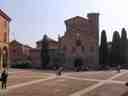
    To spot the Basilica of Santo Stefano, look right ahead for a cluster of reddish-brown brick facades-three distinct Romanesque churches side by side, with triangular gables and a rose window above the main entrance. Now, as you stand before these ancient walls, let your imagination travel back nearly two thousand years, when this very ground was a bustling, sacred place-even if, back then, you might have bumped into a Roman matron instead of a group of selfie-snapping tourists. Picture this: around the year 100 AD, a wealthy woman of Bologna built a temple here, not for any old god, but for the mysterious Egyptian goddess Isis. At its heart stood a round colonnade surrounding a spring-a place of magic, perhaps a whispered wish or two. Fast forward to the crackling tension of the late 4th century. Bishop Ambrose of Milan, on a holy detective quest, discovered the graves of Vitale and Agricola-the city’s first Christian martyrs. Their devotion had cost them their lives, but their legacy would spark a construction frenzy. Soon, a tiny chapel-maybe just big enough for a few kneeling figures-stood beside the godless temple. By the 5th century, Bishop Petronius, whose name still rings through Bologna like the chime of a bell, envisioned a basilica worthy of epic tales. The church would not only honor the martyrs but would also serve as his own resting place. Petronius had flair: he sprinkled water from the Jordan River over the old spring-don’t try that with your travel bottle-and transformed the pagan spot into a Christian baptistery inspired by the Holy Sepulchre in Jerusalem. Some say he wanted his basilica to make travelers feel like they’d set foot in the original Jerusalem! But wait, the story’s just warming up! In 727, King Liutprand of the Lombards swept in, sword in hand, and constructed what’s now the Church of the Crucifix. Yet, if you listen carefully, you might sense the echo of fierce battles from the times of the Hungarian invasions in the early 900s. The complex was nearly demolished-imagine the chaos as monks scrambled to save ancient sarcophagi and precious relics. During tense reinventions by the Benedictines in the 11th century, they rebuilt with determination: crypts for martyrs, thick defensive walls, the cloister for silent meditation, and the Courtyard of Pilate-named in memory of the place where Jesus was condemned. Look down the sides of the complex; see the strong lines and the nearly fortress-like unity: this is Romanesque architecture at its most captivating. Now, there’s a good reason locals whisper of “Sette Chiese”-the Seven Churches-because this isn’t just one church but a whole spiritual village! Each layer, each brick, is seasoned with stories. Inside, you’ll find bones of ancient saints, and if walls could talk, they’d tell tales of popes so annoyed by local pilgrim fever that they banished fake relics to stop crowding out the real attractions in Rome. Oh, Bologna knows drama! Peer to the right of the central door and you’d find, until a few decades ago, medieval sarcophagi that once sheltered the very first bishops of Bologna. Now they’re tucked in the garden. The churches are jam-packed with legends: a Roman column said to be the height of Jesus, and secret rites where local women circled the sacred tomb 33 times, each lap a prayer for the new life within them. Here’s a detail for you: the oldest nativity scene with life-sized wooden figures ever found is inside this very basilica. Forget Christmas cards; this is three-dimensional history. The Benedictines, and now the Franciscans, have kept watch over these halls-making sure that the voices of saints, kings, and the occasional scandal linger on. Today, these brick facades stand calm in the sun, but their walls have seen centuries of faith, fear, hope, and even a few stern papal letters. As you step closer, you’re not just a visitor-you’re joining a story that weaves ancient gods, brave martyrs, marauding kings, and generations of Bologna’s sons and daughters. And if you’ve got any secrets or wishes, well-this is still a good place to whisper them.

    Apri pagina dedicata →
  3. To spot Piazza Santo Stefano, just look for a grand open square with cobblestone paving and a striking cluster of ancient brick churches directly in front of you, guarded on each…Leggi di piùMostra meno

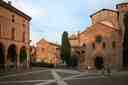
    To spot Piazza Santo Stefano, just look for a grand open square with cobblestone paving and a striking cluster of ancient brick churches directly in front of you, guarded on each side by tall, dark cypress trees. Welcome to Piazza Santo Stefano, which locals sometimes call Piazza delle Sette Chiese-because, well, the complex staring back at you is actually a patchwork of seven churches all stitched together like some medieval architectural quilt. Even though everyone calls it a piazza, technically it’s just a large, triangular widening of Santo Stefano street, but hey, Bologna likes to keep things informal and friendly! Now, let your imagination wander for a moment back to the Middle Ages. Picture a lively gathering spot where the city’s grand thinkers and chatterboxes would meet. The space you’re standing on was once known as the Trebbo dei Beccadelli, named after the Beccadelli family who owned houses right here. In the center, a majestic oak tree once stood, encircled by shady branches and stone benches. If this oak could talk, it would spill secrets of whispered intrigues and heated debates between Bologna’s notable citizens. But, just like in all the best stories, drama came knocking. In the 1330s, as rival factions clashed in the city’s streets, the Beccadelli family was exiled and their beloved oak tree was chopped down in the dead of night by a daring fellow named ser Polo. After that, their houses were sold off, and the square slowly transformed into the stunning open space you see today. Take a quick look to your left and you’ll spot the elegant facades of the Isolani palaces, woven together over centuries. To your right, the handsome Palazzo Bolognini Amorini Salina shows off its unique terracotta heads, all watching over you, perhaps wondering what gossip you’ll add to the square today! This piazza buzzes with concerts, gatherings, and stories-even inspiring a song by Bolognese singer Cesare Cremonini. So, take a deep breath, soak in the ancient whispers, and remember: this spot has always been the heart of city life-full of surprises and some seriously good stories.

    Apri pagina dedicata →
  4. Straight ahead, you’ll spot San Giovanni in Monte by its rosy brick façade crowned with a tall arched gable, a large round window, and an inviting portico with columns right above…Leggi di piùMostra meno

    Straight ahead, you’ll spot San Giovanni in Monte by its rosy brick façade crowned with a tall arched gable, a large round window, and an inviting portico with columns right above a set of stairs-look for the cross perched at the very top! Welcome to San Giovanni in Monte, where the past is layered thicker than a lasagna from a true Bolognese kitchen! As you stand before this grand church, picture yourself walking across stones that have witnessed centuries of change-war, peace, art heists, explosions (no, really), and enough saints and artists to fill a Renaissance-themed party. Let’s turn the clock way back-to the year 433. Imagine a quiet hillside, where, according to tradition, the city’s beloved Saint Petronius himself decided, “This seems like a lovely spot for a church!” He founded a round-shaped sanctuary that people called Monte Oliveto. For centuries, locals trekked up this little hill to pray, as the centuries swept by with their kings, popes, knights, and the occasional peasant with a good story. By the year 1045, the church was famous enough to make it into the city’s written history. Fast forward a bit, and the Canons Regular of the Lateran came along-think of them as a medieval team of renovators. They expanded, rebuilt, and by the late 1200s, dragged the church into a new age. But the 1400s? Oh, now that was the golden century! The church we see today took shape with soaring Gothic lines, a sleek Renaissance façade from 1474, and a lofty bell tower rising over 40 meters, its stony base untouched since the 1200s. You might say this church is quite literally built on its own roots! And if your neck isn’t sore already, look above the portico to spot the proud sculpture of an eagle, crafted by Niccolò dell’Arca around 1481. That eagle isn’t just posing-it’s the symbol of John the Evangelist, the church’s patron, eyeing Bologna like a feathery guardian. Now, picture the 18th century: the floor of the church was replaced, and all the tombstones once underfoot were moved to the walls. So, if you hear a faint “thank you!” from an ancestor, you know why-no more footsteps overhead! But not all the stories are cheerful. When Napoleon’s armies swept through, they booted out the canons and carried many treasures off to the Louvre. Some came back after his downfall, and some-well, Bologna’s museums inherited those. Worse still, in 1944, a bombing raid during World War II damaged the church, shattering chapels and leaving much of the portico and vault in ruins. You’d never know it now, thanks to a loving restoration completed by 1950. Inside, San Giovanni in Monte was a virtual “who’s who” of Renaissance art. Works by Raphael, Perugino, Domenichino, Cima da Conegliano, and a parade of others once graced the chapels, dazzling worshippers (and probably making a few parish priests jealous!). Some of these masterpieces now rest in far-off museums, but echoes of their genius remain in the stained glass-crafted by Lorenzo Costa and Francesco del Cossa-and in the frescoes, wooden sculptures, and paintings left behind. There’s even a choir with 53 seats carved by Paolo Sacca, perfect for staging the most dramatic Gregorian chants you can imagine. So as you stand here, try to hear centuries of whispers, laughter, prayers, and-if you listen closely-the collective sigh of relief from all those past generations who saw this church survive the storms of history. If you were ever going to believe in miracles, this just might be the place!

    Apri pagina dedicata →
  5. To spot the Basilica patriarcale di San Domenico, look for a large, reddish-brown brick building with a pointed roof and a striking, round rose window right above a single arched…Leggi di piùMostra meno

    To spot the Basilica patriarcale di San Domenico, look for a large, reddish-brown brick building with a pointed roof and a striking, round rose window right above a single arched entrance, standing next to a vivid yellow-leaved tree. Imagine yourself stepping onto cobblestones that have echoed with footsteps for centuries, with the scent of rain lingering in the air and the soft light filtering through those tall, arched windows. Here you stand in front of the Basilica of San Domenico, the final resting place of Saint Dominic himself-a man whose story runs through the very stones beneath your feet. Let’s step back to the year 1218: Bologna is buzzing with scholars and merchants, and in trots a humble friar named Dominic de Guzmán. His mission? To found an order that would preach, teach, and-if necessary-out-talk anyone who opposed him. The first convent was a modest affair tucked outside the city walls, but Dominic soon realized his brothers needed more room. In 1219, he set up shop right here-well, minus the fancy cappuccino bar you’d expect today! No sooner had Dominic begun gathering crowds than Bologna agreed: these preaching friars needed a grander home. Construction of the basilica began; you can probably imagine the banging of hammers and the clatter of stones as the building rose. By 1240, the main structure was done. Not even 20 years had passed since Dominic’s death, but already, people traveled from far and wide to pay respects at his tomb, and the story of the “Arca di San Domenico” was just beginning. Picture his marble tomb glowing in candlelight. It’s a who’s who of Renaissance art-Nicola Pisano, Michelangelo (yes, the Michelangelo, in his early days!), Alfonso Lombardi, and more all contributed to this masterpiece. On the Arca, spot scenes from Saint Dominic’s life: legends of fiery books that wouldn’t burn, children resurrected, and miracles on every marble panel. Above, festoons of fruit symbolize the earth, angels carry the sky, and dolphins leap for the seas. Even God himself crowns the monument, holding the universe in his hand, keeping Dominic close to his heart. With so many visitors, the basilica was often a lively-and sometimes crowded-place, right down to the sermons booming across Piazza San Domenico. That square was once walled in and packed with people, feet crunching on river stones as Dominican friars preached about faith, hope, and charity. Fast forward to the Renaissance, and this became Bologna’s model Dominican church. Noble families commissioned chapels along the sides, each one a mini-stage for rival pride. Don’t miss the Ghisilardi Chapel on your left-built after the owner secured his inheritance from the Pope by promising (honestly!) to build a beautiful chapel here. Just imagine what your parents would have said if you tried that trick at home. Inside, light streams through tall windows, illuminating intricate intarsia woodwork in the choir-fra Damiano da Bergamo spent eight years on those inlaid biblical scenes, with an eye for detail that would make any Instagrammer jealous. There’s even a musical legacy: the basilica contains not one but three grand organs, and one of them was played by none other than Wolfgang Amadeus Mozart, struggling with his scales under the watchful eye of his teacher. Drama didn’t stop with the Middle Ages. The basilica’s look changed every century-arches rebuilt, porticoes added and demolished, facades restored by ambitious architects who feuded over every brick. That glorious rose window was restored in the early 1900s, trying to recreate the original medieval effect, and whenever thunder rolls over Bologna, the clanging of the five bronze bells from the tall Gothic campanile still shakes the air. Take a moment as you stand here. Imagine yourself among the throngs of pilgrims, the clatter of hooves, the cries of traders in old Bologna, the chanting of monks. If you listen closely, you might almost hear the whispers of saints and the distant echo of a young Mozart practicing inside. Not bad for a building that started out, quite literally, as a bit of holy real estate on the city’s edge! Keep your eyes open-there are mysteries, relics, and masterpieces tucked around every corner inside. History here isn’t just ancient; it’s alive, and it’s waiting for you to step inside.

    Apri pagina dedicata →
  6. To spot the Anatomical Theatre of the Archiginnasio, look for a grand wooden hall filled with carvings, ornate statues perched around the walls, and a strange white table at its…Leggi di piùMostra meno

    To spot the Anatomical Theatre of the Archiginnasio, look for a grand wooden hall filled with carvings, ornate statues perched around the walls, and a strange white table at its center-just ahead and hard to miss thanks to its warm, glowing chandeliers and striking old-world atmosphere. Now, step closer and imagine standing here in bustling seventeenth-century Bologna. The air smells faintly of polished wood and maybe, just maybe, a little bit of mystery. This wasn’t just any classroom; this was the very beating heart of Bologna’s world-famous medical school. Doctors-in-training would crowd these tiered benches, craning their necks to get a good look-and hoping not to faint! Right in the middle, a white marble table waits, where real dissections once took place. It’s a good thing you’ve already had lunch, right? Look up-where the eyes of Apollo, carved on the wooden ceiling, seem to gaze down as if judging everyone’s knowledge of bones and organs. Around you, wooden statues of history’s most important doctors keep watch: Hippocrates, Galenus, even the bold Gasparo Tagliacozzi-and yes, he’s holding a nose, since he was one of the very first to try plastic surgery. I wonder what his patients said: “A little more off the top, please”? But the most startling figures are the “Spellati”-two impressive, but also slightly spooky, statues of flayed men. These wooden gentlemen lost all their skin but still stand tall, each one holding up the teacher’s chair to remind students: in medicine, you need strong nerves…and a stronger stomach! Imagine a cold day in 1944, when a bomb nearly erased all of this history. After the war, people dug through the rubble, rescued every wooden figure and fragment-and lovingly rebuilt the theatre, piece by piece, as you see it now. This place is a testament to science, survival, and just a pinch of guts (literally!). Ready to continue, or do you need to check for goosebumps first?

    Apri pagina dedicata →
  7. To spot the Archaeological Civic Museum of Bologna, look for a stately yellow building with grand arched porticoes, elegant columns, and a sign reading “MUSEO CIVICO” above the…Leggi di piùMostra meno

    To spot the Archaeological Civic Museum of Bologna, look for a stately yellow building with grand arched porticoes, elegant columns, and a sign reading “MUSEO CIVICO” above the entrance-right underneath a classic clock and stone-carved details. Now, you’re standing in front of Palazzo Galvani-a building with stories swirling through its stone arches and echoing beneath its vaulted ceilings. Believe it or not, centuries ago, this was known as the “Hospital of Death.” Don’t worry, there aren’t any ghostly patients roaming about-or at least, I hope not-because now it’s home to treasures much older than any medieval cold remedy. The Archaeological Civic Museum first opened its doors in 1881, but its roots stretch all the way back to 1714, when Luigi Ferdinando Marsili was digging up antiques and the Academy of Sciences was gathering ancient curiosities like a less-cuddly Indiana Jones. Fast-forward to the 1800s, and you’ve got the City of Bologna adding pieces from artist Pelagio Palagi’s own collection, and a whole lot of amazing finds unearthed from the soil right around this city. In fact, while other museums might boast about one or two fancy objects, this museum is crammed to the rafters with over 3,500 Egyptian artifacts alone-making it one of the top collections in Europe. Not bad for an old hospital, right? Step inside-if only with your imagination-and suddenly you’re walking through ages. Picture yourself in the Paleolithic era: smell the damp, earthy cave, feel the sharp flint choppers in your hand, see sparks as they strike stone. The first things you’d find are tools older than your Aunt Mildred’s secret fruitcake recipe: bi-facial choppers, scrapers, and primitive spear points, nearly 700,000 years old. As you wander further, you stumble into the Neolithic and Bronze Age, where the ancient Bolognese began creating dazzling ceramics, bone tools, and even metal casting molds. Picture bustling villages on the flat, foggy plains, fires crackling at dusk, the air shimmering with the promise of civilization. Keep moving, and suddenly the air thickens with mystery: tombs, urns, and treasures from Etruscan Felsina-the city before it was Bologna-emerge. The Villanovan and Orientalizing periods (we’re talking ninth to sixth century B.C.) are brought vividly to life with more than 4,000 tomb kits. Imagine holding a biconical urn, still heavy with ancient ashes, or admiring the bronze Benacci askos, a beautifully rare oil container for ancient lanterns. At one point, archaeologists even discovered the “closet of Saint Frances”-a giant vase packed with over 14,000 bronze pieces. Forget losing socks in the dryer, the Etruscans lost bronze in bulk! The story turns fierce and unpredictable when, around the beginning of the fourth century B.C., Celtic warriors storm the region. Suddenly, swords clang, shields crash, and the Boi tribe brings their shouts and battle songs to these very plains. The museum’s collection piles up with iron weapons, beautiful imported vases, banquet cups, and mysterious burial objects left by the conquerors. March right into the Roman era, and you’ll spot the powerful, marble-clad statue of Emperor Nero, discovered in a long-lost theater not far from here. Imagine the city ringing with Latin, the rattle of chariots on stone roads, and, in the museum courtyard, a row of ancient milestones from the legendary Via Emilia. One of the treasures here, the Lemnia Athena, stares serenely through centuries-a Roman marble copy of a famous Greek work, draped in myth and mystery. But there’s more! The museum sparkles with jewelry, dazzles with coins-nearly a whopping 100,000 of them-and glistens with glassware and polished bronze kitchen gadgets (maybe even an ancient spoon or two, still ready for gelato). The Greek ceramics rival anything you’d find in Athens, and a special room dives deep into the Iron Age Verucchio prince’s world, complete with wooden thrones and tiny tables for offerings fit for royalty. Don’t leave before dreaming yourself into the Egyptian collection. Sarcophagi loom in the quiet; painted ushabti figures stand ready for eternal service; amulets shine with mystical hope. The museum has even dedicated a room to the tomb of Horemheb, with computer-graphic magic letting you travel 3,000 years in the blink of an eye. So, whether you’re tracing the footsteps of flint-knappers, Etruscan aristocrats in glowing robes, or Roman emperors with serious attitude, this museum invites you to step across time. Just mind the mummies-they’re wonderfully quiet, but you never know when they might want to join you on your stroll through history!

    Apri pagina dedicata →
  8. Look straight ahead for a towering dark wooden door framed by richly sculpted, pale stone columns and archways-spot the statues tucked above the entrance and the detailed relief…Leggi di piùMostra meno

    Look straight ahead for a towering dark wooden door framed by richly sculpted, pale stone columns and archways-spot the statues tucked above the entrance and the detailed relief panels that practically beg for your attention. Now, as you stand before the Porta Magna, imagine yourself back in the early 1400s. The square is bustling, merchants are chatting, and a few folks are craning their necks to admire this brand-new masterpiece: the magnificent main portal of San Petronio. This, my friend, is Bologna’s answer to a dramatic red carpet entrance, crafted by none other than Jacopo della Quercia, a sculptor from Siena whose hands seemed to work actual magic in marble. Started in 1425, this portal is a sensation, draped in a parade of statues and carvings that would have set the whole city whispering-and probably a few jaws dropping. Della Quercia’s work was so bold, so full of movement and energy, it actually became a classroom for a young Michelangelo, who would come here to soak it all in before towering over Italy with his own masterpieces. See all those figures filling the panels? Those are stories from Genesis, and they’re so lively, you half expect Adam to step out for a breath of fresh air, or for Noah and his crew to start looking for dry land in the Piazza! And talk about drama-the project hit a snag in 1434, almost as if the portal itself was playing hard to get. Della Quercia passed away before it was finished, and so the grand arch above was left incomplete, a bit like a delicious cake missing its cherry on top. In 1510, the whole doorway was edged forward-almost as if it couldn’t wait to greet the Bolognesi and their visitors. But the suspense doesn’t end there! Each time you sweep your gaze over the reliefs-ten vibrant Genesis scenes, the Madonna lovingly cradling her child, bulky prophets perched in the arch, and scenes from the New Testament-you can feel the push and pull of drama in every carved line. The people aren’t just frozen in marble; they burst with gestures, as if something big is always about to happen. Della Quercia didn’t just tell stories, he gave his figures muscular, rustic energy, packing a punch that would inspire artists for centuries-especially Michelangelo, who claimed the Madonna right here was the most beautiful of the entire 1400s. So, as you’re standing here, take in the dynamic poses, the deep contrasts, and the drama. For one moment, imagine yourself as young Michelangelo, sketchbook in hand, eyes wide and heart pounding, thinking, “Someday, I’ll try to top this!”

    Apri pagina dedicata →
  9. To spot the Basilica of San Petronio, just look for a massive brick church with a roof full of small pointed arches and rows of circular windows, towering above the surrounding…Leggi di piùMostra meno

    To spot the Basilica of San Petronio, just look for a massive brick church with a roof full of small pointed arches and rows of circular windows, towering above the surrounding buildings in front of you on Piazza Maggiore. Imagine, as you stand here, it is the late 1300s: the air is thick with excitement and ambition. Right in front of you rises the largest church in all of Bologna, one that was meant to rival the great cathedrals of Florence and Milan! Its walls of reddish brick stretch a jaw-dropping 132 meters in length and 60 meters in width, with a vault soaring overhead to a dizzying 44 meters. That’s almost half a football field-sideways! Now, take a good look at the stark upper facade, left unfinished in warm exposed brick, and let your eye drift down to the lower level clad in creamy white and rosy marble. As you stand outside, it’s easy to picture the original plans: great flying buttresses, a sprawling Latin cross, and four grand bell towers-none of which ever fully materialized. The basilica was started in 1390, and you can almost hear the bustling medieval crowds in the square on the day the first stone was laid, with solemn processions and chants echoing through the city. But here’s a twist in the tale-this church wasn’t built by bishops or popes, but by the city’s newly powerful citizens. The artisans, merchants, and professionals of Bologna decided they wanted their own grand monument, a symbol of freedom and the self-government of the people. Building San Petronio was both a stroke of civic pride and a bold political statement: “Hey Florence and Milan, move over, Bologna is in the game!” The clerics, left out of the plans, were not exactly thrilled-imagine being the only one not invited to the biggest party of the century. The basilica was dedicated to Bologna’s patron saint, Petronius, whose reputation for piety and wisdom in the fifth century was legendary. As you glance at the facade, notice those intricate reliefs: saints, biblical scenes, and the famous central portal begun by Jacopo della Quercia. Michelangelo himself admired these carvings; he later “borrowed” some of their poses for his Sistine Chapel. And if you peer at the doors, you’ll spot where legends were literally sculpted in stone-though, much like a good cliffhanger, the work remains unfinished to this day. Political drama didn’t stop there. Rival popes, warring families, even a would-be world record size-this church saw it all! In fact, there was once an enormous bronze statue of Pope Julius II by none other than Michelangelo sitting right on the facade. Sadly, it was destroyed in a fit of political rebellion, and its fragments were melted down to make a cannon called “Giulia.” Talk about repurposing with style! Step around the side, and you’ll see the alternating rhythm of buttresses and marble-framed windows-a mixture of brick for strength and marble for beauty, just as the original architect, Antonio di Vincenzo, wanted. He didn’t go in for lots of fussy Gothic pinnacles or spires, preferring instead vast spaces and mysterious, shifting light. Inside, you’d find six cavernous bays, twenty-two chapels, and sunlight streaming in to bathe the rich colors and paintings. But don’t rush in just yet! Let your imagination roam the unfinished corners, the halted transcepts, and the stories whispered by every stone. Oh, and if you listen carefully on a festival day, you might even hear the bells tolling high above in the 65-meter bell tower-the oldest bells, swinging by hand, with rhythms invented right here as far back as the 1500s. The clang of bronze, the echoes through the city, and somewhere, laughter from the old campanari who still climb up to keep the tradition alive. Despite being Bologna’s biggest, San Petronio isn’t even the city’s official cathedral! It’s the people’s church-built for the pride and freedom of medieval Bologna, a monument to dreams too large to ever finish. If those ancient bricks could talk, what stories they’d share-political battles, artistic genius, community triumph, and a bit of unfinished business that still hangs in the air today. And yes, standing here, you’re part of its story too. Curious about the the façade, sides, bell tower and bells or the internal? Don't hesitate to reach out in the chat section for additional details.

    Apri pagina dedicata →
  10. Right ahead you’ll spot a tall, dramatic bronze figure of Neptune with a trident, surrounded by lively sea creatures and mermaids cascading water-just look for the giant statue on…Leggi di piùMostra meno

    Right ahead you’ll spot a tall, dramatic bronze figure of Neptune with a trident, surrounded by lively sea creatures and mermaids cascading water-just look for the giant statue on a marble basin right at the heart of Piazza del Nettuno. Welcome to the Fountain of Neptune, or as the Bolognese affectionately call it, “al Żigànt”-the Giant. As you stand in front of this stunning monument, picture the 1560s: the smoke of demolished medieval houses still lingering in the square, making way for this very fountain-a new centerpiece for a city eager to show off its riches and papal prestige. Imagine craftsmen and stonemasons bustling around, while a crowd gathers in anticipation. But this isn’t just any fountain! Crafted in a fiery collaboration between the Flemish sculptor Giambologna and the architect Tommaso Laureti, it was commissioned by Pier Donato Cesi, the Pope’s right-hand man in Bologna, to celebrate the “munificence”-that’s the generosity-of Pope Pius IV. The message was clear: just as Neptune commands the seas, the Pope commands Bologna, promising peace, order...and maybe a few grand aquatic spectacles. Standing atop the marble, Neptune holds his left hand out with a flourish, braving the wind as though calming a storm. At his feet, four charming little cherubs wrestle with dolphins, symbolizing the four great rivers of the known world-Ganges, Nile, Amazon, and Danube. The base is guarded by voluptuous nereids proudly holding their own-let’s say, fountains-each a nod to old legends and the seas connecting continents. Try not to get splashed-it’s happened before! Now, right beneath your soles is a touch of local mischief. See if you can spot a dark stone in the pavement nearby-this is the “pietra della vergogna,” the stone of shame. If you stand on it and look up at Neptune, his outstretched thumb makes for a rather cheeky optical illusion-the statue appears a bit more… well-endowed, shall we say? Giambologna was clever: he found a way to outsmart the watchful Vatican censors! You might not be the first to snicker-try not to blush. But Neptune wasn’t always treated like a god. Back in the day, the good people of Bologna saw an opportunity in all this free water. Market vendors would swoop in from Piazza Maggiore, rinsing off their vegetables, while the local laundresses went to work scrubbing laundry on the marble, no matter the protests. In 1588, the city even passed a law: anyone caught turning Neptune’s fountain into a washhouse would face fifty lashes or some rope time! You’d think that’d put a stop to it, but the Bolognese are famously stubborn. Things got worse when people started using the fountain as an open-air restroom-ugh! Eventually, a tall fence was built in 1604, but that only lasted until 1888 when the city decided the Giant deserved his freedom again. Over the centuries, Neptune has had more spa days than most celebrities. As early as 1705, the statue needed a quick polish-meaning lots of patching, oiling, and inventive fixes. Wars and neglect threatened him, too. During World War I, the entire statue was packed away to keep it safe; during World War II, off Neptune went again, hiding in storage away from bombings and looters. Each time he returned, he got a freshened look, especially after modern restorations in the late 20th and early 21st centuries. Look closely at the base-see the Latin inscriptions? They declare its purpose: a gift for the beauty of the square, a public work paid for by the people, built for the people’s use. The communities’ names are inscribed for posterity, linking today’s visitors to a long heritage. Neptune’s trident did more than command water-it even inspired the logo on Maserati race cars! So, next time you see a luxury car speeding by, you’ll know it was the mighty Neptune of Bologna that pointed the way. Standing here, amid the perpetual dance of water and history, you’re witnessing layers of civic pride, scandal, resilience, and humor that have echoed through these stones for over four centuries. Next to the grandeur and the giggles, you can almost hear the cheers and the gossip that have swirled around this statue since the day it first rose above the square. It’s truly a fountain fit for both a god and the wonderfully unruly people of Bologna.

    Apri pagina dedicata →
  11. To spot Torre degli Scappi, look up above the red brick buildings at the start of Via Indipendenza-you'll see a squared, plain, and sturdy stone tower poking out behind the…Leggi di piùMostra meno

    To spot Torre degli Scappi, look up above the red brick buildings at the start of Via Indipendenza-you'll see a squared, plain, and sturdy stone tower poking out behind the rooftops, a little taller than its neighbors but with no windows in sight on its visible upper portion. Now, while you stand here in the bustle of Bologna, let your mind wander back in time-imagine the street filled not with cars and shops but with the clatter of horses’ hooves and swaggering noblemen, each family showing off their power through towers like this one. Torre degli Scappi, believe it or not, was something like a medieval skyscraper, started way back in 1219 or 1220, with stones piled thick-nearly 3 meters thick at its base! They meant to make it even taller, to rival its neighboring towers, but for reasons lost to time, they stopped at 38.4 meters. Maybe they ran out of money, maybe out of bricks, or perhaps the family just decided they didn’t have anything left to prove. Most of this tower is now hidden-wrapped up in the Renaissance Coccapani house that’s grown around it over the centuries. Only the top peeks out, like a forgotten giant wearing a hat that’s a little too small. And at street level, there’s another slice of history: the famous old shop “La Coroncina,” selling goods here since 1694-imagine the secrets these walls could tell. But here’s where things get truly curious! A legend (definitely not true, but much more fun to imagine) says the Scappi family got their name from a woman who spotted King Enzo, prisoner in the nearby palace, trying to escape hidden in a barrel. She supposedly shrieked “Scappa, scappa!” (“Run, run!”), blowing his cover-so much for sneaky getaways. The Scappis weren’t just ordinary nobles either-they sent crusaders off to battle, taught at the university, and even produced a bishop. Their story ended in 1707, but their name still lingers. Now, as you look at this chunky old tower, picture all the drama, rivalry, and proud family squabbles echoing in its ancient stones. Not bad for a tower with a haircut halfway done, don’t you think?

    Apri pagina dedicata →
  12. Right in front of you, you’ll spot St. Peter's Cathedral by its immense, orange-brick baroque façade rising above the narrow street, decorated with grand white statues and…Leggi di piùMostra meno

    Right in front of you, you’ll spot St. Peter's Cathedral by its immense, orange-brick baroque façade rising above the narrow street, decorated with grand white statues and splendid columns-just look to your right beyond the curve of the road and you can’t miss its majestic, towering entrance. Welcome to St. Peter’s Cathedral, the very heart and soul of Bologna. Imagine the centuries stepping back with each echo of your footsteps on these stones. If you listen closely......you might even hear history chiming in! Now, picture this spot over 1,100 years ago. The city’s main church first stood outside the protective city walls, dedicated not even to Saint Peter, but to Saints Nabore and Felice-talk about an identity crisis! It all changed after a massive fire swept through in 906, turning the old church to ash. The Bolognese decided, “Let’s try this again, but inside the walls this time!” So, right here, tucked behind sturdy selenite defenses left from Roman Bononia and next to a very ancient, round-based bell tower, a new cathedral rose. That bell tower still lives on today, hidden inside its own brick cocoon-a real-life Russian nesting doll, but for architecture! As the centuries rolled on, St. Peter’s became a battleground between fire, human ambition, and the unpredictable fates of history. Another devastating blaze in 1141 forced a total rebuild. What emerged was a brick Romanesque masterpiece, with three naves, high arches, and a grand tripartite façade, which then got a dramatic lift on its bell tower-reaching for the sky, perhaps as a way of tempting fate (or at least beating the neighboring churches in height). Walk closer to the entrance and you might picture the legendary “Porta dei Leoni”-an ornate marble portal guarded by fearsome lion statues. Both Vasari and Alberti raved about it, which is saying something when you know Vasari wasn’t exactly a fan of anything medieval! The portal had young and old figures supporting spiral columns and a carved Christ, flanked by Saints Peter and Paul. Sadly, earthquakes and renovations took their toll. By 1222 and 1228, the roof had collapsed twice, prompting more repairs-perhaps St. Peter’s just wanted some attention. By the late 1500s, the entire structure was being reimagined, with architects like Tibaldi and Fiorini giving it a serious makeover. And not just because the roof kept falling down-no, this was high-stakes, church politics, papal ambitions, and the rise of new Gothic styles all mixing together. It even got a shiny new title-“Metropolitan Cathedral”-from Pope Gregory XIII in 1582, so you know it was officially a big deal now. Outside, take a good look at the façade, rebuilt in the 18th century by Alfonso Torreggiani. Its baroque curves, red-brown brickwork, dazzling sculptures (including the mighty Saint Peter on the left and Saint Paul on the right), and that handsome triangular pediment looming above-this is Bolognese grandeur turned up to eleven. But inside, it’s a different world- broad, luminous, with a vast central nave almost as wide as the Vatican’s, flanked by shady, narrow aisles. The rich marble floor beneath your feet was laid out around 1905, and the chapels to each side are stuffed with paintings, sculptures, relics, and even ancient lions turned into holy water basins-talk about mixing the sacred with the slightly stubborn! But wait, there’s more. Behind those walls stands a double-layered bell tower where Bologna’s mightiest bell, “La Nonna,” reigns supreme. Weighing a whopping 33 quintals, it’s so heavy that ringing it the traditional “alla bolognese” way takes a squad of 23 campanari! If you’re lucky enough to visit during a feast day, you might feel the stones vibrate......as La Nonna and her siblings belt out a city-shaking performance, powered entirely by muscle, sweat, and Bolognese tradition. So as you stand here, let your imagination wander through 1,600 years of fire, faith, crashing roofs, sneaky lions, bold architects, and mighty bells. St. Peter’s isn’t just a cathedral-it’s Bologna’s grand narrator, still telling stories every time its doors open or its bells toll. If these walls could talk, well, I’d be out of a job!

    Apri pagina dedicata →

Domande frequenti

Come inizio il tour?

Dopo l'acquisto, scarica l'app AudaTours e inserisci il tuo codice di riscatto. Il tour sarà pronto per partire immediatamente – tocca play e segui il percorso guidato dal GPS.

Ho bisogno di internet durante il tour?

No! Scarica il tour prima di iniziare e goditelo completamente offline. Solo la funzione chat richiede internet. Ti consigliamo di scaricare tramite WiFi per risparmiare dati mobili.

È un tour guidato di gruppo?

No – è un tour audio autoguidato. Esplori in autonomia al tuo ritmo, con la narrazione audio riprodotta dal tuo telefono. Nessuna guida, nessun gruppo, nessun orario.

Quanto dura il tour?

La maggior parte dei tour richiede 60–90 minuti, ma sei tu a controllare il ritmo. Metti in pausa, salta le tappe o fai pause quando vuoi.

E se non riesco a finire il tour oggi?

Nessun problema! I tour hanno accesso a vita. Metti in pausa e riprendi quando vuoi – domani, la prossima settimana o il prossimo anno. I tuoi progressi vengono salvati.

Quali lingue sono disponibili?

Tutti i tour sono disponibili in oltre 50 lingue. Seleziona la lingua preferita quando riscatti il codice. Nota: la lingua non può essere cambiata dopo la generazione del tour.

Dove accedo al tour dopo l'acquisto?

Scarica l'app gratuita AudaTours dall'App Store o Google Play. Inserisci il codice di riscatto (inviato via email) e il tour apparirà nella tua libreria, pronto per essere scaricato e avviato.

verified_user
Soddisfazione garantita

Se il tour non ti piace, ti rimborseremo l'acquisto. Contattaci a [email protected]

Pagamento sicuro con

Apple PayGoogle PayVisaMastercardPayPal

AudaTours: Tour Audio

Tour a piedi autoguidati, coinvolgenti e convenienti

Prova l'app arrow_forward

Amato dai viaggiatori di tutto il mondo

format_quote Questo tour è stato un ottimo modo per vedere la città. Le storie erano interessanti senza sembrare troppo scriptate, e mi è piaciuto poter esplorare al mio ritmo.
Jess
Jess
starstarstarstarstar
Tour Tbilisi arrow_forward
format_quote Un ottimo modo per conoscere Brighton senza sentirsi un turista. La narrazione aveva profondità e contesto, senza esagerare.
Christoph
Christoph
starstarstarstarstar
Tour Brighton arrow_forward
format_quote Ho iniziato questo tour con un cornetto in mano e zero aspettative. L'app ti accompagna tranquillamente, niente pressione, solo tu, le tue cuffie e delle storie interessanti.
John
John
starstarstarstarstar
Tour Marseille arrow_forward

Tour Audio Illimitati

Sblocca l'accesso a OGNI tour nel mondo

0 tour·0 città·0 paesi
all_inclusive Esplora Illimitato