
Tour Audio di Budapest: L'Odissea Sonora di Lipótváros
Sotto gli eleganti viali di Budapest, i segreti pulsano al ritmo di treni rombanti e campane secolari. Questo tour audio autoguidato promette l'emozione della scoperta mentre sveli strati di storia nascosti sotto i passi di tutti i giorni, avventurandoti ben oltre i titoli delle guide turistiche nelle storie meglio custodite della città. Chi salvò una sacra reliquia dal caos mentre le acque alluvionali infuriavano fuori dalla Basilica di Santo Stefano? Quali silenziosi manufatti riposano sotto Piazza Deák Ferenc nel mondo oscuro del Museo della Ferrovia Sotterranea? E come ha fatto una cupola crollata a cambiare quasi per sempre lo skyline di Budapest? Attraversa echi di ribellione, ammira scandali reali e ripercorri sentieri dimenticati incisi nel marmo barocco e nelle piastrelle sotterranee. Dai tunnel segreti alle cupole svettanti, ogni passo ti trasporta attraverso svolte drammatiche e momenti che hanno plasmato una metropoli. Budapest è viva con l'intrigo: inizia l'avventura e scopri ciò che gli altri si perdono, proprio sotto i tuoi piedi.
Anteprima del tour
Informazioni su questo tour
- scheduleDurata 30–50 minsVai al tuo ritmo
- straighten2.2 km di percorso a piediSegui il percorso guidato
- location_on
- wifi_offFunziona offlineScarica una volta, usa ovunque
- all_inclusiveAccesso a vitaRiascolta quando vuoi, per sempre
- location_onParte da Museo della Ferrovia Sotterranea
Tappe di questo tour
Look for a glass door with the words “Földalatti Vasúti Múzeum” above it, surrounded by shiny white subway tiles deep in the Deák Ferenc Square underpass-blink and you just might…Leggi di piùMostra meno
Look for a glass door with the words “Földalatti Vasúti Múzeum” above it, surrounded by shiny white subway tiles deep in the Deák Ferenc Square underpass-blink and you just might mistake it for a secret platform! Alright, let’s hop off the streets of Budapest and travel back in time, straight into the beating heart of the city’s famous “little underground”-the Millennium Underground. Picture yourself standing on a bustling city corner in 1896, the air full of excitement because Budapest is about to open the very first metro line on the European continent! Trains rumble beneath your feet, and the sound is absolutely magical for everyone-except maybe the horses above, who are still adjusting to this wild new invention zipping under their hooves. Now, the museum you see here is hidden quietly behind those glass doors in the underground passage at Deák Ferenc Square, but don’t let its humble entrance fool you. This spot once buzzed with the energy of a real train station. In the 1950s, they had to shift the station about 40 meters over for construction works. So, like a clever magician, Budapest tucked away a 60-meter section of the abandoned tunnel, and in 1975, filled it up with railway secrets and treasures, opening the doors to every curious soul with nothing more than a ticket-and a hole-punch for good measure! Inside, you’ll find three fantastic metro carriages waiting for their next passengers on the tracks of memory: a wooden original recreated to look just as it did in 1896, a sturdy metal version retired from service in the ‘70s, and even a driver’s car where you can almost imagine being the heroic engineer whisking passengers under the Danube. As you wander, peek into glass cases lined with plans, blueprints, and photos-each bite-sized relic telling tales of hard hats, grand opening days, and ingenious engineering. If you hear the echoes of the past rumbling in this old tunnel, don’t worry! It’s just the spirit of Budapest’s underground dreaming up its next century of adventures. Now, on to our next stop!
Apri pagina dedicata →Look ahead and spot the grand building with a huge dome flanked by two tall towers, its creamy stone façade and Corinthian columns facing the wide plaza-if you see that,…Leggi di piùMostra meno
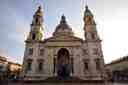
Look ahead and spot the grand building with a huge dome flanked by two tall towers, its creamy stone façade and Corinthian columns facing the wide plaza-if you see that, congratulations, you’ve found St. Stephen’s Basilica! Take a moment to look up at this magnificent structure, stretching 96 meters tall into the Budapest sky. You might want to tilt your head back-don’t worry, you won’t lose your hat, but you might lose track of time imagining its past! Now, imagine yourself standing here more than two hundred years ago, when this very spot wasn’t so angelic. Back in the 18th century, there was a rowdy little theatre for animal fights-yes, before this was a sacred space, lions and bears were the stars of the show. But Lipótváros was changing, and so were its dreams. As the area grew, the local citizens wanted something more inspirational than a bear wrestling match. Enter Zitterbarth János, who decided it was high time for a temporary church. By 1817, they’d founded a proper parish, and talk began of building a grand new temple. Then came the epic flood of 1838: water swept through Pest, but right here in the middle of St. Stephen’s Square, a natural rise provided shelter for hundreds. After they were rescued, the survivors wanted to build a church as thanks for their miraculous escape-a true promise born from panic and puddles. Construction didn’t begin smoothly-this story has more twists than a Danube river barge. The renowned architect Hild József kicked things off in 1846, but history had other ideas. The revolution of 1848-49 brought chaos and delays, and when they got going again, disaster struck. In 1868, the already-built dome collapsed with a thunderous crash, forcing everyone back to the drawing board and sending many hearts (and hard hats) racing. It took the skills of Miklós Ybl, mastermind of grand Neo-Renaissance style, to reimagine and rebuild the basilica. Only in 1905-about sixty years after those original plans-was it finally consecrated, with the king himself laying the last stone. If patience is a virtue, St. Stephen’s Basilica should probably be a saint itself. Peer at the twin towers: inside are six mighty bells, each with a story to tell. The southern tower holds Hungary’s largest bell-the Szent István bell, weighing a muscle-cramping 9,250 kilograms. Its deep, powerful toll is heard on national holidays, and only for major moments. Across from it is the oldest bell here, the Great Lady bell, built in 1863. And don’t miss the memory of war here-the biggest bells were taken for munitions during two world wars, and the current mighty bell was recast in Germany from grateful donations. You might hear music floating from within or imagine the soaring organ echoing off mosaics and stained glass. Since its dedication, the basilica has been a center of musical life. Its famous choir, founded in 1909, still gives summer concerts; international organists love to shake the walls. Imagine that on a warm July night: you, a magical choir, and an audience that stretches all the way to Vienna, thanks to the basilica’s legendary acoustics. Of course, the basilica isn’t all about heavenly tunes and towering stone. It’s also a house of relics-and no simple ones! Would you believe that behind those heavy doors rests the mummified right hand of Hungary’s first king, St. Stephen himself? Yes, you can thank him for the basilica’s name, and on August 20th every year, the relic is paraded through the streets in one of the city’s great traditions. Before 1971, this “Holy Right” had no fixed home and was displayed here and there. Now it rests in a splendid chapel, except on that grand day, when it takes its special walk. I don’t know about you, but that’s one way to give someone a “helping hand!” Inside, the basilica dazzles with gilded domes and baroque flourishes. You’ll find treasures like bejeweled vestments, a dazzling organ and mosaics as bright as sweets in a Budapest candy shop. The chapels, the main altar, the soaring cupola-a dizzying feast for your eyes. And if you’re thinking, “I wish I could see more,” you’re in luck! There’s a panorama lookout atop the dome, offering jaw-dropping views over all of Budapest. Dare you climb so high for a bird’s-eye view of the city? Through the years, the basilica has suffered bombings, collapsed domes, fires, and storms that have tossed its giant roof like a pancake. But every time, the people rallied, raising funds and working together to restore their beloved church-a little Hungarian magic and a lot of elbow grease. So as you stand here, gaze at the marble giants-saints, kings, popes-witness to centuries of hope, calamity, celebration, and community. And don’t forget to listen: you might just catch the bells ringing out across Pest, reminding everyone that this basilica, born from survival and stubbornness, will stand as long as there’s a city around it. Take a deep breath-the next chapter of this story is just a few steps away, waiting for you among the streets of Budapest! For a more comprehensive understanding of the history, the building or the the bells of the basilica, engage with me in the chat section below.
Apri pagina dedicata →To spot St. Stephen’s Basilica, look just ahead for a grand cream-colored building with rows of columns, a gigantic dark dome at the center flanked by two tall bell towers, and a…Leggi di piùMostra meno
To spot St. Stephen’s Basilica, look just ahead for a grand cream-colored building with rows of columns, a gigantic dark dome at the center flanked by two tall bell towers, and a ring of statues peering down from the roof-trust me, it’s hard to miss! Now, as you stand right in front of Hungary’s grandest church, imagine this: more than 200 years ago, this spot wasn’t filled with choirs or tourists snapping photos, but with the wild echoes of animal fights at the old Hetz-Theater. Luckily, the lions moved out and the builders moved in; a small church was raised here as a place of refuge-especially after the 1838 flood, when the lucky folks on this high ground owed quite a bit to their future basilica. In gratitude, the flood survivors donated towards constructing a much bigger church, and what a monumental process it was! St. Stephen’s Basilica took a whopping fifty-four years to build-so long that three different architects left their mark, starting with the neo-classical vision of József Hild. Picture this: in 1858, the whole dome they’d just finished suddenly collapsed! Talk about a bad hair day for a building. But they didn’t give up. The design shifted to a richer, neo-Renaissance style thanks to Miklós Ybl, and finally, József Kauser finished the masterpiece in 1905 with a keystone set in place during a ceremony attended by none other than Emperor Franz Joseph I. Now gaze up-go on, stretch your neck! This colossal church stands an even 96 meters tall, exactly the height of Hungary’s Parliament, symbolizing the equality of spiritual and worldly power. For decades, no other building in Budapest could rise higher. Through its elegant columns, grand arches, and the formidable dome painted with astonishing mosaics and heavenly scenes, St. Stephen’s is both a place of worship and an absolute show-off in the cityscape. Step closer and you’ll catch the front mosaic, designed in 1893-Our Lord on the Throne, watching over the square. Below that, in shimmering gold letters, reads “I am the way, the truth, and the life.” Not a bad motto for a building that’s survived wars, floods, and more than a few stubborn pigeons. Speaking of wars, during World War II the cellar beneath the basilica became a shelter for refugees and for priceless documents from the Hungarian National Archives-people and history both seeking safety beneath its stone arms. Inside, the magic continues. The basilica bursts with glimmering mosaics by Bertalan Székely and Gyula Benczúr, intricate sculptures of prophets and evangelists by Ede Mayer, and even a canopy altar featuring a statue of King Stephen himself-Hungary’s very first king. And yes, if you want to get a literal king’s welcome, peek at the famous reliquary inside: St. Stephen’s mummified right hand, proudly displayed for visitors. Not everyone can say they’ve seen a 1000-year-old hand on their holiday! Don’t forget to look up-the dome’s interior glows with paintings by Károly Lotz. To really feel like you’re on top of the world, you can either brave 364 steps or cheat with the elevator to reach the dome’s lookout. The view? Simply breathtaking over Budapest, but maybe hold onto your hat! The front plaza transforms in December: the air tingles with cinnamon and mulled wine during the Christmas fair, while magical light paintings dance across the basilica’s façade. If you’re lucky, you might hear music wafting out. Since its grand opening in 1905, this place has hosted epic organ concerts. Monday nights echo with the majestic pipes played by Hungary’s finest musicians, and in the summer, the choir’s voices tumble through Europe and back. If you want a quick sample, pop by on a Friday for a mini concert, just fifteen minutes-enough to feed your soul before your next adventure. Whatever the time of year, keep your ears peeled for bells. The towers hold six of them, including Hungary’s largest bell, weighing over 9 tonnes-it rings out majestically on August 20th and the occasional midnight. If you hear it, you know you’re part of Hungarian history. So, next time you see those soaring towers and the mighty dome, remember the floods, the tumbling stones, the hidden refugees, the hand of a king, and the music-always the music-that keeps St. Stephen’s Basilica alive and echoing, right in the heart of Budapest. Honestly, it’s enough to make even the old lions jealous that they gave up their spot! Seeking more information about the architecture, interior or the present day? Ask away in the chat section and I'll fill you in.
Apri pagina dedicata →

Mostra altre 7 tappeMostra meno tappeexpand_moreexpand_less
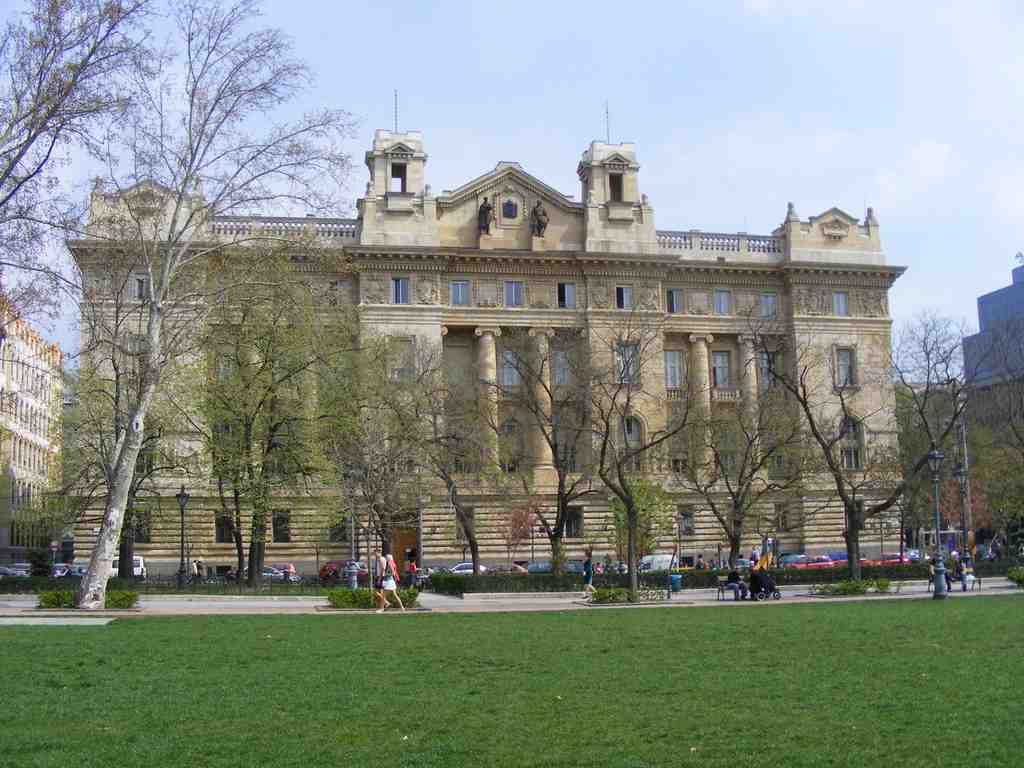
Right ahead of you, look for a grand, stone-faced building with towering columns and intricate statues along its roofline, nestled just behind the trees on Liberty Square-its…Leggi di piùMostra meno
Right ahead of you, look for a grand, stone-faced building with towering columns and intricate statues along its roofline, nestled just behind the trees on Liberty Square-its impressive façade is hard to miss. As you stand in front of this monumental structure, let’s imagine for a moment the sounds of bustling carriages and hurried footsteps from nearly a century ago. This is the home of the Magyar Nemzeti Bank, or, as we might dare to call it, the Hungarian National Bank-even though the bank itself has a rather strict policy of only using its Hungarian name in English! It’s Hungary’s beating financial heart and has presided over wild swings of fortune, from the searing heights of national pride to the deepest lows of economic chaos. Picture the year 1924. Europe is still dusting itself off from the wreckage of World War I. Hungary, suddenly without the familiar Austro-Hungarian Empire and its trusty, if a bit fussy, Austro-Hungarian Bank, needs a new financial anchor. Under the guidance and rather stern gaze of the League of Nations and its Economic and Financial Organization, the Magyar Nemzeti Bank is born here-an elegant successor, standing tall where Vienna and Budapest’s dual operations once squabbled for power and recognition. But let’s rewind even further, to a time of revolution and restless Hungarian spirits back in 1848. Then, a very different sort of bank, the Hungarian Commercial Bank of Pest, briefly managed the nation’s money. It was a post-rebellion era where everyone hoped to get rich quick, but alas, freedom and fortune don't always go hand in hand. Through decades of compromise with Austria, imaginative laws, and even more imaginative bankers, Hungarians waited-impatiently!-for a bank of their own. Finally, this grand building’s predecessor opened its doors in 1905, designed by architect Ignác Alpár. Imagine the grand opening: statues carved by artistic geniuses József Róna and Károly Senyei gazing down, as if daring passersby to guess the secrets held within those walls. By the early 20th century, things got a bit out of hand. Hyperinflation ran wild, making a loaf of bread cost more than a bicycle some days! After failed attempts to control the economic chaos, the newly independent Hungarian authorities tried something bold-they created the National Bank, and then, in 1927, switched out the old korona currency for the new pengő. The 1930s saw Budapest’s bank become a founding member of the Bank for International Settlements, only for World War II to sweep in and devastate everything all over again. At the war's end, the pengő set a world record for the worst hyperinflation ever. You know things are bad when Hungary changes money so quickly, you could heat your house with old notes! To restore order (and probably prevent people from using money as wallpaper), the MNB introduced the forint in 1946. But in came the Communists, and the bank's identity changed once more, with strict government control and an expanded role in running the country’s finances. Independence wouldn’t return until after the Iron Curtain fell-much like a magician revealing a dove after years of hiding it in his coat. By now, the bank anchors the entire financial system. It sets the baseline interest rates, issues the forint, manages reserves of gold that might make even pirates jealous, and keeps Hungary’s economy humming-or at least trying its best to stay in tune with the rest of Europe. About that: though Hungary flirted with joining the eurozone, the Magyar Nemzeti Bank stubbornly held onto its independence, wary of trading homegrown control for Brussels’ spreadsheets. This story isn’t without its scandals: if recent headlines are to be believed, someone has even accused the current bank leader of pulling off a bank robbery that would make movie villains blush-hundreds of billions of forints, more than Saddam Hussein managed in his infamous heist from the National Bank of Iraq! Now that’s what I call a plot twist. So, as you look up at the imposing windows, think of all the history that has passed through them-the revolutionary dreams, the currency crashes, the tense meetings and hopeful beginnings. And if you hear the faint jingle of coins on the wind, don’t worry, it’s probably just the next chapter in this building’s long, eventful story.
Apri pagina dedicata →To spot the U.S. Embassy, look for a grand cream-colored historic building with intricate iron balconies, a rounded corner facing Szabadság Square, and an American flag peeking…Leggi di piùMostra meno
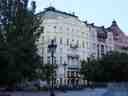
To spot the U.S. Embassy, look for a grand cream-colored historic building with intricate iron balconies, a rounded corner facing Szabadság Square, and an American flag peeking out just above the entrance, framed by trees and old-fashioned street lamps. Standing here, you might be surprised to learn that the story of this building is like something out of a spy novel-with a few diplomats, a little heroism, a dash of political drama, and one or two Americans who might have wished for a superhero cape! The U.S. Embassy in Budapest sits at Szabadság tér 12, and before the stars and stripes ever hung from the balcony, the building itself was constructed in 1901 as the headquarters of the Hungarian Chamber of Commerce. If these walls could talk, they’d probably have quite a few secrets to spill. Let’s roll back to the 1800s, when Hungarian-American diplomacy was just a twinkle in someone’s eye. The first connection was made as far away as Vienna, back when Hungary was still part of the Austro-Hungarian Empire, and the first American ambassador presented credentials there in 1838. Fast forward to the shadowy years after World War I, when connections were broken off, then stitched back together. It wasn’t until 1921, after a formal peace was signed, that Hungary and the United States were able to set up direct diplomatic ties. Before that, the American presence was a sort of ‘pop-up embassy’ (although with much less coffee and artisan pastries), and the first official U.S. representative operated out of a house on Lendvay Street. Now, diplomatic hot potato is something Budapest knows well. By 1934, the American legation (as it was called then) landed right here, gradually taking over more space from its prior tenants-one by one, the building became less about old trade deals and more about new world politics. At one point, the Budapest Post Office was in the building, too, but after the U.S. became the actual owner in 1947, stamps took a back seat to stamps in passports. And yet, the Embassy’s true test came with the storms of World War II. In a period thick with tension and fear, this building became an unexpected stage for heroism. When Hungary declared war on the U.S., the Embassy’s doors were shuttered, but not entirely locked. The Swiss diplomats, led by the legendary Carl Lutz, took over responsibility for the building. Here, under a fluttering neutral flag, Lutz issued Swiss “protection papers” and declared various buildings around the city to be Swiss territory. He and his allies-including famous figures like Sweden’s Raoul Wallenberg-saved over 62,000 Hungarian Jews from the Nazi death camps. Imagine, in this very place, frightened families and desperate individuals waiting in crowded upstairs rooms, hoping that a piece of paper could change their fate. Today, you can find a statue just outside, honoring Lutz’s courage, and the Embassy itself reminds everyone of that dramatic slice of history. But drama was never in short supply. In 1956, as the city shook with revolution and Soviet tanks rolled through, Hungary’s Cardinal Mindszenty dashed into the Embassy seeking asylum. For nearly fifteen years, he couldn’t leave the building, at risk of immediate arrest-a prisoner with the world right outside his window. I like to think he got to know every creak in the floorboards a little too well. The Cold War years were a diplomatic rollercoaster. At times, countries didn’t exchange ambassadors at all, just “temporary representatives”-kind of like having someone tend your garden, but never actually move in. Relations warmed up with the swinging ‘60s: the Embassy finally got a proper ambassador again, and the building itself grew busier, filling with the kind of cloak-and-dagger conversations, paperwork, and press briefings you might expect from a Hollywood film. By the way, if you spot a statue of a mustachioed soldier gripping a riding crop nearby, that would be Harry Hill Bandholtz, an American general who in 1919 used nothing but bravado (and his famous riding crop) to save the Hungarian National Museum from being looted by Romanian troops. His statue stood proud, was hidden away, and then finally returned-making for another chapter in the “never a dull moment” saga of the square. So as you stand here, look up at the windows and imagine the clatter of typewriters in the 1930s, the whispers of refugees in the 1940s, and maybe the occasional sigh from someone wondering how to deal with diplomatic drama, Hungarian weather, and an endless mountain of paperwork. The U.S. Embassy at Szabadság tér isn’t just a building-it’s a slice of 20th-century world history, where courage, diplomacy, and a little bit of luck have shaped events time and again. And who knows? Maybe today, another story is being written behind those doors. Seeking more information about the history, former ambassadors and ambassadors or the carl lutz monument? Ask away in the chat section and I'll fill you in.
Apri pagina dedicata →Right in front of you, you’ll spot a low, circular concrete structure with a web-like metal dome set into the ground-a bit like a giant manhole cover on steroids-surrounded by…Leggi di piùMostra meno
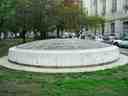
Right in front of you, you’ll spot a low, circular concrete structure with a web-like metal dome set into the ground-a bit like a giant manhole cover on steroids-surrounded by grass and just steps from the nearby boulevard. Now, get ready for a real Cold War secret-because you’re standing above one of Budapest’s most mysterious and jaw-dropping relics: the F4 Object, better known to locals as the “Rákosi-bunker.” While it looks unassuming from up here, if you could somehow shrink to the size of a mouse and slip through its grates, you’d find yourself on the edge of a chilling underground labyrinth, buried about 39 meters below your feet. Picture Budapest in the early 1950s-a city still scarred by war, tense with suspicion, and ruled by the iron-fisted communist leader, Mátyás Rákosi. Now imagine the paranoia of the time: what if the West decided to push a big red nuclear button? Rákosi wanted to make sure that he-and his most trusted party bosses-had a place to hide. Not just any hiding place, though. It had to be as secret as your grandma’s goulash recipe, and as strong as Hungarian paprika! So, in December 1951, work began on a bunker that would become the stuff of urban legend-a sprawling underground shelter shaped a bit like a stretched-out letter “H,” running somewhere between Kossuth Square and Szabadság Square. Its main entrance was sneakily tucked away inside a stately courtyard of a party headquarters building at 17 Akadémia Street. Just south of here, near the old Hungarian Television headquarters, there was even an emergency exit doubling as a ventilation shaft-so the party bigwigs could breathe easy while planning, well, whatever communists planned back then. Here’s a wild detail: the workers, shipped in from the Hungarian countryside, actually thought they were building Budapest’s new metro lines. Surprise! They were digging secret tunnels where the country’s elite could be spirited away at a moment’s notice. No direct line to the Parliament building, despite the rumors-but there was a direct connection to the party headquarters and, later, the 2nd metro line. Some even say the bunker could hold up to 2,200 people! That’s a lot of nervous VIPs in one place. Inside, imagine a world cut off from the chaos above: meeting rooms where top government officials could decide the fate of the nation, all while hidden from nuclear fallout. Picture 3500-3800 square meters of halls and rooms, with special hiding spots for a handful of “top-level minds” who’d get their own private rooms, city telephones, and bathrooms. The rest? Well, it was more like an ultimate group sleepover-minus the fun. To keep everyone breathing, the place had a monster air-filtration system capable of filtering radioactive dust, and its walls were built from metro tunnel linings. There were diesel generators for power, tanks for 150,000 liters of water, and even a labyrinth of more than 50 toilets for those sudden emergencies-nobody wants to run out of toilet paper during an atomic attack, after all. But, get this: the bunker was never actually used for its original, apocalyptic purpose. It sat there through the tense chapters of the Cold War, always “at the ready,” but never called into action. By the 1970s, it was physically linked to the metro by a passage off the main tunnel between Deák Ferenc Square and Kossuth Lajos Square-though you wouldn’t want to stroll down there unless you love darkness and dust. In the 1980s, Budapest’s public transit company (BKV) took over, opening it up for ventilation once a week and sparking rumors and curiosity among the public. It wasn’t until the ‘90s, and a documentary cheekily titled “Pincebörtön” (“Cellar Prison”), that the public really found out there was a Cold War bunker in the heart of the city. Today, the story of the F4 Object is part mystery, part monument. The original entrance has been sealed due to safety and construction work, and the bunker itself is empty-stripped of furniture, silent, its secret strategic function just a memory. But as you stand above this odd concrete and steel lid, let your imagination wander: how many footsteps, secrets, and silent worries must have echoed through its halls? If walls could talk, this bunker would have the juiciest gossip in Budapest! If you're keen on discovering more about the history, description or the current status, head down to the chat section and engage with me.
Apri pagina dedicata →To spot Kossuth Square, just look ahead for the enormous and dazzling white Gothic Revival building with towers, arches, and the Hungarian flag out front-the majestic Parliament…Leggi di piùMostra meno
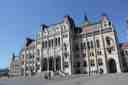
To spot Kossuth Square, just look ahead for the enormous and dazzling white Gothic Revival building with towers, arches, and the Hungarian flag out front-the majestic Parliament Building is impossible to miss! Welcome to Kossuth Square, where the wide open plaza you’re standing on has probably seen more history, protests, laughter, and perhaps pigeon chases than half the movie sets in Europe. It sits right on the banks of the Danube, in the heart of Budapest’s Lipótváros neighborhood. Today, it might seem peaceful, but don’t let that fool you-this place has more stories than a library with insomnia! Once upon a time, this very spot was lovingly called Landfill Square because the city filled it with rubbish to raise the ground-talk about making treasure from trash! Back in 1820, it was the “Unloading Square for the Ships,” with riverside hustle and bustle. Flash forward a few decades, and as the city grew, so did the square. It transformed from a mud patch to a grand centerpiece surrounded by public buildings, anchoring itself as the symbolic heart of Hungary. The showstopper, of course, is the building towering above you: the Hungarian Parliament. Over the years, the square has changed names more than a secret agent. From Parliament Square to Landfill Square, until 1927, when it was finally declared Kossuth Lajos Square, in honor of the famous Hungarian statesman. Can you imagine a place known for garbage heaps now graced by grand statues, public gardens, and the best metro and tram connections in town? Facing the Parliament are two more giants-the Palace of Justice, and the Ministry of Agriculture. The square was sliced by the Kossuth Bridge after WWII to help everyone cross the Danube, though it only stuck around till 1960 before disappearing. Sometimes, just for fun, the city still builds temporary pontoon bridges here for national holidays. If you ever see one, you’ve wandered into an impromptu time machine. Kossuth Square isn’t just about dazzling architecture; it’s been the bustling stage of Hungarian democracy and protest. In 1956, it became the setting for one of the darkest chapters in Hungary's 20th-century history-the Kossuth Tér Massacre. During the Hungarian Revolution, unarmed men, women, and even children gathered right here, only to be swept by gunfire in the confusion of a “Bloody Thursday.” There’s a memorial tucked away in the southern ventilation tunnel, filled with flickering candles, videos, and haunting memorabilia. No one is quite sure how the chaos started or exactly how many were lost-some say 22, others say over 1,000. Even British officials weren’t sure; their guess ran between 300 and 800. The city still seeks the full story, inviting anyone with answers to step forward. And protests didn’t end there. In 2006, thousands filled the square for weeks, camping out to demand government accountability after a scandalous speech rocked the nation. The square became an open-air living room for democracy-until police cordoned it off, triggering even more debate. By 2014, the area was restored and reopened, the bustling life of Budapest pouring in again, now with sustainable parks, car-free zones, sculpted walkways, and even an underground parking garage. Take a walk around and notice the statues: the Kossuth Memorial, a powerful tribute in front of Parliament; a proud equestrian statue of Francis II Rákóczi; modern pieces, like Attila József sitting dreamily on the bank, inspired by his own poetry. Nearby, you’ll see reconstructed memorials to defeat and triumph, including those of Counts Tisza and Andrássy. Once, there stood a statue of Imre Nagy, hero of another revolution, but he was recently relocated to make space for the restored Monument to the National Martyrs. Unlike its early days, there’s no rubbish here today, just generations of dreams and echoes of footsteps-some solemn, some joyful. So as you stand on Kossuth Square, soak up the atmosphere: the echo of a bell, the laughter of school groups, the toll of history on the wind. And don’t worry, the pigeons are probably safer now-no more historic uprisings, just the occasional feathery prank!
Apri pagina dedicata →Look directly ahead and you’ll see a grand, creamy-white stone monument rising on steps, with a central figure flanked by a group of serious-looking men-all staring out over the…Leggi di piùMostra meno
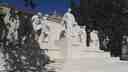
Look directly ahead and you’ll see a grand, creamy-white stone monument rising on steps, with a central figure flanked by a group of serious-looking men-all staring out over the heart of Kossuth Square. Now that you’re standing here, let me spin you a tale fit for a hero and his crew. Imagine, over a century ago, the city bustling with excitement. The year was 1894, and as Lajos Kossuth-the beloved leader of Hungary’s 1848 Revolution-was laid to rest, the entire nation seemed to hold its breath. Crowds gathered, hats clutched, eyes shining with pride and wet with tears. Almost immediately, folks from all walks of life chipped in their hard-earned forints to honor Kossuth, collecting a mind-boggling sum for those days: 850,000 forints! I bet even Kossuth himself would have been tempted to count it. By 1906, after many fiery debates, sculptor János Horvay got the job-though not everyone was happy with his vision. He set to work, chiseling away at stone until a whole government cabinet sprang to life. But in a twist fit for a dramatic novel, World War I slammed the brakes on everything. Marble for the pedestal was taken by invading forces, and the statues stood unfinished. Still, persistence pays off: by 1927, with makeshift limestone, the first Kossuth Memorial was unveiled before a crowd of 100,000! Picture the buzz: voices ringing through the chilly November air, politicians posturing, artists biting their nails. But critics were not amused-too gloomy! they cried, and the statues never quite won people’s hearts. Move to 1950, and Hungary’s new rulers decided the memorial was too grim for their tastes. Down it came! In swooped sculptor Zsigmond Kisfaludi Strobl, who cast Kossuth as a charismatic leader with his hand outstretched, ready to lead Hungary toward tomorrow. The air was heavy with symbolism, and if those statues could have talked, they’d surely have gossiped about all the change. Decades passed until-plot twist!-the government decided to turn back time in 2012. Out with the bronze, back in with history! After careful planning and a touch of magic, an exact replica of the original, somber group returned here in 2014, as you see now. Today, as you stand among the ghosts of revolutionaries on Kossuth Square, imagine the thunder of applause, the whispers of criticism, and the stubborn hope that refuses to fade. The statues might look serious, but hey, after all the adventures they’ve been through, maybe they’re just trying to hold a poker face!
Apri pagina dedicata →
Domande frequenti
Come inizio il tour?
Dopo l'acquisto, scarica l'app AudaTours e inserisci il tuo codice di riscatto. Il tour sarà pronto per partire immediatamente – tocca play e segui il percorso guidato dal GPS.
Ho bisogno di internet durante il tour?
No! Scarica il tour prima di iniziare e goditelo completamente offline. Solo la funzione chat richiede internet. Ti consigliamo di scaricare tramite WiFi per risparmiare dati mobili.
È un tour guidato di gruppo?
No – è un tour audio autoguidato. Esplori in autonomia al tuo ritmo, con la narrazione audio riprodotta dal tuo telefono. Nessuna guida, nessun gruppo, nessun orario.
Quanto dura il tour?
La maggior parte dei tour richiede 60–90 minuti, ma sei tu a controllare il ritmo. Metti in pausa, salta le tappe o fai pause quando vuoi.
E se non riesco a finire il tour oggi?
Nessun problema! I tour hanno accesso a vita. Metti in pausa e riprendi quando vuoi – domani, la prossima settimana o il prossimo anno. I tuoi progressi vengono salvati.
Quali lingue sono disponibili?
Tutti i tour sono disponibili in oltre 50 lingue. Seleziona la lingua preferita quando riscatti il codice. Nota: la lingua non può essere cambiata dopo la generazione del tour.
Dove accedo al tour dopo l'acquisto?
Scarica l'app gratuita AudaTours dall'App Store o Google Play. Inserisci il codice di riscatto (inviato via email) e il tour apparirà nella tua libreria, pronto per essere scaricato e avviato.
Se il tour non ti piace, ti rimborseremo l'acquisto. Contattaci a [email protected]
Pagamento sicuro con 


