
Audioguida di Colonia: Un'Odissea dell'Essenza di Colonia
Sotto i tetti pastello e le guglie svettanti di Colonia, storie nascoste crepitano come corrente elettrica—racconti di intrighi di profumi, disastri reali e antiche rovine proprio sotto i tuoi piedi. Questo tour audio autoguidato ti invita a un'avventura attraverso vicoli tortuosi e piazze storiche, promettendo momenti dimenticati e segreti interni che la maggior parte dei visitatori non sente mai. Cosa successe quando il fuoco trasformò la Grande Chiesa di San Martino in un cumulo di braci—e chi sfidò le probabilità per riportarla in vita? Quale sconosciuto una volta ingannò un'intera città all'Alter Markt, lasciando la folla sconvolta tra risate e vergogna? Perché il profumo di un certo negozio di tulipani rossi finì spalmato sulle gengive di Napoleone? Passa dalle chiese a trifoglio ai mercati vivaci alle fabbriche aromatiche. Immagina monaci banditi al chiaro di luna, cavalieri che cadono dai cavalli, reali a caccia del profumo perfetto—tutto intessuto in un arazzo di dramma e reinvenzione. Cammina per queste strade e il battito della vecchia Colonia pulsa sotto ogni pietra. Inizia il tuo viaggio ora—lascia che i segreti più antichi della città ti attraggano.
Anteprima del tour
Informazioni su questo tour
- scheduleDurata 40–60 minsVai al tuo ritmo
- straighten3.2 km di percorso a piediSegui il percorso guidato
- location_on
- wifi_offFunziona offlineScarica una volta, usa ovunque
- all_inclusiveAccesso a vitaRiascolta quando vuoi, per sempre
- location_onParte da Grande Chiesa di San Martino, Colonia
Tappe di questo tour
To spot the Great St. Martin Church, look above the treetops for a striking, tan stone building with a tall pointed central tower flanked by three smaller towers, all rising…Leggi di piùMostra meno
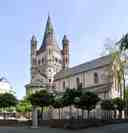
To spot the Great St. Martin Church, look above the treetops for a striking, tan stone building with a tall pointed central tower flanked by three smaller towers, all rising grandly over the Old Town skyline like chess pieces carved out of history. Welcome to the mighty Great St. Martin Church! Take a deep breath and imagine yourself traveling back more than 850 years, when this towering Romanesque beauty first began to rise out of the bustle of medieval Cologne. The church stands where Romans once strolled along an island in the Rhine, its stone roots gripping the remnants of an ancient Roman chapel. If these walls could talk, they’d probably tell you they’ve seen more popes, monks, and dramatic disasters than your favorite soap opera. Let’s set the scene: it’s the late 10th century, and the church is founded by Archbishop Bruno the Great, who was so determined to impress St. Martin of Tours that he even donated relics! But this site’s history is tangled in myths and legends-some people used to say it was founded by mysterious Irish missionaries under the help of a Frankish mayor and his powerful wife. Others believed monks named Viro, Plechelmus, and Otger started things off in the year 690 before all the fancy stonework. Honestly, there were so many creative origin stories, it’s a wonder nobody claimed it was started by space aliens. In the end, most of those juicy tales turned out to be a bit too good to be true-a Benedictine prankster named Oliver cooked up a few of them in 1730! But there’s no mistaking the real drama that happened here. In 1150, a roaring fire nearly destroyed the city-and Great St. Martin along with it. The church was rebuilt in grand fashion: its three rounded apses, fanning out like a cloverleaf, and the bold, towering crossing that dominates Cologne’s skyline. As you look up, picture the busy masons, the clang of hammers and the grunts as new stones were hauled up-this was an age when building meant sweat, faith, and a little bit of hope that nothing else would catch fire! Not that flames were the only threat. Over its long life, this church survived everything from medieval storms that tossed its tower gables down onto the local fish market (watch your head!) to strong-willed abbots who kicked out Irish monks in favor of locals-church politics, medieval-style. By the 18th century, its interior glowed with golden Baroque trimmings, only to get a classical makeover a few decades later. Imagine worshippers squinting in the candlelight, debating whether the new altar was too “pagan” or just stylishly chic. After the French arrived in the late 1700s, priests were forced to pack up and go-many found new homes, but some of the church’s stones ended up in… well, rather less holy places around town. Later, as Cologne tried to repair its battered buildings, the Great St. Martin went through a series of makeovers to restore its lost towers and medieval charm, returning to the skyline like an old friend who just couldn’t stay away. But the greatest test came in World War II, when bombs rained down over Cologne. On May 30, 1942, the church’s great tower and nave burned to the ground; by 1945, nearly everything overhead was a smoky ruin. Some people questioned if restoration was even possible, but after years of debate, builders and dreamers brought it back stone by stone. In 1985, the great doors swung wide once more, letting in sunlight, footsteps, and soft prayers-opening the church to visitors after forty long years of silence. Down below your feet lies even more mystery. Archaeologists digging here found enormous Roman ruins, and the remains of a vast pool-no one’s sure if it was a swimming pool, a fish tank, or a secret Roman spa (maybe the world’s oldest indoor pool party went down right here). Through layer after layer of history, from ancient Rome to bustling medieval fairs to modern city life, Great St. Martin has always been a place of surprises: stubborn, elegant, and just a little bit magical. So as you look up at those towers, remember: you're standing where Cologne’s heart has beaten for centuries, a spot where legend, history, and faith have tangled together-surviving fires, storms, wars, and more than a few outlandish stories. Now, let’s see if the next stop has quite as many secrets to share!
Apri pagina dedicata →In front of you, the Alter Markt opens wide-a grand, cobbled square framed by pretty, colorful houses, leafy trees, and the stately, ornate facade of the Old Town Hall to your…Leggi di piùMostra meno
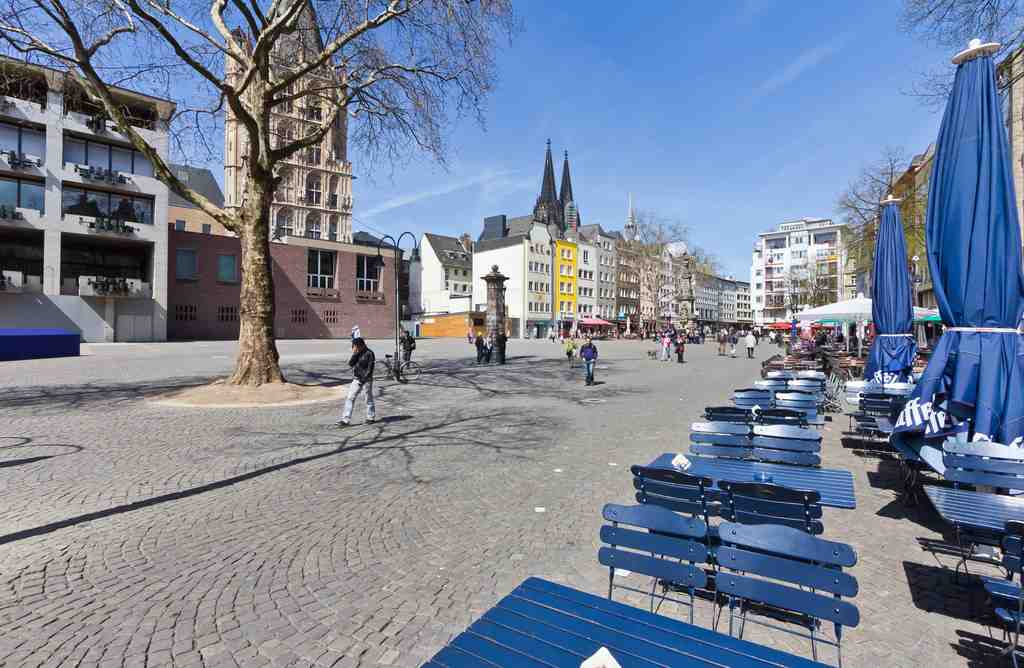
In front of you, the Alter Markt opens wide-a grand, cobbled square framed by pretty, colorful houses, leafy trees, and the stately, ornate facade of the Old Town Hall to your left; just look ahead to spot the tallest tower and the lively bustle of cafés with blue chairs, and you’ll know you’re in the right place. Now, take a moment and imagine yourself standing in the heart of centuries-old Cologne, a place where, believe it or not, Romans once tied up their boats. Yes, way before this square became the beating heart of the city, beneath your feet lay a sandy stretch hugging an ancient arm of the Rhine. In Roman times, the bustling harbor here would’ve sounded with the slap of water and the heavy thud of stones unloaded for the city’s grandest buildings. When workers dug for the underground railway in 2007, they found a Roman barge-buried twelve meters down, locking away stories from nearly 2,000 years ago. Yet this was always more than just a dock-it became the richest stage for Cologne’s dramas. Over your shoulder, you’d once spot the medieval city elite strutting about, their homes crowding the square, rising high and narrow because real estate here was as precious as Christmas cookies. By the 10th century, this was the marketplace, known first as “mercatus coloniae”-it was already ‘old’ before anyone even thought of a “new market.” Here, the archbishop put a mint right on the square, the clang of coins echoing as the “Kölner Pfennig” became a currency famous across the land, a bit like having the world’s first bitcoin launch right outside your front door. Picture, if you can, a sea of stalls: apples and cheese on the east, vegetables piled high to the north, the air filled with the earthy smell of kraut and onions. Shouts crisscrossed the air, and butter, salt, and leather goods found eager hands. Somewhere near, a hospital and a brot-hall stood watch. But not all was straightforward trading. Sometimes, misbehaving customers or cheating merchants ended up at the pranger-a pillory right here, alongside a comically dreadful cage known as the “Käx,” where unlucky lawbreakers would, well, stew in their own embarrassment as the crowd jeered. There’s even a tale about a fraudster who pretended to be a dead emperor-and for that, the townsfolk crowned him... with rotten vegetables! This isn’t just a place of business or justice, but of grand adventure and spectacle. Knights once charged and galloped across these stones during tournaments, the clatter of hooves and the clang of armor thrilling onlookers jammed into every window and doorway. In 1486, they even cushioned the tournament grounds with straw, but King Maximilian still managed to tumble right off his horse-so much for royal dignity! Time barrelled on, and the square only grew in importance. During the French occupation in the 1800s, they even renamed it “Le grand marché à Cologne,” and, for a while, the dreaded guillotine made an appearance. Don’t worry, though-the strongest traditions here are lighter ones: the very first Christmas markets began during this period, and today’s festivities, with merry booths and, of course, sweet treats, still light up the winter air. Perhaps the most heartfelt Cologne tradition bursts to life here every November 11th at 11:11 a.m.-yes, it’s that precise!-when the square erupts in song, laughter, and costumes to kick off Karneval. The story of Jan and Griet, the legendary love-struck country lad and the proud Griet, lives on in bronze at the Jan von Werth fountain, as the crowds below celebrate, debate, and do their best chicken dances. Even after two world wars tried to flatten history, some buildings, like the lovely “Haus zum Bretzel” and the “Gaffel Haus,” were rebuilt, while others-such as the curious "Kallendresser" statue, celebrating Cologne’s cheeky sense of humor-keep stories alive in stone and bronze. So look around at the sea of tables, the gleam of modern shops, and let your mind travel back to market days, medieval jousts, roaring Karnevals, and a kaleidoscope of city legends. Here, beneath the café umbrellas and the watchful eye of the old Rathaus, every step echoes with laughter, history, and maybe just a hint of mischief.
Apri pagina dedicata →
Mostra altre 10 tappeMostra meno tappeexpand_moreexpand_less
The Romano-Germanic Museum is a square, modern concrete building with a flat roof and large glass doors, featuring the name “Römisch-Germanisches Museum” in bold red letters above…Leggi di piùMostra meno
The Romano-Germanic Museum is a square, modern concrete building with a flat roof and large glass doors, featuring the name “Römisch-Germanisches Museum” in bold red letters above the entrance-look just to the right of the cathedral’s dark spires, and you’ll spot this low, light-gray cube on the plaza. Alright, time to dust off your imagination and travel back-way back-to the days when Cologne was actually a bustling Roman city called Colonia Claudia Ara Agrippinensium. Right now, beneath your feet, lies an ancient Roman villa, and this very spot is like a doorway to nearly two thousand years of history. But don’t worry, no sandaled Romans are going to pop out and ask you for your passport! Back in 1941, as bombs were dropping during World War II and crews were desperately digging an air-raid shelter, workers struck something a lot more beautiful than an underground bunker: the floor of an ancient Roman house, sparkling with a mosaic so grand you’d think Dionysus himself might dance right out and offer you a goblet of wine. Architects were faced with a truly Roman-sized dilemma-how to build a museum around a treasure that simply couldn’t be moved. The solution? Keep the mosaic right where it was and wrap the entire museum around it, like a priceless gift swaddled in concrete. Stepping up to those glass doors, you’re about to find a collection that would make any ancient emperor jealous: Roman glass that glimmers like frozen rainbows, delicate jewelry fit for a toga party, and even everyday objects-think bone combs and bronze coins-that somehow survived almost two thousand years of lunch breaks and lost change. If you listen closely, maybe you’ll hear the faint clink of Roman glasses or the whispers of ancient shoppers bustling down the very Roman road just outside these walls. One of the museum’s star attractions sits quietly below: that legendary Dionysus mosaic from around the year 220. Imagine Roman party guests reclining on cushions, music in the air, the sound of laughter echoing off marble-a scene preserved here for all time. And for a little dramatic flair, did you know that in 2007 a wild storm called Cyclone Kyrill blew a plank straight through the museum’s glass front, aiming right for the mosaic? But don’t worry, the Romans survived, and so did the mosaic. It was all patched up in less than a week-quicker than a chariot lap around the old city gates! So as you stand before this museum, you’re not just at a building-you’re lingering between worlds: from Roman emperors to medieval magicians to modern museum lovers. If these ancient walls could talk, imagine the tales they’d tell you next. Ready to step into Cologne’s Roman past?
Apri pagina dedicata →Look up to the towering south spire of the Cologne Cathedral - if your neck starts protesting, you’re definitely looking high enough! Right there, hidden far above, swings the…Leggi di piùMostra meno
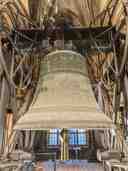
Look up to the towering south spire of the Cologne Cathedral - if your neck starts protesting, you’re definitely looking high enough! Right there, hidden far above, swings the legendary Petersglocke, better known to locals as “Dicker Pitter,” or, as I like to call him, Big Peter - the heaviest celebrity in Cologne. Let’s hear his story! Imagine yourself standing in this spot nearly a century ago, in the year 1923. Cologne had just ordered a magnificent new cathedral bell, to replace its predecessor, and the job was handed to the skilled bell founder Heinrich Ulrich in Apolda. But there was a twist: Germany’s money was worth less than the paper it was printed on due to hyperinflation! When the time came to pay Herr Ulrich, he took one look at the mountains of German marks offered and politely said, “No, thank you.” Instead, the canny craftsman only accepted payment in US dollars-5,000 of them, which back then was as solid as the bell itself. Probably one of the best investments Cologne ever made! Now, “Big Peter” isn’t the first to try filling this mighty bell spot. Before him, there was the Emperor’s Bell, or “Große Schweigerin” - which means “the Big Silence.” That’s not exactly a compliment for a bell! Made in 1873, the Emperor’s Bell was even heavier than Dicker Pitter, but it had a sound so dreary that churchgoers could barely tell if it was calling them to worship or to dinner. After years of clanging disappointingly, it was eventually melted down in 1918 for the war effort-a sad end, but at least nobody had to hear its awful tone again. Back to our hero: crafted in 1923, weighing a whopping 24,000 kilograms - that’s the same as about a dozen elephants doing a conga line - Big Peter is the second largest freely swinging bell in the world. His voice is deep, strong, and when he rings, the city listens. But even legends have their mishaps. In 1951, a nasty 110-centimeter crack appeared, threatening to silence Big Peter. Thankfully, clever welders came to the rescue five years later, welding the crack shut and rotating the bell so its new, lighter clapper would avoid the wounded spot. Catastrophe averted … for now. But fate still had more drama in store. On a chilly January day in 2011, with a thunderous crash, the hefty clapper - weighing a monstrous 600 kilograms - fell right off and crashed to the floor. Talk about making an entrance! Four earthquake sensors in the cathedral picked up the quake. If only insurance forms had a box for “bell clapper fell off.” Investigation showed the clapper hadn’t been properly installed since the 1950s, which wore it out over time. A new clapper was cast, installed with tender loving care, and Big Peter was back in action by December 2011, harmonizing with newly tuned electric ringing engines. Of course, being the big bell has its perks: Petersglocke is reserved for Cologne's most momentous events. Reunification of Germany? Big Peter rang. End of World War II? His voice echoed over the ruins. The death or election of an archbishop or pope? Big Peter tolls, the city stands still, and it feels as if even time listens. So next time you hear that mighty, resonant ring drifting down from the cathedral above, remember this is more than just a bell-it’s the deep, thunderous heartbeat of Cologne. And trust me, when Big Peter sings, nobody hits the snooze button.
Apri pagina dedicata →Right ahead, you’ll spot the Museum Ludwig by its shiny, silver-metallic exterior with curved rooflines-like giant, glimmering waves-standing next to the majestic spires of…Leggi di piùMostra meno
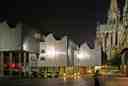
Right ahead, you’ll spot the Museum Ludwig by its shiny, silver-metallic exterior with curved rooflines-like giant, glimmering waves-standing next to the majestic spires of Cologne Cathedral. Imagine standing in front of this bold building, metal shimmering under the city lights and the air almost electric with creativity. The Museum Ludwig looks a little like a spaceship straight out of a comic book, with its rippling silvery walls and chunky, toothy rooftop. Not surprising, since inside is one of Europe’s wildest collections of modern and contemporary art, from Pop Art to Surrealism, and some of Picasso’s most mysterious works. They say if you listen closely, you might even hear the faint echo of paintbrushes in a hurry, or the low hum of creative energy running through the halls. Let’s hit rewind to 1976, when an unusual offer landed on the city’s desk-Peter Ludwig, a chocolate tycoon with a sweet tooth for art, wanted to gift Cologne 350 modern masterpieces worth a whopping $45 million. There was only one catch: the city had to build him a museum worthy of these treasures, a home for art created after 1900. After shaking hands, construction began. Designed by architects Peter Busmann and Godfrid Haberer, what you see now opened its doors in 1986, planted firmly beside the grand cathedral. Originally, Ludwig’s museum had to share its glimmering new home with the Wallraf-Richartz Museum. Now, if you think sharing bathrooms is tough, try sharing rooms with a whole different museum! But in 1994, the city decided enough was enough and gave the whole sparkling spaceship over to Museum Ludwig. From then on, this place became Cologne’s headquarters for art that baffles, bounces, and brims with color. Around and beneath your feet lies the Kölner Philharmonie, a concert hall famous not only for its music but also for a curious rule: when a concert starts, nobody is allowed to walk across Heinrich-Böll-Platz, the square above. Why? Every step, every shuffle, would thunder down and interrupt the orchestra below. It’s easily the only place in Cologne where shoes can cause a symphonic disaster! Inside, the treasures stretch across decades of daring ideas. Modern classics like Andy Warhol’s Dollar Bills, Roy Lichtenstein’s Mad Scientist, Salvador Dalí’s surreal visions, Gerhard Richter’s “Ema,” and hundreds of works by Picasso-nearly 900, in fact, making this the third largest Picasso collection in the world after Paris and Barcelona. Josef Haubrich, a courageous lawyer and art lover, kicked things off by giving his Expressionist collection to the city after World War II. You’ll see bold colors, wild forms, and the spirit of a city rebuilding itself with hope and imagination. Don’t miss the museum’s mind-bending Russian avant-garde-600 swirling, experimental artworks by the likes of Malevich, Goncharova, and Rodchenko, thanks to Ludwig and his wife Irene. It’s the largest collection of early Russian avant-garde outside Russia, and it’s all right here, inviting you to get lost in the wild ride of early twentieth-century rebellion. But art isn’t only about glitter and glamour here. Sometimes, it’s about justice. Over the years, the museum has also tried to return pieces stolen during grim times-like drawings looted by the Nazis from Jewish collectors. Every painting that returns home is part of a story of healing. The Museum Ludwig never stops making news. In 2016, they tried to show Anselm Kiefer's works in China, but after a whirlwind tour, the art vanished into storage limbo. It became a treasure-hunt worthy of Indiana Jones, complete with diplomatic derring-do. Eventually, in 2020, they tracked the missing pieces to a warehouse in Shenzhen. The adventure continues, with Germany’s government and Kiefer himself working to bring them home-a truly international mystery! So, whether you’re an art detective or just curious, the Museum Ludwig is a living hub of ideas, old stories, and new surprises. Did I mention Steve Keene once set up shop and painted right inside these walls? Maybe you’ll catch a whiff of wet paint, or spot the gleam in Picasso’s eye. Welcome to Cologne’s wildest temple to the imagination-just watch your step on that square, or you might have a whole orchestra banging on the ceiling! For a more comprehensive understanding of the collection, selected works of the collection or the wolfgang hahn prize, engage with me in the chat section below.
Apri pagina dedicata →Standing before you, towering into the sky, is the Cologne Cathedral-just look straight ahead for the two enormous, spiky Gothic spires stretching high above the bustling square…Leggi di piùMostra meno
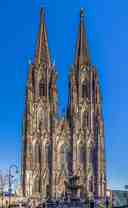
Standing before you, towering into the sky, is the Cologne Cathedral-just look straight ahead for the two enormous, spiky Gothic spires stretching high above the bustling square and you can’t miss it! Now, get ready for a story that’s bigger than life itself-after all, you’re looking at Germany’s most visited landmark, and the tallest twin-spired church anywhere on Earth! Cologne Cathedral is so tall, at 157 meters, you could stack about fifty giraffes on top of each other and still not reach the very tips of those spires. This mighty monument became a UNESCO World Heritage site in 1996, proudly representing centuries of German Catholicism and Gothic ambition. But its journey to glory wasn’t exactly speedy. In fact, this cathedral is the original “never-ending construction project.” Construction began way, way back in 1248, fueled by a dream to build a house magnificent enough to hold the prized relics of the Three Wise Men. Medieval builders wanted something fit for emperors and saints alike-so after they laid the foundation, they kept building… and building... and building... But after more than 300 years, with walls still unfinished and one lonely crane left perched on top, work ground to a halt. You could say the cathedral spent the next 400 years as the city’s most dramatic “work in progress” sculpture, attracting artists and pigeons alike. People from all over Europe kept flocking here, desperate to catch a glimpse of the famous Shrine of the Three Kings inside-think of it as one of the Middle Ages’ hottest tourist attractions. Then came the 19th century, when Cologne was swept by a romantic love for the past. The good news? Someone found the original Gothic blueprints hidden away, as if the medieval architects were winking from history and saying, “Finish what we started!” Spurred by civic pride, clever fundraising, and a dose of state support (Prussia, that is), workers took up their chisels again. In 1880-632 years after it all began-the last stone was placed with a mighty celebration attended by Emperor Wilhelm I. Cologne’s cathedral finally stood as the tallest building in the world, even if just for a few years. Almost immediately, maintenance became its own epic saga. Builders realized they’d need scaffolding forever-so much so that today you’re more likely to see a mason than a monk tending to the stones! Smoky air, acid rain, and the occasional earthquake have turned the cathedral’s sandstone from creamy beige to a moody, mysterious black, giving it an even more dramatic look. Its spires guided bombers in World War II, and despite being hit 14 times, the great cathedral refused to crumble even as much of Cologne around it did. When the city was flattened, the cathedral-wounded but proud-stood tall as a symbol of hope. Restoration work after the war patched up brickwork, but many scars were deliberately left as reminders. Step inside and the treasures keep coming: the high altar from 1322, gleaming black marble set with white niches; the fabled Shrine of the Three Kings, shimmering with gold and precious stones, believed to hold relics from the biblical Magi. Near the sacristy, you’ll discover the ancient Gero Crucifix-over a thousand years old, it’s the oldest free-standing crucifix north of the Alps. But this building is more than its treasures. For centuries, all kinds of stories have found their home in these stones-from the earliest Christians who met in secret in houses beneath your feet, to the powerful bishops who shaped Holy Roman Empire politics, to modern debates about art and memory. In recent years, the cathedral’s leaders have tackled tough questions about how art inside the church depicts Christians and Jews. They’ve left old, even controversial, imagery in place, but now commission new artwork to challenge and teach-like a giant mural planned for the Chapel of St. Mary that will openly honor Jewish heritage, right where it was once hidden. And oh, the bells! The mighty St. Petersglocke, cast from melted-down French cannons, weighs a whopping 24 tons and rings only on the grandest holidays. In 2022, it joined cathedrals across Europe, tolling in solidarity for Ukraine-a reminder that these walls have witnessed peace, war, and everything in between. And if you’re feeling energetic, climb the 533 spiral stone steps to the viewing platform-just think of it as your exercise for the month! Up there, the whole city and the silvery Rhine will stretch out before you. So, as you look up at the soaring spires and maybe catch a glimpse of a cheeky stonemason, remember: Cologne Cathedral isn’t just a building. It’s a living time machine, an architectural saga, and the work of countless dreamers, priests, workers, and believers from the mists of the Middle Ages to today. And lucky you-now you’re part of its story, too. Yearning to grasp further insights on the predecessor buildings, ongoing renovation or the architecture? Dive into the chat section below and ask away.
Apri pagina dedicata →To spot St. Andreas, look for the impressive Romanesque church with a tall, pointed central tower and a combination of round Romanesque arches and large Gothic-style windows-just…Leggi di piùMostra meno
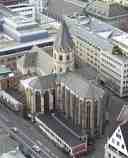
To spot St. Andreas, look for the impressive Romanesque church with a tall, pointed central tower and a combination of round Romanesque arches and large Gothic-style windows-just ahead of you, surrounded by a sea of modern city buildings. Now, step a little closer, take in the scent of old stones and history, and let me whisk you back through centuries of stories. Imagine you’re standing outside one of Cologne’s twelve grand Romanesque churches, right among the hum of city life, yet suddenly the noise fades and, for a moment, the clock spins backwards. The air thickens with centuries of devotion and tales both heroic and, well, slightly peculiar-after all, if these walls could talk, they’d surely have a dramatic flair. St. Andreas was built where there may once have been a humble chapel called St. Matthaeus in fossa-think “St. Matthew by the moat.” Around the year 974, right here, Archbishop Gero dedicated a new Romanesque church, with a crypt tucked beneath, to its namesake, Saint Andrew. This was no simple country chapel though; imagine bustling canons in long robes, setting up a prestigious church right in the heart of medieval Cologne. Of course, if you time-travel back to the 12th or 13th century, you’ll notice the west side you see today actually survived from that era-late Romanesque, impressively sturdy, built under the watchful gaze of the mighty Staufer dynasty. But time didn’t stand still here-oh no! In the 14th and 15th centuries, Cologne was all about keeping up with the fashion. So, out went the plain, old, Romanesque bits, and in came intricate Gothic chapels and soaring windows. They even chopped out the Romanesque eastern choir and crypt to make way for a choir hall inspired by the grandeur of Aachen, giving the east side of the building its dramatic, dazzling character. Walking around the outside, let your gaze wander up to the distinctive main crossing tower-with its neat “folding roof”-and don’t miss the two original staircase towers nestled deeper inside. The church was always evolving; it’s been trimmed, extended, and carefully patched back together after bomb damage in World War II, when, as if by a miracle, many masterful medieval paintings in the side chapels were left intact. Talk about a lucky break-maybe St. Andrew himself was watching over his church. As you step inside, below your feet lies a crypt that holds an amazing secret: the bones of Albertus Magnus, a 13th-century genius who wasn’t just a saint but a philosopher, scientist, and all-around medieval celebrity. His remains were moved here in 1954-fitting, since he was known as “the Universal Doctor.” You might even feel a shiver of scholarly energy, especially on November 15, when pilgrims and even Pope John Paul II himself have stood where you are now. Ah, but St. Andreas is a regular magnet for relics: here you’ll find the Maccabees Shrine, brought here in 1803, sparkling and golden, crammed with the bones of seven Jewish martyrs and their mother, saints all. The shrine-crafted with intricate copper plates and nearly forty tiny scenes-turns their harrowing Old Testament martyrdom into an epic, glittering saga for the ages. No wonder that part of the church is called the “Maccabee Choir” today. The inside bursts with treasures-statues of saints, knights, and archangels, altarpieces brimming with color and drama. There’s even a Madonna with a cloak so large it could give any mother goose cape a run for its money. During quiet moments, your footsteps might echo, mingling with the distant strains of the mighty organ-where, if you’re lucky, you might catch a piece played on one of St. Andreas’ three organs, the main one boasting 45 impressively boisterous registers. And, if you happen to be here on a Friday dedicated to the Sacred Heart, catch the knights of the Holy Sepulchre in their formal attire gathering for mass-a living tradition since 1933. Every century, St. Andreas reinvents its stories: battered by war, lovingly restored by local artists and the famous Markus Lüpertz, who added twelve dazzling modern stained-glass windows from 2005 to 2010-modern art joining centuries-old melody. So take a deep breath, and let yourself be swept up by the layers of time, devotion, resilience, and artistry that swirl together in St. Andreas. In this one quiet corner of Cologne, history doesn’t just live-it sings! Now, are you ready for the next adventure? Want to explore the equipment, younger equipment or the metrics in more depth? Join me in the chat section for a detailed discussion.
Apri pagina dedicata →The story begins almost a century ago, in the wild and crackling early days of radio. Back in the early 1920s, radios were still rare and mysterious - people would gather around…Leggi di piùMostra meno
The story begins almost a century ago, in the wild and crackling early days of radio. Back in the early 1920s, radios were still rare and mysterious - people would gather around sets the size of small refrigerators, thrilled by the voices that magically crossed the airwaves. Germany was busy building a network of radio stations, but here in the Rhineland and Ruhr, there was a twist: Allied troops occupied the area after World War I and, believe it or not, they wouldn’t allow German-language broadcasts! So, the very first broadcasts for this region had to sneak in from Münster, further north. Picture a scientist hunched over an enormous transmitter, probably hoping nobody spilled coffee on the equipment! In September 1924, the local station Westdeutsche Funkstunde AG (WEFAG) began regular broadcasts. Their debut was a bit humble - imagine a four-man orchestra and a pile of scratchy records as their musical arsenal. Yet, the signal, bouncing through 410 meters of open air, reached farther than anyone expected. Thousands of listeners tuned in, some eagerly, some secretly - the “black listeners” who hadn’t yet purchased a radio license. You might say it was like the early days of pirate streaming, but with more brass bands. When the occupation relaxed, the station expanded fast - new transmitters in Dortmund and Elberfeld, and the decision to move their HQ to Cologne in 1927. That’s right; if you think moving house is hard, try relocating a whole radio network! With a bit of help from Cologne’s mayor, the now famous Konrad Adenauer, the station became Westdeutsche Rundfunk AG (WERAG). And with bigger transmitters came bigger ambitions: a glossy magazine (move over, TV Guide!), and the first live sports broadcast, where the reporter actually left the studio - a revolutionary move for 1925! Picture the excitement as the voices of live reporters spilled from radios for the first time, rowing races and all. But the 1930s brought a darker chapter. When the Nazis seized power, radio rapidly became a weapon of propaganda. Managers who didn’t toe the party line were fired - or worse. Programs were tightly controlled, staff purged, and the Cologne station was merged into “Reichssender Köln,” devoted to the new regime’s messaging. By June 1943, Allied bombs rained down on Cologne, and the station was destroyed overnight. Yet, radio wasn’t silenced for long. Just three years after World War II ended, work started on a new broadcasting house at Wallrafplatz, using stones and rubble from a wrecked hotel. Maybe that’s why parts of the early building creaked in protest on windy days! As Germany raced into the Television Age, the post-war years saw a tug-of-war between Cologne and Hamburg for control over radio content. North versus West. “Why should Hamburg decide what Rhinelanders want to hear?” the folks in Cologne argued. The solution? In 1956, WDR was born as the region’s own public broadcaster, with its HQ right here, ready to start inventing new formats. Did you know that the very first TV broadcast from this building went out on Christmas Day 1952? The estimated audience was just 200 viewers in the Cologne area, so if you missed it, you weren’t alone! WDR didn’t just follow the times - it shaped them. It was instrumental in launching color TV in Germany, testing wild, futuristic gadgets in its “color TV laboratory.” WDR reporters covered everything from sports to Karneval, providing early experiments with on-site broadcasts and electronic slow motion. In the 1980s, it introduced Videotext, the grandparent of internet news tickers, and in the 1990s, it birthed the legendary radio station 1Live, with rock, pop, and the energy of youth. These days, WDR produces not only radio and TV, but also internet and streaming content, from classic music on WDR 3, to news, to local hits and global sounds on stations like COSMO. And if you’re the kind of person who likes to complain about what they watch on TV, never fear - there's a whole council that listens to your program complaints! Probably with strong coffee and stronger opinions. All of this is funded by the “Rundfunkbeitrag” - the household license fee every German resident pays, making the WDR not just a broadcaster, but a neighbor for every listener and viewer in the region. A bit like that uncle who always has an opinion, a story to share, and a song up his sleeve. So the next time you hear a Cologne-accented news report, a heart-touching radio play, or that famous “Sendung mit der Maus” jingle, remember: it probably started right here. And if you’re lucky, maybe you’ll even spot a TV celebrity rushing inside, late for the next big broadcast. For a more comprehensive understanding of the questions of law, programs or the financing, engage with me in the chat section below.
Apri pagina dedicata →Let’s time travel a bit. Imagine the scene: it’s April 1st, 1995, just before sunrise. All is quiet, and then suddenly, a voice breaks the silence-Egon Hoegen, legendary…Leggi di piùMostra meno
Let’s time travel a bit. Imagine the scene: it’s April 1st, 1995, just before sunrise. All is quiet, and then suddenly, a voice breaks the silence-Egon Hoegen, legendary announcer, says, “Here we go!” and Stakka Bo’s song of the same name explodes through the speakers. 1 Live is on the air! It’s no April Fool’s joke-just the beginning of a radio revolution. Back then, local radio was heating up. Private stations were popping up, and established giants like the WDR had to keep up, especially with competition from trendy southern stations stealing the hearts (and ears) of young listeners. The solution? 1 Live. It was fresh, a bit cheeky, aimed at youth and young-at-heart. Almost immediately, the station traded in dull routines for wild comedy, edgy pop music, and legendary on-air banter. If you tune in during the day, you’ll mostly hear catchy hits-think a parade of chart-toppers and hands-in-the-air anthems. But keep your ears open; 1 Live’s always lent a stage to up-and-coming German acts. The band “Wir sind Helden” can tell you: before they had a record contract, 1 Live was already making them heroes. Evenings are where 1 Live gets a little rebellious-after 8pm, the dial’s full of offbeat and alternative music. You’ll discover bands no one’s heard of... yet. Then there’s “1 Live Diggi,” the digital sibling, spinning nonstop dance and hip-hop-perfect for those who think sleep is overrated. Through the years, 1 Live has had more makeovers than a pop star before a music video. In 2000, they ditched regular show names: instead, it was “1 Live-Thursday-Eighteen,” which definitely made finding your favorite show a bit of a guessing game. By 2007, the pendulum swung back: now, each host lent their name and personality to their show-like catching up with a friend, if that friend was always on top of the latest gossip, music, weather, and traffic jams (the famous “Stau-Schau”). Comedy became the station’s secret weapon. Legendary sketches like “Eins-Live-Retter”-a bumbling medic team causing more chaos than they fixed-or “Sataan - Die Serie,” with the Lord of Hell forever failing at world domination-kept listeners doubled over in stitches. Did I mention there’s a daily “radio riddle,” O-Ton charts, and prank calls that earned both adoration and the occasional “Hau ab!” from the audience? Even Lukas Podolski, the footballer, had his own cheeky parody diary on air. Lawsuits were threatened-laughter conquered all. As for the presenters, 1 Live’s roster reads like a who’s-who of German media today. Imagine Jan Böhmermann sharpening his wit here, or a young Stefan Raab cracking jokes and spinning records. Even now, the station’s hosts bring each moment to life-switching up every few hours, bringing in fresh voices and unexpected guests. But it’s not just about the DJs. There’s a party spirit embedded here. Each year, the “1 Live Krone” awards rock the scene, celebrating the best of Germany’s music. There’s the infamous “1 Live Schulduell,” where a graduating class can win a concert for their school-imagine calling your teachers “groupies” for the day! And if you like to laugh, there’s the “1LIVE Comedy-Nacht XXL” in the Lanxess Arena, the biggest comedy mix show in Europe: the only place where thousands laugh so hard, Cologne’s windows rattle. 1 Live is always changing its tune-sometimes literally. New sound designs, relaunches, even digital-only spinoffs like “1 Live Diggi” and “1 Live Kunst.” For a while, they even had a “Liebesalarm” dating community-because nothing says romance like bonding over your favorite DJ. Late at night, when most radios go quiet, 1 Live keeps the lights on with “Die junge Nacht der ARD.” News, traffic, weather, and more music-because Cologne never sleeps, and neither does its favorite station. So next time you hear a catchy pop track or a DJ making you smile, remember: you’re listening to the legacy-living, laughing, and yes, sometimes dancing-of 1 Live. Now, where’s that traffic report when you need it? Fascinated by the music and program, moderators or the reception? Let's chat about it
Apri pagina dedicata →To spot the Glockengasse Synagogue site, look for the Cologne Opera House ahead of you-this modern building stands where the grand Moorish Revival synagogue once welcomed…Leggi di piùMostra meno
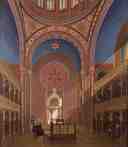
To spot the Glockengasse Synagogue site, look for the Cologne Opera House ahead of you-this modern building stands where the grand Moorish Revival synagogue once welcomed visitors, and there’s a bronze plaque on its Offenbachplatz façade commemorating the lost landmark. Now, imagine you’re stepping back in time-right where you’re standing was once one of the most remarkable buildings in all of Cologne. Picture a structure so dazzling, it almost made the Cologne Cathedral next door feel like it had to up its game! It all started in the mid-1800s, when this spot was anything but grand. Back then, it was the humble site of the Monastery of St. Clarissa. During the French occupation, people squeezed into a basic prayer hall here, so humble that by 1853 it had to close-apparently, wooden beams and a wobbly roof just can’t hold in big hopes and echoing prayers! Enter Abraham Oppenheim, bursting with generosity, and frankly, a sense of architectural drama. In 1856, after much debate-where to build, what to build, how fabulous to build it-Oppenheim declared, “Let’s do it here, and let’s do it right!” He even footed the bill, determined to gift the Jewish community a synagogue that was as worthy as the spirits within it. The result? Ernst Friedrich Zwirner, a name you might recognize from the Cologne Cathedral, stepped up with a design straight out of an Arabian Nights storybook. When construction began, the usual clatter of hammers and shouts of builders filled the air. By 1861, a breathtaking vision stood before the city: A vast building shaped like a Greek cross, crowned by a sparkling dome that soared 40 meters above the street. The outside was an enchanting mix of styles-four minaret-like towers, each topped with delicate onion domes, framed the tall façade. The entry was grand, and above the entrance blazed a rose window, a pop of Gothic flavor set against the building’s Moorish swirls. Just imagine how the copper domes would capture the afternoon sun, glowing with a soft green sheen after weathering and age had worked their magic. Step inside, and your jaw might just drop. A gigantic, brightly-painted dome rose above your head, glittering with golden stars against a deep blue sky. The air was thick with the warm smell of wood, wax, and-yes-nervous excitement. The ladies watched from graceful galleries supported by slender iron columns, their golden-painted balustrades shimmering in the subdued, colored light that shone through round, jewel-like windows. The walls and ceilings swirled with elaborate patterns-reds, blues, golds, and intricate, geometric stucco designs inspired by the palaces of Alhambra in Spain. It felt almost like standing in a kaleidoscope, or, as some said, “an Eastern palace-though you could still hear a hearty Cologne laugh echoing off the lovely iron arches!” In the very center, beneath the dome and the gaze of hundreds, stood the bimah-elevated, carved from rich wood, and ready for the most important moments of worship. If you took a closer look at the Torah ark on the eastern wall, you’d spot marble horseshoe arches, nods to Moorish artistry, and minaret forms matching the outer towers. Even the mikveh-used for ritual bathing-was crafted from the finest Carrara marble. I’m telling you, the interior made even the staunchest architecture critic want to dance a little hora. But grandeur doesn’t keep out trouble. The synagogue faced hardship: a fire in 1867, the stripping of the beautiful copper cupolas during World War I because of metal shortages, even partial dismantling of its towers. But each time hardship arrived, the community rallied, and portions were restored-if not immediately, then as soon as times allowed. For decades, this was a hub of spirited prayer, laughter, and community. Celebrations echoed through its cavernous halls, like the grand fiftieth anniversary in 1911. Yet, a shadow was looming. On the night of November 9, 1938, Kristallnacht unleashed horrors all over Germany. Flames and smashing glass filled the night as the Glockengasse Synagogue-alongside all of Cologne’s other synagogues-was destroyed by the Nazis. A masterpiece was lost, and much more with it. Now, the modern Cologne Opera House stands where joyful processions and sacred songs once filled the air. But the spirit of the Glockengasse Synagogue endures. A bronze plaque keeps memory alive, and if you close your eyes, you might still hear the soft footsteps on iron staircases, the quiet prayers, and the laughter of a community determined to build beauty, even in the face of hardship. So, take a moment here-let history whisper through the city's stones, and know you are standing where dreams once touched the sky.
Apri pagina dedicata →


Domande frequenti
Come inizio il tour?
Dopo l'acquisto, scarica l'app AudaTours e inserisci il tuo codice di riscatto. Il tour sarà pronto per partire immediatamente – tocca play e segui il percorso guidato dal GPS.
Ho bisogno di internet durante il tour?
No! Scarica il tour prima di iniziare e goditelo completamente offline. Solo la funzione chat richiede internet. Ti consigliamo di scaricare tramite WiFi per risparmiare dati mobili.
È un tour guidato di gruppo?
No – è un tour audio autoguidato. Esplori in autonomia al tuo ritmo, con la narrazione audio riprodotta dal tuo telefono. Nessuna guida, nessun gruppo, nessun orario.
Quanto dura il tour?
La maggior parte dei tour richiede 60–90 minuti, ma sei tu a controllare il ritmo. Metti in pausa, salta le tappe o fai pause quando vuoi.
E se non riesco a finire il tour oggi?
Nessun problema! I tour hanno accesso a vita. Metti in pausa e riprendi quando vuoi – domani, la prossima settimana o il prossimo anno. I tuoi progressi vengono salvati.
Quali lingue sono disponibili?
Tutti i tour sono disponibili in oltre 50 lingue. Seleziona la lingua preferita quando riscatti il codice. Nota: la lingua non può essere cambiata dopo la generazione del tour.
Dove accedo al tour dopo l'acquisto?
Scarica l'app gratuita AudaTours dall'App Store o Google Play. Inserisci il codice di riscatto (inviato via email) e il tour apparirà nella tua libreria, pronto per essere scaricato e avviato.
Se il tour non ti piace, ti rimborseremo l'acquisto. Contattaci a [email protected]
Pagamento sicuro con 


