
Tour Audio di Carcassonne: Ponti, Battaglie e Pietre Sacre
Gargoyle di pietra osservano dai tetti antichi mentre i segreti echeggiano per le tortuose strade di Carcassonne. Dietro queste mura medievali il passato respira appena sotto la superficie. Questo è il tuo tour audio autoguidato attraverso gli angoli ombrosi e le piazze illuminate dal sole di Carcassonne, dove si celano ancora storie che la maggior parte dei visitatori non sente mai. Svela racconti nascosti ad ogni fermata mentre esplori al tuo ritmo. Quale complotto ribelle fu ordito tra i banchi oscuri della Cattedrale di Saint-Michel mentre occhi vigili osservavano? Perché un dipinto inestimabile scomparve dal Museo delle Belle Arti per riapparire solo in circostanze misteriose? Quale strana abitudine insisteva un vescovo di Carcassonne per ogni alba nella Chiesa di Saint-Vincent? Ripercorri secoli di dramma e intrighi ad ogni passo. Segui il battito vitale della città attraverso bellezza e tradimento e scopri l'anima di Carcassonne rivelata in luoghi inaspettati. I segreti meglio custoditi della città ti aspettano. Inizia il tuo viaggio ora.
Anteprima del tour
Informazioni su questo tour
- scheduleDurata 30–50 minsVai al tuo ritmo
- straighten2.9 km di percorso a piediSegui il percorso guidato
- location_onPosizioneCarcassonne, Francia
- wifi_offFunziona offlineScarica una volta, usa ovunque
- all_inclusiveAccesso a vitaRiascolta quando vuoi, per sempre
- location_onParte da Stazione ferroviaria di Carcassonne
Tappe di questo tour
Look ahead for a long, pale stone building with big arched windows, two wings on either side, and a central white entrance topped with a clock-right across from where the road and…Leggi di piùMostra meno
Look ahead for a long, pale stone building with big arched windows, two wings on either side, and a central white entrance topped with a clock-right across from where the road and the canal meet. Welcome to the grand gateway of Carcassonne-the historic train station! Imagine, it’s the year 1857, and you’re standing where carriages rumble by and steam engines whistle as they approach. This station was brand-new, built by the ambitious Company of the Midi, and it quickly became the town’s doorway to the modern world. The building style is simple yet elegant: the wings stretch out, making the station feel like it’s welcoming travelers from every direction. That clock above the entrance? Well, that’s been telling travelers they're late for over 160 years! Back in the 1800s, Carcassonne’s station was bustling with excitement, as passengers got off trains from Bordeaux or Sète and merchants lugged crates of local wine and cheese. By 1876, the first branch line opened, making this place a ‘bifurcation’-which is just railway speak for “Woohoo, you can go even more places now!” The journey to Limoux was so popular, they had to extend it to Quillan by 1878. People must’ve felt like the world was suddenly within reach. Inside, adventure meets artistry! Look up, and you’ll spot a mural, 8 meters wide, splashing color across the hall. Painted in 1995 by Jean Camberoque, it celebrates the surrounding Aude countryside. And here’s a little gem for movie fans: in 2003, the station itself became a film star when scenes for “Inguélézi” were shot right here. But it’s not all history and glamour. In recent years, the SNCF made sure the tracks and platforms keep pace with modern times, renovating everything-even making it easier for everyone to use with lifts and improved access. So, whether it’s the roar of a TGV, the quiet rumble of a TER heading to Toulouse or Limoux, or maybe the rush of travelers in a scene worthy of a French movie, this station is never dull. And if you fancy people-watching, you’re in the right place: every year, almost a million folks pass through, all with their own stories to tell. Careful you don’t get swept up and end up in Marseille by accident!
Apri pagina dedicata →Ahead of you is the Pont Marengo, an iron-fenced stone bridge stretching over the lazy water of the Canal du Midi, with trees lining both banks and the calm canal pulling your…Leggi di piùMostra meno
Ahead of you is the Pont Marengo, an iron-fenced stone bridge stretching over the lazy water of the Canal du Midi, with trees lining both banks and the calm canal pulling your gaze right to its center. Now, take a good sniff-yes, that crisp scent is the canal at work, busy with boats chugging along as they have for centuries. This bridge you’re standing on is named for a battle: Marengo, where Napoleon Bonaparte gave the Austrians a lesson in French fireworks back in 1800! If you look carefully, you might spot a plaque dating back to that era, although it’ll call it “Year 8”-that’s the quirky French Republican calendar for you, always trying to be different. Imagine the clanging of horseshoes and the snap of uniforms as news spread of Napoleon’s victory. As you drift a little further along the water, you’ll discover a quieter, somber story-where the canal and the train line cross, there’s a humble memorial for the maquisards, local Resistance heroes, who were executed by the Nazis in World War II. So, whether you’re a fan of mighty emperors, battles, or unsung hometown heroes, Pont Marengo is a bridge that’s carried more than just foot traffic-it’s carried history, courage, and a bit of French flair for drama. Isn’t it amazing what stones and iron can remember?
Apri pagina dedicata →To spot the Church of Saint-Vincent, just look for the tall, square bell tower with its soft tan stone, rising high above the rooftops; it stands head and shoulders over the…Leggi di piùMostra meno
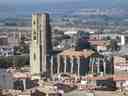
To spot the Church of Saint-Vincent, just look for the tall, square bell tower with its soft tan stone, rising high above the rooftops; it stands head and shoulders over the neighborhood, its sharply angled Gothic windows gazing out over the city. Ah, here we are-standing in front of the mighty Church of Saint-Vincent! Let’s picture this place almost 800 years ago, when Carcassonne was two bustling neighborhoods packed around the famous fortress. There was once another Saint-Vincent church to the north, but back in 1240, it was swept away, quite literally knocked down during a wild attempt by Raimond II Trencavel to take back the city. The result? Not much left standing-just a need to rebuild. Seven years later, King Saint Louis had an idea: let’s build a new district on the river’s left bank! If you listen closely, you can almost hear the rattling of carts and the distant clang of hammers as they laid out the chessboard-like streets. Two churches would stake their claim-Saint-Michel in the south, and, right here, Saint-Vincent in the north. Now, the first attempt at the new Saint-Vincent? Let’s just say, if you sneezed too hard, it might’ve blown over! It was too small and made of barely-there materials. When the city finally got the royal thumbs up in 1308 to buy some actual land, the real church began to rise. But in true French fashion, they started from the wrong end-building the porch and nave first, leaving the choir for last. The whole thing took over 60 years! This church has seen its share of drama. In the 1500s, the tower you see rising above you served as a lookout for approaching armies. And not just once-it was even battered by cannonballs during the religious wars! Fast forward to the French Revolution: Saint-Vincent traded prayers for fire and steel as it became a forge, with roaring furnaces glowing in the chapels and sparks flying everywhere. But when peace returned, the people begged for their church back, crowding in so stubbornly that officials had to break down the doors with axes-only to face a silent crowd who’d spent the night inside protesting. Here’s a fun fact: for centuries, this was France’s widest Gothic nave, stretching over 20 meters across! Only two churches in all Europe ever got wider-pretty impressive, don’t you think? The church’s tower, meanwhile, soars 54 meters tall. If you feel like a workout, count all 232 steps to the top! This same tower played an odd part in making maps-scientists Cassini and his sons climbed up here to help measure France, and later, Pierre Méchain and Jean-Baptiste Delambre calculated the length of the meridian. On the outside, the church is all flowing lines and impressive stonework. The west facade’s monumental portal, once decorated by four grand statues, still oozes drama. Peer up and imagine saints and apostles looking down, probably hoping you brought a croissant for your visit. The pattern of the church-a single, massive hall lined with dozens of chapels-was so effective they copied it for the city’s cathedral. And let’s not forget the music! In 1737, the faithful splurged on a showstopping organ, crowned with golden angels and Saint Vincent himself. It’s now protected by law and recently restored, ready to shake the dust off the rafters. Inside the bell tower, you’ll also find a carillon-fifty-four bells in all, ranking among the loudest and most melodic in France. Early on, there were just seven, but locals decided that wasn’t nearly enough clang for their buck. As you look up, remember: every stone here witnessed fierce battles, candlelit protests, hammering blacksmiths, and the laughter of generations. Just try not to imagine what 232 stairs would’ve done to the mailman! Wondering about the ownership and management, organ or the bells? Feel free to discuss it further in the chat section below.
Apri pagina dedicata →

Mostra altre 8 tappeMostra meno tappeexpand_moreexpand_less
To spot the Church of Notre-Dame des Carmes, look just ahead for a tall, pale stone facade with a pointed arched doorway beneath an elegant set of gothic windows decorated with…Leggi di piùMostra meno
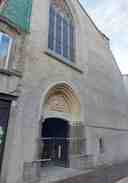
To spot the Church of Notre-Dame des Carmes, look just ahead for a tall, pale stone facade with a pointed arched doorway beneath an elegant set of gothic windows decorated with tracery high above the street. Now, let’s imagine: it’s the year 1297, and a group of Carmelite monks-travelers in sandals with a knack for building-have just finished crafting this very church. Their new home was both a spiritual retreat and a buzzing gathering place for the entire neighborhood. But then, in 1355, Carcassonne trembled as the infamous Black Prince swept through, torch in hand. The church was left a smoldering shell, only for the resilient townsfolk to rebuild it in 1370, more determined (and perhaps slightly better at fireproofing). Over time, this Gothic beauty was given a dash of baroque flair-think of it as accessorizing with a fancy hat in the 1800s. From vibrant stained-glass windows to a single, soaring nave and a painted chapel roof, the church is a living scrapbook of styles and stories. After the French Revolution, it was even used as a warehouse and, believe it or not, a courtroom-so you could buy barley one day and plead your innocence the next! Today, restoration plans are underway, keeping this slice of Carcassonne’s soul safe for centuries to come.
Apri pagina dedicata →In front of you is a pale peach-colored building with rows of grey-blue windows stretching up several stories, a large arched doorway, and another big arch displaying exhibition…Leggi di piùMostra meno
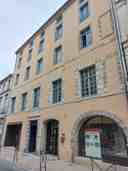
In front of you is a pale peach-colored building with rows of grey-blue windows stretching up several stories, a large arched doorway, and another big arch displaying exhibition posters-just look for the elegant house with plenty of windows and stone frames. Welcome to the House of Memories, also called Maison Joë Bousquet-famously known as the “house with a hundred windows.” Imagine standing here in the sixteenth century, horses clopping by the stately mansion of Joseph Dupré, a bigwig cloth merchant and even mayor during ancient Carcassonne politics! But things get even more intriguing inside. In 1924, the surrealist poet Joë Bousquet, wounded and paralyzed by war, made this his sanctuary. Picture legendary artists and thinkers tiptoeing up the stairs, drawn to Bousquet’s charisma and mind, cramming into his preserved room on the first floor to exchange ideas and maybe a secret or two. Later, high society gathered for debates, dances, and heated discussions in the “Cercle du Salon”-even Napoleon’s ex-treasurer popped by! In more recent decades, the House buzzed with researchers, ethnographers, and even Cathar historians prowling the upper floors. Since 1995, it’s invited everyone to dive into Bousquet’s world-see his bedroom just as he left it, marvel at original manuscripts, and even visit the special “library in the sky.” Step inside and let Carcassonne’s memories sweep you up; but don’t worry, I won’t make you recite poetry-unless you want to!
Apri pagina dedicata →To spot the Saint-Michel Cathedral, look ahead for a massive stone building with a single tall, rectangular bell tower on the left and a gigantic rose window right above a pointed…Leggi di piùMostra meno
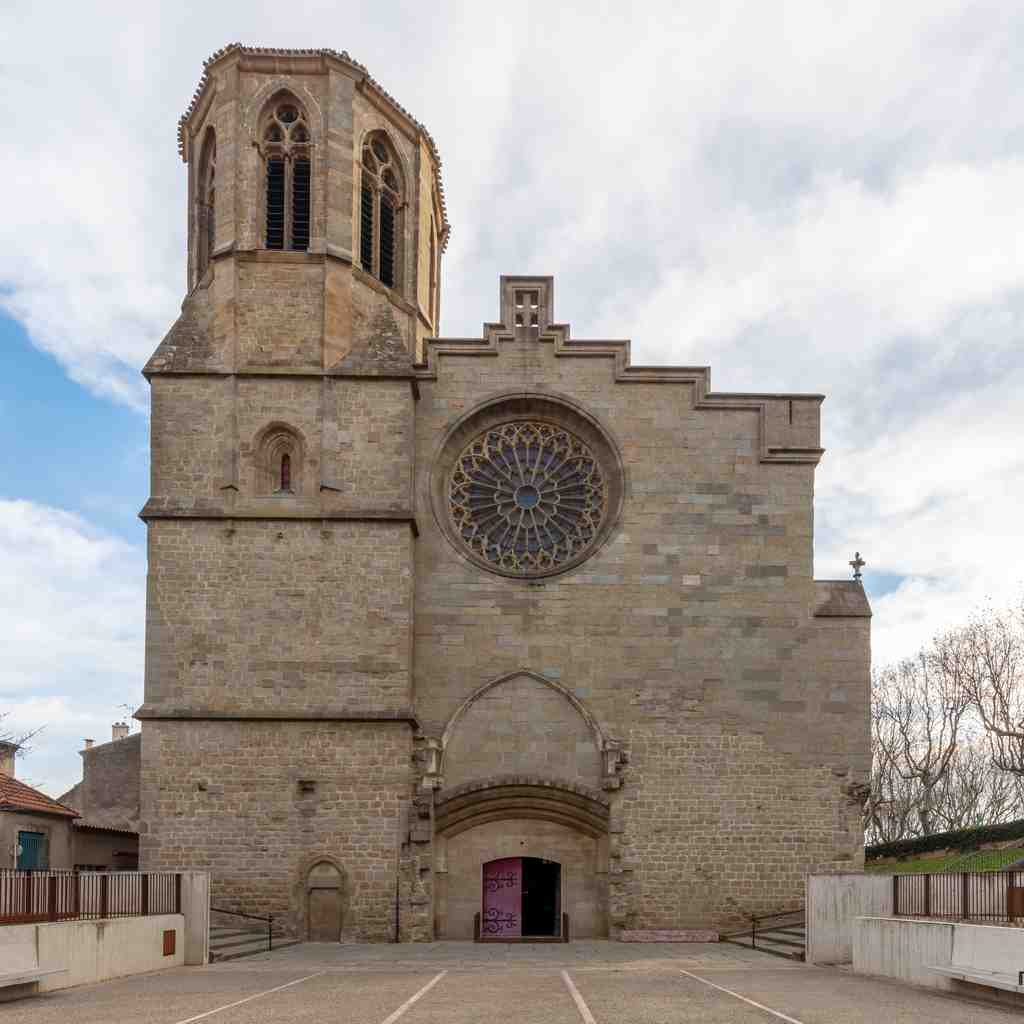
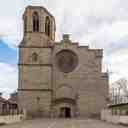
To spot the Saint-Michel Cathedral, look ahead for a massive stone building with a single tall, rectangular bell tower on the left and a gigantic rose window right above a pointed arched doorway in the center. Alright, here you are at the mighty Saint-Michel Cathedral-a building that’s survived fire, war, expansion, and even a bit of medieval real estate drama! Picture yourself standing here in the mid-1200s, just after King Saint Louis ordered its construction to replace a battered old sanctuary destroyed in battle-Carcassonne’s own version of a home renovation show…with fewer throw pillows and a lot more stone. In those days, the new church actually started off pretty modest, but Carcassonne wasn’t having it! By 1283, they were already breaking out the medieval construction cranes to expand for the growing congregation. Fast forward to 1355 and you’d see the chaos of the Hundred Years’ War as the English troops of the Black Prince set the whole bastide of Saint-Louis ablaze. Almost everything burns…except the smoldering Saint-Michel, still standing with its thick walls and battered but unbroken structure. After this close call, they turned the church into part of the city’s defenses. If you stroll around to the apse, you’ll spot a sturdy cylindrical tower-testament to its days as a reluctant fortress. They even dug trenches ten meters wide all around it-imagine medieval locals grumbling about all this construction, dodging ditches on their way to pray! Those trenches have since given way to the promenade you see now. Jump ahead to 1803. Carcassonne’s old cathedral, Saint-Nazaire, gets demoted, and Saint-Michel takes over as the bishop’s headquarters. But just as everyone was starting to enjoy their new bishop’s seat, disaster struck again-a massive fire in 1849! The blaze halts renovation, blackens the walls, and sends everyone back to the drawing board. Luckily, a brilliant architect, Eugène Viollet-le-Duc, swoops in to save the cathedral and leaves his signature neo-Gothic flourishes-like those beautiful rose windows you see along the chapels inside. Step inside, and there’s another surprise waiting up above-the grand organ! Crafted in 1860 by Aristide Cavaillé-Coll (who could give even the Phantom of the Opera a run for his money), this beast features three keyboards, 44 stops, and a magnificent oak case topped by statues of Saint Michael defeating a dragon, flanked by angel musicians. Imagine the thunder when those pipes roar to life! And don’t miss the bells in the tower: eight mighty chimes, from the giant Saint-Michel Archange (weighing over 1.7 tons!) to the petite yet perky Pierre. Each was cast between 1969 and 1995, so it’s a complete choir up there-just waiting for a dramatic moment to ring out. So whether you admire its almost military bulk, its unexpectedly delicate stained glass, or the echo of its bells, the Saint-Michel Cathedral stands as Carcassonne’s resilient heart. This is a place that’s faced fire, war, and countless makeovers…and somehow, it still manages to look pretty good for its age! Want to explore the historical, description of the building or the the bells in more depth? Join me in the chat section for a detailed discussion.
Apri pagina dedicata →Look straight ahead for a grand, four-story stone building with arched windows and a charming iron balcony above the entrance, nestled deep within a courtyard-this is the Hôtel de…Leggi di piùMostra meno
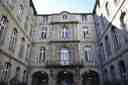
Look straight ahead for a grand, four-story stone building with arched windows and a charming iron balcony above the entrance, nestled deep within a courtyard-this is the Hôtel de Rolland. Welcome, traveler, to a building with more stories than a local bakery! Imagine cobblestones under your feet, the gentle hum of the Rue Aimé Ramond behind you, and the soft echo of footsteps bouncing off this stone courtyard. In the 18th century, a man named Jean-François Cavaillès dreamt up this very mansion. The architect, Guillaume Rollin, chose to build it with sturdy rubble masonry-if only all home builders thought so big! Completed in 1761, it wasn’t just a family home, but a symbol of local pride, complete with a grand four-story façade and windows that seem to wink at every passerby. But the Hôtel de Rolland hasn’t always been so quietly dignified. Jump a century ahead, and you’ll discover it changed hands to Antoine Joseph Gérard de Rolland du Roquan in 1815, giving the family name you see today. For years, this mansion watched history march past: the bells of the city, the quick feet of council members, and-rumor has it-even a few cats sneaking around at night. Just imagine the conversations echoing inside, from the heated debates in the council chambers to whispered dreams in the wedding room. And here's where things get a bit James Bond. During World War II, Carcassonne became a stage for resistance. Inside the older town hall across the way, Lucien Villa, a resistance hero, was interrogated. A tense moment, you can almost feel the chill gliding through these thick stone walls. Surviving turmoil and ever-changing bosses, the Hôtel de Rolland was eventually acquired from the Crédit Agricole bank in 1978 to house city offices-a new chapter, but with the same spirit of lively city business. Now as you gaze up at the elegant round-headed windows and peek at the ironwork of that balcony, imagine the local council gathering just inside, debating the next big idea for Carcassonne. And if you’re lucky, you might even catch a faint whiff of old paper and city plans-or is that just the excitement in the air? The Hôtel de Rolland stands as a living memory, house of governance, and a little bit of Paris in southern France-all in one beautiful package. Onward to our next stop!
Apri pagina dedicata →Directly ahead, you’ll see a grand neoclassical building with creamy stonework and heaps of arched windows - to spot it, just look for the bold “MUSEE” label on the upper facade…Leggi di piùMostra meno
Directly ahead, you’ll see a grand neoclassical building with creamy stonework and heaps of arched windows - to spot it, just look for the bold “MUSEE” label on the upper facade and the symmetrical rows of yellow panels that gleam in the sunlight. Ah, welcome to the Museum of Fine Arts of Carcassonne! As you stand here on this square, imagine the energy of a crisp morning in 1836, when art lovers, historians, and amateur archaeologists banded together to transform this old city courthouse into Carcassonne’s very own treasure trove of beauty and curiosity. Back then, their first collection started modestly, just 102 paintings, but oh, did those walls soon get busier. With every generous gift from eccentric collectors - men like Casimir Courtejaire and Alphonse Coste-Reboulh - the rooms began to fill with stories and secrets from all across Europe. Now, take a moment to look up at the restored facade in front of you. If it seems invitingly fresh, that’s because it got a thorough facelift in 2015. And this building has grown with the times: in the late 1800s, architect Charles Émile Saulnier waved his magic wand and the place expanded, making room for even more masterpieces. Imagine the clink of scaffolding and echoes of hammers as work finished in 1900--restoring and reshaping the stone to show off the treasures hidden inside. Over the decades, the museum’s collection has become a true patchwork quilt, pieced together through wild adventures of fate, luck, and the occasional fierce debate over what, exactly, counts as “art.” Here, you can wander eleven different rooms, sorted by the centuries. One minute you’re face-to-face with 17th-century French and Italian painters, the next you’re swept up in the drama of the 19th-century Barbizon landscapes or stuck in a staring contest with a mysterious portrait that might’ve seen more drama than a French soap opera. If those canvas faces could talk… well, who knows what tales they’d spill! Among the highlights, you’ll find the delicate brushwork of José de Ribera, the brooding shadows from Salvator Rosa, and Baroque gems painted by Mattia Preti. Wander on, and you might just discover local legend Jacques Gamelin’s striking tableaux, bursting with color and life. Each painting here is like a time machine: Jan Brueghel’s landscapes let you walk through forests in Flanders, while Jean Siméon Chardin’s still lifes freeze a breakfast moment for eternity. But let’s not forget, the museum shut its doors in the dark days of World War II. Standing silent from 1942 to 1948, it became a beacon for hope and resilience. In the early ’50s, these rooms crackled with the energy of surrealism, as the eccentric poet Joë Bousquet’s private collection found a temporary home here. You can almost hear the whisper of art lovers debating beside the paintings--while outside, the city buzzed and worried about the world. And here’s a fun twist: the museum doesn’t just hang art and call it a day. Each year it bursts to life with temporary exhibitions, buzzing “Nuit des Musées” nights, workshops for every budding Picasso in town, and lively art history talks sure to make your brain do somersaults. Even lockdowns had a silver lining here: they created “Le petit salon,” a new space for modern showcases. Step inside, and you’ll wander through a dizzying spectacle-the drama of ancient and modern art, the bold colors of a Fauvist, the hush of a sunlit Dutch riverbank. You’re standing in a portal across space and time, literally one of the beating hearts of Carcassonne. And just remember, if you get lost amongst all those masterpieces, don’t panic-I won’t tell anyone if you pretend to be a statue for a few minutes! For further insights on the historical, table collections or the temporary exhibitions, feel free to navigate to the chat section below and inquire.
Apri pagina dedicata →Look ahead toward the river-you’ll see an elegant old stone bridge with a series of large curved arches stretching across the water, framed by greenery on both sides. You’re…Leggi di piùMostra meno
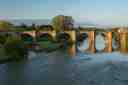
Look ahead toward the river-you’ll see an elegant old stone bridge with a series of large curved arches stretching across the water, framed by greenery on both sides. You’re standing before the Pont-Vieux of Carcassonne, a bridge that’s been the city’s trusty crossing since the 1300s-and a real survivor of history! Imagine the air thick with suspense back in the 12th century, when eager townsfolk dreamed of a bridge and Roger Trencavel gave them the green light-as long as they paid for it themselves. Those early days brought only a wooden bridge (probably not much for sightseeing, but handy for crossing), which the Albigensian Crusade soon swept away. When the city folk returned from years of exile, everything had changed-the city was torn down, the river was rerouted, and the marshes were drained. Talk about a fixer-upper! By the early 14th century, King Louis IX wanted people to come back and build up the new “lower town”-but they needed a stone bridge to connect the old city to the new. And so, stone by stone, the Pont-Vieux rose up across the Aude. By around 1320, it was finished-a mighty bridge with 12 uneven arches, tough piers, and clever stone shelters for pedestrians to duck behind if a cart or a wild horse got too close. This bridge was once the only way between Carcassonne’s medieval fortress and the bustling lower town. Imagine the parade of feet-merchants, soldiers, mothers, and even the odd stray goose-all making their way across every day. Through floods, collapses (two arches fell in 1456!), and repairs (the 1820s gave it a bit of a questionable facelift), the Pont-Vieux stood its ground. Maybe you’ll spot the metal lamps decorated with royal fleur-de-lys, a wink from Mayor Charles de Fournas-Moussoulens in the 20th century. Today it’s just you, the river, and this bridge-a time machine you can walk right across, echoing with stories of medieval daring and a thousand footsteps before yours.
Apri pagina dedicata →In front of you, you'll spot rows of pale stone crosses standing in tidy lines beneath tall, shadowy cypress trees, with larger monuments and statues beyond-just look ahead for…Leggi di piùMostra meno
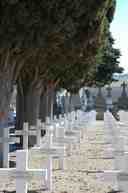
In front of you, you'll spot rows of pale stone crosses standing in tidy lines beneath tall, shadowy cypress trees, with larger monuments and statues beyond-just look ahead for the grove of dark trees and the white crosses catching the sunlight. Welcome to the Saint-Michel Cemetery, a place where the past sits quietly under the watch of Carcassonne’s blue skies. This cemetery was established way back in 1778, at a time when it was much safer to keep certain things-like the dearly departed-outside the city walls. Now, imagine that just behind you, the memory of an old plague cemetery lingers, forever remembered by a humble stone from 1623 tucked into the eastern wall. Honestly, with so much history here, even the ghosts might need a map! Saint-Michel Cemetery grew over time; by 1870, it sprawled to match the city’s growing needs. Step closer to the little old chapel-built in 1784 and dedicated to Saint Roch, the patron against epidemics. It once sheltered the remains of local church folk, especially those from the grand chapter of Saint-Michel Cathedral. Now, it even protects the monument to the Capuchin monks, whose nearby convent met its end only recently, in 2002. History here doesn’t just rest, it keeps adding chapters. Wander through the shady rows of tombs and you’ll see all the styles that were once the pride of noble Carcassonne families. There are grand Roman-inspired tombs, sarcophagi that look ready for a toga party, and even chapels covered in neo-Romanesque and neo-Gothic flourishes-fashions change, but apparently, tombs last forever. Take a moment to find the dramatic sculpture of Gustave Sudre, the alpine hunter who stands defiantly, arms crossed, fallen in 1915, but still on watch. Here’s another curiosity-don’t miss the military section, where a striking monument by Jacques Villeneuve asks everyone to “Remember, always.” There’s a whole cast of characters resting here: painters like Jacques Gamelin, poets such as Achille Mir, composers, politicians, and local heroes (don’t worry, they’re not organizing a reunion any time soon). You’ll also find touching cenotaphs honoring generals Chartrand and Sarrail, whose actual remains lie far away, and urns placed for modern public figures up to 2023. If you listen to Carcassonne’s stories, Saint-Michel Cemetery is practically bustling with personalities-each one with a tale to tell, a bit of humor, a moment of sorrow, and a lifetime woven into the history of this city.
Apri pagina dedicata →

Domande frequenti
Come inizio il tour?
Dopo l'acquisto, scarica l'app AudaTours e inserisci il tuo codice di riscatto. Il tour sarà pronto per partire immediatamente – tocca play e segui il percorso guidato dal GPS.
Ho bisogno di internet durante il tour?
No! Scarica il tour prima di iniziare e goditelo completamente offline. Solo la funzione chat richiede internet. Ti consigliamo di scaricare tramite WiFi per risparmiare dati mobili.
È un tour guidato di gruppo?
No – è un tour audio autoguidato. Esplori in autonomia al tuo ritmo, con la narrazione audio riprodotta dal tuo telefono. Nessuna guida, nessun gruppo, nessun orario.
Quanto dura il tour?
La maggior parte dei tour richiede 60–90 minuti, ma sei tu a controllare il ritmo. Metti in pausa, salta le tappe o fai pause quando vuoi.
E se non riesco a finire il tour oggi?
Nessun problema! I tour hanno accesso a vita. Metti in pausa e riprendi quando vuoi – domani, la prossima settimana o il prossimo anno. I tuoi progressi vengono salvati.
Quali lingue sono disponibili?
Tutti i tour sono disponibili in oltre 50 lingue. Seleziona la lingua preferita quando riscatti il codice. Nota: la lingua non può essere cambiata dopo la generazione del tour.
Dove accedo al tour dopo l'acquisto?
Scarica l'app gratuita AudaTours dall'App Store o Google Play. Inserisci il codice di riscatto (inviato via email) e il tour apparirà nella tua libreria, pronto per essere scaricato e avviato.
Se il tour non ti piace, ti rimborseremo l'acquisto. Contattaci a [email protected]
Pagamento sicuro con 


