
Tour Audio di Alessandria: Un'Odissea Alessandrina
Sotto le strade luccicanti di Alessandria si cela una città plasmata da imperi, intrighi e sussurri di mondi svaniti. Echi persistono in antiche sale e camere silenziose, se sai dove ascoltare. Svela i segreti di questo leggendario porto con un tour audio autoguidato attraverso le sue vie tortuose. Vai oltre le guide per scoprire complotti ribelli, lotte di potere dimenticate e santuari spirituali nascosti dietro facciate logore dal sole. Perché folle tumultuose si scontrarono un tempo sotto i pilastri del museo per reliquie considerate troppo pericolose? Quali riti arcani ebbero luogo nell'ombra della Sinagoga Eliyahu Hanavi? Quale manufatto perduto scatenò una disputa decennale nel cuore stesso del Museo Nazionale di Alessandria? Segui indizi nascosti mentre le antiche pietre raccontano le loro storie. Senti la storia tremare sotto i tuoi piedi e guarda Alessandria con occhi nuovi, dove ogni angolo racchiude dramma, meraviglia e rivelazione. Inizia ad ascoltare ora e lascia che i segreti di Alessandria riemergano dalla sua polvere senza tempo.
Anteprima del tour
Informazioni su questo tour
- scheduleDurata 40–60 minsVai al tuo ritmo
- straighten5.8 km di percorso a piediSegui il percorso guidato
- location_onPosizioneAlessandria, Egitto
- wifi_offFunziona offlineScarica una volta, usa ovunque
- all_inclusiveAccesso a vitaRiascolta quando vuoi, per sempre
- location_onParte da Museo Greco-Romano
Tappe di questo tour
To spot the Graeco-Roman Museum, just look up the street for a grand cream-colored building with six enormous columns and the word “MOUSEION” in Ancient Greek letters above its…Leggi di piùMostra meno
To spot the Graeco-Roman Museum, just look up the street for a grand cream-colored building with six enormous columns and the word “MOUSEION” in Ancient Greek letters above its entrance. Now, let’s travel back through time-imagine Alexandria in 1892, bustling with traders, scholars, and dreamers. Picture a tiny five-room apartment filled with mysterious treasures, ancient coins, and the odd mummy or two-that was the first home of this mighty museum! But it didn’t stay cramped for long. Soon, Alexandria gifted it a grander stage, the very building in front of you, with its classic neoclassical columns and a name that literally means “place of the Muses”-those ancient goddesses who inspired art and music. Step closer to the doors and picture the museum on opening day in 1895. Khedive Abbas II himself came to cut the ribbon-well, maybe not with golden scissors, but you get the idea. The museum quickly became a treasure chest, with wealthy Alexandrians donating their hidden finds and famous directors-like Giuseppe Botti and Evaristo Breccia-risking sand in their shoes to dig up the past around town. Inside, you’d find a sacred bull sculpture carved from shiny black granite, dazzling tapestries, mummies with a thousand-year-old secrets, and coins that might have jingled in a toga’s pocket. If you listen closely-well, not too closely, we’re outside!-some say you can almost hear the footsteps of curators and archaeologists echoing through those 27 halls. After years of excitement and a pinch of dust, the museum closed for renovations-nearly 18 years! But like any good mystery, it finally resurfaced in 2023, sparkling and ready to enchant a new generation. So, take a deep breath and imagine centuries of stories swirling just across that threshold. And hey, if you hear someone whisper “MOUSEION,” it might just be the Muses welcoming you inside!
Apri pagina dedicata →To spot the Mausoleum of Yacoub bin Abd al-Rahman, look for a weathered building on Fouad Street with red and yellow striped stonework and a prominent domed shrine set between two…Leggi di piùMostra meno
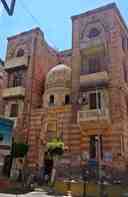
To spot the Mausoleum of Yacoub bin Abd al-Rahman, look for a weathered building on Fouad Street with red and yellow striped stonework and a prominent domed shrine set between two tall balconies right in the center of the facade. Now, as you stand in front of this unique building, let’s take a little journey back through time-no time machine required, just your imagination! Imagine Alexandria almost 1,300 years ago: the city buzzing with merchants, the scent of spices floating through the air, camels snorting as they haul goods across the ancient streets, the clamor of footsteps, and maybe the occasional donkey. Into this lively city came Yacoub bin Abd al-Rahman and his loyal friend Abdullah ibn Ali Zayn al-Abidin, fleeing the chaos and bloodshed of Iraq after the tragic killing of Husayn. Yacoub, originally from Medina-so you could say he was on quite a road trip-wasn’t just any traveler. He was a master storyteller and teacher, known for passing on the sayings of the Prophet, and a man with a deep, steady voice that made even the sternest listeners stop and pay attention. Along with his aunt and companion, he made Alexandria their new home and chose this very spot to share knowledge, comfort the troubled, and guide those seeking the light of faith. Maybe imagine him here, robes fluttering in the sea breeze, teaching groups of eager learners gathered under the shade. The shrine in front of you is small-just about 25 square meters inside-but its spirit is big! Step in and you’d see the gracefully carved Ayat al-Kursi on the dome above, and beneath it, a wooden cenotaph covered in green cloth marks Yacoub’s resting place. It’s peaceful now, but this place has seen excitement too: just a few years back, in 2018, disaster struck when an electrical fire broke out-smoke rising, shouts echoing, flames licking the walls- luckily, no one was hurt, and after a massive restoration, the shrine was brought back to life. So next time you walk by, remember: beneath that humble dome, legends and lessons have been passed from one generation to the next. Take a moment to listen. Who knows? You might catch a whisper of ancient wisdom drifting on the Mediterranean breeze!
Apri pagina dedicata →

Mostra altre 11 tappeMostra meno tappeexpand_moreexpand_less
Look ahead for a grand, rosy-beige building with dramatic curved rooftops and elegant columns-just follow the fancy script that says “Mohamed Feiter” over the antique shop…Leggi di piùMostra meno
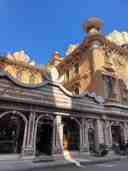
Look ahead for a grand, rosy-beige building with dramatic curved rooftops and elegant columns-just follow the fancy script that says “Mohamed Feiter” over the antique shop windows. Alright, take a deep breath and imagine yourself travelling back a hundred years, right here on busy Istanbul Street. The Mohammed Feiter Building in front of you bursts onto the scene like something out of a stylish European fairy tale-a little bit Italy, a little bit Bond Street, and maybe a hint of show-off flair! It all began with a Greek resident of Egypt, who poured their heart into its construction in the early 20th century. But the winds of history soon swept through Alexandria, and by 1965-after the Egyptian Greek exodus-this beautiful building found a new guardian: Mohammed Feiter, once just a tenant, now the proud owner. But Feiter wasn’t content to just live in an old shell-oh no, he razzle-dazzled the facade, drawing inspiration from Italian palazzos and none other than London’s Harrods department store. Look closely, and you’ll spot his initials, “M. F,” woven right into the decorations, like a secret signature left just for you. Today, his son keeps the family magic alive, filling the place with antiques and stories of old Alexandria. And who knows-maybe if you look hard enough, you’ll find a hidden treasure, or at the very least, a story to take home with you. This isn’t just a building; it’s a wink from the past dressed up for a party!
Apri pagina dedicata →You’re looking for a wooden doorway with a brass plaque and a white sign on the second floor that reads “Cavafis’ House” in three languages-it’s right up ahead, so keep your eyes…Leggi di piùMostra meno
You’re looking for a wooden doorway with a brass plaque and a white sign on the second floor that reads “Cavafis’ House” in three languages-it’s right up ahead, so keep your eyes on the wall to your left! So, here we are at the entrance of one of Alexandria’s most enchanting spots-the Cavafy Museum. You’re just steps away from where the legendary Greek poet Constantine P. Cavafy spent most of his days, crafting poetry that would echo through time. Imagine squeezing through these narrow, bustling streets-the air thick with old-world magic, laughter drifting from nearby cafés, the traffic humming along Fouad Street as you turn into Cavafy Street. It wasn’t always called Cavafy Street, you know! In the poet’s lifetime, this little road was Lepsius Street. It went through a few identity crises over the years-Sharm El Sheikh Street, then finally, in loving tribute, Cavafy Street. If streets could talk, this one would surely recite poetry. There’s something delightfully mysterious about entering a poet’s world through their front door. Behind these walls, Cavafy lived a quiet, rather modest life. You’d never guess from the outside that inside is a treasure trove of handwritten manuscripts, intimate letters, and portraits brimming with secrets and stories. Even the walls themselves seem to whisper lines from his verses-the kind that made even bohemian wanderers like Lawrence Durrell write about him in the famous Alexandria Quartet. Now, you might imagine museum curators as a serious bunch, but the journey to opening this museum was anything but a dull stroll through paperwork. First, Cavafy’s memory got a little help from a Greek Consul General, Nikolaos Kapellaris, who kickstarted the idea in 1977. But it wasn’t until 1991 that a wild bunch of dreamers decided, “Let’s turn the poet’s actual apartment into a shrine to his genius!” Thankfully, with a sprinkle of Greek sponsorship and a hefty dose of stubborn optimism, they sealed the deal with a nine-year lease and transferred all sorts of fascinating artifacts from the old Consulate museum here. Today, as you step inside, you’ll find Cavafy’s poems in a kaleidoscope of languages, shelves groaning under the weight of over 3,000 scholarly articles, and even a room dedicated to his dear friend, Stratis Tsirkas. The air itself is heavy with nostalgia-each photograph, each book thick with the ghosts of conversations held late into Alexandria’s sultry nights. Imagine Cavafy himself, pen in hand, gazing out onto the lively street below-who knows, maybe you’ll leave with a poetic line of your own humming in your mind. And don’t worry, tickets are a bargain; for the price of a spicy Alexandrian coffee, you get to step foot right into history.
Apri pagina dedicata →Look just ahead for a grand building with tall, twin bell towers adorned in Coptic engravings and a columned entrance-if you spot marble pillars and a facade echoing Byzantine and…Leggi di piùMostra meno
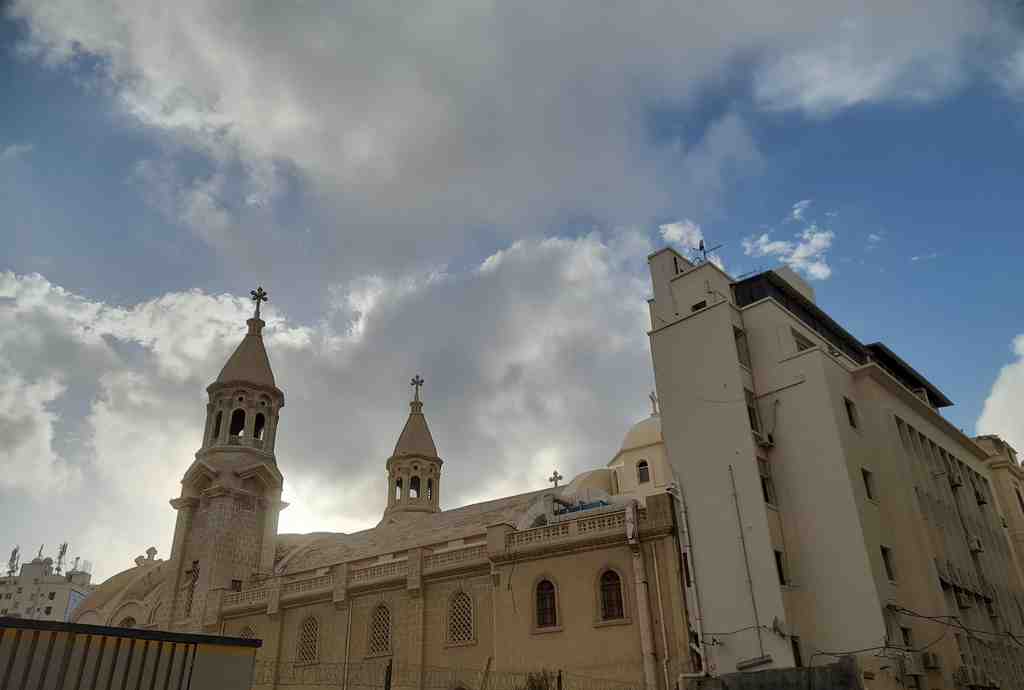
Look just ahead for a grand building with tall, twin bell towers adorned in Coptic engravings and a columned entrance-if you spot marble pillars and a facade echoing Byzantine and basilica styles, you’ve found the Saint Mark’s Coptic Orthodox Cathedral! Ah, here you are, standing at the heart of Alexandria’s spiritual story-welcome to the legendary Saint Mark’s Coptic Orthodox Cathedral! Imagine yourself stepping onto the very site where, almost two thousand years ago, a traveler with dusty sandals named Mark the Evangelist arrived after a long journey from Jerusalem. Locals say he showed up around AD 42, and, with the faith of a mountain goat and the energy of five espresso coffees, planted the first seeds of Christianity in this city. Here, he’s believed to have founded the first church, and the echoes of his presence still seem to hum in the breeze. Now, fast-forward a couple centuries-by the year 311, this spot had a small, humble chapel cradling the remains of Mark and some of his successors, creating a deep sense of sacredness that drew worshippers from all around. But faith, as you’re about to learn, sometimes needs strong bricks and even stronger nerves. The church was expanded in the days of Pope Achillas but soon found itself, like a favorite old sweater, pulled apart and stitched back together, torn by time and war. In 641, the Arab armies swept through Alexandria, leaving behind rubble and heartbreak. Out of the ashes, Pope John III rolled up his sleeves-well, his robes-and rebuilt the church in 680. Alexandria, ever the crossroads, saw intrigue and drama that could rival a Netflix mini-series. In 828, a band of crafty Venetian merchants pulled off what might be history’s oddest “souvenir” heist: they stole most of Saint Mark’s body and whisked it off to Venice! Only Mark’s head stayed behind in Alexandria, watching over the faithful, perhaps shaking just a little in disbelief at the state of medieval international shipping. Not to be outdone by invaders, the church was battered once again during the Crusades in 1219-destroyed, then revived like a phoenix by generations determined not to give up on their holy place. French explorers swung by in the 1500s, noting the ongoing saga. Later, in the chaos of the French invasion of 1798, Alexandria’s war drums echoed as the church was-once again-flattened, only to be rebuilt in 1819. One wonders if the congregation kept hard hats ready at the door! By the twentieth century, the cathedral’s troubles weren’t over. In the 1950s, much of the building was torn down-this time not by invaders, but by its own beloved community eager to create something grander for the future. The bell towers, wise and stoic, were spared and reinforced with concrete. If you look up, you might just imagine the craftsmen carving delicate Coptic engravings into the stone, their hammers tapping softly. Step closer to those marble pillars-once inside, imagine the six of them standing in the portico as proud survivors from the older church, quietly greeting each new generation. The cathedral was widened again between 1985 and 1990, doubling its space to cradle even more worshippers. Yet, for all its beauty and grandeur, tragedy struck on Palm Sunday in 2017-a bomb shattered the peaceful sanctuary, claiming lives and wounding many hearts. But the bells still rang, and the prayers kept rising, because, if this place has taught us anything, it’s that faith here is as hard to break as marble itself. Of course, there’s still an air of mystery-a sacred relic, the head of Saint Mark, is believed to rest within these walls. Each year, on the 30th day of Paopi, the church comes alive in celebration, the relic displayed for all to see, connecting the congregation with ancient stories and distant lands. And, in a twist worthy of an epic tale, some of Saint Mark's relics even made their way back from Rome in 1968, welcomed home by joyous crowds. So take a moment, listen for the faint chime of the bells above, and look around-every stone in this cathedral tells a tale of resilience, devotion, and a city’s unbreakable heart. And don’t forget to wave to Saint Mark’s head-he’s had quite a journey, and he enjoys the company!
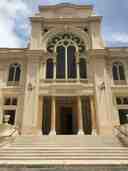
Apri pagina dedicata →Look for a grand cream-colored building with big arched windows, pretty columns, and a Star of David up high above the entrance-just walk up the wide steps to spot it right in…Leggi di piùMostra meno
Look for a grand cream-colored building with big arched windows, pretty columns, and a Star of David up high above the entrance-just walk up the wide steps to spot it right in front of you. Welcome to the Eliyahu Hanavi Synagogue, where every stone and echo tells a tale! Imagine yourself back in 1354-old Alexandria buzzing with life, prayers drifting through the air. But in 1798, Napoleon’s army crashed the party-literally-bombing the original synagogue into rubble. Yet, the story didn’t end there. In 1836, thanks to the pockets of the Muhammad Ali Dynasty and some help from the famous Sir Moses Haim Montefiore, a shining new synagogue began to rise from the ashes. By 1850, the building before you was finished, flaunting Neoclassical elegance mixed with flashes of Gothic and Byzantine flair-clearly, they couldn’t decide on just one style, so they chose them all! Fast-forward to more recent times: the doors closed in 2012 for security reasons, and silence crept in. Luckily, in 2017, the Egyptian government-and worldwide friends-vowed to restore this treasure. Now, it's rededicated and sparkling, guarding stories of a dwindling but proud Jewish community. Services are rare, but the spirit of Eliyahu Hanavi still whispers through these halls, a secret waiting to surprise every visitor!
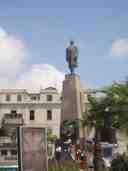
Apri pagina dedicata →You’ll spot the Caesareum site right in front of you by the tall, stone pedestal topped with a striking statue of a man standing majestically above the crowds-just look for the…Leggi di piùMostra meno
You’ll spot the Caesareum site right in front of you by the tall, stone pedestal topped with a striking statue of a man standing majestically above the crowds-just look for the upraised figure with palm trees swaying nearby and you’re in the right place. Now, let’s peel back the layers of time! Imagine the ancient city buzzing around you, with the salty Mediterranean breeze swirling through marble columns and the shouts of traders from the distant harbor drifting through the air. Over two thousand years ago, this very ground was chosen by Queen Cleopatra herself, the legendary last pharaoh of Egypt. But Cleopatra wasn’t just here to organize grand parties-she had something far bigger in mind! She wanted to build a monument that would leave Rome’s jaws on the floor, a temple to honor either her great love Julius Caesar… or maybe Mark Antony. Love triangles and ancient politics, always a winning combination! But here’s where history throws a twist: after Cleopatra and Mark Antony lost their final battle, the victorious Roman emperor Augustus silenced the memory of Antony and-like any good conqueror-dedicated the temple to himself instead. Talk about an awkward housewarming party, right? As the centuries rolled on, the Caesareum transformed. In the fourth century, it became a Christian church and the power seat of Bishop Cyril, as Alexandria’s skyline began to bristle with church domes instead of obelisks. It also became infamous-right here, the brilliant mathematician and philosopher Hypatia met a tragic and mysterious end at the hands of a mob in 415 AD, a tale of knowledge clashing with fear that still echoes through Alexandria’s stones. But if you’re looking for Cleopatra’s famous Needles, those ancient obelisks she moved here, you won’t find them-they migrated all the way to New York and London! Instead, today, the statue of Saad Zaghloul, a leader from the 20th century, stands tall where armies, lovers, and philosophers once moved through history. So look up, take a deep breath, and let the echoes of emperors, queens, and revolutionaries mingle in the Alexandrian air with you.
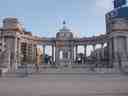
Apri pagina dedicata →To spot the Alexandria Naval Unknown Soldier Memorial, look directly ahead for a grand, sweeping white stone structure with a curved row of tall columns and a black flag waving…Leggi di piùMostra meno
To spot the Alexandria Naval Unknown Soldier Memorial, look directly ahead for a grand, sweeping white stone structure with a curved row of tall columns and a black flag waving high above, standing proudly at the edge of the busy Corniche. Now, take a deep breath and listen as Alexandria’s salty sea breeze mixes with stories of heroism! Imagine ships lined up along the coast, their sails flapping, while the air thrums with the tension of naval battles long ago. Right where you stand, this grand memorial honors the unknown sailors who vanished beneath the waves, defending Egypt’s coast. The story begins under the wise watch of Muhammed Ali of Egypt, a ruler with dreams as big as the Mediterranean. He made Alexandria the heart of his navy, and his son, Ibrahim Pasha, sailed off from here to Greece, chasing glory in the roar and chaos of the Greek War of Independence. Picture cannon fire echoing over the water as the Battle of Navarino erupts-ships clash, smoke billows, and heroes are made, though not all return to tell the tale. Funny enough, this spot didn’t always belong to lost sailors. Built by Alexandria’s Italian community, it first celebrated Khedive Ismail. But after the whirlwind of Egypt’s 1952 revolution, its purpose changed, giving silent thanks to those brave, nameless souls who never sailed home. So, as you gaze at its columns, imagine their stories drifting on the sea breeze, honoring lives lost but never forgotten. The next time you complain about losing your keys, remember, these sailors lost a lot more and still sailed on!
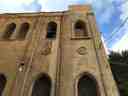
Apri pagina dedicata →To spot the Menasce Synagogue, look up for a sand-colored building with pointed arched windows and two Star of David symbols right above the entrance on Ahmed Orabi…Leggi di piùMostra meno
To spot the Menasce Synagogue, look up for a sand-colored building with pointed arched windows and two Star of David symbols right above the entrance on Ahmed Orabi Square. Alright, adventurer, your final stop awaits! Imagine standing here in the bustling heart of Alexandria, the warm sun on your face as you gaze up at these grand, faded walls. It’s 1872, and the streets are humming with excited voices. Suddenly, a wave of applause and footsteps fills the air as the Menasce Synagogue opens its doors for the very first time. Founded by the Menasce family-a family with more stamps in their passports than your average travel blogger-they came here via Morocco and Palestine, bringing their dreams and fortune. Jacob Levi Menasce, also known as Baron Jacob de Menasce, wasn’t your usual local; he’d even been given a fancy title by an emperor after the Suez Canal’s grand opening! But every good story has a little drama-the Menasces didn’t exactly see eye-to-eye with Alexandria’s old guard, so they built their own stunning synagogue, and even the Ottoman Governor showed up for the opening. Fast-forward ten years, and as bombs fell across the city in the Anglo-Egyptian War, the synagogue stood strong, a stubborn survivor. Today, thanks to Egypt’s heritage list, this beautiful building remains protected-a resilient piece of Alexandria’s soulful mosaic. Stand here, and you’re not just seeing stone; you’re feeling the echoes of passionate dreams, grand ceremonies, and a little bit of family rivalry that shaped this corner of the city’s story.
Apri pagina dedicata →

Domande frequenti
Come inizio il tour?
Dopo l'acquisto, scarica l'app AudaTours e inserisci il tuo codice di riscatto. Il tour sarà pronto per partire immediatamente – tocca play e segui il percorso guidato dal GPS.
Ho bisogno di internet durante il tour?
No! Scarica il tour prima di iniziare e goditelo completamente offline. Solo la funzione chat richiede internet. Ti consigliamo di scaricare tramite WiFi per risparmiare dati mobili.
È un tour guidato di gruppo?
No – è un tour audio autoguidato. Esplori in autonomia al tuo ritmo, con la narrazione audio riprodotta dal tuo telefono. Nessuna guida, nessun gruppo, nessun orario.
Quanto dura il tour?
La maggior parte dei tour richiede 60–90 minuti, ma sei tu a controllare il ritmo. Metti in pausa, salta le tappe o fai pause quando vuoi.
E se non riesco a finire il tour oggi?
Nessun problema! I tour hanno accesso a vita. Metti in pausa e riprendi quando vuoi – domani, la prossima settimana o il prossimo anno. I tuoi progressi vengono salvati.
Quali lingue sono disponibili?
Tutti i tour sono disponibili in oltre 50 lingue. Seleziona la lingua preferita quando riscatti il codice. Nota: la lingua non può essere cambiata dopo la generazione del tour.
Dove accedo al tour dopo l'acquisto?
Scarica l'app gratuita AudaTours dall'App Store o Google Play. Inserisci il codice di riscatto (inviato via email) e il tour apparirà nella tua libreria, pronto per essere scaricato e avviato.
Se il tour non ti piace, ti rimborseremo l'acquisto. Contattaci a [email protected]
Pagamento sicuro con 


