Tour Audio di Bruges: Reliquie, Fiumi e gli Echi dei Secoli
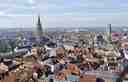
Una reliquia di sangue sacro nascosta in bella vista. Una cattedrale perduta che un tempo governava una città. Sotto la perfezione da cartolina di Bruges, secoli di lotte di potere, segreti sacri e ribellioni silenziose persistono. Questo tour audio autoguidato ti porta fuori dai sentieri affollati, dritto nel cuore delle leggende trascurate e delle storie nascoste di Bruges. Naviga tra antiche piazze e cappelle in ombra dove si sono svolti i drammi più feroci della città. Il tradimento di chi diede fuoco alla Cattedrale di San Donaziano? Quale impossibile miracolo si celava nella Basilica del Sacro Sangue? E perché le antiche pietre della città sussurrano ancora di una faida dimenticata che ha cambiato tutto? Attraversa ponti e scivola giù per vicoli logori mentre Bruges passa da tranquilla a tempestosa in un batter d'occhio. Ogni tappa rivela nuovi intrighi, ogni storia ti immerge più a fondo sotto la superficie. Premi play. I segreti della città ti aspettano. Oserai scoprirli?
Anteprima del tour
Informazioni su questo tour
- scheduleDurata 40–60 minsVai al tuo ritmo
- straighten1.7 km di percorso a piediSegui il percorso guidato
- location_on
- wifi_offFunziona offlineScarica una volta, usa ovunque
- all_inclusiveAccesso a vitaRiascolta quando vuoi, per sempre
- location_onParte da Basilica del Sacro Sangue
Tappe di questo tour
Look directly in front of you at the striking stone building where intricate curved arches frame a dark, inviting entrance, and brilliant golden statues of past monarchs gleam…Leggi di piùMostra meno
Look directly in front of you at the striking stone building where intricate curved arches frame a dark, inviting entrance, and brilliant golden statues of past monarchs gleam from the ornate facade. Notice how those polished figures stand out against the ancient stone. Welcome to the Basilica of the Holy Blood. This remarkable place is actually two chapels stacked on top of each other. The lower chapel is a heavy, dark Romanesque structure, an architectural style known for its thick walls and rounded arches, and it looks almost exactly as it did in the twelfth century. Above it sits the upper chapel, a soaring Gothic space rebuilt over the centuries with vibrant stained glass and murals. But the true heart of this building is what rests inside the upper chapel. According to local legend, Thierry of Alsace, the Count of Flanders, brought a miraculous treasure back from the Second Crusade in the year 1150. It was said to be a cloth stained with the blood of Jesus Christ, preserved by Joseph of Arimathea after the crucifixion. For centuries, people believed Thierry received this profound gift for his heroic service in Jerusalem.... But the truth is much darker. There is absolutely no historical record of the Holy Blood being in Bruges before the 1250s, a full century after Thierry supposedly brought it home. Most modern historians believe this sacred relic was actually looted from an imperial palace during the brutal sack of Constantinople in 1204. It likely arrived here as part of a massive haul of stolen treasure, rather than a pious gift from the Holy Land. Even the vessel holding the cloth, intricately wrapped in gold thread, has been identified by modern experts as an everyday Byzantine perfume bottle. Yet, the myth was vital to the rulers of this city. By tying their reign to a divine relic, the counts created a powerful narrative that justified their immense influence and control over the people. They used this holy story to literally build the grand architecture you see around you, transforming a stolen prize into the beating heart of their domain. The blood itself was famous for a spectacular miracle. Every Friday at noon, the clotted blood would supposedly turn to liquid. This continued until 1310, when the miracle abruptly stopped. Church officials blamed an unspecified blasphemy committed in the presence of the holy object, and the blood has remained solid ever since, save for one brief moment decades later. The survival of this delicate perfume bottle is a miracle in itself. During a period of religious upheaval in the sixteenth century, many Catholic treasures were targeted for destruction. A brave church warden named Juan de Malvenda smuggled the relic out of the chapel. He hid it in a lead box and buried it deep inside the red brick walls of his own home, successfully keeping it safe in the darkness until the danger passed. The story of this basilica shows us how ambition can weave itself into the very fabric of faith. But as we will see, power in this city was not always cloaked in divine mystery. Let us take a short, one minute walk over to the Liberty of Bruges, where you will see how earthly authority was wielded. Take your time, and I will be waiting for you there.
Apri pagina dedicata →We just left the quiet devotion of the Basilica of the Holy Blood, but the square we are standing in holds a much heavier, more dangerous history. This is the Burg, once the…Leggi di piùMostra meno
We just left the quiet devotion of the Basilica of the Holy Blood, but the square we are standing in holds a much heavier, more dangerous history. This is the Burg, once the fortified, bloody heart of Flanders. It was here that the gentle prayers of the faithful collided with a ruthless grip on political control. Look to the large, elegant building on your right. This is the Liberty of Bruges. For centuries, this was the mighty headquarters of the largest castellany in the region. A castellany was simply a massive rural administrative district managed from a central stronghold. While the city of Bruges controlled the urban streets, the Liberty controlled the wealthy farmlands stretching all the way to the North Sea. If you were to look at the grand oil paintings of the councilmen who ruled from this building, you would see dignified, serene men in heavy robes. But that peaceful image is a carefully crafted myth. The reality of their rule was a vicious tug of war for dominance. The councilmen were entirely focused on protecting their wealth from the city merchants. The rivalry was so bitter that the city of Bruges occasionally tried to physically block the water supply to this building, or place sudden taxes on the beer the rural councilmen drank. The Liberty maintained its iron grip over the countryside through relentless taxation. They collected tariffs from the rural farmers, dragging wooden chests of silver into the building. The sheer volume of wealth was staggering. The floorboards of the treasury had to be specially reinforced just to bear the immense weight of the coins. And if a farmer tried to smuggle grain to avoid paying? They were thrown directly into the dark, damp dungeons buried beneath these elegant rooms. Those same grim underground cells later held the infamous Baekelandt gang in the early eighteen hundreds, where bandits awaited their execution in misery. Upstairs, the councilmen commissioned a massive oak, marble, and alabaster fireplace to honor Emperor Charles the Fifth. Designed by local artist and engineer Lanceloot Blondeel, it was an expensive piece of political propaganda. The Liberty placed this towering monument right in the magistrate room. It was designed entirely to flatter the Emperor and keep their rural district independent. The huge wooden statues were built using a technique where thin planks of wood are glued together. This stopped the heat of the roaring fire from warping the oak. We only know about this clever sixteenth century engineering because, in the nineteen nineties, a rolling scaffold accidentally knocked a statue over, revealing the layered wood inside. But the hunger for power on this square started long before that fireplace was carved. Before the Liberty built their offices here, this exact spot held a fortified residence. It was the stronghold of a ruthless, ambitious clan. Terrified that the reigning Count of Flanders was going to expose a dark secret and strip them of their power, the clan's leader orchestrated a deadly conspiracy. He ordered the murder of the Count. The assassination took place in eleven twenty seven, just a one minute walk from where you are standing right now. It happened on the sacred grounds of a massive church that has since been wiped from the map. Let us walk together across the square to the former site of Saint Donatian's Cathedral, and I will tell you how that fateful, bloody tragedy unfolded.
Apri pagina dedicata →As you stand here, looking to your right, you might be wondering where Saint Donatian Cathedral actually is. I have a rather tragic story to tell you. You are looking at a…Leggi di piùMostra meno
As you stand here, looking to your right, you might be wondering where Saint Donatian Cathedral actually is. I have a rather tragic story to tell you. You are looking at a phantom. For centuries, the most important church in the city stood exactly right here, a massive stone testament to ambition, dominance, and divine right. The sheer scale of the building once cast a long, imposing shadow over this entire square. The cathedral was named after Donatian, the seventh bishop of Reims. Legend says that as a child, he was thrown into a rushing river. To find him, people floated a wooden wheel carrying five burning candles on the water, and miraculously, it stopped right above him, saving his life. This beautiful myth of the glowing wheel became a symbol of salvation and was proudly displayed inside the cathedral for hundreds of years. But the reality of what happened on this very soil was far less miraculous, and far more violent. In the winter of eleven twenty seven, the grand church became the stage for a ruthless struggle. It centered around the Erembald clan, a deeply ambitious family who had climbed to the highest ranks of society but were terrified that their secret origins as unfree serfs, peasant laborers bound to the land, would be exposed. They feared they would lose everything they had clawed their way up to possess. Their target was Count Charles the Good, the ruler of Flanders. Charles was a pious man who was actively trying to curb the clan's sprawling influence. On the morning of March second, Charles was kneeling in the upper gallery of the church, peacefully handing out alms, which were charitable gifts of money and food for the poor. The desperate conspirators struck without warning. They hacked at the kneeling Count with heavy swords, cleaving his skull and sparking absolute panic within these holy walls. The murder was a bloody, desperate grab for control. But the French King's revenge was equally merciless. The captured conspirators were hurled to their deaths from the high tower of the nearby fortress, their bodies shattered on the paving stones below. Despite that dark stain, the cathedral grew in wealth and splendor. The legendary painter Jan van Eyck was even buried inside near the baptismal font. But the hunger to tear down the old order eventually came for the building itself. In seventeen ninety four, after the French invasion, the cathedral was seized as national property. By seventeen ninety nine, this monumental sanctuary was publicly sold for scrap building materials and completely wiped from the map. The most important church in the city, holding centuries of art and the lost bones of Jan van Eyck, was painstakingly demolished by human hands. Today, the ancient foundations lie hidden in the dark cellars beneath the hotel you see before you. It is a heavy thought, how the desperate grasp for supremacy can build a towering sanctuary, and just as easily erase it into nothing but dust and silent memory. Let us leave this phantom cathedral behind. Please start walking toward the water, the true, enduring source of this remarkable city's existence. We are heading into the heart of Bruges itself, which is just a short two minute walk away.
Apri pagina dedicata →
Mostra altre 10 tappeMostra meno tappeexpand_moreexpand_less
Look to your right, where the gentle curve of the water meets a row of steep triangular brick rooflines known as gables, framed by the solid arch of an old stone bridge. Here,…Leggi di piùMostra meno
Look to your right, where the gentle curve of the water meets a row of steep triangular brick rooflines known as gables, framed by the solid arch of an old stone bridge. Here, standing by the water, we are looking at the very reason this city exists. This is the Reie River, the great watery artery that first brought life, international trade, and occasionally fierce invaders right to the doorstep of the early settlement. The ancient Celts called this water Rogia, meaning holy water, and they believed rivers were divine beings. Over centuries of tongues twisting and changing, Rogia became Ryggia, and eventually, the name of the settlement itself morphed into Bryggia. The very first time the name Bruges appeared in writing was actually in a rather depressing inventory of missing goods. Around the middle of the ninth century, a monastery in nearby Ghent sent a priceless golden cross here for safekeeping from raiding warriors. The historical document gloomily notes that the cross was sent to Bruges for protection, but it never came back. Whether the invaders took it, or an opportunistic local simply decided to keep it, the treasure vanished completely. There is another story about how Bruges got its name, one born from the cold seas of the north. Around the year eight hundred, Scandinavian ships began arriving. Some came to trade, and others came to plunder. In Old Norse, the word bryggja means a landing bridge or a mooring quay. It makes perfect sense. This muddy bank was a place to tie up your ship, unload your cargo, and make your fortune. The desire to capture that wealth transformed this modest landing site into an international metropolis. The people here were completely driven by the promise of prosperity, and they refused to let nature stand in their way. When the vital waterways connecting the city to the North Sea began to fill with sand and silt in the eleventh century, it seemed the city would be financially strangled. But in the year eleven thirty-four, a massive storm tore through the coastline, carving a new deep water channel called the Zwin. The merchants of Bruges aggressively expanded their ports to connect to this new channel, drawing in goods from all over the known world. They molded the very earth and water to ensure the gold kept flowing. This fierce pursuit of riches attracted the most powerful players of the Middle Ages, drawing in foreign merchants and bankers seeking to multiply their fortunes. But unchecked ambition has a dark side. As we will see later, the reckless pursuit of wealth here would eventually topple even the most untouchable banking empires of Europe. Now, as we continue our walk, we are going to dive even deeper into the medieval shadows of the city. Just a two minute walk away is our next stop, a building known simply as the Old Stone. It is the oldest surviving stone house in Bruges. But it is not just famous for its architecture. There is a dark rumor that its windowless basement was used as a secret medieval torture chamber for those who crossed the city authorities. Let us head there now to see for ourselves.
Apri pagina dedicata →Look to your left for a smooth, white-plastered three-story building defined by a wide grey archway on its ground floor and a decorative horizontal ridge along its flat roofline.…Leggi di piùMostra meno
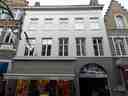
Look to your left for a smooth, white-plastered three-story building defined by a wide grey archway on its ground floor and a decorative horizontal ridge along its flat roofline. It is so easy to let our imaginations run wild when we see a dark medieval doorway. Today, the basement of this building houses a museum of medieval torture, complete with wax figures and iron racks. It is a brilliant bit of marketing, twisting the very real, very mundane truth of an old medieval storage cellar into a sensationalized dungeon just to thrill passing visitors. The true story of the Old Stone, or Oude Steen, is actually far more fascinating than the plastic skeletons downstairs. This is the oldest preserved house in all of Flanders. When archaeologists tested the ancient oak beams in the cellar using tree-ring dating, they found the wood was cut over eight hundred years ago, right around the year twelve hundred. Back then, stone buildings were incredibly rare. Because it was constructed of solid, local grey-green fieldstone instead of wood, the locals simply called it the Great Stone. It is true that in the early days, official stone buildings sometimes held temporary lock-ups. But the official county prison moved away to a completely different location by the thirteenth century. The dark, damp, vaulted cellar was almost certainly just a secure storage space for wealthy merchants and a foundation for the home above. But a gripping myth of dark deeds and hidden dungeons is highly profitable... isn't it? The museum's claim that this was the oldest continuous prison in Bruges is a perfect example of how the past is often bent and exaggerated to serve the desires of the present. People want a dark, thrilling story, and someone is always willing to invent one to sell tickets. The real drama here was political. By the late fourteen hundreds, the building belonged to a city mayor. During a violent local rebellion, the mayor backed a foreign duke instead of his own citizens. When the duke was captured by the people of Bruges, the mayor had to flee into the night for his life. His escape saved his neck... but it cost him his property. The city confiscated this house, officially branding it the forfeited goods of a traitor. It was eventually sold off to private citizens. For centuries, it was a perfectly ordinary, if grand, home. It housed doctors, textile merchants, and even a seventeenth-century schoolmaster who lived here with his twelve children, running a private school for the local elite. By the nineteenth century, a family of furniture makers named Van Waefelghem bought the property. They held onto this house for nearly two hundred years. One of their sons, Louis, was born right here and grew up to be a world-famous musician in Paris. He played the viola d'amore, a beautiful, multi-stringed antique instrument that produces a haunting, echoing sound. Today, the descendants of that very same family still own the building and run the waffle shop on the ground floor. They decided to lease out the ancient basement to the torture museum, proving that the legacy of this historic site is still being shaped by enterprise. We are leaving these fabricated legends behind us now. Just a two-minute walk ahead is a very real symbol of civic pride and violent rebellion, the towering Belfry of Bruges. Let us go take a look.
Apri pagina dedicata →Look slightly to your right, and you will see an immense brick tower rising into the sky, featuring a distinct octagonal upper section and a large, gleaming clock face watching…Leggi di piùMostra meno
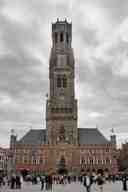
Look slightly to your right, and you will see an immense brick tower rising into the sky, featuring a distinct octagonal upper section and a large, gleaming clock face watching over the square. This is the Belfry of Bruges, a structure built in the thirteenth century to serve not just as a watchtower, but as an undeniable, soaring monument to the city's staggering commercial success. Originally, the halls beneath it were bustling indoor markets for the lucrative wool and cloth trade. The tower itself housed the city treasury, the official archives, and the powerful city magistrates. But wherever extraordinary wealth is concentrated, deep divides inevitably follow. In the year twelve eighty, a bitter and bloody fight erupted between the everyday working class artisans and the wealthy ruling elite, an uprising so fierce it ultimately led to the heart of the city burning. The everyday workers, crushed by the heavy handed greed of the patricians, the wealthy aristocratic merchants who tightly controlled all city politics, launched a desperate rebellion known as the Moerlemaye. It is said that the furious rioters, pushed to their absolute breaking point, deliberately set this very belfry ablaze. Picture the sheer terror and chaos in this square as flames roared through the tower's wooden spire, illuminating the night sky in a violent, furious red. The fire completely consumed the upper floors, and as the wooden beams collapsed into ash, so did the city's most precious documents. This devastating loss of the archives meant that countless historical records, literally every city document from before the year twelve eighty, were completely erased from history. Crucially, the city's official charter of rights and privileges, known as the Keure, also went up in smoke. This was a catastrophic mistake for the rebels and the city elites alike. Without that physical document to prove their independence, the Count of Flanders swooped in to crush their political power. He forced the city to permanently separate its political administration from this commercial hub, leading to the construction of a completely separate City Hall. The physical landscape of Bruges was permanently fractured by this violent struggle for dominance. Through the centuries, the tower survived lightning strikes and further fires, always being stubbornly rebuilt by a city that refused to surrender its pride. Even the tower's bells tell a story of relentless control. In the seventeenth century, the city leaders invited the world's most famous bell maker to craft a new carillon, a musical instrument made of dozens of tuned bronze bells played by a keyboard. But the city stubbornly demanded he cast the bells locally to protect their own guilds. The master craftsman refused and walked away, leaving Bruges without a masterpiece due to their own rigid protectionism. Today, the tower stands eighty three meters tall, leaning just slightly under the weight of its own heavy history. It is a beautiful, imposing sight. But to truly understand the sheer scale of the money that financed this magnificent defiance, we need to look at how that wealth actually flowed into the city. Let us turn our attention to the site of the Waterhalle, just zero minutes away right here on the square, where the true financial engine of Bruges once roared.
Apri pagina dedicata →Take a moment to look at the grand building on your right, the Provincial Court. Its soaring stone arches and statues are certainly beautiful to look at. But I want you to look…Leggi di piùMostra meno
Take a moment to look at the grand building on your right, the Provincial Court. Its soaring stone arches and statues are certainly beautiful to look at. But I want you to look past those elegant walls and envision the sheer, towering giant that commanded this exact spot for five hundred years. Remember the Reie River we talked about earlier? The watery lifeblood that brought the world to this city? Well, the people of Bruges literally swallowed that river whole. Right where you are standing, they built a colossal, ninety-five-meter-long covered harbor directly over the flowing water. Driven by an absolute hunger for dominance in global trade, the city constructed this massive structure to control the flow of all riches entering the region. This was the Waterhalle, finished in twelve ninety-four, a towering vault of stone and thick oak where ships from places like Venice and Genoa could sail straight inside to unload their treasures, perfectly sheltered. By forcing every single trade vessel to dock and pay taxes in this massive, dry warehouse, Bruges cemented its iron grip on the world's wealth. Think of the overwhelming atmosphere inside that vast cavern. Picture the heavy, damp air smelling of wet wool, exotic spices, and river mud. You would hear the deafening echoes of shouting merchants and the heavy groans of massive wooden cranes. These cranes were powered by the crane children, men who literally walked inside giant wooden wheels like hamsters to hoist heavy cargo up to the massive attics. The walls were up to a meter and a half thick, built from massive bricks and resting on giant stone pillars planted directly into the dark riverbed. The structure was incredibly grand, measuring twenty-four meters wide and soaring about thirty meters high into the sky. But forcing a river indoors comes with a heavy price. The constant, rising dampness from the water gnawed relentlessly at the thick wooden beams holding up the roof. For centuries, worried carpenters and stonemasons desperately warned the city that the great hall was rotting from the inside out and might collapse entirely. Eventually, the river traffic slowed down as the waters choked with sand and trade moved to other ports. Finally, in seventeen eighty-seven, the Austrian Emperor Joseph the Second ordered the majestic hall to be demolished. The locals protested bitterly, forced to watch the proud symbol of their golden age vanish piece by piece from the city skyline. Some of those ancient, massive pillars survived and can still be found today quietly resting in a nearby courtyard. A completely new, classicist building replaced it, filled with grand meeting spaces and lively cafes. But then, in eighteen seventy-eight, a devastating fire broke out. The replacement building went up in violent flames. Bizarrely, some local art lovers actually cheered as it burned to the ground. They despised the newer architecture and saw the ashes as a perfect excuse to build the neo-Gothic palace standing before you right now. Neo-Gothic simply means a much later nineteenth-century revival of those soaring, pointed arches and dramatic details popular in the distant Middle Ages. Now, let us keep moving. We are heading to the site of Saint Christopher's Church, which is just a short, two-minute walk away. As we walk, we are going to dive right back into the bloody aftermath of the Count's murder, exploring the absolute chaos that erupted across these very cobblestones the moment he took his final breath.
Apri pagina dedicata →Look to your left. You might not see a church here today, but you are standing at the very edge of where St. Christopher's Church once stood. If you look closely at the row of…Leggi di piùMostra meno
Look to your left. You might not see a church here today, but you are standing at the very edge of where St. Christopher's Church once stood. If you look closely at the row of buildings housing the restaurants, you will notice that they jut out a bit further forward than the other buildings on the right side of the street. That uneven street line is actually the physical shadow of the old church... a phantom footprint left behind in the paving stones. Centuries ago, this vanished church became the stage for a dark and desperate coverup. We spoke earlier of Count Charles the Good, brutally assassinated while praying in St. Donatian's Cathedral. His murderers, the ruthless Erembald clan, were driven by a desperate obsession with controlling the city at any cost. But simply taking the Count's life was not enough for them. They needed a total erasure of memory. They wanted to wipe his legacy entirely from the minds of the people. Immediately after the murder, they callously threw his lifeless body from the high choir down to the stone floor. As stunned citizens rushed in, desperately dabbing the Count's blood with little cloths and saving locks of his hair as holy relics, the clan locked down their authority. They strictly forbade a royal burial in the main church. When a visiting abbot traveled to Bruges the very next day to claim the body for a proper resting place, the clan fiercely denied him. They hoped that by hiding Charles away like a criminal, his legend would just fade into nothingness. But the people of Bruges would not let him be forgotten. St. Donatian's was defiled by the murder, and the other major church was tragically unusable due to a recent fire. Left with no other options, loyal citizens carried their murdered Count right here, to St. Christopher's Church. Inside these walls, they laid Charles the Good to rest in a hastily constructed masonry tomb, defying the men who tried to erase him. Years later, this church was claimed by the city's powerful guild of fishmongers. They poured their vast fortunes into these walls to elevate their own standing and project their influence onto the very streets of Bruges. Every single day, a special mass was read just for them, accompanied by the grand sounds of a soaring organ and singers perched high above on the screen. In fifteen seventy six, they commissioned a grand retable... a massive, ornate painting traditionally placed behind the main altar... depicting the miraculous catch of fish. They hired the renowned master painter Pieter Pourbus, but with a highly unusual and strict demand. They forced him to sign a legally binding contract forbidding any of his apprentices from touching the canvas. They demanded that only the master himself and his son paint their masterpiece. It was a bold display of influence, seamlessly linking their daily, earthly labor with divine approval to show everyone they were undeniably favored by God. Yet, for all the money and power channeled into this building, it could not last. Neglected and crumbling, the church was torn down completely in seventeen eighty six. Let us leave this phantom church behind and visit a place where history is kept perfectly safe. The Public Library of Bruges is just a short, one minute walk away.
Apri pagina dedicata →Please stand just across the street, where you have a clear view of the main facade of the Public Library Bruges. This modern complex, known as the Biekorf, might look like a…Leggi di piùMostra meno
Please stand just across the street, where you have a clear view of the main facade of the Public Library Bruges. This modern complex, known as the Biekorf, might look like a straightforward civic building. But its very existence is the result of a massive, forced transfer of knowledge and authority. Just a minute ago at Saint Christopher's Church, we considered how physical spaces shift hands. Here, we see how the mind of the city was molded. In the late eighteenth century, the French administration took control of the Belgian provinces. What followed was a sudden, sweeping secularization. The new government systematically seized property, land, and assets from the Catholic church, transferring them to the state to break the church's political grip and fund their own republic. As part of this cultural overhaul in seventeen ninety four, the French ordered the creation of a public library in every regional capital, including right here in Bruges. But to fill these new public shelves, they did not purchase new books. Instead, they sought to erase the ancient monastic history of the region by confiscating their most precious resources... their texts. They abolished ancient and powerful abbeys, like Ter Doest and Ten Duinen, dragging their vast, centuries old libraries out of the cloisters and into the hands of the state. It was an aggressive, calculated capture of intellectual property. The man tasked with managing this chaotic mountain of seized knowledge was a twenty year old Englishman named William Frederic Edwards, appointed as the first official librarian in seventeen ninety seven. Initially, the collection was staggering. Edwards reported that shortly after its founding, the library held forty two thousand books. Within a brief period, as more monasteries were emptied, that number ballooned to seventy seven thousand volumes. But what followed was a devastating loss of heritage. The authorities initiated a ruthless, unforgiving sorting process. Out of those seventy seven thousand confiscated works, only six thousand books were deemed worthy of keeping. The vast majority of that incredible monastic legacy was simply discarded, scattered, or destroyed forever. Yet, the six thousand books that survived that brutal filter formed an extraordinary foundation. Among those saved texts were breathtaking medieval manuscripts and a massive collection of incunabula. Incunabula is a term for the very earliest printed books, created before the year fifteen hundred and one, back when the printing press was still a miraculous new invention. Over the next two centuries, the library grew from that concentrated seed. It absorbed private collections and saved other threatened archives. It even holds the personal papers of Guido Gezelle, one of Flanders most beloved poets, whose archives were famously rescued from literal rubble by a plucky local priest during the First World War. This library was born from a fierce desire to dominate the cultural landscape, stripping ancient religious orders of their sacred written treasures to build a new, state sanctioned reality. Yet, in that harsh confiscation, they inadvertently created a protective vault for some of the most beautiful expressions of human thought ever recorded. Let us leave this sanctuary of rescued knowledge behind. We are now heading to our next destination, where we will meet a man whose personal fortunes rivaled those of kings. We will transition to Court Bladelin, which is just a short three minute walk away.
Apri pagina dedicata →Look for Court Bladelin on your right, an imposing palace made of pale brown brick, marked by a towering, pointed stone spire and a grand arched wooden doorway with an intricate…Leggi di piùMostra meno
Look for Court Bladelin on your right, an imposing palace made of pale brown brick, marked by a towering, pointed stone spire and a grand arched wooden doorway with an intricate golden shrine set right above it. This grand home was built in 1435 by Pieter Bladelin. The story of this building is perfectly tied to the city's deep obsession with economic ambition and legacy. Pieter was the ultimate self-made man, rising from modest roots to become the treasurer of the Order of the Golden Fleece, an exclusive chivalric club for the highest nobility. Despite his immense, almost unimaginable wealth, which in today's money would easily make him a multi-billionaire, he had a heartbreaking problem. He and his wife Margaretha were childless. With no biological heirs, Pieter decided his legacy had to be carved in stone. He poured his vast fortune into an absolute frenzy of construction, even building a completely new, bustling town called Middelburg from scratch. He frankly admitted in his final will that he had often acted entirely without scruples to amass his vast fortune. I suppose this towering home was his attempt to buy a little earthly immortality, and perhaps some heavenly forgiveness. But the gossip surrounding this palace gets even juicier after Pieter's time. In 1472, it fell into the hands of the famous Italian merchants, the Medici family. These legendary Florentine bankers brought high finance and high art to Bruges, setting up a branch right here under the management of Tommaso Portinari. Portinari's time in this house reads like a dramatic financial thriller, full of incredible highs and devastating lows. He was a phenomenal patron of the arts, commissioning masterpieces like the world-famous Portinari Triptych, a massive three-paneled altarpiece. To celebrate his incredibly wealthy bosses, he even had two beautiful portrait medallions of Lorenzo de Medici and his wife embedded right into the facade of this building, originally painted in striking dark brown and azure blue. But as a banker... well, he was a complete disaster. While he lived in breathtaking opulence here, he made incredibly reckless loans to the Duke of Burgundy to fund the Duke's endless wars. The Duke simply never paid him back, leaving the bank in absolute turmoil. Lorenzo de Medici, back in Florence, realized the Bruges branch was bleeding money and cleverly sold it to Portinari himself in 1480 just to unload the toxic assets. The gamble failed miserably, and the entire banking operation collapsed. The branch went completely bankrupt, dragging Portinari down with it. He died penniless, a world away from the dazzling luxury he once enjoyed in this very courtyard. The palace's later history carries a deeply bitter irony. Decades later, a nobleman named Lamoral of Egmont grew up playing in these very halls. In 1568, he was brutally beheaded by the occupying Spanish regime for his political resistance. Just three years later, those same Spanish rulers seized this beautiful childhood home and turned it into a Mount of Piety... which is just a fancy historical term for a pawnshop. They created it specifically so Spanish soldiers could trade their looted goods for quick cash. It is a chilling reminder of how the ruthless chase for power leaves lasting scars on the beautiful stones of this city. Now, let us continue our walk. We are heading toward the very spot where modern capitalism was truly born. The Old Beursplein is just a short, two minute walk away from here.
Apri pagina dedicata →Look to your left and you will see a towering, flat-fronted building constructed of pale greyish-brown brick, defined by a striking grid of tall arched windows and a large,…Leggi di piùMostra meno
Look to your left and you will see a towering, flat-fronted building constructed of pale greyish-brown brick, defined by a striking grid of tall arched windows and a large, pointed wooden doorway at its base. Leaving the grand residence of Court Bladelin behind, we now stand at the very epicenter of medieval economic ambition. This quiet intersection, known as the Old Beursplein, was once the ultimate manifestation of Bruges' financial power. Back in the thirteenth century, an incredibly ambitious entrepreneur named Robbrecht van der Buerse ran a popular inn right on this spot. Robbrecht quickly realized his inn could be much more than just a place for travelers to sleep. He began offering his deep cellars as secure storage for foreign goods, and soon started mediating complex deals between northern German traders and the newly arrived Italian merchants. Before long, this very square became the daily headquarters for the Genoese and Venetians, who rented the grand buildings right next door to conduct their daily business. The atmosphere here was intensely loud and chaotic, filled with a chorus of different languages and the frantic waving of hands. Trading opened and closed each day with the ringing of a city bell. They were not trading heavy crates of wool or spices out here, but rather slips of paper. This daily exchange of vital market information, along with the buying and selling of international debt, effectively created the world's very first stock market. Local money, like the silver coins known as pond groten, was traded against foreign currencies in a relentless pursuit of profit. Because the Van der Buerse family crest featured three leather money pouches, visiting merchants started calling this financial ritual going to the Bourse. That name spread across the continent and is still the word used for stock exchanges in many countries today. But all this staggering wealth brought dangerous political games. Robbrecht backed the French crown during a violent local workers uprising. When his side lost the famous Battle of the Golden Spurs in thirteen oh two, the city brutally confiscated all of Robbrecht's properties as punishment. He fled into exile, waiting three agonizing years before a peace treaty finally allowed him to return and reclaim his business. A century and a half later, this square became the stage for an even darker display of absolute control. The Duke of Burgundy, a ruthless ruler named Charles the Bold, crushed a rebellion in the distant city of Liege. As the ultimate humiliation, he stole their sacred stone monument of civic freedom and planted it right in the middle of this bustling financial square. It was a clear, chilling warning to the wealthy men trading here. Any rebellion would be met with total destruction. There is still a quiet human touch left behind on these walls. If you examine the side of the main building, right between the ground-floor windows, you can still spot the carved symbols of the medieval stonemasons. They left these marks so the foreman knew exactly who to pay for their hard labor. Centuries later, the intense shouting of international merchants was replaced by something entirely different. In two thousand and six, a local radio station moved into this historic building, broadcasting music twenty four hours a day from the very same rooms where the fate of European wealth was once furiously debated. Let us continue toward Jan van Eyck Square, just a two minute walk away, to discover exactly where all this tremendous wealth flowed into the city via the water.
Apri pagina dedicata →Look to your left at the wide cobblestone expanse framed by tall stone facades with steeply stepped rooflines and large, arched wooden doors at their bases. Welcome to Jan van…Leggi di piùMostra meno
Look to your left at the wide cobblestone expanse framed by tall stone facades with steeply stepped rooflines and large, arched wooden doors at their bases. Welcome to Jan van Eyck Square. Just a couple of minutes ago at the Old Beursplein, we talked about the intense commercial drive of this city, and that same unyielding ambition is literally paved into the very ground you are standing on. You see, if you had stood here before the year seventeen eighty seven, your feet would be wet. This entire paved square used to be open water. The Kraanrei river flowed right through here, crossed by a beautiful three arched bridge built of white stone called the Nieuwjaarsbrug, or New Year's Bridge. For centuries, this area was the bustling gateway for the city's vast wealth, a strict and serious hub of global maritime trade. But for a few weeks around the turn of the year, that relentless pursuit of profit paused. The bridge and the surrounding docks transformed into a magical winter market. Locals would crowd onto the stone arches to buy sweet marzipan, sugar candies, and handmade wooden toys for their children. It was a rare, festive breath of fresh air in a neighborhood usually dominated by the heavy lifting of commerce. But eventually, the city hungered for more usable space. The river was covered over with heavy stone vaults, and the beloved New Year's Bridge was torn down to create the flat square you see today. The sweet markets vanished along with the water, swallowed by the march of progress. The buildings surrounding the square still tell a tale of incredible social contrasts. On one side sits the Poortersloge, a grand meeting hall where the wealthy elite gathered to feast and plan elaborate jousting tournaments. But right nearby is a much narrower, humbler building called the Pijndershuisje. This was the guild house for the dockworkers, known as the pijnders. That name translates directly to those who suffer pain. These men carried the literal weight of the city's economic ambition on their shoulders, enduring agonizing physical labor to haul massive barrels of wine and heavy bales of wool from the ships. The carved stones on their old guild house still show the deeply bent backs of these medieval laborers. The landscape here was almost rewritten entirely again in eighteen forty seven. An ambitious architect proposed filling in the rest of the nearby open river to build a massive neoclassical theater. Neoclassical architecture uses grand columns and clean lines inspired by ancient Greece, and the architect hoped to mimic the modern boulevards of Paris. But the people of Bruges finally drew a line. They fought fiercely to protect their historic water views and actually won. Instead of a theater, the city honored its artistic heritage. The towering bronze statue of painter Jan van Eyck standing here today weighs nearly two thousand kilograms. It replaced an earlier marble statue that the locals had ruthlessly mocked for being far too small. The physical world of Bruges has always been molded, paved over, and defended by the powerful forces of its people. We are going to explore this constant rewriting of the city's landscape even further at our final stop. Take a gentle stroll with me, and in about four minutes, we will arrive at Saint Walburga's Church.
Apri pagina dedicata →Here we are, at our final stop. Just a short walk away from the bustling merchant hub of Jan van Eyck Square, you now stand before the towering facade of Saint Walburga's Church.…Leggi di piùMostra meno
Here we are, at our final stop. Just a short walk away from the bustling merchant hub of Jan van Eyck Square, you now stand before the towering facade of Saint Walburga's Church. Take a moment to look up at its grand, sweeping lines and intricate stone details. This building holds the perfect final story of our journey together, a story of how a city constantly overwrites its own history. The name Saint Walburga carries us all the way back to the eighth century. According to local legend, she was an English princess fleeing her home in Wessex, traveling toward Germany. The story goes that she founded a small, humble chapel right here in the year 745, seeking refuge and a place to pray. Over the centuries, that little chapel grew into a sprawling medieval parish church. But if there is one thing we have learned on our walk, it is that ambition often demands a blank slate. In 1781, that ancient medieval church was completely demolished. It was torn down to make way for the new, modern needs of the city. It is a powerful reminder of how the physical landscape here was constantly shaped and reshaped, old memories erased to build monuments to new influence. In fact, this very building you are looking at was not originally built for Saint Walburga at all. It was constructed between 1619 and 1643 by the Jesuits, a highly influential and scholarly Catholic religious order. They wanted a church that would project absolute dominance and awe. Their architect, a man named Pieter Huyssens, designed a magnificent seventeenth century Baroque masterpiece. Baroque is a highly ornate, dramatic style of architecture designed to overwhelm the senses and inspire deep devotion. The Jesuits dreamed of crowning this church with a majestic, towering spire. But their reach exceeded their grasp. To fund this monumental display of devotion, they took out massive loans. By 1625, their debt had exploded to the staggering sum of 500,000 guilders, which would be tens of millions of dollars today. This financial crisis nearly bankrupted their entire Flemish province. Because of this crushing debt, the ambitious tower they dreamed of was never completed, leaving the skyline forever changed by their financial ruin. Then, history took another sharp turn. Just a decade after the old medieval church was destroyed, the French Revolution swept into Bruges in 1794. The revolutionaries closed all places of worship. Yet, in a strange twist of fate, this church was saved from the wrecking ball. The new rulers confiscated it and transformed it into a secular Temple of Reason, a place dedicated to their new laws. Because they needed the building for their own ceremonies, the incredibly rich wooden carvings and marble altars inside were spared from the looting that destroyed so many other sanctuaries. Today, it serves the city once again as a place of gathering, music, and memory. As you stand here before these heavy doors, think about the layers beneath your feet. From a mythical fleeing princess to an unfinished tower of debt, to a revolutionary temple. The landscape of this city has always been a canvas for human ambition. Thank you for walking with me through the hidden, overwritten stories of Bruges. It has been a true joy to share them with you.
Apri pagina dedicata →
Domande frequenti
Come inizio il tour?
Dopo l'acquisto, scarica l'app AudaTours e inserisci il tuo codice di riscatto. Il tour sarà pronto per partire immediatamente – tocca play e segui il percorso guidato dal GPS.
Ho bisogno di internet durante il tour?
No! Scarica il tour prima di iniziare e goditelo completamente offline. Solo la funzione chat richiede internet. Ti consigliamo di scaricare tramite WiFi per risparmiare dati mobili.
È un tour guidato di gruppo?
No – è un tour audio autoguidato. Esplori in autonomia al tuo ritmo, con la narrazione audio riprodotta dal tuo telefono. Nessuna guida, nessun gruppo, nessun orario.
Quanto dura il tour?
La maggior parte dei tour richiede 60–90 minuti, ma sei tu a controllare il ritmo. Metti in pausa, salta le tappe o fai pause quando vuoi.
E se non riesco a finire il tour oggi?
Nessun problema! I tour hanno accesso a vita. Metti in pausa e riprendi quando vuoi – domani, la prossima settimana o il prossimo anno. I tuoi progressi vengono salvati.
Quali lingue sono disponibili?
Tutti i tour sono disponibili in oltre 50 lingue. Seleziona la lingua preferita quando riscatti il codice. Nota: la lingua non può essere cambiata dopo la generazione del tour.
Dove accedo al tour dopo l'acquisto?
Scarica l'app gratuita AudaTours dall'App Store o Google Play. Inserisci il codice di riscatto (inviato via email) e il tour apparirà nella tua libreria, pronto per essere scaricato e avviato.
Se il tour non ti piace, ti rimborseremo l'acquisto. Contattaci a [email protected]
Pagamento sicuro con