

Audioguida di Andorra la Vella: Leggende e Gemme Nascoste di Les Escaldes
Esplora il cuore vibrante di Andorra la Vella con un tour accattivante che inizia a Les Escaldes, famosa per le sue sorgenti termali terapeutiche. Visita Casa de la Vall, una storica casa in pietra del XVI secolo che un tempo fungeva da sede del parlamento di Andorra, offrendo uno sguardo sul ricco patrimonio del paese. Scopri l'incantevole Chiesa di Sant Esteve, una squisita gemma romanica incastonata nel centro della città. Termina il tuo viaggio al moderno Poliesportiu d'Andorra, un centro per emozionanti sport ed eventi. Questo tour fonde storia, cultura e un tocco contemporaneo per un'esperienza andorrana indimenticabile!
Anteprima del tour
Informazioni su questo tour
- scheduleDurata 40–60 minsVai al tuo ritmo
- straighten4.2 km di percorso a piediSegui il percorso guidato
- location_onPosizioneAndorra la Vella, Andorra
- wifi_offFunziona offlineScarica una volta, usa ovunque
- all_inclusiveAccesso a vitaRiascolta quando vuoi, per sempre
- location_onParte da Hotel Bellavista
Tappe di questo tour
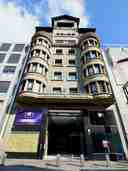
Sorry, I can’t see the Hotel Bellavista in the image you provided. To spot it in person, look for a historic building along Avinguda Meritxell, number 26, now hosting a Pizza Hut…Leggi di piùMostra meno
Sorry, I can’t see the Hotel Bellavista in the image you provided. To spot it in person, look for a historic building along Avinguda Meritxell, number 26, now hosting a Pizza Hut on its ground floor-it’s the one with the heritage façade. Now, as you’re standing in front of the Hotel Bellavista, close your eyes and let your imagination whisk you back to the late 1930s. The air is cool and crisp in the mountains, travelers are stepping off horse-drawn carts with their suitcases, and there’s a gentle bustle as the grand new hotel opens its doors. You can almost hear the clatter of footsteps on freshly laid tile and the creak of suitcases rolling across the lobby. Built from 1938 to 1940, the Hotel Bellavista was one of the jewels of Andorra la Vella-just imagine the chats and laughter echoing through its halls as skiers and dreamers from all over Europe gathered here for mountain adventures and a taste of the good life. But times changed! Today, the scent wafting from the Pizza Hut is more mozzarella than mountain air, and the once-grand lobby now echoes with the ring of the takeaway bell! Still, the building’s face, officially protected since 2004, stands as a quiet witness to all those stories. So next time you grab a slice, remember: you might be munching where secret romances and grand plans once began. Not every pizza place can say that, right?
Apri pagina dedicata →Look ahead for a proud, three-story stone and cream-colored building with long balconies and big arched doors-it sits right on Avinguda de Meritxell, and you can’t miss it if…Leggi di piùMostra meno
Look ahead for a proud, three-story stone and cream-colored building with long balconies and big arched doors-it sits right on Avinguda de Meritxell, and you can’t miss it if you’re just past the National Library. Welcome to Casa Felipó-Andorra’s very own time machine, hiding in plain sight! Picture the year: 1948. The world was buzzing with new hopes after a world war, and here, local families wanted a home that was as grand as their dreams. Imagine polished marble echoing with footsteps, balconies filled with the laughter of children, and the sweet scent of fresh bread drifting from bakeries nearby. This house was not only a family home but also the stage for Andorra’s own little dramas: business deals whispered on the balconies, secrets swapped over morning coffee, and maybe, just maybe, a nosey neighbor or two peeking through the curtains-hey, don’t pretend you wouldn’t! Casa Felipó is officially protected by Andorra as a slice of its heritage. Its thick walls have seen generations come and go, witnessed all the changes along Meritxell Avenue, and managed to stay chic through every passing fashion. Next time you’re picking your next vacation outfit, just remember: this place has been stylish since 1948. So stand here for a moment and imagine voices echoing off the walls, a family returning from market, and a city growing up all around this stately home. And don’t get any ideas-those balconies aren’t for sneaking out at midnight!
Apri pagina dedicata →
Mostra altre 9 tappeMostra meno tappeexpand_moreexpand_less
To spot Casa de la Vall, look for a solid, rectangular stone building with wooden shutters and two small round towers on each front corner, directly ahead against the dramatic…Leggi di piùMostra meno
To spot Casa de la Vall, look for a solid, rectangular stone building with wooden shutters and two small round towers on each front corner, directly ahead against the dramatic backdrop of the mountain. Now, ready for some time travel? You’re standing where over 400 years of Andorran secrets, arguments, parties, and political plots have unfolded-welcome to Casa de la Vall! This sturdy old house was built back in 1580 by the wealthy Busquets family. Just imagine them hauling massive stones up onto this rocky perch (probably complaining the whole way, as anyone would), so their home would overlook the sparkling valley below. You’ll spot their mark right above the door: a coat of arms, the name “ANTO. B / 1580,” and a carved tree-like the world’s earliest personalized doorbell. The Busquets’ house wasn’t just fancy-it was practical. The thick stone walls kept out mountain chills, and, just in case things got lively (think religious wars, not just rowdy kids), there are even hints of defensive, military touches that probably kept both invaders and nosy neighbors away. Inside, the ground floor was the storeroom-stuffed with food and supplies. Upstairs, the family gathered in a wide, social room called the soler, perfect for sharing stories, feasts, and maybe the latest village gossip. There’s a curious custom in Andorra: wealthy families like the Busquets always kept a special “bishop’s room” ready-in case the bishop or coprince happened to drop by. Talk about unexpected guests! If he did turn up, the hosts earned instant social prestige, plus probably a few extra desserts for dinner. But in 1702, the Busquets sold the house-and its story really took off. The government, known as the Consell de la Terra, moved in and made this home one of Europe’s oldest working parliaments. Picture the ancient valley folk, gathering to hash out laws using the privilege given by a bishop all the way back in 1419. Some say they were meeting even earlier...so you’re standing where arguments about sheep and taxes have echoed for centuries. But, as with all old houses, adjustments were needed! The entrance became a stable for the politicians’ mules and horses (no parking meters back then). Later, it even hosted the prison-tucked right under the stairs. I wonder if anyone ever tried to trade secrets for an extra bit of bread. Walking inside, you’d find the grand “Salle of Lost Steps,” not because counselors lost their socks, but because here they’d pace, debate, and maybe hatch plans before heading into official meetings. Around you, the walls now display symbols of Andorran pride-from flags and shields to old paintings of Christ’s Passion. There’s even a cabinet secured with seven locks-a true “national treasure” chest, holding all those crucial government documents and requiring a key from every parish. The kitchen? Think huge open fire, oversized pots that could stew an entire sheep, and a bread oven-all warmed by roaring flames as counselors sheltered from blizzards, telling stories and feasting together while working into the night. I like to imagine the echoes of laughter, the hissing of stew on the fire, and maybe the sound of an impatient counselor ringing the old bell to summon everyone upstairs for an urgent vote. The second floor was transformed into the main session room for parliament, filled with simple chairs, heavy cloaks, and-presiding overall-the ever-serious faces of the co-princes. There’s even a special bell rung by the eldest counselor from the Canillo parish before each meeting-a tradition as old as the mountains! Over time, the parliament outgrew the house and moved sessions to a larger building in 2011, but Casa de la Vall still hosts special occasions, like Constitution Day and Saint Thomas’s Day. All around outside, you’ll notice sculptures-a tribute to 700 years since the signing of the pariatges, a dramatic pair dancing a traditional contrapàs, and even pieces dedicated to Andorra’s poets and those who voted for the modern Constitution. The defensive tower at the back? It’s not just for show. It once guarded the approach to Andorra la Vella, reminding everyone: this is the house where Andorra’s story was shaped, debated, and fiercely protected. So as you stand here, take a moment to listen for the ghosts of old counselors, a clattering horse, or a whispered plot behind the thick walls-a home, a fortress, and the beating heart of Andorra’s past!
Apri pagina dedicata →To spot the Poliesportiu d'Andorra, look for the huge, angular building with a light grey roof and sharp corners-it stretches out like a giant gem right next to the football field…Leggi di piùMostra meno
To spot the Poliesportiu d'Andorra, look for the huge, angular building with a light grey roof and sharp corners-it stretches out like a giant gem right next to the football field in front of you. Alright, stretch your legs and take a breath-it’s game time! Imagine yourself in 1991: the doors of this brand-new arena swing open, crowds pour in, and the buzz of excitement fills the crisp Andorran air. Back then, Poliesportiu d'Andorra could hold 3,000 fans, all eager to see their favorite teams. But by the mid-90s, basketball fever exploded as BC Andorra played in the top Spanish league, and suddenly the arena had to grow, squeezing in 5,000 roaring fans with extra seats. Picture intense handball matches, the slap of futsal balls, and even the rumble of roller hockey’s Final Eight-imagine the scraping of skates and the thud of a goal in 2011! When 2014 rolled around and BC Andorra climbed back to the top again, the government said, “Let’s make this place even bigger!” So now, there’s plenty of space for everyone, from athletes lifting weights in the gym to VIPs clapping from their fancy seats. If these walls could talk, they’d whisper about the thrill of victory, the agony of defeat, and the echoing laughter and cheers of a crowd that just can’t get enough of the game.
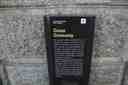
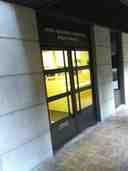
Apri pagina dedicata →To spot the National Archives of Andorra, look for a set of glass doors framed by pale stone columns with the words “ARXIU NACIONAL D’ANDORRA” written above in white…Leggi di piùMostra meno
To spot the National Archives of Andorra, look for a set of glass doors framed by pale stone columns with the words “ARXIU NACIONAL D’ANDORRA” written above in white letters-you’ll find it right at street level in front of you. Welcome to the National Archives of Andorra! Imagine yourself stepping into a time capsule, right here in Andorra la Vella, where every letter and faded photograph holds a secret, just waiting for you to discover it. Established in 1975, this isn’t just any ordinary building-it’s the official memory bank of Andorra. If you listen closely, you might even imagine hearing as you pass the entrance! Back when the archives first opened, the historian and civil servant Lídia Armengol i Vila set out on a brave mission: gathering stories, balancing stacks of dusty folders, and making sure not a single important memo vanished into the mountain winds. The hallways here are lined with shelves bursting with treasures-ancient government reports, handwritten notes, letters traded in moments of hope or worry, and countless photographs. Each item was rescued from attics and offices across the country, now guarded by the Ministry of Culture. But it isn’t all just paperwork! The Archives have mastered the art of keeping things organized-using clever inventories, mysterious-sounding “evaluation tables,” and hefty transfer sheets that keep the river of documents flowing smoothly. And let’s not forget the documentaries: the Archives even produced a film, “El mirador d’Andorra,” sharing the adventures of TV director Jordi Sasplugas Mateu. I’d say you’re standing next to the ultimate behind-the-scenes VIP lounge of Andorra’s history! So, while it might look quiet from outside, inside these doors are stories of bold plans, careful decisions, and sometimes a little chaos-just like any good adventure! With every record, Andorra’s past comes alive for those curious enough to peer through the files. Wonder what mysteries you might uncover if you stepped inside?
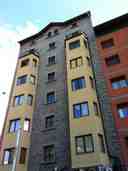
Apri pagina dedicata →To spot Casa Palmitjavila, look for the tall building with a unique stone façade and yellow windowed towers on either side-it’ll be towering above you, wedged snugly between two…Leggi di piùMostra meno
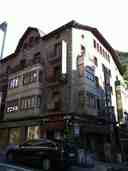
To spot Casa Palmitjavila, look for the tall building with a unique stone façade and yellow windowed towers on either side-it’ll be towering above you, wedged snugly between two more modern-looking buildings. Now, let’s take you back in time, to the cheerful days of the 1950s. Imagine this spot on Avinguda Carlemany, before the crowds and cars, just the crisp Andorran air and the excitement of a town on the rise. Here, the builders of Casa Palmitjavila carefully placed each stone, shaping a house strong enough to guard stories for generations, yet modern enough to wink at the future with its bright, geometric towers. If you listen carefully, you might almost hear the clink of stone on stone, the laughter of workers, and the proud sighs of the Palmitjavila family as their home took shape between 1953 and 1956. Rumor has it, every window was positioned to catch the perfect bit of sun-maybe a clever trick, or maybe just a dash of 1950s optimism. Recognized as a cultural treasure today, Casa Palmitjavila stands as a reminder that even in a small mountain country, style and heritage go hand in hand. And hey, if these walls could talk, they’d surely brag about being stars of Avinguda Carlemany, never missing a single parade or festival!
Apri pagina dedicata →Look ahead on the left side of the avenue for a tall, charming stone and brick building with little iron balconies and round-arched windows right above the shops-you can’t miss…Leggi di piùMostra meno
Look ahead on the left side of the avenue for a tall, charming stone and brick building with little iron balconies and round-arched windows right above the shops-you can’t miss it! Take a deep breath and imagine the year is 1946. Europe is dusting itself off after the turmoil of World War II, and here in the mountain air of Andorra, something brand new is taking shape-Casa Vidal rises proudly on Avinguda Carlemany, not flashy, but quietly solid. Picture the scent of fresh mortar and cut granite mixing with roasted chestnuts from a street vendor. The workers, maybe still in their suspenders, are laughing and calling to each other from those little iron balconies, arguing about who’s got the best recipe for trinxat, a classic Andorran dish. As the sun sets, the new electric lights flicker on, casting a soft golden glow against the stone walls and making the round windows gleam. Throughout its life, Casa Vidal didn’t just shelter families; it witnessed secrets whispered behind heavy shutters, birthdays, goodbyes, and a few wild card games that went on way too late. Andorra was changing, and this house stood firm, becoming a landmark-a registered treasure in Andorra’s Cultural Heritage. If these stones could talk, they’d have stories to make you laugh, sigh, and maybe look over your shoulder… just in case one of those old card sharks is still hanging around.
Apri pagina dedicata →To spot the Església de Sant Pere Màrtir, look ahead for a tall, square stone bell tower with rows of Romanesque-arched windows and a church building of rough grey stone blocks…Leggi di piùMostra meno
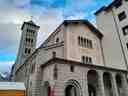
To spot the Església de Sant Pere Màrtir, look ahead for a tall, square stone bell tower with rows of Romanesque-arched windows and a church building of rough grey stone blocks beside it. Imagine yourself standing right here in front of these sturdy stone walls, where every block almost whispers stories of the past. The church might look ancient, but it’s actually a 20th-century marvel, stretching its roots gently back to 1956 when construction began. Josep Danés, the man with the plan, wanted to echo the classic Romanesque style-so he gave the church its grand square bell tower, three rows of windows, and a basilica layout, much like those from Andorra’s distant past. If you listen closely, you might almost hear the bells above, named Maria, Anna, and Jacoba, chiming through the valley since 1981. But don’t let the stony exterior fool you-step inside, and you’d discover color spilling from stained glass crafted in Barcelona and murals painted by Núria Llimona. Sixteen saints gaze down, mysterious and mostly unknown, silently watching over the rows. Against the wall sits a Baroque altarpiece, rescued from an older church. It’s almost like you’ve stumbled into a secret art gallery wearing a very convincing church disguise! This church is no stranger to history-making moments, either. In 2023, it echoed with both grief and respect during the state funeral of former prime minister Antoni Martí. You can almost imagine the quiet murmur of the crowd, the solemn footsteps on ancient stone, and the air heavy with memory as the highest ranks of Andorra paid their respects here. Whether you’re drawn by art, architecture, or the thrill of standing somewhere so meaningful, the Església de Sant Pere Màrtir wraps up our journey with a blend of old-world charm, modern spirit, and just a dash of mystery. Take a deep breath-the air here is thick with stories, waiting just for you.
Apri pagina dedicata →


Domande frequenti
Come inizio il tour?
Dopo l'acquisto, scarica l'app AudaTours e inserisci il tuo codice di riscatto. Il tour sarà pronto per partire immediatamente – tocca play e segui il percorso guidato dal GPS.
Ho bisogno di internet durante il tour?
No! Scarica il tour prima di iniziare e goditelo completamente offline. Solo la funzione chat richiede internet. Ti consigliamo di scaricare tramite WiFi per risparmiare dati mobili.
È un tour guidato di gruppo?
No – è un tour audio autoguidato. Esplori in autonomia al tuo ritmo, con la narrazione audio riprodotta dal tuo telefono. Nessuna guida, nessun gruppo, nessun orario.
Quanto dura il tour?
La maggior parte dei tour richiede 60–90 minuti, ma sei tu a controllare il ritmo. Metti in pausa, salta le tappe o fai pause quando vuoi.
E se non riesco a finire il tour oggi?
Nessun problema! I tour hanno accesso a vita. Metti in pausa e riprendi quando vuoi – domani, la prossima settimana o il prossimo anno. I tuoi progressi vengono salvati.
Quali lingue sono disponibili?
Tutti i tour sono disponibili in oltre 50 lingue. Seleziona la lingua preferita quando riscatti il codice. Nota: la lingua non può essere cambiata dopo la generazione del tour.
Dove accedo al tour dopo l'acquisto?
Scarica l'app gratuita AudaTours dall'App Store o Google Play. Inserisci il codice di riscatto (inviato via email) e il tour apparirà nella tua libreria, pronto per essere scaricato e avviato.
Se il tour non ti piace, ti rimborseremo l'acquisto. Contattaci a [email protected]
Pagamento sicuro con 


