नॉरफ़ॉक ऑडियो टूर: पवित्र प्रतीकों से समुद्री किंवदंतियों तक
एक विशाल युद्धपोत बंदरगाह पर मंडरा रहा है, जबकि कुछ ही ब्लॉक दूर सदियों पुरानी खिड़कियों से अनमोल कांच चमक रहा है—नॉरफ़ॉक अपने सबसे जंगली रहस्यों को खुलेआम छिपाता है। इस स्व-निर्देशित ऑडियो टूर के साथ शहर को एक जीवंत कहानी की किताब में बदल दें। अपनी गति से घूमें और उन नाटकों और जिज्ञासाओं को खोजें जिन्हें अधिकांश आँखें भीड़भाड़ वाले गलियारों और बगीचों में छिपी हुई नहीं देख पातीं, जो मुख्य मार्ग से हटकर हैं। किस चौंकाने वाले घोटाले ने मैकआर्थर सेंटर को रातोंरात राष्ट्रीय सुर्खियों में ला दिया? क्रिसलर संग्रहालय की दीर्घाओं से कौन गायब हो गया, जो एक ऐसा रहस्य छोड़ गया जो अभी भी संग्रह को परेशान करता है? नौटिकस में कौन सी प्राचीन कलाकृति एक ऐसी मूल कहानी रखती है जो कल्पना से भी अजीब है? राजनीतिक झगड़ों और गुप्त कृत्यों की गूँज का पता लगाएं क्योंकि शहर की दीवारें खोए हुए इकबालिया बयानों को फुसफुसाती हैं। हर कदम नॉरफ़ॉक के लालित्य और साज़िश के मिश्रण पर नई रोशनी डालता है। नॉरफ़ॉक के सबसे अच्छे रहस्यों को उजागर करने के लिए तैयार हैं? रोमांच यहीं से शुरू होता है—गहराई से देखने की हिम्मत करें।
टूर पूर्वावलोकन
इस टूर के बारे में
- scheduleअवधि 40–60 minsअपनी गति से चलें
- straighten4.1 किमी पैदल मार्गगाइडेड पथ का पालन करें
- location_onस्थानNorfolk, संयुक्त राज्य
- wifi_offऑफ़लाइन काम करता हैएक बार डाउनलोड करें, कहीं भी उपयोग करें
- all_inclusiveलाइफ़टाइम एक्सेसकभी भी, हमेशा के लिए फिर सुनें
- location_onनिर्मल गर्भाधान की सेंट मैरी का बेसिलिका से शुरू होता है
इस टूर के स्टॉप
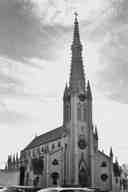
If you’re looking for the Basilica of Saint Mary of the Immaculate Conception, just glance up for a tall, pointed steeple topped with a cross-its dramatic spire and ornate Gothic…और पढ़ेंकम दिखाएँ
If you’re looking for the Basilica of Saint Mary of the Immaculate Conception, just glance up for a tall, pointed steeple topped with a cross-its dramatic spire and ornate Gothic details rise above the neighborhood like a ship’s mast on a calm harbor. Welcome to the “Mother Church of Tidewater Virginia”-but don’t worry, she’s friendly and doesn’t mind visitors! Picture it: the year is 1791, the streets are muddy, and French Catholic refugees, chased from their homeland by revolution, bring their hopes and prayers to this very spot. The salty air tingles with excitement as newcomers from Ireland join them, forming the oldest parish in the Diocese of Richmond-almost three decades before the diocese itself! The first church building went up in 1842, but this was the South, and racial divisions sat thick in the air. African American Catholics were allowed only in the choir loft-unless, that is, Fr. Matthew O’Keefe stepped in, refusing to bow to local intolerance. Angry protests erupted, and threats arrived from the Know Nothings, who tried to bully their way in. As tension gripped the city, Fr. O’Keefe called for help, and soon, the soft shuffling of police boots could be heard protecting parishioners gathering for Mass. Disaster struck in 1856 when flames turned everything to ash. The fire’s cause? Many whispered accusations against those same Know Nothings, and amid the crackle and pop of burning timber, priceless treasures were lost-including a painting sent by the King and Queen of France. But as with so many great stories, out of the ashes came something even grander! By 1858, the church standing before you was built anew with towering spires and bright stuccoed walls. Rededicated to the Blessed Virgin Mary of the Immaculate Conception, its new name echoed a recent proclamation by Pope Pius IX and gave hope to a city craving unity. Generations marched on: Sunday mornings filled with laughter and song, children ferried through St. Mary Academy, and neighbors gathered for warm meals in the church’s outreach kitchen. Tough times couldn’t hold the parish down-even when, in 1961, nearby Saint Joseph’s merged with St. Mary’s, sewing together a vibrant, almost entirely Black parish brimming with soul and spirit. Jump to 1979, and the grand old church joined the National Register of Historic Places, with major renovations bringing back her former glory. But the best was yet to come: in 1991, Pope John Paul II named St. Mary’s a minor basilica-the first and only in Virginia, shining as a beacon for the nation’s Black Catholic heritage. Oh, and just in time for her 200th birthday, workers burrowing into her walls discovered a hidden world below: mysterious tunnels and crypts, maybe walked by those seeking freedom via the Underground Railroad. Even the church’s mighty organ got its voice back after decades of silence. So, as you stand here, close your eyes and imagine footsteps echoing in these halls over hundreds of years-laughter, tears, prayers, struggle, and hope rising like the sunlight dancing on that spire. And if you think the building looks familiar, maybe it’s because her “twin” lives up in Maryland, thanks to Fr. O’Keefe’s adventurous blueprints. Come on inside if you like-the Mother Church is always ready to share a story or two!
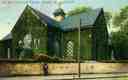
समर्पित पेज खोलें →Look for a small, colonial-era brick church almost entirely covered in lush green ivy with a classic pitched roof and a tall, old brick wall running alongside it-if you spot that,…और पढ़ेंकम दिखाएँ
Look for a small, colonial-era brick church almost entirely covered in lush green ivy with a classic pitched roof and a tall, old brick wall running alongside it-if you spot that, you’ve found Saint Paul’s! Now, as you stand here, imagine Norfolk in 1739-horses clopping down dusty paths, townsfolk chattering, and this very church just being finished, ready to welcome its first congregation. Over nearly 300 years, Saint Paul’s Episcopal Church has survived more plot twists than your favorite TV series! It started as a proud Church of England parish, but after the Revolutionary War and change swept Virginia, it swapped hands faster than a hot potato-first to a group of passionate Baptists, then finally back to the Episcopalians, who still call it home today. But the real drama came with a bang-literally-on January 1, 1776. Norfolk was at war, and Lord Dunmore, a British loyalist, was sailing away after losing at the Battle of Great Bridge. He decided to fire one last parting shot...and a cannonball from his ship, the Liverpool, came screaming towards the town. Suffolk erupted in flames as patriots set loyalist homes alight, and nearly everything was burned to the ground-except this tiny church! Miraculously, Saint Paul’s was the only major building to escape real harm. But the legend doesn’t stop there: the cannonball itself smashed into the church wall. It disappeared for a while, but in the 1840s, workers digging in the yard dug it up-and thought, “Let’s put it back!” So yes, that old cannonball is still sitting there, plain as day. Through the Civil War, Saint Paul’s became a chapel for Union soldiers, and during World War II, even Lord Louis Mountbatten couldn’t resist poking fun at the near-miss: “Damn near missed its target!” he quipped while visiting. Even General Douglas MacArthur’s final journey passed through these doors, with his funeral held right here before he was laid to rest nearby. So take a moment to imagine all those voices, stories, and even cannonballs echoing through these walls-if those ivy-covered bricks could talk, I bet they’d have a few secrets to share.
समर्पित पेज खोलें →Look for a big, brick-and-stone building with a tall, white-trimmed façade, Regal Cinemas signs out front, and rows of classic lamp posts lining its upper terrace-you really can’t…और पढ़ेंकम दिखाएँ
Look for a big, brick-and-stone building with a tall, white-trimmed façade, Regal Cinemas signs out front, and rows of classic lamp posts lining its upper terrace-you really can’t miss it right in front of you. Welcome to the MacArthur Center! Picture it: it’s the 1990s, and this whole 17-acre area was just sitting empty, holding its breath for decades since the old City Market and then the Systems Management America tower disappeared with a spectacular implosion. Suddenly, the Taubman Company swoops in with big dreams, laying the bricks for a gigantic, modern shopping palace in downtown Norfolk. By March 1999, the doors swing open and people stream in, curious and excited, eyes wide with wonder at a place stuffed with everything from food courts to a massive Regal movie theater. The MacArthur Center is practically glowing with the promise of endless shopping-and probably a few sore feet. But here’s the twist: just as soon as the mall hits its stride, times start to change. Picture the constant buzz of excited shoppers and holiday jingles, suddenly thinning out, almost like the music’s fading. By the late 2010s and into the pandemic, something called the ‘retail apocalypse’ sweeps through. Major stores-think Nordstrom and Apple-close their gates, leaving whole wings eerily quiet. Anchor stores vanish; familiar smells from Williams Sonoma and Pottery Barn drift away for good. Even fun spots like the holiday ice skating rink “MacArthur on Ice” pack up their skates. Now, here’s a bit of suspense for you: in 2021, the city of Norfolk decides to grab the keys and buy the whole shebang. The future becomes a giant question mark. Strong winds of change blow through-Dillard’s shrinks to a clearance store, entrances close off, and the city starts talking about demolishing the mall to make space for something new. Yet even now, MacArthur Center is holding on, still open, standing proud and a little mysterious, with only echoes of laughter and the click of departing doors as its constant companions. So, take a good look! You’re standing in front of a piece of living history-once the sparkly heart of Norfolk commerce, now a stage for the next chapter in the city’s evolution. If walls could talk, this mall would surely have some wild stories-and maybe a few shopping secrets-left to spill.
समर्पित पेज खोलें →
9 और स्टॉप दिखाएँकम स्टॉप दिखाएँexpand_moreexpand_less
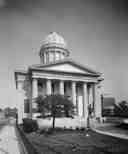
Directly ahead, look for a grand, white stone building with a big dome on top and a row of six thick columns standing guard out front-like ancient Roman bodyguards for Norfolk’s…और पढ़ेंकम दिखाएँ
Directly ahead, look for a grand, white stone building with a big dome on top and a row of six thick columns standing guard out front-like ancient Roman bodyguards for Norfolk’s history. Standing here in front of Norfolk City Hall, you’re stepping onto ground where whispers of city secrets and the stomping heels of history still echo. Picture it back in 1847-this spot was the pride of the city, a stunning two-story building dressed up in fancy stucco and granite, looking like it was just waiting for Zeus to walk out of the front door. For over 70 years, city officials buzzed in and out with important papers, while gavel-wielding judges ruled the courtrooms above. You’d have heard the clatter of shoes on marble floors and maybe even caught the scent of candle wax drifting through the halls on a chilly day. But the story takes a twist that even Norfolk’s most dramatic court cases couldn’t predict. In 1961, workers stripped the entire interior, not for a renovation, but to make room for the memories-and final resting place-of General Douglas MacArthur and his wife! Now, it’s a museum and a tomb, filled with stirring tales of heroism and sacrifice. The city offices and courts are long gone, but this landmark still keeps watch over Norfolk, with the spirits of its past just waiting to say hello to visitors like you. Now, if you hear footsteps behind you-don’t worry, it’s probably just history trying to catch up!
समर्पित पेज खोलें →Look up! You’ll spot the tall, pale stone column topped with a statue of a soldier, right in the cluster of modern glass buildings-almost like history stretching its neck above…और पढ़ेंकम दिखाएँ
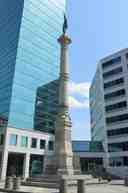
Look up! You’ll spot the tall, pale stone column topped with a statue of a soldier, right in the cluster of modern glass buildings-almost like history stretching its neck above the city. Alright, traveler, you’re now standing where generations of Norfolk residents once gazed at a monument that sparked plenty of chatter and, let’s be honest, more than a little bit of controversy. The Confederate Monument once dominated this space, rising high with a marble column and the steadfast figure called “Johnny Reb” keeping watch over downtown. When it was first built in 1907-thanks to the efforts of the United Daughters of the Confederacy-picture locals in long dresses and bowler hats bustling about, probably wondering if “Johnny Reb” ever got tired up there. The monument had all the trappings: “Our Confederate Dead, 1861-1865” carved in stone, the initials “CSA” for Confederate States of America, and even a battle flag. It was designed by J. D. Couper and sculpted by William Couper, and looked right at home in front of the museum-well, until it didn’t. Funny thing: in 1965, the monument was moved to build a bank, only to come back six years later-kind of like a stubborn lawn ornament you just can’t get rid of. Fast forward to the 21st century, and the story gets a little rocky. Sometimes folks called for its removal, and even gave it a new paint job with a bit of vandalism. But in June 2020, after years of debate-and one very dramatic crane ride-Norfolk decided to take Johnny down for good. Crowds gathered, cameras clicked, and as the statue lifted into the air, who knows if ol’ Johnny heard the whispers of history changing beneath him. Now, Johnny and his monument keep a quieter watch at Elmwood Cemetery, minus the towering column. And right here, you’re left with a story that’s seen its share of change-reminding us all that even stone can move when history demands it.
समर्पित पेज खोलें →Right ahead you’ll spot the Waterside District-just look for the big, modern building with slanted silver rooftops and vibrant murals, right along the waterfront, with the busy…और पढ़ेंकम दिखाएँ
Right ahead you’ll spot the Waterside District-just look for the big, modern building with slanted silver rooftops and vibrant murals, right along the waterfront, with the busy harbor and massive ships in the background. Welcome to the Waterside District, where the air’s always buzzing with excitement and, if you listen closely, you might almost hear the clink of glasses or the sizzle from kitchens on the breeze. Now, rewind your mind to the late 1970s. Back then, downtown Norfolk wasn’t exactly a party spot-it needed a bit of sparkle. Enter James W. Rouse and his festival marketplace dream! By 1983, this riverside spot sprang to life, a place where you could grab fresh seafood at The Baitshack, browse nautical shops, and rack up some tickets in the arcade upstairs. Picture kids laughing, music drifting out over the water, and a feeling that something new was coming to the riverfront. But every great story hits a twist. By the 1990s, competition was tough. The shiny new MacArthur Center nearby drew crowds away, and Waterside slipped into quieter days. Norfolk eventually bought it up, hoping for a comeback-but honestly, the vibe felt more like a low-tide afternoon than a festival. Fast forward to a big moment in 2015: everything gets a fresh start! The old Waterside Annex comes down with a dramatic crash and rumble, making space for new dreams. The modern-day Waterside District arrives in 2017, more electrifying than ever, packed with restaurants, bars, and live entertainment-all hugging the waterfront, with the Portsmouth ferry zipping by out front and the baseball park just a stroll away. Even the spectacular SkyStar Wheel paid a visit in 2018, giving folks a dizzying new view over the Elizabeth River. So now, whether you’re craving river breezes, delicious food, or a splash of nightlife, this spot continues to reinvent downtown Norfolk-one waterfront sunset at a time.
समर्पित पेज खोलें →Look for a grand gray granite building with sweeping steps and six tall, fluted columns in front of you-like a stone Roman temple plunked right in the middle of downtown; you…और पढ़ेंकम दिखाएँ
Look for a grand gray granite building with sweeping steps and six tall, fluted columns in front of you-like a stone Roman temple plunked right in the middle of downtown; you can’t miss it! Alright, traveler! Imagine you’re stepping back into the bustling heart of 19th-century Norfolk. The smell of salt from the harbor, the clip-clop of horses, the trill of steamboat whistles in the distance, and all eyes are on this imposing structure before you: the Owen B. Pickett United States Custom House. Talk about making a first impression! Picture this very corner at Main and Granby Streets-back in 1852, the U.S. government forked over the princely sum of $13,500 just for the land, which honestly, nowadays might only get you a parking spot. The Custom House looks just like a Roman temple-sturdy and proud. Six massive granite columns rise up to a triangular pediment, casting deep shadows across those famous sweeping stairs. As you approach, every footstep on the stone might make you feel like you’re entering some ancient bank vault of secrets (or at least, a place where people took their postal duties very seriously). Why such grandeur? Well, in the days before Amazon Prime, customs offices were a city’s lifeblood. They made sure every barrel, bolt, and bale entering port paid its dues, and Norfolk, thanks to its bustling waterfront, was one of the nation’s earliest customs districts. Before this mighty house, the Customs Service folks were shuffling paperwork in rented spaces scattered all over town. When this place was finished in 1858-after five long years of hammers, saws, and budget overruns (the original price tag doubled faster than you can say “import tax”)-historians called it one of Norfolk’s “most showy and imposing” new landmarks. But the story here isn’t all bristling columns and majestic facades. Peek through those elongated windows and you’ll find secrets: inside, a corridor ten feet wide, marble tiles cool to the touch, vaulted ceilings echoing voices, and, if you’d been here long ago, maybe the clatter of Union boots. For one brief spell between April 1861 and May 1862, the Confederacy claimed these very halls. What did they whisper about in those offices, fires flickering in marble hearths? The only ones who know for sure are the shadows. There’s humor here too if you look-those side entry doors? Originally made separate for men and women to post their letters. Apparently the post office lobby was the place for extreme civility (or perhaps just extreme gossip). As the city grew, so did the Custom House. Improvements came along in the early 1900s: new sash windows, a rear addition in 1935, and a grand restoration in the late 1990s, costing a cool three million dollars-more than Ammi B. Young, the original architect, could’ve ever imagined! Even the cast-iron columns inside have been decorated with a special Virginia touch: capitals at the tops are carved with a tobacco leaf motif, a little wink to the region’s key crop. Over the years, the building has sheltered not just customs officers but postmasters, architects, builders, and local legends. It was renamed in 2001 to honor Congressman Owen B. Pickett, who fought to preserve these precious bricks and stones. And in 1970, it officially became part of the National Register of Historic Places, cementing its legacy. Now, with the Modern Age nipping at its heels, the future of the Custom House hangs in the balance. “Non-core property,” they say-ready for a new chapter, even as its columns stand vigilant over hundreds of years of Norfolk history. Take a moment here to imagine: clanging carriage wheels, booming ships’ horns, and merchants hurrying up those steps, all echoing in the air. Pretty legendary for a building that started out as a paperwork storehouse, right? If only the walls could talk-you’d have enough stories, mysteries, and wild characters for a whole season on streaming TV. Maybe next, you’ll find your own secret here in the shadow of those grand granite columns.
समर्पित पेज खोलें →Look for a large, modern building with bold turquoise letters spelling “NAUTICUS” on the left side and “Hampton Roads Naval Museum” on the right-head towards the glassy windows in…और पढ़ेंकम दिखाएँ
Look for a large, modern building with bold turquoise letters spelling “NAUTICUS” on the left side and “Hampton Roads Naval Museum” on the right-head towards the glassy windows in the middle and you’ve found your destination! Alright, sailor, drop anchor and take in the sights-because right in front of you sits a gateway to centuries of high seas adventure! The Hampton Roads Naval Museum may look sleek and modern, but step inside and you’ll be swept into salty winds, cannon smoke, and the buzz of submarines. This is one of just ten official Navy museums, and it’s run by the real pros at the Naval History & Heritage Command. But this isn’t just a place where you stroll past dusty displays. No, this museum is packed to the rails with ship models, dazzling naval prints, underwater treasures, and yes-some mysterious shipwrecks from the Civil War. You’ll find actual remains of the USS Cumberland and the CSS Florida, whose final battles left them sleeping beneath these very waters! Now, if these walls could talk, they’d have quite the tale. The museum didn’t always live in Nauticus: back in 1979, it opened in the stately Pennsylvania House, itself a replica of the original Independence Hall. Crowds flocked to see grand Civil War exhibits, and the city soon realized this collection needed to be center stage. So in 1994, the whole shebang steamed downtown and dropped anchor at Nauticus-doubling the exhibit space and ramping up the learning (and the fun). Here, the Battle of the Chesapeake crackles with tension, the Great White Fleet gleams under the museum lights, and hush-can you almost hear the distant clang of a battleship bell? Once, this museum even managed the great battleship USS Wisconsin berthed just outside-where generations have scrambled the decks for tours and tales. Keep an eye out for unexpected treasures: quirky special exhibits on animals in the Navy, spy secrets from the Cold War, and a blog bursting with trivia, all run by history buffs who live and breathe sea stories. Bet you didn’t think coming ashore in Norfolk could feel so much like setting sail!
समर्पित पेज खोलें →To spot Nauticus as you approach, look for a bold and colorful logo with a giant, swooping wave curling around the word “NAUTICUS” - it typically marks the entrance to this…और पढ़ेंकम दिखाएँ
To spot Nauticus as you approach, look for a bold and colorful logo with a giant, swooping wave curling around the word “NAUTICUS” - it typically marks the entrance to this exciting waterfront science center. Now, picture yourself standing here on Norfolk’s bustling waterfront, the salty breeze brushing your face as you look up at this modern marvel of maritime adventure. Nauticus is far more than just a museum - this place practically hums with the energy of the sea and the stories of sailors. Step back in time to 1988: Rear Admiral Jackson Knowles Parker, a true sea dog who once commanded the mighty Norfolk Naval Base, sets out to create a place that celebrates the spirit of the ocean and the adventure of science. Less than a decade later, Nauticus rises where the old Banana Pier once stood, opening its doors in June 1994 … and ever since, it’s been the coolest port in town. The magic starts right at the Half Moone Cruise and Celebration Center next door. A gleaming 80,000-square-foot gateway for travelers and cruise-goers, it sits at the exact spot where, way back in 1673, a “half moone”-shaped fort defended Virginia’s growing maritime industry. Picture the sound of distant waves and the shouts of early settlers preparing their cannons! These days, the Half Moone welcomes sleek cruise ships, eager tourists, and even the occasional VIP, but the spirit of adventure - and a touch of old-world mystery - lingers in its air. Speaking of legends, did you notice the enormous battleship docked nearby? That’s the USS Wisconsin, one of the biggest battleships the U.S. Navy ever built! She first sailed in 1943, just after the world was plunged into the chaos of World War II. Wisconsin thundered across the Pacific, playing a key role in defeating Japanese forces, and later, in both the Korean and Gulf Wars. Imagine the rattle of shells, the rush of crewmen on deck, and the first Tomahawk missile streaking off her bow in 1991. This massive ship retired in 1996, but on a fitting April day in 2010, the Navy handed her over to the city - now, everyone from local schoolkids to world travelers gets a chance to walk her teak decks and dream of heroic journeys. But Nauticus has even more in store for you! Venture inside, and you’ll find gigantic aquariums, playful hands-on exhibits, and nautical theaters showing high-def films that’ll make you feel like you’re on the high seas. Kids race toward Aquaticus and its giant indoor slide, while explorers dive into the Norfolk in Time exhibit to unravel the city’s layered story of resilience. Upstairs, the Hampton Roads Naval Museum beckons you to step into the shoes of sailors and captains. If you’re feeling adventurous, you can hop aboard a Victory Rover cruise to scout the world’s largest naval base, or maybe join Sail Nauticus to learn maritime skills, STEM-style. Whether you’re watching dolphins leap beside your boat or hearing a story about a pirate-haunted harbor, one thing’s certain: Nauticus is where science, the sea, and a touch of mystery all come together, right here on Norfolk’s unforgettable waterfront.
समर्पित पेज खोलें →Just across from you, the mighty USS Wisconsin looms like a gentle giant. But right here, Wisconsin Square whispers quieter, more solemn tales. These memorials you see pay tribute…और पढ़ेंकम दिखाएँ
Just across from you, the mighty USS Wisconsin looms like a gentle giant. But right here, Wisconsin Square whispers quieter, more solemn tales. These memorials you see pay tribute to the brave men and women who sailed out of Norfolk, facing danger, duty, and sometimes tragedy. They commemorate sailors from the USS Kearsarge, which lost 30 crew in 1948, and the USS Forrestal, where a deadly fire in 1967 tested every sailor’s courage. There are plaques for the tragic 1967 Liberty incident, the eerie, total loss of USS Scorpion in 1968, and the shock of a misfire aboard the USS Newport News in 1972. It’s not all bow ties and ship’s bells here, but speaking of bells - keep your eyes peeled for the ship’s bell from USS Norfolk (DL-1). And don’t miss the powerful statue, The Lone Sailor, standing ever-watchful, as if awaiting the return of friends. From the violent explosion aboard USS Iowa in 1989 to the USS Cole bombing in 2000, and even the Pentagon on September 11, these memorials gather pieces of Navy history. Wisconsin Square is small, but if every plaque could talk, you’d be here all week! Soak up the stories - and try not to get ship-wrecked by emotion. Shall we continue?
समर्पित पेज खोलें →To spot the Chrysler Museum of Art, look straight ahead for a grand, light-stone building with three red-roofed towers and a row of stately arches right along the water’s…और पढ़ेंकम दिखाएँ
To spot the Chrysler Museum of Art, look straight ahead for a grand, light-stone building with three red-roofed towers and a row of stately arches right along the water’s edge. Alright, here you are in front of the legendary Chrysler Museum of Art-a building as dazzling as the treasures inside! Take a whiff of the cool, fresh breeze coming off the water; you can almost imagine the echo of artists’ footsteps and the quiet excitement of discovery. But the Chrysler wasn’t always a top-tier art museum. When it opened its doors back in 1933, it was just the Norfolk Museum of Arts and Sciences, a humble spot for locals with big dreams and, maybe, a few dusty fossils. But don’t worry, nobody turned into a dinosaur on their first visit-at least, not that I’ve heard! Now, let’s skip ahead to the early 1970s, when the real magic happened. Imagine: Walter P. Chrysler Jr., the son of the famous car magnate, had a collection that made other collectors drool… or maybe that’s just what they did at the car dealership. In 1971, he and his wife Jean-who was actually from right here in Norfolk-donated the bulk of their art treasures to the museum. Overnight, it was like the museum had powered up: its galleries swelled with paintings, centuries-old sculptures, and an almost endless parade of artistic genius. The New York Times even said, “This is a collection any museum would kill for”-but let’s be honest, the worst crime that’s happened here lately is someone getting caught staring at a Monet for too long. If you step inside, you’ll find yourself surrounded by over 35,000 objects, with masterpieces from five millennia. There are Renaissance superstars like Tintoretto and Rubens, moody Baroque marvels by Velázquez and Bernini (including his very last sculpture), and American legends from Copley right up to Warhol. It’s the ultimate stroll through art history-just don’t try to outpaint Picasso. You won’t win. But that’s not all. The Chrysler is known for its glittering glass collection-one of the largest in the country! Tiffany glass sparkles everywhere, and the nearby Perry Glass Studio hosts daily demonstrations and visiting artists from around the globe. You can actually feel the heat from the furnaces and the energy of creation when glass artists blow, twist, and shape new works right before your eyes. The studio tripled in size recently, thanks to a huge expansion finished in 2025. It’s now bursting with classes, events, and, if you’re lucky, some very enthusiastic glassblowers who’ve never dropped anything (on purpose, at least). Oh, and between the art, stop for a moment in Huber Court, the museum’s heart, which was once an open-air courtyard and is now a sunlit hall for concerts and celebrations. If you like a good story, this museum has plenty-from Rembrandt’s delicate etchings, to massive exhibitions featuring Hispanic masters like Goya and Sorolla, to a creative celebration of Jewish artists past and present. In 2014, the reopening featured a towering floating rubber duck in the reflecting pool outside! Seriously, art has never been so quacky. For true art aficionados, the Goode Works on Paper Center is a hidden gem. It’s a state-of-the-art spot for drawings, prints, and photographs-artworks too delicate for constant display, but always ready to be admired by curious minds. Don’t miss the Jean Outland Chrysler Library nearby. It’s a book lover’s paradise, halls full of rare art history volumes, auction catalogues, and even Mark Twain’s original speech from the Jamestown Exposition in 1907. The museum also oversees the Moses Myers House-a living glimpse into Jewish and American life in Norfolk during the 1800s. It’s filled with original furniture, portraits, and a vibe that makes you think dinner might be served any minute (assuming you’re wearing your best 19th-century bonnets). Every year, over 60,000 students and countless visitors soak up the wonders of this museum, guided by passionate docents who eat, sleep, and breathe art history. So, as you stand here, feel that sense of adventure in the air-a true journey across continents and centuries, all from the edge of a Norfolk pond. The Chrysler Museum is proof that you don’t need a time machine to witness the wonders of art-you just need a curious mind, and maybe, a little time to “reflect” by the water.
समर्पित पेज खोलें →Look ahead for a stately three-story red brick mansion with tall white columns and a charming portico, tucked behind blooming crepe myrtles right along West Bute Street-trust me,…और पढ़ेंकम दिखाएँ
Look ahead for a stately three-story red brick mansion with tall white columns and a charming portico, tucked behind blooming crepe myrtles right along West Bute Street-trust me, the impressive Greek Revival façade is hard to miss! Now, let’s take a magical leap back in time-imagine you’re standing outside Kenmure in the late 1840s. The scent of fresh figs, peaches, and roses wafts down from a grand garden leading all the way to the Elizabeth River, while the walls practically whisper tales from a truly fascinating Norfolk family. Built in 1845 for Margaret and William Lamb, movers and shakers in banking, shipping, and railroads, Kenmure’s earliest days were positively bustling with guests, laughter, and the daily routines of both family and a small army of servants-babies crawling underfoot, a wise old nurse watching over the upstairs, maybe even a few mischievous pranks between the parlors and the kitchen outbuilding. By 1855, the house gets an upgrade-now three stories tall with a cupola offering river views that must have made the neighbors green with envy. During the Civil War, Norfolk’s own William Wilson Lamb, who served as mayor, faced a true nail-biter: as Union soldiers marched into the city, he hid Norfolk’s historic silver mace (imagine a really important ceremonial city trophy) under the hearthstone of his children’s upstairs room. The soldiers never found it-talk about a hidden gem! Just think, the house was crawling with soldiers, clueless that beneath their very boots, a priceless piece of Norfolk’s history lay nestled in secret. After the war, William’s son, Colonel Lamb, remembered Kenmure with fondness-a place of river adventures, wild garden games, and feasts of cherries and pomegranates right from their own backyard. But like all grand homes, Kenmure’s fortunes changed; it became a boarding house, then stood silent and empty, eventually falling into such disrepair that vagrants moved in-certainly not the guests the Lambs would’ve welcomed! Rescue came in the 1970s when architect Frederick Herman and his wife Lucy restored Kenmure, filling it once again with energy and creativity-imagine blueprints and antique tools scattered over desks where mighty parlors had once hosted high society. Antique shops took over the basement, and, in a twist worthy of a TV show, the house even sheltered an architectural firm for a time. Today, Kenmure has returned to being a family home, lovingly restored by its latest caretakers. As you stand here, close your eyes for a moment and listen: you might just hear the echoes of children laughing by the river, the soft clink of the hidden mace, and the creak of old floorboards welcoming you into Norfolk’s living history. So, what do you think-would you rather have dinner with the Lambs, search for secret treasure, or just enjoy the garden? Either way, thanks for being a part of Kenmure’s story!
समर्पित पेज खोलें →
अक्सर पूछे जाने वाले प्रश्न
मैं टूर कैसे शुरू करूँ?
ख़रीदारी के बाद, AudaTours ऐप डाउनलोड करें और अपना रिडेम्पशन कोड दर्ज करें। टूर तुरंत शुरू करने के लिए तैयार होगा - बस प्ले टैप करें और GPS-गाइडेड रूट का पालन करें।
क्या टूर के दौरान मुझे इंटरनेट चाहिए?
नहीं! शुरू करने से पहले टूर डाउनलोड करें और पूरी तरह ऑफ़लाइन इसका आनंद लें। केवल चैट फ़ीचर को इंटरनेट की ज़रूरत है। मोबाइल डेटा बचाने के लिए WiFi पर डाउनलोड करने की सिफ़ारिश है।
क्या यह एक गाइडेड ग्रुप टूर है?
नहीं - यह एक सेल्फ-गाइडेड ऑडियो टूर है। आप अपनी गति से स्वतंत्र रूप से खोजते हैं, आपके फ़ोन से ऑडियो कथन बजता है। कोई टूर गाइड नहीं, कोई ग्रुप नहीं, कोई शेड्यूल नहीं।
टूर में कितना समय लगता है?
अधिकांश टूर पूरा करने में 60-90 मिनट लगते हैं, लेकिन गति पूरी तरह आपके नियंत्रण में है। जब चाहें रुकें, स्टॉप छोड़ें, या ब्रेक लें।
अगर मैं आज टूर पूरा नहीं कर सकता/सकती तो?
कोई समस्या नहीं! टूर की लाइफ़टाइम एक्सेस है। जब चाहें रोकें और फिर शुरू करें - कल, अगले हफ़्ते, या अगले साल। आपकी प्रगति सेव रहती है।
कौन सी भाषाएँ उपलब्ध हैं?
सभी टूर 50+ भाषाओं में उपलब्ध हैं। अपना कोड रिडीम करते समय अपनी पसंदीदा भाषा चुनें। नोट: टूर जेनरेट होने के बाद भाषा बदली नहीं जा सकती।
ख़रीदारी के बाद मैं टूर कहाँ एक्सेस करूँ?
App Store या Google Play से मुफ़्त AudaTours ऐप डाउनलोड करें। अपना रिडेम्पशन कोड (ईमेल द्वारा भेजा गया) दर्ज करें और टूर आपकी लाइब्रेरी में दिखेगा, डाउनलोड और शुरू करने के लिए तैयार।
अगर आपको टूर पसंद नहीं आया, तो हम आपकी ख़रीदारी वापस करेंगे। हमसे संपर्क करें [email protected]
सुरक्षित चेकआउट