बाथ ऑडियो टूर: किंग्समीड के इतिहास और खगोलीय कहानियों को जोड़ना
बाथ में, एक पुल सिर्फ नदी पार नहीं करता - यह महत्वाकांक्षा, विद्रोह और गर्जना करते पानी का एक रंगमंच बन जाता है। किंग्समीड की सुंदर सड़कों और ऐतिहासिक हरे-भरे खेतों के माध्यम से एक स्व-निर्देशित ऑडियो टूर का अन्वेषण करें, उन रहस्यों को उजागर करें जिन्हें अधिकांश यात्री अनजाने में छोड़ देते हैं। एक साधारण पारिवारिक प्रतिद्वंद्विता ने पुल्टेनी ब्रिज को बाथ के सबसे बड़े घोटाले में लगभग क्यों बदल दिया? कौन सा खेल का मैदान रॉक दिग्गजों और राजनेताओं दोनों के लिए युद्ध का मैदान बन गया था? और सेंट जॉन चर्च के शिखर से कौन निगरानी रखता है - तीर्थयात्री या शिकारी? वहां टहलें जहां कीचड़ भरे मैदान से विजय निकली, जहां पत्थर के काम को लेकर घोटाला हुआ, और जहां गॉथिक मेहराबों के नीचे विजय गूंजती है। हर कदम आपको इतिहास के रहस्यों और बाथ के सबसे साहसिक क्षणों में गहराई तक ले जाता है - हर गली में बुने हुए दृश्य और कहानियाँ। इन छिपे हुए नाटकों के बीच आपकी यात्रा इंतजार कर रही है। उस बाथ की खोज करें जो पंक्तियों के बीच रहता है - परिचित पोस्टकार्ड दृश्य से परे।
टूर पूर्वावलोकन
इस टूर के बारे में
- scheduleअवधि 40–60 minsअपनी गति से चलें
- straighten3.1 किमी पैदल मार्गगाइडेड पथ का पालन करें
- location_onस्थानबाथ, यूनाइटेड किंगडम
- wifi_offऑफ़लाइन काम करता हैएक बार डाउनलोड करें, कहीं भी उपयोग करें
- all_inclusiveलाइफ़टाइम एक्सेसकभी भी, हमेशा के लिए फिर सुनें
- location_onपुल्टेनी ब्रिज से शुरू होता है
इस टूर के स्टॉप
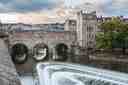
If you look just ahead, you’ll spot Pulteney Bridge stretching across the River Avon. It’s hard to miss: picture a handsome old stone bridge with three grand arches, lined with…और पढ़ेंकम दिखाएँ
If you look just ahead, you’ll spot Pulteney Bridge stretching across the River Avon. It’s hard to miss: picture a handsome old stone bridge with three grand arches, lined with bustling little shops along both sides. All this sits above the gentle rush of water, and-if the sky’s doing something dramatic-the whole scene might look straight out of a painting. To spot it, keep your eyes on the stone bridge where the river curves and listen for the sound of water tumbling over the weir beneath. Now that you’re standing in front of Pulteney Bridge, you’re gazing at one of just four bridges in the entire world with shops all along both sides. It’s like walking across a street in mid-air! Built back in 1774, this bridge was the brainchild of Robert Adam, who dreamed up the idea while probably thinking, “Why should Florence and Venice have all the fun?” But the story of this bridge is a bit like a soap opera-full of drama, floods, and some seriously bold building plans. Imagine Frances Pulteney and her husband William, peering over the Avon, plotting how to give Bath a fancy new neighborhood. But first, they needed a bridge strong enough to march all their plans across-literally. Add in a few council objections, a mad dash to finish the pillars before the winter, and a budget that kept growing quicker than the river during a rainstorm. When it was first built, the bridge was slim and elegant-until shopkeepers wanted more elbow room and expanded, leaving the bridge puffed up like someone after a second helping of pudding. And floods? Oh, they came roaring through at the end of the 1700s, smashing parts of the stonework. Imagine the noise and chaos as temporary bridges sprang up while repairs ticked along. Today, Pulteney Bridge stands strong and busy with buses, taxis, and countless visitors. It’s still bursting with life, as people shop along its length or enjoy the splendid views from the middle. Who would have thought a family need for an easier crossing would gift Bath such an iconic landmark? And just think-the next time someone tells you all bridges are the same, you can say: “Oh, clearly you haven’t been to Bath yet!” Intrigued by the background, design and construction or the development? Make your way to the chat section and I'll be happy to provide further details.
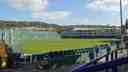
समर्पित पेज खोलें →Take a look just ahead - you’ll spot a wide stretch of green grass, bright and open beneath the big sky. Rows of teal and green seats curve around the pitch like the city itself…और पढ़ेंकम दिखाएँ
Take a look just ahead - you’ll spot a wide stretch of green grass, bright and open beneath the big sky. Rows of teal and green seats curve around the pitch like the city itself is sitting down to watch the action. There’s a modern pavilion on the right, its white roof standing out, and, if you glance past the stands, the hills roll gently in the distance beyond the edge of Bath. You’ll know you’re at the Recreation Ground, or “the Rec” as locals call it, when you see this great bowl of grass waiting for the next big game or event. Now, imagine the air buzzing with excitement, because the Rec is the very heart of Bath’s sporting life. Since 1894, fans have gathered right here for cricket matches, rugby roars, and maybe the occasional dropped sandwich. For much of the year, Bath Rugby takes center stage - you’ll hear rumbles of feet on the stands and the roar as someone scores a try. But when rugby season ends, the East Stand vanishes like a magic trick, turning the whole field into a grand cricket pitch. It’s not just for the professionals. On any day, you might find a local hockey team slapping pucks, a group of friends trying their hand at croquet, or even the Bath Quidditch Club (no flying brooms required, sadly). You can almost hear the thwack of a ball, the rattle of tennis courts, and maybe the splash of someone tumbling over in the mud-because, after a big rainfall, this place can turn surprisingly swampy! The Rec wasn’t always a playground. Long ago, it was part of the Bathwick Estate, fields owned by the Forester family. In the 1890s, clever Bathonians saw its potential and transformed it. Over time, the Rec has seen everything from elegant archery tournaments to the wild Bath Festival of Blues in 1969, when Fleetwood Mac and Led Zeppelin rocked these very grounds. Imagine the music rising up and echoing off the hills! War, floods, sports legends, and some legendary local bake sales-these grounds have seen it all. And through it, the Rec has always been for the people of Bath: a place for fun, for sport, and often, a bit of spectacular muddiness. So, take a deep breath and listen for the echoes. You’re standing right where history still shouts, cheers, and sometimes sings just beneath the grass. If you're curious about the charitable trust status, the battle to keep bath rugby at the recreation ground or the real friends of the rec, the chat section below is the perfect place to seek clarification.
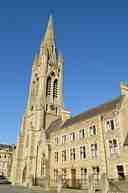
समर्पित पेज खोलें →To spot St John’s Church, look up! You’ll see a tall, stone spire shooting into the sky, towering above the surrounding buildings like a giant’s hat. Its pale golden Bath stone…और पढ़ेंकम दिखाएँ
To spot St John’s Church, look up! You’ll see a tall, stone spire shooting into the sky, towering above the surrounding buildings like a giant’s hat. Its pale golden Bath stone stands out, especially on a sunny day, and the sharp gothic points and tall windows make it look like something out of a classic fairy tale - if that fairy tale had a touch of Victorian drama! Now that you’re right in front of it, take a deep breath and imagine Bath in the 1860s. The church was designed by Charles Francis Hansom-if that name rings a bell, it’s because his brother invented the Hansom cab, the Victorian version of Uber, only with more horses and less WiFi. St John’s shoots up 222 feet, topped with a spire so impressive it could poke a hole in the sky. For better or worse, it’s impossible to ignore! Some folks, like the famous critic Nikolaus Pevsner, grumbled about the church’s “spiky” Gothic style, claiming it was almost battling Bath’s smoother Georgian look. But step closer and you’ll see why lovers of old churches swoon here-inside, there’s colorful marble, delicate rails, a dazzling white tabernacle, and glowing stained glass in the rose windows that catch every bit of sunlight and turn it into a kaleidoscope. There’s a touch of drama here, too. The church was bombed in 1942-its south aisle was destroyed, then rebuilt exactly as it was, as if Bath refused to let history win that round. There’s even a Latin inscription remembering the event, which sounds grand unless, like most of us, your Latin’s a little rusty. And here’s a mystery for you: If you hear high-pitched cries above, don’t panic. The church’s towering steeple is home to a pair of peregrine falcons, keeping a watchful eye over Bath and occasionally swooping in for lunch. There’s even a webcam if you want to spy on them later! So take it all in. You’re looking at one of Bath’s most memorable landmarks-a little bit of drama, a dash of rivalry, and a lot of beauty, all reaching for the clouds. Ready to move on or would you like a moment to search for falcons?
समर्पित पेज खोलें →
12 और स्टॉप दिखाएँकम स्टॉप दिखाएँexpand_moreexpand_less
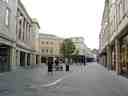
Ahead of you, you’ll spot SouthGate’s proud entrance-look for light, honey-coloured Bath stone everywhere. The buildings are grand, topped with tidy columns and perfectly-lined…और पढ़ेंकम दिखाएँ
Ahead of you, you’ll spot SouthGate’s proud entrance-look for light, honey-coloured Bath stone everywhere. The buildings are grand, topped with tidy columns and perfectly-lined windows. The pedestrian street opens up before you, with shops and the occasional tree breaking up the stone. If you see a wide plaza with neat benches and elegant street lamps, you’ve found it! Alright, you’re standing right at the gateway to Bath’s modern heartbeat-and yes, those stunning stone facades are actually quite new… But don’t let that trick you! SouthGate is designed to look Georgian, as if Jane Austen herself might pop out of H&M with a bonnet. Chapman Taylor, the architects, made sure every detail fits the city’s classical style. You’re standing in the middle of over 50 shops, 10 restaurants, and almost 100 homes hidden above the bustling streets. And somewhere beneath your feet-about 860 cars are snoozing in the underground car park. It wasn’t always this stylish. If you’d been here back in the early 2000s, you’d have seen a much less glamorous concrete shopping centre and an old bus station… hardly the kind of place to sip a posh coffee. That all got swept away in 2007, and the ground was cleared for archaeologists to dig up old city walls, a mysterious well, ancient cellars, and even a ditch with the unforgettable name, the “Bum Ditch.” Who said history couldn’t have a sense of humour? During construction in 2008, disaster struck-a fireball blasted through the site, sending flames higher than the cranes. Streets and trains had to shut down. Talk about a dramatic opening act! But Bath’s spirit is tough. The new centre opened in three phases, finally finished in 2010. This whole area is made up of six buildings, cleverly stitched together by bridges for deliveries-so watch out for rolling crates behind the scenes. And if you hear echoes of the past, maybe it’s the ghost of The Ham, the medieval commonland that once stretched right here. It may be gone, but its memory lingers-just as Bath manages to blend the old and new with a bit of mischief and a lot of charm. Ready to stroll on? SouthGate's seven pedestrian streets wind ahead, so follow the gentle curve of the stone and let’s discover what Bath has hidden around the corner!
समर्पित पेज खोलें →If you look ahead, you’ll see a lively, broad street framed on both sides by grand, creamy-colored buildings. Just to your right, you’ll spot a row of columns decorated with…और पढ़ेंकम दिखाएँ
If you look ahead, you’ll see a lively, broad street framed on both sides by grand, creamy-colored buildings. Just to your right, you’ll spot a row of columns decorated with hanging flower baskets, while to your left rises an elegant building with tall arched windows and a porch topped with more columns. Street performers might be playing music nearby, and there’s usually a gentle hum of voices as people mill between shopfronts, cafes, and elegant Georgian windows. Some of these buildings are older than your great-great-grandparents, although hopefully they don’t complain as much about the weather! Welcome to Stall Street - a true people-watching paradise right in the heart of Bath. It looks pretty busy today, doesn’t it? Imagine what it must have been like in the days when the buildings here were first going up, back in the 1790s and early 1800s. Picture clouds of stone dust, clattering carts, and builders hollering to each other as John Palmer's teams set the stones for this historical stretch. Now, if these buildings could talk, they’d probably whisper stories of posh visitors arriving for spa days, out-of-town traders selling their goods, mischievous children darting through crowds, and the occasional drama involving Mrs. Determined Shopper elbowing her way to the latest fashions. The street is lined with listed buildings-some with towering pilasters, others crowned by display windows added over centuries. Around the corner, you’ll find showy Ionic columns standing guard, keeping an eye out for anyone trying to sneak away with a Bath Bun. Imagine, right where you’re standing, there once was a fountain splashing water-now moved, after years of overhearing too much local gossip! And keep your eyes peeled for shop fronts that look just a bit different from their neighbors; some date back to the grand old days of Victorian window shopping. With all that Georgian elegance, you might feel like it’s time to strut down the street yourself-head held high, trying not to trip over any 21st-century pigeons! Enjoy this lively slice of history; the street’s buildings might be two hundred years old, but their stories are still very much alive.
समर्पित पेज खोलें →Take a moment to look in front of you-you’ll see a large, triangular stone formation set against the wall, the famous Bath Gorgon. It’s a bit like a puzzle put back together, with…और पढ़ेंकम दिखाएँ
Take a moment to look in front of you-you’ll see a large, triangular stone formation set against the wall, the famous Bath Gorgon. It’s a bit like a puzzle put back together, with weathered stone pieces reassembled into their original shape. Right at the center is a striking head with a tangled beard and wavy hair-look for the wild eyes, curls, and wings above the ears. Don’t worry, it won’t turn you to stone! If you scan around the triangle, you’ll spot more details: flowing, serpentine creatures, faces, and a couple of mysterious little shapes. It’s not your average garden gnome, that’s for sure. Now imagine yourself nearly two thousand years ago when this stone pediment towered five stories above the entrance to a great Roman temple, dedicated to Sulis Minerva. The head glaring down at you isn’t a monster-even if it looks a bit like a scary uncle who’s just lost his comb-but either a water god called Oceanus or Bath’s twist on the ancient Gorgon from Greek mythology. Some say it’s even the mysterious Celtic Green Man or a sun god. The folks who carved this came from all the way across the channel, in northern Gaul, and put in plenty of flair: those wild snakes in the beard, the fierce moustache, and the winged ears all bump up the drama. But let’s not let the center of attention get too big-headed! If you were a Roman visitor to the baths, this giant face, high above your head, might have seemed pretty intimidating-or maybe even protective, keeping evil spirits out while you had a soak. Tritons, those odd half-man, half-fish helpers of Neptune, helped watch the place, and even some cheeky oak leaves and stars crept in, almost like a Roman sticker collection. Look for the tiny helmet shaped like a dolphin and the pair of Victories balancing on top of globes-hardly your average spa day décor. The Gorgon’s true identity has puzzled experts for ages: part Greek myth, part Celtic tradition, maybe something totally unique to Bath, too. In the end, this head is a perfect symbol for the city-a mash-up of cultures, stories, and good old Roman swagger. As you stand here, just imagine the temple bustling with worshippers, priests, and a few gawking tourists-proving that Bath has always been a place for curiosity, wonder, and perhaps just a little bit of magic. Who knew a stony stare could have so many secrets?
समर्पित पेज खोलें →As you walk closer, you’ll see Bath Abbey rising ahead of you like a giant, creamy stone birthday cake with towers instead of candles. Look up! The building is hard to miss:…और पढ़ेंकम दिखाएँ
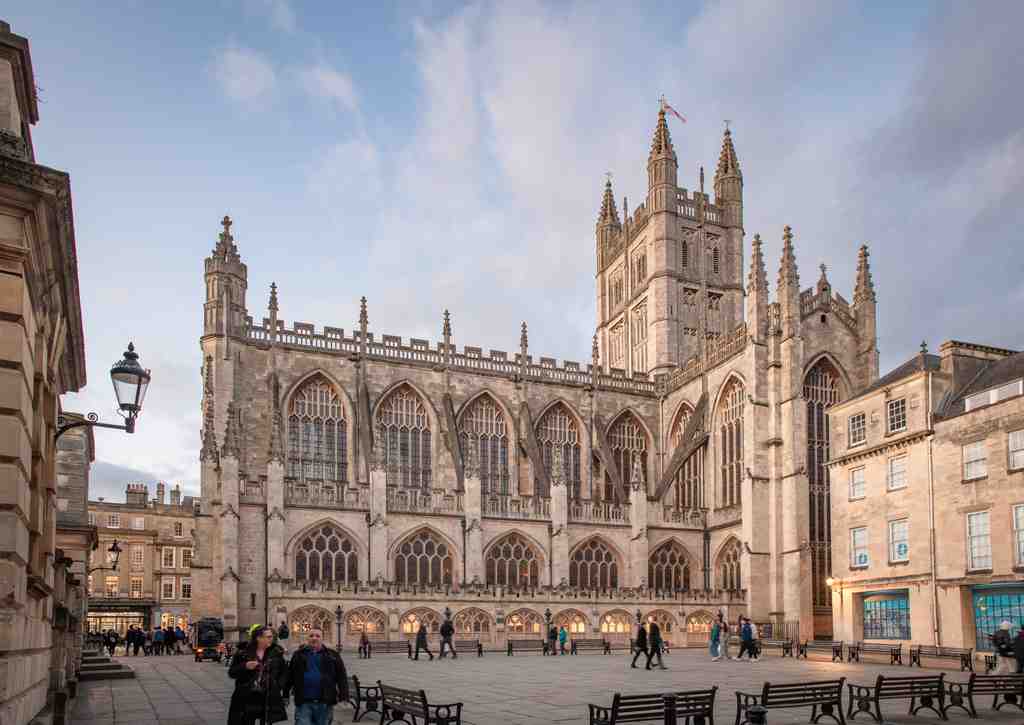
As you walk closer, you’ll see Bath Abbey rising ahead of you like a giant, creamy stone birthday cake with towers instead of candles. Look up! The building is hard to miss: intricate pointed windows, soaring walls streaked by centuries of weather, and a west front with two long rows of stone angels clambering up ladders to the sky. If you see heads craning upward and cameras snapping, you’re definitely there. Take a moment and imagine standing in front of this grand church as the bells ring out over the city. The Abbey’s walls hold more tales than most gossip columns. Founded way, way back in the 7th century, this spot started as a humble convent and kept transforming-rebuilt, restored, and rescued by many hands, including the famous architect Sir George Gilbert Scott. He spruced things up in the 1860s, but let’s be honest, it’s been getting makeovers longer than any celebrity. Over the years, Bath Abbey has seen almost everything-crowns placed on kings, choirs singing their hearts out, even royal rivalries. Legend says King Edgar was crowned “King of the English” right inside, back in 973. Picture it: the smell of incense, flickering candlelight, and velvet robes swishing as the monks chanted. Not exactly your average Sunday service! The inside is just as jaw-dropping, famous for its “fan vaulting”-ceilings that look like huge stone fans, all delicately carved. It has enough seats for 1,200 people, though I doubt all the former monks would have found anywhere to stash their sandals. Keep an eye out for memorials and stained glass dedicated to Bath’s people, as well as the striking Jacob’s Ladder sculptures outside, where stone angels climb steadily upward (I say “climb”-some look like they’re struggling with a leg cramp). But it hasn’t all been heavenly harmony. The Abbey has seen some serious drama: Vikings raiding, kings squabbling over power, even monks fleeing from reforms in France. When the Dissolution of the Monasteries hit in the 1500s, the Abbey’s doors nearly closed forever-but Bath rallied, and the Abbey survived. Today, Bath Abbey isn’t just a landmark-it’s alive with music, civic ceremonies, and echoes of centuries past. If you listen closely, maybe you’ll catch whispers of the past in the air, or is that just the organ warming up for its next big moment? Either way, you’re at the heart of Bath’s story. For a more comprehensive understanding of the architecture, choir or the discovery centre museum, engage with me in the chat section below.
समर्पित पेज खोलें →If you look straight ahead, you’ll spot the Guildhall - you really can’t miss it. It’s the big, grand Bath stone building stretching powerfully along the street, with huge arched…और पढ़ेंकम दिखाएँ
If you look straight ahead, you’ll spot the Guildhall - you really can’t miss it. It’s the big, grand Bath stone building stretching powerfully along the street, with huge arched doorways at street level and tall windows above, all framed by striking columns. Look up and you’ll see a dome perched on top of the building, a little like a fancy crown, and at the very center, standing proudly over the entrance, is a statue of Justice, holding her scales. The decorations along the roofline are classic Bath - elegant and impressive. Now, pause outside the Guildhall for a moment and just imagine: the year is 1359. There’s no traffic, but the noise is still incredible - the calls of traders, the clatter of horses on stone, the shuffle of people in heavy cloaks heading for the old medieval guildhall that once stood right behind where you are now. That structure had creaky timber beams, a tiled roof, and, I confess, probably not the modern luxury of central heating. Over the centuries, this place has witnessed more action than a Netflix drama. It’s changed its outfit a few times: from timber-framed, to Jacobean chic with its own armoury (ideal for when those neighborly disputes got a little too heated), and later into the grand neoclassical style you see today, thanks to a fellow named Thomas Baldwin, who had a real knack for creating beautiful buildings. Step back a bit to take in the four mighty Ionic columns at the front - the sort of thing you’d expect to see on a palace. The statue of Justice overhead keeps an eye on things, making sure everyone follows the rules - or at least tries to. Inside, if you could peek in, you’d find a banqueting hall that’s been graced by royalty (yes, even the Queen had lunch here). Chandeliers sparkle above grand portraits, and you can almost hear the echo of old concerts and festive gatherings. These walls have seen everything from council decisions, to wedding vows, to secret plans (who knows, maybe even a ghost or two lurking about). Now, for a dash of suspense: in 1972, flames leapt up behind the Guildhall in the historic market, rattling the nerves of everyone nearby. But the market survived, much like the building itself, adapted and alive for centuries. While you’re outside, imagine the swirl of cloaks, the clang of old bells, echoes of legal debates, and a scent of fresh bread from the market behind. This is where Bath’s magic and history meet - not bad for a spot to stand and breathe, right? Ready to move on?
समर्पित पेज खोलें →Look straight ahead and you’ll see an impressive stone building with a rounded corner, almost like a grand doughnut sitting proudly on the street. Notice the sturdy limestone…और पढ़ेंकम दिखाएँ
Look straight ahead and you’ll see an impressive stone building with a rounded corner, almost like a grand doughnut sitting proudly on the street. Notice the sturdy limestone walls and those tall Corinthian columns flanking the entrance? Peer upwards and you’ll spot a domed attic tower with a shiny lead roof, almost as if Queen Victoria herself is still keeping an eye on the city. The central door is set a few steps up-watch your footing-and the words “Art Gallery” are carved above in smart gold letters. Don’t be surprised if you feel like you’re about to step onto the set of a royal period drama. Let’s linger here for a moment, right outside the Victoria Art Gallery. Back in 1900, crowds gathered here to celebrate Queen Victoria’s Diamond Jubilee, but you don’t have to dress up in your Sunday best to enjoy it today. Originally, the ground floor bustled as a public library-imagine the mix of locals swapping stories over novels and students sneaking peeks at the art. Designed by John McKean Brydon, this corner building is as much a work of art as the treasures inside. If you step in, you’ll find yourself in a circular entrance hall, with marble columns reaching up and a ceiling that’s barrel-vaulted, echoing with footsteps from over a century ago. Heading up the mahogany grand staircase (mind your shoelaces, it would be embarrassing to trip in front of marble columns), you’ll spot a frieze straight out of Ancient Greece and a dome embossed with zodiac signs-who knows, maybe your fortune will be to discover a new favorite painting today. Speaking of which, the gallery holds over 1,500 art objects, from oil masterpieces by British greats like Gainsborough and Sickert to shimmering glass and mysterious sculptures in quiet corners. Outside, take a good look at the larger niche above the entrance. Flanked by Ionic pillars, Queen Victoria stands forever triumphant, sculpted by Andrea Carlo Lucchesi. And just along the walls, friezes by George Anderson Lawson recall tales from a more classical time-if the figures start to look alive, don’t worry, it’s not the museum magic, just excellent sculpting. Today, the gallery is run by the city council, but you can still pretend you’re a Victorian aristocrat as you wander through its marble hallways and grand rooms. Just remember: the art might be priceless, but the entry fees for special exhibitions are strictly twenty-first century. If you’re planning a wedding or want to sip bubbly among masterworks for an evening, the galleries are even up for hire. Now, how’s that for a bit of royal treatment in the heart of Bath?
समर्पित पेज खोलें →As you stand in front of St Michael's Church, just pause for a moment and imagine horse carts rumbling down Broad Street, wool merchants bustling by, and the sound of footsteps…और पढ़ेंकम दिखाएँ
As you stand in front of St Michael's Church, just pause for a moment and imagine horse carts rumbling down Broad Street, wool merchants bustling by, and the sound of footsteps crossing Bath’s old North Gate. This church has been watching over this spot since medieval times-always just outside the ancient city walls, hence the name "St Michael’s Without." It used to be the very first thing people saw coming up the London Road, sort of like Bath’s official welcome mat… only with a very pointy spire! That dramatic spire you see is Bath’s own version of a skyscraper-Victorian style, of course. The south tower, facing you now, is famously prominent on the city’s skyline. Talk about a church having good real estate! Long before Netflix or YouTube, drama happened right here-Elizabeth Linley, the famous 18th century actress, was baptized inside these walls back in 1754. Local gossip might have traced its way out onto Northgate Street, mingling with the shouts of traders and the click of carriage wheels. Designed by G. P. Manners-one of Bath’s star architects-this Victorian building went big: 780 seats, a price tag of £6,000 (no small change for the 1830s), and a row of windows that look ready to host a Gothic music video. Step inside and you’d see limestone arches and tall, pointed windows that let coloured sunlight spill onto the floors. The church even has a secret-or rather, a treasure: a painting of Christ with the Cross by William Hoare, rescued from the old church's altar. And listen closely, sometimes if you’re lucky, you might catch the organ pipes whispering oldest secrets. So, next time someone asks where the real heart of Bath’s New Town beats-or where wool merchants, starlets, and everyday folk crossed paths-just tell them to look for the tall spire, always pointing the way forward. If you're keen on discovering more about the background, medieval church or the victorian church, head down to the chat section and engage with me.
समर्पित पेज खोलें →You’re standing right at the heart of Trim Street. Look around and you’ll spot a narrow, quiet street framed on both sides by tall, honey-colored stone buildings with neat rows of…और पढ़ेंकम दिखाएँ
You’re standing right at the heart of Trim Street. Look around and you’ll spot a narrow, quiet street framed on both sides by tall, honey-colored stone buildings with neat rows of big sash windows. You’ll notice some of these buildings are three or even four stories high, with sloping mansard roofs peeking out at the top. If you want to make sure you’re in the right place, just glance to your right-you’ll see those classic Bath railings running along the pale stone, and maybe even a few bright red rubbish bins waiting for collection day, a sign that history and everyday life still mingle side by side here. Now, picture yourself here back in 1707 when Trim Street was brand new-built for both houses and shops, with carriages rattling along the cobbles and maybe the smell of fresh bread or horses in the air. It was named after George Trim, the man who owned the land, and you could say this street has seen more than its fair share of famous faces and secrets. Take Number 5, for example-a two-storey building with a strong, solid look, thanks to its chunky rusticated corners. If you ever see its doorway, check out the elegant Ionic columns and the tympanum decorated with what looks like a starter pack for a warrior: swords, shields, and other implements of war. This was where General James Wolfe stayed the night before he got a letter-no, not by email-a real letter, delivered by William Pitt the Elder himself, commanding him to go capture Quebec. No pressure, right? Numbers 6, 7, 8, and 9, with their extra-tall, three-storey facades and stylish mansard roofs, tell a story of growing families and changing tastes. Number 10 stands out with its attic at the top-perfect for hiding your secrets (or maybe just extra boxes). Its front door has classic Doric columns and a proper pediment, lending just a hint of ancient Greece to the heart of Bath. Look up and down the street, and you’ll see how the old shops have become modern flats and the grand homes now share space with office workers, locals, and the occasional lost tourist. Once upon a time, Jane Austen herself called this street home. It was her fourth Bath address-and each new move for the Austen family seemed to shrink both in size and fanciness. Even famous writers have to put up with dodgy landlords and awkward neighbors. And over on Trim Street, the Unitarian Church, built by John Palmer in 1795, has seen its fair share of spiritual searching and romantic beginnings. The antiquarian Joseph Hunter not only preached here but also fell in love-marrying Mary Hayward and having six children. Who says history can’t have a happy ending? So as you breathe in the air along Trim Street, imagine the wheels of history turning, soldiers and ministers plotting their futures, writers dreaming up novels, and everyday Bathonians making Trim Street their home. And don’t forget: even the grandest stories sometimes start in the humblest places-maybe even just across from a row of bright red bins.
समर्पित पेज खोलें →As you walk up, look ahead and a little to your right - you’ll see a grand, creamy stone building with tall columns and elegant arches, standing nobly on the corner. The Theatre…और पढ़ेंकम दिखाएँ
As you walk up, look ahead and a little to your right - you’ll see a grand, creamy stone building with tall columns and elegant arches, standing nobly on the corner. The Theatre Royal wears its age with style, showing off its Georgian decorations and ironwork details. The entrance, framed by old lanterns and carved stone, is hard to miss - it almost seems to beckon you in for a night of drama and delight. Now, picture yourself here in 1805. The streets smell faintly of horses and roasting chestnuts. A crowd gathers outside this very building, buzzing with excitement, dressed in their finest hats and coats. The doors swing open to reveal glowing lights inside, and the first whispers of Shakespeare’s Richard III fill the air. This theatre was the hottest ticket in town - forget Netflix! Wealthy investors even played a real-life lottery just to build it, hoping their annuities would one day pay off. Prince Regent, who later became King George IV, put down his cash too. I guess he didn’t trust his royal acting skills to get him in for free. At one point, disaster struck. In 1862, a terrible fire swept through, sending flames leaping and timbers crashing down. Imagine the chaos - shouting, footsteps pounding as people rushed outside. But the show must go on! The community rallied, and soon the Theatre Royal rose from the ashes with an even grander entrance. Over the centuries, many famous actors graced these boards - Sarah Bernhardt, the elegant ballerina Anna Pavlova, and of course, the unstoppable Mrs. Patrick Campbell. During World War II, it became a stage for legends like John Gielgud and Sybil Thorndike, though sometimes plays were outnumbered by empty seats. Today, the theatre is still alive with laughter and applause thanks to hard work, generous donations, and a few dramatic twists worthy of any script. Do you hear that faint echo of applause and stage whispers from the past? That’s the magic of the Theatre Royal, where Bath’s stories have come to life for over 200 years. So, if you ever fancy stepping into another world-or maybe just having some popcorn and a good laugh-you know where to come. Now, onward to our next stop, where more tales and maybe a few surprises await!
समर्पित पेज खोलें →Coming up in front of you is Queen Square! To spot it, just look for the grand, curved row of honey-coloured stone houses, all lined up like soldiers at attention. Notice the…और पढ़ेंकम दिखाएँ
Coming up in front of you is Queen Square! To spot it, just look for the grand, curved row of honey-coloured stone houses, all lined up like soldiers at attention. Notice the stately columns rising up the central section, hinting at a palace, while other sides of the square gently curve away, wrapping you in a stone embrace. The buildings look almost royal, and you might even notice a touch of ivy sneaking up the west end. Right in the middle of the square stands a tall obelisk, peeking above the greenery and parked cars. Imagine you’re walking here around 1738. The square is bustling with people in fine Georgian dress, sweeping along the pavement. You’d hear the clip-clop of horse-drawn carriages and playful laughter drifting on the breeze. Queen Square was brought to life by John Wood, the Elder, who dreamt of making Bath a shining city as grand as any in ancient Britain. He wanted to wow polite society, and-let’s be honest-he fancied a bit of showing off himself! Wood designed this space like a stage set, with the north side acting as the grand palace and the rest of the houses as the “wings.” All this grandeur wasn’t just for looks-it was for everyone to see and be seen, strolling proudly on the wide pavements, catching up on local gossip, and perhaps eyeing who was wearing the latest fashion from London. In the very heart of the garden, that tall obelisk was meant to honor Prince Frederick-but let’s face it, it’s also the perfect spot for pigeons to stage their own royal gatherings. During World War II, bombs rattled some of these elegant façades. But Bath loves a comeback story, and the buildings were lovingly repaired. Now, some are fancy offices, while the west side is home to the Bath Royal Literary and Scientific Institution-and the south has the stylish Francis Hotel. You’re standing where ambitious dreams met a touch of stubborn luck. John Wood had to deal with all sorts of grumpy councilmen and penny-pinching landowners, but he didn’t give up. Instead, he turned to a quick-witted barber-surgeon for help-because who better to partner with than someone who knows a thing or two about close shaves? Listen. If you could hear echoes of Queen Square’s past, you might catch a gentleman boasting about his new wig or a lady sighing over her dance card being rather too full. That’s Queen Square: a stage for Bath’s most dramatic dreams-and a perfect spot for you to soak in the sunshine and history. Ready to head to our next stop? Intrigued by the vision, development or the speculative building? Make your way to the chat section and I'll be happy to provide further details.
समर्पित पेज खोलें →If you’re looking for the Herschel Museum of Astronomy, you’ll want to spot a modest three-story stone townhouse with a slate-topped attic peeking over the main roof. It’s right…और पढ़ेंकम दिखाएँ
If you’re looking for the Herschel Museum of Astronomy, you’ll want to spot a modest three-story stone townhouse with a slate-topped attic peeking over the main roof. It’s right on the south side of New King Street, nestled in a terrace of golden Bath stone buildings. Notice the dark green door to your left as you face the row - there’s a circular plaque beside it. Two tall sash windows rise above the doorway, and the house has a slightly worn but very welcoming look, giving you a sense of the centuries it’s seen. As you stand here, let’s jump back in time to the late 1700s. The street wouldn’t have been paved, and you’d probably be dodging the odd horse and cart. Imagine this little townhouse, not yet famous, still smelling of fresh plaster and new wood as the Herschels moved in. William Herschel - you know, just the guy who happened to discover a whole new planet, Uranus, right upstairs! He worked late into the night, peering through telescopes he built himself down in the basement workshop. You can picture him hunched over his treadle lathe, sparks flying, while his sister Caroline brings him tea (and probably reminds him not to set the curtains on fire). This house is full of secrets. Imagine the Herschels sharing a meal downstairs at their old dining table, or William rushing up the stairs yelling for Caroline, excited to show her something strange he found in the sky. There’s even a Music Room - because when you’re not busy discovering planets, why not play a tune or two? The building was nearly lost to time, but rescued by a group of astronomy fans who knew a star when they saw one. These days, you might hear the creak of floorboards or the murmur of visitors, and maybe catch the whiff of old wood and wax polish. The museum welcomes curious minds big and small, offering hands-on replicas, and even virtual tours if you need them. So take a moment, and imagine: one evening, a man stands at the window with a telescope, searching the heavens. Suddenly, the discovery of Uranus, and the universe got just a little bit bigger - all right here on New King Street!
समर्पित पेज खोलें →You’re nearly at the finish line-look up ahead for an elegant, stone building with classical columns and a grand balustrade along the top. If you spot a large tree with people…और पढ़ेंकम दिखाएँ
You’re nearly at the finish line-look up ahead for an elegant, stone building with classical columns and a grand balustrade along the top. If you spot a large tree with people bustling about, you’re in the right place. That’s Bath Green Park railway station, right across from you! Picture this: it’s the 1870s, and instead of buses and cars, you’d see steam trains pulling in and out of this majestic building. When it first opened, it was called Bath Queen Square, a station fit for royalty, wouldn’t you agree? The whole façade was designed by John Holloway Sanders to match the fancy Georgian architecture that Bath is famous for. Now, the real showstopper’s inside-a vaulted glass roof arching high above, built from wrought iron. Imagine the sunlight pouring through, turning the bustling platforms into a wash of golden light. Trains once hissed and clattered here, arriving from the Midlands, the South Coast, and beyond. The most famous was the Pines Express, a train so legendary it even had its own name. And if you can picture it, on busy summer Saturdays, the place would be packed with families, holidaymakers, and travellers, all waiting to head to the seaside. But it wasn’t always easy living for Green Park station. During World War II, bombing raids shattered parts of the glass roof. They never did put all the glass back! The station limped on, full of nostalgia-you’d often see a lone local train, quietly steaming and waiting, almost as if it was soaking in the historic atmosphere too. When the trains finally stopped running in the 1960s, the grand old station refused to fade away. For a while, it doubled up as a car park-imagine parking your car right where the old locomotives once stood! Today, you’ll find shops and markets inside, and that old railway bridge now carries shoppers along to their groceries, not coal to the goods yard. Hard to believe something so full of history could stand quietly in the middle of modern city life, isn’t it? Look up and take it all in. Who knows? Maybe if you listen closely, you’ll hear the ghostly echo of a train getting ready to leave for the coast one last time. Exploring the realm of the architecture and opening, the avon bridge or the the somerset & dorset railway? Feel free to consult the chat section for additional information.
समर्पित पेज खोलें →
अक्सर पूछे जाने वाले प्रश्न
मैं टूर कैसे शुरू करूँ?
ख़रीदारी के बाद, AudaTours ऐप डाउनलोड करें और अपना रिडेम्पशन कोड दर्ज करें। टूर तुरंत शुरू करने के लिए तैयार होगा - बस प्ले टैप करें और GPS-गाइडेड रूट का पालन करें।
क्या टूर के दौरान मुझे इंटरनेट चाहिए?
नहीं! शुरू करने से पहले टूर डाउनलोड करें और पूरी तरह ऑफ़लाइन इसका आनंद लें। केवल चैट फ़ीचर को इंटरनेट की ज़रूरत है। मोबाइल डेटा बचाने के लिए WiFi पर डाउनलोड करने की सिफ़ारिश है।
क्या यह एक गाइडेड ग्रुप टूर है?
नहीं - यह एक सेल्फ-गाइडेड ऑडियो टूर है। आप अपनी गति से स्वतंत्र रूप से खोजते हैं, आपके फ़ोन से ऑडियो कथन बजता है। कोई टूर गाइड नहीं, कोई ग्रुप नहीं, कोई शेड्यूल नहीं।
टूर में कितना समय लगता है?
अधिकांश टूर पूरा करने में 60-90 मिनट लगते हैं, लेकिन गति पूरी तरह आपके नियंत्रण में है। जब चाहें रुकें, स्टॉप छोड़ें, या ब्रेक लें।
अगर मैं आज टूर पूरा नहीं कर सकता/सकती तो?
कोई समस्या नहीं! टूर की लाइफ़टाइम एक्सेस है। जब चाहें रोकें और फिर शुरू करें - कल, अगले हफ़्ते, या अगले साल। आपकी प्रगति सेव रहती है।
कौन सी भाषाएँ उपलब्ध हैं?
सभी टूर 50+ भाषाओं में उपलब्ध हैं। अपना कोड रिडीम करते समय अपनी पसंदीदा भाषा चुनें। नोट: टूर जेनरेट होने के बाद भाषा बदली नहीं जा सकती।
ख़रीदारी के बाद मैं टूर कहाँ एक्सेस करूँ?
App Store या Google Play से मुफ़्त AudaTours ऐप डाउनलोड करें। अपना रिडेम्पशन कोड (ईमेल द्वारा भेजा गया) दर्ज करें और टूर आपकी लाइब्रेरी में दिखेगा, डाउनलोड और शुरू करने के लिए तैयार।
अगर आपको टूर पसंद नहीं आया, तो हम आपकी ख़रीदारी वापस करेंगे। हमसे संपर्क करें [email protected]
सुरक्षित चेकआउट