
सेतूबल ऑडियो टूर: भिक्षुओं, बाजारों और समुद्री किंवदंतियों की गूँज
सेतूबल में, जहाँ प्राचीन पत्थर अनकहे रहस्यों से गूँजते हैं, जीसस का मठ सदियों की साज़िश और उथल-पुथल का मूक गवाह है। एक स्व-निर्देशित ऑडियो साहसिक यात्रा पर निकलें जो उन रहस्यमय कोनों और उल्लेखनीय कहानियों को उजागर करती है जिन्हें अधिकांश यात्री अनदेखा कर देते हैं। चौराहों और गलियारों में घूमें, उन पदचिह्नों का अनुसरण करें जिन्होंने कभी राजाओं के भाग्य को बदल दिया था और विद्रोह को प्रेरित किया था। किस घोटाले ने भिक्षुओं को रातोंरात अपने पवित्र हॉल छोड़ने पर मजबूर कर दिया? कौन सा रहस्यमय यात्री प्राका डो क्वेबेडो हॉल्ट पर हमेशा के लिए गायब हो गया, और एक रहस्यमय संदेश के अलावा कुछ भी नहीं छोड़ा? कैसे बोनफिम स्टेडियम लगभग एक फुटबॉल प्रतिद्वंद्विता की कहानी का मंच बन गया जो एक राजनीतिक तूफान में बदल गई? प्रत्येक कदम आपको सेतूबल के दिल में और गहराई तक ले जाता है, जहाँ फीके भित्ति चित्र और बजती घंटियाँ शहर के धूप से सजे अग्रभाग के नीचे नाटक, भक्ति और अवज्ञा को प्रकट करती हैं। इतिहास को अपनी इंद्रियों से प्रकट होते देखें, क्योंकि आप उन परतों को खोलते हैं जिन्हें भीड़ कभी नहीं देखती। शहर के रहस्यों को उजागर करें। सेतूबल के अद्भुत अतीत के माध्यम से आपकी यात्रा यहीं से शुरू होती है।
टूर पूर्वावलोकन
इस टूर के बारे में
- scheduleअवधि 30–50 minsअपनी गति से चलें
- straighten4.3 किमी पैदल मार्गगाइडेड पथ का पालन करें
- location_on
- wifi_offऑफ़लाइन काम करता हैएक बार डाउनलोड करें, कहीं भी उपयोग करें
- all_inclusiveलाइफ़टाइम एक्सेसकभी भी, हमेशा के लिए फिर सुनें
- location_onबोनफिम स्टेडियम से शुरू होता है
इस टूर के स्टॉप
To spot the Bonfim Stadium, look for a large oval arena with green and white seating rising above the surrounding city center, sitting right next to Bonfim Park. Welcome to…और पढ़ेंकम दिखाएँ
To spot the Bonfim Stadium, look for a large oval arena with green and white seating rising above the surrounding city center, sitting right next to Bonfim Park. Welcome to Bonfim Stadium, the true heart of Setúbal! Imagine you’re standing here back in 1962, the whole city buzzing with excitement, fresh paint on every seat, the smell of new grass filling the air. This grand stadium, built through sheer determination from the people of Setúbal and their love for Vitória FC, was once a pioneer among Portuguese arenas. On its opening day, the stands echoed with thousands of voices-cheers, laughs, even a few nervous gasps-while Américo Tomás, the president himself, looked on. But, ah, the first match didn’t go quite as planned: Vitória played Académica de Coimbra and lost 1-0! Setúbal’s pride took a little knock, but the stadium’s spirit just grew stronger. Bonfim’s bleachers were once packed with up to 35,000 fans, every game day exploding with energy, with people squeezed in so tight you could almost forget where your seat ended and another began. Over the years, plastic seats were installed for greater comfort, but that shrunk its capacity. Modern times have carved the crowds down to about 15,497, but passion? That’s never gone out of fashion here. Picture a chilly night in 1970: the brand-new stadium lights dazzled everyone as Vitória faced Sporting Gijón. Suddenly, Setúbal was lit up, and from that moment the stadium was ready for European matches under the stars. If you think that’s impressive, wait for this-back in 1972, a game against Spartak Moscow filled Bonfim with a jaw-dropping 40,000 spectators. The roars were seismic as Vitória crushed their rivals 4-0. By the way, local hero José Torres netted two! Today, you might notice some faded glory-Bonfim has seen better days, thanks to financial storms that hit Vitória FC hard. The stadium got a lifeline in 2020 when the City Council stepped in, buying the land to safeguard it for the people, not for real estate developers! Even as its UEFA dreams are on pause, Bonfim remains a proud icon, with tales of glory, heartbreak, and the unwavering spirit of Setúbal woven into every seat.
समर्पित पेज खोलें →To spot the Monastery of Jesus of Setúbal, just look ahead for a stunning pale stone facade lined with dramatic, twisted pinnacles, ornate buttresses topped with gargoyles, a…और पढ़ेंकम दिखाएँ
To spot the Monastery of Jesus of Setúbal, just look ahead for a stunning pale stone facade lined with dramatic, twisted pinnacles, ornate buttresses topped with gargoyles, a square bell tower to the left, and an intricate Gothic arched doorway right in the center-yep, you can’t miss it! Welcome, explorer, to one of Setúbal’s most impressive treasures! Picture the year 1490: the city outside these walls feels wild, sea air whips across the empty land, and a noblewoman named Justa Rodrigues Pereira dreams of a sacred place for the Poor Clare nuns. She founds this monastery right where you stand, and soon after, King John II himself lends royal support. Imagine the clink of chisel on stone and as the mysterious architect Diogo de Boitaca, maybe French, maybe not, pulls these walls into the shape you see today. But what really sets this building apart? It’s the very first splash of Portugal’s daring Manueline style-a bit like taking a regular Gothic church and turning the decoration up to eleven. Look at those spiraling pinnacles and the elaborate crenellations along the roof; those swirling stone ropes might remind you more of a fantasy castle than a convent! I always think of this place as the original “bling” church of Setúbal. By the time 1496 rolls around, the Poor Clare sisters have moved in, their prayers and laughter echoing where you now stand. The nave’s ceiling was originally to be made of wood, but King Manuel I asked for sturdy stone vaulting instead. And he didn’t stop there-the apse was rebuilt, legends tell, to make the sacred space even more spectacular. Beneath your feet, deep in the crypt, Justa Rodrigues Pereira and her family rest to this day, wrapped in the quiet of centuries. Let’s jump forward to the 1500s-Jorge de Lencastre, the not-quite-legitimate son of King John II, strolls across what is now Jesus’ Square, bestowing land and a grand cross to honor the monastery’s patron. Now, that cross didn’t stay put for long; in the 1800s, it picked up and moved to the very center of the square. Setúbal always had a sense of drama! Of course, this beautiful structure had its rough days too. The Great Earthquake of 1755 rattled the monastery’s bones-and just to keep things exciting, earthquakes in 1531, 1858, 1909, and even 1969 added a few more cracks for good measure. Yet here she stands-testament to generations who kept patching, repairing, and treasuring these halls. Today, the Portuguese government has declared it a monument, holding magical intangible value for the whole country. Step inside-imagine the sunlight slipping through blue-and-white tiled walls, depicting scenes from the Virgin Mary’s life, surrounded by lively frames. Ribbed star vaulting, shaped like twisted ropes, shoots across the chapel ceiling. Granite pillars made of Breccia, quarried from the nearby Arrábida mountains, spiral upwards-almost as if competing in a “who’s the twistiest?” contest. But wait! The story doesn’t end with nuns and royalty. In the attached monastery, there’s an art museum-rooms full of dazzling old altarpieces, like the 14 glowing panels painted by the Renaissance master Jorge Afonso. Back in the day, this was one of Portugal’s very best altarpieces. There are also archaeological finds, ancient coins, and a nod to Setúbal’s own poet, Bocage-he knew a thing or two about wild stories. It’s no wonder that in 2013, Europa Nostra called this monastery one of Europe’s seven most endangered monuments. Just think of all the secrets and laughter these walls have witnessed! Now, as the soft evening breeze drifts around you, you’re standing where centuries of faith, art, and royal schemes meet. Truly, this is a living story-in stone, tile, and hope. Ready to keep exploring?
समर्पित पेज खोलें →


8 और स्टॉप दिखाएँकम स्टॉप दिखाएँexpand_moreexpand_less
Look ahead for a striking white church with two square bell towers, arched doorways, stone trim, and a statue of a robed figure right out front-congratulations, you’ve found the…और पढ़ेंकम दिखाएँ
Look ahead for a striking white church with two square bell towers, arched doorways, stone trim, and a statue of a robed figure right out front-congratulations, you’ve found the Our Lady of Grace Cathedral! Now, imagine it’s the thirteenth century: narrow, winding medieval streets buzz all around you, and here, at the heart of old Setúbal, the city’s grandest church is rising stone by stone. This very spot became the center of everything-religious ceremonies, big announcements, and maybe the occasional medieval town gossip! Fast forward a couple hundred years, and the cathedral gets a High Renaissance makeover-sort of like getting a fancy new outfit for a very, very long party. The serious face you see now-the Mannerist facade-was elegantly added later. Step inside, and you’d find massive frescoed columns, painted with dreamy clouds and saints, and walls lined with colorful tiles from the seventeenth and eighteenth centuries, shining like hidden treasures with stories of their own. Oh, and don’t miss the side street nearby: there’s a mysterious relic there-a Gothic porch from the old Hospital João Palmeiro, quietly watching centuries roll by. With every stone and shadow, this cathedral holds the secrets and hopes of Setúbal through the ages. And remember: in medieval times, church bells here probably rang so loudly they could wake up anyone in town, except maybe the local cat!
समर्पित पेज खोलें →So, right here on Travessa de Frei Gaspar, you’re face to face with the ancient Roman salting factory-the original headquarters of smelly business! Picture this spot between the…और पढ़ेंकम दिखाएँ
So, right here on Travessa de Frei Gaspar, you’re face to face with the ancient Roman salting factory-the original headquarters of smelly business! Picture this spot between the 1st and 6th centuries: fourteen enormous stone basins-called cetárias-lined up, brimming with layers of fish and tiny crustaceans, all covered in salt. The workers were probably too used to the intense smell to mind it anymore…but passing by on a hot day, you’d find everyone walking a little faster! Roman workers here were masters in creating garum, the legendary, pungent fish sauce. Romans loved the stuff so much that it was sprinkled on nearly everything. Think ketchup, if ketchup came with a really strong, salty whiff of ocean. The operation was so important that when the markets in the Roman Empire faded and the trade routes dried up, the factory finally shut down-proving even the greatest condiments have an expiration date. This site lay forgotten until 1979, when a bit of modern construction accidentally discovered this time capsule. By 1982, it was officially recognized as a public treasure. Imagine all those centuries' worth of secret recipes, now shared with curious visitors like you. So, ready to swap your nose for history’s nose for business?
समर्पित पेज खोलें →To spot the Church of São Julião, look for a tall, white Baroque-style building with three arched windows above its grand wooden door, right in the center of Praça de…और पढ़ेंकम दिखाएँ
To spot the Church of São Julião, look for a tall, white Baroque-style building with three arched windows above its grand wooden door, right in the center of Praça de Bocage. Take a moment and imagine the square buzzing centuries ago-locals rushing past this church, gossip and footsteps echoing on the stones. The Church of São Julião has stood here since the 13th century, though it’s had more makeovers than a movie star. King Manuel I decided it needed a facelift around 1513, so imagine stonecutters chiseling and building from 1516 to 1520 while church bells rang overhead. But destiny had more in store: the big earthquake in 1531 cracked its walls, so repairs were made. If you think that was rough, nothing prepared it for 1755, when the mighty Lisbon quake shook everything and-yep-you guessed it, another major rebuild followed. Some of the original Manueline stonework, like the main portal and the bell tower’s door, still stands today in defiance of time. Step inside, and you’ll be dazzled by colorful Rococo tiles from 1790, wrapping the walls with vibrant stories of Saint Julian and Saint Basilissa. And hidden within these walls, a painting from the Renaissance lingers, showing the Creation of Adam. Imagine the smell of incense, candle wax melting, and voices singing under these ancient arches-a church with more comeback stories than a soap opera!
समर्पित पेज खोलें →To spot Livramento Market, look straight ahead for a large, bright pink building behind a striking fountain with sculpted figures and shield emblems-it's impossible to…और पढ़ेंकम दिखाएँ
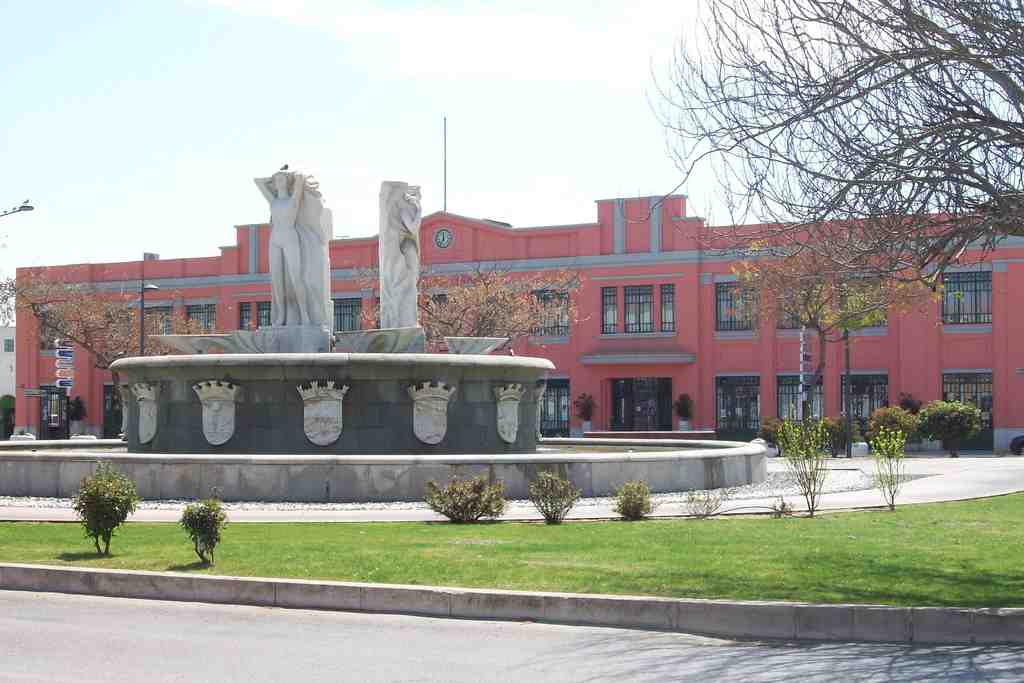
To spot Livramento Market, look straight ahead for a large, bright pink building behind a striking fountain with sculpted figures and shield emblems-it's impossible to miss! Welcome to Livramento Market, Setúbal’s bustling heart and a true treasure chest bursting with flavors, sounds, and stories. Imagine standing here in 1876, when António Rodrigues Manito, the president of Setúbal at the time, proudly opened the market-back then, it was just a huge, buzzing hall with stone benches stacked with the day’s freshest fish and wooden tables covered in vegetables from local farmers. Every morning, you’d hear a lively clatter as vendors shouted out their daily specials, mixing with the excited chatter of early shoppers--creating an orchestra unique to Setúbal! Livramento was so popular, it kept growing! By 1930, the market had expanded, and the new building-yes, this bold pink marvel-stood right here, dressed in gorgeous azulejo tiles. There are 5,700 of these blue-and-white painted tiles decorating the walls, each one swirling with scenes of fishermen casting their nets and farmers harvesting Setúbal’s bounty, painted by local masters Pinto and Pinto. (Not twins, but certainly a dynamic duo.) Look up at the entrance on the north side and you’ll find two special tile panels designed by Rosa Rodrigues in 1944, each a postcard from Setúbal’s past. In 2015, Livramento earned worldwide fame, making it to USA Today’s list of the world’s most famous fish markets-and rumor has it, even outranking some in Tokyo! Today, 900 staff and 300 stalls create a dizzying variety of scents and tastes, from shimmering sardines to luscious oranges. It even took a turn in the spotlight as a filming location for the TV soap Mar Salgado. So, whether you love history or just a good bit of people-watching, you’ll find Livramento Market is a feast for every sense-just watch out for surprise fish tails flapping your way!
समर्पित पेज खोलें →Look for the large, two-story corner mansion with faded yellowish stone walls and iron balconies-it sits right at the intersection, a little rough around the edges but impossible…और पढ़ेंकम दिखाएँ
Look for the large, two-story corner mansion with faded yellowish stone walls and iron balconies-it sits right at the intersection, a little rough around the edges but impossible to miss. Imagine the mid-1700s: the streets echo with horse hooves and the scent of fresh bread from the markets floats on the breeze. Here stands the Feu Guião Palace, a proud yet humble home built by José da Rosa Guião e Abreu-a man with as many titles as that name is long! Picture him puffing out his chest, newly promoted and wanting to make a mark, choosing family crests and even four cheeky gargoyles to decorate his mansion in the Troino neighborhood. For almost two centuries, the Feu Guião family called this palace home, hosting grand dinners and probably a few spirited arguments (imagine the stories these walls have heard!). Then, through the twists of time, the palace changed hands and even became a primary school. But disaster struck in 1969, when an earthquake shook Setúbal to its core, leaving this old beauty scarred and empty. Decades of decay threatened to erase its glory, until 2017, when rescuers arrived not on horseback, but with scaffolding and blueprints! After six years of patient restoration, the palace today gleams once more, now welcoming new residents but still watching over Setúbal with the quiet dignity of a local hero who just refused to give up.
समर्पित पेज खोलें →To spot the Pillory of Setúbal, look for a tall, elegant white marble column with a leafy Corinthian top standing proudly in the middle of Marquês de Pombal Square, right where…और पढ़ेंकम दिखाएँ
To spot the Pillory of Setúbal, look for a tall, elegant white marble column with a leafy Corinthian top standing proudly in the middle of Marquês de Pombal Square, right where the sun finds its favorite hangout. Alright, welcome to the final stop-Setúbal’s very own “gossip post” from centuries ago! Close your eyes-just kidding, don’t-you’d walk into this marble pillar! This isn’t just any column; this is the Pillory of Setúbal, standing tall since it was relocated here in 1774, following an order from the iron-willed Marquês de Pombal who wanted everything in tip-top royal order. Imagine the chaos as horses and carts rumbled across the square, townsfolk gathered around, curious about what new law or punishment was being announced at this spot. Each face of the pedestal tells a slice of its journey, sometimes thanking powerful judges and mayors, sometimes sneaking in a nod to mysterious engineers and colonels. It's witnessed declarations, justice, and maybe a little over-the-top drama-imagine the 18th-century equivalent of a viral tweet! Since 1910, it’s been a national monument, quietly soaking up sunlight and stories as people stroll past, taking far fewer risks with the law these days. If you're wondering what it all really means today-well, at least no one’s using it to tie up wrongdoers anymore... hopefully!
समर्पित पेज खोलें →




अक्सर पूछे जाने वाले प्रश्न
मैं टूर कैसे शुरू करूँ?
ख़रीदारी के बाद, AudaTours ऐप डाउनलोड करें और अपना रिडेम्पशन कोड दर्ज करें। टूर तुरंत शुरू करने के लिए तैयार होगा - बस प्ले टैप करें और GPS-गाइडेड रूट का पालन करें।
क्या टूर के दौरान मुझे इंटरनेट चाहिए?
नहीं! शुरू करने से पहले टूर डाउनलोड करें और पूरी तरह ऑफ़लाइन इसका आनंद लें। केवल चैट फ़ीचर को इंटरनेट की ज़रूरत है। मोबाइल डेटा बचाने के लिए WiFi पर डाउनलोड करने की सिफ़ारिश है।
क्या यह एक गाइडेड ग्रुप टूर है?
नहीं - यह एक सेल्फ-गाइडेड ऑडियो टूर है। आप अपनी गति से स्वतंत्र रूप से खोजते हैं, आपके फ़ोन से ऑडियो कथन बजता है। कोई टूर गाइड नहीं, कोई ग्रुप नहीं, कोई शेड्यूल नहीं।
टूर में कितना समय लगता है?
अधिकांश टूर पूरा करने में 60-90 मिनट लगते हैं, लेकिन गति पूरी तरह आपके नियंत्रण में है। जब चाहें रुकें, स्टॉप छोड़ें, या ब्रेक लें।
अगर मैं आज टूर पूरा नहीं कर सकता/सकती तो?
कोई समस्या नहीं! टूर की लाइफ़टाइम एक्सेस है। जब चाहें रोकें और फिर शुरू करें - कल, अगले हफ़्ते, या अगले साल। आपकी प्रगति सेव रहती है।
कौन सी भाषाएँ उपलब्ध हैं?
सभी टूर 50+ भाषाओं में उपलब्ध हैं। अपना कोड रिडीम करते समय अपनी पसंदीदा भाषा चुनें। नोट: टूर जेनरेट होने के बाद भाषा बदली नहीं जा सकती।
ख़रीदारी के बाद मैं टूर कहाँ एक्सेस करूँ?
App Store या Google Play से मुफ़्त AudaTours ऐप डाउनलोड करें। अपना रिडेम्पशन कोड (ईमेल द्वारा भेजा गया) दर्ज करें और टूर आपकी लाइब्रेरी में दिखेगा, डाउनलोड और शुरू करने के लिए तैयार।
अगर आपको टूर पसंद नहीं आया, तो हम आपकी ख़रीदारी वापस करेंगे। हमसे संपर्क करें [email protected]
सुरक्षित चेकआउट 


