
गिमारेस ऑडियो टूर: किले, आँगन और कहानियाँ उजागर
गिमारेस में गोधूलि बेला में, प्राचीन पत्थर की दीवारें राजाओं और निर्वासितों के रहस्य फुसफुसाती हुई प्रतीत होती हैं। महलों और किलों की भव्यता के पीछे, एक रहस्यमय शहर छाया में इंतजार कर रहा है, किसी भी उत्सुक व्यक्ति के लिए जो उसे खोजना चाहे। इस स्व-निर्देशित ऑडियो टूर के साथ, छिपी हुई कहानियों को आपको घुमावदार सड़कों और राजसी हॉलों से होकर मार्गदर्शन करने दें। खोजें कि इतिहास का निशान भीड़ से दूर होकर भूली हुई किंवदंतियों के दिल में कहाँ मुड़ता है। गिमारेस के किले की दीवारों ने उस रात क्या देखा जब विद्रोह भड़क उठा और चाँदनी में तलवारें चमकीं? ब्रागांज़ा के ड्यूकों ने उन ऊँचे द्वारों के ठीक पीछे सदियों पुराना रहस्य क्यों छिपा रखा था? साओ मिगुएल डो कास्टेलो के शांत चर्च में, किस निंदनीय शपथ ने पूरे राष्ट्र का भाग्य बदल दिया? प्रभुओं और बहिष्कृतों दोनों की गूँज का अनुसरण करें। समय के साथ आगे बढ़ें जहाँ हर कदम नाटक, विद्रोह और एक ऐसे शहर की धड़कन को उजागर करता है जो अज्ञात द्वारा हमेशा के लिए आकार दिया गया है। शुरू करें यदि आप उन फुसफुसाहटों को सुनने के लिए तैयार हैं जो अभी भी गिमारेस को आकार देती हैं।
टूर पूर्वावलोकन
इस टूर के बारे में
- scheduleअवधि 40–60 minsअपनी गति से चलें
- straighten2.1 किमी पैदल मार्गगाइडेड पथ का पालन करें
- location_on
- wifi_offऑफ़लाइन काम करता हैएक बार डाउनलोड करें, कहीं भी उपयोग करें
- all_inclusiveलाइफ़टाइम एक्सेसकभी भी, हमेशा के लिए फिर सुनें
- location_onजोर्डाओ थिएटर से शुरू होता है
इस टूर के स्टॉप
Here’s how you’ll spot the Jordão Theatre: Look for a large, striking stone building with big letters spelling “TEATRO JORDÃO” above bold black-framed windows-right beside D.…और पढ़ेंकम दिखाएँ
Here’s how you’ll spot the Jordão Theatre: Look for a large, striking stone building with big letters spelling “TEATRO JORDÃO” above bold black-framed windows-right beside D. Afonso Henriques Avenue, with its straight lines and an imposing, almost cinematic presence. Now, as you stand in front of this grand façade, let’s imagine Guimarães back in the 1930s-a city desperately craving a proper venue for plays, concerts, and movies. Picture the dust settling on two shabby, closed theaters: the old Gil Vicente Theatre was tangled in legal disputes and Afonso Henriques Theatre had finally given up the ghost after years of crumbling quietly in the background. Things were so dire, locals wishing for a film had to leave Guimarães altogether, carrying their popcorn elsewhere and no doubt muttering, “There’s got to be a better way!” That’s when an electrifying-quite literally-figure burst onto the scene: Bernardino Jordão, the man who brought electricity to Guimarães. In January 1937, he boldly promised the local paper, “I’m going to build that much-needed theatre!” Not one to break promises, he set his trusted architect, Júlio José de Brito-the very same who’d designed Porto’s iconic Rivoli Theatre-loose on the challenge. After much site scouting and pencil-chewing, construction began on Cândido dos Reis Avenue, now D. Afonso Henriques Avenue. This was no small job. Imagine the chaos-all those trucks and workers bustling around, enough materials to fill a 9.2-kilometer train. The pine used would have built a double road all the way from Toural Square to the Penha Sanctuary! And for the electricity? They packed in nearly a thousand lamps-the whole station-to-Vizela distance could have been illuminated, 10 meters at a time. If only charging your mobile phone was so dramatic! Finally, on a crisp November day in 1938, the theatre opened its doors. It could seat over 1,200 eager guests, ready for everything from high drama to the latest big-screen flicks. But, in classic political fashion, the shiny new theatre’s name hadn’t even settled in-first called Martins Sarmento Theatre, it was only after Jordão’s passing that it officially became Jordão Theatre in 1940. Fast-forward to the 1990s-imagine the doors closing in December 1993, the stage falling silent. Nearly thirty years ticked by, the grand halls gathering dust… until, like a true drama, a restoration project began! There were some hiccups, with construction bids falling through and old beams creaking with anticipation. But finally, in 2022, the theatre roared back to life-now a vibrant school for the arts, humming with music, performance, and paint-splotched students racing to class. And as if the story needed another happy ending, in 2023, Jordão Theatre was crowned with the National Real Estate Award for Collective Entrepreneurship. So, the next time someone complains about construction delays, just remind them: great things take time, and sometimes, a few wagons of pine! Now, ready to walk on to the next adventure?
समर्पित पेज खोलें →To spot Casa Correia de Matos, look for a striking two-story house with elegant granite details, a grand arched doorway, and the initials “CM” carved up on the balustraded…और पढ़ेंकम दिखाएँ
To spot Casa Correia de Matos, look for a striking two-story house with elegant granite details, a grand arched doorway, and the initials “CM” carved up on the balustraded roofline, standing proudly just across from the trees on your path. Now, let’s step back in time-imagine yourself on a brand new avenue in Guimarães in the early 1900s. The city’s quiet and fresh, with almost nothing around except this magnificent house and the distant Vila Flor Palace. There’s the faint jangle of horse carriages on the newly laid street, and perhaps the clink of stonecutters working granite into the strong corners of this facade. The Correia de Matos House was the first bold creation here, dreamed up by the famed architect Marques da Silva in 1902, right as the avenue-known back then as Rua Nova, or New Street-began to shape the city’s modern heartbeat. What’s fascinating is that, with open fields all around, Marques da Silva saw this place as a sort of architectural playground. He mixed grand Beaux-Arts with fancy Italianate curves and solid Neoclassical touches-just like a chef whipping up an ambitious new recipe! Each elegant window frame, each Tuscan corner, was ahead of its time, daring Guimarães to imagine a new future. And see those initials, “CM,” at the rooftop? They’re like the cherry on top, a proud signature of the Correia Matos family. This was the house that witnessed the road fill with people and shops, heard the laughter of new neighbors, and saw the city grow out around it. The Correia de Matos House is not just an experiment in stone and style, but a confident declaration-like waving a granite flag-that Guimarães was ready to welcome the 20th century with open arms. And who knows? Maybe if you listen closely to the wind, you’ll catch the echoes of those first footsteps on Rua Nova!
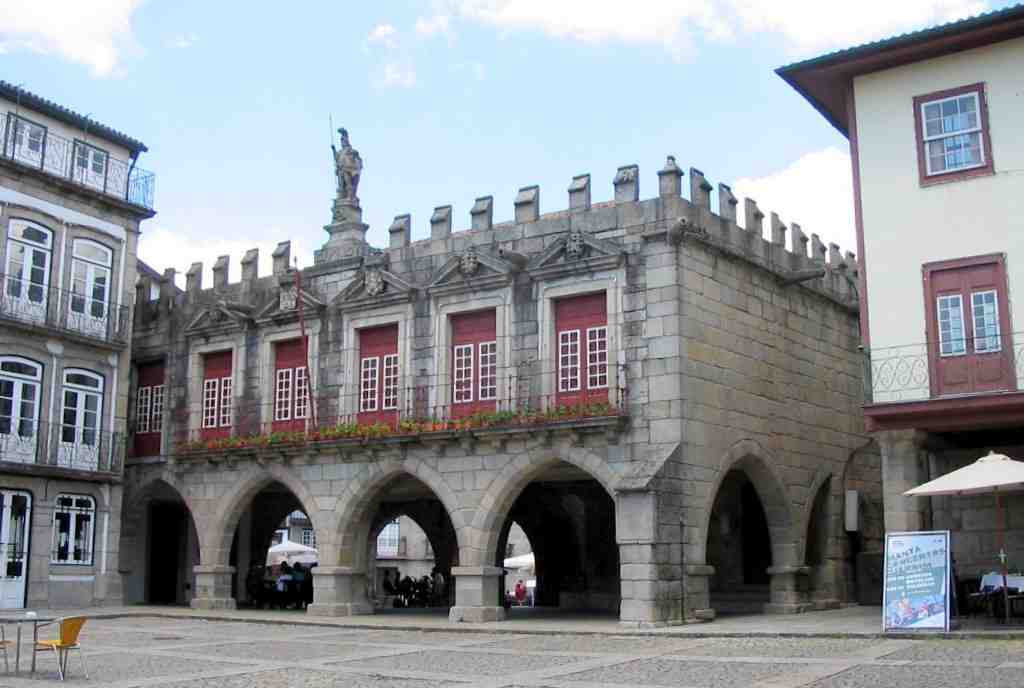
समर्पित पेज खोलें →Right ahead, you’ll spot a grand granite building with red-framed windows and gothic arches lining its ground floor, forming an arcade that creates an eye-catching passage between…और पढ़ेंकम दिखाएँ
Right ahead, you’ll spot a grand granite building with red-framed windows and gothic arches lining its ground floor, forming an arcade that creates an eye-catching passage between lively squares-just look for the fortress-like stonework and the lively plaza filled with tiny tables. Now, as you stand surrounded by these proud old stones and cobbled paths, imagine you’re in a place that’s seen nearly a thousand years of dreams, dramas, and the crackle of new beginnings. Welcome to the Guimarães Historic Center and Leather Area, a living stage where Portugal’s national story had its opening act-think of it as the birthplace of all things Portuguese, and a city that’s never lost its authenticity or charm… even if the pigeons still think they own the place. Back in the 12th century, this was where royalty and rebels bumped elbows, shaping a new country. The medieval lanes you’re walking now, like Rua de Santa Maria, once wound their way through thick forests of stone and wood, connecting castle and monastery. Can you hear your footsteps echoing under the arcades? Those very sounds could have been the shuffle of merchants, the whispers of monks, or the clatter of townsfolk rushing news from the upper citadel to the marketplace below. But Guimarães isn’t a city trapped in one era-oh no, its architecture is like a layered cake prepared by generations of master builders. From the 15th through the 19th centuries, each century added its own flavor. The houses you see are more than just pretty facades; they’re built with age-old techniques like “taipa de rodízio” and “taipa de fasquio.” Imagine construction workers in the 1600s slapping up walls using wooden boards, clay, and a whole lot of muscle. And when they ran out of stone? No problem-some upper floors were made entirely of timber and clay, while the ground floors were sturdy granite, tough enough even for medieval tax collectors. (Now, there’s a knock you never want to hear on your door!) Take a closer look-there are noble Renaissance houses clad in pure granite, standing beside “casas de ressalto” from the 17th century, with projecting upper floors and quirky window shapes. The 18th and 19th centuries added grand townhouses and even a splash of color, thanks to those famous Portuguese tiles called azulejos. With every returning emigrant, a new façade bloomed with patterned blues, greens, and deep wine reds-proof that a little homesickness and a lot of investment can make a city sparkle. Locals say the Milkman’s house still stands in the Rua de Santa Maria, with doors flanked by arched lintels, while in the old Leather Quarter, entire families once worked in the tanneries-just imagine the aroma! For centuries, the area buzzed with workshops, laughter, and the slap of wet leather, a reminder that Guimarães’ beauty wasn’t just for show-it was a place of action, industry, and transformation. More recently, in 2023, the historic center’s heritage boundaries were officially broadened to include the Leather Area, celebrating not just noble palaces, but also the hard work and everyday lives that powered the city forward. Every archway, every plaza, every flowerbox dangling from a window holds stories of ambition, faith, and grit. So, as you stare up at those gothic arcades and intricate windows, know that you’re part of a living tapestry-threaded together from medieval dreams, royal ambitions, and the everyday hopes of ordinary people. You’re definitely standing somewhere special… and frankly, you might want to start practicing your royal wave, just in case!
समर्पित पेज खोलें →

10 और स्टॉप दिखाएँकम स्टॉप दिखाएँexpand_moreexpand_less
The Torre dos Almadas stands right ahead-a tall, square-shaped stone tower with pointy battlements on top and two small, arched windows above a heavy wooden door; just look…और पढ़ेंकम दिखाएँ
The Torre dos Almadas stands right ahead-a tall, square-shaped stone tower with pointy battlements on top and two small, arched windows above a heavy wooden door; just look straight towards the building rising sharply between the cafés. Standing here, picture the year 1279: in place of today’s lively streets, a sprawling noble residence once dominated this spot, with our tower as its proud sentinel. Imagine the clatter of horses on cobblestones and the hustle of medieval Guimarães. Centuries later, as the city squeezed in with new buildings, the grand residence was hacked away-leaving just this sturdy tower, suddenly exposed, in need of new windows and an entrance so it could face its new urban neighbors. Over the years, this tower wore many names-first the grand Palace of the Almadas, then the more dramatic Castle of the Almadas, and finally, in 1971, it settled as the Tower of the Almadas. Since 1968, it’s been the lively home base for the city’s former high school students group, who organize the famous Nicolinas festivities here each year. And let’s not forget-it survived a bomb explosion in 1974, and got its insides fixed up afterwards. Today, the tower is not just a relic; it’s a part of Guimarães’s UNESCO World Heritage status and still a place of celebration, memory, and the occasional mischievous student plot!
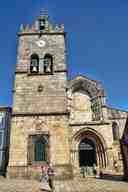
समर्पित पेज खोलें →In front of you stands the Church of Our Lady of Oliveira, a proud stone structure with a large square bell tower-just look for the clock and the twin bells above the main arched…और पढ़ेंकम दिखाएँ
In front of you stands the Church of Our Lady of Oliveira, a proud stone structure with a large square bell tower-just look for the clock and the twin bells above the main arched doorway! So, here we are, right in front of a church that’s almost like Guimarães’s own version of a medieval celebrity. Picture yourself in the 10th century, when this whole spot buzzed around a small pre-Romanesque monastery founded by the formidable Mumadona Dias-imagine her as Guimarães’s ancient boss lady, who even built a fortress to keep this holy ground safe. That fortress eventually set the scene for the Castle of Guimarães, just in case you thought only Hollywood sequels went on for centuries. But that’s only the beginning! By the 1100s, the original monastery made way for something much grander-the Collegiate of Santa Maria de Guimarães. Think of it as the Apple headquarters of medieval religious power: wealthy, influential, and drawing crowds from all over. The bits of stone and old columns you might spot around the cloister are like ancient leftovers from that era, stubborn survivors from the Romanesque original, now mixed with Manueline details. Somewhere in there, there’s even an old capital with carvings of the eternal struggle between good and evil. Medieval artists didn’t just paint by numbers-they told stories in stone. Now, fast-forward to a dramatic moment in the 1300s: the church turns into a major pilgrimage hotspot with people flocking to see the revered image of Saint Mary. On the eve of the famous Battle of Aljubarrota, that very image caught the eye-and the prayers-of João I of Portugal. As thanks, he decided to fund a total makeover for the church. So, if you think home renovations are stressful, imagine doing it with the king’s gold and a deadline of the early 1400s. Let’s take a closer look at the church’s face-a simple yet elegant structure with three naves and, right above the main portal, a huge stone “window” bursting with gothic art. Known as the Tree of Jesse and the Annunciation, this display unfurls the whole family tree of the Virgin Mary above your head. Nothing says “important heritage” like a gigantic stone family album. Inside, the golden carvings and spectacular chapels owe a lot to artistic touch-ups from the 1700s-a trendier update thanks to Pedro Alexandrino de Carvalho. The church became a patchwork of old and new, Gothic spires next to golden Baroque flourishes, like someone wearing armor with a sequin cape. And then there’s the olive tree at the heart of the legend! The story goes that a king named Wamba, fresh from Jerusalem, planted an olive tree here-a tree later believed to have withered away out of sheer drama. That was, until a local trader brought back a cross from Normandy, placed it beside the stump, and-presto!-the olive tree sprouted back to life. Miraculous! Over the years, generations called upon Our Lady of Victory, which is how she became Our Lady of the Olive Tree. Yes, everyone in Guimarães loves a happy ending-so much, in fact, that today there’s still an olive tree in the plaza marking all the legendary dates of this story. So here it stands: part church, part legend, part medieval superhero headquarters. How’s that for a quirky stop on your journey? To expand your understanding of the features, toponymy - legend of our lady of the olive tree or the see also, feel free to engage with me in the chat section below.
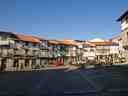
समर्पित पेज खोलें →To spot Santiago Square, just look ahead for a wide, cobbled open space surrounded by charming, stacked medieval houses with their wooden balconies and red-tiled roofs; you'll see…और पढ़ेंकम दिखाएँ
To spot Santiago Square, just look ahead for a wide, cobbled open space surrounded by charming, stacked medieval houses with their wooden balconies and red-tiled roofs; you'll see people gathered at outdoor cafes across the square. Welcome to Santiago Square, where the cobblestones under your feet have seen more drama than a soap opera marathon! Picture yourself here a thousand years ago: according to local legend, the Apostle St. James-yes, the one from the stories-brought an image of the Virgin Mary all the way to Guimarães, putting it in what was then a pagan temple, right in this square. That’s how it got the name “Santiago” or “São Tiago,” and suddenly, this became more than just another spot in town-it became sacred ground. These quirky houses with their crooked balconies and laundry hanging off the rails might look photogenic now, but back in the day, you wouldn’t want to get too close. Trust me, people actually described this place as dirty, unworthy, and even a “source of infection!” By the nineteenth century, the square’s reputation was so infamous, there were serious debates about bulldozing the entire neighborhood, calling it “a den that tarnishes the air”-and, believe it or not, home to Guimarães’ historic infamous side. But time has a funny way of turning yesterday’s eyesores into today’s treasures. Where once there was a cramped, “infected alleyway,” now you’ll find lively cafés and the laughter of locals. Even the place where a tiny 17th-century chapel once stood is carefully marked out in the pavement, as if history itself is winking up at you. And if you visit during the Nicolinas festivities, you’ll see teenagers tossing apples for the “Maçãzinhas” right here-a living tradition in a square where every corner has a story to tell. So breathe in that mix of history and roasted coffee beans, and enjoy your moment in a place that’s gone from “unworthy” to UNESCO-worthy!
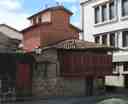
समर्पित पेज खोलें →Look out for a low stone house with a distinctive wooden balcony jutting out over the street, covered in latticed wood panels-it almost looks like it’s peeking out at the world…और पढ़ेंकम दिखाएँ
Look out for a low stone house with a distinctive wooden balcony jutting out over the street, covered in latticed wood panels-it almost looks like it’s peeking out at the world with secretive eyes just beside modern buildings. Now, take a deep breath and let your imagination wander back to the 17th century-Guimarães was buzzing with the excitement of new beginnings, as the city spilled cheerfully beyond its old medieval walls. Right here, in one of the freshly minted neighborhoods near bustling Misericórdia Square, the Casa das Rótulas emerged, wearing a wooden balcony unlike anything else in town. That balcony, inspired by Italian “gelosia,” let the house’s residents spy on the street below, gossip about neighbors, or simply enjoy a breeze-without being spotted themselves. Can you picture the giggles and secrets behind the wooden screens? As Guimarães grew richer and fancier, this street filled up with proud manor houses. Yet, the Casa das Rótulas held onto its curious charm, a true oddball in a crowd of straight-laced stone homes. It became so beloved that in 1986 authorities declared it a public treasure, and when Guimarães was crowned a UNESCO World Heritage Site, this quirky house was right inside the golden circle. If only its walls could talk! You might hear stories of restoration in 2005-or perhaps catch the echoes of centuries of whispered conversations and glances exchanged through the rótulas.
समर्पित पेज खोलें →To spot the Gil Vicente Theatre, look for a sturdy stone building with bold metal letters reading “ASSOCIAÇÃO ARTÍSTICA VIMARANENSE” and the year 1866 carved right above the…और पढ़ेंकम दिखाएँ
To spot the Gil Vicente Theatre, look for a sturdy stone building with bold metal letters reading “ASSOCIAÇÃO ARTÍSTICA VIMARANENSE” and the year 1866 carved right above the entrance. Now, imagine you're standing on a lively street in Guimarães with the scent of coffee drifting from nearby cafés, but in front of you is a piece of Italy right in Portugal-a building dreamed up by Venetian architect Nicola Bigaglia, all dressed up in a style straight from Venice! The Gil Vicente Theatre wasn't always called that, though; its real mouthful of a name is Associação de Socorros Mútuos Artística Vimaranense, or ASMAV for short. Back in the late 1800s and early 1900s, everyone flocked here for music, movies, and debate, but things weren’t always dramatic on stage-sometimes the drama was legal! One day in 1935, a dispute over who really owned the theatre led to city-wide disappointment as the only cinema in town. For over a year, film fans had to take their popcorn elsewhere. As time rolled on, the building lost a little of its shine, but by the early 2000s, after some tough years and a lot of elbow grease, ASMAV brought back the sparkle. Today, this beauty hosts everything from rock concerts to political debates-and don’t even get me started on the famous annual rhetoric tournament hosted by the local high school. This isn’t just a theatre; it’s where generations have laughed, argued, and cheered, all beneath a Venetian-inspired roof!
समर्पित पेज खोलें →To spot Casa do Carmo, look across the square for a grand, cream-colored baroque mansion with tall windows, a line of slim cypress trees, and a charming red-tiled roof right in…और पढ़ेंकम दिखाएँ
To spot Casa do Carmo, look across the square for a grand, cream-colored baroque mansion with tall windows, a line of slim cypress trees, and a charming red-tiled roof right in front of you. Imagine yourself in the 18th century, where the air buzzed with excitement every time a royal carriage rolled up to Casa do Carmo. This noble house belonged to the Count of Margaride, whose family were a real soap opera-marriages between rich merchants’ daughters and noble sons, grand inheritances, dramatic successions, and the odd royal guest dropping by. It’s said this was Guimarães' ultimate “viewing room”; kings, princes, powerful bishops, ministers, and aristocrats all gathered here beneath the watchful gaze of the Cardoso and Macedo shield that still decorates the middle of the house’s elegant façade. If only King José I’s coat of arms had come with a do-not-disturb sign! You can almost picture Maria Rosa, the merchant’s daughter, and Domingos José Cardoso de Macedo, the nobleman, arguing (politely, of course) over whose family crest should go on the house-until they decide, “Why not both?” Their son, Domingos, later built the upper floor where maybe gossip and secrets echoed along the halls, and where the last Captain Major of Guimarães would pace, planning grand events. No matter how many country estates the family owned, Casa do Carmo was always their favorite, the stage for their most unforgettable family dramas and high-society gatherings. Fast forward to today: after a dramatic renovation and lots of paperwork (almost as epic as a royal wedding), the house is protected and celebrated as part of Guimarães’ World Heritage. So, if you suddenly feel a regal urge to strike a royal pose, blame it on the company you’re in!
समर्पित पेज खोलें →To spot the Castle of Guimarães, just look up ahead for a striking stone fortress with sturdy, jagged walls and tall rectangular towers rising up through the trees-like a giant…और पढ़ेंकम दिखाएँ
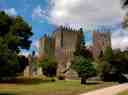
To spot the Castle of Guimarães, just look up ahead for a striking stone fortress with sturdy, jagged walls and tall rectangular towers rising up through the trees-like a giant stone crown on a hilltop, flying the Portuguese flag. You’re now standing before the mighty Castle of Guimarães, the legendary fortress whose stone walls have witnessed a thousand years of drama, ambition, and even a family feud or two that would make any soap opera jealous. Picture yourself back in the 10th century. The air is tense; danger lurks on the horizon as raids from Moors and Norsemen threaten the peaceful little monastery nearby. The count’s widow, Mumadona Dias-she wasn’t just a lady with a long name-saw this and thought, “Let’s fix this!” So, she traded her estate and ordered the construction of this daunting castle to keep her monks, nuns, and neighbors out of trouble. Over the years, these thick granite walls saw more than just battles. Power struggles rumbled like thunder through the halls, especially when it came time to pass the castle down through Mumadona’s family. Believe me, if you think your family squabbles are bad, try keeping a fortress from your ambitious relatives! First, her son tries to keep the place, then another family member attempts a sneaky takeover-there’s enough drama here for a whole season of medieval reality TV. Then, the plot thickens. By the end of the 11th century, Count Henry decides the castle needs more than a simple spruce-up-it needs a full-on transformation. Just imagine the clang of hammers and the shouting of workers as the keep and walls rose higher, the gateways widened, and the entrances fortified to withstand any enemy. And why? Because this wasn’t just a defensive outpost anymore. It was about to become royal-the home of the future first king of Portugal, Afonso Henriques, who was born right here in 1111! Hopes, dreams, and the fate of a nation were cradled within these towers. The field behind these walls became the setting for the famous Battle of São Mamede in 1128, a no-holds-barred showdown where family drama exploded into open conflict, and Portugal’s independence was sparked. You could say that if these towers had ears, they'd have heard the birth cries of a nation as Portugal took its first steps toward becoming its own country. Fast forward to the 13th and 14th centuries, and remix artists step in again-well, King Denis and later King John I, to be precise-who remodelled, added towers, updated the look, and kept the place feeling fresh for the hard-working defenders who manned these walls. Siege after siege, the fortress stood as a defiant guardian, watching rival kings and would-be invaders fail to take the crown. At times, it became so battered and neglected that, in the late 1700s and early 1800s, some locals suggested recycling its sturdy stones to pave the streets. Imagine: instead of a castle tour, you’d be crossing these very stones just to get to the bakery. But, in a twist worthy of a fairy tale, the castle was saved, recognized as a national monument in 1910, buffed, polished, and opened to the world. During restoration, hidden medieval wells were discovered-just a reminder that this place still has secrets left to share. Today, the Castle of Guimarães remains one of Portugal’s most unusual and important monuments, anchored like a pentagram-shaped shield on its granite hill, surrounded by the whispers of history and the rustle of trees. So before you leave, gaze up at those eight towers, each one holding a tale of ambition, courage, and resilience. It’s not just a castle-this is the place where Portugal was truly born.
समर्पित पेज खोलें →

अक्सर पूछे जाने वाले प्रश्न
मैं टूर कैसे शुरू करूँ?
ख़रीदारी के बाद, AudaTours ऐप डाउनलोड करें और अपना रिडेम्पशन कोड दर्ज करें। टूर तुरंत शुरू करने के लिए तैयार होगा - बस प्ले टैप करें और GPS-गाइडेड रूट का पालन करें।
क्या टूर के दौरान मुझे इंटरनेट चाहिए?
नहीं! शुरू करने से पहले टूर डाउनलोड करें और पूरी तरह ऑफ़लाइन इसका आनंद लें। केवल चैट फ़ीचर को इंटरनेट की ज़रूरत है। मोबाइल डेटा बचाने के लिए WiFi पर डाउनलोड करने की सिफ़ारिश है।
क्या यह एक गाइडेड ग्रुप टूर है?
नहीं - यह एक सेल्फ-गाइडेड ऑडियो टूर है। आप अपनी गति से स्वतंत्र रूप से खोजते हैं, आपके फ़ोन से ऑडियो कथन बजता है। कोई टूर गाइड नहीं, कोई ग्रुप नहीं, कोई शेड्यूल नहीं।
टूर में कितना समय लगता है?
अधिकांश टूर पूरा करने में 60-90 मिनट लगते हैं, लेकिन गति पूरी तरह आपके नियंत्रण में है। जब चाहें रुकें, स्टॉप छोड़ें, या ब्रेक लें।
अगर मैं आज टूर पूरा नहीं कर सकता/सकती तो?
कोई समस्या नहीं! टूर की लाइफ़टाइम एक्सेस है। जब चाहें रोकें और फिर शुरू करें - कल, अगले हफ़्ते, या अगले साल। आपकी प्रगति सेव रहती है।
कौन सी भाषाएँ उपलब्ध हैं?
सभी टूर 50+ भाषाओं में उपलब्ध हैं। अपना कोड रिडीम करते समय अपनी पसंदीदा भाषा चुनें। नोट: टूर जेनरेट होने के बाद भाषा बदली नहीं जा सकती।
ख़रीदारी के बाद मैं टूर कहाँ एक्सेस करूँ?
App Store या Google Play से मुफ़्त AudaTours ऐप डाउनलोड करें। अपना रिडेम्पशन कोड (ईमेल द्वारा भेजा गया) दर्ज करें और टूर आपकी लाइब्रेरी में दिखेगा, डाउनलोड और शुरू करने के लिए तैयार।
अगर आपको टूर पसंद नहीं आया, तो हम आपकी ख़रीदारी वापस करेंगे। हमसे संपर्क करें [email protected]
सुरक्षित चेकआउट 


