
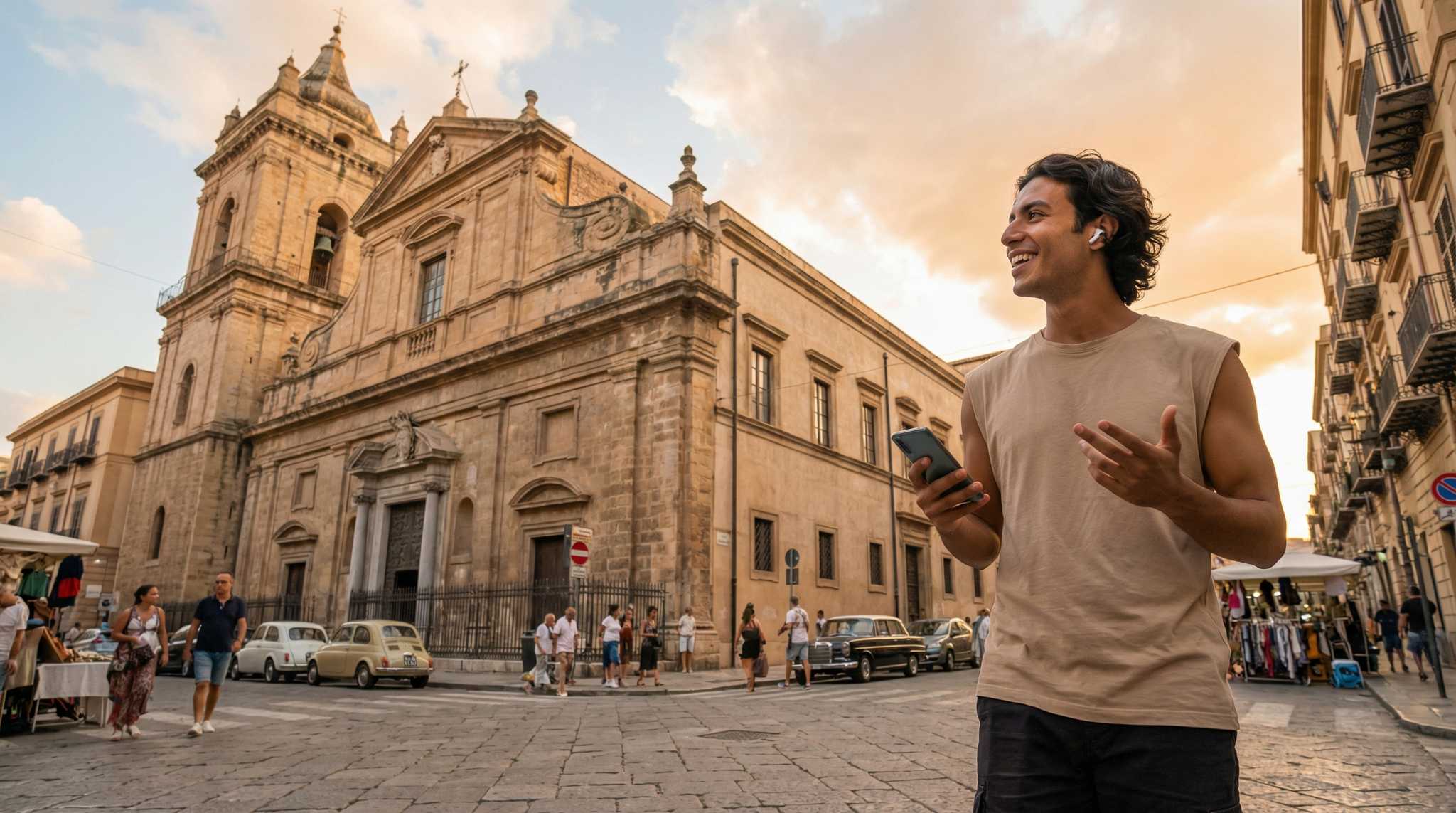
पलेर्मो ऑडियो टूर: शक्ति, महलों और पवित्र पत्थरों की गूँज
एक शेर की खामोश निगरानी और प्राचीन मसालों की खुशबू पलेर्मो की भूलभुलैया से होकर गुजरती है, जो सुनहरे पत्थरों के नीचे सदियों की प्रतिद्वंद्विता, आस्था और महत्वाकांक्षा की परतें दर्शाती है। यह स्व-निर्देशित ऑडियो टूर भव्य ओपेरा हॉलों, गॉथिक रहस्यों और शाही रहस्यों से भरे गिरजाघरों से होकर गुजरता है—शहर की उन छिपी कहानियों को उजागर करता है जिन्हें अधिकांश यात्री कभी नहीं सुनते। किस घोटाले ने टीट्रो मास्सिमो को दो दशकों की भयानक चुप्पी में डुबो दिया? कौन सी किंवदंती संत'एगोस्टिनो की दहलीज पर इच्छाओं को जीवित रखती है? पलेर्मो कैथेड्रल का प्राचीन मध्याह्न तल गुप्त रूप से खगोलीय समय की लय को क्यों चिह्नित करता है? ऊँचे गुंबदों की भव्यता से लेकर शांत आंगनों तक चलें जहाँ संत और सम्राट सोते हैं। शहर पैरों के नीचे बदलता है: राजनीति गरमाती है, क्रांतियाँ गूँजती हैं, और भूली हुई फुसफुसाहट सिसिलियन हवाओं में बहती है। हर कदम में नाटक का अनुभव करें, हर छाया में साज़िश को उजागर करें, और पलेर्मो को नए सिरे से देखें। पलेर्मो की गुप्त लिपि को अनलॉक करें—अपनी यात्रा अभी शुरू करें।
टूर पूर्वावलोकन
इस टूर के बारे में
- scheduleअवधि 40–60 minsअपनी गति से चलें
- straighten4.4 किमी पैदल मार्गगाइडेड पथ का पालन करें
- location_on
- wifi_offऑफ़लाइन काम करता हैएक बार डाउनलोड करें, कहीं भी उपयोग करें
- all_inclusiveलाइफ़टाइम एक्सेसकभी भी, हमेशा के लिए फिर सुनें
- location_onटीट्रो मास्सिमो से शुरू होता है
इस टूर के स्टॉप
To spot the Teatro Massimo, look for a grand neoclassical building with a massive dome, a row of towering columns out front, and two fierce bronze lions guarding its wide…और पढ़ेंकम दिखाएँ
To spot the Teatro Massimo, look for a grand neoclassical building with a massive dome, a row of towering columns out front, and two fierce bronze lions guarding its wide staircase, right at the heart of Piazza Verdi. Welcome to the magnificent Teatro Massimo, Palermo’s pride and joy. You’re standing before a building that’s more than just an opera house-this is Italy’s largest, where echoes of arias and whispers of intrigue still float through the Sicilian air. Go ahead, take in the impressive view: those big columns holding up the stately facade, crowned by a dome that rivals the best of ancient temples. And don’t miss the two bronze lions lounging near the steps, as if they’re listening in on the city’s secrets. Imagine the streets here back in 1864, all bustle and excitement-a city recently united with Italy, eager to show off its new identity to the world. Palermo didn’t want to be just the “second city” after Naples. Oh no, Palermo wanted something monumental; something that would draw applause for centuries. So, when the mayor announced an international competition to dream up the “opera house to top all opera houses,” ambition was in the air. Architects across Europe sharpened their pencils, but in the end, the job went to Palermo’s own Giovan Battista Filippo Basile, a local legend of visionary design. Picture the scene: Sicilian craftsmen hauling enormous blocks of stone, the din of hammers and shouts echoing across Piazza Verdi, all orchestrated by Giovanni Rutelli’s steam-powered crane-a marvel of its own. Basile dreamed of a theater fit for kings, inspired by the grand temples of Selinunte and Agrigento, and using the thick golden stone so characteristic of Sicily. When Basile passed away, his son Ernesto took the baton, running the final laps in the relay to glory. Now, I can’t tell you there weren’t bumps along the way. Construction started in 1874, but after some initial progress, the theater hit the classic Italian pause-eight years of… well, let’s just say, “extended coffee breaks,” local politics, and maybe a little drama offstage! But like any great opera, after suspense and setbacks, triumph arrived: in 1897, twenty-two years after the first stone was laid, the Teatro Massimo opened its doors. The first opera? Verdi’s Falstaff-a performance as grand and lively as the building itself. Step inside with your imagination: the rich scent of polished wood, plush velvet, tiers upon tiers of boxes rising in a horseshoe around the stage, and light glimmering off gold leaf. Once, the hall could hold over three thousand eager listeners, though these days, it’s a cozy 1,381-still plenty to host Sicily’s most glittering nights. And the acoustics? Simply perfect. The sound here is so clear, you could probably hear a tenor’s sigh from the back row, and maybe even a soprano’s grumble backstage! The details make it all come alive. The interior dazzles with decorations by artists like Rocco Lentini and Ettore De Maria Bergler, and busts of famous composers, lovingly carved by Giusto Liva and his sons. Even the lions aren’t just there to scare naughty children-they’re the masterpieces of Benedetto Civiletti and Mario Rutelli, Giovanni’s talented son. Of course, life at the Teatro Massimo hasn’t always been an endless standing ovation. In 1974, the curtain fell for what was supposed to be a quick renovation, but, cue dramatic music-cost overruns, scandals, and a healthy dose of Sicilian politics turned the pause into a 23-year intermission. When the house finally reopened in 1997, right before its hundredth birthday, the applause was thunderous, probably even waking up the decorative lions from their long nap. In recent years, with artistic passion at the helm, the theatre turned the page and took on fresh adventures-new productions, unforgettable operas, and the steady beat of ballet slippers on its historic stage. Just imagine: if these walls could sing, they’d have centuries of stories, scandals, and show-stopping high notes to share. You might even recognize this place from the movies: it played a starring role in The Godfather Part III, where fate, family, and opera collided under the same roof you’re looking at now. And in the second season of The White Lotus, fortunes and mischief danced through these halls once again. So, whether the ghost of a baritone is warming up somewhere unseen, or the next grand performance is about to begin, you’re standing outside Palermo’s temple of spectacle, a place where grandeur, history, and maybe even a little touch of drama are always center stage. Are you ready for the next act of our tour? Let’s keep moving-just don’t try to out-sing the locals; they’ve got centuries of practice!
समर्पित पेज खोलें →Look right in front of you for a grand, pointed arch doorway carved in stone, crowned by a circular window of swirling, floral stone patterns-the beautiful face of…और पढ़ेंकम दिखाएँ
Look right in front of you for a grand, pointed arch doorway carved in stone, crowned by a circular window of swirling, floral stone patterns-the beautiful face of Sant’Agostino. Now, let me whisk you back in time! Imagine you’re standing here centuries ago, near the bustling Capo market, where the air was thick with the scent of spices and the shouts of vendors. This Gothic church has watched it all-from kings to curious travelers with creaky wagons. Built in the age of the Angevins, it actually replaced an even older church from the days of the Normans. Think of it as Palermo’s version of musical chairs-only the winner was this splendid church! Over the years, people just couldn’t resist sprucing it up, giving it a makeover or two. But the real magic? Step inside (or just imagine for now!) and you’d be dazzled by the stucco work of Giacomo Serpotta in the 18th century. He covered the church in swirling white stucco-like an icing artist gone wild-which made the walls dance with angels, flowers, and hidden stories. Locals also call this place “Santa Rita,” after the beloved Augustinian saint who, according to rumor, still listens to wishes whispered at the entrance. So, as you stand in the shadow of those ancient stones, take a deep breath-and maybe make a wish for good luck on today’s adventure!
समर्पित पेज खोलें →
11 और स्टॉप दिखाएँकम स्टॉप दिखाएँexpand_moreexpand_less
Right in front of you, you’ll spot the Cappella Palatina by its golden mosaics gleaming beneath grand arches, with intricate artwork shimmering within a cozy, lantern-lit…और पढ़ेंकम दिखाएँ
Right in front of you, you’ll spot the Cappella Palatina by its golden mosaics gleaming beneath grand arches, with intricate artwork shimmering within a cozy, lantern-lit chapel-just look for the richly decorated entrance beside the Norman Palace’s sturdy stone walls. Now, get ready-because the Cappella Palatina is not just a chapel, it’s a swirling kaleidoscope of cultures, where Norman ambition, Byzantine artistry, and Arabic innovation come together like the world’s fanciest fruit salad. Picture yourself back in 1132: Palermo is buzzing, artisans from all corners of the Mediterranean are arguing about the best way to make gold sparkle, and King Roger II, with a twinkle in his eye and probably a beard full of bread crumbs, decides he needs a royal chapel that will knock everyone’s silk slippers off. He commissions this masterpiece right on top of an older, much humbler chapel-the crypt below your feet. He wants a sanctuary so magnificent that even the Pope would say, “Well played, Roger.” Eight years go by, filled with clanging, chanting, and a language stew of Greek, Arabic, Latin, and a dash of grumbling Sicilian. By 1140, the chapel structure itself is complete, but the mosaics, those glittering stories in colored glass and gold, wouldn’t be finished for another decade. Step inside, and the adventure begins: columns rescued from abandoned temples hold up arches that swoop like palm fronds, and every inch of ceiling or wall is singing a different note from Sicily’s multicultural chorus. The chapel’s ceiling is possibly its greatest wonder-the legendary muqarnas. Roger wanted a parade of geometry, stars and octagons carved in delicate wooden panels, painted and dazzling, suspended like a chandelier for the ages. This ceiling’s story is a mystery that would keep even an archaeologist guessing-was it inspired by Egypt’s Fatimids, imported from Syria, borrowed from North Africa, or crafted by local hands that already knew a thing or two about starry nights? The answer is, well, no one knows for sure, but it looks like a marriage of all worlds-artists fleeing troubled times and master craftsmen right here in Sicily, all putting their stamp on paradise. And paradise is exactly what Roger was after. The ceiling, full of inscriptions mostly in Kufic Arabic script, showers down blessings of power and prosperity with every glance upward. There are nearly seventy-five of these invocations scattered, like cosmic post-it notes, among an assembly of musicians, dancers, banquet-goers, crowned kings (hello, Roger himself), hunters, and animals straight out of a far-off fable. At the very end, there’s a wild dinner party frozen in time-a scene so lively you half expect to hear laughter drifting down. But we can’t stop at the ceiling! The chapel’s heartbeat is its staggering mosaic work, done in two acts. The oldest mosaics, spun by Byzantine artists, flicker on the ceilings and domes, showing saints elongated like candle flames, their robes flowing, their faces aglow with mysterious inner light. Along the north wall, St. John roams the desert and the Agnus Dei prances in a landscape more heavenly than earthly. Below, the Three Hierarchs-mighty Orthodox fathers of the church-stare out with solemn authority, framed by swirling ornamental borders. Each scene is its own little universe, parted from its neighbor by a labyrinth of pattern and color. By the time the Latin-leaning mosaics pop up in the 1160s and 1170s, a new generation of local Sicilian craftsmen is taking a stab at the art. These pictures are more like storybooks-sometimes clumsy, always vibrant-with saints giving way to everyday scenes and even a glimpse of Sicily’s wildflowers and critters in what’s possibly the only great patch of secular Byzantine mosaic left in the world. The whole chapel is a puzzle, a patchwork: Christian domes illuminated with Muslim stars, marble from who-knows-where, gold leaf fit for a pharaoh. Roger II made sure the throne and the altar had equal sway, a not-so-subtle flex to tell the mighty rulers of Europe, “I’m here to stay, deal with it.” Oh, and don’t miss the throne platform-if you spot two lions lazily decorating the frame, those are official seat warmers for the king himself. So, as you stand here, take a deep breath and imagine choirs once filling this chamber with music, candlelight flickering off golden glass, and somewhere in the shadows a ruler sitting quietly, listening to the sounds of three continents meeting under one miraculous roof. Not bad for a royal chapel, eh? If only all power struggles ended with this much sparkle and style. Interested in a deeper dive into the mosaics, muqarnas ceiling or the chapel? Join me in the chat section for an insightful conversation.
समर्पित पेज खोलें →Right in front of you, you’ll spot a mighty stone wall with tall, arched windows topped by eye-catching black-and-white stripes and delicate circular cutouts-just keep your eyes…और पढ़ेंकम दिखाएँ
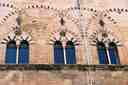
Right in front of you, you’ll spot a mighty stone wall with tall, arched windows topped by eye-catching black-and-white stripes and delicate circular cutouts-just keep your eyes on the third floor for those colorful arches and intricate window designs. Now picture this: the year is 1330, and Palermo is buzzing with gossip. The proud Lord Matteo Sclafani wants to outshine his brother-in-law-yes, family rivalries even happened in medieval Sicily! So, he builds this grand palace, a true medieval masterpiece, right here on Piazza della Vittoria, filled with grand arches, stone carvings, and a coat of arms above the entrance that almost shouts, “Look at me, I’m important!” Matteo wasn’t just showing off his wealth; he wanted everyone to know the Sclafani name was as grand as any Norman or Chiaramonte. You can almost hear the whispers of the townsfolk and see the bustling markets nearby. But time works its magic-by 1435, the palace’s noble halls are replaced with hospital beds for the city’s sick and needy, and then, in a real plot twist, soldiers march up and down its corridors when it becomes a barracks. Today, it still has a bit of military pep in its step. Oh, and those beautiful, playful arches on the southern side? They’re inspired by Moorish architecture, a reminder of an even older Palermo. Sadly, the palace's famous Triumph of Death fresco has moved out, but if these walls could talk, imagine the stories they'd tell-epic drama, sibling rivalry, and of course, the kind of family competition that never truly goes out of style!
समर्पित पेज खोलें →You’re facing a large, imposing rectangular building in light ochre stone, with many grand windows, small balconies on the upper floors, and two flags above a richly decorated…और पढ़ेंकम दिखाएँ
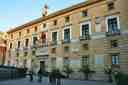
You’re facing a large, imposing rectangular building in light ochre stone, with many grand windows, small balconies on the upper floors, and two flags above a richly decorated front entrance-look straight ahead at the center of Piazza Pretoria, across from the famous Pretoria Fountain, to spot it. Welcome to the Palazzo Pretorio, or as locals call it, the Palazzo delle Aquile-the Palace of the Eagles! Don’t worry, no talons here, just a wealth of stories waiting for you. Now imagine: it’s the 1300s, and Palermo’s leaders-more used to holding their meetings in chilly churches than cozy offices-finally demand a proper seat of power. Here comes King Frederick III of Aragon to the rescue, ordering a new headquarters for the city’s officials, who back then had grand titles like "pretore" and "bajulo." You can almost hear the clinking of their armor as they start arguing over the meeting room with the best view. Fast-forward to the late 1400s, when the whole palace gets a glow-up thanks to Pietro Speciale, a powerful lord, with an architect named Giacomo Benfante at the helm. The style competition is fierce-everyone in Europe wants the grandest palace, and Palermo is determined not to be outdone! Over the centuries, as tastes change, the building is continually remodeled. Stubborn towers, loggias, ornate statues and, eventually, a gleaming statue of the city’s beloved patron Saint Rosalia (added in 1661) all make appearances, pouring layer upon layer of history into the walls. By the 1500s, Palermo’s civic offices-once scattered like confetti-are finally unified here, making the palace a buzzing center of power, politics, and perhaps a bit of gossip. As the bustling city grows, so does the palace, with a showy new entrance built in 1553 and perfect for dramatic mayoral entrances. When the Spanish rule Palermo, the Senate gathers here, flanked by noble officials wielding titles like “maestro razionale” (I still don’t know what that means, but it sounds important, doesn’t it?). Come the 1700s, Emperor Charles VI bestows even loftier honors on Palermo’s municipal senate, and more marble medallions and regal memorabilia are added to the walls. Every period leaves its mark: on one hand, the magistrates are given supreme powers by King Charles III in the Bourbon age; on the other, the building needs expansion after an earthquake shakes things up in 1823. During the upheaval of the 19th century, Garibaldi himself storms in, making the palace the nerve center of his revolutionary government during the 1860 capture of Palermo. There’s even a plaque to remember the day the hero of two worlds (as Garibaldi was known) addressed the city from the palace’s balcony-doesn’t that give you chills just imagining his voice echoing across the piazza? By the late 1800s, the palace gets yet another makeover, this time in a trendy neo-Renaissance look, thanks to architect Damiani Almeyda. The ochre exterior you see today, with its noble rows of windows and the fearsome eagle over the door, dates to this time. On either side of the grand staircase stand two marble sphinxes-no riddles required to enter, though. Inside, your journey would take you past the Sala delle Lapidi (Hall of Inscriptions), filled with marble plaques commemorating centuries of city councils, and the dazzlingly red Sala Rossa, where the mayor still works today. There’s something magical about this place: from secret subterranean air-raid shelters built during World War II (yes, there’s a hidden world underfoot!), to art treasures like Murano chandeliers and baroque statues. If you listen closely, you might even hear echoes of heated debates, laughter mixing with urgent voices, and the footsteps of Palermo’s rulers through a city always teetering between the ordinary and the extraordinary. So next time you pass beneath the watchful gaze of the eagle, remember: you’re standing where centuries of drama, dreams, and downright quirky history have played out. And don’t forget to wave upward, just in case Saint Rosalia is keeping an eye out for any stray eagles-or enthusiastic visitors!
समर्पित पेज खोलें →Take a look right in front of you-what you’re seeing is the Church of Santa Maria dell’Ammiraglio, or Martorana, with its striking Baroque façade and tall, arched bell tower,…और पढ़ेंकम दिखाएँ
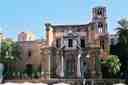
Take a look right in front of you-what you’re seeing is the Church of Santa Maria dell’Ammiraglio, or Martorana, with its striking Baroque façade and tall, arched bell tower, nestled beside the Norman church of San Cataldo and facing the lively Piazza Bellini. Now, imagine standing at this spot about 900 years ago. Instead of traffic and the occasional selfie-taker, you’d find yourself among bustling markets, foreign tongues, and merchants in long, flowing robes. This church, the Martorana, was the sparkling new jewel of medieval Palermo, gleaming with golden mosaics and the promise of something different-something truly special. It all started in the twelfth century, when a clever Syrian Christian admiral named George of Antioch decided he wanted a place for his soul (and his eternal rest) that reflected the wonderfully tangled culture of Sicily. This was an island where, after a century of Arab rule, Normans had swept in, grabbed the crown, and said, “Actually, we love your art and mathematics-let’s mix it up a bit!” So, with both Greek and Arabic inscribed proudly on its ancient charter, the Martorana rose up. At that time, Latin, Greek, and Arabic were spoken all around the city-sort of like today’s Palermo, only with fewer tourists asking for WiFi passwords. If you were to slip through those chunky old doors, you’d find yourself surrounded by a blinding array of mosaics, created by artists who must have spent more time up on scaffolding than most cats do on bookshelves. Glittering colors, saints in golden halos, and even an image of King Roger II himself, standing beside Christ and being crowned-not by a pope, mind you, but by Jesus directly, in true Byzantine fashion. Talk about skipping the middleman! Roger wore his upwardly mobile ambitions as openly as a king-sized crown, which might explain why his image, dressed in imperial garb, makes an appearance on the wall right here. But don’t let the mosaics steal all your attention. There are layers of history hiding behind these stones like shy ghosts at a masquerade. Take the architecture-at the base, you’ll spot signs of the “Greek cross” plan, a classic in Byzantine churches. Walk around the outside, and you’ll see arches and decorative touches borrowed from Islamic traditions. A frieze at the top bears an inscription in Greek letters but wrapped in Arabesque style-a visual reminder of Palermo’s past, where Christian, Muslim, and Jewish communities coexisted in remarkably cosmopolitan fashion. Why just borrow sugar from your neighbor when you can borrow architectural genius? Then came centuries of change. Over time, a Benedictine convent was founded right next door by a tough and devout woman named Eloisa Martorana-hence the nickname “Martorana.” The nuns moved in, and, as you might expect of nuns living next door to the greatest church bakery in Palermo, they started making Frutta di Martorana: marzipan fruits so realistic you’d swear that apple was about to crunch. Even today, pastry shops all over Palermo sell these tasty souvenirs of the convent’s creative spirit. Later, the church was radically transformed as new rulers swept through-Aragonese crowns, Spanish viceroys, even more renovations in the never-ending quest for heavenly beauty. Grand Baroque flourishes were added, tweaking the once-Byzantine basilica and giving it that dramatic flair you see today. The bells in the campanile might as well have rung out new building instructions every decade. Oh, and in the 19th century, someone tried to “restore” the church, as in, “Let’s take it back to the Middle Ages,” but many of the Baroque elements remain proudly visible up front, just daring you to try and peel back the centuries. But the real heart of Martorana beats with the Arbëreshë-the Italo-Albanian community. Driven from their homes centuries ago by Ottoman invasions, they found refuge in Sicily, bringing lively Albanian customs, costumes, and language with them. Even now, if you slip inside at the right moment, you might hear hymns sung in Koine Greek or Albanian, echoing with ancient faith. Easter is the biggest celebration, but even weddings here make a spectacle, with brides dressed in traditional Albanian garb and whole families singing with gusto. Today, Martorana stands as a living mosaic, an ever-evolving masterpiece that is part of a UNESCO World Heritage Site. It’s a place where East meets West, past meets present, and marzipan meets your sweet tooth. So, next time you’re tempted to dash off for a pastry, stop and let your senses drink in this remarkable survivor-a church that has seen it all, heard it all, and still every morning, opens its doors wide to welcome a little more history. For a more comprehensive understanding of the liturgy and rite, architecture or the interior, engage with me in the chat section below.
समर्पित पेज खोलें →To spot the Sant’Elia Palace, just look to your right along Via Maqueda-you’ll see an elegant facade stretching along the street, painted in soft yellow and pink, with rows of…और पढ़ेंकम दिखाएँ
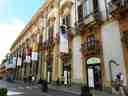
To spot the Sant’Elia Palace, just look to your right along Via Maqueda-you’ll see an elegant facade stretching along the street, painted in soft yellow and pink, with rows of wrought-iron balconies and tall windows lined up perfectly above arched doors, and bright banners swaying in the breeze. Alright, here we are, in front of the Sant’Elia Palace! If you listen closely, you might almost hear the echoes of horse-drawn carriages clattering on the old stones, carrying Palermo’s aristocrats to a ball two centuries ago. Let’s step back in time and uncover the story of this aristocratic mansion. Picture Palermo in the mid-1700s: Via Maqueda-the “Strada Nuova,” or “new street”-was all the rage because the city had just ripped open the old medieval neighborhoods to make way for grand new avenues and palaces. The Sant’Elia Palace you see now began with a noble called Giovanbattista Celestri di Santa Croce. He wanted something big, something spectacular-a palace to rival all others-and started expanding his existing home, gobbling up neighboring buildings, and hiring the finest craftsmen. There was some mystery over the actual architect-it’s like the palace’s own whodunit! For years, people thought a fellow named Nicolò Anito did it all, but recent discoveries suggest he was more of a “helper” than the mastermind. Instead, the true architectural genius behind these walls is still lost to history. Imagine a masked architect sneaking in at night, whispering, “They’ll never know it was me!” What a plot twist for Palermo! By 1756, construction was in full swing-not just one courtyard, but two! Dramatic entrance portals, fancy stucco crests, and soon, sculptors and painters would arrive, dusting their powder from busy hands and arguing over which corner of the ballroom deserved more gold leaf. Walking past these elegant balconies and archways, you’re passing what was once one of the city’s most extravagant homes. The walls inside are bursting with frescoes-imagine mythological scenes painted by Ottavio Volante, full of gods and heroes, while nearby artisans crafted delicate stucco garlands and blazons celebrating the noble family. Every room was a stage, and every party a performance. Flickering lantern light, noblemen murmuring, and silk skirts rustling as they crossed the terrazzo floors-all designed to show off the family’s power and importance. But fate is tricky, and family fortunes don’t always last. The Santa Croce family line faded out, and just about a century later, the palace passed to a cousin-Romualdo Trigona, Prince of Sant’Elia, whose name the palace still carries. Even the Trigonas, though, couldn’t hold onto it forever. Over the next hundred years, this grand old house wore many hats: it was rented out to the city senate, became a university for the encouragement of agriculture and the arts, and even served as a school. Imagine bored schoolkids scribbling graffiti in the shadow of lavish neoclassical ceilings! And in the 20th century, things got a little wild: the palace saw years of neglect, empty and abandoned, its ornate courtyards echoing with only the sound of wind and pigeons. Parts were even looted, and it looked like the grand days of Sant’Elia were over. But Palermo doesn’t give up on its treasures so easily. In 1984, the local government swooped in and bought the palace, determined to save it. Years of careful restoration followed-inside and out, from the peeling facades to the hidden frescoes. Now, as you stand outside, look up at those rows of balconies and imagine the grand reopening in 2007, bursting with light and artwork again, as the palace became a museum space. Today, every corner is alive with temporary exhibitions and events, welcoming everyone-locals and travelers, families and dreamers. Even the pathways are accessible to all, so no one has to miss the magic. From secret architects to noble intrigue, from aristocratic excess to resilience and revival, Sant’Elia’s story is one of transformation. If these golden walls could talk, they’d whisper tales of glory days and wild parties, echoing right into the present. Ready to continue the adventure? On to the next treasure!
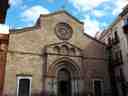
समर्पित पेज खोलें →To spot the Church of San Francesco d’Assisi, look straight ahead for a grand, honey-colored stone facade with a striking circular rose window above a tall, pointed arch entrance…और पढ़ेंकम दिखाएँ
To spot the Church of San Francesco d’Assisi, look straight ahead for a grand, honey-colored stone facade with a striking circular rose window above a tall, pointed arch entrance richly decorated with medieval patterns. Welcome to the Church of San Francesco d’Assisi, where the stories echo through every stone and archway! Imagine yourself here nearly 800 years ago, when this spot wasn’t filled with quiet anticipation but with the loud clang of hammers, mingled voices in many languages, and the ever-so-dramatic hustle of medieval Palermo. The story starts all the way back in 1224, when local troublemakers-yes, the clergy and even some Saracens-actually chased the early Franciscan friars right out of the city! The friars, still barefoot and full of hope, hurried off to the mainland, where they pleaded their case to none other than Pope Gregory IX. The result? A papal order demanding their return and the rebuilding of their church. A little lesson for all of us: never underestimate determined monks with connections! Of course, fate in Palermo is rarely straightforward. As soon as the Franciscans started rebuilding, along came Emperor Frederick II who, mid-drama with the Pope, decided to destroy their new project. Only after Frederick passed away could the friars return, rolling up their sleeves once again in 1255 to finally lay the first stones of the church you see ahead. There was even a battered old defensive tower nearby, repurposed as the original bell tower! The air must have constantly rung with the tap-tap-tap of masons and builders-if only these rocks could talk… By the 14th century, a new era began. The Chiaramonte family, Palermo’s own medieval heavyweights, stepped in to sponsor the grand new Gothic portal-go ahead, admire those zigzag carvings and imagine wealthy lords arriving in their finest silks! A few centuries later, the church didn’t just serve prayerful locals, but became a bustling center for city life. Major Sicilian families, Genoese and Pisan merchants, and even the Parliament of Sicily all took their turns here. The chapels inside-sixteen in all!-became family monuments, filled with marble statues, golden altars, and intricate paintings. Step closer and notice that beautiful rose window. That’s a modern reconstruction, but it harks back to the original design, which was shattered by an earthquake in 1823. In fact, the church has played a part in nearly every era of Palermitan drama-earthquakes, Renaissance renovations, debates, processions, baroque upgrades, and unfortunately, the bombing raids of World War II. In 1943, explosions tore through the left nave and shattered centuries of artwork, leaving the church mournfully exposed to the weather and to history’s sometimes rougher hands. But like any true Palermitan, the Church of San Francesco refused to be beaten down for long. Long restoration projects returned it to its medieval glory, pulling away later opulent decorations to let the ancient stone and soaring arches shine again. Don’t let its calm face today fool you-inside, there are treasures from some of Italy’s greatest artists. You’ll find chapels filled with marble works by the Gagini family, vibrant baroque stucco by Giacomo Serpotta (the guy who could turn plaster into pure poetry), and frescoes by Pietro Novelli. Lucky you, standing here, where famous artists wrestled inspiration onto stone and where, at one time, the city’s elite vied for their slice of sacred immortality. The convent next door wasn’t just for quiet prayer, either. It was an intellectual powerhouse, where friars studied everything from grammar and philosophy to Greek and even Arabic. For a long time, this was where the cleverest minds in Sicily swapped ideas-sort of like the medieval version of a university campus, but with better habits and, hopefully, less student debt. So as you look up at that magnificent facade and ornate rose window, let yourself drift back and forth through time-from the anxious friars seeking sanctuary, to the buzz of medieval craftsmen, to the bombs of the modern era, and finally, to today’s sunlit calm. Palermo may have changed around it, but the Church of San Francesco d’Assisi remains-a survivor, a witness, and a living piece of Sicily’s unstoppable spirit. And remember: don’t try to outlast a Franciscan church in Palermo. They always come back stronger! Intrigued by the description, the right aisle on the south side or the the left aisle on the north side? Explore further by joining me in the chat section below.
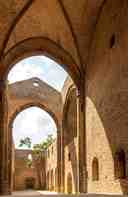
समर्पित पेज खोलें →To spot the Church of Santa Maria dello Spasimo, look ahead for tall, weathered stone walls with soaring gothic arches and, quite mysteriously, no roof-just blue sky and sunlight…और पढ़ेंकम दिखाएँ
To spot the Church of Santa Maria dello Spasimo, look ahead for tall, weathered stone walls with soaring gothic arches and, quite mysteriously, no roof-just blue sky and sunlight pouring straight down into what once was the nave. Now, get ready to step into a monument that’s as open to the sky as it is to your imagination! Right here in the Kalsa district, where the sea breeze still carries a touch of salt, imagine the year is 1509. Instead of the quiet, you hear the clatter of stones, shouts of workers, and the scratch of chisel on marble. A devoted man named Jacopo de Basilicò sets all this in motion, inspired by the sorrow of the Madonna watching Jesus stumble beneath the cross-a scene that gave the church its name, “Spasimo,” meaning anguish or heartbreak. Jacopo, fulfilling his late wife Eulalia’s wish, hands over this patch of land to the Benedictine monks. The site practically buzzes with excitement from the birth of the Sicilian Renaissance-artists and craftsmen eager to fill the city with new beauty. Construction is whirlwind-fast, with Pope Julius II’s blessing speeding things along. The church rises with elegant late-Gothic arches and an atmosphere that mixes hope and solemnity. But, like any great drama, there’s a twist: as the walls soar, threats creep ever closer. Pirates and Turkish invaders threaten Palermo’s shores, forcing precious resources away from the nearly completed monastery and into city defenses. You can almost hear the thudding of picks and shovels as new moats and walls spring up around the church. Inside the church, a miracle in paint appears-a masterpiece by Raphael, the “Spasimo di Sicilia,” capturing heartbreak itself: Mary’s devastated face as she sees Jesus fall. People gasp at its beauty; Vasari, the great art historian, calls it a marvellous and “divine thing.” It sits on a wondrous marble altar, also a work of art, for just a short time-before wars, epidemics, and crafty deals spirit it away to Madrid, where it still hangs in the Prado Museum. Yet, the Spasimo’s fame spreads, with copies popping up all across Sicily, as if people wanted to keep a little piece of its wonder for themselves. The Spasimo is a survivor, but not untouched by history’s storms-literally and figuratively. Imagine this: by the late 1500s, public performances fill its soaring nave. Poetry and drama echo off the stone, and it becomes arguably Palermo’s first real theater. Marcantonio Colonna, a sort of early showbiz impresario, stages Tasso’s “Aminta” here. Not just a house of prayers, but now a stage for applause, laughter, and the occasional missed cue! But tragedy strikes again. In 1624, the plague hits Palermo, and the church becomes a hospital for the sick, the shadows thick with whispered prayers for deliverance. Later, it becomes a grain store, then a warehouse. Midway through the 18th century, the central vault collapses-no more roof, just the sky. And so it remains, exposed to rain, sun, and bombs from yet another world war. For almost two centuries, the Spasimo lies abandoned, the wind whistling through empty arches, the ground scattered with rubble, stories of former glory echoing across the stones. But this church has more lives than a Sicilian cat! In 1886, it becomes a hospice. By the 1980s, it is little more than a ruin and even briefly a dumping ground, until Palermitans-never ones to let a good story end with a whimper-rally together to save it. Restoration work begins in the 1980s, and with a dramatic flourish, the church is reborn as an open-air theater in 1995. Since then, concerts, art shows, and jazz festivals fill the night air, laughter and music swirling where monks once prayed and actors once performed. Now, as you stand here in the light and shadow, with no roof above, remember the art, the struggle, the sorrow, and the endless reinventions. The Spasimo is a monument to resilience, to beauty that endures even as the world changes around it. If you close your eyes for just a moment, you might hear the echo of monks chanting, actors declaiming, or a distant melody from a jazz saxophone. It’s proof that even a heartbreak can become a thing of wonder-one that stretches from the Renaissance all the way to your footsteps today. Interested in a deeper dive into the basilicò chapel - altar of the "spasimo di sicilia", ansaloni chapel or the monastery of the olivetan fathers? Join me in the chat section for an insightful conversation.
समर्पित पेज खोलें →
अक्सर पूछे जाने वाले प्रश्न
मैं टूर कैसे शुरू करूँ?
ख़रीदारी के बाद, AudaTours ऐप डाउनलोड करें और अपना रिडेम्पशन कोड दर्ज करें। टूर तुरंत शुरू करने के लिए तैयार होगा - बस प्ले टैप करें और GPS-गाइडेड रूट का पालन करें।
क्या टूर के दौरान मुझे इंटरनेट चाहिए?
नहीं! शुरू करने से पहले टूर डाउनलोड करें और पूरी तरह ऑफ़लाइन इसका आनंद लें। केवल चैट फ़ीचर को इंटरनेट की ज़रूरत है। मोबाइल डेटा बचाने के लिए WiFi पर डाउनलोड करने की सिफ़ारिश है।
क्या यह एक गाइडेड ग्रुप टूर है?
नहीं - यह एक सेल्फ-गाइडेड ऑडियो टूर है। आप अपनी गति से स्वतंत्र रूप से खोजते हैं, आपके फ़ोन से ऑडियो कथन बजता है। कोई टूर गाइड नहीं, कोई ग्रुप नहीं, कोई शेड्यूल नहीं।
टूर में कितना समय लगता है?
अधिकांश टूर पूरा करने में 60-90 मिनट लगते हैं, लेकिन गति पूरी तरह आपके नियंत्रण में है। जब चाहें रुकें, स्टॉप छोड़ें, या ब्रेक लें।
अगर मैं आज टूर पूरा नहीं कर सकता/सकती तो?
कोई समस्या नहीं! टूर की लाइफ़टाइम एक्सेस है। जब चाहें रोकें और फिर शुरू करें - कल, अगले हफ़्ते, या अगले साल। आपकी प्रगति सेव रहती है।
कौन सी भाषाएँ उपलब्ध हैं?
सभी टूर 50+ भाषाओं में उपलब्ध हैं। अपना कोड रिडीम करते समय अपनी पसंदीदा भाषा चुनें। नोट: टूर जेनरेट होने के बाद भाषा बदली नहीं जा सकती।
ख़रीदारी के बाद मैं टूर कहाँ एक्सेस करूँ?
App Store या Google Play से मुफ़्त AudaTours ऐप डाउनलोड करें। अपना रिडेम्पशन कोड (ईमेल द्वारा भेजा गया) दर्ज करें और टूर आपकी लाइब्रेरी में दिखेगा, डाउनलोड और शुरू करने के लिए तैयार।
अगर आपको टूर पसंद नहीं आया, तो हम आपकी ख़रीदारी वापस करेंगे। हमसे संपर्क करें [email protected]
सुरक्षित चेकआउट 


