
क्लीव ऑडियो टूर: ताज, कैनवस और पवित्र पत्थरों की कहानियाँ
एक हंस कभी क्लीव के क्षितिज पर मंडराता था, सदियों से छिपे रहस्यों पर छाया डालता था। इस शहर की प्राचीन दीवारें, सुंदर महल और शांत कोने आज भी किंवदंतियों और अनकही कहानियों से स्पंदित होते हैं। क्लीव के माध्यम से एक स्व-निर्देशित ऑडियो यात्रा पर निकलें ताकि उन कहानियों को उजागर किया जा सके जिन्हें स्थानीय लोग भी नहीं जानते। सतह से परे जाएं और वहां घूमें जहां अतीत की साज़िशें, सत्ता संघर्ष और भूली हुई कला फिर से जीवित हो उठती हैं। स्पार्कसे राइन-मास में सचमुच चिंगारियां क्यों उड़ीं? श्वाननबर्ग कैसल के गलियारों में एक बार कौन सा भयावह निर्णय गूंजा था? और बी.सी. कूकोक ने उत्तर दिशा वाले कमरे में केवल आधी रात को ही पेंटिंग क्यों की? हर मोड़ नाटक और खोज की परतें खोलता है। नदी किनारे की सैर से विद्रोह की गूँज में फिसलें। हर कदम को सदियों के रहस्य और महत्वाकांक्षा को उजागर करने दें, जिससे हर चौक और पत्थर को देखने का आपका तरीका बदल जाए। अभी शुरू करें। क्लीव को उसके हंस की आँखों से देखें—ऊपर उड़ते हुए, नीचे की कहानियों की तलाश करते हुए।
टूर पूर्वावलोकन
इस टूर के बारे में
- scheduleअवधि 30–50 minsअपनी गति से चलें
- straighten3.5 किमी पैदल मार्गगाइडेड पथ का पालन करें
- location_on
- wifi_offऑफ़लाइन काम करता हैएक बार डाउनलोड करें, कहीं भी उपयोग करें
- all_inclusiveलाइफ़टाइम एक्सेसकभी भी, हमेशा के लिए फिर सुनें
- location_onसेंट मैरी का बेदाग गर्भाधान से शुरू होता है
इस टूर के स्टॉप
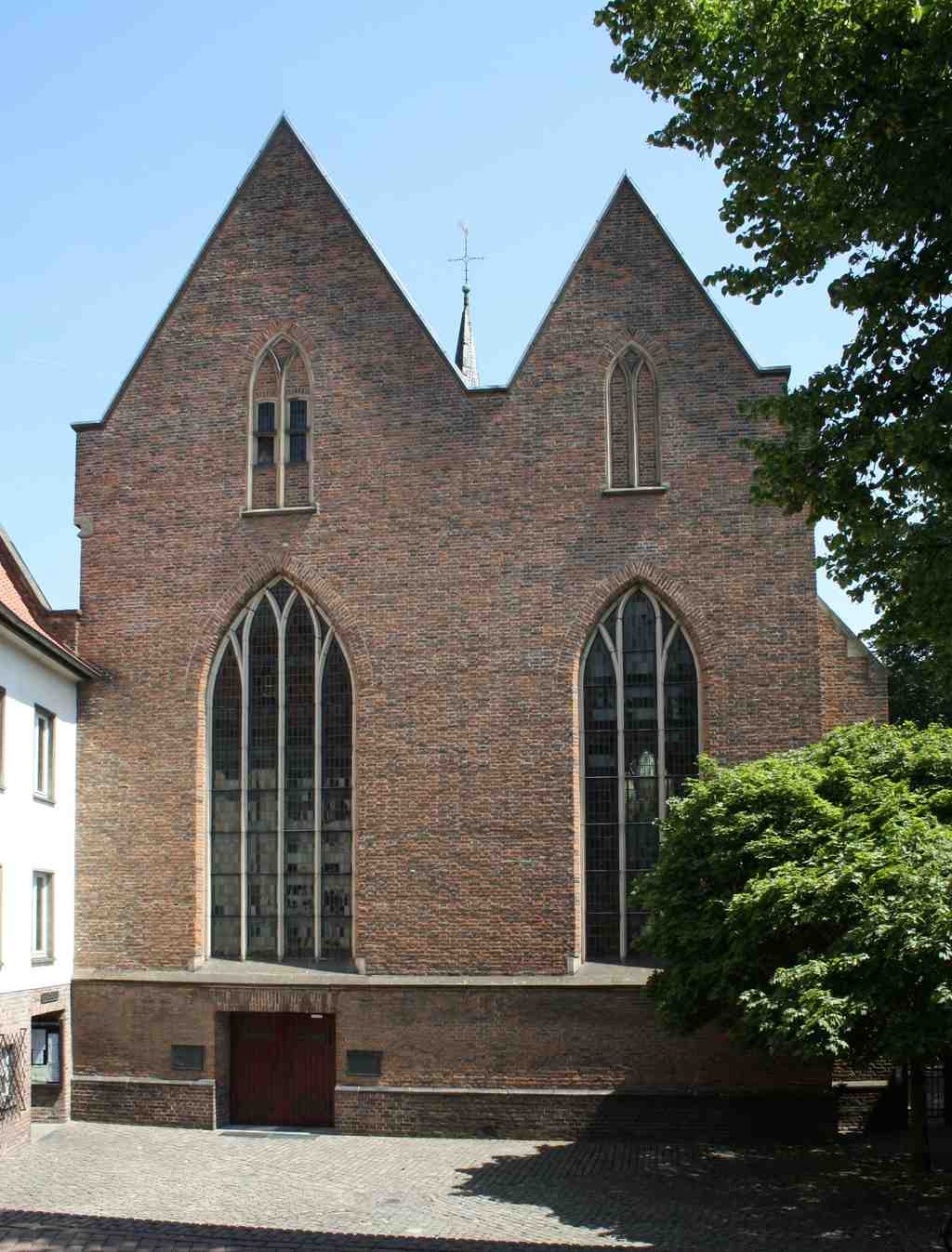
If you’re looking for St. Mary’s Immaculate Conception, just look for a simple, broad brick building with two distinct pointed gables and large, tall windows-tucked in quietly…और पढ़ेंकम दिखाएँ
If you’re looking for St. Mary’s Immaculate Conception, just look for a simple, broad brick building with two distinct pointed gables and large, tall windows-tucked in quietly beside the trees. Now, let’s turn back time and step into a world where cobblestones echoed with the soft shuffle of robes and bells chimed through the morning mist. You’re standing right where, back in 1285, the mighty Count Dietrich decided that this very spot would be home to a new monastery for the humble Minorite brothers. Imagine them, with sandals and tattered robes, arriving to a modest church-certainly less grand than what stands before you now! Over the next hundred and forty years, the place grew: these brothers rebuilt the complex in sturdy gothic style, crafting this very church as the southern wing of their cloister. Picture the clatter of chisels-- echoing through the medieval air as Arnt von Kalkar carved a magnificent wooden choir in 1474. You could say he put the “art” in Arnt, but let’s not chip away at his reputation! Through storms of history, this church weathered some serious drama. During the Reformation, when neighboring chimes fell silent, this cloister survived. Imagine the Minorites-cloistered away-debating and praying as the world outside spun with tension, then suddenly, in 1698, a sumptuous Baroque pulpit arrived, all curls and gold leaf. It must have felt like a royal upgrade! But, alas, not all stories are peaceful. In 1802, under French rule, the resilient monastery was abolished, its rooms repurposed and sold, and the once holy halls echoed with unfamiliar footsteps. Soon after, the convent turned into a hospital-a strange twist for a church, don’t you think? The building changed, grew, and shrank, especially after World War II, when bombing raids nearly wiped it off the map. Only a whisper of the original walls remained-. Yet, like a phoenix, it rose from the ashes, rebuilt to honor its original beauty. Inside, treasures survived: that famous choir with both saints and cheeky grotesques, a Baroque pulpit, and even a fragment of St. Adalbert’s relics, rescued from Poland in WWII. And if you listen carefully, you might just catch the hum of an organ, installed in 1961, that fills these halls with rich, resonant music-. This church isn’t just bricks and mortar-it’s a survivor, a hospital, a haven, and a beacon of reconciliation. So next time you’re facing a tough day, remember: if St. Mary’s can come back from almost anything, surely we can all handle a little rain!
समर्पित पेज खोलें →Straight ahead, you’ll spot a grand, pale, four-story building resting on a high stone base with elegant rows of large windows-just glance to where the street opens up into a…और पढ़ेंकम दिखाएँ
Straight ahead, you’ll spot a grand, pale, four-story building resting on a high stone base with elegant rows of large windows-just glance to where the street opens up into a small square and you can’t miss it! Welcome, explorer, to the B.C. Koekkoek House! As you stand before this stately classicist mansion, try to imagine the lively clatter of carriage wheels bouncing over cobblestones back in 1847, when Barend Cornelis Koekkoek, the most famous Dutch landscape painter before anyone had even heard of Van Gogh, decided he’d finally arrived. After wandering through rented homes in Kleve, he and his wife Elise, an artist’s daughter herself, settled right here and built a literal palace for their growing creative clan. Now, if you listen closely, can you hear the footsteps up the stone steps, maybe the laughter of their three daughters escaping from the grand golden salon inside? This place wasn’t just a family home. It was the beating heart of a nineteenth-century art scene! Imagine Koekkoek, palette in hand, climbing the three-story “Belvedere” tower he had raised at the highest point of the property. From up there, he could feast his eyes on sweeping views of the Rhine plain-all the way from Wesel to Arnhem! The studio was lined with windows that drank in the cool, steady northern light artists famously loved, while downstairs, helpers would grind pigment in the color chamber, stirring up clouds of colored dust-no tubes of paint for this master! Koekkoek wasn’t shy about his successes. He even commissioned a towering statue of Pallas Athene, goddess of wisdom and the arts, to stand guard on his studio’s roof. And don’t worry-it’s back up there today, after a dramatic collapse and reconstruction. The house you’re looking at, often dubbed the “Palais Koekkoek,” was the talk of the town: high ceilings, spectacular windows, a glittering salon, and, for guests who scored an invite up to the “Goldene Salon,” there was enough gilded ceiling decoration to make any king jealous. Speaking of kings, did you know Koekkoek painted massive landscapes for King Willem II of the Netherlands, right here? When royalty visits your home, you know you’re doing something right. Life here flowed through generations and changing fortunes. After Koekkoek’s death in 1862, his family auctioned off the sparkling furniture in Amsterdam and sold the house to another wealthy family from the far reaches of Dutch-Indies. Over the decades, the house changed hands and got little makeovers-a new wing here, some extra rooms there, even a tear-down of a customs house next door, all to suit new owners with different dreams. For decades, the tower and outbuildings became home to other artists, like the church painter Heinrich Lamers, who built skylit studios and filled the place with the hustle and buzz of the Niederrhein artist group. Picture exhibitions in the old atelier, voices echoing between canvas and brick, echoing the days when the house was the center of creative life. Even Joseph Beuys himself, much later, would show his work here. Sometimes, the old walls held more than just paintings; they were thick with secrets, successes, and maybe a few dramatic family squabbles. Fortunately, the B.C. Koekkoek House dodged the destruction of World War II and emerged mostly untouched. For a while, the building was even pressed into service as the town hall, before someone had the excellent idea to turn it into a museum in 1960. Today, inside, you’ll find romantic paintings by Koekkoek, his family, followers, and students, plus beautifully preserved rooms that feel like they’re waiting for the next grand celebration. Outside, behind the mansion and studio, the gardens were lovingly restored to their 19th-century splendor. Take a whiff of the blooms if you pass by in spring-maybe you’ll catch the same scents Koekkoek once did, standing at the threshold of his dream house. This palace, with a painter’s soul and a poet’s charm, continues to welcome art lovers and dreamers, just as it did nearly two centuries ago. So, if you feel a bit inspired right now, don’t worry-that’s just the Koekkoek house working its old magic! Intrigued by the building, land and use, museum b.c. koekkoek house or the exhibitions (selection)? Make your way to the chat section and I'll be happy to provide further details.
समर्पित पेज खोलें →In front of you, look for a small, peaceful green space filled with old, weathered gravestones made of grey stone, some standing tall and others leaning slightly, surrounded by…और पढ़ेंकम दिखाएँ
In front of you, look for a small, peaceful green space filled with old, weathered gravestones made of grey stone, some standing tall and others leaning slightly, surrounded by trees and a backdrop of red-brick buildings. Now, take a quiet moment as you stand at the edge of the Jewish Cemetery of Kleve. This timeless patch of ground has watched the sun rise and set since the late 1600s. Back then, Kleve was no stranger to change or to stories of struggle and hope. If you listen closely, maybe you’ll sense the voices from centuries past, echoing softly between the headstones. The air holds the weight of history, and the gravestones-just seventy-five left-have witnessed triumphs and tragedies alike. These stones stretch from 1702 to 1937, each one a chapter in the life of Kleve’s Jewish community. It’s true, many stones are missing, lost in the darkness of the Nazi era. Imagine the cemetery as a kind of open book, some pages torn out, others faded but still speaking of resilience. Despite everything, this cemetery is a protected monument today. The names are sometimes hard to read, but the feeling is unmistakable: remembrance, dignity, and a stubborn refusal to be forgotten. If you ever wondered how a quiet place could both break your heart and inspire you, you’re standing in the midst of that mystery. And hey, isn’t it wild to think that beneath this sleepy grass, history is still stirring?
समर्पित पेज खोलें →
8 और स्टॉप दिखाएँकम स्टॉप दिखाएँexpand_moreexpand_less
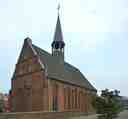
To spot the Small Evangelical Church, look for a cozy brick building with tall arched windows and a petite, pointed steeple perched right on top-you can’t miss it directly in…और पढ़ेंकम दिखाएँ
To spot the Small Evangelical Church, look for a cozy brick building with tall arched windows and a petite, pointed steeple perched right on top-you can’t miss it directly in front of you! Alright, time for a little time-travel-welcome to the Small Evangelical Church of Kleve! Picture yourself here on a misty morning in the early 1600s, just as the city is waking up. This very spot would have been a real hive of activity, but the church itself didn’t exist yet-the local Lutheran congregation actually squeezed together in private homes or gathered inside a hall at Schwanenburg Castle. Imagine everyone balancing on wobbly stools, trying not to spill tea or start a hymn off-key! Enter Sebastian Hornung: a young pastor from Franconia who probably didn’t expect his new job to come with quite so much fundraising! He journeyed far and wide-across Germany, the Netherlands, Denmark, and Sweden-collecting enough coins and goodwill to build not just this church, but also a school and a parsonage. When he finally returned in 1618, the townspeople cheered, and within a few short years-by 1621-the church was finished and gleaming with hope, just in time for Trinity Sunday. Now, sneak a peek up at the top of the gable. Can you spot the number 1620 traced elegantly in metal anchors? That’s when things were moving at full speed here. By 1621, the air would have been scented with fresh mortar and whispers of relief after the chaos of the Thirty Years’ War. Peace eventually came with the Treaty of Westphalia, and in 1648, they were gifted a bell-one that would survive wars, disappearances, and heroic recoveries. Believe it or not, during World War II, the bell was confiscated for metal, but thanks to a clever Catholic priest, it found its way home! This church didn’t always have it easy. Picture it stuffed with hay as a straw warehouse while Napoleon’s troops stomped around in 1794; imagine it badly bombed during World War II, then slowly being put back together by 1955-albeit with a few upgrades. By the time you step inside today, the space feels bright and calm, with white walls, sleek black chairs, and a red altar wall adding a pop of modern color. Overhead sparkles a chandelier from the 18th century-a glittery gift from the Great Elector himself. Nowadays, the “Little Church” calls out as a space for peace, meetings, concerts, and exhibitions-a real slice of Kleve’s quirky, resilient history. And after all it’s survived, I can guarantee you this: if these walls could talk, they’d have some cracking good stories to tell!
समर्पित पेज खोलें →Right in front of you, you’ll spot the Kleiner Markt as an open triangular square, sloping slightly down to the street below, ringed with buildings and framed by trees, with the…और पढ़ेंकम दिखाएँ
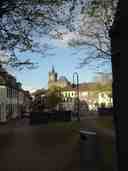
Right in front of you, you’ll spot the Kleiner Markt as an open triangular square, sloping slightly down to the street below, ringed with buildings and framed by trees, with the towering steeple of St. Mary’s just behind-all at the heart of historic Kleve. Now, let’s take you on a little time-travel adventure-imagine cobbled footsteps, the sound of merchants, and the murmur of stories echoing off the bricks. You’re now standing on the very spot that has gathered townsfolk for centuries: the Kleiner Markt, one of the oldest squares north of the St. Mary’s church. This triangle-shaped plaza is where several streets meet, with Kirchstraße at the north, the bustling Propsteistraße on the west, and Nassauerstraße along with Goldstraße to the east. If you shuffle your feet, you’ll even feel the slope down towards Kirchstraße-so watch your step, unless you want to practice your moonwalk! Long ago, the square was a lively meeting point, shaded by the towering double-gabled brick house with its fancy, stepped rooftops, until war swept through and swept them away. If you had come here in 1881, you’d have seen the Lohengrin Monument perched front and center, but by 1909, it had to pack its bags-or rather, get hoisted over to make way for the bold Hohenzollern Monument, with its dramatic equestrian statue of the “Great Elector.” This changing of the statues was such a big deal that Kaiser Wilhelm II himself attended the unveiling! Talk about a square with star power. Today, the Kleiner Markt has a touch of whimsy thanks to a fountain featuring seven bronze, water-spouting heads. These honor the once-famous “Gecken-Gesellschaft”-the jesters’ society-complete with a king and his council of six. You might even hear echoes of their laughter if you listen closely. And, just on the raised forecourt above, there stands the “Dead Warrior” statue by Ewald Mataré, a haunting, powerful memorial with a truly dramatic story: battered, banned, and broken in the chaos of war, rediscovered decades later, then lovingly restored. Every corner of the square tells a story-of meetings, monarchs, mischief, and memory. I hope you can feel a bit of all that as you stand right here.
समर्पित पेज खोलें →Straight ahead, you’ll spot the imposing stone tower of the Regional Court rising up from the curve in the hill, its pointed roof and clock face peeking above the line of…और पढ़ेंकम दिखाएँ
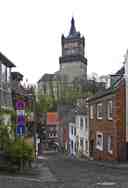
Straight ahead, you’ll spot the imposing stone tower of the Regional Court rising up from the curve in the hill, its pointed roof and clock face peeking above the line of traditional houses-just follow the cobblestone street upwards and look for the grand, castle-like building! Now, let’s dive into a story thicker than a judge’s law book! The Regional Court of Kleve has stood here-sort of like a watchful owl-since 1820, when the world was, let’s say, a little less digital and a lot more powdered wig. Picture the bustling days of the old Prussian Rhine Province: French courts still ruled how justice was served, giving these halls a splash of continental flair. But wait-this wasn’t your ordinary town courthouse! With a huge district stretching some 1,669 square kilometers (that’s a LOT of local sausage and river), this court oversaw all of Kleve, plus nearby towns like Moers, Xanten, and Alpen-imagine the stamp collection from all those places! Inside, judges and lawyers have handed down justice with a side of drama for over 200 years. Appeals flew up to Düsseldorf, while smaller cases were handled in tiny local courts; it was a bit like a giant chess game, with this court as one of the main players. If walls could talk, they’d whisper tales of rivalries, tough decisions, and more than a few nervous defendants pacing outside-just like you might be pacing right now thinking about all this history! So next time you see a judge in a hurry, remember, here in Kleve, even justice has a sense of old-world adventure.
समर्पित पेज खोलें →To spot the Collegiate Church of Kleve, look ahead for an enormous red-brick Gothic church with two tall, pointed towers like rocket ships aiming for the clouds-the big red doors…और पढ़ेंकम दिखाएँ
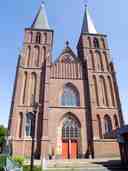
To spot the Collegiate Church of Kleve, look ahead for an enormous red-brick Gothic church with two tall, pointed towers like rocket ships aiming for the clouds-the big red doors and intricate arched windows make it stand out like a castle from a fairy tale. Now, take a breath and picture yourself back in the Middle Ages, the air buzzing with the sound of hammers and chisels, and the smell of fresh-cut stone. You’re standing before the St. Mariä Himmelfahrt Collegiate Church, a place where history, faith, and a little architectural stubbornness have collided for over 850 years. The first church in these parts was mentioned way back in 1170, sitting outside the medieval defenses of Kleve’s castle. Imagine: in 1242, as Kleve became an official city, a new “branch” church popped up inside the walls, soon sharing space with a minorite convent-a sort of holy roommate situation. The real drama kicked off in 1341, when Count Dietrich IX decided it was time for a major upgrade. He’d already founded a Marienstift on his Monterberg castle, but why stop there? He moved his entire canon foundation right here to Kleve, laying the first stone of this very Gothic church. Construction moved so quickly (for medieval times, anyway) that by 1347, the count himself was buried in the choir, with monks and masons still clinking away overhead. By 1394, the nave was finished, and in 1426, the twin towers you see today stretched skyward-so if you’re feeling tiny, that’s by design. But Kleve’s church wasn’t just a house of worship; it was the heart of a powerful canon foundation, supporting princely officials, ringing out with a mighty collection of bells. The church grew in importance, becoming a Catholic stronghold, a provost’s seat in 1967, and later, the main parish for a united Kleve in 2005. Of course, history with its quirks-Napoleon’s secularization in 1802 shut the original canon community down. And between you, me, and the church mouse, this place has seen more than its share of drama. During World War II, almost everything was reduced to rubble except a bit of luck and stubborn ambition-by 1956, the church’s main body was restored, and by 1969, the historic towers were back too, like nothing ever happened. Step closer, and you’ll spot the windows-these are masterpieces created over fifty years, with famous artists like Dieter Hartmann and Ursula Lünenborg leaving their mark, casting radiant colors on the church floors whenever the sun is bold enough to sneak through. But the real magic? Listen. Inside, there’s a mighty organ built by Rieger, with enough pipes and special registers (Celesta! Glockenspiel! Cymbelstern!) to sound like a little orchestra wrestling with angels. Sometimes, you’ll even hear a soaring carillon of 23 bells-added over the years thanks to some very generous townsfolk-ringing out from the north tower, especially at 11:46, 15:46, and 18:31. Did I mention two ancient bells from 1404 still ring out daily, their tone calling to generations past and present alike? It’s a living, chiming, singing heart of Kleve. So as you stand here, take a moment and feel the centuries humming through the brick, glass, and song. By the way, if you hear music swell or bells play a tune-don’t worry, it’s just the church showing off!
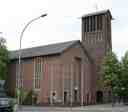
समर्पित पेज खोलें →To spot Christ the King Church, just look for the large brick building with tall, slender windows and a sturdy square bell tower rising beside it-right at the street corner in…और पढ़ेंकम दिखाएँ
To spot Christ the King Church, just look for the large brick building with tall, slender windows and a sturdy square bell tower rising beside it-right at the street corner in front of you. Now, picture yourself back in the early 1930s, when this very spot was chosen for a strikingly modern church designed by Clemens Holzmeister. The city of Kleve was growing, and with it, the need for a fresh parish-so in 1934, the church was joyfully dedicated, gleaming with hope. But let’s turn the clock to a much darker day: October 7, 1944. In one devastating air raid, the church was reduced to rubble-ashes where dreams once stood. Yet, faith in Kleve was tougher than bricks! At first, the congregation squeezed into a kindergarten, then took shelter in a youth center, and finally found themselves worshipping in an old riding hall. People say if you listened closely back then, you could almost hear the horses neighing along to the organ! By 1953, the current building rose from the ruins-rebuilt, rededicated, and packed with stories of survival. Hidden in the new altar were relics of Saint Modestus and, in a twist of medieval mystery, a supposed companion of legendary Ursula of Cologne. Fast-forward to today: after hosting decades of prayers, this church fell silent in February 2025 as services stopped. Now, pews are empty, the altar is gone, and even the organ and bells await new adventures elsewhere. Christ the King stands here, a quiet giant, holding centuries of courage, hope, and a touch of sacred wonder. Who knows what the future holds for this brick guardian of Kleve? Maybe right now, it’s listening for the next chapter to begin-just like you.
समर्पित पेज खोलें →
अक्सर पूछे जाने वाले प्रश्न
मैं टूर कैसे शुरू करूँ?
ख़रीदारी के बाद, AudaTours ऐप डाउनलोड करें और अपना रिडेम्पशन कोड दर्ज करें। टूर तुरंत शुरू करने के लिए तैयार होगा - बस प्ले टैप करें और GPS-गाइडेड रूट का पालन करें।
क्या टूर के दौरान मुझे इंटरनेट चाहिए?
नहीं! शुरू करने से पहले टूर डाउनलोड करें और पूरी तरह ऑफ़लाइन इसका आनंद लें। केवल चैट फ़ीचर को इंटरनेट की ज़रूरत है। मोबाइल डेटा बचाने के लिए WiFi पर डाउनलोड करने की सिफ़ारिश है।
क्या यह एक गाइडेड ग्रुप टूर है?
नहीं - यह एक सेल्फ-गाइडेड ऑडियो टूर है। आप अपनी गति से स्वतंत्र रूप से खोजते हैं, आपके फ़ोन से ऑडियो कथन बजता है। कोई टूर गाइड नहीं, कोई ग्रुप नहीं, कोई शेड्यूल नहीं।
टूर में कितना समय लगता है?
अधिकांश टूर पूरा करने में 60-90 मिनट लगते हैं, लेकिन गति पूरी तरह आपके नियंत्रण में है। जब चाहें रुकें, स्टॉप छोड़ें, या ब्रेक लें।
अगर मैं आज टूर पूरा नहीं कर सकता/सकती तो?
कोई समस्या नहीं! टूर की लाइफ़टाइम एक्सेस है। जब चाहें रोकें और फिर शुरू करें - कल, अगले हफ़्ते, या अगले साल। आपकी प्रगति सेव रहती है।
कौन सी भाषाएँ उपलब्ध हैं?
सभी टूर 50+ भाषाओं में उपलब्ध हैं। अपना कोड रिडीम करते समय अपनी पसंदीदा भाषा चुनें। नोट: टूर जेनरेट होने के बाद भाषा बदली नहीं जा सकती।
ख़रीदारी के बाद मैं टूर कहाँ एक्सेस करूँ?
App Store या Google Play से मुफ़्त AudaTours ऐप डाउनलोड करें। अपना रिडेम्पशन कोड (ईमेल द्वारा भेजा गया) दर्ज करें और टूर आपकी लाइब्रेरी में दिखेगा, डाउनलोड और शुरू करने के लिए तैयार।
अगर आपको टूर पसंद नहीं आया, तो हम आपकी ख़रीदारी वापस करेंगे। हमसे संपर्क करें [email protected]
सुरक्षित चेकआउट 


