ल्योन ऑडियो टूर: ल्योन के हृदय की खोज
पत्थर के टावर ल्योन के क्षितिज को भेदते हैं जहाँ हर गली एक रहस्यमयी कहानी छिपाती है और शहर की धड़कन सदियों पुरानी दीवारों से गूँजती है। इस स्व-निर्देशित ऑडियो टूर के साथ छिपी हुई गहराइयों को उजागर करें जो आपको पोस्टकार्ड दृश्यों से परे ले जाता है, आपको ऐसी कहानियों को उजागर करने के लिए आमंत्रित करता है जो अधिकांश यात्री कभी नहीं सुनते हैं। ल्योन के केंद्र में दो शक्तिशाली गिरजाघरों के बीच किस गुप्त प्रतिद्वंद्विता ने सदियों के तनाव को जन्म दिया? सेंट-निज़ियर में आपके पैरों के नीचे कौन से रहस्यमय अवशेष सो रहे हैं—क्या वे भूले हुए देवताओं या प्राचीन शहीदों के निशान हो सकते हैं? क्रांतिकारियों ने सेंट बोनावेंचर के बेसिलिका को एक अस्तबल में क्यों बदल दिया और एक बार इसकी बाढ़ वाली वेदी से कौन स्केटिंग करता था? जैसे ही आप गॉथिक शिखरों से शांत संग्रहालय दीर्घाओं की ओर बढ़ते हैं, विद्रोहियों, प्रिंटरों और संतों के पदचिह्नों का पता लगाते हुए, हर मोड़ पर ज्वलंत खोजें आपका इंतजार करती हैं। ल्योन की उलझी हुई टेपेस्ट्री में गोता लगाएँ—आधुनिक शहर के नीचे इतिहास की गड़गड़ाहट महसूस करें और जिज्ञासा आपको हर कदम पर और गहराई तक खींचने दें। अपनी यात्रा अभी शुरू करें और देखें कि ल्योन आपको कौन से रहस्य उजागर करने की चुनौती देता है।
टूर पूर्वावलोकन
इस टूर के बारे में
- scheduleअवधि 40–60 minsअपनी गति से चलें
- straighten4.2 किमी पैदल मार्गगाइडेड पथ का पालन करें
- location_on
- wifi_offऑफ़लाइन काम करता हैएक बार डाउनलोड करें, कहीं भी उपयोग करें
- all_inclusiveलाइफ़टाइम एक्सेसकभी भी, हमेशा के लिए फिर सुनें
- location_onल्योन में सेंट-निज़ियर चर्च से शुरू होता है
इस टूर के स्टॉप
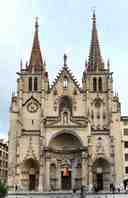
If you’re trying to spot the Saint-Nizier Church, just look for a magnificent structure with two tall, pointy towers-one with a reddish roof and the other topped with intricate…और पढ़ेंकम दिखाएँ
If you’re trying to spot the Saint-Nizier Church, just look for a magnificent structure with two tall, pointy towers-one with a reddish roof and the other topped with intricate stone lacework. The facade is decorated with little statues and a large clock, and you’ll see a big arched entrance in the center, almost like a stone cave inviting you in. It’s right on Place Saint-Nizier, and trust me, you can’t miss it-this church looks like it’s straight out of a medieval fantasy! Now, as you’re standing here, imagine that you’re in the very heart of Lyon, right off the bustling Presqu’île. Saint-Nizier Church isn’t just any old building-this place is one of the city’s most ancient and prestigious churches. Back in the day, it was even in an epic rivalry with Lyon’s main cathedral, Saint-Jean. You could almost picture the medieval clergy having a playful shouting match across town: “My church is older!” “Yours doesn’t have enough gargoyles!” Named after Nizier, one of Lyon’s bishops, this church stands on ground that’s seen just about everything-rumor has it, a Roman temple once stood here, and perhaps even the echoes of ancient sacrifices still linger. It’s all a bit mysterious, with secret tombs and whispers of forgotten gods down beneath your feet. In the 5th century, after fierce storms of history had passed, legend says that a basilica was built here to keep the bones of Christian martyrs safe. Just think-right below you might be ancient stone and the resting places of saints, with miracles and wonders once said to have happened right on this spot. And don’t be fooled by the calm-this church’s stones have seen plenty of drama. It was rebuilt in a flashy Gothic style during the 14th and 15th centuries, making it an architectural jewel ever since. If you spot the crypt inside, remember: bishops, saints, and perhaps even a few miracle-seekers have all wandered here, looking for answers. So, as you gaze up at the spires and watch the pigeons strut about, listen to the faint whisper of history in the wind. You’re part of a story that’s been unfolding for centuries. And if you suddenly feel like you’re being watched... don’t worry! It’s probably just one of the gargoyles sizing up your sense of style. Eager to learn more about the architecture and decoration, personalities or the the parish of saint-nizier today? Simply drop your inquiries in the chat section and I'll provide the details you need.
समर्पित पेज खोलें →To spot the Museum of Printing and Graphic Communication, look for a long, historic building with light tan walls, lined with tall windows in neat rows. Above the arched entrance,…और पढ़ेंकम दिखाएँ
To spot the Museum of Printing and Graphic Communication, look for a long, historic building with light tan walls, lined with tall windows in neat rows. Above the arched entrance, you’ll see orange banners with white writing calling out “Musée de l’Imprimerie”-they’ll help you pick it out from the other buildings on rue de la Poulaillerie. If you see large stone door frames and those bright banners, you’re at the right place! Alright, take a moment and imagine you’re not just standing on a quiet Lyon street, but stepping into a time machine disguised as an old building. This place first opened its doors to the public in 1964 but has roots stretching all the way back to the lively days of the late 1400s, when merchants here buzzed with excitement, making Lyon a European hotspot. Picture the secret energy of the Renaissance, the soft sound of shoes on stone as businessmen zipped in and out, probably dreaming about becoming the next big thing-much like today’s start-up founders, but with fancier hats. The museum has a very special job: it collects, protects, and brings to life the treasures of books and graphics from long ago until today. Inside, you’ll find tools that feel almost magical-strange old metal letters, colorful vignettes, inky presses, and the clatter of machines that once made books by hand. Some of these belonged to Maurice Audin, a passionate printer who devoted his life to gathering this collection. Rumor has it, Maurice could spot a rare font from across a room-now that’s a party trick! Back in the day, this building hosted grand city events, and in 1643, the whole city was dedicated to Notre-Dame in a big ceremony held right here. Just imagine: flickering candlelight, busy city leaders whispering nervously, and upstairs, perhaps a curious apprentice sneaking a peek down the stairs. The museum isn’t just for looking-it thrives on sharing, teaching, and letting you try your hand at calligraphy, bookbinding, and even making your own prints. And over the years, it’s changed a lot to welcome more people, making the mysterious world of ink and paper easy to explore and enjoy. Don’t worry if your handwriting is messier than a doctor’s prescription-here, everyone is an artist-in-training! So, as you stand in front of this solid, centuries-old building, let your eyes wander over the archway, feel the echo of history under your feet, and get ready to step inside. Who knows, maybe you’ll leave inspired to write-or print-a few stories of your own! Fascinated by the history of the museum, the building: the hôtel de la couronne or the the permanent exhibition route? Let's chat about it
समर्पित पेज खोलें →Right ahead of you is the Basilica of Saint Bonaventure-can you spot it? Look for a tall, pale stone building with a broad, pointy rooftop. The front is decorated with rows of…और पढ़ेंकम दिखाएँ
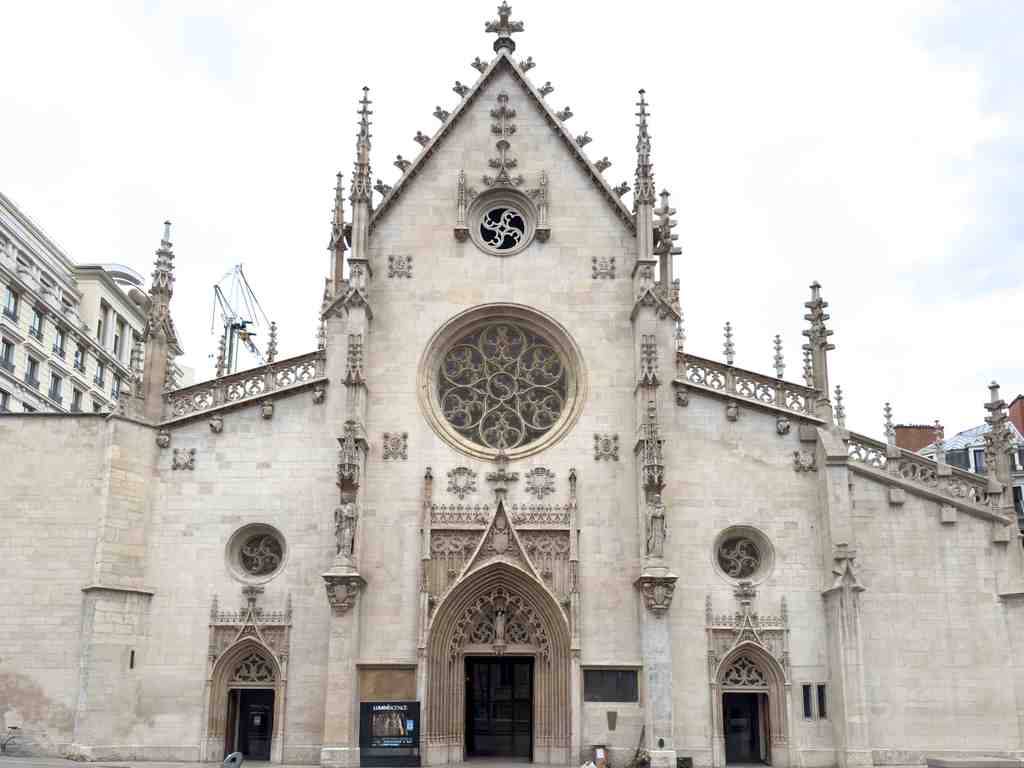
Right ahead of you is the Basilica of Saint Bonaventure-can you spot it? Look for a tall, pale stone building with a broad, pointy rooftop. The front is decorated with rows of spiky pinnacles reaching up to the sky. Right at the center, there’s an enormous circular window, called a rose window, filled with delicate, lacy stonework. Three arched doorways stand at the base, all carved with gothic detail that looks like stone lace. On either side, you’ll notice smaller windows, almost like eyes watching over the bustling street. It’s easy to find-just keep your eyes peeled for all those vertical, jagged lines poking upwards against the more modern buildings, almost like the church is giving them a run for their money! Now, let’s travel back in time for a moment. Imagine yourself surrounded by the smells of bread and coal fires, hearing the echo of horses’ hooves on the cobblestones. It’s the Middle Ages, and this is right at the heart of Lyon. The Basilica of Saint Bonaventure is standing tall, even though the city around it keeps changing. Believe it or not, this church is the only medieval building left up here on the north end of the 2nd arrondissement. Everything else around here got swept away during the big city renovations of the 1800s. But this basilica? It held on-almost like a stubborn grandparent refusing to leave their favorite chair. The church was not always so fancy. Originally, it was built for the Franciscan monks-folks so humble, they wore a knotted rope as a belt. In fact, everyone started calling these monks “cordeliers” after their simple cord belts. That’s how this neighborhood got its name! Saint Bonaventure has seen its fair share of drama, too. In 1274, a cardinal named Bonaventure himself died right inside these walls, and he’s buried here to this day. The church was built up bit by bit, finally finished in the late 1400s, and for centuries it welcomed everyone-rich and poor, kings’ doctors and cobblers. Of course, things weren’t always peaceful. Picture the chaos during the wars of religion-this place was plundered, stripped bare. Later, during the French Revolution, the church became a horse stable, a warehouse-even someone’s apartment! By the 1800s, it was slowly put back together, but wow, it’s had a tough ride! There was even a time when a huge flood from the river Saône left a meter of water sloshing around inside. One quirky detail: the church faces south-super unusual for gothic churches. And for ages, its front was plain and bare, just as the original Franciscan monks liked it. Only a few bits of decoration, and that striking rose window, broke up the simple stone. So as you stand here, you’re looking at Lyon’s time traveler-a building that’s survived mobs, floods, revolutions, and fashion changes, all thanks to a few stubborn monks and the city’s love for stories. Take in the silence… if you listen closely, you might just hear the echoes of medieval songs drifting under the city noise. Seeking more information about the historical, description or the the great organ? Ask away in the chat section and I'll fill you in.
समर्पित पेज खोलें →
11 और स्टॉप दिखाएँकम स्टॉप दिखाएँexpand_moreexpand_less
Up ahead, look for a bustling pedestrian street lined with tall, elegant buildings from the 1800s. You’ll spot big shop signs and stylish windows, and if you see a cinema with a…और पढ़ेंकम दिखाएँ
Up ahead, look for a bustling pedestrian street lined with tall, elegant buildings from the 1800s. You’ll spot big shop signs and stylish windows, and if you see a cinema with a golden rooster perched on top-yes, that’s the famous Pathé-it means you’ve made it to Republic Street. The street stretches wide, and you’ll notice a river of people flowing both directions, with cafés and shops as far as the eye can see. Welcome to Rue de la République, or as locals love to call it, simply “Rue de la Ré”! Imagine, right where you’re standing, this street has been the beating heart of Lyon since the 1800s. Here, your senses come alive: the smell of fresh coffee drifting from the cafés, the sound of laughter mixing with the distant rumble of the metro beneath, and the bright flashes of color from luxury boutiques standing proud. Back in the day, this was the place to show off a new hat… or maybe just your best walk. Stretching over a kilometer from Place Bellecour to Place de la Comédie, Republic Street has always brought together Lyon’s dreamers, shoppers, and city workers. In fact, during the 19th century, this grand avenue was part of a huge redesign, much like Paris. It had names as fancy as “Rue Impériale” and “Rue de Lyon” before finally earning its Republic name in 1878. I like to think it just couldn’t make up its mind, like me at a bakery. You’re standing on tiles laid out in stylish gray and white, with wide-open spaces made for strolling, shopping, and the occasional dramatic pause. Don’t be surprised if you see elegant old buildings decorated with the letters “RF” for République Française. And if you walk by number 22, check for a special red paving stone-that’s where, in 1894, the French president himself met a dramatic end, right in the middle of the street! By day, expect waves of locals and visitors dodging between bicycles, snacking on a croissant, or racing to catch a sale. By night, the lights from the cinema and shops spill onto the pavement, making this boulevard sparkle. Over the years, Republic Street has gone through changes-the 1970s brought the metro, recent years brought fresh paving stones and more trees, and soon who knows? Maybe hoverboards. So, keep your eyes open, listen for the rhythm of the city around you, and feel the pulse of Lyon beneath your feet. This street has seen parades, protests, presidents, and popcorn. Trust me-you’re walking through living history! Intrigued by the location and access, shops or the historical? Explore further by joining me in the chat section below.
समर्पित पेज खोलें →You’re almost at the Passage of the Argue! To spot it, just look ahead for a grand, stone archway etched with the words “Passage de l’Argue” right above it. Hanging down in front…और पढ़ेंकम दिखाएँ
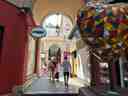
You’re almost at the Passage of the Argue! To spot it, just look ahead for a grand, stone archway etched with the words “Passage de l’Argue” right above it. Hanging down in front is a lantern, and just beyond, a tall statue stands in silhouette. You can see the entrance glowing, practically inviting you to step into a hidden world between the everyday streets. Alright, take a deep breath. Imagine you’re stepping into one of Lyon’s oldest and most elegant covered passages. The air changes as you enter-a hush fell, muffling the city noises behind you. This spot was once a bustling street all the way back in the 1700s, filled with the clack and chatter of weaving looms. Silk and silver threads zipped through the air as craftsmen worked day and night. The name "Argue" actually comes from the Greek word for silver, and, fun fact, there used to be a silver office right nearby, keeping a sharp eye out for counterfeiters! I suppose you could call it an early version of Lyon’s “bling squad.” By the 1820s, the old, crooked houses and cramped workshops were cleared away to make something way more glamorous-a covered passage, inspired by the fancy arcades of Paris. Instantly, it became the place to be. You’d find posh shops flashing jewels and fine fabrics under glittering gas lamps-yes, this was one of the first spots in Lyon to get gas lighting. Picture that moment in 1828: suddenly-light floods the passage, and people gasp! But it wasn’t all glitz and glamour. In the 1830s, when silk workers-known as the canuts-rose up against harsh working conditions, they hid right here during the revolt. Imagine the chaos: breaking glass, shop windows rattling, boots thudding across the tiles-a brief riot in this elegant arcade! And just when you thought things had calmed down, in 1840 massive rains turned this chic promenade into a swimming pool. Through all this, the Passage de l’Argue got a reputation for luxury and mystery. Even a theatre opened its doors here, full of Corinthian columns and sparkling chandeliers, although, let’s be honest, it went bankrupt pretty quick-maybe the actors spent too much time shopping. So, as you stand here, close your eyes. You might just hear those echoes of drama, commerce, and laughter-mixed with the sound of fancy shoes on marble. And as you wander through, see if you can spot the hidden corners linking the past to the present. Let’s keep moving-who knows what treasures you’ll find behind the next arch?
समर्पित पेज खोलें →To spot the Civil Hospices of Lyon, look for a modern and striking blue sign with bold white letters spelling out HCL-short for Hospices Civils de Lyon. It’s clean, bright, and…और पढ़ेंकम दिखाएँ
To spot the Civil Hospices of Lyon, look for a modern and striking blue sign with bold white letters spelling out HCL-short for Hospices Civils de Lyon. It’s clean, bright, and stands out against the older city buildings around it. As you approach, just keep an eye out for this bold blue square-it’s hard to miss! Alright, you’re standing in front of one of Lyon’s absolute giants-no, not in height, but in sheer importance. Imagine the buzz of professionals rushing in and out, corridors echoing with footsteps and urgent voices, the faint clink of medical equipment in the background. Founded way back in 1802, the Hospices Civils de Lyon is not only the city’s medical lifeline, but also France’s second largest university hospital. Today, it’s a small city within the city, with 13 huge hospitals in greater Lyon alone, employing a whopping 24,000 people! That’s like hosting a never-ending pop concert-without the need for earplugs. If these walls could talk, you’d hear tales of real-life medical heroes and some wild “firsts.” In 1965, doctors here performed France’s first kidney transplant from a deceased donor-talk about nerves of steel! Not impressed? How about Europe’s very first pancreas transplant in 1976, or the world’s first hand transplant in 1998-where surgeons spent 17 hours straight, no coffee breaks, giving someone the gift of touch again. The HCL is also the region’s biggest landlord, with enough land to build several theme parks... though I doubt the rollercoasters would pass the health and safety checks. Through trial, error, and some tense moments, Lyon has become a home for medical miracles. They’re famous for clever pharmacy tricks too-like the Kanban system, which sounds like a ninja move, but is actually a super-smart way to never run out of medical supplies. So as you stand here, feel the pulse of Lyon’s history-right beneath your feet, beneath these blue and white letters, hundreds of years of care, courage, and just a touch of medical magic! If you're keen on discovering more about the the organization of the hcl, care offer or the the staff of the hospices civils de lyon, head down to the chat section and engage with me.
समर्पित पेज खोलें →To spot the Primatiale Saint-Jean de Lyon, just look straight ahead for a towering, cream-colored cathedral that looks like it was plucked right out of a medieval fairytale. The…और पढ़ेंकम दिखाएँ
To spot the Primatiale Saint-Jean de Lyon, just look straight ahead for a towering, cream-colored cathedral that looks like it was plucked right out of a medieval fairytale. The façade is decorated with pointed arches, delicate carvings, and an enormous circular stained-glass window up top-called a rose window. You’ll see two square towers framing the front, and if you look closely, there’s a quirky old astronomical clock peeking out on the left side. The entry doors are grand and deeply set, forming three arched doorways that promise mystery inside. Right in front, there’s also a stone fountain-perfect for a quick pause or even a dramatic selfie. Ah, so here you stand before the great cathedral of Saint John, or as the locals might call it, simply “Saint-Jean.” Imagine the sound of distant church bells echoing through these narrow streets. For centuries, people have arrived at this very spot-pilgrims, priests, even a king or two-all drawn by the shimmer of this magnificent building. The air is thick with stories; it almost feels like you might meet a medieval merchant or a curious choirboy turning the corner at any minute. If you were here in the Middle Ages, you might have found yourself walking through a whole maze of church buildings-Saint-Étienne, Sainte-Croix, and more-all clustered around, the air full of the scent of wax and incense. But storms of history swept them away. The Revolution came with thunder and fire, and only Saint-Jean survived, battered but unbowed. The cathedral you see now took over three hundred years to build-imagine waiting that long for a house to be finished! And just to make things interesting, they switched styles halfway through construction, like a baker starting a cake and finishing it with a pie crust instead. If you squint up, you might see the battle scars-details that are a little mismatched, rougher in places, or more delicate in others. Torn by wars, revolution, and even explosions, Saint-Jean still stands tall, its rose window once shattered but now shining once again. And for a twist, the architect in the 1800s wanted to give the cathedral fancy new spires, raising the roof and making it look like the gothic castles of his dreams. He didn’t quite get his way, but Saint-Jean is still crowned with those stone ornaments-standing like proud sentries over the city. Today, as the sunlight dances across these old stones, Saint-Jean isn’t just the heart of old Lyon-it’s a living monument, a place where prayers and whispers from eight centuries all mingle in the cool morning air. You’re walking in their footsteps, every step echoing with just a little bit of magic and a whole lot of history. Ready to keep wandering through the stories of Lyon? Let’s go! Interested in knowing more about the title and dedication, architecture or the liturgical life
समर्पित पेज खोलें →To spot the Grande synagogue de Lyon, look right in front of you along the Quai Tilsitt, just beside the peaceful waters of the Saône. Your eyes are searching for a majestic stone…और पढ़ेंकम दिखाएँ
To spot the Grande synagogue de Lyon, look right in front of you along the Quai Tilsitt, just beside the peaceful waters of the Saône. Your eyes are searching for a majestic stone building squeezed between two elegant townhouses. It has dramatic neoclassical features with arched windows and a grand central doorway framed by columns, all topped off with a small, round window above the entrance. If you see a darker, ornate façade set apart from the lighter colored buildings, you’ve found it! Now, as you stand in front of this grand monument, imagine the year is 1864. The smell of the river is in the air, and there’s a soft hum of carriages rolling by on the street behind you. Right now, you’re outside the most important synagogue in Lyon-the heartbeat of Jewish life in the city for over 150 years. Designed by a young, talented architect named Abraham Hirsch, this building was a dream brought to life for a growing community determined to put down roots. Picture the effort it took to build this synagogue: heated debates about locations, like a family arguing over where to sit on a long road trip. At first, the city wanted to tuck the synagogue up at the Jardin des Plantes, but the community insisted it had to be here, on the banks of the Saône-smack in the middle of daily Lyon life. The grandeur of the synagogue is no accident, either-it was built to tell the world, “We are here!” In 1864, with the sound of hammers and chisels echoing off the stone walls, the city gathered for the grand opening-officials of every faith, fancy uniforms, and probably someone dropping a bagel in excitement. But life here wasn’t always peaceful. In the dark years of World War II, this building became a place of danger and heartbreak. Jewish families came here to pray, hoping for some light in uncertain times. Imagine a Friday night, the voices singing echoing up into the dome, when suddenly- -two grenades thrown into the synagogue shattered the calm. Miraculously, most people were unharmed, as tradition meant they’d just turned away from the door. The bravery and resilience of this community are woven into these stones. Even during the most frightening nights, the synagogue stood tall, sheltering its people. Despite arrests and violence, despite everything, faith continued-a stubborn hope shining through even the darkest days. So, as you gaze up at those elegant arches and that watchful round window, you’re not just seeing a building; you’re witnessing a symbol of endurance, courage, and the vibrant tapestry of Lyon itself. Not every city gets a story with this much heart-and a building that manages to stay elegant, even after 150 years. Now, ready for the next chapter of our adventure?
समर्पित पेज खोलें →You’re now standing in front of the Social Chronicle, a place where ideas have always been busy buzzing around-sort of like a beehive for brains! If these walls could talk, they’d…और पढ़ेंकम दिखाएँ
You’re now standing in front of the Social Chronicle, a place where ideas have always been busy buzzing around-sort of like a beehive for brains! If these walls could talk, they’d likely invite you in for a strong coffee and a long debate about how to make the world a better place. Founded way back in 1892 by two forward-thinkers, Marius Gonin and Victor Berne, this spot didn’t just want to print books-it wanted to print change. Now, imagine Lyon at the end of the 19th century, where the city streets echoed with the footsteps of workers, shopkeepers, and hopeful thinkers. In that energetic atmosphere, the founders launched this house as more than just a publisher. It became a haven for learning and lively discussion, a little like a cozy gathering where you could talk about the big issues-how to get along, how to help each other, and, perhaps, whose turn it was to bring the croissants. But here’s the twist: In 1892, not everyone thought it was a good idea for regular folks-workers, teenagers, the so-called “people from the streets”-to sit around and puzzle out society’s problems. One local notable even grumbled, “What’s the use of disrupting their simple minds?” Well, lucky for us, the Social Chronicle didn’t listen. They believed anyone could join the conversation. Their motto? You’re not born a citizen; you become one by thinking, sharing, and asking tough questions. This place quickly blossomed into a center for research, reflection, and growth. Writers, teachers, and innovators met here to cook up new ways of seeing the world-sometimes to the shock of more traditional Lyonnais. And the books they published? They’ve traveled far and wide, helping people understand themselves, society, and how to communicate-because after all, if you can’t talk to each other, you might as well be whispering to baguettes. So, as you look at the Social Chronicle, try to picture it filled with voices-some passionate, some quiet, all wanting to build a kinder, more creative world. It’s proof that big changes can start with small, stubborn groups, a table full of notes, and a generous helping of curiosity. Shall we keep walking and see what other stories Lyon has to whisper?
समर्पित पेज खोलें →Look ahead-straight in front of you stands the striking Basilique Saint-Martin d’Ainay. Its thick stone walls are a pale beige sprinkled with delicate red brick detailing, almost…और पढ़ेंकम दिखाएँ
Look ahead-straight in front of you stands the striking Basilique Saint-Martin d’Ainay. Its thick stone walls are a pale beige sprinkled with delicate red brick detailing, almost like it’s wearing a medieval necklace. Three tall, arched doorways line the base, the central one crowned by a deep archway, inviting you in. Above, you can’t miss its square tower rising strong and sturdy-the tower looks almost like a watchful guardian, topped with a simple cross that reaches for the Lyon sky. For a real medieval moment, spot those arched windows with red zigzagged patterns. If you see a flat square in front of you and a car or two parked nearby, you’re in the right place. Now, close your eyes-just for a second-and listen for faint echoes of monks shuffling through ancient stone halls. This basilica is almost a thousand years old, and if these stones could talk, oh, the stories they would tell. Picture the time around the year 1100: the air thick with incense, and heavy footsteps of abbots and kings echoing off the Romanesque arches. But let’s rewind even further. Legend says this spot might have been chosen after finding the ashes of Lyon’s long-lost martyrs. One story claimed Saint Pothin rested his weary head on a stone right here-but that’s a bit murky, and historians like a good mystery. If history were a detective novel, this basilica would be one of its best red herrings. Let’s jump to the Middle Ages. This place wasn’t just any old church-it ruled over dozens of other churches from Burgundy to Provence. Imagine being the boss of 71 churches. Talk about a busy inbox! In the Renaissance, the monks here even had their own port, vineyards, and gardens. The abbot got a palace, and the monks? Well, they got grapes. Fair trade, right? Of course, life wasn’t always peaceful. In the 1500s, the Wars of Religion swept through Lyon, and much of the abbey was destroyed. Archives? Up in smoke. Cloister? Flattened. But the heart of the church stood strong, like a grandparent who’s seen it all and still tells the best stories. By the time Henry IV came through-suite case in hand, getting ready to marry Marie de Médicis-the grandeur was fading, but the legend lived on. Even today, as you stand here, you’re outside one of Lyon’s rare surviving Romanesque churches. So, take a moment to breathe in this history. Imagine chants drifting out those windows, the sound of distant bells, and maybe, just maybe, a cheeky monk sneaking a grape from the garden out back. Ready for a bit more Romanesque magic? When you’re set, I’ll guide you onwards. For further insights on the history, architecture or the grand organ, feel free to navigate to the chat section below and inquire.
समर्पित पेज खोलें →As you walk forward, keep an eye out for a striking rectangular mosaic on the ground, shimmering with tiny tiles in blacks, reds, yellows, and white. Look for a lively scene,…और पढ़ेंकम दिखाएँ
As you walk forward, keep an eye out for a striking rectangular mosaic on the ground, shimmering with tiny tiles in blacks, reds, yellows, and white. Look for a lively scene, almost like a comic strip made of stone: horses charging in circles, daring charioteers holding reins tight, and the cheers of an ancient crowd frozen forever in mid-race. You’ll spot interwoven borders and vine-like decorations framing all the action. Now, let your imagination take a leap back in time-almost two thousand years! You’re standing before the Circus Games Mosaic, a true superstar of Ancient Rome, discovered right here in Lyon’s Ainay district in 1806. Imagine workmen, digging, shoveling, wiping the sweat from their brows, when suddenly… they strike something hard. What emerges isn’t just old rock, but a glorious snapshot of a day at the Roman races. Dust and dirt brushed away, chariots and horses burst back to life-and so does the excitement! The man who owned this land, Paul Macors, wasn’t about to let this ancient treasure disappear. Quick as a flash, he built a little temple right on top to protect the mosaic. For a few coins, anyone could come and marvel at the spectacle; schoolkids, artists, and curious neighbors all gathered, peering down as if transported into a rowdy, ancient circus. But here’s where things get dramatic-like a chariot race with a sudden twist! The city wanted to buy the land, but negotiations lagged. Meanwhile, another pair of buyers swooped in, planning to whisk the mosaic off to Paris. Just when all seemed lost, Lyon’s mayor jumped in, quoting ancient laws, forbidding its removal. The mosaic was saved! Of course, the whole saga cost more francs and headaches than anyone expected, but hey-great art never comes cheap. So, as you stand here, picture the ancient crowds cheering, dust swirling, and horses thundering past in a blur. The next time you hear someone claim history is boring, just ask: “Have you ever seen a real Roman circus brought back to life, right under your feet?” Now, shall we race to our next stop? No chariot required-just a good pair of shoes!
समर्पित पेज खोलें →Keep your eyes on the building just ahead-yes, that elegant entrance with the grand, carved stone archway and the enormous black double doors. There’s a golden inscription over…और पढ़ेंकम दिखाएँ
Keep your eyes on the building just ahead-yes, that elegant entrance with the grand, carved stone archway and the enormous black double doors. There’s a golden inscription over the entrance that reads “Musées des Tissus et des Arts Décoratifs,” and if you’re worried you’ll miss it, look for number 34 on rue de la Charité. The stonework around the door makes it look like something from a fairytale, promising a world of treasures inside. You’re right in front of the famous Museum of Fabrics and Decorative Arts! Now, before you get any ideas-sorry, this museum is currently getting a makeover! But don’t worry, I’ll spin you the tale so vividly, you’ll almost smell the antique silk and feel the shimmer of the textiles. Picture yourself here in the 1800s, surrounded by Lyons’ whirring looms, the click and rush of weaving filling the air. The city buzzed with silk traders, designers, and the scent of exotic dyes drifting on the breeze. Then came the grand idea: let’s gather the most beautiful fabrics from across history-Egyptian linens from the time of the pharaohs, sparkling brocades from the East, sumptuous French silks-and keep them all right here in Lyon, the beating heart of the textile world. The museum opened its doors in 1864, just as the city’s silk workshops were weaving the next big fashion for emperors and kings. Over time, the walls filled up with treasures-some 2.5 million pieces, in fact! Imagine a piece of fabric that once wrapped a pharaoh’s mummy, or a swirl of velvet that might have been worn to a royal ball. There are tapestries, costumes, lace delicate enough to make a spider jealous, and even wild, colorful designs from modern artists like Raoul Dufy and Sonia Delaunay. Today the collection is split into two magical houses-one for fabrics in the Hôtel de Villeroy, and one for decorative arts in the neighboring Hôtel de Lacroix-Laval. Both are old mansions dripping with history. If you listen close, you might hear the whisper of silk skirts swishing through the halls, or the ghostly applause from a fashion show long gone. And get this-the museum isn’t just about admiring pretty things. For years, it’s been a hub for high-stakes textile detective work, with researchers hunting down lost weaving secrets and ancient patterns. In the library, over 30,000 books are waiting for the next textile wizard who wants to unlock their mysteries. So, while we can’t slip through those grand doors today, just imagine the patchwork of human invention, beauty, and creativity being guarded inside. And who knows-maybe on your next visit, this treasure trove will be open, and you’ll be able to see it all for yourself. Ready to continue? The next stop is just a few footsteps away! Intrigued by the description, the museum of fabrics or the the decorative arts collection? Explore further by joining me in the chat section below.
समर्पित पेज खोलें →Just ahead of you now, rising above the trees and traffic, you’ll spot a tall, light-colored stone tower with a black domed top and a clock just below the cross. It’s hard to…और पढ़ेंकम दिखाएँ
Just ahead of you now, rising above the trees and traffic, you’ll spot a tall, light-colored stone tower with a black domed top and a clock just below the cross. It’s hard to miss-it stands out like the leftover piece from a game of giant Jenga. If you’re looking towards Place Antonin-Poncet or the main post office, you’re in exactly the right place to see it. Let’s imagine ourselves back in 16th century Lyon, where the streets echoed with carts and the chatter of worried townsfolk. Times were rough-drought had shriveled up the crops, prices soared faster than a baker’s best soufflé, and sickness swept through the city like a bad joke no one wanted to hear. People came streaming into Lyon, hoping for the kindness the city was famous for. Right here, where you’re standing, rose the Lyon Charity Hospital-originally built in the 17th century for orphans and the very poorest folks. Today, the hospital itself is gone, taken down in 1934 when it was considered too unsanitary to fix. All that remains is this tower, kind of like a historical bookmark left by history’s tidying hand. Fun fact: this bell tower was designed from a sketch by Bernini, the king of baroque architecture. Back in the 1530s, as hunger and disease pinched tighter, the city sprang into action. They set up a charity committee so quickly it would put today’s emergency meetings to shame. Neighbors collected food, set up donations, and gathered funds-turns out even the Florentines and Lucchese living in Lyon wanted to lend a hand. In just fifty-two days, they helped feed over 5,000 desperate people. And they did such a good job that they even had money left over-more than enough to do it again and, eventually, make this kind of help permanent. It all led to the founding of Lyon’s General Charity, with three clear missions: feed the poor, elect trustworthy folks to hand out aid, and set up locked donation boxes around town. Bet you never thought a hospital could inspire such adventure! So as you look up at that proud clock tower, imagine all the hustle, hope, and heart that once filled these streets-proof that even in the hardest times, a little generosity can go a long way. Now, just try not to get lost staring at the clock and miss your next destination. Wondering about the the origins of general alms (1531 - 1533), from the alms to the hospice of charity (17th - 18th centuries) or the the health service? Feel free to discuss it further in the chat section below.
समर्पित पेज खोलें →Right in front of you is the Place Bellecour, Lyon’s grand, wide-open heart! To spot it, just look out for the huge stretch of reddish ground under your feet-no trees, no grass,…और पढ़ेंकम दिखाएँ
Right in front of you is the Place Bellecour, Lyon’s grand, wide-open heart! To spot it, just look out for the huge stretch of reddish ground under your feet-no trees, no grass, just pure space. In the center, you can’t miss the towering statue of a man on horseback: that’s King Louis XIV, bravely surveying the city from his stone perch. The square’s edges are lined with elegant historic buildings in off-white and cream, some with charming red rooftops. If you turn your head toward the hill, you’ll see the basilica of Fourvière rising in the distance, like Lyon’s own crown. Imagine standing here centuries ago-the air thick with dust, horse hooves thudding on the ground, the chatter of traders and the clatter of carriages echoing off the stone façades. The Place Bellecour is truly vast: about the size of a dozen football fields lined up, it’s one of the largest open squares in all of Europe and the biggest pedestrian square you’ll find. That’s right-no cars whizzing past, just city life on foot! Smack in the middle rides Louis XIV, looking so regal you’d swear he’d gallop off at any moment. That statue isn’t just for show-it’s been toppled and replaced, melted down, and built up again more times than some people change their socks! In fact, during the French Revolution, this was the site of wild celebrations, protests, and, yes, even a guillotine. Imagine the tense crowd, the drumroll, a sea of hats and bonnets. But don’t worry, nowadays the only thing that gets chopped here is a baguette for a picnic on the square. Bellecour is the beating heart of Lyon-kilometer zero, the starting point for all distances in the city. Every day, people pour into this square from every direction. Turn one way and you’ll step into Lyon’s best shops; another way and you can reach the old quarter or cross the river to new adventures. Next time you need directions in Lyon, just remember: all roads lead to Bellecour! Before you wrap up your tour, take in the view from here-sky so wide, city humming all around, a courtyard of history at your feet. And hey, don’t forget to wave to the king! He’s had a long day on that horse. Ready to delve deeper into the location, statues or the main events? Join me in the chat section for an enriching discussion.
समर्पित पेज खोलें →
अक्सर पूछे जाने वाले प्रश्न
मैं टूर कैसे शुरू करूँ?
ख़रीदारी के बाद, AudaTours ऐप डाउनलोड करें और अपना रिडेम्पशन कोड दर्ज करें। टूर तुरंत शुरू करने के लिए तैयार होगा - बस प्ले टैप करें और GPS-गाइडेड रूट का पालन करें।
क्या टूर के दौरान मुझे इंटरनेट चाहिए?
नहीं! शुरू करने से पहले टूर डाउनलोड करें और पूरी तरह ऑफ़लाइन इसका आनंद लें। केवल चैट फ़ीचर को इंटरनेट की ज़रूरत है। मोबाइल डेटा बचाने के लिए WiFi पर डाउनलोड करने की सिफ़ारिश है।
क्या यह एक गाइडेड ग्रुप टूर है?
नहीं - यह एक सेल्फ-गाइडेड ऑडियो टूर है। आप अपनी गति से स्वतंत्र रूप से खोजते हैं, आपके फ़ोन से ऑडियो कथन बजता है। कोई टूर गाइड नहीं, कोई ग्रुप नहीं, कोई शेड्यूल नहीं।
टूर में कितना समय लगता है?
अधिकांश टूर पूरा करने में 60-90 मिनट लगते हैं, लेकिन गति पूरी तरह आपके नियंत्रण में है। जब चाहें रुकें, स्टॉप छोड़ें, या ब्रेक लें।
अगर मैं आज टूर पूरा नहीं कर सकता/सकती तो?
कोई समस्या नहीं! टूर की लाइफ़टाइम एक्सेस है। जब चाहें रोकें और फिर शुरू करें - कल, अगले हफ़्ते, या अगले साल। आपकी प्रगति सेव रहती है।
कौन सी भाषाएँ उपलब्ध हैं?
सभी टूर 50+ भाषाओं में उपलब्ध हैं। अपना कोड रिडीम करते समय अपनी पसंदीदा भाषा चुनें। नोट: टूर जेनरेट होने के बाद भाषा बदली नहीं जा सकती।
ख़रीदारी के बाद मैं टूर कहाँ एक्सेस करूँ?
App Store या Google Play से मुफ़्त AudaTours ऐप डाउनलोड करें। अपना रिडेम्पशन कोड (ईमेल द्वारा भेजा गया) दर्ज करें और टूर आपकी लाइब्रेरी में दिखेगा, डाउनलोड और शुरू करने के लिए तैयार।
अगर आपको टूर पसंद नहीं आया, तो हम आपकी ख़रीदारी वापस करेंगे। हमसे संपर्क करें [email protected]
सुरक्षित चेकआउट