
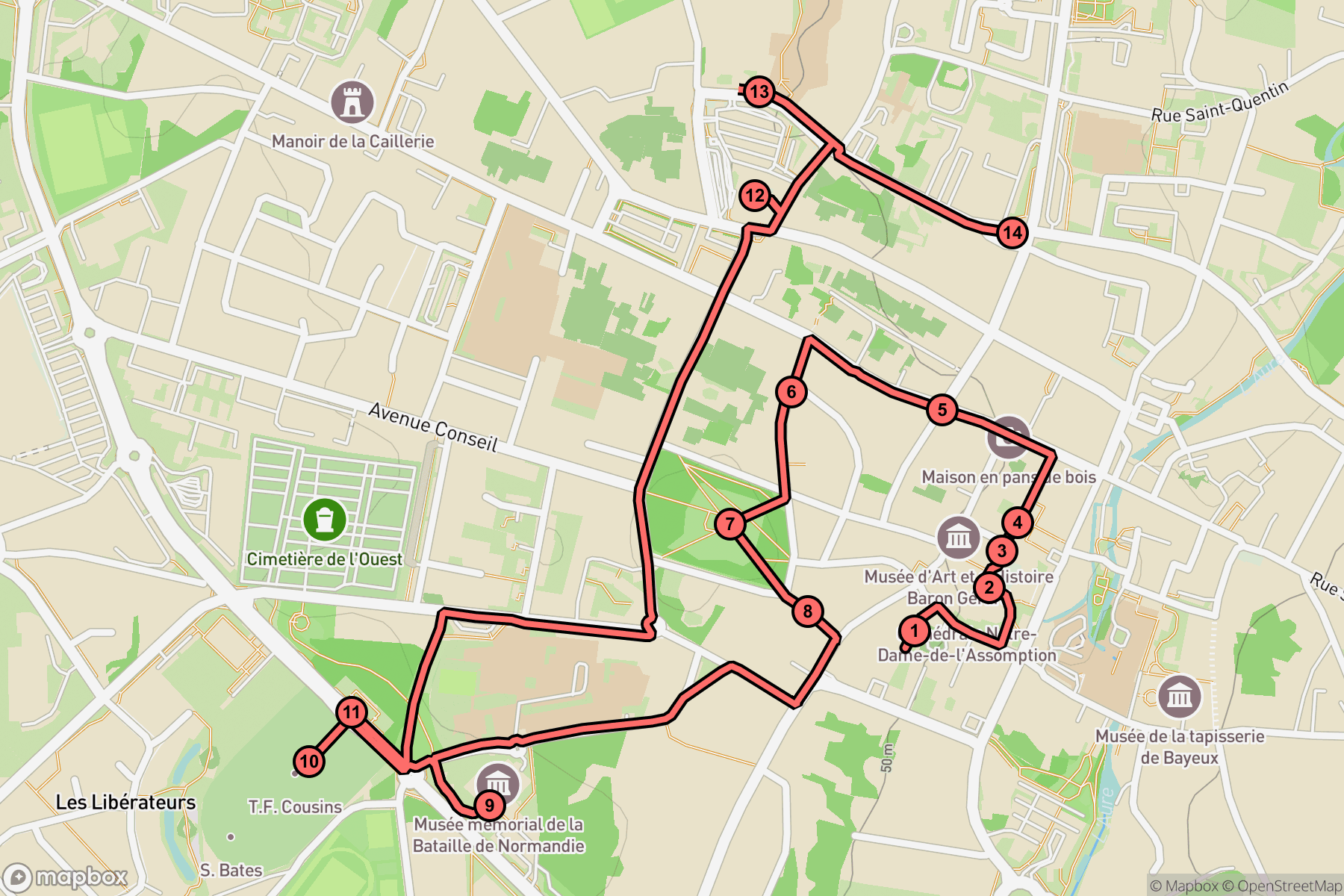
बायो ऑडियो टूर: साम्राज्यों, आस्था और शौर्य की गूँज
बायो में एक बार एक घंटी बजी थी जिसने एक राष्ट्र का भाग्य बदल दिया था—शक्ति और रहस्यों की गूँज इन प्राचीन गलियों में आज भी गूँजती है। यह स्व-निर्देशित ऑडियो टूर आपको बायो के ऊँचे नोट्रे-डेम कैथेड्रल, सेंट-पैट्रिस के भव्य मेहराबों और उन छिपे हुए कोनों से होकर ले जाएगा जिन पर अधिकांश लोग कभी ध्यान नहीं देते। हर कदम पर शहर के अनकहे नाटकों और खामोश साज़िशों को उजागर करें। कैथेड्रल के केंद्र में एक बिशप ने एक राजा का खुले तौर पर विरोध क्यों किया था? रंगीन शीशे की छाया में क्या गायब हो गया और कभी वापस नहीं आया? किसका शांत विद्रोह एक पत्थर की दीवार पर शुरू हुआ था जिसके पास से लगभग हर कोई गुजरता है? भूले हुए घोटालों, गुप्त प्रार्थनाओं और स्मारकीय निर्णयों का पता लगाएं क्योंकि मध्यकालीन पत्थर अपनी कहानियाँ बताते हैं। प्रत्येक मील का पत्थर एक दूसरे युग का प्रवेश द्वार है, जहाँ महत्वाकांक्षा और हानि की फुसफुसाहट हवा में घुल जाती है। यह सुनने की हिम्मत करें कि पत्थर क्या याद रखते हैं। अपनी यात्रा अभी शुरू करें और बायो को नई आँखों से देखें—सभी रहस्यों के साथ।
टूर पूर्वावलोकन
इस टूर के बारे में
- scheduleअवधि 40–60 minsअपनी गति से चलें
- straighten4.1 किमी पैदल मार्गगाइडेड पथ का पालन करें
- location_on
- wifi_offऑफ़लाइन काम करता हैएक बार डाउनलोड करें, कहीं भी उपयोग करें
- all_inclusiveलाइफ़टाइम एक्सेसकभी भी, हमेशा के लिए फिर सुनें
- location_onहोटल डू डोयेन से शुरू होता है
इस टूर के स्टॉप
You’re looking for a grand, creamy stone gateway with an ornate top and sculpted decorations, standing just opposite the cathedral across Rue Lambert-Leforestier-spot the…और पढ़ेंकम दिखाएँ
You’re looking for a grand, creamy stone gateway with an ornate top and sculpted decorations, standing just opposite the cathedral across Rue Lambert-Leforestier-spot the impressive archway flanked by ivy-draped walls and you’ve found the Hôtel du Doyen! Now, take a moment to imagine you’re stepping back in time on this very spot-it’s not just another fancy building, oh no! The Hôtel du Doyen has worn many hats and entertained more secrets than your average Bayeux café. Imagine the hum of clerical robes swishing and the faint sound of quills scratching on parchment, because right here, centuries ago, stood none other than the private residence of Bayeux’s dean, head of the cathedral canons. The land itself was granted to Dean Étienne in the year 1189 by Bishop Henri II, confirmed with a flourish by Richard the Lionheart himself. That’s right-Richard, the king with the best nickname in all of Europe, actually said, “That’s yours, Étienne!” And if you listen closely, maybe you’ll catch the echo of clinking tankards from the celebrating canons beneath these age-old walls. But don’t let yourself get too comfortable-history here has its storms! In the 16th century, the mighty walls shuddered as Admiral Coligny’s troops swept in and sacked the place, turning fine quarters into chaos. Glass shattered, valuables vanished, and for a while, the stately manoir must have felt more haunted than holy. Yet, like every true survivor, the Hôtel du Doyen transformed again and again. Picture the 17th-century bishop-Charles de Longauney-moving a little garden chapel into the central courtyard and building this very grand, welcoming entrance you stand before now, the crest of Bishop Didiot carved atop it a century later like an exclamation point in stone. In the 1700s, a whole reconstruction-imagine the dust, the clamor and smell of fresh plaster, as Louis-François Néel de Christot revamps the place to shine its brightest. From 1806 up to the early 1900s, this was no ordinary house-it was the bishop’s residence, buzzing with meetings, ceremonies, and perhaps the odd complaint about the draught. Then came the law separating church and state. The bishops left, taking their secrets, but the building’s story was far from over. Imagine, right inside these dignified walls, students buried in books-because the Hôtel du Doyen became Bayeux’s public library and, for a spell, home to the town’s famous Tapestry museum! Today, portraits of old mayors and bishops line the stately rooms, keeping watch and maybe, just maybe, whispering to each other about all the oddballs, artists, and ordinary citizens who’ve crossed these storied thresholds. So next time someone tells you a building can’t talk-tell them to visit the Hôtel du Doyen. If you listen closely, you’ll swear you hear a chuckle, or maybe a regal sigh, drifting out from behind those ancient stones!
समर्पित पेज खोलें →If you close your eyes, you might smell damp stone and firewood. Ancient builders made ingenious use of bricks; beneath your feet was a hypocaust-a pizza oven for floors, if you…और पढ़ेंकम दिखाएँ
If you close your eyes, you might smell damp stone and firewood. Ancient builders made ingenious use of bricks; beneath your feet was a hypocaust-a pizza oven for floors, if you will, keeping those delicate Roman toes toasty even in cold winters. There was a pool big enough for a handful of friends, about 3.5 by 3.8 meters, and the remains of a wall once reached four whole meters into the air. Now that’s privacy you can’t get at your local gym! But not all was fun and relaxation. In the fourth century, disaster struck-an enormous fire swept through these rooms, the laughter and luxury replaced by the crackle and roar of flames. The baths were abandoned, left behind for centuries, almost like the world’s coldest, wettest haunted house. Fast forward to July 21, 1882: Imagine you’re a construction worker, digging out space for a new postal building. Suddenly, your shovel hits something odd, and-voilà!-up come treasures that haven’t seen the light of day for more than a thousand years. Coins, black pottery, little metal trinkets, all whispering ancient secrets. Archaeologists have since uncovered even more, but most of these ruins are still preserved in the very foundations and cellars of today’s municipal buildings. So next time you mail a letter nearby, remember you might just be standing over 400 Roman coins! If only they worked in the vending machines now, right?
समर्पित पेज खोलें →To spot the Baron-Gérard Museum of Art and History, look for a grand, classical building attached to the side of Bayeux Cathedral, with large stone windows and elegant details-if…और पढ़ेंकम दिखाएँ
To spot the Baron-Gérard Museum of Art and History, look for a grand, classical building attached to the side of Bayeux Cathedral, with large stone windows and elegant details-if you glance to the left of the cathedral, you can’t miss it! Ah, you’ve reached one of Bayeux’s treasures-the Baron-Gérard Museum of Art and History, where the city’s past comes alive in the grand former bishop’s palace. Imagine stepping through those doors and being greeted not by statues or echoes, but by the soft hum of centuries, every corner brimming with stories that begin in the time of the French Revolution. Picture yourself back in 1793, when a commission of art-lovers set out to rescue priceless treasures like the Bayeux Tapestry and bring them together inside these ancient walls. You’re walking where generations of curators, artists, and visitors have all come to marvel at more than just paintings or porcelain, but at the spirit of Bayeux itself. Here’s a secret: the collections only landed here because of a generous man named Henri-Alexandre Gérard, a great admirer of art who donated his uncle’s incredible paintings to create this very museum in 1900. His name graces the entrance-almost as if he’s peeking out and making sure you’re enjoying yourself, but don’t worry, he’s never been known to scold anyone for walking too slowly! The museum almost feels like an enormous, friendly time machine. It’s made up of more than 1,700 square meters, guiding visitors like you through 14 immersive “chapters” of European art and Bayeux’s evolution-from prehistoric Bayeux, through its Roman days as Augustodurum, right up to the present. The building itself is a star in the show: you’ll see Romanesque halls, a Renaissance chapel sparkling with 17th-century murals, and the grand courtrooms where bishops-and later judges-once made history. Sometimes these rooms seem so lifelike that you half expect to hear judges whisper judgments or artists arguing about colors! Let your imagination wander: stand in the lower halls and imagine the city being built around you, stone by stone, as columns, painted mosaics, and fragments from Roman villas transport you back to ancient times. Climb the magnificent 18th-century staircase, your footsteps echoing as you enter into salons where paintings by Van der Goes, Jacques-Louis David, and even Gustave Caillebotte beam down, almost as if they’re inviting you to speculate what wild stories their creators would’ve told. The museum is something of a fashionista’s dream, too! One whole salon honors the lace-makers who, back in the 1800s, helped make Bayeux famous for its exquisite lace. Imagine the tap-tap-tap of nimble fingers spinning fine threads into delicate designs, producing coveted “Bayeux,” “Chantilly,” and “Blonde” lace that was proudly shown off in the best Parisian shops. At its peak, the industry had 15,000 women crafting lace, filling the city with the rustle and whisper of thread-and now, their work is perfectly preserved here, in a setting that feels part-glamorous showroom, part dreamy atelier. And yes, the museum’s collection is as impressive as the building itself: 800 archaeological and ethnographic pieces, 600 paintings and masterpieces, over 2,500 pieces of porcelain and lace. It’s a dazzling journey through the ages-one moment you’re admiring ancient Roman architecture, the next you’re gliding into a sun-drenched Impressionist painting or peeking behind the velvet curtain into the glamorous life of Marguerite Weimer, Bayeux’s own celebrity actress admired by Victor Hugo himself. At the very end of your visit, you’ll wander through rooms glowing with the innovation of the 20th century-photographs, Art Nouveau glass, and daring ceramics that show how Bayeux was never content to stand still, always seeking what’s next. So, as you stand outside, take a moment to breathe in the centuries all around you. The Baron-Gérard Museum isn’t just a building; it’s Bayeux’s memory palace, showing off everything that has ever made this little city mighty: art, invention, and a bit of flair for the dramatic. And if you listen carefully, you might just hear the whisper of lace-makers, painters, and patrons smiling on another visitor eager to step into the story!
समर्पित पेज खोलें →
11 और स्टॉप दिखाएँकम स्टॉप दिखाएँexpand_moreexpand_less
To spot the Cathedral of Notre-Dame de Bayeux, look straight ahead for an immense stone masterpiece with soaring towers flanking an elegant façade-if you’re dazzled by intricate…और पढ़ेंकम दिखाएँ
To spot the Cathedral of Notre-Dame de Bayeux, look straight ahead for an immense stone masterpiece with soaring towers flanking an elegant façade-if you’re dazzled by intricate carvings, shiny spires, and crowds of people tilting their necks sky-high, you’re in the right place. Welcome to the Cathedral of Notre-Dame de Bayeux, the grand dame of the city! Step closer, and let your imagination drift back nearly a thousand years-because if these ancient stones could talk, they’d have more stories than your favorite grandma at Christmas dinner. Picture this: you’re standing before walls of pale, creamy stone, their color shifting from silvery gray to honey gold as the clouds pass. The scent of old limestone tickles your nose, and the gentle clatter of footsteps fades away as your eyes roam the labyrinth of flying buttresses, gothic arches, and age-worn carvings. The spot you’re standing on has been holy ground since the fourth century, when the first bishop of Bayeux, St. Exupère, decided to swap out Roman forums for an entire district of churches. The exact look of those earliest medieval buildings? A bit of a mystery, like the recipe for the best Norman cheese. But one of these churches slowly grew into this cathedral, built piece by piece atop Roman ruins, battered by Viking fire, and then rebuilt more magnificently than ever. Now, talk about drama-this cathedral has seen it all! The first major stone version rose in the 11th century, thanks to Bishop Hugues II and his successor, Odo of Conteville, who just happened to be William the Conqueror’s half-brother. That’s right-family connections never hurt! This is also suspected to be the very place, in 1077, where the famous Bayeux Tapestry was first shown to the public. Imagine the excited murmurs and the soft shuffle of footsteps as nobles, priests, and townsfolk craned their necks to admire scenes of conquest embroidered in wool. Still, life wasn’t all grand ceremonies and fine fabric. The cathedral was burned, rebuilt, and burned again-sometimes during local quarrels, sometimes by rampaging Vikings. In 1105, Henry Beauclerc’s siege brought flames once more, and those sturdy Norman monks must have wished the cathedral came with a fireproof warranty! But each time ashes settled, stones were cleaned and workers returned, building higher and fancier: geometric Romanesque arches gave way to lace-like Gothic windows and soaring vaults as styles changed with the centuries. Walk a little closer, and you’ll see the western façade flanked by two towers-those lower parts are Romanesque, thick and solid, while the dizzying spires above came later, in the age of Gothic fashion. Fancy some detective work? Spot the statues on the doors, their weathered faces peering down-some even lost their heads during the 16th-century religious wars when angry locals smashed more than a few relics. (I guess every cathedral needs a little headlessness to keep things interesting.) But not even centuries of war, storms, and revolution could finish off this old lady. In the 1700s, she got a brand-new dome, and in the 19th century, a daring rescue mission kept her mighty central tower from collapsing! Imagine hammers echoing, ropes creaking, and stones being dragged as workmen struggled to shore up pillars deep inside the shadows. And oh, those stained glass windows-shattered by a hailstorm in 1760, replaced, and are now returning anew, filling the inside with colored sunlight. Step in during a sunny day, and you’ll see prismatic rainbows dancing across the flagstones, as if the building itself is throwing a spontaneous light show to dazzle its guests. Inside, if the doors beckon you, you’ll find countless treasures and clues to the past: a crypt from the 11th century with carved acanthus leaves, intricate medieval paintings, organ pipes pealing out on solemn days, and even a fossil ammonite once mistaken for a miraculously petrified serpent! (No worries, it’s just a fossil-a miracle of ancient seas, not saints.) Survivor of destruction, home of legends, and protector for townsfolk during the hardest centuries-Notre-Dame de Bayeux is more than stone. It’s a living poem, built by crackling fires, echoing prayers, and centuries of hope. So as you stand here, be sure to look up and let your eyes (and maybe your spirit) soar with those towering spires and secret statues, reminders that even after a thousand years, there’s always something new to discover. And who knows-maybe the next great story is yours!
समर्पित पेज खोलें →To spot the Hôtel du Gouverneur, just glance up the street-you’ll see a tall, noble-looking stone building with a pointed tower and a sturdy old iron gate set in a high stone…और पढ़ेंकम दिखाएँ
To spot the Hôtel du Gouverneur, just glance up the street-you’ll see a tall, noble-looking stone building with a pointed tower and a sturdy old iron gate set in a high stone wall, marking its place at numbers 6, 8, and 10 on Rue Bourbesneur. Now, as you stand outside this grand residence, take a moment to imagine the scene here in Bayeux around the middle of the 18th century. This wasn’t just any house-it was where the governor of the castle himself once lived, part of the powerful Couvert de Coulon family. The tall, impressive façade you’re looking at, with its Renaissance flair, was designed to show just how important its occupants were. You might notice the tower soaring above you-if it appears a bit proud, it’s been altered in the 17th century for extra effect. And see that small square turret that looks like it’s been gently let go by the main tower? Locals often joke it’s like a stubborn child refusing to leave its mother’s side. Around the walls, those lovely windows divided by stone mullions add a delicate touch-yet this was a house to impress, not just to invite in the sunshine! And above all, keep your eyes out for the stone shield with swirling decorations and a helmet perched above it-what better way to remind every visitor that this was a place of rank and honor? Picture horses clopping through the gate, boots echoing on the cobblestones, and the faint buzz of secrets hidden behind those thick walls. For a while, even General de Gaulle’s museum filled these rooms with stories of bravery and hope. Yet, as times changed, so did the house. In recent years, it’s been renovated and transformed into modern homes, but the past still lingers in every stone. So, whether you’re a governor, a resident, or just a curious visitor like you, the Hôtel du Gouverneur stands as a silent storyteller of Bayeux’s proud and sometimes mysterious history. Keep your ears open-if you listen closely, you might still catch the whispers of its former guests!
समर्पित पेज खोलें →To spot the Battle of Normandy Memorial Museum, just look for a long, low modern building with a row of tall flagpoles out front, and you can't miss the massive green tank sitting…और पढ़ेंकम दिखाएँ
To spot the Battle of Normandy Memorial Museum, just look for a long, low modern building with a row of tall flagpoles out front, and you can't miss the massive green tank sitting proudly on the right side by the entrance-the words “Musée Mémorial 1944 Bataille de Normandie” are on a sign facing the lawn. Welcome to a spot where history hits you right in the feels-step closer, and let’s travel back to June 1944! The air is thick with tension. Imagine the roar of engines, the clanking of tanks, and soldiers fresh from the beaches of Normandy, stumbling into Bayeux-the first major French town to be liberated after D-Day. Not far from where you’re standing, British engineers were scrambling to build a special road-just so enormous military vehicles could slip around Bayeux’s narrow medieval streets. Quite literally, the city was making room for freedom! Now, the Battle of Normandy Memorial Museum stands right here to whisk you through those wild 77 days of battle, from June 7 to August 29. Opened in 1981-though the idea started with a visit by U.S. President Jimmy Carter-the museum has grown and grown, just like the stories it tells. In fact, among the patches of grass and rustling flags, you’re surrounded by memories: uniforms that might have itched with suspense, vehicles that once growled across the countryside, and a tank that seems always ready for a quick getaway (but don’t worry, I promise it won’t move-unless it’s had too much oil for breakfast). Inside, an old film flickers with black-and-white drama, showing you the battle as it happened, and every display whispers about fear, hope, and the taste of liberation. Just beyond those walls, the British War Cemetery quietly reminds us who paid the ultimate price. Museums usually ask you to stay quiet, but here, even the silence seems to speak. If you’re ready to explore, you’ll find echoes of courage all around-sometimes in uniforms, sometimes in old photographs, and sometimes in your own gasp as you imagine what it took for freedom to return to this peaceful bit of France.
समर्पित पेज खोलें →You’ll notice the Bayeux War Cemetery by its neat rows of pale, upright headstones stretching across green lawns, shaded by large leafy trees-just look for the gentle symmetry of…और पढ़ेंकम दिखाएँ
You’ll notice the Bayeux War Cemetery by its neat rows of pale, upright headstones stretching across green lawns, shaded by large leafy trees-just look for the gentle symmetry of stone markers and vibrant flowers lining the pathways. Welcome to the Bayeux War Cemetery, the largest Second World War cemetery for Commonwealth soldiers in France, and one of the most quietly powerful places you'll walk through in Normandy. As you stand here, picture yourself surrounded by nearly 4,650 white headstones-a silent army that stands guard over history and sacrifice. Imagine, if you will, the distant hum of birdsong on a gentle breeze. Each stone marks a life lost, most during the epic events of the Normandy landings, but brought here from across the region-some from field hospitals, others from those ferocious first days on beaches like Sword. This space is more than just a field of remembrance: it’s a slice of international respect and gratitude. The land you’re standing on was gifted to Britain in perpetuity by the French, a nod to the mighty sacrifice made by the people of the Commonwealth in the fight for freedom. Among these stones, you’ll find not only British, Canadian, and Australian burials, but also over 500 graves belonging to other nationalities-the majority being German. In death, soldiers share a landscape their lives kept so fiercely apart. In the heart of the cemetery stands the Cross of Sacrifice, designed by Sir Reginald Blomfield. It’s the meeting place of memory and honor, and if you listen closely, you might just imagine footsteps echoing from ceremonies past. Each of the 18 Commonwealth cemeteries in Normandy has its own story, but none is larger than Bayeux, a place where the past seems to breathe softly through the rows. If you look just opposite, you’ll spot the Bayeux Memorial. This stark white monument faces the cemetery and carries a powerful Latin epitaph along its frieze. It reads, "We, once conquered by William, have now set free the Conqueror's native land"-a poetic way of saying that the men and women who rest here returned liberty to the soil from which William the Conqueror once marched to England. On its face are engraved the names of more than 1,800 Commonwealth troops with no known grave-gone but never forgotten. The memorial also bears witness to stories within stories. Engraved here are the 189 names of the 43rd Divisional Reconnaissance Regiment, many lost in a single explosion when their ship, the MV Derrycunihy, struck a mine off Sword Beach in July 1944-a tragedy that remains the largest British maritime loss off Normandy’s shores. Wander among the headstones and you may find names like Corporal Sidney Bates, the brave Victoria Cross recipient, or the five aircrew resting side by side, as if even now their squadron remains unbroken. And if you’re a lover of poetry, you might feel the inspiration that struck Charles Causley, whose poignant poem about this very place captures the heavy air of sacrifice and the quiet echo of survivor’s guilt. So, as you look out over these lines of stone, remember: every name here once filled a uniform, held a letter, dreamed of home, and now they rest together-forever young. Isn’t history a bit like this cemetery? Sometimes you have to take a quiet moment, look around, and let the stories rise up between the lines. To delve deeper into the notable graves, the bayeux memorial or the location, simply drop your query in the chat section and I'll provide more information.
समर्पित पेज खोलें →Here’s how to spot the Bayeux Reporters’ Memorial: Look ahead for a peaceful, tree-lined path where tall, pale stone slabs stand in rows along either side, each one etched with…और पढ़ेंकम दिखाएँ
Here’s how to spot the Bayeux Reporters’ Memorial: Look ahead for a peaceful, tree-lined path where tall, pale stone slabs stand in rows along either side, each one etched with names and years like silent storytellers. Now, take a deep breath and step into this living monument-it’s no ordinary stroll among the trees. This is where stories from all corners of the globe come to rest, literally written in stone. Welcome to the Bayeux Reporters’ Memorial, inaugurated in 2006 with the energy of a thousand deadlines and the determination of journalists who chased truth even when the world said, “maybe tomorrow.” Picture October, a brisk wind rustling the leaves, and you might hear the quiet echoes of nearly two thousand names being read for the first time on these steles-those vertical stones-crafted by landscape architect Samuel Craquelin. This isn’t just a list; it’s a timeline of courage. The idea for such a unique place sprang up during the famous Bayeux-Calvados Prize ceremonies for war correspondents-the kind of event where old press passes are badges of honor and every anecdote makes your hair stand on end. They wanted to make sure that the reporters who never made it home from conflict zones would not disappear into the shadows of history. By the time the memorial opened, they’d already engraved names from Cuba to Cambodia, Vietnam to Mexico. The atmosphere here is tranquil, but if you lean in, the silence hums with tension and bravery. Look at the names: Daniel Pearl in Pakistan, James Foley in Syria, the Charlie Hebdo staff in France. Some, like Robert Capa and Gilles Caron, risked-and lost-everything to picture the world’s chaos so the rest of us wouldn’t have to imagine it. There’s almost a detective novel’s worth of mystery and sacrifice on each slab. The garden is more than pretty landscaping; it’s a living pathway through history. Every October, new names are added, echoing the rhythms of world events, the risk in every byline. During big historical moments, this space comes alive-like in January 2015, after the Charlie Hebdo attacks, when a crowd of nearly ten thousand people finished a march for free expression and solidarity right here. A more recent mystery even led to another monument at the entrance, placed by families of reporters declared missing in action-a reminder that not everyone’s story gets closure, and not all answers are carved in stone. There’s a bit of humor in the notion that this quiet French garden is perhaps the liveliest newsroom in the world, with stories that span decades, wars, revolutions, and continents. Even the flowers seem to spread rumors here, honestly. As you walk between the stones, remember: each name speaks of a byline that braved the front lines so the world could know the truth. Before you go, close your eyes for a moment and listen-the world’s newsrooms are here, whispering the stories they never got to finish.
समर्पित पेज खोलें →To spot the site of the old Bayeux Castle, look for the open space at Place Charles-de-Gaulle-imagine a huge stone fortress once filling up this very spot, with thick high walls…और पढ़ेंकम दिखाएँ
To spot the site of the old Bayeux Castle, look for the open space at Place Charles-de-Gaulle-imagine a huge stone fortress once filling up this very spot, with thick high walls and a sturdy gate right where you’re standing. Alright, picture yourself stepping back in time-no cars, no cafes, just the thrill of medieval Normandy in the air. Right where you are now, towering over the city’s southwest corner, the Bayeux Castle once stood mighty and proud, planted firmly in the 10th century by the Dukes of Normandy themselves. Built on top of ancient Roman remains, this wasn’t just any castle-it was a fortress surrounded on two sides by deep moats, and bristling with defensive towers like the famous Tour Renaulde in the far corner. If you squint a bit and listen closely you might almost hear the echoes of boots thumping on the drawbridge as people hurried about their medieval business! Imagine the main gate to the east, with a heavy wooden drawbridge creaking open, welcoming friends inside and keeping out any curious strangers. Inside, the stone walls enclosed a bustling little world: the lord’s manor, a sturdy chapel dedicated to Saint-Ouen, stables to the north, and plenty of space for the castle’s garrison along the western ramparts. Farther in, the kitchens would have been alive with the smells of roasting meat and fresh bread-though perhaps not appetizing all the time, since in the 15th century there was even a wooden-walled butcher’s shop here, surrounded by palisades to keep the local dogs from digging in for an illegal snack! Now, as impressive as this stronghold was, it had its share of drama. In the late 11th century, the future King Henry I was actually imprisoned here-imagine him staring out between the bars, plotting his next move, with his uncle, the Bishop Odo, acting as his not-so-friendly jailor! And if you needed another bit of medieval mishap, there’s the night in 1439, when winds so wild ripped the wooden turrets right off their posts and sent them tumbling away like lost hats! By the 18th century, times were changing. On the orders of Louis XVI, the castle was dismantled in 1773. Workers dug up secrets as they cleared the ground-Roman artifacts hidden beneath old stones. By the 19th century, this spot was cleared, planted with one hundred linden trees, and finally crowned by a fountain topped with Poppa, a Norman noblewoman. So while the walls are gone, the stories linger-somewhere between the rustle of leaves and the distant, ghostly clang of a drawbridge. And hey, you can always say you stood in the footsteps of dukes, kings, and at least one very ambitious Norman butcher. Curious about the location, historical or the description? Don't hesitate to reach out in the chat section for additional details.
समर्पित पेज खोलें →To spot the Diocese of Bayeux and Lisieux, look ahead for a grand stone building with soaring spires, sharp-angled rooftops, and arched stained-glass windows-it’s a majestic…और पढ़ेंकम दिखाएँ
To spot the Diocese of Bayeux and Lisieux, look ahead for a grand stone building with soaring spires, sharp-angled rooftops, and arched stained-glass windows-it’s a majestic structure rising above the treetops, towers reaching towards the sky like fingers pointing heavenward. Standing in front of this magnificent diocese, just imagine time peeling away in layers, like the pages of a very dramatic history book-one that occasionally bursts into song, or at least the ringing of cathedral bells! Here you are, outside an institution that's been shaping Normandy since ancient Rome was still a going concern. The very ground beneath you pulses with stories of bishops, legends, saints, and a few folks who bit off a little more than they could chew. Legend-though historians love to grumble-says it all began with St. Exuperius, supposedly plucked right from the company of Pope Clement I in the very first century. But don’t be too quick to believe every bedtime story: the real bishop may not have arrived until the 4th or 5th century. Even so, tales of Exuperius and his sidekick Regnobert linger in every shadowed archway, especially once the locals start talking after a second glass of wine. Some of Exuperius’s successors made quite a splash in history-take Saint Vigor, for example. In the early 6th century, he was the original party-crasher, storming into pagan temples and replacing old beliefs with the sound of cathedral chanting. And maybe you’ve heard of Odo of Bayeux-he not only built the grand cathedral before you, but he also went off to the Battle of Hastings alongside his half-brother, William the Conqueror! Now that’s sibling rivalry on a whole new level. When Odo wasn’t commissioning vast cathedrals, he was plotting trips to Italy, which… landed him in prison. No wonder bishops needed good lawyers. It wasn’t all high drama and crusades, though-fast forward a few centuries, and the chapters here are filled with intrigue, courage, and perhaps the odd touch of scandal. A council in 1042 gathered here, summoned by Duke William himself, to call for the “Truce of God.” The idea? To stop people from fighting each other… at least on weekends. Practical folks, these Normans. In 1061, the cathedral’s halls echoed with the voices of clergy, knights, and political leaders all squeezed in for another great council. Imagine the clatter of armor, the nervous shuffling of sandals, and someone in the back muttering, “Why is it always my turn to bring snacks?” Throughout the centuries, the diocese branched out further. Caen, not far from here, is home to two mighty abbeys founded by William and his wife Matilda, in apology for the whole “marriage without permission from the Pope” affair-it turns out, even medieval kings had to deal with in-laws and their raised eyebrows. Other abbeys, like Troarn and Val, flourished, with abbots who ranged from philosophers to fierce reformers. Let’s not forget the women who made history-in 1641, Saint Jean Eudes established the Congregation of Notre Dame de Charité du Refuge here, a group dedicated to helping women and girls get a fresh start. Their mission, compassion, and courage resonate like a warm breeze through these stone corridors. Wars arrived too, and the Diocese of Bayeux and Lisieux played its part. During the First World War, 260 priests and 75 seminarians from the diocese traded vestments for uniforms. Seventeen priests and sixteen seminarians never came back; their sacrifice is a quiet melody beneath all the grandeur, a reminder of the risks these walls have seen. The bishops who led this vast flock-through Concordats, revolutions, and world wars-make quite the who’s-who list. From Claude Fauchet, who helped storm the Bastille and paid for it with his life at the guillotine, to Léon-Adolphe Amette, who rose to become Archbishop of Paris, their stories echo in every arch and alleyway. So here you stand-amid the echoes of saints, warriors, reformers, and revolutionaries-all under the watchful spires of a living legend. Look up, feel the weight of centuries, and remember: every big story starts with one ordinary person who dared to make a little noise in a very grand place. Onward to our next stop-history awaits, and who knows what surprises it has in store!
समर्पित पेज खोलें →Look for a striking house right in front of you with bold red-and-white timber stripes on its upper floors and golden statuettes peeking out between the windows-that’s the Grand…और पढ़ेंकम दिखाएँ
Look for a striking house right in front of you with bold red-and-white timber stripes on its upper floors and golden statuettes peeking out between the windows-that’s the Grand Hotel d’Argouges! Ah, you’ve made it to one of Bayeux’s grandest secrets! Imagine you’re strolling down the rue Saint-Malo in the late 1400s, just after the Hundred Years’ War, and suddenly you see this tall, bright house standing proud among its neighbors. Its red-and-white timbers are like a barbershop pole for history lovers-a big, bold statement that says, “You can’t miss me!” This was the home of the Argouges family, a name that meant power and prestige back in the day. Can you feel the echoes of their footsteps on these old stones? Now, picture Jacques d’Argouges, the king’s own baker, bustling around inside because, in 1532, he’s preparing for the visit of none other than King François I and his son, the future Henry II. Talk about pressure-would you serve a soggy baguette to the king? I don’t think so! All jokes aside, this was a house where history dropped by for dinner. The house didn’t always play host to royalty, though. It later belonged to Jean Lecarpentier, once the mayor of Bayeux, before getting a modern twist-restored and transformed into apartments beginning in 2011. Imagine living in a place where every corner seems to whisper stories from five centuries ago. Take a closer look at the golden saints looking out from their spots by the windows. In their time, their job was to protect the house-and maybe keep an eye out for nosy neighbors too! Around the back, there’s even a grand spiral stair tower with a highly decorated Gothic doorway. (Sadly, the tower is out of sight for the street, but it’s there, twirling up into legend.) It’s not just a pretty face-the facades are officially celebrated as historic monuments, so every stripe, statue, and stone is protected. In other words, it’s not just house pride; it’s national pride! So take a breath, imagine the feasts and footsteps, and let the spirit of Bayeux’s history swirl around you.
समर्पित पेज खोलें →To spot Augustodurum, look for a rough, ancient-looking stone wall running along the sidewalk, with glass panels in front of it so you can peer down at the archaeological remains…और पढ़ेंकम दिखाएँ
To spot Augustodurum, look for a rough, ancient-looking stone wall running along the sidewalk, with glass panels in front of it so you can peer down at the archaeological remains below. Alright, imagine standing here over two thousand years ago. Instead of cars and glass panels, you’d be in the bustling heart of a Roman city, with the sounds of market traders, the scent of fresh bread, and the distant echo of a hammer striking metal on an anvil. Welcome to Augustodurum, or as we call it today-Bayeux! This funny-sounding name means "the forum of Augustus," named for the very emperor who helped shape Europe. But the story really starts even earlier, when the only things here were scattered wooden huts and the winding streams of the Aure and the Drôme. Druids held mysterious rituals on the misty slopes of Mount Phaunus, lighting fires and whispering secrets to the trees. Then, the Romans marched in-cue the dramatic entrance music! One of Caesar’s trusted lieutenants, Titus Sabinus, swept through the Bessin region and planted the seeds for a new Roman city. Before you could say “Ave, Caesar!” the Bajocasses-locals with a name that sounds a bit like a sneeze-had lost their independence, and Roman traditions took over. Under the Romans, the city became a crossroads of adventure. Picture a network of wide, straight Roman roads criss-crossing the countryside, with our city firmly on the map between Rotomagus (now Rouen), Araguena (modern Vieux), and even as far as Cherbourg. As traders, soldiers, and gossip-mongers passed through, the area grew. It became a bustling commercial hub-imagine the clamor of artisans, the aroma of cooking, and even the sound of chariot wheels clattering along the Grand Rue, which was once the mighty decumanus maximus. But survival wasn’t easy. To protect their new home, the Romans built a mighty fortress in the 1st century BC-a quadrangular wall, almost like a stone hug, stretching 450 by 350 meters. If you have a good look just around the city, you’ll still find bits of this ancient rampart poking out in gardens, near the cathedral, in car parks, and even beside hotels like the Hôtel du Gouverneur. The wall could be up to eight meters high and four meters thick in places-imagine the effort and teamwork it took to build that! Oh, and here’s a fun fact: archaeologists unearthed an impressively deep Roman ditch on nearby Rue Saint-Malo, strange and silent now but once a serious no-go zone for would-be invaders. Within these walls, more wonders were hidden. Bayeux, or Augustodurum, boasted elegant Roman villas, not to mention not one but TWO bathhouses-one hidden under today's Saint-Laurent church, the other under a post office. The Romans loved a good soak, so you can bet the air was rich with steam and laughter. In fact, among the ruins, archaeologists found the sculpted head of Minerva, the goddess of wisdom; who knows how many students wished for her advice before their exams? Mount Phaunus, looming over the city, was layered with ancient mystery. Here the old Celtic spirits and the new Roman gods collided, and archaeological digs uncovered entire cemeteries, suggesting just how important religious identity was to the people here. The city is even mentioned by writers like Pliny the Elder and Ptolemy, who didn’t let details like “never actually visiting Gaul” stop them from describing the place! But as the centuries rolled by, people’s needs changed. In the late 18th century, most of these ancient walls came tumbling down due to new ideas about health and “letting in the light”-improving the town’s hygiene, but perhaps making things less exciting for fans of battle and mystery. So here you stand, gazing down through glass at the secrets beneath your feet. Listen closely, and maybe, just maybe, you’ll hear the ghosts of Augustodurum: legionaries stamping their feet, merchants haggling, and druids chanting on the wind. Bayeux today is charming, but two millennia ago, it was a city of gods, warriors, and a few clever engineers who sure knew how to build a wall! Ready to see what stories the next stop will reveal? Let’s keep exploring!
समर्पित पेज खोलें →Right in front of you, you'll spot a grand stone building with an impressive round-arched entrance flanked by rows of tall windows, each window dressed up with vibrant red…और पढ़ेंकम दिखाएँ
Right in front of you, you'll spot a grand stone building with an impressive round-arched entrance flanked by rows of tall windows, each window dressed up with vibrant red flowers-so just look for the building that’s showing off its floral accessories! Now, let me whisk you away back to the year 1652, when two brave women-who had once been Protestant nuns-set out to make a difference here in Bayeux. Imagine the town back then: narrow, cobbled streets bustling with chatter and the swirl of rumors, a place where poverty and uncertainty lurked around many corners. These women rolled up their sleeves and decided, “Let’s battle poverty, mischief, and heresy right here, and with a bit of luck, we might just whip this town into shape!” And so, the Convent of Charity was born, right here at 1 rue de Cabourg, spreading hope to those in need. Just a few decades later, in the early 1700s, a lovely chapel was added-can you picture the sound of footsteps echoing on stone and prayers whispered under high ceilings? Now, this isn’t just any old building. The staircase inside is famous-a wooden masterpiece so grand, it’s protected as a national treasure! Take a moment: the creak of the ancient steps, the scent of cool limestone walls, maybe even a hint of fresh-baked bread wafting from a nearby bakery. These days, the convent is home to Bayeux Intercom, serving the community just as it always has. So, whether you’re here for the flowers or the fascinating history, this place has always been about helping people-sometimes with charity, sometimes with a little strictness, and always with a lot of heart!
समर्पित पेज खोलें →To spot the Church of Saint-Patrice, look ahead for a grand stone building with soaring walls and a striking, multi-tiered bell tower rising above the rooftops-it stands right at…और पढ़ेंकम दिखाएँ
To spot the Church of Saint-Patrice, look ahead for a grand stone building with soaring walls and a striking, multi-tiered bell tower rising above the rooftops-it stands right at the corner where rue Montfiquet meets rue d’Éterville. Now that you’re standing before this impressive sight, let’s journey-imagination in hand-through centuries of stories that linger in its walls and under its shadow. Picture the year is somewhere in the 5th century. In a sleepy corner of Bayeux, people gather to build a small, humble church, never guessing their little parish would survive plagues, wars, and more than a millennium of change. Fast forward to the 12th century: the area buzzes as stone masons busy themselves, raising the first Romanesque church, encircled by a cemetery shaded by old trees, where today only stories and shadows remain. The church you see today stands as the heart of the Notre-Dame du Bessin parish. Unlike the thick, fortress-like Romanesque churches of the region, Saint-Patrice evolved, growing layer after layer as centuries swept past. Its greatest treasure outside? That remarkable bell tower-a Renaissance masterpiece crafted between 1544 and 1549, thanks to Samson, a generous local bourgeois. Now, don’t just look at it. Imagine climbing each of its six levels: you start in a heavy stone base, then rise past dashing Doric columns, peer out from elegant arches, and dodge nogoodnik gargoyles with faces so grumpy they could ruin anyone’s day. Climb higher to slender lanterns, each topped with domes-a bit like a cake, if cakes kept watch over entire towns. But Saint-Patrice didn’t have it easy. In the late 1400s, the poor building looked a mess after being hammered during the Hundred Years' War by Anglo-Navarrese troops. Local townsfolk must have wept at the sight-walls cracked, roof sagging, weeds poking out between stones. Yet they patched it up, determined as ever, and by the late 15th century, it stood proud again-some forty meters long, nearly ten meters high, a beacon among the chickadees in the cemetery. But wait, there’s more! Imagine being here on August 1, 1469, as the townspeople gather in the Chapel of the Holy Virgin. There’s excitement as a new religious brotherhood-a confraternity of the Immaculate Conception-forms, drawing both admirers and, just possibly, a few snoozers in the back pews. Later, the church grows taller with a new Renaissance tower after 1548, its construction watched closely by all, maybe even by a local dog who frankly just wants the workers’ lunch. Over the centuries, popes bestow privileges, architects stretch the nave to fit a swelling population, and chapels are rebuilt or transformed. In 1747, the choir is reimagined in classic style-think grand columns, elegant stucowork, and marble plaques glinting in candlelight. During the Revolution, chaos reigns-sacred objects vanish, but by 1802, the doors swing open once more and light returns to the sanctuary. Inside, there’s a surprise for music lovers-this church is famous for its perfect acoustics! The nave practically wraps music around you, a delight for choir directors and anyone keen to belt out a hymn. If you were here in 1855, you’d see new stained glass glowing behind the choir, while 19th-century artists gift the building beautiful windows in vivid color. Look up and you might imagine the mighty organ making the air tremble for Sunday service, or the softer harmonium gently guiding the faithful’s voices. Don’t miss the old baptistery either-its marble font from the 1600s still sits proudly, topped with the family crest of Samson, our generous patron, featuring three odd little birds with beaks open as if singing for a snack. And outside these walls, a little plaque remembers Antoine Pilon, baptized here in 1664-a Bayeux boy who’d one day cross the ocean and become an ancestor to many in North America. Take a closer look at the brilliant stained glass on both sides: scenes of Jesus, of sacraments, and life stories of Saint Patrice himself-a captured traveler, a kind priest, a blessing to children, and at last, a celestial protector watching over this very parish. Last but not least, somewhere above you in the old bell tower, hang three aged bronze bells. Their original clangs may have faded, but if you listen closely on a quiet day, maybe you’ll still catch an echo of their story-one that, like this church, continues to ring out across the years. For further insights on the historical, architecture or the stained glass windows, feel free to navigate to the chat section below and inquire.
समर्पित पेज खोलें →
अक्सर पूछे जाने वाले प्रश्न
मैं टूर कैसे शुरू करूँ?
ख़रीदारी के बाद, AudaTours ऐप डाउनलोड करें और अपना रिडेम्पशन कोड दर्ज करें। टूर तुरंत शुरू करने के लिए तैयार होगा - बस प्ले टैप करें और GPS-गाइडेड रूट का पालन करें।
क्या टूर के दौरान मुझे इंटरनेट चाहिए?
नहीं! शुरू करने से पहले टूर डाउनलोड करें और पूरी तरह ऑफ़लाइन इसका आनंद लें। केवल चैट फ़ीचर को इंटरनेट की ज़रूरत है। मोबाइल डेटा बचाने के लिए WiFi पर डाउनलोड करने की सिफ़ारिश है।
क्या यह एक गाइडेड ग्रुप टूर है?
नहीं - यह एक सेल्फ-गाइडेड ऑडियो टूर है। आप अपनी गति से स्वतंत्र रूप से खोजते हैं, आपके फ़ोन से ऑडियो कथन बजता है। कोई टूर गाइड नहीं, कोई ग्रुप नहीं, कोई शेड्यूल नहीं।
टूर में कितना समय लगता है?
अधिकांश टूर पूरा करने में 60-90 मिनट लगते हैं, लेकिन गति पूरी तरह आपके नियंत्रण में है। जब चाहें रुकें, स्टॉप छोड़ें, या ब्रेक लें।
अगर मैं आज टूर पूरा नहीं कर सकता/सकती तो?
कोई समस्या नहीं! टूर की लाइफ़टाइम एक्सेस है। जब चाहें रोकें और फिर शुरू करें - कल, अगले हफ़्ते, या अगले साल। आपकी प्रगति सेव रहती है।
कौन सी भाषाएँ उपलब्ध हैं?
सभी टूर 50+ भाषाओं में उपलब्ध हैं। अपना कोड रिडीम करते समय अपनी पसंदीदा भाषा चुनें। नोट: टूर जेनरेट होने के बाद भाषा बदली नहीं जा सकती।
ख़रीदारी के बाद मैं टूर कहाँ एक्सेस करूँ?
App Store या Google Play से मुफ़्त AudaTours ऐप डाउनलोड करें। अपना रिडेम्पशन कोड (ईमेल द्वारा भेजा गया) दर्ज करें और टूर आपकी लाइब्रेरी में दिखेगा, डाउनलोड और शुरू करने के लिए तैयार।
अगर आपको टूर पसंद नहीं आया, तो हम आपकी ख़रीदारी वापस करेंगे। हमसे संपर्क करें [email protected]
सुरक्षित चेकआउट 


