
ब्रसेल्स ऑडियो टूर: शाही धुनें, राजसी सड़कें और छिपी हुई कहानियाँ
ऊँचे गिल्डहॉल पर सोना चमकता है जबकि ब्रसेल्स के धड़कते दिल में आपके पैरों के नीचे गुप्त विद्रोहों की गूँज गड़गड़ाती है। नंगे पत्थर शाही साज़िशों और टूटे सपनों को छिपाते हैं—इस शहर में इसकी गर्वित इमारतों से कहीं ज़्यादा कुछ है। इस स्व-निर्देशित ऑडियो टूर के साथ, अपनी गति से छिपी हुई गलियों और प्रतिष्ठित चौकों का पता लगाएँ, हर स्मारक के पीछे छिपी किंवदंतियों और फुसफुसाए गए घोटालों को उजागर करें। उन कहानियों को खोजें जिन्हें ज़्यादातर यात्री नज़रअंदाज़ कर देते हैं। प्राचीन ग्रैंड-प्लेस एक बार खून और कंफ़ेटी से क्यों भर गया था? आधी रात के बाद शाही महल में कौन-सा रहस्यमय आगंतुक घुस गया, जिससे राष्ट्रीय हंगामा मच गया? कैथेड्रल में कौन-सा छोटा सा विवरण सदियों पुराने झगड़े को उजागर करता है जो अभी भी स्थानीय लोककथाओं में सुलग रहा है? भव्य बुलेवार्ड और घुमावदार कोबलस्टोन पर चलें जैसे ही शहर आपकी आँखों के सामने बदलता है—कठोर, ग्लैमरस, उजागर होने के लिए रहस्यों से भरा हुआ। यह ब्रसेल्स है जैसा आपने पहले कभी नहीं देखा। सुनहरी सतह के पीछे गोता लगाने के लिए तैयार हैं? प्ले दबाएँ और शहर की छिपी हुई धड़कन को खोजें।
टूर पूर्वावलोकन
इस टूर के बारे में
- scheduleअवधि 40–60 minsअपनी गति से चलें
- straighten3.6 किमी पैदल मार्गगाइडेड पथ का पालन करें
- location_on
- wifi_offऑफ़लाइन काम करता हैएक बार डाउनलोड करें, कहीं भी उपयोग करें
- all_inclusiveलाइफ़टाइम एक्सेसकभी भी, हमेशा के लिए फिर सुनें
- location_onललित कला केंद्र, ब्रसेल्स से शुरू होता है
इस टूर के स्टॉप
You’re looking for a grand grey stone building with a curved Art Deco façade, lots of flags on the roof, and a glowing entrance right at the busy crossing of Rue Ravenstein - spot…और पढ़ेंकम दिखाएँ
You’re looking for a grand grey stone building with a curved Art Deco façade, lots of flags on the roof, and a glowing entrance right at the busy crossing of Rue Ravenstein - spot the big “BOZAR” banners and you’re there. Welcome to the Centre for Fine Arts, or as the locals lovingly call it, BOZAR! Imagine Brussels in the 1920s: jazz is playing, skirts are getting shorter, and here, this striking building is about to change the city’s artistic heartbeat forever. But would you believe, the dream of a fine arts centre here actually began in 1856, when the authorities had big ideas - but very empty pockets. Over the next sixty years, plans ran out of money, locations got vetoed, and one proposal even suggested putting it where the stock exchange stands. Brussels, always dramatic! Flash forward to the aftermath of World War I: Belgium is finding its feet, and a banker with a brilliant moustache (and bank account) called Henry Le Bœuf steps in. Alongside the King and Queen, they hire none other than Victor Horta - the architect who usually made buildings curl and swirl in Art Nouveau style. But here, Horta gave us something lean, geometric, and truly modern: Art Deco, dressed up for a night at the theatre. Don’t let this orderly exterior fool you - underneath, the plot of land was a nightmare: steep, oddly shaped, and wedged between posh neighbours. Horta had to design the place so it wouldn’t block the King’s view from the palace to Town Hall. Plus, the city insisted there be shops at the front, hoping for a bit of rent to keep things lively. Talk about an architect’s balancing act! Construction finally kicked off in the 1920s, with more drama than some of the operas eventually performed here. The team faced impossible slopes, rainwater trickling where it shouldn’t, and tight budgets. They switched designs countless times, even arguing over what the concert hall should sound like - big thanks to a Parisian acoustician, who diplomatically declared “Make it concrete!” It took years, but in the end, Horta created a sculpted horseshoe concert hall where musicians could feel wrapped in the audience’s energy. The first exhibition opened in 1928, with art from Belgium to Russia and a performance by the legendary Ballets Russes ballet company. Imagine a parade of glamorous guests, royal family and all, stepping into marble floors and golden details, the smell of paint barely dry. It wasn’t all cocktails and applause, though, and within the first years the ambitious program almost bankrupted the place. Management changed hands, and by the 1930s, BOZAR was hosting everything from jazz to car shows to avant-garde kitchen installations. Seriously, if these walls had a calendar it would look like an explosion of sticky notes. But history kept marching on - even during World War II, when German officers held events here, concerts and auctions quietly continued so the building wouldn’t be shut down completely. The city’s artistic community got creative, launching youth music groups and experimental theatre troupes in defiance of propaganda. After the war, a burst of color and creativity swept through with new festivals, art from Dalí and Picasso, and major film events. The giant Henry Le Bœuf concert hall (right here inside this building) became home to everything from symphonies to the legendary Queen Elisabeth Competition, where musical dreams are still made today. By the 1970s and 80s, things got a bit dicey - money troubles, leaky roofs, and a wave of student protests in May ‘68. In true Brussels fashion, the solution was: art for everyone! They opened a new Forum space, filling it with lectures, pop-ups, and that unique brand of Belgian democracy, with a thousand committees arguing at once. Later came Europalia, a festival of international art that added a swirling parade of countries and cultures to the programme. A major restoration in the early 2000s peeled back decades of changes and brought the halls back to Horta’s vision - and now, in the 21st century, BOZAR hosts everything from Picasso and Yves Klein to rooftop concerts and cinema. In 2021, a fire caused panic, water splashed everywhere, but, like a true diva, BOZAR bounced back quickly, and the music continues. So, whether you want to see blockbuster exhibitions, world-class orchestras, movies, or just enjoy the rooftop sunset, this curved, flag-festooned building on Ravenstein is the beating heart of Belgian culture. And to answer the question on the banner: Can art heal us? BOZAR certainly gives it a very good try. To expand your understanding of the facilities, directors or the trivia, feel free to engage with me in the chat section below.
समर्पित पेज खोलें →Picture the late 1980s in Belgium: mullets were in fashion, “The Final Countdown” was topping the charts, and Brussels was about to step into the political spotlight in a way it…और पढ़ेंकम दिखाएँ
Picture the late 1980s in Belgium: mullets were in fashion, “The Final Countdown” was topping the charts, and Brussels was about to step into the political spotlight in a way it had never done before. Unlike Flanders and Wallonia, which borrowed their regional parliaments from the Belgian Federal Parliament, Brussels decided to do things differently-very Brussels, right? In 1989, as part of Belgium’s third state reform, the region established its own council with directly elected members. There were 75 deputy seats-64 for French-speakers swishing their scarves and 11 for Dutch-speakers, no less stylish, just perhaps wearing more orange. But Brussels loves a good sequel, so in 2001, this council leveled up! The number of seats grew to 89, reflecting a city that never stops growing and changing. Today, the French-speaking group has 72 members, while the Dutch-speaking group has 17-proof that diversity isn’t just a buzzword here, it’s the rule. Your imagination might now be conjuring scenes of heated debates and dramatic votes, and you wouldn’t be far off. The Parliament’s main role is to scrutinize the government, approve financial plans, and pass local laws-here called “ordinances”-that shape everything from your tram ride to the recycling out back. Brussels’ politicians are even held on a short leash: if the Parliament believes government ministers are falling asleep at their desks, a motion of no confidence can be passed. But there’s always a twist-the Parliament can only force someone out if they already have a replacement lined up. Can you picture the sudden flurry of text messages just before a vote? “Jacques, find your tie, you might be Minister by lunch!” Election days are a festival in themselves-Brussels residents cast their ballots every five years, with elections often coinciding with EU Parliament days. If democracy had a soundtrack, you’d hear a mashup of different languages, opinions, and maybe a dash of Belgian techno. Now, here’s where things get even more interesting. Each group of representatives moonlights in other assemblies-the French-speaking ones double as members of the Francophone Brussels Parliament, and their Dutch-speaking colleagues convene with the Flemish Community Commission. It’s a bit of a juggling act; a politician here might hold three mandates at once, provided they don’t get too greedy. Imagine your local councilor dashing from room to room, cape fluttering, legislative papers in hand-it’s enough to make your head spin. So, as you stand outside, take in the scene: behind these glassy walls, decisions are shaped that ripple throughout the city’s schools, parks, and streets. The Parliament of the Brussels-Capital Region isn’t just a governing house-it’s where the voices of Brussels, in every language and every shade, come together for the city’s next big chapter. And just think-no matter who you are, democracy leaves the door open... as long as you know which one to walk through. For further insights on the functions, elections or the previous compositions, feel free to navigate to the chat section below and inquire.
समर्पित पेज खोलें →To spot Brussels Town Hall, just look straight ahead for a grand, stone building crowned with an impossibly tall and slender spire-like a Gothic wedding cake topped by a golden…और पढ़ेंकम दिखाएँ
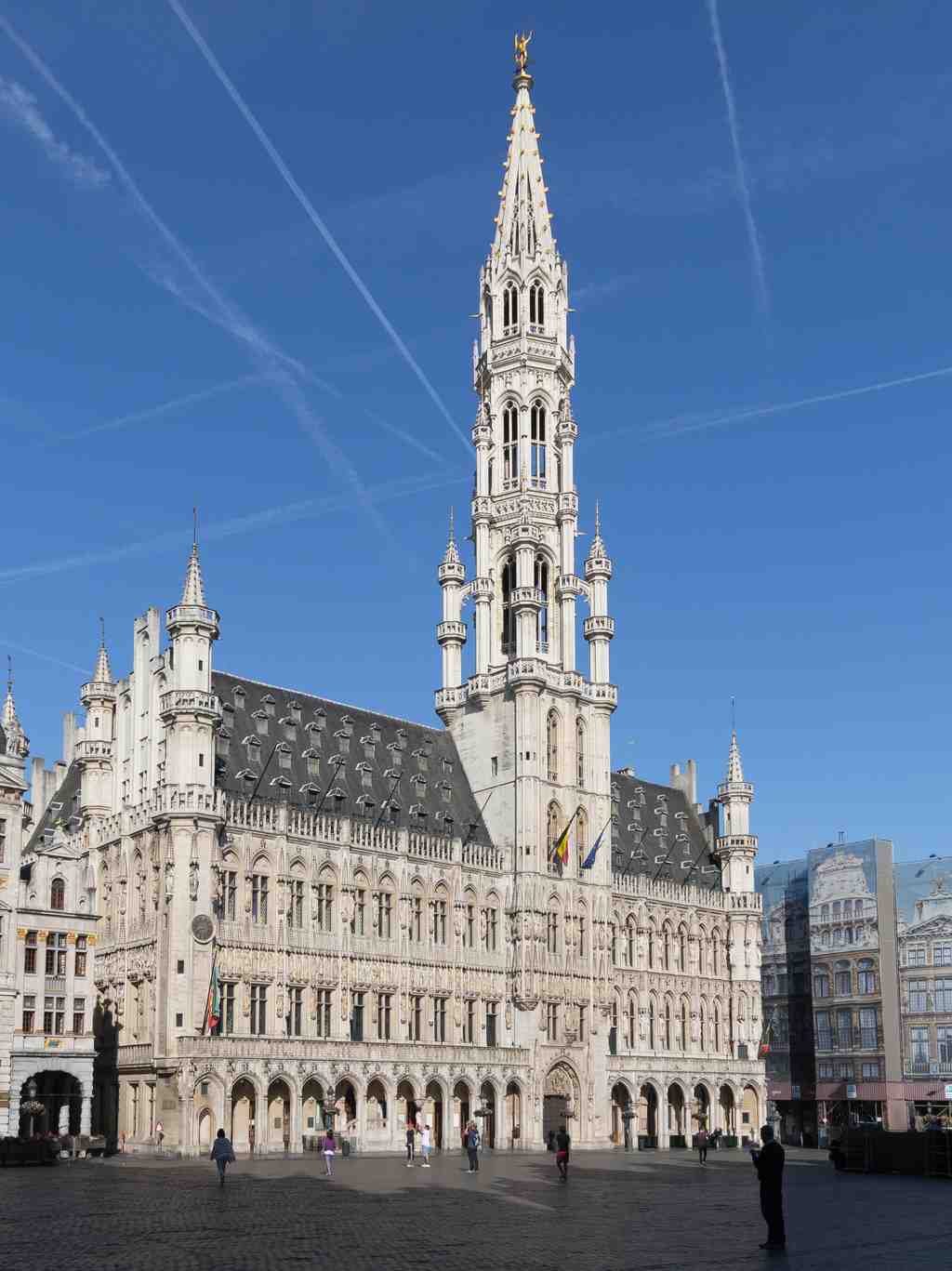
To spot Brussels Town Hall, just look straight ahead for a grand, stone building crowned with an impossibly tall and slender spire-like a Gothic wedding cake topped by a golden statue-standing proudly on the south side of the wide cobblestone square. Welcome to the beating heart of Brussels - the magnificent Town Hall! As you stand here, take a deep breath; you’re looking at the city’s very last surviving piece of the Middle Ages, right where power has pulsed for over 600 years. The Town Hall was built in stages starting in 1401, so you’re actually seeing centuries stitched together in one awesome structure. If you glance up, that incredibly tall, decorated tower-stretching up to 96 meters-is topped by Saint Michael, Brussels’ patron saint, forever caught in the act of slaying a dragon. Not a bad gig if you like a view! But things have not always been so peaceful here. Imagine it’s August 1695: thunderous explosions ring out as cannonballs rain down on the Grand-Place. A French army, hoping to win a war on a different front, is bombarding Brussels. The city center is blazing-wood and stone alike turned to ash. Yet even as most of the square is flattened, this Town Hall, despite being the main target, miraculously stays standing, like a stubborn survivor amidst the ruins. Of course, in the chaos, the inside is gutted. Priceless art and records, including masterpieces by Rogier van der Weyden, are lost to the flames. But the stony shell holds. Fast-forward: the people of Brussels rebuild what war destroyed. By the early 1700s, the Town Hall is not only restored but expanded, with the addition of rear wings in the elegant Louis XIV style. Those new wings hosted the powerful States of Brabant, where nobles, clergy, and commoners all jostled for attention. Imagine the air buzzing with secrets and the clack of boots on marble floors. In the 1800s, the Town Hall gets a serious Gothic glow-up. Brussels’ architects add nearly 300 statues-count them next time you’re bored! Statues perch everywhere, from knights of the noble houses to local saints and even the virtues themselves: Prudence, Justice, Fortitude, and Temperance. Some of the most expressive faces you’ll see aren’t people in the crowd, but ancient dignitaries frozen above you in stone. Walk around, and you’ll notice all sorts of quirky details. Do you see all those fierce gargoyles sticking out? Some look almost human (on a bad hair day), others are animals or beasts from fairy tales. There’s even a story lurking behind the slightly off-center tower-legend says the embarrassed architect leapt from the top on realizing his “mistake.” But more likely, it’s just what happens after two centuries of crazy expansion plans. If you step inside the courtyard, look down: the pavement is marked by a star, the exact geographical center of Brussels-a true city of balance. Fountains here are guarded by allegories of the nearby rivers. Inside, every room is a treasure trove: tapestries, portraits, and even a ballroom. During wars, these same rooms served as hospitals and headquarters for revolutionaries, and more than once, they hid the brave and the desperate. A place of pomp, plot twists, and pageantry-no wonder Brussels’ Town Hall became a model for city halls across Europe, inspiring buildings in Vienna and Munich. Even today, life swirls around it like a medieval fair. So next time someone says, “Meet me at the Grand-Place,” you’ll know you’re standing in the shadow of Brussels’ most dramatic and enduring legend. Wondering about the architecture, interior or the influence? Feel free to discuss it further in the chat section below.
समर्पित पेज खोलें →

9 और स्टॉप दिखाएँकम स्टॉप दिखाएँexpand_moreexpand_less
To spot the Grand-Place, look straight ahead for a wide, open square paved with stone and surrounded by tall, ornate buildings full of golden trim and topped with statues, with…और पढ़ेंकम दिखाएँ
To spot the Grand-Place, look straight ahead for a wide, open square paved with stone and surrounded by tall, ornate buildings full of golden trim and topped with statues, with the grand Town Hall’s spire towering above everything else. Welcome! Right now, you’re standing at the very heart of Brussels: the Grand-Place. It’s like walking onto the set of a historical drama, packed with more drama and glitter than a reality show-except with more statues and fewer scandals. Spread out before you is a sea of cobblestones, flanked by rows of magnificent guildhalls dripping with intricate carvings and gold accents, and the iconic Town Hall rising on your left. It’s nearly impossible not to be wowed by the towering Gothic tower stabbing skyward, looking like it’s just about ready to pierce a passing cloud. Let’s rewind for a moment. Picture this square a thousand years ago: it was just a dried-up marsh next to a tiny fort on an island in the river. By the 12th century, traders had crowded in to sell bread, meat, and cloth-smells of grain and chatter of deals filled the air. The Duke of Brabant, hoping to cash in, slapped up some markets and taxed everything that wasn’t nailed down. Over time, merchants grew richer, and soon the square became a magnet for luxury, guild power, and a few political uprisings for good measure. By the 15th century, that incredible Town Hall took shape-Don’t miss its off-center tower! Legend says the architect was so devastated by its lack of symmetry, he leapt from the roof. It’s probably not true, but it does make a good story to share at dinner parties. The Town Hall's spire is topped by Saint Michael slaying a devil-now that’s what I call a local superhero! The King's House across the way-also called the Bread House-has had more makeovers than a pop star. From bread market, to duke's office, to the current neo-Gothic wonder packed with statues and now home to the Brussels City Museum. Of course, things haven’t always been shiny and golden here. In 1695, during the Nine Years’ War, French artillery pounded Brussels and the Grand-Place was set ablaze. Imagine fireballs crashing down and the chaos in the square. The only bit that stubbornly survived was the Town Hall tower-and given that it was the main target, that was a surprise! Over the next few years, the surrounding guilds stubbornly rebuilt, creating the over-the-top baroque palaces you see today. Throughout the centuries, this place witnessed public executions, revolutionary speeches, wild celebrations, and more than a few market-day arguments over who had the best cheese. Revolutionaries in the 18th century toppled statues and planted “liberty trees”; in the 19th and 20th centuries, the square saw everything from horse-drawn trams to car parks, bombings, parades, and finally, the arrival of tourists from every corner of the globe. It’s even hosted Christmas markets and, every two years in August, an enormous tapestry of flowers called the Flower Carpet that covers the cobblestones in a riot of color and perfume. Just think, even the names here tell a story: “Grand-Place” in French and “Grote Markt” in Dutch both mean “grand” or “big market”-definitely a little more glamorous than “Soggy Old Marsh,” wouldn’t you say? Today, the only things burning here are the calories you’ll walk off while circling the square and the taste buds tingling from a box of Belgian chocolates. So take a moment, soak in the scene, and maybe try to imagine what secrets these stones still keep under their gilded facades. And remember, if your photos look lopsided, just tell your friends it’s all part of the Grand-Place legend! Interested in knowing more about the naming, buildings around the square or the events
समर्पित पेज खोलें →Directly ahead, you’ll spot a long, breathtaking corridor with elegant, arched shopfronts, pinkish-ochre walls, and a soaring, glass-paned roof flooding everything with…और पढ़ेंकम दिखाएँ
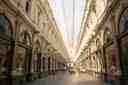
Directly ahead, you’ll spot a long, breathtaking corridor with elegant, arched shopfronts, pinkish-ochre walls, and a soaring, glass-paned roof flooding everything with sunlight-just step inside and look up to catch the magic. Ah, welcome to the Royal Saint-Hubert Galleries! Take a moment to soak in this dazzling sight: a shopping arcade so graceful, it’s been called the umbrella of Brussels-keeping shoppers dry, and spirits high, since 1847. Imagine standing here almost two centuries ago, when this spot was not quite so grand. Back then, a winding, rather grubby alley called Saint-Hubert Street ran here, so narrow you’d have to walk sideways if you’d eaten too much Belgian chocolate. The gallery was a bold dream of young architect Jean-Pierre Cluysenaar, who proposed sweeping all that chaos away to create a 200-meter-long promenade beneath a sparkling glass roof. It took years to untangle all the property rights-and even a bit of high drama! Rumor has it, one owner was so stressed that tragedy struck, while a barber next door just couldn’t handle seeing his neighbor’s house come down. Construction didn’t drag though. The project, kicked off with help from both city officials and eager bankers, rolled into action in 1846. Imagine the whirl of hammers and laughter, as Brussels got its very first taste of luxury shopping, rain or shine. One year later, King Leopold I himself, with his two sons in tow, arrived for the grand opening. There were speeches, music, and probably a lot of neck-craning as folks gazed up at that incredible iron and glass ceiling. It wasn’t just a hit-it was an instant favorite, where everyone, from locals to literary legends, came to strut their stuff. You’re standing where French luminaries like Victor Hugo, Alexandre Dumas, and Charles Baudelaire once enjoyed their coffee in the Café des Arts-so next time you pop by a café here, check your company, you might just be sitting in the shadow of greatness. It didn’t stop there: artists from the cutting-edge CoBrA movement and surrealist painters kept the creative buzz alive. In 1896, the world’s very first public movie screening in Belgium happened right inside one of these arcades, when the Lumière brothers’ magical “moving pictures” flickered to astonished faces. Each part of the arcade has its story: the King’s Gallery houses an opulent Royal Theatre, still running today, while the Queen’s Gallery was home to the city’s first praline chocolate at Neuhaus-you could say the sweet scent of history literally lingers in the air. The smaller Princes’ Gallery, with its dignified calm, hosts a bookshop that’s the stuff of literary dreams. The secret to the galleries’ everlasting popularity? For one thing, the motto above the entrance says Omnibus omnia-“Everything for everybody.” And it’s true! This is more than just a corridor of shops. Wander through and you’ll spot jewelers, chocolatiers, antique dealers, and bustling cafés whose tables spill under elegant arches. Apartments and offices look out from the upper floors, so there’s nearly always light in the windows. Every holiday season, those windows blaze with festive “Winter Wonders” lights. The Royal Galleries never lost their sparkle. Even after luxury shops popped up elsewhere in Brussels, these arcades kept their chic-royals and locals alike return again and again. Consider yourself part of history: these halls have hosted theaters, cinema premieres, parades, and in 2019, even the Tour de France whizzed right through here. Today, as you stroll beneath that airy glass roof, you’re walking a path that inspired copycats across Europe, from Milan to Moscow, all hoping to match the splendor of Brussels’ grand arcade. And really, can you blame them? The hardest part is trying not to lose yourself gazing up! Exploring the realm of the naming, description or the galleries? Feel free to consult the chat section for additional information.
समर्पित पेज खोलें →Look for two giant, almost square towers rising straight up from a stone staircase-the Cathedral stands proudly at the end of a wide forecourt, impossible to miss with its bold,…और पढ़ेंकम दिखाएँ
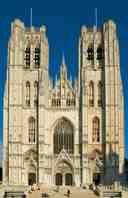
Look for two giant, almost square towers rising straight up from a stone staircase-the Cathedral stands proudly at the end of a wide forecourt, impossible to miss with its bold, towering façade and an array of spiky pinnacles aiming skyward. Welcome to the awe-inspiring Cathedral of St. Michael and St. Gudula, which I like to call Brussels’ most majestic “double-towered show-off”! Imagine you’re a medieval traveler, ducking out from muddy markets and winding alleys, only to step into the presence of a cathedral so tall and impressive that even Brussels’ bravest pigeons have vertigo looking down from those towers. The story begins long before the building in front of you looked anything like it does now. Picture a windswept hill called Treurenberg, the “Mount of Sorrows”-not exactly the cheeriest tourist stop in the 9th century, but a strategic crossroads where trade routes from Flanders, Cologne, Antwerp, and France tangled together. Back then, you’d see a humble little chapel to Saint Michael surrounded by palms and pilgrims, but by the 11th century, ambition (and maybe a bit of architectural one-upmanship) took over. Lambert II, Count of Leuven, kickstarted the transformation, bringing over the relics of Saint Gudula-Brussels’ beloved, miracle-working saint whose bones had the power, according to legend, to chase off a thief or two. With Saint Michael and Saint Gudula united as patrons, the foundations were set for a church that would grow-very slowly-into the giant before you. Over three centuries, the cathedral’s body took shape, evolving from Romanesque bones to the elegant Gothic ensemble you see now. Imagine the dust, the clamor of masons chiseling stone from Gobertange quarry, and the smell of wet lime in the air as the church inched its way heavenward. It wasn’t all peaceful progress-fires, pillagers, and revolutions threatened time and again. In 1579, Protestant Geuzen stormed in, flinging relics and smashing altars, and the French sans-culottes did their own destructive dance in the 1790s. Even so, each wave only brought new life, new styles, and ever grander chapels tacked on by hopeful donors. Now, check out those two immense towers-they were supposed to be even taller, with glorious spires to rival nearby town halls, but they stopped “growing” in the 15th century. Maybe the builders ran out of time, stone, or lunch breaks; no one really knows. Still, those towers are masterpieces, full of terraced windows, dizzying buttresses, and more gargoyles than a Halloween costume shop. Walk up the grand staircase-built in the early 1700s as a gift from the city-and you’ll spot a bronze bust of King Baudouin, keeping a royal eye on everyone. The staircase was originally meant to help folks stroll along the old city walls, proving that in Brussels, staircases can take you up in history as well as altitude. Step inside, and you’d see soaring vaults above, a forest of stone columns crowned with cabbage-leaf capitals (the only time vegetables have ever looked so noble), and a parade of the twelve apostles carved by top sculptors of their day. There’s even a giant pipe organ with over 4,000 pipes that can shake the dust from every corner-and perhaps startle a few pigeons outdoors. The stained-glass windows cast rainbows across the stone floor, with scenes of royals, saints, and stories both joyful and tragic. The nave features confessionals with secrets carved into their wood, a pulpit where Adam and Eve are forever caught in post-sin shame, and a crypt hiding the remains of medieval mystery men and women. Above it all, in recent times, peregrine falcons decided it was the city’s classiest penthouse. Bird lovers set up cameras, making this one of the best places in Brussels for feathered drama-egg-laying, swooping, and the occasional high-speed pace chase. Since ascending to cathedral status in 1962, St. Gudula has become Belgium’s national church, hosting everything from royal weddings to solemn state funerals. If somewhere inside you hear the tinkling of bells, know those are some of the nation’s largest and most storied! So here it stands: part sanctuary, part fortress, part concert hall, and part aviary. No matter how stormy Brussels’ history became, St. Gudula kept its doors open-sometimes to pilgrims, sometimes to pigeons, and always to anyone who’s caught by the wonder of soaring arches and the mystique of centuries stacked stone on stone. Eager to learn more about the description, exterior or the interior? Simply drop your inquiries in the chat section and I'll provide the details you need.
समर्पित पेज खोलें →Straight ahead, you’ll spot a building that looks like the glorious meeting point of a glass palace and an intricate iron music box, crowned with a decorative turret and topped by…और पढ़ेंकम दिखाएँ
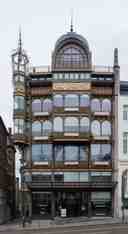
Straight ahead, you’ll spot a building that looks like the glorious meeting point of a glass palace and an intricate iron music box, crowned with a decorative turret and topped by a dome, with the words “Old England” just above the entrance-this is the Musical Instruments Museum. Now, just imagine: it’s Brussels at the end of the nineteenth century. Carriages trundle past, ladies in frilly dresses twirl umbrellas, and right here rises a department store fresh from the wildest dreams of Art Nouveau architect Paul Saintenoy. If you step back, the façade almost shimmers-iron and glass curve and coil together, more like something you'd find in a fairy tale than in the middle of a busy city. But don’t let the beauty fool you-inside, things are about to get very loud… in a good way! Today, this marvelous building isn’t selling hats or gloves, but instead holds a treasure trove of more than 8,000 musical instruments, all humming with stories from every corner of the world. That’s right, you’re standing in front of what is internationally known as the Musical Instruments Museum-the MIM for those in the know. It’s like a magical attic but for grown-ups (and very curious kids), brimming with everything from prehistoric bone flutes to the wildest synthesizers you could imagine. But rewind for just a moment. The museum’s story started back in 1877, when it was more of a teaching toolkit for students at the Royal Conservatory than the world-famous collection you see today. It began with a hundred Indian instruments-a royal gift, no less, from Rajah Sourindro Mohun Tagore to King Leopold II. Add to that the collection of François-Joseph Fétis, a musicologist who loved instruments so much he practically adopted them, and voilà: the MIM was born. Its first curator, Victor-Charles Mahillon, was always on the hunt for musical marvels, charming diplomats and donors into handing over the world’s rarest pieces. By the time he left, the collection had exploded in size and diversity. Picture Mahillon meticulously jotting down lists of every drum, horn, and stringed instrument, producing a five-volume catalogue way before anyone was paid to do data entry. His essays revolutionized the way people thought about what actually counted as a "musical instrument"-if he were around today, he’d probably classify your phone’s ringtone as a whole new section! After him, the baton was passed through a line of devoted curators, each adding a sprinkle of magic-more exhibits here, a concert there-making the museum more vibrant, though sometimes with a dash of dust. Then came the roaring decades of restoration, as the old department store was transformed into a museum fit for the twenty-first century, complete with beautifully restored facades worthy of a royal parade. When the doors flung open in 2000, it was as if music itself was welcoming visitors (to the joy of everyone except for the people who had to dust 8,000 instruments). Inside, the exhibit tells the story of music not just in Belgium-where inventors like Adolphe Sax, creator of the saxophone, practically changed the soundtrack of the world-but from every continent. You’ll discover instruments even Harry Potter would envy, such as the giant Chinese stone chimes, or the only copy anywhere of the luthéal, a keyboard that turns pianos into chameleons. Wandering from the basement’s mysterious mechanical marvels to the top floor’s delicate stringed wonders, you might find yourself humming along to the museum’s infrared headphones-which play nearly 300 musical extracts and, lucky for you, don’t judge your singing! So, while you stand in front of this gleaming, fanciful landmark, imagine the melodies brewing inside-centuries of music waiting for their next listener, or maybe their next collector. And remember to thank the inventors, collectors, and visionaries who turned an old shop into every music lover’s wildest dream. Now, who’s ready to air-conduct an invisible orchestra?
समर्पित पेज खोलें →To spot the Place Royale, look ahead for a grand and open rectangular square paved with stone, centered around a proud statue of a crusader on horseback, with a beautiful white…और पढ़ेंकम दिखाएँ
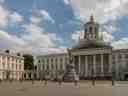
To spot the Place Royale, look ahead for a grand and open rectangular square paved with stone, centered around a proud statue of a crusader on horseback, with a beautiful white neoclassical church-topped with a dome and clock-watching over everything from the far side. Welcome to Place Royale, Brussels' very own royal stage! Take a moment, spin around, and imagine you're surrounded by the echoes of centuries-old footsteps. The wide, open square beneath your feet is older than the recipe for Belgian waffles, and it’s seen more drama than a season of your favorite reality show. Ah, right on cue-a little reminder of the parades and royal processions that once thundered across these stones! This area wasn't always so grand. Hundreds of years ago, it was the Place des Bailles, where medieval markets bustled right up against the majestic Palace of Coudenberg. That palace was more than just a royal home-it was the heart of power for dukes, kings, and emperors across centuries. But then, one cold night in 1731, disaster struck. Fire tore through the royal residence, and what was left was a messy heap of ruins, charmingly named the "Burnt Court" by the locals. For more than forty years, the site sat in smoky ruin-no palace, no parades, just the ghosts of history haunting the stones. But then, Prince Charles Alexander of Lorraine had a spark of inspiration. Forget about rebuilding the palace, he thought, let’s turn these ruins into something monumental, like the royal squares in France! Approval from Empress Maria Theresa set off a construction frenzy between 1775 and 1782, following plans by two French architects-Barré and Guimard. You see that stunning symmetry all around you? That's pure neoclassical perfection! Place Royale was designed to impress, and it still does. The square stretches out crystal-clear, 77 by 113 meters, every building echoing the same elegant style. If you look closer, you'll spot eight beautiful pavilions, each with its own story. Over here, the Magritte Museum sits in what used to be the Hôtel du Lotto, while another pavilion once belonged to the brewers’ guild-talk about having neighbors with good taste! And in the very center, rising above the cobblestones, there's the heroic equestrian statue of Godfrey of Bouillon. He’s the guy waving a banner, about to shout "Dieu le veut!" ("God wills it!") as he rides off for the First Crusade, nearly a thousand years ago. Fun fact: the first statue here was of Charles Alexander himself, but it went on quite an adventure! The French revolutionaries dragged it down not once but twice, before melting it to make coins-talk about repurposing with style. They even planted a "Liberty Tree" in its place for a while. But when that tree finally fell, Godfrey rode in-made of bronze and ready to lead again. Behind Godfrey is the neoclassical Church of St. James on Coudenberg. This beauty started as a simple chapel and ended up as the grand, pillared church you see today. Here, in 1831, the very first King of the Belgians swore his oath-a royal moment if there ever was one! But the church hasn't always had it easy. During the French Revolution, it was turned into a Temple of Reason and even later a Temple of Law. Only in 1802 did it reclaim its status as a church. The stories don’t stop at street level either. Below your feet, hidden under the paving stones, are the remains of the old Coudenberg Palace and the legendary Aula Magna. You can even visit some of these secret underground rooms through the BELvue Museum-if you dare to wander where emperors once walked. So next time you cross Place Royale, remember, you’re at the crossroads of royal ambition, revolutionary fervor, and centuries of Brussels’ history-now that’s what I call a dramatic backdrop for your stroll!
समर्पित पेज खोलें →To spot the Palace on the Coudenberg, look for the vast, fortress-like structure rising grandly above the slope with a maze of pointed roofs, elegant gables, and tall rows of…और पढ़ेंकम दिखाएँ
To spot the Palace on the Coudenberg, look for the vast, fortress-like structure rising grandly above the slope with a maze of pointed roofs, elegant gables, and tall rows of windows overlooking a green courtyard-imagine the palace straight ahead, dominating the scene with its sprawling, almost fairy tale silhouette. Now, let’s step into the shoes (or maybe the royal slippers) of centuries past. Imagine yourself standing on this same hill in Brussels, but now it’s the 1400s and the melody of horse hooves and the murmur of courtly gossip are drifting on the breeze. Welcome to the Palace on the Coudenberg-back then, the beating heart of Brussels’ power, drama, and sometimes hilarity. The story starts in the 11th century, with little more than a sturdy stone fort perched up here-a perfect spot for keeping watch and, perhaps, for a duke to enjoy the view. Enter the likes of Jan I, Jan II, and Jan III, who decided that fortress life needed a touch of royal flair. They transformed this holdfast into a palace fit for a duke’s dreams and, as it turns out, even bigger ambitions. By the time Philip the Good strutted onto the scene in the 15th century, Brussels was ready for its glow up. Philip wanted a showpiece-a seat of power that would dazzle visitors and possibly make rival cities a little jealous. Shortly after his grand arrival, he inspired the locals to buy up extra land and kickstart construction of the Aula Magna, a massive hall so wondrous that it sparkled like a jewel in the crown of Brussels. From then on, the Coudenberg Palace wasn’t just a residence-it was the center of a kingdom, a place where rulers planned, artists inspired, and more than a few secrets were kept behind stone walls. Rulers came and went: Charles the Bold preferred Mechelen; the mighty Charles V presided here, and even abdicated his vast empire in these halls, passing the crown (and responsibility!) to his son, Philip II. Imagine the tense excitement in 1530 as Maria of Hungary was declared regent right here, her voice echoing over the marble floors. Builders hurried to add grand staircases adorned with statues by Jean Guilgot. Far from being just another palace, this was a wonder of Europe-a place where the air hummed with the energy of diplomacy, intrigue, and the occasional royal quarrel. Even Albrecht Dürer, the famous artist, admitted that he’d never seen such splendor anywhere else. The palace was not just walls and windows-the grounds were filled with dazzling gardens, a menagerie of animals, even a labyrinth where courtiers might get genuinely lost or “accidentally” run into their crushes. There was a summerhouse painted golden ochre and crowned by four sharp gables-a whimsical retreat for whispering secrets or escaping a stuffy banquet (and perhaps the in-laws). But history always finds a twist, doesn’t it? In 1731, while a banquet was being planned (and someone, ironically, was making jam), fire broke out. Within hours, the mighty palace was engulfed in flames. Officially, the story was “kitchen mishap,” but whispers in the shadows blamed a certain lady’s candle or a heating device left too close to bed sheets. As panic tore through the halls, servants scrambled to save priceless treasures-books, art, even a few church relics-while the city’s citizens were held at bay, maybe out of fear of looting, or maybe because they’d had a bit too much to drink. Brussels’ iconic palace smoldered, its walls blackened, rooms gutted, and dreams of grandeur left in ruins. For a time, royal business moved to new neighborhoods, and the shell of Coudenberg sat forgotten-until the district was rebuilt and the present-day square, Koningsplein, rose up over the ashes. Today, only the palace’s foundations and cellars remain, hiding secrets beneath your feet-an underground labyrinth you can explore via the BELvue Museum, where stories of past splendor and royal mischief echo in the dark. Quite the place to lose your head-or, at the very least, your sense of time! Ready to delve deeper into the fire, demolition and reconstruction, current situation or the gallery? Join me in the chat section for an enriching discussion.
समर्पित पेज खोलें →Right in front of you is a grand, symmetrical palace with a stately, columned central entrance and an impressive Belgian flag flying high on top-just look for the enormous stone…और पढ़ेंकम दिखाएँ
Right in front of you is a grand, symmetrical palace with a stately, columned central entrance and an impressive Belgian flag flying high on top-just look for the enormous stone building with its perfectly balanced wings and formal gardens separated from the square by elegant iron railings. Welcome to the Royal Palace of Brussels, the king's official palace-though, let's be honest, it feels like it’s showing off a bit for a monarch who doesn’t even live here! Don’t be fooled by those royal windows; the Belgian king and queen actually reside at the Palace of Laeken. This splendid palace is where the king handles affairs of state, hosts magnificent receptions, and sometimes offers foreign heads of state a royal overnight stay. Imagine diplomats and ambassadors sweeping in while officials fuss around, every button gleaming, not a hair out of place, and state matters buzzing in the air. Now, let’s unravel its past-if these grounds could tell their own story, they’d need a history book as thick as Belgian waffles are sweet. Before this neoclassical masterpiece stood here, these grounds were home to the enormous, medieval Palace of Coudenberg, where dukes, emperors, and governors plotted and partied since the 12th century. It was a fortress, a playground, and even the venue for Charles V’s dramatic abdication in favor of his son, Philip II of Spain-and you can picture the hush and tension in that great hall as he gave up the crown. Unfortunately, the palace had a complicated relationship with fire: a giant blaze in 1731 left most of the medieval glory in ruins, and eventually a new face was needed for Brussels’ royal heart. If you’re curious, some ancient vaults and mysterious remnants still lie beneath nearby squares, and you can even visit them if you’re feeling adventurous! Fast-forward to after 1815, when Brussels became joint capital of the new United Kingdom of the Netherlands. Two grand town mansions were stitched together for King William I, who added a posh colonnaded façade and let the new “Royal Palace” stretch regally along the street. Later, King Leopold II, who genuinely believed a king’s pad should be anything but modest, doubled the palace’s size and added a new, dazzlingly formal garden-someone really wanted to outshine Buckingham Palace! The grand staircase, the mirror hall (don’t miss those million beetle wings in the ceiling art!), the stately Throne Room-every corner is designed to impress. Leopold II, by the way, was so set on splendor, he tried to make the façade 50% longer than London’s Buckingham Palace-though the floor plan is a little, shall we say, cosier inside. Throughout its life, the palace has been more of a stage than a home. While only one king was born here-Leopold II-many royal weddings, receptions, abdications, and banquets have unfolded beneath those sparkling chandeliers. During World War I, the palace turned from glitter to grit, transforming into a Red Cross military hospital thanks to Queen Elisabeth. And today, from July to September, you can even walk the halls the royals tread-unless, of course, a head of state has booked the presidential suite! Right now, as you glance up at the intricate stonework, you might notice the golden, regal fences and the pediment above the central entrance with Belgium’s allegorical figure flanked by symbols of industry and agriculture. The gardens out front are French and formal, but there’s an English twist out back, just in case the pigeons like variety. Whenever the king’s in, his flag flies high over that central dome-and if you’re here on Belgian National Day, you’ll join curious crowds hoping for a peek inside these grand walls. So, as you stand before this palace, you’re looking not just at bricks and mortar, but at centuries of drama, parties, politics, and just a hint of royal rivalry-because in Brussels, even the buildings have a sense of grandeur... with just a little bit of Belgian modesty tucked in. For further insights on the exterior, interior or the functions, feel free to navigate to the chat section below and inquire.
समर्पित पेज खोलें →To spot Brussels Park, look for the tall white columns and ornamental gates nestled between thick green trees, with a grand fountain spraying in the distance straight…और पढ़ेंकम दिखाएँ
To spot Brussels Park, look for the tall white columns and ornamental gates nestled between thick green trees, with a grand fountain spraying in the distance straight ahead. Welcome to Brussels Park, the city’s green heart and oldest public park! Take a moment to look through those impressive gates-you’re about to stroll where emperors and everyday folks alike have relaxed for centuries. If you close your eyes and let your imagination wander, you might just hear clinking hooves and bustling carriages rolling by, or the laughter of nobles and townsfolk mixed together under these leafy branches. Long ago, this graceful park was actually part of the hunting grounds for the Dukes of Brabant, back when Brussels was ringed with forests and vineyards, not coffee shops and traffic. Fancy an orangery with exotic birds or a private labyrinth for a royal game of hide-and-seek? That’s what the gardens here once boasted! But all transformed on a bitter winter’s night in 1731, when the Palace of Coudenberg burned down, leaving only ruined walls and a tangle of overgrown paths. The once-glorious park turned wild and half-forgotten-its shimmering fountains, grottoes, and carefully trimmed hedges slowly being swallowed by the weeds. Fast-forward to 1775, and suddenly, Brussels is abuzz with plans! Charles Alexander of Lorraine, ruling with a flair for celebrations, is about to get a statue in his honor. Diplomats and architects come together, deciding to turn these ruins into something grand and modern-a park fit not just for a duke, but for everyone. Soon, great trees were felled, new ones planted (over three thousand, to be precise!), and paths in neat rectangles traced through the grounds. The French architect Gilles-Barnabé Guimard and Austrian landscaper Joachim Zinner turned muddy leftovers into an elegant neoclassical oasis. Look around-the tree-lined avenues and open views are their legacy. Over the years, Brussels Park became a stage for revolutionary drama and royal pageantry alike. In 1793, rowdy revolutionaries-sans-culottes, if you want the proper term-stormed through, smashing Roman busts and tossing statues into the bushes. The city rushed to repair the damages, enlisting patrons to finance the park’s rebirth-imagine a sort of “Adopt-a-Statue” campaign. By 1830, when Belgium fought for independence, the park turned into a soldier’s refuge and a hiding spot amid chaos. Through all this, generations kept tending those plane trees, chestnuts, and linden avenues, rebuilding where vandals or revolutions left scars. The monumental railings you see by the gates were installed in 1849, declaring the park’s importance with every ornate twist of iron. But the park isn’t all statues and memories-there’s always been a sense of fun here, too! In the early 20th century, Art Deco lamps glimmered along the paths, and a hidden bunker with secret tunnels was built underneath (yes, like something straight out of a spy novel, only with more squirrels). Bandstands-don’t miss the ornate, cast-iron one-hosted lively concerts, and the Royal Park Theatre and Vauxhall were alive with comedy, music, and even children’s pantomimes. Today, Brussels Park is a leafy retreat packed with over sixty sculptures inspired by the wild world of Greco-Roman mythology, cheeky Hermes faces, and water basins where fountains bubble cheerfully in the sunshine. The double row of lime trees ringing the park still sets a perfect stage for quiet walks, dramatic entrances, and perhaps, the occasional squirrel revolution. And after centuries of change, drama, and restoration, it’s still the very best place in Brussels to picnic, ponder, or play at being a duke. Eager to learn more about the buildings and monuments, sculptures or the remarkable trees? Simply drop your inquiries in the chat section and I'll provide the details you need.
समर्पित पेज खोलें →And here we are-your final stop: the grand Flemish Parliament, standing tall in the heart of Brussels! Just imagine, right behind these walls, the daily dance of democracy…और पढ़ेंकम दिखाएँ
And here we are-your final stop: the grand Flemish Parliament, standing tall in the heart of Brussels! Just imagine, right behind these walls, the daily dance of democracy unfolds, and sometimes it really is a bit of a dance-lots of steps, a few stumbles, and the occasional toe-stepping disagreement! Take a moment to breathe in the Brussels air: the city’s bustle, the distant echo of trams, and the sense that, at this very spot, the future of Flanders is being hammered out, decree by decree. The story of the Flemish Parliament begins with a time when Belgium was simpler, at least on paper. Picture Brussels in 1830-Belgium had just become a nation, and there was only one parliament and one government ruling from above, their laws stretching from the frosty North Sea coast to the green hills along the French border. The leaders held the reins tight, and everything seemed rather orderly, if a bit… centralized. But Belgium is a country that loves a bit of lively debate, and by the 1970s, cracks had begun to show. Enter a colorful cast: Flemish speakers in the north and French speakers in the south, each yearning for more control over their lives-especially over language, culture, and yes, who gets to choose the rules for school lunches. Five big constitutional reforms later, Belgium had become a patchwork of powers, and this stately building became the home of what we now call the Flemish Parliament. It first gathered as the “Cultural Council for the Dutch-speaking Community” in 1971, meeting to talk about Dutch-language culture, literature, and probably whether the Flemish fries really are the best in the world. As you gaze at its modern facade now, imagine the Parliament’s evolution. By 1980, the ambitious Flemings decided it made more sense to combine their cultural and regional authorities-one parliament, one government, in charge of both community and regional matters. A sort of "buy one, get one free" deal in politics! By 1995, it officially took on its current title: Vlaams Parlement, the Flemish Parliament. Today, when you hear “Vlaamse Volksvertegenwoordigers,” that’s just the local way of saying “Members of the Flemish Parliament”-or MFPs, like a band of superheroes sworn to defend the rights of Flanders. And let’s be honest, nothing says “superhero” like budget negotiations! What does this Parliament actually do? Their power is vast, and a bit dizzying. They craft decrees-Flemish laws-that shape everything from environmental policies (like how best to keep the North Sea horizon clear of pollution) to the inner workings of schools, theaters, and even TV stations. They decide on education, healthcare, economic development, energy, agriculture, public transport-you name it. Flanders has a say in international trade and can even sign treaties, flexing its diplomatic muscles in the world. Just don’t ask a Flemish MP to control the weather-they haven’t figured that one out yet! Elections here happen every five years, typically coinciding with other regional and European elections-a bit like voting bingo for Belgians. The Parliament has 124 members: 118 from Flanders proper, and six representing Flemish voices within Brussels. Once inside, they split into committees, each tackling thorny topics like housing, mobility, or the occasional debate about cycling lanes (a topic that can get surprisingly heated!). It isn’t just serious business, though. There’s pageantry: at the start of the parliamentary year, the Speaker is elected-a crucial figure entrusted with keeping order and making sure everyone has their turn. The Speaker is supported by a small army-the Bureau and the Extended Bureau, who sound like something out of a spy novel but are really there to set the agenda and keep things ticking over. So, standing here, you’re at the heart of Flemish power-a building born out of Belgium’s complex linguistic and political history, buzzing with drama, negotiation, and the low, comforting hum of democracy. The Flemish Parliament isn’t just an institution-it’s a living, breathing symbol of how communities can seek their voice, find compromise, and shape their destiny… all within shouting distance of the world’s best chocolate shops. Now, how’s that for a sweet ending to our tour? Exploring the realm of the competencies (jurisdiction), procedure or the elections and membership? Feel free to consult the chat section for additional information.
समर्पित पेज खोलें →

अक्सर पूछे जाने वाले प्रश्न
मैं टूर कैसे शुरू करूँ?
ख़रीदारी के बाद, AudaTours ऐप डाउनलोड करें और अपना रिडेम्पशन कोड दर्ज करें। टूर तुरंत शुरू करने के लिए तैयार होगा - बस प्ले टैप करें और GPS-गाइडेड रूट का पालन करें।
क्या टूर के दौरान मुझे इंटरनेट चाहिए?
नहीं! शुरू करने से पहले टूर डाउनलोड करें और पूरी तरह ऑफ़लाइन इसका आनंद लें। केवल चैट फ़ीचर को इंटरनेट की ज़रूरत है। मोबाइल डेटा बचाने के लिए WiFi पर डाउनलोड करने की सिफ़ारिश है।
क्या यह एक गाइडेड ग्रुप टूर है?
नहीं - यह एक सेल्फ-गाइडेड ऑडियो टूर है। आप अपनी गति से स्वतंत्र रूप से खोजते हैं, आपके फ़ोन से ऑडियो कथन बजता है। कोई टूर गाइड नहीं, कोई ग्रुप नहीं, कोई शेड्यूल नहीं।
टूर में कितना समय लगता है?
अधिकांश टूर पूरा करने में 60-90 मिनट लगते हैं, लेकिन गति पूरी तरह आपके नियंत्रण में है। जब चाहें रुकें, स्टॉप छोड़ें, या ब्रेक लें।
अगर मैं आज टूर पूरा नहीं कर सकता/सकती तो?
कोई समस्या नहीं! टूर की लाइफ़टाइम एक्सेस है। जब चाहें रोकें और फिर शुरू करें - कल, अगले हफ़्ते, या अगले साल। आपकी प्रगति सेव रहती है।
कौन सी भाषाएँ उपलब्ध हैं?
सभी टूर 50+ भाषाओं में उपलब्ध हैं। अपना कोड रिडीम करते समय अपनी पसंदीदा भाषा चुनें। नोट: टूर जेनरेट होने के बाद भाषा बदली नहीं जा सकती।
ख़रीदारी के बाद मैं टूर कहाँ एक्सेस करूँ?
App Store या Google Play से मुफ़्त AudaTours ऐप डाउनलोड करें। अपना रिडेम्पशन कोड (ईमेल द्वारा भेजा गया) दर्ज करें और टूर आपकी लाइब्रेरी में दिखेगा, डाउनलोड और शुरू करने के लिए तैयार।
अगर आपको टूर पसंद नहीं आया, तो हम आपकी ख़रीदारी वापस करेंगे। हमसे संपर्क करें [email protected]
सुरक्षित चेकआउट 


