
Visite audio de Hanoï : Explorer les sites légendaires
Sous les avenues animées et les boulevards ombragés de Hanoï se cache un passé tissé d'intrigues, de révolutions et de murmures d'ambitions oubliées. Cette visite audio autoguidée vous plonge dans des histoires que peu de voyageurs entendent, vous menant des écoles coloniales d'élite aux grands hôtels et aux couloirs du pouvoir économique. Quels secrets mortels les anciens élèves du Lycée Albert Sarraut ont-ils emportés lors des soulèvements turbulents ? Qui a disparu dans les bunkers de guerre cachés sous le Sofitel Legend Metropole, pour ne jamais réapparaître ? Et pourquoi un seul décret de la Banque d'État résonne-t-il encore aujourd'hui dans les cercles financiers mondiaux ? Suivez les traces des rebelles, des poètes, des présidents et des espions en explorant les différentes couches de Hanoï — des salles opulentes où des accords historiques ont été conclus aux caves sombres construites pour la survie. Voyez la ville en mouvement : l'histoire se déroule à chaque pas. Commencez votre voyage maintenant et laissez les mystères de Hanoï surgir sous vos pieds.
Aperçu du tour
À propos de ce tour
- scheduleDurée 40–60 minsAllez à votre propre rythme
- straightenParcours à pied de 4.1 kmSuivez le sentier guidé
- location_on
- wifi_offFonctionne hors ligneTéléchargez une fois, utilisez n'importe où
- all_inclusiveAccès à vieRéécoutez n'importe quand, pour toujours
- location_onCommence à Lycée Albert Sarraut
Arrêts de ce tour
The school provided high-quality academic programs for students aged 11 to 18. Today, the lyceum is known as Trần Phú - Hoàn Kiếm High School. Throughout its history, Lycée Albert…Lire plusAfficher moins
The school provided high-quality academic programs for students aged 11 to 18. Today, the lyceum is known as Trần Phú - Hoàn Kiếm High School. Throughout its history, Lycée Albert Sarraut nurtured and educated many Vietnamese scholars and leaders. Notable alumni of this esteemed institution include Bui Tuong Phong, a pioneering computer scientist, Hoàng Xuân Hãn, Nguyen Tien Lang, Hoàng Văn Chí, Nguyen Phan Long, Phạm Văn Đồng, and Trần Lệ Xuân (also known as Madame Ngô Đình Nhu). Other notable figures who received their education here include Nguyen Manh Tuong, a lawyer and participant in the Nhân Văn-Giai Phẩm affair, Đào Sĩ Chu, an artist painter, Lê Thành Khôi, a Vietnamese-French scientist and UNESCO consultant, and Nhất Linh (Nguyên Tường Tam), the leader of Tu Luc Van Doan. Additionally, influential individuals from the Vietnamese Communist Party, such as General Võ Nguyên Giáp and former Secretary General Trường Chinh, were graduates of this lyceum. Beyond Vietnam, Lycée Albert Sarraut also educated Laotian princes, including Prince Souphanouvong, the first president of the Lao PDR and leader of the Pathet Lao movement, as well as Prince Kham-Phan Panya and Prince Kham-Mao. Lycée Albert Sarraut played a significant role in shaping the minds and futures of many prominent individuals. It stands as a testament to the legacy of education and the cross-cultural influence of the French colonial period in Vietnam.
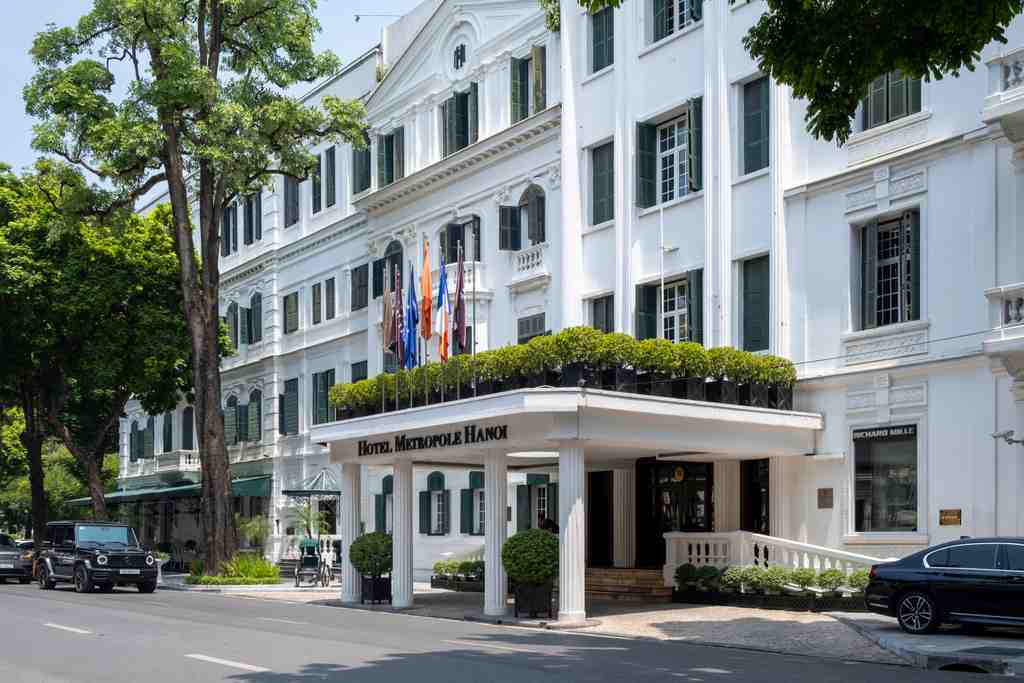
Ouvrir la page dédiée →Originally, Gustave-Émile Dumoutier, the owner of the land, and businessman André Ducamp collaborated to establish this hotel. With an initial capital of 500,000 francs, the Grand…Lire plusAfficher moins
Originally, Gustave-Émile Dumoutier, the owner of the land, and businessman André Ducamp collaborated to establish this hotel. With an initial capital of 500,000 francs, the Grand Métropole Hôtel officially welcomed its guests in August 1901 under the management of the Cie Française Immobilière. Over the years, the Metropole Hanoi has witnessed various transformations and historical events. In 1916, it became the first venue in Indo-China to screen motion pictures. In the 1930s, the hotel chain expanded, operating properties in different locations such as Tam-Dao, Doson, and Langson. In 1946, the hotel changed ownership and was purchased by a Chinese businessman named Giu Sinh Hoi. During this period, the renowned Vietnamese leader Ho Chi Minh utilized the Metropole as a meeting place for important discussions. In the 1950s, after Vietnam gained independence, the hotel was renamed the Thong Nhat Hotel and served as the official government guest house. With the escalation of the Vietnam War in the 1960s, the hotel managers took precautions to protect guests by constructing a bomb shelter in the courtyard. The Thong Nhat Hotel later became the temporary residence for various embassies and UN agencies. After the Vietnam War ended, the hotel underwent significant renovation and restoration efforts. In 1992, it reopened as the Pullman Hotel Metropole before transitioning to the Sofitel chain and eventually becoming the Sofitel Legend Metropole Hanoi. The hotel offers a total of 364 rooms, which are divided into two wings. In recent years, major renovations have been carried out, including the upgrading of guest rooms in the historical wing and improvements to the main entrance and lobby. Notably, the hotel’s air raid shelter, known as the ‘Bunker,’ was rediscovered in 2011 under the Bamboo Bar. It has since been restored and can be visited by hotel guests and tourists. The Sofitel Legend Metropole Hanoi continues to be a symbol of luxury and heritage in the capital city of Vietnam. In fact, it was chosen as the venue for the second meeting between US President Donald Trump and North Korean Supreme Leader Kim Jong Un in 2019. Please take some time to explore the beauty and history of this remarkable hotel.
Ouvrir la page dédiée →The history of the State Bank dates back to the time when Indochina was under French rule. During that period, the colonial government managed the monetary system through Banque…Lire plusAfficher moins
The history of the State Bank dates back to the time when Indochina was under French rule. During that period, the colonial government managed the monetary system through Banque de l'Indochine. After the August Revolution in 1945, the Democratic Republic of Vietnam aimed to establish an independent monetary system. On May 6, 1951, president Hồ Chí Minh signed a decree to establish the National Bank of Vietnam. Subsequently, on January 21, 1960, the bank was renamed the State Bank of Vietnam. Following the reunification of Vietnam, the National Bank of Vietnam, which was the central bank of the Republic of Vietnam, merged with the State Bank of Vietnam in July 1976. In the reform era known as Doi moi, the banking system of Vietnam underwent significant changes. New banks, such as VietinBank and the Vietnam Bank for Agriculture, were created in 1988. The State Bank's role gradually shifted towards being a central bank. Since then, the State Bank of Vietnam has undergone further reforms. It acts on behalf of the state in managing money, credit, and banking operations throughout the country to stabilize the value of money. However, its lending role to state-owned enterprises has decreased over time due to the emergence of other state-owned and private banks. Several of the State Bank's buildings are inherited from the Banque de l'Indochine, including its headquarters in Hanoi and the Ho Chi Minh City branch. The former prime minister, Nguyễn Tấn Dũng, once served as the governor of the bank. The State Bank of Vietnam is a ministry-level body under the administration of the government, and its governor is a member of the cabinet. Both the governor and vice governors serve a 5-year term. The bank's principal roles include promoting monetary stability, supervising financial institutions, providing banking facilities, and managing the country's international reserves. Thank you for visiting the State Bank of Vietnam.
Ouvrir la page dédiée →
Afficher 9 arrêts de plusAfficher moins d'arrêtsexpand_moreexpand_less
The main purpose of the ICC was to oversee the implementation of the Geneva Accords, which ended the First Indochina War and brought about the partition of Vietnam. It monitored…Lire plusAfficher moins
The main purpose of the ICC was to oversee the implementation of the Geneva Accords, which ended the First Indochina War and brought about the partition of Vietnam. It monitored the observance of ceasefires and reported any violations. The organization consisted of delegations of diplomats and military personnel from Canada, Poland, and India, representing the non-communist, communist, and non-aligned blocs, respectively. Although the ICC started well, the irreconcilable positions of the involved parties soon made it largely irrelevant in the face of an increasingly active conflict. However, it survived as a communications link until the Paris Accords were signed and it was reconvened as the International Commission for Control and Supervision. It is important to note that the ICC is distinct from the Joint Commission, which was responsible for overseeing the ceasefire and ensuring peace in the region. The primary duties of the ICC, as stated in the treaty, were to control the movement of armed forces, supervise the demarcation lines and demilitarized zones, oversee the operations of releasing prisoners of war and civilian internees, and supervise ports, airfields, and frontiers to ensure the execution of the provisions of the agreement on the cessation of hostilities. However, the ICC had limited power compared to the Joint Commission and was primarily tasked with conducting studies and writing reports. The Joint Council could request the ICC's opinion but was not obligated to consider it. This lack of governing power led to criticism from the public, who expected the ICC to have a greater role in the region. One of the first actions of the ICC was to separate Vietnam into two zones, controlled by the People's Army of Vietnam in the North and the French Union in the South. This division ultimately led to the colloquial terms North and South Vietnam. The ICC oversaw this process, which required significant manpower and resources due to the large number of people wanting to move. Thank you for visiting the International Control Commission. Please proceed to our next stop, Ngọc Sơn Temple.
Ouvrir la page dédiée →Prior to the battle, tensions had been rising between France and the Democratic Republic of Vietnam (DRV). Despite signing an agreement promising negotiations and reciprocal…Lire plusAfficher moins
Prior to the battle, tensions had been rising between France and the Democratic Republic of Vietnam (DRV). Despite signing an agreement promising negotiations and reciprocal rights to end hostilities, France did not follow through with any political concessions. Instead, they violated agreements by landing reinforcements in Da Nang and committing atrocities in Haiphong, Langson, and Tourane. By mid-October, the Viet Minh's General Staff anticipated an impending French attack and made preparations accordingly. The situation escalated after the violence in Haiphong, and the French attention turned towards Hanoi, where they shared a presence with the DRV through joint military commissions. The French forces in Hanoi numbered around 6,000 men, while the DRV had 10,000 militia and 2,500-3,000 regulars on active duty. Both sides had lost confidence in each other, engaging in increasing levels of violence. The DRV leaders were determined to defend Hanoi, as it held significant political importance for both sides. The strategy was not centered around holding the capital, but rather pinning down the French forces while the leadership evacuated to bases in the Northern and Central Vietnamese jungles. The urban battle also aimed to attract international attention to the Vietnamese struggle against colonial conquest. Vương Thừa Vũ, with his experience in military tactics from the Second Sino-Japanese War, was appointed to command the city's defense. His soldiers were strategically positioned in government buildings, industrial plants, and key thoroughfares. Arms and supplies were hidden in the city, and secret wall openings were made between houses to facilitate movement. The plan was for the militia to fall back to the city's Old Quarter, engaging the French with barricades and urban warfare tactics, while the regular forces attacked Gia Lam Airport to prevent French reinforcements by air. The Battle of Hanoi began when the Viet Minh set off explosives in the city's power plant, plunging Hanoi into darkness. They then launched coordinated attacks on French military positions and homes. During this time, approximately 600 French civilians were abducted. Surviving French troops, alerted by friendly spies, gradually gained numerical superiority. French artillery shelled the city, and intensive house-to-house searches were conducted in search of the Viet Minh leadership. The heaviest fighting occurred in Hanoi's Old Quarter, marking the first instance of urban warfare for the Viet Minh, involving 2,000-10,000 fighters. This battle was a significant event in the First Indochina War, shaping the course of the conflict and intensifying the struggle for independence. Please proceed to our next stop, Turtle Tower.
Ouvrir la page dédiée →Construction of this magnificent cathedral began in 1884, with architectural influences drawn from the renowned Notre Dame de Paris. It was one of the first structures established…Lire plusAfficher moins
Construction of this magnificent cathedral began in 1884, with architectural influences drawn from the renowned Notre Dame de Paris. It was one of the first structures established by the colonial government of French Indochina and opened its doors in December 1886, making it the oldest church in Hanoi. The cathedral holds several Masses throughout the day, and on Sunday evenings at 6:00 PM, large crowds gather both inside and outside. Prayers and hymns are broadcasted to the plaza, allowing those unable to enter the cathedral to participate. Situated in the Old Quarter, west of Hoàn Kiếm Lake, the cathedral occupies a small square. Surrounding the area are boutiques, silk shops, restaurants, and apartment blocks that cater to tourists. St. Joseph's Cathedral is a significant religious center, serving as the headquarters of the Archdiocese of Vietnam. It oversees a network of over 480 churches and chapels, 113 parishes, and an estimated 400,000 Catholics. The cathedral's primary entrance gates are typically open during Mass, but at other times, visitors can enter through a side door in the compound wall. A bell near the entrance must be rung to signal one's arrival. In its history, St. Joseph's Cathedral has experienced periods of hardship. After the Viet Minh gained control of North Vietnam in 1954, the Catholic Church endured persecution. The cathedral itself was forced to close until Christmas Eve of 1990, when Masses resumed. In 2008, protests related to religious symbols occurred near the cathedral grounds, drawing attention to its significance in the lives of the faithful. The cathedral's façade showcases two square-shaped towers reaching a height of 103 feet (31 meters). Each tower features five bells, reminiscent of the iconic Notre Dame de Paris. The exterior consists of granite stone slabs, which have deteriorated over the years due to pollution. To address this, extensive renovation work took place between July 2020 and May 2022, restoring the cathedral's beauty and structural integrity. Inside, the cathedral boasts tall stained glass windows with pointed arches. These stained glass panels were crafted in France and then transported to Vietnam, adding a touch of elegance to the interior. As you explore St. Joseph's Cathedral, remember its historical significance and the resilience of the Catholic community that continues to gather here for worship and prayer.
Ouvrir la page dédiée →In the past, Hàng Bông was a street known for its production of cotton, used to make clothes and winter blankets. However, today it has transformed into one of the liveliest and…Lire plusAfficher moins
In the past, Hàng Bông was a street known for its production of cotton, used to make clothes and winter blankets. However, today it has transformed into one of the liveliest and busiest shopping streets in Hanoi. As you explore Hàng Bông Street, you will come across a variety of shops, including art galleries, silk shops, and clothing stores. It is a popular destination for locals and tourists alike who are looking to indulge in some retail therapy. Feel free to immerse yourself in the vibrant atmosphere and discover the unique offerings of this bustling street. Enjoy your time here on Hàng Bông Street, as you explore the diverse array of shops and find hidden treasures along your way.
Ouvrir la page dédiée →Throughout its history, the hospital has had several names. From 1943 to 1958, it was known as Yersin Hospital, and from 1958 to 1991, it was called the Hospital of Vietnam - GDR…Lire plusAfficher moins
Throughout its history, the hospital has had several names. From 1943 to 1958, it was known as Yersin Hospital, and from 1958 to 1991, it was called the Hospital of Vietnam - GDR Friendship, in honor of the German Democratic Republic. Since 1991, it has been known as Việt Đức Hospital. It is renowned for the work of the esteemed Vietnamese surgeon, Ton That Tung, who conducted his research and performed operations here for over 40 years. The hospital currently has over 500 beds for patients and 18 surgery rooms. It is capable of conducting over 800 open-heart operations annually. Việt Đức Hospital also has strong collaborations in exchange and training programs with medical facilities in France, Germany, Australia, and other countries. In 1998, the hospital established a Medicinal Laser Unit to study and apply laser techniques in diagnosing and treating diseases, including cancer. In 2006, through a partnership with the Hans Messer Foundation, the East Meets West Foundation, and Dräger, the hospital received equipment worth more than US$160,000 to enhance its capacity for children's surgery. In addition, the hospital has collaborated with Facing the World, a UK charity that trains Vietnamese surgeons in craniofacial surgery. They also send UK doctors to Vietnam to perform surgeries and provide equipment to Vietnamese hospitals. Việt Đức Hospital plays a crucial role in providing advanced medical care, conducting research, and fostering international collaborations to ensure the well-being of patients in Vietnam.
Ouvrir la page dédiée →After the war, Hỏa Lò Prison was used to imprison Vietnamese dissidents and other political prisoners, including renowned poet Nguyễn Chí Thiện. While the prison has been…Lire plusAfficher moins
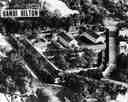
After the war, Hỏa Lò Prison was used to imprison Vietnamese dissidents and other political prisoners, including renowned poet Nguyễn Chí Thiện. While the prison has been demolished in the 1990s, its gatehouse remains intact and serves as a museum to educate visitors about its dark history. The name "Hỏa Lò" derives from the street name, which was known for its shops that sold wood stoves and coal-fire stoves. The translation varies from "fiery furnace" to "Hell's hole" and even "stove". The French referred to the prison as Maison Centrale, meaning "Central House", a term still used for prisons housing dangerous or long sentence detainees in France. Hỏa Lò Prison was designed to hold Vietnamese prisoners, particularly political activists seeking independence, who were subjected to torture and execution. Over the years, the prison witnessed overcrowding and inhumane living conditions. Its central urban location allowed for communication and the exchange of ideas both within and outside its walls. Many influential figures in Communist North Vietnam and Viet Minh spent time here during the 1930s and 1940s. Following the French defeat and the 1954 Geneva Accords, the prison came under the authority of the Democratic Republic of Vietnam. It served as an educational center for revolutionary doctrine and activity, symbolizing the historical significance to North Vietnam. During the Vietnam War, Hỏa Lò Prison became a place of misery for U.S. prisoners of war. Lieutenant Junior Grade Everett Alvarez Jr., the first American POW, arrived here in 1964. The conditions were deplorable, with insufficient food and unsanitary environments. The American POWs humorously referred to it as the "Hanoi Hilton", drawing an ironic comparison to the well-known Hilton Hotel chain. In 1967, a new section of the prison was opened specifically for incoming American POWs, called "Little Vegas". Buildings and areas within were named after landmarks along the Las Vegas Strip, a nod to many pilots who had trained at Nellis Air Force Base near Las Vegas. As you explore the Hỏa Lò Prison Museum, you will learn more about the experiences of those held captive here and gain a deeper understanding of the complex history surrounding this significant site.
Ouvrir la page dédiée →


Foire aux questions
Comment commencer le tour ?
Après l'achat, téléchargez l'application AudaTours et entrez votre code de réduction. Le tour sera prêt à commencer immédiatement - il suffit d'appuyer sur lecture et de suivre l'itinéraire guidé par GPS.
Ai-je besoin d'Internet pendant le tour ?
Non ! Téléchargez le tour avant de commencer et profitez-en pleinement hors ligne. Seule la fonction de chat nécessite Internet. Nous recommandons de télécharger en WiFi pour économiser vos données mobiles.
S'agit-il d'une visite de groupe guidée ?
Non - il s'agit d'un audioguide en autonomie. Vous explorez indépendamment à votre propre rythme, avec une narration audio diffusée par votre téléphone. Pas de guide, pas de groupe, pas d'horaire.
Combien de temps dure le tour ?
La plupart des tours durent entre 60 et 90 minutes, mais vous contrôlez totalement le rythme. Faites des pauses, sautez des arrêts ou arrêtez-vous quand vous le voulez.
Et si je ne peux pas finir le tour aujourd'hui ?
Pas de problème ! Les tours disposent d'un accès à vie. Faites une pause et reprenez quand vous le souhaitez - demain, la semaine prochaine ou l'année prochaine. Votre progression est sauvegardée.
Quelles sont les langues disponibles ?
Tous les tours sont disponibles dans plus de 50 langues. Sélectionnez votre langue préférée lors de l'utilisation de votre code. Note : la langue ne peut pas être changée après la génération du tour.
Où accéder au tour après l'achat ?
Téléchargez l'application gratuite AudaTours sur l'App Store ou Google Play. Entrez votre code de réduction (envoyé par e-mail) et le tour apparaîtra dans votre bibliothèque, prêt à être téléchargé et commencé.
Si vous n'appréciez pas le tour, nous vous rembourserons votre achat. Contactez-nous à [email protected]
Paiement sécurisé avec 


