Visite audio de New York : Légendes de Broadway et mystères de Times Square
Au-dessus du rugissement de Midtown, des secrets se cachent dans l'ombre des tours étincelantes et des marquises historiques. Toutes les histoires ne font pas les gros titres – certaines sont chuchotées derrière le verre et la pierre, attendant des regards vifs et des esprits curieux. Embarquez pour une visite audio autoguidée à travers le pouls de Manhattan. Allez au-delà des clichés familiers pour découvrir des légendes perdues, des affrontements dramatiques et des rebondissements inattendus qui se cachent entre des destinations comme One Worldwide Plaza, le Port Authority Bus Terminal et le célèbre New Amsterdam Theatre. Qui a planifié une évasion de plusieurs millions de dollars de ces rues congestionnées et a disparu sans laisser de trace ? Quelle rumeur fantomatique hante encore les sièges de velours derrière ces lumières de théâtre éblouissantes ? Et quelle invention excentrique a été imaginée juste là où les navetteurs se pressent maintenant en foule ? Frayez-vous un chemin à travers les avenues animées et les tunnels cachés, en voyant la ville avec le cran et l'émerveillement d'un véritable initié. Découvrez le drame dans la pierre, le scandale en coulisses, le mystère à chaque coin de rue. Prêt à creuser sous la surface de Manhattan ? Commencez votre aventure maintenant.
Aperçu du tour
À propos de ce tour
- scheduleDurée 40–60 minsAllez à votre propre rythme
- straightenParcours à pied de 3.1 kmSuivez le sentier guidé
- location_onEmplacementNew York, États-Unis
- wifi_offFonctionne hors ligneTéléchargez une fois, utilisez n'importe où
- all_inclusiveAccès à vieRéécoutez n'importe quand, pour toujours
- location_onCommence à Station Times Square–42nd Street
Arrêts de ce tour
If you're looking for the Times Square-42nd Street station, just glance up for the giant, glowing “Subway” sign in flashy red letters, right beneath a futuristic canopy and…Lire plusAfficher moins
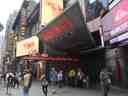
If you're looking for the Times Square-42nd Street station, just glance up for the giant, glowing “Subway” sign in flashy red letters, right beneath a futuristic canopy and surrounded by massive digital billboards-you really can’t miss it. Alright, you’re here in the beating heart of New York City’s underground: the Times Square-42nd Street station. Stand still for a second-close your eyes and try to imagine the chaos and excitement from over a century ago. In 1904, as autumn chilled the air and horses still clip-clopped through the streets above, workers were still scrambling to finish the ceilings and walls just one day before opening! Talk about cutting it close. Crowds once gathered here, not just for the promise of a smooth ride uptown, but to see a modern marvel that would change the city forever. Trains bursting into tunnels, lights twinkling like the skyline above-even back then, Times Square was never quiet. Times Square itself was called Longacre Square before all this subway business, but thanks to a little help from The New York Times-yes, the newspaper-the city renamed it. The subway station at Broadway and 42nd Street quickly took the new name, transforming the crossroads into the world-famous Times Square. Imagine trains rattling beneath your feet as history unfolded: in 1904, this very station opened as part of the city’s first subway line, and it was already swamped-third busiest in the city and the leader among local stops, welcoming 30,000 people a day. As the city boomed and spread, new lines branched out like roots under the city’s concrete skin: the Broadway-Seventh Avenue Line platforms in 1917, the Broadway Line platforms in 1918, and the Flushing Line, which let out a little sigh of relief in 1928 as crowds got some much-needed elbow room. The platforms extended, stairways twisted, new gleaming entrances appeared and disappeared over the decades. At one point in 1910, city officials decided to lengthen the platforms to cram in more people-who doesn’t love getting cozy on a rush hour train, right? By 1917, the whole original line was being transformed into part of the new “H system”-the subway’s clever way to serve more neighborhoods, more folks, and more dreams. This place had its share of drama, too-besides the daily ballet of tourists and commuters bumping shoulders, there was once a train wreck in 1928 that became the city’s second deadliest, a stark reminder that with great speed sometimes comes a bit too much excitement. Oh, and did you know? In 1940, a midnight ceremony right here marked the city’s takeover of the subway from private operators. The BMT’s president handed over subway property to the mayor-basically like passing the world’s most valuable baton at a track meet. Over time, Times Square-42nd Street station became the ultimate connector: IRT, BMT, IND-those alphabet soups on your subway map-came together here, allowing passengers to slip from line to line, layer upon layer, just like the city itself. The block-long tunnel to the Port Authority Bus Terminal opened right before Christmas in 1932, so you could even roll your suitcase inside and catch your next ride without hitting the cold. By the mid-20th century, the station matched the sparkle of the square upstairs. There were three-dimensional ads, tests with fancy new lights, and constant updates to entrances and stairways. The trains themselves stretched out, adding more cars, squeezing a little more magic and a lot more humanity into each rush hour. Of course, things got gritty in the second half of the last century-crime, grime, and crumbling tiles-but just as Times Square reinvented itself above ground, so did the station beneath it. Enormous renovations began in the 1990s and carried on into the 21st century, with widened corridors, new elevators, neon entrances, wild mosaics-even bathroom facilities patrolled by staff to keep things, let’s say, more pleasant than historical! By the time you’re hearing my voice, the Times Square-42nd Street station is not only the busiest in the entire system, feeding over 65 million people a year, it’s also a monument to adaptation, ambition, and a startling amount of underground teamwork. If you pause and let your senses run wild for a moment, you’ll feel the echoes of the city’s past-hustling, whispering, rumbling beneath Times Square, forever in motion. And hey, you never know-the next person you bump into here might have just as wild a story as Times Square itself. If you're keen on discovering more about the station layout, irt 42nd street shuttle platform or the bmt broadway line platforms, head down to the chat section and engage with me.
Ouvrir la page dédiée →To spot the New Amsterdam Theatre, just look up on your right and you’ll see a tall, ornate gray limestone and red brick building with a steep roof, bright posters, and a vertical…Lire plusAfficher moins
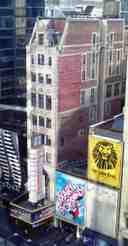
To spot the New Amsterdam Theatre, just look up on your right and you’ll see a tall, ornate gray limestone and red brick building with a steep roof, bright posters, and a vertical sign reading “AMSTERDAM” in glowing letters-right above a lively entrance crowned by a big, showy marquee. Now, step right up-if you were here in 1903, about this very spot, you’d be surrounded by a thunder of horse-drawn carriages and the shining lights of Manhattan’s newest jewel, the New Amsterdam Theatre. Imagine the smell of roasting chestnuts wafting down 42nd Street and the distant clatter of trolley tracks. The city was in a fever-moving its center of gravity from old Union Square up to Times Square, where everything was being built bigger, grander, and a little bit flashier. This theater was the original showstopper: designed with Beaux-Arts finesse and Art Nouveau flair by Herts & Tallant, it was a ten-story palace for stories that needed sky-high dreams. As you gaze at the facade, picture it how it once was, decked out with lush sculptures, garlands, and a magnificent arch so grand, it sparked a legal squabble with the neighbor next door. No kidding-the developer built the facade overnight, right under the city’s nose, just to sneak it in before a judge could say “stop!” Talk about drama before you even got to the stage. As you step closer, you’d have originally walked between marble columns into a lobby filled with Art Nouveau swirls-bronze elevator doors gleaming, walls lined with Shakespeare scenes, and mirrors sparkling with reflected candlelight. The upper walls were alive with terracotta friezes, while overhead, a stained-glass dome once colored the whole foyer in a shower of flowers and gold. But before you can treat yourself to a show, let’s dip into some ghostly gossip. Legend says the spirit of Olive Thomas, a 1920s silent film star, still lingers here-sometimes spotted on the stage, sometimes in the wings. If you catch a whiff of old perfume or hear soft footsteps echoing late at night, don’t worry: she’s said to bring luck to the actors, and a little mystery for the visitors. In its heyday, New Amsterdam was a playground for the stars-hosting Shakespearean drama, European operettas, and the famous Ziegfeld Follies. The Follies! Now that was a spectacle. Feathers, fanfares, some comedy, and a touch of scandalous charm. Will Rogers, Fanny Brice, even W.C. Fields performed here, and rumor has it a couple of chickens made their Broadway debut. (Not every act was a hit, but hey, nobody cried fowl.) Above you, on the roof, was the Aerial Gardens-a glass-crowned summer stage where cocktails flowed and the city sparkled below. When producer Florenz Ziegfeld took over, he added a dance floor and a balcony for a racier “Midnight Frolic” show, testing new talent and daring the city’s elite to stay up for the scandalously late curtain call. This wasn’t just a pretty place, either. When it opened, the New Amsterdam was a technological marvel: a steel skeleton, electric lifts, futuristic heating and ventilation (you could change the air in the auditorium in ten minutes!), and a stage so massive it could juggle elephants-or hydraulic lifts, at least. The balconies were cantilevered, giving every seat a perfect view and ensuring the only thing blocking your sightline was the person with the world’s tallest hat. Oh, but the times changed. In 1937, the theater switched from live drama to cinema-serving as a movie palace for fifty years, then falling into disrepair as 42nd Street grew grim. Yet just when the curtain seemed to fall for good, the Walt Disney Company arrived for a fairy-tale rescue. They restored the New Amsterdam’s glory with a dazzling touch-and reopened with The Lion King, then Mary Poppins, and Aladdin. Suddenly, where ghosts and faded memories once lingered, laughter, music, and magic filled the air again. So, whether you’re here for Mickey or for memories of the Follies, if you listen closely, the echoes of Broadway’s wildest dreams are still playing just beneath your feet. Now, let’s see what wonders await at our next stop! Exploring the realm of the site, design or the notable productions? Feel free to consult the chat section for additional information.
Ouvrir la page dédiée →Right ahead of you on West 43rd Street, just off Times Square, you’ll spot a grand stone facade bursting with ornate details, arched windows, and glowing lights under airy black…Lire plusAfficher moins
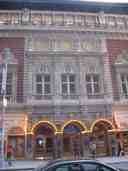
Right ahead of you on West 43rd Street, just off Times Square, you’ll spot a grand stone facade bursting with ornate details, arched windows, and glowing lights under airy black wrought-iron railings-it’s impossible to miss the word “Lyric” carved into the entrance, flanked by busts and intricate carvings. Now, take a moment and breathe it in-this isn’t just another Broadway theater! The Lyric Theatre, with those glorious entry arches shining in golden marquee lights, sits on the bones and the stories of two bygone giants: the Apollo Theatre and the original Lyric Theatre. Imagine walking these same streets in the 1920s-the Apollo dazzling with vaudeville shows, the Lyric ringing with laughter from acts like the Marx Brothers and Fred Astaire. Both venues stood side by side, then faded into movie houses before falling on tougher times, their glory dimmed by decades of neglect. Fast forward to the 1990s-the neighborhood is transforming, and the city hatches a wild idea: build a brand-new theater by stitching together treasured fragments of the old! Out go the rusty seats and tired walls, but in stay the original Lyric’s dramatic stone arch and the Apollo’s ornate proscenium, all carefully cut, stored, and cleaned like ancient relics with a Broadway soul. The architects-imagine them as the superheroes of history-managed to build up from scratch while saving these precious details. The result? The Lyric we see today, which squashed two century-old theaters into one showstopper, brimming with character and secrets. Step up closer and look at the upper facade: see those round oculi above the windows? Each one contains faces of ancient gods-Apollo, Athena, Hermes-watching over every new show and crowd. Gazing up, you’ll catch lions, busts of legendary composers, floral wreaths, and a copper cornice gleaming like a crown. Walk under the arches, and the lobby’s elliptical rotunda stretches in marble splendor overhead-like a palace for playgoers. There’s even a golden medallion of Zeus above the staircase, just in case the thundering applause ever gets too much! Fancy a secret? Below your feet is a hidden lounge once open only to the theatrical elite, its marble flickering quietly as crowds jostled above. But this building’s story is filled with the kind of drama you’d expect from the stage. When it opened as the Ford Center for the Performing Arts in the late ’90s, it was the hottest ticket in town, with 1,821 seats and dreams as big as the marquee. The first show, Ragtime, set everyone’s hearts racing. But just as quickly, disaster struck! The owner, Livent, went bankrupt, and this beauty changed hands more often than a Broadway playbill at intermission-each new name brought a new chapter: Hilton Theatre, Foxwoods Theatre, and finally back to Lyric. They say the number of names is nearly as long as the lines for the restroom at intermission. The Lyric’s generous stage, soaring rigging system, and palatial backstage made it home to mighty musicals-some soared, some spluttered. The huge auditorium was sometimes “too big to fill,” making producers sweat more than their actors! There were wild years, like when Spider-Man: Turn Off the Dark moved in, swinging, crawling, and crashing through preview after preview, battling technical hitches and real-life gravity. But the Lyric always bounced back, a survivor blessed-and sometimes cursed-by its sheer size and spectacle. And those walls? They’ve seen it all: roaring laughter, whispered deals, glamorous opening nights, and nervy renovations. Empire builders, stage magicians, politicians, and tap dancers-everyone’s left a mark. The city once debated whether it was “Disneyland on 42nd Street,” but if you listen closely, you might just hear echoes of past applause vibrating against those gilded ceilings. Some say the ghosts of old performers still peek down from the boxes, ready to give you a wink or a standing ovation-so behave yourself! So give a nod to the Lyric, born from two theaters, raised by a city, and kept alive by the energy of Times Square and the dreams of Broadway. Whether you’re here for a blockbuster or just passing by, there’s drama in every stone, and tonight, you’re part of the story. Intrigued by the site, design or the stage productions? Explore further by joining me in the chat section below.
Ouvrir la page dédiée →
Afficher 11 arrêts de plusAfficher moins d'arrêtsexpand_moreexpand_less
To spot the Port Authority Bus Terminal, look for a massive blocky building on the corner of 42nd Street and Eighth Avenue, clad in a striking grid of metal beams and mesh that…Lire plusAfficher moins
To spot the Port Authority Bus Terminal, look for a massive blocky building on the corner of 42nd Street and Eighth Avenue, clad in a striking grid of metal beams and mesh that wraps around the exterior, just across the busy intersection and surrounded by crowds, taxis, and neon lights. Now, let me whisk you back in time to one of New York’s most intense urban battlegrounds-not a place of soldiers, but of buses, travelers, and endlessly sticky pretzel carts. Welcome to the Port Authority Bus Terminal! If you listen closely, you might just hear the sound of 8,000 buses and 225,000 people shuffling, rolling suitcases, and the distant, slightly impatient sigh of a commuter who’s missed their bus by ten seconds. When the Port Authority opened its doors in 1950, it was the answer to chaotic streets full of private bus stations, hotel lobbies doubling as bus depots, and enough honking to make any pigeon twitchy. Picture Manhattan in the early 20th century: buses barreled through the Lincoln Tunnel, one after another, and spilled onto Midtown’s veins. The city finally said, “Enough is enough-let’s put all these buses in one place before they run us over!” And so, the grand terminal was built, at first all sleek International Style, standing as a four-story marvel with shops and even a 300-seat newsreel theater. That’s right, you could miss your bus and catch a movie instead! But, oh, how the crowds grew. For commuters from New Jersey, this terminal became a lifeline into the city-that is, until rush hour struck and you realized you could knit half a scarf just waiting for your ride. Over the years, the building grew too. By 1979, a new northern annex spread its wings to 42nd Street, complete with the bold, X-braced architecture you see today. Do those giant steel trusses remind you of a fortress? It’s fitting. Inside, 223 gates await, waiting to shuffle in wave after wave of passengers. Of course, the Port Authority Bus Terminal saw its share of drama. In its rougher days, it was notorious-a haunt for night owls, hustlers, and people who somehow treated the waiting area like a luxury bedroom. In the seventies, the city tried everything from glass enclosures with rubber trees (can you picture rubber trees next to schedules for Scranton?) to a coffeehouse just for elderly regulars, hoping to keep the atmosphere friendly. For most of us, the terminal is a mix of sights, sounds, and smells: food courts sling bagels and coffee, strangers dash for departing buses, and the women’s restroom upstairs is a legendary spot for mirror touch-ups-rumor has it, its lighting is better than Broadway itself! If you’re in need of a little art or inspiration while you wait, keep an eye out for “The Commuters,” a sculpture of three tired bus passengers forever waiting for a bus that may or may not ever come. Outside, you’ll find comedian Jackie Gleason immortalized as Ralph Kramden, the city’s most famous fictional bus driver. Try not to shout, “To the moon, Alice!” too loudly-he doesn’t answer back. Yet, this place is also a technological wonder. It now boasts the world’s largest media mesh-an LED-lit skin that wraps the building and shifts with colors and images, especially impressive at night if you fancy a light show with your commute. And if you’re a fan of bowling, they even put a bowling alley on the second floor. Strikes happen everywhere in New York, but here you also get fries. And the Port Authority’s story is far from over. After years of expansion, controversies over crime and crowding, and more plans and delays than you can count, the next generation of this transit behemoth is on the horizon. Imagine this spot in a decade: new glass atriums, urban parks, soaring towers, and smarter, greener bus staging. But for now, as you gaze up at this unapologetically blunt block of steel and glass, know that every inch has a story-a place where the city’s heartbeat is measured in departing engines, commuter footsteps, and that universal question: “Does this bus go to Hoboken?” So, take a moment. Breathe in the aroma of city air (with just a hint of pretzel), watch the sea of travelers pour in and out, and know that you’re standing next to the busiest bus terminal in the world-where the stories of millions begin, end, and pause for just a New York minute. Want to explore the art and advertising, configuration or the companies in more depth? Join me in the chat section for a detailed discussion.
Ouvrir la page dédiée →Look up ahead-see that striking blue-green skyscraper with horizontal stripes and the big “McGraw-Hill” marquee at the top? That’s 330 West 42nd Street, standing out even among…Lire plusAfficher moins
Look up ahead-see that striking blue-green skyscraper with horizontal stripes and the big “McGraw-Hill” marquee at the top? That’s 330 West 42nd Street, standing out even among the glass towers around it. Now, if you think this building looks like an art project got into a wrestling match with a cruise ship and won, you’re not alone. Back when it first rose above Hell’s Kitchen in the depths of the Great Depression, people weren’t sure what to make of it either! Imagine the year 1931: Most buildings were stone, vertical, and serious-330 West 42nd Street arrives on the scene showing off its bold, sculpted setbacks, and a shimmering façade of blue-green terracotta tiles, like it had crashed the party dressed for Mardi Gras. Raymond Hood, the architect-not ever one for the dull-mixed Art Deco glamour with the sleek lines of International Style and Art Moderne, producing a structure that looked so modern, it confused the locals and ticked off a few critics. One wag called it the “green monster.” The building’s color even caused a bit of drama at the unveiling; James McGraw Jr., whose company paid for the thing, wasn’t thrilled his skyscraper didn’t come in “classic gray.” Some nicknamed it “the Green Kremlin,” others “the Ishtar Gate,” but whether you love or hate it, you definitely can’t miss it. When it opened, this building was the headquarters of the mighty McGraw-Hill Companies-book-publishing titans with ambitions as tall as their new headquarters. When McGraw-Hill moved in, the upper floors were filled with editors, executives, and probably enough coffee to float a battleship. The lower floors throbbed with the sound and heat of printing presses. In the original lobby, elegant green and blue panels glinted under the light, elevator attendants wore green uniforms, and there was even a bank and a bookstore right off the passageway-a true New York hub! The smells of ink, paper, and ambition must have mixed in the air as the publishing empire churned out educational tomes and technical manuals for a fast-modernizing country. In the early years, building designers boasted how its blue-green tiles always matched the sky’s mood-a neat idea until a storm rolled in. This building was controversial because, unlike the uptight vertical towers nearby, it stretches itself wide, emphasizing horizontal lines. Raymond Hood predicted a future filled with colorful New York towers, but the city would hold out for another sixty years before all those postmodern rains brought a true rainbow. And get this: when Marvel Comics was just a wee startup back in 1939, its founder had an office here! The next time you think of superheroes, you might picture them scaling this teal behemoth instead of those more traditional gray giants. The years rolled by, and the neighborhood struggled-decay crept in, and in the 1970s, McGraw-Hill couldn’t stand the heat anymore and left for swankier digs. The giant “McGraw-Hill” letters even got swapped out for “GHI” when Group Health Insurance took over. The building limped along, sometimes half empty, but always hanging on. During the blacked-out, crime-ridden 1970s, rents were so cheap you could rent an office here AND buy yourself a Superman cape. The base of the building even turned into a popular music venue, with bands shaking the old lobby. Landmark status arrived in 1979, and soon a flurry of owners, tenants, and plans circled like hungry pigeons in Times Square. By the 1980s, the place was swinging back to life, getting a big makeover-and, would you believe, even an art installation called “Boomerang” was once perched 300 feet high. In the 21st century, 330 West 42nd Street’s story only gets more interesting. Wave after wave of renovations buffed its green tiles, new technology filled its core, and some of its upper floors are now sleek apartments boasting jaw-dropping views. The pandemic, of course, changed everything-suddenly, fresh air mattered more than ever, so brand-new filtration systems and terraces were added. After a little tussle with preservationists who tried to save its original lobby, a dazzling new one was built, and old panels ended up in storage. Architectural critics now call this place a rare gem-a blend of realism and razzle-dazzle, forward-thinking but grounded, a monument to working New Yorkers and big dreamers alike. So, as you look up at those glimmering green walls, imagine the decades of ambition, art, and controversy-this is more than glass, tile, and steel. Welcome to the skyscraper that refused to blend in. If New York had a contest for Most Spirited Comeback, you’re looking at the champion!
Ouvrir la page dédiée →To spot Manhattan Plaza, just look up for two towering brown brick residential buildings with rows of balconies and a cluster of shops at street level-they fill almost the whole…Lire plusAfficher moins
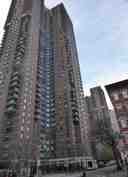
To spot Manhattan Plaza, just look up for two towering brown brick residential buildings with rows of balconies and a cluster of shops at street level-they fill almost the whole block between 9th and 10th Avenues, so you really can’t miss them rising high above the street. You’re now standing in front of something that, from the outside, might seem just like another colossal city apartment complex, but let me tell you-Manhattan Plaza has a personality as big and bold as any Broadway star! Imagine, if you will, it’s 1977: New York is tough, especially this neighborhood-known as Hell’s Kitchen-famous back then for being a bit on the wild and woolly side. The Times Square area was packed with neon, adult stores, and not a Broadway star in sight. It was a place your mother might tell you to walk quickly through and hold your wallet tight! Now, picture a construction site smack in the middle of this chaos: two giant towers planned for middle and upper-middle class tenants, with fancy townhouses, a health club, and a parking garage-a glimmering, marble-clad dream that quickly turned sour. Why? Well, New York hit a financial crisis, the city was so broke it could only fund part of the project, and suddenly, nobody wanted to move into these new apartments. The city stared at a half-built promise and realized it desperately needed a miracle-cue the enterprising real estate developer Daniel Rose, who, as the story goes, must have thought, “Why write a check when you can write history?” Rose looked around, searching for a clever way to fill these towers. He needed people the neighborhood would accept-folks with spirit, creativity, and maybe an occasional tendency to sing show tunes in the elevator. His “aha!” moment? Fill the place with artists. Actors, musicians, backstage crew, dancers, directors, you name it-all the people who keep the performing arts alive. This wasn’t just about putting on a show; it was about saving the investment, revitalizing the neighborhood, and breathing new life into a faded part of town. It had never been tried before. City officials, at first, thought it was an odd idea-can you imagine telling City Hall you only want tenants who can tap dance or recite Shakespeare? But the performing arts unions loved it, the city eventually loved it, and even the neighbors-initially worried about trouble-gradually warmed up when they saw reports that artists might be struggling for rent, but they’re hardly the kind to cause mayhem on the block (unless you count epic karaoke singalongs). When Manhattan Plaza finally opened in 1977, it was like opening night at a Broadway show. The mayor cut the ribbon, 70% of the apartments went to artists, 15% to local elderly and handicapped residents, and 15% to neighborhood families living in tough housing. Within a year, there was a 3,000-name waiting list-seems everyone wanted an apartment with a side order of jazz hands. But the story doesn’t end with happy murals and curtain calls. The building became a tight-knit community, the kind of place where the doorman probably knew your favorite monologue. Rev. Rodney Kirk, the first Director of Manhattan Plaza, was a guiding force-kind, compassionate, and beloved. When the AIDS crisis hit in the 1980s, Manhattan Plaza was devastated. Many in the performing arts community lost friends and loved ones, and the building became one of the hardest hit in the country. But here’s the real miracle: residents, volunteers, and health professionals rallied, creating support networks and services to look after each other when the world outside didn’t know what to do. When the city healed, Manhattan Plaza blossomed again. The stars were never far-the Laurie Beechman Theatre downstairs hosted more one-act plays than you could count, the West Bank Cafe buzzed with budding playwrights and even a young Bruce Willis tended bar there before his big break. Kids played in one of the city’s few high-tech, interactive playgrounds-complete with virtual games and an electronic setting, donated by a football star! The elderly aged gracefully, cared for by a community that always looked out for its own. So the next time you see a Broadway show, remember: there’s a good chance the leading actor, the violinist in the pit, or the stage manager once called Manhattan Plaza home. In the middle of Hell’s Kitchen, these two towers didn’t just house people-they sheltered dreams, dramas, and a thousand stories, each worthy of a standing ovation.
Ouvrir la page dédiée →To spot the Al Hirschfeld Theatre, just look for the wide, fortress-like red brick facade with its row of tall arches resting on sturdy stone columns and a sparkling marquee…Lire plusAfficher moins
To spot the Al Hirschfeld Theatre, just look for the wide, fortress-like red brick facade with its row of tall arches resting on sturdy stone columns and a sparkling marquee shouting out “Moulin Rouge!” in lights-it’s impossible to miss right here on 45th Street, just west of the buzzing heart of Broadway. Alright, let’s step right up into the dazzling and dramatic world of the Al Hirschfeld Theatre! It almost looks like a palace plucked from another time, doesn’t it? That’s because when it opened in 1924-back when people were still learning the Charleston-its architect, G. Albert Lansburgh, went wild with Moorish and Byzantine flair. Imagine it: the “Roaring Twenties,” jazz floating through Manhattan, women in flapper dresses, the city alive with the promise of excitement. Now picture Martin Beck, a vaudeville impresario with a twinkle in his eye, deciding he’d outdo all the other big theater owners by building his own venue right here-without owing a cent to anyone. That’s right, when its lights first flickered on, this theater was the only one in New York City built without a mortgage. Oh, to be so bold! The front of the building is a show all by itself. The eleven mighty arches at street level, the decorative mosaic of cast-stone columns-if they could talk, they’d spill secrets from nearly a century’s worth of drama, comedy, heartbreak, and applause. Even the stone at your feet knows how to soak up a standing ovation. The central arches welcome you into a tucked-back ticket lobby, and if you craned your neck up, you’d see two more stories of arched brick windows and a quirky, classic marquee jutting out over the sidewalk, all crowned by a neon sign that dazzles after dark. Walk inside (imagine it!), and you’d step into a world even more glittering: marble, wrought iron, deep vaults, and-back in the day-a color scheme out of a jewelry box: red, blue, gold, orange. The walls were adorned as if the sultans of old and Broadway’s brightest stars had a decorating contest. Muralist Albert Herter loaded the lobbies and lounges with Byzantine patterns, groin-vaulted ceilings, and medieval-themed murals, making even a trip to the restroom feel like a royal procession. And above the auditorium: a multicolored dome floating over an octagonal canopy, its light shimmering on a sea of up to 1,404 rosy-red seats, all waiting for the curtain to rise. The stories crammed into these walls could fill a dozen showbiz memoirs. Beck’s theatre opened with Madame Pompadour in 1924 and quickly became the place for brave new productions: comedies, tragedies, musicals-with theater legends strutting the boards before they became household names. There were years when the Theatre Guild took over, premiering plays by Eugene O’Neill (yes, that O’Neill!), while the Abbey Irish Players sailed over from Dublin to debut their classics. Imagine the tension backstage the night Katharine Hepburn performed “The Lake” here... or the thunderous applause for David Wayne in “Teahouse of the August Moon,” which ran for over 1,000 performances! The 1960s brought in “Bye Bye Birdie” and “Milk and Honey,” packing the house with snapping fingers and sweet melodies. In the ‘70s the theater saw a few (bless their hearts) famously short runs, but all was forgiven when Dracula swooped in for nearly 1,000 eerie, applause-filled nights. The 1980s were a whirlwind of stars-Elizabeth Taylor, Cher, Angela Lansbury, Liza Minnelli-lighting up the stage, while out in the audience, the Landmark Preservation Commission was quietly taking notes. In 1987, they decided the Al Hirschfeld (then still the Martin Beck) was simply too beautiful to ever risk the wrecking ball-so both its inside and outside became NYC landmarks. Cue dramatic music! The new millennium gave the place an even more magical twist. In 2003, the theater was renamed for legendary caricaturist Al Hirschfeld, the only Broadway house ever named for a visual artist. They even put up a brand-new marquee decked out with Hirschfeld’s swirly self-portrait-although the first version had such red neon “ink,” people joked it looked like Al was using his own blood. Yikes! It’s blue now, thankfully. Inside, the mezzanine lounge grew a collection of Hirschfeld’s joyful, squiggly Broadway drawings. To this day, the Al Hirschfeld keeps packing audiences in for legendary productions-recently, it’s been all razzle-dazzle with “Moulin Rouge! The Musical,” and who knows? The next theater legend could be sitting right next to you, dreaming up a show. This palace of dreams has seen it all: roaring debuts, heart-tugging finales, and a century’s worth of theatrical magic-and if these arches could whisper, they’d tell you that the real show is just getting started. For a more comprehensive understanding of the site, design or the notable productions, engage with me in the chat section below.
Ouvrir la page dédiée →To spot the Majestic Theatre, just look up for the wide golden-brick and terracotta facade with dramatic wrought-iron fire-escape galleries and its grand “Majestic” sign glowing…Lire plusAfficher moins
To spot the Majestic Theatre, just look up for the wide golden-brick and terracotta facade with dramatic wrought-iron fire-escape galleries and its grand “Majestic” sign glowing in lights right above a bustling entrance on 44th Street. Welcome to the legendary Majestic Theatre, where legends sing, chandeliers drop (safely-most of the time), and the air still hums with the power of Broadway’s past! Take a deep breath as you stand outside what looks like an old palace snuggled between glassy towers, with its golden bricks warmed by the sun and Spanish-style galleries curling above the bright marquee. Imagine: it’s 1927. The street is alive with the blare of car horns and jazz spilling from passing radios, and Irwin Chanin, a real estate dreamer with the heart of a showman, is about to unveil his latest masterpiece. Designed by Herbert J. Krapp, this Spanish-style fortress was meant to "democratize" theater-no balcony dwellers forced to climb endless stairs and sneak in the side. Even the audience seating was designed to say, “Everyone gets a good view,” which was pretty radical in its day! Chanin’s creation didn’t just stand out for its size (with nearly 1,700 seats over two grand levels) or its fiery exterior decorated in terracotta and deep brown stone, but for the sense of spectacle it promised inside. The auditorium, with its icy gold and ivory glow, steep sloping seats, and a ceiling that soars into a vast, elaborate plaster dome, instantly transported audiences to another world. You could almost feel the velvet under your fingertips and smell the wood polish as the orchestra tuned up. The Majestic’s early years were a bit of a “theatrical rollercoaster.” It had its share of flops (hey, even boxers and silent film stars couldn’t save every show), but soon it became the sparkling home for musical blockbusters: Carousel, South Pacific, The Music Man, and Camelot all paraded through its doors, making the street outside buzz with fans hoping to spot Julie Andrews or hear the booming last note of “76 Trombones.” When The Wiz arrived in the 1970s, Oz came alive with a cast glittering in gold and soul, and the applause was so loud you’d swear the walls shook! Of course, there’s one ghost who loved this place more than any-The Phantom of the Opera. The Majestic became synonymous with mysterious masks and crashing chandeliers, hosting Phantom for a world-record-smashing 35 years and almost 14,000 performances. The Shuberts, the legendary theater family, even had to reinforce the roof and slice open the famous proscenium arch just for the show’s epic special effects! For a moment, imagine the hush as the opening organ chords ring out and that chandelier begins to tremble above the crowd. Don’t worry, the technology’s come a long way since the 1920s! The Majestic has weathered many storms. From bankruptcies during the Great Depression to fights over landmark status in the ’80s, to the eerie silence of the pandemic in 2020-when the neon “Majestic” sign stood glowing on a deserted street, like the world’s bravest nightlight-it always bounces back, ready for the next sensation. In fact, the building itself is a certified New York City landmark, both outside and in. So, as you stand here, surrounded by the biggest family of Broadway theaters on Earth and with stars practically baked into the bricks, imagine who stood in your very spot: aspiring playwrights, tap-dancing chorus lines on a lunch break, tourists clutching Phantom tickets, and maybe (just maybe) a tiny hint of powder from that famous chandelier. The story of Broadway is written right across these stones. And remember-no matter what show’s on the marquee, the Majestic will always guarantee an entrance fit for a star. Fascinated by the site, design or the notable productions? Let's chat about it
Ouvrir la page dédiée →To spot the Hayes Theater, just look for a charming red-brick building with white window shutters, old-fashioned columns, and a marquee on the far left of West 44th Street-it’s…Lire plusAfficher moins
To spot the Hayes Theater, just look for a charming red-brick building with white window shutters, old-fashioned columns, and a marquee on the far left of West 44th Street-it’s tucked between taller neighbors but its orange “Hayes Theater” sign stands out like a Broadway actor in a sea of extras. Welcome to the Hayes Theater! That’s right, you’re standing outside the smallest Broadway theater, but what it lacks in size it more than makes up for in dramatic history and spirit. Imagine it’s 1912: the street smells like freshly baked bread and you hear the clop of horse hooves as Winthrop Ames, a visionary with a dream, opens this very spot as the Little Theatre-just 299 seats and designed to make every guest feel like they’ve been invited into an old colonial home for an evening of groundbreaking drama. The facade you see today is dressed in red brick and limestone, with white sash windows that almost wink at you from above. Its main entrance isn’t tucked in the center, but way over to the left, inviting curious playgoers beneath a friendly brick arch. Cast your eyes upward and you’ll spot “The Little Theatre MCMXII” still engraved like a memory, with carved dancers frozen mid-leap above the columns. Ames wanted to bring new and daring plays to Manhattan, but reality soon stepped in-with only 299 seats, even a packed house meant thin profits. So, just eight years later, the auditorium transformed: legendary theater architect Herbert J. Krapp added the balcony and gave us the double-decker view still enjoyed today. But here’s where it gets fun! In the roaring twenties, the Little Theatre was home to hits and misses, where stories as varied as “Snow White and the Seven Dwarfs” and “A Pair of Silk Stockings” played to eager crowds. Still, even with all those creative risks, the theater had yet to find lasting stability. By 1931, the New York Times bought the place-not to host shows, but with the serious plan of demolishing it for a newspaper annex exit. Talk about a dramatic twist! Thankfully, the little theater that could kept dodging the wrecking ball, stubbornly putting on plays, except for a while in the 1940s when it served as a conference hall after the mayor gave a speech inside about air-raid preparations. Picture it: the rush of anxious whispers, folding chairs squeaking, as people came for book conferences and recitals, hoping for a bit of art or guidance in a tough world. Fast forward to the 1950s, and this place starts picking up a broadcast buzz. ABC turns the house into a TV and radio studio, the seats filled not with playbills but the blinking red lights of live cameras and the anticipation of millions tuning in. Dick Clark hosted “The Dick Clark Show” here, and if these walls could talk, they’d probably hum a catchy jingle. In the swinging sixties and seventies, the theater played musical chairs with identities-legitimate plays, children’s shows, dance companies from Israel, and even, for a scandalous blink, a venue for adult films (ooh la la, but don’t worry, that didn’t last). The magic of Broadway returned in 1977, anchored by the Tony-winning “Gemini”-and from there, the little house grew up to become a real legend. In 1983, it took the name Helen Hayes, in honor of the beloved “First Lady of American Theatre.” Why this building? She wanted her name on something small and personal, a place where audience and actor could share the same breath. Today, the Hayes Theater is run by Second Stage, nurturing bold, new works and proving that big stories don’t need big buildings. Everywhere you look, you can feel the texture of its past: the carved columns, the ironwork balconies that once held potted plants, the Adam-style plasterwork inside. Sometimes, if you listen closely around spring showtimes, you might even hear the ghostly echo of vintage applause -or maybe that’s just a New Yorker being extra enthusiastic. So, next time you pass by this small but mighty red-brick gem, remember: it’s survived near-demolition, identity crises, and even a brief stint in risqué cinema, only to stand here telling stories, one standing ovation at a time. Now, are you ready to make some theater memories of your own? Interested in knowing more about the site, design or the notable productions
Ouvrir la page dédiée →If you look to the north side of 44th Street-right at the curve where Shubert Alley meets the street-you’ll spot the Shubert Theatre by its white brick façade layered with ornate…Lire plusAfficher moins
If you look to the north side of 44th Street-right at the curve where Shubert Alley meets the street-you’ll spot the Shubert Theatre by its white brick façade layered with ornate terracotta, three grand arches, and its dazzling marquee wrapped around the corner. As you stand here beneath those glowing lights, take a long breath-you're smelling more than city air! There’s the legacy of over a century of Broadway magic floating right where you are. The Shubert Theatre opened up shop in 1913 with a literal showstopper: a revival of Hamlet. Imagine the excitement-horse-drawn carriages clattering by, theatergoers in their finest, and actors nervous backstage, palms sweating under period costumes. This theater was built by the Shubert brothers-Lee and J. J.-in memory of their brother Sam, who tragically died young in a train accident. To them, making the biggest, brightest new theater wasn’t just business…it was a tribute, like a standing ovation in stone and plaster. That’s probably why there’s so much love in the details. Look up-yes, it’s okay, nobody will judge! Those swirling sgraffito decorations in the stucco, the carved terracotta masks and mythical creatures, the arches-it’s a parade of Italian Renaissance drama before you even step inside. Here’s a funny thing: the Shuberts, always thinking big, wanted their name on everything. They didn’t just build this place-they filled the whole block with theaters! This spot is surrounded on all sides by drama and comedy-seven theaters in all. It’s no wonder people say this is the heartbeat of Broadway. The Shubert is huge-over 1,450 seats on three levels, from the plush orchestra to the high-flying balcony. Legend has it that halfway up, you’re close enough to heaven to hear the celestial applause! And oh, the shows it’s seen! From the long legs and jazz hands of A Chorus Line, to the riotous wit of Spamalot, to the sparkle of Matilda, the Shubert has hosted generations of standing ovations. The inside will knock your socks off-gold, green, and amethyst painted everywhere, with mythological murals on the walls and ceilings. Look for the female figures with musical instruments, masks inspired by ancient Minoans, and the domed lobby ceiling decked with laurel leaves. Even the proscenium arch framing the stage is fit for the gods, surrounded by muses of Drama and Music, painted to inspire anyone who passes under. Yet the real secrets were above it all. Upstairs, the Shuberts kept their offices-Lee with his grand, circular suite up front, and J. J.-well, he got the rear rooms. Brothers had a complicated relationship: big deals, bigger squabbles, and plenty of late-night plotting. At one point, Lee called the offices “my offices,” making it very clear who was the head honcho. But the excitement wasn’t just in the offices or even on the stage. There’s always been electricity in the air here, from the star power of Fred Astaire dancing on the boards to Katharine Hepburn saving the Theatre Guild from bankruptcy, to the glitz and cha-cha-cha of countless flops and hits. Sometimes, plays ran for a year-other times, for a heartbeat. You know Broadway: one day, you’re center stage, and the next… well, you just hope the critics had dinner before they saw the show. And let’s not forget the humbler beginnings! Back in the 1910s, this whole block was mostly houses. The Shubert brothers replaced them with these grand theaters, carving out Shubert Alley alongside as both a fire escape and a secret passage for stars and crew. That alley was so important, some say the real drama sometimes happened there-quick costume changes, late arrivals, even a few rushes from eager fans hoping for a glimpse or an autograph. Through changing times-roaring ‘20s jazz, Depression gloom, wartime hopes, neon ‘70s, and into the tech-filled present-the Shubert Theatre has survived as a crown jewel of the “Great White Way.” Its facade and interior are official New York City landmarks, so don’t worry, it’s not going anywhere soon. So next time you pass beneath those arches, remember-you’re sharing a sidewalk with some of the greatest actors, dancers, and dreamers in the city’s history. And if you ever hear a faint echo of applause as the doors swing open, just wink back at the ghosts of Broadway past-they’re probably giving you a standing ovation for just showing up. If you're keen on discovering more about the site, design or the notable productions, head down to the chat section and engage with me.
Ouvrir la page dédiée →Look for a buff-brick facade with a curved corner and a glowing neon “Schoenfeld” sign stretching vertically above the entrance; the building is right ahead, just to the east of…Lire plusAfficher moins
Look for a buff-brick facade with a curved corner and a glowing neon “Schoenfeld” sign stretching vertically above the entrance; the building is right ahead, just to the east of the bustling theater crowds on 45th Street. Alright, theater fans and wanderers! As you stand here in the lively heart of Broadway, you’re facing the legendary Gerald Schoenfeld Theatre-a true slice of New York’s dramatic history, and probably one of the fanciest places you’ll ever see with fire escape galleries! If you glance up, the curved corner of the building points you right toward Broadway, like it’s inviting you in for another night of magic. Now, picture this street more than a century ago: horse-drawn carriages rolling by, street lamps flickering, and the Shubert brothers-Broadway’s original power duo-dreaming big. It’s 1917, and Herbert J. Krapp, an architect just getting started on his own, is hard at work on two matching theaters. The Plymouth (as this place was called back then) is all about quiet confidence, with a facade of buff brick and terracotta instead of the glitter and gold you see on some older theaters nearby. Simplicity was the name of the game, except right here at the curved corner, with its ornate crest-a little architectural wink to tell you you’re somewhere special. Step closer and you’ll find the ground floor lined with glass-and-bronze doors, display boxes flashing today’s big hits, and a bright marquee lighting up the sidewalk. In fact, the Schoenfeld has literally seen it all. Want a peek inside your mind? Imagine plush seats in brown, blue, and gold, a ceiling elegantly decorated in Adam style, and chandeliers swinging gently above as the orchestra tunes up. That’s the atmosphere audiences have enjoyed for over a hundred years. This theater opened with the aptly named “A Successful Calamity”-a comedy, of course. And like any great stage, it’s seen a parade of legends flow through its doors: John Barrymore, Walter Hampden, Tallulah Bankhead, and all the biggest talents of Broadway’s golden ages. The 1920s and ‘30s brought fast-talking comedies, wartime dramas, Shakespeare, and even a family comedy or two. Nearby alleys buzzed with hopeful actors and the jingle of playbills, while this block of 45th Street became the single busiest patch of Broadway anywhere. Now, don’t be fooled by this theater’s calm exterior-it’s got a wild side! In the roaring ‘30s and ‘40s, shows hopped from one theater to another as quick as a dance number. The building itself even went into receivership during the Great Depression, but nothing could keep these doors closed for long. From Spencer Tracy’s powerful performances to the high-energy musicals of the ‘70s like “Ain’t Misbehavin’,” this was-quite literally-the place where legends were made. And speaking of legends, this theater even had its brush with legal drama when New York City declared both its facade and interior official landmarks. The Shubert family took that all the way to the Supreme Court! But Broadway drama isn’t just for the stage. If these walls could talk, they’d gossip about catwalks built for epic eight-hour productions and the buzz of the “Come From Away” cast behind the curtain (trust me, the backstage pizza orders are epic!). For decades, this house has balanced dazzling musicals, deep dramas, and Tony-winning comedies-sometimes in the same season. And through it, the design stayed timeless: curved balconies, elegant box seats, and ceilings decorated with embossed fauns, vines, and sphinxes. It’s easy to lose yourself in the beauty of it all-just don’t trip in the lobby while staring, I hear it happens more than you think. In 2005, the theater was renamed for Gerald Schoenfeld, the Shubert Organization’s long-running president, bringing a modern legend to the marquee. Today, you’re not just looking at a bit of Broadway-you’re part of a living story that’s survived blackouts, lawsuits, and even a pandemic, just so the curtain could rise again. So, take a deep breath and imagine the vibrant swirl of lights, the echo of a standing ovation, and the whispered excitement of theatergoers waiting for the show to start. You’re standing at the crossroads of New York’s dreams-so who knows, maybe your story is the next to walk through those doors. Curious about the site, design or the notable productions? Don't hesitate to reach out in the chat section for additional details.
Ouvrir la page dédiée →Here’s how you’ll spot this historic site: look for the bustling corner where a fire truck from Ladder Company 4 is parked, and a group of firefighters stands alert in front of…Lire plusAfficher moins
Here’s how you’ll spot this historic site: look for the bustling corner where a fire truck from Ladder Company 4 is parked, and a group of firefighters stands alert in front of one of Times Square’s gleaming glass towers, just beside a sidewalk lined with busy mailboxes and street vendors-a snapshot of New York City’s pulsing energy frozen at a moment that changed it forever. Now let’s step back to the evening of May 1st, 2010, when Times Square was buzzing with tourists and the lights of Broadway shows-The Lion King was playing just nearby, so you can imagine a crowd packed shoulder-to-shoulder, street performers entertaining, vendors selling their hats and flags, noisy taxis weaving through the chaos. It was just after 6:30 p.m. when a blue Nissan Pathfinder, seen in the grainy footage of a hundred security cameras, slowly rolled down the block, hazard lights flashing in the twilight. The driver, Faisal Shahzad, parked at the very corner near where you now stand, got out like he was just another New Yorker in a hurry, and disappeared into the crowd, leaving the car’s engine running. Which might sound like the setup to a crime thriller, but this one is no work of fiction. Within minutes, smoke started wafting out from the Pathfinder’s rear vents. Street vendors-those unsung heroes with their eyes on everything-spotted the smoke and the strange popping of firecrackers inside. "That’s not a customer," they must’ve thought, "and that’s not how you advertise merchandise." They quickly found an NYPD mounted officer, who peered in, caught sight of smoke, canisters, and the unmistakable whiff of gunpowder, and called for backup. You know when New York’s finest show up with fire trucks and bomb squads, something’s seriously out of the ordinary-this was one of those nights. Within minutes, police, firefighters, and the bomb squad had barricaded the entire stretch around you-seven massive city blocks emptied out in a matter of moments, Broadway ticket holders, hotel guests, everyone whisked away to safety. But the drama was just beginning: bomb disposal teams, armed with remote-controlled robots and nerves of steel, broke the window and peered into a rolling chemistry lab of chaos. There were propane tanks, gasoline canisters, a tangled nest of wires, over a hundred firecrackers, fertilizer packed in plastic bags, and two alarm clocks, ticking away like a bad punchline. Luckily, the concoction, though frightening, fizzled-a malfunction meant the ignition sparked only enough to cause a scare and a lot of smoke, but not the massive explosion intended. But get this: had circumstances gone differently, you might not be standing here peacefully listening to a tour guide with questionable jokes. According to experts, the fireball could have shattered these glass towers and sent shrapnel slicing through crowds and storefronts-a disaster averted thanks to vendors just doing their jobs and a bomb squad with nerves of steel. The investigation that followed was a race against time, and it read like a detective’s greatest hits. The Nissan’s VIN had been scratched out, the license plates stolen, but one detail gave the plot away-under the hood, investigators found a hidden serial number. Phone calls to and from Pakistan, a cash purchase from Craigslist, burner phones, and security footage helped police zero in on Faisal Shahzad, a recently naturalized American citizen from Connecticut. And get this: while police were hunting for him, Shahzad had already boarded a flight to Dubai at JFK, seatbelt fastened, plane about to taxi! But the Feds caught him just in time, dragging him off the plane, a full two days after the failed bombing attempt. The story only gets wilder. Shahzad, who’d lived the American dream-a family, jobs in finance, a suburban home-had spent months in Pakistan training with the Taliban, plotting against the very streets where he’d once walked freely. Even after being interrogated, he confessed outright, boasting that more attacks could follow. The device he made? As one fireworks salesman later said, “It wouldn’t hurt a watermelon”-thankfully! The fertilizer in the car couldn’t explode, the firecrackers barely fizzled, and the intended carnage was reduced to a scare and a story for the ages. In the days that followed, politicians argued, new security laws were proposed, and across two continents, arrests followed. Tensions ran high, but New Yorkers did what they do best: they kept moving. Broadway reopened, the lights came back on, and those same vendors returned the next day, ready for business-minus one Nissan Pathfinder, of course. Standing here now, you might hear the bustle of the crowd and see the endless churn of Times Square, blissfully unaware of the night it almost changed forever. But now you know the story: how a little smoke, sharp eyes, and a quick call to the cops stopped a nightmare before it began-a real-life New York miracle, and a reminder that every corner here holds a story, just waiting to be told. Alright, let’s keep moving before I start demanding hazard pay! Exploring the realm of the car bombing attempt, initial investigation or the perpetrator? Feel free to consult the chat section for additional information.
Ouvrir la page dédiée →Right in front of you is a towering skyscraper with striking pinkish glass panels and a gigantic, rounded granite arch soaring up its Broadway-facing side; just look up and spot…Lire plusAfficher moins
Right in front of you is a towering skyscraper with striking pinkish glass panels and a gigantic, rounded granite arch soaring up its Broadway-facing side; just look up and spot the glossy, modern facade covered in huge, bright billboards-trust me, you can’t miss it! Now, let’s dive into a wild little slice of Times Square history as you stand at the feet of the Hyatt Regency Times Square. Can you hear that? You’re surrounded by the buzz and neon dazzle of Manhattan’s legendary Theater District, but believe it or not, this spot once had a much, let’s say, less sparkly reputation. Before the sharp glass and pinkish granite rose up here, this side of Broadway was a haven for pinball arcades, souvenir shops, and some of the naughtiest neon signs in town-think Pussycat Cinema, Kitty Kat, and Mardi Gras Topless Disco. It was like Broadway’s secret late-night cabaret, and it made quite the impression on visitors and city officials alike! In the mid-1980s, developer William Zeckendorf Jr. saw potential for something bigger than adult cinemas-like, literally bigger. He snapped up the land and began dreaming up this 480-foot, 46-story tower, with a design by Alan Lapidus, whose father was famous for flashy Miami hotels. Demolition swept away the old, the neon flickered off, and by 1988, construction was echoing through the block. The city actually demanded bright signage and deep building setbacks, so Lapidus leaned in-he designed a gleaming facade with a 100-foot arch meant to evoke a giant 1930s jukebox. Some called it glamorous, others called it garish, but at night, it was ablaze in neon and was impossible to ignore. (Fun fact: the first billboards here once cost $100,000 a year just to maintain!) The doors first swung open to guests in 1989 as the Holiday Inn Crowne Plaza-a high-rise home of marble bathrooms, tech-savvy rooms (at least by 1989 standards), and amenities galore, including a pool and a gym spacious enough for a Broadway kick line. The party didn’t always go as planned, though: empty office floors glowered behind the glass, and some of the planned super-flashy signs never materialized, leaving exposed, unloved brickwork. Paul Goldberger of The New York Times wasn’t impressed; he said it looked much better at night-probably because you couldn’t see those bricks in the dark! Over the years, the building changed names, faces, and owners faster than you could catch a cab outside. It became a favorite for big conventions, sequestered juries, and even opened its doors to politicians-delegates from Arkansas camped out here when Bill Clinton was running for president. The American Management Association finally filled the empty office floors, while outside, billboards for everything from Poland Spring to Hershey’s chocolate lit up Times Square. In 1999, a $2 million bar renovation tried to keep up with the sweeping changes transforming Times Square itself from gritty crossroads to a glitzy tourist mecca. But life in the big city is never dull. The hotel shut down after 9/11 cut tourism, then powered back with a massive facelift in 2008. Krispy Kreme set up shop; more signs blazed; and even as ownership squabbled in boardrooms, this hulk kept welcoming guests with all the gusto of a Broadway performer. When COVID-19 hit, the lights went out again-no guests, no late-night banter, only the empty echo of a city that never truly sleeps. But in classic New York style, the hotel returned and rebranded. After a dizzying carousel of renovations, lawsuits, mortgages, and even bankruptcy-plus a mysterious second closure-the doors reopened in July 2025 as the Hyatt Regency you see today. Paul Goldberger once joked this building was at its best when the sun set and the neon came to life. Tonight, as Broadway’s marquees blaze and the arch glows like a jukebox from the roaring '30s, let your imagination rewind through decades of glitz, grit, and glow-because here in Times Square, the show always goes on. Fascinated by the site, architecture or the reception? Let's chat about it
Ouvrir la page dédiée →Here it is, towering ahead with its tan brick façade, a series of Art Deco-inspired setbacks, and an unmistakable green pyramidal copper roof glittering like a crown-just look up…Lire plusAfficher moins
Here it is, towering ahead with its tan brick façade, a series of Art Deco-inspired setbacks, and an unmistakable green pyramidal copper roof glittering like a crown-just look up and find the tallest, most regal-looking skyscraper with angles and tiers almost like a modern castle! Welcome to One Worldwide Plaza, where old New York shenanigans meet modern high-rise dreams and, believe it or not, the site’s history is as layered as the building’s brickwork. Imagine yourself, for a moment, standing here fifty years ago-not a grand plaza in sight, but the beats of basketballs and roar of cheering crowds echoing across what was once Madison Square Garden. Yes, this block was home to New York’s third MSG, a raucous center of entertainment and sports, until the 1960s when the garden closed, the stadium came crashing down, and the neighborhood slipped into decline, leaving little but a lonely expanse of asphalt and, let’s face it, some rather questionable nightlife. Fast forward to the late 1980s-Hell’s Kitchen is still gritty, and folks thought of this area more as a place for cheap bars (and, ahem, other businesses) than luxury towers. Into this urban rough-and-tumble strode real estate dynamo William Zeckendorf Jr., dreaming up not just an office tower, but a whole city-within-a-city: three buildings, retail, a public plaza, and even a movie theater. Just getting here was a saga! Proposals tumbled in and out like plot twists-a Cinema City, a giant retail palace, even an indoor amusement park. But every idea ended up dashed, until Zeckendorf’s syndicate bought the site for $100 million and started building their “destination point.” They even wrangled extra floors by promising the city a public plaza and subway upgrades-pretty smart, right? As the site rumbled with the sounds of jackhammers and steel beams thudded into place, there was high drama in the boardroom too: ad agency Ogilvy & Mather demanded their own private entrance, Cravath, Swaine & Moore carved out a lobby just for their law firm, and developers scrambled to balance luxury, community demands, affordable housing, and city regulations, all before the concrete even dried. And then-bam!-in 1989, One Worldwide Plaza opened its doors, its glossy lobbies clad in Italian marble and its elegant brick rising into a glass-crowned pyramid, looking for all the world like a skyscraper in a tuxedo. If you think that’s glamorous, wait until you hear about the goodies downstairs: a health club open to the public, a parking garage, not to mention movie theaters that eventually became the New World Stages, one of the city’s great Off-Broadway venues. Even the subway got a boost, with bright new entrances and a soaring granite mural tracing the site’s story. Now, don't let the smooth granite and polished elevators fool you-behind those walls, fortunes have risen and fallen faster than a Broadway show’s reviews. Anchor tenants like Ogilvy and Cravath received equity in the complex; N.W. Ayer & Son followed suit, and big names like CBS filled out the office floors. But turbulent times followed: loans were swapped, owners lost out in wild real estate gambles, the plaza was briefly at the center of a lawsuit over missing public chairs (outdoor seating drama, New York City-style!), and new waves of tenants came and went as the neighborhood transformed around it. Today, the plaza bustles with summer concerts and more than 40 trees, a leafy oasis under that funky, pointy green roof. Wander beneath the colonnades and you’ll notice the Renaissance-inspired arches and cornices, little nods to old-world class, even as new deals get hammered out in the boardrooms above. From a lost Madison Square Garden to luxury offices peopled by moguls and lawyers, through foreclosure, lawsuits, and billion-dollar trades-this building’s past is more tangled than a Brooklyn subway map. And just think: all around, Hell’s Kitchen has been transformed, and the old “wild west” of Eighth Avenue now boasts one of Manhattan’s most distinctive crowns. So next time you spot that copper pyramid glinting above the skyline, you’ll know it’s not just an office building but the ultimate comeback kid of New York skyscrapers. I’d say it’s earned its place in the city’s history…and maybe, just maybe, a place in your next Instagram post. Ready to delve deeper into the site, architecture or the reception? Join me in the chat section for an enriching discussion.
Ouvrir la page dédiée →
Foire aux questions
Comment commencer le tour ?
Après l'achat, téléchargez l'application AudaTours et entrez votre code de réduction. Le tour sera prêt à commencer immédiatement - il suffit d'appuyer sur lecture et de suivre l'itinéraire guidé par GPS.
Ai-je besoin d'Internet pendant le tour ?
Non ! Téléchargez le tour avant de commencer et profitez-en pleinement hors ligne. Seule la fonction de chat nécessite Internet. Nous recommandons de télécharger en WiFi pour économiser vos données mobiles.
S'agit-il d'une visite de groupe guidée ?
Non - il s'agit d'un audioguide en autonomie. Vous explorez indépendamment à votre propre rythme, avec une narration audio diffusée par votre téléphone. Pas de guide, pas de groupe, pas d'horaire.
Combien de temps dure le tour ?
La plupart des tours durent entre 60 et 90 minutes, mais vous contrôlez totalement le rythme. Faites des pauses, sautez des arrêts ou arrêtez-vous quand vous le voulez.
Et si je ne peux pas finir le tour aujourd'hui ?
Pas de problème ! Les tours disposent d'un accès à vie. Faites une pause et reprenez quand vous le souhaitez - demain, la semaine prochaine ou l'année prochaine. Votre progression est sauvegardée.
Quelles sont les langues disponibles ?
Tous les tours sont disponibles dans plus de 50 langues. Sélectionnez votre langue préférée lors de l'utilisation de votre code. Note : la langue ne peut pas être changée après la génération du tour.
Où accéder au tour après l'achat ?
Téléchargez l'application gratuite AudaTours sur l'App Store ou Google Play. Entrez votre code de réduction (envoyé par e-mail) et le tour apparaîtra dans votre bibliothèque, prêt à être téléchargé et commencé.
Si vous n'appréciez pas le tour, nous vous rembourserons votre achat. Contactez-nous à [email protected]
Paiement sécurisé avec