AudaTours logoAudaTours

Visite audio de Seattle : Gratte-ciel, Histoires et Coins Secrets

Guide audio14 arrêts

Sous le ciel mélancolique de Seattle, des tours s'élèvent avec des histoires gravées dans le verre et le béton – des indices de l'ambition des années 1970 et des paris architecturaux audacieux que la plupart des visiteurs dépassent sans un second regard. Laissez cette visite audio autoguidée vous mener au cœur du centre-ville, où chaque gratte-ciel recèle des secrets, des scandales et des rebondissements surprenants cachés à la vue de tous. Quel débat houleux a failli faire échouer un ambitieux projet de place avant même qu'il ne commence ? Qui a comploté sous la base défiant la gravité de la Tour Rainier lorsque la ville était en proie à la récession ? Pourquoi un étage brillant de la Puget Sound Plaza se distingue-t-il de tous les autres – et de qui était cette idée folle, d'ailleurs ? Déplacez-vous entre des géants imposants et des coins sombres tandis que le drame oublié et l'innovation incessante de Seattle prennent vie à chaque pas. Prêt à chasser les vérités cachées au-dessus du niveau de la rue ? Commencez votre voyage maintenant, avant qu'une autre histoire ne s'évanouisse dans les nuages.

Aperçu du tour

map

À propos de ce tour

  • schedule
    Durée 40–60 minsAllez à votre propre rythme
  • straighten
    Parcours à pied de 2.5 kmSuivez le sentier guidé
  • location_on
    EmplacementSeattle, États-Unis
  • wifi_off
    Fonctionne hors ligneTéléchargez une fois, utilisez n'importe où
  • all_inclusive
    Accès à vieRéécoutez n'importe quand, pour toujours
  • location_on
    Commence à Puget Sound Plaza

Arrêts de ce tour
  1. To spot Puget Sound Plaza, look for a tall, light-gray skyscraper with a broad, blocky shape and rows of sleek, square windows, standing proudly on 4th Avenue-right in the thick…Lire plusAfficher moins

    To spot Puget Sound Plaza, look for a tall, light-gray skyscraper with a broad, blocky shape and rows of sleek, square windows, standing proudly on 4th Avenue-right in the thick of Seattle’s bustling downtown. Now, as you stand beneath the towering Puget Sound Plaza, imagine yourself here in the 1970s, just as this 21-story giant first appeared in the city’s skyline. Back then, Seattle was buzzing with dreams of the future: airplanes, new music, and of course, office buildings reaching skyward. Workers back then would have been hustling up and down the avenue in suits that would turn heads today, their briefcases packed with hope and some questionable sandwiches. The tower stretches upward-271,000 square feet of working space, where the windows reflect the ever-changing Seattle sky, and the hum of the city never quite fades. But here’s a little something only the insiders know: in 1988 the bottom floors got a face-lift, so if you notice the lower two floors are a bit shinier, you’re not imagining things-those were the wild ‘88s, when perms were big and so were renovations! And somewhere hidden below, there are enough parking spots-334 to be exact-to fit every Seattleite with a raincoat and a dream. So, next time you need a place to park your car, your hopes, or just your curiosity, remember: Puget Sound Plaza is more than just an office building. It’s a small slice of Seattle’s spirit-ambitious, a bit mysterious, and always ready to reach for the clouds!

    Ouvrir la page dédiée →
  2. To spot Rainier Tower, look for the skyscraper that stands on a weirdly-narrow concrete base-imagine a regular office building somehow balancing on top of a giant upside-down…Lire plusAfficher moins

    To spot Rainier Tower, look for the skyscraper that stands on a weirdly-narrow concrete base-imagine a regular office building somehow balancing on top of a giant upside-down pyramid right in front of you. Welcome to Rainier Tower! No, your eyes aren’t playing tricks on you-this tower really does look like it’s teetering on a massive concrete stem, sometimes called the “Beaver Building” because its base looks like a tree nibbled by an ambitious beaver! Now, picture it’s 1977: bell-bottoms are in style, disco is blasting, and architect Minoru Yamasaki-who also designed New York’s famous World Trade Center-unveils his wildest idea yet. He lifts a 41-story skyscraper up onto an 11-story pedestal, all to keep more of Seattle’s precious green space at street level and make room for shopping and strolling on the plaza below. You might wonder, did anyone think this would topple over in a strong breeze? Don’t worry, engineers double-and maybe even triple-checked! Underneath this quirky landmark once stood Rainier Square, a bustling underground shopping mall where people escaped the rainy Seattle days and a crosstown connection to One Union Square. As you stand here now, imagine bankers and shoppers bustling beneath your feet. This whole place was original called Rainier Tower for Rainier Bank-a name that changed as banks merged and moved, then circled back again thanks to the University of Washington, which has its own ties to this very land. And right next door, you’ll see a towering new neighbor, Rainier Square Tower, built in 2020-a fresh addition to Seattle’s ever-growing skyline that makes even Rainier Tower look like it’s got competition in the height department. So, as you take in this gravity-defying building, just be glad you’re not the architect who had to convince everyone it wouldn’t tip over-now that’s what I call a balancing act!

    Ouvrir la page dédiée →
  3. To spot Rainier Square Tower, just look straight ahead for a dramatic, super-tall building with a sloping base that seems to stretch thinner as it climbs into the clouds-a true…Lire plusAfficher moins

    To spot Rainier Square Tower, just look straight ahead for a dramatic, super-tall building with a sloping base that seems to stretch thinner as it climbs into the clouds-a true standout on the Seattle skyline! Alright, you’re standing face-to-face with Rainier Square Tower-the pride of Union Street between 4th and 5th Avenues. Take a moment to look up. Go on, I promise your neck will forgive you! Imagine you’re in a city that loves to stack its buildings tall, but this one, well, it’s doing its own thing. It starts out chunky at the bottom, almost hugging the ground, before stretching up and getting skinnier like it’s on a skyscraper diet plan. That’s no accident-it’s designed to keep the views open for the quirky pedestal base of the neighboring Rainier Tower, which, by the way, looks like a giant vase from certain angles. But more about that later... Back in 2013, the University of Washington looked out over the old Rainier Square shopping mall and thought, “Hmm, we can do something way cooler.” The mall was nothing special-just another boxy structure from the ‘70s, eating up three-fourths of this block. The university had been toying with ideas for years, even flirting with a massive hotel project in 2000, but those plans were mothballed. Various developers circled the space, pencils behind ears and big dreams in their pockets. But in 2014, Wright Runstad won the golden ticket to transform the property. An early blueprint had the tower at 800 feet-but then, like a kid stacking blocks, they decided, “Why not taller?” so they added more luxury apartments and stretched it to a dizzying 850 feet. When the city green-lit the plans in December 2015, the countdown to demolition began-cue the rumble of excavators. The old shopping center closed in 2017, and the skyline readied itself for something spectacular. For a while, Amazon was supposed to take over the office space-722,000 square feet!-but then, as Seattle legends go, they chose to keep their options open and started subleasing to other firms who wanted a slice of this glassy cake. Russell Investments jumped on board in 2024, ready to move their headquarters here. You never know who you’ll bump into in the elevator-techies, traders, maybe even a lost tourist like yourself. The architects at NBBJ brought in a twist-a “radical” steel plate system instead of the old rebar-and-concrete setup, which meant floors went up so fast it probably made other construction sites jealous. I like to picture a game of speed-building, where each new story clinks into place. Down below, 1,000 cars can hide in six levels of underground parking-Seattle’s answer to a magician’s disappearing act. Rainier Square Tower isn’t just a place to work or live. It’s got a fitness club in the retail space, a PCC Community Market that opened and left, but a coffee roaster and a restaurant found their home. There were plans for an Equinox hotel, but instead a ten-story office building popped up next door, topped with a rooftop deck for those dramatic Seattle sunsets. So next time you spot that sloping silhouette, remember: you’re staring at the city’s second-tallest, a vertical village built on dreams, demolition dust, and the faint hope of finding a prime parking spot. Ready to keep moving, skyscraper explorer?

    Ouvrir la page dédiée →
Afficher 11 arrêts de plusAfficher moins d'arrêtsexpand_moreexpand_less
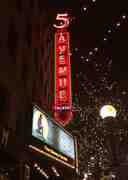
  1. To spot the 5th Avenue Theatre, just look up to your left at the bold, glowing red vertical sign that reads "5th Avenue Theatre," surrounded by festive twinkle lights above a…Lire plusAfficher moins

    To spot the 5th Avenue Theatre, just look up to your left at the bold, glowing red vertical sign that reads "5th Avenue Theatre," surrounded by festive twinkle lights above a marquee that's usually advertising the latest musical. Step right up to one of Seattle’s most dazzling pieces of history-no, not the world’s largest coffee mug, but the 5th Avenue Theatre! Picture this: it’s 1926, cars still had running boards, and flappers ruled the streets. Here on 5th Avenue, under the bright lights and glitzy sign, the city held its breath for the grand opening of a wildly unique theatre. It was so monumental, the streets teemed with up to 100,000 people-bustling crowds jostling for a glimpse, streetcars being diverted, and a carnival atmosphere so electric that you could almost smell the excitement and roasted peanuts in the air. The 5th Avenue Theatre is part of the historic Skinner Building, and it might fool you on the outside with its Neo-Renaissance style, but peek inside and you’re instantly transported to old Beijing. Architect Robert C. Reamer, also known for the iconic Old Faithful Inn in Yellowstone, designed its interior as an “excellent imitation of a Chinese wooden temple.” There’s bamboo, crimson columns soaring toward the ornate ceiling, with timbered beams and a canopy that whispers legends directly to your eardrums-don’t be surprised if you spot dragons, cloud motifs, and floral patterns that pop with color. Even the lights are disguised behind carved clouds, softly illuminating your path toward the extravagant wooden doors. What once greeted you were the mighty Imperial guardian lions, called "foo dogs," roaring their silent protection at the entrance. These have moved inside now, guarding the stairs like patient bouncers checking a guest list. And here’s a fun fact: the focus of the entire theatre-the magnificent caisson ceiling-hangs a sculpted Imperial Chinese dragon clutching a glowing chandelier, much like the Hall of Supreme Harmony in the Forbidden City, except, as some claim, it’s twice the size. That’s right, Seattle’s full of surprises, and one of them is a dragon at the top of a theatre! Past its architectural wonders, the 5th Avenue Theatre is alive with human energy. It employs over 600 people-actors, musicians, technicians, and staff-making it the Puget Sound region’s largest theatre employer. It’s a true community hub, supporting itself through donations, ticket sales, and a chorus line of generosity from individuals and corporations alike. This theatre has a secret superpower: it’s been called Broadway’s “testing ground.” Audiences here have cheered on smash hits like Hairspray, Jekyll & Hyde, and Memphis long before the rest of the country even got to hum along. Maybe, as you stand here, you’re next to someone who will launch the next big musical! Each season, it hosts six to seven different shows, mixing classic revivals with fresh, original productions-and if you’re lucky, you’ll witness the next phenomenon before it gets snatched up by New York. Now, the 5th Avenue Theatre isn’t just a place to enjoy the show-it’s a hero in its own drama too. By the late 1970s, as TV sets invaded living rooms and movie palaces fell quiet, the theatre teetered on the edge of the abyss: closed, dark, and almost lost. Imagine it, once bright neon washed with rain and silence. But in 1979, a group of 43 bold business leaders swooped in, marshaling funds and hope like superheroes in well-tailored suits. They rescued the landmark, painstakingly restored the interior and lights, and gave this magical palace a second act-this time with a non-profit theatre company whose heartbeat is musical theatre. Since then, the doors of the 5th haven’t just swung open for spectacular shows-they also welcome students and aspiring performers with outreach programs and awards, touching over 61,000 people a year. And let’s not forget the traditions: during seismic rumbles like the 2001 earthquake, the chandeliers tremble, but the spirit inside stays strong-every crack in the ceiling gets lovingly patched. So as you gaze up at that glowing sign or peek past the entryway, listen for distant echoes of grand opening fanfare-spotlights crisscrossing the night sky, bands playing at crowded intersections, and the lingering promise that inside, there’s always a story worth telling. Now, are you ready to find your seat and see what adventures the stage holds tonight? Wondering about the architecture, the 5th avenue musical theatre company or the productions by season? Feel free to discuss it further in the chat section below.

    Ouvrir la page dédiée →
  2. To spot Freeway Park, look for a large, tree-filled space that stretches above the busy freeway-right between the tall downtown buildings and just beyond the glow of the city…Lire plusAfficher moins

    To spot Freeway Park, look for a large, tree-filled space that stretches above the busy freeway-right between the tall downtown buildings and just beyond the glow of the city lights ahead. Welcome to Freeway Park, Seattle’s own floating urban oasis! Imagine you’re standing on a patch of nature that’s been lifted above a roaring river of traffic-literally, because this 5-acre park is perched right over Interstate 5. Picture a blend of concrete blocks and lush greenery, like someone let a garden loose on top of a Lego set. Back in 1976, when bell-bottom jeans and disco ruled the world, a team led by the brilliant Angela Danadjieva designed this park to stitch together downtown Seattle with First Hill and the Convention Center. On opening day, fireworks lit up the sky, and the city cheered for its bold new landscape. Now, take a deep breath-do you feel that fresh air? Underneath your feet, thousands of cars zoom by on the freeway, but up here, it’s a whole different world. The unique, angular concrete shapes were designed to create secret pathways, waterfalls, and places to hide or explore. It feels a little like wandering through a modern castle that’s been claimed by Mother Nature. This isn’t just a park; it’s an adventure. Maybe you’ll spot a daring parkour enthusiast flipping off the walls-Freeway Park is actually famous worldwide as one of the best places for parkour! Don’t worry, you won’t have to dodge any acrobatics unless you want to join in. But every great story has a twist… In the early 2000s, the park faced a dark chapter. After a high-profile crime, people grew nervous, and some whispered that the design itself invited trouble. The park’s wild, shadowy corners were quiet-too quiet-and not many dared to stroll through. That’s when the local heroes, the Freeway Park Neighborhood Association, stepped up. With their “New Vision for Freeway Park,” they brought in better lighting, trimmed back thick plants, and encouraged events and gatherings. Slowly, the laughter and buzz of visitors returned. These days, crime has dropped dramatically and the park is once again alive with chatter, music, and the occasional bark of a happy dog. In 2008, the park was renamed to honor Jim Ellis, the civic leader who helped make this bold idea a reality. And, not to brag, but Freeway Park earned its spot in the National Register of Historic Places and as a true Seattle Landmark. So as you stand here, take a moment-listen for the city’s heartbeat below, marvel at the concrete sculptures, and imagine the next story that will unfold in this one-of-a-kind park.

    Ouvrir la page dédiée →
  3. To spot Town Hall Seattle, look for a grand arching entrance framed by tall columns and impressive stained-glass windows that glow warmly, hinting at the building’s welcoming…Lire plusAfficher moins

    To spot Town Hall Seattle, look for a grand arching entrance framed by tall columns and impressive stained-glass windows that glow warmly, hinting at the building’s welcoming interior just up ahead. Now, imagine yourself stepping back in time to the early 1900s. The air is buzzing with possibility, and all around you, folks in their Sunday best are bustling up the steps of what was then the Fourth Church of Christ, Scientist. The building was a beacon of hope and community, with its high, echoing ceilings and shimmering windows that let the golden Seattle sunlight spill right on in. Fast forward to the late 1990s, and this historic church was on the verge of a new life. It broke free from pews and hymnals and transformed into the heartbeat of Seattle’s culture-Town Hall! But here’s where it gets dramatic: after raising a whopping $20 million for renovations (that’s a lot of bake sales!), the grand reopening hit a bump. Construction delays! It was almost as if the city itself held its breath. Finally, in May 2019, the doors swung wide to welcome back music, laughter, and lively debates. Now a true Seattle Landmark and safely nestled on the National Register of Historic Places, Town Hall stands as the city’s living room. Every time you walk by, you’re passing the scene of countless stories, and maybe-just maybe-there’s a bit of that old church choir still humming along under those soaring arches.

    Ouvrir la page dédiée →
  4. Look ahead and slightly above eye level-you’ll spot a dramatic bronze sculpture rising from its circular base, like a giant flower with broad petals reaching out and stacked bowls…Lire plusAfficher moins

    Look ahead and slightly above eye level-you’ll spot a dramatic bronze sculpture rising from its circular base, like a giant flower with broad petals reaching out and stacked bowls scaling up toward the sky. Now, take a moment to soak in the sounds of the city, and imagine you’re standing by a mountain stream-because that’s the strange magic of Naramore Fountain. Sculpted by George Tsutakawa, this fountain isn’t your ordinary splash zone; it sits perched above your gaze, balanced on a mound of rugged rocks quarried straight from the Cascade Mountains. The whole thing feels like it was quietly plucked out of wild nature and set down smack in the heart of urban Seattle, water bubbling and cascading with gentle mystery. Tsutakawa wanted folks to feel the hush and awe of mountain water, right here among skyscrapers and taxis. Some say that, on a quiet morning, you can almost hear those rocks whispering stories of forests and rivers-a peaceful trick in the middle of city chaos! With its shimmering tiers, the fountain looks ready to start twirling or launch into orbit at any moment, so don’t blink or you might miss the show. Tsutakawa’s creation isn’t just a treat for the eyes-it’s a nudge to slow down, breathe deep, and listen to the stories humming wherever art and nature meet.

    Ouvrir la page dédiée →
  5. To spot Safeco Plaza, look for the tall, bronze-colored skyscraper with sleek, mirrored windows towering right in front of you-its boxy shape rises high above most of the…Lire plusAfficher moins

    To spot Safeco Plaza, look for the tall, bronze-colored skyscraper with sleek, mirrored windows towering right in front of you-its boxy shape rises high above most of the buildings nearby. Now, as you stand at the foot of this mighty tower, take a moment to gaze upward-you’re right below what locals once called “The Box the Space Needle Came In!” And who could blame them? When Safeco Plaza opened its doors in 1969, it didn’t just join Seattle’s growing skyline-it absolutely took over. At 630 feet tall, it was the tallest thing around, casting a shadow that even the famous Space Needle couldn’t outrun. You can almost hear the gasp of the crowd from 55 years ago as this gleaming bronze giant rose up, looking as if some cosmic hand was using it as storage space for city icons. Back then, this wasn't just another glass-and-metal building. It was the headquarters for Seattle’s own First National Bank-later Seafirst-until they passed the baton to Bank of America (and eventually to Safeco Insurance). People bustling in and out, business being done in wood-paneled offices, and, if you were lucky, a fancy power lunch high above the clouds at the Mirabeau Restaurant on the 46th floor. Imagine dining with sweeping city views, feeling so tall you’d need to check your pockets for flight tickets. The scent of fresh coffee would float through the lobby, mixing with the rustle of briefcases and the occasional, hushed awe of folks staring up, dizzy with possibility. By the way, Safeco Plaza was the world’s first skyscraper to use something called a Vierendeel space frame-basically, the building’s skeleton is built to be both strong and flexible, ready to handle anything from wild weather to lively office parties. Its two-story lobby feels almost cathedral-like, and the five-story underground garage means this tower has as much going on below as above. Down here, there’s always been more than meets the eye: a fitness center, bank, medical center, post office, and restaurants. I mean, Safeco Plaza is the ultimate multitasker-it could compete in the “Pacific Northwest’s Next Top Skyscraper” if that were ever a thing. But even this grand tower couldn’t hold the title of tallest forever. In 1984, Columbia Center rose up and took the crown. Safeco Plaza slipped from the top of the leaderboard, but you know what? It never lost its charm or its reputation as a gathering place for business, for bustling street activity, and-thanks to public outcry-the home of the quirky Three Piece Sculpture: Vertebrae, the Henry Moore bronze masterpiece just outside. That sculpture almost got shipped away, but Seattle's voice rang out, making sure it would stay-inspiring visitors and pigeons alike ever since. Over the years, ownership has changed hands like a game of hot potato, jumping from JMB Realty to Seafo Inc., then Hines, then German and South Korean real estate titans, and today, Boston Properties. No matter who owned the keys, the heart of Safeco Plaza kept beating-a hub for Safeco Insurance, the University of Washington, Bain & Company, architects, law offices, and more. Now, renovations keep the place fresh. Picture shimmering new lounges, a bustling bicycle hub, a fitness center ready for your next workout, and shiny conference rooms being readied for future ideas and big plans. Listen-you might even catch the faint echo of footsteps above, the laughter of business folks sharing a joke, or the buzz of deals in the making

    Ouvrir la page dédiée →
  6. To spot the Fairmont Olympic Hotel, look ahead for a grand, light-colored building with classic Italian Renaissance details, an impressive central entrance below a row of tall…Lire plusAfficher moins

    To spot the Fairmont Olympic Hotel, look ahead for a grand, light-colored building with classic Italian Renaissance details, an impressive central entrance below a row of tall arched windows, and elegant symmetry-partly hidden behind leafy trees right in front of you. Alright, welcome to the legendary Fairmont Olympic Hotel-Seattle’s grand dame of luxury and the keeper of more stories than an entire season of reality TV! Pause for a moment and imagine you’re standing here in 1924, as Seattle’s best-dressed citizens gather outside, the air buzzing with excitement. This lavish hotel was a dream come true for the city. After World War I, the local Chamber of Commerce had a bold idea: turn an old, empty chunk of downtown known as Denny's Knoll into something spectacular. But here’s a twist-this land wasn’t just any patch of dirt. It was once home to the University of Washington! Back in the late 1800s, students trudged through rain and mud right where you stand now. The university eventually moved north, leaving this land behind, and a grand vision began to grow. Local business leaders planned a hotel so classy that even the ghosts of old professors might want to check in. Seattle was determined to build a true showstopper, so they put naming the hotel up to a citywide contest. Out of almost 4,000 entries, “The Olympic” was the winner-because nothing says “opulent” like a reference to mighty mountain peaks. In 1922, famous architects from New York and Seattle set to work, dreaming up this Italian Renaissance masterpiece. Construction began in 1923 and, in less than two years, the Olympic Hotel stood sparkling and proud, its steel bones hidden under ornate stone and $800,000 worth of fancy furnishings. The grand opening party in December 1924? Picture it: 2,000 VIPs dancing, laughing, raising glasses, while curious locals crane their necks for a glimpse of Seattle’s shiny new jewel. The building was the talk of the town, right down to its marble floors and glittering chandeliers, which almost deserve their own place on the National Register of Historic Places. The hotel’s story only gets more interesting from here. In the 1950s, the Metropolitan Theatre-another Seattle landmark-stood right next to the hotel. But progress marched on: the theatre came down for a glamorous new drive-in motor entrance. After several changes of hands, the Olympic was managed by Western Hotels, then Four Seasons, who poured a staggering $60 million into rescuing its faded grandeur in the 1980s. Imagine hundreds of tiny rooms merging into spacious, plush new suites-sometimes I think a few confused ghosts still wander the halls wondering where their old rooms went! By the early 2000s, hotel ownership got even more tangled than a spaghetti dinner. The University of Washington sold its stake, and the hotel eventually landed with Fairmont Hotels & Resorts, becoming the Fairmont Olympic Hotel in 2003. If these walls could talk, they’d tell you tales of business titans, politicians, and jazz legends all brushing shoulders in its gilded halls. In 2018, the hotel joined Historic Hotels of America, getting official recognition for its history, which is a little like winning an Oscar for “Best Supporting Architecture.” The Fairmont Olympic has seen Seattle’s fortunes rise and fall, from roaring parties to quiet elegance. And just when it needed a little facelift, a $25 million renovation refreshed every detail, all while preserving its old-world charm. In December 2024, it passed into new hands yet again-because, let’s face it, a legendary hotel like this is always in demand! So take a moment to savor the grand façade, the whiff of fresh flowers from inside, and the echoes of a century’s worth of celebrations. Checking into the Olympic may rack up your credit card bill, but just standing out front? That’s a luxury you can enjoy for free!

    Ouvrir la page dédiée →
  7. Look ahead and spot the brownish tower with a staircase-like, ziggurat top-its brick color grows lighter as you look up toward the sky, setting it apart from its glassy, modern…Lire plusAfficher moins

    Look ahead and spot the brownish tower with a staircase-like, ziggurat top-its brick color grows lighter as you look up toward the sky, setting it apart from its glassy, modern neighbors. Standing here on Third Avenue, imagine it’s the 1920s in Seattle-a time of jazz, wild new ideas, and dreams so big they could almost touch the clouds. Now, glance up at the Seattle Tower in all its old-school glory. But back then, it wasn’t called Seattle Tower. No, it was the shiny new “Northern Life Tower,” and it soared above downtown with a style that made people on the street stop and stare. The Northern Life Insurance Company wanted something bolder than any Pacific Coast building, a skyscraper even taller than the mighty Smith Tower. They piled up $1.5 million-a gigantic fortune at the time-and started stacking bricks higher and higher. But here’s where it gets cool: those bricks aren’t just brown. There are 33 shades, blending lighter and lighter as you crane your neck upwards, like some magic mountain out of the Northwest wilderness. It’s said the design came from the way natural rock formations appear on a misty Seattle morning, designed to make the building fade into the sky. Forget fancy columns and old-fashioned details-this tower was all about speed, efficiency, and the roaring hope of a modern world. The Tower's Art Deco style broke all the rules. Earlier buildings looked backward to ancient Rome or Greece, but this place? It pointed straight toward the future. In fact, when the sun went down, over 200 floodlights would shimmer and dance, swirling colors up the building just like the northern lights themselves-a neon aurora to light up the night. That display wasn’t just a party trick. It captured a belief that science could imitate nature and that humanity could make wonders out of bricks, steel, and electricity. Of course, if you squint, you’ll notice the tower now stands in the shadow of much taller neighbors. But back in 1928, this was the city’s boldest leap skyward-a living, glowing promise that Seattle was ready to rise with the times. The Northern Life Tower became a legend, earning its spot as a historic landmark. So next time you see its zig-zag profile on the skyline, imagine jazz echoing down the street and the future shining from every brick.

    Ouvrir la page dédiée →
  8. Look ahead for a tall, bronze-colored building with long, horizontal bands of windows stretching up high above the bustling street, set between a shiny rounded glass tower and a…Lire plusAfficher moins

    Look ahead for a tall, bronze-colored building with long, horizontal bands of windows stretching up high above the bustling street, set between a shiny rounded glass tower and a slim, ribbed black building. Welcome to 1111 Third Avenue-where Seattle’s sharpest minds have been hard at work since 1980! Now, back when this building was just rising up, the city skyline was much shorter, and this tower became the 8th tallest in town. Imagine the excitement… and maybe a few nervous window washers dangling from those dizzying heights! The building’s sleek exterior, made of special concrete and striking “solar bronze” glass, even changes its mood with the sunlight. It’s like the building itself is trying on a new pair of sunglasses every day. You’ll notice an outdoor plaza here-don’t miss it. It’s not just for lunch breaks: it’s actually award-winning, dotted with seats, tables, and even whimsical bronze statues by Robert Graham. Some say the statues seem to whisper secrets from the city’s past if you listen closely enough… or maybe that’s just the lawyers from Lewis Brisbois Bisgaard & Smith, the major law firm inside, discussing their next big case. So, take a moment, look up at the endless windows, and let your imagination run free-just don’t try to count all 34 floors, or you’ll be here till tomorrow!

    Ouvrir la page dédiée →
  9. To spot Docusign Tower, look for a tall, six-sided skyscraper with sleek lines and stripes, standing boldly above its neighbors as you face west toward the waterfront-its…Lire plusAfficher moins

    To spot Docusign Tower, look for a tall, six-sided skyscraper with sleek lines and stripes, standing boldly above its neighbors as you face west toward the waterfront-its dark-tinted glass and polished stone façade make it pop out from the surrounding buildings. Now, imagine you’re standing here in front of this towering giant, feeling the breeze off the bay and staring up, way, way up. The Docusign Tower, as we call it today, wasn’t always so high-tech and paperless. In fact, back in the early 1980s, this very spot echoed with the last moments of the old Olympic National Life building-a 12-story downtown legend from 1906 that got a dramatic sendoff. Early one Sunday morning in 1982, as crowds gathered in anticipation, the structure was shaken to its core and imploded in a thunderous, smoky cloud. Imagine the excitement and maybe a little bit of nervous energy-Seattle had never seen anything like it before! As the dust settled, a team from McKinley Architects sketched out a futuristic vision. Picture a six-sided skyscraper rising up with strength and a bit of flair-continuous bands of tinted glass, elegant rose granite, and so many elevators you’d think they were running an express train to the clouds. When it opened in 1983 as the First Interstate Center, it quickly became a cornerstone of Seattle’s skyline. Over the years, the building has had more name changes than a secret agent. After First Interstate Bancorp merged with Wells Fargo, it became the Wells Fargo Center-then a Canadian group swooped in, and by 2020, the digital signature company Docusign claimed the top spot, naming the tower after themselves. Check out the slope in the street here-one entrance is a full two stories higher than the other. And don’t miss the west side, where you’ll find quirky escalators that once looked like space-age hamster tubes and now have a more modern glass roof. Retail spaces and tiered plazas outside invite you to linger, sip coffee, or people-watch. Standing here, you’re not just seeing a skyscraper-you’re witnessing the stories, ambition, and a little Seattle boldness that shaped this backdrop to the city’s ever-changing life. You've got to love a building that's seen so much action, right?

    Ouvrir la page dédiée →
  10. To spot the Federal Reserve Bank Building, look for a sturdy stone structure set back from 2nd Avenue, with a clean gray limestone facade and a small granite plaza out front; the…Lire plusAfficher moins

    To spot the Federal Reserve Bank Building, look for a sturdy stone structure set back from 2nd Avenue, with a clean gray limestone facade and a small granite plaza out front; the seven-story glass addition rising above it makes it stand out from its sleeker neighbors. Welcome to one of Seattle’s most quietly dramatic buildings - where stacks of cash once slept, where FBI agents once bustled through the lobby, and where, had a certain set of blueprints been approved, you might be boarding a monorail instead of standing in the middle of a silent plaza. That’s the Federal Reserve Bank Building for you: a place whose past is as solid and mysterious as its walls. Let your imagination wander back to 1951, when this steel-and-limestone box on 2nd and Madison opened its doors. At the time, it was a modern marvel, the new home for the Seattle branch of the Federal Reserve Bank of San Francisco. Picture the air humming with the whir of typewriters, the smell of fresh paint, and bankers bustling about in crisp suits. Banknotes as crisp as the morning air passed through lobby teller stands, and secret rooms inside held more than just money-they held the city’s economic heartbeats. The basement hid a vault so impressive that even Hollywood would have trouble topping it: a reinforced concrete bunker, with granite walls a foot thick, and steel doors you’d need a team of superheroes to open. The vault alone weighed 335 tons. If a bank heist movie ever needed a set, this was it. And if you think the architects might have been a touch paranoid, you’d be right-the building was literally designed to withstand an atomic bomb. Things were tense in those Cold War days, and nobody was taking chances with America’s cash supply. Earthquake? Bomb? Alien invasion? The Federal Reserve Bank was ready. Even its Modernist exterior, designed by William J. Bain of local firm NBBJ, was meant to announce: nothing’s getting in here, and nothing’s getting out without paperwork. On the outside, the light gray Indiana limestone and reddish-brown granite give the place an air of permanence-like it’s been here since time began and will be here long after we’re all gone. Those simple lines and heavy features stick out like a bouncer at a poetry reading, especially in a city where glass towers seem to sprout overnight. But step toward the main entrance and you’d find a surprise: terraced planters and polished granite, softening the mood and adding a touch of elegance - almost as if the building was apologizing for being so serious. But this place wasn’t just about keeping cash cozy. For over 50 years, bankers, tellers, FBI agents, and even cafeteria cooks kept the operations rolling. Ever wonder where bored agents stretched their legs? There was a shooting range and a hidden garage beneath your feet - not your average downtown lunchroom chatter. As decades passed, the building quietly weathered history’s shake-ups-literally. In 2001, the Nisqually earthquake rumbled through Seattle, but this old stone box stood tall thanks to a seismic retrofit just a few years earlier. After 9/11, public access closed and new security features arrived, making the bank even more fortress-like. Concrete barriers sprouted up around the plaza, and the city’s money moved elsewhere. But the story didn’t end there. By the late 2000s, change became the new order of the day. Developers wanted to flatten it and start anew. Preservationists swung into action; a heated court battle saved the building from the wrecking ball. For a while, it was anyone’s guess-would School District kids have recess in a repurposed vault? Would the homeless shelter replace the cash drawers with bunk beds? No one could agree. In the end, a dramatic auction saw the building snatched up for $16 million by Martin Selig Real Estate. Plans for a gleaming 48-story skyscraper on top got trimmed back (much to the relief of history lovers), and in 2020, a sleek, seven-story addition rose-almost as if the old bank had shrugged on a new glass jacket and welcomed the next age. And like any self-respecting landmark, this place is now on the National Register of Historic Places. Even today, as high finance and government shuffle tenants in and out, the building remains a weighty presence on Seattle’s skyline-a reminder of just how much drama can hide behind quiet stone walls. And if you’re wondering about that vault, don’t worry: even with all these changes, its 30-inch-thick concrete is still guarding its corner of Seattle’s history. The only thing you’re likely to find there now is echoes of the past, and perhaps, the ghosts of a few old bank guards comparing notes on earthquake drills. Ready for the next stop? Let’s keep moving before the vault door swings shut behind us!

    Ouvrir la page dédiée →
  11. To spot the Bank of California Building, just look for a stately, rectangular two-story structure faced in gray stone-like terra cotta, with four massive Roman-style columns…Lire plusAfficher moins

    To spot the Bank of California Building, just look for a stately, rectangular two-story structure faced in gray stone-like terra cotta, with four massive Roman-style columns rising up above the sidewalk and big windows shining behind them, right in the middle of the block. Alright, get ready to step back in time as you stand before the grand old Bank of California Building! Imagine the year is 1924: the cars are boxy, the jazz is lively, and Seattle is buzzing with ambition. Now, here comes the Bank of California, rolling into town with big dreams and an even bigger need for elbow room. They’d outgrown their tiny office down the street and snapped up this very lot for the princely sum of $160,000-a fortune back then-after the old Epler Block came down. Brick by brick, they cleared the way for something marvelous. As workers cleared away the dust, architect John Graham & Company cooked up a true show-stopper: a strict Italian Renaissance design, built to impress even the toughest banker. No nonsense, no frills-just four enormous ionic columns out front, holding up a stately attic above, and an entrance elegant enough to make customers wonder if they were there for a mortgage or an audience with the gods. The terra cotta façade was glazed to shimmer like stone, and the whole face of the building sparkled with newness. If you climbed the front steps in August 1924 for opening day, you’d see sunlight pouring through enormous windows, catching on bronze torch lights, marble counters, and an octagonal rotunda ceiling soaring forty feet overhead. Rumor has it even the clocks were classy, with dials made from imported Escolette marble. Inside, the main banking room stretched an impressive 60 by 70 feet. Up above, it was “semi-Pompeian” in its colors, with an octagon design so striking that even the grumpiest customer might have smiled while depositing their paycheck. Walnut woodwork gleamed, bronze fixtures glinted, and those massive bronze-bedecked columns made each teller window feel like a palace reception. All that marble underfoot? Straight from France, thank you very much! Behind the scenes, a web of offices wound through balconies and up to the fourth floor where bank employees had their own club room-a spot for unwinding after counting all that money. But the building wasn’t just about looking good. Oh no! There was talk of installing customer parking in the basement-a wild innovation for the era. Was it ever built? That mystery lingers, like a secret shared among tellers and managers long gone. Out back, the bank expanded with new offices in the adjoining Exchange Building, plus a handy parking garage to the south, proving that in the roaring twenties, Seattle was ready for the fast lane. Business boomed for decades. Our grand bank held strong through good times and bad, standing as a symbol of Seattle’s growth. Then, in the 1970s, these walls saw a twist that would make even a movie director grin: the big bosses built a flashy new skyscraper a few blocks away, but when the dust settled, the old building stayed open as a branch, and soon enough, the brand-new tower became-to everyone’s shock-a pharmacy! Talk about a plot twist! The original bank building, however, kept doing what it did best: holding onto people’s savings and secrets. In 1983, a new name took over: Puget Sound Mutual Savings Bank. This comforting chunk of history soon became a part of Key Bank, and today it still welcomes customers with the same sturdy columns and marble floors. Through mergers, acquisitions, and decades of change, the building never lost its polished 1920s charm. And in 1987, Seattle made it official, granting landmark status to ensure that future generations could marvel at its timeless elegance. Take a moment-listen for distant echoes of clinking coins, the murmur of old conversations, and maybe, just maybe, catch a whiff of freshly polished walnut and a glimmer of old-fashioned ambition. Who would have thought a bank could tell such a story? And if you ever look up at the entablature, remember: it once boldly spelled out the bank’s name for anyone walking by. These days, the marble and bronze stand silently, but their tales are as vibrant as the city that surrounds them.

    Ouvrir la page dédiée →

Foire aux questions

Comment commencer le tour ?

Après l'achat, téléchargez l'application AudaTours et entrez votre code de réduction. Le tour sera prêt à commencer immédiatement - il suffit d'appuyer sur lecture et de suivre l'itinéraire guidé par GPS.

Ai-je besoin d'Internet pendant le tour ?

Non ! Téléchargez le tour avant de commencer et profitez-en pleinement hors ligne. Seule la fonction de chat nécessite Internet. Nous recommandons de télécharger en WiFi pour économiser vos données mobiles.

S'agit-il d'une visite de groupe guidée ?

Non - il s'agit d'un audioguide en autonomie. Vous explorez indépendamment à votre propre rythme, avec une narration audio diffusée par votre téléphone. Pas de guide, pas de groupe, pas d'horaire.

Combien de temps dure le tour ?

La plupart des tours durent entre 60 et 90 minutes, mais vous contrôlez totalement le rythme. Faites des pauses, sautez des arrêts ou arrêtez-vous quand vous le voulez.

Et si je ne peux pas finir le tour aujourd'hui ?

Pas de problème ! Les tours disposent d'un accès à vie. Faites une pause et reprenez quand vous le souhaitez - demain, la semaine prochaine ou l'année prochaine. Votre progression est sauvegardée.

Quelles sont les langues disponibles ?

Tous les tours sont disponibles dans plus de 50 langues. Sélectionnez votre langue préférée lors de l'utilisation de votre code. Note : la langue ne peut pas être changée après la génération du tour.

Où accéder au tour après l'achat ?

Téléchargez l'application gratuite AudaTours sur l'App Store ou Google Play. Entrez votre code de réduction (envoyé par e-mail) et le tour apparaîtra dans votre bibliothèque, prêt à être téléchargé et commencé.

verified_user
Satisfaction garantie

Si vous n'appréciez pas le tour, nous vous rembourserons votre achat. Contactez-nous à [email protected]

Paiement sécurisé avec

Apple PayGoogle PayVisaMastercardPayPal

AudaTours : Audioguides

Des tours à pied en autonomie, divertissants et économiques

Essayer l'application arrow_forward

Adoré par les voyageurs du monde entier

format_quote Ce tour était un excellent moyen de voir la ville. Les histoires étaient intéressantes sans paraître trop scénarisées, et j'ai adoré pouvoir explorer à mon propre rythme.
Jess
Jess
starstarstarstarstar
Tour de Tbilissi arrow_forward
format_quote C'était un bon moyen de découvrir Brighton sans se sentir comme un touriste. La narration était profonde et contextuelle, sans en faire trop.
Christoph
Christoph
starstarstarstarstar
Tour de Brighton arrow_forward
format_quote J'ai commencé ce tour avec un croissant dans une main et zéro attente. L'application vibre tout simplement avec vous, pas de pression, juste vous, vos écouteurs et quelques histoires sympas.
John
John
starstarstarstarstar
Tour de Marseille arrow_forward

Audioguides illimités

Débloquez l'accès à TOUS les tours du monde

0 tours·0 villes·0 pays
all_inclusive Explorer Unlimited