
Visite audio de Salem : Secrets, Saints et Scandales des Quartiers Historiques
Fenêtres noircies. Chuchotements enfouis dans les pavés. Salem cache plus que des procès de sorcières dans ses rues sinueuses et ses élégantes vieilles maisons. Ceci est une visite audio autoguidée qui vous mène à travers le passé tortueux et les monuments historiques de Salem. Écoutez les récits derrière les portes d'entrée et les plaques fanées, en vous glissant dans des recoins que la plupart des visiteurs ne remarquent jamais. Qui a tout risqué pour défier la règle puritaine juste à l'intérieur de ces murs ? Pourquoi la Maison des Sorcières a-t-elle accueilli des décisions qui ont changé la justice américaine pour toujours ? Quel étrange objet a un jour disparu du Musée Peabody et alimenté des décennies de rumeurs ? Déplacez-vous sous des poutres grinçantes et des avant-toits ombragés. Ressentez la tension de la rébellion et du scandale, le frisson du mystère, l'excitation des secrets découverts alors que la ville passe du familier à l'étrange. Appuyez sur lecture et découvrez les histoires que Salem espérait que l'histoire oublierait. Chaque pierre a un secret. Il est temps d'écouter.
Aperçu du tour
À propos de ce tour
- scheduleDurée 40–60 minsAllez à votre propre rythme
- straightenParcours à pied de 2.9 kmSuivez le sentier guidé
- location_onEmplacementSalem, États-Unis
- wifi_offFonctionne hors ligneTéléchargez une fois, utilisez n'importe où
- all_inclusiveAccès à vieRéécoutez n'importe quand, pour toujours
- location_onCommence à Paroisse Saint-Jean-Baptiste
Arrêts de ce tour
Directly in front of you, you’ll see the John Ward House-a striking, dark wood building with two steep-pitched gables, a chunky brick chimney in the middle, and diamond-paned…Lire plusAfficher moins
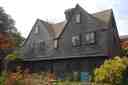
Directly in front of you, you’ll see the John Ward House-a striking, dark wood building with two steep-pitched gables, a chunky brick chimney in the middle, and diamond-paned windows that almost look like they’re winking at you from every floor. Picture Salem in the late 1600s: the crackle of fireplaces, the scent of pine, and the thud of boots on packed dirt as John Ward-a currier, not a man who delivers curries but a leather worker-began building what would become an enduring piece of colonial craftsmanship. Back then, this house started as a humble two-room structure with a massive chimney hogging one side of the building-a bit like a pizza oven, but with considerably less mozzarella. When Ward’s family grew, so did the house, stretching to fit that classic five-window colonial look with a front door in the center, and finally, a lean-to in back gave the whole building that unmistakable “saltbox” shape. All those expansions? It’s almost like the colonial version of adding a bump-out to fit a big-screen TV. Generations of the Ward family called this place home, passing it down until 1816, when it went under the auctioneer’s gavel, the bidding heated and quick, and Temple Hardy took it over, bakery smells soon filling the air as crusty bread and pastries came from its ovens. Time marched on, and the house shifted roles-just like a stage actor-going from a bakery to a crowded tenement, even gaining an east-end wing that seemed to sprout unexpectedly, only to disappear again by the early 1900s. But wait, things got even stranger! By 1910, the house found itself in trouble-it wasn’t just going to get a paint job; it was about to be picked up and moved three blocks away. No big trucks for these folks: they split the house in two, perched each half on giant logs, and then oxen dragged them to Brown Street. I’d love to see the movers’ faces today if you asked them to relocate a house-with oxen! When the dust settled and the house was reassembled, the meticulous restoration began, led by George Francis Dow. This guy was so deep into authenticity, he chose the wallpaper and even the furniture to fit his vision of Salem in 1700. If John Ward peeked in today, he’d probably be looking for his favorite chair. By 1911, the public was invited to poke around this living time capsule, making it the first outdoor architecture museum in the country, where you could marvel at diamond-paned windows, the chamfered beams, and the creaky floors-half original, half the handiwork of those 1912 fixers. You might notice the cross-gabled roof and tall chimney, both rebuilt during restoration, and those gorgeous diamond windows sparkling in the morning sun, as if daring you to guess which century you’re in. The Peabody Essex Museum welcomes curious visitors inside, where rooms still show off 17th-century style, and even a faint whiff of whitewash still lingers if you sniff hard enough. And by the way, there’s even a replica of this house out by mile marker 80 on the Massachusetts Turnpike-the tourist information staff once dressed up in period costumes for travelers. I bet the oxen there got paid overtime!
Ouvrir la page dédiée →Right in front of you, you’ll spot a wide open field blanketed in snow, and at its heart stands a striking round pavilion with tall columns rising up-just look for the large…Lire plusAfficher moins
Right in front of you, you’ll spot a wide open field blanketed in snow, and at its heart stands a striking round pavilion with tall columns rising up-just look for the large American flag and that impressive domed structure in the middle of the Common! Now, imagine you’re standing where history has paraded, marched, and maybe chased the odd runaway cow. This is the Salem Common Historic District, and let’s just say, it hasn’t always been this tidy! Back in 1667, this was part swamp-so if you’d visited with your fancy shoes, you might have sunk right in. For more than a hundred years, livestock wandered through here without a care, munching grass and probably making a mess of things. If you hear a distant moo, don’t worry, it’s just your imagination...or is it? It wasn’t until 1802 that the “beautification squad” (better known as people who got sick of stepping in mud and other surprises) decided to clean it up. They leveled out the ground, filled in the marshy ponds, and planted trees while a wooden fence tried its best to keep the animals out. The real upgrade came in 1850 with that fancy wrought iron fence you see today. Sure, the cows were sad-but the townspeople? Overjoyed. Now, gaze around and you’ll see more than just open space. There’s the Joseph Story House, home to a Supreme Court Justice, and the Andrew-Safford House, which was apparently once the most expensive house in the nation, built for a wealthy Russian fur merchant. With those gigantic Federal columns, you’d expect the owner to walk out in a cape! They say that’s the place you’d go if you were rich and had a flair for dramatic entrances. Not far off is the John Bertram House, which lived quite a few lives-originally built for John Forrester, later enlarged by Colonel George Peabody, and now serving as a home for the elderly. Imagine all the stories echoing within those walls-romance, war, and the likely argument over what’s for dinner. But the most exciting moment here was back in 1637: Salem Common hosted the first muster of militia. Soldiers drilled and trained for the “common defense,” laying the foundation for what we now call the National Guard. Fast forward to 2013-President Barack Obama officially declared Salem as the birthplace of the U.S. National Guard. On special April mornings, soldiers still gather, wreaths are laid, Taps echoes on the breeze, and sometimes there’s a 21-gun salute piercing the peace. Salem Common is more than just a lovely park. It’s where communities have come together, where people have marched for freedom, and even where legends have strutted with very expensive hats. Take a moment to picture this sprawling green transformed over centuries-with soldiers, townsfolk, and the odd cow making history right where you’re standing. Seeking more information about the andrew-safford house, john bertram house or the salem as the birthplace of the national guard? Ask away in the chat section and I'll fill you in.
Ouvrir la page dédiée →

Afficher 11 arrêts de plusAfficher moins d'arrêtsexpand_moreexpand_less
Right in front of you stands a stately, three-story brick house with crisp white marble bands, elegant black shutters, and a grand entrance framed by four fancy columns-look for…Lire plusAfficher moins
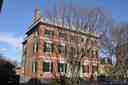
Right in front of you stands a stately, three-story brick house with crisp white marble bands, elegant black shutters, and a grand entrance framed by four fancy columns-look for the big, rectangular building with striking black-and-white window details just behind the bare branches. Now, imagine Salem in the early 1800s-this impressive house was the talk of the town! Built in 1804 by Salem’s master craftsman Samuel McIntire, the Gardner-Pingree House is a Federal-style beauty that once dazzled with marble trim and woodwork so intricate, it almost made visitors forget about the cold Massachusetts winters. But it’s not just looks-this place has stories to spare. The original owners, John and Sarah Gardner, poured their dreams (and probably their savings) into these walls, only to sell it to cover shipping losses during the chaos leading up to the War of 1812. It later landed in the hands of Capt. Joseph White, who, in a dramatic twist worthy of Netflix, was found murdered inside. The ensuing trial was so famous that Daniel Webster, the rockstar lawyer of his day, prosecuted it, sparking the imaginations of Nathaniel Hawthorne and Edgar Allan Poe. Creepy, right? But it’s not all ghosts and scandals; the house became part of the Peabody Essex Museum and even made it onto the big screen as a filming spot for The Europeans in 1979. From glamour to crime scenes to movie sets, the Gardner-Pingree House truly is Salem’s master of reinvention. And don’t worry-no murder mysteries today, just a chance to admire the craftsmanship and a few good stories to take home.
Ouvrir la page dédiée →To spot the Peabody Museum of Salem, just look straight ahead for a grand, two-story building with a granite front, tall arched windows, and the words “East India Marine Hall”…Lire plusAfficher moins
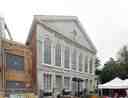
To spot the Peabody Museum of Salem, just look straight ahead for a grand, two-story building with a granite front, tall arched windows, and the words “East India Marine Hall” carved above the entrance. Welcome, explorer! You’re standing before one of Salem’s greatest treasures-though, fair warning, this place has collected more secrets and oddities than a pirate’s chest! This stately hall, with its proper granite face and elegant arched windows, once echoed with the footsteps of adventurers, scientists, and merchants-a real “who’s who” of curious minds back in the day. If you squint, you can almost see the salt from distant oceans resting in the cracks of the old stones. Picture it: the year is 1825. Essex Street is alive with the sound of carriages, and just inside these doors, the East India Marine Society is bustling. The air is thick with the scent of ship’s rope and spices brought from halfway across the world. These adventurous Salem sailors sailed as far as Japan, Hawaii, and New Zealand, returning with treasures and tales that would shock their neighbors-everything from samurai swords to giant shells, and fossils to musical instruments. Fast forward to 1868, when the building transforms into the Peabody Academy of Science. Salem’s own Henry Wheatland helped secure funds from George Peabody, whose name made the museum almost as famous as its collection of stuffed animals and ancient tools. The floors were swept, the exhibits were dusted, and the old merchant hall was crammed with magical odds and ends. In 1915, with a name change to the Peabody Museum of Salem, the building was bursting at the seams-so much so, they even added the Crowninshield Galleries in the 1950s to keep up with all those new curiosities. Over the years, the museum told incredible stories of ocean voyages, scientific discoveries, and even a ballroom upstairs where one can almost hear echoes of laughter and music. By 1992, this spot was ready for its biggest adventure yet-merging with the Essex Institute to become today’s Peabody Essex Museum. And while modern glass and steel now wrap around you, the heart of Salem’s seafaring and scholarly spirit is still right here, waiting for your next step!
Ouvrir la page dédiée →To spot the Essex Institute Historic District, look for a grand, yellow wooden house with three rows of large white-trimmed windows and a shingled roof, sitting peacefully in a…Lire plusAfficher moins
To spot the Essex Institute Historic District, look for a grand, yellow wooden house with three rows of large white-trimmed windows and a shingled roof, sitting peacefully in a shady green yard on Essex Street-it's right in front of you. Now, imagine yourself standing among a secret network of old Salem treasures. Welcome to one of the city’s proudest collections of historic buildings, where tales of bold sea captains, curious scholars, and the occasional librarian with a mighty keyring all swirl together. Here, the Essex Institute Historic District holds court-a marvelous cluster of homes and halls that have played host to centuries of Salem’s stories, all within a block's walk. Since 1848, this patch has been at the heart of history, including the formidable Crowninshield-Bentley House and the stately Gardner-Pingree House, an official National Historic Landmark that’s seen more than a few dramatic episodes-some say its walls shivered during the infamous 19th-century murder cases. Peek around and you’ll also spot the dignified John Tucker Daland House, built in 1851, and the Phillips Library, which doubled as a research haven and an exhibition stage, with oversized windows letting the gossip of scholars drift out over the gardens. It wasn’t all dusty books; out back stands a doll-sized Quaker meeting house, the Vaughan Doll House-though trust me, dolls didn’t do the talking here. Nearby, there’s the Lyle-Tapley Shoe Shop, because even colonial-era kids needed new kicks. Just to the east stands the Gardner-Pingree House, crafted by Salem’s own star architect Samuel McIntire, and not far off, the Bentley-Crowninshield House, a Georgian gem that had to pack up and move across the street-talk about historic house moving day! The Andrew-Safford House, once the fanciest address in New England, hides just beyond. The district absorbed yet more legend when the prized documents of the Phillips Library were marched off to Rowley in 2017, causing an uproar bigger than a ship captain losing his hat to the wind. Through each change, this spot has remained the timeless heart of Salem’s memory. So, who knows? You might just feel a little smarter for having strolled right through it.
Ouvrir la page dédiée →Ahead of you, you’ll spot the Downtown Salem District by its classic red-brick buildings and tree-lined pedestrian walkway, with a vintage green clock standing proudly on the left…Lire plusAfficher moins
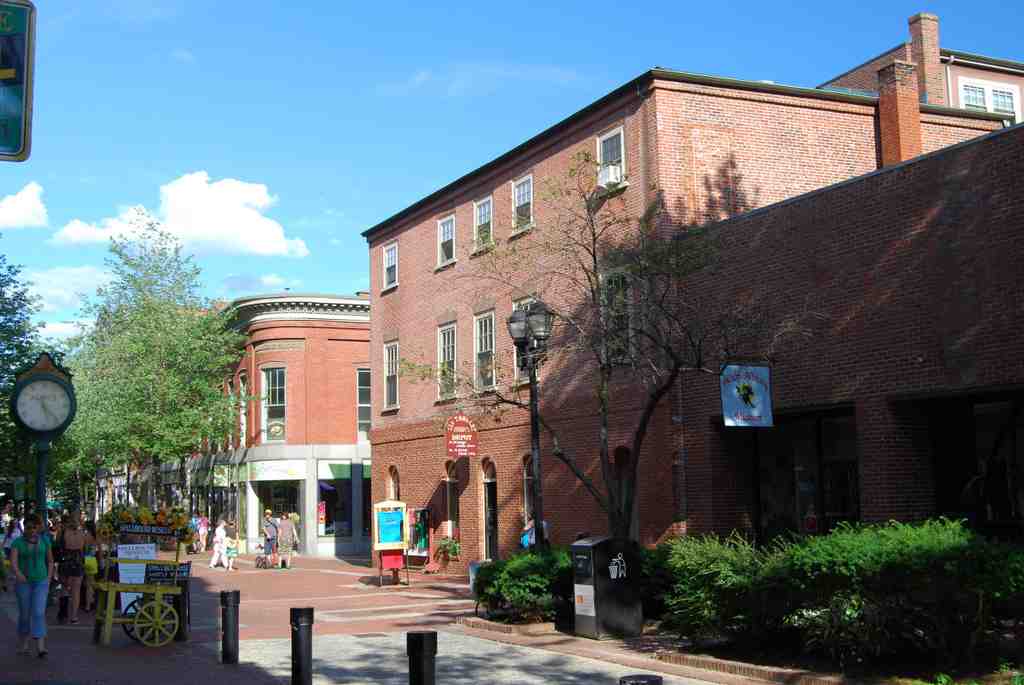
Ahead of you, you’ll spot the Downtown Salem District by its classic red-brick buildings and tree-lined pedestrian walkway, with a vintage green clock standing proudly on the left and lots of windowed storefronts inviting you in. Alright, welcome to the heart of Salem - the Downtown Salem District! Imagine you’re here in the late 1700s, when these very streets echoed with the clip-clop of horse hooves and the clatter of market vendors. Today, you’re standing in a spot that was so essential to the city that when it was added to the National Register of Historic Places, they had to expand the Old Town Hall Historic District just to fit all of Salem’s greatest hits inside. These streets, boxed in by Church, Central, New Derby, and Washington, are a treasure map of historic marvels. People once drove their wagons through here until, in a rare victory for pedestrians and lovers of fresh air, Essex Street was closed to cars in the 1970s. Now, only brave delivery drivers dare test their luck! And don’t miss those special buildings: the Joshua Ward House just up Washington Street, built in 1784 with tales older than most horror movies, and Salem City Hall, opened in 1837 and still running today, despite the Great Salem Fire of 1914 throwing it the ultimate trial by fire. City Hall is the grandparent of American city halls - it’s been in the municipal game longer than most people have had electricity! The crown jewel here is Old Town Hall, with its regal Federal architecture and ties to both Charles Bulfinch and Samuel McIntire, two rock stars of early American design. Inside, the Great Hall once bustled with town meetings, while the first floor was packed with market stalls and now, a museum. If you’re lucky, you might catch History Alive! performing - where actors bring all these stories to life. Salem’s downtown is more than a scenic stroll: it’s a place where the past is very much alive, with a few ghost stories rumored to have tagged along for the ride.
Ouvrir la page dédiée →You’re looking for an impressive gray granite building with tall windows and a bold, classic facade crowned by an eagle-right ahead of you, nestled between red brick…Lire plusAfficher moins
You’re looking for an impressive gray granite building with tall windows and a bold, classic facade crowned by an eagle-right ahead of you, nestled between red brick neighbors-just follow the sight of the big American flag above those grand wooden doors. So here you are, standing in front of Salem’s very own City Hall-a place where government business has buzzed for almost two centuries. Imagine it’s September 6, 1837. A crowd gathers here, and there’s a sense of excitement in the air. The mayor, Leverett Saltonstall himself, stands ready to set Salem's future in stone-quite literally! Workers bury treasures beneath the first cornerstone: local newspapers, a powerful mayoral speech, and the shiny new City Charter. These are gifts for the future, whispers to anyone who might dig them up a hundred years from now, hoping they get the local sports scores right. When the building was finished in 1838, Salem’s share of a national cash surplus-thanks, President Andrew Jackson-paid for every brick and elegant furnishing. That’s right, nobody had to cough up a dime in taxes. It’s one of the few city halls in America built for free, so if you ever wished for tax-free government, take a good look-you’re staring at a rare miracle. The building’s style is Greek Revival-think ancient temples, with four monumental pilasters flanking the entrance and strong, symmetrical lines. The granite front almost dares you not to be impressed, while the original mahogany double doors glint with brass studs, letting you know this was always meant to be Salem’s front door to big decisions. Gatherings still happen upstairs in the City Council Chamber, with plenty of heated debates and passionate speeches-some probably longer than a Salem winter. But the story doesn’t stop in the 1800s. In 1878, City Hall stretched its legs, doubling in size out the back, but keeping its beautiful face to the street. Fast forward to modern times: a new elevator in 2010 made sure everyone-ghosts included-can access the business of Salem. Restoration teams lovingly replaced bricks, roof, and windows in 2012, knowing that sometimes history just needs a little touch-up. So pause a moment here and picture all those twists of fate-political deals, urgent decisions, secrets under your feet-echoing off these granite walls. Salem’s City Hall is more than a building; it’s a stage where history always has a seat at the table, and the drama never gets old.
Ouvrir la page dédiée →To spot the Peirce-Nichols House, look for a big, pale yellow, three-story mansion just ahead with black shutters, stately white columns at the front entry, a low-pitched roof…Lire plusAfficher moins
To spot the Peirce-Nichols House, look for a big, pale yellow, three-story mansion just ahead with black shutters, stately white columns at the front entry, a low-pitched roof surrounded by a fancy balustrade, and tall chimneys rising above. Now, as you stand here squinting up at this grand home, let’s hop into a story that’s practically bursting at the seams with Salem’s old riches and a dash of bad luck. Imagine the year is 1782. Jerathmiel Peirce, a local guy who started out wrangling leather, is riding high after the Revolutionary War. He and his partner Aaron Waite weren’t just merchants; they owned a privateer ship called the Greyhound that chased down British vessels. Salem back then was so packed with wealth, it was said to be the richest city per person in America-ships were coming and going, money jingled in pockets, and the air buzzed with ambition. So, with pockets full (at least for now), Peirce hired a young genius builder named Samuel McIntire. Picture the sawdust flying and the steady hammering as McIntire built one of his earliest masterpieces right on this very spot. The design? Inspired by British pattern books, you get a late Georgian vibe-see those Doric columns and the perfectly symmetrical windows? McIntire put his heart in every detail, from the grand pediment out front to the fluted pilasters running up the corners. But, oh, the twists that life brings! As Peirce’s business adventures went a little south (not every ship came back golden), he lost this dazzling house. Friends stepped in, making sure the house stayed near the family-eventually, it passed to the Nichols children, through Sally Peirce’s marriage. Can you imagine the excitement in 1801 when they spruced up the hallway and parlor for Sally’s wedding? New Federal-style touches were added-lighter and full of hope for new beginnings. Swing behind the house, and you’ll find the old carriage house, still standing tall with its grand arches. Over the centuries, the house was filled with laughter, secrets, and probably more than one argument over who got the best bedroom. By 1917, the Nichols family finally said goodbye, and the Essex Institute took over, eventually opening it to the public. Today, it’s part of the Peabody Essex Museum-a time capsule of Salem’s climb to fortune, clever design, and the ever-turning wheel of luck. So, take a moment to soak it all in: the dreams built into these walls, the echo of footsteps from ship captains to wedding guests… and maybe try not to envy the folks who lived here-okay, maybe just a little!
Ouvrir la page dédiée →Look for a long street lined with grand old houses and leafy trees that arch overhead, glowing with golden autumn leaves-you’ll know you’re in the heart of the Chestnut Street…Lire plusAfficher moins
Look for a long street lined with grand old houses and leafy trees that arch overhead, glowing with golden autumn leaves-you’ll know you’re in the heart of the Chestnut Street District! Alright, welcome to one of Salem’s most enchanting time machines: the Chestnut Street District! Right where you stand, take a deep breath and imagine the clip-clop of horse-drawn carriages echoing between these stately mansions. Chestnut Street isn’t just another pretty road-this is Salem’s “Street of Dreams,” where the city’s wealthiest merchants and smartest architects showed off their fortunes made in the Old China Trade. Here’s a fun fact: Salem’s very own superstar builder Samuel McIntire lived and worked nearby-he could probably carve you a majestic eagle out of a pumpkin if asked! His touch is everywhere, from the elegant facades to the ornate woodwork. Take a peek up and down the street. At 39 Chestnut, you’ll find the Thomas Saunders House-the first impressive brick Federal house on the block, built in 1805. It got even fancier when Arthur Little remodeled it in 1893! Next door, Saunders outdid himself by gifting his daughters an epic McIntire-designed double house at numbers 41 and 43… talk about a wedding present! If you listen hard, maybe you’ll hear echoes of laughter from their grand celebrations. One of those sons-in-law, Leverett Saltonstall, even became Salem’s first mayor-I guess having a good house comes with certain perks! Wander a little and you’ll see Hamilton Hall at 9 Chestnut, another McIntire masterpiece from 1805, with its own separate historic status. Hamilton Hall has seen everything from dazzling social dances to heated debates-imagine polished shoes tapping and crinoline skirts twirling in candlelit evenings! At number 34, the Stephen Phillips House puts on a classic car show each year, blending old-world charm with a little tire-squealing excitement. Other treasures hide nearby: the Georgian splendor of the Ropes Mansion, the stately Peirce-Nichols House crafted for shipping magnate Jerathmiel Peirce, the enduring Pickering House claimed by one family for centuries, and even the John Bertram Mansion, which transformed from a grand home to the bustling Salem Public Library. Standing here, with crisp leaves tumbling around you, you’re not just on a street-you’re on Salem’s grandest stage, surrounded by stories shaped by love, ambition, and a dash of historic drama! Interested in knowing more about the saunders house, peirce-nichols house or the pickering house
Ouvrir la page dédiée →The Stephen Phillips House is the large grey and white building just beyond the white picket fence, with tall chimneys and rows of black shutters along the windows-look straight…Lire plusAfficher moins
The Stephen Phillips House is the large grey and white building just beyond the white picket fence, with tall chimneys and rows of black shutters along the windows-look straight ahead, framed by snow-dusted tree branches. Now, take a moment to imagine ship captains, heiresses, and a real piece of “house-moving” drama, all bundled up in this elegant mansion designed by Samuel McIntyre. The story actually begins with Elias Hasket Derby, a sea trade tycoon who practically sailed his way into millions. After Derby passed away, his fortune flowed to his daughter Elizabeth, and her husband, Captain Nathaniel West, who built a grand country estate on Derby’s Danvers land. But when their marriage went from smooth sailing to stormy seas, a divorce forced Captain West away from the property. Elizabeth’s daughters next held the keys, but tragedy and inheritance squabbles led Nathaniel to claim a third-and, in true house-flipping fashion, he physically moved four entire rooms here to Salem! Imagine neighbors watching those walls trundle down the road. As the years rolled on, Stephen W. Phillips bought the house, packing it with five generations of treasured family furnishings from travels far and wide. The house sits today just as Phillips left it, a museum brimming with antiques, world artifacts, and a hefty dose of family history. If you love a good inheritance squabble or just want decorating tips from the 1800s, you’re definitely in the right place!
Ouvrir la page dédiée →To spot Hamilton Hall, just look for the grand three-story brick building on the corner, with tall green shutters, Palladian windows, and a stately entrance porch supported by…Lire plusAfficher moins
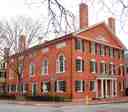
To spot Hamilton Hall, just look for the grand three-story brick building on the corner, with tall green shutters, Palladian windows, and a stately entrance porch supported by four white Doric columns right on Chestnut Street. There’s a kind of quiet dignity to Hamilton Hall-think of it as Salem’s original VIP clubhouse, sparkling with stories! The year is 1807. Salem’s merchant families, dressed to impress, parade through these very doors. Architect Samuel McIntire, a local legend with a knack for making bricks look elegant, designed these regal Flemish bond walls and hand-carved every swag and eagle right above the windows. On party nights, the flickering of candles on the ballroom’s curved balcony shimmers against those huge arched windows, while the band’s lively tunes rattle the one-of-a-kind sprung wooden floor-rumor has it you could dance twice as long with half the sore feet! Walk closer to the entrance, where you might have found bustling vendors 200 years ago. They hustled downstairs, making sure every little treat and trinket for each grand event upstairs was just right. And here's where mystery meets inspiration: the Hall’s caretaker, John Remond-a free Black man-ran a catering business here with his wife Nancy. Picture the fragrant aroma of their feasts wafting out during a wedding, the silverware glinting as guests sip wine and whisper rumors of the latest global adventure out of Salem harbor. The Remonds’ children, Charles and Sarah, would go on to become international activists, sparks for change in the fight for abolition and women’s suffrage. Sarah herself now has a special place on the National Votes for Women Heritage Trail, celebrated right here in front of the Hall-a reminder that big ideas aren’t always born in quiet corners. These days, the music has changed, but the energy remains. Every Thursday in winter, the Hall hums with voices and the gentle clinking of coffee cups, as Salem’s best minds debate global mysteries at the Lecture Series. It’s all volunteer-run, with a spirited squad of local women at the helm-a legacy as lively as any historic ball. Behind those grand columns, conversations keep swirling, and just maybe, Alexander Hamilton-yes, that Hamilton-would approve. <sfx>warm applause and murmuring crowd>
Ouvrir la page dédiée →To spot the Gedney and Cox Houses, just look for the large, pale-yellow, gable-roofed house rising above a classic white picket fence-right ahead and to your right-with a smaller…Lire plusAfficher moins
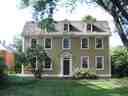
To spot the Gedney and Cox Houses, just look for the large, pale-yellow, gable-roofed house rising above a classic white picket fence-right ahead and to your right-with a smaller red house tucked away just behind it. Now that you’re here, take a deep breath and imagine the salty tang of the Atlantic drifting inland as it would have on a breezy day in the late 1600s-because you’re standing where some of Salem’s earliest colonial history lives and breathes. The Gedney House, built around 1665 for Eleazor Gedney, isn’t just any old house; it’s a survivor from Salem’s First Period, and, trust me, it has seen more costume changes than an actor in a historical drama. Gedney himself was a shipwright-he chose this very plot because it was so close to the bustling shore and his boat-building “buildplace.” Fresh from his wedding in 1665, he wasted no time putting up this sturdy, two-story home with its gabled attic and original parlor, attached with a lean-to roof (which, by the way, sounds like a very practical add-on when you keep needing more room for ship plans or mischievous kids). Now, back when wigs were tall and houses were small, the Gedney House went through at least three major makeovers: the “parlor lean-to” grew into a full second floor around 1705, then a whole new two-story rear addition popped up about a century later, complete with a basement kitchen-imagine the stews and stories cooked up down there! Whenever life shook up its bones, like when the central chimney was taken out in the 1960s, the house held onto traces of every era, including layers of paint as lively as the layers of Salem’s history. Today, the Gedney and Cox Houses are rarely open, like a secret you’re lucky to glimpse-so savor this moment outside, hearing the echoes of craftsmen, sea breezes, and centuries of stories swirling just on the other side of the white picket fence.
Ouvrir la page dédiée →






Foire aux questions
Comment commencer le tour ?
Après l'achat, téléchargez l'application AudaTours et entrez votre code de réduction. Le tour sera prêt à commencer immédiatement - il suffit d'appuyer sur lecture et de suivre l'itinéraire guidé par GPS.
Ai-je besoin d'Internet pendant le tour ?
Non ! Téléchargez le tour avant de commencer et profitez-en pleinement hors ligne. Seule la fonction de chat nécessite Internet. Nous recommandons de télécharger en WiFi pour économiser vos données mobiles.
S'agit-il d'une visite de groupe guidée ?
Non - il s'agit d'un audioguide en autonomie. Vous explorez indépendamment à votre propre rythme, avec une narration audio diffusée par votre téléphone. Pas de guide, pas de groupe, pas d'horaire.
Combien de temps dure le tour ?
La plupart des tours durent entre 60 et 90 minutes, mais vous contrôlez totalement le rythme. Faites des pauses, sautez des arrêts ou arrêtez-vous quand vous le voulez.
Et si je ne peux pas finir le tour aujourd'hui ?
Pas de problème ! Les tours disposent d'un accès à vie. Faites une pause et reprenez quand vous le souhaitez - demain, la semaine prochaine ou l'année prochaine. Votre progression est sauvegardée.
Quelles sont les langues disponibles ?
Tous les tours sont disponibles dans plus de 50 langues. Sélectionnez votre langue préférée lors de l'utilisation de votre code. Note : la langue ne peut pas être changée après la génération du tour.
Où accéder au tour après l'achat ?
Téléchargez l'application gratuite AudaTours sur l'App Store ou Google Play. Entrez votre code de réduction (envoyé par e-mail) et le tour apparaîtra dans votre bibliothèque, prêt à être téléchargé et commencé.
Si vous n'appréciez pas le tour, nous vous rembourserons votre achat. Contactez-nous à [email protected]
Paiement sécurisé avec 


