

Visite audio de New London : Échos de baleiniers, de richesse et de culte
Un crâne caché sculpté dans une ancienne pierre tombale. Une flèche qui a vu des rebelles et des visionnaires. Les rues de New London murmurent des secrets là où la plupart ne voient que des manuels d'histoire. Cette visite audio autoguidée révèle le drame et l'intrigue tissés entre des sites comme l'église épiscopale St. James, le cimetière Ye Antientist Burial Ground et le célèbre quartier historique de Downtown New London. Attendez-vous à des histoires inattendues et à des coins négligés que la plupart des gens ignorent. Qui a planifié son évasion dans l'ombre de la vieille église par une nuit fatidique ? Quel nom continue de résonner parmi les pierres en ruine du cimetière ? Pourquoi un seul scandale a-t-il changé à jamais le destin d'un coin de quartier animé ? Marchez à travers des siècles d'ambition, de chagrin et de mystères qui résonnent encore sur les pavés. Chaque pas révèle une autre facette de New London — ses rébellions cachées, ses scandales silencieux et ses légendes inédites — qui n'attendent que d'être découvertes. Osez écouter attentivement. Les histoires inédites de la ville vous attendent.
Aperçu du tour
À propos de ce tour
- scheduleDurée 40–60 minsAllez à votre propre rythme
- straightenParcours à pied de 3.5 kmSuivez le sentier guidé
- location_onEmplacementNew London, États-Unis
- wifi_offFonctionne hors ligneTéléchargez une fois, utilisez n'importe où
- all_inclusiveAccès à vieRéécoutez n'importe quand, pour toujours
- location_onCommence à Douane de New London
Arrêts de ce tour
To spot the New London Custom House, look for a solid, imposing stone building dressed in mismatched shades of granite, with round columns holding up a porch, right on Bank Street…Lire plusAfficher moins
To spot the New London Custom House, look for a solid, imposing stone building dressed in mismatched shades of granite, with round columns holding up a porch, right on Bank Street near the water’s edge. Alright, feast your eyes on this-New London’s Custom House. Back in the 1830s, the government decided it needed a place to, well, make sure folks paid their dues and no one tried to sneak anything untaxed off the boats. So they called up Robert Mills-yeah, the same guy who designed the Washington Monument-and told him to get fancy with granite from the local quarry. What you’re looking at cost just over $30,000 at the time. That is the price of a solid suburban home today… except this home has walls strong enough to keep out, well, everything but New England winter. Now, the door you see? It’s got its own bragging rights. The wood came from the USS Constitution. Talk about recycling with style. And then... the Custom House witnessed something far less bureaucratic. In 1839, a ship called La Amistad ended up right here at the wharf. The captured Africans on board had actually taken over the ship and tried to sail back to freedom. For months, they were held nearby as their fate turned into an international sensation, part courtroom drama, part human tragedy. Today, if you walk inside, it’s all ship models, local legends, and a library bursting with old maritime maps-2,300 books, give or take. There’s even lighthouse tours if you want to keep the sea air in your lungs a bit longer. When you’re ready for more local drama, Shaw Mansion is a quick walk southwest-should take about 8 minutes.
Ouvrir la page dédiée →On your left, you’ll spot a stately three-story granite mansion, with a wide porch running along the front-trust me, all that stone and those old-school columns are tough to miss.…Lire plusAfficher moins
On your left, you’ll spot a stately three-story granite mansion, with a wide porch running along the front-trust me, all that stone and those old-school columns are tough to miss. Welcome to the Shaw Mansion, a house with more stories than your average binge-worthy series. Picture it: 1756, Nathaniel Shaw Senior-wealthy merchant, big ambitions-hires Acadian refugees, who’d been driven out of Nova Scotia, to build him a home with serious staying power. They didn’t skimp on the granite, either. You’ve got a central hall running through the place and a mahogany staircase any ship captain would envy. The Shaws weren’t just big on granite-they were big in business, and during the American Revolution, this wasn’t just a family home; it was the headquarters for Connecticut’s naval operations. And yes, Connecticut had its own navy back then. The real money, though, came from privateers-basically legal pirates. They snagged 155 enemy ships, which meant *serious* cash. Back then, a single captured vessel might fetch a few thousand pounds-today, that could mean millions. The revolution wasn’t all high seas adventure, though. During Benedict Arnold’s infamous raid in 1781, flames threatened the Shaws’ mansion. Local legend says a neighbor-thinking fast-doused the fire with vinegar, saving the house. Sadly, her own home didn’t survive, but people dubbed it the “vinegar house” for generations. In 1907, the house traded hands to the New London County Historical Society, but the Shaws just…kept living there for a while. Today, the mansion holds antiques, artifacts, and a research library-a treasure chest for history buffs. Ready for the next chapter? Joshua Hempsted House is just a 6-minute walk northwest.
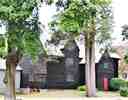
Ouvrir la page dédiée →Look right and you’ll spot a sturdy, weathered wooden house with two uneven gables poking out from a simple roof-the Joshua Hempsted House looks like it’s drifted in from another…Lire plusAfficher moins
Look right and you’ll spot a sturdy, weathered wooden house with two uneven gables poking out from a simple roof-the Joshua Hempsted House looks like it’s drifted in from another century, with narrow windows made of diamond-shaped panes and a little enclosed entry sticking out front just to keep you guessing. This house has hung around since about 1678-which around here, makes it nearly ancient. It’s one of Connecticut’s oldest survivors, and calling it “well preserved” is putting it mildly. Through that front vestibule and past the thick, rough beams, you’re stepping into what was originally a basic one-room shelter with a chimney jammed on one end. Families lived simpler-tighter-back then, but the original Joshua Hempstead clearly built the place to last, probably without a single thought of future “open concept” renovations. You want tension? During the 1780 Battle of Groton Heights, the city went up in smoke all around the Hempsted House… except here. Turns out, the British soldiers pillaged a big family meal the Hempsteads had cooked for a reunion. The invaders got fed, and the house got a pass. Sometimes survival runs on luck-and brisket. Over the years, this home became a safe haven in the Underground Railroad, quietly sheltering people escaping slavery. Decades later, it dodged the wrecking ball, too. By 1937, it landed in the hands of the people who’d become Connecticut Landmarks-costing them less than a decent new sedan at the time, which in today’s money, would set them back closer to $12,000. Cheap at twice the price for this much history. When you’re ready, Hempstead Historic District is just a 6-minute stroll southwest.
Ouvrir la page dédiée →

Afficher 10 arrêts de plusAfficher moins d'arrêtsexpand_moreexpand_less
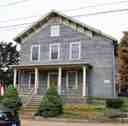
Look to your right for a row of tightly-packed houses climbing a steep hill, some sitting above old stone retaining walls-if it feels like a neighborhood built on a natural…Lire plusAfficher moins
Look to your right for a row of tightly-packed houses climbing a steep hill, some sitting above old stone retaining walls-if it feels like a neighborhood built on a natural staircase, you’ve found the Hempstead Historic District. Alright, soak it in. This part of New London is like a time capsule stacked three centuries deep. Settled way back in the 1600s, folks first put their roots here when the rest of New England was more forest than town. The view might’ve been of muddy Bream Cove back then-now it’s 142 houses packed onto sloping streets that zigzag the hillside. In the mid-1800s, the whaling boom turned these old farms into prime real estate. Suddenly, whalemen and new industry left their mark, followed by factories and, in a rare twist for the era, a thriving free Black community. Walk past, and you’ll spot everything from Colonial wood beams to Greek Revival columns. Anti-escape features-think high fences and narrow lanes-hint at early jailhouses and factories. If you want to see museums, both Hempstead houses are open. This district saw fortunes made, families settled, and a city growing up-one steep step at a time. Ready for Huntington Street Baptist Church? Wander east for about 8 minutes.
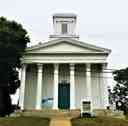
Ouvrir la page dédiée →Look to your left-you cannot miss the Huntington Street Baptist Church perched proudly on a big chunk of granite, with its row of tall, fluted columns holding up a grand portico…Lire plusAfficher moins
Look to your left-you cannot miss the Huntington Street Baptist Church perched proudly on a big chunk of granite, with its row of tall, fluted columns holding up a grand portico that almost looks like it belongs on an ancient Greek temple, albeit with a steeple on top for Connecticut flavor. So here’s a building with a little drama of its own. Back in 1843, New London was having a little crisis of faith-it wasn’t just about heaven or hell, but about who was preaching what each Sunday. The Universalists, who were a bit more liberal with their ideas about salvation, had gotten on the nerves of the local Baptists. Tensions bubbled over thanks to a passionate preacher named Jabez Swan, and so, the Universalists packed up and built their own church-right here, and strategically high up so their steeple looked down on everyone else’s. Not subtle. John Bishop, the guy behind the design, must’ve really had a thing for Greek Revival style, and maybe for showing off a little because those columns and that pediment? Straight out of Minard Lafever’s architecture pattern book, which was all the rage at the time. But the Universalists, it turned out, had champagne taste on a cider budget. The building cost them a fortune-about $12,000 back then, which would be over $420,000 today. Ouch. By 1849, weighed down by debt and maybe a bit of regret, they sold it off...to the Baptists led by Swan himself. Oh, the irony. When you’re ready, head south for about 3 minutes and you’ll find yourself in the heart of the Downtown New London Historic District.
Ouvrir la page dédiée →Look to your right-you’ll spot the Downtown New London Historic District in all its quirky, layered glory: an eclectic blend of 18th-century brick, 19th-century stone facades, and…Lire plusAfficher moins
Look to your right-you’ll spot the Downtown New London Historic District in all its quirky, layered glory: an eclectic blend of 18th-century brick, 19th-century stone facades, and 20th-century shopfronts, all running down toward the Thames River, with signs for cafes, boutiques, and a surprising patchwork of old painted woodwork peeking between modern awnings. Alright, welcome to the heart of old New London-where nearly every building has a story to tell and, quite frankly, a few would probably argue about the details. This area covers a whopping seventy-eight acres-think of about sixty football fields, but swap out the end zones for wharves and waterfront instead of wide receivers. Folks here call it “the Waterfront,” and it’s easy to see why: the district sits right on the bank of the Thames River (named after the one in London, but pronounced locally to rhyme with “James,” not “Thames” like in England… don’t let any Brit hear you say otherwise). Three main streets anchor the area. Bank Street was once lined with tall ships creaking at anchor and the smell of fresh-caught fish-less glamorous than brunch today, but probably just as lively. This street owes its name both to its riverside perch and, let’s be honest, the early banking families who realized sailing ships and trade made for a pretty good paycheck. Let’s talk drama-back in 1781, British troops led by Benedict Arnold, America’s most famous turncoat, stormed through New London and burned much of it straight to the ground. Yes, the whole “traitor” thing was literal here. Arnold’s rampage torched the waterfront; what you see now was painstakingly rebuilt, brick by stubborn brick. Imagine the costs back then-rebuilding a city after an invasion could run you twenty thousand dollars in 1781; that’s more like half a million dollars today. And that’s not counting the emotional cost of watching your entire town go up in smoke. Today, the district is a patchwork quilt of different centuries: the Shaw Mansion, home to the Connecticut Navy during the American Revolution-yes, there WAS a Connecticut Navy; the New London Customhouse, oldest continuously operated in the country; lively Victorian shopfronts where Gilded Age clerks and modern baristas now cross paths; and more than a few locations whispered about for their Amistad connections and haunted corners. If you stroll up State Street, take in the mix: stone churches (what’s left of them), old department stores turned apartments, and a few relics that genuinely survived Arnold’s torch. The terrain isn’t just history-it’s living proof that New London has a habit of picking itself up and starting over, no matter what comes rolling up the harbor. Soak it in for a minute-maybe pop into a café, channeling Eugene O’Neill’s fondness for a good drink and a better story. When you’re ready to move on, New London Public Library is about five minutes north from here.
Ouvrir la page dédiée →Look to your right and you’ll spot the New London Public Library, a sturdy sandstone building topped with a red-tiled roof and a massive, rounded entry arch-like the library…Lire plusAfficher moins
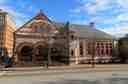
Look to your right and you’ll spot the New London Public Library, a sturdy sandstone building topped with a red-tiled roof and a massive, rounded entry arch-like the library equivalent of a welcoming bear hug. Now, this isn’t your average library. The whole affair started with a family inheritance-when Henry Philomen Haven, a whaling merchant with a knack for making boatloads of cash, died in 1876. After a rather soap-operatic twist-his son Thomas died before the money could be split-the family trust decided to funnel Thomas’s share (which would be about $1.5 million in today’s dollars) into something for the public good. The result? By 1889, Boston architects Shepley, Rutan and Coolidge got to work, sticking closely to Henry Hobson Richardson’s famously “chunky” Romanesque style… and project supervisor George Warren Cole kept a close eye on the local masons. It officially opened in 1891-a time when a library card was more valuable than a TikTok tutorial. The building stayed nearly untouched for nearly a century, save for an elevator that seemingly appeared out of thin air. Modern renovations have expanded the place, but the original welcoming vibe? Still intact. When you’re ready, head north for about 3 minutes to reach Whale Oil Row.
Ouvrir la page dédiée →To spot Whale Oil Row, look to your right for four grand, white, temple-like houses standing shoulder to shoulder-they’ve got those classic pointy Greek roofs and hefty columns…Lire plusAfficher moins
To spot Whale Oil Row, look to your right for four grand, white, temple-like houses standing shoulder to shoulder-they’ve got those classic pointy Greek roofs and hefty columns that basically scream 'old money.' Here’s the line-up that made whaling millionaires the local aristocracy. Built between 1835 and 1845, these Greek Revival beauties were the vision of Ezra Chappel and builder Charles Henry Boebe-not household names, but clearly the right folks to call when you wanted your home to look like the Parthenon. Each house is topped with a proper pediment and supported by fluted Ionic columns. Back then, these whaling folks were making what we’d now call millions-enough to build these mansions without breaking a sweat. One owner ran ships, another was a merchant, and there was even a doctor-because every high society row needs a professional on standby, right? For years these were prime family estates, but by the mid-1900s, they’d been converted into office space. So, if you get a sudden urge to buy whale oil futures, blame the view. When you’re ready, head north for about 3 minutes to reach St. James Episcopal Church.
Ouvrir la page dédiée →You’re looking for a church with soaring stone walls, pointed arched windows, and a tall bell tower rising up from the northwest corner-just set your sights on the corner of…Lire plusAfficher moins
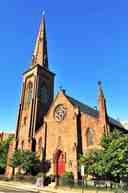
You’re looking for a church with soaring stone walls, pointed arched windows, and a tall bell tower rising up from the northwest corner-just set your sights on the corner of Huntington and Federal and you’ll find St. James Episcopal Church standing proud. Let’s step into the layered story of St. James, one of New London’s most historic congregations. Its roots? Way back in 1725, long before the U.S. was even a twinkle in the Founding Fathers’ eyes. Picture this: their first church was a humble wooden building on the bustling Parade. Now, legend has it a Native American chief visited, not with a gift basket, but with an arrow-firing it straight into the golden ball atop the steeple. The arrow hung up there for years... until 1781, when fire swept through the city during the British attack under Benedict Arnold. Yes, THAT Arnold, the American-turned-British General hailing from neighboring Norwich, burned the church right to the ground. After the Revolution, New London rebuilt, and St. James came back stronger-in more ways than one. Their new rector in 1785 was none other than Bishop Samuel Seabury, America’s first Episcopal bishop. Seabury was so important, they didn’t just lay him to rest here beneath the Hallam Chapel, they gave him a cenotaph-essentially a fancy headstone-designed by Richard Upjohn, the same architect who’d design the church you’re looking at now. By the mid-1800s, the congregation was outgrowing their second church, so they called in Upjohn, the man responsible for Trinity Church in Manhattan. Clearly, Upjohn was on a bit of a “churchetecture” tour. He crafted this beauty in the classic Gothic Revival style, with intricate stonework, flying buttresses, and a dramatic cruciform layout. The bell tower looming over your shoulder? It’s not just for style-it’s the literal and spiritual heart of the place. The experts in New York griped about the "Moorish" styling of the roof (they were a tough crowd), but New Londoners loved it, and you can see why. Inside, stained glass is serious business here. The original windows came from Henry E. Sharp’s New York studio in the 1850s. Over time, many were swapped for works from none other than Tiffany Studios-yes, the same Tiffany as lamps and jewelry. One gigantic window commemorates the Lawrences, big names in the whaling trade, showing saints Sebastian, Joseph, and Francis, all glittering in brilliant color. Another, honoring Lyman Allyn, shows the Holy Family-again, funded by New London’s whaling fortunes. Money really did talk-donating a window like that back then would be a several-thousand-dollar affair, easily the equivalent of over $100,000 today. But wait-there’s drama in glass and drama in war. The J&R Lamb window from 1922 is a deeply moving memorial to two best friends, both just nineteen, who died during World War I, immortalized with the Archangel Michael and a quote promising that the brave “shall mount up with wings as eagles.” And if you’re into music, don’t miss the mighty Ernest M. Skinner organ-boasting some 2,680 pipes, it’s played for everything from church service to silent movies, which is quite the local treat. St. James isn’t just history frozen in stone and glass. It’s still a beacon for New London, with community meals, shelter programs, and choirs that fill these stained-glass halls with life. Kind of makes you want to linger. When you’re ready, the Acors Barns House is just a minute north on Huntington. Let’s keep the story rolling.
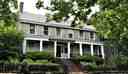
Ouvrir la page dédiée →To spot the Acors Barns House, look for a stately white home with a gable roof, broad clapboard exterior, and an entrance framed by classic Greek columns-right at the corner where…Lire plusAfficher moins
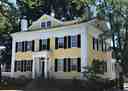
To spot the Acors Barns House, look for a stately white home with a gable roof, broad clapboard exterior, and an entrance framed by classic Greek columns-right at the corner where tall trees peek over an impressive iron fence. Alright, so here it is: the Acors Barns House. If you’re thinking it looks like the kind of place where a prosperous whaling magnate would count his spoils-or at least keep his ledgers-you’re right on target. This two-and-a-half story Greek Revival beauty went up in 1837, right in the golden age when New London’s fortunes were being fueled by blubber and risk-taking. And trust me, it has all the airs of a leading man in a period drama. Five windows wide, neat as a pin, and with a proper Greek portico-those columns practically shake hands with you as you pass the front walk. Acors Barns himself was a local upstart who made good. Born the son of a sailor in 1794, he grew up in Westerly and Stonington before moving to New London. By 1827, he was running one of the city’s top whaling firms-so prosperous, in fact, that Acors managed to sidestep the whaling industry’s famous collapse. How? Well, while others clung to their harpoons, he diversified. He invested in railroads just as the west was opening up, and then planted the seeds of the Bank of Commerce here in 1852. For reference, most banks started then with capital of maybe $100,000-around $3.8 million today. The family kept the bank going after Acors’ death, proving dynastic ambition was one thing they didn’t whale on. Sorry, had to slip that in. The house itself has seen some additions and tweaks over the decades-like that central dormer jutting from the roof and the partly enclosed veranda around back. Depending on your point of view, those changes are either “architectural evolution” or, well, attempts at home improvement that make preservationists wince. The inside, though, is pure architectural drama: envision elaborate hall ceilings, custom woodwork, and marble arched fireplaces where you could almost stage a Greek tragedy. There were dumbwaiters-one of those little lifts, just big enough for your onion soup-running to the kitchen in the cellar. The attic? Five tiny rooms once crammed with servants, a very literal upstairs-downstairs arrangement. Ownership has been almost as lively as the house itself. It’s been handed down through the Barns family, hosted a legal office, and is now cared for by a local community foundation, who forked over $325,000 in 2013-about $420,000 if you adjust for inflation-for the privilege. That’s the kind of money you only spend for something truly irreplaceable. People in town will tell you-with just a little pride-that the Acors Barns House is more than just wood and marble. It’s a living artifact. In a city that lost so much character during urban renewal, this place quietly reminds everyone what “New London style” once meant. Ready for something a little different
Ouvrir la page dédiée →To spot the Prospect Street Historic District, glance to your right at the stretch of graceful old homes lined up along Prospect Street-look for the classic columns and tall,…Lire plusAfficher moins
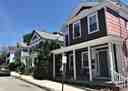
To spot the Prospect Street Historic District, glance to your right at the stretch of graceful old homes lined up along Prospect Street-look for the classic columns and tall, narrow windows that give away their 1800s roots. Now, picture this neighborhood almost two centuries ago, the air humming with opportunity and maybe just a hint of whaling oil. Prospect Street was carved out in the 1830s because New London’s whaling success was flooding the city with folks eager to ride the economic wave-everyone from ship outfitters to barrel-makers needed a place to hang their hats. Developers Hezekiah Goddard and Sabin Smith snapped up a chunk of the old Hallam family estate here for just a few thousand dollars-which, with today’s cost of living, would be like your neighbor buying up a whole block for the price of a nice used car. Most homes here are Greek Revival, showing off the city’s early ambitions-think strong columns, gabled porches, and a taste for symmetry. Number 17 stands out with its four-column front, looking like something out of an ancient builder’s handbook-because, in fact, it was. Over time, the neighborhood got a few architectural curveballs: a federal-style home, some Italianates tucked on side streets, even a Queen Anne beauty from 1889-a little Victorian flourish amid the classical calm. It’s not a mansion district, but a close-knit collection of houses that once held the heart of bustling, middle-class New London. Middle-class back when that meant small families, big ambition, and neighbors who probably knew your business whether you wanted them to or not. When you’re ready, Bulkeley School is just a minute north up the street.
Ouvrir la page dédiée →You can spot the Bulkeley School by its sturdy granite walls, steep multicolored slate roofs, and dramatic Gothic windows-just look for the castle-like structure standing tall at…Lire plusAfficher moins
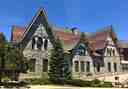
You can spot the Bulkeley School by its sturdy granite walls, steep multicolored slate roofs, and dramatic Gothic windows-just look for the castle-like structure standing tall at the crossroads. Alright, let’s take in this showstopper of New London, where stone meets ambition. Imagine it’s the early 1870s-horses clatter down the street, and folks are eyeing this brand-new schoolhouse, courtesy of a generous merchant, Leonard Bulkeley. His bequest-about $100,000 at the time (think two and a half million in today’s dollars)-put up the funds for a boys’ high school where city kids could test their smarts… and only the best passed the entrance exam. If you got in, your tuition was free. Not so for out-of-towners; by the 1890s, families from neighboring areas paid out of pocket, fueling the school’s expansion. The architect, Leopold Eidlitz of New York, knew how to make a place feel grand. Look up at those Gothic arches-he wasn’t here to design a plain box. The original section, right in front of you, held young men destined for law, business, or city government. These halls shaped New London’s leaders, one algebra lesson at a time. After private schooling wound down in 1951, the building’s purpose shifted-first as public school headquarters and now buzzing once again with students as the Regional Multicultural Magnet School for elementary-age kids. Same imposing façade, just younger voices ringing down those granite corridors. Whenever you’re ready, Ye Antientist Burial Ground is up next-just head north for about 2 minutes.
Ouvrir la page dédiée →If you look to your right, you'll spot an open hillside dotted with tilting gravestones, some crumbling with age, surrounded by iron fencing and ancient trees-this is Ye…Lire plusAfficher moins
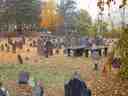
If you look to your right, you'll spot an open hillside dotted with tilting gravestones, some crumbling with age, surrounded by iron fencing and ancient trees-this is Ye Antientist Burial Ground, set just above the crossroads, with a wide view stretching all the way to the Thames River. You’re standing next to one of New England’s oldest cemeteries, dating back to before New London was even called New London-back then, folks knew it as Pequot Plantation. This patch of ground has quietly watched over the city for nearly four hundred years. Imagine the year is 1645: the town is barely more than a handful of rough timber houses, and officials have just set aside this hill to be the “Common Buriall place.” Meaning, no one’s claiming this land as private turf, ever. And honestly-who’d want to? Now, in the early days, burials here had a kind of stoic efficiency. There wasn’t much for fancy gravestones-remember, there were no local stonecutters, and the settlers weren’t exactly rolling in spare cash. Most graves were marked with whatever rocks could be lugged up the hill-back then, a granite boulder dragged with ropes to cover a grave meant, “Hey, someone important rests here.” For a proper grave, the town’s sexton got paid 4 shillings if it was an adult, or 2 shillings for a child-that’s about $35 and $17 in today’s money. Not much for a job description that covered grave-digging, sweeping the meeting house, and running off any stray dogs. Multi-tasking at its colonial finest. Over time, things classed up-by the early 1700s, headstone carving had become a legitimate craft. You’ll spot stones from all over: local granite, regional brownstone, and imported slate from Boston and Rhode Island. Look for markers by carvers like the Lamsons, the Stanclifts, and the legendary Kimball, who really cornered the “urn-and-willow” market in the 1800s. If you wander around, you might find the grave of Sarah Kemble Knight-she was an early travel writer, riding solo from Boston to New York and jotting it all down. Gurdon Saltonstall lies here too, a colonial governor whose name is still sprinkled all over Connecticut. Lucretia Harris Shaw is another worth visiting: she turned her house into an impromptu hospital during the Revolution, nursing soldiers who survived prison camps, only to catch a deadly fever herself. Now, not every founding father or mother is marked-the oldest stones here date to the 1660s, but we know countless souls were laid to rest long before anyone could afford a carved epitaph. Some say the real population of this hill is hidden beneath its layers: generations of townsfolk, their stories now part of the soil itself. And, if you stand quiet for a moment, you’ll catch that breeze up from the Thames and, looking east, see the heights of Groton-a view just about unchanged since those first burials. It’s a little slice of eternity in the middle of New London. Not too shabby for a final resting place, huh?
Ouvrir la page dédiée →


Foire aux questions
Comment commencer le tour ?
Après l'achat, téléchargez l'application AudaTours et entrez votre code de réduction. Le tour sera prêt à commencer immédiatement - il suffit d'appuyer sur lecture et de suivre l'itinéraire guidé par GPS.
Ai-je besoin d'Internet pendant le tour ?
Non ! Téléchargez le tour avant de commencer et profitez-en pleinement hors ligne. Seule la fonction de chat nécessite Internet. Nous recommandons de télécharger en WiFi pour économiser vos données mobiles.
S'agit-il d'une visite de groupe guidée ?
Non - il s'agit d'un audioguide en autonomie. Vous explorez indépendamment à votre propre rythme, avec une narration audio diffusée par votre téléphone. Pas de guide, pas de groupe, pas d'horaire.
Combien de temps dure le tour ?
La plupart des tours durent entre 60 et 90 minutes, mais vous contrôlez totalement le rythme. Faites des pauses, sautez des arrêts ou arrêtez-vous quand vous le voulez.
Et si je ne peux pas finir le tour aujourd'hui ?
Pas de problème ! Les tours disposent d'un accès à vie. Faites une pause et reprenez quand vous le souhaitez - demain, la semaine prochaine ou l'année prochaine. Votre progression est sauvegardée.
Quelles sont les langues disponibles ?
Tous les tours sont disponibles dans plus de 50 langues. Sélectionnez votre langue préférée lors de l'utilisation de votre code. Note : la langue ne peut pas être changée après la génération du tour.
Où accéder au tour après l'achat ?
Téléchargez l'application gratuite AudaTours sur l'App Store ou Google Play. Entrez votre code de réduction (envoyé par e-mail) et le tour apparaîtra dans votre bibliothèque, prêt à être téléchargé et commencé.
Si vous n'appréciez pas le tour, nous vous rembourserons votre achat. Contactez-nous à [email protected]
Paiement sécurisé avec 


