
Visite audio de Holland : Échos de foi, de feu et de fondateurs
Sous une canopée de tulipes et de briques solides, Holland, Michigan, cache des secrets que nulle part ailleurs dans le Midwest n'ose murmurer. Promenez-vous avec cette visite audio autoguidée à travers le cœur historique de Holland, découvrant des histoires gravées dans les piles de bibliothèques, derrière d'élégantes façades et le long d'avenues éclairées par des lanternes. Découvrez les moments que les touristes manquent : les luttes, les trahisons et les merveilles qui ont façonné une ville pas comme les autres. Quel incendie a failli effacer l'avenir à quelques pas de la bibliothèque du district de Herrick ? Qui a disparu sans laisser de trace sur Eighth Street, déclenchant des décennies de rumeurs chuchotées ? Et pourquoi une simple vitrine a-t-elle déclenché une rébellion à l'échelle de la ville, plus passionnée que n'importe quel festival néerlandais ? Tracez vous-même ces chemins cachés. Marchez sous les clochers et les vitraux, sentant chaque pavé résonner de drame et de mémoire. Chaque tour ouvre un nouveau mystère, chaque coin offre un secret que seuls les courageux recherchent. Commencez le voyage. La vraie Holland vous attend juste sous la surface.
Aperçu du tour
À propos de ce tour
- scheduleDurée 30–50 minsAllez à votre propre rythme
- straightenParcours à pied de 3.1 kmSuivez le sentier guidé
- location_onEmplacementHolland, États-Unis
- wifi_offFonctionne hors ligneTéléchargez une fois, utilisez n'importe où
- all_inclusiveAccès à vieRéécoutez n'importe quand, pour toujours
- location_onCommence à Ancien hôtel de ville et caserne de pompiers de Holland
Arrêts de ce tour
To spot the Holland Old City Hall and Fire Station, just look for a two-story tan brick building with bold red trim, a striking gabled tower in the corner, and festive wreaths on…Lire plusAfficher moins
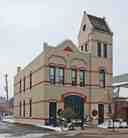
To spot the Holland Old City Hall and Fire Station, just look for a two-story tan brick building with bold red trim, a striking gabled tower in the corner, and festive wreaths on the doors-right on East 8th Street. Imagine the year is 1883 and the smell of fresh brick and fieldstone fills the crisp Michigan air as builders hustle to finish this grand new city hall and fire station. Until then, city leaders and firefighters shared cramped rental spaces, squeezing their wagons and council chairs wherever they could. But after a harsh fire or two-not to mention a few too many soggy city meetings-Holland decided it was time for a real home base. You’re standing right where local heroes once leapt into action, galloping out the big arched doorway with shiny horse-drawn fire trucks, the pointed Dutch Revival tower above them holding hoses out to dry (not designer laundry, despite the stylish look!). Inside, city business buzzed for decades until the 1910s, when civic life moved on and the fire crew stayed behind. This steadfast brick building kept serving Holland’s bravest until 1977, standing strong through World Wars, blizzards, and the odd cat rescue. Even when the fire bells finally stopped, the old place got a new life, lovingly renovated by private owners so its stories and sturdy Dutch character could keep watch over the bustling street below.
Ouvrir la page dédiée →Directly ahead, you’ll spot a stretch of charming, historic brick and stone storefronts with large arched windows and colorful details, lining both sides of Eight Street-just look…Lire plusAfficher moins
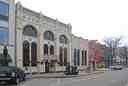
Directly ahead, you’ll spot a stretch of charming, historic brick and stone storefronts with large arched windows and colorful details, lining both sides of Eight Street-just look for the tall, ornate cream-colored building adorned with green and blue tilework on your left. Now, you’re standing at the very heart of Holland’s Downtown Historic District, where the streets hold stories that are as lively as the shopfronts. Picture it-Eighth Street in the late 1800s, a bustling avenue lined with wooden buildings, merchants calling out deals, and horses clopping over the dusty road. But in 1871, disaster struck when a raging forest fire swept through, leaving much of Holland-including this commercial hub-in smoldering ruins. It must have been a bleak sight, ash swirling in the air, buildings reduced to piles of charred wood. Just as the town began to bounce back, the Panic of 1873 hit, making everyone tighten their belts and slow down the rebuilding. But Holland folks are tough as old boots. By 1875, new buildings rose where the ashes had cooled-though those early, wooden “false-front” structures have all disappeared now, like a magician’s rabbit. The real transformation came with bricks, lots of them! As the city’s population boomed-from 2,400 in 1871 to nearly 8,000 by 1900-so did the brickwork, laying the foundation for today’s colorful mix of Victorian and early-20th-century styles. Take a stroll and feast your eyes on the district’s grandest residents. There’s the towering Hotel Warm Friend, with nine bays, a Dutch gable, and a colorful past-if you ever lose a friend here, check the front desk! Next door, Steketee’s Department Store steals the show with a six-story wall of windows and Art Deco accents. Across the way, the Holland City State Bank stands solid, showing off its Richardsonian Romanesque muscles with chunky stone blocks and a pyramid-roofed tower-all business on the outside, maybe a coin or two in the couch cushions inside. Don’t miss the elegant older buildings at 24 East and 36 West Eighth Street, the district's Italianate pioneers. The Knickerbocker Theater pops up with a classical hat (that’s a fancy pediment, if you ask the locals), and limestone-clad First National Bank struts its Ionic columns. Today, as cars zoom and shoppers pop in and out, it’s hard to imagine this lively district rising from smoke and embers, but every ornate cornice and sturdy brick is built on 150 years of fiery spirit, creative ambition, and a dash of Dutch determination!
Ouvrir la page dédiée →You’re looking for a striking white building ahead with six giant columns standing at its front entrance and a tall, three-part tower topped by a round belfry rising above the…Lire plusAfficher moins
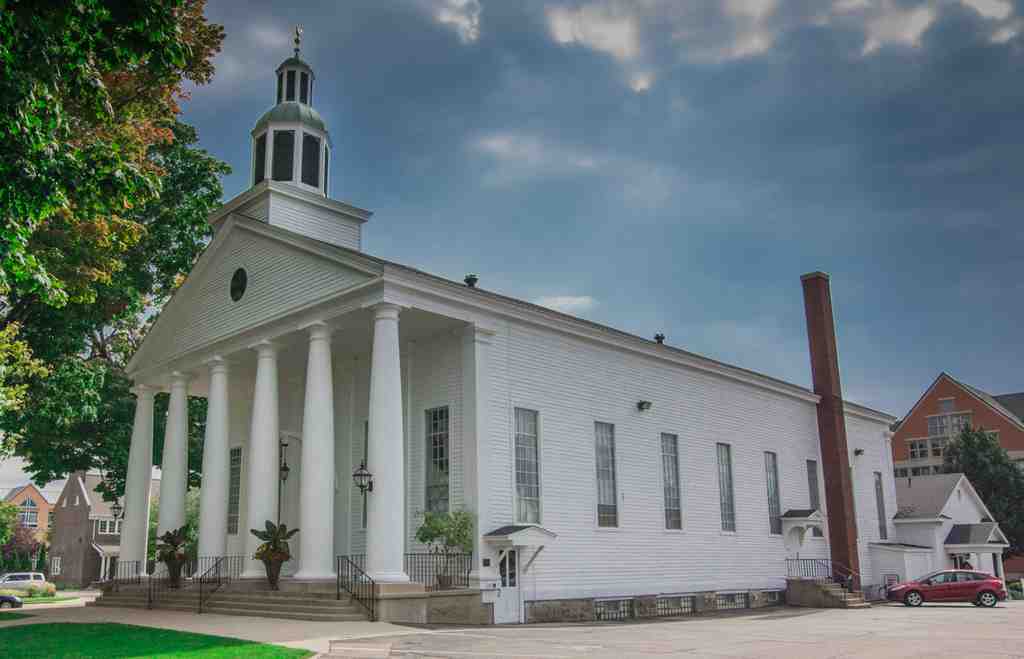
You’re looking for a striking white building ahead with six giant columns standing at its front entrance and a tall, three-part tower topped by a round belfry rising above the roof-hard to miss amid the trees and street bustle. Now, imagine stepping back to 1854. Holland was a fresh town, born from the dreams of Dutch immigrants seeking new beginnings-storms of hope swirling around them, mud in their boots and faith in their hearts. Here, at this very spot, they came together to build a church, their second, more permanent house of worship. You’d have heard the creak of wooden beams, the voices of settlers led by Rev. Van Raalte, and the steady guidance of Jacobus Schrader, who knew more about windmills but still somehow wrangled this stately Greek Revival masterpiece into being. Over the decades, there was laughter, music, and maybe a little grumbling, too: a pipe organ arrived in 1890 (imagine the excitement!), a brand-new annex popped up in 1900, and by the mid-20th century, the smell of sawdust and fresh paint filled the sanctuary as everything from the basement to the pews got a makeover. People filled the plain wooden benches-some sitting tall, others sneaking glances upstairs at the new balcony that packed in even more neighbors. But beneath that peaceful steeple, drama brewed-a split so sharp in 1884 that it divided families and friends. For decades, different denominations faced off across pews. But then, like any good family story, they found a way back together! In 2012, the Pillar Church made headlines by mending the old feud and embracing everyone under one roof. So go ahead, take in the massive white columns and that soaring tower-they’re more than architecture, they’re pillars of a whole community’s journey.
Ouvrir la page dédiée →
Afficher 6 arrêts de plusAfficher moins d'arrêtsexpand_moreexpand_less
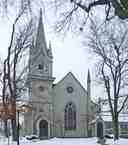
To spot the Third Reformed Church, look for the tall, gray, pointed tower with a bell and brown trim, nestled among the bare trees-a little like something from a wintertime fairy…Lire plusAfficher moins
To spot the Third Reformed Church, look for the tall, gray, pointed tower with a bell and brown trim, nestled among the bare trees-a little like something from a wintertime fairy tale. Now, let’s step back to the year 1847, when hardy Dutch settlers first arrived in Holland-probably carrying more wooden shoes than they had luggage. The original First Reformed Church was bursting at the seams with new neighbors, so by 1867 they split off and built this very church. Imagine the joy at the opening on a cold Valentine’s Day in 1868-hearts were warm, even if the Michigan winter wasn’t. But disaster struck in 1871 when a fierce forest fire swept through, gobbling up most of Holland, including the church itself. You can almost hear the crackling of burning timbers and the determined muttering of townsfolk. Refusing to give up, the congregation called on architect John R. Kleyn, and by 1874, the new church, standing 125 feet tall on a sturdy sandstone base, rose from the ashes. This place-painted light gray with buttresses and huge windows-has been a symbol of resilience ever since. In 1967, they even gave it a facelift-because even churches need a makeover now and then.
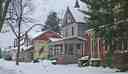
Ouvrir la page dédiée →To spot the Holland Historic District, just look for rows of charming, brightly painted historic houses with steep gabled roofs nestled close together under a canopy of tall…Lire plusAfficher moins
To spot the Holland Historic District, just look for rows of charming, brightly painted historic houses with steep gabled roofs nestled close together under a canopy of tall trees-the district stretches down these cozy, snow-covered residential streets right in front of you. Welcome to the heart of Holland’s past, my friend! Take a deep breath-can you catch a whiff of wood smoke and maybe a hint of Dutch pastry floating on the winter air? This isn’t just any neighborhood. Imagine yourself here in the late 1800s: the snow crunches beneath your boots as you stroll down 11th, 12th, or maybe 13th street, passing homes that buzzed with stories of triumph, disaster, and the world’s best community potlucks. Back in 1871, imagine this whole area swept by roaring flames during the great forest fire. Nearly all of Holland burned to the ground. The town must have smelled like soot and fear. But the people here? As sturdy as the pines along Lake Michigan. They rolled up their sleeves, hammered their grief into boards and bricks, and rebuilt house after house-even during the tough Panic of 1873, when money was tighter than a pair of Dutch wooden shoes! By 1890, the hustle had paid off-Holland’s population doubled in just ten years, and these streets filled with the grand homes of the city’s rising stars. There was the lawyer Gerrit Diekema at 134 West 12th, and George Hummer from the West Michigan Furniture Company at 191 West 12th (you know his house always had nice chairs). Can you picture Dr. Henry Kremers, physician and sugar company exec, trotting down East 12th, his coat tails flapping in the Michigan wind? Or Cornelius Lokker, proud owner of Holland Crystal Creamery, probably handing out the town’s coldest, creamiest ice cream during summer festivals? What makes this place magical is how it layers time. These streets hold almost 200 historic buildings-Queen Anne homes with whimsical spires, plus civic gems like Holland’s old high school, churches, post office, even a Masonic Temple. The trees here have stood sentinel, watching everything from wedding carriages clattering by to the grumbling of early automobiles. Look around. Every porch and window tells its own story! The district became a stitched quilt of Holland’s hopes, and with every season, new history gets added. So keep walking-more stories and, who knows, maybe a mischievous spirit or two, are just around the corner!
Ouvrir la page dédiée →Ahead of you rises a modern, boxy building with large glass windows and brickwork, sitting right by a wide parking lot-just look for the line of flags fluttering up front and you…Lire plusAfficher moins
Ahead of you rises a modern, boxy building with large glass windows and brickwork, sitting right by a wide parking lot-just look for the line of flags fluttering up front and you can’t miss it! Welcome to the Holland Civic Center Place, where the heartbeat of the city sounds louder than a basketball buzzer on game night! Imagine stepping inside back in the 1960s, the air crackling with excitement as families cheered from the seats, and concession stands filled the room with the smell of popcorn. Over the years, this place has hosted everything you can dream of: screaming fans at local sporting events, quiet moments during wedding receptions, clanging and clinking at expos and tradeshows, and, of course, the deep thump of live concert bass that probably woke up half the neighborhood. With seating for 2,000, the Civic Center isn’t just a building-it’s a shape-shifter! One day, it’s a gym; the next, a grand ballroom; later, maybe a meeting space for important city decisions. Whether it’s basketball, business, or banquets, almost everyone in Holland has a Civic Center story. Just imagine all the laughter, applause, and maybe a few dance moves echoing out those big glass windows, waiting for you to add your own memory!
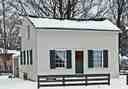
Ouvrir la page dédiée →Directly ahead of you, you’ll see a simple white house with green shutters and a green front door adorned with a bright red wreath, all under a sharply pitched roof - it looks…Lire plusAfficher moins
Directly ahead of you, you’ll see a simple white house with green shutters and a green front door adorned with a bright red wreath, all under a sharply pitched roof - it looks like something straight from a storybook, with snow dusting its roof and a wooden fence circling the yard. Now, let’s step back in time together, all the way to the late 1800s, when Holland was still a wild frontier town carved out of dense Michigan forests by brave Dutch settlers. Imagine smoke in the air and the sound of axes chopping wood, as Thomas Morrissey, a ship’s carpenter, and his wife Anna took a chance on a simple plot of land on West 9th Street. They didn’t even own the land until 1870, but they’d already paid taxes on the house for years! Guess you could say they were early adopters… or maybe just optimists. Suddenly, disaster struck: In 1871, a tremendous forest fire roared through Holland. Flames leapt and crackled, engulfing almost everything in their path. But the house in front of you-against all odds-stood its ground. It’s one of the only survivors of that inferno, making it a rare witness to the town’s rebirth. Over the decades, this sturdy little home changed hands more times than a hot potato at a family picnic. Tanners, insurance agents, booksellers, and families seeking fresh starts all sheltered under its roof. In the 1890s, the Charter family owned it for over half a century, renting it out to tenants with their own dreams and dramas. In the 1990s, the city decided this old home wasn’t ready for retirement. With expert care, they peeled back the layers of time and restored it to its 1871 look. Today, it stands as the Settlers House Museum-a place where squeaky floors, old windowpanes, and the smell of history in the air welcome you to imagine life as Holland’s pioneers did: simple, tough, and incredibly brave. Now, isn’t that a house with some stories to tell?
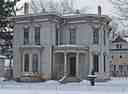
Ouvrir la page dédiée →To spot the Isaac Cappon House, look straight ahead for a grand, gray Italianate two-story home with a T-shape, tall windows, intricate trim, and a wide porch that sits behind a…Lire plusAfficher moins
To spot the Isaac Cappon House, look straight ahead for a grand, gray Italianate two-story home with a T-shape, tall windows, intricate trim, and a wide porch that sits behind a small black fence. Now, picture yourself in 1870s Holland-horse-drawn carts clatter by, the streets have a whiff of fresh leather, and the house standing in front of you rises gracefully above the snow-dusted ground. Isaac Cappon’s journey started far from here; he arrived in America from the Netherlands in 1847, chasing new dreams. Just one year after landing in New York, he found himself among the tight-knit Dutch community in Holland, Michigan. Isaac was smart, resourceful, and not afraid to get his hands dirty at the tannery. By 1856, Cappon and his friend John Bertsch had opened their own leather company, the smell of tanning hides mixing with the sound of industrious work. Business boomed. When Holland officially became a city in 1867, Isaac Cappon was chosen as its very first mayor. But disaster struck in 1871-a terrible forest fire swept through, engulfing the original Cappon home and tannery. Yet Isaac wasn’t one to be defeated by a bit of bad luck (or even a whole lot of flames). He built the company back stronger and, by 1874, this stunning house was finished. Just imagine knocking on that double door under the bracketed canopy, your boots crunching on snowy steps, to be greeted by polished Victorian woodwork and the sound of laughter echoing from the parlor. The Cappon family lived here for over a hundred years. When Miss Lavina Cappon moved out in 1978, the home became a museum. Today, much of it is restored to the golden era of 1900. So, as you gaze at this house, you’re not just looking at fine architecture, but at the stubborn spirit and story of Holland’s very first mayor. You made it to the last stop-no tannery stink required!
Ouvrir la page dédiée →

Foire aux questions
Comment commencer le tour ?
Après l'achat, téléchargez l'application AudaTours et entrez votre code de réduction. Le tour sera prêt à commencer immédiatement - il suffit d'appuyer sur lecture et de suivre l'itinéraire guidé par GPS.
Ai-je besoin d'Internet pendant le tour ?
Non ! Téléchargez le tour avant de commencer et profitez-en pleinement hors ligne. Seule la fonction de chat nécessite Internet. Nous recommandons de télécharger en WiFi pour économiser vos données mobiles.
S'agit-il d'une visite de groupe guidée ?
Non - il s'agit d'un audioguide en autonomie. Vous explorez indépendamment à votre propre rythme, avec une narration audio diffusée par votre téléphone. Pas de guide, pas de groupe, pas d'horaire.
Combien de temps dure le tour ?
La plupart des tours durent entre 60 et 90 minutes, mais vous contrôlez totalement le rythme. Faites des pauses, sautez des arrêts ou arrêtez-vous quand vous le voulez.
Et si je ne peux pas finir le tour aujourd'hui ?
Pas de problème ! Les tours disposent d'un accès à vie. Faites une pause et reprenez quand vous le souhaitez - demain, la semaine prochaine ou l'année prochaine. Votre progression est sauvegardée.
Quelles sont les langues disponibles ?
Tous les tours sont disponibles dans plus de 50 langues. Sélectionnez votre langue préférée lors de l'utilisation de votre code. Note : la langue ne peut pas être changée après la génération du tour.
Où accéder au tour après l'achat ?
Téléchargez l'application gratuite AudaTours sur l'App Store ou Google Play. Entrez votre code de réduction (envoyé par e-mail) et le tour apparaîtra dans votre bibliothèque, prêt à être téléchargé et commencé.
Si vous n'appréciez pas le tour, nous vous rembourserons votre achat. Contactez-nous à [email protected]
Paiement sécurisé avec 


