AudaTours logoAudaTours

Visite audio de Grand Rapids : Monuments, légendes et empreintes littéraires

Guide audio11 arrêts

Au cœur de Grand Rapids, des histoires résonnent sous des plafonds dorés et derrière les projecteurs de l'arène – des récits que peu de visiteurs entendent. Cette visite audio autoguidée ouvre les portes du passé audacieux et du cœur vibrant de la ville, révélant des secrets perdus et des rebondissements inattendus cachés entre l'église de Fountain Street, la Van Andel Arena, l'Amway Grand Plaza Hotel, et au-delà. Marchez à votre rythme et plongez dans des moments que la plupart des guides négligent. Quelle protestation a secoué les salles de Fountain Street et envoyé des ondes de choc à travers la ville ? Quel récit cryptique se cache dans les murs de l'Amway Grand, et qui a disparu sous ces lustres étincelants ? Et pourquoi un agent de sécurité négligé à la Van Andel Arena est-il devenu le centre d'une légende locale ? Suivez le fil de la rébellion et de la révélation en passant de la grandeur des vitraux à l'agitation moderne. Écoutez le drame, déverrouillez les mystères et découvrez Grand Rapids comme peu le feront. Votre parcours de découverte commence maintenant. Écoutez. La ville vous attend.

Aperçu du tour

map

À propos de ce tour

  • schedule
    Durée 30–50 minsAllez à votre propre rythme
  • straighten
    Parcours à pied de 4.6 kmSuivez le sentier guidé
  • location_on
  • wifi_off
    Fonctionne hors ligneTéléchargez une fois, utilisez n'importe où
  • all_inclusive
    Accès à vieRéécoutez n'importe quand, pour toujours
  • location_on
    Commence à Cathédrale Saint-André

Arrêts de ce tour
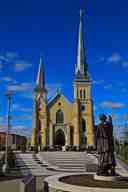
  1. As you approach, just look for the striking twin spires reaching boldly into the sky, set above a grand entrance framed by pale stone-it's nearly impossible to miss this majestic…Lire plusAfficher moins

    As you approach, just look for the striking twin spires reaching boldly into the sky, set above a grand entrance framed by pale stone-it's nearly impossible to miss this majestic cathedral on Sheldon Boulevard. Now, imagine the footsteps around you echoing centuries of change, laughter, prayers, and maybe even a few startled gasps-this spot has seen more than just passing crowds! The story of the Cathedral of Saint Andrew begins far from these towers, when Father Frederic Baraga gathered Native Americans on the west bank of the Grand River, building a humble wooden church and school. It all started small, much like a seed in the Michigan soil. But those wooden walls couldn’t contain the growing city for long. As Grand Rapids blossomed, a tough-as-nails priest named Father Viszoczky rolled up his sleeves and got to work. He built a new church on Monroe Street from Grand River limestone-it was rock-solid, literally-but even that wasn’t enough for the expanding parish. By 1875, the city needed a church to match its ambition, and so this current cathedral, the one you’re standing before now, began to take shape. Finished in just a year, its spires seem to challenge the clouds! When the Diocese of Grand Rapids was born in 1882-thanks to Pope Leo XIII-Bishop Henry J. Richter made St. Andrew his base, and soon after, his own consecration filled this spot with celebration. But life isn’t always peaceful, even at church-a bolt of lightning struck in 1901, setting fire to the roof. Some of the beams inside still show battle scars! The building was restored, then brought to living rooms citywide in the 1950s as a TV studio for Sunday Mass. Over the decades, the cathedral kept expanding: a green piazza inspired by Michelangelo, a new organ with pipes like a thunderstorm, and beautiful stained glass glowing like precious jewels. Even as it’s changed, this cathedral remains a cornerstone of faith and community, full of stories that blend spirit, survival, and a touch of heavenly drama. And you thought lightning only struck twice!

    Ouvrir la page dédiée →
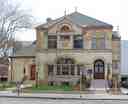
  2. Right ahead you’ll spot the Ladies’ Literary Club by its tall, stately two-story brick façade, stone-trimmed doors and windows, arched Romanesque entry, and the big slate roof…Lire plusAfficher moins

    Right ahead you’ll spot the Ladies’ Literary Club by its tall, stately two-story brick façade, stone-trimmed doors and windows, arched Romanesque entry, and the big slate roof with just a hint of old-world grandeur-look for the broad steps, and those two matching wooden entrance doors on your right! Now, welcome to the Ladies’ Literary Club-where ideas were swirling long before coffee shops made brainstorming trendy. Picture Grand Rapids in 1869: instead of Instagram and podcasts, a handful of women gathered for a history class, quickly evolving into a full-blown Ladies' Literary Association by 1870. These women weren’t just whispering about novels; their voices boomed all the way into the heart of the community. Thanks to their determination, Grand Rapids got its first public library-for which many procrastinating students have been grateful ever since. By 1882, they became the Ladies' Literary Club to foster learning in all things literary and scientific. The group grew so quickly, they needed a space to match their vision. Enter architect William G. Robinson in 1887, who designed this imposing, bronze-bricked beauty you see before you. Construction wrapped up by December the same year-faster than most people’s New Year’s resolutions fizzle out. Stand here and imagine the excitement as famous guests like Theodore Roosevelt, William Howard Taft, and Woodrow Wilson rolled up to deliver speeches. The building’s stunning stained glass-including a Tiffany window worth over $200,000-cast sunlight across elegantly dressed crowds, while the French pane windows twinkled with promise. The Club’s journey hasn’t been all elegance and applause, though. In 2005, membership waned and the building was handed over to Calvin College, which gave it a million-dollar facelift. Next came Rye Venue Management, cocktail bars, and a party spirit-even the bar top carries gold plaques with the names of past benefactors. But, like a plot twist no one wanted, COVID locked the doors, and by 2024, it sat as empty as a library on a sunny day. Hope returned in 2025, when The Penny Loafer LLC revived the space, breathing life back into every parlor and theater seat. Today, those historic rooms host everything from vintage movie nights and weddings to comedy and yoga. The rich wood smells, echoes of laughter, the stories in every plaque-it’s an evolving testament to how powerful a spark of curiosity can be. Not bad for a group who just wanted a little book club, right?

    Ouvrir la page dédiée →
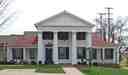
  3. You’re looking for a striking white house with a red roof and four huge white columns out front-just gaze straight ahead and you can’t miss those classic Greek Revival pillars…Lire plusAfficher moins

    You’re looking for a striking white house with a red roof and four huge white columns out front-just gaze straight ahead and you can’t miss those classic Greek Revival pillars standing tall at 230 E. Fulton Street. Now, picture this: It’s 1844, the air is thick with ambition, and a determined businessman named Abram W. Pike arrives here from a ghostly, failed city on Lake Michigan. Pike had originally landed in Michigan as a fur trader and company clerk for the Port Sheldon Land Company, which-with big dreams and even bigger investments-once hoped to turn Port Sheldon into the next Chicago. Spoiler alert: it did not. The grand Ottawa House Hotel, centerpiece of those dreams and as fancy as you please, lasted barely five years before the city’s big plans fizzled. All that was left were stories, a bit of heartbreak, and…well, some seriously nice columns. When the city plans went down the drain, Pike wasn’t about to let a good piece of architecture go to waste. Like a true pioneer (and probably the ultimate upcycler), he hauled four of those majestic hotel pillars-yes, dragged by oxen, not Uber-across the wilds of Michigan all the way to Grand Rapids. He attached them to his new home right here, giving the Pike House the dramatic, almost presidential look you see before you. If the neighbors weren’t impressed, they must have needed new spectacles. For nearly 80 years, this house sheltered the Pike family, becoming a landmark of both shelter and stylish persistence. Then, in the 1920s, the house landed in the hands of Emily Clark-an all-star philanthropist in Grand Rapids history. With a generous donation, she gifted the Pike House to the city’s Art Association, finally giving the community’s artists a home of their own. And so, the old residence shed its family air and transformed into the city’s first art gallery-a creative hub where paintbrushes danced and imaginations ran wild, now known as the Grand Rapids Art Museum. Over the years, this house gained layers of personality. It was expanded twice, bursting at the seams with paintings and people until the museum eventually moved out in 1978. Since then, it’s seen a rotating cast of owners, from furniture firms to architects, to the bankruptcy law firm that resides inside today. But it always keeps a few surprises in its walls-like in 2014, when a renovation crew discovered a bold, hand-painted “Grand Rapids Art Museum” sign hidden above the entryway. Turns out, it had been painted generations ago by a young Mathias Alten, who would go on to become one of Grand Rapids’ beloved artists. So as you stand under these towering white columns, think of the journeys they’ve traveled, the art-filled laughter that once echoed beyond those doors, and the stubborn, creative spirit that still pulses through the woodwork. The Pike House, with its grand pillars and hidden stories, isn’t just old-it’s unforgettable. And hey, if you see anyone trying to steal the columns, maybe check for a team of oxen nearby!

    Ouvrir la page dédiée →
Afficher 8 arrêts de plusAfficher moins d'arrêtsexpand_moreexpand_less
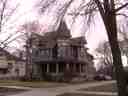
  1. Look just ahead-you’ll spot Heritage Hill by its grand, ornate houses like the one in front of you: a towering Victorian beauty with intricate woodwork and a broad, welcoming…Lire plusAfficher moins

    Look just ahead-you’ll spot Heritage Hill by its grand, ornate houses like the one in front of you: a towering Victorian beauty with intricate woodwork and a broad, welcoming porch, surrounded by old trees and nestled quietly along the residential street. Alright, you’ve landed in the heart of Heritage Hill-the kind of neighborhood so packed with history and character that even the streetlights seem to have a story to tell! Imagine it’s the late 1800s. Strolling along these leafy avenues, you’d hear the distant clatter of horse-drawn carriages and catch the scent of pine from the lumber mills-not surprising, because a lot of these homes were built by lumber barons, along with teachers, judges, and legislators. This district is actually Grand Rapids’ oldest residential area, filled with about 1,300 homes spanning every American architectural style you can imagine: Greek Revival columns, airy Prairie windows, gingerbread Queen Anne trim, and brick arches worthy of a chateau. If you think picking your favorite flavor at an ice cream shop is hard, try choosing your favorite house here! The drama here in Heritage Hill wasn’t just reserved for television. In the 1960s, bulldozers were poised to raze nearly three-quarters of the neighborhood, smashing decades of history under the banner of “urban renewal.” But the residents, who clearly took “love thy neighbor” and “love thy neighborhood” to heart, quickly banded together. They formed the Heritage Hill Association, grabbed their legal pads, and-armed with a brand-new National Historic Preservation Act-headed to court. Spoiler alert: they won. This little corner of Grand Rapids became the very first neighborhood in the country to save itself in court using that law. Take that, bulldozers! Since being added to the National Register of Historic Places in 1971, Heritage Hill has flourished. The Association looks after all sorts of things, from land use to traffic, and even throws an annual home tour every May. Walk the streets then, and you might get a peek inside some of these stunning houses-though for today, I’d recommend not randomly knocking on doors. Heritage Hill covers about a square mile and is now home to 4,400 residents and that wonderful, slightly quirky sense of community. Fun fact: the legendary Melville Bissell, inventor of the carpet sweeper, once lived here! If you spot WOOD-TV Channel 8, that’s where his house once stood. And yes, somewhere in the mix, you’ll find a genuine Frank Lloyd Wright design from 1908. Not bad for a neighborhood that once faced the wrecking ball, right?

    Ouvrir la page dédiée →
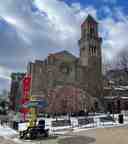
  2. Look ahead for a grand stone building with a towering square bell tower and a huge, round stained glass window-a structure so unique, you might expect to see it in a European city…Lire plusAfficher moins

    Look ahead for a grand stone building with a towering square bell tower and a huge, round stained glass window-a structure so unique, you might expect to see it in a European city rather than right here in Grand Rapids. You’re standing in front of Fountain Street Church, but if you listen closely, you can almost hear the echoes of lively debates, resounding music, and maybe even a few very rebellious whispers! Picture the scene: it’s the late 1800s, Grand Rapids is booming, and a Baptist congregation is getting a reputation for being just a little different. As time breezed by, church leaders-freshly minted from the University of Chicago Divinity School-began shaking things up. They traded in strict tradition for some pretty liberal thinking. If they could’ve worn tie-dye back then, they probably would have! Flash forward to the early 1900s and, oh, what a ride. This church was divided by the great furniture workers’ strike of 1911. Imagine a room crackling with tension: workers and social reformers on one side, church leaders (and maybe a few nervous Baptists) on the other. The strike fizzled out, but, trust me, nobody was napping during those weeks. But the most jaw-dropping plot twist came in 1917. On a warm spring evening, flames tore through the American Gothic church, destroying almost everything in their path. The cause was never found-a true Grand Rapids mystery. But in true Fountain Street style, the congregation rallied, worshipping in the Powers Theater while a new vision for their church took shape. Seven years later in 1924, the building before you rose like a phoenix, looking more like a Romanesque basilica cut from sun-warmed Italian stone. Rev. Wishart wanted art, science, and inspiration crammed into every corner, so the sanctuary was designed to hold 1,500 people, its walls adorned with tapestries, mosaics, and oil paintings. The stained glass-a jaw-dropping lineup inspired by French cathedrals-features not just biblical big shots but folks like Darwin, Plato, and Abraham Lincoln. The rose window above you is over 26 feet wide, flooding the sanctuary with light and color. Even the bell tower became a memorial, its golden mosaic dome honoring the soldiers lost to World War I. But wait-if you thought it was all sermons and hymns, think again! Over the years, this church has welcomed some of the world’s most fascinating people: Clarence Darrow, Winston Churchill, Eleanor Roosevelt, Malcolm X, Louis Farrakhan, and, believe it or not, members of rock bands like The Moody Blues and Alice Cooper. Imagine Eleanor and Ella Fitzgerald swapping stories in the lobby. If these stones could sing, you’d need earplugs! By the 1940s, when Duncan Littlefair took charge (he drove a convertible and puffed on cigarettes right out in public-try doing that in church today), the church became a hotbed for rock concerts, fierce discussions, and roaring crowds. It lost its Baptist identity, threw out old bylaws, and renamed its youth group “Character School,” where the character development came with a side of rock and roll. Even today, Fountain Street Church is a lighthouse for radical ideas and spirited debates. It led the way with social action, stood up for diversity, brought in the first woman and first queer senior ministers, and has never shied away from tough conversations-whether about world events or what’s for dinner at the youth group retreat. So, as you look up at this incredible building, remember that you’re not just seeing a church, but the heartbeat of Grand Rapids’ progress, art, and wild, wonderful courage. If you listen closely, maybe you’ll hear a distant organ note drifting out, or the trace of laughter from a debate that once made history right here on Fountain Street. To delve deeper into the clergy, art and architecture or the stained glass windows, simply drop your query in the chat section and I'll provide more information.

    Ouvrir la page dédiée →
  3. Right ahead you’ll spot a stately, stone-faced building with a teal roof and glowing lights leading up a prominent staircase-just look for the wide steps and twin banners on the…Lire plusAfficher moins

    Right ahead you’ll spot a stately, stone-faced building with a teal roof and glowing lights leading up a prominent staircase-just look for the wide steps and twin banners on the facade! Welcome to Kendall College of Art and Design, or as the locals sometimes call it-KCAD, the creative heart of downtown Grand Rapids. If you listen carefully, you might just hear the echoes of creative chaos and a touch of nervous laughter--as students rush in and out, juggling canvases bigger than themselves! KCAD didn’t pop up overnight. Its story begins way back in 1928, in a time when Grand Rapids was singing with the sounds of furniture saws and bustling workshops. That was when Helen M. Kendall, widow of the legendary furniture designer David Wolcott Kendall, decided to keep her husband’s artistic flame burning. Picture it: only 35 students, all brimming with dreams and sitting in a small studio at the edge of Heritage Hill, unsure of whether they were going to change the world or just spill paint on their shoes. After World War II, the school had an influx of creative minds-and suddenly one building simply wasn’t enough to contain all the imagination bubbling inside. They moved, they grew, and by the late ‘70s, they were ready to offer full bachelor’s degrees. That was big news! Imagine the excitement and anxiety as students suddenly realized, "Wait...does this mean final exams now?" By 1984, the creative buzz had spilled into a tall seven-story building right on Division Avenue, giving the school space for enormous dreams-and maybe a bit more room for storage of awkwardly large sculptures. But KCAD didn’t just grow in size; it grew in prestige. Recognized officially by the National Association of Schools of Art and Design in 1981, it was climbing up the ranks like one of its students scaling a ladder to hang up a particularly daring painting. Fun fact: KCAD isn’t solo anymore! In the 2000s, it teamed up with Ferris State University, giving its students even more resources, new high-tech studios, and-rumor has it-a pretty impressive coffee supply. The newly added Woodbridge N. Ferris Building, just to the north, is now packed full with gallery spaces, additional studios, and a treasure trove of art history. But it’s not just about what’s inside. Every fall, you might catch the sight of wide-eyed freshmen getting lost among classrooms filled with dazzling tech-3D printers buzzing, CNC machines whirring, and somewhere, a darkroom door creaking as someone discovers film photography for the first time. KCAD is a creative incubator for all kinds of talent. Alumni here have become everything from children’s book illustrators to rock stars (yes, the lead singer of Tool walked these halls), and furniture designers who changed the modern world. You might even walk past someone today who will be hanging their work in a famous gallery tomorrow-or at least crafting the next viral meme. The school is connected not only to the history of art, but to the very beating heart of Grand Rapids’ own creative traditions. And while the wood shops, printmaking rooms, and glowing studios may seem quiet from the street, inside you’ll find students and teachers building, drawing, and designing the very future of Grand Rapids. Who knows, maybe the next world-famous artist could be peering out at you from one of those tall windows-or urgently trying to finish a project with just five minutes to spare! Go ahead, imagine the buzz, the colors, and the wild inventions still brewing behind the stone walls of this landmark in art and design.

    Ouvrir la page dédiée →
  4. The Herpolsheimer story starts way back at the end of the Civil War in 1865, with a Prussian-American businessman and war vet named Mike Cox Herpolsheimer. Together with Charles…Lire plusAfficher moins

    The Herpolsheimer story starts way back at the end of the Civil War in 1865, with a Prussian-American businessman and war vet named Mike Cox Herpolsheimer. Together with Charles Voigt, he opened their first dry goods shop in Indiana, but by 1870, Grand Rapids had its own branch. Store management was something of a family tradition; Mike passed the reins to his son Henry in 1902, and the store kept evolving as the decades rolled on. Herpolsheimer’s quickly became more than a store. This was a place of dazzling window displays, parades of shoppers, and the annual spectacle that every Grand Rapids kid looked forward to-the magical “Santa Express” train. Picture this: a monorail, right in the basement, with little cars swishing above shoppers’ heads, kids’ laughter echoing as they tried to spot Santa. During the Christmas rush, that basement was pure excitement, and later, when the space became a food court, the famed train ran all year round, swaying above the sandwich-eating lunch crowds. The store was famous for adapting to the times-and sometimes zigzagging wildly into the future. In the forties, they experimented with branches selling only appliances and hardware, all the way in Holland. They even introduced credit cards to let people shop at “Herpolsheimer’s” or “Field’s,” its Jackson-based sister store. Brand loyalty-or at least, shopping convenience-was serious business. Ownership swapped hands over the years, and even the store’s name got a facelift. In the seventies, billboards shouted “Herp’s!” with a brand-new logo. People loved it so much, management tried to go back to the full Herpolsheimer’s name just a decade later, but really, everybody already knew where they were. By the 1980s, the flagship was merged into a mini-mall called City Centre, shrinking as big-box competition grew, until finally, in the early nineties, those lights were switched off for good. But Herpolsheimer’s refused to fade quietly! In the 2004 film The Polar Express, the characters pass by a magical Herpolsheimer’s decked out for Christmas. It’s not just movie legend, either: back in 1921, the store gave away baseball cards, one featuring the mighty Babe Ruth. A stash was found in a Band-Aid box almost a century later-one Babe Ruth card alone sold for over $154,000! Even in auction houses, Herpolsheimer’s magic still lingers. So as you stand here, think of bright lights, clattering trains, and a place where everyone shopped, from children dreaming of Santa to a future First Lady sketching window displays. Not a bad place to pause, don’t you think?

    Ouvrir la page dédiée →
  5. Right ahead, you’ll spot an open plaza with a wide circular basin, scattered silver chairs, graceful paths curving through green trees, and glassy buildings reflecting the city’s…Lire plusAfficher moins

    Right ahead, you’ll spot an open plaza with a wide circular basin, scattered silver chairs, graceful paths curving through green trees, and glassy buildings reflecting the city’s energy all around it. Welcome to Rosa Parks Circle, where the city’s heart doesn’t just beat-it dances! Designed by Maya Lin, who created the Vietnam Veterans Memorial, this graceful space is anything but ordinary. In the summer, picture jazz bands grooving by the fountains, people twirling from the Original Swing Society, and crowds gathered just to soak up Grand Rapids’ sunshine. But the fun doesn’t freeze up in winter-Rosa Parks Circle transforms into a sparkling ice rink, where skaters glide over 166 twinkling fiber optic lights, which aren’t just pretty lights-they’re a map of the Michigan night sky as it looked at the turn of the millennium, midnight, January 1, 2000. Named in honor of the civil rights hero Rosa Parks, there’s even a statue here, keeping watch over all this joy and history. And on one August night in 2012, over 750 dancers turned this quiet spot into a world record for the largest swing dance-who knew the midwest could boogie so hard? So whether summer breeze or winter chill, Rosa Parks Circle is always in motion!

    Ouvrir la page dédiée →
  6. You’re now standing in front of Plaza Towers-one of Grand Rapids’ sky-high soap operas in glass and steel. Imagine it’s 1991: the city is buzzing, and this brand-new, 345-foot…Lire plusAfficher moins

    You’re now standing in front of Plaza Towers-one of Grand Rapids’ sky-high soap operas in glass and steel. Imagine it’s 1991: the city is buzzing, and this brand-new, 345-foot marvel has just opened its doors as Eastbank Waterfront Towers. At that moment, this place towered over every other building in sight-Grand Rapids’ very own skyscraper, standing tall thanks to $60 million and a handshake between Amway and a Japanese bank. But, like many soap operas, the drama was just beginning. On the outside, you’d see sleek cement panels, but inside, things were less glamorous. Just five years after the grand opening, water was leaking in, carpets were soaked and molding, and the air ducts were busy spreading not-so-fresh aromas. Pipes corroded, and, if you listened carefully, you might hear the groaning of frustrated maintenance crews. In 1995, 250 residents, 160 employees, and a handful of very soggy carpets were forced to pack up and move out while the whole building was re-skinned-a two-year repair costing another $36 million, much to Amway’s chagrin. During all this, the Radisson hotel chain decided to “check out,” and “Eastbank” became “Plaza Towers.” Add some bonus drama: court battles, financial losses, and plenty of headlines. Amway ended up losing over $31 million, calling it a “philanthropic gesture,” which is what you call it when your investment goes sideways but you still want to sound generous. But the saga doesn’t end there! Fires-sometimes just the burnt-toast variety, other times on the 17th floor-triggered evacuations in 1996, 2001, 2002, and 2010. And in 2013, the Grand River itself tried to move in, flooding the basement with seven feet of water and 80 unlucky cars bobbing like apples. Maintenance crews kept the security doors closed tight until the river calmed, and the building finally reopened weeks later, a bit weatherworn but still standing tall. So, take a moment to look up-Plaza Towers is living proof that even skyscrapers can have wild midlife crises!

    Ouvrir la page dédiée →
  7. In front of you is a huge, sweeping wall of glass with a dramatic black steel roof arching overhead-the Van Andel Arena stands out on Fulton Street with its modern, curved design…Lire plusAfficher moins

    In front of you is a huge, sweeping wall of glass with a dramatic black steel roof arching overhead-the Van Andel Arena stands out on Fulton Street with its modern, curved design gleaming in the sunlight. Imagine a cool autumn evening in 1996, the streets buzzing with excitement as the brand new Van Andel Arena opens its doors after $78 million of construction-local fans don’t know it yet, but Grand Rapids is about to become a go-to spot for everything from epic hockey showdowns to screaming rock concerts and even presidential rallies. Crowds pour in, stomping down the Heartside district sidewalks, ready for a rush of adrenaline and music. This arena is home ice for the Grand Rapids Griffins-the “Freezer on Fulton” as locals proudly say-where hockey pucks fly and dreams are made, all just one call-up away from the Detroit Red Wings. If you sneak a peek inside (don’t actually sneak, they have excellent security), you might imagine the chill of the rink or the buzz of thousands getting ready to cheer for the Griffins, the Grand Rapids Gold basketball team, or now, the Grand Rapids Rise volleyball squad-talk about a house divided, right? Van Andel has hosted more than five million people in just its first five years-try counting that on your fingers! The biggest names in music have rocked this place: Taylor Swift, Metallica, Elton John, Lady Gaga. Imagine the thundering guitars and dazzling lights under that giant roof. It’s also where Mötley Crüe filmed their 2005 Carnival of Sins DVD and where, on occasion, things have gotten a bit wild-like the time Slipknot and System of a Down’s tour had a run-in with security that landed in the headlines. Presidential candidates seem to love a Grand Rapids sendoff-Donald Trump ended his 2016, 2020, and even his 2024 campaign here, and the political energy in this arena is just as feverish as a playoff hockey game. From Disney on Ice to wrestling, NCAA championships, Monster Jam, and packed-out concerts, this place has earned its spot as the fourth-largest arena in Michigan-and the biggest event magnet in West Michigan. With its 13,000 seats and its unforgettable moments, Van Andel Arena is where Grand Rapids lets loose-one event at a time.

    Ouvrir la page dédiée →
  8. Right ahead stands the Amway Grand Plaza Hotel, a place that’s worn many hats-and even a crown or two! When you glance up at the blend of grand old architecture and gleaming…Lire plusAfficher moins

    Right ahead stands the Amway Grand Plaza Hotel, a place that’s worn many hats-and even a crown or two! When you glance up at the blend of grand old architecture and gleaming modern glass, you’re looking at over a century of stories stacked on top of each other. Let’s plunge right into its dazzling past. It all began in 1913, back when silent films were new and Grand Rapids was growing like a sprouting beanstalk. That’s when the Pantlind Hotel opened its doors, welcoming travelers with marble columns, Beaux-Arts beauty, and one of the largest gold leaf ceilings in the world. Imagine the gasp as guests stepped inside-gold shimmering overhead and sunlight bouncing across Mediterranean arches, columns, and ornate terra cotta details. Designers Warren & Wetmore, inspired by Scottish architect Robert Adam, basically aimed for “opulence” and stopped just short of “palace.” During peak years, the Pantlind was the place for visiting bigwigs and show-offs. Think fashionable furniture buyers and celebrities who wouldn’t be caught napping anywhere less than first-class. By 1925, the Pantlind was ranked among America’s top 10 hotels. Even Queen Juliana of the Netherlands chose to check in-along with her husband and 250 esteemed lunch guests. If you ever feel like your family holiday dinners are stressful, try hosting European royalty! Over the years, the hotel changed with the times. The population of Grand Rapids boomed past 112,000 in the early 1900s, new wings were built, and the corner even held a swanky two-story bank. Meanwhile, Otto Seyferth, who would later become President of the U.S. Chamber of Commerce, carved the stonework on the hotel at a whopping 65 cents per hour. Not a bad gig unless you suffer from a fear of heights-or low wages. Fast forward to the late 70s. The suburbs were stealing the spotlight, and poor Pantlind was looking a bit weary. Enter Amway, the local empire from nearby Ada Township. In 1979, Amway bought the hotel and invested a whopping $60 million in renovations-think demolition dust, jackhammers, and a lot of people trying not to trip over power cords. Marvin DeWinter & Associates worked their magic, and by 1981 the shiny reborn hotel re-opened, dazzling enough that President Gerald R. Ford and his wife Betty hosted the black-tie gala. You know you’re making a comeback when the President shows up for dinner! But that’s not all. In 1983, the new 29-story tower shot up alongside the historic wing-ending McKay Tower’s decades-long reign as the city’s skyscraping champion. This beautiful glass giant stood watch over downtown, until 1991, when Plaza Towers grabbed the honor like a sibling calling shotgun. The Amway Grand Plaza went on to host the famous and the fabulous-Margaret Thatcher, Queen Noor of Jordan, Norman Schwarzkopf Jr., Jerry Seinfeld, Cher, and more. A Chicago reporter once raved that dinner at the hotel’s Cygnus restaurant held up against the finest in New York or San Francisco-a pretty tall order for the middle of Michigan! One ballroom even honors President Ford, ensuring the hotel never runs short of presidential sparkle. Not even the kitchens escaped the winds of change. The 1913 Room became Michigan’s one and only AAA five-diamond restaurant before giving way to Ruth’s Chris Steak House. Other favorites were transformed into Wolfgang Puck outposts, so even if your stay here was short, your dinner could be world-class. Affiliated with Hilton’s Curio Collection since 2016 and inducted into Historic Hotels of America in 2012, the Amway Grand Plaza is anything but stuck in the past. In fact, ongoing renovation has added floor-to-ceiling windows and chic updates-while making sure those famous gold ceilings keep their glow. So as you stand here, soaking up a view that’s seen presidents, queens, comedians, and even the odd TV station (WZZM started out here!), keep your eyes open for the glow of history and maybe a hint of royal glitter. And don’t forget, the Grand River Promenade-the fancy skyway-links the action above, so if you hear laughter echoing above, you might just be catching the next chapter in this hotel’s grand saga.

    Ouvrir la page dédiée →

Foire aux questions

Comment commencer le tour ?

Après l'achat, téléchargez l'application AudaTours et entrez votre code de réduction. Le tour sera prêt à commencer immédiatement - il suffit d'appuyer sur lecture et de suivre l'itinéraire guidé par GPS.

Ai-je besoin d'Internet pendant le tour ?

Non ! Téléchargez le tour avant de commencer et profitez-en pleinement hors ligne. Seule la fonction de chat nécessite Internet. Nous recommandons de télécharger en WiFi pour économiser vos données mobiles.

S'agit-il d'une visite de groupe guidée ?

Non - il s'agit d'un audioguide en autonomie. Vous explorez indépendamment à votre propre rythme, avec une narration audio diffusée par votre téléphone. Pas de guide, pas de groupe, pas d'horaire.

Combien de temps dure le tour ?

La plupart des tours durent entre 60 et 90 minutes, mais vous contrôlez totalement le rythme. Faites des pauses, sautez des arrêts ou arrêtez-vous quand vous le voulez.

Et si je ne peux pas finir le tour aujourd'hui ?

Pas de problème ! Les tours disposent d'un accès à vie. Faites une pause et reprenez quand vous le souhaitez - demain, la semaine prochaine ou l'année prochaine. Votre progression est sauvegardée.

Quelles sont les langues disponibles ?

Tous les tours sont disponibles dans plus de 50 langues. Sélectionnez votre langue préférée lors de l'utilisation de votre code. Note : la langue ne peut pas être changée après la génération du tour.

Où accéder au tour après l'achat ?

Téléchargez l'application gratuite AudaTours sur l'App Store ou Google Play. Entrez votre code de réduction (envoyé par e-mail) et le tour apparaîtra dans votre bibliothèque, prêt à être téléchargé et commencé.

verified_user
Satisfaction garantie

Si vous n'appréciez pas le tour, nous vous rembourserons votre achat. Contactez-nous à [email protected]

Paiement sécurisé avec

Apple PayGoogle PayVisaMastercardPayPal

AudaTours : Audioguides

Des tours à pied en autonomie, divertissants et économiques

Essayer l'application arrow_forward

Adoré par les voyageurs du monde entier

format_quote Ce tour était un excellent moyen de voir la ville. Les histoires étaient intéressantes sans paraître trop scénarisées, et j'ai adoré pouvoir explorer à mon propre rythme.
Jess
Jess
starstarstarstarstar
Tour de Tbilissi arrow_forward
format_quote C'était un bon moyen de découvrir Brighton sans se sentir comme un touriste. La narration était profonde et contextuelle, sans en faire trop.
Christoph
Christoph
starstarstarstarstar
Tour de Brighton arrow_forward
format_quote J'ai commencé ce tour avec un croissant dans une main et zéro attente. L'application vibre tout simplement avec vous, pas de pression, juste vous, vos écouteurs et quelques histoires sympas.
John
John
starstarstarstarstar
Tour de Marseille arrow_forward

Audioguides illimités

Débloquez l'accès à TOUS les tours du monde

0 tours·0 villes·0 pays
all_inclusive Explorer Unlimited