AudaTours logoAudaTours

Visite audio de Dallas : Histoires de gratte-ciel et tours intemporelles

Guide audio16 arrêts

Les tours éclairées au néon et les sanctuaires cachés façonnent Dallas nuit et jour, mais la plupart ne font qu'effleurer la surface. Sous le verre et l'évangile se cache une ville alimentée par des ambitions folles et des secrets inavoués. Cette visite audio autoguidée vous mène le long de trottoirs animés et de coins tranquilles, révélant des histoires invisibles au visiteur occasionnel. Découvrez pourquoi Dallas ne respecte jamais les règles de personne. Quelles manœuvres de pouvoir au sein d'Energy Future Holdings ont déclenché une crise ressentie à travers la nation ? Qui a rempli les bancs de la First Baptist Church Dallas lors de son sermon le plus scandaleux ? Et quel coffre mystérieux du Mercantile National Bank Building était réputé contenir plus que de l'argent ? Naviguez à travers le drame et l'intrigue, retraçant les esprits rebelles et les légendes oubliées qui vibrent à travers chaque pierre et poutre d'acier. Ce voyage transforme la ligne d'horizon de Dallas en une histoire vivante d'ambition, de foi et d'accords obscurs. Osez voir Dallas démasquée. Commencez à explorer et découvrez ce que la plupart ne sauront jamais.

Aperçu du tour

map

À propos de ce tour

  • schedule
    Durée 50–70 minsAllez à votre propre rythme
  • straighten
    Parcours à pied de 2.9 kmSuivez le sentier guidé
  • location_on
    EmplacementDallas, États-Unis
  • wifi_off
    Fonctionne hors ligneTéléchargez une fois, utilisez n'importe où
  • all_inclusive
    Accès à vieRéécoutez n'importe quand, pour toujours
  • location_on
    Commence à Fountain Place

Arrêts de ce tour
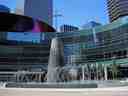
  1. Look up at this massive blue-green glass prism, defined by its sharply slanted geometric sides that taper to a distinct point against the sky. When they poured the foundation…Lire plusAfficher moins

    Look up at this massive blue-green glass prism, defined by its sharply slanted geometric sides that taper to a distinct point against the sky.

    When they poured the foundation here in nineteen eighty four, building a sixty-story skyscraper was the ultimate power move. Developers weren't just making office space, they were carving their names into the clouds to prove who had the most daring vision. This towering structure was meant to be an indestructible monument to the unstoppable, sky-high growth of the city.

    Let me introduce you to Bill Criswell. He was the developer behind this project, and he was practically vibrating with supreme confidence. He told anyone who would listen that downtown Dallas was about to run entirely out of office space. His vision was incredibly bold. He didn't just want this one magnificent, shape-shifting tower. No, the original blueprints called for an exact twin, rotated ninety degrees and sitting right across a lush garden plaza. Talk about aiming high.

    But the universe has a funny way of checking massive egos. Before the twin tower could even get off the drawing board, the bottom completely fell out of the Texas oil, banking, and real estate markets. It was a massive financial collapse tied to the savings and loan crisis, which was a rough period when thousands of banks failed due to incredibly risky lending practices.

    By the time this stunning glass masterpiece opened in October nineteen eighty six, there was no shortage of office space. Instead, there was a massive real estate glut with empty buildings everywhere. Just six months after cutting the ribbon, Fountain Place sank into foreclosure, becoming the largest defaulted property in Texas history at the time. Criswell had to leave town under a cloud of financial ruin, and his grand vision was cut exactly in half.

    Yet, what survived the crash is breathtaking. Down at the base, landscape architect Dan Kiley created a watery urban oasis. He used a strict layout of bald cypress trees planted in circular granite containers that seem to magically float in the terraced pools. And those dancing fountains? That was the very first large-scale project by a company called WET Design, the same creative minds who later built the Bellagio fountains in Las Vegas. They used an innovative system where water shoots right up from hidden joints in the pavement.

    It is a beautiful architectural triumph born from a spectacular economic disaster. As you stand here, look out at the space where that second, identical glass peak was supposed to rise. Just imagine the ghost of that unbuilt twin tower hovering over the adjacent plaza, a silent reminder of the limits of unchecked ambition. When you are ready to keep moving, we are taking a four-minute walk over to First Baptist Church Dallas.

    Ouvrir la page dédiée →
  2. You can easily spot the First Baptist Church Dallas by its sweeping curved glass facade, the central stone cone structure, and the tall metal cross planted right on top. Now,…Lire plusAfficher moins
    First Baptist Church Dallas
    First Baptist Church DallasPhoto: Thomas R Machnitzki (thomasmachnitzki.com), Wikimedia Commons, CC BY 3.0. Cropped & resized.

    You can easily spot the First Baptist Church Dallas by its sweeping curved glass facade, the central stone cone structure, and the tall metal cross planted right on top.

    Now, Dallas is famous for corporate giants building towering glass monuments to themselves, but right here, the ambition is entirely spiritual. The drive to build bigger and reach higher isn't just for banks and oil companies. Back in 1868, this congregation started with just eleven people meeting in a Masonic hall. Today, it is a sprawling, multi-block empire.

    It takes some serious personality to build an empire, and this church has seen its share of towering egos. Take Dr. W.A. Criswell-no relation to the developer from our last stop. He built this into the largest Southern Baptist church in the world over his forty-seven-year run. But letting go of that much power is hard. In 1990, a man named Joel C. Gregory was brought in to replace him. But Criswell kept the title of Senior Pastor, creating a bitter dual-leadership dynamic where two men essentially fought for control of the same pulpit. The tension got so bad that Gregory dramatically quit during a Wednesday night service and completely left pastoral ministry for a while, even selling funeral planning services before finally finding his way back to teaching.

    To really grasp the scale of their ambition, take a look at the image on your phone. That shows the church in 2013, the year they finished a staggering one hundred and thirty million dollar expansion. That price tag makes it the most expensive Protestant building project in modern history, complete with a three thousand seat worship center.

    And that massive new center ended up being a lifesaver. In July 2024, a devastating four-alarm fire broke out in the basement of the original historic 1890 red-brick sanctuary. It took sixty fire crews working through the night to put it out. The roof completely collapsed, though the historic exterior walls miraculously survived. The current pastor, Robert Jeffress, pointed out that if they hadn't built the new facility a decade earlier, the congregation would have been entirely homeless.

    Speaking of Jeffress, if you pull up the app one more time, you can see how the exterior looked in 2008, right after he took the reins. Under his leadership, the church leaned heavily into the political arena, even debuting an original worship song titled Make America Great Again in 2017. It drew heavy criticism from people who saw it as Christian nationalism, which is the controversial blending of religious faith with a specific political identity.

    But underneath the modern politics and billion-dollar expansions, there is a very human history here. In 1898, a pastor named George Washington Truett accidentally shot his close friend, the Dallas Police Chief, during a bird hunt. When his friend died later that night, Truett spiraled into a deep depression. He paced his floor for days, ready to quit forever. It was only the fierce loyalty of his congregation, who flat-out refused his resignation, that gave him the strength to return to the pulpit and lead for decades.

    This church is vast, open, and always expanding outward, but our next stop takes a different angle. We are moving from this sprawling spiritual empire to a much more enclosed, quiet, and slightly controversial spiritual space nearby. Let us head over to Thanks-Giving Square, which is about a five-minute walk away. Oh, and if you were wondering, the church is open for visitors on weekdays and all day Sunday, but the doors are closed on Saturdays.

    Ouvrir la page dédiée →
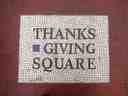
  3. You will know you have arrived when you spot a rectangular sign crafted from small white mosaic tiles, spelling out the square's name in bold black lettering beside a distinct…Lire plusAfficher moins
    Thanks-Giving Square
    Thanks-Giving SquarePhoto: RadicalBender, Wikimedia Commons, CC BY-SA 3.0. Cropped & resized.

    You will know you have arrived when you spot a rectangular sign crafted from small white mosaic tiles, spelling out the square's name in bold black lettering beside a distinct blue square, all embedded directly into the red brick walkway. Welcome to Thanks-Giving Square.

    Back in the 1970s, Dallas businessman Peter Stewart wanted to build a lasting public monument to gratitude, a space he envisioned would carry profound meaning for centuries. To make it happen, he tapped Philip Johnson. Now, Johnson was a brilliant but stubborn architect who refused to compromise his fortified design, bringing a towering reputation and an equally formidable ego to the drafting table.

    The collaboration was a battle of wills almost immediately. Stewart absolutely hated Johnson's initial blocky concepts, calling them awful and entirely too square. The tension between the two men threatened to derail the whole project before it even began. The breakthrough only came when Stewart consulted a Benedictine monk, a member of a Catholic religious order strictly dedicated to quiet contemplation. The monk suggested an ascending spiral shape, based on the idea that gratitude is a gift that always returns to the giver on a higher plane.

    Johnson actually liked the spiral idea, eventually modeling the soaring white chapel after a chambered nautilus shell. But he demanded a serious trade-off. If Stewart wanted a peaceful sanctuary, Johnson was going to protect it on his own terms.

    Take a moment and look at the heavy concrete walls and those defensive bronze gates surrounding the perimeter. Can you see how they create a fortress-like feel right in the middle of the city?

    That was entirely by design. Johnson completely rejected the idea of an open, inviting park. He insisted on sinking the square fifteen feet below street level and wrapping it in heavy walls to physically block out the rest of the world. When architectural critics argued that his walls acted like a roadblock that aggressively pushed people away instead of inviting them in, Johnson famously fired back that a great place needs to be hard to get to.

    You can glance at your screen to see how the active fountains inside play a prominent role in this defense, loudly churning water to mask the noise of the surrounding streets once you finally breach the gates.

    It is a fascinating standoff in concrete. You have two men with fierce ambitions pushing against each other, perfectly capturing the kind of colossal personalities that were busy shaping the local skyline during those years of rapid, explosive growth. A businessman wanting to welcome the world, and an architect demanding the world earn its way inside.

    Take a second to consider how a single piece of architecture can try to be both a welcoming sanctuary and an impenetrable fortress at the exact same time. The square is open daily from nine to four if you want to explore the inside. For now, let us head toward Energy Future Holdings, which is just a two-minute walk away.

    Ouvrir la page dédiée →
Afficher 13 arrêts de plusAfficher moins d'arrêtsexpand_moreexpand_less
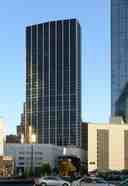
  1. Take a look at the building on your left. This is Energy Plaza, the former headquarters of Energy Future Holdings. With its sleek, geometric lines and sheer dark glass reflecting…Lire plusAfficher moins

    Take a look at the building on your left. This is Energy Plaza, the former headquarters of Energy Future Holdings. With its sleek, geometric lines and sheer dark glass reflecting the city, it looks like a standard corporate monolith. But what played out behind those windows was essentially high-stakes financial blood sport.

    Back in 2007, this company, then called TXU, was the target of the largest leveraged buyout in history. Wall Street titans KKR, TPG, and Goldman Sachs bought the entire operation for forty-five billion dollars. To pull that off, they used a leveraged buyout, which means they purchased the company using almost entirely borrowed money. They strapped a crushing forty billion dollars of debt onto Energy Future Holdings right out of the gate.

    They were making a colossal, swaggering bet. They figured natural gas prices would keep rising, making the company's dirty but cheap coal-fired power plants incredibly profitable. Well, the market had other plans. Natural gas prices completely tanked. It is the classic Texas boom and bust cycle, just played out in boardrooms instead of oil fields. By 2014, crushed by debt, the energy giant declared bankruptcy.

    What followed was a corporate feeding frenzy. The company's structure was so tangled that bankruptcy lawyers and financial advisers billed an average of six hundred thousand dollars every single day. Even on holidays. By the time the dust settled, professional fees alone hit nearly one billion dollars.

    But the absolute peak of the drama was a ruthless clash of billionaire egos fighting over the company's single profitable asset, an electricity transmission business called Oncor.

    Warren Buffett stepped into the ring first. His company struck a nine-billion-dollar deal for Oncor, and everyone assumed the legendary investor had it in the bag. But Buffett did not account for Paul Singer.

    Singer runs a heavyweight hedge fund, and he had been quietly buying up Energy Future's unsecured bonds. Unsecured bonds are just corporate debt not backed by physical collateral, but holding them made Singer a primary creditor in the proceedings. Shockingly, he used that newfound power to derail Buffett's deal. Singer aggressively blocked the acquisition in bankruptcy court, stalling everything until California-based Sempra Energy swooped in with a winning nineteen-billion-dollar valuation.

    Buffett was totally boxed out, and Sempra walked away with the prize.

    That kind of relentless, cutthroat maneuvering is just part of the DNA around here. Everyone wants to be on top. In fact, let's go see a building that took that exact competitive urge to literal new heights. We have a five-minute walk over to Renaissance Tower.

    Ouvrir la page dédiée →
  2. Look up at the imposing glass giant on your left. This is Renaissance Tower. Back when it was finished in 1974, it was the undisputed king of Dallas at 710 feet tall. But in a…Lire plusAfficher moins

    Look up at the imposing glass giant on your left. This is Renaissance Tower. Back when it was finished in 1974, it was the undisputed king of Dallas at 710 feet tall. But in a city driven by constant one-upmanship, crowns are heavy and easily lost.

    By 1985, newer skyscrapers were popping up, and an enormous new neighbor called the Bank of America Plaza dwarfed this place. The building's owners at the time, Prudential, were not about to slide down the rankings quietly. So, they commissioned a dramatic redesign in 1986. They added an elaborate double X pattern of exterior lighting across the facade, which quickly earned the high-rise a popular local nickname among residents... the Dos Equis building.

    But cool lights do not win skyline wars. Pull up your app to see the 2009 skyline and focus on the roof of this tower. See those structural towers? They slapped a 176-foot central spire up there purely as a vanity project, a way to artificially inflate the building's height just to beat out their sleeker rivals. It was a brazen move that pushed the overall structural height to 886 feet, successfully reclaiming its title as the second-tallest building in Dallas.

    The Renaissance Tower, visible here in the 2009 Dallas skyline, became the second-tallest building in the city after a 1986 renovation added a 176-foot spire to boost its overall height to 886 feet.
    The Renaissance Tower, visible here in the 2009 Dallas skyline, became the second-tallest building in the city after a 1986 renovation added a 176-foot spire to boost its overall height to 886 feet.Photo: Photo: Andreas Praefcke, Wikimedia Commons, CC BY 3.0. Cropped & resized.

    That kind of extreme drive seems to attract people with equally wild ambitions. Take Dan Goodwin, for example. On his twenty-sixth birthday in November 1981, Goodwin walked right up to the base of this tower. He was dressed as a homeless vagrant to avoid getting stopped by the cops. Once he got close to the glass, he stripped off his disguise to reveal a full Spider-Man costume. Then, using nothing but homemade suction cups on his hands and feet, he started climbing the outside of the building.

    Goodwin was a high-rise rescue advocate. He had witnessed the horrific 1980 MGM Grand hotel fire in Las Vegas, and he became absolutely obsessed with proving that exterior rescues on skyscrapers were physically possible. He also dedicated this dangerous climb to a young boy with cystic fibrosis he had recently met.

    The Dallas police and fire departments scrambled to stop him, but he eluded them the entire way up. When Goodwin finally pulled himself over the ledge onto the roof, the officers waiting for him were so blown away that they actually shook his hand in admiration... right before arresting him for criminal trespassing. He bailed out the next day and hilariously gave a press conference while still wearing his superhero suit.

    Picture yourself dangling from the side of that sheer glass cliff with nothing but suction cups keeping you alive. What really drives someone to take such an extraordinary, public risk?

    It is just one human matching the audacious ambition of the building itself. Just a quick heads up, the building is open Monday through Friday from 7 AM to 7 PM and closed on weekends, in case you ever want to explore the underground food court. Let us keep moving... First National Bank Tower is just a three minute walk from here.

    Ouvrir la page dédiée →
  3. Look to your left at the towering rectangular skyscraper wrapped in dark gray glass and striking white marble columns running vertically up its sides. This is the First National…Lire plusAfficher moins
    First National Bank Tower
    First National Bank TowerPhoto: Photo: Andreas Praefcke, Wikimedia Commons, CC BY 3.0. Cropped & resized.

    Look to your left at the towering rectangular skyscraper wrapped in dark gray glass and striking white marble columns running vertically up its sides. This is the First National Bank Tower, and if its walls could talk, they would spin a wild tale of immense fortunes, ruin, and sheer stubborn willpower.

    Back in 1965, the grand opening of this place was the ultimate media event. It was designed by George Dahl, an architect who envisioned a 35 million dollar mid-century marvel, a staggering sum equal to about 330 million dollars today. Dahl gave the First National Bank a building that practically dripped with wealth and supreme confidence. Take a look at your screen to see how those vertical lines look glowing at night. Locals immediately joked that the dark glass and bright white columns were intentionally designed to look exactly like a wealthy banker's pinstriped suit.

    The tower illuminated at night, showcasing the striking dark gray glass and white vertical columns that locals joked resembled a wealthy banker's pinstriped suit.
    The tower illuminated at night, showcasing the striking dark gray glass and white vertical columns that locals joked resembled a wealthy banker's pinstriped suit.Photo: Oddtree1, Wikimedia Commons, CC BY-SA 4.0. Cropped & resized.

    But the good times rarely last forever in this city. Fast forward to 2010, and the towering giant was completely abandoned. The building became a 50-story ghost town, mostly because it was hiding a dangerous, lethal secret inside its walls. The structure was packed with asbestos. That is a toxic mineral once heavily used for fireproofing and insulation before people realized it causes severe lung disease. It made the building entirely uninhabitable, and for a long time, bringing it back to life seemed completely impossible.

    Then came a developer named Shawn Todd, who decided to orchestrate the most expensive building conversion in the history of Dallas. His firm executed the largest asbestos remediation project Texas had ever seen just to make the air inside legally breathable again. They meticulously removed and cataloged every single piece of the exterior marble covering eight acres, restored it, and mapped it right back to its original spot. You can see a closer view of that imported Greek marble if you glance at your app.

    Observe the building's distinct dark gray glass and white marble exterior, a contrast of materials imported from Greece for its original 1965 construction.
    Observe the building's distinct dark gray glass and white marble exterior, a contrast of materials imported from Greece for its original 1965 construction.Photo: Oddtree1, Wikimedia Commons, CC BY-SA 4.0. Cropped & resized.

    By 2020, they had poured 460 million dollars into resurrecting the tower as The National. It became a sprawling complex with a luxury hotel and the highest residential apartments in all of downtown on the 48th floor.

    But the dizzying heights of success are always chased by sudden drops. In 2026, crushed by elevated interest rates and falling property values, the building fell into foreclosure. Todd had to surrender the property to Starwood Capital Group over a 230 million dollar debt, admitting it was the first time his firm had lost money in 35 years.

    It is the ultimate Dallas story... a continuous cycle of incredible heights, crushing falls, and people daring enough to risk it all anyway. Speaking of huge risks, let us keep walking toward 1600 Pacific Tower, which is just about three minutes away. I want to tell you about another man who built a towering legacy out of absolutely nothing.

    Ouvrir la page dédiée →
  4. Notice the sleek high-rise on your left, wrapped in miles of dark glass and lined with distinct, vertical strips of bright aluminum molding. This city has a habit of making…Lire plusAfficher moins
    1600 Pacific Tower
    1600 Pacific TowerPhoto: Shaggylawn65, Wikimedia Commons, CC BY-SA 4.0. Cropped & resized.

    Notice the sleek high-rise on your left, wrapped in miles of dark glass and lined with distinct, vertical strips of bright aluminum molding.

    This city has a habit of making giants out of everyday people. Dallas was practically built by self made risk takers who spun vast empires out of sheer willpower, elbow grease, and a whole lot of nerve. Few stories capture that wild ascent quite like James J. Ling.

    Back in 1947, Ling was living in the back room of his tiny electrical shop. He was hungry for growth, famously selling shares of his young company door to door and even hawking them from a booth at the State Fair of Texas. Through relentless deals, he built Ling-Temco-Vought into one of America's most powerful conglomerates, which is basically a giant corporate umbrella that buys up and controls dozens of totally unrelated businesses.

    This building, opening in 1964 as the city's fifth tallest, was his physical monument. It was futuristic. The ground floor had an innovative drive up bank called Teller-Vision. Customers used closed circuit televisions and pneumatic tubes, those pressurized pipes that shoot physical canisters through a building on a burst of air, to conduct business with tellers hidden safely deep inside. Up on the top floor, the Lancers Club changed the hospitality world by proving that elite business networking and fine dining did not just belong out at sprawling suburban country clubs... it could thrive right here in a high rise.

    Take a peek at your screen for a great historical shot of that dark glass facade. That exterior actually held the world's largest electronic signboard. They could individually control thirty windows on twenty five different floors to spell out messages in light, and they frequently lit up a massive LTV for the whole city to see.

    But all that towering ambition had a dark side. During construction, a disastrous cost cutting measure led an engineer to skip installing steel supporting angles on every single floor, placing them only on every other floor instead. This lack of restraint caused a catastrophic failure. Tons of bricks broke loose from the facade, plummeting directly through the roof of a neighboring pool hall and tragically killing two men inside.

    Ling's corporate empire eventually collapsed under its own weight, too. Plagued by crushing debt and plunging stock prices, 1970 brought chaos. After a bomb threat forced a panicked evacuation of this very tower, Ling was ousted from the empire he built. In a brutal twist of fate, he was demoted and stuffed into a tiny suite on the twenty sixth floor of his own namesake tower, forced to answer his own phone while his former company hummed around him.

    Today, the building has found new life as a hotel and apartments. The developers even kept the LTV initials for the residential units, but with a cheerful new tagline... Love The View.

    Are you ready to meet another titan who started with practically nothing? Let us take a short three minute walk over to our next stop, 211 North Ervay.

    Ouvrir la page dédiée →
  5. Turn your attention to the slender rectangular glass high-rise defined by its vibrant alternating bands of bright blue porcelain panels. This colorful eighteen story splash of mid…Lire plusAfficher moins
    211 North Ervay
    211 North ErvayPhoto: Dfwcre8tive, Wikimedia Commons, CC BY-SA 3.0. Cropped & resized.

    Turn your attention to the slender rectangular glass high-rise defined by its vibrant alternating bands of bright blue porcelain panels. This colorful eighteen story splash of mid century modernism is 211 North Ervay, and it is a monument to the kind of sheer will that built this city.

    The story starts with a guy named Leo Corrigan. Born into deep poverty in a St. Louis slum, Corrigan arrived in Dallas in 1910 and kicked off his career just selling classified ads for the local paper. He didn't have much capital of his own, but he had incredible hustle, securing leases from merchants and using them as collateral until he eventually became known as the largest landlord in the entire country by the 1970s. This tower, opened in 1958, was his fourth major downtown office building.

    If you check the screen on your app, you can see a great shot of the building's signature exterior. That striking color comes from alternating azure and aquamarine porcelain spandrels. Spandrels are just the horizontal panels you see between the windows that hide the floor structures and add a clean, unbroken visual line to the facade. That cool blue look was a popular way to inject some life into the otherwise drab, gray skylines of the mid twentieth century. And here is a fun local connection for you. Those brightly colored panels were actually manufactured by the exact same company responsible for creating the iconic flying red Pegasus sign that famously sits atop the Magnolia Building nearby.

    At first, the building was a major success, packed with insurance companies and aviation firms. But Dallas real estate has always been a volatile rollercoaster of booms and busts. As newer, much larger skyscrapers popped up around it, tenants moved out. By 1995, this bright blue beacon was completely vacant. It was labeled an eyesore, and in 2004, the mayor campaigned to bulldoze the slim tower to extend a neighboring plaza. Fortunately, preservationists stepped in to save this rare example of 1950s architecture from the wrecking ball.

    Since then, people have constantly tried to recapture that original Corrigan magic. In the 2010s, another developer tried to turn it into a high tech mecca, but that era crashed and burned by 2018 after a bitter dispute with a tenant caused everyone to pack up and leave. Then, in 2023, an ambitious thirty two million dollar plan was launched to convert the tower into luxury apartments and a hotel. That grand vision collapsed in just a few months when the firm defaulted on millions in loans, resulting in the building being sold off at a foreclosure auction for a fraction of its value.

    Take one last look at those colorful blue panels that have somehow survived all the big dreams and broken promises. We are going to take a one minute walk to the Comerica Bank Tower next, where the financial disasters get quite a bit darker.

    Ouvrir la page dédiée →
  6. Notice this formidable stone monolith on your right, distinguished by its polished granite walls, sheets of dark glass cascading like a waterfall, and a striking cross-shaped top…Lire plusAfficher moins
    Comerica Bank Tower
    Comerica Bank TowerPhoto: Comerica Bank Tower, Wikimedia Commons, Public domain. Cropped & resized.

    Notice this formidable stone monolith on your right, distinguished by its polished granite walls, sheets of dark glass cascading like a waterfall, and a striking cross-shaped top with curved architectural setbacks.

    Back in the mid-nineteen eighties, a financial giant named MCorp Bank decided they needed a monument to their own greatness, a soaring fortress that would show everyone they ruled the city. They brought in the legendary architect Philip Johnson to design a postmodern masterpiece. Postmodern architecture basically means mixing sleek, modern glass structures with playful, historical design elements from the past.

    But MCorp's CEO, a classic Texas big wheel named Gene Bishop, absolutely hated Johnson's first draft. Bishop despised the idea of ordinary retail shoppers cluttering up his corporate headquarters. More importantly, he thought the plans looked far too much like a tower Johnson had designed for MCorp's direct rival. The blueprints went straight into the trash. Johnson and his partner were forced back to the drawing board, stripping away the public-friendly plazas to create this rather unapproachable vault. Johnson later called it the hardest job they ever had.

    Check out your screen to see the sheer scale of what they eventually built. Bishop branded this sixty-story monolith Momentum Place, but locals quickly dubbed it the Taj Mahal of Texas. Bishop certainly lived up to that royal title. Even as the regional economy started to crack, he kept hosting lavish morning meetings, serving up extravagant Southern breakfasts of fried quail, gravy, and biscuits right there in his new corporate fortress. When asked about the terrible optics of feeding bankers fancy game birds during a growing financial crisis, he flatly refused to say how much the daily quail feasts actually cost.

    This aerial view showcases the Comerica Bank Tower's prominent position in the Dallas skyline, where it stands as the city's third-tallest skyscraper.
    This aerial view showcases the Comerica Bank Tower's prominent position in the Dallas skyline, where it stands as the city's third-tallest skyscraper.Photo: Photo: Andreas Praefcke, Wikimedia Commons, CC BY 3.0. Cropped & resized.

    You see, MCorp flew far too close to the sun. Right as this colossal skyscraper opened in nineteen eighty-seven, a sweeping banking crisis hit. It was triggered by risky real estate lending across the state, and the Texas Boom and Bust Cycle swung hard into a devastating bust. MCorp collapsed almost immediately. The bank was completely dissolved. This brand-new skyscraper instantly became the most legally contested piece of real estate in the city. Financial backers sued each other, loans defaulted, and the tower went through the two largest foreclosures in city history. A foreclosure is simply the legal process where a lender takes back a property when the owner stops paying the mortgage, but on this immense scale, it was a complete financial earthquake.

    Look at your app again to see how imposing the exterior really is. Prominent critics ripped the design apart. One local architect called the building an insecure arriviste with too much of the wrong kind of jewelry. An arriviste is essentially a harsh term for a newly rich person who desperately wants to show off their wealth but lacks actual class. The block-long walls of blank granite were seen as a symbol of pure greed, totally isolating the tower from the street.

    This exterior view highlights the tower's postmodern design by Philip Johnson and John Burgee, featuring a modern interpretation of the classic barrel vault and distinctive upper-level setbacks.
    This exterior view highlights the tower's postmodern design by Philip Johnson and John Burgee, featuring a modern interpretation of the classic barrel vault and distinctive upper-level setbacks.Photo: Joe Mabel, Wikimedia Commons, CC BY-SA 3.0. Cropped & resized.

    MCorp is long gone, swallowed up by its own staggering ego, but their giant monument remains, outlasting the very people who demanded it be built. For those needing access, the tower is typically open on weekdays from nine in the morning until five in the evening. Alright, let us head over to Corrigan Tower, just about a two-minute walk away.

    Ouvrir la page dédiée →
  7. Take a look at the towering block of light-colored brick on your right, distinguished by a stark, flat facade that wraps around to glass windows on the corner, all topped with a…Lire plusAfficher moins
    Corrigan Tower
    Corrigan TowerPhoto: Photo: Andreas Praefcke, Wikimedia Commons, CC BY 3.0. Cropped & resized.

    Take a look at the towering block of light-colored brick on your right, distinguished by a stark, flat facade that wraps around to glass windows on the corner, all topped with a slender, white mechanical spire pointing at the sky. That is Corrigan Tower.

    This place is another monument to Leo Corrigan. Remember him from the cool blue building at 211 North Ervay? The guy who hustled newspaper ads and clawed his way up to become a national landlord? In the early nineteen fifties, he wanted a headquarters to anchor his booming empire. He dropped five million dollars on this project, which is about sixty million dollars today.

    To design it, he brought in Wyatt C. Hedrick, a superstar architect of the American South. If you pull up the app on your phone, you can see an older shot of what Hedrick came up with. Hedrick was famous for Art Deco... that flashy, highly decorated, geometric style of the nineteen twenties and thirties. But for Corrigan, Hedrick totally shifted gears. He embraced Mid-Century Modernism. He stripped away the heavy ornaments and went with the clean vertical lines and practical masonry you are looking at right now.

    But the design was not even the wildest part of the project. There was a massive, fifteen hundred seat movie palace called the Tower Theater sitting right on this plot of land. Corrigan did not want to tear it down, but he also did not want to lose out on rental space. So, the engineers essentially built this giant skyscraper directly over and around the theater, in an L shape. They pulled off this insane high wire act of construction while the theater stayed completely open. Moviegoers were down below eating popcorn and watching films while thousands of tons of steel were being hoisted right over their heads.

    Decades later, the building caught the eye of Rita Sweeney, a fierce developer from Toronto. She looked at this modernist tower and just saw a roadblock. She aggressively lobbied the city to demolish the whole thing so she could build a staggering seven hundred foot mega tower in its place. She went head to head with the Dallas mayor over the rights to do it. But her ambition collided with reality. Sweeney passed away unexpectedly in two thousand seven, and when the two thousand eight recession hit immediately after, her dream tower was completely scrapped. Corrigan Tower was left entirely abandoned, rotting for over a decade.

    It took an unlikely hero to save it. John Kirtland, the drummer for the nineties rock band Deep Blue Something, bought the decaying tower. He poured fifty million dollars into completely gutting it. He cleared out the asbestos and turned it into an environmentally sustainable green certified apartment building, packed with public art galleries and music studios. Now, the old corporate fortress is a haven for local artists.

    Let us keep moving. Our next stop is about a three minute walk away, where we will check out a historic department store born from a tragedy and shared grief.

    Ouvrir la page dédiée →
  8. Glance to your left to spot the tich-get-in-jer-bil-ding, an enormous, block-shaped structure faced in pale Indiana limestone with a distinct row of tall, arched windows lining…Lire plusAfficher moins
    Titche–Goettinger Building
    Titche–Goettinger BuildingPhoto: Dfwcre8tive, Wikimedia Commons, CC BY 3.0. Cropped & resized.

    Glance to your left to spot the Titche-Goettinger Building, an enormous, block-shaped structure faced in pale Indiana limestone with a distinct row of tall, arched windows lining its lower levels. Check out the picture on your app to see the full stretch of this old retail giant. This historic building stands as a monument to the colossal ambitions that continually reshaped this city's skyline through endless cycles of fortune and failure. But the foundation it rests on was not just raw commercial ambition... it was heartbreak.

    Edward Titche came to town in 1892. He only planned to stay long enough to settle the estate of his uncle, who had been brutally murdered in the nearby woods for his gold watch and some cash. But the booming local economy convinced Edward to stick around. He eventually joined a local bicycle club, which is where he met Max Goettinger.

    The two men quickly realized they shared more than just their roots as children of German immigrants. They shared an unbelievable weight of loss. Max was a grieving widower who had lost his infant daughter, his young wife, and would eventually lose his only surviving son. Edward had been engaged to be married, but his fiancee died of a sudden illness just one month before their wedding day.

    It makes you wonder... how often does profound personal grief become the bedrock of a city shaping empire?

    Bonded by tragedy, neither man ever married again. Instead, they poured their entire lives into their dry goods business and their community. By the late 1920s, they needed a huge new flagship store. The plot of land they chose had its own tragic past. It was the site of the legendary Dallas Opera House, which had been destroyed by a devastating fire in 1921. Talk about rising from the ashes... Edward and Max bought the scorched lot and transformed the charred ruins into a modern retail palace.

    When it opened in 1929, it was a marvel. The outside featured Renaissance Revival style, an architectural design mimicking grand Italian palaces, while the inside was pure Art Deco. The main level had patterned terrazzo floors, a luxurious surface made by setting marble chips into concrete and polishing them smooth. Deep below ground, a state-of-the-art refrigerated vault held up to three thousand fur coats.

    Yet, despite designing every inch of this masterpiece, the two aging bachelors unexpectedly sold their business mere months before the grand opening. Even so, their names remained permanently etched into the facade.

    Decades later, this building bore witness to a national tragedy. On November 22, 1963, the store was buzzing. They were running a holiday promotion on color televisions marked down to four hundred ninety five dollars, which is roughly five thousand dollars today. Crowds spilled out of these very doors to cheer as President John F. Kennedy's motorcade passed by. The assassination carried a devastating personal blow right here. The store's president at the time, Lee Starr, had been Kennedy's roommate for a semester at Harvard. Starr was actually waiting at the Trade Mart to reunite with his old friend, a reunion that was violently thwarted.

    Today, the structure houses university classrooms and loft apartments. It is a quiet new chapter for a building born from such deep emotional roots. Now, let us shift our focus from sprawling department stores to the story of Dallas's first true skyscraper. We are going to head toward the Praetorian Building, which is just a three minute walk away.

    Ouvrir la page dédiée →
  9. If you look at the historical image to spot what used to stand right here, you will see a fifteen-story rectangular tower built with a uniform stone facade and a highly decorative…Lire plusAfficher moins
    Praetorian Building
    Praetorian BuildingPhoto: Unknown author, Wikimedia Commons, Public domain. Cropped & resized.

    If you look at the historical image to spot what used to stand right here, you will see a fifteen-story rectangular tower built with a uniform stone facade and a highly decorative cornice crowning the roofline.

    Yeah, look up. It is entirely gone. What you are actually standing in front of today is a thirty-foot fiberglass bloodshot eyeball. Welcome to the ghost of the Praetorian Building.

    Back in 1905, this very spot was the epicenter of some seriously outsized ambition. Charles Gardner, a bookseller who founded the Praetorian Order, which was a fraternal social club that also sold life insurance, wanted to make an enormous statement. He did not just want a nice headquarters. He wanted the first skyscraper in the entire Southwestern United States. He wanted to build higher than anyone else just to prove he could.

    But grand egos usually clash with hard reality. They dug a huge hole for the foundation, but then a two hundred and fifty thousand dollar loan, roughly eight million dollars today, completely evaporated. The giant pit sat abandoned for over a year, filling up with rainwater. Skeptical locals ruthlessly mocked the project, calling the giant puddle Gardner's Folly or Gardner's Swimming Pool.

    Gardner eventually found the money, and the building, which cost about twenty-seven million dollars in today's money, opened in 1909. It was so tall that some folks were genuinely terrified it would collapse under its own weight. Curiosity eventually won out, and crowds eagerly paid twenty-five cents to ride the electric elevators up to the rooftop observatory. For a brief, glorious moment, it was the undisputed king of the city. But that reign was incredibly short. By 1912, just three years later, other vanity spires had already eclipsed it. Around here, someone is always hungry to build just a little bit higher.

    The building's desperate need to stay relevant was its doom. In the 1960s, owners stripped away the beautiful neoclassical details, those grand, Roman-inspired columns and stone accents, and covered the original steel frame in a blindingly bright metal known as Praetorian Yellow. That harsh makeover completely ruined the historic structure. After changing hands and falling into foreclosure during an economic bust, the building finally sat empty. When developers bought it in 2010, the structural damage from that yellow metal cladding was so severe it could not be saved. Preservationists fought hard against the city's wrecking ball culture, successfully demanding the building be taken down safely piece by piece instead of using explosives.

    Now, artist Tony Tasset's giant eye watches over the empty lot, an ironic nod to the monumental past that once dominated this spot. Let us move on to another iconic Dallas institution shaped by intense personal drive and high drama. Keep walking toward the Neiman Marcus Building, which is just a two-minute walk away.

    Ouvrir la page dédiée →
  10. On your left stands the Neiman Marcus Building, an imposing, block-like structure wrapped in white terra cotta, a type of fired clay, defined by tall, vertical banks of grid-like…Lire plusAfficher moins
    Neiman Marcus Building
    Neiman Marcus BuildingPhoto: Dfwcre8tive, Wikimedia Commons, CC BY 3.0. Cropped & resized.

    On your left stands the Neiman Marcus Building, an imposing, block-like structure wrapped in white terra cotta, a type of fired clay, defined by tall, vertical banks of grid-like windows stretching up its historic facade. It opened here in 1914 after an earlier shop burned down. The founders wanted a fireproof fortress, which makes sense when you are building an empire in a boom town. But behind the steady expansion of this retail giant in the 1920s was a family drama that almost tore it apart.

    Carrie Marcus Neiman, her brother Herbert, and her husband A.L. Neiman had founded the business together. Carrie was the ultimate confidante and the brilliant mind behind the store's success. She served as a pioneering taste-maker, introducing high-quality fashion to Texas oil families who suddenly found themselves flush with cash. If you check your screen, you can see the kind of luxurious interior where she held court. But while she was outfitting Dallas high society, her marriage was quietly unraveling. A.L. was a serial philanderer. It turned into a massive scandal, ending in a bitter 1928 divorce that forced him entirely out of the company.

    With her ex-husband gone, Carrie cemented her role as the guiding force of the business. She did not just sell clothes. Because of her impeccable discretion, elite Dallas women trusted her with their deepest personal secrets, from their own affairs to their wayward husbands. She knew how to pull strings quietly. When a local socialite was hosting the Duke and Duchess of Windsor, Carrie proactively suggested ordering custom-monogrammed linens for the royal couple. The Duchess loved the luxurious towels so much she packed all twelve of them into her luggage to take home.

    That kind of relentless drive to impress kept the building expanding upward and outward over the decades. But empires always face setbacks. In 1964, the building burned in the costliest blaze in the city's history. They lost five to ten million dollars in merchandise and rare art, which is roughly forty-five to ninety million dollars today. Remarkably, the family just shrugged it off, joked to the press about having a great stock of drip-dry suits, and reopened the doors in twenty-seven days.

    They also knew how to play the long game. On the sixth floor is the legendary Zodiac restaurant. The founders chased a famous chef, Helen Corbitt, for eight years to run it. When she finally said yes, her elaborate popovers and theatrical dining experience constantly lost money. But the family did not care. They viewed the restaurant as a loss leader, a business strategy where a service operates at a financial loss just to attract customers into the building. Affluent diners had to walk past endless racks of clothes to reach their chicken consommé, practically guaranteeing they would shop on their way out.

    It all traces back to Carrie Neiman. She showed that sometimes the strongest force in building a dynasty is not a loud voice or a flashy title, but the quiet, strategic power of knowing exactly what people want and keeping their secrets safe. Keep that in mind as we head to our next stop, the Mercantile National Bank Building, which is just a one minute walk away.

    Ouvrir la page dédiée →
  11. Take a look at the building on your left. The Mercantile National Bank Building, or just The Merc to locals. You are looking at a monument to pure American grit. Seriously. This…Lire plusAfficher moins

    Take a look at the building on your left. The Mercantile National Bank Building, or just The Merc to locals. You are looking at a monument to pure American grit. Seriously. This thirty-one story giant was the only major skyscraper built in the entire United States during World War Two.

    How did that happen? It comes down to one guy. Robert L. Thornton, a man eventually known as Mr. Dallas. Thornton dropped out of school in the eighth grade to be a traveling greeting card salesman. But he had serious drive. In nineteen sixteen, he scraped together twelve thousand dollars in capital, which is roughly three hundred and fifty thousand dollars today, plus a six thousand dollar loan, and started a bank.

    Thornton wanted the ultimate physical symbol of his success, a project driven by a relentless hunger for height and status. He hired an architect to design this imposing tower featuring Moderne styling, which is a sleek, streamlined offshoot of Art Deco architecture that emphasizes vertical lines and speed. But then, December nineteen forty-one happened. Pearl Harbor. The federal government halted all private construction to save materials for the war effort.

    Thornton was a patriot. He personally offered his huge stockpile of structural steel to the federal government, willing to sacrifice his dream headquarters to build ships or tanks. But the military inspected the steel and declined. It was already pre-cut to the architect's exact measurements and couldn't be easily melted down or repurposed.

    So, the government gave him a special waiver. The Merc rose high into the Texas sky right in the middle of severe national rationing, a beacon of homefront resilience. When it opened in nineteen forty-three, the federal government took over ten full floors for various war agencies. And at completion, it was the tallest building west of the Mississippi River.

    Look all the way up to that ornamental weather spire on top of the clock tower. It is an iconic local landmark. Above the four giant clock faces, white light rings flash upward when the temperature is expected to rise, and downward when it falls. A star at the very top glows green for fair weather and red for rain.

    Over the decades, the bank grew into a financial powerhouse, expanding across the whole city block. But as always in Dallas, the boom was followed by a bust. The bank eventually moved out in nineteen eighty-seven to build the Comerica Bank Tower we saw earlier. Following a devastating financial collapse known as the savings and loan crisis, this magnificent complex sat completely abandoned by nineteen ninety-three, a silent ghost town right in the center of the city.

    Thankfully, it did not stay empty forever. It found a second life in the two thousands when developers converted the main tower into apartments, saving those beautiful original exteriors.

    The Merc was born in an era of national sacrifice, but soon the war would end, and the country would enter a golden era of excess. We are going to explore that post-war boom next, looking at the arrival of pure modern luxury. It is just a three-minute walk to our next stop, The Statler Hotel and Residences.

    Ouvrir la page dédiée →
  12. Take a look at this Y-shaped beauty right in front of you. This is the Statler. When it opened its doors in 1956, it was pure, unadulterated tomorrow. It was the first major hotel…Lire plusAfficher moins

    Take a look at this Y-shaped beauty right in front of you. This is the Statler. When it opened its doors in 1956, it was pure, unadulterated tomorrow. It was the first major hotel built in Dallas in almost three decades, and the city did not just break its dry spell, it built a monument to its own boundless confidence.

    The sheer scale of the vision here is staggering. It cost sixteen million dollars to build, which is roughly one hundred and seventy-five million today. The opening gala was a four-day blowout that pulled Hollywood stars and East Coast titans all the way to Texas. Comedian George Gobel headlined the main event. Guests literally dropped from the sky, taking helicopter taxis from the airport directly to the city's first rooftop heliport. Dallas was throwing a party to tell the world it had truly arrived.

    To pull off that kind of swagger, you need architecture that breaks the rules. Architect William B. Tabler brought in an innovative technique called a cantilevered reinforced flat-slab system. Let me translate that. Instead of relying on a dense forest of bulky support columns, the concrete floors were designed to project outward from the central core, almost like diving boards. It allowed the building to soar. Tabler wrapped the whole thing in a thin curtain wall, which is an outer skin made entirely of glass and colored porcelain panels.

    The ambition did not stop at the exterior. The Statler boasted over a thousand rooms, and it was packed with industry firsts, like custom 21-inch Westinghouse TVs in every single room and the brand new novelty of elevator music. If you pull up the screen on your phone, you can see a vintage shot of their huge ballroom. They even installed a huge car elevator just so they could haul full-sized automobiles up for conventions. That is a serious flex.

    For decades, this place was the buzzing heart of Southwest business deals. But skylines are built on cycles of fierce ambition and sudden crashes. By 2001, the hotel, then known as the Dallas Grand, was boarded up. It sat completely empty for years. Ironically, its low nine-foot ceilings... a direct side effect of that famous flat-slab design... made it incredibly tough to renovate.

    But a city driven by ego rarely lets its trophies rust forever. In 2017, a two hundred and thirty million dollar restoration brought the Statler back to life. During the gutting process, workers peeled back a fake gypsum wall in the kitchen and found a forgotten forty-foot abstract mural by New York artist Jack Lubin, completely intact from the original 1956 supper club. Now, it hangs proudly in the sweeping white marble lobby, a brilliant echo of the building's glamorous mid-century origins.

    The Statler proved that if you build it bold enough, the world will come. Now, let us keep walking... we are heading to our final stop, just a three minute stroll away. We are going to see the birthplace of a global hospitality empire, the Dallas Hilton.

    Ouvrir la page dédiée →
  13. Focus your attention on this fourteen-story masonry building with its distinct horseshoe shape, where two prominent projecting towers are tied together by an elaborate stone…Lire plusAfficher moins
    Dallas Hilton
    Dallas HiltonPhoto: M.I.B., Wikimedia Commons, CC BY-SA 3.0. Cropped & resized.

    Focus your attention on this fourteen-story masonry building with its distinct horseshoe shape, where two prominent projecting towers are tied together by an elaborate stone bridge up on the tenth level. If you bring up the image on your app, you will notice it operates under a different name these days, but back in 1925, this was a monumental first.

    This image shows the exterior of the Hotel Indigo Dallas Downtown, originally opened in 1925 as the Hilton Hotel – the first hotel Conrad Hilton ever built to bear his own name.
    This image shows the exterior of the Hotel Indigo Dallas Downtown, originally opened in 1925 as the Hilton Hotel – the first hotel Conrad Hilton ever built to bear his own name.Photo: M.I.B. at English Wikipedia, Wikimedia Commons, CC BY-SA 3.0. Cropped & resized.

    This was the very first hotel ever built from the ground up to bear the name Hilton. Conrad Hilton already ran other properties, but he wanted a true flagship, so he claimed the absolute highest point in downtown Dallas to make his grand statement. To pull it off, he needed serious capital. Enter George W Loudermilk, a wealthy former undertaker who made his fortune bringing motorized hearses to the South. Loudermilk leased the land and loaned Hilton 1.3 million dollars... which is over 23 million bucks today... to build this beast.

    Hilton aimed to offer modern luxury to the average man to compete with the wealthy high society hotels nearby. But his real genius was how he outsmarted the Texas environment. Think about trying to stay comfortable in an era before air conditioning. Instead of letting his guests bake, Hilton deliberately designed that horseshoe footprint to block the heat. He shoved all the utility spaces... things like elevator shafts and laundry chutes... against the solid west-facing wall. That wall acted as a formidable shield against the punishing afternoon sun. Because of that clever layout, not a single guest room faced west, keeping everyone as cool as possible while they caught the cross breezes from the south and east.

    But fortune in this city has a way of turning on a dime. During the Great Depression, Hilton was forced to relinquish the lease. The property passed to a colorful political heavyweight named Jack White, who promptly slapped his own name on the place. Over the decades, the once glamorous rooms fell into serious decay. It sat rotting until 1977, when Opal Sebastian, a self-made business tycoon who built a national empire of luxury beauty salons, stepped in. Using the sharp business sense she honed in the beauty industry, she methodically rehabilitated the decaying landmark floor by floor, proving her grit in a totally male dominated real estate world.

    It feels right that we end our walk right here. When you look at this brick and concrete survivor, you are looking at the literal foundation of the modern skyline. It is a story of outsmarting the elements, betting everything on a grand vision, and refusing to let a masterpiece fade away. The outsized personalities who built, lost, and rescued these spaces did not just leave behind steel and stone. They left behind a city constantly reinventing itself, always reaching for the next big thing. Thanks for exploring it with me.

    Ouvrir la page dédiée →

Foire aux questions

Comment commencer le tour ?

Après l'achat, téléchargez l'application AudaTours et entrez votre code de réduction. Le tour sera prêt à commencer immédiatement - il suffit d'appuyer sur lecture et de suivre l'itinéraire guidé par GPS.

Ai-je besoin d'Internet pendant le tour ?

Non ! Téléchargez le tour avant de commencer et profitez-en pleinement hors ligne. Seule la fonction de chat nécessite Internet. Nous recommandons de télécharger en WiFi pour économiser vos données mobiles.

S'agit-il d'une visite de groupe guidée ?

Non - il s'agit d'un audioguide en autonomie. Vous explorez indépendamment à votre propre rythme, avec une narration audio diffusée par votre téléphone. Pas de guide, pas de groupe, pas d'horaire.

Combien de temps dure le tour ?

La plupart des tours durent entre 60 et 90 minutes, mais vous contrôlez totalement le rythme. Faites des pauses, sautez des arrêts ou arrêtez-vous quand vous le voulez.

Et si je ne peux pas finir le tour aujourd'hui ?

Pas de problème ! Les tours disposent d'un accès à vie. Faites une pause et reprenez quand vous le souhaitez - demain, la semaine prochaine ou l'année prochaine. Votre progression est sauvegardée.

Quelles sont les langues disponibles ?

Tous les tours sont disponibles dans plus de 50 langues. Sélectionnez votre langue préférée lors de l'utilisation de votre code. Note : la langue ne peut pas être changée après la génération du tour.

Où accéder au tour après l'achat ?

Téléchargez l'application gratuite AudaTours sur l'App Store ou Google Play. Entrez votre code de réduction (envoyé par e-mail) et le tour apparaîtra dans votre bibliothèque, prêt à être téléchargé et commencé.

verified_user
Satisfaction garantie

Si vous n'appréciez pas le tour, nous vous rembourserons votre achat. Contactez-nous à [email protected]

Paiement sécurisé avec

Apple PayGoogle PayVisaMastercardPayPal

AudaTours : Audioguides

Des tours à pied en autonomie, divertissants et économiques

Essayer l'application arrow_forward

Adoré par les voyageurs du monde entier

format_quote Ce tour était un excellent moyen de voir la ville. Les histoires étaient intéressantes sans paraître trop scénarisées, et j'ai adoré pouvoir explorer à mon propre rythme.
Jess
Jess
starstarstarstarstar
Tour de Tbilissi arrow_forward
format_quote C'était un bon moyen de découvrir Brighton sans se sentir comme un touriste. La narration était profonde et contextuelle, sans en faire trop.
Christoph
Christoph
starstarstarstarstar
Tour de Brighton arrow_forward
format_quote J'ai commencé ce tour avec un croissant dans une main et zéro attente. L'application vibre tout simplement avec vous, pas de pression, juste vous, vos écouteurs et quelques histoires sympas.
John
John
starstarstarstarstar
Tour de Marseille arrow_forward

Audioguides illimités

Débloquez l'accès à TOUS les tours du monde

0 tours·0 villes·0 pays
all_inclusive Explorer Unlimited