
Visite audio de Buffalo : Échos de grandeur sur Delaware Avenue
Des sociétés secrètes complotaient autrefois sous les élégants toits de Buffalo tandis que des révolutionnaires chuchotaient dans des chapelles éclairées à la bougie à quelques pas de là. Cette ville cache un labyrinthe d'histoires inédites sous ses rues animées et ses façades audacieuses. Explorez tout cela lors de cette visite audio autoguidée. Promenez-vous dans les rues animées d'Allentown, passez devant les grilles en fer du légendaire Saturn Club et entrez dans la First Presbyterian Church. Découvrez les vérités et les légendes que la plupart des voyageurs n'entendent jamais. Quel duel de club infâme a envoyé des ondes de choc à travers l'élite de Buffalo ? Quel message cryptique est gravé dans la pierre ancienne de la First Presbyterian ? Pourquoi un maire des années 1920 a-t-il disparu après un seul vote de minuit dans son repaire préféré ? Traversez le temps et les passages secrets alors que les affrontements politiques, les nuits rebelles et les alliances mystérieuses de Buffalo prennent vie autour de vous. Voyez des liens inattendus se former entre des bancs d'église usés et des salons tumultueux. Laissez les secrets de la ville guider chacun de vos pas. Votre voyage commence maintenant.
Aperçu du tour
À propos de ce tour
- scheduleDurée 30–50 minsAllez à votre propre rythme
- straightenParcours à pied de 4.0 kmSuivez le sentier guidé
- location_onEmplacementBuffalo, États-Unis
- wifi_offFonctionne hors ligneTéléchargez une fois, utilisez n'importe où
- all_inclusiveAccès à vieRéécoutez n'importe quand, pour toujours
- location_onCommence à Kleinhans Music Hall
Arrêts de ce tour
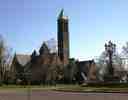
To spot the First Presbyterian Church, look for the tall, square stone tower topped with a green pointed roof, standing high above the tree line-right there at the center of…Lire plusAfficher moins
To spot the First Presbyterian Church, look for the tall, square stone tower topped with a green pointed roof, standing high above the tree line-right there at the center of Symphony Circle. Now, let’s step back in time together. Imagine it’s 1812. Buffalo isn’t the bustling city it is today; picture muddy roads, scattered cabins, and the wild west of New York State-minus the cowboy hats. The First Presbyterian Church was born on this rough-and-tumble frontier, formed by a dozen brave souls in a borrowed schoolroom, led by a traveling missionary named Reverend Thaddeus Osgood. Picture these pioneers, too few and too poor for their own building, passing around candles as they worshiped wherever they could-a classroom, a tavern, or even someone’s half-built house. As storms of war battered Buffalo in 1813, the town burned and worship screeched to a halt. But once the smoke cleared, these faithful folks picked up where they’d left off, meeting in old taverns and even the courthouse. By 1824, they scraped together enough for a tiny wooden church-just forty by fifty feet-lit by flickering candles each evening, warmed by foot warmers packed with hot coals. If you ever thought winter services here might be chilly, you weren’t wrong! That humble little building had a wild journey, serving everyone from Methodists to German immigrants, then ending its days as a brewery icehouse before finally catching fire in 1882. Talk about a dramatic exit! The congregation kept growing, and soon that tiny church couldn’t keep up. In 1827, out came the stops for what became known as “Old First,” a grand red brick structure with a clock, bell tower, and a golden shimmering ball up top-even acting as a landmark for sailors on Lake Erie. Imagine standing outside on a Sunday, the giant doors swinging open, and crowds streaming into a sanctuary that seemed to echo with every organ note. Speaking of organs, when they brought the first one in around 1860, some parishioners feared it was the devil’s work! Before that, it was all flute, cello, and bass viol-maybe not the most rocking Sunday, but unique all the same. The mighty church bell was so loud it doubled as Buffalo’s fire alarm. Of course, it cracked during a fire-but was quickly recast. That bell just wouldn’t quit! As the decades rolled on, industry boomed, and Buffalo covered itself in brick and business. The church found itself boxed in, surrounded by clattering carts and busy beer wagons, with much of its congregation moving uptown. Internal drama brewed, as only church drama can, and debates over moving to a quieter spot landed in courtrooms and headlines. Eventually a generous member, Mrs. Truman G. Avery, donated land right here across from where you stand, and so, in the late 1880s, the church packed up for Symphony Circle-leaving behind a home about to become a bank. Now, feast your eyes on the church before you-a masterpiece by famous architects Green & Wicks, completed between 1889 and 1897. The Romanesque exterior, thick stone walls, and towering central spire were designed not only to inspire faith but to leave a mark on the city’s skyline. Inside, the sanctuary dazzled with Byzantine-revival touches and would go on to host everything from Roosevelt visits to world-famous organ concerts. Did you know Theodore Roosevelt worshiped here during the Pan-American Exhibition? He even had breakfast with the church’s pastor after his infamous inauguration in Buffalo. President, preacher, pancakes-now that’s a churchy trifecta! Across the years, the church’s halls have echoed with celebrations, renovations, and the sounds of laughter and music. Stained glass windows now cast colored light onto well-worn pews, the great organ’s pipes have changed with the times, and even the Tiffany chandelier eventually found a new home-Texas, of all places. Today, as you stand on Symphony Circle, picture the church’s wild journey-from schoolrooms and taverns to this proud stone landmark-still a pillar of faith and Buffalo history, weathering every storm this city can throw its way. And hey, if these old walls could talk, you can bet they’d have some stories... and maybe a joke or two about surviving as a brewery icehouse!
Ouvrir la page dédiée →
Afficher 8 arrêts de plusAfficher moins d'arrêtsexpand_moreexpand_less
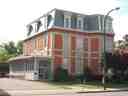
To spot the William Dorsheimer House, just look for the impressive red-brick building with a slate-covered mansard roof and gray sandstone stripes stretching across its bold…Lire plusAfficher moins
To spot the William Dorsheimer House, just look for the impressive red-brick building with a slate-covered mansard roof and gray sandstone stripes stretching across its bold facade-it’s the one with three levels and big dormer windows popping out from the top floor, right on Delaware Avenue. Now, let’s step back in time and imagine you’re standing on this very spot on a crisp morning in 1868. Horses clatter down the street, and here stands William Dorsheimer’s brand-new home, freshly built by a young architect who-believe it or not-would go on to become a superstar in the world of design: Henry Hobson Richardson. The house might seem simple at first glance with its neat square lines, but look closer; there’s a parade of carved stone rosettes and triglyphs-a little party of patterns, if you will-running along those sandstone bands. It’s like the bricks are wearing a French-inspired suit, right after the Civil War, all stylish and confident. William Dorsheimer himself was a big deal-a sharp lawyer, eventually Lieutenant Governor of New York, and a master of throwing a good party. Picture the halls echoing with political debates and laughter as Buffalo’s elite gathered under that graceful slate roof. But here’s the plot twist: this house changed the fate of architecture in Buffalo. Richardson’s work here opened up doors for him across the city and beyond, leading to grand commissions like the Buffalo State Hospital, and even all the way to the New York State Capitol. Fast forward to today, and you’ll find the inside looks quite different-remodeled for modern business, but the main curving staircase still sweeps up from the north entrance, a secret passageway to the building’s storied past. So, as you stand here, you’re not just looking at a brick building. You’re gazing at a launching pad for artistic innovation and some good old-fashioned Buffalo ambition-a place where history and creativity shook hands and decided to stick around. Pretty inspiring, right? Or at least more interesting than your average house, unless your house hosted state governors and famous architects on the regular!
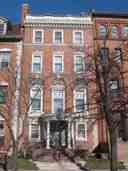
Ouvrir la page dédiée →Standing right in front of you is the Birge-Horton House, a tall, four-story brick row house with neat white stone trim and an elegant entryway, nestled right in the middle of a…Lire plusAfficher moins
Standing right in front of you is the Birge-Horton House, a tall, four-story brick row house with neat white stone trim and an elegant entryway, nestled right in the middle of a line of grand homes-just look for the house with “PRATT HORTON HALL” etched above its curved front steps. Now, let’s imagine the year is 1895-a time when Buffalo’s Delaware Avenue was the place to be if you fancied a bit of luxury, a dash of competition with your neighbors, and maybe the occasional fancy wallpaper dispute. The architects Green and Wicks, a powerhouse design team in Buffalo, drew up the Birge-Horton House in the Georgian Revival style-think classic, stately, and just a hint of “look at me!” This house was one of a rare batch of thirteen luxury row houses, all tall and proud, but each with its own personality. The Birge-Horton was the last to go up, making it the grand finale on “the Midway”-smack-dab between the city center’s bustle and the peaceful stone angels of Forest Lawn Cemetery. Back then, Delaware Avenue was Buffalo’s top address. Henry Birge-of wallpaper fame-wanted a place that matched his style, and he didn’t skimp. Picture yourself climbing a grand staircase that spirals four stories up, six marble fireplaces glowing in the winter, and colored sunlight pouring through leaded glass windows. Talk about a home that says, “You’ve made it!” After the Birges came Katharine Pratt Horton in 1906, a powerhouse of a woman who filled these rooms with the energy of social gatherings and the quiet dignity of civic service. She loved it so much that she finally bought it-and when she passed, the house was passed on to the Daughters of the American Revolution, who keep it almost exactly as it was nearly a century ago. Imagine the layers of laughter, whispered secrets, and maybe a couple of heated wallpaper debates echoing through these halls. And today? It stands as the only house in the row that hasn’t changed a bit, a living memory right in the heart of Buffalo. How’s that for hanging onto history?
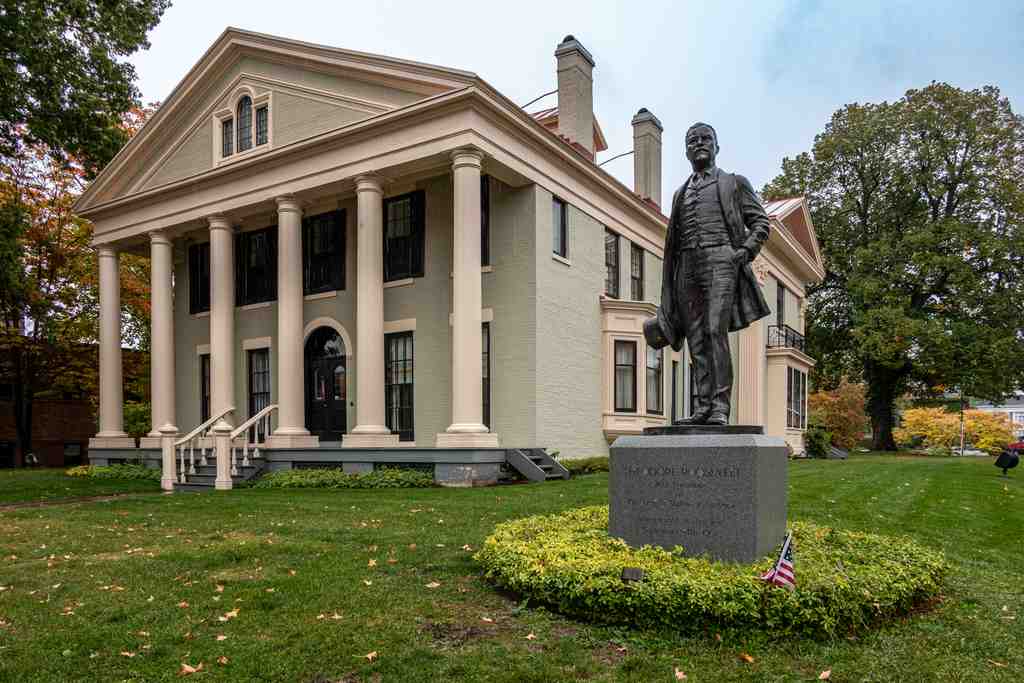
Ouvrir la page dédiée →Look ahead and you’ll spot a prominent classical house with pale columns, a stately porch, and a bold bronze statue welcoming you from the lawn-this is the Theodore Roosevelt…Lire plusAfficher moins
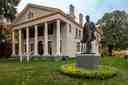
Look ahead and you’ll spot a prominent classical house with pale columns, a stately porch, and a bold bronze statue welcoming you from the lawn-this is the Theodore Roosevelt Inaugural National Historic Site. Imagine you’re here in Buffalo, but not just any day-it's September 1901, and the city is swirling with tension and whispers. The Pan-American Exposition is in full swing, but suddenly, the festivities are shattered: President William McKinley has been shot, sending shockwaves through the crowds. While nervous men in suits dart through telegraph offices and headlines frantically change, Vice President Theodore Roosevelt speeds toward Buffalo, unaware he’s about to make history in the house right before you. This grand building you’re looking at might seem like just another fine mansion, but it has layers of stories hiding inside its walls. The oldest parts of this house go back to the days when Buffalo braced itself against British Canada-these were once military officers’ quarters, part of Buffalo Barracks built in the 1840s. After soldiers marched away and the cannons fell silent, families made it their home, adding parlors, tearing out barns, and even planning renovations you can still find tucked away in the archives here. But the house’s quiet days ended when tragedy struck nearby. The President’s condition takes a dramatic turn for the worse, and with hardly any time to breathe, word arrives-President McKinley has died. You can feel the suspense: the city is anxious, officials are clamoring, and a decision is made. The closest, safest, and most respectable place to swear in the new president is right here, the Wilcox House. Inside, the front library fills with fifty anxious dignitaries; cabinet members stand shoulder-to-shoulder as Federal Judge John R. Hazel administers the oath. Oddly enough, no photos were taken during the ceremony, so you’ll have to picture Roosevelt with his hand raised, surrounded by heavy velvet drapes, gaslights flickering, and shined shoes shifting on the rug. The Wilcox family would live here until the 1930s, but after they passed, the home transformed dramatically. Picture dinner guests gossiping in the Kathryn Lawrence Restaurant that took its place-bye-bye, stately calm; hello, clinking glasses and buzzing chatter. Eventually, the house would be restored and reopened as a museum, carefully preserving Roosevelt’s inauguration room and treasures from the Pan-American Exposition-including some very presidential wine glasses in case you’re thirsty for history! Take a deep breath, look around, and imagine this building as the crossroads of America’s story-a place where, in a moment of crisis, a new president and a new era began. Pretty wild to think all that happened right where you’re standing now, isn’t it?
Ouvrir la page dédiée →Directly in front of you, you’ll see the Williams-Pratt House, a stately red-brick mansion with a grand, two-story porch held up by six towering Ionic columns-just look for that…Lire plusAfficher moins
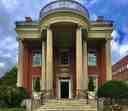
Directly in front of you, you’ll see the Williams-Pratt House, a stately red-brick mansion with a grand, two-story porch held up by six towering Ionic columns-just look for that impressive columned entrance rising above the steps! Now, take a moment to soak in the sight of this three-story giant-a house so big it needed over 11,000 square feet for its main residence alone. The Williams-Pratt House was built around the turn of the century, back when having a fancy architect was essential for Buffalo’s elite; in 1895, Charles Howard Williams and his wife Emma asked the famous architect Stanford White to make their dream home a reality. Imagine the plot: two brothers, two mansions, side by side on Delaware Avenue! Must have been quite the sibling rivalry-maybe even some competitive lawn mowing. Charles Williams was no ordinary Buffalonian; he sat on the boards of major banks, owned heaps of real estate, and wanted a house to match his status, complete with iron railings by August Feine & Sons and a true Buffalo touch-the fence and gate came from John H. Williams Iron Works, just up the street. So you’re standing in front of local craftsmanship and Gilded Age ambition! If you walk around the north side, you’d spot the grand porte-cochère. It’s like an old-fashioned carport, but way fancier-perfect for rolling up in your carriage in style. Step back in time, and suddenly, it’s a chilly winter night in 1900. The mansion is glowing with gaslights and echoing with laughter-in the midst of this lavish life, disaster strikes: a fire erupts in Charles’ bedroom, crackling through heavy woodwork and waking the entire household. Luckily, most of the mansion survived, but the damage to the bedrooms and bathroom cost thousands. Apparently, even the fanciest houses can’t escape surprise wake-up calls. After Charles and Emma’s passing in 1909, their daughter Jeannie and her husband Frederick Pratt moved in. This is where things get truly grand-picture extravagant parties, like the 1926 “Oriental Ball.” The house transformed into a dazzling fantasy: the portico turned into an Egyptian ballroom, one living room became an East Indian smoking lounge. Everywhere you looked, there were silks, glowing lanterns, and Buffalo’s finest twirling in costume. Can you hear the music and laughter bouncing off these brick walls? For a while, the Williams-Pratt House was Buffalo’s ultimate party pad. But times change, fortunes fade. After Frederick’s death and the Great Depression, Jeannie lost much of her wealth, and the City of Buffalo took over the house for back taxes. From grand soirées to vacancy-and then, in 1941, a new chapter: the house became GAR Memorial Hall, a meeting place for Civil War and Spanish-American War veterans. Imagine old soldiers meeting here, swapping tales and keeping history alive. Buffalo almost lost this mansion in the 1950s, when developers hoped to tear it down, but the veterans and the city stood their ground. The structure survived, eventually becoming home to businesses-at one point, you could call this an office with serious historic flair. Today, it still stands, regal and proud, right where glamour, drama, and Buffalo’s boldest stories collide.
Ouvrir la page dédiée →Look ahead at the striking modern building with scalloped concrete walls and dramatic stained-glass windows, just to the left of the “Temple Beth Zion” sign. Temple Beth Zion…Lire plusAfficher moins
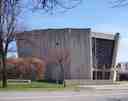
Look ahead at the striking modern building with scalloped concrete walls and dramatic stained-glass windows, just to the left of the “Temple Beth Zion” sign. Temple Beth Zion isn’t just any building-it’s a bold marvel of modern design, shaped like a scalloped oval with 10 massive curving walls, each one representing a Commandment. Designed by Max Abramovitz, the structure looks as if it’s reaching up toward the sky, and when you stand here, you might feel tiny next to its soaring 45-foot walls-don’t worry, no giants are attending services inside! Peek through those spectacular stained-glass windows, the handiwork of artist Ben Shahn, who also designed the menorah and those epic 30-foot-high commandment tablets at the entrance. Now, imagine stepping inside as a warm beam of colored light washes over you from the giant windows--and the sound of the synagogue’s huge 4,000-pipe organ fills the space, shaking the very floor beneath your feet. If these walls could talk, they’d tell stories from 1850, when the congregation was founded, right through a dramatic fire in 1961 that destroyed their previous Byzantine-style temple, with its copper dome shining in the Buffalo sun. And while you’re here, don’t miss the adjacent Judaic museum, where a rotating cast of treasures brings the congregation’s history to life. Today, Temple Beth Zion stands not just as Western New York’s largest Jewish congregation, but as a living symbol of renewal, resilience, and the power of community.
Ouvrir la page dédiée →To spot the Women & Children's Hospital of Buffalo, just look for the large, multi-story building with rows of windows and a distinctly modern entrance marked “THE CHILDREN’S…Lire plusAfficher moins
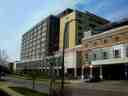
To spot the Women & Children's Hospital of Buffalo, just look for the large, multi-story building with rows of windows and a distinctly modern entrance marked “THE CHILDREN’S HOSPITAL” in bold letters on your right. Now, take a deep breath and imagine this place as it would have been back in the 1890s. Picture kids laughing (or maybe crying a bit, let’s be honest) and the steady footsteps of nurses hustling through wide halls. This was no ordinary hospital-in 1892, Dr. Mahlon Bainbridge Folwell had a wild idea: kids shouldn’t have to recover in the same rooms as adults, with giant medicine bottles and scary old equipment looming over their tiny beds. Instead, he dreamed up a place just for them. It took some convincing, but thanks to Mrs. Williams and her daughter Martha, they turned an old house on Bryant Street into a sanctuary for sick kids and soon-to-be moms. Right from the start, the hospital was packed-so packed that within a year, they had to pile in 40 more beds to fit everyone! Through the decades, the building grew and buzzed with energy, adding high-tech gear, teaching future doctors, and treating babies, teenagers-even young adults up to 21. Imagine the nervous excitement as families rushed through these doors, or the pride when the hospital’s pediatric care was ranked among the best in the country. Eventually, in 2017, the doors closed for the last time, and the hospital’s heart moved to a shiny new home nearby. But the spirit of those caring hands and hopeful hearts-well, you can still feel a little bit of that right here on Bryant Street.
Ouvrir la page dédiée →If you're looking for the Saturn Club, focus straight ahead for a grand, castle-like brick building with steep stone trim, leaded windows, and a fancy wooden door beneath a carved…Lire plusAfficher moins
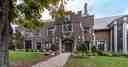
If you're looking for the Saturn Club, focus straight ahead for a grand, castle-like brick building with steep stone trim, leaded windows, and a fancy wooden door beneath a carved Saturn planet-trust me, you can't miss that big ringed planet over the entry! Now, as you stand on this tree-lined sidewalk, just imagine the year is 1885, and thirteen young men are sneaking out of their fathers’ stuffy, old-fashioned clubs, eager to start something a bit more fun-somewhere to play cards, swap stories, and loosen those starched collars on a Saturday night. That’s how the Saturn Club was born, and if you listen closely, you might just hear the echoes of laughter coming from their first meeting place: a humble family house, with members toting in their own chairs as an “initiation” fee. Those early days were spirited-literally and figuratively! Dues were ten bucks a month, which would have bought them a ton of pizza today, but back then, it was just enough to rent a few rooms around town as their club quickly outgrew every space. By 1890, these social pioneers, with names like Carlton Sprague, William F. Kip, and Francis Almy, pooled their money and built a three-story meeting house. Baseball games, debates, lectures, plus a library filled the calendar with fun and drama. At one debate, you can imagine the energy fizzing in the air, as club members faced off with their rivals from the Buffalo Club or the University Club-if these walls could talk, they’d probably argue right back! By 1900, even Theodore Roosevelt-yes, the future president-stopped in for dinner. Picture the room buzzing with anticipation, the smell of roast beef in the air, and Roosevelt himself giving a hearty laugh, the kind that rattles the silverware. Fast-forward to the roaring 1920s, and you get a taste of mischief! The Saturn Club had a bar, a bartender, and a curious little sliding door through which mysterious “ingredients” for drinks were passed-just not the spirits themselves, of course, wink, wink. During Prohibition, the club’s basement must have been packed with whispering members stashing bottles in private lockers (), until one fateful night in 1923 when federal agents-led by their very own club member, no less-raided the place. Sixty quarts of whiskey, moonshine, gin... it all made the front page. I imagine the club’s “House Committee” playing shocked, but deep down, probably a little impressed by their members’ creativity! The building you see now-the Tudor Revival beauty standing before you-was dedicated in 1922, stone by stone, with a stately courtyard in the center and all the grandeur you’d expect from Buffalo’s fanciest social club. Over the years, the Saturn Club polished up its act: they added squash courts, gave the place a million-dollar facelift, and welcomed women as full members by the mid-1980s-a little late to the party, but better late than never. Take a peek through those big, leaded windows-inside, spicy debates once flew across rooms dressed in deep red and gleaming wood. In the Red Room, a fireplace would crackle away as stories and secrets were swapped under the watchful gaze of the Saturn emblem. The Delaware Room still tells tales of seaside murals and easy elegance. Today, the Saturn Club is a living piece of Buffalo’s social history: a place for camaraderie, a splash of scandal, a dash of athletic competition, and a whole galaxy of stories. So, if you ever wonder how to create a club with personality, remember-you only need a handful of lively folks, one big idea, and maybe, just maybe, a sliding door for the “special ingredients”! Thanks for traveling this historic stretch of Buffalo-if you’re lucky, maybe you’ll hear a ghostly debate or a soft clink of glasses as you walk past. Your tour ends here, but the stories go on!
Ouvrir la page dédiée →
Foire aux questions
Comment commencer le tour ?
Après l'achat, téléchargez l'application AudaTours et entrez votre code de réduction. Le tour sera prêt à commencer immédiatement - il suffit d'appuyer sur lecture et de suivre l'itinéraire guidé par GPS.
Ai-je besoin d'Internet pendant le tour ?
Non ! Téléchargez le tour avant de commencer et profitez-en pleinement hors ligne. Seule la fonction de chat nécessite Internet. Nous recommandons de télécharger en WiFi pour économiser vos données mobiles.
S'agit-il d'une visite de groupe guidée ?
Non - il s'agit d'un audioguide en autonomie. Vous explorez indépendamment à votre propre rythme, avec une narration audio diffusée par votre téléphone. Pas de guide, pas de groupe, pas d'horaire.
Combien de temps dure le tour ?
La plupart des tours durent entre 60 et 90 minutes, mais vous contrôlez totalement le rythme. Faites des pauses, sautez des arrêts ou arrêtez-vous quand vous le voulez.
Et si je ne peux pas finir le tour aujourd'hui ?
Pas de problème ! Les tours disposent d'un accès à vie. Faites une pause et reprenez quand vous le souhaitez - demain, la semaine prochaine ou l'année prochaine. Votre progression est sauvegardée.
Quelles sont les langues disponibles ?
Tous les tours sont disponibles dans plus de 50 langues. Sélectionnez votre langue préférée lors de l'utilisation de votre code. Note : la langue ne peut pas être changée après la génération du tour.
Où accéder au tour après l'achat ?
Téléchargez l'application gratuite AudaTours sur l'App Store ou Google Play. Entrez votre code de réduction (envoyé par e-mail) et le tour apparaîtra dans votre bibliothèque, prêt à être téléchargé et commencé.
Si vous n'appréciez pas le tour, nous vous rembourserons votre achat. Contactez-nous à [email protected]
Paiement sécurisé avec 


