
Visite audio de Bentonville : Échos du patrimoine et merveilles cachées du centre-ville
Sous les rues parfaites de Bentonville se cache un héritage : des batailles pour la justice, des légendes murmurées et des récits qui ont façonné une ville bien avant les vélos et les galeries d'art. Cette visite audio autoguidée vous permet de découvrir les secrets du centre-ville à votre propre rythme, mêlant grande histoire et potins d'initiés insolites. Découvrez le drame et la signification derrière les monuments emblématiques et les coins tranquilles que la plupart des visiteurs ne font que traverser. Que s'est-il réellement passé lorsque les tensions ont éclaté autour du monument confédéré de Bentonville ? Dont les pas résonnent encore dans les ombres des anciens couloirs de l'hôtel Massey ? Pourquoi un duel nocturne oublié a-t-il changé le destin de la place de la ville ? Parcourez des pâtés de maisons imprégnés de révolte et de réinvention. Traversez des histoires de rivalité féroce et de courage tranquille. Chaque arrêt offre une tournure, un secret et une nouvelle façon de voir le cœur de Bentonville. Les histoires ont attendu sous la surface. Appuyez sur lecture et faites-les surgir.
Aperçu du tour
À propos de ce tour
- scheduleDurée 40–60 minsAllez à votre propre rythme
- straightenParcours à pied de 2.7 kmSuivez le sentier guidé
- location_onEmplacementBentonville, États-Unis
- wifi_offFonctionne hors ligneTéléchargez une fois, utilisez n'importe où
- all_inclusiveAccès à vieRéécoutez n'importe quand, pour toujours
- location_onCommence à Maison Stroud
Arrêts de ce tour
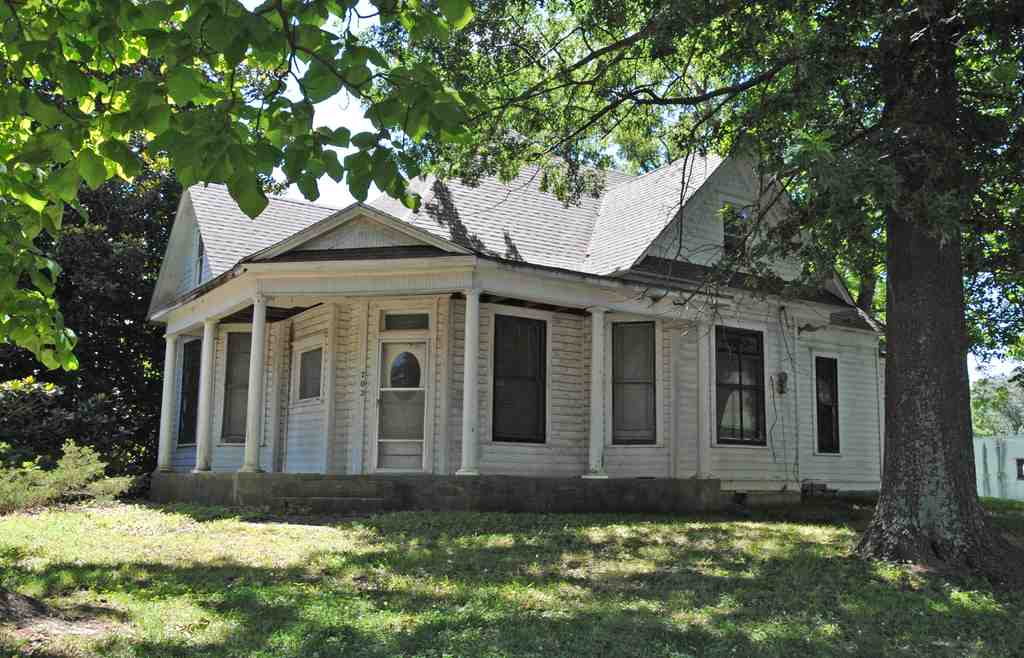
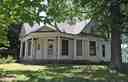
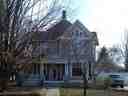
To spot the Stroud House, look for a charming white, one-and-a-half story home with a porch wrapped around the front, decorative shingles, and tall columns, sitting beneath the…Lire plusAfficher moins
To spot the Stroud House, look for a charming white, one-and-a-half story home with a porch wrapped around the front, decorative shingles, and tall columns, sitting beneath the shade of a big old tree at the corner of SE F Street and East Central Avenue. Now, take a moment to picture yourself here in 1903, when Daniel Boone Laine and Delila Laine were busy planning their dream home. Imagine the wood saws buzzing and hammers tapping as this lovely Queen Anne-style house rose from the Arkansas soil, its quirky angles and fancy shinglework catching the eye of every passerby. The porch, with its stately columns, practically begged for neighbors to chat about the latest news or maybe the mystery of that missing pie from next door-hey, it was a tough time for baked goods. This wasn’t just any old home, though. In 1925, the sound of cars rolling up filled the air, thanks to a tiny gas station that once stood right on this property. Stroud House is proof that architecture styles can’t always make up their minds-what you’re seeing is a blend of Queen Anne whimsy and Colonial Revival grace, now officially snuggled into the National Register of Historic Places since 1986. Every board and window here has seen Bentonville grow up from horse buggies to hybrid cars, and maybe, if you peek in just the right spot, you'll find a clue from its gas stop days hiding in plain sight.
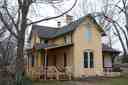
Ouvrir la page dédiée →To spot the Henry-Thompson House, look for a two-story, buttery-yellow brick building with a steep roof, fancy trusswork under the gable, and a porch trimmed with ornate…Lire plusAfficher moins
To spot the Henry-Thompson House, look for a two-story, buttery-yellow brick building with a steep roof, fancy trusswork under the gable, and a porch trimmed with ornate scrollwork right in front of you. Isn’t this place something? Standing here, you’re seeing what Bentonville considered the height of style back in 1890-a house decked out in late Italianate fashion, almost like it’s dressed up for a Victorian ball. Imagine local townsfolk strolling by, craning their necks to check out that scrollwork balustrade and the intricate brackets shading the side entrance, undoubtedly hoping their own homes could look half as fancy. Between 1870 and 1895, homes like this started popping up all over town as Bentonville boomed with new ideas and old-fashioned pride. Those brick walls have weathered decades of Arkansas storms and sunshine, and through it all, the Henry-Thompson House has kept its cool, earning a well-deserved spot on the National Register of Historic Places in 1988. There’s something almost mysterious about its quiet elegance-as though it’s secretly proud to have outlasted its neighbors and still be standing to greet you with that classic, Italianate charm. Imagine living here-just you, that porch, and maybe a bowl of peaches from down the road. Now that’s Bentonville!
Ouvrir la page dédiée →
Afficher 9 arrêts de plusAfficher moins d'arrêtsexpand_moreexpand_less
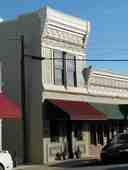
To spot the Charles R. Craig Building, look for the two-story structure right in front of you with a fancy pressed metal facade and bold stucco, topped with architectural details…Lire plusAfficher moins
To spot the Charles R. Craig Building, look for the two-story structure right in front of you with a fancy pressed metal facade and bold stucco, topped with architectural details and a deep burgundy awning shading its lower windows. Picture yourself standing here at the turn of the 20th century-horses clip-clopping on dusty roads and locals bustling past this shiny, brand-new building, constructed by Charles Craig, who wore both a real estate broker’s hat and a merchant’s apron. You can almost smell the fresh brick and hear Craig boasting about his modern design, especially the Italianate-style metalwork glinting in the sun like a Victorian crown. Fast-forward just a bit and you’ll find J. W. Blocker moving in. Blocker ran the Bentonville Apple Evaporator, which means you might’ve caught a whiff of tart apples if you lingered here back then. There’s a rumor he bolted a massive walk-in safe inside-maybe just to keep the apples extra safe? Or perhaps he was hiding secrets from curious competitors! Today, instead of the hum of apple dryers, you’ll overhear the quiet buzz of professional offices, but the building still stands tall, its layers of history poking out from behind every decorative flourish. Listed on the National Register of Historic Places in 2003, it guards its stories carefully-at least, until you come knocking.
Ouvrir la page dédiée →If you look straight ahead, you’ll spot the Jackson House standing proudly with its creamy tan wood, towering pyramidal roof, and a wide porch wrapped all the way around-just look…Lire plusAfficher moins
If you look straight ahead, you’ll spot the Jackson House standing proudly with its creamy tan wood, towering pyramidal roof, and a wide porch wrapped all the way around-just look past the bare trees and notice its fancy white columns and the eye-catching arched window above. Now, imagine it’s the early 1900s and you’re approaching this almost cube-shaped beauty, probably wondering if you’ll get invited up onto that grand porch for some lemonade-or maybe just a peek inside. Built around 1902, the Jackson House shows off the Queen Anne style, which basically means no side is the same: the front is a puzzle of angles, nooks, and sunny windows, with a quirky Palladian eye gazing out from the upper gable. That wide, inviting porch is held up by Corinthian columns-fancy, right?-and look closely: the railings are delicately cut by hand, flat and ornate, like lace turned into wood. Back when the Jackson family settled here, the air would be filled with smells of fresh pies, distant laughter, and occasionally the sound of a fiddler on the porch steps, especially during summer nights when the house became the hub for stories and gossip. Decades rolled on, trends changed, but this house kept its charm, so much so that in 1988 it landed a spot on the National Register of Historic Places-not bad for a quirky cube with a taste for high fashion! So next time you pass, tip your hat and imagine Bentonville’s townsfolk weaving in and out, each with a story to add to this grand old home’s legacy.
Ouvrir la page dédiée →To spot the Massey Hotel, look for a grand, three-story red brick building right on the corner, with an impressive porch supported by Romanesque stone columns and a bold sign that…Lire plusAfficher moins
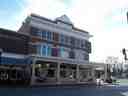
To spot the Massey Hotel, look for a grand, three-story red brick building right on the corner, with an impressive porch supported by Romanesque stone columns and a bold sign that says “MASSEY” sticking out above you. Now, let’s take a step back in time-imagine the year is 1910. You’re standing outside Bentonville’s brand new pride and joy, the Hotel Massey! Right here on the bustling corner of Central Avenue and A Street, you’d have heard the grand opening, with 240 guests arriving as the sound of a lively orchestra spills into the street. This building wasn’t always here-before the Massey, there stood the Eagle Hotel since 1840, which could tell some jaw-dropping stories, like when Union General Franz Sigel camped out here before the Battle of Pea Ridge. That old place got a bit tired and even had a monument shop for a while, until things changed dramatically in 1908… enter the Massey! Construction began in early 1909, promising something the Ozarks had rarely seen: an elegant Renaissance Revival hotel with fancy stone columns, bold brickwork, and acanthus leaf carvings. That porch above you? It once held a promenade, where guests would step out for some fresh air to gossip and maybe spy on passing travelers heading up the major highways that used to meet right here. Those highways made the Massey Hotel a hub for anyone passing through north Arkansas. Inside, imagine sparkling tile floors and tin ceilings gleaming above dapper guests mingling in the parlor or ballroom. But the Massey wasn’t just a hotel-it had a bit of an identity crisis over the years. Its ground floor bustled with shops and even the city’s first public library in the east room in 1918. People could pick up a train ticket or grab a book-though the library had a short first run before closing for a while. Disaster struck in 1975 with a fire, and the Massey sat silent for over a year, empty and ghostly. Then in 1977, the Walton family swooped in, bought the place, and gave it new life as a modern office and library space. For 27 years, Bentonville’s book lovers kept its halls busy until the library grew too big and moved out. The saga continues-Crystal Bridges even stored art here before its grand debut. So as you stand here, surrounded by the hum of a now revived and lively downtown, picture all those layers of stories, where every brick seems to whisper a bit of Bentonville’s bold, quirky history.
Ouvrir la page dédiée →To spot the Benton County Jail, look straight ahead for a two-story brick building with white limestone corners, barred windows, and a front entrance flanked by classic Ionic…Lire plusAfficher moins
To spot the Benton County Jail, look straight ahead for a two-story brick building with white limestone corners, barred windows, and a front entrance flanked by classic Ionic columns. Now, take a deep breath and picture yourself back in 1911. The streets are quieter, the air carries a whiff of fresh sawdust from wagons rolling by, and a brand new building rises before you, designed by the famed A. O. Clark-though, honestly, even the best architects need to practice on something smaller before tackling grand cathedrals, right? Today, you’re gazing at one of his rare, more modest masterpieces, built strong enough to hold the town’s most infamous outlaws, with thick brick walls and imposing limestone corners that practically shout, “No monkey business here!” Just imagine: from behind those barred windows came stories of mischief, mistakes, and maybe the odd poker game to pass the hours. The entrance, topped by a stately gabled pediment and flanked by those proud Ionic columns, looks more like a courthouse than a jail-maybe to give some prisoners a little false hope! In 1988, this building earned a new kind of fame, joining the National Register of Historic Places, forever keeping its secrets behind those bars as Bentonville grew up and out around it.
Ouvrir la page dédiée →Directly in front of you is a grand, light-brick building with tall, arched windows and a staircase rising up to three large entry arches - just look for the American and Arkansas…Lire plusAfficher moins
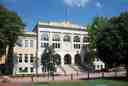
Directly in front of you is a grand, light-brick building with tall, arched windows and a staircase rising up to three large entry arches - just look for the American and Arkansas flags waving from the roof. Take a moment to imagine the year 1928: the sound of horse hooves and car engines mixing in the streets, the clang of workers’ tools as the brand-new Benton County Courthouse takes shape right here under the hot Arkansas sun. This striking Classic Revival building by Albert O. Clark replaced an older Italianate courthouse that had stood since 1874-and before that, folks handled county business in a humble log courthouse all the way back in 1837. Albert Clark brought his vision from St. Louis, giving Bentonville not only its courthouse but also the county jail and other landmarks. The courthouse you see today stands perfectly symmetrical, flaunting keystones and a center entrance that would make any ancient Roman nod in approval. The top floor once had an open-air balcony-imagine sticky summer trials with lawyers sweating out facts and jurors waving fans-until it was enclosed to keep everyone cool. Now, those rounded-arch windows give a hint of Romanesque flair. As you stand here, you’re not just outside a courthouse; you’re at the anchor of Bentonville’s town square, where history, justice, and a few local arguments have all played out over nearly a century.
Ouvrir la page dédiée →To spot the Bentonville Third Street Historic District, look just ahead on both sides of SE Third Street for a stretch of charming, colorful wooden houses nestled behind clusters…Lire plusAfficher moins
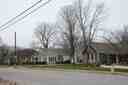
To spot the Bentonville Third Street Historic District, look just ahead on both sides of SE Third Street for a stretch of charming, colorful wooden houses nestled behind clusters of leafless trees. Welcome to a neighborhood where every porch and picket fence has a tale to tell! Imagine it's the 1880s: you can almost hear the distant whistle of the rail line, signaling the arrival of new dreams and styles to Bentonville. Before the railroad rolled in, Benton County had never seen anything quite like these houses. Suddenly, builders went all out, filling these two blocks with 14 beautiful homes, most standing proud at one or two stories high, each framed in good, sturdy wood-except, of course, for the show-off of the block, the Elliott House, dressed up in fancy brick, mixing Italianate arches with Second Empire flair. Picture neighbors strolling in Sunday best, swapping fresh gossip over the white fences, with the faint scent of cut grass and the clopping of buggy wheels in the air. Fast forward to 1993, and these homes made the big leagues, earning a spot on the National Register of Historic Places. So, as you wander this peaceful, leafy street, just know you’re walking through Bentonville’s living scrapbook-where every creak of a porch swing has a story worth a smile.
Ouvrir la page dédiée →To spot the James A. Rice House, look just ahead for a tall, deep red brick building with a two-story porch and pale green trim, crowned by a sharply pointed roof on the…Lire plusAfficher moins
To spot the James A. Rice House, look just ahead for a tall, deep red brick building with a two-story porch and pale green trim, crowned by a sharply pointed roof on the right. Now, let’s let your imagination wander to 1879, when this striking home first took shape. Picture the click-clack of boots and the laughter of townsfolk drifting up to the grand, double-storied porch you see before you. James A. Rice, the proud owner who built this house-and also served two terms as Bentonville’s mayor-might have once peered out these tall, arched windows, plotting his next big idea or maybe just wondering when someone would bring over a homemade pie. The bold mix of Italianate windows and curvy cornices, with a steep Queen Anne gable thrown in for good measure, made Rice’s house the talk of Bentonville. Neighbors probably traded stories on these porches, shading their eyes from the Arkansas sun, while Rice watched his city grow, settling the law one minute and juggling mayoral headaches the next-imagine all the debates this house has overheard! Since 1984, it’s been officially in the spotlight, listed on the National Register of Historic Places. And just think: this unique blend of brick, style, and small-town leadership all started with one man’s vision-talk about leaving your mark!
Ouvrir la page dédiée →You’re looking for a sturdy gray building with the word “BENTONVILLE” right up top-just look straight ahead and you’ll spot it next to some neat little gardens and benches, with a…Lire plusAfficher moins
You’re looking for a sturdy gray building with the word “BENTONVILLE” right up top-just look straight ahead and you’ll spot it next to some neat little gardens and benches, with a classic red caboose parked beside it. Imagine it’s the 1920s-the smell of fresh train coal in the air, the low hum of excitement, and the rhythmic clack of steel wheels in the distance. This was Bentonville’s connection to the world, built in 1925 as a bold new gateway for farmers, business folks, and anyone with somewhere to go. But the road to building this station wasn’t exactly a straight shot-way back in 1853, even before the Civil War, people dreamed of a railway here. Decades passed and the big railroad companies just zoomed by to other towns, missing Bentonville altogether. No one likes to be left out, right? So, the town made its own luck! In the 1880s, local businessmen banded together, built a short “spur” line, and gave Bentonville its own ticket to ride-first to Rogers, then to Gravette, then all the way to Grove, Oklahoma. If you were an apple, this was your golden age-the railroads shipped thousands of bushels from local orchards across America! But, oh, the drama: the Frisco company bought the line, the rates jumped, and folks had to hustle to keep up. This very building replaced a drafty old depot in 1925, humming with hope. But after World War II, trains whistled less and cars took over, leaving the station to gather dust. Almost lost to time, it was saved and lovingly restored in 1980, and today it’s the proud home of the Bentonville History Museum. Need a place to chill after your walk? There’s a park and gazebo right next door, and that shiny old caboose hanging out on the tracks makes a perfect selfie spot. You’ve reached Bentonville’s last stop-where the town’s journey began and, lucky for you, where some great stories never end.
Ouvrir la page dédiée →


Foire aux questions
Comment commencer le tour ?
Après l'achat, téléchargez l'application AudaTours et entrez votre code de réduction. Le tour sera prêt à commencer immédiatement - il suffit d'appuyer sur lecture et de suivre l'itinéraire guidé par GPS.
Ai-je besoin d'Internet pendant le tour ?
Non ! Téléchargez le tour avant de commencer et profitez-en pleinement hors ligne. Seule la fonction de chat nécessite Internet. Nous recommandons de télécharger en WiFi pour économiser vos données mobiles.
S'agit-il d'une visite de groupe guidée ?
Non - il s'agit d'un audioguide en autonomie. Vous explorez indépendamment à votre propre rythme, avec une narration audio diffusée par votre téléphone. Pas de guide, pas de groupe, pas d'horaire.
Combien de temps dure le tour ?
La plupart des tours durent entre 60 et 90 minutes, mais vous contrôlez totalement le rythme. Faites des pauses, sautez des arrêts ou arrêtez-vous quand vous le voulez.
Et si je ne peux pas finir le tour aujourd'hui ?
Pas de problème ! Les tours disposent d'un accès à vie. Faites une pause et reprenez quand vous le souhaitez - demain, la semaine prochaine ou l'année prochaine. Votre progression est sauvegardée.
Quelles sont les langues disponibles ?
Tous les tours sont disponibles dans plus de 50 langues. Sélectionnez votre langue préférée lors de l'utilisation de votre code. Note : la langue ne peut pas être changée après la génération du tour.
Où accéder au tour après l'achat ?
Téléchargez l'application gratuite AudaTours sur l'App Store ou Google Play. Entrez votre code de réduction (envoyé par e-mail) et le tour apparaîtra dans votre bibliothèque, prêt à être téléchargé et commencé.
Si vous n'appréciez pas le tour, nous vous rembourserons votre achat. Contactez-nous à [email protected]
Paiement sécurisé avec 


