
Visite audio de Taunton : Échos d'histoire et de patrimoine
Un château médiéval s'élève au-dessus de Taunton moderne comme un souvenir refusant de s'estomper. Sous ces murs anciens et la courbe animée du County Hall, des histoires de rébellion, de scandale et de secrets murmurés attendent dans l'ombre des oreilles curieuses. Embarquez pour une aventure audio autoguidée au cœur de Taunton. Découvrez des drames que la plupart des visiteurs ignorent – des salles de rédaction battues par la tempête aux chambres du conseil façonnées par l'ambition. Trouvez des récits cachés sous des pierres séculaires. Quelle réunion secrète au sein du County Hall a déclenché un tollé local qui résonne encore aujourd'hui ? Quel signal mystérieux hantait autrefois les émissions de BBC Radio Somerset et qui a tout risqué derrière les murs de ce château lors d'un siège ? Pourquoi 500 hommes ont-ils affronté leur destin à l'ombre du banc mortel du juge Jeffreys ? Passez de la grande maçonnerie à la pierre à tourelles, chaque arrêt révélant une autre facette de l'esprit du Somerset – inattendu, audacieux et parfois glaçant. À la fin du voyage, vous verrez Taunton avec plus de détails. Déverrouillez les histoires cachées de la ville maintenant – le prochain chapitre vous attend déjà au coin de la rue.
Aperçu du tour
À propos de ce tour
- scheduleDurée 40–60 minsAllez à votre propre rythme
- straightenParcours à pied de 3.4 kmSuivez le sentier guidé
- location_onEmplacementTaunton, Royaume-Uni
- wifi_offFonctionne hors ligneTéléchargez une fois, utilisez n'importe où
- all_inclusiveAccès à vieRéécoutez n'importe quand, pour toujours
- location_onCommence à County Hall, Taunton
Arrêts de ce tour
Afficher 10 arrêts de plusAfficher moins d'arrêtsexpand_moreexpand_less
Right in front of you, you’ll spot a grand stone building draped in winding ivy, complete with castle-like battlements along the rooftop and tall, narrow windows-just look…Lire plusAfficher moins
Right in front of you, you’ll spot a grand stone building draped in winding ivy, complete with castle-like battlements along the rooftop and tall, narrow windows-just look straight ahead for the Union Jack waving proudly on top. Ah, you’ve found the Castle Hotel, where history and hospitality meet in rather dramatic style! Imagine yourself standing here three hundred years ago-no vehicular traffic, but the clip-clop of horses’ hooves mingling with the chatter of soldiers, politicians, and curious townsfolk all swirling around a powerful Norman fortress. This spot isn’t just a pretty face; it stands on the very bones of a real 12th-century castle. In the swirling summer of 1685, the Duke of Monmouth launched his doomed rebellion against King James II right here, with his troops nervously crowding the ancient stone halls-until, of course, they met their match at Sedgemoor. Later, the air filled with the anxious murmurs of Judge Jeffreys’ Bloody Assizes-sort of like a terrifying courtroom drama, but without the TV remote to change the channel. The hotel itself may seem like it has always welcomed travelers, but the main building was actually put together in the late 18th century, once even known as Clarke’s Hotel. Over the years, extra floors were added in the 20th century, so the Castle has grown as freely as its tangled vines. Look closely at the impressive archway-those 13th-century chamfered arches and sturdy buttresses have seen everything from medieval knights to celebrity chefs (though probably never at the same time). The Castle Bow is a survivor from the old precinct gate, reminding us just how much history clings to these stones. If you catch a whiff of food in the air, that’s the famed Brazz restaurant-a place where head chefs have battled for Michelin stars faster than you can say “sauce reduction.” The Chapman family has run this place for more than 70 years, and if you listen closely, you might hear a playful argument in the kitchen about who lost-and who almost regained-the coveted star. So, whether you’re a history buff, a foodie, or just in the mood to imagine medieval intrigue, the Castle Hotel invites you to step through time and maybe even enjoy a cheeky pudding in the present day.
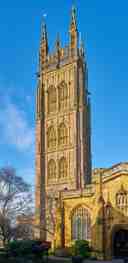
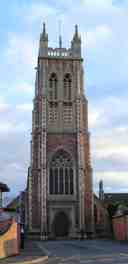
Ouvrir la page dédiée →To spot Taunton Minster, just look up and ahead for a soaring, pale sandstone tower with pointed pinnacles - it’s hard to miss as it stretches above the town’s rooftops, demanding…Lire plusAfficher moins
To spot Taunton Minster, just look up and ahead for a soaring, pale sandstone tower with pointed pinnacles - it’s hard to miss as it stretches above the town’s rooftops, demanding attention like a royal crown among hats. Now that you’re here in front of Taunton Minster, imagine you’re standing at the very heart of centuries of history, community, and a little bit of drama! This is no ordinary church - right in front of you is the greatest parish tower in all of England, or so said church-chronicler Simon Jenkins. The original church was established as far back as the 12th century, and by 1308 it was already the hub of Taunton’s bustling town life. Back then, people would have streamed in for announcements, festivals, and, if local gossip is to be believed, maybe the odd bit of matchmaking! The building style is Early Tudor Perpendicular Gothic, which is a fancy way of saying “big, beautiful, and lofty enough for the angels to peek in.” The dramatic tower in front of you was first built around 1503, funded by the prosperity of the wool trade-yes, all those sheep paid for this! Local townsfolk and traders would’ve watched in awe as the sandstone blocks were lifted skyward, with carts clattering past and stonemasons calling to each other over the noise of the market. If you listen closely today, you might just catch the bells ringing above-there are 15 of them now, and when they all swing for a full-circle ring, it’s like Taunton itself is singing. The bells have a wild history all their own! Most were cast in 2016 by Taylors of Loughborough, but there’s an older display bell from 1922 made at Whitechapel - talk about a bell family reunion! These bells ring out for celebrations, remembrances, and sometimes, if you’re unlucky, to chase away the rainclouds (although I have it on good authority the weather here only listens half the time). Inside, the church glows with painted walls and light that pours through colorful Victorian stained glass-most of which survived a vandals’ attack in 2009 thanks to protective wire mesh. Some medieval fragments still hide behind these modern shields, shimmering with secrets from ages past. Wanderers inside will also spot memorials, including touching war tributes for Somerset’s own, reminding us that this place has seen both hope and heartbreak. The church has taken its bumps over the centuries as well. Wind and weather battered the tower so badly, that two pinnacles once tumbled through the roof! Immediate repairs cost a small fortune - £135,000. If only the sheep could pitch in again. Many memorable figures called this place home. In the 1660s, Joseph Alleine, a noted Puritan minister, inspired the congregation before resting in the churchyard. John Boswell, a witty Tory writer and vicar, left behind a Latin-inscribed memory in the stone. If you listen hard, you can almost hear echoes of their footsteps and debates. Taunton Minster's story continues to unfold, with the church moving from a strict evangelical past towards a welcoming, central tradition. And here’s the grand twist: only in 2022 did this ancient church officially become “Taunton Minster,” showered in the cheers of a special service. Now, every chime of those famous bells rings out not just for a town, but for a Minster-a soaring landmark that has watched Taunton grow, grieve, and celebrate for over 800 years.
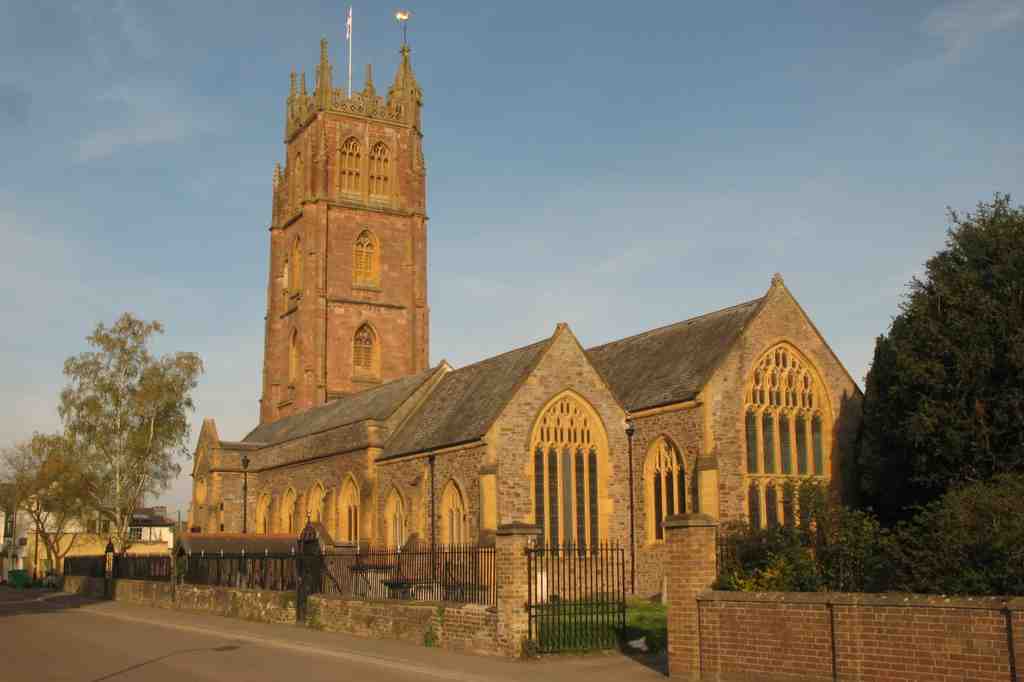
Ouvrir la page dédiée →Look ahead for a grand stone church with rows of tall, golden-windowed arches and an impressive, square tower that stands proudly above everything else-trust me, you can’t miss…Lire plusAfficher moins
Look ahead for a grand stone church with rows of tall, golden-windowed arches and an impressive, square tower that stands proudly above everything else-trust me, you can’t miss it! Welcome to the Church of St. James, a place with more history than your granddad’s attic! Standing here, you’re looking at a building that’s seen centuries come and go-its story starts way back in the 900s, when monks from Taunton Priory would have strolled right where you’re standing now. The present church itself goes back to the 14th century, but don’t be fooled-this old beauty has had more makeovers than a reality TV star! Parts of the south aisle and porch were rebuilt nearly two hundred years ago, the 111-foot tower joined the team in the 1870s, and the chancel showed up in 1884. Step inside (if you can), and you’ll spot a medieval wagon-style ceiling, a font so old it predates your favorite fairy tale, and stained glass from both the 15th and 19th centuries, all sparkling like hidden treasure when the light’s just right. Can you imagine the echo of centuries-old laughter or the murmurs of ancient townsfolk in these walls? Even the iron railings outside have watched over this place since the early 1800s. Oh, and if you hear cheering, don’t worry-the church backs right onto Somerset County Cricket Ground, so it’s not divine intervention, just a good cricket match! This grade II* gem is still part of the local community, within the Diocese of Bath and Wells, and keeps the evangelical spirit alive, welcoming one and all. Feeling the weight of history yet? Or maybe just the excitement of the game next door!
Ouvrir la page dédiée →Back in 1881, before the sound of leather hitting willow ever echoed here, this place was a patch of rough riverside grass called Rack Field. Picture a muddy, slightly squishy…Lire plusAfficher moins
Back in 1881, before the sound of leather hitting willow ever echoed here, this place was a patch of rough riverside grass called Rack Field. Picture a muddy, slightly squishy mess next to the River Tone, being wrangled by the Taunton Athletic Club. The plan? A sports centre, with a running track, cycling arena, and-though not quite ready on grand opening-an ambitious cricket square. The whole place burst into life one Whit Monday with a lively athletics meeting. Somerset cricket, at that time, was a bit...well, homeless! The club wandered the county like cricketing nomads, relying on borrowed grounds and a prayer that it wouldn’t rain (which, let’s face it, is a bold strategy in Somerset). It was only in 1882 that Somerset County Cricket Club found a proper home here, and their first match was a real thrill-Somerset beating Hampshire by five wickets. It must have been something, the sound of applause probably mixing with the odd horse whinny from nearby fields. They didn’t always win, though! Later that month, the mighty Australian team rolled into town and handed Somerset a defeat that likely left the crowd gasping into their picnic sandwiches. By the 1880s, Somerset’s fortunes fluctuated-they even lost their “first-class” status in 1886. But under the dogged leadership of Henry Murray-Anderdon, the ground was finally secured for good. For just £2,000 (a fortune at the time), Somerset bought outright what would become a very precious piece of cricketing turf. As the 20th century dawned, locals considered it an “intimate and lovely place.” There were grand trees around the edge, benches for the faithful (and, yes, the occasional squatter under a chestnut tree), and a famed section called the Hen Coop-reserved for Taunton’s finest families, though no tickets were issued. If you knew, you knew! There was a public bar too, receiving plenty of attention after the First World War. And those with keen eyes could climb a little manmade hill, created from 400 lorry-loads of earth in 1925, for a prime view. World War II turned the ground over to soldiers and firemen, but even then, the groundsman kept the cricket pitch in tip-top shape-ready for victory overs as soon as peace returned. In the modern era, the County Ground expanded, with pavilions named after local heroes like Marcus Trescothick, Colin Atkinson, and the famous Sir Ian Botham. It now boasts room for 8,500 fans, though temporary seating can ramp that up to 15,000 for truly epic occasions. Cricket is king here, but the stories don’t stop there. In the 1960s and 70s, you could hear greyhounds yapping excitedly on race nights-the track encircled the cricket ground and drew a new kind of crowd every Tuesday and Friday! And Somerset’s love of sport isn’t afraid of a little experimentation: in 2008, cricketer Marcus Trescothick turned the field into a baseball diamond just for one day, even if the Somerset side was...well, more “cricket in disguise” than true Yankees. But who could forget the County Ground’s appeal as a concert venue? In 2006 and 2012, Elton John serenaded sell-out crowds here. Imagine “Rocket Man” echoing across the hallowed turf-a sight to see, and a chorus you could hear for miles! Today, the County Ground is more than just a stadium-it’s the roaring heart of Somerset cricket. It hosted World Cup games in 1983, 1999, and 2019. Since 1997, it has also been the proud home of England’s women’s cricket, including jubilant moments when the women’s team took the field for their own international matches. The on-site Cricket Museum tells these tales-and more! Step inside if you can, and you’ll find stories of both Somerset and women’s cricket, echoes of Test legends, and a curious collection of I Zingari memorabilia that makes you wonder if there’s a club for everything in England. Soak up the sounds-the excited shouts, the rhythmic clap of applause, the gentle thud of a ball racing across immaculate grass. The County Ground is Taunton’s place for sporting dreams-just mind your head for flying sixes! Intrigued by the structure and facilities, development or the greyhound racing? Make your way to the chat section and I'll be happy to provide further details.
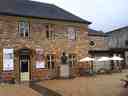
Ouvrir la page dédiée →You’re looking at a proud stone building with old golden-brown bricks, big square windows, and a striking statue out front-just look for the picnic benches and white umbrellas to…Lire plusAfficher moins
You’re looking at a proud stone building with old golden-brown bricks, big square windows, and a striking statue out front-just look for the picnic benches and white umbrellas to spot it easily. Welcome to the Somerset Military Museum! Imagine yourself stepping back in time, with the cool Somerset breeze carrying echoes of marching boots and clinking medals. This spot may look peaceful today, but it holds the stories of soldiers who braved cannons, monsoon rains, and the odd grumpy sergeant. The museum itself is tucked inside Taunton Castle’s grand old hall-so, if you sense any medieval knights hanging around, don’t worry, they just might be admiring the military displays! Originally, this museum was dreamed up to guard the memories of Somerset’s own Light Infantry and the Somerset Volunteers. So, what’s inside? You’ll discover thrilling exhibitions split into tales of epic battles and the everyday adventures (or, sometimes, misadventures) of life as a soldier. One highlight is a glistening silver model of the Gateway of India-handed to the Somerset Light Infantry as they became the last British brigade to leave India in 1948. Imagine the bittersweet farewell, the heavy boots echoing on stony ground, and the gift of a silvery city gate-a nod to duty done. But wait, there’s more! You’ll also find heroes from the Prince Albert’s Somerset Light Brigade, who faced dust, heat, and a touch of mystery in the First Anglo-Afghan War and the Battle of Jellalabad. If walls could talk, these would likely mutter about daring cavalry charges and a few very muddy uniforms. Opened by the Queen Mother in 1974 (and later visited by Queen Elizabeth II herself), the museum is a treasure trove of regiments, tales, and courage. Whether you’re a history buff or just wandering through, listen closely-the ghosts of Somerset’s regiments might just have a story or two to whisper as you stroll through their legacy. And don’t worry, at this museum, the only thing you might need to dodge is a stray history fact!
Ouvrir la page dédiée →To spot St George’s Roman Catholic Church, just look ahead for a tall, dramatic red stone tower with pointed turrets and grand arched windows-the impressive Gothic Revival…Lire plusAfficher moins
To spot St George’s Roman Catholic Church, just look ahead for a tall, dramatic red stone tower with pointed turrets and grand arched windows-the impressive Gothic Revival structure rises steeply above Billet Street and leaves no room for doubt! Now that you’re standing here, imagine yourself stepping back to the 1800s-Taunton’s streets bustling with carts, horses, and the clatter of boots. There’s a scent of fresh stone in the air, and excitement, too, as something monumental is taking shape on this very spot. Now, you might look at the church and think, “Towering. Grand. Surely always the home of a lively Catholic congregation?” But just two centuries ago, Catholicism in Taunton had nearly faded away after the Reformation. In the late 1700s, local legend claimed “there were no Papists in Taunton!” An exaggeration, but not too far off-by 1787, just a handful of dedicated Catholics quietly met in a small chapel registered on Canon Street. By the 1850s, that secret community had grown bolder-and a little too big for its boots, or at least, too big for tiny St George’s Chapel! Can you picture it? Families crammed shoulder-to-shoulder in a chapel meant for 200, the windows foggy with breath, the air thick with whispered prayers and hope. Something had to change, and in a twist of historical generosity, the nearby Franciscan Convent bought up a plot of land, right on the edge of town. They offered it up-imagine the cheers!-for a new, proper church, a rectory, and even a school. Enter Reverend John Mitchell, a man with grand ideas-and, as it turns out, big shoes to fill. He dreamed of a church with a spire to rival Salisbury’s famous cathedral. Rather optimistic, some might say! Fundraising began with all the drama of a village fair: a bazaar here, a lottery there (until the police caught wind and said, “Hang on! No gambling, please”). Still, nothing stopped the determination. On a bright summer’s day in August 1858, the Bishop of Clifton laid the first stone; the townspeople gathered around, excitement humming in the air like a plucked violin string. So, as you stand before this tower built from red Monkton stone, trimmed with pale Bath stone, you’re looking at the Gothic Revival in full swing-pointed arches, ornate windows, those proud stone turrets. Nikolaus Pevsner, an expert in architecture, called it a “competent imitation” of the grand Somerset towers that dot the county, though this church’s details twirl with a more playful, flowing style than the strict old Perpendicular Gothic. Funny thing, those grand plans for a towering spire-well, the spire never did happen. They built a stout tower up to 89 feet, and the rest… remained in dreams and sketches. Blame it on funds, time, or maybe a little bit of Somerset practicality: the wind up here can be fierce, after all. Still, the church continued to grow, year by year. In 1860, the doors swung open for the first grand Mass. Can you imagine it? The bells ringing, crowds gathering, even three visiting bishops preaching long and pious sermons. But construction wasn’t all singing and incense. Buildings take time, money, and-sometimes tragically-sacrifice. In 1876, poor George Toller, one of the builders, fell from the scaffolding, a somber note in the church’s lively story. Families whispered prayers for him and pressed on. By 1912, after endless little improvements, additions, and fundraisers (no lotteries this time!), the church was finally consecrated-an event so grand it took 24 priests to assist the Bishop of Clifton in the ceremony! Memorials have accumulated here, too: a stained glass window commemorates Canon James O’Shaughnessy, beloved rector, added in 1928. And what about that sturdy, storybook rectory down the side? That’s no afterthought-it’s an architectural treat in late medieval style, wandered straight from another century, with its patterned slate roof and noble porch. Just think: while other churches stood empty or silent after the Reformation, the community here kept building, dreaming, singing and learning. Today, St George’s stands tall as one of two Catholic churches in Taunton, serving thousands, its walls thick with the laughter and whispers of schoolchildren, the drama of bazaars, the silent prayers of generations. Not bad for a town where Catholics were once nearly invisible! So while you gaze up at those dramatic arches and windows, let yourself listen for the echoes: the chisel’s tap, the clatter of construction, laughter across the garden hall, and the stubborn, joyful heartbeat of a community refusing to vanish. This is St George’s-a church that’s had its share of mischief, miracles, and more than a few surprises. Shall we head on to our next stop?
Ouvrir la page dédiée →To spot the Taunton Unitarian Chapel, look straight ahead for a tall cream-colored building with elegant rounded windows and classical columns, topped by a triangular pediment…Lire plusAfficher moins
To spot the Taunton Unitarian Chapel, look straight ahead for a tall cream-colored building with elegant rounded windows and classical columns, topped by a triangular pediment above a central doorway and flanked by two old-fashioned lanterns. Now, take a deep breath and imagine standing here, watching the same doorway where centuries of determined souls once nervously glanced back over their shoulders. It’s hard to believe, but there was a time when simply walking into a place like this could land you in very hot water-possibly even hotter than a cup of Somerset cider left out in the summer sun! Back in the 17th century, Taunton was filled with "Dissenters"-men and women who simply wanted to worship in their own way, and boy, did it get them into trouble. Picture soldiers marching down Mary Street, and the doors of an early Meeting House swinging shut behind families hoping for a bit of peace. The very first chapel here was built in 1670, right in the middle of all that tension. The government’s rules were strict: if you weren’t praying with the Church of England, you might as well be digging your own grave. And yet, the bravest folks in Taunton-Baptists-banded together to build a house of worship. Then came an on-again, off-again wave of tolerance, like the English weather: the Royal Declaration of Indulgence in 1672 allowed worship outside the law for just one year, before Parliament took even that crumb away again. After rebellions and stirrings-the Monmouth rebellion, to be precise, with Dissenters right in the thick of it-the glorious shake-up called the Glorious Revolution brought King William III, and with him, a bit more freedom to worship outside the Anglican fold. By 1712, this congregation had enough muscle and money to create the grander building you see today, funded entirely by its stubbornly faithful members. But even inside these walls, things weren’t so simple! Under pastor Joseph Jeffries, worship shifted from standard Baptist fare to something even more controversial: Unitarianism. Imagine that-choosing to believe in “one God and Father of all,” instead of the Trinity-at a time when Parliament flat-out forbade it! It wasn’t until the Doctrine of the Trinity Act in 1813 that being a Unitarian was actually legal. Until then, sermons here sometimes required a little extra courage... and possibly a good disguise. Now, for a dose of drama. Fast forward to the 18th century, when Rev. Joshua Toulmin took charge of the chapel. He faced a steady diet of “unremitted insult and misrepresentation.” Once, an angry crowd even burned an effigy right at his front door, like a giant, angry scarecrow-but with much less straw and a lot more tension. Miraculously, Toulmin escaped a nastier fate thanks to quick-thinking friends. But not all visitors were so frightening-imagine, if you will, the great poet Samuel Taylor Coleridge himself, popping in to preach during his visits to nearby Nether Stowey. He once wrote about the long walk into Taunton to cover divine services; not your usual poetry gig! Inside, you’d still see many original features: solid oak galleries, Corinthian columns, and a delicately carved wooden pulpit-all beneath a brass chandelier gifted by one of Taunton’s own MPs, Nathaniel Webb. Outside, that crisp Italianate design you see-the elegant pilasters and round-arched windows-was added in 1881, when the facade got a “glow-up” and the twin doors became one. Can you imagine the stories swirling in the air after Sunday service, children squeezed onto the stairs, voices echoing off the high ceilings? But the chapel cared not just for souls, but for minds, too. Taunton’s Unitarians were the first to offer free schooling for girls alongside boys-a pretty radical idea at the time. In 1886, the Mary Street Memorial Schools were built next door as a tribute to one of the chapel’s beloved pastors-and just imagine the shuffle of busy feet and the happy clamor drifting over from that building. As you stand here, know that this building is far more than its stylish facade; it’s a survivor, a rebel, and a quiet champion of open-mindedness and courage. Even now, services are held here twice a month, and the voices that rise inside carry the echoes of centuries past-each one a testament to the stubborn hope and humor that’s very much a part of Taunton’s spirit. In a way, you could say this chapel is like a good joke that’s lasted for centuries: a surprising, difficult, and utterly human punchline right in the heart of Mary Street.
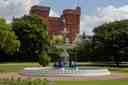
Ouvrir la page dédiée →Just ahead, peeking above the trees, you’ll spot a big, red-brick building with square, castle-like towers-look up past the fountain and you’ll see the striking Jellalabad…Lire plusAfficher moins
Just ahead, peeking above the trees, you’ll spot a big, red-brick building with square, castle-like towers-look up past the fountain and you’ll see the striking Jellalabad Barracks keep standing strong. Imagine it’s the late 1800s and you hear the distant sound of boots thudding, orders being shouted, and maybe even the odd nervous joke from new recruits ready to join the Somerset regiment. Built between 1879 and 1881, these barracks were not just any military building-they look more like a fortress dropped from a fairytale, thanks to their Gothic Revival style. They got their name from a battle far away in Afghanistan: Jellalabad, a place where the local regiment-then the 13th Regiment of Foot-showed some serious grit. Fast forward to the start of World War I, and the atmosphere would have been thick with tension and excitement as young men lined up here, about to step into the unknown. Over the years, the bugle calls and marching gave way to something a bit less dramatic: paperwork, as the Royal Army Pay Corps took over and the building turned into a pay office. In the 1990s, most of the barracks disappeared, making room for homes, but this keep survived, holding onto its secrets and stories. Now, it’s Grade II listed-a reminder that even the toughest barracks need a bit of TLC. So, don’t be surprised if you feel a sudden urge to stand tall and salute! This old keep has certainly seen its share of bravery, nerves, and even a bit of military mischief.
Ouvrir la page dédiée →


Foire aux questions
Comment commencer le tour ?
Après l'achat, téléchargez l'application AudaTours et entrez votre code de réduction. Le tour sera prêt à commencer immédiatement - il suffit d'appuyer sur lecture et de suivre l'itinéraire guidé par GPS.
Ai-je besoin d'Internet pendant le tour ?
Non ! Téléchargez le tour avant de commencer et profitez-en pleinement hors ligne. Seule la fonction de chat nécessite Internet. Nous recommandons de télécharger en WiFi pour économiser vos données mobiles.
S'agit-il d'une visite de groupe guidée ?
Non - il s'agit d'un audioguide en autonomie. Vous explorez indépendamment à votre propre rythme, avec une narration audio diffusée par votre téléphone. Pas de guide, pas de groupe, pas d'horaire.
Combien de temps dure le tour ?
La plupart des tours durent entre 60 et 90 minutes, mais vous contrôlez totalement le rythme. Faites des pauses, sautez des arrêts ou arrêtez-vous quand vous le voulez.
Et si je ne peux pas finir le tour aujourd'hui ?
Pas de problème ! Les tours disposent d'un accès à vie. Faites une pause et reprenez quand vous le souhaitez - demain, la semaine prochaine ou l'année prochaine. Votre progression est sauvegardée.
Quelles sont les langues disponibles ?
Tous les tours sont disponibles dans plus de 50 langues. Sélectionnez votre langue préférée lors de l'utilisation de votre code. Note : la langue ne peut pas être changée après la génération du tour.
Où accéder au tour après l'achat ?
Téléchargez l'application gratuite AudaTours sur l'App Store ou Google Play. Entrez votre code de réduction (envoyé par e-mail) et le tour apparaîtra dans votre bibliothèque, prêt à être téléchargé et commencé.
Si vous n'appréciez pas le tour, nous vous rembourserons votre achat. Contactez-nous à [email protected]
Paiement sécurisé avec 


