AudaTours logoAudaTours

Visite audio de Plymouth : Un voyage à travers les joyaux historiques de Plymouth

Guide audio8 arrêts

Des remparts de pierre cachent des secrets où les mousquets ont autrefois flambé et les vents océaniques portent les murmures des heures les plus sombres de Plymouth. Sous la surface de ces rues anciennes, des récits cachés attendent les curieux. Promenez-vous à votre rythme lors d'une visite audio autoguidée, déverrouillant des histoires et des recoins que la plupart des visiteurs ignorent. Ces arrêts sont plus que des monuments – ce sont les clés du cœur tumultueux de la ville. Qui a tout risqué dans la Citadelle Royale lorsque la mutinerie menaçait la couronne ? Pourquoi l'église Charles se dresse-t-elle encore comme un monument sans toit après le feu et la guerre ? Quel scandale s'est déroulé sous les lumières éblouissantes des Plymouth Pavilions au cours des dernières décennies ? Marchez à travers les échos de la rébellion, de la dévastation et de la réinvention. Observez Plymouth se transformer à chaque pas alors que des voix oubliées appellent depuis les églises en ruine et les murs des forteresses. Chaque tour vous plonge plus profondément dans des chapitres dramatiques que le temps a tenté d'ensevelir. Appuyez sur lecture maintenant et entrez dans l'histoire où la pierre et la mémoire se rencontrent.

Aperçu du tour

map

À propos de ce tour

  • schedule
    Durée 30–50 minsAllez à votre propre rythme
  • straighten
    Parcours à pied de 2.9 kmSuivez le sentier guidé
  • location_on
    EmplacementPlymouth, Royaume-Uni
  • wifi_off
    Fonctionne hors ligneTéléchargez une fois, utilisez n'importe où
  • all_inclusive
    Accès à vieRéécoutez n'importe quand, pour toujours
  • location_on
    Commence à Citadelle Royale, Plymouth

Arrêts de ce tour
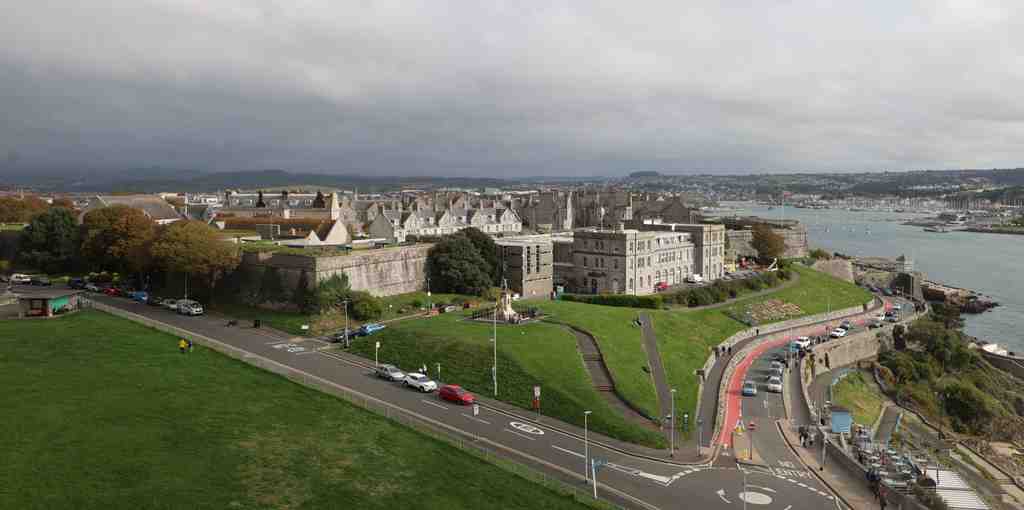
  1. To spot the Royal Citadel, just look up from the grassy expanse of Plymouth Hoe-those towering grey stone walls and dense cluster of historic buildings make the Citadel stand…Lire plusAfficher moins

    To spot the Royal Citadel, just look up from the grassy expanse of Plymouth Hoe-those towering grey stone walls and dense cluster of historic buildings make the Citadel stand guard right beside the water, with an unbeatable view across Plymouth Sound. Now, let’s imagine you’re standing here in the salty breeze, the gulls wheeling above you, outside the mighty Royal Citadel. Can you feel the ghost of Sir Francis Drake itself, checking his watch and muttering about deadlines? Back in 1590, Drake was given a task fit for a pirate-hero: protect Plymouth’s bustling port from pesky invaders. First, he threw together some temporary artillery batteries-think “DIY for National Defence”-but soon realized, that approach was as effective as trying to stop a tidal wave with a tea towel. He lobbied Queen Elizabeth I for real funds. She agreed, but with an Elizabethan twist: the locals had to pay a special ‘fish tax’ for every barrel of pilchards they exported. Ah yes, nothing says “national security” quite like a pilchard levy! Eventually, after years of slow progress and last-minute labourers hustled in (imagine the sound of picks and shovels echoing across the Hoe ), the original fort was completed in 1596. The fort bristled with bastions to the north and protected previously established gun batteries, peering down over the Cattewater like a stern headmaster over his pupils. On the southeast corner was Fisher’s Nose Blockhouse, dating back to around 1540-proof that Plymouth was serious about its seaside security. Elizabeth’s Tower, another stout structure, stood to the west, eying the horizon for threats, or perhaps just for the next fleet of pilchards. Now, fast-forward nearly seventy years. It’s the 1660s, King Charles II is back on the throne, and there’s a new threat: the Dutch. Enter the Royal Citadel, designed by the master military architect Sir Bernard de Gomme-though, Samuel Pepys, the famous diarist, later called the design “very sillily” done! De Gomme’s original plan was a tidy five-bastion fortress, but the king’s advisors decided to repurpose Drake’s old fort, baking it into the new castle-custard. The result? An irregular shape and a design some called questionable-but what fortress would be worth its salt without a bit of controversy? By 1666, the first Earl of Bath laid the foundation stone-still somewhere in these formidable walls, distinctly marked with his name and the date. It must have been quite a sight, watching the navy blue uniforms, the limestone blocks stacking up against the sky, and the English Baroque gateway rising in dazzling white Portland stone, once crossed by a drawbridge over a now-dry moat. For over a century, this fortress was Britain’s Number One seaside bouncer. Seventy-foot-high walls, bristling with 113 cannons at its peak in the 1750s, made it clear: Plymouth wasn’t going gently into any night, Dutch or otherwise. Even in the Victorian era, the Citadel buzzed with the sound of Royal Garrison Artillery recruits drilling-probably daydreaming about shooting cannonballs at bad cooks in the mess hall. Wartime, naturally, brought more drama. During World War II, it was the headquarters for the Coast Artillery Training Centre. Afterward, it merged with the Royal Coast Artillery School, keeping Plymouth’s big guns in fine fettle until 1956-no more coast artillery, but plenty of history echoing through the echoing chambers. Today, if your timing’s right, you might just see members of the 29 Commando Regiment of the Royal Artillery going about their secret squirrel business-though if you want to peek inside, you’ll need to book a rare guided tour. Let’s not forget its quieter moments: the Royal Chapel of St Katherine-upon-the-Hoe, first stood here in 1371 and rebuilt when the Citadel was new. It’s seen everything: solemn blessings before battle, weddings, the odd royal visit (King George V popped by in 1927), and surely, a few panicked confessions from soldiers who’d “borrowed” the officer’s last biscuit. And finally, if you heard the sounds of singing echoing off these ancient ramparts in 2011, it might have been the Military Wives Choir. This place is woven into the lives, dramas, and songs of Plymouth. So, as you stand here, imagine sturdy walls bracing against salty winds, artillery drills, secret fish taxes, and, maybe, echoes of laughter from centuries of soldiers. Oh, and do watch out: with all those cannons, the fortress could point its guns at the sea… or the town, just in case the locals got too cheeky! Shall we carry on to our next stop? Seeking more information about the based units, royal citadel in the media or the visitor access? Ask away in the chat section and I'll fill you in.

    Ouvrir la page dédiée →
  2. To spot the Mayflower Steps, look ahead for a small stone portico with sturdy columns and flags fluttering nearby, right on the edge of a pier above the sparkling water. Alright,…Lire plusAfficher moins

    To spot the Mayflower Steps, look ahead for a small stone portico with sturdy columns and flags fluttering nearby, right on the edge of a pier above the sparkling water. Alright, step right up-literally! You’re standing on the patch of Plymouth where history got a serious dose of adventure and a pinch of panic. Picture the year 1620: the salty air is thick with tension, a group of Pilgrim Fathers (who, by the way, didn’t actually plan a Plymouth holiday) find themselves stranded here, thanks to some disastrous English weather. Their original route gone sideways, they huddled in the shadow of creaky old houses, probably muttering about soggy socks and wishing for a cup of hot tea. These passengers-mainly strangers to Plymouth-wandered the narrow lanes, likely ducking into the Island House or maybe grabbing a quick rest at what’s now the Plymouth Gin Distillery. But while their feet ached and the Atlantic loomed, they patched up their ship, the Mayflower, dreaming of a new world that wasn’t plagued by leaky roofs and bad channels. Now, before you is a handsome little portico built in 1934: Doric columns of Portland stone, a brushed steel rail with nautical bronze art, and a platform that practically invites you to gaze out and imagine the hustle and bustle of 17th-century sailors and families. Here, the Mayflower finally set off-although, between you and me, some argue it was actually a tad closer to where the cozy Admiral MacBride pub now stands. Either way, you’re at the very heart of departure. These days, boat trips leave from right here, retracing the steps-or splashes-of those original adventurers. Think of the hope, the courage, and perhaps a last-minute “Did I turn off the oven?” as the Pilgrims sailed off, bound for Plymouth Rock and immortality. Take a deep breath and listen to the harbor wind. You’re not just at a landmark-you’re standing where dreams and daring collided to change the course of history.

    Ouvrir la page dédiée →
  3. Look for a white three-storey building with bright blue trim and golden dolphins above the door, right on the Barbican-its sign hangs invitingly, reading "The Dolphin…Lire plusAfficher moins

    Look for a white three-storey building with bright blue trim and golden dolphins above the door, right on the Barbican-its sign hangs invitingly, reading "The Dolphin Hotel." Welcome to the famous Dolphin Hotel-never, ever call it the Dolphin Inn, unless you want the regulars to give you sideways looks! Standing here, you’re in the presence of pure Plymouth history. Just imagine: this pub, with its tall, plain walls topped by a slate roof and a chunky blue trim, has seen more stories than a pack of old sea dogs. If you peer up at the white plaster above the door, you’ll spot dolphins swimming in relief-though I’m not sure they’ve ever served fish fingers to the real thing. Now, step inside with your imagination. The fuss-free wooden floors creak, and there’s the mellow smell of cask ale poured straight from the barrel-draught Bass, the pride of the pub. It’s the kind of place where you expect to find poets scribbling away, salty sailors telling tales, and maybe, just maybe, a ghost from Plymouth’s past slipping in for a quiet pint. Back in 1838, weary and worn out after exile, the Tolpuddle Martyrs-heroes fighting for workers’ rights-stayed right here as they returned triumphantly from Australia. At the time, a Mr. Morgan kept the bar, probably pouring them a celebratory drink and listening to stories that could make your hair stand on end. The Dolphin also became famous through the eyes of the artist Beryl Cook, whose wild, joyful paintings were set right inside these walls. People with rosy cheeks, bursting out laughing, clinking glasses-Cook’s art made this no-frills pub the lively heart of Plymouth. Even the BBC couldn’t resist-though their animated comedy Bosom Pals didn’t exactly win awards, the voices of Dawn French and Timothy Spall echoed the Dolphin's lively spirit, starring the real landlord Billy Holmes as himself. So whether you’re here for the history, the Bass, or the chance to eavesdrop on modern legends, the Dolphin Hotel is where Plymouth’s past and present swirl together. Just don’t ask for a trendy cocktail-you’ll get a story instead!

    Ouvrir la page dédiée →
Afficher 5 arrêts de plusAfficher moins d'arrêtsexpand_moreexpand_less
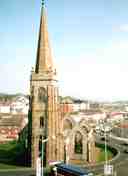
  1. Look for the tall, stone tower with an elegant pointed spire rising high above the busy roundabout-this skeletal, roofless church stands hauntingly open to the sky, surrounded by…Lire plusAfficher moins

    Look for the tall, stone tower with an elegant pointed spire rising high above the busy roundabout-this skeletal, roofless church stands hauntingly open to the sky, surrounded by city streets. Welcome to Charles Church, the ghostly heart of old Plymouth-a church so dramatic, even witches were blamed for blowing its spire off once! Take a moment to imagine walking into its shadow in the 1600s. The year is 1641, and the town is buzzing with political and religious argument. Plymouth’s own residents weren’t just running out of pew space, oh no-they were in the thick of spiritual disagreements! Puritans and Anglicans sparred over sermons, and rumor has it, sometimes the evening lecturer would stand up just to refute the morning preacher. You may say, Charles Church was “born out of drama”-I suppose every good story needs a bit of controversy! When the king finally gave his reluctant royal seal of approval, construction began. But, as luck would have it, the English Civil War erupted right after building started. The church’s half-finished stone walls became more useful for sheltering horses than for holding sermons. Picture Plymouth, holding out against the King’s army, with this church unfinished and open to the blustery sky. Fun fact: the first wedding in Charles Church was recorded in 1644, even though the roof wasn’t finished. Now that’s what I call an outdoor wedding! After years of war, stone by stone, the church finally took shape. By 1657, it boasted a stunning tower. The townsfolk weren’t content to leave it there: in 1708, they added a spire-at first made of wood and lead, but after a particularly stormy night (or maybe a few mischievous broomsticks), it was swapped for the stone spire you see towering above you now. This church wasn’t just a building-it was the beating heart of a growing city. It once echoed with the laughter of Sunday school children, the tolling of six bells added in 1709, and the singing sent soaring through its north and south aisles. Robert Hawker, known as the “Star of the West,” once stood here captivating crowds for over an hour at a time. They must’ve had strong legs in those days! The church grew and grew, spawning daughter churches like a proud parent-eight of them between 1829 and 1910, as Plymouth spread outward. By the 20th century, Charles Church was brimming with life and history. Marble memorials honored naval heroes, benefactors, and beloved parishioners-the inscriptions, carved in stone, telling silent tales of loss, love, and the hope for reunion. But even stone has its limits. On the night of March 21, 1941, the church met its greatest trial: the Plymouth Blitz. Incendiary bombs rained down, flames roaring up through the stained glass and gutting this house of worship. By morning, everything inside was reduced to ash and rubble. The clock had melted, the bells were cracked, and even the great font was smashed to fragments. After the war, Plymouth chose not to rebuild. Instead, the ruin was kept as a memorial for the 1,200 civilians who lost their lives in the air raids-a place where silence itself feels sacred, filled with memories instead of hymns. Each battered window and burnt stone carries a story, just like the people whose names are still carved here, if you look closely enough. Sometimes today, you might find a quiet service of remembrance within these walls, echoing with the voices of the past. And every so often, maybe during a university carol concert or a special anniversary, the ruins fill with life once more. But for most days, Charles Church stands as a solemn landmark-a silent sentinel rooted in centuries of history, drama, loss, and hope. So as you look up at that tall, brave spire cutting through Plymouth’s skyline, let yourself picture everything this old church has weathered. Not bad for a landmark that began as the “new” church, eh? I’d say Charles Church has certainly earned its place in history-and maybe, in your story too. For a more comprehensive understanding of the overview, significance or the clergy, engage with me in the chat section below.

    Ouvrir la page dédiée →
  2. Keep your eyes peeled straight ahead for a grand stone church tower rising above the cars, topped with a fluttering flag-St Andrew’s Church is hard to miss as it stands tall…Lire plusAfficher moins

    Keep your eyes peeled straight ahead for a grand stone church tower rising above the cars, topped with a fluttering flag-St Andrew’s Church is hard to miss as it stands tall beside the street! Now, take a moment to really look at this magnificent building in front of you-it’s almost like standing in the middle of history itself, right here in Plymouth. Imagine, nearly a thousand years ago, when this area was Sutton and not yet the bustling city we know, people came to worship on this very site. Some say there might have been a Saxon church here in the 8th century-if these stones could talk, they’d probably have a few secrets to whisper! By the 15th century, Plymouth’s population was booming, and so the folks of the town needed a bigger church. Between 1430 and 1490, builders got to work using the handsome blue-sky limestone you see, strengthened by slabs of Dartmoor granite at the corners, all put together in what’s known as the Perpendicular style. Have a look at the towering 136-foot spire, built around 1460, thanks to Thomas Yogge-a merchant who probably had deeper pockets than mine after payday! Inside, although you can’t see it from here, there’s a tomb made from Purbeck marble hiding in the north transept, the lone survivor from an even older church. As you stand here, try to picture centuries of footsteps echoing along the aisles-those arcades are the same type popular in Cornwall back in the day. And that organ? It’s the biggest west of Bristol! Built with help from George Harry Moreton, William Lloyd Webber, and O. H. Peasgood, and played by Dr. Harry Moreton, who served as organist for over 70 years-now that’s dedication. But St Andrew’s isn’t just about quiet reflection and beautiful music. Close your eyes for a moment and imagine the sound of air raid sirens during World War II. In 1941, a bomb tore through the church during the Plymouth Blitz, leaving it a blackened skeleton. Smoke drifted through gaping windows, and the beloved stained glass lay in splinters on the floor. In the smoky aftermath, a headmistress nailed a wooden sign over the ruined doorway. It said only one word: “Resurgam” - Latin for “I shall rise again.” That spirit of resilience is still here; look for the carved granite Resurgam plaque by the entrance, a nod to hope in the darkest times. After the war, architect Sir Frederick Etchells led the restoration, even giving the church a brand new chancel, before it reopened triumphantly on St Andrew’s Day, 1957. And if you’re a fan of stained glass, the story only gets more colorful: artist John Piper and glassmaker Patrick Reyntiens created a new cycle of vibrant windows from 1957 to 1968, each playing with light in ways that make shadows dance across the stone floor when the sun shines through. Over the centuries, the people crossing this threshold have been a real who’s who. Katherine of Aragon stopped in to give thanks for a safe journey from Spain; explorer Francis Drake, sea captain John Hawkins, and even King Charles II-who, legend claims, healed people with a royal touch-have all left their invisible footprints here. Admiral Robert Blake’s heart is said to be buried beneath these very stones, while William Bligh of Mutiny on the Bounty fame was baptised here. And today? St Andrew’s is still the centre of Plymouth’s religious life-holding civic events, faith-filled services, and, I imagine, the occasional organ recital that could rattle the dust from the rafters. It was named a Minster Church in 2009, and is a proud cornerstone for the city’s community. As you stand outside, listen for the echoes of singing, the toll of the bell, and maybe-just maybe-the faint scratch of a headmistress nailing up a message of hope in the ashes. Onward we go! Intrigued by the stained glass by john piper, present day or the notable people? Explore further by joining me in the chat section below.

    Ouvrir la page dédiée →
  3. Look for a simple, whitewashed rectangular building with a pitched roof and tall arched windows set quietly back from the street-that’s the Plymouth Synagogue, tucked just off the…Lire plusAfficher moins

    Look for a simple, whitewashed rectangular building with a pitched roof and tall arched windows set quietly back from the street-that’s the Plymouth Synagogue, tucked just off the main road like a secret waiting to be told. Well done, explorer! You’ve found one of Plymouth’s most extraordinary treasures, though it likes to keep a low profile. The Plymouth Synagogue, or as the locals used to say in Yiddish sighs, “the shul,” may not look like much from the outside-just a plain building made of white brick and Cornish slate. But let me tell you: behind these simple walls lies a tale older than the sandwich (and possibly twice as layered). Journey back with me to the mid-1700s. The city is bustling with shipbuilders, traders, and new arrivals. Among them is a small band of Jewish immigrants, mainly from the German lands and the Netherlands. Most of these newcomers, curiously enough, share the surname Emden-so, if you were called to dinner in Plymouth in those days, you’d better specify which Emden you meant! At first, they gather secretly in private homes, praying together, likely keeping an ear out for knocking at the door or a sneeze betraying their presence. In 1745, these secret services become a regular thing, and soon after, the congregation begins to dream of a real synagogue. But here’s the tricky part: in those days, the laws weren’t exactly welcoming to non-Anglicans. Renting land for a synagogue? Not easily done! The land for this building had to be leased under the name of Samuel Champion-the ultimate team player, and not even Jewish-because it wasn’t clear if a Jewish person could even legally sign the papers. Picture the congregation holding its breath, fingers crossed, as the deal is done in 1762. Finally, in 1764, they have a new home-making this the oldest Ashkenazi synagogue still standing in the English-speaking world! The building itself was quietly designed, most likely by an uncredited local builder. See how it blends in? That wasn’t just a design choice-it was self-preservation. Back then, standing out as a different religion could get your building a brick-or worse-through the window. Notice the lack of grand symbols or domes; from the outside, you’d be forgiven for mistaking it for a nonconformist Protestant chapel. Discretion was the word of the day. In fact, the main entrance is hidden away at the back, a design meant to keep the congregation safe from the tensions of the time. There’s just one detail for the keen-eyed: a corniced entrance, and-if you spot it-a Hebrew verse above the door, added in the Victorian era, inviting worshippers to bow down and kneel before the Lord. Step inside in your mind’s eye. Imagine Minton terracotta tiles under your feet, Victorian staircases spiraling up to the women’s galleries (which were once even reached by external stairs, just like a secret treehouse). The clear glass of the original windows has since been swapped for a splash of color, thanks to stained glass added in the 20th century. And if you squint, you might notice a prayer board dating all the way back to 1762, with the names of English monarchs carefully painted over the old ones-Ghosts of Kings Past, if you will! But the real showstopper is the Torah Ark. Stretching up two stories, dazzling with fluted columns, gold leaf, and even a touch of royal blue, it’s said to have arrived from the Netherlands flat-packed. Imagine the original Dutch or German cabinetmakers assembling it right here, probably muttering about missing screws or leftover pieces! Behind all this is the spirit of resilience, ingenuity, and hope. Even the mikveh-a white-tiled ritual bath just off the vestry, now dry but still open to curious eyes-tells of the ages when every drop of the building’s design was essential for the life of the community. To this day, the Plymouth Synagogue stands quietly on its side street, a little mysterious, a little subdued, but absolutely bursting with stories, laughter, tension, faith, and the stubborn determination to belong. Not bad for a building that doesn’t like to call attention to itself, don’t you think? Now, onward-adventure awaits at our next stop!

    Ouvrir la page dédiée →
  4. Right in front of you, the Theatre Royal Plymouth stands with a bold, modern look-its flat, concrete façade and big glass-fronted foyer are topped by a glowing TRP sign that you…Lire plusAfficher moins

    Right in front of you, the Theatre Royal Plymouth stands with a bold, modern look-its flat, concrete façade and big glass-fronted foyer are topped by a glowing TRP sign that you really can’t miss against the evening sky. Now, let’s step into the limelight-welcome to the most dramatic stop on our tour! Imagine the electric excitement as you approach this cultural powerhouse. You might spot people bustling toward the entrance, laughter and chatter floating on the evening air, and in front, a gigantic 7-metre bronze sculpture called Messenger-she’s crouching, ready to leap into the world of theatre just as every actor has done here for centuries. If you listen closely enough, you just might hear the ghostly whispers of past actors reciting their lines from backstage (don’t worry, they don’t bite-unless it’s a particularly bad review). The Theatre Royal as you see it is actually just the latest act in a long theatrical saga stretching back to 1758, when Plymouth’s very first theatre opened. Back then, the top of George Street rang out with the sounds of drama, applause, and perhaps the occasional rowdy tomato toss (we don’t recommend trying that here). When King George III visited in 1789, the theatre earned a fancy new title: Theatre Royal. And when the city wanted something even grander in 1810, they held a competition for a new design-John Foulston, the superstar architect, won with his imposing neo-classical vision. Imagine a frontage stretching 268 feet, topped by colossal Ionic columns-Foulston’s creation was so fireproof, he said, that even the actors’ worst nightmares wouldn’t set it alight! Yet, in 1878, a disastrous fire did just that-leaving little behind but determination and a stubborn curtain-call spirit. The theatre soon reopened, battered but not beaten. But history’s a tricky scene partner. As cinema fever swept the nation in the 1930s, the majestic old Theatre Royal made its exit-out came the screens, in came the popcorn, and for decades this spot was home to the Royal Cinema. Movie magic reigned, and even Plymouth’s darkest days-the bombing of World War Two-couldn’t shake the popcorn from people’s hands, even when the neighbouring hotel and assembly rooms were lost to bombs. TV arrived, and cinema stepped offstage for a bit. The site changed hands: it became the ABC, then Reel Cinema. For over half a century, the performances shifted back and forth: from stage to screen, and sometimes back again, as if the very bricks weren’t quite sure whether to belt out a show tune or start the movie trailers. The final curtain on the original site fell in 2019, but don’t worry-no need for tissues just yet. Because right here, a few streets away, the story soared again. In the late 1970s, Peter Moro and his team of architects swung their creative hammers, raising bold, modern lines in the now-famous brutalist style. The new Theatre Royal Plymouth opened in 1982, with Princess Margaret herself in attendance-don’t worry, you don’t need a tiara to come inside. Today, The Lyric can seat over 1,300 people, but thanks to some clever design magic, the space can shrink down for more intimate shows. The performances? Everything from cutting-edge dramas and blockbuster musicals (did you catch The SpongeBob Musical was filmed right here?) to ballet and opera from world-class companies. If musicals aren’t your thing, wander over to The Drum for new plays and innovative productions-this spot even scooped the Peter Brook Empty Space Award. And beyond the main stage, the magic continues at TR2, the theatre’s creative workshop by the River Plym. Costumes are stitched, sets are hammered together, ideas leap from rehearsal hall to main stage-all part of one of the country’s biggest regional arts education programs. So as you stand here, gazing up at those sharp lines and glowing glass, remember: this isn’t just a building, it’s a living, breathing part of Plymouth’s history-full of courage, comedy, a little bit of chaos, and a whole lot of curtain calls. Now, who’s ready for showtime?

    Ouvrir la page dédiée →
  5. To spot the Plymouth Pavilions, look for a large modern building with lots of sharp-angled glass panels and a tall glass tower in the centre, with the word "PAVILIONS" clearly…Lire plusAfficher moins

    To spot the Plymouth Pavilions, look for a large modern building with lots of sharp-angled glass panels and a tall glass tower in the centre, with the word "PAVILIONS" clearly visible running downwards. As you stand here, right in front of the futuristic angles of Plymouth Pavilions, imagine the air alive with excitement - this is the place where Plymouth truly comes to party, to cheer, and to be amazed. If these walls could talk, they’d probably sing! But before this spiky glass palace made its mark, this ground once echoed with the sounds of trains and steam, because you’re standing on the former site of Millbay railway station. See those granite pillars by the entrance? Those sturdy sentinels are the station’s original gateposts, quietly keeping watch as decades roll by. Step inside during a big concert night and you’d feel the thump of bass and cheers of the crowd. Artists from Ed Sheeran to Oasis, and Pink to Dermot Kennedy, have made the stage blaze with sound and light. And, oh, the Arctic Monkeys set a record here - their concert sold out in just one hour, only to be matched by Gary Barlow who almost needed a stopwatch to keep up. Imagine queueing up at The Ticket Store, the box office bustling with people desperate to grab tickets before they’re all snapped up. It’s a real “blink and you’ll miss it” kind of place! But it’s not just music that fills the halls of the Pavilions. Once, this was the only place in Devon where you could swoosh and twirl on an indoor ice rink. You could practically hear the blades carving along the ice, the laughter and the echo of kids slipping and sliding around. Sadly, in 2022, the crunch of bills overtook the hiss of the ice, and the rink had to close for good. Years earlier, there was a family swimming pool too, with an underwater-themed extension - perhaps even the odd inflatable shark floating past. When the state-of-the-art Plymouth Life Centre opened, the old pool shut its doors forever. If you listen hard enough, maybe you can still hear the splashes and giggles behind those walls, the laughter echoing in abandoned corridors where water once sparkled. This isn’t just a temple to music and family fun. The Pavilions is one of the weirdest-looking basketball arenas in the country, with its unusual two-tiered stands. For years, local basketball fans filled the seats for the Plymouth Raiders, the crowds roaring and the house lights pulsing with pre-game hype. Even now, with new basketball teams making cameos (like the Plymouth City Patriots), you can smell the popcorn and feel the vibrating energy every time someone sinks a three-pointer under pyrotechnic blasts and epic sound shows. Fancy something a bit more dramatic? This arena has hosted the flying darts of Premier League Darts pros, and even the jaw-dropping athleticism of WWE wrestlers slamming down for a UK tour. So whether you want big, booming events or you’re here for the ‘Pavilions Introduces’ nights - where the best new bands of the South West have their moment in the spotlight - the Pavilions is Plymouth’s ever-changing stage, always ready for the next cheer, the next guitar chord, or the next gasp from the crowd. So, take a moment here, outside the sparkling glass, and imagine the wildest concert, the coldest skate, the loudest slam dunk, and the echoes of trains long gone. Plymouth Pavilions is built for memories - and who knows, maybe tonight, you’ll help make the next legendary moment too!

    Ouvrir la page dédiée →

Foire aux questions

Comment commencer le tour ?

Après l'achat, téléchargez l'application AudaTours et entrez votre code de réduction. Le tour sera prêt à commencer immédiatement - il suffit d'appuyer sur lecture et de suivre l'itinéraire guidé par GPS.

Ai-je besoin d'Internet pendant le tour ?

Non ! Téléchargez le tour avant de commencer et profitez-en pleinement hors ligne. Seule la fonction de chat nécessite Internet. Nous recommandons de télécharger en WiFi pour économiser vos données mobiles.

S'agit-il d'une visite de groupe guidée ?

Non - il s'agit d'un audioguide en autonomie. Vous explorez indépendamment à votre propre rythme, avec une narration audio diffusée par votre téléphone. Pas de guide, pas de groupe, pas d'horaire.

Combien de temps dure le tour ?

La plupart des tours durent entre 60 et 90 minutes, mais vous contrôlez totalement le rythme. Faites des pauses, sautez des arrêts ou arrêtez-vous quand vous le voulez.

Et si je ne peux pas finir le tour aujourd'hui ?

Pas de problème ! Les tours disposent d'un accès à vie. Faites une pause et reprenez quand vous le souhaitez - demain, la semaine prochaine ou l'année prochaine. Votre progression est sauvegardée.

Quelles sont les langues disponibles ?

Tous les tours sont disponibles dans plus de 50 langues. Sélectionnez votre langue préférée lors de l'utilisation de votre code. Note : la langue ne peut pas être changée après la génération du tour.

Où accéder au tour après l'achat ?

Téléchargez l'application gratuite AudaTours sur l'App Store ou Google Play. Entrez votre code de réduction (envoyé par e-mail) et le tour apparaîtra dans votre bibliothèque, prêt à être téléchargé et commencé.

verified_user
Satisfaction garantie

Si vous n'appréciez pas le tour, nous vous rembourserons votre achat. Contactez-nous à [email protected]

Paiement sécurisé avec

Apple PayGoogle PayVisaMastercardPayPal

AudaTours : Audioguides

Des tours à pied en autonomie, divertissants et économiques

Essayer l'application arrow_forward

Adoré par les voyageurs du monde entier

format_quote Ce tour était un excellent moyen de voir la ville. Les histoires étaient intéressantes sans paraître trop scénarisées, et j'ai adoré pouvoir explorer à mon propre rythme.
Jess
Jess
starstarstarstarstar
Tour de Tbilissi arrow_forward
format_quote C'était un bon moyen de découvrir Brighton sans se sentir comme un touriste. La narration était profonde et contextuelle, sans en faire trop.
Christoph
Christoph
starstarstarstarstar
Tour de Brighton arrow_forward
format_quote J'ai commencé ce tour avec un croissant dans une main et zéro attente. L'application vibre tout simplement avec vous, pas de pression, juste vous, vos écouteurs et quelques histoires sympas.
John
John
starstarstarstarstar
Tour de Marseille arrow_forward

Audioguides illimités

Débloquez l'accès à TOUS les tours du monde

0 tours·0 villes·0 pays
all_inclusive Explorer Unlimited