AudaTours logoAudaTours

Visite Audio de Kingston upon Thames : L'Odyssée du Patrimoine de Kingston

Guide audio13 arrêts

Il y a des siècles, des rois étaient couronnés à quelques pas de l'endroit où les humoristes tentent aujourd'hui leur chance dans des arrière-salles éclairées à la bougie. Voici Kingston upon Thames – une ville aux multiples couches de secrets et de blagues pour ceux qui regardent au-delà de son charme riverain. Embarquez pour une visite audio autoguidée à travers des ruelles sinueuses et des salles chargées d'histoire, découvrant les ambitions féroces, les révolutions artistiques et les scandales presque oubliés cachés derrière les façades familières de Kingston. Quelle confession paniquée a failli faire dérailler la grande ouverture d'un club de comédie de renommée mondiale ? Qui est enterré sous le musée de Kingston – et quel étrange objet a été trouvé serré dans leurs mains anciennes ? Pourquoi les étudiants remplissaient-ils autrefois l'église St John non pas pour le culte mais pour des examens à enjeux élevés ? Passez des pubs imprégnés de rires à la lueur silencieuse des vitraux et dans des pièces où l'histoire observe depuis les coins. Chaque pas révèle de nouvelles couches : rébellion, réinvention et génie excentrique. Lancez la lecture maintenant pour démêler le cœur de Kingston – où rien n'est jamais tout à fait ce qu'il semble être.

Aperçu du tour

map

À propos de ce tour

  • schedule
    Durée 40–60 minsAllez à votre propre rythme
  • straighten
    Parcours à pied de 5.8 kmSuivez le sentier guidé
  • location_on
    EmplacementLondres, Royaume-Uni
  • wifi_off
    Fonctionne hors ligneTéléchargez une fois, utilisez n'importe où
  • all_inclusive
    Accès à vieRéécoutez n'importe quand, pour toujours
  • location_on
    Commence à Club de Comédie Outside the Box

Arrêts de ce tour

  1. To spot the Outside the Box Comedy Club, look for the entrance to The Fighting Cocks pub and keep your eyes peeled for a sign just past the main bar, guiding you to a cozy back…Lire plusAfficher moins

    To spot the Outside the Box Comedy Club, look for the entrance to The Fighting Cocks pub and keep your eyes peeled for a sign just past the main bar, guiding you to a cozy back room where laughter practically drifts through the air. Picture this: It’s a chilly night in November 2006. You’re squeezing past folks clutching their pints, following the faint rumbles of laughter into a small back room at the Fighting Cocks pub. Suddenly, you’re in a different world-one where every chair is filled, the air tingles with excitement, and a nervous but beaming Maff Brown steps onto a tiny stage. After just a summer crash course in comedy, Brown took the wild plunge and opened this club, hoping not to bomb in front of his friends-or anyone else, for that matter! The idea was simple: comedians need to test-drive their freshest, wackiest ideas, and what better place than a room where the crowd is close enough to spot your stage fright? Outside the Box quickly became one of London’s favorite testing grounds for big laughs and even bigger names. The magic caught on, and now jokes first whispered here can be heard echoing in places like Windsor and Surbiton. Kingston’s own club still keeps things intimate-just 80 seats, so you’re guaranteed a front-row experience even if you’re at the back! It has racked up accolades, having been named Best London Venue (Small) by the Chortle Awards and ranked in The Guardian’s top five comedy clubs in the whole UK. So take a good whiff-can you smell the anticipation? Maybe you’ll spot tomorrow’s comedy giant sweating it out for the first laugh right here.

    Ouvrir la page dédiée →
  2. Straight ahead, you’ll spot Kingston Museum by its grand, reddish-brick face, tall white-trimmed windows, and a charming domed cupola poking up from the roof-just look for a…Lire plusAfficher moins

    Straight ahead, you’ll spot Kingston Museum by its grand, reddish-brick face, tall white-trimmed windows, and a charming domed cupola poking up from the roof-just look for a stately building partly tucked behind leafy trees. Welcome to Kingston Museum! Let’s step into a place where stories sleep and history whispers from every corner. Don’t worry, entry is always free-something the building’s very generous funder, Andrew Carnegie, would be proud of. Picture yourself back in 1904, when this museum first opened its doors. There it sits, next to the library, its walls humming with the excitement of ages past. Inside, not one, not two, but three amazing permanent exhibitions are waiting. Feel the chill of prehistory in the “Ancient Origins” gallery, where you might almost hear the scratch of stone tools and the distant. Here, you’ll discover the borough’s buried secrets-from ancient bones to mysterious Roman altars, and even an Anglo-Saxon skeleton grinning up from beneath the earth (don’t worry, they don’t bite... anymore). Move along to “Town of Kings,” where Kingston transforms from a muddy medieval market town into a bustling postwar hub. Imagine the cries of vendors, the rumble of horses, the hush falling as the first market bell rings in the morning. Curious about those quirky ceramics in the cases? You’ve just discovered the Martinware collection-pottery so odd and intricate you might wonder if the artists had too much strong tea that day. The building’s art isn’t just old; don’t miss the Brill Collection either, a series of topographical artworks created by Kingston University students and staff since the 1950s, carefully tracking how the borough’s face has changed. Now, here’s a dash of star power. Kingston’s own Eadweard Muybridge-yes, I promise that’s how you spell it!-was a photographer who captured movement in a way people had never seen before. The Eadweard Muybridge gallery inside bursts with over 2,000 glass slides and magical “zoopraxiscope” discs. Imagine Victorian audiences gasping as horses and dancers seemed to come to life before their eyes. A stained-glass window from the old Town Hall, a model of Nipper-that famous dog who graced record labels-Roman relics, and yearly art exhibitions provide a rotating cast of treasures. The old walls of Kingston Museum have seen centuries, but they’re still alive with adventure and a touch of mystery. Step right in... and don’t forget to wave at Nipper the dog-he’d have wagged his tail if he could!

    Ouvrir la page dédiée →
  3. The church in front of you is a beautiful stone building with pointed arches, large stained-glass windows, and a sturdy square tower at the corner of Springfield Road and Denmark…Lire plusAfficher moins

    The church in front of you is a beautiful stone building with pointed arches, large stained-glass windows, and a sturdy square tower at the corner of Springfield Road and Denmark Road-look for its rugged grey walls and that solid, low tower peeking up behind the main roof. Let’s step back in time to the 1870s. Imagine Kingston was buzzing with change-horses clatter down the street, and right here on a patch of land, a temporary iron church rattled every time the wind blew. But the people wanted something more permanent, so in 1871, a generous fellow named William Mercer not only gave this land, but kicked in a whopping £2,000 to help build a real church. Still, money didn’t flow like today’s Thames, and the town sweat and saved until they just scraped together enough for walls and a roof-forget fancy spires! The church you see was consecrated in 1872, standing proud but a little unfinished, like a cake missing its icing. Over the years, stained-glass windows and paintings brightened the interior, and finally in 1935, that chunky tower joined the church like a tardy guest at a wedding. Fast forward to the 1970s and the wooden pews were cleared out-can you imagine exams being held under these gothic arches? Even the choir stalls and pulpit moved out, making room for students and their nervous hopes. Yet here it stands, Grade II listed, sturdy as ever: a church that’s changed with its people, never losing its welcoming heart. And no worries, there’s no exam today-just a chance to soak up the stories in the stones!

    Ouvrir la page dédiée →
Afficher 10 arrêts de plusAfficher moins d'arrêtsexpand_moreexpand_less
  1. To spot County Hall, look for the grand stone building ahead with its striking clock tower and arched doorway rising above the trees on Penrhyn Road-trust me, it’s hard to miss…Lire plusAfficher moins

    To spot County Hall, look for the grand stone building ahead with its striking clock tower and arched doorway rising above the trees on Penrhyn Road-trust me, it’s hard to miss that tall dome and beautiful stonework! Now that you’re standing before County Hall, let’s imagine you’re not just outside a building, but at the crossroads of more than a century of dramatic local history. Picture the year: it’s 1893, and the streets are bustling with excitement. Bands play merrily in the distance, while crowds gather to witness the grand opening of this very hall-a new, glittering seat of power for Surrey County Council. At the time, city leaders needed somewhere fresh and impressive to rule from after Kingston was chosen over five other hopeful towns. They found this spot on what used to be the tranquil Woodbines Estate-a site that seemed to whisper promise and potential. The architect, Charles Henry Howell, dreamed up a classical design with a twist: look closely and you’ll see the façade is a bit off-center, with seven bays stretching along Penrhyn Road and a clock tower that proudly soars above the entrance. That clock tower? It’s not just there for looks! For generations, its dome, belfry, and golden face have kept Kingston’s time-plus, it’s a pretty handy landmark if you ever get lost looking for your way to a good pub. But County Hall wasn’t always so complete-imagine workers in flat caps and dusty coats laying Portland stone along the road, with the grand plans for additional wings and council chambers waiting in their pockets. In the early years, access was from Grove Road (now Penrhyn Road, renamed for Edward Penrhyn, the council’s very first chairman-talk about a local legacy!). Behind the stately doorways, officials bustled past grand sculptures and portraits-yes, the likes of King George III and Queen Charlotte smiled regally from the halls. The site grew as history turned its pages: a new wing in 1930, opened with royal fanfare; then the Ashcombe Block, which bravely survived wartime bombing in 1944, only to be rebuilt with determination in 1953. By 1982, County Hall was a sprawling jumble of quadrangles, seemingly always under hammer, saw, or scaffolding. Then, a twist: in 1965, the lines on the map changed and suddenly, County Hall found itself not in Surrey, but officially within the London Borough. Eventually, by 2020, the council said goodbye, shifting their headquarters out of Kingston-leaving this grand Grade II-listed old hall awaiting a new chapter. Today, the echoes of council debates may have faded, but County Hall still stands as one of Kingston’s proudest buildings-a monument to ambition and adaptation, now set for its next adventure as part of a new development. Who knows-maybe a ghostly councilor still checks the clock every so often!

    Ouvrir la page dédiée →
  2. Look slightly to your left for a modern, sweeping building with a curved glass front and brick pillars, and you’ll see bold banners that read "ROSE THEATRE" rising up to meet the…Lire plusAfficher moins

    Look slightly to your left for a modern, sweeping building with a curved glass front and brick pillars, and you’ll see bold banners that read "ROSE THEATRE" rising up to meet the street. Alright, step right up and imagine stepping into a world where every seat feels close to the action-this is the Rose Theatre Kingston, a modern gem designed with its roots firmly in the days of Shakespeare and Marlowe. Picture yourself arriving on a chilly January evening in 2008. It’s buzzing out here: the opening night of Anton Chekhov’s Uncle Vanya, directed by the legendary Sir Peter Hall. The crowd presses closer, hearts thumping with excitement. Here, you might spot an eager Kingston University student brushing shoulders with a local theatre buff-all waiting for the curtain to rise. But the story of the Rose starts before the lights came up. This theatre was inspired by its famous Elizabethan ancestor-the original Rose, where the echoes of Shakespeare’s first masterpieces once thrilled Londoners. Just like in the 16th century, this place brings the audience around a wide, shallow, thrust stage, breaking down that invisible wall between actor and audience. Of course, they added a roof and nice comfy seats this time around-nobody wants to watch Hamlet with a soggy bottom! Now, spin those mental gears back to December 2004, when the building was still unfinished. Sir Peter Hall, never one to wait for the paint to dry, directed a bold, “in the raw” production of As You Like It right inside the construction shell. Imagine the chill in the air, voices echoing off bare walls, a sense that something timeless was being born right there in the dust and shadows. Raising this theatre took a village: £5 million from the local council, the energy of Kingston University, and the passion of Peter Hall himself, as well as countless local supporters. The land? A gift of sorts from a developer, St George plc, as part of their larger Thames-side plans. The Rose was officially handed over as a blank slate, ready for magic. Since then, there's been plenty. Think Judi Dench commanding the stage in A Midsummer Night’s Dream, or pirates and Musketeers leaping out in Treasure Island and Three Musketeers. There's high drama, silly comedy, and every Christmas, a new holiday classic to wow the whole family. And here’s an emotional twist you might not expect: for over a decade now, the Rose has hosted Kingston University’s graduation ceremonies. Picture cap-and-gown-clad students trembling with excitement and pride. Despite all this, the Rose gets by without a single pound from Arts Council England-you could say it’s an underdog with dramatic flair! Even so, it has won awards for its commitment to the community, and every year, the lights glow brighter, the applause rings louder, and Kingston’s very own Rose continues to bloom in style. Now, are you ready for your standing ovation, or do you fancy auditioning for the next show?

    Ouvrir la page dédiée →
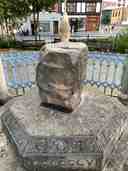
  3. To spot the Coronation Stone, look for a chunky, weathered block of stone sitting proudly on a thick, inscribed plinth, surrounded by light blue railings near the…Lire plusAfficher moins

    To spot the Coronation Stone, look for a chunky, weathered block of stone sitting proudly on a thick, inscribed plinth, surrounded by light blue railings near the Guildhall. Alright, right in front of you is one of Kingston’s most famous residents-a huge ancient stone that has seen more royal bottoms than a throne at Buckingham Palace! This isn’t just any old boulder… legend says it’s the very spot where seven Anglo-Saxon kings were crowned, almost a thousand years ago. Imagine the year 925, when King Æthelstan, fresh from winning battles, stood tall-maybe a little nervous-and the crowd pressed close, holding their breath. The air would have been thick with tension, the clinking of swords, and the shuffling of sandals on the market square. And here’s a little twist worthy of a detective novel-the stone’s royal status wasn’t even confirmed right away. For ages, people thought the kings were crowned on a stage in the market, but then St Mary’s Church-where the stone might have lived-collapsed in 1730. Digging through the rubble, folks found this very block, bruised but still regal. They dusted it off, plonked it down on this grand plinth, and even carved the names of the crowned kings around the base, so you never forget you’re standing on history. Though, for a while, locals used the stone as a handy step for mounting horses-imagine slipping off and thinking, “Oops, sorry Your Majesty!” Today, you can almost feel the weight of history, right here under your feet. There’s even talk that it might someday return to All Saints’ Church, its old stomping ground. So, as you stand here, close your eyes and picture the trumpets, the flutter of royal banners, and the gasps of the crowd as a new king’s reign began on this very spot. That’s the magic of the Coronation Stone-where a rock really did make history rock.

    Ouvrir la page dédiée →
  4. You’ll spot the Druid’s Head right ahead with its striking half-timbered black and white upper front, golden letters, and a row of bikes resting against the old red-brick lower…Lire plusAfficher moins

    You’ll spot the Druid’s Head right ahead with its striking half-timbered black and white upper front, golden letters, and a row of bikes resting against the old red-brick lower wall-just look for those windows with plants hanging above! Now, as you stand outside the oldest surviving pub in Kingston, try to imagine the clatter of horses' hooves and the laughter spilling out from what was once not one, but two pubs: The Druid and The Hog’s Head, side by side, stubborn rivals until they finally joined forces in the 1980s. Step back in time: it’s the 1700s, the glow of lanterns inside flickering above mugs of ale, travelers stomping the mud from their boots after a day’s ride, and the smell of roasting meat drifting on the air. The Druid’s Head was a real hotspot-think of famed writers like Charles Dickens and Jerome K. Jerome walking right through that door. Jerome found the upstairs window so inspiring that he scratched a secret message into the glass-imagine finding that after a drink or two! Even today, inside, you’ll see the elegant old staircase and ornamental ceilings that would have sparked many stories over the centuries. So next time someone asks if you’ve been where both Dickens and Jerome left their mark, you can say, “Why yes, I’ve stood exactly where legends and laughter cross paths-at the Druid’s Head!”

    Ouvrir la page dédiée →
  5. To spot the Kingston upon Thames War Memorial, look just ahead in the Memorial Garden for a tall granite pedestal topped with a striking bronze statue-a heroic, unclothed warrior…Lire plusAfficher moins

    To spot the Kingston upon Thames War Memorial, look just ahead in the Memorial Garden for a tall granite pedestal topped with a striking bronze statue-a heroic, unclothed warrior lifting a flaming cross while protecting two children at his side. Now, picture yourself standing in this peaceful garden, right in the heart of Kingston. It’s a place that whispers with history, but if you listen closely, you might hear far more than the rustle of nearby trees. The town of Kingston has been around since medieval times, but in 1919, something new began to take shape-a way for people to remember those who never returned from the thunder and terror of the First World War. The borough librarian, perhaps sitting with an ink-stained ledger and a heavy heart, was already listing the names of local men lost in the conflict. By 1920, the town decided their memory deserved more than ink on a page: they needed a monument. Step into the shoes of Richard Reginald Goulden, the sculptor responsible for this incredible memorial. Imagine him-fresh from the battlefields himself, a captain in the Royal Engineers until he was wounded and sent home, now turning memory into art. He’d crafted memorials before, even for the mighty Bank of England, but for Kingston he chose a symbol so striking it would capture anyone’s eye and imagination. Before you, the bronze figure is not just any old statue. It’s a powerful, muscular warrior-proudly nude because he stands for vulnerability as well as strength-one arm stretched skyward, gripping a flaming cross that seems to light up the cloudy English sky. Beneath his right hand, a gleaming sword slices through a serpent-an ancient symbol of evil-while at his leg, two children press close, safe under his protection. It’s dramatic, almost cinematic, you might say! The message is clear: the fallen of Kingston did not just fight, they shielded the innocent from the world’s dangers. At the base of the monument, pay attention to the inscription cast into the bronze. You’ll find the stirring words of Laurence Binyon’s famous poem: “At the going down of the sun and in the morning, we will remember them.” If you were here on Remembrance Day, the quiet would be broken by the gentle footsteps of the crowd and the sound of wreaths laid on the granite. The monument itself was first unveiled in 1923, in the company of dignitaries and townsfolk-no doubt many with fresh tears and memories of loved ones. And when the Second World War finished in 1945, the town added new bronze plaques to honor a whole new generation of sacrifice. Today, 624 local names are recorded, so the people of Kingston wouldn’t ever forget. Goulden, by the way, was a bit of an allegory specialist-he loved telling heroic stories with a single pose. Several of his other war memorials across the country feature similar motifs: a proud figure holding something high, courageously shielding the next generation. I suppose if he were around today, he’d be the blockbuster film director of war memorials! Fun little mystery: the bronze for this statue was cast at the A.B. Burton foundry in Thames Ditton, not far from Kingston, which also handled other Goulden works-including one for the foundry owner’s daughter, Dolly, buried in Kingston Cemetery. This connection weaves him ever deeper into the fabric of the town. Standing here, the memorial rises from garden ground that was once an overflow burial ground for All Saints Church. Today, it’s not just a monument to loss, but an artwork and a local landmark-so important that in 2016, its status was raised to Grade II*, meaning it’s among the nation’s most treasured pieces of heritage. So next time you stroll by, remember this is more than stone and bronze-it’s Kingston’s memory, reaching out to shield the future, one hero at a time. And don’t worry, I checked-there aren’t any live serpents hiding in the grass!

    Ouvrir la page dédiée →
  6. Standing before you is All Saints Church, its grey flint walls and tall central tower topped with pineapple-shaped ornaments rising above the trees - just look for the grand…Lire plusAfficher moins

    Standing before you is All Saints Church, its grey flint walls and tall central tower topped with pineapple-shaped ornaments rising above the trees - just look for the grand building with battlements and a big clock keeping watch over the Market Place. Welcome to All Saints Church, where the past isn’t just history - it’s practically whispering in your ear! Before you step in any closer, imagine the crunch of gravel underfoot as you cross the ancient churchyard. This isn’t just any parish church; this is the living heart of Kingston, standing proud for nearly a thousand years, and if these old stones could talk, you’d never get a word in edgewise. You’re looking at the only Grade I listed building in Kingston, and that’s no easy badge to earn. The earliest church here dates back to Saxon times, so under your feet are the ghosts of kings and powerbrokers. In 838, King Egbert of Wessex called his great council at this spot. Then, the real drama began - in the 900s, not one, not two, but seven Saxon kings were crowned right here. You can practically hear the trumpets blaring and the excited murmurs of long-ago crowds. Æthelstan, Edmund, Eadred, and others - including Ethelred the Unready (now there’s a nickname you hope doesn’t stick!) - all wore their crowns at Kingston. The current church began taking shape in 1120, thanks to Henry I. Its cross-shaped layout, sturdy central tower, and big four-bay nave echo with centuries of prayers and secrets. Of course, the building had some rocky times: a mighty lightning strike destroyed the original spire in 1445, leaving only ashes and, presumably, a lot of panicked pigeons. It took sixty years before they dared rebuild it! By 1600, the church was falling apart - as the vestry meeting described it, “much out of repair.” But the good people of Kingston didn’t give up. They rebuilt sections, plastered brick and stone together, and, in 1708, installed that brick tower topped with pineapples instead of regular old battlements. Pineapples! What a choice, right? At least pirates wouldn’t mistake Kingston for a dull place. The church grew richer as centuries rolled on. Inside, you’ll find everything from medieval wall paintings to a marble font attributed to Sir Christopher Wren. Twelve bells ring out, with an 18th-century carillon that could fill the whole town with melody. Sunbeams pour through twenty Victorian stained-glass windows, each one dazzling and telling its own story. And those kings? Their legacy continues in art as well as legend - amazing embroidered panels celebrate some of those ancient coronations, with threads sparkling thanks to national artists and the Royal School of Needlework. If you step quietly, you might feel the weight of all that royal pageantry hiding behind the quiet hush. All Saints isn’t only about ancient glories though; it’s also packed with human stories - both grand and humble. There’s the memorial to Cesar Picton, who came to England as a child, enslaved in Africa, and wound up a wealthy coal merchant. You’ll find tombs to lawyers, priests, gallant women, and even Lord Liverpool’s wife, her stone image moved here from their home for a final rest. Not everything has been smooth sailing. In 1730, the chapel of St Mary collapsed, taking out the sexton - a reminder this grand building, like life, can be unpredictable. Memorials inside keep a silent roll-call of stories: John Bacon’s statue for a wealthy merchant, John Flaxman’s winged cherub for Sir Philip Medows, and a pair of mourning figures for the Davidson dynasty (who owned plantations far overseas). Through the ages, All Saints has quietly picked up the scars and triumphs of Kingston. Wars and plagues, celebrations and everyday dramas - this church has heard them all. You might even sense the gentle echoes of choirs and the low hum of prayers as you stand on the worn flagstones where kings once knelt. So breathe in the cool air, look up at the looming tower with its quirky pineapples, and listen for the stories that linger just out of sight. Here, history isn’t just something you learn - it’s something you walk through. Welcome to the secret heart of Kingston!

    Ouvrir la page dédiée →
  7. To spot the Kingston Power Station, look along the river for two towering white chimneys rising above the old industrial buildings-those tall stacks once dominated the skyline…Lire plusAfficher moins

    To spot the Kingston Power Station, look along the river for two towering white chimneys rising above the old industrial buildings-those tall stacks once dominated the skyline like steely exclamation marks. Now, as you stand here by the Thames, imagine the air thick with the tang of coal and the buzz of machinery, because this spot was once the roaring heart of Kingston’s electricity-Kingston Power Station! Picture the year 1893: the very first station was built right here, churning out just enough electricity to power a couple hundred kettles-about 225 kilowatts, to be precise. Back then, it must’ve seemed almost magical. As local homes and businesses sparked to life, the station kept growing, adding ever-larger hulking equipment and new stacks, its towers poking the sky like two giant pencils. Here’s a power-packed twist: the A station worked tirelessly until 1959, while its new B station-planned before the Second World War-launched in 1948 with a real royal flourish. King George VI himself turned it on! The first monarch to do so since 1924, and you can bet there were a few shocked faces in the crowd (hopefully not shocked by the electricity!). The Thames below wasn’t just for pretty reflections; barges unloaded coal for fuel and ferried away ash, and the river’s chilly water cooled the boilers, giving a whole new meaning to “steaming by the river.” The numbers boggle the mind: by the 1960s, the station’s turbines cranked out enough electricity to light a small city. At its peak, this place generated over 120 megawatts-a thunderous accomplishment, even if the boilers ran so hot that you’d think you were standing next to a dragon’s lair! But all stories must close the circuit. On October 27, 1980, the mighty turbines hummed for the last time. Calls to save the station turned to silence, and in 1994, those twin chimneys were toppled, vanishing from Kingston’s horizon. So next time you flick on a light, give a little wink to the spot where a river and a bit of coal once brightened up the world.

    Ouvrir la page dédiée →
  8. Ahead of you, St Luke’s Church stands tall with its striking red brick tower and a sharp spire tipped with a cross, and you’ll spot its large clock faces just above pointed arched…Lire plusAfficher moins

    Ahead of you, St Luke’s Church stands tall with its striking red brick tower and a sharp spire tipped with a cross, and you’ll spot its large clock faces just above pointed arched windows. Imagine you’re here in Kingston in the late 1800s. The streets are busy with railway workers-the air tinged with coal smoke and the chugging rumble from the nearby station, but instead of fancy mansions, these workers live in humble homes. In the middle of all this, a brand-new church begins to rise, brick by brick, on Gibbon Road. Designed by architects from Leeds, and built by W. H. Gaze, it was meant for the hard-working railway families. But, here’s where the story takes an unexpected royal twist! The first vicar just happened to have a very well-connected wife, who called in a few favours-no big deal, right? Well, her friends included Princess Mary Adelaide of Cambridge, the granddaughter of King George III and the mother of Queen Mary! Suddenly, money starts flowing in from high society, and the little parish with empty pockets manages to build this magnificent church-practically fit for royalty. The story gets even better: when they needed more funds to finish that stunning spire towering over you, Lady Wolverton came to the rescue. Thanks to her, the spire gleams today, with a clock added to keep everyone on time for Sunday service-because even churchgoers shouldn’t be fashionably late! A painting of the original design still exists, nearly identical to the church you see now, save for a slightly modified spire and that all-important clock. And get this-locals only rediscovered the painting in 2019, tucked away like a real-life treasure hunt! So as you stand here, let your imagination wander: the echo of railway whistles, the laughter of families, and the feeling that even in a humble corner of Kingston, history and a touch of royal drama are baked right into the bricks. And remember, if you’re ever late for a service here, just blame the clock-it’s been turning heads for over a hundred years!

    Ouvrir la page dédiée →
  9. To spot Steven’s Eyot, just look out over the water for a long, narrow island dotted with leafy willow trees and a friendly crowd of little boats moored all around its edge-it’s…Lire plusAfficher moins

    To spot Steven’s Eyot, just look out over the water for a long, narrow island dotted with leafy willow trees and a friendly crowd of little boats moored all around its edge-it’s right there in the middle of the Thames, with the gentle hum of river life swirling on either side! Now, let’s step a little closer-imagine you’re standing here on the riverside, feeling the breeze off the Thames and hearing the quiet slap of water against the hulls of boats. Steven’s Eyot looks peaceful today, but if it could talk, it would have some tales to tell! This island wasn't always one place; if you’d come by in 1875, you’d have found four separate islets clustered together like a bunch of lost ducklings. By 1896, they were known as Tathim’s Island, and around that time, a boatman named Stevens was rowing up and down this stretch of river. He lived just over there, in Canbury Gardens, probably waving at people and shouting jokes that only riverfolk would appreciate. By 1913, the Ordnance Survey map gave the island its current name, Steven’s Eyot-a burst of personality in a river that’s seen centuries come and go. These days, the island’s not just a pretty patch of green: it’s in the heart of a conservation area and the proud home base of the Small Boat Club. The club’s been going since 1953, a team of river enthusiasts running everything together. Want a mooring spot on Steven’s Eyot? Sorry, only club members get that honor-so you’d better brush up on your boat jokes! River traffic is cleverly kept on the far side, away from the little boats and the jetty the club earned exclusive access to back in 1984. Just imagine: in the early morning mist, this spot can seem magical and a little mysterious, a tiny haven where the past and the present float side by side. Steven’s Eyot may seem quiet, but it’s just waiting for your story to join all the others that have drifted past on the Thames.

    Ouvrir la page dédiée →
  10. Look ahead for a big black sign with gold letters that say “Welcome to Canbury Gardens”-it’s standing right by the path, with trees and grass stretching behind it. Alright,…Lire plusAfficher moins

    Look ahead for a big black sign with gold letters that say “Welcome to Canbury Gardens”-it’s standing right by the path, with trees and grass stretching behind it. Alright, adventurer, you’ve made it to Canbury Gardens-a 14½ acre oasis where the River Thames laughs past and the grass underfoot has secrets to whisper! Breathe in deep; today, you’ve got open lawns ahead, a bandstand waiting for music, and the distant sound of splashing oars. But this peaceful spot wasn’t always this lovely: once upon a time, it was more “muddy boots” than “floral scents.” Long ago, locals used to graze their cows here and chop firewood. Then, in the 1800s, the earth itself was taken-gravel pits were dug all over, turning the place into a patchwork of holes. Trust me, it was no picnic, unless your sandwich came with a side of dirt! By the late 1880s, Kingston’s town folks decided enough was enough. They wanted the riverside to become a place people actually liked to look at, not something to hurry past! So in 1890, out of all those muddy pits, a miracle appeared-neatly trimmed lawns, winding paths, and even a shiny new bandstand. That bandstand, by the way, was paid for by Charles Nuthall, a sweetshop-owning mayor who loved his music almost as much as his confectionery. But drama didn’t stop there. Fast forward a hundred years, and a row of tall, proud poplar trees along the garden’s edge sparked a full-on eco showdown. Imagine people camped up the trees, 17,000 signatures, and a £500,000 police operation to bring the branches down-now that’s what I call “going out on a limb!” The gardens went through more changes-the thump of Kingston Power Station working behind the scenes, and eventually, its silent demolition. Today you’ll spot kids laughing in playgrounds, tennis balls bouncing, and people chilling beneath the bandstand (hopefully not afraid of sudden musical outbreaks). The old toilet block? Sneak in for a snack at the ‘Canbury Secret Café’-it’s the only loo that turned into somewhere you’d actually want to eat! Now, as you gaze towards the river, notice the memorial for Rosie Mitchell near the Rowing Club-a poignant reminder of a life cut short but a community held close. If you listen carefully, you just might catch a jazz riff from the Boater’s Inn, the soundtrack to Kingston’s green, beating heart. Canbury Gardens isn’t just a park-it’s Kingston’s living memory, where you can sit, wander, or just watch the passing boats and imagine all the stories still hanging in the air.

    Ouvrir la page dédiée →

Foire aux questions

Comment commencer le tour ?

Après l'achat, téléchargez l'application AudaTours et entrez votre code de réduction. Le tour sera prêt à commencer immédiatement - il suffit d'appuyer sur lecture et de suivre l'itinéraire guidé par GPS.

Ai-je besoin d'Internet pendant le tour ?

Non ! Téléchargez le tour avant de commencer et profitez-en pleinement hors ligne. Seule la fonction de chat nécessite Internet. Nous recommandons de télécharger en WiFi pour économiser vos données mobiles.

S'agit-il d'une visite de groupe guidée ?

Non - il s'agit d'un audioguide en autonomie. Vous explorez indépendamment à votre propre rythme, avec une narration audio diffusée par votre téléphone. Pas de guide, pas de groupe, pas d'horaire.

Combien de temps dure le tour ?

La plupart des tours durent entre 60 et 90 minutes, mais vous contrôlez totalement le rythme. Faites des pauses, sautez des arrêts ou arrêtez-vous quand vous le voulez.

Et si je ne peux pas finir le tour aujourd'hui ?

Pas de problème ! Les tours disposent d'un accès à vie. Faites une pause et reprenez quand vous le souhaitez - demain, la semaine prochaine ou l'année prochaine. Votre progression est sauvegardée.

Quelles sont les langues disponibles ?

Tous les tours sont disponibles dans plus de 50 langues. Sélectionnez votre langue préférée lors de l'utilisation de votre code. Note : la langue ne peut pas être changée après la génération du tour.

Où accéder au tour après l'achat ?

Téléchargez l'application gratuite AudaTours sur l'App Store ou Google Play. Entrez votre code de réduction (envoyé par e-mail) et le tour apparaîtra dans votre bibliothèque, prêt à être téléchargé et commencé.

verified_user
Satisfaction garantie

Si vous n'appréciez pas le tour, nous vous rembourserons votre achat. Contactez-nous à [email protected]

Paiement sécurisé avec

Apple PayGoogle PayVisaMastercardPayPal

AudaTours : Audioguides

Des tours à pied en autonomie, divertissants et économiques

Essayer l'application arrow_forward

Adoré par les voyageurs du monde entier

format_quote Ce tour était un excellent moyen de voir la ville. Les histoires étaient intéressantes sans paraître trop scénarisées, et j'ai adoré pouvoir explorer à mon propre rythme.
Jess
Jess
starstarstarstarstar
Tour de Tbilissi arrow_forward
format_quote C'était un bon moyen de découvrir Brighton sans se sentir comme un touriste. La narration était profonde et contextuelle, sans en faire trop.
Christoph
Christoph
starstarstarstarstar
Tour de Brighton arrow_forward
format_quote J'ai commencé ce tour avec un croissant dans une main et zéro attente. L'application vibre tout simplement avec vous, pas de pression, juste vous, vos écouteurs et quelques histoires sympas.
John
John
starstarstarstarstar
Tour de Marseille arrow_forward

Audioguides illimités

Débloquez l'accès à TOUS les tours du monde

0 tours·0 villes·0 pays
all_inclusive Explorer Unlimited