AudaTours logoAudaTours

Visite audio de Taipei : Des parcs paisibles aux merveilles du marché de nuit

Guide audio8 arrêts

Un coup de feu a jadis résonné dans les rues de Taipei, envoyant des ondes de choc qui persistent encore parmi ses parcs tranquilles et ses grandes salles. Sous la surface vibrante de la ville se cache un labyrinthe de rébellion, de mémoire et d'histoires cachées. Cette visite audio autoguidée vous emmène au-delà des vues de carte postale. Découvrez les secrets gravés dans les monuments et les jardins, en suivant les traces des visionnaires et le silence des voix disparues. Qui a osé défier le pouvoir sous les arcades du Parc commémoratif de la Paix 228 ? Quels secrets inavoués dorment sous la grandeur de marbre du Mémorial de Chiang Kai-shek ? Comment un scandale muséal a-t-il traversé les générations et façonné l'identité d'une nation ? Traversez des allées ombragées et des places ensoleillées. Chaque arrêt révèle les couches du passé dramatique de Taipei, transformant des sites familiers en scènes d'intrigue et de découverte. Votre voyage au cœur caché de la ville commence maintenant. Appuyez sur lecture et découvrez ce que les autres ignorent.

Aperçu du tour

map

À propos de ce tour

  • schedule
    Durée 30–50 minsAllez à votre propre rythme
  • straighten
    Parcours à pied de 7.7 kmSuivez le sentier guidé
  • location_on
    EmplacementTaipei, Taïwan
  • wifi_off
    Fonctionne hors ligneTéléchargez une fois, utilisez n'importe où
  • all_inclusive
    Accès à vieRéécoutez n'importe quand, pour toujours
  • location_on
    Commence à La ville de Taipei a construit une école nationale

Arrêts de ce tour

  1. Alright, here we are outside what used to be the mighty Jiancheng Elementary School-though around 1919, folks called it the “Taipei City Kensei School,” which honestly sounds like…Lire plusAfficher moins

    Alright, here we are outside what used to be the mighty Jiancheng Elementary School-though around 1919, folks called it the “Taipei City Kensei School,” which honestly sounds like you’re about to learn ninja skills instead of math. Picture it: almost 400 kids in snappy uniforms, the sharp smell of chalk dust floating through the air, the clatter of wooden geta sandals on the school steps. This place wasn’t any old school, either. It was built especially for Japanese children living around Dadaocheng-back in the day, this whole area was pretty much Little Tokyo in Taipei. And get this, the campus was fancier and bigger than the usual; if you had to choose recess spots, this was the golden ticket. Now, this building saw a revolving door of serious-sounding principals with names like Koike Fuji-hachi and Morita Tomeru. I’ll let you imagine the school teacher voice with a stern “Stand up straight!” But the real kicker? In 1945, when World War II ended and tens of thousands of Japanese families had to leave Taiwan, the school didn’t just get quiet-it shut down. Next thing you know, it’s being used by the Taipei city government, and then turning into the birthplace of creative minds at the Contemporary Art Museum. Talk about a glow-up. Fun trivia: some famous Taiwanese figures like Peng Ming-min-big name in legal rights and independence advocacy-attended here. Makes you wonder what those classrooms must’ve witnessed, huh? From arithmetic lessons to secret lunchtime dreams of changing the world. Alright, ready for our next adventure? Front US ambassador is just a 9-minute stroll east. Let’s hit the road!

    Ouvrir la page dédiée →
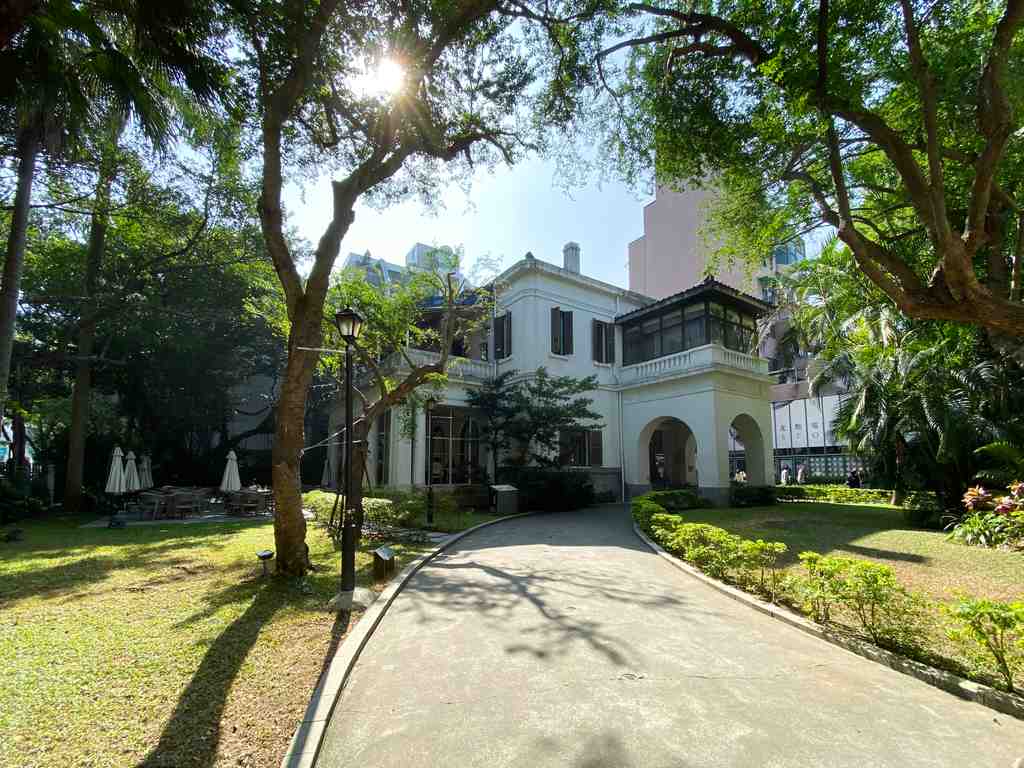
  2. On your left, you’ll spot a grand two-story white house tucked between trees and gardens-a true slice of old-school elegance in the middle of Taipei, with wide arched verandas and…Lire plusAfficher moins

    On your left, you’ll spot a grand two-story white house tucked between trees and gardens-a true slice of old-school elegance in the middle of Taipei, with wide arched verandas and black shutters under a leafy canopy. Alright, let’s dial things back almost a hundred years. Imagine 1926-jazz is hot in America, but here in Taipei, a stately building just like this is freshly finished, showing off a mix of American Southern Victorian style right in the heart of the city. This isn’t just anyone’s fancy home-it was built to serve as the American Consulate during Japanese rule. You could say it was home base for American suits in a land full of kimonos and qipaos. Not bad, right? But the plot thickens! During World War II, things got a little heated-let’s just say visiting Uncle Sam wasn’t exactly encouraged. When war broke out across the Pacific, the Japanese promptly shut down the consulate. It sat under wraps until 1946, when after a lot of history’s drama, the doors swung open again, this time for the newly minted Republic of China. Then, post-World War II, the world order flips like a pancake. By 1949, with the fallout from the Chinese Civil War, this house had been promoted, just like someone who’s hung around the office long enough. It became the US Consulate General, and then, after the Korean War heated up, Taipei got its own US Ambassador. This very building? It turned into a bonafide American Ambassador’s Residence-housing six ambassadors and plenty more stories, including official dinner parties that probably paired steak with stinky tofu just to keep things interesting. But all fairy tales hit a bump. In 1979, the US walks away-officially breaking off diplomatic ties with Taiwan and yanking its embassy. Suddenly, this mansion was like a grand piano with no one to play it: beautiful, but collecting dust and stray cats for twenty years. By the late 1990s, Taipei was feeling sentimental (and, let’s be real, embarrassed). It roped in the TSMC Foundation-think thirty million NTD in rescue funds, which back then was about one and a half million US bucks. Adjusted for today, we’re talking maybe 3-4 million, enough to give this place a major facelift and probably buy enough bubble tea for half the city. Come the new millennium, it gets a dramatic new role, rebranding as “Taipei House.” But not for diplomats-now, it’s all about movies! Legend has it, the city’s cultural chief sat down with famous director Hou Hsiao-Hsien over countless cups of tea, cooking up a plan to give the place fresh purpose. By 2002, it reopens as “Spot - Taipei Film House,” with art-house movies flickering onto the walls, a cozy bookshop, and a sunny cafe out back where you can sip espresso under a banyan tree. Check out those pillars-classic Doric style, bright and bold against the green. The central corridor spirals up past two stories and a hidden attic nook, fireplace and all-pretty swanky stuff for East Asia in those days. These days, it’s a favorite spot for movie buffs, date nights, and those seeking a coffee with a side of history. In fact, locals voted it one of Taipei’s top ten buildings-a list packed with skyscrapers and giant ferris wheels, but this old place held its ground. Ready for Ningxia Night Market? Just head west for about 13 minutes, and save some room for street snacks!

    Ouvrir la page dédiée →
  3. Take a look to your right and you’ll spot a lively, glowing street packed with food stalls and a moving river of hungry people-yup, welcome to Ningxia Night Market, where the…Lire plusAfficher moins

    Take a look to your right and you’ll spot a lively, glowing street packed with food stalls and a moving river of hungry people-yup, welcome to Ningxia Night Market, where the aroma of grilled treats and chatter of locals fill the air. This spot isn’t just any old night market. By 2015, Taipei folks had already crowned Ningxia the best for strolling, snacking, and, get this-friendliness and even environmental vibes. That means you’re in what locals call the tastiest, cleanest, and most downright charming night market in all of Taipei. Some say if you want a handshake, a smile, and a plate of fried squid, this is the place. Historically, just nearby was the famous Jiancheng Circle-a real Taipei icon once, before it met a rather anti-climactic end and was leveled in 2016. But don’t fret! The space got a makeover with greenery and seats, giving locals a sweet spot to digest all those snacks. Now, if you thought all folks talk about here is food, think again! In early 2024, Ningxia announced a head-turner: a viral “Subject Three Dance” contest. Some netizens grumbled it was too much, but the market just laughed and said, “Hey, we just want a fun night!” Shows you: whether it’s a bowl of oyster vermicelli or a viral dance challenge, Ningxia Night Market is always buzzing with flavor and fun. When you’re ready for a change of pace, just stroll south for about 24 minutes and you’ll reach the National Taiwan Museum.

    Ouvrir la page dédiée →
Afficher 5 arrêts de plusAfficher moins d'arrêtsexpand_moreexpand_less
  1. If you look slightly to your right, you’ll see something a bit grander than your average Taipei building - welcome to the National Taiwan Museum, or as I like to call it, “where…Lire plusAfficher moins

    If you look slightly to your right, you’ll see something a bit grander than your average Taipei building - welcome to the National Taiwan Museum, or as I like to call it, “where Taiwan keeps its coolest stuff.” This isn’t just any museum, by the way. This is the oldest museum in Taiwan. It’s been standing tough since the early 1900s, when folks were still figuring out how to make a telephone that didn’t need a small army of operators to connect you to your grandma. Now, imagine it: back in the Japanese colonial days, the year is 1915. Folks are strutting around in sharp suits and elaborate outfits, the streets full of horse carts, and here, on a plot where a temple once sat (and was sadly wrecked by a typhoon - typhoons here aren’t just tourist stories!), a brand-new museum rises up. That building cost about 256,000 Japanese yen at the time. In today’s dollars, you’re talking about a sum solid enough to buy a few beef noodle shops… or one spectacular Taipei penthouse. And this was no ordinary building! Picture the drama: glittering black marble from Mino, white stone from Mito, woodwork so elegant it would make carpenters weep, and out front, 32 towering columns. The dome over the main hall? That’s the largest in Taiwan, just dazzling with stained glass - imagine sunlight spilling in, as if the heavens themselves wanted to see the exhibits. If you’d walked inside back then, you’d have found yourself among displays of everything Taiwan had to offer: glittering minerals, strange animals, towering plants, and fascinating tribal artifacts from the island’s indigenous communities. From dinosaur bones to jade beetles, early visitors must have felt a little like Indiana Jones, minus the fedora. Now, let’s add a twist of suspense. In World War II, American bombers roared overhead, and this museum took a beating. The exhibits faced real danger! It survived, but just barely. Post-war, the place got dusted off and spiffed up - but there were some wild renovation debates in the ‘90s when the roof, gnawed by termites, got replaced. Preservation purists practically fainted! Don’t worry, today she’s sturdy as ever - and even went modern with new lights and facilities. Walk around outside, and you’ll spot real pieces of history in the gardens: ceremonial arches, old stone relics, even a bronze cow that locals swear brings good luck if you rub its head. I’ve seen folks line up to do it on exam days. Want a shot of luck for your next adventure? Give it a try! And highlights? Oh, you bet: the original portrait of Koxinga, the Ming loyalist hero that once sent European colonizers packing, and a 300-year-old Qing Dynasty map of Taiwan. Both are recognized national treasures - the crown jewels of Taiwanese history. Inside, the exhibitions morph every so often, but you can always count on two things: dazzling displays of nature and human stories. There’s even kid-friendly galleries where the little ones can hunt for fossils like mini paleontologists. Adults, no shame in joining the fun - just try not to elbow anyone when you spot the legendary Taiwan clouded leopard. So, whether history’s your jam, or you just like a beautiful place to stare up at ceilings that make you go “whoa,” this museum’s where Taipei’s stories come alive. <sfx>faint echo, footsteps on marble floor</sfx> It’s a spot locals are secretly proud of - but you’ll find plenty of tourists gasping at the grandeur too. Alright, ready for a little greenery and reflection? Head east for about 3 minutes and you’ll stroll right into Two Two Eight Peace Memorial Park. Let’s keep Taipei’s stories rolling!

    Ouvrir la page dédiée →
  2. Swing your gaze to the right and you’ll spot a lush green oasis peppered with elegant pavilions, a domed museum all dressed up in classical columns, curvy bridges, ponds, and-look…Lire plusAfficher moins

    Swing your gaze to the right and you’ll spot a lush green oasis peppered with elegant pavilions, a domed museum all dressed up in classical columns, curvy bridges, ponds, and-look closer-a sweeping outdoor stage: welcome to Two Two Eight Peace Memorial Park. Let’s rewind the tape to 1903. Picture this: Taipei’s answer to “what if Europe, Japan, and China had a garden party?” The Japanese colonial government wanted to bring Taiwan a taste of Paris-well, minus the croissants and with a lot more palm trees. They laid out this park, mixing western lawns, Japanese touches like lantern-lit walkways, and later, some proper Chinese pagodas. Back then, grand events would turn up here: power speeches from governors, flower shows, even athletic meets. You can almost hear the old-timey band music in the air! <sfx>gentle brass band and crowd chatter</sfx> Of course, two things never change: locals love their snacks. Back in the ’50s, “Park Plum Juice” was the must-try refreshment sold right along the park’s west side-just two Taiwan dollars for a cup, which is about the price of a single Tic Tac today! And, for dessert? Three-Layer Ice Cream. Sadly, that’s gone the way of the dodo, but the memories stick around. You might wonder where the park’s strange nickname “Company”-as in, “buddy, you checking in at the Company tonight?”-comes from. Well, in the ’80s and ’90s, this spot quietly became one of Taipei’s main meeting places for the city’s LGBTQ community at a time when acceptance was in short supply. Cutting edge, right? This history is now honored with a rainbow gate by the metro entrance, so next time you spot a crowd looking extra colorful, you’ll probably know why. But let’s get real for a moment-the park holds some heavy stories, too. The name “Two Two Eight” marks the tragic 1947 incident when frustrated crowds stormed the radio station here, broadcasting their anger across the island. What followed was, honestly, chaotic and heartbreaking, sparking a darker chapter in Taiwan’s journey for democracy. The soaring white monument, the Two Two Eight Memorial, sits quietly at the park’s heart to remember those who lost their lives and to remind the rest of us to hold peace tight. <sfx>breeze rustling through trees, distant murmurs</sfx> Keep ambling: there’s the National Taiwan Museum to the north-once a memorial for Japanese governors, now packed with everything from fossils to fierce local taxidermy. Out by the children’s area, see if you can spot the big copper horse-salvaged from a long-gone shrine and now just hanging out with the playground crowd. Tiny surprise: The little Land God temple inside the park is famous for matchmaking! Four banyan trees stand together here like two married couples. Locals joke there’s more relationship advice under these branches than on all of Taipei’s dating apps. Around every path bends stories carved in stone: massive old gateways, like the “Filial Piety” archway-moved here just so Taipei wouldn’t lose a good legend. If ancient stones could talk, they’d tell you about brave scholars, stubborn widows, and epic journeys for love and learning. Ready for Chiang Kai-shek Memorial Hall? Just walk southeast for about 20 minutes! Interested in a deeper dive into the history, facilities or the gay culture? Join me in the chat section for an insightful conversation.

    Ouvrir la page dédiée →
  3. Standing to your left, you’ll spot a gigantic white building with grand blue tiles on top, looking straight out of an emperor’s daydream - just follow the towering staircase…Lire plusAfficher moins

    Standing to your left, you’ll spot a gigantic white building with grand blue tiles on top, looking straight out of an emperor’s daydream - just follow the towering staircase drawing your eyes up to an arched entrance, and you can’t miss it! Now, welcome to the Chiang Kai-shek Memorial Hall - or as some locals call it, the “big white building with an identity crisis.” I mean, just look at this: bigger than eight football fields stacked up, this complex is a whole 250,000 square meters! The main hall alone rises 70 meters high, which is about the height of a 20-story building. When this thing was finished in 1980, folks could spot it from all over Taipei. Who needs Google Maps, right? But, boy, if these stone lions could talk, they’d spill some drama. This spot used to be a Japanese military base, then an army headquarters, and at one point it was nearly turned into a flashy business hub with hotels and shopping malls. Imagine this place packed with suitcases and briefcases instead of dignitaries and students. In 1975, everything changed when Chiang Kai-shek - who ruled Taiwan with an iron fist and a memorable mustache - passed away. Plans for the skyscrapers? Tossed out the window! Instead, they set out to build this monument, pulling together a who’s-who committee and hiring, no kidding, the guy who designed the Grand Hotel. The design blends Chinese symbolism everywhere. That blue-and-white rooftop? It mirrors the national flag, and the Hall faces west, peering across the Taiwan Strait like a stone-faced lookout on eternal duty. See those massive steps? There are 89 if you count, marking Chiang’s age at his passing. That's right, every single step was counted for symbolism. Talk about attention to detail! And if you’ve noticed folks hanging around waiting for a show - you’re not alone. The big draw happens every hour with the military Honor Guard performing their dramatic changing of the guard on the plaza. <sfx>marching boots clicking on marble</sfx> It’s a little bit of Broadway with a lot more spit-shine. Inside, a gigantic bronze statue of Chiang sits smiling, or maybe just trying to look patient, as if he’s watched generations of tourists perfect their selfie angles. Behind him, his last will is carved into the base - no pressure or anything. But here’s the real twist: this plaza hasn’t just seen ceremonies and tourists. It’s been the main stage for Taiwan’s biggest protests, from the Wild Lily student movement in 1990 to all sorts of political push-and-pull ever since. This place has seen egg-throwing, flag-waving, graffiti, and about every political T-shirt under the sun. The name over the gate even sparked street fights: first it said “Dazhong Zhizheng” (meaning the utmost fairness), then got changed to “Liberty Square.” Ask ten different Taipei locals what this building means, and you’ll get twelve answers-topped off with a rant about politics. Oh, and remember the price tag for all this? The original bill was 15 billion NTD back in the late ’70s - that’s about 3 billion in today’s US dollars. Even by today’s standards, that’ll get you a heck of a memorial, or enough boba to fill Sun Moon Lake. All right, soak in the plaza, snap some photos, and if you’ve got time, check out the art exhibit halls or feed the koi in those peaceful ponds. When you’re ready, DAAN Forest Park is a 30-minute walk heading northwest. Seeking more information about the history, management office organization or the architecture and landscape? Ask away in the chat section and I'll fill you in.

    Ouvrir la page dédiée →
  4. Alright, look to your right-Daan Forest Park is peeking out from behind all this modern Taipei action, and boy, it’s doing its best impression of Central Park’s chill little…Lire plusAfficher moins

    Alright, look to your right-Daan Forest Park is peeking out from behind all this modern Taipei action, and boy, it’s doing its best impression of Central Park’s chill little cousin! Over twenty-six hectares of green, smack in the middle of the city. It’s where Taipei locals come to escape the hustle and recharge, whether for a jog, a nap on the grass, or a chance to catch that rare squirrel photobombing your selfie. But don’t let the easygoing vibes fool you: this patch of nature comes with stories juicier than a night market mango. Way back in 1932, when Taiwan was under Japanese rule, this land was officially marked for park use and called “Park Number Seven”-not exactly a catchy name, but hey, it was the 1930s, and branding wasn’t their strong suit. After World War II, families-many fleeing from the Chinese Civil War-built homes here. By the late '80s, about 12,000 folks were living in what the government called “informal settlements.” Imagine the city wrestling over this prized patch for decades: Military zones, protestors wanting a stadium, environmentalists wanting green, residents needing homes. City plans zigzagged and lawsuits flew, and finally, in 1992, after some seriously heated debates and what locals still call a messy eviction, the area was cleared for what you see today. Ah, but opening day in 1994? Let’s just say if you wore nice shoes, you left with mud souvenirs. Locals started by calling it “Mud Park”-Taipei’s answer to finding the silver lining in soggy new beginnings. Developers quickly realized that apartments nearby with a park view became goldmines-think $14 million for one fancy flat overlooking the trees. Not a typo-$14 million! That’s a lot of bubble tea. If you spot a pond, egret, or maybe a turtle sunbathing with squirrels as their audience, consider that your lucky Taipei day. Oh, and the elegant Guanyin statue? Look close but don’t try to pray: it had controversy of its own, settling in as public art after a tug-of-war between the government, Buddhist leaders, and former residents. Ready for Daan District (Taipei City)? Just head west for 10 minutes and we’ll keep exploring!

    Ouvrir la page dédiée →
  5. Alright, here we are-the final stop on our Taipei adventure: Daan District, the living, breathing, ever-morphing heart of the city’s south side! Look around-see those leafy…Lire plusAfficher moins

    Alright, here we are-the final stop on our Taipei adventure: Daan District, the living, breathing, ever-morphing heart of the city’s south side! Look around-see those leafy streets, universities, and enough coffee shops you’d think they were dealing beans outta their mailboxes? Welcome to Daan, where the present packs in so tight with the past, you can practically smell the history wafting through the lanes like steam from a roadside dumpling stand. Now, everyone likes a story about a name change, and Daan’s got a doozy. First, the district started off as “Daanzhuang”-but don’t let the “zhuang” fool you, that wasn’t a raucous frat house. “Zhuang” meant “village.” Now hold tight-there are two classic local theories for where this name came from, both about as reliable as a Taipei weather forecast. One says it referred to “Daan Canal,” another to folks from “Anxi,” yet another to a big old bay. Turns out, those are all charming tall tales. Latest research links it back to “Dawan Village,” for a half-moon-shaped pond, or “wan,” in the area. So, not the high drama you get with royal bloodlines or lost treasure, but hey-a pond can make a splash. Quick time-jump: in 1740, under the Qianlong Emperor, Daan was just a sleepy notch in a big administrative belt, part of Tamsui’s old coastal defenses. By the late 1800s, it kept switching bosses like a kid swapping seats in school. Japanese colonial times brought reorganizing: creating townships, then “cho” (think “neighborhoods,” but with fancier hats). After WWII, all these little bits got mashed together into what’s now Daan District-kind of like a city government hot pot, with a little of this, a little of that. Now, where did the big, official-sounding “Daan District” come from? In 1946, when Taiwan was setting up postwar administration, “Daanzhuang” was the largest patch around, so it scored the top billing. It spread out to forty, fifty little pockets, swallowing up bits and pieces whenever Taipei’s map changed. That means boundaries shifted, neighbors switched sides, and, like an urban Rubik’s cube, Daan just kept twisting into new shapes. Ask any Daan old-timer, and they’ll remember when a street was in “Guting,” not Daan, or vice versa. It’s like arguing what counts as Brooklyn if you keep moving the bridge. Here’s a fun Daan fact: it’s now Taipei’s most crowded neighborhood. About 290,000 people squeeze into just over 11 square kilometers. You’d think that’d cause epic traffic jams, but thanks to a tangle of MRT lines under your feet and wide boulevards overhead, it actually moves! All those universities-Taiwan University, NTNU, NTUST, and others-pump out so many students each year, the libraries must have sturdier floors just to handle finals week. And talk about longevity-Daan houses the most centenarians of any area in Taiwan. Over 190 folks here are over 100 years old. That means you might brush shoulders with someone who still remembers when Taipei had rice paddies, not shopping malls. It’s the kind of wisdom you can’t Google, but maybe you’ll pick up if you hang around long enough. Every Daan lane has a tale: from the bustling Yongkang food street where dumpling queues outlast Typhoon holidays, to peaceful Da’an Forest Park-a green lung that’s earned the local nickname “Taipei’s Central Park,” minus the squirrels mugging for tourist cameras. Harried office workers, teens slurping bubble tea, retirees exercising at 5 a.m.-they all call this patchwork district home. So next time you walk these boulevards, remember-they used to be pond banks, village tracks, sometimes a political football. Yet through all the switches, name games, and urban growing pains, Daan’s the Taipei neighborhood that just keeps reinventing itself, always with a smile and a bowl of noodles at the ready. <sfx>gentle city park sounds-birds, faint MRT rumble</sfx> Exploring the realm of the history, geography or the politics? Feel free to consult the chat section for additional information.

    Ouvrir la page dédiée →

Foire aux questions

Comment commencer le tour ?

Après l'achat, téléchargez l'application AudaTours et entrez votre code de réduction. Le tour sera prêt à commencer immédiatement - il suffit d'appuyer sur lecture et de suivre l'itinéraire guidé par GPS.

Ai-je besoin d'Internet pendant le tour ?

Non ! Téléchargez le tour avant de commencer et profitez-en pleinement hors ligne. Seule la fonction de chat nécessite Internet. Nous recommandons de télécharger en WiFi pour économiser vos données mobiles.

S'agit-il d'une visite de groupe guidée ?

Non - il s'agit d'un audioguide en autonomie. Vous explorez indépendamment à votre propre rythme, avec une narration audio diffusée par votre téléphone. Pas de guide, pas de groupe, pas d'horaire.

Combien de temps dure le tour ?

La plupart des tours durent entre 60 et 90 minutes, mais vous contrôlez totalement le rythme. Faites des pauses, sautez des arrêts ou arrêtez-vous quand vous le voulez.

Et si je ne peux pas finir le tour aujourd'hui ?

Pas de problème ! Les tours disposent d'un accès à vie. Faites une pause et reprenez quand vous le souhaitez - demain, la semaine prochaine ou l'année prochaine. Votre progression est sauvegardée.

Quelles sont les langues disponibles ?

Tous les tours sont disponibles dans plus de 50 langues. Sélectionnez votre langue préférée lors de l'utilisation de votre code. Note : la langue ne peut pas être changée après la génération du tour.

Où accéder au tour après l'achat ?

Téléchargez l'application gratuite AudaTours sur l'App Store ou Google Play. Entrez votre code de réduction (envoyé par e-mail) et le tour apparaîtra dans votre bibliothèque, prêt à être téléchargé et commencé.

verified_user
Satisfaction garantie

Si vous n'appréciez pas le tour, nous vous rembourserons votre achat. Contactez-nous à [email protected]

Paiement sécurisé avec

Apple PayGoogle PayVisaMastercardPayPal

AudaTours : Audioguides

Des tours à pied en autonomie, divertissants et économiques

Essayer l'application arrow_forward

Adoré par les voyageurs du monde entier

format_quote Ce tour était un excellent moyen de voir la ville. Les histoires étaient intéressantes sans paraître trop scénarisées, et j'ai adoré pouvoir explorer à mon propre rythme.
Jess
Jess
starstarstarstarstar
Tour de Tbilissi arrow_forward
format_quote C'était un bon moyen de découvrir Brighton sans se sentir comme un touriste. La narration était profonde et contextuelle, sans en faire trop.
Christoph
Christoph
starstarstarstarstar
Tour de Brighton arrow_forward
format_quote J'ai commencé ce tour avec un croissant dans une main et zéro attente. L'application vibre tout simplement avec vous, pas de pression, juste vous, vos écouteurs et quelques histoires sympas.
John
John
starstarstarstarstar
Tour de Marseille arrow_forward

Audioguides illimités

Débloquez l'accès à TOUS les tours du monde

0 tours·0 villes·0 pays
all_inclusive Explorer Unlimited