AudaTours logoAudaTours

Visite audio de Llanes : Légendes, Phares et Charme Côtier

Guide audio12 arrêts

Un chœur d'air salin et de secrets de pierre résonne à travers Llanes, où les tours médiévales cachent des légendes perdues dans les vagues. Aventurez-vous hors des sentiers battus avec cette visite audio autoguidée et découvrez les histoires qui ondulent sous de jolies façades et des ruelles pavées – des récits que la plupart des voyageurs n'entendent jamais. Pourquoi les anciens marins imploraient-ils autrefois la miséricorde à l'ombre de la Chapelle de Santa Ana ? Quel pouvoir caché l'Église de la Vierge du Guide a-t-elle gardé pendant des siècles ? Qui a disparu du jour au lendemain du cœur historique de Llanes, ne laissant qu'une marque cryptique ? Marchez entre le tintement des vieilles cloches et le silence des romances interdites, sentant chaque pas faire revivre le passé magnifique de la ville. Chaque tournant révèle des mystères obsédants, des rébellions féroces et le pouls d'un village qui refuse d'oublier. Prêt à entrer dans l'histoire vivante de Llanes et à laisser ses secrets vous trouver ? Le voyage commence maintenant.

Aperçu du tour

map

À propos de ce tour

  • schedule
    Durée 40–60 minsAllez à votre propre rythme
  • straighten
    Parcours à pied de 2.3 kmSuivez le sentier guidé
  • location_on
    EmplacementLlanes, Espagne
  • wifi_off
    Fonctionne hors ligneTéléchargez une fois, utilisez n'importe où
  • all_inclusive
    Accès à vieRéécoutez n'importe quand, pour toujours
  • location_on
    Commence à Casino de Llanes

Arrêts de ce tour

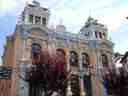
  1. To spot the Llanes Casino, look for a grand, peach-colored building right in the heart of the town, with ornate decorations, arched windows, and two tower-like structures on…Lire plusAfficher moins

    To spot the Llanes Casino, look for a grand, peach-colored building right in the heart of the town, with ornate decorations, arched windows, and two tower-like structures on top-it's impossible to miss with its showy modernist flair standing out among the simpler houses nearby. Now, imagine you’re standing exactly where the old covered market made of iron and glass buzzed until the late 1800s. But today, you’re greeted by the Casino de Llanes-built in 1910, a building that practically shouts, “Look at me!” with its flamboyant balconies, swirling floral decorations, and those mysterious female faces staring down from the façade. The townsfolk wanted a place that was more fabulous than any market, so the “Indianos”-those who sailed off to the Americas and came back rich-decided they deserved somewhere grand to play cards, gossip, and dance. So, they hired the architect Juan Álvarez Mendoza, who was still a young buck and very much in love with the latest French fashions. And it shows! Every inch is a nod to modernism, with a little extra drama thrown in-just like my Aunt Maribel at a family dinner. Step inside (in your mind-I wouldn’t recommend storming the door!), and you’d find white lacquered doors, mirrors straight out of Venice, and a swooping staircase that looks like it belongs in a fairy tale. Even the sofa in the lobby oozes style. During the Spanish Civil War, all that glamour hit pause-it became a meeting house and courthouse, not a place for cocktails. But after the war, the laughter, music, and endless debates about who truly played the best hand came back. Honestly, if you wanted luxury and wild stories a hundred years ago-this was the place to be!

    Ouvrir la page dédiée →
  2. To spot the Torreón de Llanes, look up ahead for a tall, round stone tower made of pale limestone, rising above the trees beside a stretch of old defensive wall. Imagine yourself…Lire plusAfficher moins

    To spot the Torreón de Llanes, look up ahead for a tall, round stone tower made of pale limestone, rising above the trees beside a stretch of old defensive wall. Imagine yourself in the 1200s, and suddenly this mighty limestone tower looms above you, its circular body built tough to scare off invaders and protect the bustling medieval town. The tower was once an essential piece of the ancient walls, almost like a medieval security guard-except this guard never took a nap! During its long history, the Torreón wasn’t just for show: at first, archers watched for dangers from the top, their eyes sweeping the horizon for pirates or rival armies. Fast forward a few centuries and the mood shifts as the tower doubles up as a small, tough prison, echoing with shouts and perhaps a little grumbling from inside. This castle-like sentinel has seen centuries of secrets, storms, and legends. The stone feels cool and unbreakable under your hand, as if daring time itself to try and tear it down. In 1876, it was officially made a National Monument, which means even modern times couldn’t let go of its wild tales. So if your friends ask if Llanes ever had a real castle, you can answer-with a twinkle in your eye-that not only did it, but you're standing right in front of it.

    Ouvrir la page dédiée →
  3. To spot the Palace of the Duke of Estrada, look ahead for a long, weathered stone building with two square towers rising at either end, now a striking ruin against the sky. Right…Lire plusAfficher moins

    To spot the Palace of the Duke of Estrada, look ahead for a long, weathered stone building with two square towers rising at either end, now a striking ruin against the sky. Right now you’re standing before the Palace of the Duke of Estrada, once the grand home of a powerful local family. Picture yourself back in medieval Llanes, the air heavy with smoke from wood fires and the sound of horses’ hooves on the street. The very center tower to your left dates from the 11th century-built by the Aguilar de San Jorge family, before knights and nobles started giving out their email addresses. Over centuries, the palace changed faces: first in the 14th century, and then-get this-in the 1700s, a count named Fernán Duque de Estrada gave it the fine Baroque look you see in the remains today, complete with grand towers on each side. But life wasn’t always a royal stroll. In 1809, disaster struck. Fire ripped through the palace-some blame invading French troops during the War of Independence, while others whisper that angry neighbors set the flames themselves after the Duque de Estrada family sided with the enemy. For over two centuries the palace has remained a haunting shell, hiding tales of betrayal, courage, and one very dramatic act of revenge. And here’s a twist for your inner history buff: Juan Duque de Estrada, one of the most famous residents, was an ambassador to the Pope for the Catholic Monarchs. Enjoy the ruins-just watch out for any vengeful ghosts kicking around!

    Ouvrir la page dédiée →
Afficher 9 arrêts de plusAfficher moins d'arrêtsexpand_moreexpand_less
  1. To spot the Church of Santa Maria del Conceyu, look straight ahead for a large, ancient stone building with a tall, square bell tower, soaring arches over the entrances, and a…Lire plusAfficher moins

    To spot the Church of Santa Maria del Conceyu, look straight ahead for a large, ancient stone building with a tall, square bell tower, soaring arches over the entrances, and a wide set of steps leading up to heavy wooden doors. Now, let me whisk you back almost 800 years-to 1240-when the people of Llanes decided they wanted something grand, something truly sturdy, so they rolled up their sleeves and started building this church. Picture the sound of hammers echoing on stone as the townsfolk worked together, determined to leave a mark for future generations. It took centuries and a whole mix of styles: check out those pointed Gothic arches meeting Romanesque doorways, and the mighty fortress-like tower watching over the town. If you wander inside, you’ll find three naves, three apses, and a ceiling so intricate you might find yourself gazing upward for far too long-don’t worry, nobody will judge! And tucked away in the north wall is the chapel of Juan Pariente, built in the 1300s as a resting place, maybe with a ghost or two who lost track of time. In the main nave, the giant gilded altarpiece glimmers, while the side chapel’s art shows off even more drama-it's like medieval Llanes's version of a talent show. In 1973, the Pope declared this a basilica, so now it holds not only history but also a little extra heavenly bragging rights!

    Ouvrir la page dédiée →
  2. Right in front of you, you’ll see a golden, shell-shaped bay lined by a stone promenade and dotted with colorful umbrellas-just head toward the soft, sandy curve where the town…Lire plusAfficher moins

    Right in front of you, you’ll see a golden, shell-shaped bay lined by a stone promenade and dotted with colorful umbrellas-just head toward the soft, sandy curve where the town meets the turquoise water. Welcome to El Sablón Beach, Llanes' very own sandy secret! If you notice the name, "Sablón" comes from the Asturian word for "sand," and this snug little beach is like a sandy pocket nestled right in the heart of the town. Thousands of sun-seekers and sea-dreamers have wandered down these steps for centuries, tempted not just by the warm sun and salty breeze, but also by the promise of an unbeatable view. The grassy Paseo de San Pedro above isn’t a regular boardwalk-it's a riverside path built in 1847, covered in real grass, where locals have been strolling, picnicking, and sometimes dodging rainclouds, for nearly two centuries. From here, your eyes can sweep over lush mountains, the historic town walls, and the ruins of Llanes’ old castle, complete with its proud tower nearby-imagine knights keeping an eye out for pirates! Today, the only invaders are folks searching for a perfect swim, an ice cream, or maybe just a good patch of sand. With all its modern comforts-showers, umbrellas, and seaside snacks-El Sablón mixes the spirit of old coastal Asturias with the joy of a classic beach day. Bet you never thought a beach could have this much history beneath your toes!

    Ouvrir la page dédiée →
  3. To spot Casa del Cerca, look behind the row of cars at the edge of the parking area-you'll see a large, irregular stone building with reddish roof tiles and a fortress-like wall…Lire plusAfficher moins

    To spot Casa del Cerca, look behind the row of cars at the edge of the parking area-you'll see a large, irregular stone building with reddish roof tiles and a fortress-like wall with battlements and thick greenery creeping along its side. Imagine standing here in the late 1500s as the first stones of Casa del Cerca were laid under the watchful gaze of Pedro de Junco Posada, a nobleman with a flair for making a statement. By the time the 17th and 18th centuries rolled around, the place was getting makeovers left and right, so much so that it looks like it couldn’t decide if it wanted to be a palace, a fortress, or just show off its stylish wooden balcony arches. If you look at the western face, you might notice some oddly shaped stone balls-those are a fashion statement from the 16th century! Every part of this mansion has its own look: one side is stern and mysterious, while the other invites you in with its welcoming arches, promising secrets and, oh, an attached chapel. Speaking of drama, the original owner-a bishop and royal adviser-was buried right here until his remains had a change of address in the 20th century. The palace's very stones have witnessed centuries of renovations, all jumbled together in a way that feels like an architectural time machine. Now, Casa del Cerca enjoys a cozy spot on Spain’s list of “Sites of Cultural Interest.” Kind of like being knighted, but for buildings!

    Ouvrir la page dédiée →
  4. To spot the Chapel of Santa Ana, look for a modest, whitewashed stone building with a small bell gable rising above its flat roof, nestled right along the edge of the…Lire plusAfficher moins

    To spot the Chapel of Santa Ana, look for a modest, whitewashed stone building with a small bell gable rising above its flat roof, nestled right along the edge of the square. Imagine, here in the heart of Llanes, the salty breeze swirling with the smell of the nearby sea, this little chapel has been watching over fishermen and townsfolk since the 1400s. Back then, the Guild of Sailors-picture tough mariners with sunburned faces-built it as their sanctuary before braving the wild Atlantic. You might even hear the echo of wooden clogs on stone steps as villagers hurried inside for blessings. Though the town changed, the chapel remained their anchor, dedicated to Santa Ana, San Telmo, and San Nicolás-all protectors of seafarers. It was rebuilt and patched up more than once: first in 1622, then by a generous neighbor from Pendueles in the 1700s, and even spruced up again at the turn of the millennium, like a sailor’s hat with a new feather each century. Inside, a golden, painted altar glimmers with ships and saints, and the air is thick with the memory of anxious prayers before every voyage. Since 2018, it’s officially part of Asturias’ Cultural Heritage, standing quietly as a proud witness to Llanes’ fishing adventures and the hopes of its people.

    Ouvrir la page dédiée →
  5. Look for a cluster of timeworn stone and stucco buildings close together with a narrow archway between them-if you see an old passage framed by weathered walls, you’re in the…Lire plusAfficher moins

    Look for a cluster of timeworn stone and stucco buildings close together with a narrow archway between them-if you see an old passage framed by weathered walls, you’re in the right spot! Now, let’s step back in time! Close your eyes and imagine Llanes centuries ago, when knights and merchants bustled through these same streets. You’re standing in front of the Historic Set of the Villa de Llanes, the heart of the old town-once surrounded by sturdy medieval walls. At one point, there were four great city gates creaking open each morning and clanging shut to keep out mischief after dark. Can you hear the footsteps echoing under those arches? Wander around, and you’ll spot the mighty Torreón, a round 13th-century watchtower-today, it’s keeping an eye on tourists instead of invaders. The Gothic Basilica started in the 1100s still watches over the town, and you might catch a scent of incense from the ancient chapels of Santa Ana and Magdalena nearby. Every stone here whispers stories: noble families built palaces like the ruined Duke of Estrada’s, its grand arches now resting after the fires of 1809. Somewhere, the oldest house-the Casa de Juan Pariente-tells quiet tales from the Plaza Mayor. The whole square is like a living museum, but with real people, a dash of mystery, and maybe-if you listen closely-a distant bell announcing another hour lost to history.

    Ouvrir la page dédiée →
  6. To spot the Chapel of Magdalena, look to your right for a charming white building with pointed arched windows and a stone lower half standing quietly at the edge of a small…Lire plusAfficher moins

    To spot the Chapel of Magdalena, look to your right for a charming white building with pointed arched windows and a stone lower half standing quietly at the edge of a small plaza. Let’s imagine you’re standing here hundreds of years ago, horses clip-clopping down the street and townsfolk hurrying past this humble chapel. The Chapel of Magdalena sits in its peaceful square, but its roots stretch deep into the thirteenth century-built right on top of an even older church that once gathered everyone’s secrets and prayers. Back then, this was the local parish, the center of news, gossip, and maybe even a bit of romance (well, it is Spain after all). The chapel you see now has survived countless changes: walls shifted, doors replaced, and everything except that single, stubborn nave and the pointed arched doorway stayed put, as if daring time to try its best. Imagine the voices, laughter, and even tears that have passed through those doors. The place was remodeled more times than a reality TV star, but those original stones still grip the ground like a secret handshake, reminding every visitor that Llanes has always been a town that respects its history-without ever letting things get boring.

    Ouvrir la page dédiée →
  7. Ahead of you stands a charming stone chapel with twin round towers on each side of its entrance and a little bell up top-just look past the quirky tree with skinny, outstretched…Lire plusAfficher moins

    Ahead of you stands a charming stone chapel with twin round towers on each side of its entrance and a little bell up top-just look past the quirky tree with skinny, outstretched branches to spot it. Standing before the Chapel of the Virgin of the Guide, imagine the salty wind from the nearby sea brushing your face and the golden light painting the chapel’s unusual towers. This spot is more than just a beautiful building; it’s the heart of one of Llanes’ favorite stories. Picture a stormy night centuries ago, when fishermen wrestled desperately against wild waves in their fragile boat. As the sky rumbled, the crew, terrified, called out to the Virgin for help. Suddenly, through the chaos, they spotted a floating object bobbing in the waves. With shaking hands, they hauled it aboard-just then, a dove swooped down and, as if giving instructions, led them safely back to shore. Safely on land, the fishermen opened the mysterious box and found an image of the Virgin herself, shining in the flickering torchlight. Now, here’s the magical twist: whenever they left her at San Antón chapel, she would vanish, only to reappear on the very same spot where the dove had disappeared. Not once, not twice, but three times! Eventually, everyone agreed-clearly, this was the place she wanted to call home. So, in 1515, the townsfolk promised to build her this very chapel, with its distinctive towers watching over the coast. Over the centuries, the chapel has been lovingly restored many times, and on a sunny day in 2016, the Virgin’s image right here was crowned, joining a rare few in Asturias. Every September, people still gather on these lawns, retelling the tale and celebrating the guardian who watches over Llanes, both on land and at sea.

    Ouvrir la page dédiée →
  8. Take a look at the impressive Llanes Lighthouse standing proudly on the Punta de San Antón cliff! If you listen closely, you can almost hear stories whispered by the salty wind…Lire plusAfficher moins

    Take a look at the impressive Llanes Lighthouse standing proudly on the Punta de San Antón cliff! If you listen closely, you can almost hear stories whispered by the salty wind off the Cantabrian Sea. This lighthouse, or “Faru de Llanes” if you’re feeling local, has been shining its light for sailors since 1860. Imagine thick fog rolling in, waves crashing below, and that bright, comforting beam cutting through the night so ships could safely find their way into Llanes harbor. The original lantern glowed with oil lamps, but it got a modern twist in 1920 when electricity came along. But the drama didn’t end there! In 1946, disaster struck-the lighthouse caught fire. Picture the panic as flames raced up the white octagonal tower. Luckily, the story didn’t end in ashes. By 1950, it was rebuilt stronger, and in 1959, a radiobeacon was added-imagine that, ships could follow invisible radio waves straight to shore. The whole lighthouse sits on 400 square meters, 18 meters above sea level, guiding sailors from up to 15 nautical miles away. So next time you see its light, give a little thank you-after all, it’s kept more than one fisherman from an unexpected swim!

    Ouvrir la page dédiée →
  9. Right in front of you, you’ll spot Puerto Boy Beach: a cozy crescent of fine white sand surrounded by rocky cliffs, with the gentle crashing of waves tucked just below a line of…Lire plusAfficher moins

    Right in front of you, you’ll spot Puerto Boy Beach: a cozy crescent of fine white sand surrounded by rocky cliffs, with the gentle crashing of waves tucked just below a line of charming houses overlooking the shore-just follow the sound of the surf and the view of the water hugging the rocks. Welcome to Puerto Boy Beach, also known as Playa de Puerto Chico-the grand finale of our Llanes adventure! Imagine the salty sea breeze brushing your face as you stand where land and sea do an epic handshake, right in the very heart of Llanes. This beach has a little magic trick: as the tide rolls in, it sometimes disappears completely, leaving nothing but the memory of sand beneath your feet and a sense of astonishment on your face! Not only is this sandy spot officially protected for its lush plant life, but it’s also part of the fabled Costa Verde, or the Green Coast, famous for its wild beauty. Here, you’re standing in a place that’s easy to reach by foot or car-if you don’t mind a zigzag down the stairs or ramp, that is. In times gone by, you might have watched fishermen hauling in their early catch, or families huddling up as the salty spray danced in the air. And on summer days, you’ll find locals enjoying showers, and the seagulls arguing over breadcrumbs. If you look back, the lighthouse, visible from here, once guided sailors home and now points out this hidden gem to curious travelers just like you. It’s a place where nature, history, and everyday joy meet-so linger awhile, watch the ever-changing waves, and imagine all the stories this little sheltered bay has seen. And remember-if you blink at high tide, you might just miss it!

    Ouvrir la page dédiée →

Foire aux questions

Comment commencer le tour ?

Après l'achat, téléchargez l'application AudaTours et entrez votre code de réduction. Le tour sera prêt à commencer immédiatement - il suffit d'appuyer sur lecture et de suivre l'itinéraire guidé par GPS.

Ai-je besoin d'Internet pendant le tour ?

Non ! Téléchargez le tour avant de commencer et profitez-en pleinement hors ligne. Seule la fonction de chat nécessite Internet. Nous recommandons de télécharger en WiFi pour économiser vos données mobiles.

S'agit-il d'une visite de groupe guidée ?

Non - il s'agit d'un audioguide en autonomie. Vous explorez indépendamment à votre propre rythme, avec une narration audio diffusée par votre téléphone. Pas de guide, pas de groupe, pas d'horaire.

Combien de temps dure le tour ?

La plupart des tours durent entre 60 et 90 minutes, mais vous contrôlez totalement le rythme. Faites des pauses, sautez des arrêts ou arrêtez-vous quand vous le voulez.

Et si je ne peux pas finir le tour aujourd'hui ?

Pas de problème ! Les tours disposent d'un accès à vie. Faites une pause et reprenez quand vous le souhaitez - demain, la semaine prochaine ou l'année prochaine. Votre progression est sauvegardée.

Quelles sont les langues disponibles ?

Tous les tours sont disponibles dans plus de 50 langues. Sélectionnez votre langue préférée lors de l'utilisation de votre code. Note : la langue ne peut pas être changée après la génération du tour.

Où accéder au tour après l'achat ?

Téléchargez l'application gratuite AudaTours sur l'App Store ou Google Play. Entrez votre code de réduction (envoyé par e-mail) et le tour apparaîtra dans votre bibliothèque, prêt à être téléchargé et commencé.

verified_user
Satisfaction garantie

Si vous n'appréciez pas le tour, nous vous rembourserons votre achat. Contactez-nous à [email protected]

Paiement sécurisé avec

Apple PayGoogle PayVisaMastercardPayPal

AudaTours : Audioguides

Des tours à pied en autonomie, divertissants et économiques

Essayer l'application arrow_forward

Adoré par les voyageurs du monde entier

format_quote Ce tour était un excellent moyen de voir la ville. Les histoires étaient intéressantes sans paraître trop scénarisées, et j'ai adoré pouvoir explorer à mon propre rythme.
Jess
Jess
starstarstarstarstar
Tour de Tbilissi arrow_forward
format_quote C'était un bon moyen de découvrir Brighton sans se sentir comme un touriste. La narration était profonde et contextuelle, sans en faire trop.
Christoph
Christoph
starstarstarstarstar
Tour de Brighton arrow_forward
format_quote J'ai commencé ce tour avec un croissant dans une main et zéro attente. L'application vibre tout simplement avec vous, pas de pression, juste vous, vos écouteurs et quelques histoires sympas.
John
John
starstarstarstarstar
Tour de Marseille arrow_forward

Audioguides illimités

Débloquez l'accès à TOUS les tours du monde

0 tours·0 villes·0 pays
all_inclusive Explorer Unlimited