
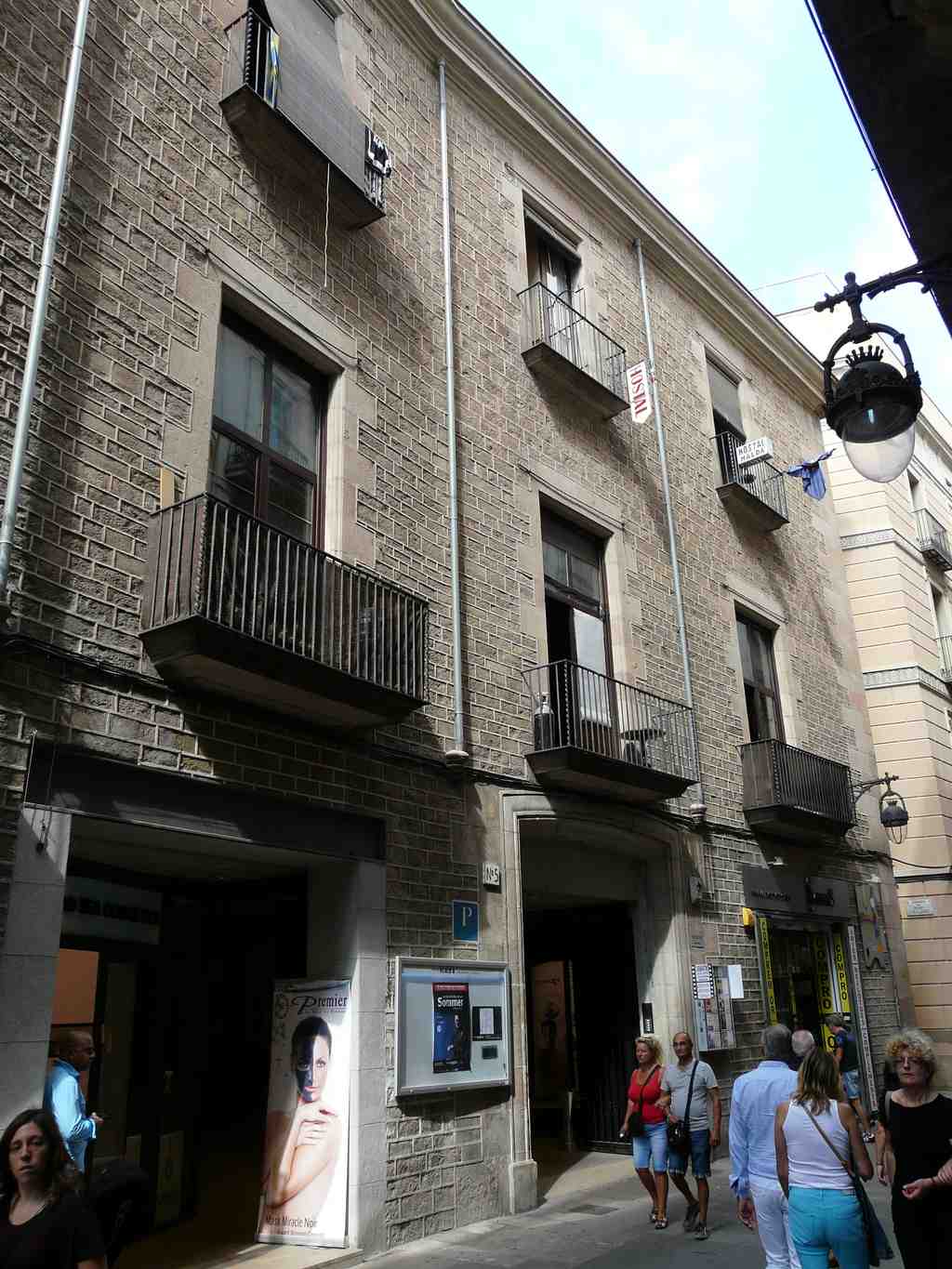
Au XVIIIe siècle, ce palais appartenait à Rafael de Amat, le premier baron de Maldà. Rafael était un aristocrate excentrique dont l'œuvre majeure fut un journal personnel en cinquante volumes. Il était obsédé par ce qu'il appelait la douce oisiveté de sa vie. Loin d'être un grand intellectuel, le baron écrivait uniquement pour son propre plaisir, remplissant ses pages de récits détaillés, presque obsessifs, de ses repas extravagants. Il défendait farouchement son droit de simplement bien manger et mieux boire, et refusait catégoriquement d'écrire en castillan, qu'il considérait comme la langue du percepteur d'impôts.
Mais cette bulle aristocratique confortable et frivole éclata en 1808. Lorsque les Français envahirent le pays pendant la guerre d'Indépendance, le baron terrifié fut contraint de fuir son palais bien-aimé. Il passa ses dernières années en tant que fugitif fortuné, errant de ville en ville, écrivant avec fureur dans son journal à quel point sa vie douillette ici lui manquait.
Depuis lors, ce bâtiment a constamment tenté de s'inventer un nouvel avenir, pour être finalement rattrapé par son histoire. En 1942, la famille avait déménagé, et le rez-de-chaussée ainsi que les jardins furent transformés en Galerías Maldà. Il s'agissait de galeries marchandes couvertes de verre, calquées sur les passages parisiens. Elles connurent un succès massif. Elles abritèrent même pendant plus de soixante-dix ans un hôpital pour poupées très apprécié, où des chirurgiens du jouet réparaient des yeux en porcelaine et recousaient des membres en tissu.
À l'étage, les anciennes salles de concert privées du baron devinrent finalement un théâtre. Regardez la deuxième image sur votre application pour voir l'escalier intérieur menant à cet espace de spectacle. Mais ces murs recèlent un secret plus profond. Pendant la guerre civile espagnole, dans les années 1930, alors que les églises de la ville étaient attaquées, l'une des petites salles de théâtre du palais fonctionnait secrètement comme une chapelle catholique basque. Elle resta ouverte au culte en toute sécurité, au vu et au su de tous. Des décennies plus tard, lors de la rénovation du cinéma du bâtiment en 2006, des ouvriers firent une découverte surprenante. Cachée directement derrière l'écran de cinéma se trouvait une grande hornacina, une niche décorative encastrée dans le mur, qui abritait autrefois des figures religieuses pour cette congrégation secrète du temps de guerre.
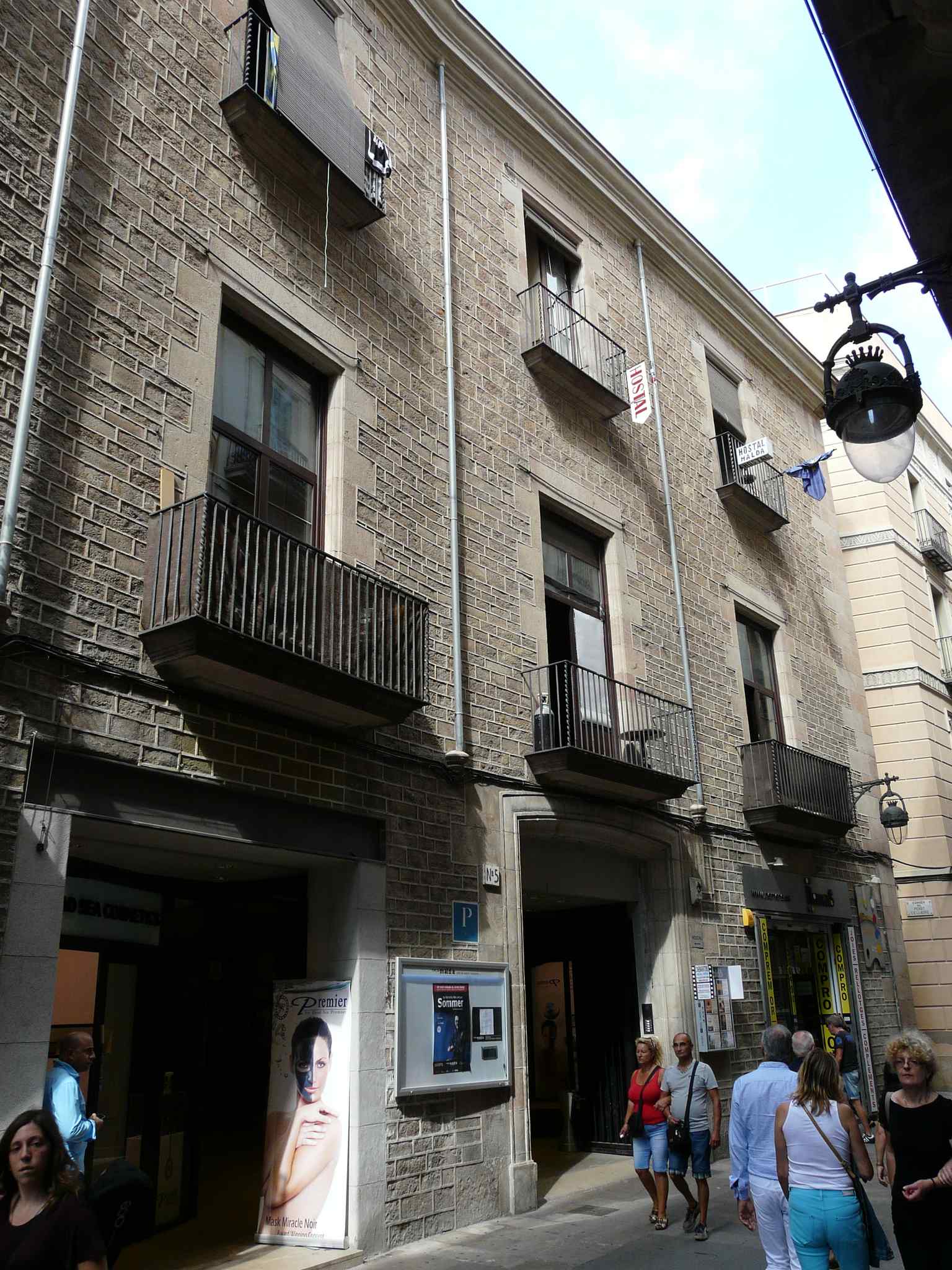
Back in the eighteenth century, this palace belonged to Rafael de Amat, the first Baron of Maldà. Rafael was an eccentric aristocrat whose main life's work was a fifty-volume personal diary. He was obsessed with what he called the sweet idleness of his life. Far from being a grand intellectual, the Baron wrote entirely for his own amusement, filling his pages with detailed, almost obsessive accounts of his extravagant meals. He fiercely defended his right to just eat well and drink better, and he absolutely refused to write in Castilian Spanish, which he dismissed as the language of the tax collector.
But that comfortable, frivolous aristocratic bubble popped in 1808. When the French invaded during the War of Independence, the terrified Baron was forced to flee his beloved palace. He spent his final years as a wealthy fugitive, wandering from town to town, furiously writing in his diary about how much he missed his cozy life back here.
Since then, this building has constantly tried to invent a new future for itself, only to be pulled back by its history. By 1942, the family had moved out, and the ground floor and gardens were transformed into the Galerías Maldà. These were glass-covered shopping corridors modeled after Parisian arcades. They were a massive hit. They even housed a beloved doll hospital for over seventy years, where toy surgeons would repair porcelain eyes and stitch up cloth limbs.
Upstairs, the Baron's former private concert halls eventually became a theater. Take a look at the second image on your app to see the interior staircase leading up to that very performance space. But those walls hold a deeper secret. During the Spanish Civil War in the 1930s, while churches across the city were being attacked, one of the palace's small theater rooms secretly functioned as a Basque Catholic chapel. It remained safely open for worship right under everyone's noses. Decades later, when the building's cinema was being renovated in 2006, workers made a surprising discovery. Hidden directly behind the movie screen was a large hornacina, a decorative recessed niche in the wall, that once held religious figures for that secret wartime congregation.
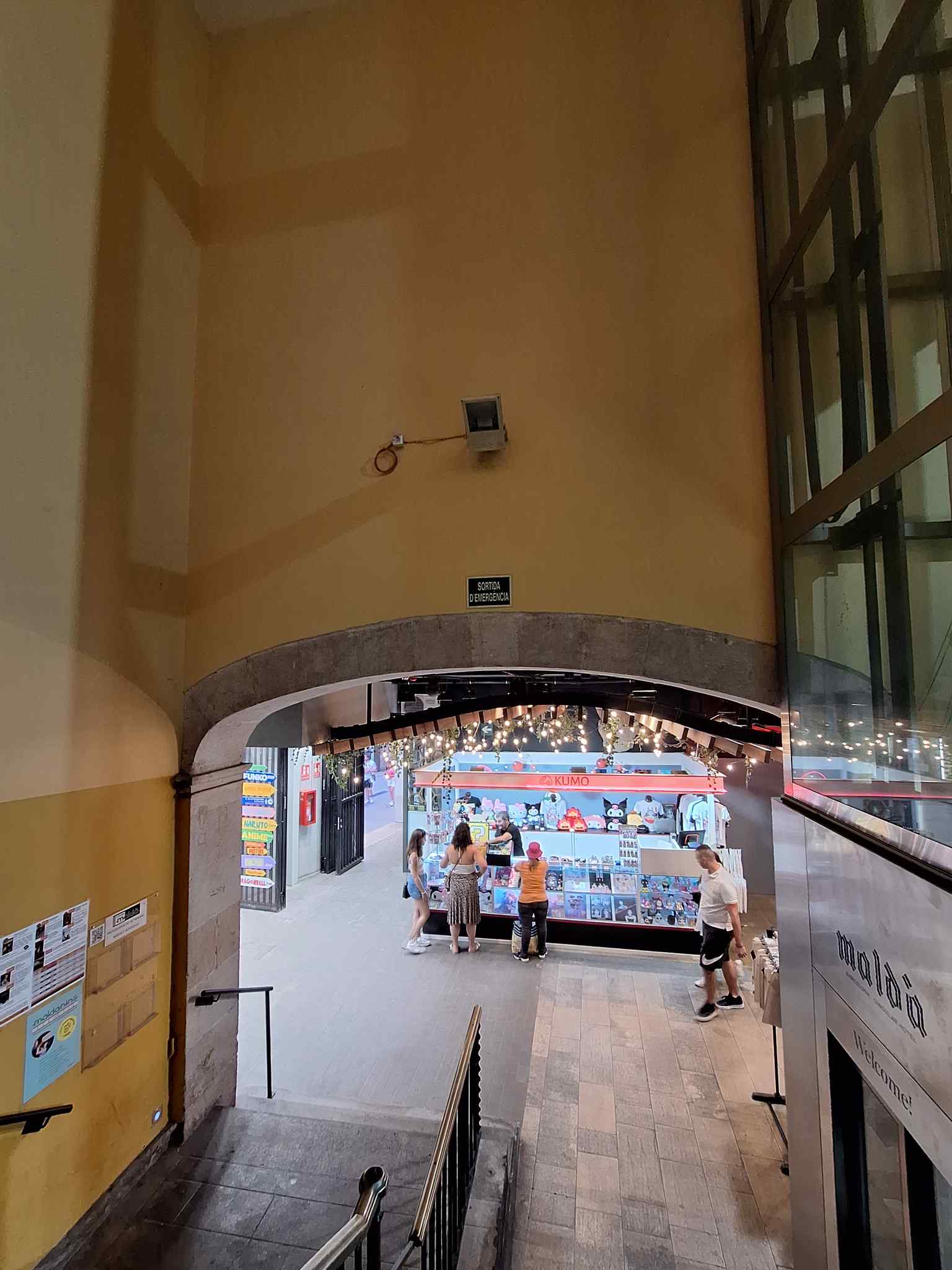
As for the shopping galleries below, they slowly turned into a ghost town by the 1980s. A sudden burst of modern progress arrived in 2017 when a massive Harry Potter store opened, briefly transforming the crumbling corridors into a booming hub for fantasy and pop culture fans. But the magic did not last. By late 2024, almost all the new themed shops abruptly closed their doors, leaving the historic corridors mostly empty once again.
It seems this palace is always caught in a tug of war between its grand visions of the future and the quiet echoes of its past. Let us leave this fading aristocratic playground behind and head toward an entirely different kind of survival. We are taking a five-minute walk over to our next stop, the Ancient Synagogue.






