
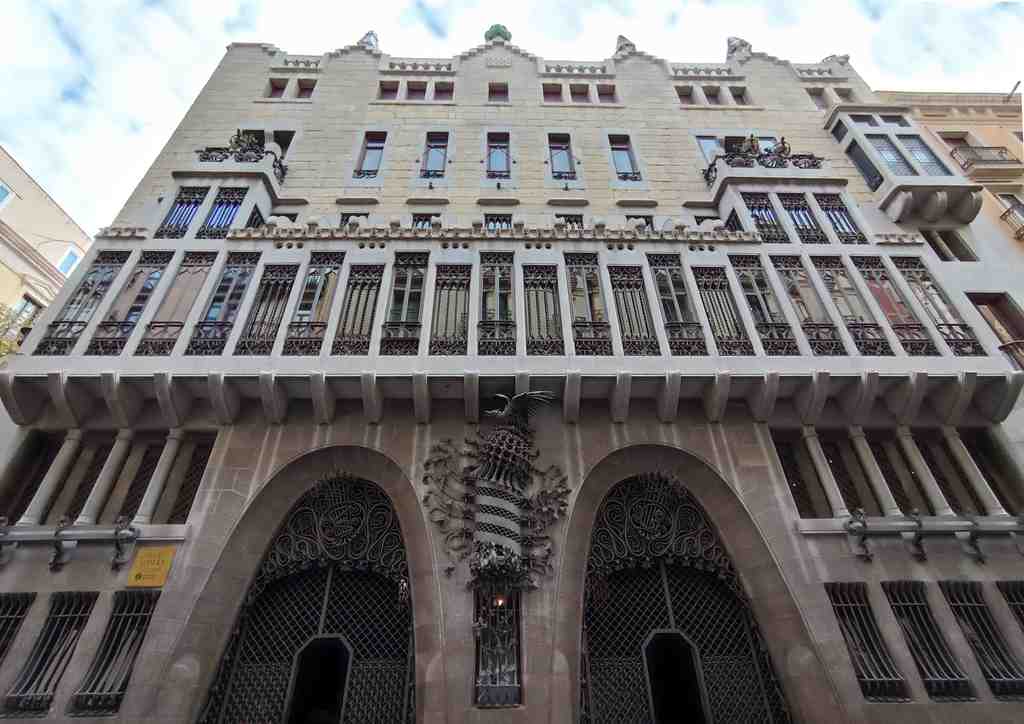
Look for a monumental pale stone building dominated by two massive parabolic arches on the ground floor, filled with intricate ironwork and separated by a striking wrought-iron crest.
This is Palau Güell. It was the first major commission for a young, relatively unknown architect named Antoni Gaudi.
Built between 1886 and 1890, this palace belongs to Gaudi's orientalist phase, drawing heavy inspiration from the geometric patterns and elaborate tile work of Near Eastern and Islamic art. It marked the dawn of Catalan Modernism, a regional artistic movement that rejected strict, classical architecture in favor of bold, highly decorative, and often nature-inspired designs. Gaudi poured his absolute soul into this project, coming up with twenty-five different solutions just for the facade you see here.
But the immense wealth that paid for this architectural masterpiece had a deeply troubling origin, as the patron's father, Joan Güell, built his initial fortune in Cuba through the illegal transatlantic slave trade. That dark money laid the foundation for the family's massive industrial empire back in Barcelona.
It is a heavy thing to stand before such brilliance and know exactly what bought it. Eusebio Güell, the son who inherited that fortune and commissioned this palace, wanted a home that would project his absolute power. Just look at those immense entrance doors with their iron mesh. They were designed with those towering parabolic shapes, which are tall curves similar to the path of a tossed object, specifically so that high-society guests could ride their horse-drawn carriages straight into the ground floor. If you look closely, the ironwork at the top of the doors cleverly hides two twisting snakes that form the letters E and G, for Eusebio Güell.
The influence of that dark wealth even bent the city's rules. The municipal architect originally rejected Gaudi's design because the solid stone facade violated city ordinances, which strictly required lighter iron and glass structures for these types of viewing galleries. But Güell simply pulled a few political strings in the local government, and the city magically approved the heavy stone construction anyway. The elite truly wrote their own rules, pushing their bold visions of the future forward while standing on the silent ghosts of the past.
The palace is open Tuesday through Sunday from ten in the morning to eight in the evening, if you ever want to explore the stunning central dome and the wildly colorful chimneys on the roof. For now, let us head back toward the heart of the Gothic Quarter, as our next stop, Plaça Reial, is just a short two-minute walk away.




