AudaTours logoAudaTours

Arrêt 3 sur 17

St. Florian's Gate

headphones 04:27
St. Florian's Gate
Porte de Saint-Florian
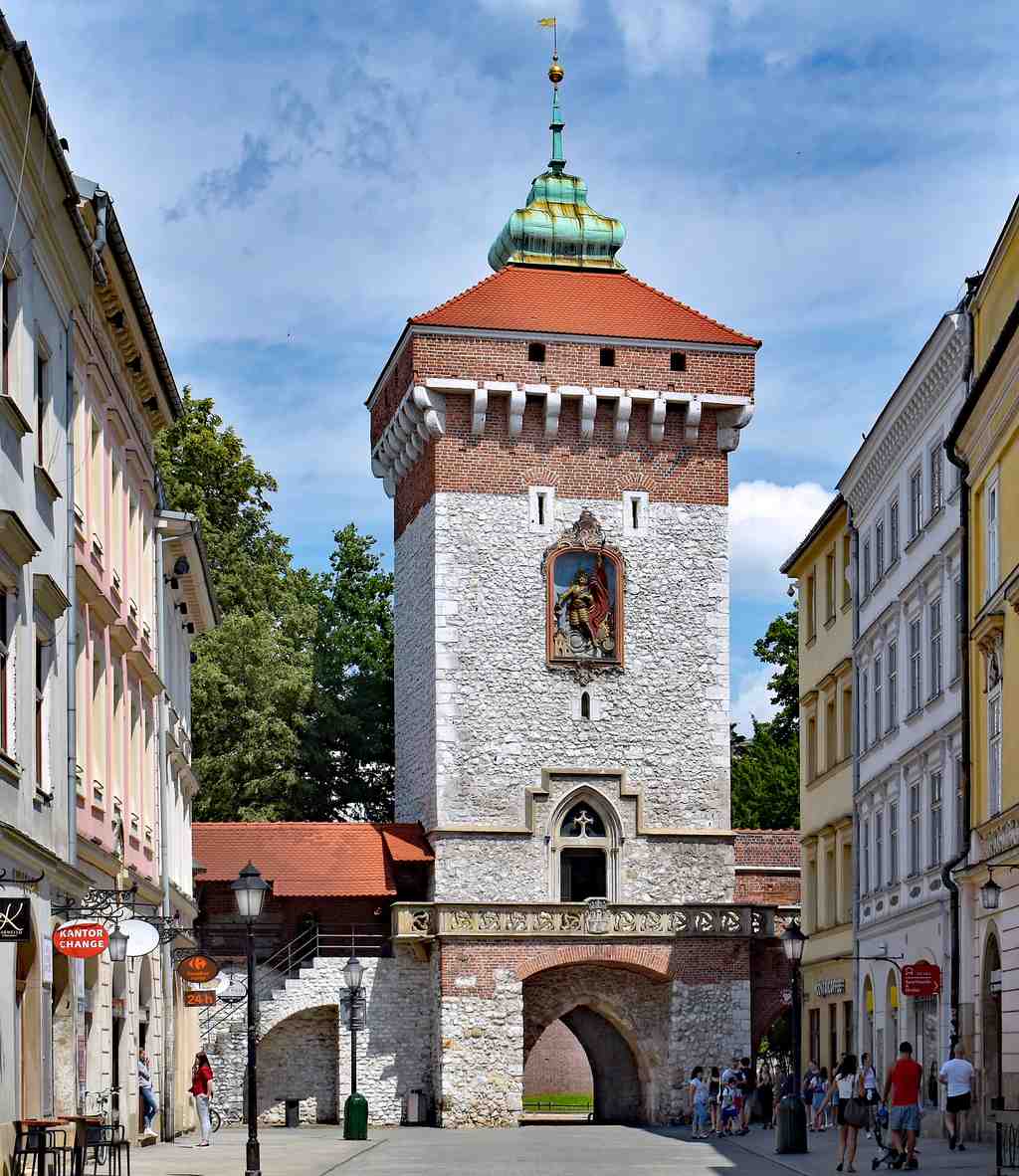
Porte de Saint-FlorianPhoto: Zetpe0202, Wikimedia Commons, CC BY-SA 4.0. Cropped & resized.

Look for a tall rectangular tower of rough pale stone, topped with a dark metal helmet-shaped roof and marked by a pointed Gothic arch at its base.

This is Saint Florian’s Gate, and Kraków loves a good threshold. A threshold is more than a doorway; it is the line where one world ends and another begins. On this tour, you’ll keep crossing those lines: from defense into ceremony, from public pride into private memory, from ordinary streets into places where the city kept reinventing itself. And here, very plainly, stands one of the biggest thresholds of them all.

The gate started life in the fourteenth century as hard-edged military muscle, part of the fortifications Kraków raised after the Tatar attack of twelve forty-one smashed much of the city. Prince Leszek the Black gave permission for stronger defenses in twelve eighty-five, and by thirteen oh seven records already mention this tower. It became the main entrance to the Old Town, the front door for a city that did not trust strangers one bit.

It is also a survivor. Of the original eight medieval gates, this is the only one left standing, the lone old entrance that escaped the nineteenth-century urge to “modernize” by knocking things down. Cities do that sometimes, like a homeowner deciding the antique cabinet is “too bulky” and then regretting it for the next hundred years.

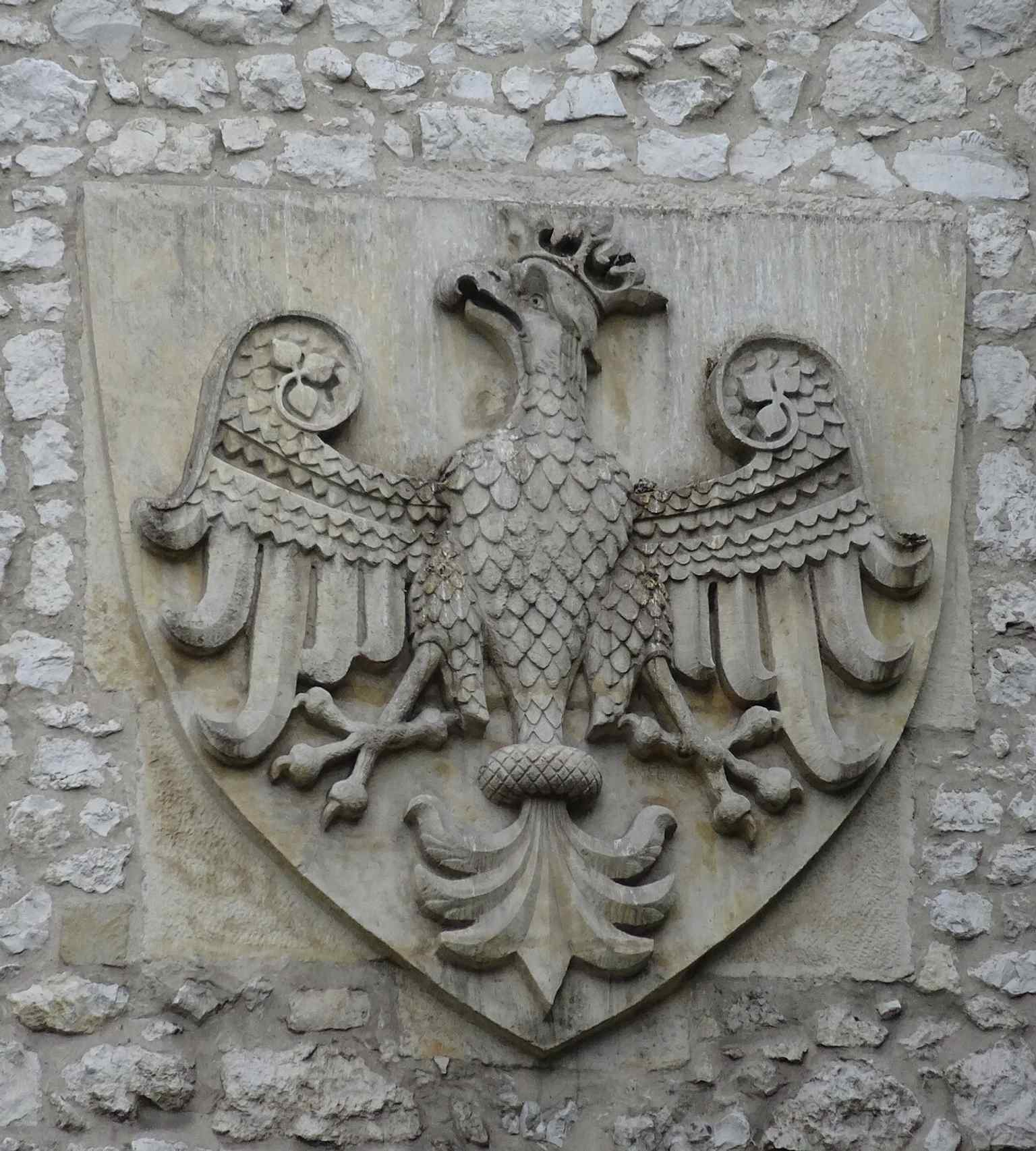
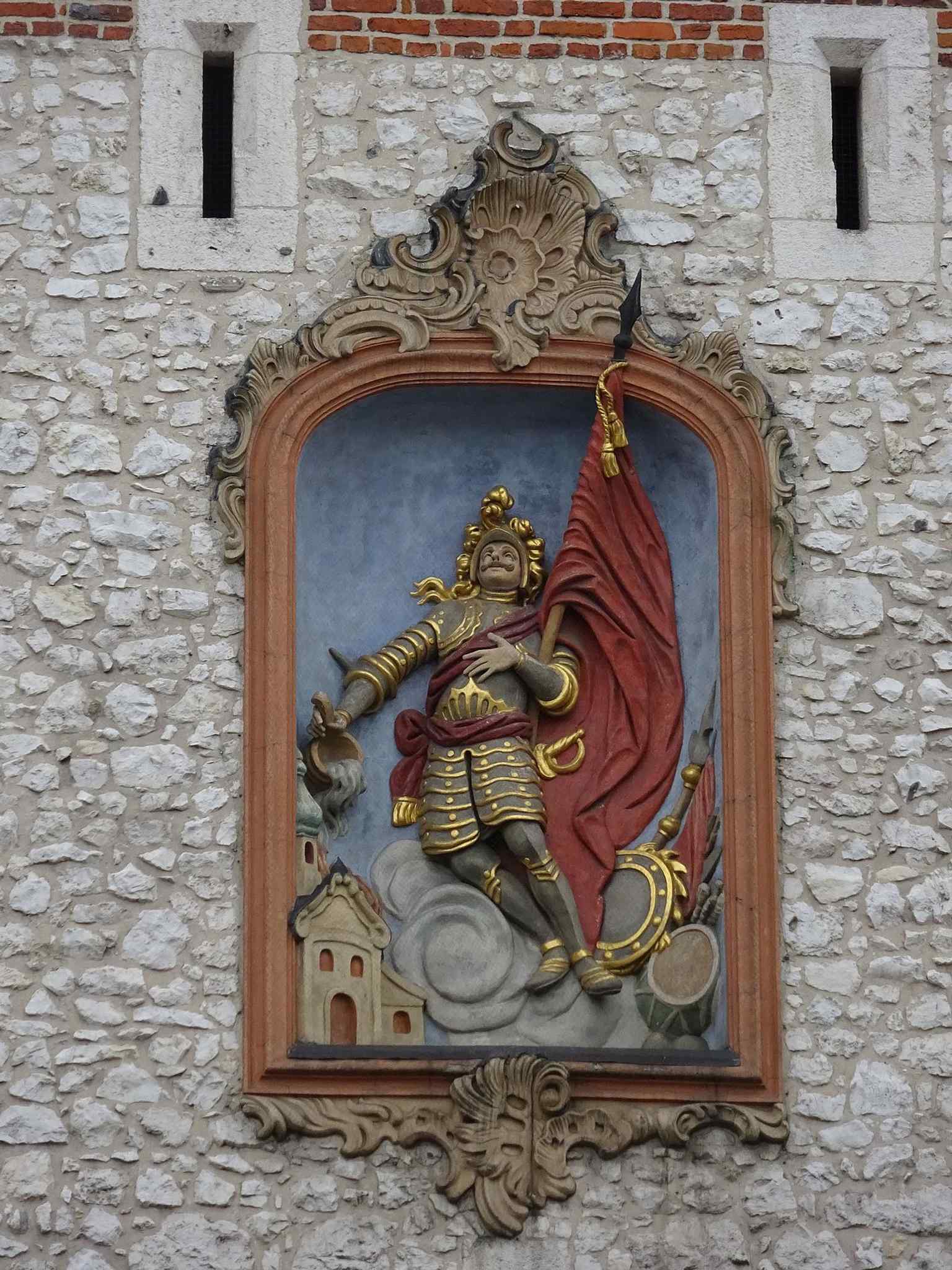
Now give the facade a careful look. On one face, there is Saint Florian in bas-relief, meaning the carving rises only slightly from the surface, like the image is stepping out of the stone. He is putting out a burning building, because this gate promised protection from fire as well as armies. On the other side, not visible from here, a stone eagle appeared in eighteen eighty-two, carved by Zygmunt Langman from a design by Jan Matejko. During the partition era, that eagle turned the gate into a patriotic statement in stone: Poland, still here, thank you very much.

Most visitors miss that this place had a second career. By the sixteen hundreds, a municipal arsenal stood beside it, and later the complex even served as city stables. So this proud military portal grew into something half fortress, half civic utility room. Very Kraków: solemn history out front, practical improvisation around the corner.

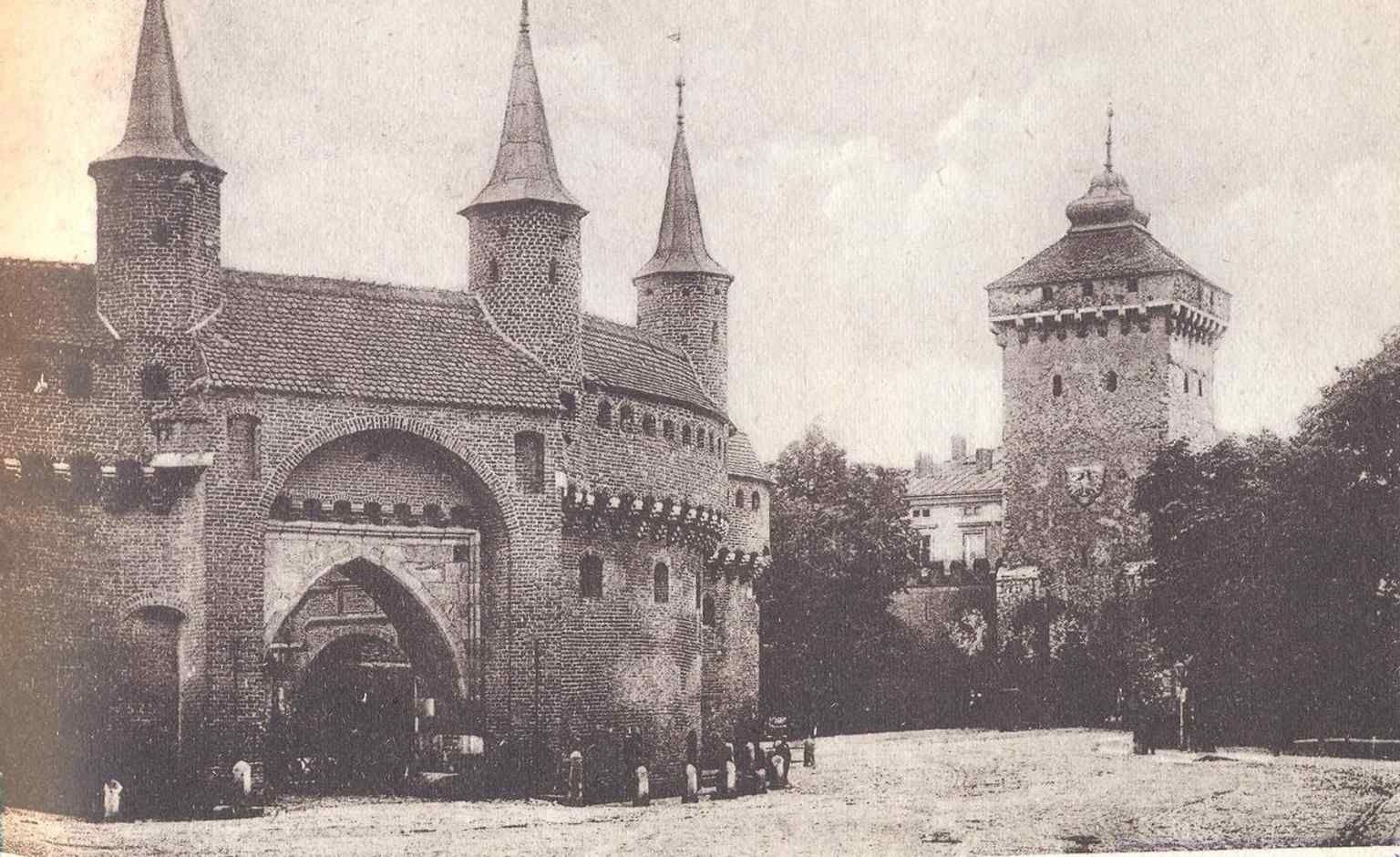
If you want to see how dramatically the setting changed, check the before-and-after image in the app. The moat vanished, the walls shrank back, and the Planty park replaced a grim defensive belt with a calmer green ring.

One man helped save that memory. In December of eighteen sixteen, Professor Feliks Radwański argued to the Senate of the Free City of Kraków that the gate and barbican should stay. His case was gloriously practical: those old walls, he said, blocked nasty northern gusts and windblown filth. Not every great preservation speech sounds noble. Sometimes heritage survives because somebody says, “Leave it there, it keeps the garbage out.”

If you glance at your screen, the interior chapel image shows another side of the gate: inside, travelers once passed a small altar with the Piasek Madonna, stepping from a defensive passage into a shrine-like space. And this was no minor side entrance. The Royal Road began here. Kings, envoys, coronation processions, and even funeral corteges passed through that arch and into the city’s official story.

In a moment, look outward toward the next layer of defense. Kraków never relied on a single doorway, and two minutes ahead the barbican waits like the gate’s heavily armed bodyguard. If you are checking practical details later, the site is generally open from eight A-M to six P-M, and closed on Sundays.
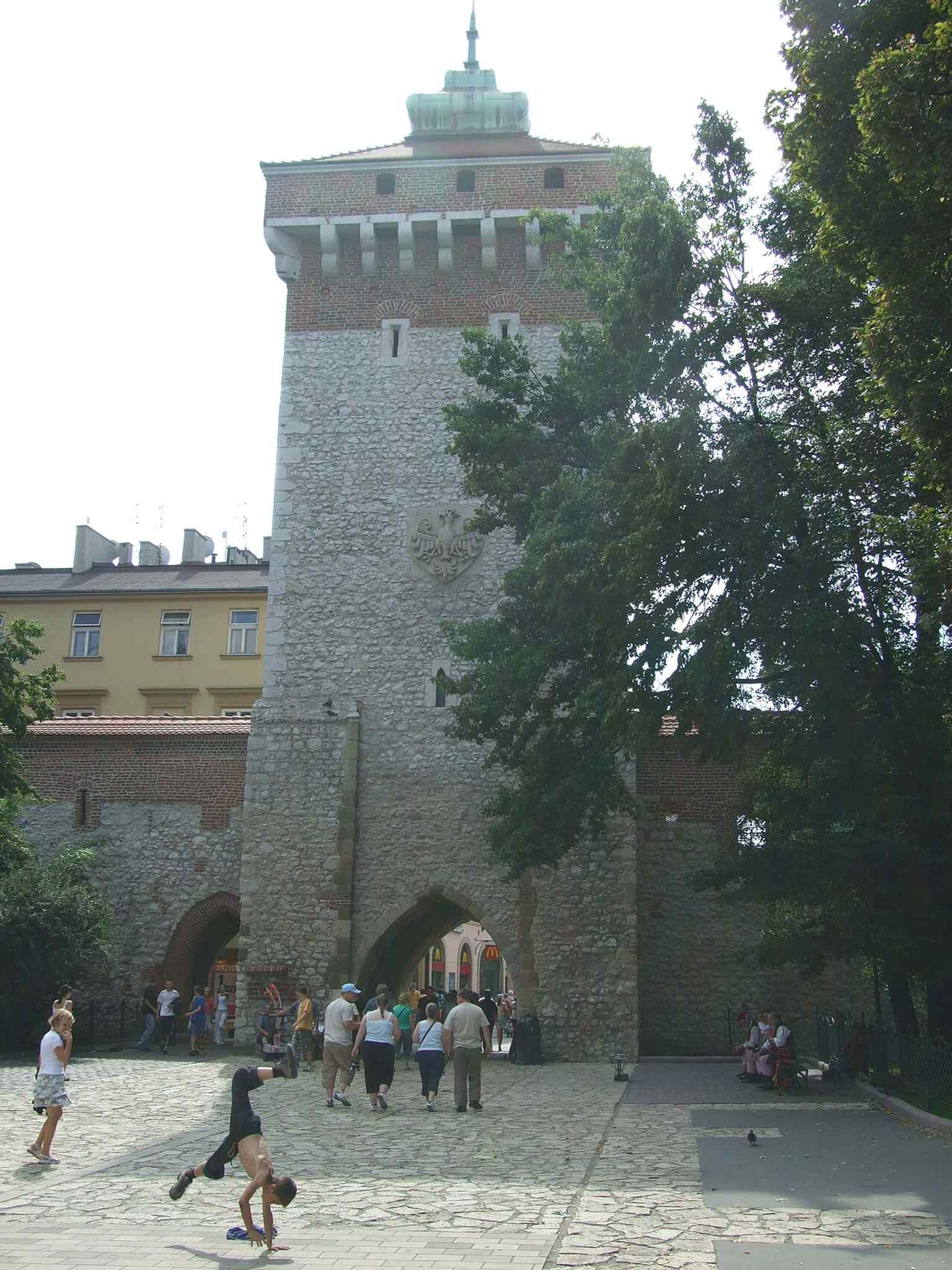
A view from outside the walls that emphasizes St. Florian’s Gate as part of Kraków’s old defensive line.
A view from outside the walls that emphasizes St. Florian’s Gate as part of Kraków’s old defensive line.Photo: Necrothesp, Wikimedia Commons, CC BY-SA 3.0. Cropped & resized.
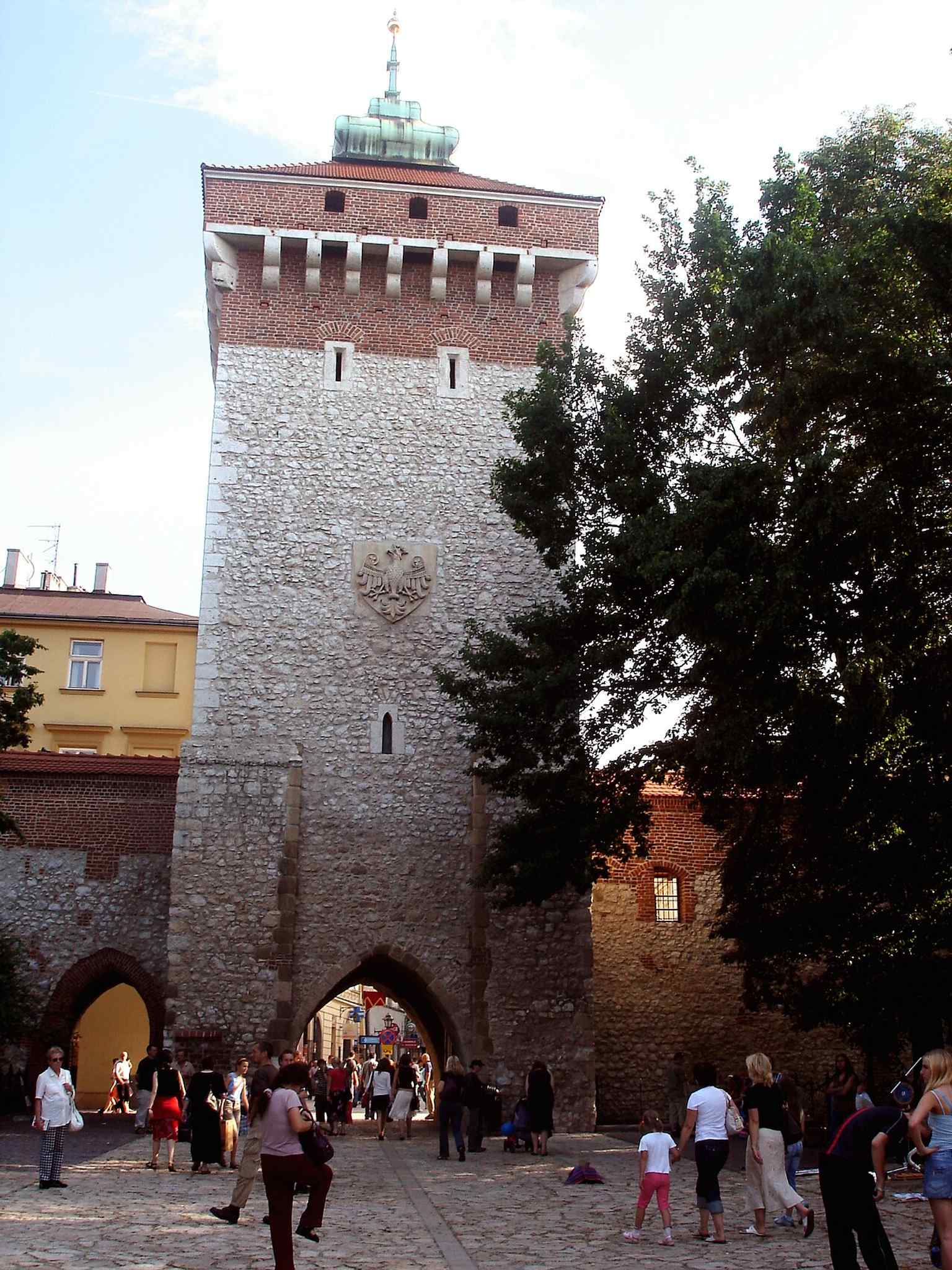
The gate in the heart of Kraków, one of the city’s most famous Gothic landmarks and the start of the Royal Route.
The gate in the heart of Kraków, one of the city’s most famous Gothic landmarks and the start of the Royal Route.Photo: Rj1979, Wikimedia Commons, Public domain. Cropped & resized.
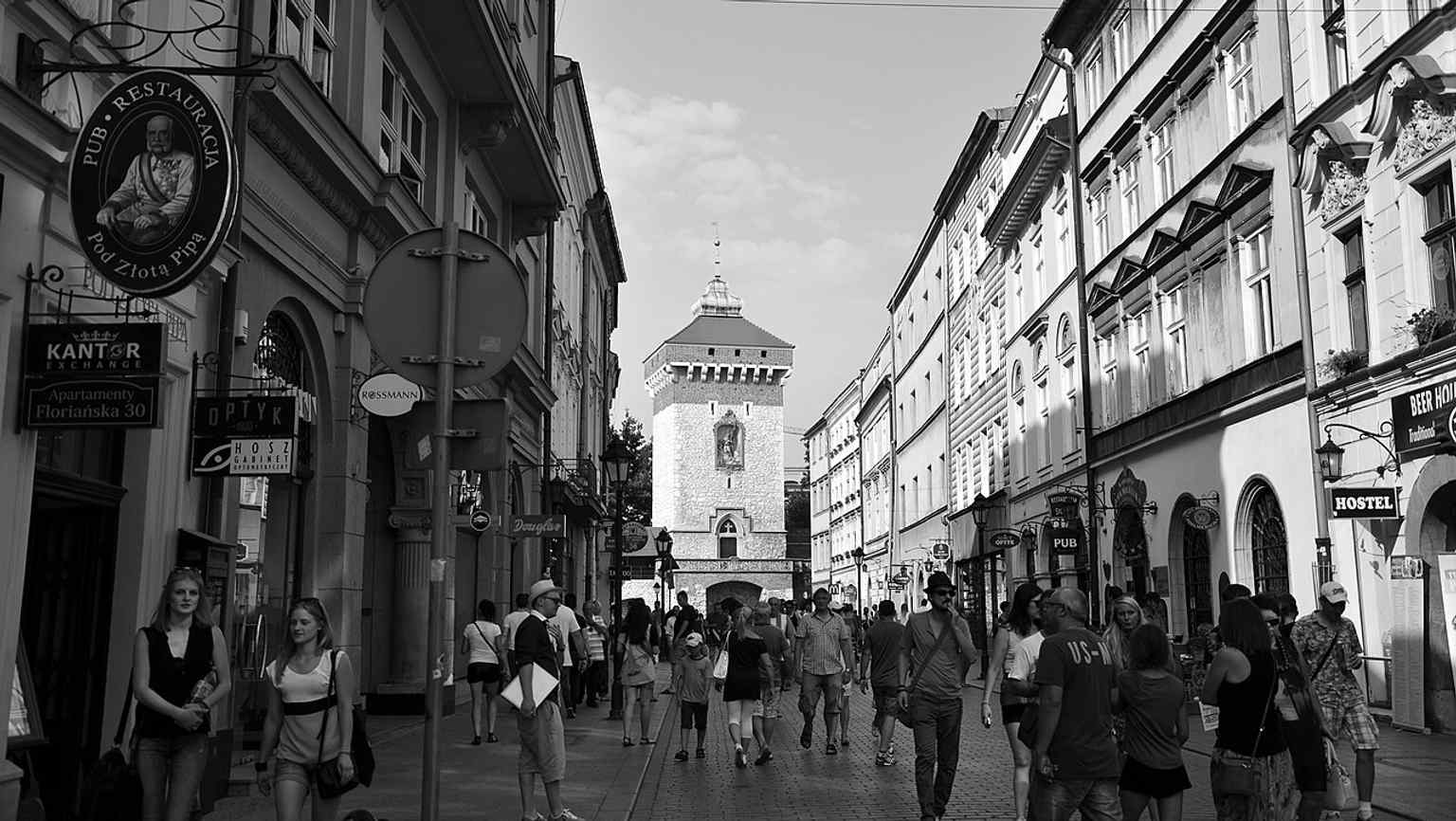
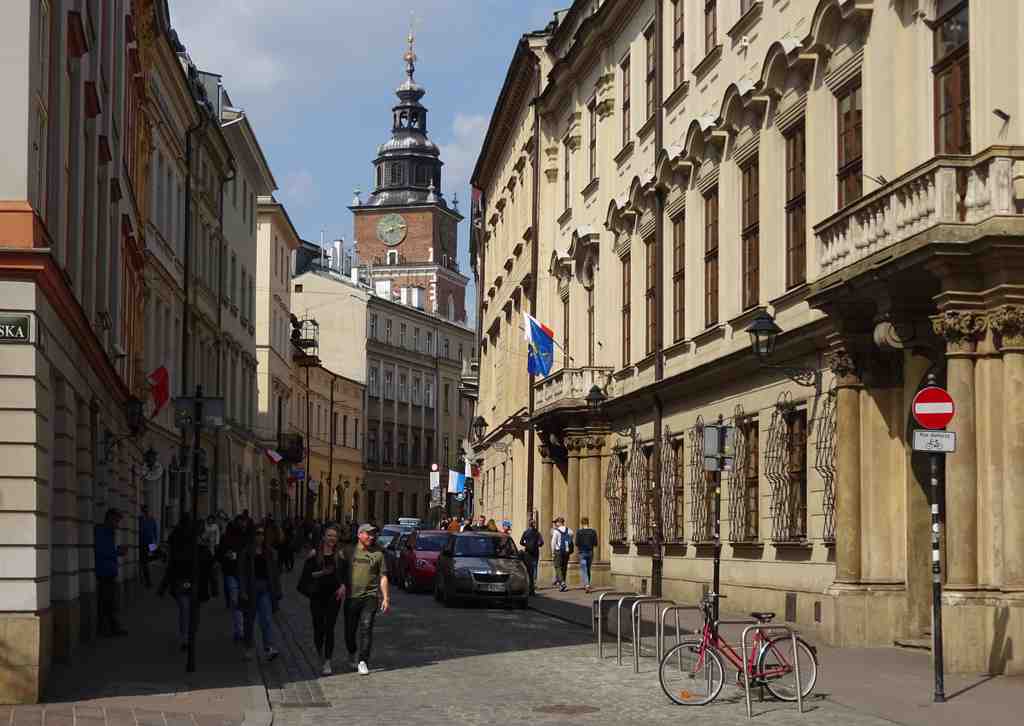
A wider street view that captures the gate as a terminating vista at the north end of Floriańska Street.
A wider street view that captures the gate as a terminating vista at the north end of Floriańska Street.Photo: Silar, Wikimedia Commons, CC BY-SA 4.0. Cropped & resized.
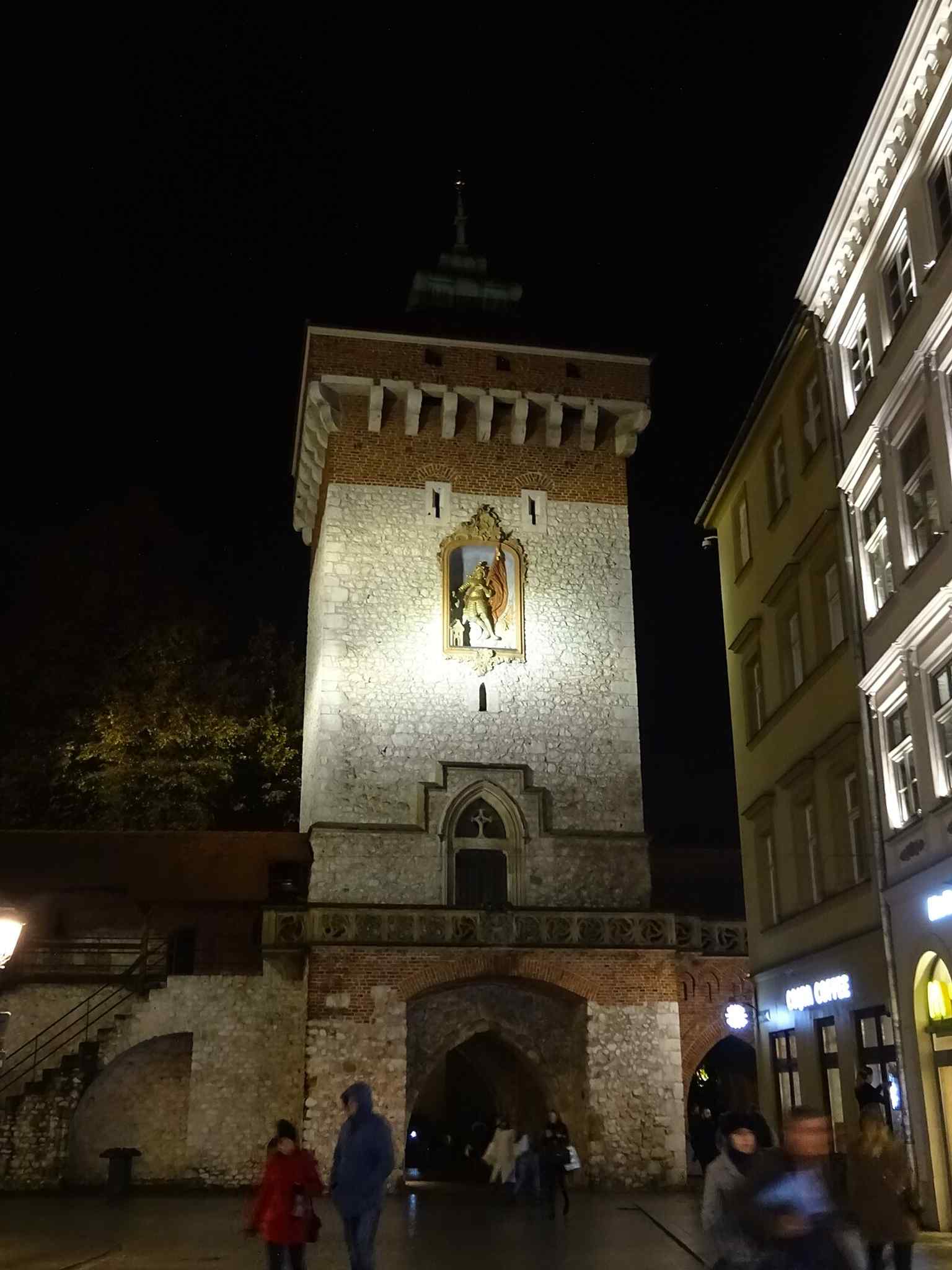
Night lighting gives the tower a dramatic silhouette, highlighting how the medieval gate still anchors the modern city.
Night lighting gives the tower a dramatic silhouette, highlighting how the medieval gate still anchors the modern city.Photo: Mach240390, Wikimedia Commons, CC BY-SA 3.0. Cropped & resized.
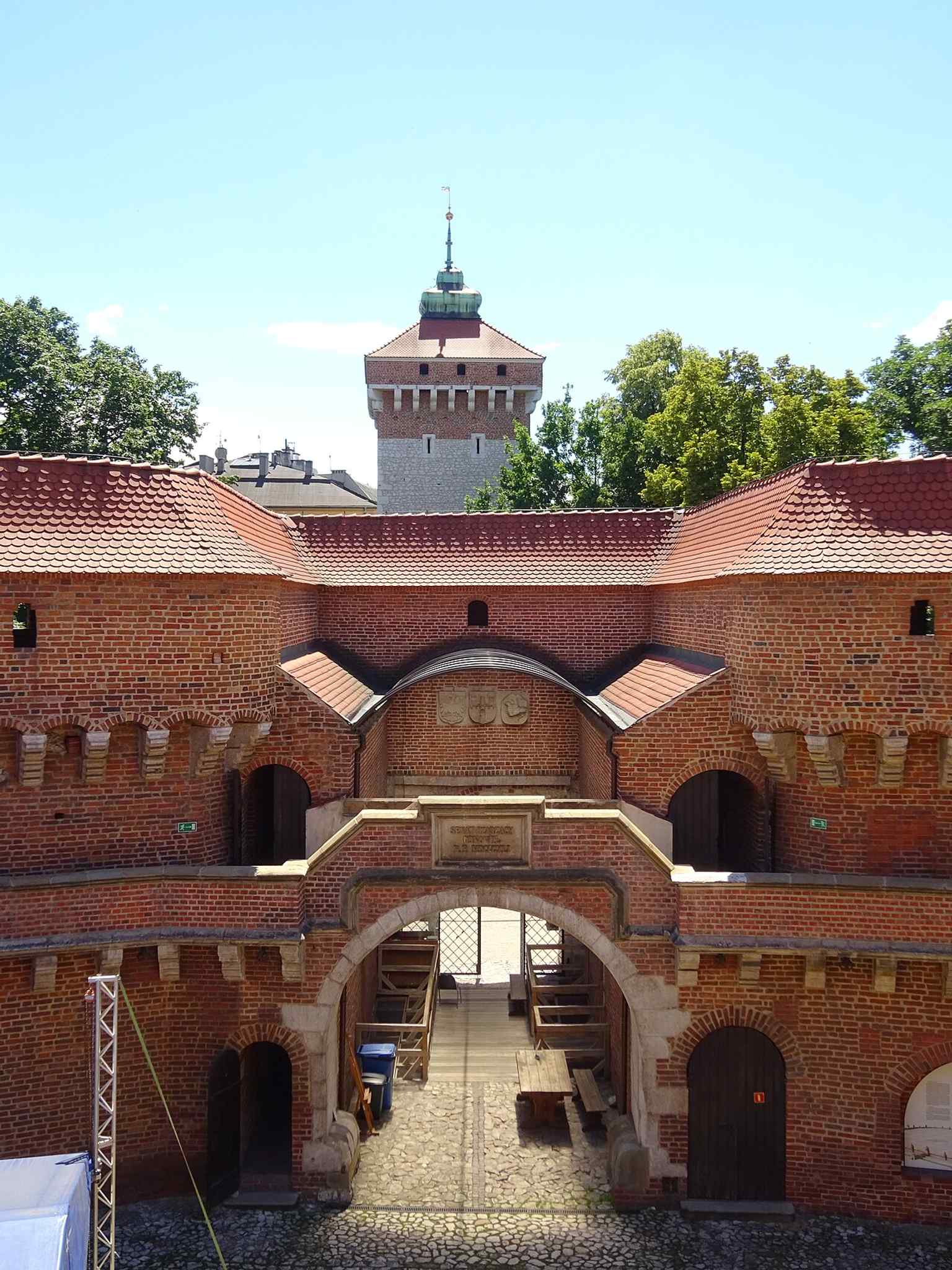
The gate seen from inside the Barbican, recalling the long bridge that once linked these two fortifications across the moat.
The gate seen from inside the Barbican, recalling the long bridge that once linked these two fortifications across the moat.Photo: Mach240390, Wikimedia Commons, CC BY 4.0. Cropped & resized.
A historical image of the Barbican and gate complex, showing the fortified entrance that protected Kraków from attack.
A historical image of the Barbican and gate complex, showing the fortified entrance that protected Kraków from attack.Photo: Unknown authorUnknown author, Wikimedia Commons, Public domain. Cropped & resized.
The north-facing Piast eagle, carved in 1882 from a design by Jan Matejko, turned the gate into a patriotic symbol.
The north-facing Piast eagle, carved in 1882 from a design by Jan Matejko, turned the gate into a patriotic symbol.Photo: Mach240390, Wikimedia Commons, CC BY 4.0. Cropped & resized.
St. Florian extinguishing a burning building on the south side — a vivid reminder that the gate symbolized protection from fire as well as war.
St. Florian extinguishing a burning building on the south side — a vivid reminder that the gate symbolized protection from fire as well as war.Photo: Mach240390, Wikimedia Commons, CC BY 4.0. Cropped & resized.
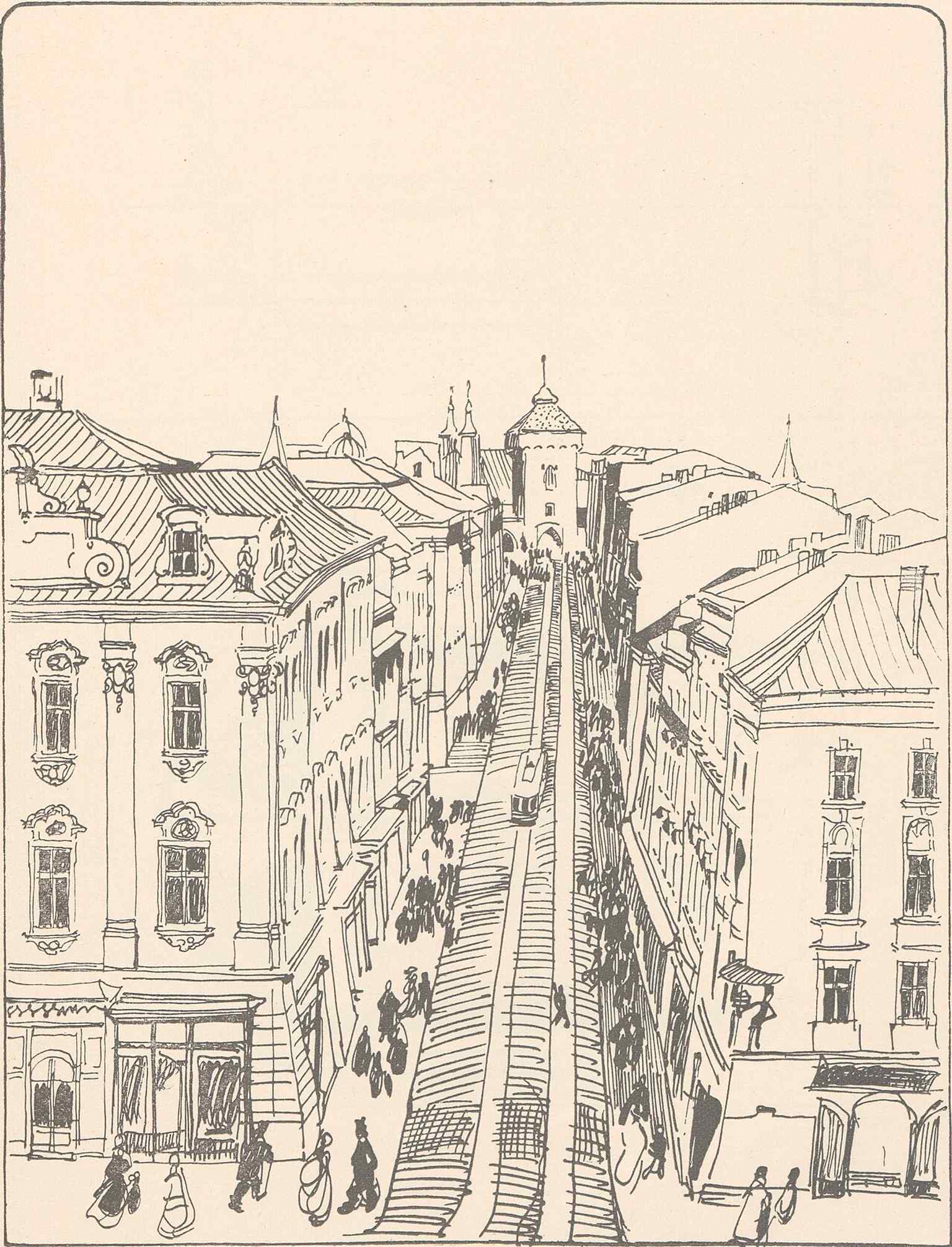
A 1908 printed illustration showing how St. Florian’s Gate had already become a canonical image of Kraków.
A 1908 printed illustration showing how St. Florian’s Gate had already become a canonical image of Kraków.Photo: Franciszek Mączyński, Wikimedia Commons, Public domain. Cropped & resized.
arrow_back Retour à Visite audio de Cracovie : énigmes, art et trésors du cœur médiéval
Adoré par les voyageurs du monde entier

Des milliers de tours commencés.
Plein d'avis.

4,8 sur l'App Store et Google Play. En voici quelques-uns qu'on adore relire.

starstarstarstarstar
C'était un bon moyen de découvrir Brighton sans se sentir comme un touriste. La narration était profonde et contextuelle, sans en faire trop.
starstarstarstarstar
J'ai commencé ce tour avec un croissant dans une main et zéro attente. L'application vibre tout simplement avec vous, pas de pression, juste vous, vos écouteurs et quelques histoires sympas.
download Télécharger l'appli

Mets tes écouteurs.
Sors te promener.

Gratuit à télécharger. Des tours dans chaque ville. Commence en 60 secondes — sans compte, sans carte.

Download on the App StoreGet it on Google Play
starstarstarstarstar_half
4.8
AudaTours app icon
headphones
~ 4 min avant ton premier tour
public
1 000+ villes dans le monde
all_inclusive
AudaTours
Unlimited

Chaque visite. Chaque ville. Un abonnement.

3101 tours2271 villes138 pays50+ langues