
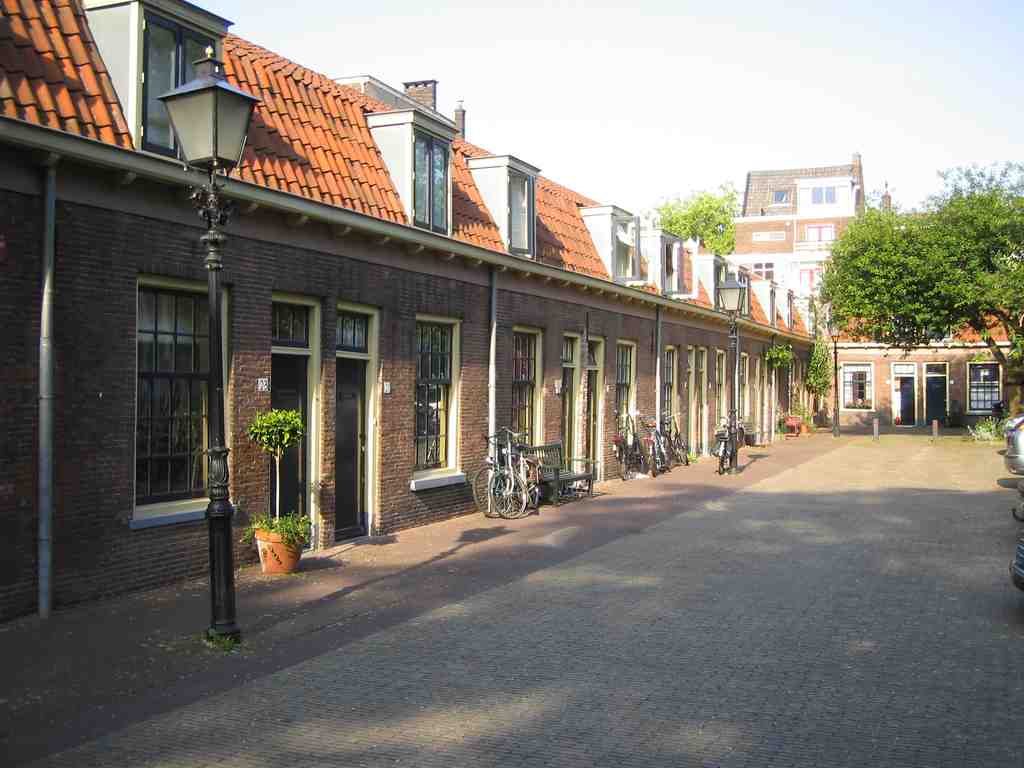
On your right, you will see a long row of uniform dark brick houses topped with a continuous, sloping red tiled roof dotted with dormer windows, all watched over by tall, vintage iron streetlamps. This is De Zeven Steegjes, or the Seven Alleys. Back in eighteen forty-two, the Catholic Poor Board hired two architects to build simple housing here for large families relying on charity.
At the time, cities were dangerously overcrowded, and the terrifying threat of cholera hung in the air. To fight the deadly disease, the government banned dead-end slums. They demanded straight streets so the wind could sweep right through and clear out the bad air.
It might sound surprising, but these homes were considered far ahead of their time, even though the Poor Board built them without kitchens or private toilets! It was not until nineteen fifty-two that the city finally replaced the outdoor shared latrines with actual indoor toilets.
For decades, politicians constantly debated bulldozing the whole neighborhood because the tiny houses seemed too outdated. Thankfully, they chose to renovate instead. Today, one hundred sixty-six of these monumental homes are left, full of life and a deeply connected community that even throws a massive three-day street festival every August.
This little working-class village survived the centuries and stands proudly as a testament to the resilient spirit of everyday people. Enjoy the quiet charm of these streets. When you feel ready, we can head to the next stop.




