
Visite audio de Pérouse : Échos étrusques et passages palatiaux
Le sang a autrefois taché ces pierres médiévales alors que la fortune de Pérouse dépendait de murmures, de rébellions et d'actes clandestins sous ses grandes façades. Au-delà des piazzas familières se trouve une ville où la beauté cache des secrets et où chaque couloir silencieux dissimule une autre histoire. Cette visite audio autoguidée est votre passeport pour les drames les plus intimes de Pérouse. Allez au-delà des cartes postales pour découvrir des rébellions sous les flèches, de l'art qui a failli disparaître à jamais, et des bibliothèques qui ont enfermé des connaissances interdites. Y a-t-il vraiment eu un complot perfide ourdi dans les cryptes obscures de la Cathédrale ? Pourquoi un tableau de la Galerie Nationale a-t-il suscité l'indignation et la censure ? Qui a tout risqué pour introduire des volumes scandaleux dans les voûtes de la Bibliothèque Augusta ? Suivez des évasions audacieuses et des conspirations silencieuses en traversant des arches anciennes et des places ensoleillées. Chaque pas révèle le pouls de la ville – riche en rivalités, en art et en intrigues durables. Osez découvrir ce qui se cache derrière les portes dorées de Pérouse. Commencez votre voyage maintenant.
Aperçu du tour
À propos de ce tour
- scheduleDurée 40–60 minsAllez à votre propre rythme
- straightenParcours à pied de 2.8 kmSuivez le sentier guidé
- location_on
- wifi_offFonctionne hors ligneTéléchargez une fois, utilisez n'importe où
- all_inclusiveAccès à vieRéécoutez n'importe quand, pour toujours
- location_onCommence à Puits étrusque
Arrêts de ce tour
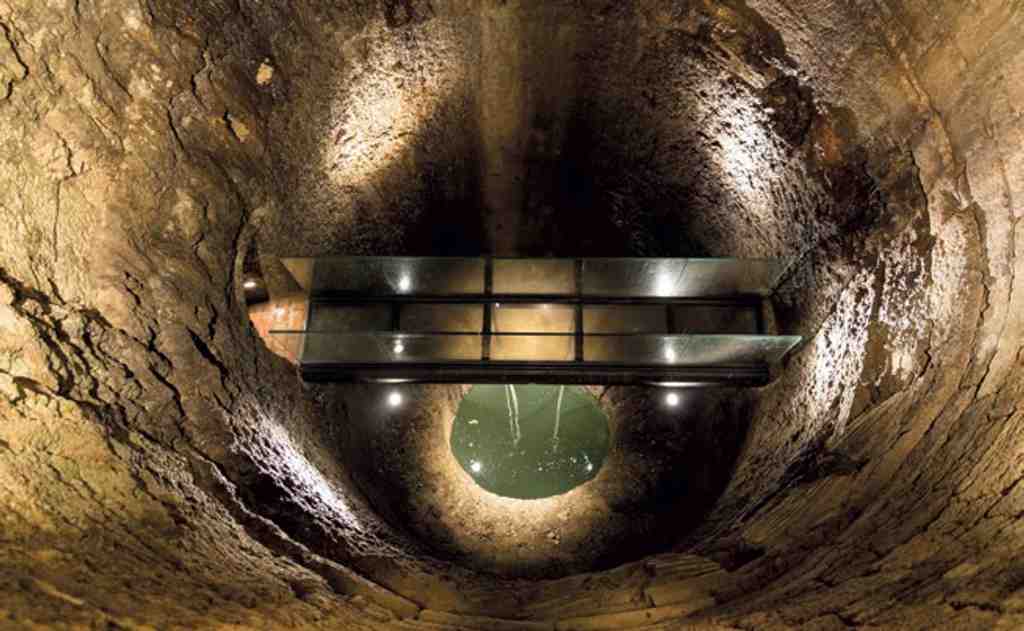
To spot the Etruscan Well, look for a deep, stone-lined cylindrical opening near number 18 in Piazza Danti, next to Palazzo Sorbello - peer down into its depths if you dare, and…Lire plusAfficher moins
To spot the Etruscan Well, look for a deep, stone-lined cylindrical opening near number 18 in Piazza Danti, next to Palazzo Sorbello - peer down into its depths if you dare, and you’ll catch a glimpse of water far below! Welcome to the Etruscan Well, the city’s ancient answer to the ultimate thirst - and as you stand here, imagine being greeted not by the buzz of tourists, but by the distant chatter of people jostling for fresh water nearly 2,300 years ago. Just steps away from the highest point in Perugia, in the shadow of what was once the city’s powerful acropolis, this marvel was born from pure necessity in the third century BCE. Built when the Etruscans ruled Perugia, the well provided water for the growing city. You could say it was Perugia’s own “wet bar” - just without the cocktails! Now, close your eyes for a moment (don’t fall in!) and picture ancient hands chipping away at the earth and rock, lowering stone after stone, crafting a shaft nearly 37 meters deep. This cylindrical tunnel, dug into layers of clay and rounded pebbles, stretches down like a giant drinking straw for the city. Walk further around and the structure changes: the first few meters beneath your shoes start as a simple square, but then the well bellies outward, forming a vast water chamber about five and a half meters wide. The top is ringed with massive blocks of travertine, so closely stacked you couldn’t squeeze a coin between them, and above, an ingenious double-beamed stone roof - not a nail or drop of cement in sight. Craftsmen from the 1400s to the Renaissance came after, adding their own repairs as time and occasional disaster demanded - sometimes not so gracefully, as one unlucky chunk of railing once tumbled all the way to the bottom! Now, let’s add a little drama - the well was tough, but it wasn’t invincible. Medieval townsfolk would lower their buckets, scraping neat grooves into the stone with years of repetition. And then, in 1768, the aristocrats got fancy with a new iron pulley cover, etching noble family crests right into it. Someone must have said, “If you’re going to pull up water, do it with style!” That’s some high-class thirst. Over centuries, Palazzo Sorbello grew up all around the well, the mansion you see behind you. Originally built by Niccolò Montemelini on the bones of medieval towers and homes, it was part Etruscan, part Renaissance, part soap opera-passing from one notable family to another. In 1780, Marquis Uguccione III Bourbon di Sorbello snapped it up, giving the family name to the well. But in a moment of rare neighborly kindness, he made sure everyone in the square could haul up water, no matter how fancy their title. Imagine the daily parade of locals crossing the piazza, buckets in hand - all thanks to a generous marquis who must have hated waiting in line at the public fountains. But the well wasn’t only about utility. In the 1960s, scholars took a new interest. On the instructions of Uguccione V Ranieri Bourbon di Sorbello-quite a name for a man of history!-Perugia’s legendary professor Filippo Magi descended into its depths, finally proving what locals had whispered for centuries: this was one of the greatest feats of Etruscan engineering ever discovered. Suddenly, what was once just a neighborhood necessity became an archaeological superstar. Imagine the water below you now - at full capacity, this well could hold more than 424,000 liters, always fed by three bubbling springs. It’s usually quiet here today, except for the occasional plop of water droplets breaking the stillness. But in 1996, the well was drained for photography: probably the first time in over two millennia anyone saw its bones dry! Since 2016, thanks to the Ranieri di Sorbello Foundation, those ancient tunnels and the surrounding palazzo have been reborn as a museum. If you’re brave enough, you can descend inside - just remember, the Etruscans built it to last, so you’re exploring a living piece of history, still quenching the city’s thirst after all these years. Who’s thirsty for adventure?
Ouvrir la page dédiée →Look ahead for a huge, broad stone façade with dramatic stripes, a grand baroque doorway, and a staircase leading up to tall crimson wooden doors-if you see a building that looks…Lire plusAfficher moins
Look ahead for a huge, broad stone façade with dramatic stripes, a grand baroque doorway, and a staircase leading up to tall crimson wooden doors-if you see a building that looks a bit unfinished in the upper part, you’ve found the Cathedral of San Lorenzo! Now, let’s imagine you’re standing here centuries ago-maybe with a sandwich in one hand, nervously hoping you don’t drop crumbs on sacred ground-because right before you is Perugia’s mighty Cathedral of San Lorenzo, the city’s spiritual heartbeat and a patchwork quilt of centuries-old stories. Its journey began all the way back when Perugia’s bishops, tired of moving their cathedral around like a lost set of car keys, finally anchored it right here above the ruins of an ancient Etrusco-Roman forum. Construction began in 1345, thanks to Fra Bevignate and a city eager to have a cathedral as grand as its ambition, but progress stalled almost as often as my New Year’s resolutions. Builders kept at it for 145 years, completing the main church in 1490, consecrating it in 1569, and still tinkering with the design well into the 17th century. If you notice the chunky brick top and geometric marble patterns down below-good eye! That striped marble trim was supposed to cover the whole cathedral, but... well, they kind of ran out of marble and enthusiasm. The side you’re facing is actually the flank, not the front, peering grandly over the city’s main piazza, right next to the Fontana Maggiore and Loggia di Braccio. Now, under the Loggia di Braccio-built in 1423 for the warlord Braccio da Montone-you can spot crumbling Roman walls and ancient market measures scratched into the stone. In medieval times, the justice stone outside was used to make a big public announcement: “We’ve canceled all public debts!” If only credit card companies were so forgiving. The staircase before you, topped by the bronze statue of Pope Julius III, is a symbol of gratitude from citizens when their local government returned after being swept away by a previous pope. Here, the sounds of city life and worship would echo: bells, footsteps on stone, and-if you lean in-just maybe the angry grumble of a peasant over tax hikes. Inside, the vast nave unfolds like a theater, with three aisles separated by octagonal pillars, and ceilings soaring so high you’d believe angels need an elevator. Glance up at the painted vaults, the golden corkscrews of 18th-century decoration, and the dazzling floor in colored marble laid under the orders of a local bishop who later became Pope Leo XIII. The walls are a who’s who of painters: Appiani, Mariotti, Barocci, and more. The right-side chapel proudly displays one of the jewels of European Renaissance painting-Barocci’s “Deposition from the Cross”-a work so powerful it changed the course of art in the region. Look left after entering for the Chapel of the Holy Ring, where legend says a sneaky German monk once “liberated” Mary’s wedding ring from another city, delivering it here as if he’d found it under a sofa. The ring rests in a fortified reliquary, only revealed twice a year-with no fewer than fourteen locks! And if music is more your thing, the mighty pipe organ-newer, but no less majestic-fills the nave with waves of sound during services, upgraded just a decade ago and boasting over 5,000 pipes. Imagine the thunder of that music shaking dust from the ancient rafters. Down below, the museum holds Renaissance treasures, mysterious relics, and manuscripts so old they’d make your grandmother’s recipe cards look brand new. The old chapter house once even hosted papal elections-five conclaves took place beneath these very stones, including the one where a pope famously decided, “You know what? I quit.” Now that’s historical drama. So, whether you’re dazzled by the unfinished beauty, haunted by tales of saints, or just here for the view, the Cathedral of San Lorenzo is a masterpiece of faith, art, and-most of all-human persistence. Ready for your next stop, or shall we search for that holy ring together? I’ll keep my hands clean, just in case.
Ouvrir la page dédiée →Look for a grand stone doorway with deep arches and carved figures above a large wooden door-if you see three statues right over your head as you approach, you’ve found the…Lire plusAfficher moins
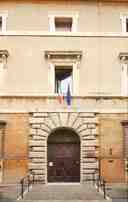
Look for a grand stone doorway with deep arches and carved figures above a large wooden door-if you see three statues right over your head as you approach, you’ve found the entrance to the National Gallery of Umbria. Now, let’s step into a place where art and history have been brewing together longer than Italian espresso! Imagine the year is 1570. Artists in funny hats are sketching away in the Convent of Montemorcino, grumbling about having to share their favorite pencils. Here, the earliest collections of drawings and paintings are coming together, sparking what will someday become this grand gallery. Of course, history loves a little drama-so a wave of religious suppressions hits Umbria, first from Napoleon and then the Kingdom of Italy. Suddenly, precious artworks start flooding the State’s property, rescued from monasteries and churches. Imagine the shuffle and sound of footsteps on stone as priceless paintings are lugged up the stairs and across the city. By the 1800s, there’s so much artwork piling up that the city needs a new spot to put it all-so, in 1878, this entire treasure trove is hauled up to the third floor of the Palazzo dei Priori, the very building you’re next to now. Over the years, this gallery grew with donations, purchases, and just a little help from the lottery-yes, even back then, the lottery did more than just make people dream! If you walk inside, you’d find an extraordinary journey, room by room, through centuries of Umbrian art. The earliest galleries are full of medieval wonders-wooden crucifixes, marble panels, and those moody, golden Madonnas. Step around the corner and you bump into the Renaissance, with works by the legendary Beato Angelico and Benozzo Gozzoli. There’s a painting here by Piero della Francesca of Saint Anthony, so magnificent that even the gallery guards whisper about secret messages hidden in the brushstrokes. Ever heard of Perugino? He was the teacher of Raphael, and right here you can see his masterpieces-from the fresh-faced youth all the way to his mature works, including the Madonna della Consolazione and the famed Polittico di Sant’Agostino. And just when you think you’ve seen every saint, madonna, and cherub imaginable, along comes Pinturicchio, Perugino’s buddy, with his gigantic altarpieces that look like they could launch into song at any moment. The collection doesn’t stop with the Renaissance. The Martinelli Collection brings in the drama and flash of Baroque art-think Gian Lorenzo Bernini and Mattia Preti, swirling drapes and wild, staring eyes! In every gallery, you’ll find a new surprise: glimmering silver chalices, carved ivories, and Perugia’s famous textiles, all rich with color and age. You might even spot paintings that fled the city during Napoleon’s wild treasure hunt and eventually reunited with their Umbrian siblings-pieces like these have more travel stories than the average tourist. In the last galleries, the century turns, and suddenly you’re face-to-face with Rococo and Neoclassical works-can you imagine painters struggling with powdered wigs while painting dramatic scenes like the Partenza di Rinaldo? Not easy to keep the hair out of the paint! This museum isn’t just a building; it’s a living legend of Perugia’s passion for beauty and innovation, a temple where every stone, every frame, and every faded tapestry whispers tales to those who stand and listen. So, linger a moment by the great doorway, and let the echoes of centuries of art and history swirl around you. If these walls could speak, they’d probably tell jokes about all the artists who forgot to sign their paintings!
Ouvrir la page dédiée →
Afficher 9 arrêts de plusAfficher moins d'arrêtsexpand_moreexpand_less
To spot the Palace of the Province and the Prefecture, look for the long, elegant facade made of alternating bands of pale and pinkish stone, marked by its grand, arched portico…Lire plusAfficher moins
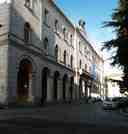
To spot the Palace of the Province and the Prefecture, look for the long, elegant facade made of alternating bands of pale and pinkish stone, marked by its grand, arched portico running along the street and the statue of a griffin perched above the central entrance. Now, pause for a moment in front of this grand palace and let your imagination travel back to a time when Perugia was buzzing with controversy, rivalry, and ambition-yes, all over a building! The Palace of the Province and the Prefecture stands here today because something formidable once stood beneath your feet: the mighty Rocca Paolina, a fortress so massive it took a revolution and a wrecking crew to bring it down. After the old fortress was demolished, Perugia was left with a gaping hole in its heart-both literally and symbolically. So, what do you do when you have a giant crater in your city center? You build something big, bold, and, in this case, rather controversial. In the late 1860s, the city called in Alessandro Arienti, a Milanese engineer who had only recently earned his Perugian stripes, to design its replacement. Why bring in an outsider? Let’s just say local architects had been entangled in so many arguments, you’d think they were auditioning for an opera. Arienti, inspired by the spirit of the Italian unification, looked north for his ideas, mixing Lombard forms with his own eclectic tastes and the delicate rose-and-white stones of Umbria. He even took a stand against the Roman style favored by the papal regime-after all, Perugia wanted a future, not a reminder of old rulers! At the time, Arienti’s vision was met with more eye rolls than applause. The palace, some muttered, was too low for its bulk, too odd for its neighbors, and didn’t fit the medieval city at all. Local architects like Calderini and Biscarini must have felt like the city’s best cake recipe had been snatched from their hands. Still, Arienti had the last laugh: his design, with those porticos running like ribbon around the building and its airy, open arches, ended up being practical, cost-effective, and-over time-well-loved. If you look closely, the building’s facades aren’t just pretty faces-they look out to the north, south, east, and west, equally grand on all four sides. The main entrance behind you opens onto the piazza, and if you were rich and powerful enough to stroll the rear, you’d find a balcony hanging above a view that inspired the poet Giosuè Carducci to write one of his great works, “Il canto dell’amore.” Not bad for a back porch! Notice how the arches at the base recall Roman architecture, while the pale-pink and white stripes chase sunlight across the stone. Above you, a solemn griffin stares out from the center, wings wide-a symbol not just of the city, but of the whole province, which once reached as far as Rieti and Sabina. Inside, the palace is a treasure chest of stories. Six local painters startled visitors in the 1870s with rooms filled with glowing color, gold, and heroic tales of Italian unity. The Council Hall, with its dazzling stained glass and allegorical women representing towns from Perugia to Spoleto and Rieti, is so striking it’s been called the “neo-Venetian style”-think of it as a Renaissance party thrown by people who’d just discovered Italy was one country at last. The walls are covered with images celebrating not just kings and queens but local heroes, the kind who might have sat right here during the city’s most passionate moments. Other rooms are filled with painted “tapestries” bordered by mock velvet and gold, scenes of artists, scholars, and proud townsfolk who made Perugia shine. And for those who prefer “name-dropping” rather than sightseeing, you’ll discover busts of famous figures from the Italian Risorgimento-but if your name isn’t on a marble pedestal, don’t take it personally. Nowadays, beneath your feet, the CERP exhibition center is tucked into the old fortress ruins. Every so often, you might catch the hum of a cultural event or art show from below. So, as you marvel at the palace, remember: this is a building built on the bones of the past, born from rivalry, shaped by ambition, and brought to life by artists with a passion for unity and hope. Not bad for a place that started out as just “the new building” with no purpose, isn’t it? Curious about the architecture, interior decoration or the straka-coppa collection? Don't hesitate to reach out in the chat section for additional details.
Ouvrir la page dédiée →To spot the Exchange College, or Nobile Collegio del Cambio, look for the elegant stone façade right in front of you, marked by an arched wooden door and a blue sign with golden…Lire plusAfficher moins
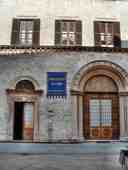
To spot the Exchange College, or Nobile Collegio del Cambio, look for the elegant stone façade right in front of you, marked by an arched wooden door and a blue sign with golden letters above the entrance. Right here in the heart of Perugia, you've just arrived at a portal to intrigue, beauty, and a dash of banking drama-welcome to the Exchange College! Imagine it’s the 1400s, and this isn’t just any old building, but the beating heart of the city’s powerful money changers’ guild-the “Arte del Cambio.” These early bankers weren’t just counting coins; they were shaping the city. Between 1452 and 1457, they earned the right to set up shop in the Palace of the Priors, marking their territory with a striking symbol-a griffin perched on a strongbox. You’ll spot this fierce creature everywhere, as if it’s daring anyone to mess with Perugia’s money! As you step up to the door, framed in grand arches designed by Lodovico di Antonibo, try to picture the city buzzing with merchants anxious to check their coins are the real deal. Inside, the air would have been electric with deals, debate, and maybe the odd heated argument when the numbers didn’t quite add up. But wait-walk a bit further in your imagination and you reach the breathtaking Audience Hall, where Pietro Perugino, the Renaissance superstar, painted vivid frescoes across the walls. This was more than a meeting room; it was a kind of Renaissance selfie spot for Perugino’s greatest hits, complete with justice carried out under magnificent painted vaults. Turn your mind’s eye right and you’ll spy the Chapel of St. John the Baptist, splashed in color and gold, designed to brighten up even the dreariest medieval day. The walls shimmered, not just to flaunt how rich the guild was, but to chase away the shadowy gloom-because, plot twist: there are no windows. Not to be outdone, the spaces are packed with carved wood benches and intricate decorations. These bankers liked a little bling with their balance sheets! If you think all that’s impressive, let’s talk about their collection-over 550 monetary weights! These were used to verify that every gold or silver coin wasn’t just shiny, but really worth its weight. In an age before credit cards, these tools were as powerful as a modern PIN code. And hey, in 2022, the Exchange College even hosted movie magic-a commercial that brought to life characters from Perugino’s frescoes! So whether you’re a lover of art, a fan of finance, or just like a story with a griffin on a treasure chest, this place has a little bit of everything-fortune, fame, and a splash of Renaissance rivalry. To delve deeper into the description, the collection of coin weights of the college of exchange or the curiosity, simply drop your query in the chat section and I'll provide more information.
Ouvrir la page dédiée →To spot the Tower of the Sciri, just look straight ahead and up-you can’t miss the pale, perfectly rectangular stone tower soaring above the medieval rooftops, standing much…Lire plusAfficher moins
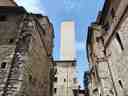
To spot the Tower of the Sciri, just look straight ahead and up-you can’t miss the pale, perfectly rectangular stone tower soaring above the medieval rooftops, standing much taller and brighter than anything around it. Welcome to the Tower of the Sciri, the only medieval tower in Perugia to survive almost untouched-like the last tall breadstick in a room of hungry Italians. Imagine the 13th century: the bustling Porta Santa Susanna quarter, filled with clangs, shouts, and the echo of footsteps. Above it all, the tower rises-a solid 42 meters of smooth white limestone blocks that almost seem to glow, even on the cloudiest of days. Hundreds of years ago, Perugia was called “the city of towers” because these impressive stone spikes dotted the skyline, each one built by noble families to prove their power or, of course, to keep pesky rivals at bay. It’s not all about prestige though; the Oddi family, the original owners, may have had a little nostalgia. After losing their castle at Pierle on the border with Tuscany-maybe not their finest hour-they seem to have built this tower to remind themselves (and everyone else) of their lost stronghold. If you look very closely at the base, there’s a clue in stone: an old coat of arms with a rooster’s claw on top. That’s the Sciri family symbol, proudly showing off their takeover after the Oddi were booted out in a dramatic showdown with the Baglioni clan in the late 1400s. And just above it, a little tile with a beautiful Madonna and Child, Jesus gently holding a goldfinch, almost as if to say: “Even fortress-builders need a little grace." In the tower’s later life, it swapped sword fights for silent prayers: in the 1600s, the last Sciri left and the place was handed over to the pious Suor Lucia, who opened a shelter for orphaned girls. The city called these religious women “becchette”-and the tower gained a new nickname: the Tower of the Little Beaks! Seriously, medieval Perugia had a sense of humor. Over time, other nuns moved in, adding generations of whispered secrets to its walls. Fast forward to today, and after a heroic restoration effort powered by European funding (and perhaps a few tired construction workers), this sky-piercing survivor is still standing, welcoming dreamers, historians, and the occasional lost tourist-like you-into the heart of Perugia’s wild, proud past.
Ouvrir la page dédiée →Look straight ahead for a tall, light-colored stone church with a beautifully patterned facade and a big round rose window-the great door, framed by arches, makes it impossible to…Lire plusAfficher moins
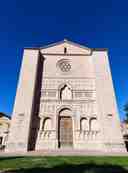
Look straight ahead for a tall, light-colored stone church with a beautifully patterned facade and a big round rose window-the great door, framed by arches, makes it impossible to miss! Welcome, traveler, to one of the most dramatic survivors in Perugia’s story-the Church of San Francesco al Prato. Imagine a field where vegetables grew and farmers worked the soil, and now, standing tall in the sunlight, is this striking church, whose face is elegantly checkered with pink and white stone and crowned by a rose window looking like a giant wheel of lace. But don't let its peaceful look fool you-this church has weathered more drama than a soap opera. Constructed back in the 1200s as one of the very first big Franciscan churches after St. Francis himself passed, it was a magnet for Perugia's powerful families, famous scholars, and even legendary warriors who chose this place as their eternal VIP lounge (let’s call it the “Pantheon” of Perugia). The soil beneath your feet once held bits of an even older church-St. Susanna-from the 1100s! The Franciscans cleverly stacked their new church right above the old, just like the twin basilicas in Assisi. Hidden underneath, there was even a secret crypt, filled with relics and art, drawing pilgrims like moths to a holy flame. People worried someone might snatch up the remains of Blessed Egidio, St. Francis’s third main companion, so they hid the crypt behind walls. Don't try sneaking in now; you’d get lost under centuries of history and probably a layer of dust thicker than your guide’s joke book. As the centuries passed, San Francesco al Prato became the place for Perugia’s aristocrats and the city's most notable folks to be buried, like a local hero bingo card-there’s Braccio da Montone, a famous noble, Bartolo da Sassoferrato, a jurist whose words echoed in the university halls, not to mention whole lines of Baglionis, Oddis, and della Corgnas. Family feuds were so heated here, you almost wonder if someone buried their hatchets-or at least their family rivals-in the crypt! Yet, the ground itself seemed to have a grudge against the church. Landslides, earthquakes, and shaky soil turned the place into the leaning tower of Perugia. Vaults collapsed, leaving the church open to the sky for years-just imagine coming to Mass with an umbrella! Over the ages, parts were rebuilt or restored, the most famous being the colorful cosmatesque facade you see, revived in the 1920s with original stones under the eyes of architect Pietro Angelini. And as times changed, so did the church: it lost its sacred status, then watched its interior get ripped out, its priceless art shipped to France or museums, its famous altarpieces by the likes of Raphael now wowing visitors in Rome or Paris. For years, San Francesco al Prato was a poet’s ruin, roofless, wild, and windswept. Today, the church has been reborn again-as an auditorium! Art and echoes now bounce off its ancient walls. Restoration is ongoing, and just in 2024, the Oddi chapel opened after years of careful work, reuniting remains and memories. Digital wonders project lost masterpieces where altars once stood, marrying old Perugia with new technology. So next time you spot a patch of sky where there shouldn’t be one, or hear a distant note of music wafting from these old stones, remember the Church of San Francesco al Prato-where saints and soldiers once rested, and where Perugia’s history sings on, vaults or not. Eager to learn more about the description, former convent or the image gallery? Simply drop your inquiries in the chat section and I'll provide the details you need.
Ouvrir la page dédiée →To spot the University of Perugia, look for a grand stone building ahead with a shield-like emblem showing a blue-robed saint and a fierce red griffin-two figures locked in a…Lire plusAfficher moins
To spot the University of Perugia, look for a grand stone building ahead with a shield-like emblem showing a blue-robed saint and a fierce red griffin-two figures locked in a friendly medieval stare-down on the official seal. Ah, you’ve arrived at one of the oldest intellectual powerhouses in Italy, where wisdom and history feel almost thick enough to taste. Right here, since the year 1308-imagine the rustle of parchment, the clinking of scholars’ ink pots -students have gathered from all over to unlock the secrets of law, medicine, and the universe itself! Now, if you’re standing close enough to see the university’s emblem, you’ll spot Sant’Ercolano himself, protector of Perugia, staring out from the left on a royal blue field. Next to him, on fiery red, prances the city’s grumpy but lovable griffin-a fantastic creature whose job was to keep both the students and the city’s enemies on their toes. These aren't just mascots-they symbolize the marriage of church and city power that made this place thrive in the wild Middle Ages. Over the centuries, the university’s story reads like a blockbuster saga: papal bulls in 1308 gave it the power to grant degrees, while the echoes of voices debating philosophy and medicine danced through the cloisters. The clever Iacopo da Belviso, famous jurist, lectured in these halls in dazzling Latin, and by 1318, even the pope agreed that Perugia’s students were smart enough to hand out law degrees. But, times weren’t always smooth. Amid the 1300s’ swirls of plague and panic, Emperor Charles IV arrived in 1355-imagine his armored retinue echoing through these streets-and officially upgraded the university’s status with all the flair of a medieval reality show twist. Through the Renaissance, the university became a beacon for wandering minds who couldn’t always afford tuition, as benevolent bishops and popes established free colleges for students with empty purses and big dreams. Even the infamous Cesare Borgia, future bad boy of Italian history, wandered these very grounds between 1489 and 1491, and went home singing the praises of Perugia’s lessons...and its food. Change kept rolling through Perugia’s gates. When the tides of revolution and restoration swept Italy, the university shifted headquarters, filled its growing library with the echo of turning pages, and opened its doors wider than ever. By the 20th century, new faculties sprouted-science, engineering, literature, even veterinary mysteries-and the hum of ideas grew into a full-blown academic orchestra. Today, the University of Perugia isn’t just a monument to the past; it’s minted the future too, as one of the first in Italy to get its very own quantum computer in 2024. Things sure have moved on from parchment and quills! So, as you stand here, imagine centuries of debate, laughter, dreams-and maybe the faint -still floating in the air, all proof that even after 700 years, Perugia’s heart still beats with curiosity. Ready for your next adventure? Seeking more information about the visual identity, structure or the rectors? Ask away in the chat section and I'll fill you in.
Ouvrir la page dédiée →Directly ahead, you’ll spot the Augusta Library by its stately golden-ochre façade, heavy stone doorway, and two flags above the entrance-just look for the sturdy arch and the…Lire plusAfficher moins
Directly ahead, you’ll spot the Augusta Library by its stately golden-ochre façade, heavy stone doorway, and two flags above the entrance-just look for the sturdy arch and the Italian and European flags waving outside. Now, close your eyes for a moment, imagine the crunch of footsteps echoing against ancient Perugian stones, and take a deep breath-because you’re about to travel through more than 400 years of bookish adventure! Welcome to the Augusta Library, the most important library in Perugia and a real treasure chest for history lovers and aspiring detectives. Picture yourself standing here in 1582: the city is alive with the whispers of scholars, and the air, thick with the smell of old parchment and ink, feels charged with energy. Here’s where Prospero Podiani, a local humanist who adored books more than his morning coffee, decided to give away his enormous private library-about 10,000 volumes!-to the people of Perugia. Can you hear the creak of those first heavy wooden doors being opened to the public in 1623? What makes the Augusta so wonderfully special is that from the very beginning, it was destined for everyone. Unlike most libraries around Italy, born from church collections or noble families, this one was handcrafted for citizens by a true book-lover. Over the years, the city did more than just accept Prospero’s generous gift: they protected it-even when Podiani had second thoughts! Imagine him pacing back and forth, torn between letting go or holding tight to his beloved books. The city not only convinced him, but put money and effort into creating a safe haven for knowledge, with an official, paid librarian-the original “keeper of secrets,” if you will. As the centuries ticked by, the Augusta moved through various magnificent homes, each time growing fatter and happier with new books, manuscripts, and, of course, the odd bit of drama. There was an infamous theft-in 1885, the library’s most precious medieval manuscript was stolen during a hectic move. The shock and outrage were so great, the whole city suddenly realized just how important these books had become, and security tightened like a lion’s jaw. Now, fast-forward to today’s setting in the grand Palazzo Conestabile della Staffa: a 17th-century palace that once hosted noble salons and scientific debates. The city bought it, built a towering seven-story archive in the back, and opened its doors as a modern landmark with grand reading rooms and light pouring through windows onto centuries-old books. There’s even an old church, Sant’Angelo della Pace, folded into the library’s wings-think of the echo of ancient bells mixing with the shuffling of papers and quiet coughs. Inside, you’ll find 385,000 documents, nearly 3,500 handwritten manuscripts, more than 1,300 books printed before 1500, as well as an enormous stash of rare newspapers, prints, and maps. And let’s not forget the Augusta’s quirky relatives: the Bibliobus, a traveling library bus, and satellite libraries with collections all about peace, human rights, and intercultural dialogue. But the real story is told in whispers between the pages: from handwritten civil codes, and monks’ musical scores, to secret letters scribbled by noble families and revolutionaries. The prized items? A Bible from 1471 covered in miniature paintings, the only surviving copies of ancient legal treatises, and mysterious tomes that fueled debates in Perugia’s salons and universities. So, as you glance up at the strong lines of its portal, listen for the faint echo of turning pages-a world of knowledge, drama, and a few missing treasures waiting just beyond those doors. You’d be surprised: in Perugia, even books have their own adventures! Curious about the book and documentary heritage, the book collections of the augusta library or the services? Don't hesitate to reach out in the chat section for additional details.
Ouvrir la page dédiée →Right in front of you stands a mighty stretch of stone wall, weathered and monumental, interrupted by a grand arched gate-look for massive blocks stacked upon each other and a…Lire plusAfficher moins
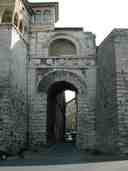
Right in front of you stands a mighty stretch of stone wall, weathered and monumental, interrupted by a grand arched gate-look for massive blocks stacked upon each other and a soaring entranceway that’s almost as old as storytelling itself. Let’s step back into time with a little imagination-picture yourself here, two thousand years ago, when Perugia was already a bustling city, and the walls before you were as much a part of daily life as the sunrise. These are the legendary Walls of Perugia, the city’s ancient protective embrace. Now, Perugia isn’t just content with one ancient hug; it boasts not one but two entire circles of walls. Inside, the oldest-the Etruscan walls-snake around the historic core for about three kilometers. Built over 2,300 years ago, they are so massive, you’d be forgiven for thinking the builders were giants in disguise. Each block was so big that I bet even Hercules would’ve asked for help moving them. These walls weren’t just impressive; they were practical, defending the city against invaders, wild animals, and the occasional overenthusiastic lover trying to serenade from outside. Over time, the Romans, never ones to pass by a good project, tweaked them, and in the medieval period, the walls got even more updates-like upgrading your phone, but with way more stone dust. At the core of the Etruscan walls, there are legendary gates. The most majestic, right before your eyes, is the Arco Etrusco, or Etruscan Arch-also called Augustus’ Arch for a touch of imperial glamour. Built in the third century BC, it’s like a jaw-dropping front door to a whole other epoch. This archway isn’t just big; it was a status symbol, showing both guests and would-be enemies that Perugia was a city to take seriously. At one point, folks even called it "porta pulchra," which means "the beautiful gate"-the medieval city’s own version of rolling out the red carpet. Some gates have their own stories. Porta Marzia is decorated with mysterious statues-imagine Jupiter himself and the twin heroes Castor and Pollux peeking down at folks coming into town, flanked by a couple of stately stone horses as if they’re still standing guard. Other gates got a medieval facelift. Porta Trasimena survived, but with tweaks, while Porta Sole, once perched high up since ancient times and even cited by Dante in his Divine Comedy, was long ago fortified and later destroyed in a dramatic popular revolt. The ghosts of these gates seem to cheer as you walk by, proud survivors of earthquakes, wars, and city expansions. By the Middle Ages, Perugia had grown so much that a second set of walls was needed. In the 1200s, the city added a new, larger circle-like buying a belt one size up-just three meters outside the old Etruscan walls. But medieval architects soon realized they were battling the mischievous hills of Umbria: the earth kept shifting, threatening the old walls with collapse. So, they added buttresses, and when those didn’t solve the problem, they threw in massive supporting arches. Around 1330, right above those arches, they built what is now Piazza Matteotti-back then called Piazza del Sopramuro. It was the town’s very own floating square, perched above a fortress of stone, where citizens would gather for news, market days, and maybe a rumor or three. Centuries later, every new addition had a story. In the 1400s, the hospital of Santa Maria della Misericordia built shops nearby, and the university set up its headquarters right next door. The city kept building, layer upon layer, until by the late 1500s, after the flamboyant lord Braccio Fortebraccio was gone, Perugia realized the growing weight of all this stone needed new supports-Braccio’s buttresses, they called them. And after all that, the biggest problem wasn’t armies or emperors. Nope-it was rain eroding the clay underfoot, making the walls wobble. Talk about problems with your foundation! To this day, remarkably, most of Perugia’s medieval walls are still standing-nearly nine kilometers circling the city, embracing not just the old town, but the new suburbs that grew up around the ancient gates. Step closer, put your hand on the stone, and you can almost feel centuries of history pulsing through your fingertips. These walls may not talk, but trust me, if they could, they’d have some wild stories-and a few stone-cold jokes-about every era, every siege, and every feast Perugia has ever seen. Congratulations, explorer! You’ve reached the last stop on this winding journey. The Walls of Perugia have sheltered emperors, poets, merchants, and now, thanks to you, digital tourists armed with curiosity and good walking shoes. Safe travels, and may your own adventures be as legendary as these ancient stones!
Ouvrir la page dédiée →

Foire aux questions
Comment commencer le tour ?
Après l'achat, téléchargez l'application AudaTours et entrez votre code de réduction. Le tour sera prêt à commencer immédiatement - il suffit d'appuyer sur lecture et de suivre l'itinéraire guidé par GPS.
Ai-je besoin d'Internet pendant le tour ?
Non ! Téléchargez le tour avant de commencer et profitez-en pleinement hors ligne. Seule la fonction de chat nécessite Internet. Nous recommandons de télécharger en WiFi pour économiser vos données mobiles.
S'agit-il d'une visite de groupe guidée ?
Non - il s'agit d'un audioguide en autonomie. Vous explorez indépendamment à votre propre rythme, avec une narration audio diffusée par votre téléphone. Pas de guide, pas de groupe, pas d'horaire.
Combien de temps dure le tour ?
La plupart des tours durent entre 60 et 90 minutes, mais vous contrôlez totalement le rythme. Faites des pauses, sautez des arrêts ou arrêtez-vous quand vous le voulez.
Et si je ne peux pas finir le tour aujourd'hui ?
Pas de problème ! Les tours disposent d'un accès à vie. Faites une pause et reprenez quand vous le souhaitez - demain, la semaine prochaine ou l'année prochaine. Votre progression est sauvegardée.
Quelles sont les langues disponibles ?
Tous les tours sont disponibles dans plus de 50 langues. Sélectionnez votre langue préférée lors de l'utilisation de votre code. Note : la langue ne peut pas être changée après la génération du tour.
Où accéder au tour après l'achat ?
Téléchargez l'application gratuite AudaTours sur l'App Store ou Google Play. Entrez votre code de réduction (envoyé par e-mail) et le tour apparaîtra dans votre bibliothèque, prêt à être téléchargé et commencé.
Si vous n'appréciez pas le tour, nous vous rembourserons votre achat. Contactez-nous à [email protected]
Paiement sécurisé avec 


