
Visite Audio de Nîmes : Échos d'Empire et Pierres Sacrées
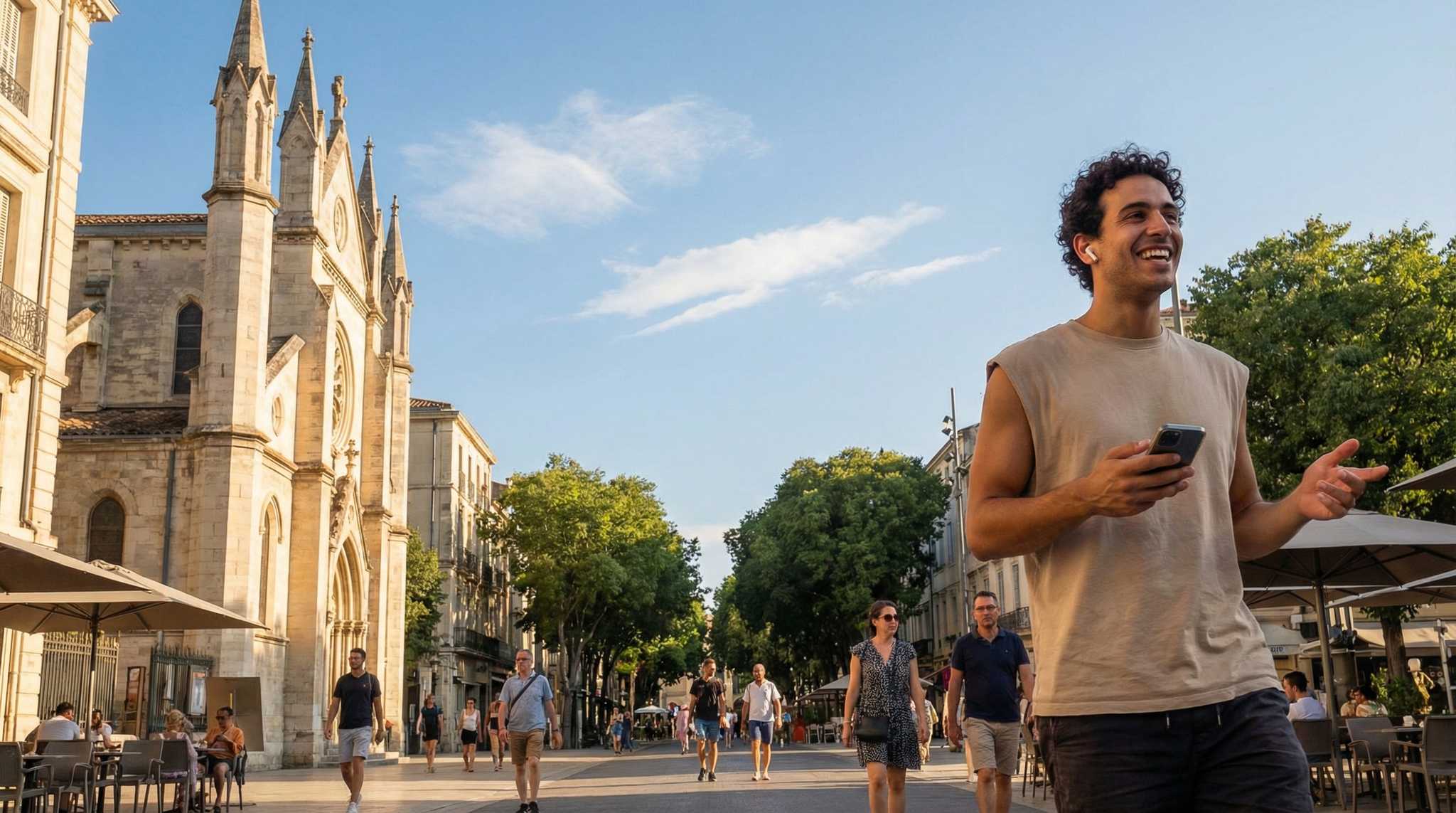
Sous le soleil du sud de Nîmes, pierres antiques et verre audacieux murmurent des secrets de siècles rivaux. Cette visite audio autoguidée vous mène devant de grandes arches et des tours lumineuses, révélant les drames cachés que la plupart des visiteurs ne font qu'effleurer. Quelles ambitions mortelles hantaient les marches du temple de la Maison Carrée pour deux princes romains ? Pourquoi un mariage étincelant à l'église Saint-Paul a-t-il déclenché une frénésie qui persiste encore sur sa pierre usée ? Et combien de niveaux sous vos pieds le Carré d'Art dissimule-t-il dans son labyrinthe moderne ? Promenez-vous à travers des colonnades résonnantes et des archives obscures tandis que des histoires d'intrigues politiques, de fresques disparues, de confrontations architecturales et de réinventions audacieuses se dévoilent à chaque tournant. Vous sentirez l'histoire trembler sous vos pieds tandis que les mystères de la ville se révèlent. Laissez Nîmes vous étonner — approchez-vous de ces colonnes brillantes et que votre voyage commence.
Aperçu du tour
À propos de ce tour
- scheduleDurée 40–60 minsAllez à votre propre rythme
- straightenParcours à pied de 2.8 kmSuivez le sentier guidé
- location_on
- wifi_offFonctionne hors ligneTéléchargez une fois, utilisez n'importe où
- all_inclusiveAccès à vieRéécoutez n'importe quand, pour toujours
- location_onCommence à Église Saint-Paul de Nîmes
Arrêts de ce tour
To spot St. Paul's Church as you walk, look for a grand stone building rising tall at the end of the street, with creamy walls, three arched doorways, and a dramatic circular…Lire plusAfficher moins
To spot St. Paul's Church as you walk, look for a grand stone building rising tall at the end of the street, with creamy walls, three arched doorways, and a dramatic circular stained-glass window above the central entrance. You can’t miss the impressive tower shooting up on the right, like a stone wizard hat pointing to the sky. Welcome to St. Paul's Church of Nîmes! Imagine you’re standing here in the 1800s, watching builders sweat and shout, hoisting those giant creamy stones into place, while the scent of fresh dust and mortar fills the air. This church was built between 1835 and 1849, back when Nîmes wanted to show off a little style. St. Paul’s is neo-Romanesque, which means it borrows old Roman tricks-arches, strong lines, and a mighty tower. Look up at the bell tower-it soars 62 meters high, just the right height for anyone who wanted their church to be seen from the next country over. Did you know, St. Paul’s is a bit of a celebrity? In 1985, TV journalist Yves Mourousi had his wedding here, and the event was so famous that people today still whisper about it on the steps… mostly about the hats people wore. There’s some detective work hidden in these doors, too. All those heavy, moody locks and hinges? They were made by Pierre Boulanger, who worked on the famous Notre-Dame in Paris! If these doors could talk, they’d probably ask for a bit of oil-and a day off. Inside, there were once breathtaking wall paintings by Hippolyte Flandrin. Over time, they’ve faded, like an old photo in your attic, but a few stories still peek through the shadows. The organs inside are legendary, built by Aristide Cavaillé-Coll in 1848-imagine the first few notes echoing through the church, filling the stone halls and making the neighbors jump. So take a moment. Listen for a distant bell, and imagine centuries of footsteps-weddings, secrets, and maybe a few nervous brides and grooms hoping for good luck in the shadow of St. Paul's mighty tower. Ready to journey onward? Let’s see what secrets Nîmes has next!
Ouvrir la page dédiée →As you approach, look straight ahead and you’ll spot a truly grand building rising up from the square - this is the Maison carrée. It stands on a raised stone platform, with a…Lire plusAfficher moins
As you approach, look straight ahead and you’ll spot a truly grand building rising up from the square - this is the Maison carrée. It stands on a raised stone platform, with a dramatic set of steps inviting you up to its front. The building is shaped like a long rectangle, nearly twice as long as it is wide. What’ll catch your eye right away are its tall, elegant columns with flowery tops - these are Corinthian columns, and there are six of them right at the entrance. The walls are decorated with even more columns attached to the sides, and it all looks like something pulled straight from ancient Rome. If the sunlight is fading, try to catch how the soft glow of the lamps highlights the carved leaves and rosettes near the roof. You can’t miss it - just follow the sight of those mighty columns and their shadows stretching across the paving stones. Now, let’s step back in time! Imagine the clatter of sandals on stone as you walk up those steps. You’re not just looking at a building - this is one of the best-preserved Roman temples left anywhere in Europe, a true superstar of ancient architecture. The Romans called it the Maison carrée, or 'square house,' though if you ask me, it looks a bit more like a super-sized shoebox for a god who likes fancy columns. The atmosphere here would’ve been incredible nearly two thousand years ago. Crowds gathered for ceremonies, and you’d have seen priests in crisp white togas swinging incense and making offerings to the emperor’s grandsons, Gaius and Lucius. Talk about family pressure! Sadly, both young princes died before their time, so this temple became almost a tribute to hopes and dreams that never came true. But this spot isn’t just about ancient glory - it’s also a source of inspiration that stretched all the way to the United States. Thomas Jefferson, who designed the Virginia State Capitol, loved this temple so much he actually had a model made to take home. It’s the ultimate case of “I saw it in France” turning into “I built it in America”! Look closer at the carvings above the columns - those swirling leaves and dainty rosettes may not be as precise as those on the Parthenon in Greece, but they’ve survived centuries of wind, rain, and a few overeager pigeons. Just think, until the 1800s, this proud temple was squished in with other buildings and almost forgotten! Today, Maison carrée stands alone in all its grandeur, just as it did in Roman times, now with a modern neighbor designed by a famous architect. So, the next time you pass a building back home that looks a bit ancient, you’ll know - it might just be the Maison carrée’s distant cousin. Ready to imagine the mighty echoes of Roman voices inside? Let’s carry on when you’re ready!
Ouvrir la page dédiée →

Afficher 12 arrêts de plusAfficher moins d'arrêtsexpand_moreexpand_less
Take a look around-see that tall tower, stretching high above the trees and everything else on the Esplanade Charles-de-Gaulle? That’s your giveaway! You’re searching for a…Lire plusAfficher moins
Take a look around-see that tall tower, stretching high above the trees and everything else on the Esplanade Charles-de-Gaulle? That’s your giveaway! You’re searching for a steeple so tall, it makes giraffes jealous. Look up, and you’ll spot a majestic, almost theatrical church front, complete with an impressive iron cross, perched like the cherry on top of a very tall ecclesiastical sundae. Now, here you are, right in front of the Sainte-Perpetuation and St. Felicite Church. Imagine standing in Nîmes in the 1850s: horses trotting along the boulevard, the clink of stone on stone as workers build this magnificent church. Built when Louis-Napoléon Bonaparte himself was laying foundation stones, this is no ordinary church. The architect, Léon Feuchère, wanted everyone to look up and say, “Wow!”-and with a steeple shooting 71 meters into the sky, topped with an iron cross that's almost the size of a small car, it’s hard not to be impressed! Step closer and you can almost feel the dizzying height of the nave, soaring over 20 meters above your head. No one ever came here with a fear of heights, that’s for sure. The interior, once finished in 1864, was covered in beautiful decorations by Joseph Felon and Colin-the same artists who worked at the nearby prefecture. Imagine the excitement of the townsfolk, waiting years for the walls and windows to be finished, finally filling the church with whispers and candlelight. And here’s a little secret: if this church were a person at a costume party, it would definitely win best dressed for its eclectic Second Empire style. It’s got every flourish, every dramatic touch you could want. If these walls could talk, they might just sing a hymn or two-but for now, listen to the wind swirling around that iron cross, and imagine all the celebrations and stories echoing through these stones. Alright, ready to head to the next stop? Let’s keep exploring.
Ouvrir la page dédiée →Just ahead of you, rising up on your left, is the mighty Arena of Nîmes. Look for the huge, oval stone structure with two stacked levels of big arches running all the way around.…Lire plusAfficher moins
Just ahead of you, rising up on your left, is the mighty Arena of Nîmes. Look for the huge, oval stone structure with two stacked levels of big arches running all the way around. It almost looks like a giant donut made out of ancient rock-and you can’t miss the statue of the matador caped in bronze out front, standing guard over this historic giant! Now, imagine you’re standing here nearly two thousand years ago. It’s the year 100 AD. You step inside, and the crowd’s roar hits you like a thunderclap-24,000 people crammed into 34 rows, all eyes on the sandy oval below, sniffing the air heavy with the scent of sweat, anticipation, and maybe some popcorn... Actually, no popcorn, but plenty of excitement! Back in the Roman days, this place was Nîmes’ beating heart. Gladiators fought here, lions prowled the sand, and the crowd went wild. The design was pure genius-a perfect oval, so everyone, rich or poor, got a great view. The Romans really knew how to plan a night out. But time wasn’t always kind. When dangerous times hit, they bricked up the arcades, and turn after turn of history rolled in. The arena became a castle, even a walled village-imagine hundreds of people actually living inside, chatting over laundry lines strung across the terraces. It’s like Airbnb but with a lot more armor. For centuries, the arena was a city in itself, sheltering townsfolk during sieges. Even the invading Visigoths, Arabs, and Franks all left their marks-or at least a few empty wine bottles. By the 18th century, there were still houses and even little churches tucked inside. Restorers finally cleared it all out in the 19th century, leaving us with the awe-inspiring arena you see today. Nowadays, instead of gladiators, you’ll catch bullfights, concerts, and spectacular Roman Games reenactments-still echoing with that same thundering crowd. Take a moment to look up at those ancient arches. Imagine the voices, the dramas, and the dusty sandals of all who came before you. If only these old stones could talk! Well, maybe it’s better they don’t-otherwise I’d be out of a job!
Ouvrir la page dédiée →Look straight ahead and you can’t miss it: the Fontaine Pradier rises like a marble masterpiece right in the middle of the open square. It’s a stunning, white fountain-with a…Lire plusAfficher moins
Look straight ahead and you can’t miss it: the Fontaine Pradier rises like a marble masterpiece right in the middle of the open square. It’s a stunning, white fountain-with a tall, graceful woman standing proudly at the top, looking a bit like she’s the queen of the esplanade. Around her, you’ll spot four impressive figures: two men and two women, all carved in marble, relaxing at the fountain’s base as water spills calmly from their bowls. If you see a giant crown on the lady’s head, look closer-her crown is actually shaped like the city’s most famous Roman monuments! Very fashionable if you ask me. Here you are, standing before the incredible Fontaine Pradier, the heart of this lively square for over 170 years. Picture the scene: it’s 1851, crowds are gathering, and there’s a buzz of excitement as this dramatic fountain is unveiled for the very first time. Sculptor James Pradier and architect Charles Questel designed this shimmering marvel as a tribute to the spirit of Nîmes. The lady up top? She’s not just any ordinary person-she’s Nîmes herself, brought to life. Instead of a royal crown, she’s gone full local, with the arenas and the colonnades of Maison Carrée circling her head-no doubt the trendsetter of ancient headwear. Around her, the four seated marble folks aren’t just there for decoration. They represent the lifeblood of the region: four mighty rivers, including the ancient source of Nîmes itself. Their names-Nemausa, Vardo, Ura, and Rhodano-are inscribed beneath them, in Latin, the ultimate way to flex your classical education. So pause here, take in the scene, and let yourself imagine the sound of the crowd, the sparkle of the water in the summer sun, and maybe, just maybe, the lady atop the fountain giving a gracious nod just to you. If you’re feeling extra poetic, toss in a coin and make a wish. But watch your head! With all those proud rivers gathered below, this is a spot where legends go to flow.
Ouvrir la page dédiée →Take a look just ahead to your right, and you’ll spot a grand, pale stone building standing quietly with three stories of tall windows and a classic courtyard. This is the…Lire plusAfficher moins
Take a look just ahead to your right, and you’ll spot a grand, pale stone building standing quietly with three stories of tall windows and a classic courtyard. This is the Archaeological Museum of Nîmes. Notice those elegant arches on the lower level-they’re like a row of invitations to step inside and time-travel. The courtyard feels peaceful now, but imagine it centuries ago, a place buzzing with secrets waiting to be unearthed. Alright, here you are, standing outside one of Nîmes’ most fascinating treasure troves. But beware-this isn’t your dusty, do-not-touch kind of museum. Behind those thick stone walls, it’s like a time capsule bursting at the seams. The museum covers everything from the Iron Age to the Romans, and even the medieval era-so it’s basically a highlight reel of ancient drama. There are weapons and everyday objects dug up from the ground right under your feet. If you listen closely, can you almost hear a Roman merchant haggling or a medieval monk muttering away? Fun fact: these collections used to camp out in the Maison Carrée-Nîmes’ famous Roman temple-before moving here to what was once a college. The grand opening happened in 1896, with the mayor leading the charge. Since then, explorers, history buffs, and curious kids have all wandered these halls, wide-eyed at the sheer variety dug up from local soil. And get this-a group called the École antique de Nîmes has made the museum its clubhouse since 1920. They spend their days swapping stories about Nîmes from prehistoric times right up to knights and castles, holding talks and publishing bulletins. It’s the kind of place where you wouldn’t be surprised if a toga-wearing Roman or a medieval knight poked their head out to say hello (don’t worry, it hasn’t happened… yet). So, as you stand in front of these silent arches, take a second to imagine the hands that shaped all those artifacts and the years of soil covering them, just waiting for a modern-day discoverer-like you! Ready to head off for more mysteries? Let’s see what the next stop has for us.
Ouvrir la page dédiée →Look ahead! You can’t miss the Saint-Baudile Church of Nîmes-it stands tall with not just one, but two mighty towers, each shooting up to the sky with sharp, pointy spires. The…Lire plusAfficher moins
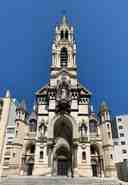
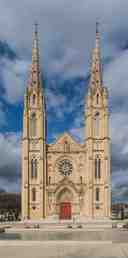
Look ahead! You can’t miss the Saint-Baudile Church of Nîmes-it stands tall with not just one, but two mighty towers, each shooting up to the sky with sharp, pointy spires. The stone is a soft sandy color, and there’s a huge red door right in the center inviting you in. Just above the door, check out that wheel-shaped stained glass window sparkling in the sunlight. And if you’re trying to spot it, look for those two towers-they look like someone tried to outdo all the other buildings in the neighborhood! Now, let’s pause a moment here in front of this neo-Gothic giant. Way back in the late 1800s, folks from Nîmes must have wanted something spectacular, because between 1867 and 1877, they built Saint-Baudile according to plans by Jean-Jules Mondet, an architect from Bordeaux. Imagine the sound of chisels and hammers echoing through the air as the stone went up, bit by bit. Saint-Baudile is named after a local hero-Saint Baudile, a martyr from the 3rd century. No need for a superhero movie when you’ve got a story like his! This church can host up to 3,000 people, making it the biggest in all of Nîmes (no wonder it sometimes gets mistaken for the cathedral). The inside is a marvel too, with vaults soaring 20 meters overhead-just imagine the echoes if you tried singing in there. The huge cross-shaped layout, colorful windows by Joseph Villiet, and impressive organ crafted by Vincent Cavaillé-Coll all add to the church’s magic. Out front, look up at those two angels with spread wings, keeping watch, and way above them, a statue of Saint Baudile himself, holding a sword and palm to show his brave past. Fun fact: this place looks quite a bit like the sacred church in Bordeaux-same architect, similar style, just with a bit more southern sunshine. So, take a breath, look up at those spikes touching the clouds, and think of everyone who’s gathered here over the years. And, of course, don’t try to count all the stones, or we’ll be here until next Tuesday! Shall we continue?
Ouvrir la page dédiée →Alright, take a look straight ahead! You can’t miss it-the Large Temple of Nîmes rises up before you like a stoic stone guardian. The building’s front is tall and grand, made of…Lire plusAfficher moins
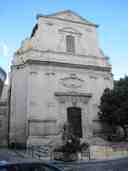
Alright, take a look straight ahead! You can’t miss it-the Large Temple of Nîmes rises up before you like a stoic stone guardian. The building’s front is tall and grand, made of pale stone. Its baroque façade stands proudly over the street, with a big, arched doorway and a window above that almost winks at you from behind detailed carvings. As you get closer, you’ll notice the steps leading up to that heavy wooden door, perfect for making a dramatic entrance-just in case you’re feeling like a movie star today. This isn’t just any old building. The Grand Temple of Nîmes has stories echoing throughout its walls. Between 1714 and 1736, this place was built for Dominican monks. Picture monks shuffling along in their robes, maybe wondering if their building would ever be finished. Then came the French Revolution. The monks packed up and left, and soon the abandoned church found new life-this time with the city’s Protestants, thanks to the pastor Paul Rabaut. By 1803, this became the official place for the Reformed Protestant community. That’s when it got its new name: Le Grand Temple. Now, don’t let the serious stone face fool you-the inside has some real gems. There’s a majestic organ built in 1821, pipes shimmering in the sunlight like silent sentinels, waiting for Sundays to fill the place with soulful music that makes your skin tingle. Just behind the entrance, check the wall-you’ll spot two big slabs of black marble etched with the Ten Commandments and a summary of the Law, because who doesn’t need a reminder every now and then? With its tall columns and simple yet dignified style, the Grand Temple feels solemn and sturdy, just like the hearts of the Protestants who worshipped here. But if you listen closely, maybe-just maybe-you’ll catch the faint sound of old organ music or the whispers of all those past stories, echoing up toward that lofty baroque ceiling. If you’re game for a quick mystery: legend has it that, late at night, the marble plaques are known to murmur philosophical secrets, though only to those who don’t mind staying past bedtime. But we’re not here that late, so you’re safe… for now!
Ouvrir la page dédiée →Just ahead of you, you’ll spot an impressive building with ornate stonework, grand arched windows, and beautiful sculpted figures that seem to be frozen mid-drama on either side…Lire plusAfficher moins
Just ahead of you, you’ll spot an impressive building with ornate stonework, grand arched windows, and beautiful sculpted figures that seem to be frozen mid-drama on either side of the main doorway. Keep your eyes peeled for the grand entrance with its deep green doors and the words "Galerie Jules Salles" gleaming above. No need to worry about sneaking past dinosaurs-no roaring or stomping here. Instead, it’s the Natural History Museum of Nîmes waiting to reveal its treasures! Imagine standing by this building in 1895, as townsfolk in bowler hats and long dresses tilt their heads in awe at its opening. This isn’t just any museum: It’s one of the shining stars of the Languedoc, ranking sixth in all of France for its vast and quirky collection. Inside, you don’t just get one adventure-you get three! There’s the museum itself, a planetarium for star-gazers, and even a school for unraveling the mysteries in your DNA. Don’t worry, they won’t ask to swab your cheek at the door! Step through its historic halls and you’ll move from prehistoric cave treasures, to sparkling stones born deep in the earth, to wild animals-fur, feathers, and scales included-and on to cultures from far-flung continents. Each room bursts with curiosities, many collected long ago by passionate locals with wild moustaches and even wilder stories. You could almost picture them arriving with muddy boots and trunks filled with wonders from Africa, Oceania, and Asia. The museum keeps things lively, too, with ever-changing exhibitions. One day you might meet a Neanderthal, the next you’re untangling the secrets of ancient biodiversity. It’s a bit like a treasure hunt-only here, the treasures outnumber the pirates. Oh, and there’s a little bit of scientific gossip in the air! Right inside these walls beats the heart of Nîmes’ own natural science society, a group that’s been debating and discovering since 1871. If these stones could talk, I bet they’d tell you about passionate meetings, spirited debates, and maybe even a lost lunch or two. So, take a breath, enjoy the sculpted drama outside, and picture all the mysteries tucked away within. Ready to explore the secrets of Earth, animals, and ancient humans-no Indiana Jones hat required!
Ouvrir la page dédiée →To spot your next landmark, look ahead for an impressive, ancient Roman building that almost looks like it’s landed right out of history. It’s perched on a raised stone platform,…Lire plusAfficher moins
To spot your next landmark, look ahead for an impressive, ancient Roman building that almost looks like it’s landed right out of history. It’s perched on a raised stone platform, its creamy columns glowing under the city lights. The rectangular shape, grand staircase, and row after row of tall columns make it stand out from the nearby modern and historic buildings. You’ll see it basking in the golden glow, with its carved details catching the night air. Now that you’re standing in front of this grand sight, welcome to the heart of Nîmes! This isn’t just a city-it’s a living treasure chest, carefully tucked into the south of France, where the sun seems to compete with the people for who can be more lively. Nîmes is home to over 150,000 lucky souls known as the Nîmois, but in the summer, you’d swear the entire world squeezes in to enjoy its festivals, markets, and those long lazy days of Mediterranean sunshine. You’re right near the crossroads of history-Nîmes sits directly between the glimmer of the Mediterranean Sea and the rugged silhouette of the Cévennes mountains. In fact, you can almost feel the ancient Romans whispering as you wander the streets. After all, this is the “French Rome,” where gladiators clashed, emperors paraded, and today’s artists find their muse. If you’re looking for more reasons to brag to your friends about where you’ve been, Nîmes has been picked as one of the top 52 destinations in the world by the New York Times. And with 300 days of sunshine each year, it’s almost unfair to the rest of France! The city itself is a jumble of timelines. It’s proudly Gaul, Roman, Camargue, Cévenol, Languedocian, Provençal… and don’t even get me started on its denim-the word itself comes from “de Nîmes,” as in “from Nîmes.” The city is alive with protected parks, bubbling brooks, and festivals that could wake the ancient stones into dance. It’s been home to rebels and artists, thinkers and dreamers-a true melting pot. The air is filled with stories: some are grand and ancient, others are waiting for you to add your own. So as you stand here, soaking it all in, think about this-every street, each monument, and all that laughter in the cafes tell a tale older than most countries. Welcome to Nîmes, a city where even the stones seem to remember your footsteps. To expand your understanding of the géographie, urbanisme or the toponymie, feel free to engage with me in the chat section below.
Ouvrir la page dédiée →Look right ahead of you-see that grand, cream-colored building with tall, elegant windows lined up in perfect rows? That’s your target. You’ll notice a fancy little balcony above…Lire plusAfficher moins
Look right ahead of you-see that grand, cream-colored building with tall, elegant windows lined up in perfect rows? That’s your target. You’ll notice a fancy little balcony above the main door, and wide stairs leading up to a welcoming entrance. There are two giant plant pots posted like old-timey bodyguards flanking the steps. If you feel like you’ve landed smack in the middle of a history book, you’re in exactly the right spot. So here we are at the Museum of Vieux Nîmes, a place that’s got more stories tucked inside than your grandma’s attic! Imagine, if you will, Nîmes just after the Middle Ages. This very spot was once part of the bishop’s grand palace, and you can almost hear the whispers of bishops and kings plotting over who owned what. The building itself has survived drama that would put a soap opera to shame: palaces torn down, cathedrals rebuilt, and even a scandalous moment when the land was chopped up and sold in pieces-talk about a fixer-upper! Now, picture workers in the 1600s dusting off their sleeves and arguing about architecture. One boss, Alexis de La Feuille, tried to give this place a makeover-importing ideas from far-off northern France, much to the shock of the locals. He added a grand staircase just made for dramatic entrances… pity he skipped the loggia. The walls around you were once painted by artists busy in the bishop’s private office, while the upper floors were so unfinished they nearly doubled as pigeon lofts. Over centuries, the palace was rebuilt, redesigned, and finally rescued to become the museum you see today. When you stand here, you’re actually in the heart of the old bishop’s home, now filled with everyday objects and stories from Nîmes-the laughter and struggles of regular folks from centuries past. And if you hear a faint echo as you peek through those doors, don’t worry-it’s just the joyful ghost of Henry Bauquier, who opened the museum back in 1920, thrilled to let everyone in on the secrets of this city. So step inside if you’d like, and remember, history might just surprise you when you least expect it. Wondering about the histoire, description du bâtiment or the collections? Feel free to discuss it further in the chat section below.
Ouvrir la page dédiée →Look ahead for a tall, pale stone building with a square bell tower jutting into the sky. The tower’s side is lined with deep shadows and impressive arches. Below, see the…Lire plusAfficher moins
Look ahead for a tall, pale stone building with a square bell tower jutting into the sky. The tower’s side is lined with deep shadows and impressive arches. Below, see the massive, heavy wooden doors under a triangular stone arch, and above, a circular stained-glass window like a mysterious eye watching over the square. If you spot a building that looks like it’s been there since the days of brave knights and ancient emperors, you’ve found the Nîmes Cathedral! You’re standing before the Nîmes Cathedral-the grand Cathédrale Notre-Dame-et-Saint-Castor. Its thick walls and high tower have seen centuries of history and, I must say, it’s aged better than a wheel of French cheese. Imagine: you’re standing where Roman citizens once bustled, since this spot is believed to be where a temple to Emperor Augustus stood. The cathedral’s bottom half seems strong and solid, as if built for defense, while the upper parts lift towards the sky, mixing Romanesque round arches with pointed Gothic windows. It’s a beautiful mashup-think of it as the cathedral’s way of saying, “Why pick just one style?” Inside, if you could step through those doors, you’d find dim light, the whisper of prayers, and maybe the faint, spicy scent of old incense. But out here, picture a crowd gathering on a cool evening, waiting for the bells to ring out over Nîmes. These stones have heard secrets, laughter, and maybe a few ghost stories over the centuries! Dedicated to Mary as well as Saint Castor-who, legend says, could work all sorts of wonders-you’re meeting a place of faith, power, and mystery. So, take a moment and imagine all the footsteps that have echoed here before yours. If you listen carefully, maybe you’ll hear the past rustling in the breeze. Now, don’t worry, there are no surprise pop quizzes about the Bishops of Nîmes-just enjoy this mighty cathedral’s watchful gaze over the city, and your final stop on this great journey.
Ouvrir la page dédiée →






Avis
Foire aux questions
Comment commencer le tour ?
Après l'achat, téléchargez l'application AudaTours et entrez votre code de réduction. Le tour sera prêt à commencer immédiatement - il suffit d'appuyer sur lecture et de suivre l'itinéraire guidé par GPS.
Ai-je besoin d'Internet pendant le tour ?
Non ! Téléchargez le tour avant de commencer et profitez-en pleinement hors ligne. Seule la fonction de chat nécessite Internet. Nous recommandons de télécharger en WiFi pour économiser vos données mobiles.
S'agit-il d'une visite de groupe guidée ?
Non - il s'agit d'un audioguide en autonomie. Vous explorez indépendamment à votre propre rythme, avec une narration audio diffusée par votre téléphone. Pas de guide, pas de groupe, pas d'horaire.
Combien de temps dure le tour ?
La plupart des tours durent entre 60 et 90 minutes, mais vous contrôlez totalement le rythme. Faites des pauses, sautez des arrêts ou arrêtez-vous quand vous le voulez.
Et si je ne peux pas finir le tour aujourd'hui ?
Pas de problème ! Les tours disposent d'un accès à vie. Faites une pause et reprenez quand vous le souhaitez - demain, la semaine prochaine ou l'année prochaine. Votre progression est sauvegardée.
Quelles sont les langues disponibles ?
Tous les tours sont disponibles dans plus de 50 langues. Sélectionnez votre langue préférée lors de l'utilisation de votre code. Note : la langue ne peut pas être changée après la génération du tour.
Où accéder au tour après l'achat ?
Téléchargez l'application gratuite AudaTours sur l'App Store ou Google Play. Entrez votre code de réduction (envoyé par e-mail) et le tour apparaîtra dans votre bibliothèque, prêt à être téléchargé et commencé.
Si vous n'appréciez pas le tour, nous vous rembourserons votre achat. Contactez-nous à [email protected]
Paiement sécurisé avec 


