Visite audio de Nice : Légendes, Palais et l'Esprit de la Vieille Ville
Une ville baignée de soleil cache les cicatrices d'anciennes batailles et de révolutions silencieuses sous son célèbre ciel bleu. Nice vous invite à voyager au-delà des cartes postales lors de cette visite audio autoguidée – où des barricades oubliées, des alliances secrètes et des refuges sacrés révèlent l'âme agitée de la Riviera. Quels secrets subsistent le long du Quai des États-Unis, où un mur défensif a cédé la place aux rires et à la sculpture ? Qui a risqué sa vie pendant la Bataille de Nice alors que les coups de feu résonnaient et que le destin basculait en une seule nuit d'août ? Pourquoi le mot « Charitas » accueille-t-il les visiteurs à l'Église Saint-François-de-Paule, faisant écho à un vœu brisé et restauré à travers les siècles ? Suivez des pas audacieux du front de mer à la nef sombre, ressentant le pouls des rébellions, des renaissances artistiques et des moments où tout a failli changer. Laissez chaque point d'intérêt vous entraîner plus profondément – le long des boulevards où le passé exige un examen plus attentif. Prêt à découvrir les histoires que le soleil tente de cacher ? Commencez à marcher maintenant.
Aperçu du tour
À propos de ce tour
- scheduleDurée 40–60 minsAllez à votre propre rythme
- straightenParcours à pied de 2.1 kmSuivez le sentier guidé
- location_on
- wifi_offFonctionne hors ligneTéléchargez une fois, utilisez n'importe où
- all_inclusiveAccès à vieRéécoutez n'importe quand, pour toujours
- location_onCommence à Quai des États-Unis
Arrêts de ce tour
As you walk along the coastline, look to your left for a long line of creamy-white buildings stretching beside the wide boulevard, with tall palm trees standing proudly by the…Lire plusAfficher moins
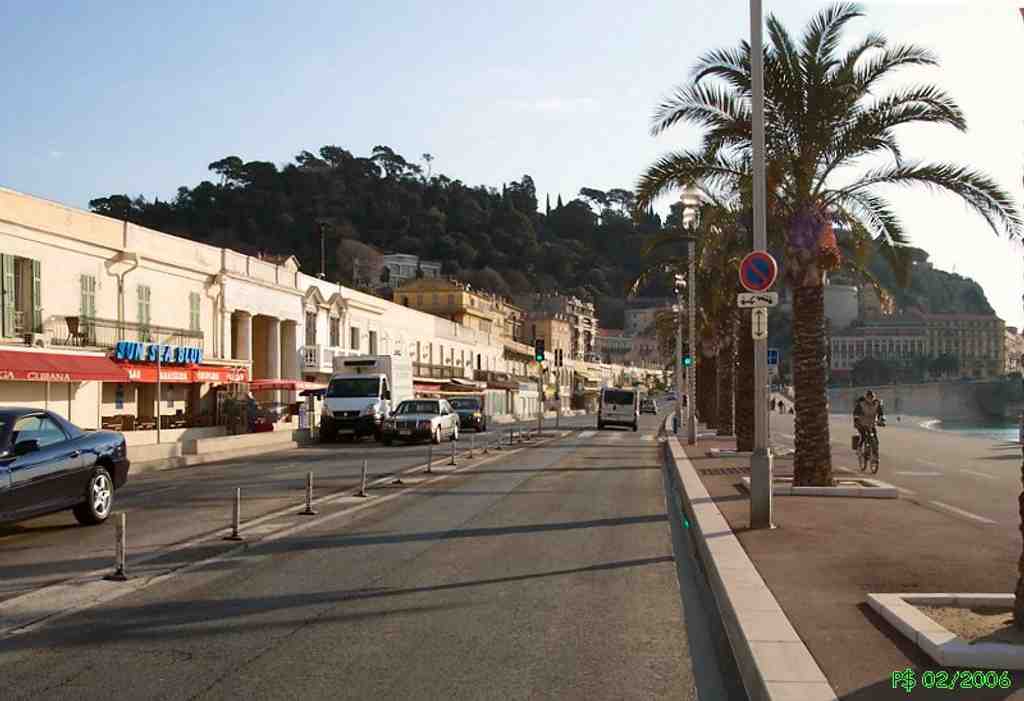
As you walk along the coastline, look to your left for a long line of creamy-white buildings stretching beside the wide boulevard, with tall palm trees standing proudly by the road like windblown sentinels. To your right, waves dance along the pebbled shore-this is the United States Quay. You’ll know you’re here when you see a line of cafés with red awnings and cars gliding past under the soft Mediterranean sun. Sometimes you can even spot cyclists whizzing by, and if you follow the line of palm trees, the sea glimmers just beyond. Now, imagine standing here a couple of centuries ago. There are no holidaymakers, no cars, no laughter from sun-hatted tourists. Instead, this place was once a defensive wall, keeping invaders out. But after Louis XIV had the ramparts torn down in 1706, the city began to dream bigger dreams-a place not for battles, but for seaside strolls and laughter. Just picture it: the year is 1832. The salty breeze carries the scent of the sea as the first terrace here is built, a grand place for people in elegant coats and silk dresses to take in the view. The gentle clink of pebbles beneath antique boots, oversize umbrellas to shade faces, the excited chatter in French and Italian. Pretty soon, benches are added. Now, the aristocrats escaping harsh winters up north have somewhere to rest and gossip, watching the sun paint everything gold. By 1917, the war rumbles far away, and the city wants to thank its new allies. That’s when this sweeping seaside road gets its heroic name-the United States Quay, in honor of the US joining the fight. Since then, the quay’s story keeps evolving. Now you might spot fantastic sculptures along the path, like the famous giant blue chair-a playful wink to the simple joys of seaside living. So as you stand here, you’re not just looking at a road. You’re stepping into a living tapestry of sunshine and shadow, battles and celebrations, and the slow march of people longing to pause and gaze at the endless blue. Keep your eyes open-who knows what new work of art, or even which whisper of the past, you might discover today?
Ouvrir la page dédiée →As you stand here, try to picture Nice on the morning of August 28, 1944. The air is heavy, the streets are tense, and only about a hundred people dare to step forward. These are…Lire plusAfficher moins
As you stand here, try to picture Nice on the morning of August 28, 1944. The air is heavy, the streets are tense, and only about a hundred people dare to step forward. These are the first brave souls of the resistance, plotting to force the German occupiers out of their city. Imagine the distant rumble of boots echoing off the old stones. But the uprising spreads faster than anyone expected. All through the day, more and more ordinary people join the fight. By evening, the city is alive with defiance. The Germans, surprised by the sheer scale of rebellion, decide to flee rather than fight. Victory isn’t easy or without its price; stories swirl of fierce gunfights and makeshift barricades in the narrow alleys, and the sounds of shouts and gunfire fill the air. Allied forces aren’t even aware of the chaos in Nice. Only on August 29 do a few American soldiers arrive, cautious but amazed, fresh from Saint-Laurent-du-Var. The next day, at last, a column of American tanks clatters down the streets, and the city is truly free. The cost is high-scores of resistance fighters killed, many more wounded. German losses are severe too, and among the turmoil, collaborators face harsh justice. The sense of victory is mixed with sadness and relief, grief for the lost mingling with the intoxicating rush of freedom. In April 1945, General de Gaulle stands in Place Masséna, telling the people, “Nice, by the heroic sacrifice of its children, freed itself from the occupier… Nice liberated, Nice proud, Nice glorious!” Imagine the cheers rising all around you, the city finally breathing again after years of fear. As you stand here now, the stones under your feet carry the echoes of their courage-a story of ordinary people, risking everything for their home. Seeking more information about the progress of the nice insurrection, general de gaulle's visit on 9 april 1945 or the controversies over the insurrection and the liberation of nice? Ask away in the chat section and I'll fill you in.
Ouvrir la page dédiée →As you walk along the lively Rue Saint-François-de-Paule, look ahead for a striking stone façade rising between two colorful buildings. That’s the Église Saint-François-de-Paule…Lire plusAfficher moins
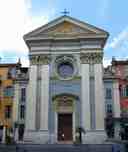
As you walk along the lively Rue Saint-François-de-Paule, look ahead for a striking stone façade rising between two colorful buildings. That’s the Église Saint-François-de-Paule right in front of you. You’ll notice its soft, bluish-grey walls and cream-colored columns, all crowned by a triangle pediment and a cross against the sky. The big wooden doors and the delicate round window above will catch your eye-especially with the word “CHARITAS” carved just above the entrance. Flanking the doors are two little palm trees, as if the church itself is welcoming you in. Imagine it’s the early 1700s. This street is buzzing with horses, merchants, and the sounds of daily life in the most fashionable part of Nice. Now, a group of quiet, determined monks-called “les minimes”-arrive with a plan: to build a church, and a convent beside it, dedicated to Saint Francis of Paola. They want to create a place not just of prayer, but of charity and peace. As the years tick by, stones stack upon stones under the careful gaze of the famous architect Bernardo Vittone. The first stone is set in 1733, then the façade you see now is completed in 1775-after many stops, starts, and touches of elegance. But history is rarely peaceful for long. The Revolution sweeps through France like a wild storm. The monks are driven out, and the church stands silent for a few years-until, surprisingly, it’s brought back to life as a parish for the people of Nice in 1802. By 1939, the Dominicans arrive, filling these very walls with song and ritual again. If you look up, you’ll spot the medallion with “Charitas”-charity-above the portal. Breathe in, and picture what it was like as this street hummed with carriages and silk-dressed visitors. The church’s design itself is a dialogue between the late baroque style and the growing whispers of neoclassicism. By 2004, even modern craftsmen are called to help restore the façade to its former glory. Step inside, and you’d find not only echoes of the monks but also treasures of art. The main altar is crowned by a dramatic painting, “The Apotheosis of Saint Francis of Paola.” In the choir, vibrant scenes tell stories of miracles, of saints being granted heavenly gifts and powers, painted by Olivotto Gastaldi in 1934. All around, the subtle blend of history, faith, and art fills this place with a rare energy-still, somehow, just as alive as when it first opened its doors to the city of Nice. Take a moment to listen for the footsteps of old monks, the whisper of prayers in forgotten corners, and the timeless promise of charity written in stone.
Ouvrir la page dédiée →
Afficher 12 arrêts de plusAfficher moins d'arrêtsexpand_moreexpand_less
Look straight ahead for a stately white building that rises above the palm trees-a grand, elegant structure with a French flag at its tip and rows of tall windows staring back at…Lire plusAfficher moins
Look straight ahead for a stately white building that rises above the palm trees-a grand, elegant structure with a French flag at its tip and rows of tall windows staring back at you. The top of the façade features ornate decorative flourishes, hinting at a world of stories behind its classic walls. Imagine sunlight bouncing off the pale stone and listen for the city’s gentle sounds as you near the Opéra de Nice. Now, while you stand here, close your eyes for a moment and picture the buzz of 18th-century Nice, when all that stood here was a wooden theater, the “petit théâtre en bois,” built in 1776. The people of Nice, hungry for music and drama, would slip through its doors in silk and velvet, waiting to be transported by tales of love and danger. The Marquess Alli-Maccarani himself was behind its creation, and its stage soon attracted everyone who was anyone-gentry, royalty, even emperors and tsars. History echoes through these stones! Imagine 1856, the city aglow as King Victor Emmanuel II is honored with a grand ball. A few years later, picture the excitement rippling through the crowd as Napoleon III and Tsar Alexander II glide into the theater, Johann Strauss himself ready to conduct the orchestra, his baton glinting under the chandeliers. But as in every opera, tragedy strikes. One quiet night in 1881, as the beautiful notes of Lucia di Lammermoor fill the air, a gasp ripples through the audience-fire! A gas leak sparks a blaze. When the sun rises, the theater is gone; only ashes remain, and heartbreak lingers for those lost, including three gifted siblings, each a different voice on the stage-soprano, contralto, and baritone-gone forever. Yet, like any good drama, the curtain is lifted again. The city decides to rebuild-a new theater, grander than before, rises from the ashes, designed with the approval of Charles Garnier, the architect behind the Paris Opera. On opening night in 1885, Verdi’s Aida launches the next act of this remarkable venue. Over the years, the opera house hosts the French debuts of masterpieces, under the guidance of famous artistic and musical directors. It’s renamed again and again, becoming the Opéra de Nice we see today-a stage for great voices, swirling costumes, and majestic music. Even now, behind its grand façade, you might hear echoes of the Ballet Nice Méditerrannée rehearsing, or glimpses of costumes being stitched and sets crafted in the secret world called the Diacosmie. The real magic is this: every time someone steps through those doors-whether in a tuxedo, a costume, or from the street-they become part of its shimmering history. So take a long look up at the Opéra’s white stone and intricate carvings. Imagine it lit up at night, the audience waiting for the overture, hearts racing, and know you are standing where emperors, artists, and dreamers have all paused, right at the very edge of the stage.
Ouvrir la page dédiée →Ahead of you is the lively Saleya Course. To spot it, just look for a long, broad pedestrian walkway filled with bursts of color from striped awnings overhead and flowers spilling…Lire plusAfficher moins
Ahead of you is the lively Saleya Course. To spot it, just look for a long, broad pedestrian walkway filled with bursts of color from striped awnings overhead and flowers spilling out from dozens of market stalls. There’s a gentle bustle-locals chatting, sun bouncing off the leaves of roadside trees, and the inviting scent of fresh blooms and fruit in the air. Welcome to the beating heart of Old Nice! Imagine you’re standing where everyone once wanted to see and be seen, the grand stage for daily life. Today, you see market stands bursting with flowers, fruit, and handmade treasures. But just a few centuries ago, this space was actually called the Marina. The name changed as the scene changed, and by the 18th century, Italians called it “Palco”-the stage. Here’s where people strutted their finest clothes just to stroll and gossip, hoping to run into friends or rivals. Take a breath-can you smell the faint sweetness of fruit, the sharp green of cut flowers? Fancy yourself as a guest at a glamorous salon in the 1800s. The air shimmers with candlelight as musicians play and elegant ladies host soirées right above you, on terraces that overlook the Cours. Back then, the Cours wasn’t just a market. It was the center of high society. Café terraces were packed, luxury shops lined the street, and visiting artists passed the time sketching the sunset. Every important visitor had to be seen here-missing the Cours meant missing out on the news…and usually some delicious drama! Look to your right and left. Under your feet was once a concrete shell, then a giant metal hall. Time kept sweeping the Cours along-markets grew, then car parks took over, and grand trees were chopped down. At one point, all you’d have seen were parked cars, not prams and potted plants. But the magic was never lost. In the 1980s, the Cours was reborn as a true promenade, just for people and the market, buzzing with life like you see now. If you wander here early in the morning, you’ll hear the vendors setting up, the voices rising and falling as the day begins. And as the sun dips in the evening, remember that for centuries, people have watched that same sunset over the rooftops you see now-each a small part of the Cours Saleya’s story.
Ouvrir la page dédiée →Look ahead and you'll see a grand, cream-colored palace with a French flag waving at the very top. It stands proudly behind a row of palm trees and a lush garden, its three…Lire plusAfficher moins
Look ahead and you'll see a grand, cream-colored palace with a French flag waving at the very top. It stands proudly behind a row of palm trees and a lush garden, its three stories elevated by sturdy columns and lined with elegant balconies. The entrance is right in the center behind black iron gates, framed by greenery that almost whispers secrets from the past. If you check the south side, facing the sunlit Place Pierre-Gautier, you'll see its most majestic side. Imagine yourself standing in front of this dignified building now. The Prefectural Palace of Nice is more than just a palace-it is a place where kings and princes once walked its polished hallways. Picture the distant sound of horses’ hooves and wheels rumbling along the old roads as royal carriages arrived under the palms. Before it became the seat of government, this was the home of the mighty Dukes of Savoy and later the Kings of Sardinia. Back in 1559, Duke Emmanuel-Philibert was the first to stay here, choosing comfort in the lower, bustling part of the city after his old castle was abandoned. Just think: in those days, workers from Genoa hammered away with their tools, building the palace while the scent of orange blossoms drifted from its gardens. Over the centuries, the palace grew bigger and grander. Secret gardens filled with fountains, hidden courtyards, and even a special canal that brought fresh water from the river to keep the gardens green. In its glory days, the palace hosted glamorous royal dinners-imagine tables heavy with golden platters and the delicate laughter of queens echoing off the marble halls. But it wasn’t always peaceful; during the revolution, soldiers tore through these walls and in 1793, it was turned into a hospital. Step into the shoes of a visitor from the 1800s-maybe you’d spot the King himself, Charles-Felix, strolling the balconies, or catch a secretive royal meeting behind those thick doors. With so many changes, from war to celebration, each stone holds a whisper of the past. Now, it stands as the heart of the local government, but if you listen carefully, you might just catch a murmur of royal footsteps or the clinking of glasses from a century ago. When you’re ready, we’ll continue to our next stop. Let me know when you’re set for more discoveries.
Ouvrir la page dédiée →As you approach, look to your left for a building that rises up with a baroque façade, its creamy walls trimmed with gold and intricate stonework. The entrance is marked by a…Lire plusAfficher moins
As you approach, look to your left for a building that rises up with a baroque façade, its creamy walls trimmed with gold and intricate stonework. The entrance is marked by a grand doorway and subtle columns, and if you glance upward, you’ll spot its delicate bell tower peeking above the rooftops of the old town’s narrow streets. This is the Church of the Annunciation, though here in Nice, most locals call it Sainte-Rita. Imagine stepping inside as the heavy wooden doors creak open. Instantly, the world outside fades. The cool air is mixed with the scent of old wood, melted candle wax, and polished marble. This church might seem like a hidden gem, but it has watched over Nice for centuries-built around the year 900, making it one of the city's oldest sanctuaries. For nearly a thousand years, it was dedicated to Saint James the Greater and served as the second most important parish in Nice. Back in the days when merchant ships crowded the harbor, sailors came here to pray before their dangerous Mediterranean journeys. Listen-if you let your mind wander-you might almost catch the faint echo of sailors’ boots on stone, their whispered prayers before the altar of Saint Erasmus, the patron of navigators. History packed drama into every corner. In 1543, the old Carmelite monastery was destroyed in a siege. Homeless, these monks found sanctuary here at Saint-Jacques, starting a new chapter for the church. Over time, fires and wars battered these walls. In 1834, a terrible blaze destroyed the beautiful painting in the apse. But from ashes came rebirth: a Russian tsar’s aide gifted a new painting-The Annunciation-giving the church its current name. Through all this, the walls changed, the doors were replaced with precious walnut, and restorations smoothed over the scars. Still, the feeling remains: this is a place where hope always rises from hardship. And if you happen to visit in the quieter hours, you might even catch a gentle, otherworldly hush-the sound of nearly 1,100 years of prayers, secrets, and stories settling into the very stones around you.
Ouvrir la page dédiée →You’re standing just outside the Lascaris Palace, in the heart of Vieux-Nice. To spot it, look up at the tall ochre-colored building right in front of you-its windows are framed…Lire plusAfficher moins
You’re standing just outside the Lascaris Palace, in the heart of Vieux-Nice. To spot it, look up at the tall ochre-colored building right in front of you-its windows are framed with detailed stonework, and you’ll see marble balconies with grandly carved supports jutting out above street level. The entrance is unmistakable, with an elegant doorway and stone arch. Imagine the street a few centuries ago: horses clopping by, servants rushing groceries inside, and aristocrats peering down from those marble balconies. This place was built in the early 1600s by the powerful Lascaris family. Their palace was a secret world of music, light, and luxury. Back then, no one knew the architects, but they sure left their mark-a Genoese baroque style, with an explosion of white marble, arches, and an opulent staircase inside. At different points in time, the palace was nearly forgotten, its stone walls growing tired, its rooms silent and empty. But in the 1940s, Nice rescued it, giving it a new life as a museum. Picture busy workers in the 1960s fixing plaster and painting ceilings, preparing it for visitors and, eventually, thousands of rare musical instruments to arrive. If you could walk through its doors right now, you’d feel the cool air on your face, and see sunlight glinting off gilded frames and old harpsichords. Gorgeous tapestries line the walls, and each room is a treasure chest of lutes, violins, and haunting religious paintings-reminders of the palace’s ties to the Knights of Saint John. And the instruments? Most come from Antoine Gautier, a violinist, collector, and host of magical musical evenings in Nice. Picture the quiet, candlelit room as a hush fell for the first chord, famous musicians visiting, and even Gabriel Fauré himself at the piano. All those echoes-the scraping of a bow, laughter in the marble halls, secret glances from the balconies above-still seem to hang in the air, waiting for a new ripple of music or a curious visitor like you. Seeking more information about the historical, characteristics or the collection? Ask away in the chat section and I'll fill you in.
Ouvrir la page dédiée →Look just ahead on Rue Saint-Joseph and you’ll spot a striking, pale cream-toned chapel with delicate blue and white trim standing proud among the pastel buildings. Notice the…Lire plusAfficher moins
Look just ahead on Rue Saint-Joseph and you’ll spot a striking, pale cream-toned chapel with delicate blue and white trim standing proud among the pastel buildings. Notice the intricate baroque facade, gracefully sculpted with swirling details, and a small bell tower peeking up into the sky-this is the Chapelle Sainte-Croix, the Chapel of the White Penitents. You’re standing outside a building that has kept its secrets and stories for nearly four centuries. Imagine the year is 1633: the streets are packed dirt, and the sound of monks’ sandals echoes through the Old Town as the Minimes, a small order of friars, begin to build this very chapel. Now, gaze up at the front. See the pelican sculpted above the doorway, feeding its chicks? That’s an old symbol of charity-a message to all who pass by. Carved into the facade are two mottos: “In hoc signo vinces”-by this sign, you will conquer-and “O crux ave, spes unica”-Hail, O Cross, our only hope. These words have comforted countless souls who came here in hope or fear, seeking forgiveness and peace. Step closer and listen: centuries ago, this was the home of the White Penitents, men devoted to helping the sick, the dying, and the poor. On Tuesday afternoons, the doors still creak open-just as they have since 1767-inviting the curious and the faithful into their simple, airy nave. Inside, the light is soft and blue-grey, bouncing gently across flower-patterned walls. The ceilings are high; every sound hangs in the air a second longer than you expect. Within, there’s almost no extravagance, just clear devotion-the vast hall was designed for crowds, because this was once the largest brotherhood in Nice. During solemn ceremonies, the Penitents filled the benches, heads bowed, listening to prayers drifting up to the painted vault. Here, the theme of the Cross is everywhere: painted, carved, woven into every detail. It’s easy to imagine a cold winter morning, the faithful gathered in silence, flickering candlelight reflecting on faces marked by care and hope. There are small treasures, too-a 17th-century Pietà, sorrowful and serene; a restored painting of Saint Michael crushing the dragon; a wooden kneeler, worn by generations. The sanctuary’s wooden stalls once cradled the Penitents as they sang hymns late into the night, sometimes with voices trembling from both humility and the chill. If you were here on the afternoon of May 1, 1767-the day of its consecration-you would have smelled incense, heard the choir rise, and seen sunlight streaming through as the new altar was blessed. Or imagine the secrets whispered between Penitents in the shadows, pledging to care for the forgotten and the afraid. Even today, if you linger near the door on a quiet Tuesday, you might catch the smell of wax polish or hear the creak of pews and feel time slip just a little. Every inch of this chapel still speaks of centuries of kindness, service, and human hope wrapped around one unchanging symbol: the holy cross. Shall we continue to the next stop?
Ouvrir la page dédiée →To find the Monument des Serruriers, just look for a sturdy stone pillar rising from a round patch of earth right in the middle of the little intersection. The monument has a…Lire plusAfficher moins
To find the Monument des Serruriers, just look for a sturdy stone pillar rising from a round patch of earth right in the middle of the little intersection. The monument has a blocky, square base with an emblem carved on the front and, topping the column, an ornate metallic monogram that stretches upward with a little crown at the top. It stands proudly in front of the row of colorful yellow and cream buildings, just beside the green awnings of a local pub. As you stand here, you’re looking at something that’s seen nearly two centuries of stories. Imagine yourself stepping back into 1827. The streets around you would be bustling with craftsmen-especially locksmiths-hammering and shaping metal with lively chatter echoing between the tall buildings. This monument was their pride-a tribute raised by the locksmiths of Nice to honor King Charles-Félix’s visit in 1826. Just think, a whole guild of hardworking artisans coming together, not just to make doors safe, but to leave something unforgettable for their city. On top, you can spot the royal monogram, watching over the square like a secret signature from the king himself. But here’s where the story twists. The monument started its life in Place Charles-Félix, but just like a wandering storyteller, it got moved in 1987 to this spot between boulevard Jean Jaurès and rue Centrale. Then, like something out of a mystery novel, during tramway construction in 2007, the monument vanished-packed away, quietly waiting in a city storeroom, and restored in silence. Now, as you stand here, imagine all the hands-both kings and craftsmen-who’ve shaped this small corner of Nice. If you listen carefully, you might almost hear their pride and laughter lingering in the air.
Ouvrir la page dédiée →Look ahead and a tall, pale stone clocktower rises straight above the rooftops. It’s almost elegant, with a blue and white clock face, a metal dome-like cap, and a proud flag…Lire plusAfficher moins
Look ahead and a tall, pale stone clocktower rises straight above the rooftops. It’s almost elegant, with a blue and white clock face, a metal dome-like cap, and a proud flag waving at the very top. The tower stands right in the midst of cream and yellow buildings, so just follow the line of your eyes up from the narrow streets, and you can’t miss its commanding, timeless shape. Now, imagine hundreds of years ago, the scent of baking bread drifting through these winding alleys. This was the Couvent Saint-François, once alive with the quiet steps and whispered prayers of Franciscan monks. But what stands before you now are only the bones-a clocktower, a survivor of storms, and an ever-changing city. When the monks first came in 1239, they sought peace, but pirates and wild lands pushed them closer to the safety of the town, right here beneath the shadow of Nice’s ancient castle hill. A donation from a grateful miller-some say for the salvation of his soul-let them build their convent. For centuries, the walls echoed with both joy and sorrow: celebrations for new altars, repairs after disasters, a cemetery cross raised by a kindly brother. But war came, not once, but three times. Picture crowds in fear, cannonballs whistling overhead, the convent battered and scarred, monks hiding where they could. After the French Republic swept through, the brothers vanished. Instead of prayers, the stones heard shouts from courtrooms, the stomp of soldiers’ boots, even the whinny of horses as Napoleon’s men prepared for battle. Later, businessmen, artists, and even ice cream makers set up shop where the chapel used to be. Imagine, for a moment, a cinema on the upper floor, laughter replacing the solemn hymns. Through all this, the bell tower endured. The city dreamed of adding a grand clock-one more symbol of hope, of marking time for new beginnings. But years slipped by, money was tight, plans delayed… until, finally, the community banded together for its restoration. Today, as the sun glints off the clock face, pause a moment-listen for ghostly echoes in the walls, and let your imagination fill in the lost centuries. The tower above you is a storyteller of Nice, forever watching the old town unfold at its feet.
Ouvrir la page dédiée →Right in front of you, you’ll see a charming, light-orange building with a simple triangular roof and rustic, wooden shutters. Notice the stone staircase curling its way up to a…Lire plusAfficher moins
Right in front of you, you’ll see a charming, light-orange building with a simple triangular roof and rustic, wooden shutters. Notice the stone staircase curling its way up to a pretty iron gate-and if you look above the entrance, there’s a faded mural pressed into the wall, almost like an old secret waiting to be discovered. This is the Chapelle de la Visitation, or as locals sometimes call it, Chapelle de la Providence. Surrounded by the old, narrow streets of Vieux-Nice, you’ll spot it set above a peaceful little square, quite like a stage waiting for a story to begin. Over four hundred years ago, this whole spot was filled with the gentle footsteps and whispered prayers of Cistercian nuns, who built both a convent and chapel here. Imagine the quiet-except maybe the distant clang of a church bell-until everything changed. In the mid-1500s, the buildings were so rundown that the Cistercian sisters had to leave, and a new group moved in: the Clarisses. But the place was still crumbling, so they built another chapel nearby and moved on. For decades, this spot stood full of echoes-doors creaked, dust danced in the empty halls. Then, in the late 1600s, the Visitandines arrived, guided by the Bishop of Geneva. The Visitandines built everything almost anew, between 1680 and 1685, giving the site the name Saint-François de Sales. They must have sighed with relief, finally stepping into a home of their own. For the next hundred years, the Visitandines prayed, taught, and watched the city outside change-until the Revolution forced them out, like so many before. Here’s where the story gets emotional: By the early 1800s, the chapel was almost in ruins, but one man-Eugène Spitalieri de Cessole-turned its story around. He used these walls to help Niçe’s poorest girls, offering soup, shelter, and hope. He gathered abandoned girls, taught them, and gave them a future, even renting them as mourners for funerals, their black veils flickering through the streets like shadows of the past. Imagine their laughter echoing up these very stairs as the city bustled below. Don’t miss that this building is shaped like an L, with two crossing naves-one for the nuns, hidden behind thick grilles, and another for the townsfolk. Even today, if you listen carefully, you might almost hear the soft trill of an organ, built long ago and passed through many hands, each note a whisper from the past. Today the Chapelle is a hub for arts and culture, known as the Centre culturel de la Providence. But as you stand here, imagine the lives-quiet, secret, sometimes desperate-that unfolded in these warm ochre walls. The past is still heavy in the air, like a perfume caught in sunshine.
Ouvrir la page dédiée →Look ahead and slightly to the right - you’ll spot a tall, square building with an elegant yellow facade and white stone details. This is the Nice City Hall, proudly rising above…Lire plusAfficher moins
Look ahead and slightly to the right - you’ll spot a tall, square building with an elegant yellow facade and white stone details. This is the Nice City Hall, proudly rising above Place Saint-François. The sturdy columns, tall windows, and the clock perched on top give it a sense of order and authority. Compared to its colorful neighbors, it stands out for its grand, balanced lines and the balustrade along the roof. Now, take a breath and imagine yourself here back in the late 1500s. The city council needed a new home because the old one was too close to the dangerous edge of the castle’s fortifications. Picture workers hammering and bustling - - as they built a palace out of a jumble of old houses, right near a Franciscan convent and its cemetery. When the City Hall was first finished, it looked much plainer than what you see now. Over the centuries, every mayor and architect wanted to leave their mark. Sometimes things went smoothly, sometimes not. Imagine a frustrated master mason stomping away when the city and the builders couldn’t agree on statues that were meant to stand proudly on the rooftop. Those statues never made it up there - the building keeps its calm, statue-free crown. Your feet are standing on a spot where, in 1792, angry crowds burst in and vandalized the halls as French troops entered the city -. Later, this palatial city hall was swapped, repurposed, nearly abandoned, and restored again and again. It was even the seat of the city’s workers’ union - a kind of home for big decisions and even bigger arguments. Look up at that clock on the rooftop. In 1840, it was added to help mark the rhythm of the city below. Imagine everyone in this square glancing up, checking the hour as history hummed along. This building has witnessed pride, chaos, reconstruction, and, finally, a sense of peace. As you stand here, take a moment to let those centuries of stories whisper to you on the breeze.
Ouvrir la page dédiée →You’re standing in front of the Saint-Martin-Saint-Augustin Church, right here on the lively Place Saint-Augustin. To spot it, just look for the tall, brownish facade squeezed…Lire plusAfficher moins
You’re standing in front of the Saint-Martin-Saint-Augustin Church, right here on the lively Place Saint-Augustin. To spot it, just look for the tall, brownish facade squeezed between the yellow-orange buildings, with its triangular pediment and classic, low bell tower rising above. The entrance is framed by pillars and an arch, with a simple cross perched up high. Its weathered colors, thick stone details, and the shadowy doorway give it a stately yet slightly secretive air, like an old guardian peering into the bustling old town. Now, take a moment and imagine it is the early morning in the 1600s. The air is filled with the distant clatter of hooves on cobblestones and the shouts of merchants opening shop. This church was once outside the city walls, surrounded by fields and the watchful eyes of Augustinian monks. Back then, it witnessed wars and ruins-a monastery here destroyed, then rebuilt by sheer stubborn hope. If you walk inside, pause to your left: you'll see a beautiful statue of Saint Rita, her delicate plaster features quietly witness to centuries of prayers, lit by flickering candles. But did you know that in 1510, a certain monk named Martin Luther-yes, that Martin Luther-actually passed through here and celebrated a mass, long before he became a famous rebel? The current building is all baroque drama, commissioned by the Augustinians starting in 1636. Picture the dust and chatter of stonemasons, part of a guild who struck a deal with the monks, ringing their hammers well into the 1700s. For a twist of fate, an earthquake in 1887 toppled one of the church’s twin bell towers; today, only one remains. And among the many who passed through these doors, imagine the young Joseph Garibaldi-father of Italy’s famous hero-cradled at the baptismal font. Through war, earthquakes, and endless change, this church kept its secrets and stories safe. If you listen closely, you might almost hear the echo of ancient chants above the noise of the street, connecting you to centuries of hope, loss, and renewal right here at Saint-Martin-Saint-Augustin.
Ouvrir la page dédiée →As you come onto Place Garibaldi, look up to your left. The Chapel of the Holy Sepulchre sits almost hidden above the arches, its pale stone façade interrupted by three giant…Lire plusAfficher moins
As you come onto Place Garibaldi, look up to your left. The Chapel of the Holy Sepulchre sits almost hidden above the arches, its pale stone façade interrupted by three giant columns that stand out from the arcades below. These columns, thick and timeworn, make the chapel easy to spot-especially with the elegant white balcony above, and the small triangular bell tower peeking up behind. You might notice, if you step closer to the pillars, some rougher stones mixed in-they’re older, the only survivors from the chapel that stood here centuries before. Standing in front of the chapel now, let your imagination drift back to 1782. The architect, Antoine Spinelli, was busy giving this building its shape, adding a little drama and solemnity to the square. The sound of chisels would echo through the dusty air. Try to picture this place at the end of the 18th century. It wasn’t just a chapel-it was a statement, placed here to make everyone pause and notice the importance of the city’s front door. The chapel’s façade rises in three levels: below, the columns and weathered stones from the old Notre-Dame du Sincaïre; above, a balcony of white limestone. You can even spot the iron railings with a royal crown, surrounded by curling Savoy symbols-a reminder that this was once the royal family’s vantage point when they’d wave to the crowd. And here’s a dramatic detail: fixed right in the center, above the arches, hang three real cannonballs. These weren’t just decorations. In 1543, during the siege of Nice, cannonballs like these crashed through the city as the Turkish fleet raged outside. It’s almost as if they’re still lodged there, sending us a warning across the centuries. Move closer to the heavy chapel door. On your right, you’ll see a stone plaque-its old letters tell the story of that distant siege, and how the city placed itself under the protection of the Virgin Mary when all seemed lost. To your left, a carved marble alms box, half-angel, half-grieving Christ, collected coins that would be sent all the way to the Holy Land. If you managed to step inside, the first vestibule once gleamed with paintings of the Holy Cross and city emblems, flashes of red and blue light licking the dark stone walls. And up above, the bell tower-triangular, unusual, almost secretive-marks this as the home of the Blue Penitents, a mysterious brotherhood with deep roots in Nice. They walked these arcades in hooded blue robes, lights flickering, carrying out acts of charity and penance. Imagine hearing their voices at dusk, a somber chant as they climbed the double staircase to their hidden chapel, high above the bustling square. This is more than just a building. It’s a tapestry of memory, conflict, hope, and celebration-woven right into the heart of Nice. Before you move on, take a last glance at those cannonballs and imagine the storm and courage of those who stood beneath them.
Ouvrir la page dédiée →
Foire aux questions
Comment commencer le tour ?
Après l'achat, téléchargez l'application AudaTours et entrez votre code de réduction. Le tour sera prêt à commencer immédiatement - il suffit d'appuyer sur lecture et de suivre l'itinéraire guidé par GPS.
Ai-je besoin d'Internet pendant le tour ?
Non ! Téléchargez le tour avant de commencer et profitez-en pleinement hors ligne. Seule la fonction de chat nécessite Internet. Nous recommandons de télécharger en WiFi pour économiser vos données mobiles.
S'agit-il d'une visite de groupe guidée ?
Non - il s'agit d'un audioguide en autonomie. Vous explorez indépendamment à votre propre rythme, avec une narration audio diffusée par votre téléphone. Pas de guide, pas de groupe, pas d'horaire.
Combien de temps dure le tour ?
La plupart des tours durent entre 60 et 90 minutes, mais vous contrôlez totalement le rythme. Faites des pauses, sautez des arrêts ou arrêtez-vous quand vous le voulez.
Et si je ne peux pas finir le tour aujourd'hui ?
Pas de problème ! Les tours disposent d'un accès à vie. Faites une pause et reprenez quand vous le souhaitez - demain, la semaine prochaine ou l'année prochaine. Votre progression est sauvegardée.
Quelles sont les langues disponibles ?
Tous les tours sont disponibles dans plus de 50 langues. Sélectionnez votre langue préférée lors de l'utilisation de votre code. Note : la langue ne peut pas être changée après la génération du tour.
Où accéder au tour après l'achat ?
Téléchargez l'application gratuite AudaTours sur l'App Store ou Google Play. Entrez votre code de réduction (envoyé par e-mail) et le tour apparaîtra dans votre bibliothèque, prêt à être téléchargé et commencé.
Si vous n'appréciez pas le tour, nous vous rembourserons votre achat. Contactez-nous à [email protected]
Paiement sécurisé avec