
Visite audio de Medellín : Culture, gratte-ciel et traditions intemporelles
À Medellín, la lumière du soleil se faufile entre les sommets et le béton, faisant scintiller des secrets sur les places et sous la plus haute tour de la ville. Embarquez pour un voyage audio autoguidé au cœur de Medellín. Flânez à votre rythme et découvrez des couches d'histoire, d'art et de rébellion que la plupart ne voient jamais. Chaque coin promet une nouvelle histoire. Qui complotait derrière les épais murs de pierre de la Basilique pendant que le chaos régnait à l'extérieur ? Quelle ombre plane sur le bord le plus acéré du bâtiment Coltejer ? Quel scandale a failli faire disparaître des œuvres d'art inestimables du Musée d'Antioquia ? Dépassez l'évidence alors que les rues vibrantes s'ouvrent comme des livres d'histoires et que les siècles passés résonnent à travers les foules mouvantes. Cette visite révèle le drame et la découverte en couleurs vives, transformant chaque pas en un secret dévoilé. Plongez au cœur des récits inédits de Medellín. La ville cachée vous attend – votre aventure commence maintenant.
Aperçu du tour
À propos de ce tour
- scheduleDurée 40–60 minsAllez à votre propre rythme
- straightenParcours à pied de 3.2 kmSuivez le sentier guidé
- location_on
- wifi_offFonctionne hors ligneTéléchargez une fois, utilisez n'importe où
- all_inclusiveAccès à vieRéécoutez n'importe quand, pour toujours
- location_onCommence à Bancolombia
Arrêts de ce tour
Afficher 9 arrêts de plusAfficher moins d'arrêtsexpand_moreexpand_less
To spot the EPM Library, look for a dramatic, modern building shaped like a tilted pyramid with an angled glass façade, right ahead of you, glowing softly with lights inside and…Lire plusAfficher moins
To spot the EPM Library, look for a dramatic, modern building shaped like a tilted pyramid with an angled glass façade, right ahead of you, glowing softly with lights inside and surrounded by an open plaza and water features. Welcome to the EPM Library, where knowledge is stacked higher than your laundry pile after a holiday! Imagine you’re standing here in the heart of Plaza de Cisneros; if you listen closely, you almost hear the distant and the soft murmur of city life drifting around this futuristic structure. It may look like a spaceship that crash-landed just to offer book-loving earthlings a treat, but don’t worry, I promise it’s safe to enter-no aliens, just curious minds and curious kids. Since June 2, 2005, this unique library has stood as a beacon for everyone who loves a good story, a smart invention, or simply a cozy nook with free WiFi. It was dreamed up by Empresas Públicas de Medellín to make culture, education, and scientific wonder available for all. And what better way to symbolize the journey from basic curiosity to advanced discovery than a building literally designed as a “pyramid of knowledge”? Step inside-at least in your imagination-and you’ll go from the general to the specific: the first floors welcome everyone, whether you’re a kid wanting to read about dinosaurs, or an adult needing to check today’s headlines. The upper floors hide more specialized treasures, from scientific journals in English (for the die-hard researchers) to panoramic terraces with mountain views for when your brain needs a breather. It’s like Hogwarts, only with more marble and fewer flying brooms! Architect Felipe Uribe de Bedout gave the library its clean lines and bright, modern look. The building’s metal base holds marble, wood, and glass together so elegantly, you might wonder-can you judge a book by its cover if the “cover” is this cool? By the way, that marble you’re standing on is so polished you could almost style your hair in the reflection. If you slip, just tell everyone you were overwhelmed by all the knowledge. Let’s take a sensory leap. Imagine falling into the cool, silent air as you walk through the wide glass doors, leaving the Medellín sunshine behind. The bustle fades, replaced by the soft click of keyboards and the occasional. In the basement, lively children laugh and learn in science workshops, their voices dancing through the air as curious hands grab colorful books and play with hands-on experiments. Next door, the Cinemateca hosts 80 seats for film marathons about animals, robots, or maybe even time travel-just don’t blame me if you emerge believing you can talk to penguins. On the ground floor, you’re greeted by shiny marble floors and spaces filled with digital artwork, free internet access, and walls lined with magazines and newspapers. Forget your USB? Well, maybe you’ll make a new friend by borrowing one! Climb up a level and you’ll find reading rooms filled with thick engineering books, climate studies, and guides on how to invent the next great thing (or fix your leaky faucet). The views from the study balcony are unbeatable: you can gaze out over the plaza and the surrounding city. If you fancy a bit of TV-and who doesn’t, after all that reading-special rooms screen shows from Discovery Channel and National Geographic, so you can go from flipping through magazines to flipping through the Serengeti, all in one afternoon. Travel further up and you’ll stumble onto forty cozy study spots and shelves packed with international technical journals-90% in English! I hope your English is better than my attempt at juggling, otherwise you’re in for a challenge. At the very top, on the terrace, the city stretches beneath your feet, while inside, researchers brainstorm future inventions. But here’s the real magic: the EPM Library isn’t just another building. It’s a symbol of hope and a gift for Medellín, filling a gap and drawing together people of every age, interest, and background, creating a living, breathing community of learners. And don’t worry-no secret codes or passwords required. All you need is curiosity! So as you stand here, take a moment to look up at the angular, glassy slopes and imagine the stories, breakthroughs, games, and discoveries happening inside. And, just for fun, picture what secrets this modern pyramid might hide. Maybe the next big invention coming out of Medellín will be dreamed up right behind those walls-perhaps by someone just like you. If you're curious about the architecture, spaces or the services, the chat section below is the perfect place to seek clarification.
Ouvrir la page dédiée →To spot San Antonio Square, look ahead for an enormous open plaza bordered by long, curved metal-roofed structures and lines of lush green trees-like arms welcoming you into the…Lire plusAfficher moins
To spot San Antonio Square, look ahead for an enormous open plaza bordered by long, curved metal-roofed structures and lines of lush green trees-like arms welcoming you into the heart of Medellín. Welcome to San Antonio Square, a place full of stories, shadows, sunshine, and a little bit of Medellín’s magic! Close your eyes for a second-okay, not too long, you don’t want to bump into anything-and imagine: bustling streets, the sound of leaves rustling, and echoes of laughter as people gather around. You’re standing on one of the biggest squares in the city, stretching over 32,000 square meters! Yes, that’s a lot of space for pigeons, people, and even a surprise or two. Back in the 1970s, dreamers wanted to turn this whole area into a busy shopping and living spot. They knocked down buildings and made big plans. But those plans took a nap-and never woke up! The neighborhood took a downturn, so the city decided to rescue it in 1993, making it a place for everyone to enjoy theater, strolls, and new adventures. Look around: north is the grand Saint Anthony of Padua Church, dome so tall it could almost tickle the clouds. It’s one of the largest domes in Colombia! The south of the plaza? That's where musicians fill the air with sound from an open-air theater. But here’s a twist in the tale-like every good story, some clouds rolled in. In 1995, San Antonio Square was rocked by a terror attack. A bomb exploded on one of Fernando Botero’s famous bird sculptures. The blast was terrible, taking 29 lives and sending a shockwave of sadness through the city. But Medellín didn’t let sorrow win. Instead, they invited Botero back, and now both the ruined bird and its proud twin stand side by side-a reminder that even from sadness, beauty and hope can rise. So take a deep breath, listen to the life around you, and remind yourself: in San Antonio Square, every echo, every step, every statue tells a piece of Medellín’s brave story.
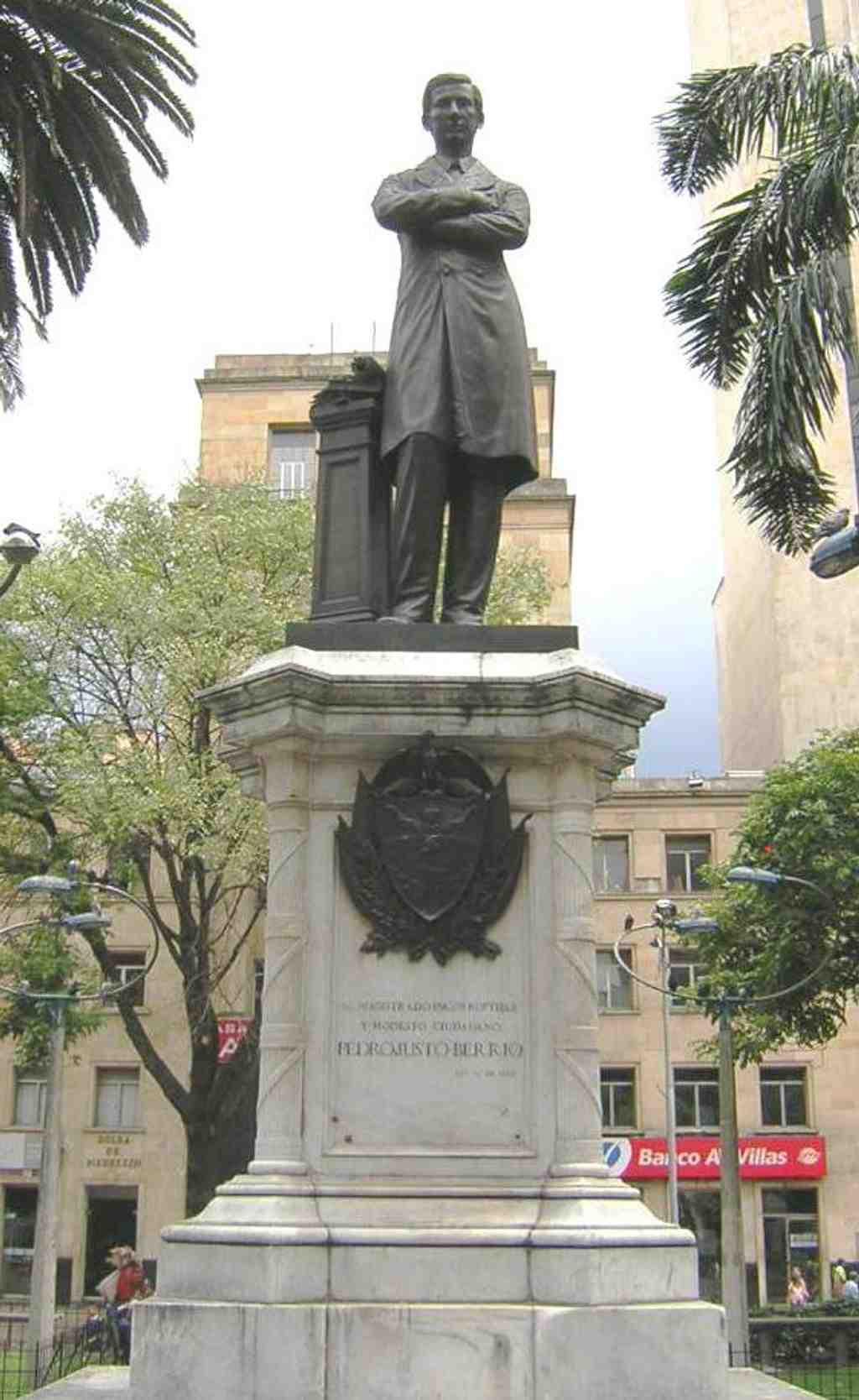
Ouvrir la page dédiée →Right in front of you, you’ll spot Berrío Park by its large Carrara marble pedestal topped with a proud bronze statue of a man standing, arms crossed, gazing confidently out over…Lire plusAfficher moins
Right in front of you, you’ll spot Berrío Park by its large Carrara marble pedestal topped with a proud bronze statue of a man standing, arms crossed, gazing confidently out over the bustling plaza-just look toward the tall palm trees and the cluster of people and you won’t miss it! Welcome, traveler, to the beating heart of Medellín: Berrío Park! If you listen closely, you might hear the echo of centuries inside these stones and palms. Today it’s a lively, open space filled with people chatting, merchants selling treats, and a tangled symphony of city life-but this plaza has seen more stories, celebrations, and secrets than almost any spot in the city. Back in the early days, when the Basilica of Our Lady of Candelaria was first built in 1649, this plaza was simply the Main Square, the go-to gathering place. Imagine scores of parishioners streaming out of church, filling the square with laughter and gossip, maybe even a little scandal-who sat next to whom at Mass? Who brought the best empanadas? The air must have buzzed! From about 1784 to 1892, the square wasn’t just for saints and sermons; it doubled as Medellín’s busiest public market. Sacks of grain, piles of fruit, squawking chickens, and chatter in every corner-picture the chaos and delicious smells. But history is never just fun and games. Here, big political decisions echoed. This was the site for major public announcements and even grim events like public executions. But here, too, great joy: in 1850, the emancipation of 133 slaves was celebrated with cheers and shared hope when they were given papers of freedom. On that day, the square was a stage for revolution-and maybe, for a few, the first taste of true liberty. And if you’re feeling the urge for real estate envy, know this: Spanish tradition meant the city’s wealthiest families built their grand homes right here, circling the plaza like jewels on a royal crown. Imagine silk, lace, and dashing hats, all peering out their balconies to watch life swirl below. In 1895, with great ceremony, the city unveiled the statue you see before you: Pedro Justo Berrío himself, cast in Rome by the Italian sculptor Giovanni Anderlini. Why Berrío, you ask? He was one of Antioquia’s great political figures-think of him as the ultimate “boss” of his day, honest and incorruptible. His likeness, placed atop a pedestal carved from Italian marble, was promised to rival the famous statue of Simón Bolívar in Bogotá. Check out the shield, cane, and sword carved into the base-they don’t hand those out to just anyone! This spot has survived fires and multiple makeovers, from colonial facades to the modern lines you see today, reshaped to keep up with Medellín’s changing heartbeats. Below the statue used to sit a grand water fountain-first stone, then metal-which quenched the thirst of locals for decades. And don’t miss the park’s surprises! In the southeast, “The Challenge” by Rodrigo Arenas Betancourt towers 18 meters above the ground-a concrete-and-bronze colossus donated in 1981. Wander to the southwest and find Fernando Botero’s famous “La Gorda,” a delightfully plump bronze sculpture that locals gave a nickname with plenty of cariño. If walls could talk, the murals from 1956 by Pedro Nel Gómez would spin you stories too, painted across the stones with Antioquia’s richest history. So open your eyes wide, and feel the heartbeat of Medellín pulsing under your feet-Berrío Park isn’t just where you’ve arrived today; it’s where a city was born. And remember, the next time you miss your bus here, you’re just following in the footsteps of a few centuries of Medellín’s best and brightest!
Ouvrir la page dédiée →You’ll spot Parque Berrío Station easily-just look up for the large, modern concrete and steel structure towering on columns with yellow taxis gathered below and crowds bustling…Lire plusAfficher moins
You’ll spot Parque Berrío Station easily-just look up for the large, modern concrete and steel structure towering on columns with yellow taxis gathered below and crowds bustling around its entrances. Welcome to the lively heart of the city! You’re standing at Parque Berrío Station, the pulse of Medellín’s Metro system. Imagine-you’re joining thousands of locals and visitors who stream through these doors every day, making this the city’s most popular place to catch a ride. Opened in 1995, this wasn’t just a metro launch-it was Medellín’s leap into a new era, whizzing passengers from north to south with fresh speed and energy! For a second, close your eyes and tune in to the city’s rhythm: the echo of footsteps, laughter, distant announcements, and the warm aroma of coffee from street vendors floating in the air. But there’s more than trains here! You’re surrounded by magic: not far, you could hear the chimes of the Church of Veracruz, peek towards the grand Basilica, or even catch an art encounter in Botero Park nearby, where massive, plump sculptures surprise and delight! Tension rises during rush hour-will you make your train? But there’s humor too; Medellín’s locals joke the station never sleeps. Standing here, you can imagine this crossroads as the nucleus where Medellín’s traditions, stories, and future dreams all meet. Don’t blink-you might miss a street musician starting a tune or the whispers of history from Berrío Park, the very beginning of Medellín’s own story.
Ouvrir la page dédiée →To spot the Rafael Uribe Uribe Palace of Culture, just look for a striking building ahead with black-and-white checkered stonework and ornate towers rising above the street-it’s…Lire plusAfficher moins
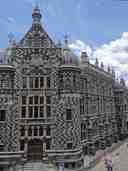
To spot the Rafael Uribe Uribe Palace of Culture, just look for a striking building ahead with black-and-white checkered stonework and ornate towers rising above the street-it’s impossible to miss! Ah, you’ve found it! Welcome to the whimsical world of the Rafael Uribe Uribe Palace of Culture-a building that looks like a chessboard collided with a fairytale castle. Seriously, if Batman had a summer home in Medellín, this might be it! So, take a breath and imagine the hustle and bustle of 1920s Medellín, with horse carts and market vendors crowding the nearby streets. Nearly two centuries ago, when the powers of Antioquia decided to shift their headquarters here, they were working out of nothing more than a big old house at the corner of Bolívar and Boyacá Streets. Two floors, sixteen offices, and probably a “do not disturb” sign hanging everywhere! But dreams grew bigger-General Pedro Nel Ospina, who would go on to be President of Colombia, put his foot down and said, “Let’s build something iconic.” Insert Belgian architect Agustín Goovaerts, who clearly thought Gothic Revival was just the right amount of dramatic flair for this lively city. With its spires, domes, and all those pointy bits, it certainly stands out. But if you think putting up this palace was smooth sailing, think again! In 1925, they broke ground right at the corner of Calibío and Bolívar, envisioning grandeur. The first stage was supposed to hold all the archives and assembly rooms. But-cue dramatic drumroll-along came the 1929 financial crisis, and the whole thing screeched to a halt. You can almost hear the clanging of tools dropping and foremen grumbling, “Here we go again…”. Four long years trickled by before the money tap turned back on. They built the octagonal segment, east wing, and some fabulous balconies. Jesús Mejía tackled these changes-imagine him with his sleeves rolled up, hesitantly switching the function of rooms, putting his fingerprint on the place. Inside today, the assembly’s meeting hall became the Luis López Auditorium. You’ll see gleaming bronze reliefs by Bernardo Vieco, a stunning mural called “The Liberation of Slaves” by Ignacio Gómez Jaramillo, and dazzling stained glass-carefully joined with lead by the Longas brothers. Yet, despite these artistic touches, the whole project almost died on the drawing board when, in 1937, the government simply abandoned the building! Imagine the half-finished palace, sealed away behind fences, growing cobwebs as dreamers walked past, shaking their heads. But this building is no quitter! After years of neglect, fresh teams led by Gerardo Mejía, Gustavo Restrepo, and Gustavo Aristizábal came in, dusted off the old plans (with some creative updates!), and rallied the resources to finally complete the north façade and restore its original details. By 1982, the Colombian government recognized it as a national monument. And believe it or not, there were rumors swirling in the 1980s about turning it into a shopping mall-or even demolishing it for something more “modern!” Good thing history and good taste prevailed. Finally, the palace got an upgrade not just in stone, but in spirit. The Governor’s office moved out, and in 1987, it became the Palace of Culture in honor of Rafael Uribe Uribe, the famous general of the Liberal Party. Now, it’s a true “people’s palace”-step inside and you’ll stumble across concert rehearsals echoing from the dome, busy librarians tucking away old photos, lively art exhibitions, rich archives of music and sound, and sometimes the aroma of fresh coffee wafting from the in-house café to remind you you’re still in Medellín! Oh, and here’s a little engineering marvel for dessert: that dome above you? Its metal skeleton was brought all the way from Belgium and assembled using red-hot nuts and bolts-no welding-just like they did for skyscrapers in New York. Now, that’s how you build a legend that stands the test of time! As you gaze up at the bold lines and shadowed arches today, remember: this palace has seen ambitious governors, frustrated architects, government abandonments, and stubborn citizens keeping away the bulldozers. All of Medellín’s history seems to beat under its checkerboard skin. So go on, step inside, and let this “castle of culture” surprise you-it’s where the city’s past, present, and future come to life in one unforgettable embrace. Ready to delve deeper into the location, construction or the name change? Join me in the chat section for an enriching discussion.
Ouvrir la page dédiée →Right in front of you, you’ll spot the Museum of Antioquia by its impressive, symmetrical façade-tall windows, sandy-colored stone, and rows of red brick, with palm trees lining…Lire plusAfficher moins
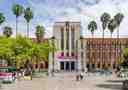
Right in front of you, you’ll spot the Museum of Antioquia by its impressive, symmetrical façade-tall windows, sandy-colored stone, and rows of red brick, with palm trees lining the plaza like guardians holding the skies. Welcome to the Museum of Antioquia! Just imagine: it all began back in 1881, when a group of friends gathered not far from here, plotting to create a museum in honor of Francisco Antonio Zea. Back then, the place was more about dusty books, gleaming old coins, and documents that looked like they’d burst into sneezes if you just blew at them! The founder, Manuel Uribe Ángel, donated his precious collection under one important condition: he got to be the boss-the first director! If only all museum directors had to donate half a library for the job, right? In those early years, the museum was a treasure chest, packed with weapons, flags from Colombia’s independence days, mysterious pre-Columbian stones, and even the first newspapers printed in the country. A visit wasn’t just a stroll through art-it was like stepping into a time machine lined with creaky shelves! But, like in all good stories, history stormed in and shook things up. The Constitution changed, Antioquia lost its “sovereign state” badge, and suddenly the museum was at the mercy of shifting governments. Eventually, the building was needed as the new governor’s palace, and the artifacts were packed up-some stashed away safe, others sent off to universities, like students off to find new homes. The story could have ended there, with dreams gathering dust, but Medellín just wouldn’t let its history fade. It was the 1940s, and the city had grown, buzzing with life and promise-yet, oddly enough, without a representative museum! Enter Teresa Santamaria de Gonzalez and Joaquin Jaramillo Sierra: two heroes with a simple question-how could a city this lively not have a proper museum? They gathered the community, searching for ways to revive the collection so it wouldn’t fall back under governmental control and disappear again. Their answer? Make it a private non-profit, a home safe from the fickle winds of politics and paperwork. By 1955, the museum opened its doors again-this time in a former Coin House that once was a distillery. Picture the faint smell of aguardiente still swirling in the air as visitors first walked among sculptures and canvases. Over the decades, even its name couldn’t escape transformation. It became the Zea Museum of Art, but people kept confusing it with a wax museum (imagine coming in expecting life-size celebrity wax figures and finding ancient relics instead!). Then, in 1978, something magical happened: Fernando Botero, Medellín’s own world-famous artist, donated his first set of works. This changed everything. The museum, reborn and bursting with color-much like a Botero painting-opened a new chapter and finally became the Museum of Antioquia. But even museums aren’t immune to tough times. By the late 1990s, the museum faced financial troubles-visitors dwindled, and the walls echoed with more silence than footsteps. Then came the rescue missions, renovations, and, eventually, a bold new vision called Museo 360. Since 2016, under director María del Rosario Escobar, this museum became more than a showcase for art-it’s now a place where Medellín faces its own stories, good and bad. Imagine exhibits not just inviting you to look, but to reflect: recognizing the struggles and triumphs of people often ignored. The museum started amazing projects like “Nadie sabe quién soy yo,” where artists and sex workers collaborated, sharing their life experiences through performance, art, and storytelling. Their creations didn’t just stay inside these walls-they spilled out into the city, knitting communities together and making noise where voices had been silent. So, as you stand here in front of this grand, welcoming entrance, surrounded by the hum of Botero Plaza and the distant murmur of the city, remember-this museum isn’t just about objects and paintings. It’s about Medellín, always changing, always telling fresh stories, always ready to share a laugh and a lesson… and, as you can see, perfectly positioned to surprise anyone who expects just another quiet, old building!
Ouvrir la page dédiée →To spot the Hotel Nutibara, just look for a grand, rectangular gray building with tall vertical windows, crowned by a big sign on its roof that spells out “NUTIBARA” in bold…Lire plusAfficher moins
To spot the Hotel Nutibara, just look for a grand, rectangular gray building with tall vertical windows, crowned by a big sign on its roof that spells out “NUTIBARA” in bold letters-it’s just beyond the palm trees and the buzzing metro line. Now, as you stand here with the rumble of the metro overhead and the city’s pulse all around, let your imagination take you back in time. Picture Medellín in the 1930s-a city so much quieter than today, with only 150,000 people, when “Netflix binge” meant telling campfire stories twice. The city was on the brink of change, and its leaders wanted something new-something glamorous, modern, and bold-so they dreamed up a hotel that would put Medellín on the map. Enter the Nutibara Hotel, built right here in the busy heart of the city, with American architect Paul Williams sketching his dreams in art deco lines. Imagine the thrill of locals as rumors swirled about this “American designer” nobody here had really heard of, and the excitement as old buildings were torn down to make way for a new landmark. When it finally opened its doors in 1945, the Nutibara was a symbol of elegance and modernity so fresh you could almost smell the new paint each morning. The walls echoed with laughter, music, and the clinking of glasses in “La Orquídea”-the hotel’s famous restaurant, where locals and travelers have dined beneath soft lights and rich aromas ever since. Even the hotel’s very name drips with history-Nutibara, the legendary chief of the region, an ancestral guardian, lives on in every corner, as do other Amerindian names gracing the lounges: Bochica, Tairona, Quimbaya, Katío, Bachué, Nutabe. Oh, and the guests! Over the decades, this place has seen its fair share of history-makers and stargazers. Dream for a moment: the elegant shoes of Jorge Eliécer Gaitán, the wise words of Gabriel García Márquez, the swagger of Pelé, all echoing through the lobby. Celebrity sightings are tradition-everyone from politicians and writers to artists and rock stars like the legendary Los Pelukas, Colombia’s pioneer rock band, have passed through these doors. Even today, celebrities sometimes ask specifically for the Nutibara, treating it like a sparkling jewel of nostalgia. And don’t forget the stories beyond the silk sheets and glimmering windows. Out on the Plazuela Nutibara, artists learned and played, teachers brought their students to sketch and dream in the open air, and groups lobbied for the arts-each person adding a brushstroke to the grande mural of Medellín’s memory. For nearly 80 years, hotel staff and loyal guests have watched the city change, yet the Nutibara endures-standing guard while the world whirls by, its sign shining over a city that loves stories, music, and a touch of old-fashioned glamour. So, snap a selfie, wave to the train-I promise, whatever happens next, you’ll be a small part of Medellín’s living history, right here at the Nutibara!
Ouvrir la page dédiée →


Foire aux questions
Comment commencer le tour ?
Après l'achat, téléchargez l'application AudaTours et entrez votre code de réduction. Le tour sera prêt à commencer immédiatement - il suffit d'appuyer sur lecture et de suivre l'itinéraire guidé par GPS.
Ai-je besoin d'Internet pendant le tour ?
Non ! Téléchargez le tour avant de commencer et profitez-en pleinement hors ligne. Seule la fonction de chat nécessite Internet. Nous recommandons de télécharger en WiFi pour économiser vos données mobiles.
S'agit-il d'une visite de groupe guidée ?
Non - il s'agit d'un audioguide en autonomie. Vous explorez indépendamment à votre propre rythme, avec une narration audio diffusée par votre téléphone. Pas de guide, pas de groupe, pas d'horaire.
Combien de temps dure le tour ?
La plupart des tours durent entre 60 et 90 minutes, mais vous contrôlez totalement le rythme. Faites des pauses, sautez des arrêts ou arrêtez-vous quand vous le voulez.
Et si je ne peux pas finir le tour aujourd'hui ?
Pas de problème ! Les tours disposent d'un accès à vie. Faites une pause et reprenez quand vous le souhaitez - demain, la semaine prochaine ou l'année prochaine. Votre progression est sauvegardée.
Quelles sont les langues disponibles ?
Tous les tours sont disponibles dans plus de 50 langues. Sélectionnez votre langue préférée lors de l'utilisation de votre code. Note : la langue ne peut pas être changée après la génération du tour.
Où accéder au tour après l'achat ?
Téléchargez l'application gratuite AudaTours sur l'App Store ou Google Play. Entrez votre code de réduction (envoyé par e-mail) et le tour apparaîtra dans votre bibliothèque, prêt à être téléchargé et commencé.
Si vous n'appréciez pas le tour, nous vous rembourserons votre achat. Contactez-nous à [email protected]
Paiement sécurisé avec 


