
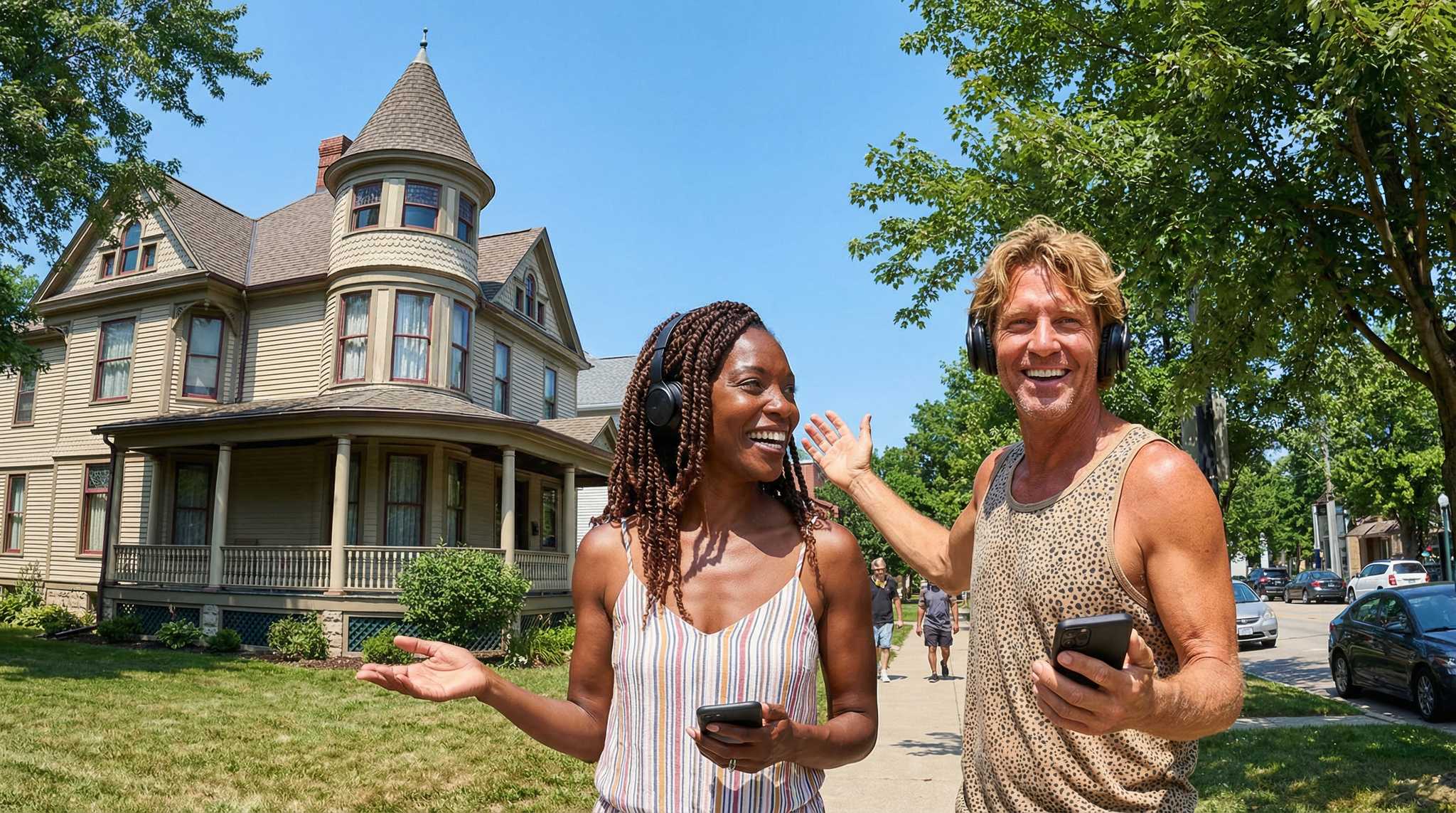
Tour de audio de South Bend: Ecos de legado en el corazón de la ciudad
Gárgolas observan desde altas cornisas de piedra mientras pasillos silenciosos resuenan con secretos bajo el familiar horizonte de South Bend. Este tour de audio autoguiado te invita a descubrir capas de la ciudad que la mayoría de los viajeros pasan por alto: historias de ambición, intriga y extrañas leyendas que resuenan entre fachadas atemporales. ¿Quién lo arriesgó todo con un solo discurso dentro del Edificio Federal Robert A. Grant, provocando indignación en las escaleras del juzgado? ¿Qué reliquia desaparecida aún acecha los sombríos pasillos de la Casa Morey-Lampert? ¿Qué viajero improbable grabó su nombre en la historia bajo los arcos abovedados de la Catedral de Santiago por la noche? Recorre calles bulliciosas y pasillos silenciosos mientras verdades ocultas se liberan y voces olvidadas claman desde columnas ornamentadas y naves góticas. Cada parada revela una nueva faceta de South Bend, una viva con drama, descubrimiento y la emoción de los secretos revelados. Tu viaje comienza en el umbral de lo extraordinario. Atrévete a entrar.
Vista previa del tour
Sobre este tour
- scheduleDuración 40–60 minsVe a tu propio ritmo
- straighten3.7 km de ruta a pieSigue el camino guiado
- location_onUbicaciónSouth Bend, Estados Unidos
- wifi_offFunciona sin conexiónDescarga una vez, úsalo en cualquier lugar
- all_inclusiveAcceso de por vidaReprodúcelo en cualquier momento, para siempre
- location_onComienza en Edificio Federal Robert A. Grant y Palacio de Justicia de EE. UU.
Paradas en este tour
Directly in front of you stands a massive, rectangular block of smooth Indiana limestone resting on a gray Vermont granite base, defined by tall, flat, vertical columns known as…Leer másMostrar menos
Abrir página dedicada →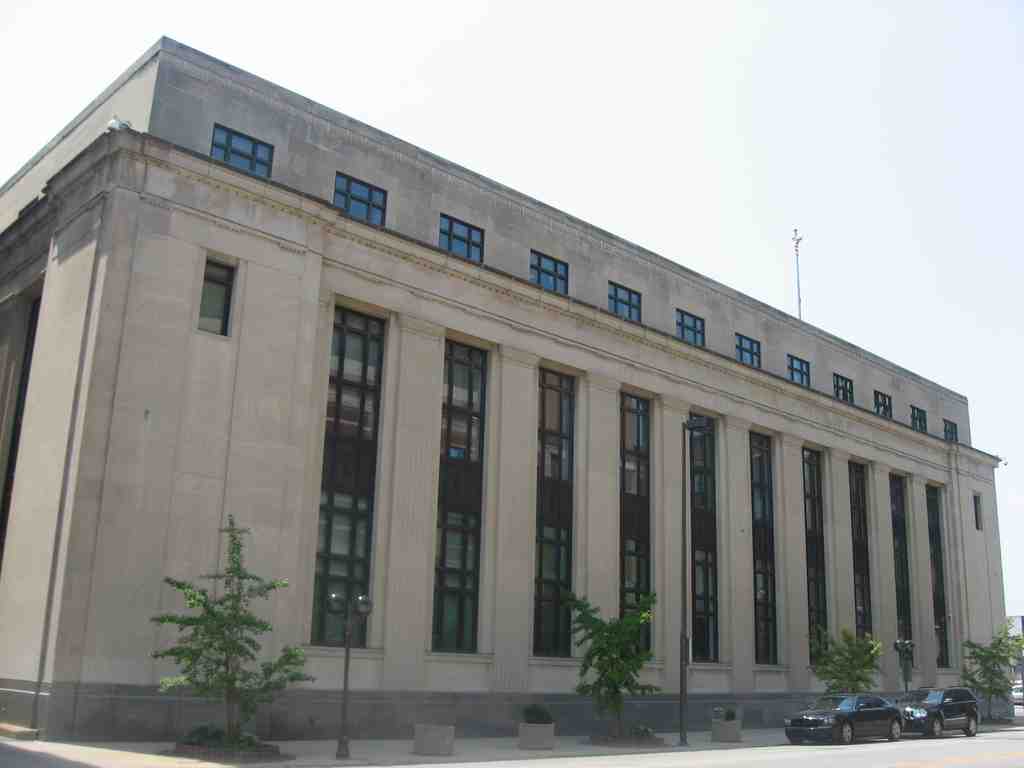
Robert A. Grant Federal Building and U.S. CourthousePhoto: Nyttend, Wikimedia Commons, Public domain. Cropped & resized. Directly in front of you stands a massive, rectangular block of smooth Indiana limestone resting on a gray Vermont granite base, defined by tall, flat, vertical columns known as pilasters that separate long bands of windows. Take a look at the photo on your device to see the full sweep of that imposing, nearly flat northern facade. This is the Robert A. Grant Federal Building and U.S. Courthouse. Built in the early 1930s, this structure was designed to project absolute, unshakable civic power. In a time when the entire country's economy had collapsed, the federal government decided to drop a literal fortress of permanence right into downtown South Bend.
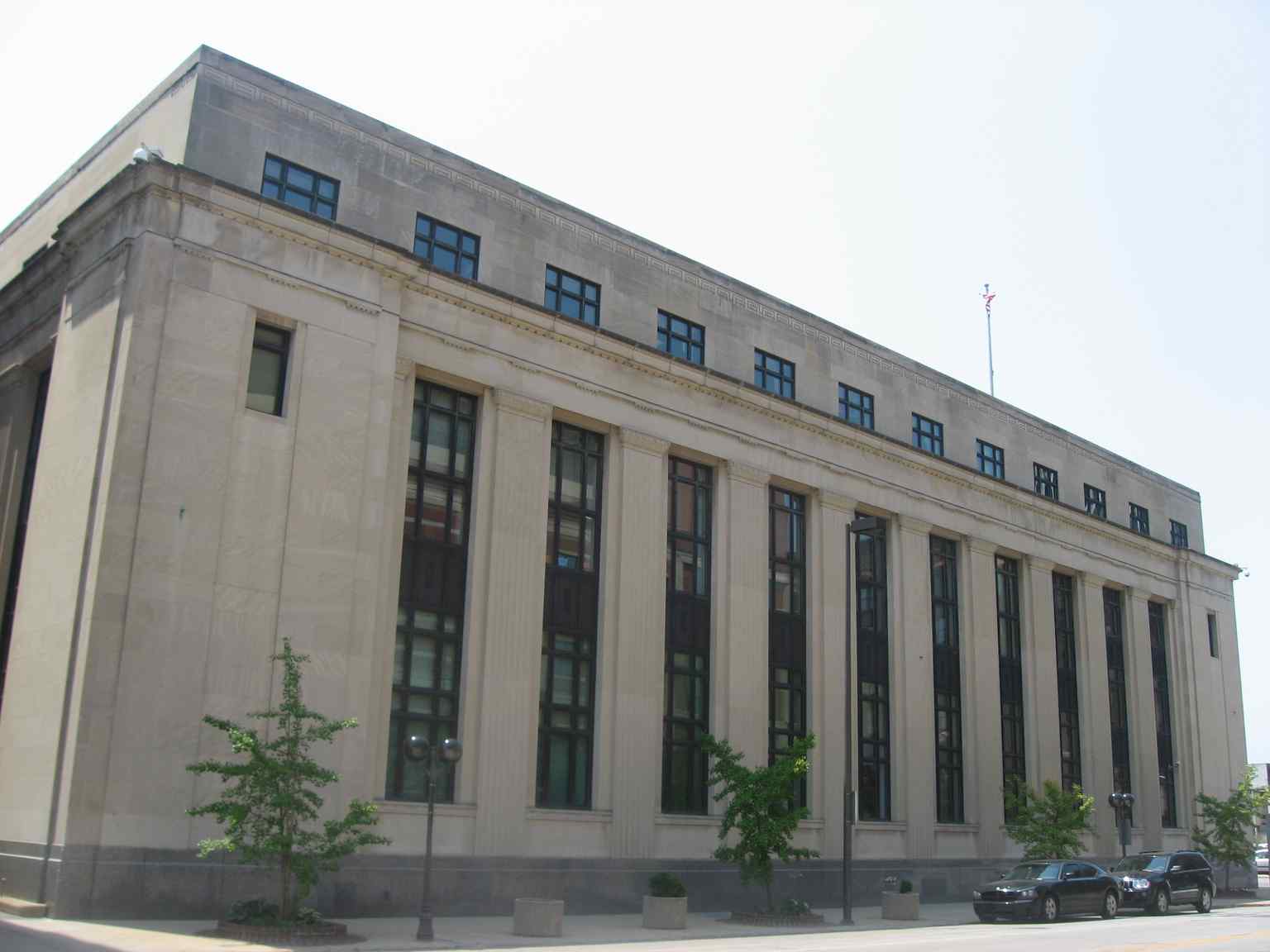
This photo shows the northern primary elevation of the Robert A. Grant Federal Building, a prominent example of Art Deco / Art Moderne architecture, built between 1932 and 1933 and faced with Indiana limestone and Vermont granite.Photo: Nyttend, Wikimedia Commons, Public domain. Cropped & resized. Back in 1930, at the start of the Great Depression, the Treasury Department authorized a million dollars... roughly twenty million dollars today... for a new post office and courthouse. Landing that massive contract was a colossal undertaking for a local architectural firm, Austin and Shambleau. They were a rather bizarre pairing. Ennis Austin was an older former government bureaucrat who knew exactly how to navigate federal red tape. His partner, N. Roy Shambleau, was a younger Canadian immigrant who loved designing sprawling residential homes in the Prairie style of Frank Lloyd Wright. To get the government money, Shambleau had to completely abandon his preferred aesthetic.
He pivoted to a style sometimes called Starved Classicism. It is exactly what it sounds like. They took traditional classical architecture, with all its fancy, carved ornamentation, and starved it... stripping away the frills to leave only sharp, flat, abstract forms. The result is this monumental Art Deco block you see today, with its tight vertical window bands and pared-down bronze details.
The construction itself was a massive financial gamble that paid off for the local workforce. A masonry contractor named James I. Barnes won the bid. During the darkest years of the Depression, taking on this immense public works project was the only thing keeping his crew employed. His success here launched an empire so formidable that when Barnes died suddenly decades later, his seven daughters entirely took over his national construction business.
South Bend desperately needed this symbol of authority. Just a year after the building opened, notorious public enemies John Dillinger and Baby Face Nelson brazenly attacked a nearby bank, making off with thousands of dollars and shooting several people during their escape. Federal agents needed a secure stronghold in a region plagued by daylight shootouts. Today, the courthouse processes high level cybercrimes and nationwide digital conspiracies instead of bank robbers with submachine guns.
In 1992, the building was renamed for Judge Robert A. Grant. He was alive to see the building dedicated to him, a rare honor. Yet history is rarely perfectly clean. Decades later, unsealed court files tied him to controversial decisions regarding institutional secrecy, casting a complicated shadow over the celebrated namesake.
So, we start our journey at a heavily fortified anchor of government power, built on the steady, calculated risk of a federal contract. But our next stop was born from a much riskier, far more unusual venture. We are moving on to the Knights of Pythias Lodge, just a three minute walk away.
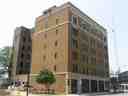
Look to your right at that seven-story rectangular brick structure, anchored by a pale terra-cotta ground floor and crowned with an elaborately decorated top level. South Bend's…Leer másMostrar menos
Abrir página dedicada →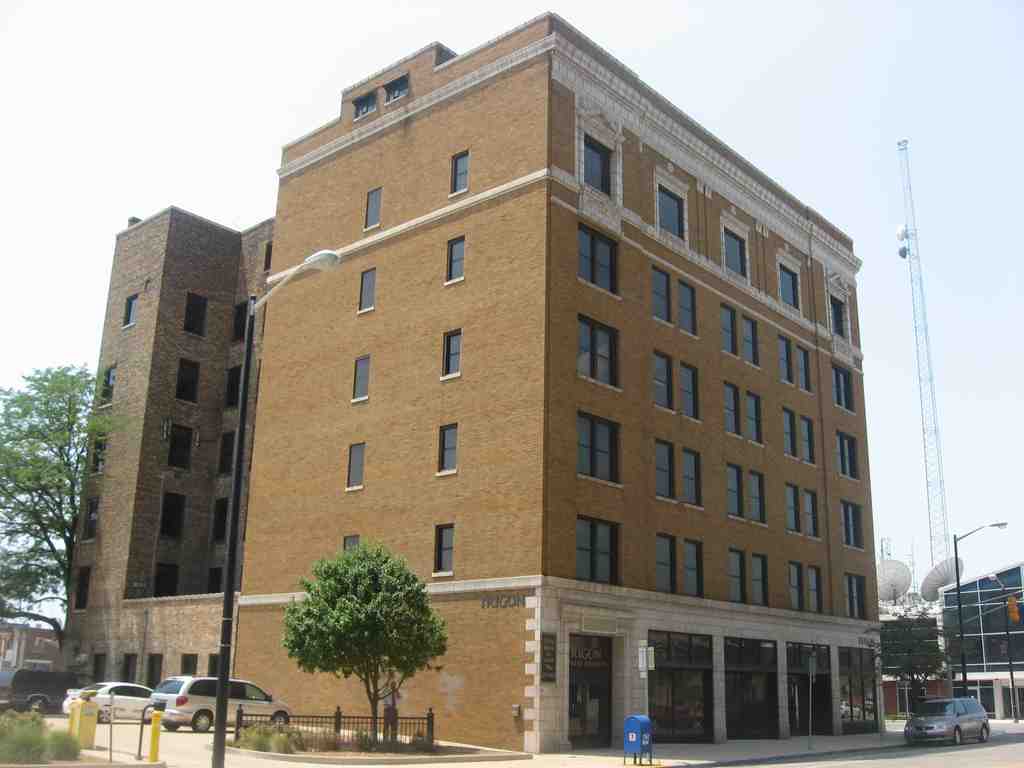
Knights of Pythias LodgePhoto: Nyttend, Wikimedia Commons, Public domain. Cropped & resized. Look to your right at that seven-story rectangular brick structure, anchored by a pale terra-cotta ground floor and crowned with an elaborately decorated top level.
South Bend's Crusade Lodge Number 14 did not play it safe. In 1922, they decided to construct the largest facility in their fraternity's supreme domain, their national network, betting staggering amounts of borrowed money on their own expansion. It was an astonishing wager of capital and ego.
To execute this vision, they hired Austin and Shambleau architects, with N. Roy Shambleau working alongside Walter W. Schneider. Shambleau was a key architect shaping the city's commercial facade, applying the classic Chicago School philosophy to his designs. Check your screen to see how he treated the building like a classical column: dividing it into a base made of terra-cotta, a fired clay used for detailing, an unadorned five-story brick shaft, and a highly elaborate seventh-floor capital.
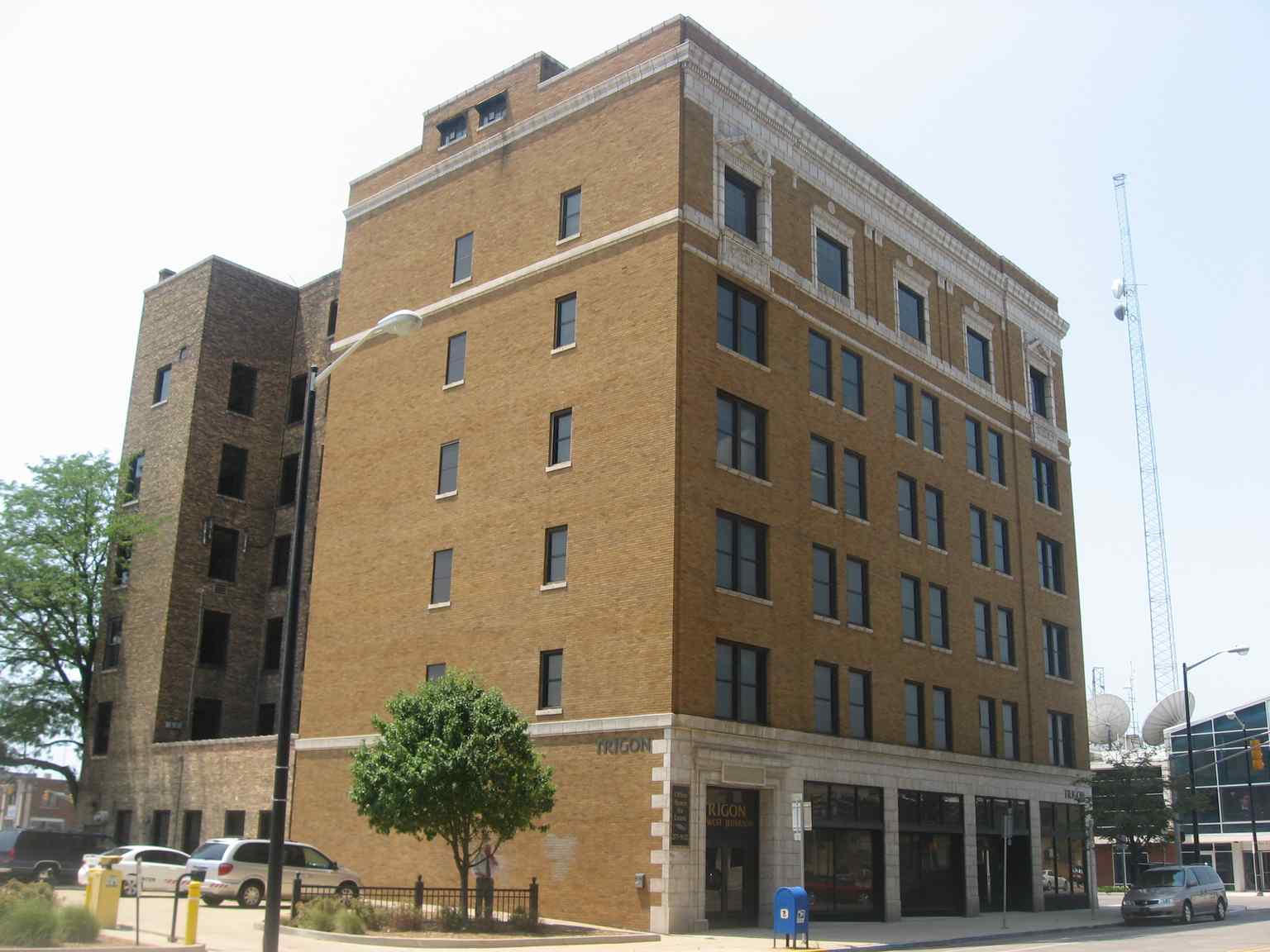
This seven-story Knights of Pythias Lodge, built in 1922, showcases the Chicago School design philosophy, with a distinct terra-cotta base, an unadorned shaft, and an elaborate capital on its seventh floor.Photo: Nyttend, Wikimedia Commons, Public domain. Cropped & resized. The lodge members actually only occupied those top two floors. To pay off their towering debt, they leased the lower five floors. Ironically for a private men's club during Prohibition, their main tenants were the Federal Court and the District Prohibition Office.
But their bold gamble ultimately failed. When the Great Depression hit, the Knights couldn't sustain the debt. In 1935, an insurance company foreclosed on a 120,000 dollar bond, about 2.7 million dollars today, stripping the fraternity of their headquarters forever.
Modern renovations erased the interior, but the original seventh-floor window frames where they held secret meetings remain. This wasn't the only fraternity building to shape the city's destiny. Let us walk two minutes down the street to the Knights of Columbus-Indiana Club.
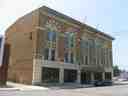
Take a look at the three-story rectangular brick building on your left, impossible to miss with its round arched windows framed by wedge-shaped blocks of white terra cotta. We…Leer másMostrar menos
Abrir página dedicada →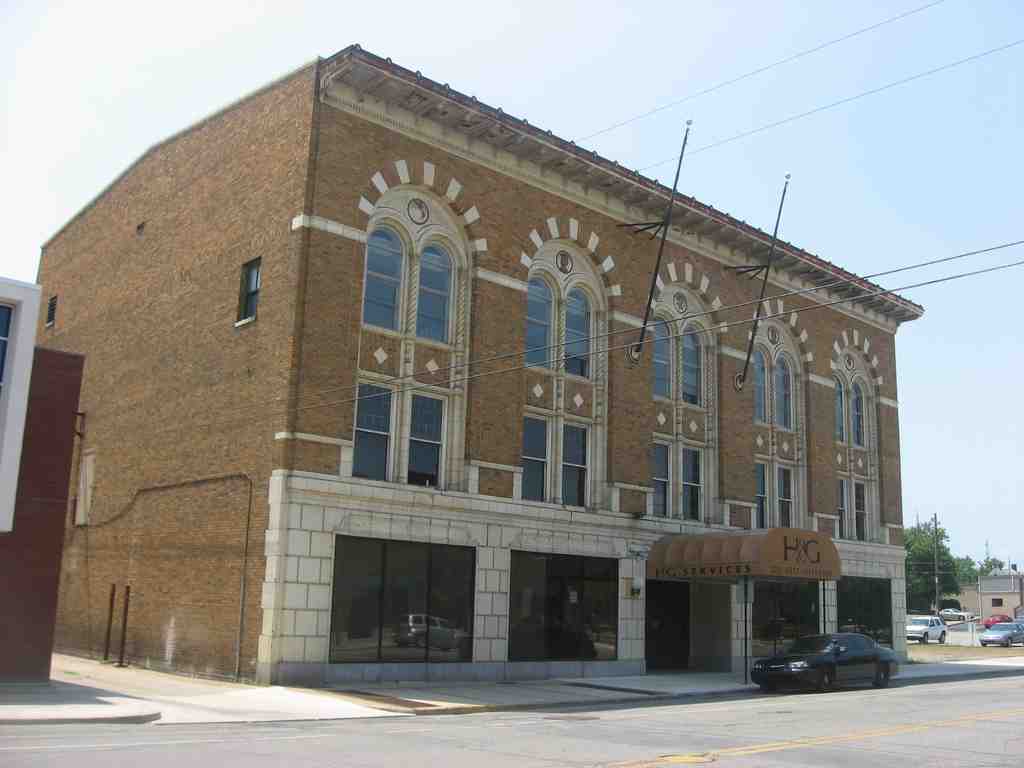
Knights of Columbus-Indiana ClubPhoto: Nyttend, Wikimedia Commons, Public domain. Cropped & resized. Take a look at the three-story rectangular brick building on your left, impossible to miss with its round arched windows framed by wedge-shaped blocks of white terra cotta. We explored the Knights of Pythias Lodge earlier, but while that was just another grand fraternal hall, this building inadvertently hosted a revolution. Built in 1924, this Renaissance Revival structure, a style mimicking the lavish palaces of early Italy, was commissioned as an exclusive Catholic fraternity lodge. Check the historic photo on your phone for a glimpse of its original glory.
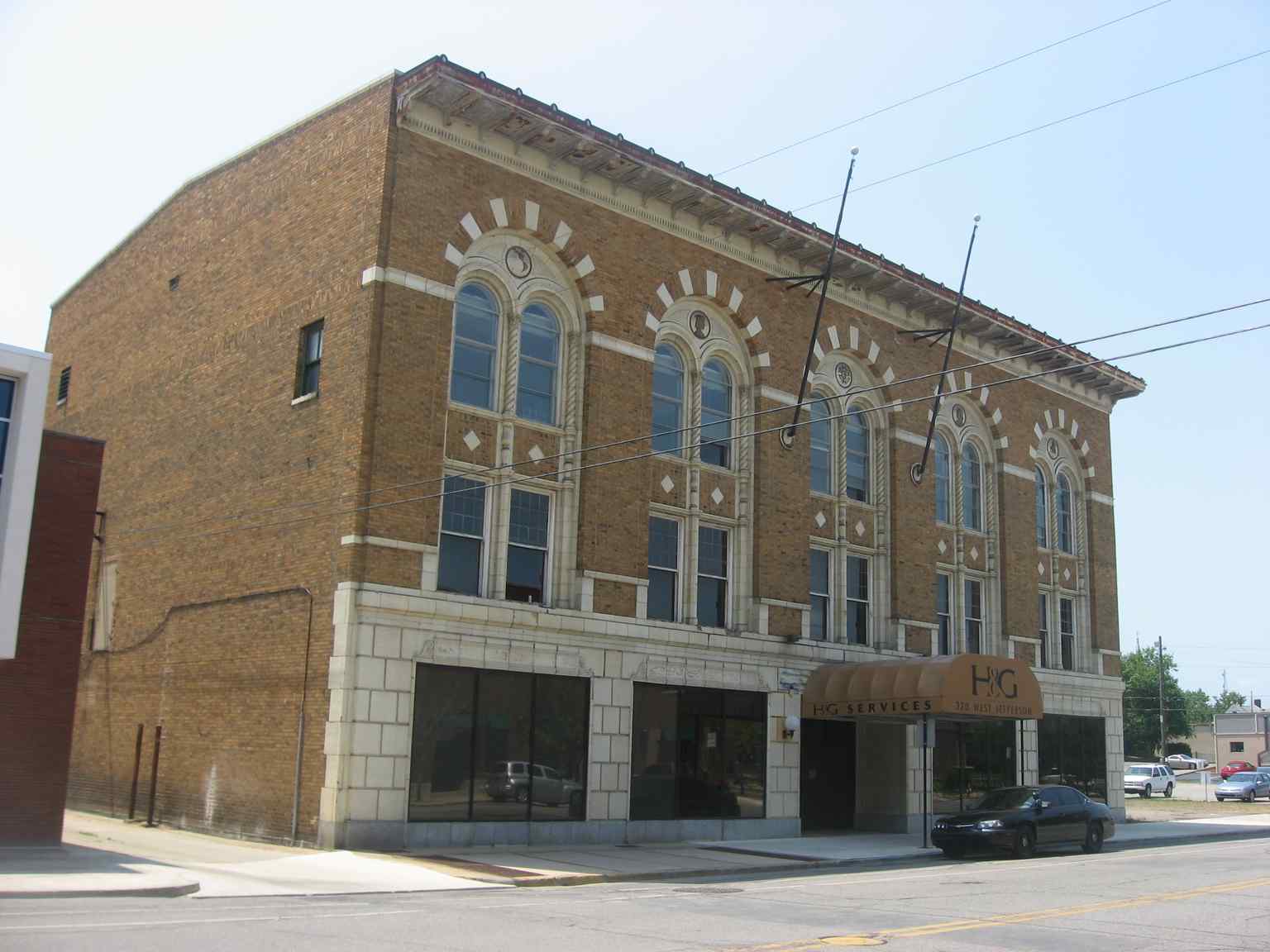
The Knights of Columbus-Indiana Club, a three-story Renaissance Revival building constructed in 1924, showcasing its distinct brick and terra cotta design and its status on the National Register of Historic Places.Photo: Nyttend, Wikimedia Commons, Public domain. Cropped & resized. The most pivotal moment inside these elegant walls had nothing to do with elite businessmen. The Labor Movement crashed the party here in April 1936, when union delegates crowded into this very building for a groundbreaking convention. Right here, autoworkers met for the first time under the banner of the newly established UAW. Within months, they used that momentum to stage the first major automotive sit-down strike in American history at the nearby Bendix Corporation.
The property was sold to an elite businessmen's club in 1939, but they eventually faced a dramatic financial foreclosure in 1976. Naturally, the stately space transformed into a gritty nightlife venue called Pardner's Nightclub in the 1980s. Nothing says aristocratic elegance quite like a blaring hard rock concert by Montrose.
Whether it was autoworkers risking their livelihoods for fair treatment or ambitious businessmen gambling everything on a failing mortgage, this structure was shaped by profound leaps of faith. Let us step away from the noise of collective movements and turn our focus toward much quieter, deeply personal motivations. The Morey-Lampert House is a three-minute walk away.
Mostrar 11 paradas másMostrar menos paradasexpand_moreexpand_less
Take a look at the house in front of you, easily recognizable by its first floor of rough cut sandstone blocks, the second story clad in wood shingles, and a wraparound porch…Leer másMostrar menos
Abrir página dedicada →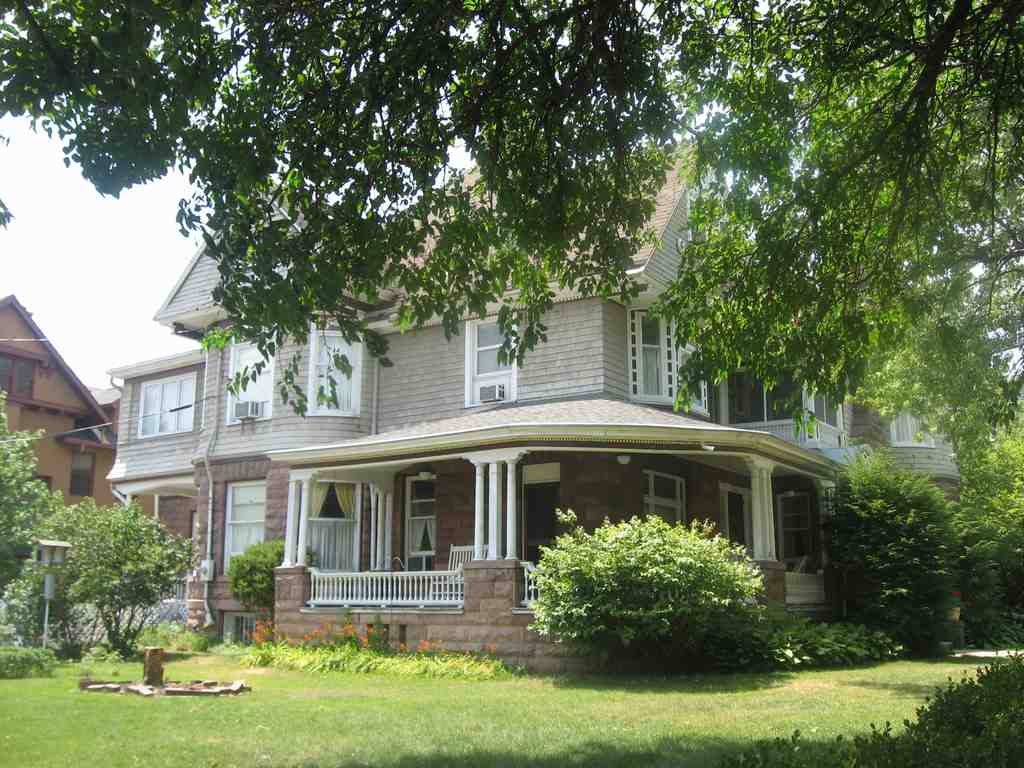
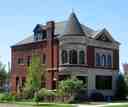
Morey-Lampert HousePhoto: Nyttend, Wikimedia Commons, Public domain. Cropped & resized. Take a look at the house in front of you, easily recognizable by its first floor of rough cut sandstone blocks, the second story clad in wood shingles, and a wraparound porch leading to a distinctive round corner tower with a conical roof. Take a glance at your screen to see it in its full historical glory.
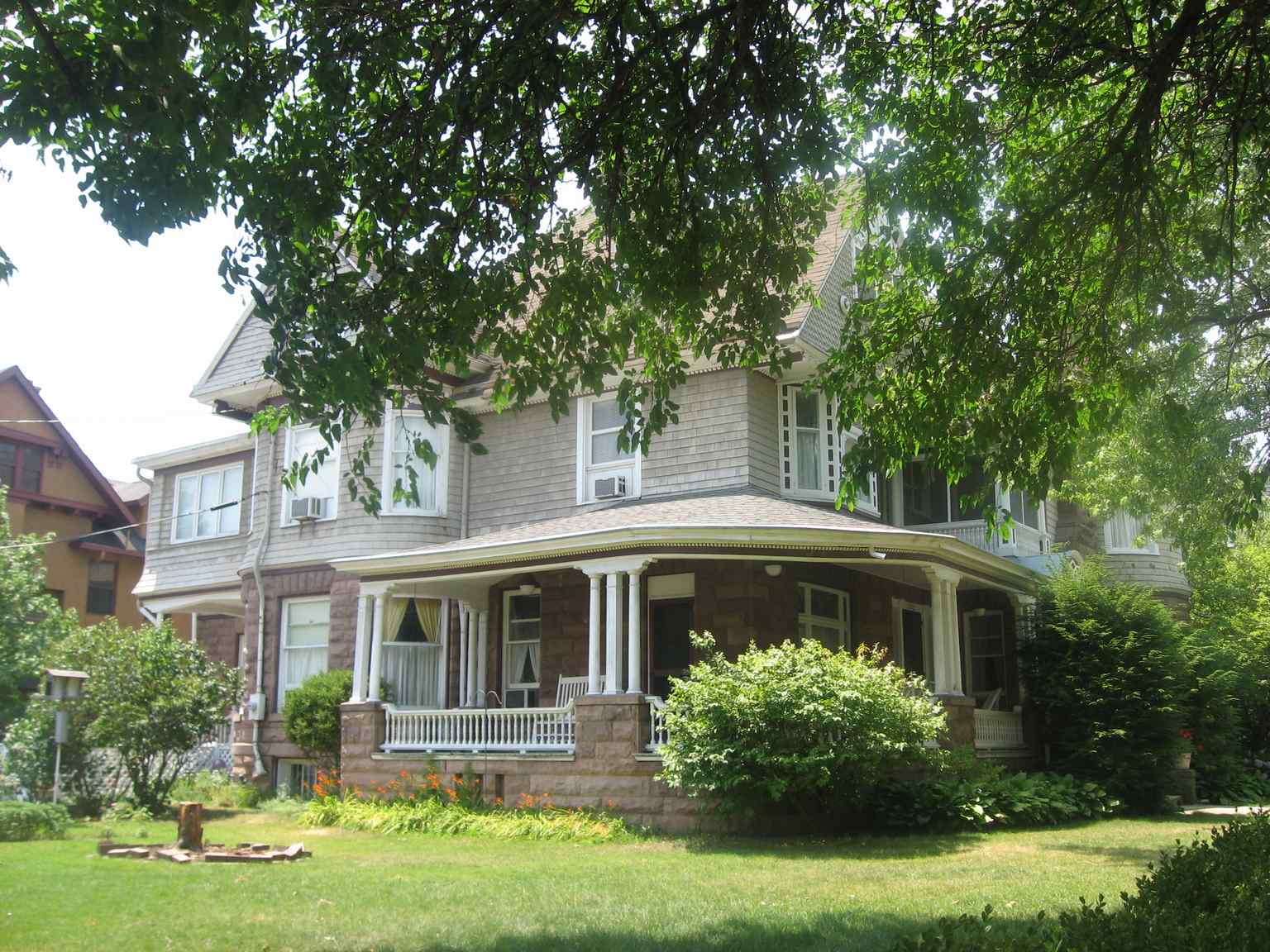
The Morey-Lampert House, built in 1895, is designated a national historic landmark, an outstanding example of Queen Anne style with its first story of sandstone ashlar and a distinctive round corner tower.Photo: Nyttend, Wikimedia Commons, Public domain. Cropped & resized. There are hidden personal stories embedded in the masonry of this town. To most, this is just a lavish Victorian mansion built in 1895. But this grand construction was actually a highly calculated, incredibly expensive way to reclaim ancestral land. Frances Helen Rose was a descendant of the original property owners, who held title to this specific plot way back in 1851. By building a masterpiece here, her husband, Dr. George P. Morey, was securing her family legacy in stone.
Dr. Morey, a Civil War veteran, did not do things by halves. He built an outstanding example of Queen Anne architecture, a design style famous for its asymmetrical shapes, varied textures, and dramatic towers. He was also a pragmatist. Behind the mansion, he built an investment property mixing Craftsman and English Vernacular styles. He rented those apartments out to local lawyers and doctors to ensure the family financial machinery kept humming.
But his real investment was in the details of the main house. Dr. Morey purchased a spectacular stained glass window that had recently won a medal at an international exhibition. He paid 2,800 dollars for it... roughly 74,000 dollars today. He engineered the house to feature this window on a western wall, specifically to capture the glow of the setting sun.
It was an immense emotional and financial gamble, and fate, it seems, has a dark sense of humor. Frances Helen Rose died in July 1896, living in her reclaimed dream home for only a few months. Adding to the shadow over the property, their young daughter, Frances Claire, died soon after.
But the house survived its tragic start. Dr. Morey eventually gifted it to his surviving daughter, Helene, and her new husband, William Keyes Lamport. Lamport happened to be a founding partner of an influential advertising firm that ran national campaigns for Evinrude Outboard Motors. The house stayed in the family until the 1950s, later serving as an office and famously as a bed and breakfast known as The Inn of West Washington. During that era, the public finally got to step inside and experience the opulent details firsthand.
Architecture is rarely just wood and stone. Sometimes, it is an elaborate mechanism for securing a place in the world. Speaking of buildings that are hiding their true nature behind an elegant facade... let us head over to the South Bend Remedy Company Building, which is just a three minute walk away.
On your left is a two-story red brick and limestone building distinguished by a prominent round turret topped with a conical roof and a wide frieze, a sculpted horizontal band…Leer másMostrar menos
Abrir página dedicada →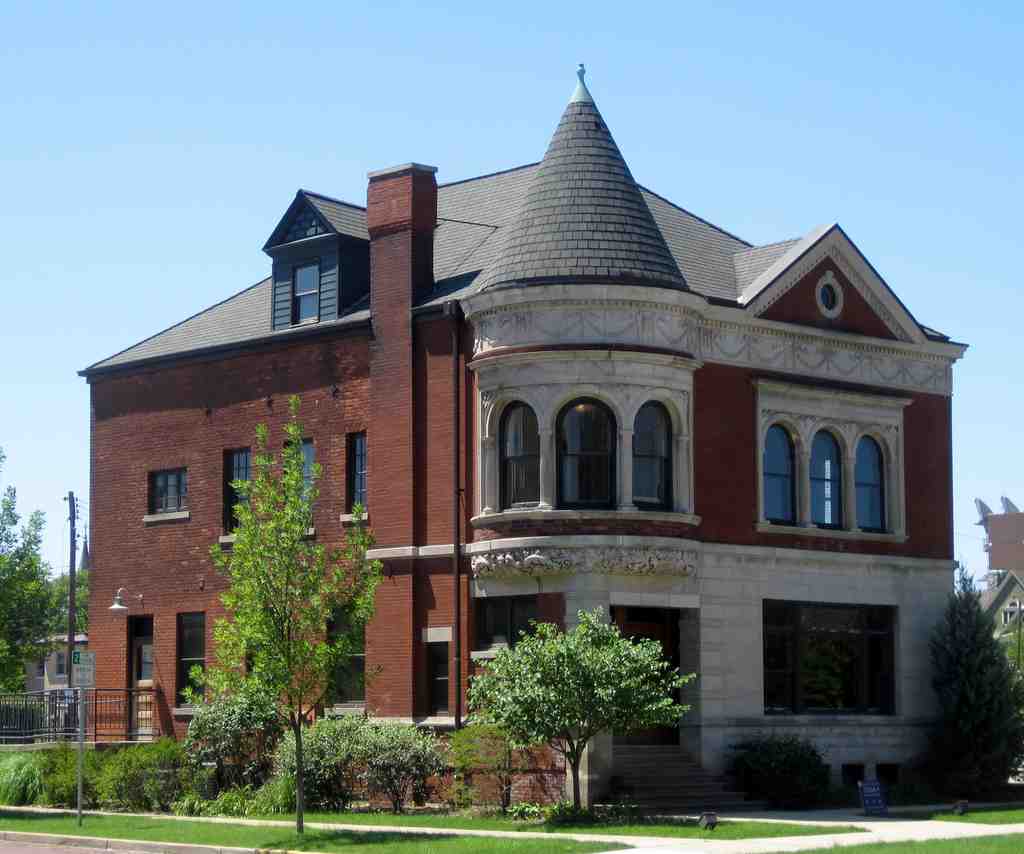
South Bend Remedy Company BuildingPhoto: Teemu08, Wikimedia Commons, CC BY-SA 3.0. Cropped & resized. On your left is a two-story red brick and limestone building distinguished by a prominent round turret topped with a conical roof and a wide frieze, a sculpted horizontal band carved with garlands. In 1892, a man named Albert H. Kelley decided that a steady paycheck was simply too boring. He resigned from a highly secure position as Assistant Cashier at the prestigious Studebaker Brothers Manufacturing Company to peddle mail-order patent medicines, which were essentially unregulated over-the-counter remedies. It was an audacious roll of the dice. Yet under his leadership, the South Bend Remedy Company gained worldwide recognition, largely for a flagship product called Magnolia Blossom.
He used his profits to build the structure in front of you in 1895. Notice how it refuses to look like a laboratory. If you check your app you will see it was built to masquerade as an elegant private residence. Kelley specifically designed it as the end unit of an intended series of row houses that were never actually built. It remains the only commercial building in South Bend intentionally disguised as a private home.
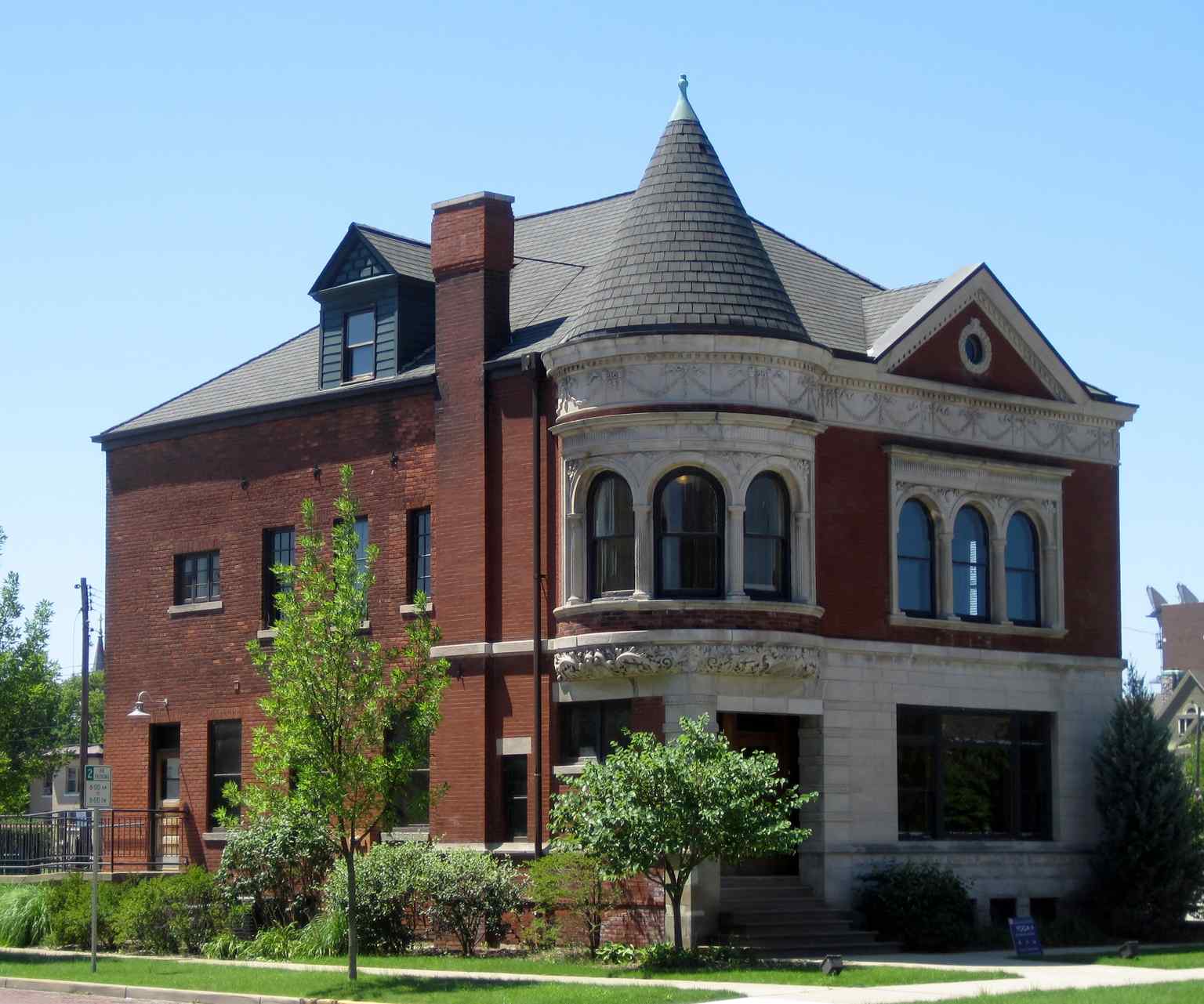
The South Bend Remedy Company Building, constructed in 1895, uniquely disguised itself as an elegant private home despite its commercial purpose, featuring a distinctive round turret and wide frieze band.Photo: Teemu08, Wikimedia Commons, CC BY-SA 3.0. Cropped & resized. Behind that residential facade hid a sprawling mail-order operation, though Kelley kept things surprisingly domestic inside. He even installed an extravagant bathroom with striking yellow and black glazed tile that miraculously survived for decades.
The medicine empire faded after Kelley died in 1924, and the company permanently closed in 1928. Surviving multiple physical relocations to avoid demolition, this structure stands today as the sole physical survivor of the city's once-booming patent medicine industry.
Now, let us walk four minutes to First Presbyterian Church, a grand structure funded by the very industrial titans Kelley originally walked away from.
Standing before you is a grand structure of rugged fieldstone with limestone trim, defined by its steep cross-gable roof and a massive corner bell tower. This is the former First…Leer másMostrar menos
Abrir página dedicada →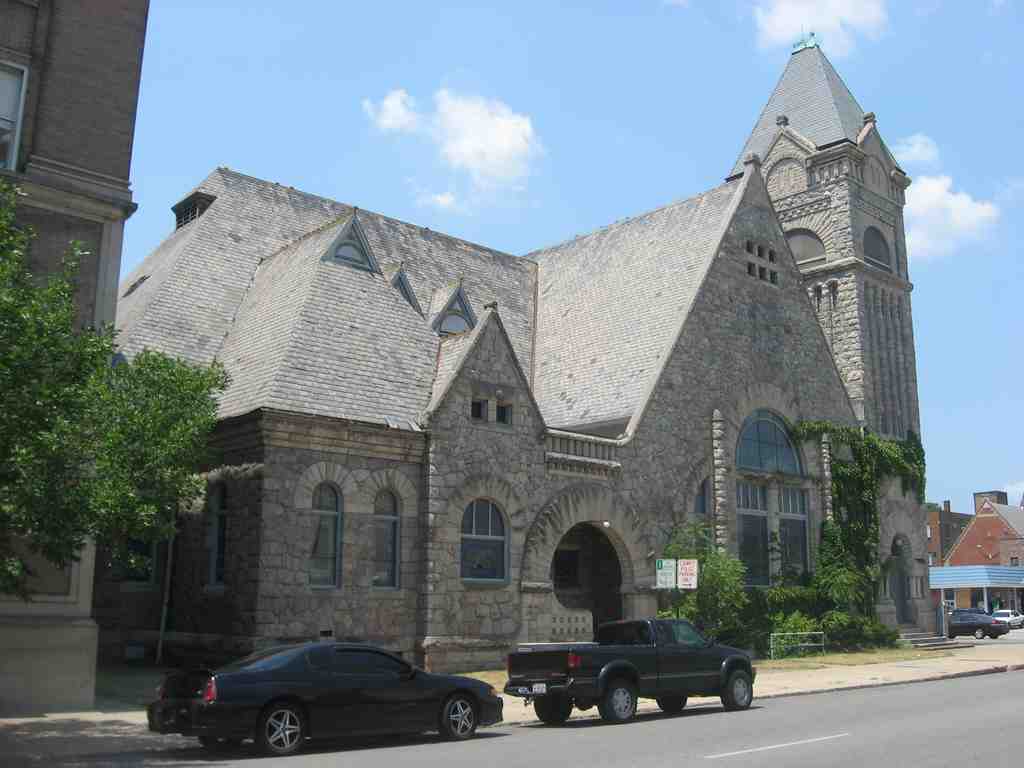
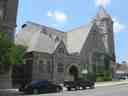
First Presbyterian ChurchPhoto: Nyttend, Wikimedia Commons, Public domain. Cropped & resized. Standing before you is a grand structure of rugged fieldstone with limestone trim, defined by its steep cross-gable roof and a massive corner bell tower. This is the former First Presbyterian Church, built in 1888 in the Richardsonian Romanesque style, an architectural approach that relies on heavy, rough-hewn stone blocks and deep arches to project sheer permanence.
It cost thirty five thousand dollars to construct, which is roughly one point one million dollars today. That was quite a sum, made possible by an extraordinary arrangement. The bill was split in thirds. The congregation paid one third. James Oliver, of the Oliver Chilled Plow Company, paid the second. And J. M. Studebaker, of the famous manufacturing empire, covered the rest. The local titans of industry essentially bankrolled a spiritual fortress.
But beyond the financial risks and the magnificent Palladian window, which is a large central arched window flanked by smaller rectangular ones, the most compelling details here are entirely human. Look closely at the rough masonry on the Lafayette Street side of the building. Can you spot the face carved directly into the stone? That is a deeply personal signature. The building's local contractor, Christopher Fassnacht, carved the likeness of his own wife into the facade, leaving an enduring mark of devotion alongside the grand gestures of millionaires. Take a look at your screen to appreciate the sweeping eastern facade where these industrial and personal histories meet.
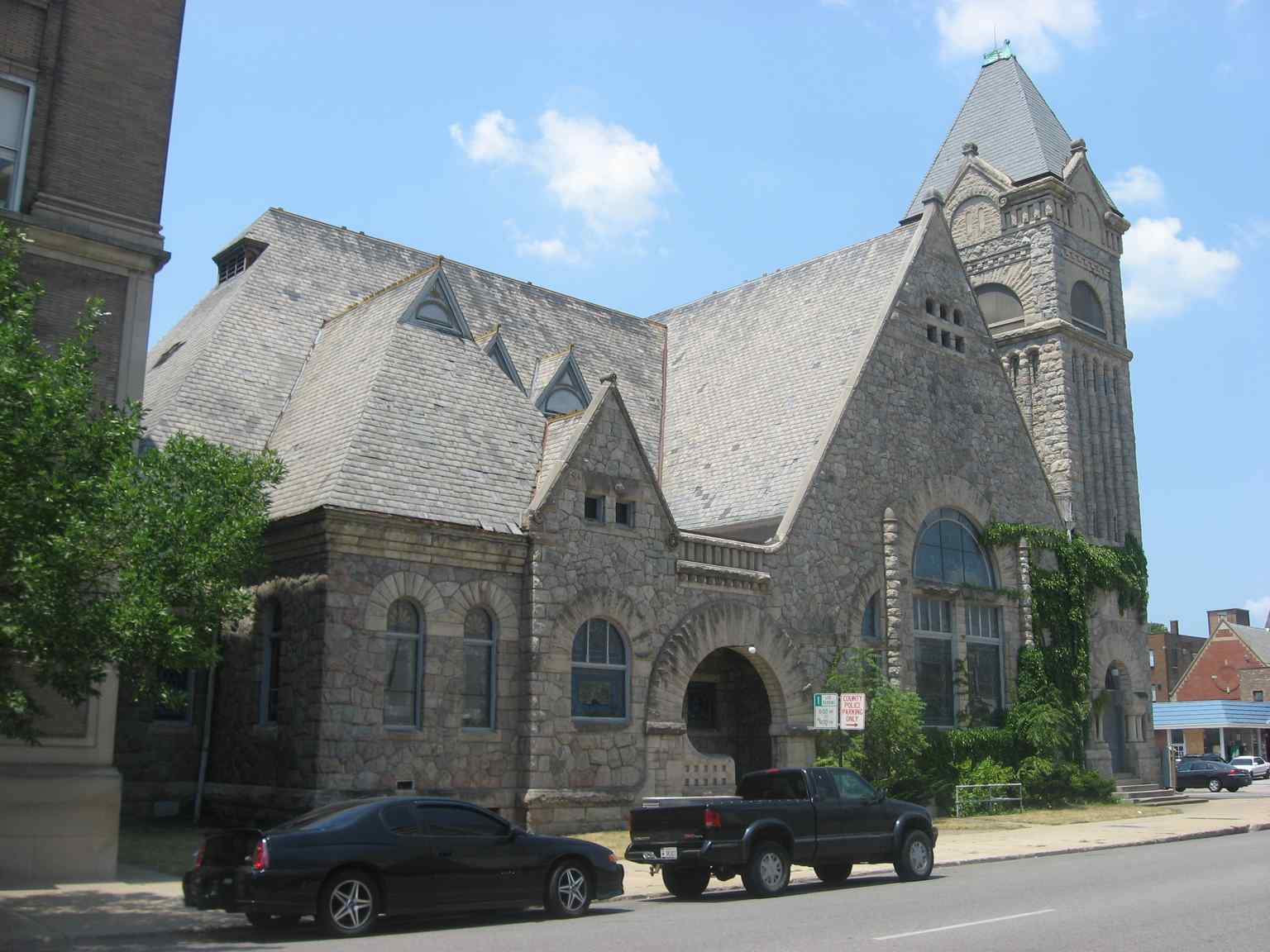
The eastern facade of the 1888 First Presbyterian Church, a Richardsonian Romanesque building, features its massive Palladian window of stained glass and a distinctive corner bell tower.Photo: Nyttend, Wikimedia Commons, Public domain. Cropped & resized. The legacy of the people inside was just as bold as the stonework. In 1848, decades before this structure existed, the congregation took an immense political gamble by sending a formal resolution against slavery to their national assembly. We only know this because those fragile records barely survived a century trapped in a rusted, moisture-filled strongbox before being salvaged in 2009.
Today, the Ambassadors for Christ congregation calls this building home, welcoming visitors during their Sunday morning services from eight thirty to eleven thirty. Let us move on from these spiritual foundations to educational ones. Central High School and the Boys Vocational School are just a three minute walk away.
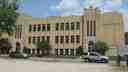
Look to your right to spot an immense, flat-roofed red brick building sitting solidly on a raised limestone foundation, anchored by a wide set of concrete stairs leading to a…Leer másMostrar menos
Abrir página dedicada →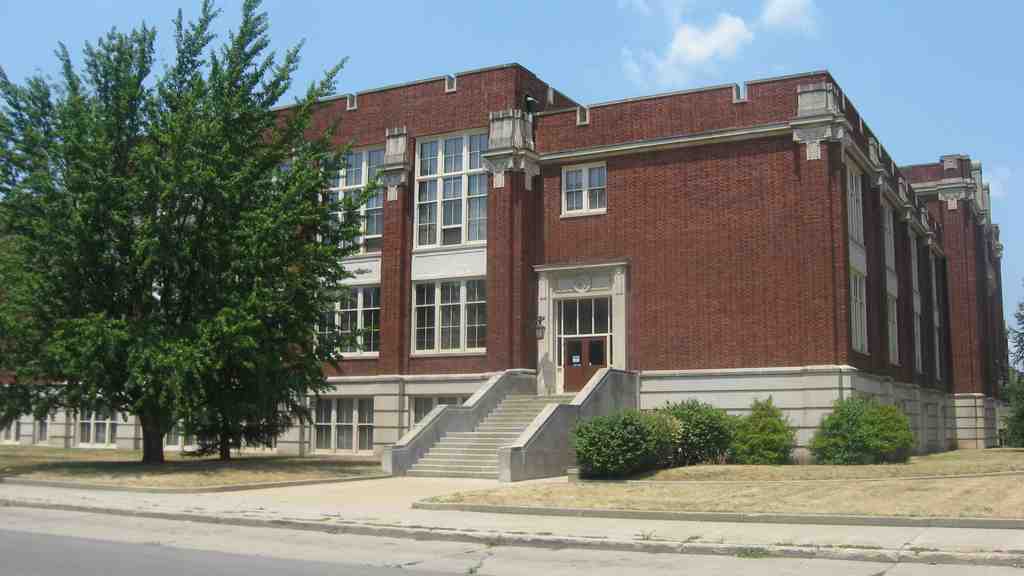
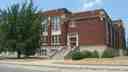
Central High School & Boys Vocational SchoolPhoto: Nyttend, Wikimedia Commons, Public domain. Cropped & resized. Look to your right to spot an immense, flat-roofed red brick building sitting solidly on a raised limestone foundation, anchored by a wide set of concrete stairs leading to a stone-framed entryway.
When this institution handed out its first diplomas in 1872, the graduating class was exactly four students, two boys and two girls. Yet, over the decades, this school adapted to a changing world, expanding into the sprawling complex you see today and eventually welcoming nearly two thousand students by the early nineteen fifties. It became a vital center of progressive integration, educating Black and white students together during a time when the rest of the nation was fracturing over segregation.
Melvin Holmes, a nineteen fifty-eight graduate, later noted that inside these walls, color was secondary. That forward-thinking environment reached beyond race. Decades before federal laws mandated equal opportunities for women's sports, the Girls Athletic Association was thriving here in 1905. Young women earned letter sweaters for field hockey, table tennis, and water ballet, and the girls volleyball team went completely undefeated from 1948 to 1955.
The school was famously competitive, and for nine years, its athletic programs were run by the legendary John Wooden. He was a strict disciplinarian, though his version of a fiery, foul-mouthed tirade was to simply yell, my goodness gracious. On one occasion, a few players stopped for ice cream on their walk to practice. Wooden's response was swift. He ordered the entire team to run the bases ten times. During a 1940 team photo, two players, John Hickey and Eddie Ehlers, stuffed their cheeks to look like they had large wads of chewing tobacco in their mouths. Wooden gave them a firm scolding, but clearly trusted them anyway, as he frequently made those same two boys babysit his kids in the backseat of his car during away games.
The basketball team was formidable, winning two state championships, and even served as the inspiration for the fictional powerhouse opponents in the 1986 film Hoosiers. But by 1970, the high school closed.
In 1995, developers took an enormous financial risk to save the property. They poured twelve point three million dollars into transforming the sprawling two hundred and nineteen thousand square foot complex into apartments. They committed to adaptive reuse, an architectural practice where an obsolete historic building is completely updated for modern living while carefully preserving its structural soul. The gamble succeeded beautifully. Today, residents live with original chalkboards in their living rooms, and one unit even features the original sunken indoor pool with its depth markings still intact.
If you need to speak with the building staff, they maintain opening hours Monday through Friday from 8:00 AM to 3:20 PM. Now, let us direct our attention toward a site of genuine artistic and spiritual grandeur, just a one-minute walk away, at the Cathedral of St. James.
Look to your right for a sharply peaked red brick structure featuring a prominent circular, flower-like window set high on its facade and bright red double doors. This is the…Leer másMostrar menos
Abrir página dedicada →Look to your right for a sharply peaked red brick structure featuring a prominent circular, flower-like window set high on its facade and bright red double doors. This is the Cathedral of St. James, completed in 1894.
The parish wanted something monumental, a physical legacy that proved their permanence in South Bend. So they made a bold, calculated investment by hiring the architectural firm of Austin and Parker. These two were not your average local draftsmen. Both Ennis R. Austin and Wilson B. Parker had previously worked for the renowned Tiffany Glass Company in New York. By hiring them, the cathedral secured a direct pipeline to the most coveted glassmakers in the world.
They designed the building in the Gothic Revival style, a design language borrowing heavily from medieval European churches with steeply pitched roofs and tall, pointed arches meant to draw the eye upward. But the true masterstrokes are the windows. Take a glance at your app screen to see that large circular opening on the front. That holds the cathedral's rose window, a spectacular circular pane divided by stone framing that radiates outward like flower petals.
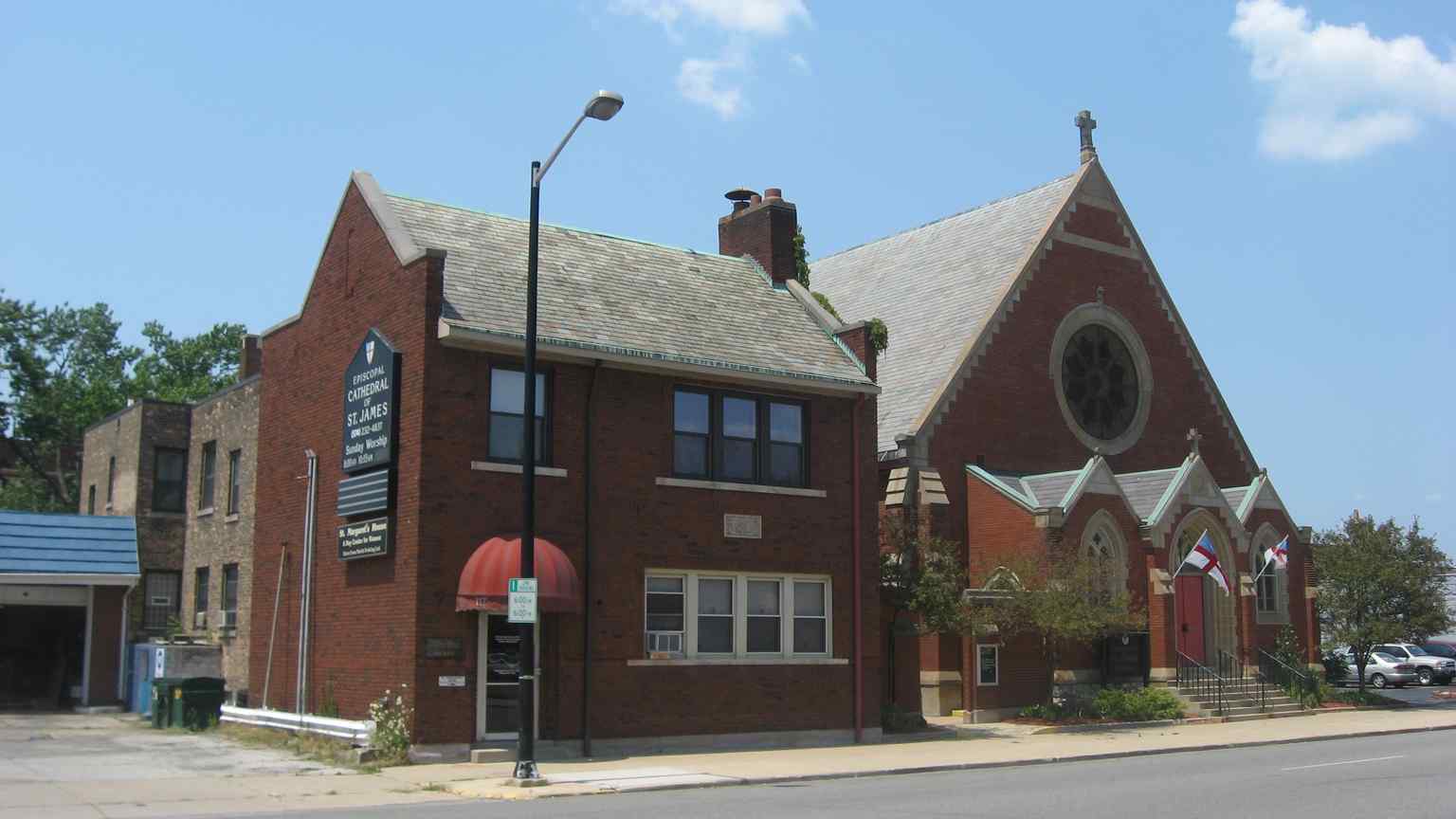
The exterior of the Cathedral of St. James, completed in 1894 in Gothic Revival style, along with its parish hall. Both structures were placed on the National Register of Historic Places in 1985.Photo: Nyttend, Wikimedia Commons, Public domain. Cropped & resized. This window is a spectacular, original Tiffany masterpiece. It was so impressive that before being installed here, it was reportedly exhibited to the masses at the 1893 World's Columbian Exposition in Chicago. Because why let a magnificent piece of art sit quietly in a crate when you can show it off at a World Fair first. The window was a staggering financial gift from Peter Studebaker, treasurer of the powerful Studebaker Brothers Manufacturing Company. Inside, you will also find two more identical Tiffany windows on the north wall, cast in brilliant purple and gold tones.
Austin clearly understood how to build breathtaking spaces for the divine. But his architectural talents were not limited to saving souls. Next, we are going to look at another one of his projects, engineered for a very different, far more corporate kind of ambition. Let us head toward the I and M Building, which is just a one-minute walk away. If you ever want to see those glass masterpieces from the inside, the cathedral is open on Tuesday through Friday mornings until one thirty, and Sunday mornings.
Look to your left and you will spot a seven story rectangular block featuring a dark marble ground floor, a smooth limestone facade stretching upward, and decorative fired clay…Leer másMostrar menos
Abrir página dedicada →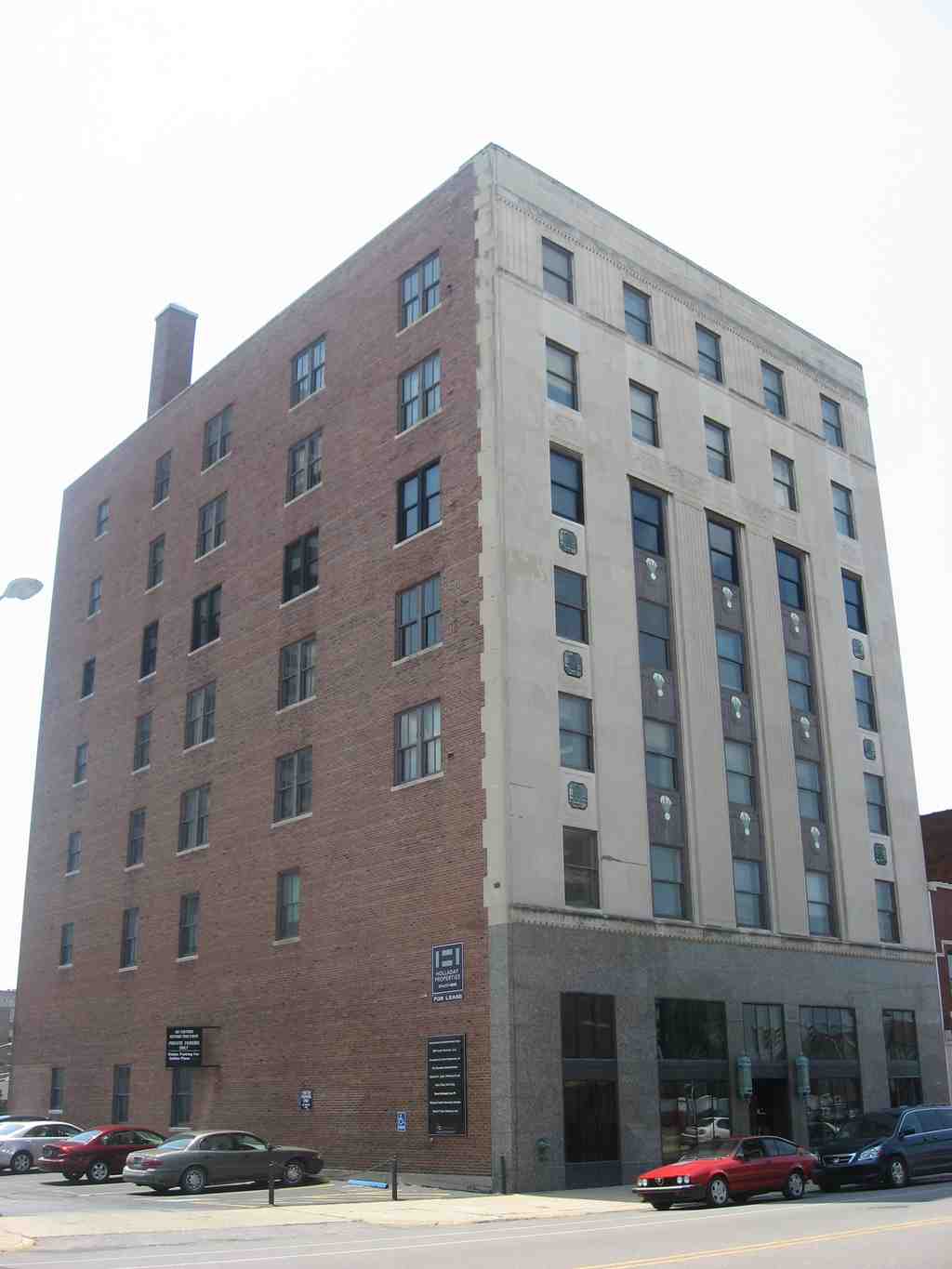
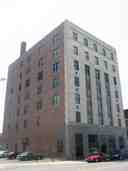
I & M BuildingPhoto: Nyttend, Wikimedia Commons, Public domain. Cropped & resized. Look to your left and you will spot a seven story rectangular block featuring a dark marble ground floor, a smooth limestone facade stretching upward, and decorative fired clay terra cotta panels separating the central windows. That is the I and M Building, built in 1929 for the Indiana and Michigan Electric Company.
If you check your screen, you can see how its vertical lines make it the only pure example of Art Deco in downtown South Bend. Art Deco is that sleek, geometric architectural style from the 1920s designed to make buildings look like they belong in a futuristic metropolis. The electric company spent a quarter of a million dollars on this structure, which is roughly four and a half million today. But they were not just building office space. They were building a functioning billboard.
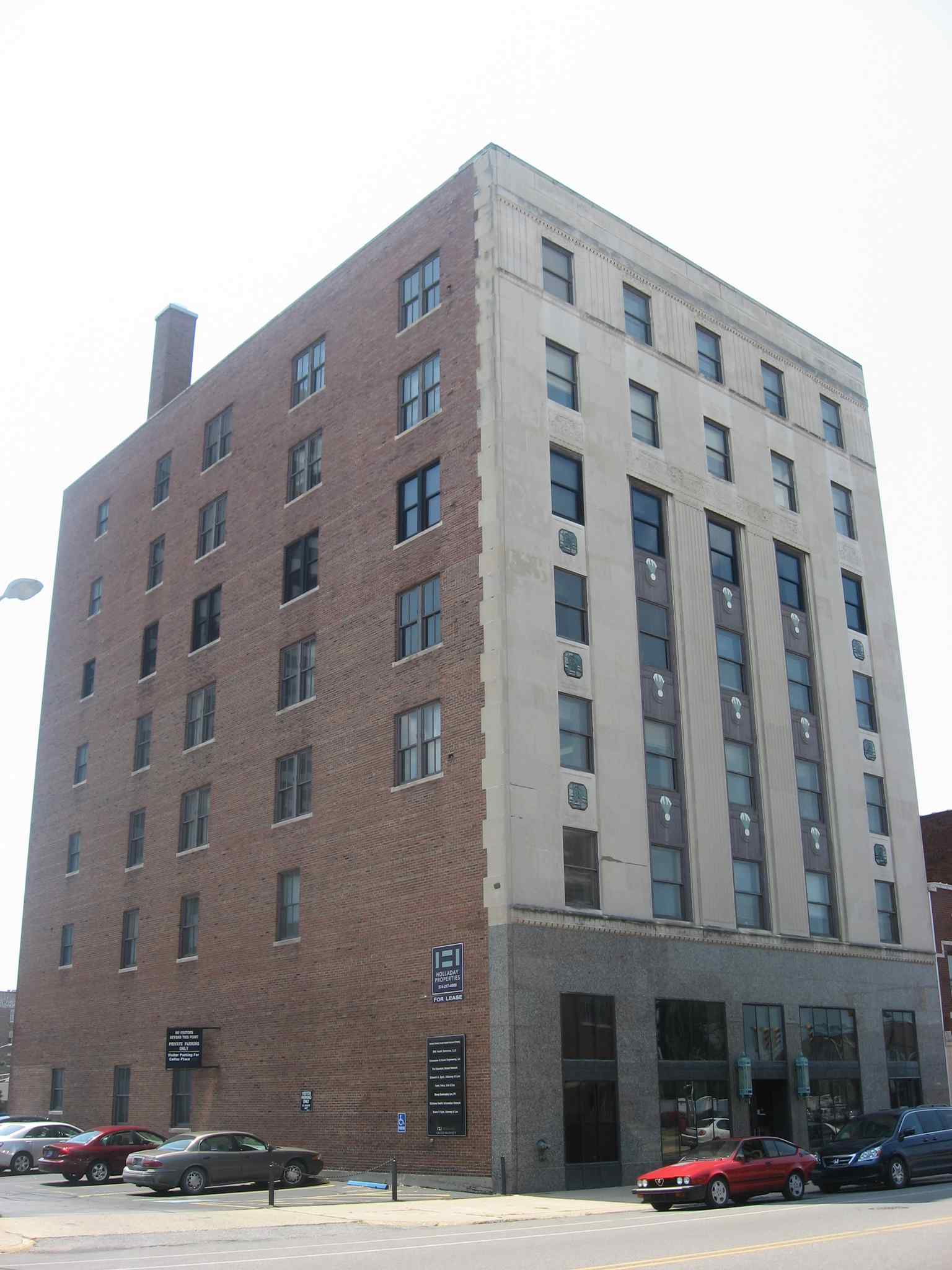
View the I & M Building, an iconic seven-story Art Deco masterpiece built in 1929, featuring its distinctive marble first story, limestone facade, and terra cotta detailing, which makes it the only "pure" example of the style in South Bend's downtown.Photo: Nyttend, Wikimedia Commons, Public domain. Cropped & resized. In the early days of widespread electricity, plugging appliances into the wall was a terrifying leap of faith for the average homeowner. The company used this building to sell the public on the future. The seventh floor housed a vast display area for live kitchen demonstrations, while the sixth floor held a full auditorium. They were quite literally putting modern technology on a stage.
The men who designed this stage were an unlikely pair. Ennis R. Austin was an elite New York architect who trained at the famous Tiffany Glass Company. His partner, Norman Roy Shambleau, was the son of a Canadian carriage maker who moved here at seventeen and learned his trade as a rough apprentice. Throwing their lot in together was a substantial risk, but their partnership dominated local design for decades.
This building has weathered plenty of its own storms. During the real estate crashes of the 1990s, developers managed struggling assets from these very floors just to survive. It even endured a notoriously disastrous attempt to convert it into luxury condos, which flopped entirely and sent the property back to commercial use. Today, a telecommunications company manages modern digital networks from the exact same spot built to sell the 1929 toaster. The original lavish marble lobby is actually still in there, awkwardly hidden just above a modern lowered ceiling.
Get ready. We are heading toward Austin and Shambleau's most magnificent, and ultimately most tragic, masterpiece. The Tower Building is just a three minute walk away.
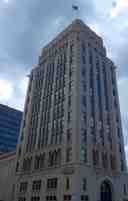
Look to your right at the pale terra-cotta skyscraper, rising in a sheer stepped vertical column topped with small stone gargoyles jutting from its upper corners. This is the…Leer másMostrar menos
Abrir página dedicada →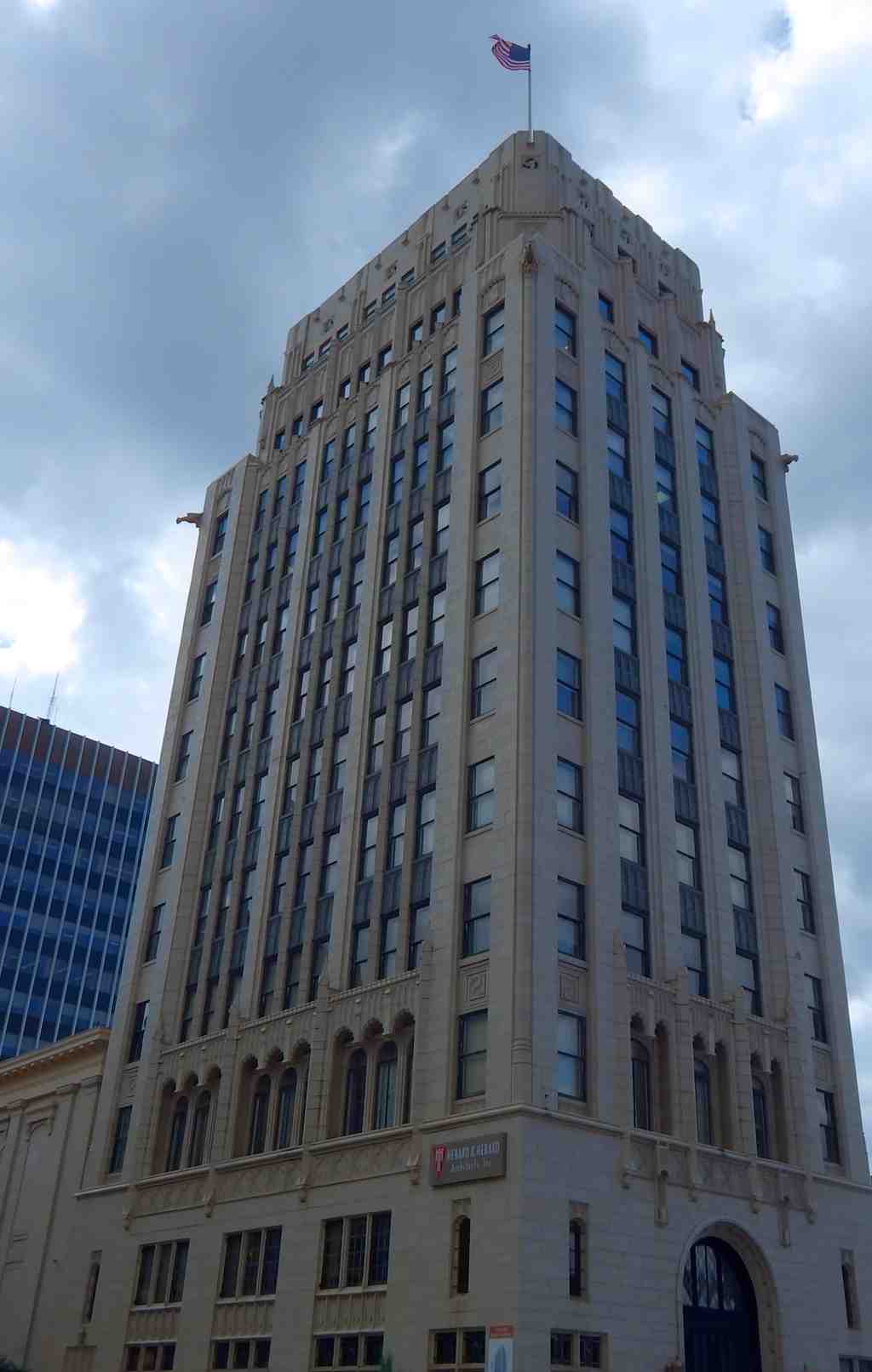
Tower BuildingPhoto: Isslwc, Wikimedia Commons, CC BY-SA 3.0. Cropped & resized. Look to your right at the pale terra-cotta skyscraper, rising in a sheer stepped vertical column topped with small stone gargoyles jutting from its upper corners. This is the Tower Building, the stunted crowning achievement of local architects Ennis Austin and Roy Shambleau.
They designed this as South Bend's only example of Skyscraper Gothic architecture, a style that uses exaggerated vertical lines and arches to draw the eye upward and make the building look even taller. At twelve stories, it was the first structure to hit the city maximum height limit. The original blueprint called for a soaring, symmetric twin-tower complex. It was a monumental roll of the dice, an ambitious bet on continuous urban prosperity.
As it turns out... the timing was remarkably bad.
The contractors finished this eastern half exactly one week before the 1929 stock market crash. The financial ruin of the Great Depression instantly evaporated the funds for the rest of the project, meaning the proposed western twin was abandoned forever. If you pull up the tour app, take a look at the historical image on your screen. You can see the plain brick wall on the west side, a stark contrast to the elegant marble facade on the east, waiting for a twin that would never arrive.
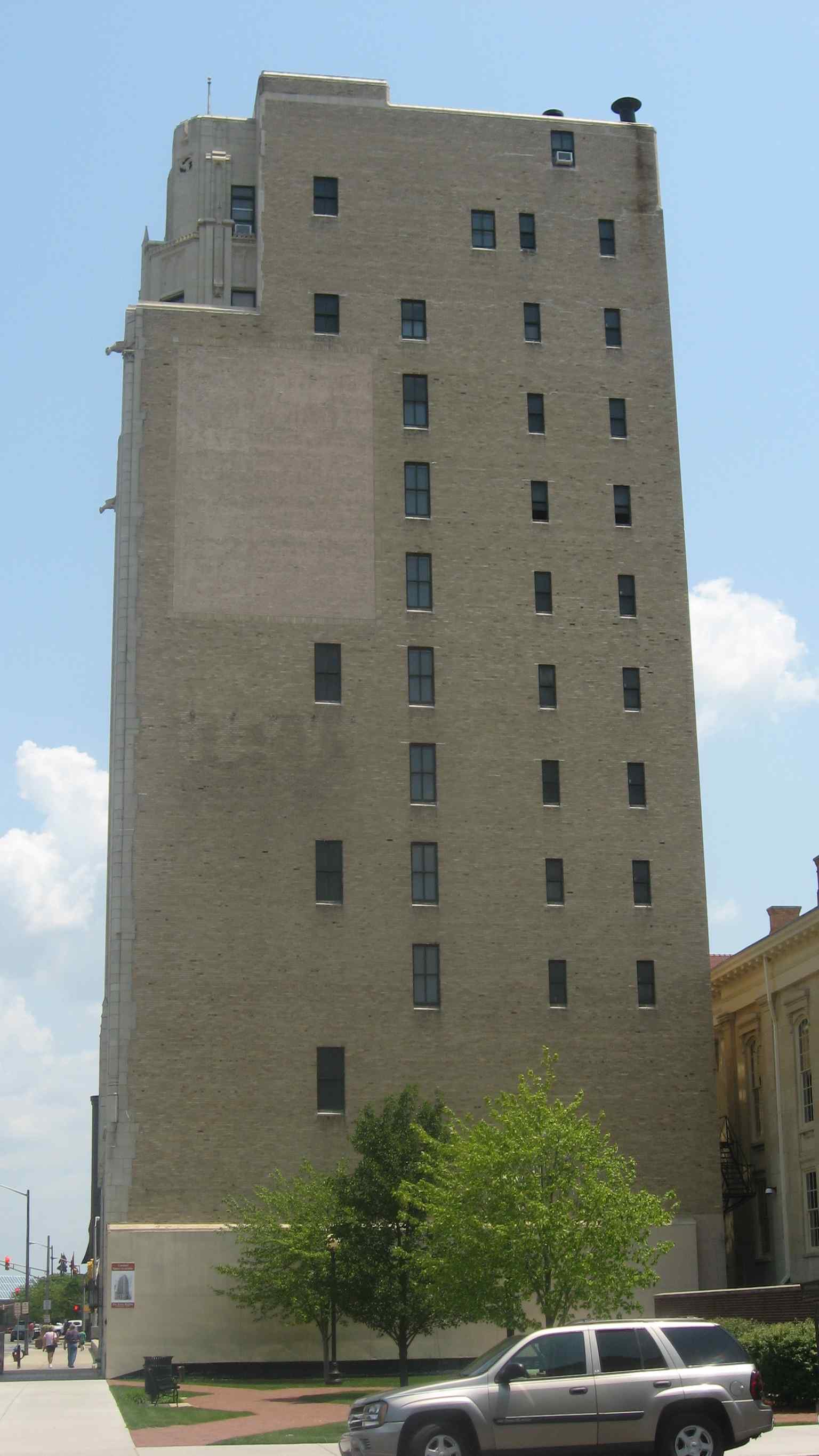
The western side of the Tower Building, which was originally intended to be a twin tower but was never built due to the 1929 Wall Street crash.Photo: Nyttend, Wikimedia Commons, Public domain. Cropped & resized. Look back up at those stone gargoyles perched on the chamfered, or angled, corners of the tenth floor. In Gothic tradition, gargoyles are placed as guardians to ward off evil spirits. Clearly, they were looking the wrong way in October of 1929. Though, to be fair to the stone monsters, they did successfully perform their actual engineering function of pushing rainwater away from the facade.
Despite its amputated footprint, the Tower Building reigned as the tallest structure in South Bend for over forty years. It even hosted a lineage of peregrine falcons, where a female falcon named Maltese notoriously abandoned her mate for a younger bird from Detroit, leaving her former partner to roost alone on the unfinished west wall.
It is a true monument to survival, moving from a half finished victim of an economic collapse to a stalwart tower that simply dug its heels in and stood the test of time.
Let us move on to our next stop, the Morris Performing Arts Center, which is about a six minute walk from here.
The towering, rectangular building before you is defined by its pale brick facade and a trio of huge arched windows adorned with finely crafted, colorful terra cotta…Leer másMostrar menos
Abrir página dedicada →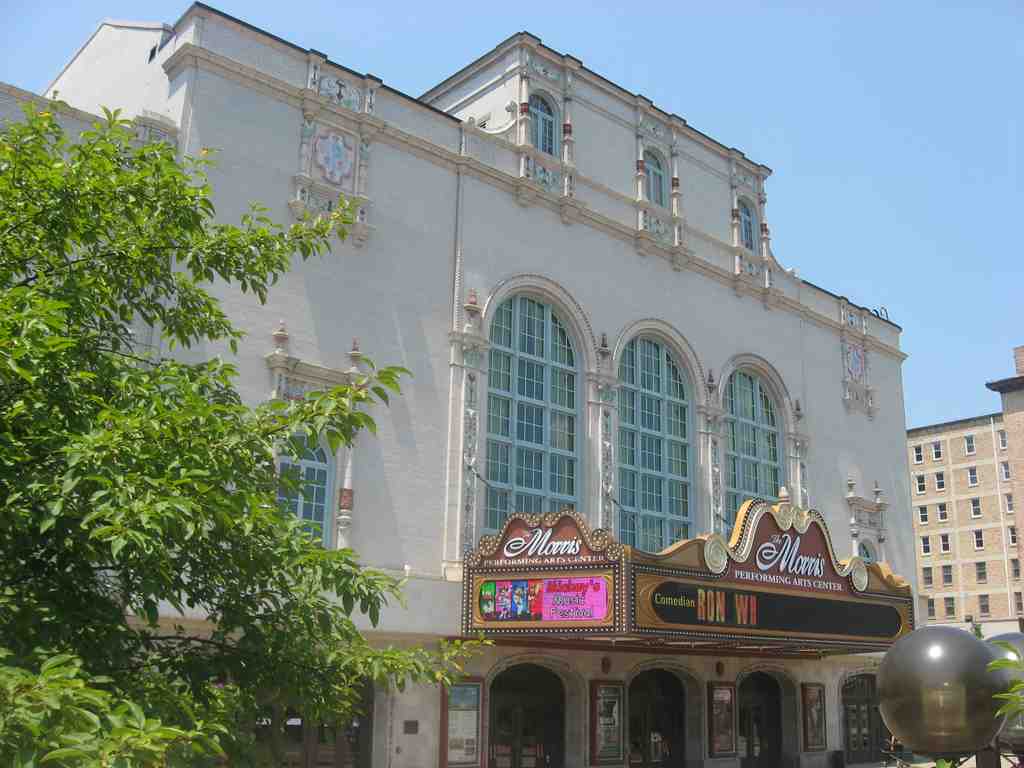
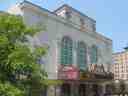
Morris Performing Arts CenterPhoto: Nyttend, Wikimedia Commons, Public domain. Cropped & resized. The towering, rectangular building before you is defined by its pale brick facade and a trio of huge arched windows adorned with finely crafted, colorful terra cotta ornamentation. This is the Morris Performing Arts Center, originally built in 1922 as the Palace Theatre. Take a look at your screen to see the first image which gives you a closer view of that exterior terra cotta.
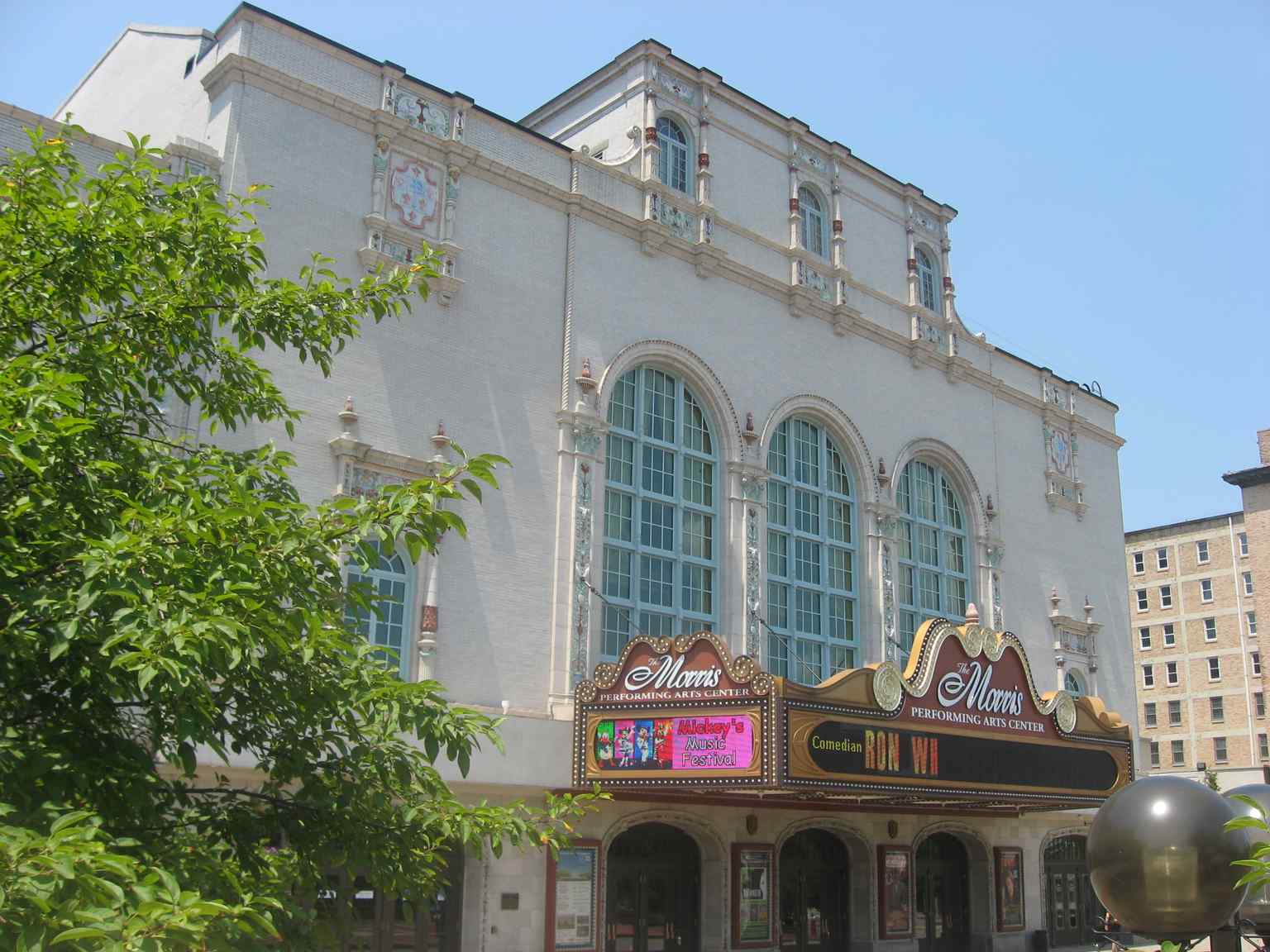
This exterior view showcases the Spanish Renaissance Revival style of the Morris Performing Arts Center, originally known as the Palace Theater and featuring finely crafted terra cotta ornamentation from its 1922 opening.Photo: Nyttend, Wikimedia Commons, Public domain. Cropped & resized. Architect J.S. Aroner threw everything at this design, intentionally mashing together Spanish Renaissance, Baroque, and Greco-Roman elements. The goal was to create a little palace where an average citizen could drop a few cents and feel like royalty. It was a huge financial gamble, banking on the insatiable public appetite for vaudeville, a type of live theatrical entertainment featuring a variety of unrelated specialty acts. Check your app for the third image to see the theater in those early days, when it hosted legends like Harry Houdini and George Burns.
But the true spectacle arrived on October 4, 1940.
That night, the theater hosted the world premiere of the Hollywood film Knute Rockne All American. Inside, twenty four hundred lucky ticket holders watched the debut alongside stars like Ronald Reagan and Bob Hope. Outside, it was absolute chaos. An estimated twenty four thousand people swarmed the surrounding streets, desperate to catch a glimpse of the celebrities. It was a monumental triumph for a local venue.
Yet, triumphs fade. By the late nineteen fifties, the rise of television had decimated nightly attendance. The theater went broke, and the board voted for demolition. The wrecking ball was literally on the schedule for 1959.
Enter Mrs. Ella M. Morris.
In an astonishing display of community resilience and immense personal risk, this local philanthropist purchased the entire doomed property with her own wealth for an undisclosed sum. Then, in a legendary power move, she immediately sold it back to the city of South Bend for exactly one dollar, which is about ten dollars today. After a modest fifteen thousand dollar facelift, roughly one hundred and fifty grand today, the city renamed it in her honor. She singlehandedly saved a cultural monument.
From a miraculously saved public space, our route now shifts to a completely different type of enduring legacy, a long-lasting family enterprise. We are heading to the W. N. Bergan J. C. Lauber Company Building, a nine minute walk away. By the way, if you want to admire the restored interior of the Morris, they are open Monday through Friday from noon to five PM.
Look to your right at the rectangular brick complex defined by its large bay doors and the faded white painted lettering spanning its upper facade. Joseph Charles Lauber lost his…Leer másMostrar menos
Abrir página dedicada →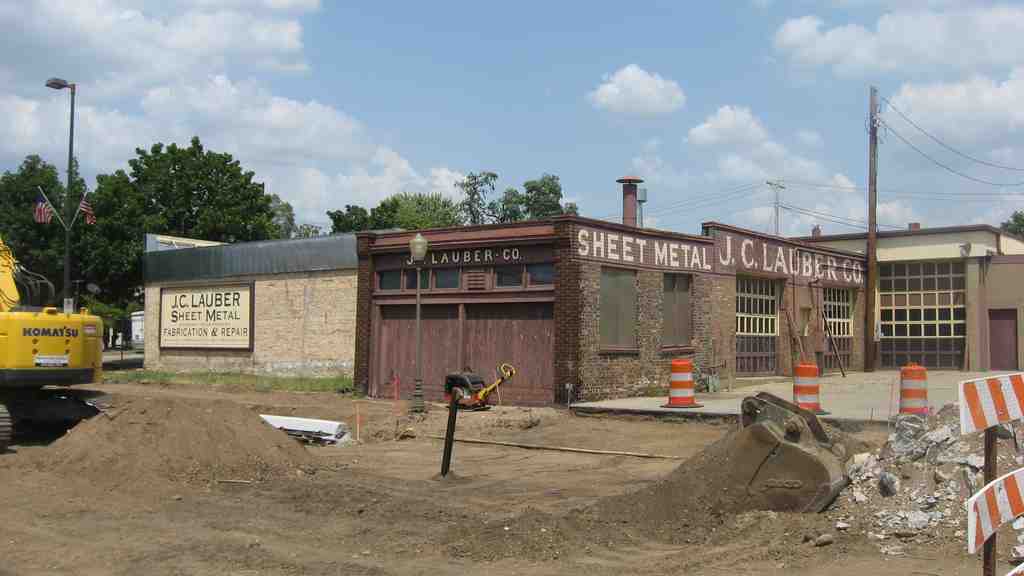
W. N. Bergan–J. C. Lauber Company BuildingPhoto: Nyttend, Wikimedia Commons, Public domain. Cropped & resized. Look to your right at the rectangular brick complex defined by its large bay doors and the faded white painted lettering spanning its upper facade. Joseph Charles Lauber lost his father when he was just two years old, yet this son of German immigrants defied those tragic early hardships to forge a manufacturing empire that shaped the local skyline.
He arrived in South Bend in eighteen ninety, working for the area's largest hardware business, but quickly decided he wanted his own name on the door. He gambled everything to start a metal works with a partner, and after a single year, he just bought the man out to run the show himself. It is remarkable what a little ambition and a lot of sheet metal can accomplish.
For an astonishing one hundred and twenty five years, five generations of the Lauber family shaped architectural metal from this exact site. Their craftsmanship is everywhere. Remember the Morris Performing Arts Center we discussed a few stops ago? The Laubers engineered the intricate galvanized iron and canopy work for it. In fact, for over three decades, Joseph held the exclusive contract to roof every public schoolhouse built in South Bend. He turned a profound personal risk into a lasting industrial dynasty.
Take a look at your screen to see the historic brickwork that housed this relentless operation. When developers finally began converting this space in twenty nineteen, a nearby sinkhole swallowed part of the ground, unexpectedly revealing a huge hidden underground vault from the eighteen eighties mill operations. City engineers had to permanently seal the cavernous relic with flowable fill concrete... which is certainly one way to handle a sudden structural nightmare.
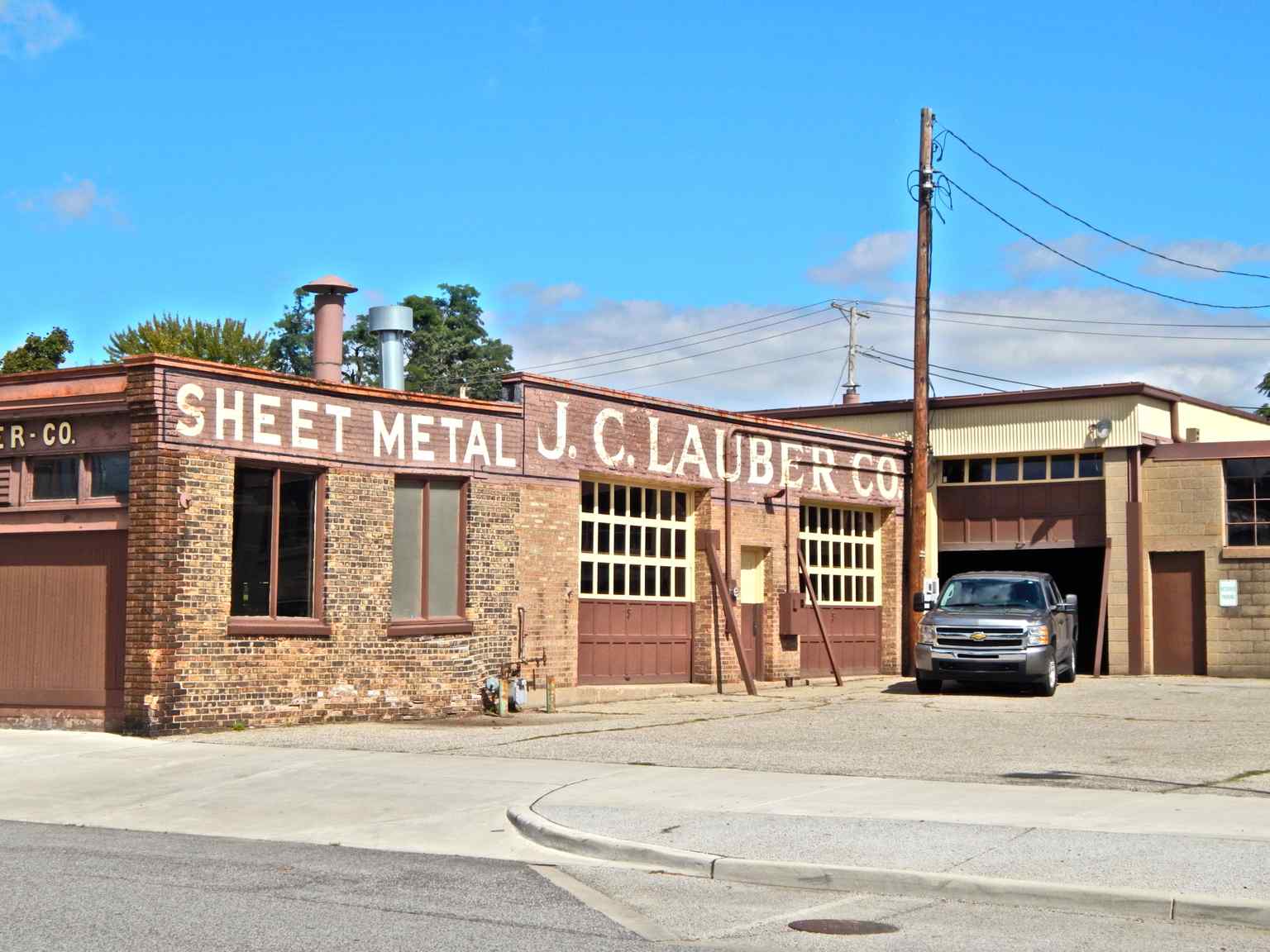
Observe the historic brickwork on the building's south wall, part of the complex that housed the J. C. Lauber Sheet Metal Company for 125 years.Photo: Isslwc, Wikimedia Commons, CC BY-SA 3.0. Cropped & resized. Today, the complex has been preserved as The Lauber, where you can grab a moderately priced meal under the original exposed industrial beams any day of the week until at least nine at night. Let us head toward the Howard Park Historic District, a nine minute walk away, to explore a neighborhood mapped out by another fiercely resilient visionary.
On your left is the Howard Park Historic District, marked by a sprawling grassy expanse shaded by thick-trunked trees and a curving paved pathway cutting across the foreground.…Leer másMostrar menos
Abrir página dedicada →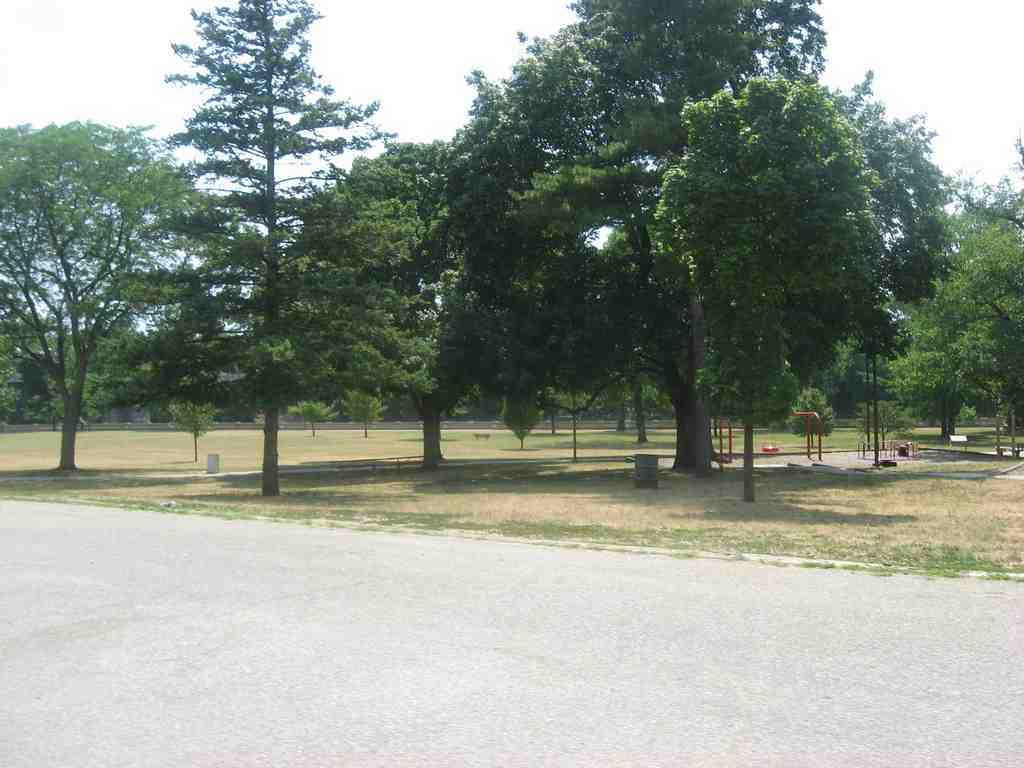
Howard Park Historic DistrictPhoto: Nyttend, Wikimedia Commons, Public domain. Cropped & resized. On your left is the Howard Park Historic District, marked by a sprawling grassy expanse shaded by thick-trunked trees and a curving paved pathway cutting across the foreground. Pull up the photo on your app to see the wide open fields that form the core of this historic area.
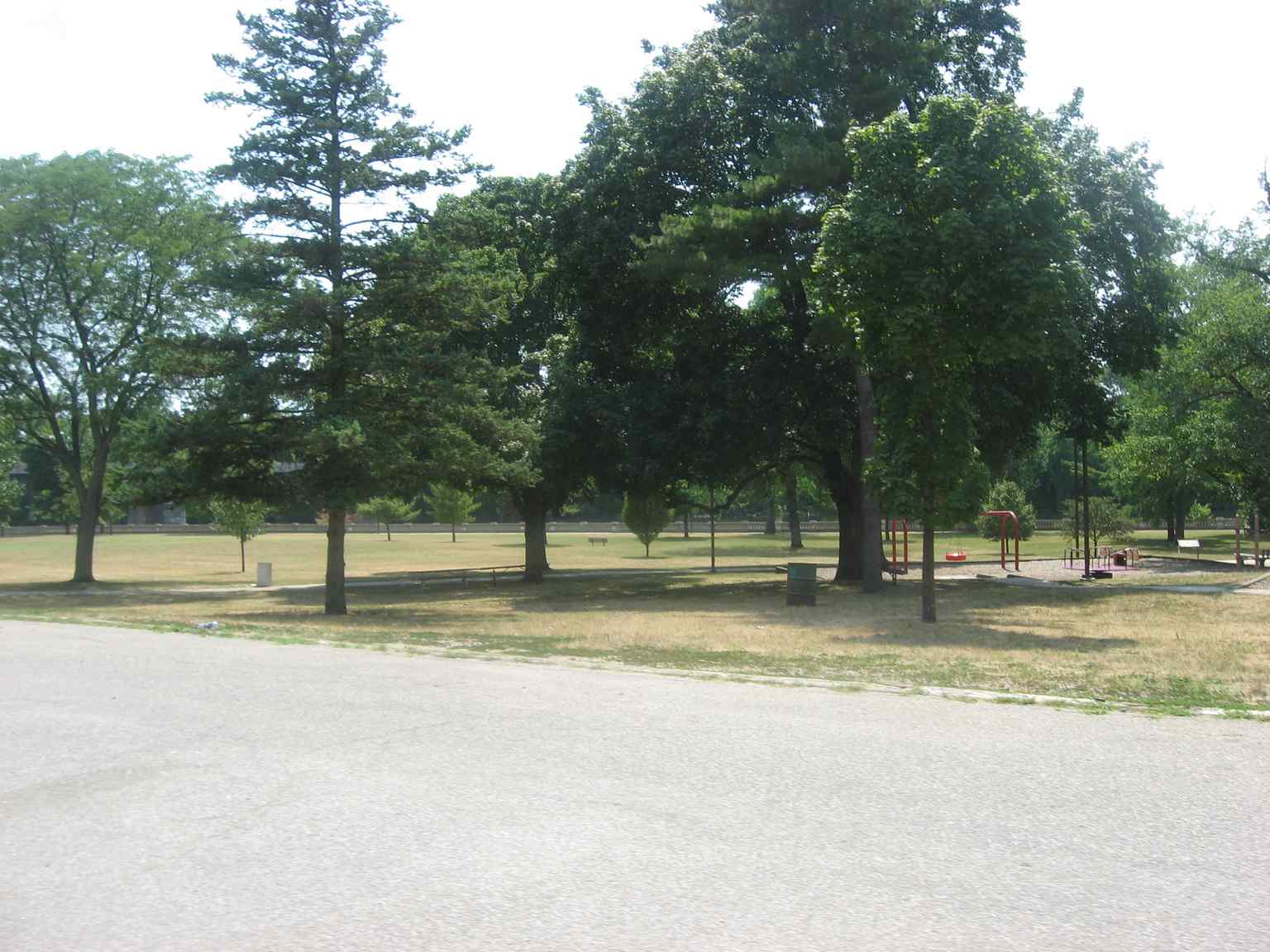
This image shows the fields of Howard Park, named after Timothy Edward Howard, who successfully campaigned to secure the St. Joseph riverbank for South Bend's very first public park in 1879.Photo: Nyttend, Wikimedia Commons, Public domain. Cropped & resized. In 1862, a young soldier named Timothy Edward Howard was catastrophically wounded during the bloody Battle of Shiloh. Picture surviving such devastating injuries at a young age... would you have quietly retreated from the world, or thrown yourself headfirst into shaping it? Howard chose the latter, transforming his physical recovery into the ultimate act of community resilience. He returned home to teach everything from astronomy to law at Notre Dame, eventually rising to Chief Justice of the Indiana Supreme Court. Yet, he remained fiercely modest. When tasked with writing Notre Dame's fifty-year history, he flatly refused to put his name on the cover. A politician turning down free publicity... a rare breed indeed.
Howard risked his political capital in 1879 to secure the riverbank for South Bend's first public park. The neighborhood that sprouted around it became a fascinating collision of worlds. You had industrial laborers, like the German immigrants who worshipped at the Zion Evangelical Church, a building designed in the Gothic Revival style, which is known for its soaring pointed arches. These families flocked here to work at the nearby sewing machine plant.
Right alongside them, you had the wealthy elite building lavish estates. The Studebaker House, a Queen Anne mansion, an architectural style famous for its complex asymmetrical roofs, sat on a huge rough-cut stone foundation. Their sprawling horse barns were even converted into modern living quarters when the automobile took over.
The park grounds are open daily from six in the morning until eleven at night. Let us keep moving toward our final stop, a place where education and determination meet. St. Joseph School is just a six-minute walk away.
To your left is a sprawling tan brick structure featuring a flat parapet roofline and deeply recessed pointed-arch doorways. This is St. Joseph School, built in 1925 in the Late…Leer másMostrar menos
Abrir página dedicada →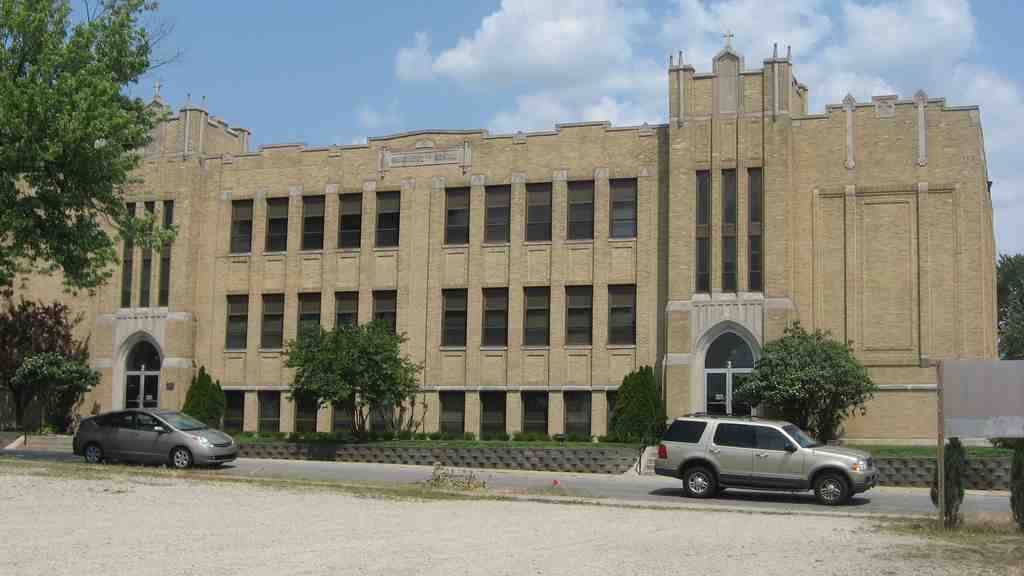
St. Joseph SchoolPhoto: Nyttend, Wikimedia Commons, Public domain. Cropped & resized. To your left is a sprawling tan brick structure featuring a flat parapet roofline and deeply recessed pointed-arch doorways. This is St. Joseph School, built in 1925 in the Late Gothic Revival style, an architectural movement mimicking the dramatic masonry of medieval European churches. Check your screen for a closer look at the historic facade.
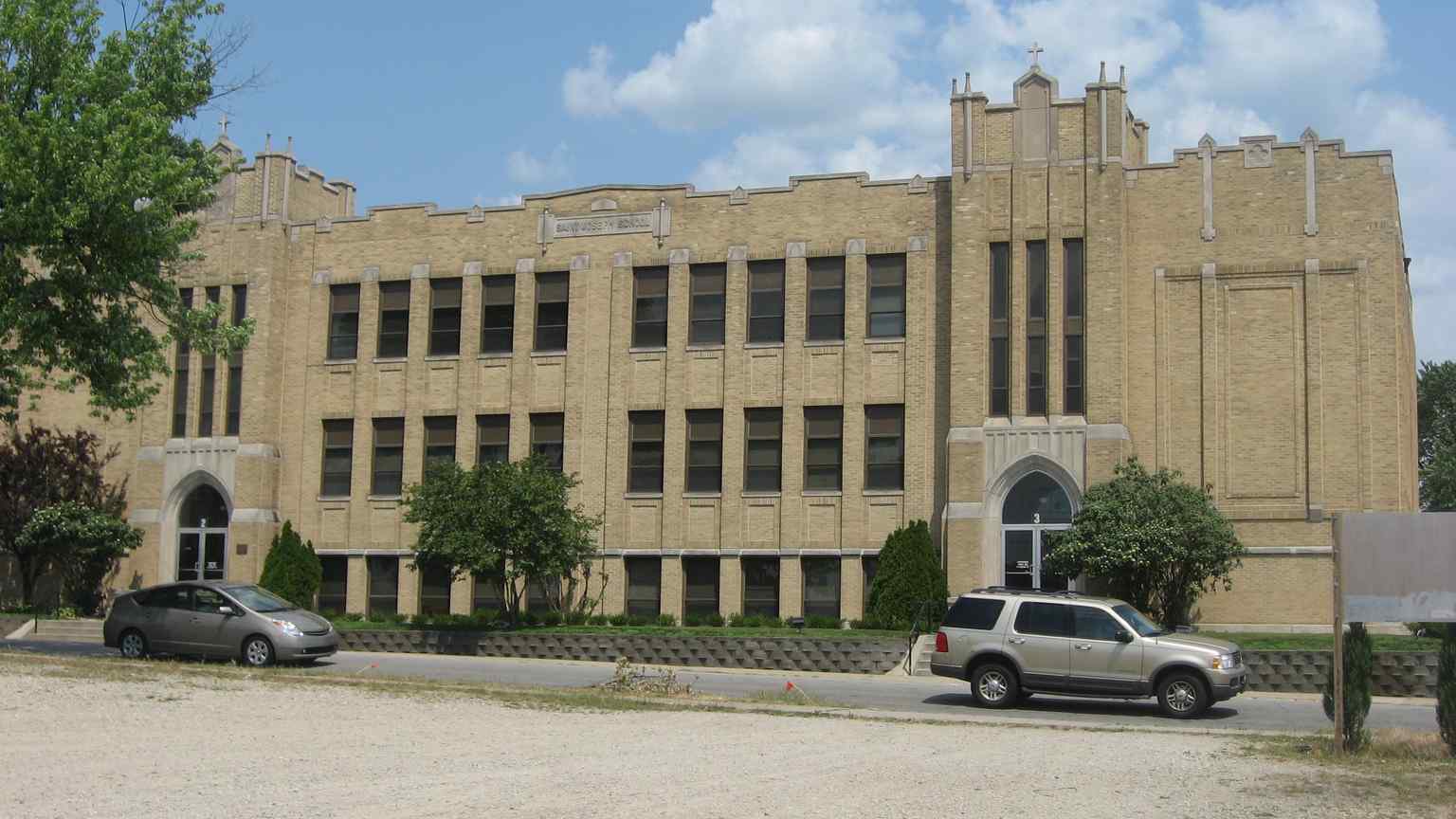
This is the Late Gothic Revival style tan brick building constructed in 1925, listed on the National Register of Historic Places in 1999.Photo: Nyttend, Wikimedia Commons, Public domain. Cropped & resized. The builder, Thomas L. Hickey, won the contract for 200,000 dollars, which is roughly 2.6 million today. In a fantastic twist of fate, Hickey was actually a former student who graduated the eighth grade here in 1900 at age fourteen, right before embarking on a highly glamorous career selling sewing machines. Building this new school became his absolute labor of love, and a plaque bearing his name still sits inside the right front door.
But preserving an aging historic building requires a lot of expensive problem-solving. Recently, the school had to file for a variance, which is a formal legal exception to modern building codes, to deal with old, defunct fire hoses embedded in the walls. They successfully negotiated a compromise by putting modern extinguishers on every floor, narrowly avoiding heavy fines from the local fire marshal.
Long before this grand structure, the original 1854 school was just a modest 1,800 dollar chapel, roughly 70,000 dollars today. When an 1872 fire reduced the nearby church to ash, the immigrant community had to risk everything they had to rebuild. But survival here hasn't only been about surviving fires. The parish faced a profound betrayal regarding a priest in the late 1970s. Reverend Paul LeBrun preyed on vulnerable boys, winning their trust with a bizarre, edgy persona. He cultivated a rebellious, unorthodox image that allowed his manipulation to go unchecked for years. When brave former students finally came forward decades later, it triggered a 2002 police investigation that forced the church to hand over its internal files and face the horrific truth.
The ultimate payoff of this community's resilience arrived in 1989. Enrollment had collapsed to just 190 students, and the institution was floundering. Then, an alumna named Suzanne Wiwi took over as principal. She bet her entire career on saving the school. Over 32 years, she completely transformed the curriculum, more than doubled the student body, and secured a National Blue Ribbon designation. Look at your app to see the proud 1925 masonry she helped fill with life once again.
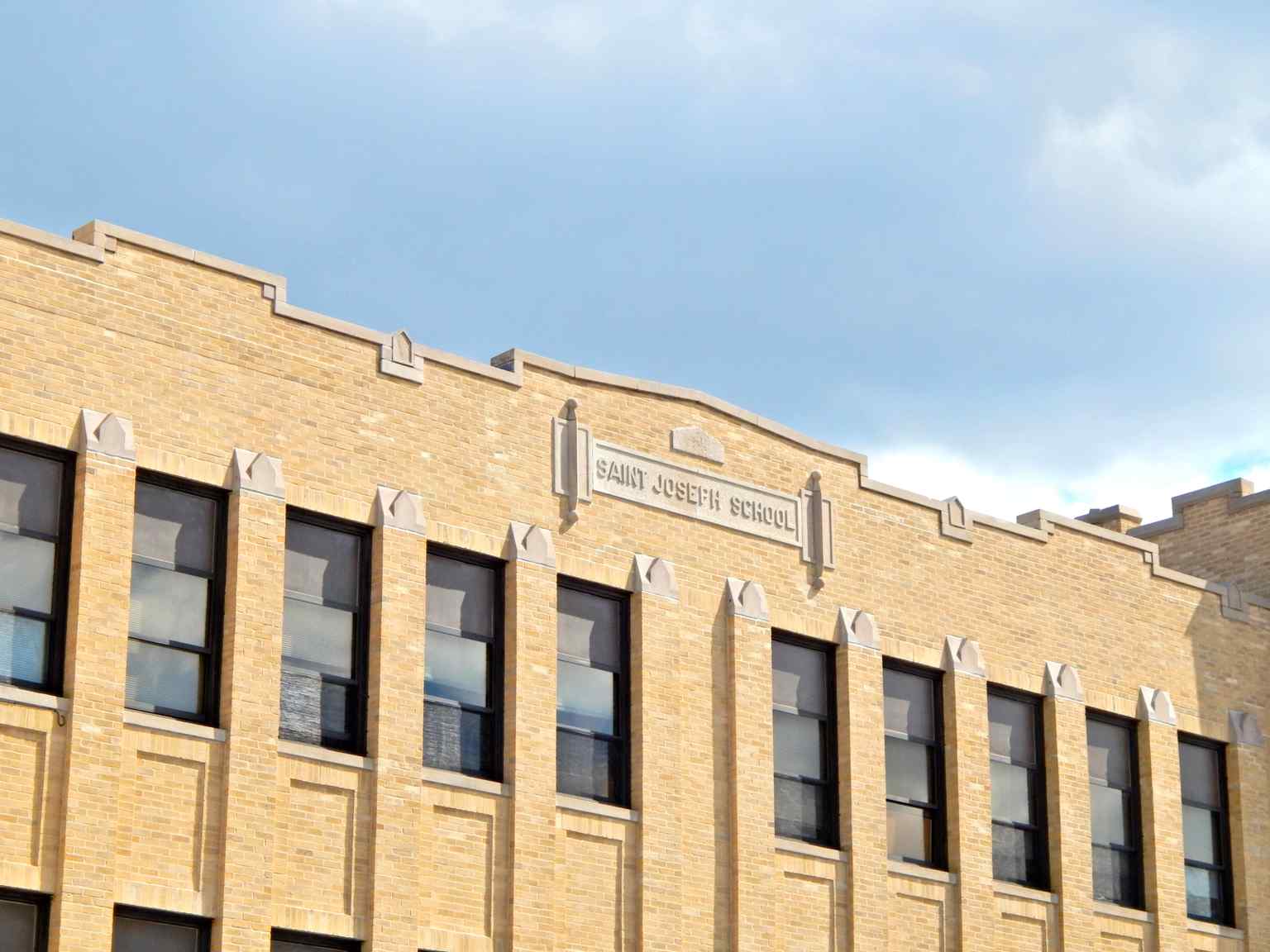
The school's name proudly displayed on its west wall, part of the 1925 structure built by alumnus Thomas L. Hickey.Photo: Isslwc, Wikimedia Commons, CC BY-SA 3.0. Cropped & resized. The administrative offices are open Monday through Friday from 9 to 5. As we conclude our walk, it is clear that through fires, scandals, and financial cliffs, dedicated individuals are the ones who build the strongest foundations. The architecture of South Bend is undeniably impressive, but its true legacy is its people.
Preguntas frecuentes
¿Cómo empiezo el tour?
Después de la compra, descarga la app AudaTours e ingresa tu código de canje. El tour estará listo para comenzar de inmediato - solo toca play y sigue la ruta guiada por GPS.
¿Necesito internet durante el tour?
¡No! Descarga el tour antes de empezar y disfrútalo completamente sin conexión. Solo la función de chat requiere internet. Recomendamos descargar en WiFi para ahorrar datos móviles.
¿Es un tour guiado en grupo?
No - esta es una audioguía autoguiada. Exploras de forma independiente a tu propio ritmo, con narración de audio reproduciéndose en tu teléfono. Sin guía, sin grupo, sin horario.
¿Cuánto dura el tour?
La mayoría de los tours toman 60–90 minutos para completar, pero tú controlas el ritmo completamente. Pausa, salta paradas o toma descansos cuando quieras.
¿Qué pasa si no puedo terminar el tour hoy?
¡No hay problema! Los tours tienen acceso de por vida. Pausa y continúa cuando quieras - mañana, la próxima semana o el próximo año. Tu progreso se guarda.
¿Qué idiomas están disponibles?
Todos los tours están disponibles en más de 50 idiomas. Selecciona tu idioma preferido al canjear tu código. Nota: el idioma no se puede cambiar después de generar el tour.
¿Dónde accedo al tour después de comprarlo?
Descarga la app gratuita AudaTours desde App Store o Google Play. Ingresa tu código de canje (enviado por email) y el tour aparecerá en tu biblioteca, listo para descargar y comenzar.
Si no disfrutas el tour, te reembolsamos tu compra. Contáctanos en [email protected]
Paga de forma segura con 


