
Tour de audio de Seattle: Pioneros, visiones reflejadas e innovaciones globales
El elegante horizonte de Seattle esconde una red de diálogos secretos, batallas de miles de millones de dólares y centinelas silenciosos de la innovación que nunca duermen. Descubre el alma bajo el acero con este tour de audio autoguiado, diseñado para mostrarte el pulso de la ciudad más allá de Pike Place y las postales, donde incluso las esquinas de las calles albergan ambiciones globales. ¿Qué guerra fría se libró en laboratorios ocultos detrás de cristales espejados? ¿Quién deslizó mensajes codificados en esculturas silenciosas para las generaciones futuras? ¿Y cómo un vaso de agua reciclada asombró a toda una junta directiva y cambió el mundo? Traza tu camino desde el arte público brillante hasta laboratorios de enfermedades de vanguardia y la legendaria Fundación Gates. Cada giro crepita con historias de rebelión, ciencia, escándalo y una esperanza asombrosa. Recorre estas cuadras y sé testigo de Seattle revelado, un secreto susurrado a la vez. Deja que la curiosidad te guíe. Comienza el viaje y descubre la ciudad que la mayoría solo sueña con vislumbrar.
Vista previa del tour
Sobre este tour
- scheduleDuración 30–50 minsVe a tu propio ritmo
- straighten1.4 km de ruta a pieSigue el camino guiado
- location_onUbicaciónSeattle, Estados Unidos
- wifi_offFunciona sin conexiónDescarga una vez, úsalo en cualquier lugar
- all_inclusiveAcceso de por vidaReprodúcelo en cualquier momento, para siempre
- location_onComienza en Mirall
Paradas en este tour
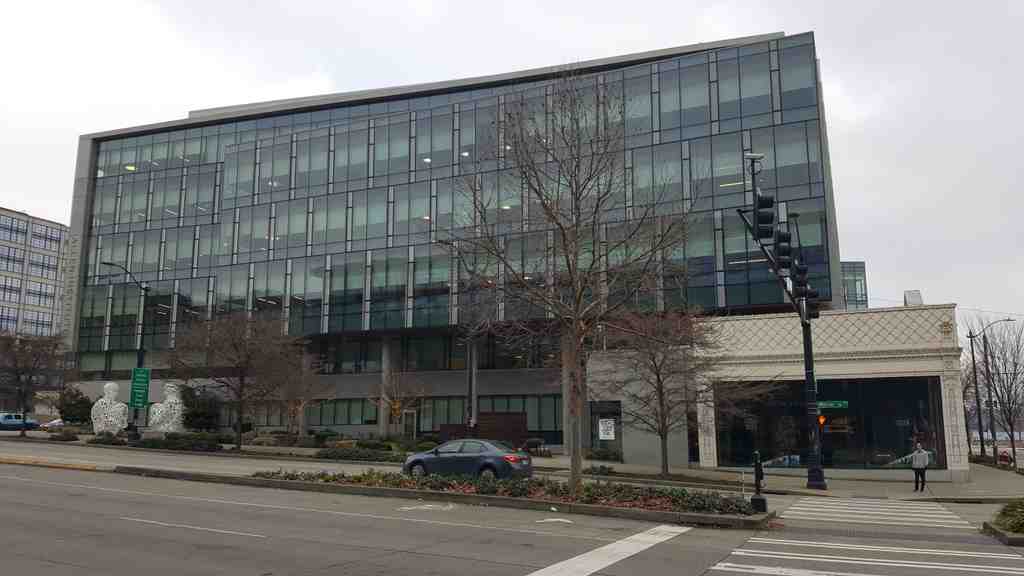
If you look to your left, right outside the glass-walled Allen Institute building at the corner of Mercer Street and 9th Avenue North, you’ll spot two large white figures sitting…Leer másMostrar menos
If you look to your left, right outside the glass-walled Allen Institute building at the corner of Mercer Street and 9th Avenue North, you’ll spot two large white figures sitting quietly face-to-face, their bodies made out of a swirling mesh of letters. Standing in front of Mirall feels a bit like stumbling into a secret meeting between old friends who speak in silent riddles. Made by the artist Jaume Plensa, this sculpture isn’t just a pair of giant seated figures-they’re woven from the alphabet soup of eight different languages! Peer closely and you’ll find Arabic curves, Greek twists, Chinese brushstrokes, Hindu dots, Hebrew lines, Japanese brush flips, the stately Roman alphabet, and even Russian Cyrillic. It’s almost as if language itself got tired of being spoken and decided to take a seat right here in South Lake Union. Isn’t it wild to think these two are always mid-conversation, but you’ll never hear a sound? It’s a silent banter where every word is written but never spoken-sort of like texting under a strict librarian’s watch. Imagine all the stories-love letters, scientific ideas, jokes about Seattle rain-they might spell out if only they came to life for a minute! Take in the gleaming stainless steel, reflecting both the city’s energy and the soft gray skies above, and just for a second, wonder what you might say if you could join their mysterious, everlasting chat.
Abrir página dedicada →Look ahead for two large, modern buildings with a striking green roof and plenty of glass walls-right across from the Seattle Center-those are the Gates Foundation…Leer másMostrar menos
Look ahead for two large, modern buildings with a striking green roof and plenty of glass walls-right across from the Seattle Center-those are the Gates Foundation headquarters. Alright, take a moment and let your eyes wander across those long, grassy rooftops and glassy facades. This isn’t your average office park. Here’s where philanthropy gets a Seattle twist-big, bold, and a bit high-tech, just like the city itself. Now, let’s step back in time for a second, because the story of this place is bigger than what you see in front of you. It started quietly back in 1994, when Bill Gates-yes, the computer guy with that “Windows” thing-and his wife, Melinda, decided they wanted to do more good with their mountain of fortune. But it wasn't until the year 2000 that things really leveled up: the Gates Foundation was officially launched. Imagine the buzz-people wondered; what would two of the world’s wealthiest do now? Build another tech giant? Nope. Instead, they set out to squish global poverty and wipe out diseases that most people here in Seattle only read about. Every year, this Foundation has to give away 5% of its assets-currently, over seventy billion dollars. That’s a lot of zeros. Their mission? It’s massive: better health for everyone, everywhere, along with more opportunities in education, and a world where everyone can have clean water and decent toilets-really, they even reinvent toilets here. Can you picture a toilet that turns waste into clean water? Bill Gates actually drank a glass of that water once for a TV audience. If that’s not commitment, I don’t know what is! But hold on. The story isn’t all smooth, echoing halls and happy board rooms. There’s been drama-big decisions, some controversy, even world-shaking moments. In 2006, Bill decided to leave his daily role at Microsoft. He wasn’t getting bored; he just wanted to focus all his brainpower here, fighting malaria, funding scholarships, and basically trying to outdo Santa when it comes to giving things away. Rubbing shoulders with him is a hall-of-fame team, including Warren Buffett-yep, that Warren Buffett-who pledged his own billions to the cause. In 2010, the Gateses kicked off a project to reimagine global health education. They even teamed up with Hillary Clinton on projects for women and girls, and when COVID-19 hit, the Foundation had already built relationships worldwide, making it possible to move fast in getting help where it was needed most. Now, the building you’re in front of-it’s not just stylish. When they opened these shiny headquarters in 2011, it was Seattle’s newest eco-friendly trophy, decked out with solar panels, a “living roof,” and rainwater pools. Even the land it stands on has a cool story-it used to be a city bus base. Now, instead of the hum of buses heading out, there are conference rooms buzzing with discussions about how to end polio, send girls to school, or create a rice that saves millions of lives from Vitamin A deficiency. Over the decades, they’ve weathered a few storms, too-public criticism, legal changes, and even the challenge of keeping the founders working together after their divorce. As of 2024, Melinda stepped down, but the Foundation kept on rolling-scheduled, believe it or not, to spend itself out of existence by 2045. No trust funds lingering for centuries-just an all-in push to give it all away within 20 years of Bill Gates’ passing. It’s like a superhero promising to retire once the world’s safe. So as you stand here, right at the edge of this campus, picture not just the dollars and the headlines, but the millions of lives changed-vaccines in remote clinics, life-changing scholarships at Cambridge, or a simple, clean toilet where there wasn’t one before. You’re in the presence of Seattle’s powerhouse for hope, a machine for optimism, and perhaps the most ambitious “give it all away” project the world has ever seen. I have to say, if these walls could talk, they’d be arguing about whether to fund a new malaria vaccine or build a better toilet. Not your usual office gossip! Ready to head to our final stop? Let’s walk-who knows what future trailblazer might have just walked past you! Yearning to grasp further insights on the activities, financials or the global development division? Dive into the chat section below and ask away.
Abrir página dedicada →

Mostrar 1 paradas másMostrar menos paradasexpand_moreexpand_less
To spot the Impatient Optimist, look up above the open plaza in front of the Bill & Melinda Gates Foundation-you’ll see a massive, colorful net floating in the air, glowing like a…Leer másMostrar menos
To spot the Impatient Optimist, look up above the open plaza in front of the Bill & Melinda Gates Foundation-you’ll see a massive, colorful net floating in the air, glowing like a dreamcatcher for the whole city. Now, take a deep breath and listen closely-you’re standing beneath a sculpture with a secret. Back in 2015, artist Janet Echelman and her team wanted to capture the very shape of a Seattle day, but not with paint or clay. Instead, they snapped a photo of the sky every five minutes for 24 hours and then, like digital wizards, spun all that color data into this huge, swooping net above you. At 120 feet long and 80 feet wide, “Impatient Optimist” isn’t just any net; it’s the heartbeat of the Gates Foundation campus, connecting Seattle to sister campuses all over the world. At night, the net comes alive, glowing with the colors of sunrise as it happens-in real time-in places as far away as Africa and Asia. It’s almost as if the sculpture is playing an epic, cosmic game of telephone. The whole thing, with its shifting lights and shimmering threads, was built to remind us how one person can change the world-or at least brighten up a rainy Seattle day. Pretty dazzling, right? And you didn’t even need to climb a ladder to get this view!
Abrir página dedicada →

Preguntas frecuentes
¿Cómo empiezo el tour?
Después de la compra, descarga la app AudaTours e ingresa tu código de canje. El tour estará listo para comenzar de inmediato - solo toca play y sigue la ruta guiada por GPS.
¿Necesito internet durante el tour?
¡No! Descarga el tour antes de empezar y disfrútalo completamente sin conexión. Solo la función de chat requiere internet. Recomendamos descargar en WiFi para ahorrar datos móviles.
¿Es un tour guiado en grupo?
No - esta es una audioguía autoguiada. Exploras de forma independiente a tu propio ritmo, con narración de audio reproduciéndose en tu teléfono. Sin guía, sin grupo, sin horario.
¿Cuánto dura el tour?
La mayoría de los tours toman 60–90 minutos para completar, pero tú controlas el ritmo completamente. Pausa, salta paradas o toma descansos cuando quieras.
¿Qué pasa si no puedo terminar el tour hoy?
¡No hay problema! Los tours tienen acceso de por vida. Pausa y continúa cuando quieras - mañana, la próxima semana o el próximo año. Tu progreso se guarda.
¿Qué idiomas están disponibles?
Todos los tours están disponibles en más de 50 idiomas. Selecciona tu idioma preferido al canjear tu código. Nota: el idioma no se puede cambiar después de generar el tour.
¿Dónde accedo al tour después de comprarlo?
Descarga la app gratuita AudaTours desde App Store o Google Play. Ingresa tu código de canje (enviado por email) y el tour aparecerá en tu biblioteca, listo para descargar y comenzar.
Si no disfrutas el tour, te reembolsamos tu compra. Contáctanos en [email protected]
Paga de forma segura con 


