
Audioguía de San Antonio: Odisea del Alma de San Antonio
Una cicatriz de una bala de cañón aún está grabada en los muros del Álamo, marcando el lugar donde la revolución partió el corazón de la ciudad en dos. Las calles de San Antonio vibran con secretos, haciendo eco de susurros de leyendas e imperios perdidos bajo luces brillantes y brisas del río. Descubre el verdadero espíritu de San Antonio en este audioguía autoguiado. Recorre plazas animadas y pasillos silenciosos mientras historias ocultas en las guías cobran vida en tus auriculares. ¿Qué visitante de la Torre de las Américas provocó un pánico en toda la ciudad? ¿Qué pista se esconde bajo los puentes del River Walk de un escándalo olvidado hace mucho tiempo? ¿Por qué los sacerdotes españoles una vez tocaron las campanas de la iglesia a medianoche, por razones más oscuras de lo que podrías imaginar? Traza un camino a través de campos de batalla y aguas iluminadas por la luna, mercados bulliciosos y criptas silenciosas. Cada giro depara una sorpresa: historia tallada en piedra, revolución reflejada en el agua que corre, rebelión latiendo bajo los adoquines. Comienza ahora y deja que San Antonio te revele lo que normalmente mantiene oculto.
Vista previa del tour
Sobre este tour
- scheduleDuración 40–60 minsVe a tu propio ritmo
- straighten5.4 km de ruta a pieSigue el camino guiado
- location_onUbicaciónSan Antonio, Estados Unidos
- wifi_offFunciona sin conexiónDescarga una vez, úsalo en cualquier lugar
- all_inclusiveAcceso de por vidaReprodúcelo en cualquier momento, para siempre
- location_onComienza en Torre de las Américas
Paradas en este tour
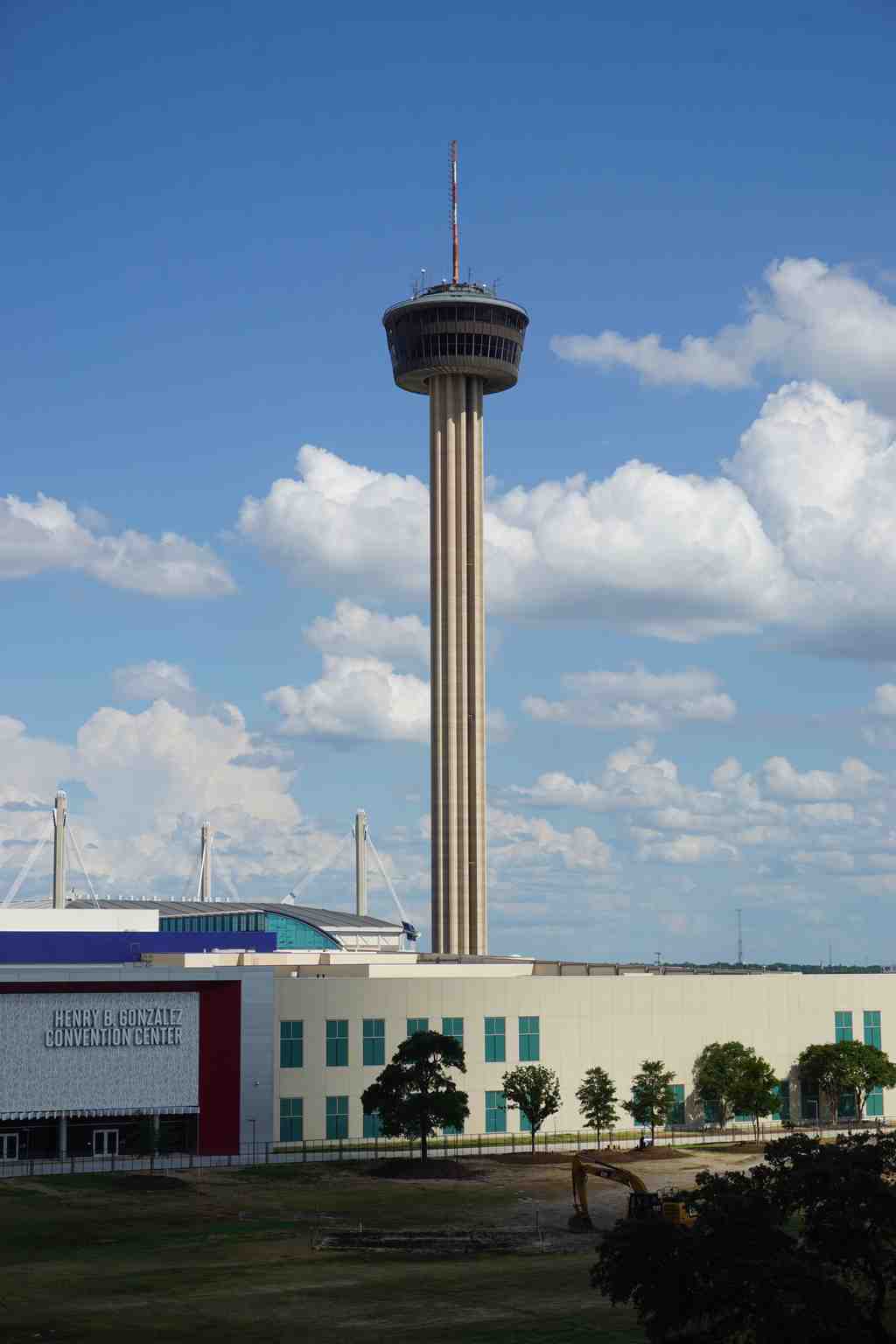
Now y’all, if you’re lookin’ up ahead, you can’t miss the Tower of the Americas - it’s that mighty tall, round-topped tower pokin’ straight up to the sky like a giant needle, with…Leer másMostrar menos
Now y’all, if you’re lookin’ up ahead, you can’t miss the Tower of the Americas - it’s that mighty tall, round-topped tower pokin’ straight up to the sky like a giant needle, with a lookin’ glass crown sittin’ on top, standin’ proud over Hemisfair Park and shadowin’ just about everything else in the neighborhood. So pull up your boots and let me spin ya’ a tale about this Texas-sized toothpick. Back in 1966, folks here in San Antonio wanted somethin’ that would mark the city for the ages, so local architect O’Neil Ford was handed the tall order to dream up a centerpiece for the 1968 World’s Fair-what they called HemisFair ’68. Can you imagine ol’ O’Neil sittin’ at his desk, hat pulled low, scratchin’ out the lines for a 750-foot tower, taller than anything else in this neck of the woods? Well, he did just that. Now, building this monster wasn’t your average barn-raising. First, they built the top part of the tower-the round house with the observation decks and the restaurant-right down on the ground, where you could kick the tires and admire the paint job. This chunk o’ steel and concrete weighed a whopping 1.4 million pounds, heavier than a herd of longhorns. Once it was done, they had themselves a real conundrum: how d’ya get this beast up in the sky? So, with a heap of nerve and twenty-four steel lifting rods, they started inchin’ it up, a little bit each day for about three weeks, til it was sittin’ right pretty on top o’ the shaft, watchin’ over the city like a cowboy atop a water tower. When it opened for HemisFair ’68, folks from all across the globe came to ride the elevator up high and take in the sight of Texas spreadin’ out before ‘em. There was even a contest to name this here tower, and wouldn’t ya know, sixty-eight folks tossed in ‘Tower of the Americas’-and that’s what stuck, beatin’ out ‘HemisFair Tower’ and any other hopefuls. Fun fact for ya: from 1968 ‘til 1996, this was the tallest observation tower in the whole dadgum United States, until some folks in Las Vegas decided they needed one a little taller. Still, it’s the highest place you can stand in all of San Antonio, and a pretty darn good spot to watch the sunset or snag a bite in the revolving restaurant up top. And let me say, after a day’s walkin’, sit downin’ in that slow-spinnin’ diner and watchin’ the city roll by is sweeter than tea on a hot summer day. Up top there’s also radio antennas, keepin’ San Antonio hummin’ with country tunes and weather reports-since 1970, to be exact. And just so y’all know, it ain’t been all smooth ridin’-in recent years, they found some cracks up high and had to patch her up with a mighty big renovation for near twenty million bucks, keepin’ the old gal safe and steady for years to come. So tip your hat to the Tower, friend-she’s seen the world gather, watched time roll by, and stood tall through hail, heat, and high winds, a symbol of San Antonio’s big-hearted, go-big-or-go-home spirit.
Abrir página dedicada →
Mostrar 10 paradas másMostrar menos paradasexpand_moreexpand_less
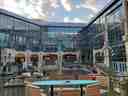
Well, partner, if you look straight ahead over yonder past the gentle bend of the river, you’ll spot a big ol’ building dressed in shiny blue glass from top to bottom, watchin’…Leer másMostrar menos
Well, partner, if you look straight ahead over yonder past the gentle bend of the river, you’ll spot a big ol’ building dressed in shiny blue glass from top to bottom, watchin’ its reflection shimmer in the waters-just keep your eyes peeled for a heap of glass windows and a sign that says “Rivercenter” over an arched entryway. Now let me spin you a tale about this place, The Shops at Rivercenter-a spot that’s changed its stripes more times than a longhorn dodgin’ a Texas thunderstorm. Picture it: it’s the late 1980s, San Antonio is growin’ by the minute, and downtown needs a shot in the arm. So, up springs the Rivercenter Mall, fancy as a new pair of boots, with Lord & Taylor struttin’ in as the city’s first, and an IMAX theater ready to drop jaws. Thing is, the spot’s got roots runnin’ deep-because before shop doors flung wide open, this patch of land was home to the legendary Joske’s department store, a San Antonio favorite since 1887. Now, let me tell ya, Joske’s was such a behemoth that it sprawled across expansions from 1909 all the way to the 1950s, and locals used to say you could get lost on its five levels faster than a jackrabbit in a cactus patch. But the wildest twist? When the original developers came a-callin’ in the 1940s, St. Joseph’s Catholic Church-bless their hearts-wouldn’t budge, not for love or money, so Joske’s built right around it like a hat on a stubborn mule. You can just imagine the stories whispered after dark, with parishioners and shoppers sharing walls, prayers minglin’ with buy-one-get-one-free. The shopping mall morphed through the years. Lord & Taylor turned into Foley’s in ’89, which later made way for Macy’s, and for a spell Dillard’s held court up top. Dillard’s packed up in 2008, Macy’s closed in 2021, but nothin’ here ever stays empty for long-fast as bluebonnet seeds in the wind, Dave & Buster’s, H&M, and all sorts of shops and restaurants moved in. In 2016, this place even donned a new hat: the Shops at Rivercenter. What really makes it special is the way it hugs the River Walk, as if to say, “Pull up a chair, traveler-San Antonio’s got stories left to tell.” So take in that four-story stretch and the river level below your boots, watch sunlight play on all that glass, and know you’re standin’ where history keeps on dancin’, just like the river itself.
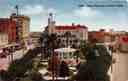
Abrir página dedicada →Alright now, partner, if you’re standin’ with the breeze of San Antonio dustin’ your boots and lookin’ straight ahead at a lively green park dotted with tall palm trees, a stately…Leer másMostrar menos
Alright now, partner, if you’re standin’ with the breeze of San Antonio dustin’ your boots and lookin’ straight ahead at a lively green park dotted with tall palm trees, a stately white bandstand right in the center, and grand old stone buildings holdin’ court all round, you’ve found yourself smack dab in Alamo Plaza Historic District. You’ll spot it easy: that wide-open square, dotted with walkways and shade, lays out like a welcome mat at the foot of the city’s most legendary stories. Now, get comfortable, ‘cause this ground you’re standin’ on is the heart and soul of San Antonio, and boy, it’s seen more drama and heroics than a county fair back in the day. Long before all these iron balconies and corniced rooftops sprang up, this patch of earth was a meeting place not just for locals, but for folks from two very different worlds. Imagine a time, way back in the early 1700s, when Spanish friars made their way here with the rumble of wagons and the shuffle of tired boots, their eyes set on buildin’ not just a church, but a safe haven. It was the local Native Americans themselves, weary of raids from unfriendly tribes, who asked those Franciscan missionaries for shelter. The friars, with a mind to spread the Good Word and a heart for helpin’ souls, said, “Come on in.” So shelter was given, a little faith was traded, and families grew under the watchful gaze of the old missions. Some even took on brand-new Spanish names to go with their fresh start! By late nineteenth century, the plaza started shapin’ up into something grand, thanks to a fella named Anton Wulff. He was a city alderman with an eye for pretty things and the patience of a mule teachin’ tricks. Wulff oversaw the layout and landscaping right here, and just to say thanks, the local business folks gifted him a gold-topped walking stick, as shiny as a new silver dollar, and had it engraved so everyone’d remember who put in the elbow grease. Look around you and you’ll see a patchwork of buildings, each one with its own story to holler. Take the Menger Hotel, for instance-she's a true old Texas dame. Started as a humble limestone building in 1857, she kept growin’ taller and fancier, right up to a three-story beauty with stained glass lightin’ up the lobby, and balconies stretchin’ like arms, ready for a moonlit whisper. Then there’s the Crockett Hotel, peeking over the plaza, built where heroes once stood-yep, the Crockett name here still gets hearts thumpin’ with memories of the Alamo. Now, this plaza ain’t just about hotels and bandstands. Over near the north end, a white marble shaft stands tall-hard to miss if you’re squintin’ up at the Texas sun. That there’s the Cenotaph, the “Spirit of Sacrifice,” built in 1940 to remember the brave souls of the Alamo. Look close and you’ll see the faces of Crockett, Bowie, Travis, and Bonham, chiseled in stone with the same determination they had all those years ago. On the north side stands a sculpted Lady representin’ Texas herself-sturdy and proud, just like the folks who call this place home. This plaza has seen the high-heeled bootsteps of city folk trappin’ into Joske’s Department Store, and once echoed with the boom of grand opera in a bygone theater, only to be rebuilt and repurposed as the city grew. There’s the Old Post Office not far off, standin’ with its limestone bones since 1937, and the Medical Arts Building, with its pointy Chateauesque tower peerin’ at the skyline like a cattleman watchin’ the range. San Antonio never stops changin’, but the plaza here holds it all together. From the palm-fringed bandstand that's swapped out since the 1890s to each ornate shopfront down Alamo, this is ground where cultures met, legends rose, and Sunday afternoons still hum with the spirit of folks who made San Antonio what she is. You ain’t just standin’ in a park-you’re standin’ at the crossroads of stories, where memory and hope seem to shake hands beneath the Texas sky.
Abrir página dedicada →Right in front of y’all is a squat, limestone chapel with a curved top and a set of strong wooden doors-just look ahead for the weathered stone and that famous scalloped façade…Leer másMostrar menos
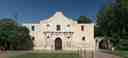
Right in front of y’all is a squat, limestone chapel with a curved top and a set of strong wooden doors-just look ahead for the weathered stone and that famous scalloped façade sittin’ front and center in the sun. Well now, partner, you’re standin’ in front of the Alamo, and let me tell you, this here ain’t just another old pile of rocks-it’s the most legendary chunk of Texas there ever was. Picture this ground back in the early 1700s: wild land, Spanish friars sweatin’ in the Texas sun, scratchin’ out adobe walls tryin’ to bring Christianity to native folks. What they called Misión San Antonio de Valero back then was meant to be a beacon of faith, a safe haven with thick limestone walls to keep out angry Apaches and Comanches, and enough crops, cattle, and sheep to make a little community right in the heart of nowhere. But Texas weather knows how to throw a tantrum. Storms nearly wiped the place away, so they rebuilt it, stone by solid stone, over by the San Antonio River-less likely to flood, a little more defensible. In those days, you’d see Coahuiltecan folks tendin’ cattle, weavin’ fabric, or workin’ the fields as the bell tolled from the never-quite-finished church. Spanish soldiers with muskets peered from behind thick walls, and sometimes the whole mission would hunker down, hopin’ to ride out another raid. Skip ahead a bit, and those old padres had moved on, leavin’ the mission to dust and bats, until it transformed into a military outpost. That’s when it picked up the name "Alamo," thanks either to the cottonwoods nearby or the Alamo Company posted here. Then along came 1836, the year this ol’ chapel saw more drama than a tumbleweed caught in a dust devil. Texian defenders holed up inside, sure as shootin’ that Santa Anna’s Mexican Army was on its way. The walls bristled with cannons left over from General Cos, who’d been sent packin’ a few months before. Davy Crockett, Jim Bowie, William Travis, and a ragtag bunch of settlers made their stand under that Texas sky-outnumbered, hungry, mighty desperate, but stubborn as a mule. For thirteen days, the air around here crackled with tension-smoke, thunderin’ cannon, shouts in Spanish and English alike. Then came the sixth of March, and it was all over in a hail of gunfire and bayonet charges. Not one Texian survived, and Santa Anna ordered what was left of 'em burned right out front. That fiery sacrifice turned the Alamo from a crumblin’ mission into legend-"Remember the Alamo!" became the battle cry that led Texas to independence at San Jacinto. After the smoke cleared, the old place changed hands more often than a poker chip-Mexican, Texian, U.S. soldiers, even a spell as a grocery store. Soldiers slept in the convent, quartermasters stashed supplies in the chapel, and over the years, weeds took root in the cracks while bits of stone and statues wandered off in wagons, sold to anyone with a mind for a souvenir. By the late 1800s, folk started seein’ this place as sacred ground. The Daughters of the Republic of Texas, led by Adina De Zavala and Clara Driscoll, fought tooth and nail to save what was left. Sometimes there was so much bickering about what to do with these ruins you’d think the Battle of the Alamo had started up all over again-supposedly Adina even barricaded herself inside one of the buildings for days, determined to keep demolition crews at bay. Fast-forward to today, and the Alamo is all spruced up for visitors, but you can still feel that weight, that wild courage simmerin’ under the limestone. Tourists flock here from every corner, just hopin’ to catch a glimmer of the old defiance. The very rocks sweat out Texas sun and Texas pride, and if you ask any local, they’ll tell you there’s no spot on earth more soaked with heroism, heartbreak, and more than a bit of stubborn frontier grit. That, friend, is what you’re lookin’ at-soaked in legend, bathed in sunlight, and stubbornly standin’ guard over the story of Texas.
Abrir página dedicada →Y’all look just ahead-right down below street level to your left, you’ll see a winding ribbon of river, shaded by overhanging trees and lined with a stone walkway wrapped in…Leer másMostrar menos
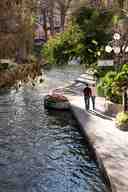
Y’all look just ahead-right down below street level to your left, you’ll see a winding ribbon of river, shaded by overhanging trees and lined with a stone walkway wrapped in blooming flowers and hanging lamps, with restaurant signs peeking out behind thick greenery. Well now, welcome to the San Antonio River Walk, the city’s downright pride and joy-she’s like the front porch of San Antonio, only instead of rocking chairs you got café tables, and instead of a dusty ol' road, you’ve got a sparkling river weaving right through the heart of downtown. It sure is somethin’ to see, with those sidewalks stretchin’ along both banks, and bridges archin’ overhead like gentle arms, drawin’ the city together. Take a deep breath, ‘cause you’re standin’ in the same spot where San Antonio first took root way back in the 1700s when this was all a dusty Spanish outpost called Villa de Bejar. Right here, under these cypress limbs, the tale of San Antonio unravelled slow as Texas molasses. But I’ll tell ya, this place ain’t always been so pretty. Picture September 1921-a flood comes crashin’ through the city like a bull in a china shop, takin' fifty-one souls and draggin’ off some two dozen more, missin’. Folks around here were plain spooked, and the city bosses started dreamin’ about taming the river-thought maybe they’d just pave it over, turnin’ the wild bend into a storm sewer. Now, wouldn't that have been a doggone shame? Lucky for us and this city’s spirit, the San Antonio Conservation Society raised some ruckus and put a stop to that. Then along comes Robert Hugman, local fella and dreamer, who saw beauty where others saw nothin’ but trouble. He figured instead of coverin’ the river up, how 'bout we wrangle it into somethin’ grand? His plan called for dams and floodgates and-most importantly-a world where the river became the city’s dearest playground: filled with shops, music, good eats, and strollin’. Folks didn’t take to his idea at first-stories about this bend named it a haunt for riffraff, and at one point, soldiers were warned not to venture down here lest they end up “drowned like a rat.” Ol’ Hugman, he stuck to his guns-kept his own office perched on the very bend he hoped to save. They broke ground in 1938 under somethin’ called the River Beautification Project, thanks to the hard pushin’ from city leaders and the Works Progress Administration. Little by little, they stitched together a promenade with seventeen thousand feet of walkway and a mess of bridges. Trees that were already several hundred years old stretched their arms to the sunlight. And wouldn’t you know it, the plan held true when the next big flood rolled in, and the brand-new Olmos Dam and bypass channel kept San Antonio’s heart safe and dry. Now, over the years this winding waterway grew-first extended to reach the Tower of the Americas for HemisFair ‘68, then stretched north to the museums and the old Pearl Brewery, and south all the way to the San Antonio missions, now a World Heritage Site. There’s a piece of Texas history in every bend-the spot where the city celebrates Fiesta every spring, cheering as flower-bedecked barges float by and bands fill the air with song and laughter. Why, when the Spurs win the NBA crown, you can see ‘em parade down the water like conquering heroes, waving to crowds lining every inch of the walk. These days, there’s talk about keepin’ the River Walk’s flavor local-holding back the chain restaurants so the spirit of San Antonio, with all its colors and flavors, don’t get washed away. And let me tell ya-every winter, folks drain the river for a Mud Festival, giving the muddy bottom a good scrub. Why, just in 2021, when that rare winter storm knocked out water all over Texas, the River Walk even lent a helping hand. So as y’all stand here, feeling the shade and listenin’ to that water whisper, remember: Every footstep follows the dreams and grit of folks who refused to let their river disappear. This here’s the living, beating heart of San Antonio-a place where the past flows right along with today, turning every stroll into a piece of Texas history.
Abrir página dedicada →Howdy there, partner! To spot the Bexar County Courthouse, just look for a mighty impressive, four-story red sandstone building with towers and an arched entrance right up…Leer másMostrar menos
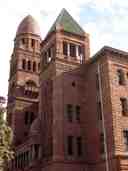
Howdy there, partner! To spot the Bexar County Courthouse, just look for a mighty impressive, four-story red sandstone building with towers and an arched entrance right up ahead-its rosy color and bold Romanesque Revival style sure make it stand out from the crowd. Now, let me spin y’all a yarn about this grand ole courthouse that’s been guardin’ over Bexar County since the days of horse and buggy. Imagine the year is 1891: cowboys and carriages rattlin’ through dusty San Antonio streets, and right here, folks broke ground on this bold beauty, a vision cooked up by a fella named James Riely Gordon. Now, Gordon wasn’t just whittlin’ away his time-he was only 11 when he moved to San Antonio, but by the time he got to designin’ this place, he’d done laid the foundation for courthouse history all over Texas. Out of 18 courthouses he wrangled, 12 still stand tall today. As the stone was set and hammers swung, the dreams of a growing Lone Star city were carved into every red block. Folks in the 1870s all the way to 1910 were buildin’ courthouses just about everywhere, but lemme tell ya, this one’s the biggest and oldest courthouse in Texas still workin’ its legal magic. It’s weathered wild times-mighty expansions in 1914, 1923, and later in the slick sixties, balloonin’ to 300,000 square feet! But here’s where it gets good: in recent days, craftsmen rolled back those later add-ons, spendin’ over $9 million to return her to her prime, sprucing up the entrances and puttin’ in a new stairway. As you stand here, take in that arched entrance and the towers reachin’ for the sky-imagine all the stories, secrets, and trials that’ve danced through these halls. She’s a red sandstone fortress of Texas justice, still sittin’ proud as a longhorn at sunset, keepin’ watch over San Antonio’s heart. Ain’t that somethin’?
Abrir página dedicada →Well now, plant your boots right here in front of San Fernando Cathedral and take in that grand face of stone. Folks call it San Fernando Cathedral, but it’s also the Cathedral of…Leer másMostrar menos
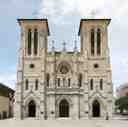
Well now, plant your boots right here in front of San Fernando Cathedral and take in that grand face of stone. Folks call it San Fernando Cathedral, but it’s also the Cathedral of Our Lady of Candelaria and Guadalupe, or in Spanish, Nuestra Señora de la Candelaria y Guadalupe. However you name it, you’re lookin’ at the mother church of the Archdiocese of San Antonio, the official seat where the archbishop leads. And that dome up top? It’s long been treated like San Antonio’s cultural and geographic “center point,” like a landmark you can measure the city’s story from. <break time="1.0s" /> This place is old by Texas standards, and downright ancient by American ones. Back in the 1700s, this was Spanish Empire territory, and the local Catholics answered to the Archdiocese of Mexico. In 1731, the Spanish Crown sent 55 settlers from the Canary Islands to help anchor San Antonio. The military commander, Juan Antonio Pérez de Almazán, was told to pick a spot for their church. The cornerstone was laid May 11, 1738, and they named it for Ferdinand III of Castile, a king from the 1200s. <break time="1.0s" /> Now, the first builders were soldiers and families and those new settlers, and bless their hearts, they tried-but “inexperienced” is a polite word for what happened. The work was poor enough that in 1748 the viceroy kicked in 12,000 pesos-think roughly a couple million dollars in today’s money-to bring in a master stone mason and stone cutter from Mexico. They tore out the bad start, expanded the footprint, and finally got the church dedicated in 1755. And there’s a tradition that King Charles III donated the baptismal font-the big basin used for baptisms-later in the 1700s. <break time="1.0s" /> History didn’t tiptoe around this sanctuary, neither. A flood in 1819 damaged it. A fire in 1828 damaged it again. Then in 1831, after repairs, James Bowie married Ursula de Veramendi right here-yep, that Bowie. During the Texas Revolution, the Battle of Béxar saw Mexican artillery positioned at the church. And when the Battle of the Alamo began in 1836, General Santa Anna raised a “no quarter” flag from the tower-meaning no prisoners would be spared. The siege ended with the Alamo’s defenders killed, Bowie included. <break time="1.0s" /> Afterward, the church itself sagged under hard years-its roof even caved in by 1840, and birds moved in like they’d bought the place. But San Antonio grew, and so did the need to rebuild. In 1868, architect Francois P. Giraud oversaw a major redo: the nave-the long central hall where folks sit-was rebuilt in a Gothic Revival style, with three entrances, buttresses, and twin bell towers. Only the original sanctuary was saved, and the renewed church was consecrated in 1873. <break time="1.0s" /> In 1874, Pope Pius IX made it a cathedral, and by 1920 stained glass windows colored the light inside. Renovations kept coming, including a major one in the 1970s, and in 1987 Pope John Paul II visited-there’s a marker for that moment. A huge renovation began in 2003, and later changes in 2011 set a new fixed altar and placed relics inside it-tiny sacred keepsakes-two tied to St. Anthony of Padua and one to Blessed Concepción Cabrera de Armida. <break time="1.0s" /> And if you ever catch “San Antonio: The Saga,” that 24-minute video art projection started in 2014, cast right across this very façade like history painted with light. <break time="1.0s" /> This cathedral isn’t just a monument; it’s a living heartbeat, with thousands attending weekend Mass and hundreds of baptisms, weddings, and funerals each year. Take a moment to soak it in. When you’re ready, we can mosey along to the next stop. <break time="1.0s" />
Abrir página dedicada →Well howdy, y’all. You’re standin’ outside the Institute of Texan Cultures, and this place has been through more twists than a lariat in a dust-up. The ITC is a museum and…Leer másMostrar menos
Well howdy, y’all. You’re standin’ outside the Institute of Texan Cultures, and this place has been through more twists than a lariat in a dust-up. The ITC is a museum and cultural education center run by UTSA, and it reopened January 29, 2026, right here in a brand-new, purpose-built home at 111 W. Houston Street, on the corner of Camaron. <break time="1.0s" /> Now, its old home was the Texas Pavilion at HemisFair Park - a big, bold Brutalist building. “Brutalist” don’t mean mean-spirited; it’s an architecture style that shows off raw concrete, blocky shapes, and muscle-bound design. That pavilion was designed by Caudill, Rowlett & Scott, and it even made the National Register of Historic Places in 2024. But in 2025, it got demolished to make way for “Project Marvel,” a proposed $1.5 billion sports and entertainment district, including a new downtown arena for the Spurs. <break time="1.0s" /> Folks fought hard to save it. The Conservation Society of San Antonio filed a lawsuit in April 2025, sayin’ the demolition broke a 1967 deed. And here’s the gut-punch: while preservationists were in court beggin’ for a restraining order, crews outside were already drivin’ backhoes into those massive concrete panels. In the end, the courts sided with the developers, sayin’ UTSA and the city were protected by sovereign immunity - a legal shield that can keep government bodies from being sued. <break time="1.0s" /> But the heart of the ITC didn’t get bulldozed. Since 1965, it’s been Texas’s main hub for multicultural education - a “place of ideas, not things,” as founding director R. Henderson Shuffler put it. He even lived above the museum, and legend says staff would smell his cherry pipe smoke driftin’ through the library. <break time="1.0s" /> Inside, the collection runs deep: 3.5 million historical photos, 700-plus oral histories, and even recordings from Robert Hugman, the mind behind the River Walk. And in the “Common Threads” gallery, keep an eye out for a favorite survivor: that neon Texas flag from the old pavilion, plus benches made from the pavilion’s own granite. That’s Texas, y’all - we rebuild, but we remember. <break time="1.0s" />
Abrir página dedicada →

Preguntas frecuentes
¿Cómo empiezo el tour?
Después de la compra, descarga la app AudaTours e ingresa tu código de canje. El tour estará listo para comenzar de inmediato - solo toca play y sigue la ruta guiada por GPS.
¿Necesito internet durante el tour?
¡No! Descarga el tour antes de empezar y disfrútalo completamente sin conexión. Solo la función de chat requiere internet. Recomendamos descargar en WiFi para ahorrar datos móviles.
¿Es un tour guiado en grupo?
No - esta es una audioguía autoguiada. Exploras de forma independiente a tu propio ritmo, con narración de audio reproduciéndose en tu teléfono. Sin guía, sin grupo, sin horario.
¿Cuánto dura el tour?
La mayoría de los tours toman 60–90 minutos para completar, pero tú controlas el ritmo completamente. Pausa, salta paradas o toma descansos cuando quieras.
¿Qué pasa si no puedo terminar el tour hoy?
¡No hay problema! Los tours tienen acceso de por vida. Pausa y continúa cuando quieras - mañana, la próxima semana o el próximo año. Tu progreso se guarda.
¿Qué idiomas están disponibles?
Todos los tours están disponibles en más de 50 idiomas. Selecciona tu idioma preferido al canjear tu código. Nota: el idioma no se puede cambiar después de generar el tour.
¿Dónde accedo al tour después de comprarlo?
Descarga la app gratuita AudaTours desde App Store o Google Play. Ingresa tu código de canje (enviado por email) y el tour aparecerá en tu biblioteca, listo para descargar y comenzar.
Si no disfrutas el tour, te reembolsamos tu compra. Contáctanos en [email protected]
Paga de forma segura con 


